The HOA President Buried My Certified Fire Pond to Create 42 Premium Parking Spots—Three Nights Later, Firefighters Raced to Her $3.8 Million Clubhouse and Found the Water Source Missing.
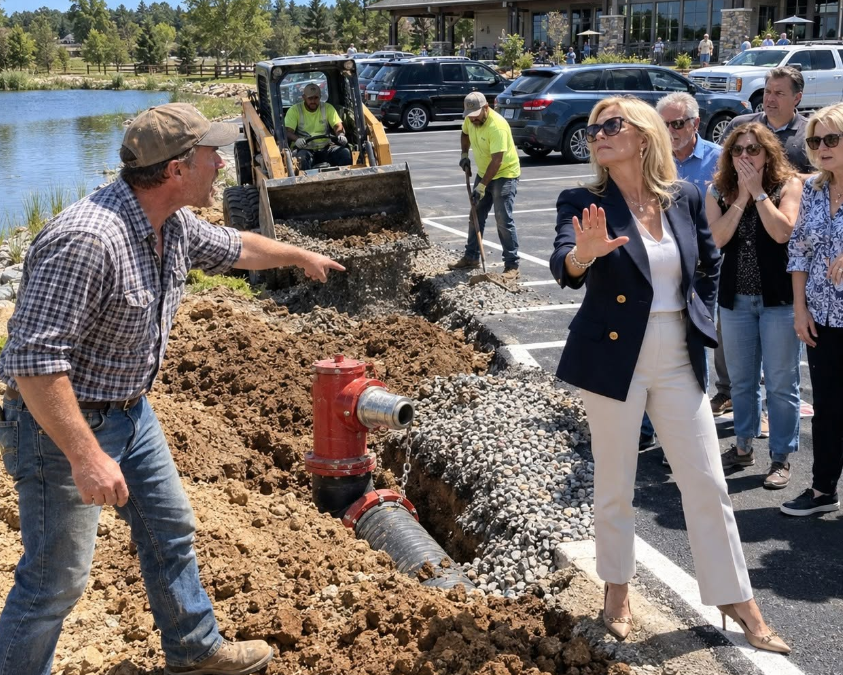
The HOA President Buried My Certified Fire Pond to Create 42 Premium Parking Spots—Three Nights Later, Firefighters Raced to Her $3.8 Million Clubhouse and Found the Water Source Missing.
Meredith Blackwell sold forty-two premium parking passes over the top of my certified fire pond, ordered contractors to bury the dry hydrant after I warned her what it was, and told the entire HOA board that insurance would simply rebuild the clubhouse if anything ever happened.
Three nights after her gala, I woke to orange firelight on my bedroom wall and watched engines race toward a $3.8 million clubhouse while firefighters discovered that the emergency water source printed on their response map was now sitting beneath a fresh layer of asphalt.
Meredith spent the rest of that night repeating that insurance would pay for everything, but she had already signed the one document that made sure the insurer would not pay her a single dollar.
My name is Sawyer Keats.
Before Copper Ridge Estates decided my fire pond would make a nice parking lot, I thought the ugliest thing a homeowners association could do was send somebody a fine over a trash can.
I learned better.
I own forty-one acres along the lower edge of the Copper Ridge hillside.
My property is older than the development above it.
Older than the clubhouse.
Older than the decorative stone entrance.
Older than the rows of expensive homes climbing the ridge.
When my family first acquired the land, there were cattle pastures, oak scrub, a narrow service track, and one man-made pond sitting near the eastern property line.
Nothing about the pond was pretty.
It wasn’t one of those blue recreational ponds with a dock and ornamental reeds.
Most of the year, it looked brown-green.
Mud around the edges.
Mosquitoes in summer.
Frogs loud enough in spring to ruin a quiet conversation.
Nobody built a gazebo beside it.
Nobody took wedding pictures there.
But the pond mattered.
It mattered enough that decades earlier, when Copper Ridge was first being developed, the original builder had negotiated a formal fire-water agreement with the previous owner of my land.
The ridge presented a problem.
Municipal water pressure was acceptable for ordinary domestic use.
Small house fire?
Hydrants could manage.
A trash fire?
No problem.
But the proposed clubhouse sat high enough and far enough out that fire engineers worried about sustained flow during a large structural fire.
Especially one reaching the attic or roof.
The developer needed an additional source.
The pond solved that.
A dry hydrant intake was installed at the water’s edge.
A hardened access road connected it to the service route.
The agreement was recorded with the county.
It said the fire district and Copper Ridge could use the pond during emergencies.
In exchange, access had to remain open.
The pond could not be filled.
Could not be relocated.
Could not be reduced in capacity.
Could not be modified without written approval from the landowner and the fire authority.
Simple.
For years, nobody argued.
Why would they?
The pond sat there.
The clubhouse sat above it.
Fire crews occasionally inspected the intake.
Everybody moved on with life.
PART2:
Then Meredith Blackwell became HOA president.
Meredith had the kind of confidence that made every sentence sound like the end of an argument.
She was probably in her late forties.
Always dressed as if she might unexpectedly have to pose for a real-estate brochure.
Expensive sunglasses.
Clean SUV.
Perfect hair.
She spoke in phrases like community enhancement, asset optimization, and resident experience.
I did not dislike her at first.
I barely knew her.
We had spoken twice.
Once when a fallen tree blocked part of the service road.
Once when she asked whether I would consider letting Copper Ridge residents use a walking trail near my south boundary.
I declined.
She didn’t like the answer.
But she accepted it.
Or at least I thought she did.
The Tuesday morning everything began was ordinary.
Clear sky.
Light wind.
Dry enough that every vehicle raised dust.
I was walking the east fence line checking posts.
The lower service road ran near the pond.
That road existed for one primary reason.
Emergency access.
Fire engines could get down it.
Draft water.
Turn around.
Return uphill.
It was not a neighborhood shortcut.
Not contractor parking.
Not recreational access.
I heard diesel engines.
Heavy ones.
PART3:
I assumed fire district maintenance.
Then the first dump truck appeared.
It backed toward the pond.
Beep.
Beep.
Beep.
Then raised its bed.
Crushed rock poured out.
For several seconds, I just stared.
My brain understood the image before it accepted it.
A second truck waited behind.
A third idled farther back.
An excavator sat beside the bank.
Someone was filling the pond.
I started running.
At fifty-eight, I no longer run unless something is on fire, bleeding, or destroying property.
That qualified.
“Stop!”
The excavator operator turned.
I waved both arms.
“Stop!”
The bucket froze.
A man in a hard hat stepped toward me.
I recognized him later as Dale Fenwick, owner of Fenwick Site Services.
He looked confused.
“You Sawyer?”
“Yes.”
“Good. We’ve been trying to locate the owner.”
“You’re standing on my land.”
He looked around.
“HOA said they had access.”
“They have emergency access.”
He pointed toward the pond.
“We’re doing contracted grading.”
“You are filling a certified fire-water reserve.”
That changed his face.
“A what?”
“Kill the machines.”
Dale raised one hand.
The dump truck stopped unloading.
The excavator shut down.
Silence returned.
Except for diesel idle.
He removed his hard hat.
“Okay.”
“What did they tell you?”
“Abandoned drainage basin.”
“No.”
“Landscape depression.”
“No.”
“Unused stormwater feature.”
“No.”
He stared at the half-filled pond.
“You have documentation?”
“Yes.”
Before I could retrieve it, an SUV came down the service road.
Fast.
Meredith.
She parked near the trucks.
Got out before the dust settled.
“Why did you stop?”
Not hello.
Not what happened.
Why did you stop?
Dale pointed toward me.
“Property owner says this is a fire pond.”
Meredith looked at me.
Not surprised.
That told me everything.
“You know exactly what it is.”
She adjusted her sunglasses.
“It’s an obsolete basin.”
“No.”
“It hasn’t been needed in years.”
“That does not make it obsolete.”
“We had the site reviewed.”
“By who?”
“Planning.”
“Which planning?”
“The HOA development committee.”
I laughed.
“Your committee does not determine fire infrastructure.”
She opened a folder.
Pulled out a glossy map.
I recognized the style.
Copper Ridge branding.
Color-coded landscaping.
The pond area was labeled:
LANDSCAPE BASIN.
Nothing else.
Meredith tapped it.
“This is the current association site map.”
I took out my phone.
Opened county records.
I kept digital copies because the easement had come up before.
I zoomed.
Parcel boundary.
Recorded easement.
Clear words:
EMERGENCY FIREWATER RESERVE.
I held the screen toward her.
“This is the county plat.”
She did not look.
“Meredith.”
“I’m familiar with old records.”
“Then look.”
“No need.”
I stared.
“You know what that is.”
She sighed.
“Sawyer, the clubhouse has modern sprinklers.”
“So?”
“There are municipal hydrants.”
“So?”
“The pond is redundant.”
“Did the fire district say that?”
“The HOA has evaluated its needs.”
“That is not what I asked.”
Her jaw tightened.
Dale looked between us.
“What exactly are we building?”
Meredith turned.
“A parking surface.”
There it was.
I looked at her.
“What?”
She pointed uphill.
“The annual Copper Ridge Gala is this weekend.”
“So?”
“Our existing lot is inadequate.”
I looked back at the pond.
Then at her.
“You’re filling a fire pond for gala parking.”
“Temporary premium parking.”
“How many spaces?”
“Forty-two.”
Dale muttered something under his breath.
I asked, “You already sold them?”
Meredith hesitated.
Small.
Enough.
“How many?”
“Forty-two.”
“For how much?”
“That’s association business.”
“On my property.”
She looked at me.
“Five hundred.”
I did the math.
“Twenty-one thousand dollars.”
“Revenue supporting community programming.”
I laughed once.
“You’re burying emergency infrastructure to make twenty-one thousand dollars.”
“It is underutilized land.”
“It is my land.”
“The HOA possesses an access interest.”
“For emergencies.”
She pointed to the map.
“Our counsel believes—”
“Where is your counsel?”
“Not necessary.”
“Permit?”
“The HOA has internal approval.”
“Fire district approval?”
“We don’t need it.”
That was the exact moment I knew this was not a misunderstanding.
I looked at Dale.
“Do not continue.”
Meredith immediately said, “Continue.”
Dale did not move.
I pointed toward the pond.
“This area is under a recorded easement. Fire-water reserve. You now know that.”
Meredith stepped closer.
“Dale, your contract requires completion before Friday.”
He looked at her.
“I need to verify this.”
“You already verified the site plan.”
“Not a fire easement.”
“If you stop work, Fenwick Site Services will be in breach.”
“That isn’t my problem.”
“It becomes your problem when we enforce the contract.”
Dale’s jaw tightened.
He was trapped.
Not legally perhaps.
Financially.
I understood.
But that did not change the land.
I said, “Dale, if you continue after being notified, I’m documenting everything.”
He looked at me.
Then Meredith.
Then the pond.
Meredith said, “Start.”
The excavator restarted.
I felt anger move through me.
Not explosive.
Cold.
I took out my phone.
Recorded.
Date.
Time.
Truck plates.
Company names.
Faces.
Dump locations.
I narrated quietly.
“Tuesday, 9:18 a.m. Fenwick Site Services continuing grading on recorded fire-water reserve after verbal notice.”
Meredith looked at me.
“That is unnecessary.”
“So is burying a pond.”
Then I saw a worker dragging chain.
He approached the steel dry hydrant fitting.
The old pipe protruded near the pond edge.
Weathered.
Ugly.
Critical.
The worker looped the chain.
I said, “Do not touch that.”
Meredith pointed.
“Bury it.”
I turned.
“What?”
“It’s in the way.”
“That is the fire department intake.”
“Remove it.”
Dale stepped forward.
“Meredith.”
She looked at him.
“Bury it.”
I held up the county map.
“This fitting is part of the recorded system.”
She did not care.
Dale said, “If this is active—”
“It isn’t.”
“You know that?”
“Yes.”
“How?”
“Because I said so.”
I never forgot that answer.
Because I said so.
That was Meredith’s entire presidency in four words.
The chain tightened.
The fitting shifted.
Crushed rock slid around it.
Then more.
The dry hydrant disappeared.
I recorded every second.
By noon, half the pond was gone.
I drove home.
Not to surrender.
To find paperwork.
I had a file box in the back of a closet.
Old property records.
Closing documents.
Surveys.
The original easement.
I spread everything across my dining table.
There it was.
Recorded agreement.
Clear.
Then another document.
Original Copper Ridge clubhouse fire-protection plan.
I had forgotten I even owned the copy.
The pond was circled in red.
DESIGNATED SUPPLEMENTAL FIRE WATER SOURCE.
Minimum capacity.
Access lane.
Dry hydrant.
I called Regional Fire Chief Adrien Pruitt.
Adrien and I knew each other casually.
He had inspected the access route before.
He answered.
“Sawyer.”
“Adrien, you need to hear something.”
“What?”
“Copper Ridge is filling the fire pond.”
Silence.
“What do you mean filling?”
“Dump trucks.”
Another silence.
“The dry hydrant too.”
His voice changed.
“Stop.”
“I tried.”
“Send pictures.”
I sent the videos.
County map.
Easement.
He called back almost immediately.
“Who approved this?”
“Meredith says HOA internal review.”
“That is not approval.”
“I know.”
“Did anyone contact the district?”
“No.”
“Not my office.”
“Exactly.”
Adrien exhaled.
“What’s the current pond condition?”
“Half filled.”
“Intake?”
“Buried.”
A curse.
Then:
“That pond is still on our pre-fire plan.”
“I know.”
“Clubhouse hydrants are not enough for sustained roof operations.”
“That’s what I remembered.”
“If that building gets a deep attic fire, we need independent supply.”
“What happens without it?”
“Tankers.”
“From where?”
“Nearest dependable fill point is almost six miles.”
I looked uphill through the window.
The clubhouse roofline was barely visible above trees.
“How bad?”
“Depends on the fire.”
“What does that mean?”
“Small incident, maybe manageable.”
“And large?”
“Minutes matter.”
His answer was quiet.
That made it worse.
“I’m sending an inspector.”
“Good.”
“And a written stop notice.”
“Send it to Meredith.”
“I will.”
“Copy me.”
That afternoon, I emailed Meredith.
Three attachments.
Recorded easement.
Fire-protection plan.
Adrien’s written notice.
Subject:
IMMEDIATE STOP REQUIRED – CERTIFIED FIREWATER SOURCE.
I wrote no speech.
No insult.
I stated facts.
The work had to stop.
The pond could not legally be altered without approval.
The fire district had not approved.
The dry hydrant had been buried.
Continued work would be documented.
Meredith replied eleven minutes later.
Four short paragraphs.
Copper Ridge had reviewed the matter internally.
The pond was obsolete.
Construction would continue.
Further interference would be forwarded to HOA counsel.
Then another message arrived.
I read it twice.
I was prohibited from entering the active construction zone.
My land.
They were telling me I could not enter my own land.
I replied:
You cannot trespass me from my own parcel.
No response.
Then I noticed the recipients.
Copper Ridge management company.
Board secretary.
Dale’s company.
No fire district.
She had deliberately omitted the agency telling her to stop.
That told me she knew exactly who would object.
Adrien’s inspector arrived around four.
By then, the pond looked nothing like a pond.
Rock.
Fill.
Heavy equipment.
The inspector walked the perimeter.
Took photographs.
Asked for permits.
Meredith arrived again.
She said it was temporary grading.
“Temporary?”
I looked at the inspector.
She smiled tightly.
“Site leveling for gala operations.”
Then another truck arrived.
Flatbed.
Pallets.
Asphalt material.
The inspector looked at Meredith.
“Temporary asphalt?”
She answered, “Surface stabilization.”
I almost admired the language.
People can rename anything if they believe words control reality.
The inspector issued another notice.
No immediate police intervention.
No dramatic shutdown.
That frustrated me.
But government works through process.
Not anger.
The next evening, Copper Ridge held an emergency HOA meeting.
The board invited me because the easement connected their fire plan to my parcel.
I almost declined.
Adrien told me to go.
“Put the documents in front of them.”
So I did.
Clubhouse conference room.
Long table.
Meredith at the head.
Board members around.
Residents in rows.
I recognized some.
Most barely knew me.
Meredith opened by calling the issue “manufactured controversy.”
Then she described the pond as a mosquito pit.
Residents laughed.
I did not.
She said I opposed the gala because I disliked Copper Ridge.
Not true.
She said the fire district was overreacting.
Also not true.
Then she said the parking expansion would generate useful revenue and improve resident experience.
When I was allowed to speak, I carried three papers.
Placed them on the table.
Deed.
Recorded easement.
Fire plan.
I said, “You can dislike the pond.”
Nobody moved.
“You can dislike me.”
A few eyes dropped.
“You can call it ugly.”
I pointed.
“But none of that changes one word on those pages.”
A board member named Thomas leaned forward.
“Is the easement current?”
“Yes.”
Meredith interrupted.
“It is outdated.”
Thomas looked at her.
“Recorded?”
“Yes.”
“Released?”
“No.”
“Modified?”
“No.”
“Then how is it outdated?”
Meredith’s face tightened.
“The infrastructure conditions have changed.”
Adrien was not at the meeting, but his letter was.
I read one line.
“The district has not approved abandonment of the fire-water source.”
Silence.
Another board member, Janice, looked uncomfortable.
“What about sprinklers?”
Meredith jumped on it.
“Exactly.”
She explained that the clubhouse had modern sprinklers.
Hydrants.
Insurance.
I waited.
Then asked, “Does the insurance company know you removed a listed fire-protection safeguard?”
Silence.
Meredith looked at me.
“The building is fully insured.”
“That wasn’t the question.”
“If anything happens, insurance pays.”
One board member looked down.
Another stared directly at her.
I remember thinking:
That sentence is going to matter.
I had no idea how much.
After the meeting, Janice caught me near the parking lot.
“Sawyer.”
“Yes?”
She looked around.
Then handed me a folder.
“What’s this?”
“Planning packet.”
“Why?”
“You need to see page fourteen.”
I opened it in my truck.
Premium event parking.
Forty-two spaces.
Projected first-event revenue: $21,000.
Projected annual revenue: $68,000.
Permanent conversion recommended.
So this was never temporary.
They had spent roughly $47,000 filling and paving land to earn twenty-one thousand on gala weekend.
Long-term plan: sixty-eight thousand a year.
On my land.
Over the fire pond.
I sent everything to my attorney.
Then a formal legal notice went out.
Stop work.
Preserve evidence.
No waiver of rights.
Restoration demanded.
Adrien issued a separate safety notice.
Meredith received both.
The next morning, workers painted parking lines.
Forty-two.
Bright white.
Perfectly spaced.
I stood at the fence taking photographs.
The audacity almost impressed me.
Then a sign went up:
RESERVED PARKING – COPPER RIDGE GALA.
I walked closer.
Something else was missing.
The old red fire-water sign.
It had stood near the dry hydrant for years.
EMERGENCY FIRE WATER.
KEEP ACCESS CLEAR.
Gone.
I found Dale.
“Where’s the sign?”
He looked tired.
“You need to ask Meredith.”
“She told you to remove it?”
He rubbed his face.
“Yes.”
“Why?”
“She didn’t want guests asking questions.”
I stared.
He continued.
“I logged it.”
“What?”
“Daily work log.”
“Why?”
He looked at the new parking lot.
“Because I’m not stupid.”
That answer later helped save his company.
Dale had written:
Client directed removal of emergency fire-water warning sign and requested burial of exposed intake fitting despite owner objection.
I did not know the exact wording yet.
But he had documented.
Good.
The gala happened.
Perfect weather.
Music.
Catering.
Wine.
Sponsors.
Luxury cars.
Forty-two vehicles parked exactly where water used to be.
People complimented the convenience.
Meredith walked around smiling.
I stayed home.
No confrontation.
No protest.
The gala ended.
Nothing burned.
Nobody needed the pond.
By morning, Meredith had convinced herself success proved safety.
She emailed the board.
The conversion was “fully validated.”
No adverse event.
No safety incident.
She proposed permanent parking.
That message mattered too.
I checked the forecast.
Hot.
Dry.
Wind increasing.
Humidity dropping.
Fire danger high.
I called Adrien.
“What now?”
“Formal corrective action.”
“When?”
“Paperwork’s moving.”
“How long?”
“We’re pushing.”
“The pond is under asphalt.”
“I know.”
“Can you order it ripped out immediately?”
“Not without process.”
I hated that answer.
Not Adrien.
Reality.
Bureaucracy moves slower than fire.
Around the same time, an insurance questionnaire reached Meredith.
I didn’t know it then.
Routine renewal or risk review.
The broker asked whether there had been any material changes involving:
Fire protection.
Emergency water.
Site access.
Protective safeguards.
Exactly the question she could not answer honestly without creating a problem.
If she wrote yes, the insurer might demand restoration immediately.
Or change coverage.
Or restrict clubhouse operations.
Any of those could destroy her new parking victory.
So she checked:
NO MATERIAL CHANGES.
Signed.
Submitted.
Saved.
Three words.
No material changes.
Those words cost more than anything else she wrote.
Monday night, the clubhouse closed early after a staff event.
I went to bed around ten-thirty.
At 11:58, I woke.
Orange light.
At first, I thought headlights.
Then the bedroom wall flickered.
I sat up.
Smell?
Nothing yet.
I walked to the window.
Smoke.
High on the ridge.
Orange glow beneath it.
My stomach dropped.
I put on boots.
Grabbed keys.
Drove toward Copper Ridge.
I did not enter the fireground.
I stopped where deputies blocked access.
First engine already there.
Then another.
Sirens echoing.
People outside.
Staff had evacuated.
No one trapped.
That mattered most.
The clubhouse roofline glowed.
Sprinklers had activated.
They had slowed the initial fire.
But flames had moved into attic space.
I saw firefighters stretching hose.
Then one engine headed toward the old pond access.
I knew what they were expecting.
The pre-fire map still showed water.
A crew came around the corner.
Stopped.
I could see confusion even at a distance.
Asphalt.
White lines.
No pond.
No intake.
One firefighter held a map.
Looked down.
Looked up.
Walked several steps.
Looked again.
There was nowhere to connect.
Adrien arrived.
He saw the parking lot.
Stopped.
Even from fifty yards away, I could read his body language.
He already knew.
Tender operations.
Radio traffic increased.
Tankers moved.
Nearest fill point nearly six miles.
Water had to travel by truck.
Round trip.
Fill.
Drive.
Dump.
Repeat.
Every cycle cost time.
The building did not care about paperwork.
Fire moved.
Roof framing became involved.
Flame ran laterally.
Water supply struggled.
I stood behind perimeter tape.
Helpless.
That was the worst part.
People later asked whether I felt vindicated.
No.
I felt sick.
I had spent days telling them this exact thing could happen.
Now it was happening.
Nobody wants to be right about a fire.
Adrien came over briefly.
“We’re widening the tanker turn.”
“What do you need?”
“Can your tractor move that shoulder material?”
“Yes.”
“Only if you’re comfortable.”
“I’m not entering the hot zone.”
“Don’t.”
I brought the tractor.
Used it where firefighters directed.
Pushed loose dirt.
Widened the lane.
Then backed away.
No heroics.
Firefighters know fire.
My job was dirt.
Meredith arrived around one.
Hair loose.
No blazer.
Panic in her face.
She spotted me.
Walked directly over.
“This is your fault.”
I stared.
“What?”
“That pond was on your land.”
I almost couldn’t believe it.
“You filled it.”
“You should have stopped me.”
I laughed once.
Not because it was funny.
Because my brain needed an outlet.
“I did.”
Adrien was nearby.
He turned.
Meredith said, “He could’ve physically blocked the equipment.”
Adrien stepped closer.
“He did stop you.”
She looked at him.
“He warned you.”
Silence.
“We warned you.”
More silence.
“You continued.”
Meredith had no answer.
The roof collapsed around three-thirty.
Not the entire building at once.
A section.
Flames shot upward.
Crews backed away.
Strategy shifted.
Protect firefighters.
Contain spread.
Save what could be saved safely.
By dawn, the clubhouse was a ruin.
Black walls.
Twisted steel.
Collapsed roof.
Smoke.
Water running through ash.
No deaths.
No serious civilian injuries.
That was the only good part.
Meredith stood near her SUV.
Repeating one sentence.
“Insurance will rebuild.”
Then again.
“Insurance will rebuild.”
As if the policy were magic.
I looked toward the parking lot.
Forty-two white lines.
Still perfect.
The building behind them was not.
Fire investigators determined the ignition was accidental.
Commercial kitchen electrical failure.
Overheated breaker or related wiring fault.
No arson.
Nothing to do with me.
Nothing to do with Meredith filling the pond in the sense of ignition.
Important distinction.
The pond did not start the fire.
But the suppression report included another fact.
DESIGNATED EMERGENCY DRAFTING SOURCE UNAVAILABLE UPON ARRIVAL.
That sentence became devastating.
Two days later, Naomi Fletcher arrived.
Insurance investigator.
Meredith expected questions about electrical equipment.
Naomi barely cared at first.
She wanted the fire-water source.
“Where is the pond shown on this plan?”
Meredith reportedly said it belonged to me.
Naomi asked, “Who filled it?”
Meredith tried landscaping.
Naomi brought satellite photographs.
Before.
After.
One showed water.
One showed asphalt.
Meredith blamed the contractor.
Naomi requested contracts.
Emails.
Board votes.
Change orders.
Then she came to me.
I did not make accusations.
I handed over documents.
Recorded easement.
Videos.
Email warnings.
Meredith’s response.
Naomi looked at the timestamp.
“She responded eleven minutes after this warning?”
“Yes.”
“So she received it.”
“Yes.”
“She acknowledged?”
“In writing.”
Naomi took notes.
“What did you want her to do?”
“Stop.”
“Did you ask for money?”
“No.”
“Did you offer alternate parking?”
“No.”
“Why not?”
“Not my responsibility.”
She nodded.
“Fair.”
Then she visited Adrien.
He provided fire district notices.
Inspection photographs.
Pre-fire plan.
Suppression records.
The timeline became clear.
Warned by owner.
Warned by fire district.
Continued construction.
Removed warning sign.
Buried intake.
Paved.
Then came the insurance files.
Questionnaire.
No material changes.
Signed by Meredith after the pond was gone.
Naomi found an older broker message too.
Any impairment of designated fire-protection safeguards must be reported immediately.
System logs showed Meredith opened it.
Read it.
Did not report.
Then Dale’s records.
Daily log.
Change orders.
His note that Meredith personally ordered the intake buried.
His note that she removed the sign for appearance.
Naomi did not accuse her.
That was what made the investigation powerful.
She didn’t need speeches.
She gathered.
One document.
Another.
Another.
Paper is patient.
People forget what they say.
Documents don’t.
Rebuild estimates came back.
Higher than $3.8 million.
Modern codes.
Materials.
Systems.
Site work.
Meredith kept telling the board not to worry.
Claim was moving.
Then the reservation-of-rights letter arrived.
That phrase scares anyone who understands insurance.
It does not mean automatic denial.
It means:
We are investigating whether coverage applies.
Meredith called the broker.
The broker reminded her about protective safeguards.
She argued, “The pond did not cause the fire.”
True.
But incomplete.
The broker said, “That may not be the only coverage issue.”
Also true.
Insurance is a contract.
Not a moral reward.
The carrier had agreed to insure a certain risk under certain conditions.
One condition was a listed fire safeguard.
Meredith removed it.
Then concealed the removal.
Cause of ignition and cause of uncovered loss are not always the same question.
Three weeks later, the board met in a rented conference room.
Clubhouse gone.
Naomi on speaker.
Claims representative.
Meredith.
Board.
Attorney.
The insurer confirmed the fire was real.
Accidental.
Severe.
Then came the decision.
Structural claim denied.
Reasons:
Declared emergency fire-water source knowingly degraded.
Advance warnings ignored.
Safeguard impairment undisclosed.
Signed certification falsely stating no material change.
Fire report confirming missing source impaired suppression.
Meredith exploded.
“The electrical system started the fire!”
Nobody disputed that.
The claims representative repeated:
Denial based on policy obligations and documented misrepresentation.
Not on allegation that the pond caused ignition.
Meredith expected $3,800,000.
What did the HOA receive for the clubhouse structure?
Zero.
Nothing.
Silence.
Then panic.
Copper Ridge had more than two hundred property owners.
Without insurance proceeds, rebuilding required money.
Huge money.
Loan.
Special assessment.
Both ugly.
Meredith proposed spreading the cost.
Residents who had not ordered the pond filled were now facing tens of thousands each.
News spread.
Anger detonated.
Meredith blamed me.
Again.
“The pond was Sawyer’s responsibility.”
The new HOA attorney reviewed the easement.
He disagreed.
The HOA had a limited emergency-use right.
It had an obligation to keep access clear.
It had no authority to destroy the source.
I had done nothing to impair the system.
The HOA had trespassed onto my parcel to remove the very safeguard its insurance depended on.
Meredith demanded they sue me anyway.
The lawyer refused.
That decision may have been the first sane legal decision Copper Ridge made after the fire.
Then county officials issued a restoration order.
The parking lot had to go.
Every layer.
Asphalt.
Fill.
Compacted rock.
Excavate to original grade.
Reconstruct pond.
Replace dry hydrant.
Modern standards.
Hundreds of thousands.
The numbers became surreal.
Forty-two parking spaces.
Twenty-one thousand dollars gala revenue.
Forty-seven thousand dollars installation cost.
Millions in uninsured building loss.
Hundreds of thousands more to undo the parking lot.
There is expensive arrogance.
Then there is Meredith Blackwell.
The emergency board meeting to remove her was packed.
I did not attend.
I watched none of it live.
I was tired of Copper Ridge meetings.
But the result came fast.
Overwhelming vote.
Meredith removed as president.
The board ordered a forensic review.
That uncovered another problem.
Projects over $25,000 required formal board vote.
The pond conversion cost about $47,000.
No vote.
Meredith had issued something to Dale labeled BOARD AUTHORIZATION.
But official minutes contained no matching resolution.
Then timestamps.
Meeting records had been edited after construction began.
Meredith called it clerical cleanup.
Dale produced an email.
Do not slow this down with another board debate.
Treat my signature as full authorization.
Another:
Do not involve the fire district. This is strictly landscaping.
That ended the clerical argument.
She had not accidentally skipped procedure.
She had chosen to bypass it.
I filed suit.
I did not want to.
People say that all the time before lawsuits.
Sometimes they mean it.
I did.
I wanted my land restored.
I wanted damages covered.
I wanted the HOA legally prevented from touching the pond again.
My claims included:
Trespass.
Property damage.
Restoration.
Destruction of fire-water infrastructure.
Meredith’s personal role.
First hearing:
Judge Harriet Dorsey.
Meredith’s attorney called the entire thing a landscaping disagreement.
Judge Dorsey looked at two photographs.
Before:
Pond.
After:
Parking lot.
Then asked, “Counsel, does your definition of minor landscaping usually involve hundreds of truckloads of imported fill?”
Nobody answered quickly.
My attorney presented:
Recorded easement.
Fire plan.
Video.
Warnings.
Dale’s log.
Change orders.
Meredith’s signatures.
We did not need dramatics.
Judge Dorsey barred HOA use of the disputed area.
Ordered restoration funding secured.
Allowed personal claims against Meredith to proceed where conduct appeared beyond granted authority and potentially intentional.
That mattered.
HOA officers often have protections when acting within legitimate duties.
But protection is not infinite.
Meredith had believed the title PRESIDENT functioned like armor.
It didn’t.
Directors and officers insurer issued its own reservation of rights.
Intentional misconduct.
Deception.
Misrepresentation.
Those can create personal coverage problems.
Meredith hired personal counsel.
Out of pocket.
Reporters called.
One asked me, “Do you feel vindicated watching her lose the presidency?”
“No.”
“Why not?”
“Because the clubhouse burned.”
He waited.
“I warned them because I didn’t want anything to burn.”
That became the quote.
I did not intend it to.
It was simply true.
A victory would have been Meredith stopping Tuesday morning.
The pond staying.
Gala using overflow parking somewhere else.
No fire-water impairment.
Electrical fault still might have happened.
But firefighters would have had the water source they expected.
Maybe more of the building could have been saved.
Maybe not all.
We can never know exactly.
That uncertainty matters.
What we do know is the source was missing.
Suppression suffered.
Insurance contract was violated.
Those facts were enough.
Then the most damaging evidence surfaced.
Dale called my attorney.
His equipment had automatic audio capture.
Cab system.
Designed for work-order disputes.
He found a clip from the first day.
We listened.
My own voice faint in the background.
I had just shown the legal documents.
Dale asked Meredith, “That connector is live fire equipment. You sure you want this buried?”
Her voice.
Clear.
“Bury it.”
He asked, “If the fire department still uses it, this could come back on us.”
Meredith said, “I don’t want a fire department pipe sitting in the middle of my new parking lot.”
Then the sign.
Dale asked, “What about the emergency-water sign?”
“Take it down.”
“Are you sure?”
“I don’t want gala guests asking why they’re parking over a fire pond.”
Silence after the recording ended.
My attorney looked at me.
“That’s bad.”
“For her?”
“Very.”
Because Meredith had claimed in deposition she did not know the intake remained operational.
The audio proved Dale told her before continuing.
She had called the project temporary grading.
The change order said finished parking surface.
She claimed insurer never asked about fire water.
The questionnaire proved it did.
Every explanation collided with a document.
The new Copper Ridge board stopped defending her.
Filed cross-claims.
They wanted reimbursement for losses tied to actions beyond her authority.
County added penalties.
Insurance regulators were asked to review underwriting misrepresentation.
No arrest.
No dramatic handcuffs.
People sometimes expect stories like this to end with police cars.
Financial consequences were enough.
Legal fees.
HOA lawsuit.
My lawsuit.
Possible loss of D&O coverage for intentional acts.
Judgments.
Settlement contributions.
Meredith had gambled enormous value for parking revenue.
And she left evidence everywhere.
Meanwhile, machines returned to my property.
This time with permission.
Restoration crew.
First day, they cut asphalt.
Saw blades.
Excavators.
The forty-two white lines broke into slabs.
Loaded onto trucks.
Gone.
Then compacted rock.
Layer after layer.
Fill.
Original soil.
Weeks of excavation.
Finally, the old dry hydrant fitting appeared.
Bent.
Crushed.
Still recognizable.
I stood nearby when they lifted it out.
Adrien came down.
Ran his hand across the dented steel.
“Thing survived better than the clubhouse.”
Nobody laughed.
Too true.
Rebuilding the pond was not simply digging a hole.
Modern fire requirements.
Capacity.
Depth.
Bank stabilization.
Intake placement.
Access road.
Turning radius.
Testing.
County oversight.
Fire district review.
Everything Meredith had bypassed now happened correctly.
Slowly.
Expensively.
I did not enjoy the expense.
Residents were paying some of it through HOA obligations.
Many had nothing to do with her decisions.
That bothered me.
An HOA is collective.
That can be useful.
Shared pool.
Roads.
Common landscaping.
But collective structures also mean residents sometimes inherit consequences created by leadership they failed to supervise.
Some Copper Ridge owners were angry with me.
I understood.
Their clubhouse was gone.
Assessments increased.
Projects canceled.
It was easier to focus anger on the neighboring landowner than on a complicated chain of governance failures.
One man confronted me at a hardware store.
“You happy now?”
“No.”
“Bull.”
“I lost part of my property too.”
“You still have your house.”
“So do you.”
“We lost the clubhouse.”
“I know.”
“Because you wouldn’t give the HOA the pond.”
I stared.
“The HOA had access to the pond.”
He frowned.
“For fires.”
“It did.”
“So why didn’t firefighters use it?”
“Because your president filled it.”
His face changed.
He knew.
He just didn’t want to hold that truth.
“You could’ve sued before construction.”
“I sent legal notice.”
“Could’ve gotten an injunction.”
“Construction moved faster than court.”
He looked away.
I said, “I’m not your enemy.”
No answer.
He left.
Months later, he mailed a short apology.
I kept it.
Not because I needed vindication.
Because changing your mind after anger is difficult.
I respected him for doing it.
The new board behaved differently.
First thing they did was publish a timeline.
No spin.
Tuesday:
Construction begins.
Owner objects.
Fire district notified.
Wednesday:
Warnings received.
Thursday:
Parking stripes installed.
Weekend:
Gala.
Monday:
Fire.
Then claim investigation.
Denial.
Restoration.
They published board emails too where legally appropriate.
Residents finally saw the whole sequence.
Meredith’s support collapsed completely.
People asked how no one stopped her.
Good question.
Some board members said they trusted the president.
Some said they thought she had legal approval.
Some admitted they barely read packets.
That was probably the most honest answer.
Organizations fail quietly when everyone assumes someone else is checking.
The board secretary assumed counsel reviewed.
Counsel thought no project existed.
Management company assumed board approval.
Contractor assumed land authority.
Residents assumed fire safety was handled.
Insurance assumed protective safeguards remained intact because Meredith certified they did.
Everyone trusted another layer.
Meredith exploited the gaps.
Not through genius.
Through certainty.
She acted as if permission existed.
People followed.
That is more common than anyone likes admitting.
The rebuilt pond slowly filled.
Rain helped.
Supplemental water brought in.
Banks stabilized.
New intake installed.
Bright red.
Impossible to miss.
I requested a larger warning sign.
The county agreed.
EMERGENCY FIRE WATER.
NO PARKING.
DO NOT FILL OR ALTER.
KEEP ACCESS CLEAR.
At settlement, I insisted on additional language.
No future HOA officer, contractor, board, management company, or agent could modify that area without written consent from:
Landowner.
Fire district.
Both.
No internal review.
No planning committee.
No creative interpretation.
Judge Dorsey approved.
The legal case against Meredith personally concluded later.
I won’t pretend I understood every allocation.
Insurance contribution.
HOA responsibility.
Personal share.
Settlement credits.
Attorneys can turn one broken pond into a spreadsheet with fifty columns.
But the core outcome was clear.
Conduct beyond her authority created personal responsibility.
The HOA withdrew every accusation against me.
The pond was restored.
My property rights confirmed.
Meredith paid part of the costs directly.
She sold her luxury SUV eventually.
Whether because of legal expenses or personal choice, I don’t know.
She disappeared from Copper Ridge community life.
I rarely saw her.
That was fine.
I did not want revenge.
I wanted distance.
The clubhouse site remained empty for a long time.
Without the $3.8 million insurance payout, Copper Ridge couldn’t simply rebuild the original structure.
Construction costs had risen.
Modern codes added expense.
Residents argued.
Large loan?
Smaller clubhouse?
No clubhouse?
Pool only?
The new board canceled unrelated projects.
Landscaping upgrades.
Tennis resurfacing.
Decorative entry renovation.
Everything went toward financial recovery.
The parking revenue that supposedly justified the pond project became dark comedy.
Twenty-one thousand dollars.
That number appeared at every meeting.
Someone eventually printed a sign:
MOST EXPENSIVE 42 PARKING SPACES IN COUNTY HISTORY.
The board asked him to remove it.
He did.
Slowly.
I understood the impulse.
But humor has limits when people are paying assessments.
The fire changed Copper Ridge.
Residents became more involved.
Meetings filled.
Budgets were read.
Minutes reviewed.
Projects questioned.
Some complained the community had become argumentative.
I thought that was healthier than blind agreement.
One new board member said, “I wish people trusted us more.”
I answered, “Earn it.”
He didn’t like that.
Later he told me I was right.
Trust is not silence.
Trust is knowing questions won’t be punished.
Meredith’s biggest failure was treating questions like insubordination.
When Dale asked about the fire intake, she ordered him to bury it.
When I showed the easement, she ignored it.
When Adrien warned her, she excluded his office from emails.
When board members hesitated, she told them insurance solved risk.
When insurer asked directly about safeguards, she lied.
Every off-ramp existed.
She drove past all of them.
That is why I never accepted the argument that this was one mistake.
One mistake would have been sending the first dump truck.
Then stopping.
One mistake would have been misreading the map.
Then correcting.
One mistake would have been starting work without fire district review.
Then pausing.
This was repetition.
Choice.
Again.
Again.
Again.
The pond itself became almost sacred to Copper Ridge afterward.
That amused me.
Residents who once called it a mosquito pit now defended it fiercely.
A kid’s science club asked whether they could study the aquatic life.
I said yes.
The board wanted to landscape around it.
I said no.
“Why?”
“Because it’s fire infrastructure.”
“We could make it attractive.”
“It does not need to be attractive.”
“But—”
“No.”
The new president laughed.
“Fair.”
We compromised on native plants outside the access zone.
Nothing blocking engines.
No decorative boulders.
No benches near the intake.
Functional first.
That became my rule.
One afternoon Adrien stopped by.
The pond was almost complete.
We stood beside the new hydrant.
“You realize this is the most famous dry hydrant in the region.”
“I hate that.”
“Training crews ask about it.”
“Good.”
“We use the case.”
“For what?”
“Pre-plan verification.”
I looked at him.
“What changed?”
“Crews now confirm critical water sources physically during annual updates.”
“They didn’t before?”
“Not always.”
I frowned.
Adrien shrugged.
“Systems improve after failure.”
“That’s a depressing philosophy.”
“It’s fire service.”
Fair.
He kicked dirt.
“You know something else?”
“What?”
“If Meredith had reported the impairment, we probably would’ve red-tagged or restricted the clubhouse until water was restored.”
“She knew that.”
“Probably.”
“So she lied.”
“Yes.”
“Because she wanted parking.”
“Yes.”
We stood quietly.
Then he said, “People think safety rules are bureaucracy until the day they become instructions.”
That stayed with me.
A fire plan looks like paperwork when nothing is burning.
During a fire, it becomes a promise.
Water here.
Access here.
Connection here.
Firefighters drive into danger relying on those promises.
Meredith erased one because it was ugly.
Then sent forty-two cars to sit over it.
I still struggle with that level of arrogance.
But anger faded.
Time does that.
Not forgiveness exactly.
Perspective.
The pond filled.
Grass returned around the banks.
Frogs came back immediately.
Mosquitoes too.
Meredith had been right about that part.
One evening I heard them from my porch.
Loud.
I smiled.
Best irritating sound I had ever heard.
The first live fire-flow test happened early the following dry season.
Adrien brought an engine crew.
They connected to the new dry hydrant.
I stood near the fence.
Pump engaged.
At first:
Rumble.
Then suction.
Then water.
Hose stiffened.
Gauge climbed.
Flow stabilized.
Required threshold.
Then higher.
Adrien watched.
Nodded.
“Good.”
I looked uphill.
The old clubhouse site sat empty.
Foundation mostly cleared.
Nothing there.
No roof.
No gala.
No white parking lines.
Just open ground.
Beside me, the red sign stood.
Emergency fire water.
No parking.
No alteration.
Simple.
Cheap.
I stared at it.
Adrien said, “What?”
“Nothing.”
“You’re staring.”
“That sign probably cost what?”
“Couple hundred.”
“Less.”
“Probably.”
I laughed.
“She removed it because it looked bad.”
Adrien nodded.
I said, mostly to myself, “That sign cost less than everything she destroyed.”
He heard.
Didn’t answer.
The pump kept running.
Perfect pressure.
That should have been the end.
But the story stayed alive because people kept asking how an HOA president could do something so reckless.
The answer is less satisfying than people want.
She did not wake up planning to destroy a clubhouse.
She wanted parking.
Then she wanted to avoid delay.
Then she wanted to avoid embarrassment.
Then she wanted to protect the decision she had already made.
Each next bad choice defended the previous one.
That is how people get trapped by their own certainty.
Step one:
The pond is unnecessary.
Step two:
The fire district is overreacting.
Step three:
The landowner is obstructive.
Step four:
The contractor should continue.
Step five:
The sign should disappear.
Step six:
Insurance will pay.
Step seven:
No material changes.
By the time fire arrived, Meredith had built a chain.
Every link documented.
She could have broken it anywhere.
She never did.
I think about that when people call her evil.
I wouldn’t use that word.
Dangerously arrogant?
Yes.
Dishonest?
Documents say yes.
Controlling?
Absolutely.
But making her a cartoon villain hides the useful lesson.
Ordinary people can create extraordinary damage when they become more committed to being right than correcting themselves.
That is scarier than a villain.
Because ordinary people run boards.
Companies.
Departments.
Families.
Projects.
Safety depends on people being able to say:
I was wrong.
Stop the machines.
Meredith never said it.
Not until consequences said it for her.
Her deposition became another lesson.
I attended part.
She looked exhausted.
Her attorney asked basic questions.
Did she believe the pond was obsolete?
Yes.
Did she intend to cause fire damage?
No.
I believed that.
Did she believe the clubhouse was adequately protected?
Yes.
Maybe she believed that too.
Then opposing counsel played the audio.
Dale:
“This is an active fire connection.”
Meredith:
“Bury it.”
Dale:
“This could create liability.”
Meredith:
“I don’t want it in the parking lot.”
Silence afterward.
Intent is complicated.
She may not have intended a fire.
She clearly intended to remove a fire safeguard after warning.
Those are different legal questions.
The whole case depended on not blurring them.
People online did.
They wrote:
She caused the fire.
No.
Electrical failure caused ignition.
Removing the pond did not create the spark.
But it impaired suppression and affected insurance obligations.
Accuracy matters.
If you exaggerate true wrongdoing, you weaken the truth.
That became another lesson.
I corrected reporters more than once.
“Did Meredith burn down the clubhouse?”
“No.”
“But her action caused the loss?”
“Her actions contributed to suppression problems and coverage denial.”
“That’s less dramatic.”
“It’s accurate.”
Some articles used the dramatic version anyway.
Can’t control everything.
I controlled my statements.
Dale’s role bothered me too.
Some residents blamed him.
He drove the machines.
He buried the pipe.
True.
He also stopped when I first objected.
Then Meredith threatened breach.
He continued.
He should have stopped again.
He admitted that later.
At mediation he told me, “I should’ve walked.”
“Yes.”
“I had payroll.”
“I understand.”
“Doesn’t excuse it.”
“No.”
He looked at me.
“I’m sorry.”
I accepted.
His records helped uncover everything.
That did not erase his decision.
Again, complexity.
People want clean roles.
Victim.
Villain.
Hero.
Real life gives you contractors making bad calls, then preserving evidence.
Board members ignoring warning signs, then helping expose them.
Residents blaming wrong people, then apologizing.
That is more human.
The new Copper Ridge president, Thomas, asked me to attend a safety committee.
I said no three times.
Fourth time, he brought coffee.
Good coffee.
I attended once.
The committee wanted emergency-water signage standardized.
I listened.
Then Thomas said, “We should landscape around the hydrant.”
I stared.
He laughed.
“Kidding.”
“Not funny.”
“A little.”
Maybe.
We reviewed access maps.
Not only the pond.
Hydrants.
Gates.
Emergency lanes.
Addresses.
House numbers.
Brush clearance.
Residents complained.
Safety rules always annoy people before emergencies.
One woman objected to clearing vegetation.
“It ruins privacy.”
Adrien answered, “Fire ruins more.”
Blunt.
Effective.
Copper Ridge eventually adopted better fire planning than before.
Ironic.
Clubhouse loss forced it.
Was that worth $3.8 million?
Of course not.
But wasted pain is worse than learned pain.
If something burns, you should at least become harder to burn again.
I restored the east pasture around the pond.
Heavy equipment had destroyed more than water.
Soil compaction.
Drainage changes.
Tracks.
It took another season.
Native grass.
Erosion matting.
Fence repairs.
I spent mornings there.
Sometimes Meredith’s old SUV would appear in my memory.
Not literally.
Just the image.
Her stepping out.
Telling Dale:
Continue.
I would feel anger.
Then return to work.
Anger is useful during a boundary violation.
Less useful during restoration.
Plants do not grow faster because you are furious.
You water.
Wait.
Repair.
Time.
The frogs returned first.
Then dragonflies.
Then red-winged blackbirds.
One morning, two deer stood in shallow water.
I watched from the fence.
The pond looked almost peaceful.
Still ugly.
Still muddy.
Perfect.
My niece visited that summer.
She asked why I cared about “a gross pond.”
I told her, “If your house is burning, ugly water is beautiful.”
She thought about that.
Then asked whether fish lived in it.
Kids have priorities.
Copper Ridge eventually built something smaller at the clubhouse site.
Not immediately.
Years later.
Community center.
Lower roof.
Modern suppression system.
On-site storage.
No reliance solely on my pond, although the pond remained part of area fire planning.
That felt appropriate.
Redundancy.
Never build safety around one point if you can avoid it.
I attended the opening.
Thomas invited me.
I almost didn’t go.
Then Adrien said, “Go.”
“Why?”
“Closure.”
I hate therapy words from fire chiefs.
But I went.
No gala parking on my land.
Shuttle buses.
Temporary parking at a church.
Imagine that.
They solved parking without destroying fire infrastructure.
Miracle.
At the opening, an elderly resident approached.
She introduced herself as Helen.
“I voted for Meredith.”
“Okay.”
“Twice.”
I did not know what to say.
She continued.
“I defended her after the pond thing.”
I remembered some neighborhood emails.
Maybe hers.
“I thought you were being difficult.”
“I was.”
She smiled.
“Probably.”
Then:
“I was wrong.”
“About the pond?”
“About trusting someone because they sounded certain.”
That was good.
We talked.
Her assessment had hurt.
She postponed replacing a roof.
Others suffered too.
Consequences spread far beyond Meredith.
That is what leadership means.
Your mistakes become everyone’s bill.
Another reason boards need oversight.
The new governing documents tightened spending authority.
Projects above threshold required recorded vote.
No post-editing minutes without audit trail.
Fire safety changes required district sign-off.
Insurance questionnaires reviewed by management and counsel.
No single officer could certify material-risk changes alone.
Boring reforms.
Excellent.
The most valuable outcomes usually are boring.
Nobody made viral videos about dual-signature insurance disclosures.
They should have.
That control might save millions someday.
My relationship with Copper Ridge became normal.
I did not join.
Never wanted to.
But I stopped seeing every board email as an attack.
They stopped seeing me as the stubborn man downhill.
We coordinated wildfire evacuation drills.
I allowed fire crews to use the service road for training.
Permission in writing.
Clear.
Easy.
One year the board asked to temporarily stage an engine near the pond during red-flag weather.
“Yes.”
Thomas laughed.
“What?”
“Nothing.”
“Say it.”
“You cooperate when people ask.”
“I always did.”
“That’s not the story Meredith told.”
“Meredith told many stories.”
Fair.
Cooperation is not the absence of boundaries.
It depends on boundaries.
I say yes because I am allowed to say no.
Otherwise yes has no meaning.
Meredith wanted consent through authority she didn’t possess.
The new board requested it.
That difference changed everything.
Years later, I ran into Dale at a supply yard.
He was buying culvert pipe.
He saw me.
Walked over.
“Pond holding?”
“Yes.”
“Good.”
“Business?”
“Still alive.”
He looked relieved I asked.
“Insurance hit us.”
“I figured.”
“We survived.”
“Good.”
He shuffled his feet.
“You know I kept that warning sign.”
“What?”
“The old one.”
I stared.
“It wasn’t destroyed?”
“No.”
“We took it down.”
“Then?”
“After the fire, I kept it.”
“Why?”
He shrugged.
“Couldn’t throw it away.”
“Where is it?”
“My shop.”
I smiled.
“You should frame it.”
“Probably.”
Then he said, “I replayed that cab recording a hundred times.”
“Why?”
“To hear the moment I should’ve stopped.”
I understood.
Dale had his own regret.
Not mine to absolve.
I said, “You know now.”
“Yeah.”
We shook hands.
That was all.
Meredith never apologized directly to me.
Not in person.
The final settlement included formal acknowledgments.
Legal language.
Not apology language.
That was enough.
People imagine closure requires hearing sorry.
Sometimes closure is a restored pond and an injunction.
I did not need her emotional recognition.
I needed her authority gone from my land.
That happened.
The most important paper I own now is not the court order.
It is still the old easement.
Because the easement was right the whole time.
Before fire.
Before lawsuit.
Before insurer.
Before judge.
The rule existed.
Everything after happened because someone treated recorded obligations like suggestions.
That is sobering.
Laws and contracts do not physically stop bulldozers.
People must honor them.
Institutions must enforce them.
Documents become powerful only when someone is willing to stand behind them.
The Tuesday morning I held the county plat in front of Meredith, it weighed nothing.
Digital image on a phone.
She ignored it.
Months later, Judge Dorsey read the same language and everything changed.
Same words.
Different willingness to respect them.
That is why persistence matters.
Not rage.
Persistence.
Keep the record.
Send the email.
Call the authority.
Save the reply.
Take the photograph.
Do not assume tomorrow’s investigator will know today’s facts.
Build the timeline.
I had done that almost accidentally.
Habit.
It saved me.
It also saved the new board from accepting Meredith’s rewritten history.
She initially claimed:
She never knew the fire pond mattered.
Email contradicted.
She claimed:
Project temporary.
Change order contradicted.
She claimed:
Contractor decided to bury intake.
Audio contradicted.
She claimed:
Insurer never asked.
Questionnaire contradicted.
She claimed:
Board approved.
Minutes contradicted.
Eventually there was nowhere left for the story to move.
Truth cornered it.
That is what documentation does.
No dramatic speech needed.
The insurer’s denial remained controversial inside Copper Ridge for years.
Some residents believed the insurer used technicalities.
I understood their anger.
Insurance denials can devastate communities.
But this one involved explicit safeguards and misrepresentation.
The carrier was not arguing that the missing pond caused the short circuit.
It argued the insured materially altered protective conditions and failed to disclose.
Those are different concepts.
I learned more insurance law than I ever wanted.
Protective safeguards endorsements.
Material misrepresentation.
Duty to notify.
Reservation of rights.
Causation arguments.
D&O exclusions.
I would happily forget most of it.
But one principle stayed:
If your insurer asks whether you removed part of the fire-protection system, do not answer no after you paid someone to bury it.
That seems obvious.
Apparently not.
One winter, someone from another HOA called me.
A news story brought them.
They had a similar pond dispute.
“Can you tell me what to do?”
I stopped him.
“I’m not your lawyer.”
“I know.”
“Not your fire marshal.”
“I know.”
“Then first call them.”
He laughed.
“I was hoping for a trick.”
“No trick.”
“Document?”
“Yes.”
“Survey?”
“Yes.”
“Recorded agreement?”
“Yes.”
“Fire authority?”
“Yes.”
“Boring.”
“Very.”
“That’s it?”
“That’s it.”
He sounded disappointed.
People want clever revenge.
A perfect trap.
A gotcha.
My story sounds dramatic because a clubhouse burned.
But nothing I did was clever.
I warned.
Recorded.
Called.
Waited.
Filed.
The disaster came from Meredith refusing ordinary off-ramps.
I would trade the entire story for her choosing one.
Stop the first truck.
Call Adrien.
Restore the intake.
Cancel parking.
Tell insurer.
Any.
The clubhouse would still have faced the electrical fault.
Maybe sprinklers and pond water would have limited damage.
Maybe it still would have been a total loss.
We cannot know.
But insurance coverage would have been a different conversation.
That alone might have saved Copper Ridge millions.
Sometimes the costliest choice is not the first mistake.
It is defending the first mistake.
That became my summary whenever people asked.
“Why did she keep going?”
Because stopping would have meant admitting I was right.
Or Adrien was right.
Or Dale was right.
Or the easement was right.
Her ego could not tolerate that.
Then reality became much more expensive than embarrassment.
I have made similar mistakes in smaller ways.
We all do.
Buy wrong equipment.
Defend bad decision.
Spend more trying to make it work.
Argue because changing course feels like losing.
Meredith did it with fire infrastructure.
Scale matters.
Leadership amplifies personal flaws.
A stubborn homeowner wastes his afternoon.
A stubborn HOA president can waste millions.
That is why checks exist.
Votes.
Permits.
Fire review.
Insurance disclosure.
She bypassed each.
Not bureaucracy failing.
Bureaucracy being deliberately avoided.
Important distinction.
People blamed red tape during restoration.
I heard that phrase constantly.
“Why does rebuilding the pond take so long?”
Because now everyone is checking.
“Why three inspections?”
Because the last person skipped them.
“Why engineer review?”
Because the last project did not have one.
Rules often accumulate around scars.
Annoying.
Understandable.
The restored system was better than the original.
Reinforced access road.
Clearly marked turning area.
Protected intake.
Capacity monitoring.
Updated maps distributed electronically.
Annual verification.
Fire crews tested.
No ambiguity.
Sometimes the price of certainty is paperwork.
I accepted that.
One evening after the final test, Adrien and I sat on my tailgate.
Sunset.
Pond below.
Clubhouse site empty above.
He asked, “Would you do anything differently?”
“Yes.”
“What?”
“Call you before confronting them.”
He laughed.
“Why?”
“Maybe you could’ve stopped work faster.”
“Maybe.”
“You?”
“Would’ve pushed an emergency order harder.”
“Could you have?”
“Hard to know.”
We sat.
Then he said, “Everybody gets smarter after.”
True.
Hindsight is the easiest expertise.
At the time, Dale had contract pressure.
I had property anger.
Adrien had administrative limits.
The board had incomplete information.
Meredith had a choice.
She made it.
Again and again.
That is where responsibility concentrated.
The service road remains restricted.
Fire district.
Authorized maintenance.
Me.
No gala traffic.
One year a resident accidentally turned down it using GPS.
I stopped her.
She looked horrified.
“Oh my God, is this the pond?”
“Yes.”
“The pond?”
“Yes.”
She reversed so fast I thought she might hit the fence.
Reputation can be useful.
The parking spaces became legend.
Kids in Copper Ridge called the rebuilt area Meredith Lake.
I hated that name.
Eventually it faded.
Good.
Places should not belong forever to the people who damaged them.
The pond was there before Meredith.
It will be there after.
My property taxes still list it as water feature and fire reserve.
Boring.
Correct.
I am older now.
The east fence needs more repairs.
Knees hurt.
I think about whether to sell eventually.
The idea used to feel impossible after the fight.
Now it doesn’t.
If I sell, the easement survives.
The settlement restrictions survive.
Fire-water obligations survive.
That gives me comfort.
The point was never to keep the land until death.
The point was to prevent someone else from rewriting its use without permission.
A future owner can make choices subject to safety agreements.
That is property.
Not absolute freedom.
Defined rights and obligations.
Meredith misunderstood both.
She thought HOA access right meant ownership.
It did not.
She thought presidency meant unilateral authority.
It did not.
She thought insurance meant automatic rescue.
It did not.
She thought silence after the gala meant proof.
It did not.
Success without consequence for one weekend convinced her the risk was imaginary.
Risk is cruel that way.
You can violate safety rules a hundred times and nothing happens.
Then the hundred-and-first becomes the story.
People confuse absence of disaster with proof of safety.
That was Meredith’s gala email.
No adverse event.
Therefore parking safe.
No.
It meant no fire happened that night.
That is all.
Three nights later, fire happened.
Safety systems exist for low-frequency, high-consequence events.
A fire pond can sit unused for years.
That does not mean useless.
Seat belts spend almost their entire lives doing nothing.
Fire extinguishers too.
Emergency exits.
Sprinklers.
Backup generators.
Insurance itself.
The value appears when normal fails.
Meredith judged the pond by ordinary days.
Fire departments judge it by worst days.
The worst day arrived.
That difference still feels like the heart of the story.
One of the original board members, Janice, visited me after everything settled.
She had resigned.
We sat on the porch.
“I should’ve stopped her.”
“Yes.”
She looked surprised by my bluntness.
I continued.
“So should Thomas.”
“Yes.”
“Secretary.”
“Yes.”
“Management company.”
“Yes.”
“Contractor.”
She nodded.
“Everyone.”
“Why didn’t you?”
She looked at the pond.
“She was convincing.”
“That’s not enough.”
“No.”
“She had answers for everything.”
“So?”
“We wanted the gala to work.”
There.
Small motivation.
Not corruption.
Convenience.
“We had sponsors.”
She continued.
“People were excited.”
“Parking was a problem.”
“Meredith solved problems.”
“Until she created one.”
Janice nodded.
“I learned.”
I believed her.
The board’s culture had rewarded speed.
Results.
A president who made decisions.
Residents liked that until one decision required millions.
Efficiency without accountability feels wonderful right until it doesn’t.
Slow systems frustrate.
Unchecked systems burn.
Balance is hard.
I became less dismissive of boring process after that.
Not worshipful.
Just respectful.
Get the vote.
Call the fire district.
Notify insurer.
Record minutes.
Make sure the land belongs to you.
Basic.
Those steps feel slow when you want forty-two spaces by Saturday.
They feel brilliant when the building catches fire Monday.
The final judgment involving Meredith did not ruin her completely.
Stories exaggerated.
She did not become homeless.
She did not go to prison.
She did not disappear under a mountain of debt overnight.
Consequences were serious.
Personal legal expense.
Financial responsibility.
Loss of position.
Damage to reputation.
Insurance uncertainty.
Settlement.
She eventually moved away from day-to-day association life.
That is enough truth.
Punishment fantasies add nothing.
The community had already paid too much for one person’s ego.
I did not want more destruction.
When a reporter asked whether she deserved what happened, I answered, “The clubhouse didn’t.”
That ended the interview.
I still mean it.
Buildings are not moral actors.
Residents were not Meredith.
Firefighters were not Meredith.
Dale’s crew were not Meredith.
The entire neighborhood did not deserve a $3.8 million uninsured loss.
That is why governance matters.
Leadership mistakes spread.
The lesson is not:
Watch bad people suffer.
The lesson is:
Stop bad decisions before everyone pays.
If one board member had demanded the vote.
If one management employee had called the fire district.
If one insurer had learned sooner.
If Dale had walked off.
If Meredith had listened.
Systems need multiple brakes because no single person is reliably wise.
That is the grown-up lesson.
Less satisfying than karma.
More useful.
The first anniversary of the fire passed quietly.
No memorial.
No ceremony.
I walked to the pond.
Someone had left flowers near the sign.
I don’t know who.
Maybe for the old clubhouse.
Maybe not.
No one died, thankfully.
But people grieve places too.
Weddings had happened there.
Birthdays.
Retirement dinners.
Christmas parties.
The building mattered to residents.
That made Meredith’s choice worse.
She claimed to protect community assets.
Then endangered one of its biggest.
Irony does not restore memories.
The new community center eventually displayed photographs of the old clubhouse.
One included the gala.
Cars lined up on fresh asphalt.
I stood in front of it.
Forty-two cars.
Probably six figures of vehicles sitting on top of the emergency water source.
Nobody in the photograph knew.
People smiling.
Holding drinks.
Meredith near the entrance.
Proud.
That image captures risk perfectly.
Disaster has not happened yet.
Therefore everyone feels safe.
Three nights later:
Ash.
We are terrible at imagining low-probability consequences when immediate convenience feels good.
That is why codes exist.
Not because officials enjoy ruining galas.
Because human optimism is unreliable.
I say that as someone who once ignored my doctor for six months because I felt fine.
We all need rules occasionally.
Meredith’s sin was not hating rules.
She loved rules.
Her sin was believing rules bound everyone except her when they interfered with her objective.
That hypocrisy destroys institutions.
An HOA president enforcing mailbox colors while ignoring a recorded fire easement.
Absurd.
But power often becomes selective that way.
Strict downward.
Flexible upward.
The new board tried to reverse it.
Officer spending audits.
Independent review.
Resident access to minutes.
Conflict-of-interest forms.
Fire-safety certification.
The president had less unilateral power.
Some complained leadership became weak.
I called it safer.
Strong institutions do not require strongmen.
They require processes that survive personalities.
Copper Ridge eventually learned.
At great cost.
My own lawsuit settlement funded land restoration and legal fees.
I did not get rich.
Wouldn’t want to.
The amount people imagined online was hilarious.
Someone claimed I received the clubhouse insurance value.
No.
Another said I now owned half Copper Ridge.
No.
One claimed the HOA deeded me the clubhouse site.
There was no clubhouse.
Also no.
The internet hates boring numbers.
I received what agreements and judgment assigned for my actual claims.
Property restored.
Costs addressed.
Restrictions formalized.
That was success.
The best part was walking the pond after final grading.
Soil firm.
Access clear.
No asphalt.
No painted lines.
I stood where space seventeen had been.
Could still imagine the white stripe.
Gone.
I kicked dirt.
Nothing dramatic.
Then a frog jumped.
I laughed.
That frog had more legal right to be there than Meredith’s gala parking.
I did not tell anyone that joke.
Until now.
Adrien retired eventually.
At his retirement gathering, somebody gave him a framed copy of the old suppression map.
He looked at me.
“You do this?”
“No.”
He turned.
Dale raised his hand from the back.
Everyone laughed.
Even Adrien.
The map showed the pond.
Red circle.
Somebody had written:
PLEASE DO NOT PAVE.
Good humor.
Earned.
Afterward Adrien told me, “I still think about that night.”
“Me too.”
“Water supply.”
“Yeah.”
“We train on it.”
“Good.”
“Not just the pond.”
“What?”
“Assumptions.”
He explained that fire crews had trusted an old pre-plan.
Reasonably.
But sites change.
Now inspections verify.
Again:
Failure creates learning.
I hoped the lesson traveled farther than Copper Ridge.
Emergency infrastructure should not disappear because a committee thinks it looks ugly.
Seems basic.
Apparently worth repeating.
I keep Meredith’s first glossy HOA map in my file.
Landscape basin.
That label started everything.
Words shape decisions.
Call it fire-water reserve and people hesitate.
Call it landscape basin and someone imagines parking.
Same hole.
Different label.
The county map used functional truth.
The HOA map used convenient language.
Never underestimate what a label can hide.
Abandoned.
Unused.
Obsolete.
Temporary.
Beautification.
Landscape improvement.
Premium parking.
Each word softened what was happening.
We are burying the fire pond sounded bad.
So nobody said it.
Until I did.
Clear language is another safety tool.
Dale later told me his crew knew something felt wrong when they were told to cover the hydrant.
But the work order said “remove obsolete fixture.”
Obsolete.
No one wanted to challenge the client.
This is how organizations drift.
Euphemism.
Pressure.
Assumption.
The machine keeps moving.
Someone must be willing to say:
That is a fire hydrant.
Stop.
I said it.
Too late to prevent damage.
Early enough to build a record.
The paper trail eventually mattered more than my anger.
If I had screamed and never emailed, Meredith could say she misunderstood.
If Adrien only called, she could say no formal notice.
If Dale remembered but didn’t log, she could dispute memory.
If the insurer asked verbally, she could deny the question.
Written records removed exits.
Not because everyone expected court.
Because good documentation turns reality into something harder to rewrite.
That applies far beyond HOAs.
I became obnoxious about email afterward.
My niece says so.
“Uncle Sawyer, you confirm lunch plans in writing.”
“Evidence.”
“You’re ridiculous.”
“Correct.”
Some habits stay.
I sold no part of the property.
Not yet.
Copper Ridge offered once to purchase a permanent buffer around the pond.
Fair price.
I declined.
They accepted.
No threat.
No argument.
Progress.
The new president asked, “Would you consider revisiting in future?”
“Yes.”
That answer surprised both of us.
I wasn’t opposed to negotiation.
I was opposed to seizure.
If the right terms and safeguards exist, maybe one day.
Choice transforms conflict.
The pond remains on private land with emergency access.
That arrangement worked before Meredith.
Works now.
No need to reinvent everything because one person abused it.
That is another temptation after scandal.
Overcorrect.
Destroy structure.
But the original easement was sensible.
Private ownership.
Public safety access.
Mutual obligations.
The problem wasn’t agreement.
The problem was breach.
Fix breach.
Strengthen oversight.
Keep what works.
Copper Ridge almost dissolved the entire HOA after the fire.
Residents were furious.
They kept it.
Right choice, probably.
Roads still needed maintenance.
Common areas.
New community center.
Insurance.
Collective responsibilities remain even when leaders fail.
Fire does not eliminate governance needs.
It reveals them.
The current board is ordinary.
That is praise.
I rarely know the president’s name.
Wonderful.
No dramatic newsletters.
No slogans.
No premium parking schemes on neighboring land.
Just budgets.
Repairs.
Pool schedules.
The kind of boring association everybody thought they had before Meredith.
One dry-season morning, I sat near the pond during another hydrant test.
Different crew.
Young firefighters.
One asked, “Is this the famous one?”
Adrien was retired by then.
I said, “Unfortunately.”
“Chief told us.”
“What did he say?”
“That we never trust a map without checking the site.”
I smiled.
“Good lesson.”
Another firefighter looked uphill.
“That where the clubhouse was?”
“Yes.”
He whistled.
“Three-point-eight?”
“That was insured value.”
“And carrier paid nothing?”
“For structure claim, yes.”
“Because pond was gone?”
“Because of safeguard and disclosure issues tied to it.”
He nodded.
Good.
Accuracy again.
The pump engaged.
Water flowed.
The young firefighter smiled.
“Works.”
“That’s the idea.”
Sometimes the simplest outcome feels profound after complexity.
Water when needed.
Gate open.
Road clear.
Documents accurate.
Nothing glamorous.
Safety.
I watched the hose line pressurize.
Thought about the first dump truck.
If I could go back, I would stand in front of Meredith and say one thing differently.
Not:
You can’t do this.
She heard that as challenge.
I would say:
If you are wrong, can you afford the consequence?
Maybe she still ignores me.
Probably.
But that question became central for me.
Risk decisions are not only about probability.
They are probability multiplied by consequence.
She saw:
Low chance of clubhouse fire this weekend.
I saw:
If fire happens, missing water could be catastrophic.
Both statements can coexist.
Safety lives in the second.
We insure houses not because we expect fire tomorrow.
We maintain fire ponds not because we expect to draft every week.
Rare does not mean unimportant.
Meredith bet on rare.
Lost.
One spring, heavy rain nearly overflowed the pond.
I called Copper Ridge.
Not because they owned it.
Because runoff from development contributed.
The new board sent engineers.
We coordinated drainage improvements.
No conflict.
I signed access.
They repaired the upstream swale.
Everybody paid appropriate shares.
That project would have been impossible during the Meredith years.
Trust had to be rebuilt.
It was.
Slowly.
That is good news people omit from dramatic stories.
Institutions can recover.
Neighbors can cooperate after lawsuits.
You can sit across from people whose organization once paved your pond and discuss runoff like adults.
Time plus accountability.
Not forgetfulness.
I never forgot.
I stopped needing anger.
Different.
Meredith’s name occasionally appears in conversation.
Usually as shorthand.
“Don’t pull a Meredith.”
Meaning:
Do not skip approval.
Do not hide information.
Do not let aesthetics override safety.
Her legacy became a warning.
Maybe that is the most fitting consequence.
Not humiliation.
Education.
Future leaders knew the cost.
One new board president told me on his first day, “I read the entire pond file.”
“I’m sorry.”
“It’s four hundred pages.”
“I know.”
“I will never touch your pond.”
“Good start.”
He laughed.
No incident during his term.
Excellent president.
I keep the red sign visible from my porch.
Emergency fire water.
The letters fade.
We repaint when needed.
I like that sign more than I should.
It represents boring truth.
Water.
Fire.
Keep clear.
Nothing to optimize.
No revenue.
No branding.
Just purpose.
Meredith removed it because it exposed the contradiction in her parking plan.
That sentence says everything.
If your project requires hiding the safety warning from customers, the project might be bad.
Again, obvious.
Apparently worth millions.
The insurer’s final denial letter is not mine, but parts became public through litigation.
Dense.
Legal.
Not dramatic.
People want it to say:
YOU PAVED THE POND, CLAIM DENIED.
Insurance language is never that entertaining.
But underneath pages of policy terms sat the same story.
Safeguard listed.
Safeguard impaired.
Insured knew.
Insurer not told.
Loss occurred.
Suppression affected.
Claim denied under contract provisions.
Paper matched reality.
Meredith’s own signature bridged them.
That is why the title of this story could easily be about the fire.
But the biggest mistake wasn’t filling the pond.
It was lying afterward.
Had she told the insurer immediately, several things could have happened.
They might suspend coverage.
Demand restoration.
Increase premium.
Require alternate water supply.
All painful.
But those consequences might have forced correction before Monday night.
Her lie protected the parking lot for a few more days.
Then destroyed the financial safety net.
Short-term avoidance.
Long-term catastrophe.
That pattern is everywhere.
People hide bad news because disclosure hurts now.
Later costs multiply.
If I learned one thing worth applying outside fire ponds:
Tell the truth while the problem is still small.
Meredith had opportunities.
Contractor concern.
My warning.
Fire chief notice.
Board question.
Broker questionnaire.
Every one was a chance.
The questionnaire was the last clean exit.
No material changes.
Three words.
Millions.
I sometimes wonder what she felt typing them.
Did she pause?
Did she rationalize?
Maybe she thought the pond wasn’t material.
Maybe she told herself hydrants were enough.
Maybe she believed insurance question meant changes to the building, not the site.
But the prior broker email explicitly referenced emergency water safeguards.
Hard to claim confusion.
Still, people can convince themselves.
Self-deception often arrives before deception.
She needed the answer to be no.
So no became true in her mind.
Documents later disagreed.
Reality tends to.
I am careful now when I hear myself saying:
It’s probably fine.
Sometimes it is.
Sometimes that phrase means:
I don’t want to investigate.
I check more.
Annoying.
Useful.
No, I did not become a paranoid safety obsessive.
I still ignore instructions occasionally.
Ask my doctor.
But I respect systems where failure consequences are large.
Fire.
Water.
Electric.
Structural.
Insurance.
Some rules earned their existence through somebody else’s disaster.
Copper Ridge added ours to the list.
One night years later, lightning sparked a brush fire below the development.
Small.
Crews arrived.
Wind bad.
They drafted from my pond.
First real emergency use since restoration.
I stood far back.
Watched the engine connect.
Pump.
Water.
Tender refill.
The brush fire was contained before reaching homes.
No headlines.
No clubhouse.
No dramatic disaster.
The pond simply did its job.
I cannot describe how satisfying that was.
Not because it proved Meredith wrong again.
That chapter was over.
Because infrastructure worked.
The exact ordinary outcome we lost once.
Adrien texted after hearing.
POND EARNED ITS KEEP.
I replied:
ALWAYS DID.
He sent a thumbs-up.
I hate emojis from retired fire chiefs.
That night I walked down.
Moon reflected faintly.
Mud.
Frogs.
Water level slightly lower from drafting.
Beautiful.
Not aesthetically.
Functionally.
I sat on the bank.
Thought about all the money spent turning it into parking.
Then more money turning it back.
Human beings are strange.
We build safety.
Forget why.
Remove it.
Learn.
Rebuild.
Maybe every generation has to rediscover some lessons.
I hope Copper Ridge does not need to rediscover this one.
Settlement language should help.
The sign should help.
Institutional memory should help.
Stories help too.
That may be why I finally agreed to tell mine.
Not to celebrate Meredith’s downfall.
Not to celebrate insurance denial.
Residents suffered.
To show the chain.
Small choices.
Clear warnings.
Documented decisions.
Fire.
Claim.
Consequences.
None of it was inevitable until people kept choosing it.
That means future versions are preventable.
Stop earlier.
Ask.
Verify.
Disclose.
Respect boundaries.
Respect fire plans.
Do not pave emergency water for premium parking.
That last one should not need saying.
But here we are.
The service road is quiet this evening.
I walked it before dinner.
Fence solid.
Pond full.
Hydrant cap clean.
Sign upright.
No vehicles.
Up on the ridge, the smaller community center lights came on.
People inside for some meeting.
Maybe budget.
Maybe bingo.
Ordinary.
The old $3.8 million clubhouse exists only in photographs and stories now.
The new building cost less.
Looks fine.
No grand ballroom.
Residents adapted.
Communities do.
Meredith used to say the clubhouse defined Copper Ridge.
It didn’t.
People did.
They survived losing it.
Maybe that was another lesson.
Status buildings feel essential until gone.
Safety infrastructure looks ugly until needed.
We often value the wrong thing because one is visible every day and the other waits quietly.
Grand room.
Fire pond.
Which seems important at a gala?
Grand room.
Which matters at 1 a.m. with flames in the attic?
Pond.
Context changes value.
Wise planning remembers the future context before it arrives.
Meredith did not.
The pond does.
Water waiting.
That is its whole job.
I checked the weather forecast tonight.
Dry.
Moderate wind.
Nothing alarming.
Still, the pond is there.
Access clear.
That is how safety should feel.
Uneventful.
If nothing burns, nobody notices.
Good.
If something does, the plan should still exist in the real world.
Not just on paper.
That was the line firefighters wrote after the clubhouse loss.
Designated emergency drafting source unavailable upon arrival.
Simple.
Devastating.
Now the opposite is true.
Source available.
Tested.
Clear.
The next report, if there ever is one, will say what it should.
Water established.
Operations supported.
Fire contained.
No story.
I would prefer that.
People think after everything I must enjoy telling the line about the $21,000 parking lot destroying a $3.8 million insurance claim.
I don’t.
It is ironic.
Yes.
Memorable.
Yes.
But I would rather tell no story at all.
I would rather Meredith had looked at my phone that first Tuesday.
Read:
EMERGENCY FIREWATER RESERVE.
Then turned to Dale.
“Stop.”
That one word could have changed almost everything.
Trucks leave.
Pond remains.
Gala finds parking elsewhere.
Broker gets no false answer.
Insurance coverage remains whatever it should be.
Monday fire still starts.
Sprinklers activate.
Crews arrive.
Dry hydrant waiting.
Maybe the clubhouse suffers damage.
Maybe severe.
Maybe not.
But nobody has to wonder what would have happened if water had been where the map promised.
That uncertainty is the part nobody can repair.
So when I stand by the restored pond, I do not think of victory.
I think of avoidable loss.
That keeps the anger honest.
And it keeps the story useful.
The red sign beside the water has one small dent near the bottom now.
Probably from maintenance equipment.
I could replace it.
I won’t.
Not yet.
Perfection never protected Copper Ridge.
Clarity does.
The sign remains legible.
The hydrant remains accessible.
The pond remains full.
That is enough.
A few weeks ago, a new resident stopped while walking near the boundary.
He pointed.
“Is that the pond?”
I said yes.
“The one from the clubhouse fire?”
“Yes.”
He looked surprised.
“Thought it would be bigger.”
I laughed.
“Most important things look smaller before you need them.”
He stared at the water.
Then the sign.
“People really parked here?”
“Forty-two cars.”
“No way.”
“Way.”
“And insurance paid zero?”
“For the clubhouse structure claim, yes.”
He shook his head.
“Over parking?”
“Over a lot of decisions.”
That is the answer I give now.
Not one decision.
A lot.
Because stories simplify.
Life accumulates.
The dump truck.
The order to continue.
The buried connector.
The removed sign.
The ignored fire chief.
The board meeting.
The gala.
The insurance questionnaire.
The fire.
The claim.
The denial.
The lawsuit.
The restoration.
Each step matters.
Remove one and maybe the outcome changes.
That is why responsibility can be complex without being unclear.
Meredith carried the largest share because she made or directed key decisions and concealed them.
Others had roles.
Systems failed too.
Then systems corrected.
That is the full story.
Not karma.
Not revenge.
Governance.
Risk.
Documentation.
Consequence.
And one muddy pond that everybody thought was ugly until the night they needed it.
I stood beside that pond again this morning.
Early.
Fog low.
The new dry hydrant painted red against gray water.
No cars.
No construction.
No gala banners.
Just the sign.
I read it, even though I know every word.
EMERGENCY FIRE WATER.
PARKING PROHIBITED.
DO NOT FILL.
KEEP ACCESS CLEAR.
Then I looked toward the empty patch of ridge where the original clubhouse once stood.
The new community center sat farther back, smaller, safer.
The old foundation scars were mostly gone.
Nature and construction erase things slowly.
Memory takes longer.
The pump test from last season still has a pressure mark written in chalk on the intake box.
Passed.
That word means more to me than any court judgment.
Passed.
Water available.
System works.
Promise kept.
I put one hand on the fence.
The sun came over the ridge.
Light touched the red sign.
For a moment, I remembered Meredith ordering that sign removed because she didn’t want guests asking why they were parking over a fire pond.
Then I remembered the insurer’s questionnaire.
No material changes.
Then the flames.
Then the empty parking lot after.
Forty-two lines still white.
Three-point-eight-million-dollar clubhouse gone.
And the lesson is not that insurance companies always deny claims when people make mistakes.
They don’t.
It is not that every HOA president is reckless.
They aren’t.
It is not even that ponds should never be changed.
Sometimes infrastructure changes legitimately.
The lesson is that authority does not erase obligation.
Convenience does not erase risk.
A successful weekend does not prove a dangerous decision was safe.
And paper signed in confidence can outlive the confidence that created it.
Meredith once believed the asphalt would be her legacy.
Premium parking.
Annual revenue.
A visible improvement.
Instead, the lasting legacy is the pond she tried to erase.
Restored.
Protected.
Recorded more clearly than before.
Every future Copper Ridge board member learns about it.
Every fire crew knows where it is.
Every insurer knows it exists.
Every contractor receives the access restrictions.
And nobody parks there.
Not one car.
That might be the final irony.
The ugly muddy pond became more permanent because someone tried to make it disappear.
I turned back toward the house.
Coffee waiting.
Fence work later.
Nothing dramatic.
Behind me, water sat quietly beneath the morning sky.
Ready.
Exactly where it was supposed to be.








