The HOA Bulldozed My Family’s Fence and Left a “Violation Notice” Behind—Then I Remembered the Little Pump House on My Land They’d Been Depending on for 20 Years.
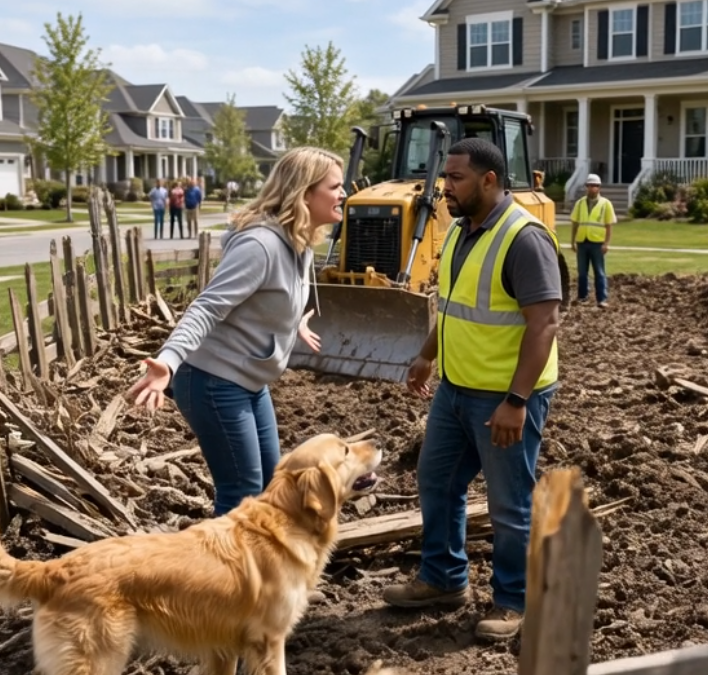
The HOA Bulldozed My Family’s Fence and Left a “Violation Notice” Behind—Then I Remembered the Little Pump House on My Land They’d Been Depending on for 20 Years.
They thought tearing down my fence would teach me who controlled the neighborhood.
They left a laminated violation notice on broken wood like my family’s land was theirs to decorate.
But they had forgotten one small pump house behind the trees, and by the next morning, every luxury homeowner behind that stone gate learned their paradise had been running on water from the man they tried to humiliate.
I knew something was wrong before I reached my driveway.
It was not one clear thing at first. Not a noise, not a person, not smoke rising from the barn or a gate swinging open in the wind. It was the shape of the land itself.
Too open.
Too exposed.
Too much sky where there should have been a line.
My truck climbed the low rise on County Road 14, engine humming under me, dust rolling behind the tailgate in a thin brown cloud. The late afternoon sun stretched gold across seventy-eight acres of pasture, timber, creek bottom, and hay field my family had cared for longer than most people in Cedar Ridge Estates had lived in Arizona.
I had driven that road thousands of times.
I knew every fence corner. Every oak. Every low place that flooded first when the monsoon came hard. Every spot where my father had cursed rocky ground and said the land had a sense of humor meaner than any man’s.
So when I topped that rise and looked east toward the boundary, my brain knew before I did.
The fence was gone.
Not leaning.
Not damaged.
Not broken by weather or livestock.
Gone.
Hundreds of feet of post-and-rail fence had been ripped out along the eastern pasture, leaving raw holes in the earth like pulled teeth. Some posts lay scattered across the grass. Others had been stacked in crooked piles, as if whoever removed them believed organizing the debris somehow made destruction respectable. Tire tracks cut deep through the pasture where heavy equipment had crossed without permission. One gate hung twisted near the corner, its hinge bent and its chain snapped.
For several seconds, I did not move.
The truck idled beneath me.
My hands stayed on the steering wheel.
Shock came first.
Anger was still somewhere behind it, gathering weight.
Then one thought punched through everything else.
The horses.
I threw the truck into park and left the door open.
My boots hit gravel hard, and I ran.
Anybody who has spent real time around livestock understands that instinct. A fence can be rebuilt. Pasture can recover. But a loose horse on a county road can kill somebody—driver, passenger, animal, all of them in one stupid preventable second.
I rounded the barn, heart slamming against my ribs.
The corral gate was shut.
I counted fast.
Dolly. Red. Juniper. Scout. Mercy. Buck.
All there.
Dolly lifted her head, chewing calmly, looking at me like I had interrupted something important. Red flicked an ear. Scout kept grazing.
I grabbed the top rail of the corral and stood there breathing like I had run a mile instead of fifty yards.
All there.
Thank God.
Only then did the anger arrive.
It did not come hot.
Not yet.
It came cold.
PART2:
I turned around slowly and looked back toward the broken fence line.
The eastern pasture stretched open toward Cedar Ridge Estates, the gated community that bordered my land like a rich man’s idea of the countryside. Stone entrance. Decorative lanterns. Perfect landscaping. Artificial waterfall by the gate. Matching mailboxes. Golf carts. Walking paths. Clubhouse. Tennis courts. Luxury pool with cabanas and a bar that served cucumber water to people who liked pretending they were roughing it because they could see horses from their back patios.
And now my fence lay in pieces between us.
I walked toward it.
The farther I went, the colder my anger became.
This had not been an accident.
No storm had done this.
No drunk driver had taken out a single section.
Somebody had brought equipment.
Big equipment.
The tracks cut through the grass in wide, ugly bands. A machine had turned near the corner gate, tearing up the topsoil and leaving black mud exposed beneath the dry crust. The wire had been cut clean in two places. Old posts my father and I had set by hand had been yanked out and tossed aside like junk.
That fence had history.
My father, Walter Dawson, had built most of it with me when I was seventeen.
I could still see him out there in my mind, younger than I am now, shoulders sunburned, shirt dark with sweat, his old straw hat pulled low over his eyes. Dad never believed in doing work halfway. He would sight down the line, squinting, then shake his head and make me reset a post if it leaned even a little.
“Straight is straight, Nate,” he used to say. “Almost straight is crooked.”
I hated that saying when I was young.
I live by it now.
I walked past the first pile of broken rails and saw the white rectangle stapled to what was left of a post.
A laminated notice.
Professional logo.
PART3:
Cedar Ridge Estates Homeowners Association.
VIOLATION NOTICE.
I pulled it loose.
The paper was warm from the sun and stiff in my hand.
Under the letterhead, a line had been highlighted in yellow.
Fence does not comply with community aesthetic standards.
For a second, I just stared at it.
Then I laughed.
Not because it was funny.
Sometimes your brain reaches for the wrong response when something is too absurd to process.
Community aesthetic standards.
I looked at my pasture.
Mud by the trough. Hay bales stacked beside the barn. A tractor older than half their residents parked under the shed. Horses flicking flies off their tails. Dust. Mesquite. Weathered rails. Land that had been worked, repaired, argued with, inherited, and buried into my family’s bones.
Then I looked toward their gated entrance, their trimmed hedges, their identical beige stucco homes, their bright blue pool shimmering beyond the clubhouse roof.
There was one small problem with their violation notice.
I was not part of their HOA.
Never had been.
Never would be.
My land existed before Cedar Ridge Estates was a line on a developer’s map. I had signed no covenants. Paid no dues. Attended no board meetings. Submitted no color samples, fence designs, landscaping requests, or permission slips to people who thought owning a golf cart made them feudal lords.
The gated community and my acreage shared a property boundary.
That was the entire relationship.
They governed their side.
I governed mine.
At least, that was how property ownership was supposed to work.
I looked back at the notice.
Under the highlighted line, someone had written in blue ink:
Removed by authority of the Architectural Compliance Committee.
Authority.
That word did it.
I folded the notice carefully and put it in my shirt pocket.
Then I took out my phone and started taking pictures.
Wide shots first. Tracks. Broken posts. Stapled notice. Cut wire. Damaged gate. The holes. The property markers. The line of Cedar Ridge houses beyond the trees. Close-ups of tire impressions. Close-ups of the company name still faintly visible in the mud on one track—Mesa Verde Land & Grade.
By the time I finished, the sun had dropped lower and my hands were steady.
That was never a good sign.
My ex-wife used to say I was most dangerous when I stopped raising my voice.
She was right.
I called the sheriff first.
Then my attorney.
Then I called the number printed on the violation notice.
The phone rang four times before a woman answered with the polished brightness of someone paid to say no in a friendly tone.
“Cedar Ridge Estates Homeowners Association, this is Brittany. How may I direct your call?”
“This is Nathan Dawson,” I said. “Your HOA just destroyed my fence.”
There was a pause.
Not long.
Long enough.
“Are you a resident, Mr. Dawson?”
“No.”
“Do you have a lot number?”
“No.”
“Then I’m not sure—”
“My family owns the pasture east of your development. Someone acting under your letterhead tore out several hundred feet of my fence and left a violation notice on the debris.”
Another pause.
This one longer.
“I’ll have to transfer you to community management.”
“No,” I said. “You’ll write down what I’m saying before you transfer me. Today, someone crossed onto private property with heavy equipment, damaged agricultural fencing, endangered livestock, and left your association’s notice attached to the wreckage. I’ve called the sheriff. I’m documenting damages. I want the name of whoever authorized this.”
Her voice changed.
Not enough to become kind.
Enough to become cautious.
“One moment, please.”
Hold music came on.
Something light and expensive.
I stood in the pasture listening to synthetic piano while looking at the snapped gate my father had hung twenty-two years earlier.
A man picked up.
“This is Leonard Pike, property manager for Cedar Ridge Estates.”
He sounded exactly how I expected him to sound. Smooth. Crisp. Busy in the way men use when they want you to know your problem is smaller than their calendar.
“Mr. Pike, Nathan Dawson. Your HOA removed my fence.”
“Yes, Mr. Dawson. I’m aware there was some maintenance along the eastern perimeter.”
“Maintenance?”
“The fencing in question was in violation of community standards and created a negative visual impact along the estate boundary.”
I looked at the broken posts.
“You crossed onto my land.”
“Our understanding is that the fence formed part of the shared visual corridor adjacent to Cedar Ridge.”
“That is not a legal sentence.”
“Mr. Dawson, there’s no need for hostility.”
“You haven’t heard hostility yet.”
He sighed softly.
That irritated me more than shouting would have.
“Mr. Dawson, the board has attempted for months to address the deteriorating appearance of the fence. Notices were sent.”
“To whom?”
“To the property address on file.”
“My property address?”
“Yes.”
“Which you got from where?”
“The county assessor.”
“Did the county assessor also tell you I am not in your association?”
Silence.
Then, “The board’s position is that the fence affects Cedar Ridge property values and falls under external improvement review.”
“The board’s position is trespassing with extra words.”
His tone cooled. “I would advise you to be careful with accusations.”
“I’d advise you to preserve every email, invoice, text message, board minute, and contractor instruction related to this fence. Sheriff’s on the way.”
“Mr. Dawson—”
I hung up.
Because if I listened one more second, I was going to say something my attorney would later quote back to me with disappointment.
The sheriff arrived twenty-three minutes later.
Deputy Carla Ruiz had known my family for years. She was in her late thirties, sharp-eyed, sun-browned, and allergic to nonsense. She stepped out of her cruiser, looked at the destroyed fence, then looked toward Cedar Ridge.
“Please tell me this was weather,” she said.
I handed her the laminated notice.
She read it.
Her eyebrows lifted.
“Well,” she said. “That’s a choice.”
“That’s one word for it.”
She walked the line with me, taking her own photos. She crouched near the tracks. Studied the cut wire. Measured the distance from the property marker with a small wheel from her trunk.
“Any animals get loose?”
“No. Thank God.”
“Anyone hurt?”
“Not yet.”
She looked at me.
I looked back.
She sighed. “Nate.”
“I’m calm.”
“That’s what worries me.”
I pointed toward Cedar Ridge. “They sent equipment onto my property and tore down my fence because they didn’t like looking at it.”
“I’m not arguing.”
“Can you arrest someone?”
“For what I see right now? Criminal damage, trespass, maybe livestock endangerment if we can show risk. But we need who gave the order and whether the contractor knew where the line was.”
“They left their logo on the confession.”
“That helps.”
A white SUV rolled slowly along the paved lane inside Cedar Ridge, then stopped near the boundary. A woman stepped out wearing cream pants, wedge sandals, oversized sunglasses, and a navy blouse that probably cost more than the gate she was admiring.
I knew who she was before she spoke.
Vivian Caldwell.
President of the Cedar Ridge Estates HOA board.
I had seen her at county meetings twice, always standing to complain about “rural blight” and “visual inconsistency” near their development. She had the kind of voice that turned opinions into policy through pure confidence. Late fifties. Perfect hair. Perfect nails. Smile like polished stone.
She approached from their side of the boundary, stopping just short of where my fence used to be.
“Deputy,” she called, pleasant as church bells. “Is there a problem?”
Deputy Ruiz turned.
“Yes, ma’am. Did you authorize removal of this fence?”
Vivian removed her sunglasses slowly, as if the moment required theater.
“The association authorized correction of a long-standing aesthetic violation along our community perimeter.”
I laughed once.
Deputy Ruiz gave me a look that said don’t.
I stopped.
Vivian turned those cold blue eyes on me.
“Mr. Dawson, we tried to resolve this civilly.”
“You destroyed my fence.”
“We removed an eyesore.”
“You trespassed.”
“We acted to protect community value.”
“You are not my community.”
Her mouth tightened.
That one landed.
“Your property directly impacts the value and enjoyment of Cedar Ridge homes,” she said. “You may not live behind our gate, but your neglect affects those who do.”
I took one step toward the boundary.
Deputy Ruiz shifted slightly between us.
“My father built that fence.”
Vivian glanced at the broken rails like she was looking at yard waste.
“Then perhaps your father should have maintained it to modern standards.”
The cold anger in me turned into something sharper.
Deputy Ruiz saw it.
“Nate,” she said quietly.
I breathed once.
Slow.
“My father is dead,” I said.
Vivian did not blink.
“I’m sorry for your loss. But sentiment does not override property standards.”
Deputy Ruiz’s expression hardened.
“Mrs. Caldwell,” she said, “whose property standards?”
Vivian looked annoyed. “Cedar Ridge’s.”
“Is Mr. Dawson a member of Cedar Ridge Estates HOA?”
Vivian hesitated.
“No.”
“Did he sign an agreement giving the HOA authority over his fencing?”
“The land predates—”
“That wasn’t my question.”
Vivian’s jaw tightened.
“I would have to review documents.”
“Did you have permission to enter his property?”
“We believed the contractor remained within the easement.”
I laughed again, quieter.
“Easement for what?”
Vivian looked at me.
For the first time, something like calculation moved behind her eyes.
“The boundary utility easement.”
That was when I knew she did not understand what she had just touched.
The utility easement.
The little pump house.
The handshake.
My father’s one generous mistake.
I looked east beyond the destroyed fence, past the line of ornamental trees Cedar Ridge had planted to hide my pasture from their pool deck.
There, tucked behind mesquite and old cottonwoods, sat a small cinder-block structure with a faded green metal roof.
Most people never noticed it.
If they did, they assumed it belonged to Cedar Ridge.
It did not.
It sat entirely on my land.
On land my father had never sold.
Inside was the pump system that fed non-potable water from our old agricultural well and storage tank into Cedar Ridge’s irrigation lines.
And, as I had learned years earlier but never had reason to act on, into their luxury pool refill system.
Twenty years ago, when Cedar Ridge was being built, my father made a handshake agreement with the original developer, a man named Arthur Vance. It was supposed to be temporary. Construction water. Dust control. Landscaping establishment. A seasonal supply for irrigation until Cedar Ridge drilled its own well and secured municipal expansion.
My father was not a lawyer.
He was a rancher.
He believed men who shook hands under the sun.
Arthur Vance paid him a modest monthly fee for a while. Then Cedar Ridge changed developers. Then the HOA formed. Then payments became irregular. Then they stopped entirely after Dad got sick.
By the time I inherited the land, the pump still ran, the lines still fed their system, and I had enough grief on my plate that I did not go looking for a fight. They paid for electricity part of the time, then stopped. I covered it without thinking some months because the pump was tied into my agricultural service and Dad had always said, “Water’s complicated. Don’t start wars over water unless you’re ready to finish them.”
So I let it run.
Not because I owed them.
Because turning it off felt petty when it had not been hurting me badly enough to justify battle.
But now Vivian Caldwell had used the word easement while standing beside my father’s destroyed fence.
Almost straight is crooked.
And enough was enough.
Deputy Ruiz asked Vivian a few more questions. Vivian answered with phrases that sounded practiced and meant nothing. Contractor authorized by the board. Visual corridor. Long-standing nuisance. Community impact. Utility easement. Legal review pending.
Deputy Ruiz wrote all of it down.
When Vivian finally walked back to her SUV, she paused and looked at me.
“You should understand something, Mr. Dawson,” she said. “Cedar Ridge has significant legal resources. I suggest you speak with counsel before escalating a misunderstanding.”
I smiled.
Not much.
“My attorney already knows.”
Her eyes narrowed.
“Good,” she said.
Then she drove away.
Deputy Ruiz watched her SUV disappear behind the ornamental trees.
“Please tell me you actually called an attorney.”
“I did.”
“Good.”
“She mentioned the utility easement.”
Ruiz glanced at me. “Is there one?”
“Not the kind she thinks.”
“What does that mean?”
I looked toward the pump house.
“It means tomorrow’s going to be interesting.”
My attorney, Samuel Price, arrived the next morning in a tan pickup instead of the black sedan people expected lawyers to drive. Sam was sixty-four, had practiced property law for thirty-eight years, and wore cowboy boots with suits because, as he once told a judge, “The Constitution does not require loafers.”
He had represented my father during two boundary disputes, one inheritance fight, and a ridiculous case involving a neighbor’s bull, a broken greenhouse, and a wedding tent.
Sam stepped out, looked at the ruined fence, and said, “Well, they wanted your attention.”
“They have it.”
He smiled slightly.
“That’s what worries me.”
We spent the morning pulling documents from Dad’s old metal filing cabinet. My father saved everything. Receipts. Handwritten notes. Survey maps. Feed invoices from 1987. Birthday cards. Warranty paperwork for tractors that had died before I graduated high school. If paper entered our house, Dad believed throwing it away invited legal disaster.
For once, his stubbornness saved me hours.
We found the original property survey.
No Cedar Ridge easement across the pasture fence line.
We found the temporary water-use agreement.
Not formal enough to make Sam happy, but signed by Arthur Vance and my father.
Purpose: temporary construction and landscaping support.
Term: renewable annually by written consent.
Termination: either party may terminate with thirty days’ notice or immediately upon nonpayment, misuse, or damage to Dawson property.
Damage to Dawson property.
Sam tapped that line with one thick finger.
“Well,” he said, “that’s convenient.”
We found payment records for the first six years.
Then late notices Dad sent.
Then a letter from my father to the HOA twelve years ago.
To Cedar Ridge Estates Board,
Your community continues to draw water from the Dawson agricultural pump station under the original development agreement. No renewal paperwork has been completed in several years. Please contact me to formalize continued use and payment.
No response in the file.
Three years later, another letter.
No response.
Then one from me after Dad died.
To Cedar Ridge Estates HOA,
I am reviewing all property agreements tied to Dawson Ranch. Please provide documentation supporting continued water access through the pump house located on Dawson property.
I remembered sending that letter.
I also remembered being so buried in funeral arrangements, hospital bills, and estate paperwork that when nobody responded, I let it slide.
Sam looked over his glasses.
“You realize they’ve been using your water for free for years.”
“I had a suspicion.”
“This is more than suspicion.”
He flipped through the file.
“No recorded easement. Temporary agreement expired. No renewals. Nonpayment. And now they damaged your property.” He leaned back. “Nate, this is not a fence dispute.”
“No?”
“No. This is a water dispute wearing a fence hat.”
By noon, we were at the pump house.
The building stood under a cottonwood, partly hidden by brush. Cinder-block walls, green roof, rusted padlock, old concrete pad around the door. My father had painted DAWSON PUMP STATION in white letters years ago, though most of the paint had faded.
Inside, the air smelled of dust, metal, and mineral-heavy water. The pump system hummed steadily. Pipes ran along the wall. One line fed my trough and irrigation spigots. Another, larger line disappeared underground toward Cedar Ridge.
Sam photographed everything.
The meter.
The line.
The valves.
The control box.
The old ledger Dad kept in a plastic sleeve on the wall.
“You ever shut it off?” Sam asked.
“No.”
“Can you?”
I pointed at the valve.
“Right there.”
“Don’t.”
I looked at him.
He lifted a hand.
“Not yet. I know you want to. I would too. But we do this clean. Notice first. Sheriff’s report. Demand letter. Evidence. Then, depending on their response, we terminate under the agreement.”
“They bulldozed my fence.”
“Yes. Which is why we’re not going to give them a chance to paint you as unstable.”
I looked at the valve.
The wheel was red, chipped, and dusty.
So small.
The kind of small thing that can humble rich people.
“Thirty days?” I asked.
Sam smiled without humor.
“Read the line again. Immediate termination upon damage to Dawson property.”
I looked at him.
He looked at me.
“But,” he said, “we still notify them before you touch it.”
“You’re no fun.”
“I’m extremely fun. Judges love me.”
At 3:00 p.m., Sam emailed and hand-delivered a demand letter to Cedar Ridge Estates HOA, the management company, and Vivian Caldwell personally.
It stated the facts.
They had entered my property without authorization.
They had destroyed agricultural fencing.
They had endangered livestock.
They had falsely claimed HOA authority over non-HOA land.
They had relied on a non-recorded, expired temporary water agreement while failing to pay or renew for years.
The letter demanded:
Immediate preservation of records.
Contractor identity and instructions.
Payment for fence replacement, pasture repair, survey verification, and livestock safety measures.
Formal apology and written acknowledgment that the HOA had no authority over Dawson Ranch.
Immediate cessation of trespass.
And finally, notice that due to damage to Dawson property and nonpayment, I was terminating Cedar Ridge’s access to the Dawson pump station, effective in forty-eight hours, unless a court order stated otherwise.
Sam wanted forty-eight hours to look reasonable.
I wanted four minutes.
We compromised because he had a law license and I had rage.
At 5:12 p.m., Vivian Caldwell called me.
I let it go to voicemail.
She called again.
Voicemail.
Then Leonard Pike.
Voicemail.
Then an unknown number.
Voicemail.
At 5:39, I received an email from Vivian.
Mr. Dawson,
Your attorney’s letter is both inflammatory and factually deficient. Cedar Ridge Estates has long relied upon established utility access across the shared boundary area. Any unilateral interference with water service to our community amenities will be treated as malicious and actionable. I urge you not to compound your error.
Regards,
Vivian Caldwell
President, Cedar Ridge Estates HOA
I forwarded it to Sam.
He replied with one sentence.
Excellent. She put it in writing.
By morning, Cedar Ridge was buzzing like kicked hornets.
I knew because one of their residents, a retired teacher named Mrs. Alvarez, called me. She lived in a house backing up to my pasture and had always been polite. She brought carrots for the horses sometimes and once yelled at teenagers for throwing beer cans over my fence.
“Nate,” she said quietly, “what on earth is happening?”
“Your HOA bulldozed my fence.”
“I know that part. Vivian sent an email saying you’re threatening the community water supply.”
“I’m terminating an expired private pump arrangement on my land.”
Silence.
Then, “Our pool?”
“And irrigation, from what I can tell.”
“But they told us we were on municipal service.”
“I’m sure they did.”
Another silence.
This one heavier.
“Nate,” she said, voice lower, “our dues increased last year because they said water costs had gone up.”
I stood very still.
“How much?”
“Thirty-eight percent.”
“For water?”
“For amenities, landscaping, pool maintenance, and water stabilization fees.”
Water stabilization.
I almost laughed again.
“Mrs. Alvarez, did anyone ever mention Dawson Ranch?”
“No. Never.”
“Did they ever mention a private pump house?”
“No.”
“Did they mention paying me?”
“No.”
There it was.
The shape of the thing.
Not only had Cedar Ridge been using my water without a valid agreement. The board had been charging residents as if it were paying market utility costs.
That changed everything.
“Mrs. Alvarez,” I said, “you may want to ask your board for records.”
“I intend to.”
By that evening, I had received six calls from Cedar Ridge residents.
Then twelve.
Then twenty.
Some polite.
Some angry at me before they understood.
Some terrified their landscaping would die.
One man threatened to sue me for emotional distress because his grandchildren were visiting and “expected pool access.”
I told him my horses had expected a fence.
He hung up.
At exactly 9:00 a.m. two days later, Sam, Deputy Ruiz, a licensed plumber, and I met at the pump house.
Sam had sent final notice the evening before.
No court order had arrived.
No injunction.
No proof of easement.
Only emails.
Threats.
And one voicemail from Vivian saying I would “regret escalating beyond neighborly correction.”
Deputy Ruiz stood with her arms crossed.
“Everyone understand what’s happening?” Sam asked.
The plumber nodded.
I nodded.
Deputy Ruiz said, “I’m here to keep peace and document. Not to turn valves.”
“I’ll turn it,” I said.
We opened the pump house.
The hum greeted us.
Steady.
Unbothered.
For twenty years, that little building had fed Cedar Ridge’s illusion. Their green lawns. Their flower beds. Their sparkling pool. Their artificial waterfall. Their ability to pretend the desert owed them beauty on demand.
I stepped to the red wheel.
For a second, my father was there in my mind.
Standing beside me.
Straw hat low.
Hands on hips.
Almost straight is crooked.
“Sorry I let it go this long, Dad,” I whispered.
Then I turned the valve.
It took effort.
The wheel resisted at first, stuck from years of not being challenged.
Then it moved.
One rotation.
Two.
Three.
The pipe shuddered.
The hum changed.
The line feeding Cedar Ridge went silent.
Just like that.
No explosion.
No drama.
No lightning.
Only a small mechanical stop in a dusty pump house.
But across the trees, in a gated community built on arrogance and free water, consequences began moving through pipes.
By noon, Cedar Ridge’s fountain at the entrance stopped flowing.
By two, sprinklers across the common areas sputtered and died.
By four, the pool maintenance system triggered low-fill warnings.
By sunset, their luxury pool sat two inches below normal level, with filters whining and pool lights shining through water that no longer looked quite so perfect.
By morning, the pool was closed.
Health code.
Insufficient circulation.
The sign on the gate read:
TEMPORARILY CLOSED FOR MAINTENANCE.
Someone had taped another sign below it in thick black marker.
ASK VIVIAN WHERE THE WATER WENT.
I did not put it there.
I wish I had.
The emergency HOA meeting happened that Friday at the Cedar Ridge clubhouse.
I was not invited.
I went anyway.
Sam came with me.
So did Deputy Ruiz, officially off duty but “interested in public safety,” which meant she wanted to watch Vivian try not to explode.
The clubhouse was everything my barn was not.
Glass doors. Polished stone floors. A chandelier made from antlers no animal in Arizona had ever worn. Leather chairs. Framed photos of golf tournaments. A wall of awards for “Desert Luxury Living.” Beyond the back windows, the pool sat still and roped off, blue but useless, surrounded by empty lounge chairs and angry residents.
The meeting room was packed.
Homeowners filled every seat and lined the walls. People held printed emails, dues statements, water bills, and the demand letter Sam had sent. Voices overlapped in sharp bursts.
Vivian stood at the front with Leonard Pike beside her, both wearing the tight expressions of people who had expected outrage to aim outward and found it turning toward them.
When Sam and I walked in, the room went quiet.
Vivian’s eyes flashed.
“This is a closed meeting for Cedar Ridge members.”
Sam smiled pleasantly.
“Then you should have held it somewhere private instead of discussing my client’s property damage and water rights in a room full of witnesses.”
A few residents murmured.
Mrs. Alvarez stood near the front. She gave me a small nod.
Vivian gripped the podium.
“Mr. Dawson has chosen to attack this community by interrupting essential services.”
I stepped forward.
“No,” I said. “Your board chose to attack my property by bulldozing my fence.”
Someone in the back said, “Is that true?”
Vivian lifted a hand. “The fence was an ongoing nuisance affecting—”
“Was it on our land?” Mrs. Alvarez asked.
Vivian paused.
“Boundary conditions are complicated.”
Sam laughed softly.
The room heard it.
That laugh did more damage than shouting.
A man in a polo shirt stood. “Vivian, was the fence on Cedar Ridge property?”
Leonard Pike leaned toward the microphone. “The association acted under a good-faith interpretation of perimeter authority.”
“That means no,” someone snapped.
Another resident stood, holding a dues statement.
“And what about the water stabilization fee? We paid almost forty percent more last year. Were we paying Mr. Dawson?”
All eyes turned to Vivian.
She did not answer quickly enough.
The room changed.
Residents can forgive mistakes sometimes.
They do not forgive feeling stupid.
Vivian’s voice sharpened. “Our financials are reviewed annually.”
“By who?” Mrs. Alvarez demanded.
Leonard said, “The board treasurer and management—”
“Where did the water money go?”
Voices rose.
Sam leaned toward me. “This is going well.”
“For us?”
“For truth.”
Vivian struck the podium with her palm.
“Enough. Mr. Dawson is attempting to divide this community to avoid responsibility for his neglected property.”
I stepped closer.
“Your contractor crossed my boundary with equipment. Your notice was stapled to my broken rail. Your emails claim authority you don’t have. Your community used my family’s pump for years without valid renewal or payment. And you charged your residents as if you were paying for water you were getting from me.”
Vivian’s face flushed.
“That is an outrageous accusation.”
“No,” Mrs. Alvarez said. “It’s a financial question. And we want records.”
Applause broke out.
Not loud at first.
Then stronger.
Vivian looked around like betrayal had entered the room wearing multiple HOA-approved outfits.
That was the beginning of the end for her.
The county investigation opened the following Monday.
Not because of the pool.
Because of the money.
Once residents demanded records, things surfaced quickly. Invoices labeled “water stabilization” but paid to a landscape consulting company owned by Vivian’s brother-in-law. Contractor payments for “perimeter improvement” authorized without board vote. An email from Leonard Pike warning Vivian that Dawson Ranch “may technically sit outside association jurisdiction,” followed by Vivian’s reply:
He’s one man with a horse fence. Remove it. He’ll complain and then get tired.
That email became famous in Cedar Ridge.
Somebody printed it and taped it to the closed pool gate.
He’s one man with a horse fence.
Under it, someone wrote:
And all the water.
Mesa Verde Land & Grade folded almost immediately under questioning. The owner admitted he had been told the HOA controlled the boundary. He produced the work order, signed by Vivian and Leonard. He also produced a text from Vivian saying:
Make sure it’s gone before Dawson gets back. He’ll be mad, but he won’t fight.
My attorney framed a copy.
I told him that was petty.
He said lawyers are allowed hobbies.
The civil suit was filed within a week.
Property damage.
Trespass.
Conversion of water resources.
Breach of the old temporary agreement.
Unjust enrichment.
Livestock endangerment.
Attorney fees.
Sam used words like “willful,” “reckless,” and “malicious” with the satisfaction of a man sharpening knives.
Vivian’s attorney responded aggressively for exactly four days.
Then the residents forced an independent audit.
After that, settlement talks began.
Meanwhile, Cedar Ridge lived without my pump.
Their lawns went brown at the edges within ten days.
The flower beds wilted.
The artificial waterfall remained dry, its stone basin collecting dust and a single plastic cup that nobody bothered to remove. The pool reopened briefly after they trucked water in at a ridiculous cost, then closed again when the temporary supply couldn’t keep up with evaporation and use.
Residents started attending board meetings in numbers the HOA had never seen.
People who had never cared about governance suddenly cared deeply about bylaws.
Vivian tried to survive it.
She blamed me.
Then Leonard.
Then the contractor.
Then “historic ambiguity.”
Then “rural hostility to planned communities.”
That last phrase did not help her.
At the final meeting before the board voted to remove her, I stood at the back and listened.
Vivian looked smaller by then.
Still polished.
Still proud.
But cornered.
Mrs. Alvarez stood and read from Dad’s first unanswered letter to the HOA.
Your community continues to draw water from the Dawson agricultural pump station under the original development agreement. Please contact me to formalize continued use and payment.
She looked up.
“He tried to resolve this twelve years ago,” she said. “Your board ignored it.”
Vivian said nothing.
Mrs. Alvarez continued, voice trembling with anger.
“And when his son continued letting us benefit from it, you repaid him by destroying his father’s fence.”
The room went quiet.
That was the first time I felt the full weight of it.
Not just damage.
Desecration.
That fence had been work. Memory. Family. Proof that my father’s hands had once been strong enough to shape a line across stubborn ground.
Vivian had seen an eyesore.
I had seen him.
The vote was unanimous.
Vivian was removed.
Leonard Pike resigned before he could be fired.
The treasurer stepped down pending audit results.
Mesa Verde agreed to cooperate.
The settlement came two months later.
Cedar Ridge Estates HOA agreed to pay for full fence reconstruction using my chosen contractor, pasture restoration, veterinary inspection for the horses, survey costs, attorney fees, and damages. They paid back compensation for unauthorized water use covering the legally recoverable period, which Sam admitted was less than the moral number but still large enough to make the new board look pale.
They also signed a permanent acknowledgment that Dawson Ranch was not subject to Cedar Ridge HOA authority.
No architectural review.
No aesthetic enforcement.
No perimeter control.
No trespass.
No touching my fence.
As for the pump, Cedar Ridge had two choices.
Negotiate a real agreement at a real rate with strict terms and backflow protections, or build their own water infrastructure.
The new board chose the second.
Good.
I did not want their money badly enough to stay tied to them.
For three months, trucks came and went on their side. Contractors drilled. Engineers measured. Residents complained. Their dues went up again, this time honestly. The pool reopened the following spring under their own water supply, and the first party they threw had half the attendance of the year before because people were still mad about what the last board had done.
My fence went up in November.
Not vinyl.
Not decorative aluminum.
Not whatever Cedar Ridge considered aesthetically compliant.
Wood.
Pressure-treated posts set deep.
Three rails.
Wire reinforced where the horses needed it.
Straight as a rifle shot across the pasture.
I hired the same two brothers who had repaired half the ranch after a storm years earlier, but I set the first post myself.
Sam came out to watch.
Deputy Ruiz stopped by on her lunch break.
Mrs. Alvarez brought lemonade.
Even Mr. Garrison from the feed store came, mostly to supervise and say unhelpful things like, “Looks almost straight,” just to irritate me.
I took the old post-hole digger from the barn.
The handles were worn smooth where Dad’s hands had held them.
I stood at the corner where the bulldozer had torn the gate loose.
For a second, I was seventeen again, sweating in the sun while Dad corrected my work.
Straight is straight.
Almost straight is crooked.
I dug until my shoulders burned.
Then I set the post.
Checked the line.
Adjusted it.
Checked again.
When it was right, I tamped the earth down hard.
Not because I had to do that one myself.
Because some repairs are not about wood.
When the last rail was hung, I walked the full line alone.
The horses followed at a distance, curious and useless. Dolly sniffed one post like she was judging the workmanship. Red tried to chew the top rail and got scolded immediately.
The sun dropped low behind Cedar Ridge.
On their side, the ornamental trees still stood, though several had died without my water. Beyond them, the clubhouse roof gleamed. The pool sparkled again, but now it did so on their dime.
On my side, the pasture looked whole.
Not new.
Whole.
There is a difference.
A week after the fence was finished, I found something tied to the front gate.
Not an HOA notice.
A small envelope.
Inside was a handwritten note from Mrs. Alvarez.
Mr. Dawson,
I am sorry for what our community allowed and what our board did in our name. Some of us should have asked questions sooner. Your father’s kindness was treated as entitlement, and your patience was mistaken for weakness. Thank you for reminding us that property lines matter, but so does decency.
Sincerely,
Elena Alvarez
Below it, in different handwriting, someone had added:
The new fence looks beautiful.
I laughed when I read that part.
Then I looked toward the line.
It did.
Not because it matched anyone’s community standards.
Because it stood where it belonged.
In the months that followed, Cedar Ridge changed in small ways.
The new board installed actual boundary markers and sent residents a map showing where HOA authority ended. It should not have been necessary. Apparently, it was.
They removed the phrase “visual corridor enforcement” from their guidelines after residents mocked it at three consecutive meetings.
They created an ethics committee, which sounded boring enough to be useful.
Vivian Caldwell sold her house the following summer.
I watched the moving truck from my pasture.
She did not wave.
I did not either.
Leonard Pike took a job managing condos in Scottsdale. Sam sent me the announcement with the subject line: Hide your fences.
I printed it and put it on the barn fridge.
The criminal side moved slower.
It always does.
The county declined major charges against Vivian but referred parts of the financial mess for civil enforcement. Mesa Verde paid a fine for failing to verify boundaries before demolition. Leonard avoided prosecution by cooperating. Vivian’s brother-in-law’s consulting company did not fare as well. The audit found enough irregularities to keep lawyers busy for a long time.
Was it perfect justice?
No.
Perfect justice is mostly something people demand when they are still too hurt to accept how slowly systems move.
But there were consequences.
Real ones.
Public ones.
Vivian lost power.
Leonard lost his position.
Cedar Ridge paid.
My fence stood.
My water stayed mine.
And every person behind that gate learned that “HOA authority” is not a magic spell you can cast over someone else’s land.
The most satisfying moment came nearly a year later.
I was at the feed store loading bags into my truck when a man in a Cedar Ridge polo approached me. I recognized him from the meeting—the emotional distress pool guy.
He looked embarrassed.
“Mr. Dawson?”
I lifted one bag into the bed. “Yeah.”
“I wanted to apologize.”
I stopped.
He took off his sunglasses.
Real apology, then.
“I was one of the people who called you angry about the pool. I didn’t know the whole story.”
“No,” I said. “You didn’t.”
He nodded.
“My grandkids were visiting. I acted like that mattered more than what happened to your property.”
I said nothing.
He swallowed.
“I’m sorry.”
The old me might have brushed it off to make him comfortable.
No problem.
Don’t worry about it.
It’s fine.
But my father’s fence had been bulldozed by people who relied on others swallowing disrespect for the sake of peace.
So I did not make it easy.
“Thank you,” I said. “I appreciate the apology.”
He waited, maybe expecting more.
I gave him nothing else.
After a moment, he nodded again and walked away.
Forgiveness, I have learned, is not the same as pretending harm was small.
Sometimes forgiveness is simply deciding the harm does not get to keep owning your day.
That evening, I drove home as the sky turned copper over the pasture.
When I topped the rise, the fence line appeared exactly where it should have been.
Strong.
Straight.
Unapologetic.
The horses grazed behind it, their bodies dark shapes in the lowering light. The barn door stood open. The pump house sat quiet behind the cottonwoods, locked and mine. Beyond the trees, Cedar Ridge glowed with its lanterns and manicured paths, still fancy, still gated, still pretending the desert was tame.
But the boundary between us was clear now.
Not just surveyed.
Understood.
I parked by the barn and walked to the fence.
The western sky burned orange and purple. A breeze moved through the grass. Somewhere near the creek, a quail called. I rested one hand on the top rail and felt the rough grain under my palm.
For years after Dad died, I thought inheritance meant keeping the land paid for.
Taxes. Repairs. Feed. Water rights. Insurance. Keeping the roof on the barn and the equipment running one more season.
But standing there that evening, I understood inheritance differently.
It was not just owning what he left.
It was defending what he loved.
Not with rage, though rage had its place.
Not with cruelty, though I had been tempted.
With records.
With patience.
With a straight line held against people who believed money made them bigger than boundaries.
My father’s voice came back to me then, as clearly as if he stood beside me in his old straw hat.
Straight is straight.
Almost straight is crooked.
I looked toward Cedar Ridge’s clubhouse, where the pool lights shimmered over water they finally had to pay for themselves.
Then I looked down the fence line, every post set true.
And for the first time since I had found those rails torn from the ground, I smiled.
They had wanted to teach me a lesson.
They did.
They taught me that kindness without boundaries becomes something entitled people mistake for weakness.
They taught me that silence can look like permission to those looking for a shortcut.
They taught me that a man can inherit land, history, and one dusty little pump house, and still not understand the power of what he has until someone arrogant enough tries to take it.
But I taught them something too.
My pasture was not their view.
My fence was not their decoration.
My father’s generosity was not their right.
And my water was never theirs.
The next morning, I found a new sign on the Cedar Ridge side of the boundary. The new board had installed it facing their walking path.
PRIVATE PROPERTY BEYOND THIS LINE.
NO HOA AUTHORITY PAST MARKERS.
DO NOT ENTER.
It was plain.
Useful.
Almost funny.
I stood on my side of the fence and read it twice.
Then Dolly wandered up behind me and nudged my shoulder, looking for a carrot I did not have.
“Sorry, girl,” I said, scratching her forehead. “Didn’t bring tribute.”
She huffed like I had violated community standards.
I laughed.
A real laugh this time.
Not cold.
Not shocked.
Real.
The pasture stretched wide around me, whole beneath the morning sun. The new rails cast long, straight shadows across the grass. The pump house door stayed locked. The gate hung square.
And for one quiet moment, everything was where it belonged.








