My Mother Humiliated Me at Dinner and Praised My Brother as a War Hero—Then a Four-Star General Recognized My Secret Army Call Sign. What He Knew About My Brother’s Story Left Everyone Speechless.
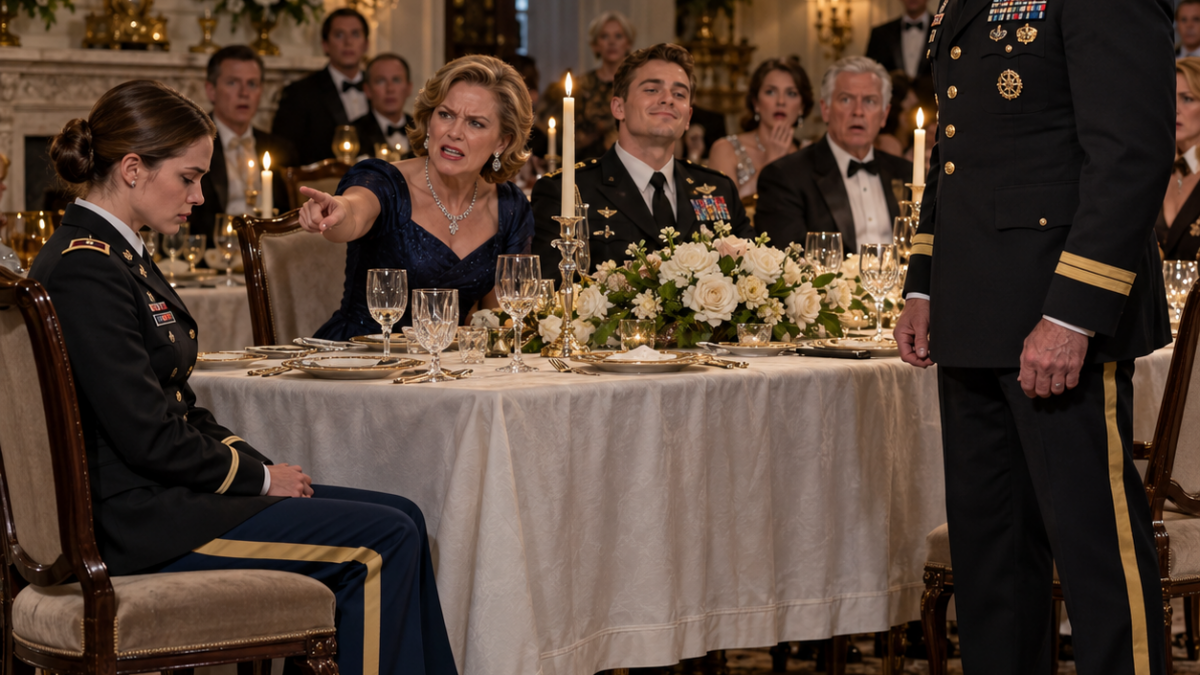
PART2:
People romanticize riflemen because riflemen photograph well.
Nobody makes movies about the person who made sure batteries, fuel, tires, water, medical supplies, and replacement parts arrived before somebody desperately needed them.
Grant had done necessary work.
I respected that.
The problem was not what Grant had done.
The problem was what his story slowly became.
When we were younger, he never claimed to have been infantry.
Never pretended to lead raids.
Never told people he’d carried wounded men through gunfire.
Then he left the military.
His salary doubled.
Then doubled again.
He learned how civilian defense circles worked.
Stories mattered.
Presence mattered.
Being remembered mattered.
The brother who had once described himself accurately as a procurement liaison started becoming, in my mother’s telling, “our combat veteran.”
Then “our battlefield logistics specialist.”
Then simply:
“Our war hero.”
PART3:
Grant rarely corrected her.
Eventually he started helping.
The first time I noticed was at Christmas.
One of my mother’s friends asked whether Grant had seen combat.
He paused.
Not long.
Just enough.
Then said:
“I’ve been close enough.”
He smiled.
The room interpreted that however it wanted.
I looked at him.
He looked back.
Neither of us said anything.
That should have been the moment.
Maybe.
But families teach you habits before they teach you language.
Mine had taught me that Grant was easier to celebrate.
I was easier to explain away.
That pattern had existed before either of us wore a uniform.
Grant brought home a B-plus and Mom taped it to the refrigerator because he’d “worked so hard.”
I brought home an A and she said:
“Well, school has always been easier for Mara.”
Grant won a regional debate trophy and we went out for dinner.
I won a statewide academic scholarship and Mom spent the drive home reminding me not to become arrogant.
Dad noticed.
My father, Thomas Ellison, noticed almost everything.
He simply confronted very little.
He was a civil engineer.
Quiet.
Patient.
The kind of man who repaired a toaster instead of replacing it because, in his words, “It already knows its job.”
My mother was the social engine of our family.
Vivian hosted.
Organized.
Fundraised.
Networked.
Remembered birthdays.
Knew which fork belonged beside which plate.
Dad occupied the quieter spaces.
He took me fishing.
Taught me how to drive.
Sat through college applications without once suggesting what I should become.
When I told my parents I was joining the Army, my mother asked:
“Why would you do that with your grades?”
Dad asked:
“When do you leave?”
That difference explained most of my childhood.
Still, I loved them both.
And for a long time, love made me generous with explanations.
Mom didn’t understand.
Grant needed confidence.
Dad disliked conflict.
I was independent.
We were all doing our best.
Human beings can spend decades saying “everyone is doing their best” when what they mean is:
I do not yet know what I am willing to confront.
The dinner that finally broke everything happened in early November.
The house where Grant and I grew up was a brick colonial outside Richmond.
My mother called it “the estate.”
It had three acres.
One detached garage.
A patio.
No horse.
No gatehouse.
No reason to call it an estate.
Grant and I had mocked her for that since high school.
Vivian had spent three weeks planning the dinner.
Thirty guests.
Defense executives.
Members of a veterans’ charity board.
A state university trustee.
Two retired officers.
People associated with aerospace, logistics, cybersecurity, and federal contracting.
And General Harlan Reed.
Four-star.
The sort of name that made people straighten in rooms even after retirement ceremonies and cocktail receptions were long over.
My mother had obtained his attendance through a veterans’ foundation whose board she had cultivated for years.
She mentioned repeatedly that his presence could “change Grant’s trajectory.”
Grant was being considered for an advisory seat with a major aerospace company.
The role was part-time.
Prestigious.
Well connected.
Exactly the kind of position my mother understood.
I almost didn’t attend.
I had been traveling.
A military flight was delayed.
I reached Richmond later than planned and had no time to change.
So I arrived carrying a duffel bag and wearing a plain duty uniform.
Nothing ceremonial.
Nothing dramatic.
Clean boots.
Worn edges.
Subdued patches designed to disappear rather than impress anyone.
My mother opened the door.
Her eyes went to the uniform before my face.
“You couldn’t have brought something nicer?”
“Nice to see you too, Mom.”
“Oh, don’t start.”
She stepped aside.
Lowered her voice.
“Tonight matters to Grant.”
That sentence could have been embroidered onto our family crest.
Tonight matters to Grant.
Graduation matters to Grant.
Interview matters to Grant.
Presentation matters to Grant.
Grant is under pressure.
Grant needs support.
Grant has an opportunity.
I walked inside.
Caterers moved through the dining room.
White plates.
Crystal.
Silver.
Rosemary butter.
Prime rib.
Red wine breathing on the sideboard.
Near the center of the table sat Grant’s upholstered chair beside my mother’s.
My place was at the far end.
Folding chair.
Near the swinging kitchen door.
Wedged between the sideboard and wall.
I stared.
Vivian noticed.
“We added people at the last minute.”
“There are empty chairs in the sunroom.”
“Those are for guests.”
I looked at her.
She immediately softened her voice.
“Please don’t make everything personal tonight, Mara.”
“I haven’t said anything.”
“Your face says enough.”
“That is unfortunate.”
“Mara.”
“What?”
“Grant finally has a real opportunity in front of him.”
I wanted to say:
And I am sitting in a folding chair in the house where I grew up.
Instead I went upstairs.
Put my duffel in my old bedroom.
Changed nothing.
Came back down.
Dignity sometimes looks disappointingly similar to being tired.
Grant arrived twenty minutes later.
Navy suit.
Expensive watch.
Cabernet.
Confidence.
He hugged me with one arm.
Then looked at my uniform.
“Still doing the mysterious government thing?”
“Still working.”
He grinned toward one of the guests nearby.
“That’s Mara. Classified enough to sound interesting, boring enough never to explain.”
The guest smiled politely.
I did too.
That was our family language.
Grant made the joke.
Vivian laughed.
I absorbed it.
Nobody had to decide anything.
General Reed arrived at 7:03.
I remember because my mother checked the hallway clock three times before he rang.
I had seen Reed’s photograph in briefing rooms.
Newspapers.
Command hallways.
Slides.
He had been part of senior command during a period of my career I preferred not to discuss socially.
Years earlier, he and I had occupied the same operations environment during the worst seventy-two hours I had experienced in uniform.
We had not worked side by side.
Not exactly.
Senior commanders and majors don’t share desks during things like that.
But he knew the operation.
He knew the call signs.
He knew what had happened.
I had not spoken to him personally in almost four years.
When he entered, I was helping an elderly guest move her chair away from an air vent.
Reed shook hands in the foyer.
My mother practically glowed beside him.
I stayed where I was.
People who spend enough time around senior officers eventually stop feeling compelled to turn their presence into theater.
From across the room, I doubted he had even noticed me.
Dinner started normally.
College football.
Taxes.
Manufacturing expansion.
Federal budgets.
Real estate.
Grant waited until the entrée arrived before moving the conversation toward overseas logistics.
Smoothly.
Too smoothly.
Someone asked whether he’d ever been in danger while deployed.
Grant lowered his glass.
Smiled modestly.
“Once or twice.”
My fork stopped.
Vivian leaned toward a banker.
“Grant doesn’t like talking about that period.”
I looked at her.
That was new too.
Grant gave a practiced shrug.
Then began.
“There was one convoy outside Fallujah.”
My skin went cold.
“Fourteen men.”
My hand stopped completely.
“We were moving through an eastern corridor when the lead vehicle got hit.”
Everything around me narrowed.
The room.
Silverware.
Voices.
Kitchen door swinging behind my shoulder.
I knew the corridor.
I knew fourteen.
Grant continued.
Smoke.
Disabled communications.
Confusion.
Wounded drivers.
Incoming fire.
He described reorganizing the perimeter.
Establishing contact with aircraft overhead.
Directing extraction.
Keeping the convoy moving while the route collapsed.
Nobody else at the table knew enough to hear the mistakes.
I did.
Some details were wrong in ways only an outsider would make wrong.
Others were precise.
Too precise.
My stomach tightened.
Grant had never been anywhere near that road.
I knew because I had spent thirty-six hours supporting the men trapped there from a concealed observation position several kilometers away.
The story he was telling was mine.
Not entirely mine.
That distinction mattered.
No operation like that belongs to one person.
It belonged to the drivers who kept moving.
The medic who worked until his gloves tore.
The radio operator calling through static.
The aircraft crews circling overhead.
The teams preparing extraction farther south.
The fourteen men who survived long enough to clear that corridor.
And the four who did not.
I knew their names.
I still do.
Grant was taking pieces of that night and arranging them around himself.
My mother smiled proudly.
“That was when everyone realized what kind of leader you were.”
Grant gave a modest shrug.
“You do what needs to be done.”
I put my fork down.
“Grant.”
His eyes moved toward me.
“If communications were down,” I asked, “how did you coordinate the aircraft?”
The table got quieter.
Grant smiled.
“Backup channels.”
“Which controller cleared your sector?”
His fingers tightened around the wineglass.
“Mara, it was a long time ago.”
“Who controlled the stack?”
“Mara.”
“It’s a simple question.”
Vivian laughed.
Not nervously.
Indulgently.
The sound she made when I became socially inconvenient.
“Oh, sweetheart.”
She raised her glass.
“Please don’t turn dinner into one of your technical paperwork debates.”
A few people smiled.
Grant leaned back.
Then my mother looked directly at me.
“Sit back and listen to a real soldier speak for once.”
The laughter was not loud.
That made it worse.
Three.
Maybe four people.
A soft ripple.
Social permission.
Heat climbed beneath my collar.
For one second, I was thirty again.
Then twenty.
Then twelve.
Watching Grant receive praise for something while my objection became proof that I was difficult.
I was about to stand.
Leave.
No speech.
No confrontation.
Just leave.
Then silver struck porcelain.
General Reed had put down his knife.
He was staring at me.
Not my face at first.
My collar.
Shoulder patch.
Then my face.
The muscles around his eyes tightened.
Recognition.
Old memory catching up with present light.
He pushed his chair back.
The room went quiet.
Reed walked the length of the table.
Past Grant.
Past Vivian.
Past the executives who had been laughing minutes earlier.
He stopped beside my folding chair near the kitchen door.
Looked at me.
Then said one word.
Quietly.
“Valkyrie?”
My mother stopped smiling.
I stood.
“Good evening, sir.”
Reed shook his head.
“Major Ellison.”
Vivian lowered her glass.
“Major?”
I looked at her.
Said nothing.
General Reed’s expression changed from recognition to disbelief.
“What in God’s name are you doing sitting back here?”
Nobody answered.
There are moments when embarrassment arrives as heat.
Others arrive as silence.
That room became so quiet I could hear the refrigerator compressor through the kitchen wall.
Reed turned toward the table.
“You were discussing the eastern corridor incident?”
Grant cleared his throat.
“Yes, sir. I was explaining—”
“I heard what you were explaining.”
Reed walked back toward his place.
Did not sit.
“Mr. Ellison.”
Grant straightened.
“Where exactly were you assigned during that period?”
Grant’s face became pale around the mouth.
“Camp Victory.”
“And your position?”
“Procurement liaison.”
Reed nodded.
“That matches what I remember.”
Vivian shifted.
“General, Grant worked in extremely complicated operations. I’m sure titles don’t communicate—”
Reed raised one hand.
My mother stopped talking.
I had never seen that before.
He looked at Grant.
“Were you physically present with the convoy you just described?”
Grant hesitated.
Everyone saw it.
“I supported the mission.”
“That wasn’t my question.”
“Not physically.”
The room seemed to contract.
An executive near Grant lowered his napkin.
A woman from the veterans’ foundation stared at her plate.
Reed continued.
“Did you direct close air support?”
“No, sir.”
“Did you extract wounded personnel from a disabled vehicle?”
“No.”
“Were you carrying a weapon on that road?”
“No.”
My mother stood.
“Arthur, surely we can discuss this without interrogating him at my dinner table.”
Reed turned.
“Vivian, your son just described another group’s combat actions as his own in front of people who influence defense contracting.”
The phrase defense contracting changed everything.
Until then, some people could have treated Grant’s speech as family exaggeration.
Dinner theater.
A veteran telling a story a little bigger than life.
Defense contracting was different.
Résumés.
Board nominations.
Ethics certifications.
Security questionnaires.
Professional biographies.
Proposal packages.
Those places did not tolerate creative memory well.
Grant saw the shift.
“It was a dinner story.”
His voice was too quick.
“I wasn’t submitting sworn testimony.”
Reed looked at him.
“Was it only a dinner story?”
Grant did not answer.
That was when I understood.
We had not reached the real problem.
Reed turned to me.
“Major, how much of what he described did you recognize?”
“Most of the framework.”
“Some details were inaccurate.”
“Was the controller call sign Valkyrie?”
I hesitated.
Hearing the name in my mother’s dining room felt like someone had opened a locked drawer inside me.
“Yes, sir.”
Grant looked at me.
Not angry.
Afraid.
Reed rested both hands on his chair.
“The controller supporting that convoy remained in position after her observation site took damage.”
My mother’s eyes moved toward me.
“She coordinated movement and air coverage until fourteen surviving members of that element cleared the corridor.”
Vivian stared.
Reed’s voice lowered.
“She was injured during that operation.”
My mother’s face changed.
Only slightly.
But I saw it.
And that disturbed me more than surprise would have.
Because for one second, she didn’t look shocked.
She looked caught.
Grant spoke.
“That doesn’t mean Mara saved everyone herself.”
“No.”
He looked at me, almost relieved.
“I didn’t.”
I pushed my folding chair fully under the table.
“Nobody does something like that alone.”
“There were drivers making decisions while exhausted and injured.”
“A medic working until his gloves tore.”
“Pilots overhead.”
“People on radios.”
“A medical team farther south.”
“And four men who didn’t come home.”
I looked at him.
“You’re turning all of them into an anecdote about yourself.”
Reed nodded once.
“Exactly.”
Vivian stood.
“This is grotesquely out of proportion.”
“Grant told a dramatic version of something connected to his deployment.”
“Families do that.”
“No.”
My voice was calm.
That surprised even me.
“He told four dead men’s story as his own.”
The woman from the veterans’ foundation covered her mouth.
Grant’s face hardened.
“You always do this.”
“Do what?”
“Turn everything into a moral tribunal because you think wearing a uniform makes you purer than everybody else.”
Several people shifted away from him.
He noticed.
Became more defensive.
“I worked over there too.”
“I supported missions.”
“I spent months away.”
“Maybe I wasn’t crawling through rubble, but I contributed.”
“I never said you didn’t.”
“Then stop acting like I stole something.”
I looked at him.
“You did.”
Vivian struck the table softly.
“Enough.”
Nobody listened.
Reed asked:
“Where did you get those operational details?”
Grant looked at me.
That was answer enough.
Something cold settled into my stomach.
“What did you use?”
Grant looked away.
“Public material.”
“What material?”
“After-action summaries.”
“News reports.”
I knew he was lying.
News stories never included the radio sequence he’d described.
Neither did sanitized public summaries.
Reed knew too.
“How did you obtain the controller sequence?”
Grant flushed.
“I don’t remember.”
“You remembered well enough to perform it tonight.”
My mother stepped between them.
“Arthur, I invited you as a friend.”
“I came as a courtesy to the foundation.”
“You are humiliating my son.”
Reed’s expression stayed flat.
“Your son did that himself.”
The first guest left six minutes later.
No announcement.
Quiet thank-you.
Coat.
Door.
Then another couple.
Then two executives Grant had spent dinner courting.
Departures spread.
Within fifteen minutes, half the room had emptied.
Grant stood watching potential contacts leave without shaking his hand.
Then Daniel Cross stopped near the door.
Compliance director.
Major aerospace company.
A name Vivian had mentioned repeatedly before dinner.
He looked at Grant.
“Is the eastern corridor incident referenced in your advisory nomination packet?”
Grant went blank.
Vivian answered too fast.
“That packet is private.”
Cross’s expression changed.
“I’ll take that as something I need to verify.”
Then he left.
Grant turned on me the moment the door closed.
“You couldn’t let me have one night.”
I laughed.
No humor.
“You built your night out of somebody else’s worst day.”
He stepped closer.
“You think this is finally going to make Mom pick you?”
That landed exactly where he meant it to.
Before I could answer, Reed spoke behind me.
“Major Ellison doesn’t need your mother to pick her.”
Grant turned.
Reed held a tablet.
His expression was grim.
“I’ve just been sent the advisory biography your company circulated this afternoon.”
Grant stopped breathing.
Reed looked at me.
“Mara, the story isn’t only in his dinner speech.”
He turned the tablet.
I saw the screen.
Grant had put the convoy in writing.
And beneath it, in language disturbingly close to an old award recommendation I had never shown him, he described himself as the officer who brought fourteen Americans home.
That was the moment the entire evening changed.
Because dinners end.
Paper stays.
The biography was three pages.
Executive language.
Expensive verbs.
Grant had “directed multinational logistical contingencies.”
“Coordinated under hostile conditions.”
“Demonstrated decisive battlefield leadership during an eastern corridor extraction involving fourteen isolated personnel.”
Then the final paragraph.
Maintained communications despite injury.
Refused evacuation.
Remained until every surviving member reached safety.
My thumb stopped.
That sentence was not public.
Lieutenant Colonel Peter Sloane had written similar language in one of my award recommendations.
I had argued with him about it.
Told him the wording made it sound as if I’d been alone.
I hadn’t.
Dozens of people had contributed.
“How did he get this?”
Grant said nothing.
Vivian looked between us.
“Mara, don’t make accusations you can’t prove.”
That gave me another clue.
Not:
What are you talking about?
Not:
Grant, where did this come from?
Don’t make accusations you can’t prove.
I looked at her.
“What do you know?”
“Nothing.”
“Then why defend him before he answers?”
“Because I know your temperament.”
There it was.
Again.
If I found something ugly, my reaction became the problem before the ugly thing itself could be discussed.
Reed stepped closer.
“Answer your sister.”
Grant rubbed his jaw.
“Years ago, there were papers at the house.”
“What papers?”
“Military documents.”
My heartbeat changed.
“What documents?”
“I don’t know.”
“Mom had a folder.”
Vivian’s head snapped toward him.
“Grant.”
That one word told me everything.
“What folder?”
She said nothing.
For the first time all night, my mother looked old.
Not fragile.
Not sympathetic.
Just stripped of polish.
“It was years ago.”
“What was in it?”
“Mara, this isn’t the time.”
“Actually, I think this is the first time.”
Reed remained silent.
He wasn’t leaving.
Vivian began rearranging napkins.
“After one of your deployments, someone from the Army came to the house because they could not reach you directly.”
The room tilted.
“What year?”
No answer.
“Mom.”
Grant looked down.
I knew.
“2018?”
She closed her eyes.
That was the year.
I had returned to the United States through a medical facility.
Communication had been sporadic.
I told Vivian only that I’d been hurt and would recover.
That was all I wanted her to carry.
She texted:
Glad you’re okay. Grant just got promoted. Call when you can.
I remembered reading those words under fluorescent hospital lights.
Reed asked:
“What did the Army representative give you?”
Vivian seemed trapped between lying and admitting something worse.
“A sealed notification packet.”
“Addressed to me?”
“No.”
“Information for next of kin.”
“That isn’t what I asked.”
She looked at me.
“Yes.”
“What did you do with it?”
“I kept it.”
Grant muttered:
“For a while.”
I turned toward him.
“There were commendation drafts.”
“A report excerpt.”
“Letters.”
“Why did you read them?”
“Because they were in the house.”
I stared.
“You were thirty-four.”
He flinched.
“I wasn’t reading your diary.”
“Mom showed me because she didn’t understand the terminology.”
Vivian said:
“I was worried about you.”
That may have been true.
Which made it worse.
“If you were worried, why didn’t you call?”
“I did.”
“You called nine days later to ask whether I was coming to Thanksgiving.”
“You made it clear you didn’t want questions.”
“I made it clear I couldn’t discuss the operation.”
“Those aren’t the same thing.”
Silence.
For years I thought my mother dismissed my career because she did not know.
Now I understood.
She had known enough.
She knew I had been hurt.
Knew people had written about my actions.
Knew I had done more than “paperwork.”
Then continued introducing me as the uninteresting child anyway.
Reed asked:
“Was the award recommendation in the packet?”
Vivian looked down.
“Yes.”
Grant jumped in.
“It wasn’t classified.”
Reed’s voice sharpened.
“That is not the point.”
Grant exploded.
“Then what is the point?”
“That she got a medal?”
“Fine.”
“Congratulations.”
“She never talked about it.”
“She never wanted attention.”
“I did.”
The honesty stunned me.
He continued.
“Do you know what it’s like growing up next to someone who never tells you anything but somehow makes you feel ordinary anyway?”
“Mara disappears.”
“Comes home quieter.”
“Gets calls from colonels.”
“Acts like none of it matters.”
“Mom asked me to help with the nomination packet.”
“I remembered the language.”
“So you took it.”
“I adapted it.”
Reed’s eyebrows lifted.
Even Grant heard himself.
He tried again.
“I wasn’t claiming her medal.”
“I used an example representing the work our team supported.”
“You changed the subject of the sentence from me to you.”
“I was there in theater.”
“Eight miles away.”
“I supported the operation.”
“So did the cook who fed everybody afterward.”
“He didn’t tell people he controlled aircraft.”
Vivian moved toward me.
“Please lower your voice.”
I had not raised it.
Something finally broke inside me.
Not into anger.
Into clarity.
I took out my phone.
Grant watched.
“Who are you calling?”
“No one.”
I opened email.
Searched for Peter Sloane.
Retired now.
The man who wrote my recommendation.
I sent:
Peter, strange question. Did you ever send my 2018 award narrative anywhere outside official channels or the next-of-kin packet?
Four minutes.
Reply.
No. Why?
Then another.
Actually, your mother requested an additional copy in 2019. Said it was for a family military archive. I mailed it to her myself.
I read it twice.
Looked at Vivian.
“You requested another copy.”
Grant froze.
My mother lost what little color remained.
Reed looked at her.
“Vivian, what exactly were you planning to do with your daughter’s record?”
Nothing.
Then Grant glanced toward my mother’s office.
One second.
Enough.
I saw.
Reed saw.
I crossed the foyer.
Opened the office.
Beneath charity correspondence sat a blue presentation folder.
Aerospace company logo.
Yellow sticky note.
My name.
I carried it back.
Vivian followed.
“Mara, stop.”
I didn’t open it.
Reed held out his hand.
“May I?”
I gave him the folder.
Vivian said:
“That contains private business material.”
Reed looked at her.
“Then Grant can explain it.”
Grant rubbed his face.
“Mom helped assemble background material for my advisory nomination.”
Harmless words.
Until Reed opened the folder.
Programs.
Donor biographies.
Grant’s résumé.
His legitimate commendations.
Recommendation letters.
Nothing wrong.
Then another page.
A photocopy of my award recommendation.
My name had been covered with white paper before copying.
Grant’s name typed over it.
I stopped breathing.
Betrayal is not always shouting.
Sometimes it’s a familiar font.
A copied signature block.
A page representing one of the hardest moments of your life sitting neatly inside somebody else’s career packet.
I took the page.
“Did you submit this?”
Grant shook his head.
“Not that page.”
“Then why is it here?”
“Reference material.”
“For what?”
Silence.
Daniel Cross’s question returned.
Was the incident referenced in your nomination packet?
Yes.
Maybe not through the crude photocopy.
Through the biography built from it.
My mother stepped closer.
“Mara, I understand this looks bad.”
“I don’t think you do.”
“We were trying to help Grant translate military experience into civilian language.”
“By using mine?”
“You never cared about recognition.”
That silenced me.
She mistook silence for permission.
“You hated ceremonies.”
“You asked us not to tell people when you were decorated.”
“You said the mission mattered more than individual credit.”
“So you decided the credit was available?”
“That isn’t what I said.”
“It is what you did.”
Grant slammed one hand against the mantel.
“Nobody stole your medal.”
“You stole the reason for it.”
He stepped closer.
“And what has it cost you?”
There are questions so revealing they don’t require answers.
Grant spread his hands.
“Your career is intact.”
“Your rank is intact.”
“Nobody took money from you.”
“One mistake tonight could destroy everything I’ve spent fifteen years building.”
“One mistake?”
“I embellished a biography.”
“You impersonated other people’s courage.”
“I worked in the same war.”
Reed spoke.
“That sentence should embarrass you.”
Grant turned.
“With respect, General, you don’t understand civilian contracting.”
Reed almost smiled.
Not pleasantly.
“I assure you I understand enough.”
My phone buzzed.
Daniel Cross.
He had found my number through the foundation directory.
Major Ellison, I apologize for contacting you tonight. I need to verify whether material attributed to Grant Ellison may derive from your service record. I will not ask for operational details. Please preserve anything relevant. Our ethics office will contact appropriate channels.
Grant saw my face.
“Who?”
I showed him.
He swore.
Vivian moved immediately.
“Do not answer tonight.”
“Why?”
“Everyone is emotional.”
“I’m not.”
“You should be.”
“That has never helped in this family.”
She stopped.
I began asking questions.
“When did you request the second copy?”
“2019.”
“Why?”
“Family archive.”
“No.”
“Why really?”
She looked at Grant.
He looked away.
I finally understood.
“How long has he been using my story?”
Silence.
“Grant.”
He exhaled.
“I mentioned the convoy at a leadership event.”
“When?”
“2021.”
“What did you say?”
“That I supported an extraction.”
“Supported?”
No answer.
Vivian said:
“It was inspirational.”
I stared at her.
“You were there?”
Pause.
“Yes.”
“How many times have you heard him tell it?”
“I don’t know.”
“Mom.”
“A handful.”
Grant snapped.
“Stop making it sound like criminal conspiracy.”
“How many?”
He looked down.
“Maybe six.”
Six rooms.
Six audiences.
Six times borrowing the worst night of other people’s lives.
Reed closed the folder.
“I need to make a call.”
Vivian stepped in front of him.
“Arthur.”
He stopped.
“Please don’t turn a family argument into a federal investigation.”
“I am not turning it into anything.”
“Grant used military-service claims while pursuing government-connected work.”
“His employer already knows.”
“His prospective board already knows.”
“You could choose not to escalate.”
Reed looked at her.
“So could your son.”
“For years.”
Then he walked away to make the call.
Grant rounded on me.
“If I lose Meridian, you’re done with me.”
I stared at him.
“You say that like you’re threatening to take something I still have.”
His face twisted.
“We’re family.”
“No.”
“We share relatives.”
Vivian gasped.
I looked at both of them.
For years they had not considered what happened to me important until it became useful to Grant.
Now they did not consider what Grant had done wrong until it became expensive.
I went upstairs.
Got my duffel.
Returned.
Reed waited near the door.
“The inspector general liaison will handle this.”
“You do not need to do anything tonight.”
Vivian looked desperate.
“Mara, don’t leave like this.”
“How would you prefer?”
“We can talk tomorrow.”
“We had eight years.”
She reached for my sleeve.
I stepped away.
Her hand remained in the air.
Then Grant’s phone rang.
He looked at the screen.
Meridian Strategic Logistics.
He answered.
“Hello?”
His expression changed.
“Effective now?”
Vivian gripped the table.
Grant closed his eyes.
When the call ended, he stared at his phone.
“They suspended me.”
My mother looked at me like I had pushed him down a staircase.
I started toward the door.
Behind me:
“I hope you’re satisfied.”
That sentence ended the last softness I was carrying.
I turned.
“No, Mom.”
I looked at the altered award recommendation on the table.
“I’m informed.”
By Monday, the dinner was no longer a family argument.
It was compliance.
Meridian suspended Grant while outside counsel reviewed his biographies, speaking events, proposal materials, clearance-related records, and claims of direct combat experience.
The aerospace company withdrew his advisory nomination.
The veterans’ foundation removed a description calling him a “decorated combat logistics leader.”
Nobody needed me to ruin Grant.
That was what Vivian never understood.
Systems can be slow.
Frustrating.
Imperfect.
But government-adjacent organizations become very interested when military credentials start changing shape.
I returned to duty.
Answered only what I was authorized to answer.
Did Grant participate physically in the eastern corridor engagement?
No.
Did his biography contain language consistent with material from my award recommendation?
Yes.
Did I authorize him to use it?
No.
Everything else belonged to records.
Three days later, Vivian called eleven times.
I answered the eleventh because avoiding her was becoming work.
“Mara.”
“Hi, Mom.”
“Grant may lose his job.”
“I know.”
“He has a mortgage.”
“So do millions of people.”
“That is cruel.”
“No.”
“It is factual.”
She inhaled.
“He admitted poor judgment.”
“Isn’t that enough?”
“For what?”
“For you to tell them this has gone far enough.”
There it was.
Not:
I’m sorry I showed him your records.
Not:
I’m sorry I laughed.
Not:
I’m sorry I knew and pretended not to.
A procedural favor.
“I don’t control the review.”
“General Reed listens to you.”
“General Reed follows rules.”
“He could tell them nobody was harmed.”
I looked out my apartment window.
“People were harmed during the operation Grant claimed.”
“You know what I mean.”
“Yes.”
I did.
That was why I couldn’t help.
She became angry.
“You have always been so rigid.”
“And Grant has always depended on you calling boundaries rigidity.”
Silence.
Then:
“I was proud of you.”
Those words landed like late evidence.
“When?”
“All along.”
“No.”
“Mara.”
“You were privately proud when you discovered I had done something impressive enough to use.”
“You were publicly embarrassed because I wouldn’t turn it into networking.”
“That isn’t fair.”
“Did you show Grant my packet?”
Silence.
“Yes.”
“Did you know he used the convoy story?”
“Yes.”
“Did you correct him?”
Silence.
“No.”
“Then we’re not arguing about fairness.”
She began to cry.
Years earlier, that sound would have pulled an apology out of me automatically.
This time I listened.
“I didn’t know how far he’d taken it.”
“I believe you.”
Relief entered her voice.
“You do?”
“Yes.”
“But you knew far enough.”
The relief disappeared.
We barely spoke for two months.
The inquiry widened.
Grant had not falsified his discharge papers.
Had not claimed decorations he did not receive on official military forms.
That mattered.
It prevented the most dramatic possibilities people began whispering about.
But his corporate biography and speaking appearances repeatedly blurred supporting operations into personally conducting them.
Meridian found versions of his biography inside two client proposal packages.
They were not decisive contracting documents.
Ethics still cared.
Seventeen days after the dinner, Grant was terminated.
His attorney negotiated neutral departure language.
His clearance sponsorship ended because the new position no longer existed.
Industry events quietly removed him.
Vivian blamed me.
Text:
Your brother’s life has been destroyed over a story.
I stared.
Then replied:
No. His reputation changed because people learned the story was false.
She didn’t answer.
A week later, Daniel Cross emailed me.
Major Ellison, I want to apologize. I was part of the audience that laughed when your mother made that remark. I knew nothing about your service, but I knew enough to recognize disrespect. I chose social comfort. That was cowardly.
I read it twice.
Then wrote:
Thank you for saying so.
Nothing else.
Not every apology requires a relationship.
General Reed contacted my command and invited me to speak at a closed professional-development session on attribution and operational integrity.
I declined.
Initially.
My commander, Colonel Nadia Brooks, understood.
“You don’t owe anyone an inspirational speech.”
“I know.”
“But there’s a useful conversation.”
“About stolen stories?”
“About what happens when quiet professionals leave narrative space for loud people.”
I stared at her.
She smiled.
“You’re allowed to hate that sentence.”
“I do.”
“Still true.”
Eventually I agreed.
One condition.
No family discussion.
Eighty service members and civilian analysts.
I told them credit matters less as ego than accountability.
If an institution cannot accurately identify who made decisions, it learns the wrong lessons.
Afterward, a young captain waited.
“My father thinks I answer phones for the Army.”
I laughed.
“So did my mother.”
“Do you correct her now?”
That question caught me.
“No.”
She frowned.
“I stopped auditioning for respect.”
I thought about that answer all the way home.
Then Thanksgiving approached.
Six days before, Vivian emailed.
Dinner will be small this year. I would like you to come. Grant will not be there if that makes things easier.
I stared.
Then another message arrived.
Grant.
Mom says you might come home. If you do, I want my chance to tell you what really happened.
I almost deleted it.
Then he sent a photograph.
The original 2018 packet spread across my mother’s office desk.
Beside it sat an envelope.
My name written in my father’s handwriting.
My father had been dead three years.
Grant’s next message said Vivian had hidden that envelope from me since the night she discovered what Valkyrie meant.
My father, Thomas Ellison, had been the quiet parent.
Civil engineer.
Fixed everything.
Spoke little.
At dinner he could sit through an hour while Vivian conducted conversation like an orchestra.
When he died after a short illness, I had been overseas.
I reached home barely in time for the funeral.
For years, I believed he knew almost as little about my military career as Mom did.
The envelope changed that.
I did not attend Thanksgiving.
Instead I told Grant to meet me halfway between Richmond and my duty station at a coffee shop.
He arrived early.
No tailored suit.
Jeans.
Old quarter-zip.
Exhausted.
He set the envelope on the table.
I didn’t touch it.
“Where did you find this?”
“Mom’s office safe.”
“Why were you in the safe?”
“Insurance paperwork.”
“Does she know you took it?”
“Yes.”
“She let you?”
“No.”
I almost smiled.
“Some things don’t change.”
Grant looked at his coffee.
“I deserved that.”
First sentence resembling accountability.
I picked up the envelope.
Edges yellowed.
Dad’s handwriting tilted uphill as it always did.
Mara.
Inside were three pages.
The opening stopped me.
Your mother received a packet from the Army today. She is upset and says you do not want us discussing it, so I will respect that. But I read enough to understand that when you said you were “fine,” you were protecting us.
I closed my eyes.
The coffee shop disappeared.
Dad wrote that he was proud of me.
Worried that saying it too loudly might turn his pride into another burden I had to carry.
He said courage did not excuse permanent secrecy between family members, but he understood I had responsibilities he could not see.
Then one sentence broke me.
I hope someday you know that being quiet never made you invisible to me.
I put the letter down.
Grant looked away while I cried.
Silent.
Paper napkin tearing against my fingers.
“Why didn’t I get this?”
Grant’s jaw tightened.
“Dad gave it to Mom to put in a care package.”
“She didn’t?”
“No.”
“Why?”
“I asked.”
“What did she say?”
Grant hesitated.
“What did she say?”
“She said Dad was encouraging your need to be mysterious.”
I laughed through tears because the cruelty was almost elegant.
“She thought if everybody treated your deployments like some sacred thing, you’d pull farther away.”
“So she hid his letter.”
“Yes.”
“Then requested another copy of my award recommendation.”
“Yes.”
The picture finally made sense.
Vivian had not dismissed my career because information was unavailable.
She dismissed it because the information arrived in a form she could not control.
My silence frustrated her.
My father’s private pride excluded her from being the family narrator.
Grant’s career was easier.
Grant gave her stories.
Grant gave her language she could repeat at donor events.
Grant’s achievements could be displayed.
Mine arrived sealed.
“Tell me what really happened.”
Grant frowned.
“You said you wanted a chance.”
He nodded.
“The first time I used the convoy story wasn’t planned.”
I waited.
“Meridian retreat.”
“Someone asked about dangerous situations.”
“I said our team supported a convoy attack.”
“Then I repeated some details from your packet.”
“And people assumed you were there.”
“Yes.”
“You corrected them?”
“No.”
“Why?”
His face tightened.
“Because they looked at me differently.”
There it was.
The most honest thing he had said.
“My boss started including me.”
“People remembered me.”
“Mom loved telling it.”
“Next time, I made it sound like I’d been closer.”
“And eventually you were on the road.”
“Yes.”
“Pulling wounded men out.”
He looked down.
“Yes.”
I folded Dad’s letter.
“Why use my award language in the advisory application?”
“Because I panicked.”
“About what?”
“Being ordinary.”
So quiet I almost missed it.
He rubbed his palms together.
“You were always the difficult one.”
“But you were also the one doing things nobody could compete with.”
“I hated you for not bragging.”
“Because it made my bragging look cheap.”
“That is not my responsibility.”
“I know.”
“Do you?”
“Yes.”
He looked at me.
“I do now.”
I searched his face.
Self-pity remained.
Grant would probably always have some.
But underneath it was shame pointed inward instead of blame pointed at me.
“What do you want?”
“I want you to say you forgive me.”
“No.”
His face tightened.
I did not soften.
“I believe you regret what happened.”
“I believe losing your job forced you to understand part of it.”
“But forgiveness isn’t a receipt you get because you finally tell the truth.”
He nodded.
“Okay.”
“I’m not campaigning against you.”
“I won’t call future employers.”
“I do not want to ruin your life.”
“I know.”
“But we are not going back to normal.”
He gave a bitter smile.
“Normal was pretty bad.”
“That’s true.”
Then he reached into his backpack.
Another folder.
“I made copies of every place I used the story.”
My stomach tightened.
“How many?”
“Eleven.”
More than he’d admitted.
“Six talks.”
“Three biographies.”
“The advisory packet.”
“One leadership podcast.”
“Why give me this?”
“Meridian has most.”
“Not all.”
“You’re volunteering the rest?”
“Yes.”
“Even if it makes things worse?”
“Yes.”
For the first time since dinner, I believed my brother was doing something because it was right rather than useful.
That didn’t erase anything.
It mattered anyway.
We left separately.
Dad’s letter rode on the passenger seat.
At home, I had a voicemail from Vivian.
Controlled voice.
“Mara, Grant had no right to give you private correspondence from my safe.”
“Your father wrote many emotional things when he was ill.”
“I hope you will not use one old letter to rewrite our entire family history.”
I listened twice.
Deleted it.
The next morning I wrote:
Dad’s letter did not rewrite our history. It explained part of it.
She replied almost immediately.
When you are ready to talk like an adult, call me.
I blocked her.
Not forever, I told myself.
But for the first time, I wanted silence that belonged to me.
The months after dinner were quieter than dinner itself.
I expected attorneys.
Family alliances.
Distant cousins discovering moral certainty.
Instead consequences arrived mundanely.
Invitations stopped.
Job titles changed.
Voicemail greetings disappeared.
People who once laughed too loudly at Grant’s stories became careful saying his name.
Meridian completed the review in January.
No fabricated official discharge documents.
No false military decorations on government forms.
But repeated misrepresentation of operational experience in professional settings.
Claims had influenced business-development opportunities.
Permanent no-rehire.
Referral of relevant materials through proper contracting channels.
No criminal prosecution.
Some people wanted one.
I didn’t.
Justice is not always prison doors.
Sometimes it is losing access to the status your lie was designed to purchase.
Grant moved to Ohio.
Commercial warehousing.
No defense portfolio.
Half the salary.
He texted occasionally.
Started Monday. Team seems decent.
Or:
Told supervisor exactly why I left Meridian before background check. He hired me anyway.
I usually replied:
Good.
That was the relationship we had earned.
Vivian’s fall was quieter.
Maybe harder.
Her identity depended on social approval.
The veterans’ foundation did not accuse her of wrongdoing.
She resigned after board members questioned whether her role promoting Grant created conflicts with their mission.
Two gala committees replaced her.
A museum donor council did not renew her chair position.
She told friends she was “taking a break from public service.”
Everyone understood.
Then Colonel Brooks called me into her office.
“You’ve been selected for the training detachment.”
I blinked.
“What?”
“You heard me.”
It was an assignment I had wanted for years.
Training younger officers and specialists in operational planning, joint coordination, decisions under pressure.
Fewer deployments.
More stability.
Teaching.
I should have felt uncomplicated happiness.
Instead my first instinct was to reach for my phone and call Dad.
The reflex hit so hard I looked away.
Brooks pretended not to notice.
“When do I move?”
“Summer.”
She leaned back.
“You know what’s interesting?”
“That sentence usually means paperwork.”
“You did not get this because of Reed.”
“I assumed.”
“You also didn’t get it because of the dinner drama.”
“Good.”
“Three commands independently requested you.”
I smiled.
“Better.”
That night, I read my father’s letter.
Being quiet never made you invisible to me.
For years, I had confused being unseen by Vivian with being unseen entirely.
That was the power I had handed her.
Some hidden part of me still measured worth against her recognition.
I stopped.
Vivian found another way to contact me in April.
Handwritten letter.
She apologized for hiding Dad’s note.
Only that.
She wrote grief had made her possessive.
That she resented how Dad understood parts of me she didn’t.
Withholding the letter had been “a terrible decision made from hurt.”
Then she started explaining Grant.
Insecure.
Frightened.
Desperate to prove himself.
By the end, the apology had turned into an argument for reconciliation.
Family should be larger than our worst mistakes.
I stared.
Then replied.
Family should also be safer than our most convenient excuses.
I told her I accepted that she regretted hiding Dad’s letter.
I did not accept explanation as justification.
I would not return to family gatherings until she could discuss what happened without turning Grant’s choices into insecurity and mine into inflexibility.
I ended:
I love you. Love is not the same thing as access.
I expected rage.
Three weeks passed.
Then another letter.
Short.
You are right that I keep explaining when I should be listening. I do not know how to fix that yet.
I kept it.
Did not reply.
Progress can be silence too.
That summer, General Reed invited me to a retirement reception.
I almost declined.
Formal receptions remained close to the bottom of things I enjoyed.
I went.
He found me near a window.
“You’re sitting in a proper chair tonight?”
I laughed.
“Trying something new.”
Then he became serious.
“I’ve wondered whether calling you Valkyrie that night put you in a position you didn’t want.”
I appreciated him asking.
“It did.”
He nodded.
“But?”
“I think I needed the collision.”
“That sounds painful.”
“It was.”
He looked across the room.
“Your mother contacted me.”
“When?”
“January.”
“What did she want?”
“To apologize.”
“To you?”
“Yes.”
“For what?”
“For using my attendance as leverage for Grant.”
I exhaled.
“What did you say?”
“I told her I was the least important person she owed an apology.”
That sounded like Reed.
“She asked whether I thought you would ever forgive her.”
“And?”
“I told her it was none of my business.”
I smiled.
“Definitely you.”
Then he said:
“For what it’s worth, Mara, you never needed that room to stand for you.”
I looked around.
“No.”
He nodded.
“But sometimes it helps when the right person stands up first.”
I thought about Dad’s letter.
Colonel Brooks.
The captain whose father thought she answered phones.
Fourteen exhausted men moving through a corridor while dozens of people did their jobs without caring whose name appeared later.
“Sometimes.”
That summer I moved.
At the bottom of one box I found the place card from Vivian’s dinner.
Mara Ellison.
No rank.
No title.
Just my name.
On the back, in my mother’s handwriting:
Kitchen end.
I stared.
Then threw it away.
My new apartment was smaller than my mother’s dining room.
I loved it.
Twelve minutes from the training detachment.
Maple trees outside.
Tiny balcony.
On my first Saturday, I drank coffee while rain darkened the pavement and realized nobody there knew my call sign.
Nobody knew my rank history.
Nobody knew dinner.
Peaceful.
I began teaching in August.
My students were experienced enough to be confident and young enough to occasionally mistake confidence for certainty.
On the first day of every course, I wrote one sentence.
Accuracy is respect.
I never explained where it came from.
We talked about how operational stories change.
Briefings.
Awards.
News.
Institutional memory.
A wrong name can become a wrong lesson.
A simplified action can turn teamwork into heroic mythology.
At first students thought it sounded dry.
Then I gave them an exercise.
Multiple conflicting accounts of one fictional mission.
By the end, half had assigned credit to the wrong team.
“That,” I said, “is how legends become lies without anyone planning the first lie.”
Grant’s story probably began exactly that way.
Small exaggeration.
A room rewarded it.
A mother loved how it sounded.
Another telling.
Another detail.
Another promotion.
Eventually he stepped so fully into another person’s experience that he felt offended when reality took it back.
Grant called in September.
“Do you have ten minutes?”
“I do.”
Nervous voice.
“I’m getting married.”
I sat down.
I didn’t even know he was dating.
“Congratulations.”
“Her name is Leah.”
“How long?”
“Six months.”
“Fast.”
“It is.”
Then serious.
“She knows everything.”
“Everything?”
“Meridian.”
“The convoy.”
“Your award packet.”
“Why I lost the job.”
“She still said yes?”
“That was almost exactly my question.”
We laughed.
Then:
“I’m not asking you to come.”
That hurt unexpectedly.
He corrected himself.
“I want you there.”
“I just don’t want an invitation to feel like I’m pretending we’re fixed.”
I looked outside.
“Send me the date.”
“Okay.”
“I’m not promising.”
“I know.”
The ceremony was at a courthouse.
Dinner at a small restaurant.
No ballroom.
No executives.
No military stories.
I went.
Vivian was there.
I had not seen her in almost a year.
She looked smaller.
Time does that once you stop seeing people as roles and start seeing them as aging humans.
She approached.
“May I hug you?”
I hesitated.
Then nodded.
Brief.
No tears.
At dinner, Leah asked what Grant and I were like growing up.
Vivian opened her mouth.
Stopped.
Looked at me.
“You should probably ask Mara and Grant separately.”
“We did not always experience the same family.”
Small sentence.
Enormous change.
For the first time, my mother admitted her version of our history was not official.
I did not forgive her that night.
Did not forget.
But I stopped needing her to defend herself badly enough for me to prove my pain.
There is a difference.
A month later, she called.
I answered.
We discussed ordinary things.
Twelve minutes.
Neighbor’s tree.
Grant and Leah moving.
Her new volunteer work at a food pantry where nobody cared what gala committee she once chaired.
Before hanging up:
“I’m proud of you.”
The old me would have waited.
Proud of what?
Rank?
Career?
Sacrifice?
This time:
“Thank you.”
Her approval had finally become what it always should have been.
Nice to receive.
Unnecessary to survive.
Grant stayed in commercial logistics.
Never returned to defense contracting.
Two years later he became a warehouse operations director.
He earned it through something astonishingly ordinary.
Showing up.
Solving problems.
Telling the truth about what he’d actually done.
One day he sent a screenshot of his employee biography.
Former Army logistics specialist with experience in procurement support and commercial operations.
Nothing else.
I replied:
Accurate.
He answered:
Trying something new.
I laughed harder than expected.
General Reed eventually retired.
I saw him occasionally at professional events.
He never called me Valkyrie publicly again.
The last time we spoke, he shook my hand.
“Major Ellison.”
That meant more.
Valkyrie belonged to a particular version of me.
A particular place.
People whose names mattered more than mythology.
Students sometimes ask whether I regret not correcting my family earlier.
The answer is complicated.
Part of me wishes I had challenged Vivian the first time she dismissed my career.
Part wishes I’d stopped Grant the first time his stories expanded.
But another part understands that repetition reveals people.
If I’d fought for every ounce of recognition, my mother might have learned how to praise me without ever learning how to respect me.
Grant might have learned to hide his lies rather than confront why he needed them.
The dinner dragged everything into daylight.
Not because a four-star general rescued me.
He didn’t.
General Reed simply said aloud what everyone else in that room had failed to ask.
Who is this woman you keep dismissing?
For years, I thought the answer required witnesses.
It did not.
My service was real before anyone at that table understood it.
My father’s pride was real while his letter sat hidden in a safe.
The fourteen men who survived that corridor did not survive because my mother eventually learned my rank.
The four who died were not honored by how loudly anyone spoke afterward.
That changed how I measure people.
I watch who takes credit and who distributes it.
Who becomes generous when a room is watching.
Who stays decent when nobody useful is present.
Who apologizes because consequences hurt.
And who apologizes because they finally understand the harm.
Vivian and I speak every few weeks now.
There are subjects we don’t touch.
Holidays I attend.
Others I don’t.
I love her.
I no longer give her authority over my self-worth.
Grant and I are rebuilding something slower than forgiveness and more useful than pretending.
Trust.
He knows it may never become what it could have been.
So do I.
That’s his consequence.
Mine was different.
For years, I believed dignity meant staying silent no matter what anyone said.
I don’t believe that anymore.
Silence can be strength.
It can also create empty space where louder people write whichever version of you benefits them.
Now, when accuracy matters, I speak.
When somebody else deserves credit, I say their name.
And when someone confuses humility with permission to diminish me, I no longer sit politely in the folding chair they chose beside the kitchen door.
Not because I need the head of the table.
Not because I need a four-star general to stand beside me.
Not because I need my mother to finally introduce me correctly.
I simply understand something now that took me most of my life to learn.
I am allowed to choose where I sit.








