My Boss Fired Me During Bereavement—Then the $11 Million Contract She Bet Her Career On Started Collapsing Without Me
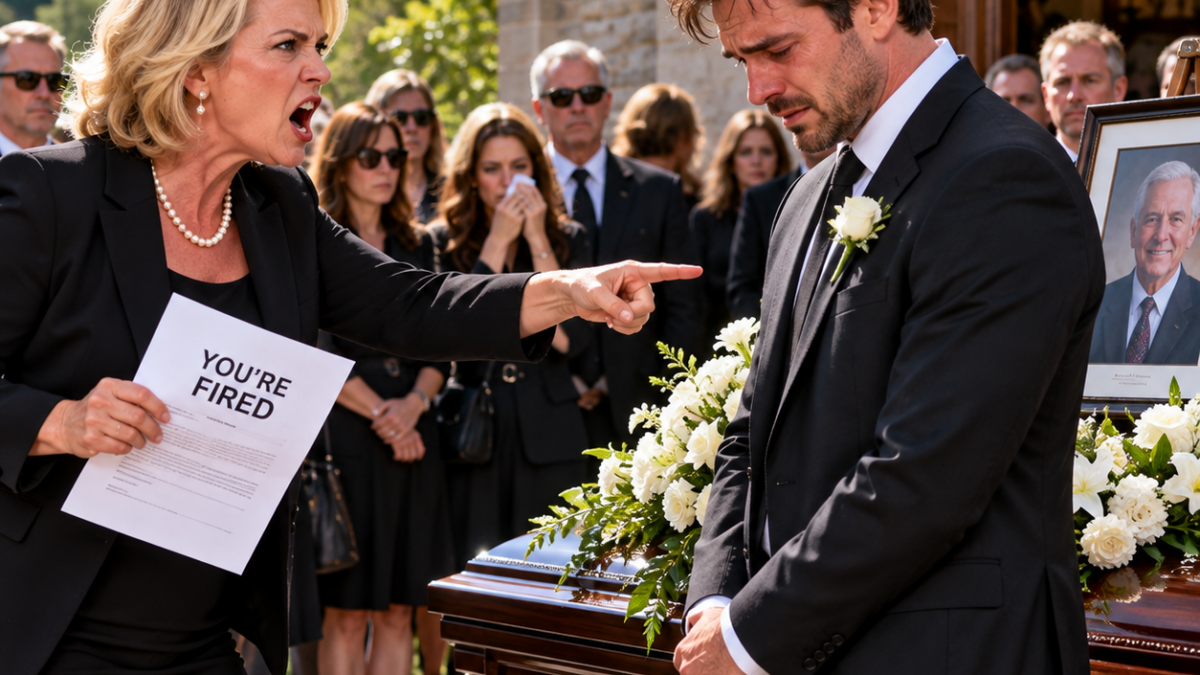
PART2:
For about eighteen months before everything went wrong, Miles had been leading the scale-up work on a new protective coating for one of the company’s biggest potential customers.
I’ll call the customer NorthRange Equipment.
They manufactured large industrial machinery.
The new coating system was intended for equipment operating in cold, corrosive environments.
NorthRange didn’t just want a drum or two.
If qualification succeeded, the initial supply agreement was worth roughly eleven million dollars over three years.
For Miles’s plant, it was enormous.
The biggest new contract they had landed in years.
Jobs.
Production volume.
Future expansion.
Corporate attention.
Everything.
The chemistry itself was documented.
That point matters.
This was not some story where Miles was the only genius who knew a secret recipe and everyone else stood around helplessly after he left.
The formula was in the system.
Raw-material specifications were documented.
Batch sheets existed.
Test methods existed.
QC specifications existed.
The other chemists were intelligent.
One of them, Nadia Rahman, was excellent.
She had worked closely with Miles during pilot batches and understood the chemistry well.
But a recipe and experience are not identical things.
Miles had spent months moving that product through progressively larger equipment.
Lab.
Pilot vessel.
Intermediate trial.
Then the actual production reactor.
That reactor had personality.
Miles would hate me calling it that.
He would say equipment does not have personality.
Then spend twenty minutes describing its personality.
The cooling jacket responded slowly.
The agitator pulled air into certain mixtures above particular speeds.
The temperature probe lagged slightly depending on batch level.
And because the reaction itself generated heat, the number on the screen did not tell you everything about where the reaction was going.
Miles had learned those behaviors during two major-scale trials.
That accumulated judgment—combined with documented batch data—was a central part of what made the first full production campaign so important.
The commercial launch was scheduled for March.
Customer representatives were coming for part of the qualification review.
First production batch Monday.
Testing Tuesday.
Second batch if needed.
Then final release and shipment.
Everyone knew the schedule.
Especially Karen.
Karen Whitmore had managed Miles’s group for about two years.
She came from a larger chemical company.
Early forties.
Polished.
Smart.
Quick.
I met her twice at company events and liked her both times.
I need to say that because real people are rarely villains twenty-four hours a day.
Karen could be charming.
She remembered spouses’ names.
She sent handwritten cards when employees had babies.
She knew how to present technical information to senior executives without losing them.
She had also become very good at turning every situation into a deadline.
Karen loved words like ownership.
Urgency.
Velocity.
Execution.
She once told Miles that the company’s biggest problem was “excessive respect for process over outcomes.”
Miles came home and said, “That sentence worries me.”
I asked why.
“Because process is how a chemical plant avoids creating unexpected outcomes.”
That was Miles.
He and Karen had not hated each other.
They had friction.
Karen pushed schedules.
Miles pushed validation.
Karen thought Miles sometimes overdocumented.
Miles believed there was no such thing as overdocumenting a twelve-thousand-liter chemical reaction you might have to explain six months later.
Both viewpoints could exist in a healthy organization.
Then Harold died.
Harold was Miles’s father.
Seventy-one.
Retired heavy-duty mechanic.
The kind of man who considered replacing something before it had been repaired at least twice a personal failure.
He lived with Miles’s mother, Patricia, in a small farming community about eight hours east of us.
Wednesday morning, around ten, my phone rang at the dental clinic where I work.
It was Miles.
He said only:
“Dad’s gone.”
I stepped into the hallway.
“What happened?”
“Heart attack.”
“Where?”
“Garage.”
There was a pause.
“He was fixing the snowblower.”
Of course he was.
Harold owned a snowblower older than our marriage.
Every winter, Patricia begged him to replace it.
Every winter, Harold said there was nothing wrong with it that couldn’t be fixed.
Apparently he had been leaning over the engine when he collapsed.
Patricia found him.
The paramedics came.
Nothing could be done.
Miles came home at eleven.
I expected him to cry.
He didn’t.
Not then.
He sat at the kitchen table with a notebook.
“Drive or fly?”
“Miles.”
“Flights will be stupid because we’d have to connect.”
“We don’t need to decide this second.”
“Mom needs help.”
“I know.”
“Funeral home.”
“Yes.”
“Bank.”
“Yes.”
“Dad’s truck title.”
“That can wait.”
He looked at me.
Then wrote it down anyway.
Miles grieves by organizing.
He makes lists because lists have boxes.
Death does not.
We decided to drive.
Eight hours.
Winter highway.
Long stretches of snow-covered fields, grain elevators, gas stations, and not much else.
Before we left, Miles called Karen.
Speakerphone.
I was packing clothes.
Karen sounded genuinely sympathetic.
“Oh, Miles. I’m so sorry.”
“Thanks.”
“Was it sudden?”
“Heart attack.”
“God.”
Pause.
“Take care of what you need.”
Miles looked at me.
“I’ll probably need through next Wednesday.”
“That’s fine.”
Karen said it immediately.
“We’ll play it by ear.”
“I’ve got the production handover almost finished.”
“Don’t worry about that tonight.”
“I want Nadia to have it.”
“Okay.”
“There’s also the batch-sheet revision still in change control.”
Another pause.
“I know.”
“I put that in the handover.”
“Fine.”
Karen’s voice softened.
“Go be with your mom.”
That’s how the first call ended.
Miles emailed Rebecca in HR.
Bereavement leave request.
Copied Karen.
Included expected dates.
Then, despite Karen telling him not to worry, he stayed up until nearly midnight writing the handover.
I know because I was sitting beside him.
Key process parameters.
Recent raw-material information.
Sampling plan.
Who to call.
Customer testing requirements.
And one note highlighted in bold:
BATCH SHEET REVISION SUBMITTED JANUARY — SCALE-UP FEED/COOLING CHANGES PENDING CHANGE CONTROL APPROVAL. SEE SCALE-UP REPORT SR-1187.
I asked him why the revision was still pending.
“Customer approved the original procedure.”
“So?”
“Changing an approved production instruction means reopening review.”
“And?”
“Karen wanted to launch first.”
I looked at him.
“Is that safe?”
“Yes.”
He corrected himself.
“Safe isn’t the issue.”
“Then what is?”
“Product quality.”
During large-scale trials, Miles had discovered the written limit didn’t tell the entire story.
The batch sheet said the raw-material feed could continue as long as reactor temperature remained under eighty-five degrees Celsius.
Technically true.
The problem was thermal inertia.
The reactor cooling jacket responded slowly.
If you waited until the displayed temperature reached eighty-five before reacting, the chemistry already contained enough stored heat to keep climbing.
During one trial, Miles had watched the trend.
At seventy-six degrees, he paused the feed.
Temperature continued upward on its own.
Seventy-eight.
Eighty.
Eighty-two.
Then stabilized.
After it began falling, he restarted the feed more slowly.
He also reduced agitator speed during a particular stage because higher speed pulled excess air into the batch.
Not dangerous.
Bad for final properties.
Those changes went into his scale-up report.
Then into a proposed revised batch sheet.
The revision sat waiting.
“Why didn’t Karen approve it?”
“Not just her.”
“Why hasn’t the company approved it?”
“Because NorthRange already signed off on the existing sheet.”
He rubbed his forehead.
“Karen didn’t want to reopen customer documentation two months before launch.”
“Is Nadia aware?”
“She knows the trials.”
“Then it’ll be fine.”
“Probably.”
That word bothered me.
Miles closed the laptop.
We left Thursday before sunrise.
Around lunchtime, somewhere on a flat highway where the horizon seemed fifty miles away, Karen called.
I was driving.
Miles answered through the truck.
“How are you holding up?”
“Okay.”
“Your mom?”
“Not great.”
“I’m sorry.”
Pause.
Then:
“Listen, I know the timing is awful.”
I glanced at Miles.
His face changed.
Karen continued.
“We’re trying to map coverage for next week.”
“Okay.”
“Customer QC is flying in.”
“I know.”
“Would there be any chance you could be back Monday?”
Miles stared through the windshield.
“The funeral is Saturday.”
“I know.”
“I need to help Mom afterward.”
“Of course.”
“I told you Wednesday.”
“Absolutely.”
Karen spoke quickly.
“I’m just asking whether you can think about it.”
“We’re eight hours away.”
“Understood.”
“We’ll be back Thursday.”
“Just think about Monday.”
Call ended.
I said, “No.”
Miles looked at me.
“I didn’t say anything.”
“You were considering it.”
“I was calculating.”
“No.”
“Sophie.”
“Your father is dead.”
“I know.”
“Your mother’s husband died.”
“I know.”
“You don’t drive home Sunday night because somebody scheduled a batch.”
He looked out the window.
“I know.”
Friday morning, Karen called again.
Miles was in Harold’s workshop.
We were sorting papers.
Patricia sat at the kitchen table with her sister.
Miles stepped outside.
I followed a minute later.
He was standing by the back steps.
Phone to ear.
I heard him say:
“No.”
Pause.
“No, Karen.”
Another pause.
“I understand the launch matters.”
Then:
“I am not driving back Sunday.”
His voice was calm.
Afterward I asked what she wanted.
“Three or four days.”
“What?”
“She wants me there for the run.”
“Then?”
“Come back here afterward.”
I stared.
“She wants you to drive eight hours Sunday night, work the launch, then drive eight hours back?”
“Basically.”
“Absolutely not.”
“I said no.”
Good.
Friday afternoon, there was a video invitation.
Karen.
Miles.
Rebecca from HR.
I immediately disliked that combination.
Miles accepted from Harold’s garage because Patricia was meeting with the funeral director in the dining room.
Behind him sat the snowblower.
Half disassembled.
Harold had apparently removed the carburetor before he died.
One glove still lay on the workbench.
I stood inside the doorway.
Camera off.
Karen appeared first.
Rebecca second.
Rebecca looked uncomfortable before anybody spoke.
That told me everything.
Karen did not waste time.
“Miles, I need to be straight with you.”
“Okay.”
“This launch is the most important thing this site has done in five years.”
“I understand.”
“You own this product.”
Miles’s eyes narrowed slightly.
That phrase again.
Ownership.
“You have responsibilities.”
“I handed over the work.”
“I know.”
“Nadia has the report.”
“This isn’t about Nadia’s capability.”
“Then what is it?”
“Continuity.”
Miles said nothing.
Karen continued.
“I understand the funeral.”
Then she said the sentence I’ve never forgotten.
“But the funeral is Saturday.”
Miles went completely still.
“After that, we’re talking about paperwork, estate issues, helping your mother with administrative things.”
My hand tightened around the doorframe.
Karen continued.
“Those things can wait.”
Miles said, “My mother can’t.”
“Miles—”
“No.”
His voice remained low.
“She just lost her husband.”
“And I respect that.”
“No, you don’t.”
Rebecca finally spoke.
“Karen, the bereavement leave is—”
Karen talked over her.
“This launch cannot move.”
Miles looked at the screen.
Not angry.
Almost curious.
“What exactly are you asking?”
“I need you here Monday.”
“I’ve already said no.”
“I know.”
Karen leaned slightly closer to her webcam.
“Then I’m telling you I need you here Monday.”
Silence.
Miles asked:
“And if I’m not?”
Rebecca’s face changed.
“Let’s not—”
Karen said:
“If you aren’t here Monday morning, don’t bother coming back.”
Nobody moved.
Even I thought maybe Karen would immediately soften it.
She didn’t.
Miles looked at Rebecca.
Then back at Karen.
“I want to make sure I understand.”
“Miles—” Rebecca started.
He raised one hand.
“If I remain on my approved bereavement leave Monday, I’m fired?”
Rebecca said, “That is not—”
Karen interrupted.
“I’m saying if you’re not prepared to support the organization at a critical moment, we need to reconsider your role.”
Miles stared.
“That’s not what you said.”
Karen’s jaw tightened.
“You heard me.”
“Yes.”
“So?”
Miles nodded once.
“Okay.”
Karen looked almost relieved.
She thought he’d surrendered.
Then Miles said:
“I won’t be there Monday.”
And ended the call.
No speech.
No threat.
No bargaining.
Just click.
For about ten seconds, he stared at the dead screen.
Then he closed the laptop.
I said, “Miles.”
He stood.
Walked to the utility sink.
Washed his hands.
They weren’t dirty.
He dried them carefully.
Then said:
“Well.”
Pause.
“I guess I’m unemployed.”
I wanted anger.
He didn’t have any to spare.
“How are you feeling?”
He looked toward the snowblower.
“Honestly?”
“Yes.”
“I don’t have room for this today.”
Then he picked up Harold’s carburetor.
“Dad would hate leaving this apart.”
He spent the next two hours finishing the snowblower.
That was Miles’s grief.
His father was dead.
His job apparently gone.
So he rebuilt a carburetor.
Friday night I did what Karen assumed Miles would do.
I calculated.
Mortgage.
Our daughter Emma was in Grade Eleven.
University coming.
My dental-clinic salary.
Savings.
Retirement accounts.
Miles’s income was much larger than mine.
We could survive.
Months.
Maybe longer.
But not forever.
Forty-seven-year-old specialized chemist.
Narrow industry.
Western Canada.
Karen’s calculation wasn’t crazy.
Men like Miles often don’t walk away.
That’s why she thought the ultimatum was safe.
What she failed to understand was that grief changes mathematics.
The mortgage still mattered.
But not more than Harold’s funeral.
Saturday morning, the church parking lot filled with trucks.
Old mechanics.
Farmers.
A retired shop foreman who drove three hours.
Men with hands shaped by forty years of tools.
One stood at the lectern and told a story about Harold rebuilding a transmission outdoors during a snowstorm using a propane heater and a thermos full of rye whisky.
Patricia laughed.
Miles laughed too.
First time since Wednesday.
Then he gave the eulogy.
Short.
He told one story.
When Miles was sixteen, he tried repairing an old dirt bike.
It kept dying.
He replaced the spark plug.
Fuel line.
Carburetor parts.
Nothing worked.
Harold came outside.
Listened.
Asked:
“Why did the old plug fail?”
Miles didn’t know.
Harold said:
“Then you haven’t fixed anything.”
That became a rule in their house.
If you don’t understand why something broke, you haven’t fixed it yet.
Miles finished the eulogy by saying:
“I spent my career asking that question because Dad taught me to.”
He sat down.
Nobody from work called during the funeral.
Good.
Sunday, Miles helped Patricia with insurance forms.
Monday, bank.
Tuesday, registry office.
Wednesday, lawyer.
He sorted Harold’s tools.
Kept two torque wrenches.
Gave socket sets to cousins.
Found a coffee tin full of bolts Harold had been saving since probably 1987.
Meanwhile, nine hundred kilometers away, Karen launched the biggest product in her site’s recent history without him.
The first full batch started Monday morning.
Nadia was there.
So were operators.
Production supervisor.
QC.
A NorthRange quality representative planned to visit later in the qualification window.
Everyone had the batch sheet.
Everyone had Miles’s handover.
Everyone had access to the scale-up report.
This is where systems matter.
In an ideal world, critical production knowledge should never depend on somebody remembering to open a separate document.
That’s why Miles had submitted a batch-sheet revision.
The official batch sheet said ninety-minute feed.
Maintain below eighty-five degrees.
Nadia knew the reactor had run warmer during trials.
But she had not been lead on every large-scale run.
Production was behind schedule.
Karen was pushing.
Operators followed the approved instructions.
At around seventy-eight degrees, someone noted the trend.
Still below limit.
Eighty-one.
Still below limit.
Eighty-four.
Feed continued.
Then the reaction’s stored heat did what Miles already knew it would do.
The temperature kept climbing after corrective action began.
Eighty-seven.
Eighty-nine.
Around ninety-one at peak.
Not a runaway reaction.
Not an emergency.
Cooling eventually pulled it back.
Batch looked normal.
No smoke.
No alarms.
No disaster-movie foam pouring across the floor.
Karen reportedly called it a minor excursion.
Tuesday morning, QC results came back.
Viscosity high.
Too high.
They sprayed test panels.
Coating went on thick.
Uneven.
Adhesion testing failed.
The resin had overreacted.
You cannot politely ask an overcooked resin to become less cooked.
First batch lost.
About $190,000 in raw materials before disposal costs, expedited replacements, lost reactor time, and two days of cleaning.
Karen blamed raw material.
That wasn’t impossible.
Chemical manufacturing genuinely deals with lot variation.
So replacement materials were ordered urgently.
Expedited freight.
Second run scheduled.
Customer told there had been a manageable QC deviation.
Miles heard almost none of this directly.
Nadia texted Tuesday.
Hey. So sorry about your dad. Hope you’re okay.
Nothing about work.
Nothing about the batch.
I respected her immediately.
Miles replied Wednesday night.
Thanks, Nadia. Appreciate it.
Someone else eventually told him the batch had failed.
I asked:
“Are you going to call?”
“No.”
“You know what went wrong.”
“I suspect.”
“Shouldn’t you tell them?”
Miles looked at me.
“They fired me.”
“That doesn’t make the chemistry stop existing.”
“The scale-up report exists.”
“You know they won’t read it.”
“Then they should.”
That sounded cold.
It wasn’t.
There is a line between helping former coworkers and letting a company fire you, then continue using you for free because their deadline became inconvenient.
We drove home Thursday.
The house felt strange.
Miles usually unpacked on Sunday evenings while complaining about Monday.
Now there was no Monday.
He cleaned the garage.
Updated his résumé.
Called two former colleagues.
Started looking.
Then Karen called.
Exactly once.
No apology.
“Miles.”
“Karen.”
“I think both of us said things Friday in the heat of the moment.”
I was sitting across from him.
His face didn’t change.
“I didn’t.”
Pause.
“We don’t need to relitigate that.”
“Okay.”
“We’re running another batch Monday.”
“I heard.”
“We need you to walk Nadia and production through the scale-up.”
“Fine.”
I raised my eyebrows.
Then Miles continued:
“Have HR send a consulting agreement.”
Silence.
“What?”
“You terminated my employment.”
“Miles.”
“If the company wants technical consulting, have Rebecca send terms.”
“This is your product.”
“Not anymore.”
“That isn’t reasonable.”
“I think it’s very reasonable.”
“The team is under enormous pressure.”
“I know.”
“You could prevent a serious problem.”
“I wrote the scale-up report.”
Karen exhaled sharply.
“We don’t have time for contract games.”
Miles almost smiled.
“You had time Friday.”
Karen hung up.
The company ran Batch Two without him.
They did not repeat the exact first mistake.
Everyone now feared heat.
So they slowed the feed aggressively.
Increased cooling.
Held the reactor lower.
The batch stayed beautifully controlled.
No overshoot.
Early viscosity result landed inside specification.
Relief.
Karen reportedly told management the problem was solved.
Then the next morning, viscosity drifted.
Reaction had not completed properly.
During pilot work, Miles had learned that the system required a proper hold in a specific temperature range before final cooldown.
Otherwise some of the chemistry continued slowly overnight.
The next-day result moved out of specification.
Second batch failed.
Not identically.
Still unusable.
Now the company had two failed commercial batches.
Weeks lost.
Expedited freight bills.
Disposal.
Cleanouts.
Customer delivery date missed.
And NorthRange had penalties in the contract.
More importantly, their quality team stopped treating the failures as startup noise.
They began asking whether the supplier could manufacture the product consistently at commercial scale.
An eleven-million-dollar agreement does not disappear because of one bad batch.
It can absolutely begin falling apart after two.
NorthRange froze part of the upcoming release schedule.
Reduced confidence.
Demanded a technical root-cause review.
Requested evidence the next batch would be controlled.
And internally, somebody finally asked:
Where is Miles?
Karen’s answer was reportedly:
“He chose to leave during launch.”
That sentence traveled upward.
Eventually it reached Douglas Mercer.
Douglas ran the site.
Late fifties.
Engineer by training.
Dry personality.
Steel-toed shoes even with dress pants.
Miles respected him.
Douglas did not know details about the bereavement conflict.
Karen managed that department.
His first understanding was simple:
Senior chemist abandoned the team during a critical launch.
Wouldn’t return.
Refused support.
Douglas asked Rebecca in HR for Miles’s file.
That was Karen’s third mistake.
The first had been believing Miles would obey the ultimatum.
The second had been launching with unresolved process documentation.
The third was assuming HR had heard Friday’s conversation the same way she remembered it.
Rebecca had notes.
Detailed notes.
Written immediately after the call.
Miles’s bereavement request.
Submitted on time.
Approved.
The handover email.
Scale-up report reference.
The pending January batch-sheet change.
And the exact words from the video meeting.
Be here Monday morning or don’t bother coming back.
Rebecca had also emailed her HR manager that same afternoon.
She wrote that Karen appeared to threaten termination if Miles remained on approved bereavement leave and requested guidance.
That email had sat in someone’s inbox while the launch consumed everyone’s attention.
Then Douglas reviewed change control.
Miles had submitted the revised batch sheet in January.
Technical rationale attached.
The revision specifically described proactive feed interruption, temperature response, agitator adjustment, and required hold/retest steps.
Who deferred reopening customer approval before launch?
Karen.
Her note said reopening documentation could jeopardize schedule and should be handled after initial commercial production unless technically essential.
Miles had written back:
Recommend resolution before first commercial batch. Large-reactor behavior differs from pilot instruction assumptions.
Douglas reportedly read that sentence twice.
Then he requested the failed-batch investigation.
Batch One matched the thermal concern.
Batch Two matched the incomplete-reaction concern.
Suddenly the story was no longer:
Lead chemist abandons critical launch.
It became:
Manager pressures senior chemist during approved bereavement leave.
Manager gives ultimatum in front of HR.
Chemist accepts termination.
Manager launches using a batch sheet whose scale-up revision she chose to delay.
Two batches fail in ways documented in the deferred scale-up work.
Manager describes customer problem as minor while contract deteriorates.
Karen was removed from the customer recovery effort.
By the end of that week, she was gone from the site.
Official language said she had left to pursue another opportunity.
I don’t know whether she resigned.
I don’t know whether she was fired.
Miles never asked.
He said:
“If they wanted me to know, they would’ve told me.”
Douglas called our home landline.
Yes.
Landline.
Miles insists on keeping it because cell towers fail during emergencies.
I answered.
“Hello?”
“Is this Sophie?”
“Yes.”
“This is Douglas Mercer from Miles’s company.”
My first instinct was:
What now?
I said, “One moment.”
Miles came to the phone.
Douglas did not use corporate fluff.
“I owe you an apology.”
Miles said nothing.
“What happened with your father should not have been handled the way it was.”
“Okay.”
“I reviewed Rebecca’s notes.”
“Okay.”
“I reviewed your leave request.”
“Okay.”
“I reviewed the batch-sheet history.”
That got Miles’s attention.
Douglas continued.
“Karen made decisions.”
“But the company employed Karen.”
“The company is responsible.”
Miles sat down.
I watched his face.
Douglas asked:
“Would you come back?”
“No.”
Immediate.
No drama.
Douglas said:
“I understand.”
Miles looked surprised.
Then Douglas continued:
“Would you come back temporarily?”
“For what?”
“Third production run.”
Miles leaned back.
“As an employee?”
“As a consultant.”
Now I became interested.
Douglas said:
“You set the rate.”
Miles nearly laughed.
“I doubt that.”
“Set a reasonable rate.”
“That’s different.”
Douglas asked what it would take.
Miles said he would think about it.
Not because he wanted revenge.
Because Nadia was still there.
Operators were still there.
QC people.
Technicians.
None of them had threatened him.
And an eleven-million-dollar contract failing could hurt jobs belonging to people who had done nothing wrong.
Douglas emailed a consulting proposal the next morning.
Miles changed the rate.
Significantly.
Douglas accepted.
I looked at the number.
Then looked at Miles.
“This is per day?”
“Yes.”
“Not per week?”
“Per day.”
I looked again.
“Go save their paint.”
He corrected me.
“Coating.”
“Go save their extremely expensive paint.”
Third run was scheduled for Thursday.
Before going in, Miles requested full batch records from the first two failures.
Raw-material certificates.
Temperature trends.
Agitator data.
Cooling-water temperature.
Lab results.
Operator notes.
Then he saw something.
The replacement resin feedstock for Batch Three sat near the thick end of supplier specification.
Still acceptable.
But different enough to matter.
Miles adjusted the planned feed timing.
Karen would’ve called that delay.
Douglas called it engineering.
Thursday morning Miles entered the plant as a contractor.
Visitor badge.
Not employee badge.
That bothered him more than he admitted.
Nadia met him near the lab.
She hugged him.
Then immediately apologized.
“I should’ve called after the first batch.”
“No.”
“I knew you would’ve known.”
“You did exactly the right thing.”
“Really?”
“Yes.”
“You were grieving.”
He looked at her.
“And you shouldn’t need one person for this.”
That became important later.
They went upstairs.
NorthRange had sent a quality representative.
Man named Victor.
Victor had flown in specifically to watch.
He was not impressed.
Two failures.
Missed delivery.
His company’s production schedule affected.
He kept checking his watch.
Miles walked everybody through the batch before starting.
Not just instructions.
Reasons.
“If you see seventy-six here, you’re not reacting to seventy-six.”
He pointed at the trend screen.
“You’re reacting to where the system will be five minutes from now.”
Operator nodded.
“Cooling lag.”
“Yes.”
“Why slow agitation?”
Nadia answered.
“Air entrainment.”
Miles smiled.
Good.
Batch started.
Feed.
Temperature rising.
Seventy-one.
Seventy-three.
Seventy-five.
Seventy-six.
Miles said:
“Pause.”
Victor frowned.
“Your approved upper limit is eighty-five.”
“Yes.”
“We’re nine degrees under.”
“Yes.”
“Then why stop?”
Miles pointed toward the trend.
“Because the reactor hasn’t stopped heating.”
Feed paused.
Temperature climbed.
Seventy-seven.
Seventy-nine.
Eighty.
Victor stopped checking his watch.
Eighty-one.
Then leveling.
Miles said nothing.
Temperature began falling.
Feed restarted.
Slower.
Later, agitation reduced.
The process took longer than Karen’s schedule.
Nobody cared anymore.
Then came the hold.
Victor asked:
“When can QC release?”
“Tomorrow.”
“We have immediate viscosity testing.”
“You can test it tonight.”
“So if it passes?”
“We wait until tomorrow.”
Victor stared.
“Why?”
“Because that’s how Batch Two fooled everyone.”
Silence.
Miles continued.
“Reaction wasn’t finished.”
Victor closed his notebook.
“You’re telling me we’re waiting twelve hours even if tonight’s test is perfect.”
“Yes.”
“Can you guarantee tomorrow’s?”
“No.”
Victor’s eyebrows rose.
Miles said:
“I can tell you waiting gives us useful information.”
Victor smiled slightly.
“Fine.”
That evening, initial viscosity passed.
Nobody celebrated.
Next morning:
Passed.
Adhesion:
Passed.
Application:
Passed.
Cold-temperature test:
Passed.
Victor called NorthRange.
Batch Four followed the next week.
Passed.
Shipment still went late.
The company paid contractual penalties.
NorthRange reduced first-year volume while confidence rebuilt.
Miles said that was completely fair.
Trust is not a test result.
You don’t repair two failures with one success.
But the eleven-million-dollar contract survived.
Then Douglas made the full-time offer.
Miles nearly rejected it without reading.
I made him read.
Base salary:
Seventeen percent higher.
One-time return payment:
Equivalent to roughly eight months of his previous salary.
Title:
Technical Lead — Process Scale-Up.
Reporting line:
Directly to Douglas.
Technical authority:
Documented scale-up concerns had to be formally resolved before commercial production.
Training responsibility:
Miles would build a broader scale-up competency program so knowledge did not live in one person’s head.
Bereavement leave:
The site policy changed so managers could not bargain with employees over approved minimum leave periods.
Miles’s original bereavement days:
Paid retroactively.
I read the return payment twice.
Then a third time.
“Miles.”
“Yes.”
“Are you sure this isn’t annual?”
“Yes.”
“This is one-time?”
“Yes.”
“Plus the raise?”
“Yes.”
I put the paper down.
“Your father would tell you to buy a truck.”
“He would.”
“Do not buy a truck.”
“I wasn’t planning to.”
“Good.”
“Maybe tools.”
“No.”
“Dad had good tools.”
“You now own enough tools to perform surgery on a tractor.”
“Different tools.”
“Absolutely not.”
The harder question was whether he should return at all.
Money wasn’t the problem.
Trust was.
For almost a week, Miles talked through it while doing dishes.
That’s how I know when he’s thinking seriously.
He washes the same plate for four minutes and says things like:
“I like the technical team.”
Then twenty minutes later:
“What happens if Douglas retires?”
Then:
“Nadia shouldn’t have to work under another Karen.”
Then:
“Leaving might be healthier.”
Then:
“But if everyone experienced leaves when management fails, who teaches the next group?”
I listened.
Finally asked:
“What do you want?”
“I don’t know.”
“Yes, you do.”
He dried his hands.
“I want the work.”
“Then?”
“I don’t want the old job.”
“That isn’t what they’re offering.”
He looked at me.
“Do you think I’m stupid if I go back?”
“No.”
“Do you think I’m stupid if I don’t?”
“No.”
“Helpful.”
I took his hand.
“Don’t go back because you’re scared nobody else will hire you.”
He nodded.
“Don’t stay away because you want to punish them.”
Another nod.
“Choose the job that’s actually being offered now.”
He thought.
Then said:
“I want authority to stop a launch for unresolved scale-up issues.”
“Put it in writing.”
So he did.
Douglas agreed.
Miles returned one month later.
Not as though nothing happened.
Everything had happened.
That mattered.
On his first morning, he sat in his truck for several minutes before going inside.
I know because he texted me:
This feels weird.
I replied:
Then it probably is.
Useful, I know.
Nadia met him at the entrance.
Someone had put a turkey sandwich on his desk.
No note.
He suspected Nadia.
She denied everything.
Training became his obsession.
He started with one rule:
“No tribal knowledge.”
Every time somebody said:
“Oh, everyone knows that reactor does this.”
Miles answered:
“Then write it down.”
If the reason a batch worked existed only in somebody’s memory, the process wasn’t controlled.
Operators attended scale-up reviews.
QC attended earlier.
Engineering attended.
Batch sheets included decision points instead of only hard limits where appropriate.
Raw-material lot differences were discussed before production.
Post-run lessons were captured immediately.
Nadia became Miles’s deputy on scale-up projects.
He told me after six months:
“She’ll be better than me.”
From Miles, that’s the equivalent of a standing ovation.
The customer relationship recovered slowly.
NorthRange restored some volume the next year.
Not all immediately.
They had been burned.
The company had to earn confidence.
Victor returned twice.
During one visit, he asked Miles:
“Were you really fired during your father’s funeral?”
Miles said:
“Bereavement.”
Victor stared.
“That’s worse.”
Miles shrugged.
“Different management now.”
That was all.
Karen disappeared from our lives.
Almost.
About eight months after Miles returned, a former coworker sent him a link.
Karen had taken an operations role at another company.
Miles closed it.
I asked:
“Don’t you want to know?”
“No.”
“Not even a little?”
“No.”
“You are a better person than I am.”
He smiled.
“That’s well established.”
I absolutely looked later.
I’m only human.
What mattered more was Patricia.
Miles’s mother.
The following fall, we drove east to close the house.
She had decided to move into a smaller condo near Miles’s sister.
Harold’s garage still looked almost untouched.
Pegboard.
Old oil stains.
Parts drawers.
Workbench scars.
And the snowblower.
Same snowblower Miles repaired the weekend his father died.
Patricia wanted to throw it away.
Miles said:
“No.”
I said:
“Absolutely yes.”
He stared at me.
“It works.”
“That’s not an argument.”
“It starts second pull.”
“Still not an argument.”
Harold would’ve been proud of him.
Miles kept it.
Of course he did.
That afternoon, he sat on the garage floor sorting wrenches.
His phone buzzed.
Work.
He looked at the screen.
Put it facedown.
Ten minutes later, another buzz.
Ignored.
I said:
“Emergency?”
“No.”
“How do you know?”
“Nadia would call twice.”
Another ten minutes.
Nothing.
Miles continued sorting tools.
Eventually he said:
“Dad would’ve liked her.”
“Nadia?”
“Yeah.”
“Why?”
“She asks why.”
He held up a wrench.
“Not just what.”
That was Harold’s lesson.
If you don’t understand why something broke, you haven’t fixed it.
The company eventually applied that principle to more than chemistry.
The first internal review concluded Batch One failed because of excessive thermal exposure.
True.
Batch Two failed because conversion was incomplete.
True.
But Douglas pushed farther.
Why had the operating instructions not reflected known scale-up behavior?
Revision delayed.
Why delayed?
Launch schedule.
Why did schedule beat technical concern?
Management decision.
Why did losing Miles create such a large knowledge gap if the company had documented systems?
Because information existed in scattered places instead of at the point of use.
Why was the person most familiar with the system unavailable?
His father died.
Why did bereavement become termination?
Managerial pressure and poor escalation.
Why didn’t HR stop the ultimatum?
Rebecca tried.
But authority was unclear in the moment.
Why did Karen feel comfortable giving it?
Culture.
That was the uncomfortable answer.
Karen had made the decision.
But she had not invented the belief that critical employees were expected to sacrifice personal life during important launches.
She had taken an existing expectation and pushed it somewhere indefensible.
Douglas told Miles later:
“Firing Karen would’ve been easier than admitting the site helped create Karen.”
I respected him for that.
Policies changed.
But more importantly, language changed.
Before, people bragged about ownership.
Afterward, Douglas started asking:
“Who else knows this?”
“Where is it written?”
“What happens if this person is unavailable?”
Not dead.
Not quit.
Not fired.
Unavailable.
Because people are allowed to be unavailable.
They get sick.
Parents die.
Children need them.
Cars crash.
Flights get canceled.
People resign.
Good organizations plan for humans to remain human.
Karen’s mistake was believing commitment meant Miles should become less human whenever the schedule needed it.
Miles made another change after returning.
He stopped being available all the time.
Before Harold’s death, his phone lived beside our bed.
Production issue at eleven?
He answered.
Weekend?
Answered.
Vacation?
Answered.
Christmas dinner?
He once stepped outside for forty-five minutes because a reactor cooling pump was behaving strangely.
Nobody forced him every time.
That’s important.
Some of it was Miles.
He liked being needed.
After he returned, he told Douglas:
“I’ll take genuine technical emergencies.”
“Fine.”
“But the team needs a rotation.”
They created one.
He trained Nadia.
Another chemist named Paul.
Two production engineers.
Operators.
If Miles was off, he was off.
First month, he struggled.
Saturday morning his phone buzzed.
He reached.
Stopped.
Looked at me.
“What?”
“Nothing.”
“You want it.”
“No.”
“You’re staring.”
“Could be important.”
“If it is, they know how to reach you.”
He left it.
Ten minutes later:
No second call.
Nothing burned.
Nobody died.
Company survived.
Imagine.
Emma graduated high school the next spring.
Miles took three days off.
Not because travel required three.
Because he wanted three.
The old version of Miles would’ve checked whether a production campaign overlapped.
The new version submitted leave.
When Douglas approved it, he wrote:
Enjoy the graduation.
No negotiation.
At dinner that night, Emma said:
“Dad, remember when you missed my Grade Seven music thing?”
Miles froze.
I remembered.
Plant shutdown issue.
He had arrived after the concert.
“Yeah.”
“I don’t.”
He looked confused.
She smiled.
“I just know Mom told me.”
Then she took his hand.
“You’re here now.”
I watched my husband nearly lose it over pasta.
That’s the thing about time.
You don’t get retroactive vacation.
You don’t get retroactive funerals.
You can’t redo the Saturday when your father was buried.
You can’t reschedule the hour your mother needed you.
Karen treated bereavement like a production delay.
Something negotiable.
A scheduling obstacle.
Monday versus Wednesday.
Three days.
Five days.
Return early.
Come back later.
From a spreadsheet, maybe it looked small.
To Miles, there would only ever be one week immediately after his father’s death.
One funeral.
One garage full of tools.
One mother standing in a house that suddenly contained one toothbrush instead of two.
NorthRange’s production schedule mattered.
Eleven million dollars mattered.
Jobs mattered.
But not everything valuable is measured in contract value.
Karen learned that in the worst possible way.
The irony is that Miles probably would have helped voluntarily if she’d handled it differently.
Not flown back.
Not left Patricia.
But a thirty-minute call?
Maybe.
A technical review Sunday evening after funeral obligations?
Possibly.
If someone had said:
Miles, stay where you are.
We are not asking you to return.
When you have a moment, could we confirm one process point?
I know him.
He probably would’ve said yes.
Instead Karen made it a test of loyalty.
Be here Monday.
Or you’re done.
Ultimatums are strange things.
They feel powerful when you’re giving them.
You reduce the world to two choices.
Obey.
Or suffer.
What the person issuing one often forgets is that they are also accepting the second option.
Karen said:
Come back Monday or don’t come back.
Miles didn’t come back.
And suddenly the company had to live with the choice she offered.
That’s when everyone learned how much experience had been hiding behind the word “employee.”
Not secret information.
Not sabotage.
Not knowledge Miles intentionally withheld.
Context.
Judgment.
Pattern recognition.
Years of seeing what a specific reactor did under specific conditions.
You cannot replace fourteen years in a weekend by opening the shared drive.
The documents mattered.
They ultimately proved Miles had done his job.
But documents require people who understand what they are looking at.
The entire situation reminds me of something Harold once said about mechanics.
He was helping us with an old pickup years earlier.
Miles had the service manual open.
Harold asked:
“What’s it say?”
Miles told him.
Harold said:
“Good.”
Then:
“Now look at the truck.”
That was his philosophy.
Manual plus reality.
Procedure plus observation.
Recipe plus cooking.
Miles spent fourteen years learning the second half.
Karen believed the first half was enough.
Until it wasn’t.
A year after the incident, Douglas invited spouses to a company dinner.
I almost didn’t go.
I didn’t want to sit in a room celebrating the organization that had fired my husband during his father’s funeral.
Miles wanted me there.
So I went.
New technical director gave a presentation.
NorthRange contract recovery.
Production stability.
Safety.
Quality.
At one point, a slide appeared showing first-pass success on scaled products.
Numbers had improved dramatically.
The presenter credited “cross-functional scale-up governance.”
I whispered to Miles:
“That sounds expensive.”
He whispered:
“It means people talk before doing things.”
“Revolutionary.”
He tried not to laugh.
Douglas gave a short speech later.
He didn’t mention Karen.
Didn’t mention the firing.
Didn’t turn Miles into a corporate hero.
I’m glad.
Instead he talked about organizational resilience.
He said:
“A process that only works when one particular person is present is not a robust process.”
Miles nodded.
Then Douglas added:
“But if that person tells you what the process needs and you ignore him, that’s not a process failure.”
Half the technical table laughed.
Miles looked at his plate.
After dinner, Rebecca from HR found me.
We had never really spoken.
She looked nervous.
“Sophie?”
“Yes.”
“I wanted to say I’m sorry.”
“For what?”
“That call.”
I knew immediately.
“I should’ve stopped it.”
“You tried.”
“Not enough.”
She looked toward Miles.
“I froze.”
“Karen was your boss?”
“Not directly.”
“But senior?”
“Yes.”
“You said bereavement leave was approved.”
“She talked over me.”
“Then what?”
Rebecca looked embarrassed.
“I documented it.”
“That mattered.”
“Didn’t help him Friday.”
“No.”
“But it helped later.”
She nodded.
I touched her arm.
“You did more than most people in that room.”
There were only three.
Still true.
She smiled.
“Your husband is terrifying when he’s calm.”
I laughed.
“Yes.”
“Karen thought he’d call back.”
“I know.”
“We all did.”
That interested me.
“Why?”
“Because people always do.”
There it was.
Companies learn patterns too.
Employee gets angry.
Manager threatens consequences.
Employee remembers mortgage.
Employee returns.
Except this time grief outweighed fear.
Rebecca said:
“He made everyone uncomfortable.”
“How?”
“By accepting the consequence.”
That sentence stayed with me.
Karen’s authority depended on Miles believing termination was unacceptable.
When he said:
All right, then I won’t be there Monday,
he didn’t defeat her.
He simply took her words seriously.
She wasn’t prepared for that.
The company wasn’t either.
These days, Miles is fifty.
NorthRange remains a customer.
The contract evolved.
Some volume changed.
More products followed.
Nothing became magically perfect.
Chemical plants still have bad batches.
People still make mistakes.
Equipment still behaves badly.
But the scale-up program is stronger.
Nadia now leads projects on her own.
Last month she called Miles about an unusual temperature trend.
He asked:
“What do you think?”
She told him.
“What are you going to do?”
She told him.
“Then why are you calling?”
She said:
“To make sure you agree.”
Miles answered:
“I do.”
Then added:
“But next time, trust yourself.”
Afterward he told me:
“She didn’t need me.”
He sounded proud.
That’s what good expertise eventually does.
It makes itself less necessary.
Karen had believed making yourself indispensable proved commitment.
Miles now believes the opposite.
If nobody can function without you, you haven’t finished teaching.
His salary is better.
The return payment went mostly into Emma’s university fund and retirement savings.
No sports car.
No luxury vacation.
We replaced the furnace.
Very exciting.
I did let him buy one absurdly expensive torque wrench.
He claims it is “lifetime quality.”
I’m sure Harold approves.
The snowblower now lives in our garage.
Yes.
The same one.
It starts on the second pull.
Miles runs it every autumn whether we need it or not.
One November morning, I found him outside changing the oil.
“Why?”
“Maintenance.”
“We haven’t had serious snow yet.”
“That’s why you maintain things before you need them.”
I leaned against the door.
“Your dad talking?”
“Probably.”
He smiled.
His phone buzzed on the workbench.
He looked.
Didn’t touch it.
A minute later, it buzzed again.
He checked.
Nadia.
He called.
Real issue.
Five-minute conversation.
Then phone down.
Oil change resumed.
That’s balance, I think.
Not pretending work doesn’t matter.
Work matters.
Pride matters.
Customers matter.
Contracts matter.
Eleven million dollars absolutely matters to a business.
But importance does not make everything else negotiable.
Sometimes somebody dies.
And for a few days, the reactor has to belong to somebody else.
If it can’t, that’s not the bereaved employee’s failure.
That’s management’s.
People hear this story and focus on Karen losing her job.
Or the $190,000 ruined batch.
Or the second failure.
Or the eleven-million-dollar contract nearly collapsing.
Or Miles returning with an eight-month salary payment and seventeen-percent raise.
Those are the satisfying parts.
I understand.
There is poetic symmetry in a manager saying:
Come back Monday or you’re fired,
then having senior leadership call the fired employee and ask:
What would it take to get you back?
But that’s not my favorite part.
My favorite part happened before any of that.
Saturday.
Funeral.
After everyone left, Miles and I went back to his parents’ house.
Patricia fell asleep on the couch.
The house was full of flowers.
Casseroles.
Coffee.
Those disposable aluminum trays people bring when they don’t know what else to do.
Miles disappeared.
I found him in the garage.
Standing beside the snowblower.
He had one hand on the handle.
Not fixing anything.
Just standing.
I walked beside him.
He said:
“Dad was halfway through it.”
“I know.”
“He would’ve finished.”
“I know.”
Then finally, after three days of lists and calls and paperwork and being threatened by his boss and pretending he was fine, Miles cried.
Not politely.
Not quietly.
He bent over that stupid old machine and cried like a boy.
I held him.
And for twenty minutes, work did not exist.
Karen did not exist.
The contract did not exist.
NorthRange did not exist.
There was only a son who had lost his father.
No company gets to own that moment.
No manager gets to schedule it.
No customer deadline gets to decide when it ends.
That’s what Karen never understood.
And maybe that’s why, when the company finally called Miles back, he could negotiate without fear.
He had already learned the most important thing.
A job can threaten to leave you.
Life eventually will.
Know which one deserves you when it does.








