I Lowered My 5,200-Acre Reservoir for Routine Maintenance—Then Stonegate Shores’ $3 Million Marina Appeared on Ground Their HOA Never Owned.
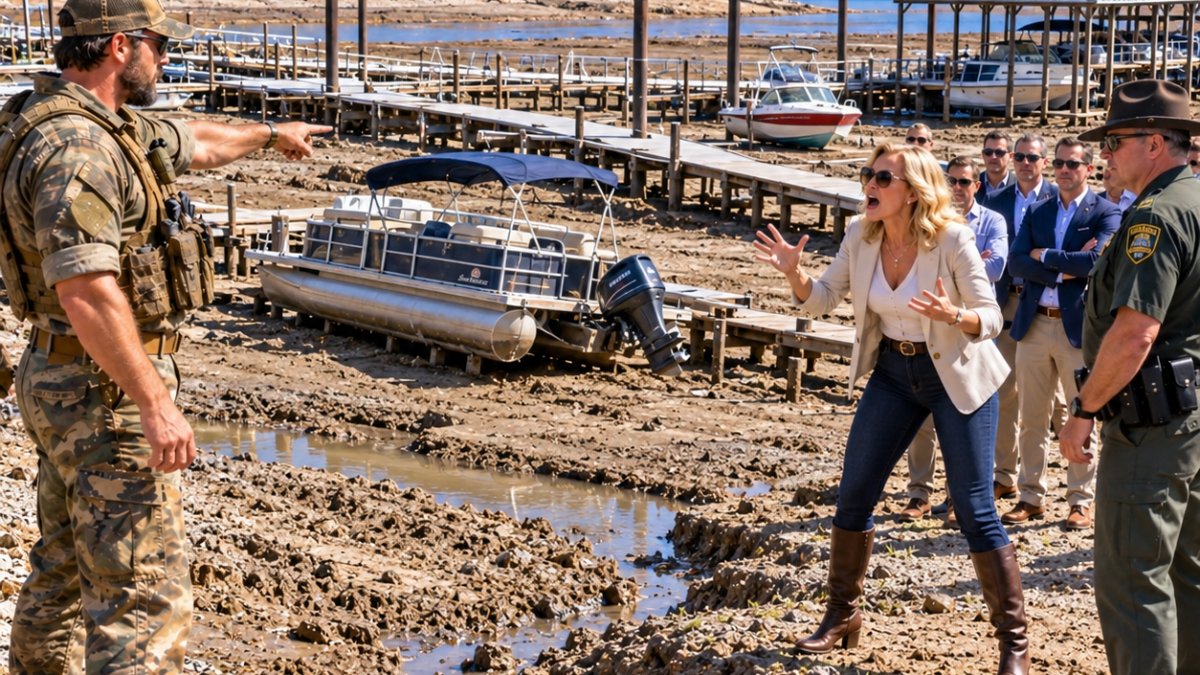
I Lowered My 5,200-Acre Reservoir for Routine Maintenance—Then Stonegate Shores’ $3 Million Marina Appeared on Ground Their HOA Never Owned.
When the water dropped, the lake gave back more than stumps, mud, and old fence posts.
It exposed a three-million-dollar lie the HOA president had buried beneath glossy brochures, fake confidence, and fifty years of silence.
By the time the old county road appeared under their private marina, every resident who called me greedy was about to learn who had really stolen from them.
My grandfather used to say water was the most patient witness on earth.
It could bury a field, swallow a fence line, cover an old road, and sit there for half a century looking innocent. People would forget what lay beneath it. They would sell views, write brochures, cut ribbon, name marinas, and convince themselves the lake had always belonged to whoever had the prettiest sign.
But water never forgot.
It only waited.
I learned that the summer I lowered Alder Reservoir.
To most people in Mason County, Alder Reservoir was simply “the lake,” a broad blue sheet of water stretching across five thousand two hundred acres of old valley, shale points, timbered shoreline, hidden creek beds, quiet coves, and reeds where herons stood like gray judges in the morning fog.
To Stonegate Shores, the gated community on the eastern bank, it was a sales pitch.
Their brochures called it “private lakefront luxury.”
Their HOA newsletters called it “our exclusive waterfront lifestyle.”
Their real estate signs promised “secure marina access,” “premium slips,” and “resort living without leaving home.”
They printed sunset photos of smooth water so golden you could almost hear a realtor adding seventy-five thousand dollars to the asking price.
To me, it was my family’s reservoir.
Not emotionally.
Legally.
My name is Graham Alder.
My grandfather, Samuel Alder, built the dam before Stonegate Shores existed, before their clubhouse, before their pool, before their security gate, before their annual dues, before their marina board, and definitely before Maryanne Kesler learned that a navy blazer and a microphone could make a person believe she had jurisdiction over the horizon.
Back then, there was a valley where the reservoir now spread.
Not a dramatic valley like you see on postcards. No cliffs. No waterfalls. No tourists taking pictures.
Just working land.
Hayfields.
Timber lots.
Two stubborn farms.
A creek that flooded twice a year.
Stone foundations left behind by families who had moved west or died out.
And Old County Road 16, a crushed-limestone route that ran down the belly of the valley, crossed the creek twice, passed the Miller place, and climbed out near the north ridge.
My grandfather had driven that road as a teenager in a flatbed truck that sounded like loose bolts in a coffee can. When I was a boy, he used to describe it at dinner, tracing invisible lines across the tablecloth with the handle of his fork.
“Road ran straight as a preacher’s lie,” he would say. “You could see dust rise a mile ahead if a truck was coming.”
By the time I was born, that road was underwater.
The valley existed only in his stories, a handful of brittle maps, and a cedar chest in my office full of deeds, county letters, and documents my grandfather kept because he believed paper remembered what men liked to forget.
As a child, I did not understand submerged history. To me, the lake had always been the lake. Old County Road 16 sounded like a ghost story adults told when they wanted the past to feel heavier than it had any right to be.
Then one late-summer morning, I opened the reservoir gates for maintenance, and the ghost came back wearing gravel.
The drawdown was not sudden.
It was not secret.
It was not revenge.
It was maintenance, which is how most expensive truths enter the world. Nobody writes songs about corroded valves, intake screens, seepage inspections, erosion monitoring, spillway checks, drawdown notices, or dam safety schedules, but dams do not care about drama. They care about pressure. They care about concrete. They care about steel, sediment, flow rate, and what happens when small ignored problems become large public disasters.
For two seasons, I had watched erosion worsen along the northern shoreline. One intake structure needed inspection. A low-level outlet gate had started sticking in a way I did not like. A corroded valve had to be replaced before it failed at a time of its own choosing.
PART2;
When you own a reservoir that large, “I do not like that sound” is a complete sentence.
So I filed the paperwork.
State water resources notification.
Dam safety maintenance schedule.
Environmental timing statement.
Fish and wildlife coordination.
Downstream flow plan.
Public notice.
Maintenance log.
Drawdown rate limits.
Every form people forget exists until something fails and then everybody wants to know why nobody filed anything.
I filed all of it.
I also notified Stonegate Shores.
Not because I owed them control, but because I was not a bad neighbor.
Years earlier, before I inherited full responsibility for the reservoir, a previous shoreline owner had granted Stonegate a narrow limited license to access the water near their development. It allowed residents to reach the shoreline from their side, maintain certain docks, and use limited recreational access.
It did not sell them the lake.
It did not lease them the lake bed.
It did not transfer submerged land.
It did not grant marina construction rights.
It did not turn my reservoir into their amenity just because their marketing department liked the word exclusive.
I never expanded that license.
I never signed a marina easement.
I never granted launch
I never gave anyone permission to build permanent infrastructure on my lake bed.
At the time, it never occurred to me that I had to say that out loud.
That was my mistake.
The first few days of the drawdown were ordinary.
Mud banks widened.
Old rocks appeared.
PART3:
Rotting stumps pushed up through the retreating water like knuckles.
Docks dipped at awkward angles.
Fishermen complained because fishermen treat inconvenience as a constitutional injury.
A few boat owners had to move vessels earlier than they liked. I took their calls, explained the schedule, repeated the regulatory notices, and reminded them the lake would come back after maintenance was complete.
Most people understood.
Reservoirs need work the way bridges need inspections and roofs need repair.
Then the shoreline near Stonegate Marina began changing.
At first, I noticed a line.
Not a natural line.
Nature curves unless forced otherwise. Creeks wander. Shorelines scallop. Mud slumps irregularly. Gravel shifts where water pushes it.
This line ran straight through the exposed lake bed, cutting beneath gray silt with the confidence of something engineered by men who expected wagons, trucks, school buses, and mail carriers.
It emerged from the mud near my western bank, crossed the basin under the falling water, and headed directly beneath Stonegate’s launch ramp.
I stood on the shoreline with my coffee cooling in one hand and stared at it.
I knew before I touched it.
My grandfather’s voice rose in my memory.
Straight as a preacher’s lie.
I climbed down the muddy slope, boots sinking to the ankle. The air smelled like wet stone, algae, clay, old leaves, and secrets that had been soaking for fifty years. I scraped away silt with the edge of my boot and saw crushed limestone packed hard beneath.
Old County Road 16.
The forgotten farm route.
The road my grandfather had driven before the dam filled, before the valley drowned, before a homeowners association built an eighty-six-slip marina and called it theirs.
I followed the exposed strip toward the marina.
That was when the day stopped being maintenance and became a lawsuit waiting for a signature.
Stonegate Marina did not merely sit near the old road.
It sat on it.
The concrete launch ramp lay across the old alignment like somebody had poured entitlement directly over history. Fuel dock supports leaned above the dropping water. Utility conduits disappeared into mud along the same straight line. The marina clubhouse stood nearby, elegant and smug, with wide glass windows reflecting a lake that was no longer high enough to hide the truth beneath it.
By sunrise, the floating docks had begun to tilt.
By midmorning, fuel lines hung loose in the air.
By noon, half of Stonegate Shores had gathered on the eastern bank in sandals, golf shirts, expensive sunglasses, and panic.
Then Maryanne Kesler arrived.
You could always tell when Maryanne arrived because the air became less useful.
Her SUV came skidding down the gravel turnaround near the marina, tires spitting mud like punctuation. She stepped out wearing white linen pants, a navy blazer, and the expression of a woman who believed nature was a department she had not yet disciplined.
Behind her came Travis Beckett, the marina manager, looking uneasy in the way decent employees look when bad leadership starts walking too fast.
Maryanne did not look at the exposed road.
She did not look at the rusted supports.
She did not look at the hanging fuel lines.
She did not ask about the valve inspection.
She pointed at the water and shouted, “Raise the lake.”
I had known Maryanne for years, though known is perhaps too generous a word. We had occupied the same shoreline, attended the same county meetings, and exchanged enough letters for me to recognize her font choices.
She was president of the Stonegate Shores Homeowners Association and carried herself like a woman personally appointed to defend civilization against unapproved dock stains.
“Good morning, Maryanne,” I said.
“Do not good morning me, Graham. What have you done?”
“Lowered the reservoir for scheduled maintenance.”
“You have stranded our marina.”
“The marina appears to have stranded itself.”
She stared at me like I had spoken in a dead language.
“Our docks are leaning. Our fuel system is exposed. We have members furious about boat access. We have rentals canceled. We have property values tied to this waterfront. You need to restore full pool immediately.”
“Maintenance is not finished.”
“I don’t care about your maintenance.”
“That is not a regulatory category.”
Her mouth tightened.
“This is community property.”
I looked past her at the launch ramp.
“No,” I said. “That is what I am trying to figure out.”
She followed my gaze for the first time.
Beneath the ramp, the old road showed pale and straight through the mud.
Maryanne looked at it for half a second.
Then she looked away too quickly.
There are things people see before they admit they have seen them.
“What is that?” Travis asked quietly.
“Old County Road 16,” I said.
Maryanne snapped, “That road is public.”
“Was public.”
“It is on county maps.”
“A lot of dead people are on census records. That does not make them available for appointments.”
Travis bent toward the exposed gravel, eyes narrowing.
I stepped closer to the launch ramp, where something dark protruded from the silt. At first glance, it looked like a broken pipe. I wiped mud away with my sleeve.
A rusted iron survey marker.
The county identification number was faint but legible beneath decades of muck.
I photographed it from every angle.
Maryanne’s voice sharpened.
“What are you doing?”
“Documenting.”
“You have no right to disturb marina property.”
“I am standing on my lake bed.”
“This is Stonegate Private Marina.”
“That is a sign, Maryanne. Not a deed.”
Her face flushed.
“I am warning you, Graham.”
“I prefer documents.”
She stepped toward me, her white shoes sinking into mud.
“You lower this lake one more inch, and I will have our attorneys seek emergency relief.”
“Tell them to bring maps.”
She glared at me as if maps were a personal insult.
I called Derek Talbot before I even climbed back into my truck.
Derek was the surveyor I trusted most in the county because he had three qualities rarely found together: patience, accuracy, and the emotional range of a fence post. Drama slid off him like rain off tin.
He had surveyed timber tracts, old farms, road abandonments, mineral splits, family partitions, and enough “my grandpa said the line is over there” disputes to stop believing anything until he found a monument.
He arrived that afternoon with survey-grade GPS, field notebooks, waders, stakes, and a face that told me he had already cleared his schedule for trouble.
“Well,” he said, looking at the exposed line. “That is straight.”
“That is what I thought.”
He crouched beside the survey marker.
“Old county iron.”
“Can you read it?”
“Barely.” He brushed the rust with care. “Looks like Road 16 series. I’ll confirm.”
He worked until near dark.
The water kept falling slowly, and more of the road appeared by the hour. Derek found two additional monuments, a ghost of an old drainage ditch running parallel to the gravel, and fence remnants that matched the road boundary my grandfather had described.
By sunset, the alignment was not guesswork anymore.
It was Old County Road 16.
What we did not yet know was the legal question that would make or break everything.
Who controlled the road now?
Maryanne seized that uncertainty like a drowning woman grabbing driftwood.
Within two days, she was telling Stonegate residents that Old County Road 16 was public property. According to her, the HOA’s development team had reviewed county maps before construction, confirmed the old route as an established public right-of-way, and designed the entire marina around guaranteed community access.
She said nearly three million dollars had been invested carefully.
She said I was using a maintenance drawdown to harass the community.
She said the lake had always been understood as a shared amenity.
She said many things.
Maryanne had a talent for producing complete sentences that collapsed the moment someone asked for a deed.
When I asked directly for the recorded easement, she sent me a photocopy of a 1968 county map.
It showed the road.
That was all.
A map proving a road once existed does not prove who owns the land under it today. It is astonishing how many expensive mistakes begin with adults refusing to understand that difference.
The following morning, I found a new sign staked into the exposed lake bed beside the ramp.
STONEGATE PRIVATE MARINA
HOA PROPERTY
NO TRESPASSING
The post had been driven into mud on my side of the boundary.
I stood there for a full minute, reading it.
Then I took pictures.
Then I called Felicity Monroe.
Felicity specialized in land records, easements, abandoned rights-of-way, boundary fights, and the particular madness that happens when modern developers discover old legal history is not as dead as they hoped.
She had an office above the old bank in town, silver hair cut sharp at the jaw, reading glasses on a chain, and the calm manner of someone who had watched greedy people lose expensive things because they did not respect a comma in an 1892 deed.
I spread the preliminary documents across her conference table.
Survey photos.
Old county maps.
Reservoir paperwork.
License agreements.
Drawdown notices.
Pictures of Maryanne’s sign.
Felicity listened without interrupting.
Then she ignored the marina photos and asked the only question that mattered.
“What happened to County Road 16 when your grandfather flooded the valley?”
“I don’t know.”
“Then that is where this case lives.”
“I thought the issue was whether the marina encroaches.”
“No,” she said. “The survey will answer where. The records will answer who. Until we know who controlled the right-of-way after the reservoir was created, all we have is mud and anger.”
“She has plenty of the second.”
“Then let her waste it.”
Within days, Felicity brought in Audrey Keane, a title researcher whose idea of an exciting Friday night was finding a missing road vacation resolution in a county archive nobody had dusted since the Carter administration.
Audrey was small, fast, brutally organized, and dangerous around file boxes. She did not search records. She hunted them.
She pulled county commission minutes from the years surrounding the dam construction. Reservoir agreements. Road relocation files. Plat books. Right-of-way releases. Highway department notes. Old correspondence between my grandfather and county officials. Ledger entries. Indexed files. Unindexed files. Misfiled files. Files inside files labeled with handwriting that looked like it had been done by a raccoon holding a fountain pen.
A picture began forming.
When Alder Reservoir was built, County Road 16 ran through the valley that would be submerged. The county negotiated with my grandfather to construct a replacement route around the new lake. In exchange, the county agreed to relinquish its interest in the submerged section of old road.
That made sense.
The public needed a usable road.
My grandfather needed legal clarity before flooding the valley.
The county needed the new route more than it needed a road that would sit beneath forty feet of water.
But Audrey could not initially find the final resolution.
She found an administrative note that read:
Road relocation approved pending vacation resolution.
Pending.
That one word became Maryanne’s favorite weapon.
She called an emergency HOA meeting and told residents I was trying to seize a public road. She used phrases like lake owner overreach, historic access rights, community reliance, and aggressive private control.
She stood in front of Stonegate homeowners and painted me as a wealthy landowner trying to steal their marina through technicalities.
I was not wealthy in the way Stonegate understood wealth.
I owned land and water, which is different.
Land-rich people know the bank can admire your acreage all day long and still ask for cash when property taxes come due. I maintained the dam. Paid insurance. Managed timber. Leased grazing rights. Sold hay when weather cooperated. Fixed equipment when weather did not.
I did not have a yacht.
I had a twelve-year-old pickup, two tractors, one dam safety manual stained with coffee, and a reservoir that apparently had been holding a three-million-dollar HOA mistake under its surface.
Maryanne, however, knew her audience.
Stonegate residents had paid premium prices for lakefront life. Many had bought homes believing the marina was permanent, secure, properly built, and theirs. Nobody likes discovering their investment may rest on a legal assumption thinner than wet cardboard.
Fear makes people choose simple villains.
For a while, I was convenient.
Then Travis Beckett came to see me.
He arrived late one afternoon, parking near the equipment shed rather than the main house. That told me he did not want to be seen from Stonegate.
He climbed out looking like a man carrying something that had grown heavier in silence.
“Graham,” he said, “you got a minute?”
“For the marina manager? I have several.”
He winced.
“I know how this looks.”
“How does it look?”
“Like I helped build something where it shouldn’t be.”
“Did you?”
He looked toward the lake.
“I managed operations after construction. I wasn’t in charge of title. But I was in meetings.”
I waited.
He took off his cap and twisted it in both hands.
“During planning, a consultant asked who owned the lake bed under the launch ramp.”
My jaw tightened.
“What was Maryanne’s answer?”
“She said the old county road gave Stonegate access.”
“Did anyone ask for proof?”
“The consultant asked for a formal title opinion before construction proceeded.”
“And?”
“Maryanne told us days later the matter had been resolved.”
“Did you see the document?”
“No.”
“Did construction stop while she checked?”
Travis shook his head.
“No. She told them to pour the ramp.”
There are moments in disputes when the shape of the problem changes.
Before that conversation, Maryanne could still claim confusion. A mistaken reliance on an old map. A bad assumption by a consultant. A developer’s oversight buried beneath layers of plans and deadlines.
But if a consultant had raised the issue before construction, and Maryanne had proceeded without confirming title, then the marina was no longer just a mistake.
It was a gamble.
A three-million-dollar gamble made with other people’s money.
Travis looked exhausted.
“I should have said something sooner.”
“Why didn’t you?”
He laughed without humor.
“You ever try slowing Maryanne down when she has a ribbon-cutting date?”
“No.”
“It’s like standing in front of a train and asking it to consider county history.”
I almost smiled.
Almost.
“What changed?” I asked.
He looked toward the exposed shoreline.
“The water went down.”
That was the simple truth.
The water went down, and all the confidence built on its surface started sinking.
A few nights later, Audrey called Felicity from the county records annex.
Felicity called me immediately after.
“Graham,” she said, “sit down.”
“That good or that bad?”
“That depends which side of the marina you own.”
“I own the wet side.”
“Then good. Audrey found a ledger reference. Vacated County Road 16. Resolution 74-118.”
I stood in my kitchen with one hand on the counter.
“The resolution exists?”
“It exists.”
“Does she have it?”
“Not yet. The certified file is in a physical box in the records annex. It was never digitized. But the ledger reference is enough to know what we are hunting.”
“What does it mean?”
“It means Maryanne’s public-road theory just developed a serious limp.”
Two days later, we met with Mitchell Pharaoh.
Mitchell was a retired county road engineer who had worked in the area decades earlier. He was eighty-one years old, moved slowly, remembered everything, and treated modern GIS maps with the cautious disgust of a man who trusted iron pins more than pixels.
He remembered Old County Road 16.
“Good road,” he said over coffee at my kitchen table. “Rough in winter. Washed near the creek every few years. But it carried people.”
Felicity showed him the ledger reference.
He nodded.
“That sounds right.”
“Tell Graham what happens when a county road right-of-way is vacated,” she said.
Mitchell looked at me.
“A county usually holds a right-of-way. Not the land beneath it. When the right-of-way is vacated, the public use disappears. Control goes back according to underlying title. Often to adjoining owners, unless the deed says otherwise.”
“And in this valley?”
He tapped the old plat.
“Biggest adjoining owner was your family. Always was.”
Audrey retrieved the certified resolution three days later.
Resolution 74-118.
The language was clear enough to make a courtroom boring, which is the best kind of clear.
County Road 16 was permanently vacated within the reservoir area. The county relinquished any claim of public access along the submerged section. The vacated right-of-way reverted to adjoining parcel owners according to underlying title.
Derek overlaid the resolution description with his modern survey data.
The resulting map looked like a confession drawn in red.
Stonegate’s launch ramp sat almost entirely within the footprint of the former county road where the underlying land had reverted to my family.
Fuel dock support pilings crossed onto my parcel.
Underground utility conduit ran beneath land the HOA had never owned.
Part of the parking turnaround clipped the same strip.
The marina did not brush a boundary.
It sat on my deed like a guest who had moved into the master bedroom and started charging admission.
For one heated afternoon, I wanted to drive down there with a loader and start removing things.
Felicity stopped that idea before it became a sentence.
“No,” she said.
“You don’t even know what I was going to say.”
“You were going to say something involving machinery and satisfaction. No.”
“They built on my land.”
“Yes.”
“They’re still operating.”
“Temporarily.”
“She put up a sign calling it HOA property.”
“And that sign will look wonderful as Exhibit Twelve. Do not touch the marina. Do not damage anything. Do not give them a counterclaim. The strongest person in a property dispute is the one who behaves like the outcome is already inevitable.”
I hated how right she was.
So we sent a formal notice of encroachment.
It included Derek’s survey, Audrey’s title findings, Resolution 74-118, photographs of the exposed road, and a demand that Stonegate produce any deed, easement, lease, license, written consent, title policy endorsement, waiver, or recorded instrument giving them the right to build or operate permanent marina infrastructure on my property.
Maryanne responded within hours.
We don’t need your permission.
Felicity read the email twice.
Then she smiled.
“Perfect.”
“Perfect?”
“Never interrupt an opponent who insists on creating evidence.”
Over the next week, I walked the exposed road every morning.
Before survey crews arrived.
Before Maryanne’s emails.
Before residents came down to stare.
The lake bed was strange at dawn. Mud cracked in patterns like old skin. Fish bones glittered near shallow pools. The old drainage ditch ran beside the road. Fence post remnants leaned out of the silt, blackened and softened by decades underwater.
The gravel still held faint wheel ruts in places, compressed by trucks that had vanished along with the valley towns they once connected.
I thought about my grandfather driving there as a young man.
I thought about him negotiating with the county before building the dam, insisting that the replacement road be finished before the valley filled. He had been stubborn in a way that saved me decades later.
He understood something many modern developers do not.
If you are going to change land, record the truth before the water rises.
One morning, I told Felicity it felt strange to fight over something that had been underwater my entire life and would likely be underwater again soon.
She looked out over the exposed gravel.
“Ownership does not depend on visibility.”
That sentence stayed with me.
A boundary under forty feet of water is still a boundary.
A road forgotten by residents is still recorded somewhere.
A right not exercised every season is not automatically surrendered to the loudest committee.
Maryanne understood the danger, even if she would not admit it.
The longer the drawdown continued, the more people could see.
Not read.
Not interpret.
See.
They could stand on the shore and look at the road running beneath their marina. They could watch Derek’s stakes appear in straight lines. They could see that the ramp was not merely near an old public route.
It was built directly on the disputed strip.
She needed the water back.
Fast.
So the HOA filed for an emergency injunction.
Their motion claimed that the drawdown had rendered the marina inoperable, damaged community revenue, threatened property values, exposed infrastructure to unnecessary risk, and caused irreparable harm to Stonegate Shores.
They wanted a judge to order me to halt maintenance and refill the reservoir immediately.
Maryanne submitted a sworn affidavit.
That affidavit became one of her costliest mistakes.
In it, she stated that Stonegate had relied on permanent public access through Old County Road 16 when financing, approving, and constructing the marina.
Felicity circled the sentence with a red pen.
“Thank you, Maryanne,” she said.
“Why?”
“Because Resolution 74-118 proves the road had not been public for decades. If they financed a three-million-dollar project on a false access representation, this touches lender disclosures, insurance, title coverage, member disclosures, permits, and internal board approvals.”
“That sounds expensive.”
“Expensive is polite.”
We opposed the injunction with the dam maintenance schedule, regulatory filings, engineering necessity, drawdown notices, and one very simple fact.
No contract guaranteed Stonegate a fixed lake level.
The reservoir was mine to manage.
The dam was mine to maintain.
The risk was mine to prevent.
Maryanne’s marina calendar did not outrank dam safety.
The courtroom was packed on the morning of the hearing.
Stonegate residents filled two rows, many of them staring at me with the raw resentment of people who believed I had cracked open their investment and exposed the rot inside. Maryanne sat at the front in a cream blazer with a binder thick enough to make noise when she placed it on the table.
Her attorney argued hardship.
Felicity argued law.
The judge asked whether Stonegate had any recorded right to control the reservoir elevation.
Maryanne’s attorney talked about reliance.
The judge asked again.
He asked whether Stonegate had any deed, easement, or agreement guaranteeing a lake level for marina operation.
Her attorney discussed community expectation.
The judge removed his glasses.
That was when I knew the morning was going badly for them.
He denied the emergency refill request.
Not with fireworks.
Not permanently.
Just a careful order finding that Stonegate had not shown the right to control reservoir elevation and that dam maintenance supported the drawdown.
Maryanne called it a temporary setback.
Felicity called it oxygen.
Discovery began.
That was when the real damage surfaced.
The documents showed that before construction ever began, a title consultant had emailed Maryanne directly. The message warned that Old County Road 16 appeared to have been vacated and that ownership of the submerged right-of-way needed to be confirmed before permanent improvements were installed.
Plain language.
No ambiguity.
No legal fog.
Confirm ownership before building.
Two days later, Maryanne replied:
Proceed. The road is shown on county maps, and the lake owner has never objected.
Silence is not permission.
An outdated map is not ownership.
And a hidden road is not a blank check.
Travis explained the pressure behind the decision.
The marina had been the centerpiece of Maryanne’s reelection campaign as HOA president. Eighty-six exclusive slips. Guaranteed waterfront access. Property value growth. Event revenue. Premium lifestyle branding. She had promised a ribbon-cutting before the annual meeting.
Delaying the project to investigate a messy title question would have threatened her campaign, her reputation, and the myth that she was the woman who got things done.
So she made a wager.
She bet that a road underwater would never matter.
For years, she won that bet.
Then I lowered the lake.
Maryanne shifted tactics.
First, she offered me fifty thousand dollars for a permanent easement across the old roadbed.
I declined.
Then one hundred twenty-five thousand.
I declined again.
Not because I was waiting for a bigger number.
People kept assuming this was about money because money is the only language some developments learn. But granting a permanent easement would mean accepting ongoing marina traffic across my land indefinitely.
Fuel storage near my reservoir.
Commercial operations I had never approved.
Utility lines.
Maintenance crews.
Dock expansions.
Future arguments over “reasonable access.”
Future boards treating my shoreline as an association amenity because one bad decision had been legalized after the fact.
No.
Maryanne grew impatient.
“Everyone knew that road was ours,” she snapped during one conference call.
I asked, “Then why are you offering to buy it?”
For once, she had no immediate answer.
Then came the excavator.
I arrived at the marina at 6:40 on a Monday morning and found emergency work underway on the exposed lake bed. An excavator was positioned near the launch ramp. Several gravel trucks waited above the shore. A crew had begun moving material near the very survey markers Derek had just located.
Maryanne stood near the clubhouse in a hard hat so clean it looked fictional.
Travis stood beside her, face tight.
I did not rush in screaming.
That would have made her day.
I parked on my side, got out, and started filming.
Derek arrived fifteen minutes later with his crew. He took one look and said, “They’re trying to bury the monuments.”
“Can they?”
“They can physically dump gravel. That is not the same as legally improving their position.”
He had fresh stakes placed along the true property line in full view of everyone.
Bright orange.
Survey flags snapping in the morning breeze.
The kind of simple visual that ruins complicated lies.
I called Felicity.
She was awake, because good property attorneys sense chaos before breakfast.
“Do not enter the work zone,” she said.
“I’m not.”
“Film from a safe distance.”
“I am.”
“Have Derek document.”
“He is.”
“Serve the contractor notice.”
“Already printing.”
I walked to the contractor superintendent, a man in a yellow vest who looked increasingly unhappy to be outdoors.
“This is formal notice,” I said, handing him the paper. “You are working on land under active ownership dispute with survey evidence indicating encroachment on Alder property. Continued work may expose your company to liability.”
He read it.
Then he looked at Maryanne.
Maryanne said, “The association takes full responsibility. Keep working.”
Travis stepped forward.
“Maryanne, not without something in writing.”
She glared at him.
“What?”
“If you want crews continuing on contested land after that notice, put the indemnity in writing. Right now.”
She opened her mouth.
Closed it.
The superintendent noticed.
So did his crew.
Men who operate equipment for a living may not understand every land record, but they understand when a person with money refuses to write down the promise she just shouted.
The superintendent folded the notice.
“We’re stopping until our office reviews.”
Maryanne’s face went white.
“You cannot stop. I am ordering you to continue.”
He shook his head.
“You are not my only client, ma’am. But you could become my worst one.”
The machines shut down.
That was when Stonegate began cracking from the inside.
By then, the water had dropped far enough to expose more than a mile of Old County Road 16. The road ran straight beneath the lake bed, past stumps, old ditch lines, fence remnants, and mud flats, then under the marina ramp, the parking turnaround, a utility trench, and part of the fuel system infrastructure.
Derek mapped all of it.
I drove my pickup slowly along the road one morning while he followed with survey equipment. It felt unreal, moving over ground I had only known from my grandfather’s stories. The tires crunched over gravel that had not felt daylight for decades.
On either side, the exposed lake bed spread out gray and silent.
Maryanne stood above the marina entrance, watching.
I stopped my truck where the road disappeared under her ramp.
“You didn’t build a marina next to my property,” I called. “You built your entrance on top of it.”
She did not answer.
That was when I knew she was losing more than the legal argument.
She was losing the image.
Before people saw the road, she could say anything.
Public access.
Historic route.
Community reliance.
Technical dispute.
Greedy landowner.
Temporary inconvenience.
But once residents stood there and saw the old road running beneath the ramp, words became smaller.
The special HOA meeting happened ten days later.
Every adult resident with a stake in the outcome seemed to attend. The clubhouse meeting room was packed beyond comfort. Folding chairs lined the walls. People stood in the back.
The mood was not angry at first.
It was worse for Maryanne.
It was suspicious.
Maryanne opened with control.
She was good at control. I will give her that. She stood at the front in a cream blazer, hair perfect, voice steady, slides prepared.
She laid out three claims.
First, Old County Road 16 had always been public.
Second, I had never objected when the marina was built.
Third, years of use gave Stonegate the right to keep operating as it always had.
It sounded reasonable if you ignored every document that mattered.
Then Felicity stood.
She did not raise her voice.
She did not insult Maryanne.
She simply destroyed the argument one exhibit at a time.
Resolution 74-118: County Road 16 vacated within the reservoir area.
Deed chain: underlying land reverted to the Alder family.
Derek’s survey: launch ramp and utility lines located on my parcel.
Photographs: exposed road and county markers.
Consultant warning email: Maryanne notified before construction that ownership needed confirmation.
Maryanne’s reply: proceed.
Then Felicity displayed the final document.
A draft easement agreement prepared by the original consultant before construction began. It had been written for Stonegate leadership to secure formal access from the lake owner before building permanent marina infrastructure.
It was never signed.
That document did more damage than all the others combined.
It proved Stonegate’s own consultant understood exactly what should have happened. The HOA did not fail because nobody knew the question. It failed because the person in charge did not like the answer process.
A man in the second row stood slowly.
“You spent three million dollars on land we didn’t own?”
Maryanne’s smile tightened.
“We spent money beside contested land based on long-standing public access assumptions.”
Derek put the survey map back on the screen.
The marina ramp glowed inside my boundary.
The room went cold.
The man repeated, quieter this time.
“You spent three million dollars on land we didn’t own.”
This time, Maryanne did not correct him.
Another resident asked about lender disclosures.
Another asked about insurance.
Another asked whether their title policy covered common-area improvements.
Another asked whether dues would increase.
Another asked whether board members had been shown the consultant’s warning.
Ruth Callaway, a retired schoolteacher who had lived in Stonegate since its early phase of development, stood near the aisle with both hands on the chair in front of her.
“I asked about the marina site years ago,” she said. “I asked whether the county had cleared it.”
Maryanne said, “The matter was handled.”
Ruth nodded slowly.
“That is what you told me then too. What does handled mean?”
Maryanne looked at her papers.
“Professional review was conducted.”
“Did professional review tell you to get an easement?”
No answer.
The room understood.
Maryanne still believed I wanted a payout.
Maybe that comforted her.
If I wanted money, she could call me greedy, negotiate a number, tell residents she had saved the marina from a predatory landowner, and walk away bruised but standing.
She offered six hundred thousand dollars for a permanent easement.
There were audible gasps.
I stood.
“No.”
Maryanne stared at me.
“Are you refusing six hundred thousand dollars?”
“Yes.”
“You are not being rational.”
“No. I am being very rational. A permanent easement would legalize the mistake you made and force my family to accept marina traffic, fuel infrastructure, utilities, and commercial access across land we never agreed to give you.”
“Then what do you want?”
“Three options.”
The room quieted.
“One, remove the infrastructure sitting on my parcel. Two, relocate the marina to shoreline Stonegate actually owns. Three, restore the portion of Old County Road 16 that belongs to me and redesign your access entirely on your land. Pick a legal path.”
“That would cost us a fortune,” someone said.
I looked toward Maryanne.
“Yes.”
The sentence was cruel only because it was true.
“Every consequence here comes from decisions made before I lowered the water,” I said. “I did not pour your ramp. I did not ignore the consultant. I did not leave the easement unsigned. I did not tell contractors to proceed. I did not market private land as guaranteed community access. I lowered my reservoir for maintenance, and the truth became visible.”
Nobody spoke for a long moment.
Felicity once told me vindication rarely feels the way people expect it to.
She was right.
I did not feel triumphant watching Stonegate residents understand how badly they had been led. I felt tired. Angry, yes, but also sorry for families who had paid dues, trusted leaders, and believed the marina was secure because people in charge had said it was.
Being right at someone else’s expense is not as sweet as revenge stories promise.
It mostly tastes like paperwork.
Maryanne tried to spread blame.
The consultant.
The contractor.
Outdated maps.
Previous boards.
The county.
Me.
The water level.
The weather, possibly, if the meeting had gone long enough.
None of it worked after the emails surfaced.
Her signature was on the decision to proceed.
Her campaign had used the marina as proof of leadership.
Her affidavit had admitted reliance on public access that did not exist.
Her refusal to produce documents had delayed the truth.
The board called an emergency vote the following week.
Maryanne Kesler was removed as HOA president by a wide margin.
She sat very still when the result was announced.
No screaming.
No dramatic exit.
No final speech about betrayal.
That surprised me.
Maybe by then the room had already moved past her, and the worst punishment for people addicted to control is watching others continue without asking permission.
An interim board took over negotiations.
Their first smart decision was hiring an independent surveyor to verify every shoreline boundary before spending another dollar.
Their second was bringing Mitchell Pharaoh in as a paid consultant to walk them through the history of Old County Road 16, the road vacation process, and the difference between seeing a road on a county map and owning rights to use it.
Their third was listening to Travis.
Travis revealed one last detail that nearly made the new board sick.
Less than half a mile down the shoreline, Stonegate owned a parcel outright.
The original consultant had recommended that site for the marina before construction began. It was legally clean. It had less title risk. It could support docks with proper engineering. It would have required a more expensive access road and lacked the dramatic clubhouse view Maryanne wanted for her ribbon-cutting.
So she rejected it.
An avoidable three-million-dollar catastrophe had been built for a better view and a cheaper road.
That sentence traveled around Stonegate like a disease.
The relocation agreement took months.
No one enjoyed it.
The HOA absorbed engineering costs, legal fees, relocation work, utility rerouting, shoreline reconstruction, removal of encroachments, and remediation. The bill was larger than any settlement offer Maryanne had waved at me.
The new marina would be smaller, less glamorous, and entirely on land Stonegate actually owned, which is an underrated quality in marina design.
Crews dismantled the floating docks piece by piece.
The old launch ramp was cut back to the true property line.
Fuel lines were removed or rerouted.
Utility conduit crossing my parcel was pulled.
The exposed portion of Old County Road 16 was cleared of marina debris.
I never touched a single dock myself.
I did not need to.
Every board member, contractor, and resident involved now understood exactly whose land they were stepping on.
During the relocation work, people around the lake changed how they spoke to me.
At first, many avoided me.
Then they nodded.
Then a few stopped me at the feed store.
One man approached near the seed aisle with his cap in both hands.
“Graham,” he said, “I owe you an apology.”
“For what?”
“I thought you were trying to shake us down.”
“I know.”
“You weren’t.”
“No.”
He looked embarrassed.
“My wife and I bought in because of the marina.”
“I understand.”
“We should’ve asked more questions.”
“Most people do not ask questions when the brochure looks expensive.”
That made him laugh, though not comfortably.
Ruth Callaway brought me a folder one afternoon containing old Stonegate newsletters. She had marked every issue where Maryanne promised guaranteed lakefront access, permanent marina rights, and historic public road continuity.
“I thought you might need these,” Ruth said.
“Thank you.”
“I am sorry I believed her.”
“You believed your president.”
“That is not much comfort.”
“No,” I said. “But it is a place to start.”
Maryanne and I had one final meeting arranged by our attorneys after the relocation agreement was signed.
Not because either of us wanted closure.
Attorneys love closure. It lets them send final invoices with cleaner consciences.
We met in a conference room at Felicity’s office. Maryanne arrived without the binders, tabs, glossy maps, and controlled fury that had defined her for months.
She wore a plain gray jacket. Her hair was still neat, but not armored. She looked older, though perhaps she had always been that age and authority had been holding her face tight.
For a moment, neither of us spoke.
Then she said, “I was trying to build something good.”
I did not answer immediately.
Maybe she believed that.
People rarely describe their worst choices as choices. They remember pressure, deadlines, advice, confusion, assumptions, market demands, community expectations, unforeseen complications. They soften the sharp edges of what they did until they can hold it without bleeding.
“You were trying to win,” I said.
Her eyes hardened faintly.
“That is unfair.”
“Maybe.”
“I believed the road was public.”
“No. You hoped nobody would prove otherwise.”
She looked down at her hands.
“The consultant was cautious about everything. If I had stopped for every possible title concern, nothing would ever have been built.”
“Then maybe some things should not be built until the title is clear.”
Her mouth tightened.
“You can say that now because you won.”
“No,” I said. “I can say it because my family owned the land before you poured concrete on it.”
Silence.
Outside the window, traffic moved slowly along Main Street.
Finally, she said, “I still think the marina could have helped Stonegate.”
“The next one might.”
“That smaller site will never have the same view.”
“There it is.”
She looked up.
“What?”
“The whole disaster, boiled down to one sentence.”
Her face flushed.
I was not trying to be cruel.
I was tired of pretending.
“You had a legal site,” I said. “You chose the better view.”
She looked away.
That was the closest thing to an admission I ever got.
Before she left, I said, “I hope the next marina is built the right way from the beginning.”
She paused at the door.
“With every question answered before the first shovel moves,” I added. “Not after the water goes down.”
She did not reply.
I never collected the six hundred thousand dollars she offered.
People told me I was foolish.
Maybe from their point of view, I was.
Money has a way of making every principle look negotiable when spoken aloud in a large enough number.
But what I gained back mattered more.
Full control of my shoreline.
Unquestioned access to my own land.
A clean record.
A boundary nobody could quietly misremember.
The old road my grandfather once described at dinner, no longer just a family story but a surveyed, recorded, defended piece of truth.
Felicity closed the file not long after the relocation agreement was finalized.
“This will not be the last hidden boundary problem on this reservoir,” she told me during our last phone call.
“I know.”
“Old roads. Old fences. Old rights-of-way. Water makes people lazy.”
“So do glossy brochures.”
“That too.”
“I’m setting new monuments above the high-water line.”
“Good.”
“Big ones.”
“Better.”
“Ugly ones.”
“Best.”
Derek installed the new survey monuments before I raised the reservoir again.
Permanent markers at higher elevation.
Visible.
Recorded.
Mapped.
Photographed.
Filed with the county.
I wanted no future board, developer, consultant, buyer, attorney, or ambitious committee president claiming the boundary was hidden, unclear, inconvenient, or misunderstood.
The dam maintenance finished cleanly.
The intake inspection showed wear but no crisis. The corroded valve was replaced. Erosion controls were improved. The north shoreline was stabilized. The outlet gate operated smoothly.
The state signed off.
Then I began raising the water.
Slowly.
The way my grandfather had filled the valley the first time.
Day by day, Alder Reservoir climbed back over the mud flats. Puddles became coves. Coves reconnected. Stumps vanished. The exposed ditch disappeared. The pale gravel of Old County Road 16 narrowed, softened, blurred, and sank beneath the surface again.
Before it disappeared completely, I walked it one last time.
My nephew, Caleb, came with me. He was eleven, all knees, questions, and fearless curiosity. He had heard pieces of the story from adults and naturally understood the most important part.
“So there was a whole road under the lake?”
“Yes.”
“And nobody knew?”
“Some people knew. Most forgot.”
“How can you forget a road?”
“Put enough water over something and wait long enough. People will forget almost anything.”
He walked along the wheel ruts, looking down with serious concentration.
“Did Grandpa Samuel drive here?”
“Your great-grandfather. Yes.”
“Was there a town?”
“Two small ones connected by this road. Not much left now.”
“Why did they flood it?”
“To build the reservoir.”
“Was that sad?”
I looked across the valley, where water reflected the late afternoon sky.
“Probably. Necessary things can still be sad.”
He considered that.
“Did the HOA steal the road?”
“They built on it without making sure they had the right.”
“Is that stealing?”
“Sometimes stealing wears a nicer shirt.”
He liked that.
We stopped near one of the old fence remnants. I showed him the drainage ditch, the packed gravel, the place where the launch ramp had crossed the road before crews cut it back.
He crouched and picked up a small limestone rock.
“Can I keep this?”
“Yes.”
“Will the road belong to nobody after the water covers it again?”
I shook my head.
“No. It belongs to the same people it belonged to before.”
“But nobody can see it.”
“Seeing a thing is not what makes it real.”
He looked at the lake, then back at the road.
“So the water going down just reminded everybody?”
“That’s exactly right.”
By evening, the water had reached the lower edges of the road. It slipped over the gravel silently, filling shallow ruts, covering old dust, making the past disappear one inch at a time.
Stonegate’s relocated marina sat farther down the shoreline by then, smaller and quieter, with docks resting on land nobody disputed.
No dramatic clubhouse view.
No grand launch ramp cutting across my old road.
No fuel lines hanging over my property.
It looked less impressive in brochures, I imagine.
It looked legal.
That was an improvement.
Maryanne was gone from the board. She still lived in Stonegate for a while, though people said she kept mostly to herself. Her greatest achievement had become the clearest evidence of her worst judgment, and that is a hard thing to walk past on a morning stroll.
The new board operated differently.
Cautiously.
Almost painfully so.
They asked for surveys before planting signs. They requested recorded documents before using the word access. They sent Felicity copies of proposed shoreline work even when they did not technically have to.
Perhaps out of fear.
Perhaps out of wisdom.
Perhaps because the first lesson had been expensive enough.
Travis stayed on through the transition.
I respected that.
He could have left, blamed everyone else, and found another marina. Instead, he helped relocate the docks correctly.
One day near the new site, he told me he slept better now.
“Good,” I said.
“Funny thing,” he said. “The smaller marina is easier to manage.”
“Most legal things are.”
He smiled.
“Maryanne would hate hearing that.”
“She hated many useful truths.”
He looked toward the water.
“You ever regret not taking the money?”
“No.”
“Not even a little?”
“Ask me when property taxes arrive.”
He laughed.
But I meant it.
Money would have ended the dispute differently. It would have turned an error into a transaction. It would have let Stonegate say the marina stayed because they purchased peace. It would have given Maryanne, or someone like her, a way to claim she had been right enough to buy her way out.
Instead, the record showed what happened.
A county road had been vacated.
The right-of-way reverted.
The HOA ignored warnings.
The marina encroached.
The infrastructure moved.
That mattered.
Land disputes are not only about land.
They are about memory.
If the record is muddy, the next person with ambition can step into it and pretend nothing has been settled.
Clean records protect people who are not born yet.
My grandfather understood that.
He left maps.
He kept agreements.
He saved county letters.
He wrote things down in plain language even when the people around him preferred handshakes.
At the time, some probably called him difficult. Every family that keeps land has at least one ancestor who was called difficult by men trying to get something cheaply.
Decades later, his difficulty saved me.
One final evening, after the reservoir had nearly returned to normal pool, Felicity came out to review the last shoreline filings. We stood near the new sign I had placed above the waterline.
PRIVATE PROPERTY
FORMER COUNTY ROAD 16
NO HOA ACCESS
BOUNDARY RECORDED
She read it and smiled.
“Subtle.”
“I considered adding glitter.”
“I’m relieved you didn’t.”
“The sign tells the truth.”
“It does.”
She looked out over the rising water.
“Do you think anyone will ever try to claim it again?”
I watched the last visible pale strip of gravel tremble beneath the surface.
“They can wait for the lake to drop and check.”
She laughed softly.
Below us, the old road settled back into stillness.
This time, though, it did not disappear into uncertainty. It went under with monuments above it, records filed, surveys complete, and every neighbor on both sides of the shoreline knowing exactly who owned what.
Water covered the gravel.
The reservoir smoothed.
By dusk, Old County Road 16 was gone again.
Not erased.
Just hidden.
There is a difference.
I stood beside my truck until the first stars appeared above the ridge. The air smelled like wet stone and pine. Somewhere across the water, lights glowed at Stonegate Shores. The new marina’s docks shifted gently in the dark where they belonged, on land they owned, causing nobody any legal indigestion.
I thought about Maryanne’s first demand.
Raise the lake.
As if five thousand two hundred acres of water were a curtain I could pull closed to protect her from paperwork.
As if the truth had become rude by surfacing.
As if my grandfather’s road, my family’s deed, and half a century of submerged history should politely disappear because her marina looked better when nobody could see what held it up.
But land does not forget.
Water does not forgive bad title work.
And when the level drops, even the deepest arrogance has a way of finding daylight.
The next morning, I checked the dam logs, inspected the replaced valve, and watched the reservoir settle into its proper elevation. Everything held. The spillway hummed. The intake ran clean. The shoreline looked almost ordinary again.
Almost.
Because I knew what waited underneath.
A road.
A boundary.
A lesson.
The old county route my grandfather drove before the valley flooded was back beneath the lake, silent and patient, lying exactly where it had always been.
And now, if anyone from Stonegate Shores ever forgot whose land it crossed, they would not need a lawsuit, a meeting, or a three-million-dollar mistake to remember.
They could read the sign.
Or wait for the water to go down.








