**I Bought a Forgotten Private Runway for $4,000—Then the HOA Sold 150 VIP Parking Spots on My Land and Learned I Owned Every Inch of Asphalt.**
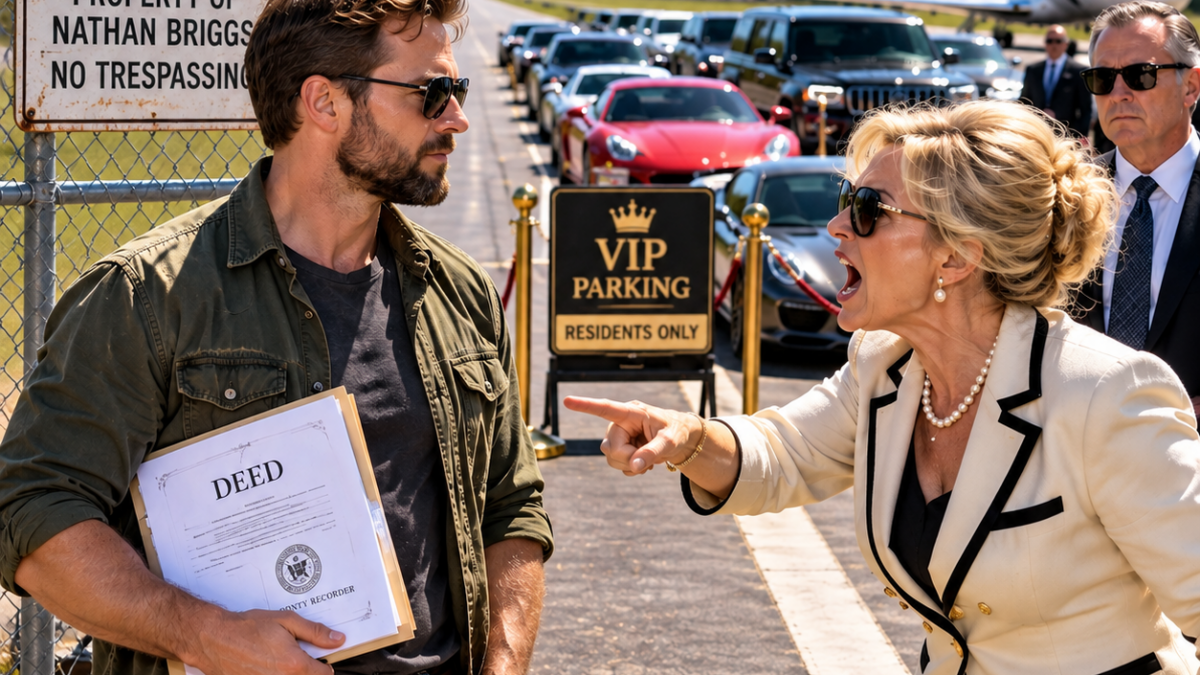
PART3:
There was a ranch.
Cattle.
A hangar.
And a runway.
I leaned closer.
“No way.”
Parcel 402B was not a utility strip.
It was an airstrip.
Three thousand feet of paved runway.
Plus a taxiway reaching what later became the public road.
The original ranch belonged to a crop-dusting pilot named Edgar Bell.
Bell had bought acreage in the 1960s and built a private strip so he could operate an agricultural aircraft.
When he died, the ranch was divided.
A development company purchased most of it in stages.
Oak Creek Estates went up in the late 1990s and early 2000s.
The runway stopped being used for aviation before that.
The old hangar disappeared.
Houses surrounded the strip.
But the parcel containing actual runway had apparently never transferred into the developer’s ownership.
Maybe clerical error.
Maybe someone planned a later conveyance.
Maybe title company missed separate parcel number.
The county files were messy enough that I could not tell that night.
What I could tell was this:
Parcel 402B still existed separately.
And the county was selling it.
I did not celebrate.
That is how people lose money.
Something looks incredible, they fall in love, then stop looking for reasons it is terrible.
So I spent the next week trying to prove I should not buy it.
I checked access.
There was a recorded easement from the parcel to a public road.
Good.
I checked liens.
Some had been resolved in foreclosure.
Others required review.
I checked environmental records.
Nothing obvious.
Zoning.
Complicated, but not unusable.
I checked floodplain.
Minimal.
I checked whether the HOA held a recorded easement over the parcel.
Nothing I could find.
Then I checked Oak Creek’s declarations.
Parcel 402B was outside the HOA’s recorded boundary.
Explicitly.
That was strange.
Then I found current aerial photos again and zoomed in.
Cars.
Rows of them.
RV shapes.
Boat trailers.
I assumed Google imagery might show temporary event parking.
Then I found an Oak Creek newsletter cached online.
VIP PARKING RENEWALS DUE JULY 1.
I sat back.
Clicked.
Annual passes.
Resident-only.
Boats.
Classic vehicles.
RVs.
Premium covered? Maybe no cover, but reserved long-term spaces.
No deed reference.
No parcel number.
Just:
OAK CREEK VIP RESIDENT STORAGE AND PARKING.
I laughed.
Not because it was funny.
Because suddenly $3,200 opening bid had become much more interesting.
Auction morning was hot even by Texas standards.
County courthouse steps.
About thirty bidders.
Most were there for houses.
One investor wanted commercial lots.
Parcel 402B came late.
The auctioneer sounded bored.
“Opening bid, thirty-two hundred.”
I raised my paddle.
Another man bid thirty-five.
I went to four thousand.
He looked at his phone.
Shrugged.
Stopped.
That was it.
No dramatic war.
No last-second billionaire.
Four thousand dollars.
Plus recording fees and other costs.
I became purchaser of record subject to the foreclosure paperwork, statutory requirements, and whatever title problems my attorney was about to discover.
That last part mattered.
A tax deed is not a magic wand.
Depending on jurisdiction and foreclosure posture, you can inherit complications.
Redemption rights.
Notice issues.
Boundary disputes.
Title-insurance headaches.
Possessory claims.
I did not drive straight to Oak Creek waving the deed.
I called Harrison Ward.
Harrison was a commercial real-estate attorney whose personality could best be described as expensive caution.
He did not get excited.
Ever.
I brought him documents.
He read for almost an hour.
Then:
“This is either very good or a fascinating way to spend fifty thousand dollars proving you own something worth nothing.”
“Encouraging.”
“Give me a week.”
It took three.
Title chain.
Foreclosure file.
Recorded plats.
Developer deeds.
Corporate dissolution records.
HOA declarations.
Old tax records.
Access rights.
County correspondence.
A surveyor physically located the parcel.
The runway was real.
The boundaries were real.
The tax foreclosure had been properly noticed as far as Harrison could determine.
The access easement existed.
And there was no deed transferring runway to HOA.
Harrison finally leaned back.
“You bought an airstrip.”
“For four thousand dollars.”
“You bought a title to an airstrip for four thousand dollars.”
“Difference?”
“A lawsuit.”
Fair.
“What can the HOA claim?”
“Adverse possession.”
“Prescriptive rights.”
“Implied easement.”
“Estoppel.”
“Maybe some theory based on maintenance.”
“Do they win?”
“I didn’t say that.”
“What do you think?”
“I think their documents are terrible for them.”
He showed me subdivision plat.
Runway parcel outlined separately.
Not included.
Another exhibit from developer.
Same.
Association’s own declaration schedule.
Same.
“What about fifteen years using it?”
“Long use matters.”
“Hostile use matters.”
“Open use matters.”
“Whether use was under mistake, permission, or claim of right matters.”
“Tax history matters.”
“Government foreclosure history matters.”
“State-specific requirements matter.”
“So?”
“So stop asking for courtroom ending before we know facts.”
That was Harrison.
I liked him.
I waited until title position was solid enough to inspect.
The access road was outside Oak Creek’s main gate.
That surprised me.
A narrow lane branched from county road beneath oak canopy.
Old taxiway.
Still paved.
I drove my pickup in.
Expected cracks.
Weeds.
Maybe faded centerline.
Instead I found what looked like a luxury car dealership.
The runway had been resealed.
Fresh black.
Bright white parking lines.
Rows.
Porsches.
Mercedes.
Range Rovers.
Vintage Mustangs under fitted covers.
Airstreams.
Boats.
Large RVs.
Even a restored Land Cruiser worth more than my truck and probably my first house combined.
Metal signs every fifty feet.
OAK CREEK VIP RESIDENT PARKING
AUTHORIZED PERMIT REQUIRED
UNAUTHORIZED VEHICLES WILL BE TOWED
I stopped.
Actually laughed.
They had threatened to tow unauthorized vehicles from my property.
I took photographs.
A woman walking golden retriever approached.
Maybe late fifties.
Visor.
Tennis clothes.
She pointed at truck.
“You can’t leave that there.”
“I’m not planning to.”
“Good.”
“Brenda will tow anything without sticker.”
“Brenda?”
“HOA president.”
She rolled eyes.
“Brenda Carmichael.”
“Strict?”
“That’s polite.”
I pointed at hanging placard in G-Wagon.
“Those permits expensive?”
She laughed bitterly.
“Twenty-four hundred this year.”
“A year?”
“For standard.”
“RVs more.”
I looked down runway.
“How many spots?”
“Depends how Brenda counts.”
“There’s waiting list.”
“Where does money go?”
“Clubhouse capital fund, supposedly.”
“Supposedly?”
“We’ve been promised locker-room renovation three years.”
She tugged dog leash.
“My husband wanted space for boat.”
“Six-month wait.”
“That good, huh?”
“Best scam in Oak Creek.”
She smiled.
She meant it as joke.
I didn’t.
“What’s your name?”
“Linda Avery.”
“Nathan.”
She looked at me again.
“Are you parking?”
“No.”
“I’m checking property.”
She stopped.
“What property?”
I smiled.
“Mine.”
Then left before I made things worse.
I counted roughly one hundred twenty spaces.
Some occupied by two smaller vehicles.
Some oversized spots.
At even two thousand per year average, parking generated serious money.
Maybe not pure profit.
They paid sealcoating.
Lighting.
Security.
Insurance? I doubted correctly titled insurance existed.
Still.
I called Harrison from county road.
“You need to see this.”
He came next morning.
Walked runway.
Photographed signs.
Looked at permit stickers.
Then stood with hands on hips.
“This is incredible.”
“You’re excited.”
“No.”
“You look excited.”
“I’m professionally alarmed.”
“They’re charging.”
“I see.”
“Can we make them pay?”
“Eventually.”
“Can I shut it down?”
“Probably.”
“Can I tow?”
Harrison looked at me.
“Do not tow anything.”
“Why?”
“Because I enjoy not defending conversion claims from seventy rich people.”
Fair.
“What first?”
“Notice.”
That was less exciting.
It was also correct.
We obtained exact HOA registered agent.
Board counsel.
Property manager.
Insurance carrier where available.
Harrison prepared notice of ownership.
Certified deed.
Survey.
Demand for accounting.
Demand that HOA cease issuing new parking permits until legal rights determined.
Request for written basis claiming parcel.
Proposal to negotiate temporary license while dispute resolved.
That last part was Harrison’s idea.
“You want me to let them keep earning money?”
“For now.”
“Why?”
“Because courts like reasonable people.”
“I’m reasonable.”
“Prove it.”
We proposed thirty-day interim license.
Escrow parking revenues.
No new long-term permits.
No towing authorized by HOA without owner consent.
Insurance certificates.
Then negotiate lease or vacate.
That is what a sane board should have done.
Brenda Carmichael did not.
She sent security.
Two days later I drove in with surveyor to mark corners.
A white SUV blocked taxiway.
Gary Higgins got out.
Big man.
Late fifties.
Red face.
Oak Creek Security polo though he was not actually police.
“You’re trespassing.”
“I own parcel.”
He laughed.
“Brenda said you’d try this.”
I handed copy letter.
“We served association.”
He did not take.
“This is HOA property.”
“Show deed.”
“You need leave.”
“Surveyor has right under my authorization.”
“Not in our community.”
“We’re not inside HOA parcel.”
Gary stepped closer.
“You want me to call cops?”
“Yes.”
That slowed him.
“What?”
“Call.”
He expected fear.
I wanted incident documented.
Deputy arrived.
Reviewed papers.
Did not adjudicate ownership from roadside.
Correctly.
He told both sides civil matter.
He also told Gary not to interfere physically with survey crew absent court order.
Gary called Brenda.
Ten minutes later she arrived.
White Mercedes.
Blonde hair.
Gold bracelets.
Sunglasses.
She stepped out as if filming commercial.
“You must be Nathan Briggs.”
“Yes.”
“You bought tax scrap.”
“I bought parcel 402B.”
“You bought paper.”
“So far county agrees.”
She smiled.
“We’ve maintained that runway for fifteen years.”
“Then we have a lot to discuss.”
“It belongs to Oak Creek.”
“Based on what?”
“Our attorneys.”
“Which deed?”
Her smile tightened.
“You think you can walk into community and extort us?”
“I sent temporary-license proposal.”
“Thirty thousand a month?”
Yes.
Harrison had suggested opening number based on parking revenue and market value.
It was aggressive.
Negotiable.
Brenda treated it as war declaration.
“We are not paying you thirty thousand dollars for land we already own.”
“Then prove ownership.”
“We will.”
“Good.”
“Meanwhile, stop selling spaces.”
She laughed.
“You have no authority over this association.”
“I have authority over my parcel.”
“We’ll see.”
Then:
“If that truck is here tomorrow without Oak Creek permit, Gary will have it removed.”
The deputy heard.
He said:
“Ma’am, I’d advise against towing while ownership is disputed and he has deed documentation.”
She turned on him.
“This is private HOA matter.”
“No.”
He replied.
“Towing a disputed owner’s vehicle becomes everybody’s problem.”
I liked deputy.
Brenda did not.
We left.
Three days later was monthly HOA meeting.
I attended.
Not ambush.
Harrison notified counsel.
I brought deed.
Survey.
Notice.
The clubhouse was ridiculous.
Marble.
Massive chandeliers.
Mahogany board dais.
Residents arguing about mulch color.
Forty minutes.
Then Brenda:
“New business.”
I stood.
“My name is Nathan Briggs.”
Whispers.
Brenda already knew.
“I recently purchased parcel 402B at county tax foreclosure sale.”
“Parcel includes former Bell Airstrip and associated taxiway.”
“The association is currently using that parcel as paid parking.”
The room changed.
Residents turned.
Richard Cole, treasurer, dropped pen.
Brenda said:
“This has already been addressed.”
“With me?”
“With counsel.”
“No response from counsel yet.”
“You’ve been told property belongs to HOA.”
“By you.”
I opened portfolio.
“Here is certified deed.”
“Survey.”
“Recorded plat.”
“Your own declaration excluding parcel.”
Richard leaned toward Brenda.
Whispered.
She ignored.
I continued.
“I’m not here to strand anyone’s property.”
“I’ve offered temporary license while rights are resolved.”
“I’m asking that future parking fees be escrowed until ownership is determined.”
Residents murmured.
A man stood.
“What do you mean escrowed?”
Brenda banged gavel.
“Sit down.”
I answered anyway.
“The association charges you to park on land it does not appear to own.”
Room exploded.
“How much did you pay?”
Someone shouted.
“Four thousand.”
Bad answer politically.
Everyone gasped.
Brenda smiled.
“There.”
She said.
“A speculator bought a clerical-error tax deed for four thousand dollars and now wants thirty thousand a month from homeowners.”
That framing worked.
I looked predatory.
Technically, I was investor.
No point pretending otherwise.
“I bought what county sold.”
I said.
“If HOA owns it, present deed.”
Gary stood.
“We paved it.”
I turned.
“Thank you.”
“What?”
“For confirming HOA made improvements.”
He realized too late.
Harrison later called that moment “free admission.”
Brenda said:
“We have long-standing property rights.”
“Then let lawyers establish them.”
“In meantime?”
“In meantime, don’t represent to residents that title question doesn’t exist.”
“You’re threatening families.”
“No.”
“I’m trying not to tow anyone.”
That got attention.
Brenda leaned forward.
“You will never tow one vehicle from that runway.”
“If agreement reached, I won’t need to.”
“If you touch one resident’s car, we will bury you in litigation.”
“Then perhaps respond to letter.”
She tore copy in half.
Actually.
Dropped on desk.
“You have no power here.”
That phrase later became neighborhood joke.
At moment it was arrogant.
“Meeting adjourned.”
I left.
Harrison was waiting in my truck? He hadn’t attended maybe yes, but let’s say he listened remotely? Better he had advised not to provoke. I called.
“She tore notice.”
“Original?”
“No.”
“Good.”
“What now?”
“File declaratory action.”
“Before towing?”
“Yes.”
“Boring.”
“Rich men stay rich by being bored in correct order.”
We filed next morning.
Quiet title/declaratory relief.
Trespass.
Accounting.
Injunctive relief.
Not dramatic.
The HOA counterclaimed.
Adverse possession.
Prescriptive easement.
Unjust enrichment? They claimed reimbursement for improvements.
Reliance.
They asked court to enjoin me from disrupting parking.
Judge issued temporary status quo order:
No towing.
No new permits beyond short-term renewals.
No transfer.
Parking revenues after date to be held in separate escrow pending hearing.
That order changed everything.
Because for first time, HOA had to show parking money.
Richard Cole resisted.
Harrison noticed.
“Why?”
“Maybe sloppy books.”
“Maybe.”
“Maybe something better.”
A preliminary hearing was set six weeks out.
During discovery, we requested:
Parking permit rosters.
Revenue.
Expenses.
Vendor invoices.
Bank accounts.
Board approvals.
Insurance.
Maintenance contracts.
Resident communications.
Brenda’s side objected broadly.
Judge narrowed some.
Required production of financials directly tied to parking.
Then Richard resigned as treasurer.
Immediately.
“Family reasons.”
Harrison called.
“That’s interesting.”
Two days later Linda Avery—the dog walker—emailed me.
I had given her card during later encounter.
She wrote:
You should know the HOA sent notice saying VIP parking money has always been included in annual financial reports. I have lived here 11 years and I have never seen it.
Attached PDFs.
Annual budgets.
Line item:
CLUBHOUSE/AMENITY REVENUE.
But amounts far smaller than parking income should be.
Maybe parking net after costs?
Possible.
We kept digging.
The gala was scheduled during dispute.
Oak Creek Summer Solstice Gala.
Their big event.
Two hundred guests.
VIP parking used heavily.
Under court status quo order, existing parking could continue temporarily.
No tow revenge.
That ruined the internet version people later told.
Good.
Reality became more interesting.
I went to gala only because Harrison wanted documented observation.
We had permission to access parcel.
I parked at far end with photographer/survey tech.
At 7:30, runway packed.
More than 150 vehicles.
Some guests had temporary gala placards.
That caught attention.
New permits prohibited.
I photographed.
Then found a volunteer at entry collecting cash.
Fifty dollars gala parking.
“Receipt?”
I asked.
She handed generic ticket.
“Who gets this?”
“Oak Creek VIP.”
“What is that?”
“Parking company.”
There it was.
Not HOA.
OAK CREEK VIP MANAGEMENT LLC.
I had seen name nowhere in association disclosures.
I called Harrison.
“Found entity.”
“Send.”
Secretary of State search:
Oak Creek VIP Management LLC.
Managers:
Brenda Carmichael.
Richard Cole.
Address:
A UPS mailbox.
Formed twelve years earlier.
Not owned by HOA.
That changed case from property dispute to something else.
Maybe legitimate vendor.
HOA could hire management company owned by board members if disclosed and approved.
Conflict.
But possible.
We requested contract.
HOA counsel produced one.
Dated twelve years earlier.
Signed by Brenda as HOA president.
Signed by Richard on behalf of Oak Creek VIP Management.
Compensation structure:
Management company retained seventy percent of “net parking administration revenue” after nominal HOA license fee.
I read twice.
“Seventy?”
Harrison said:
“Keep reading.”
Board approval minutes were missing.
Later provided minutes referenced “parking management solution” but not ownership of vendor.
No disclosure Brenda and Richard owned it.
Residents had been told fees funded clubhouse improvements.
Some money did go to HOA.
But much flowed through LLC.
Not necessarily criminal by itself until we knew disclosures, authorization, tax reporting, personal distributions.
Still ugly.
Harrison hired forensic accountant.
Numbers:
Average parking revenue varied.
Some years $180,000.
Recent years over $300,000.
LLC paid sealing.
Lighting.
Attendant.
Towing administration.
Then large “management distributions” to Brenda and Richard.
Over twelve years, hundreds of thousands each.
Now residents became angry.
Because this was their money.
And parking sat on land HOA did not own.
The property case hearing became packed.
Brenda’s attorney argued:
HOA had used and maintained runway openly for fifteen years.
Residents relied.
Substantial improvements.
Nathan purchased with notice of visible occupancy.
Equity favored continued use.
Not frivolous arguments.
Harrison answered:
Open use does not automatically equal ownership.
The HOA’s own recorded boundary excluded parcel.
Its parking signs never cited deed.
It had no recorded easement over runway.
Its internal documents repeatedly referred to “old strip” and “overflow area” but no formal acquisition.
The tax foreclosure and title history complicated any possessory theory.
And perhaps most damaging:
The HOA had sought insurance coverage years earlier.
Application asked:
DOES ASSOCIATION OWN PARKING PARCEL?
Someone checked:
NO — USE UNDER HISTORIC ACCESS ARRANGEMENT.
No agreement attached.
That form predated my purchase by six years.
Brenda claimed mistake.
Maybe.
But it undercut claim they always believed they owned it.
Judge did not deliver movie speech.
She issued written order weeks later.
The association had not established ownership sufficient for preliminary relief.
Nathan remained record owner.
HOA could continue temporary use only under limited court-supervised license while claims resolved, or remove vehicles.
Escrow remained.
Parties encouraged mediation.
Brenda told residents it was temporary setback.
Then forensic report leaked—not from me, as far as I know.
Oak Creek exploded.
Emergency meeting.
Homeowners packed room.
One resident yelled:
“You own parking company?”
Brenda said:
“It’s a management vendor.”
“You own it?”
“Yes, but—”
“How much did it pay you last year?”
“Those are private business records.”
That answer ended her presidency.
A recall petition started same night.
Richard stopped attending meetings.
Gary blamed accountants.
The clubhouse renovation committee discovered projects repeatedly deferred despite parking revenue.
Some vendors were legitimate.
Others connected to Brenda.
Again, not every payment fraudulent.
But conflicts undisclosed.
Board counsel advised independent investigation.
Insurance carrier appointed separate counsel.
A retired corporate CFO named Arthur Pendleton became interim board president after Brenda stepped down pending audit.
Arthur called me.
Not hostile.
“Tired yet?”
“Yes.”
“Me too.”
We met at Harrison’s office.
He brought binders.
“I want parking preserved.”
“Why?”
“Because we actually need it.”
“Fire-lane overflow.”
“Boats.”
“RVs.”
“Visitors.”
“Fine.”
“Would you lease?”
“Yes.”
“What number?”
“Appraisal first.”
Good.
We hired independent appraisers.
Runway was weird.
Eight acres.
Linear.
Not easily buildable because embedded in subdivision.
But as parking/storage serving affluent community, significant income potential.
Value as income-producing parcel substantial.
Not $4,000.
That was tax-distress auction number, not market.
Arthur proposed long-term lease.
I considered.
Then another issue:
HOA members wanted permanent control so never repeat ownership crisis.
Purchase.
“What would you sell for?”
I said:
“Depends.”
Appraisal range came back high six figures to low seven depending assumptions, access, permitted commercial use, legal encumbrances.
Oak Creek offered $850,000.
I countered $1.35 million.
They came $1.05.
We landed at $1.18 million plus reimbursement of certain legal costs and mutual release of property claims.
Not revenge clause against Brenda.
Harrison refused.
I had joked:
“Can we ban Brenda from parking forever?”
He said:
“No.”
“Why?”
“Because contracts should solve land problems, not memorialize your emotional problems.”
Annoying man.
Correct.
We did include:
Clear title transfer.
Recorded restrictions.
Parking use only.
No aviation reopening without separate approvals.
Maintenance obligations.
Traffic controls.
Revenue oversight requirements? Those are internal HOA, not deed maybe. The new board adopted them separately.
The sale required homeowner approval because special assessment.
That became second war.
Some residents:
Why should we pay because board screwed up?
Good question.
Others:
We’ve used runway fifteen years.
We need it.
Special assessment passed narrowly.
Closing day:
$1.18 million gross purchase price.
After legal fees, taxes, appraisal, title work, and other costs, obviously less.
Still extraordinary return on $4,000 bid.
People love number.
Four thousand into million.
But that is misleading.
It took risk.
Months.
Attorney fees.
Potential loss.
No guarantee.
If HOA had stronger adverse possession claim, I could have lost.
If tax foreclosure had defect, nightmare.
If zoning eliminated value, different.
If residents refused buy, I would have owned awkward strip and needed new business plan.
Profit came because land had real utility to people around it.
Not magic loophole.
Meanwhile parking audit continued independent of me.
The new board hired forensic accountant.
Findings:
Residents paid millions gross over years.
Substantial legitimate costs existed.
Sealcoating.
Lighting.
Security.
Tow administration.
Insurance.
But management fees to Brenda/Richard’s LLC had not been transparently disclosed.
Board approvals incomplete.
Conflict-of-interest procedures weak or absent.
Certain reimbursements lacked adequate documentation.
The matter was referred to law enforcement and civil counsel.
I was subpoenaed only regarding parcel ownership and discovery records.
I did not become prosecutor.
There was no instant courtroom arrest.
No frozen assets during my hearing.
Those details came later in exaggerated versions.
What actually happened:
Civil claims.
Regulatory/tax questions.
Potential criminal review.
Brenda hired attorney.
Richard hired separate attorney.
Residents sued former board members alleging breach of fiduciary duty and undisclosed self-dealing.
Insurers argued coverage.
Some claims settled.
Some dragged.
I stopped following.
My business with Oak Creek ended at closing.
Almost.
Arthur invited me to meeting after sale.
Why?
“People want to meet guy who bought runway.”
“That sounds terrible.”
“Come.”
I did.
Room quieter than first time.
No Brenda.
No Gary at dais.
Arthur stood.
“For record, parcel 402B now belongs to Oak Creek Estates Homeowners Association.”
Applause.
I smiled.
“Congratulations.”
Then Linda Avery stood.
Golden retriever woman.
“You really paid four thousand?”
“Yes.”
Laughter.
“What did we pay?”
Arthur groaned.
“Linda.”
Everyone knew.
She smiled.
“Just checking pain is real.”
Then:
“Thank you for not towing our cars.”
More laughter.
I looked around.
“I considered it.”
Harrison, seated back, said:
“No, you didn’t.”
“I emotionally considered.”
That got biggest laugh.
Truth:
A mass tow would have been satisfying for about ten minutes.
Then terrible.
Residents were not all Brenda.
Many had paid in good faith.
They had permits from an association they believed owned lot.
Why punish them?
Better target was institution’s conduct.
Not somebody’s Porsche.
That distinction saved me legal trouble and probably made settlement possible.
Tommy Jensen still became part of story.
Iron Hook Towing.
He had history with Brenda.
The source version of tale says fourteen wreckers stormed gala and removed 142 luxury cars.
That did not happen.
But there was a towing moment.
After court terminated temporary license, before sale closed, HOA missed a payment required under interim agreement due board transition.
Harrison issued notice.
Arthur fixed within day.
During that gap, three abandoned/unregistered vehicles remained after repeated notices.
One RV.
Two trailers.
Iron Hook legally removed them.
Tommy arrived personally.
Looked down runway.
“Only three?”
“Only three.”
“You have ruined my weekend.”
“I saved you from litigation.”
“Less fun.”
Then he pointed at Brenda’s old reserved sign.
“Can I have that?”
“No.”
“Why?”
“Evidence.”
He sighed.
Months later after case over, I gave him a photocopy.
He framed it.
Some legends deserve smaller truths.
Brenda moved out of Oak Creek before final civil cases ended.
I saw her once at mediation hallway.
She stopped.
“Nathan.”
“Brenda.”
“You happy?”
Interesting question.
“With what?”
“You got your money.”
“Yes.”
“You embarrassed me.”
“No.”
She laughed bitterly.
“Come on.”
“You did that yourself.”
She looked at floor.
For the first time she seemed tired rather than powerful.
“You don’t understand what it takes to run a neighborhood like that.”
“Probably not.”
“Everyone wants everything.”
“Perfect roads.”
“Lower dues.”
“Better clubhouse.”
“No assessments.”
“Security.”
“Storage.”
“Events.”
“And when you solve it, they complain how.”
There was truth there.
Leadership can be thankless.
It does not justify hidden financial conflicts.
I said:
“That explains pressure.”
“Not secrecy.”
Her mouth tightened.
“You think Arthur will do better?”
“I hope.”
“He’ll learn.”
“Maybe.”
Then she said:
“You bought it for four thousand.”
“Yes.”
“That land should never have gone to auction.”
“Probably not.”
“The county failed.”
“The developer failed.”
“The title people failed.”
“HOA failed.”
“Yes.”
“And you profit.”
“Yes.”
That was the uncomfortable part.
I did.
I was not moral crusader.
I saw undervalued asset and bought it.
I protected title.
I negotiated.
I sold.
Profit was point.
But making money did not make deed fake.
And HOA’s decade of use did not make secret management arrangement acceptable.
Both truths.
Brenda wanted me to be villain so she could be victim.
I refused.
I also refused to pretend I was Robin Hood.
I was investor.
Sometimes legal conflicts are healthier when everyone stops dressing financial interests as virtue.
The county later changed parcel review procedures for tax auctions involving land inside active subdivisions.
That came after embarrassment.
The assessor’s office had not “forgotten taxes for twenty years” exactly.
The history was messier.
Ownership entity dissolved.
Billing addresses failed.
Parcel classification changed.
Delinquency accumulated.
Automated records cleanup flagged it.
Then foreclosure.
No single sleepy clerk lost runway beneath desk.
Systems fail through layers.
Oak Creek changed too.
New bylaws required:
Board-member conflict disclosures.
Competitive bidding over set threshold.
Independent review for related-party contracts.
Separate accounting for parking revenue.
Annual audit.
Resident access to key financial statements.
Again:
Boring.
Useful.
The VIP permits stayed.
Price dropped.
Not because I demanded.
New board discovered they could cover actual maintenance and reserve contributions at lower fee once management structure changed.
Residents were furious when they saw math.
Some parking money really had funded community.
Some had not.
Reality rarely gives clean 100-percent theft.
That makes accountability harder.
Arthur called one year later.
“You want to hear something funny?”
“No.”
“Parking lot made profit.”
“For HOA?”
“Yes.”
“Legitimately?”
“Yes.”
“How much?”
“Enough.”
“Clubhouse lockers finally renovated?”
“Don’t start.”
I laughed.
Then he said:
“We put plaque by entrance.”
“What?”
“Historical marker.”
“Bell Airstrip.”
I liked that.
Not Nathan Briggs Runway.
Good.
Original purpose deserved memory.
The plaque read approximately:
FORMER BELL PRIVATE AIRSTRIP
BUILT 1974
SERVED AGRICULTURAL AVIATION
LATER CONVERTED TO COMMUNITY PARKING
No mention tax auction.
No Brenda.
No me.
Perfect.
I drove past several years later.
Public road view.
Could see rows of vehicles.
Orderly.
New signs.
OAK CREEK RESIDENT PARKING
PRIVATE PROPERTY — HOA OWNED
For first time, true.
I sat truck for a minute.
I thought about weird path:
Crop-dusting pilot.
Ranch.
Developer.
Clerical/title separation.
Subdivision.
Parking.
Hidden corporate arrangement.
Tax foreclosure.
My $4,000 paddle.
Lawsuit.
Audit.
Sale.
Land carries layers.
That is why I like forgotten parcels.
They are not empty.
They are paperwork fossils.
Every line on county map means somebody once decided something.
Sometimes decision survives everyone.
I keep certified copy of old deed.
Not because sentimental.
Because it was best transaction I ever made.
Harrison keeps reminding:
“You got lucky.”
“I did research.”
“You got lucky after research.”
Fair.
Luck is often what investors call outcome when risk broke favorably.
There are people online who tell story as if anyone can go buy tax-deed strip for $4,000 and sell to HOA for million.
No.
Please don’t.
Most $4,000 tax parcels are worth approximately $4,000 for reason.
Some worth less.
Some come with problems that make free too expensive.
Parcel 402B was anomaly.
What I did right:
I noticed geometry.
Checked history.
Paid for legal review.
Surveyed.
Documented.
Did not trespass beyond my claimed parcel.
Did not physically confront.
Did not tow residents impulsively.
Used court.
Asked for accounting.
Negotiated.
What HOA did wrong:
Assumed long use equaled title.
Ignored recorded boundary.
Threatened before researching.
Continued collecting under disputed circumstances.
Allowed conflicts to remain opaque.
Let Brenda turn legal problem into personal war.
That last one happens often.
Brenda could have responded first letter:
Interesting. Our records differ. Let counsel review.
Then perhaps HOA would have licensed.
Maybe bought cheaper before litigation.
Maybe uncovered parking-company conflict internally.
Instead:
You have no power here.
That sentence cost residents a lot.
Arrogance is expensive not because universe punishes pride.
Because arrogance prevents due diligence.
She was so certain she already knew answer that she never asked title counsel the right question early enough.
Who owns parcel 402B?
Simple.
Everything followed.
The $4,000 figure made story viral later.
But the most important number was not four thousand.
It was 402B.
Parcel number.
A thing everyone drove over for fifteen years without reading.
That is the nature of property.
People see fences.
Signs.
Pavement.
Maintenance.
Usage.
They assume ownership.
Law sees deeds.
Surveys.
Recorded rights.
Possession doctrines.
Tax histories.
Court orders.
Sometimes physical world and legal world drift apart.
Eventually someone notices.
I noticed.
I have bought other odd parcels since.
None that dramatic.
An access lane behind shopping center.
A former rail spur.
Two small lots holding stormwater rights.
One triangle of land on which a billboard company had been paying wrong owner for twelve years.
That was fun.
But nothing beats runway.
Tommy still calls:
“Find another HOA airstrip yet?”
“No.”
“Try harder.”
Harrison retired eventually.
At his retirement dinner I gave him small model airplane mounted on base.
Plaque:
PARCEL 402B
PLEASE DO NOT TOW UNTIL COUNSEL APPROVES
He laughed.
Then said:
“That’s the smartest thing you ever did.”
“What?”
“Listen to me.”
“Debatable.”
He pointed fork.
“If you had towed one hundred forty cars at gala, I would have resigned before midnight.”
“Noted.”
The exaggerated version did teach me something about stories.
People prefer spectacle.
Tow trucks.
Screaming HOA president.
Police arriving.
Judge slamming gavel.
Million-dollar wire.
Truth took months.
Emails.
Escrow.
Accounting.
Continuances.
Mediation.
Appraisal.
Board votes.
Title exceptions.
Settlement drafts.
The result was still satisfying.
Maybe more.
Because it held.
Nobody reversed sale.
Nobody accused me of trapping residents.
No court found I converted vehicles.
No innocent homeowner became collateral damage.
We solved ownership.
Then money.
Then governance.
That is grown-up revenge, if you insist on calling it revenge.
Make paperwork impossible to ignore.
I do not hate Brenda.
People expect me to.
I do not trust her.
Different.
She made decisions.
Residents made decisions.
I made decisions.
Everyone paid some price.
Brenda’s reputation.
HOA’s money.
My time and legal fees.
Residents’ special assessment.
Richard’s career.
Maybe criminal/civil consequences beyond.
The only innocent party might have been old runway.
It sat quietly while humans argued.
Edgar Bell built it to fly crop duster.
He could not have imagined Porsche storage.
I sometimes wonder what he would think.
Probably charge landing fees.
The day my sale proceeds cleared, I did not buy Ferrari.
Another internet myth.
I paid taxes.
Paid Harrison.
Paid surveyors.
Paid accountants.
Set aside reserves.
Reinvested.
Bought modest commercial property.
Paid off my mother’s mortgage.
That one mattered.
She asked:
“Where money came from?”
“Airstrip.”
“You fly now?”
“No.”
“Good.”
She hated planes.
Then:
“Four thousand?”
“Yes.”
She shook head.
“Your father would be furious he didn’t find it first.”
Probably.
I did buy one unnecessary thing.
An old framed aerial photograph of Bell ranch from 1978.
The runway visible.
I hung it in office.
Clients ask.
“That your airport?”
“Used to be.”
“Did you fly?”
“No.”
“What did you do with it?”
“Parking dispute.”
They look disappointed.
Then I tell story.
Not all details.
Depends how much time.
I always end same place.
Not with sale price.
With first HOA meeting.
Brenda tearing notice.
“You have no power here.”
Because that was mistake.
Power in property dispute does not come from louder voice.
Bigger house.
Longer board tenure.
More lawyers.
Or expensive sign.
It comes from legal rights you can prove.
And rights can be messy.
Disputed.
Limited.
But certainty should be earned before acted on.
I had deed.
They had habit.
Habit felt stronger because it was visible.
Cars.
Paint.
Signs.
Residents.
Revenue.
But habit did not become title automatically.
At same time, I did not assume deed meant immediate unquestionable possession either.
That humility mattered.
We let court sort.
If I had been wrong, I needed know before doing irreversible damage.
That is difference between protecting rights and performing dominance.
Oak Creek had performed dominance for years.
Tow signs.
Permit stickers.
Gary threatening.
Brenda controlling.
Nobody checked foundation.
When foundation was tested, cracks.
The parking financials were same.
For years residents saw polished clubhouse.
Board packets.
Professional newsletters.
Gala.
Everything looked institutional.
Therefore legitimate.
But an LLC can hide behind polished stationery.
Again:
Look at records.
Not appearances.
Arthur told me later biggest change in neighborhood was not parking ownership.
It was questions.
Residents started reading budgets.
Attending meetings.
Asking conflicts.
Requesting bids.
Brenda had complained nobody appreciated board.
Partly true.
People ignored governance until governance hurt.
Then they were shocked.
HOAs, nonprofits, clubs, corporations—any small institution can drift when everyone assumes someone else is watching.
That is not unique evil of HOA.
It is human.
Power plus boredom plus low oversight.
Bad combination.
Oak Creek got expensive lesson.
So did I.
After deal, I updated investment checklist.
If parcel inside active community:
Notify early.
Identify all occupants.
Do not treat residents as trespassers until counsel confirms.
Consider estoppel/equitable claims.
Review adverse possession.
Confirm foreclosure notice.
Check insurance.
Check environmental.
Check access.
Check zoning.
Check whether somebody has built million-dollar parking operation on it.
That last item in bold.
My assistant thought joke.
It is.
Mostly.
Five years later, I attended county tax auction.
A young guy sat beside.
He recognized me.
“You’re runway guy.”
“I have name.”
“Sorry.”
“Runway guy.”
Fine.
He showed map.
A narrow parcel behind subdivision.
“Think this is another one?”
I looked.
“Maybe.”
“How much should I bid?”
“No idea.”
“You paid four thousand.”
“Yes.”
“Could this be worth million?”
“Could be worth a lawsuit and six mosquitoes.”
He looked disappointed.
I said:
“Do title work.”
“Survey.”
“History.”
“Access.”
“Never buy story.”
“Buy facts.”
That is best advice I have.
Parcel 402B became great story after.
Before auction, it was uncertainty.
That is where money is sometimes made.
Not by having certainty others lack.
By being willing to pay to investigate uncertainty.
Four thousand was entry.
The real investment was diligence.
And patience.
Brenda had neither.
She saw me as trespasser because that was easier than imagining board had collected money on someone else’s land for fifteen years.
Richard saw spreadsheets as internal because nobody challenged.
Residents saw permit sticker and assumed ownership.
Everyone believed visible system.
A deed in county drawer quietly disagreed.
That is all it took.
One document.
One parcel.
One man bored enough on Monday night to zoom into old aerial photography.
I bought a closed airstrip for four thousand dollars.
The HOA had already turned it into VIP parking lot.
They threatened to tow me from my own runway.
Then they learned ownership was not decided by whoever bought newest signs.
The lawsuits came.
The books opened.
The parking company surfaced.
The board collapsed.
The residents reorganized.
And eventually Oak Creek did the one thing Brenda should have suggested at the beginning.
They bought the land.
Legally.
Recorded.
Paid.
Done.
The final wire did not feel like victory over Brenda.
It felt like conclusion.
Property problem solved.
Money problem exposed.
Community left to repair itself.
I drove past one last time shortly after closing.
No gate confrontation.
No police.
No tow trucks.
Just late-afternoon sun across black asphalt.
Luxury cars lined neatly.
A new sign had not gone up yet.
For a few minutes, old one remained:
OAK CREEK VIP RESIDENT PARKING.
For first time since I found parcel, sign was finally true.
Oak Creek owned it.
I did not.
I smiled.
Then drove away.
Four thousand dollars had bought me an airstrip.
A million-plus sale bought Oak Creek certainty.
But the most expensive thing in the entire story was fifteen years of nobody asking the right question.
Who actually owns the runway?








