HOA Security Cuffed Me, Seized My Truck, and Called My Federal Badge Fake—Then Their Own Lawyer Opened My Black Case and Asked, “What the Hell Did You Just Do?”
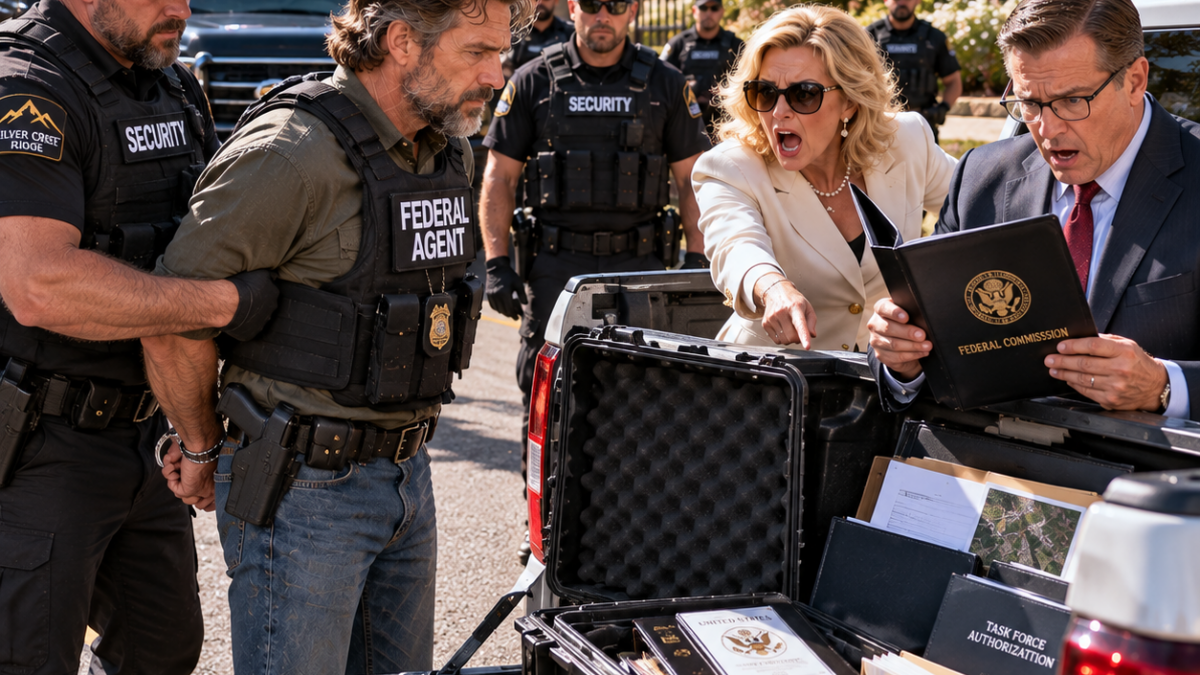
PART2:
At that point, I did not know whether the association president herself was involved.
That distinction matters.
Investigators are supposed to follow facts, not personalities.
We knew there was a pattern.
Property owners living outside certain HOA boundaries were receiving assessments anyway.
When they refused to pay, liens appeared.
Some of those debts were later purchased by companies that seemed unrelated on paper.
The property owner, financially exhausted or frightened, eventually sold.
Then the land moved again.
Too many times.
Too neatly.
Silver Crest Ridge had appeared repeatedly in the records.
That morning, though, I was not there to arrest anyone.
I was not even planning to enter the subdivision.
I was going to meet a landowner named Clayton Rusk.
Clayton owned thirty-eight acres behind Silver Crest Ridge.
He had recently discovered that an easement had been recorded across his land for a planned second access road.
According to the documents, Clayton had signed the easement.
According to Clayton, he had never seen it.
I wanted his original deed.
I wanted handwriting samples.
I wanted to look at the boundary from the north side.
That was it.
PART3:
I chose Cedar Basin Road because it gave me access without using the HOA’s main entrance.
Then I rounded a bend and saw the barrier.
It stretched across a county road.
Not an HOA driveway.
Not a private community lane.
A county road.
Someone had placed a hand-painted sign beside it.
PRIVATE HOA ACCESS.
RESIDENTS ONLY.
I slowed.
Stopped.
Looked at the county road marker behind me.
Then looked at the barrier again.
There are moments during an investigation when you know something is wrong before you know exactly why.
That was one.
I parked on the shoulder.
Took out my camera.
Stepped from the truck.
The morning was cool.
Early autumn.
Dry leaves along the ditch.
Somewhere behind the trees, a dog barked twice.
Nothing about the scene looked dangerous.
That was almost what made it strange.
A physical barrier across public access should never feel ordinary.
I photographed the sign.
The barrier.
The roadway.
County marker.
Drainage easement.
Position relative to the subdivision fence.
I was taking the fifth photograph when I heard engines behind me.
Two SUVs came fast down the shoulder.
They stopped close enough to throw dust over my boots.
The first man out was broad through the shoulders, maybe forty, wearing a black security jacket with SILVER CREST RIDGE embroidered across the chest.
His name, I would learn, was Brock Harland.
He walked toward me with the particular swagger of someone who had spent enough time wearing a security badge that he had forgotten what it did not authorize.
“Sir.”
I lowered the camera.
“Morning.”
“You can’t take photographs here.”
I looked around.
“Why?”
“This is private community property.”
I pointed toward the green county marker.
“This is Cedar Basin Road.”
“You’re within Silver Crest security perimeter.”
“That’s not the same thing.”
A second security officer came around the SUV.
Younger.
Nervous.
Brock stepped closer.
“Identification.”
“No.”
His eyebrows lifted.
“No?”
“You’re private security.”
“You’re trespassing.”
“On a county road?”
“You crossed a restricted boundary.”
“I haven’t crossed anything.”
He looked at my truck.
“Who are you here to see?”
I did not answer.
He reached for radio.
“Unit Three, possible hostile survey activity on north access.”
Hostile survey activity.
I almost smiled.
Instead I asked:
“Who placed the barrier across the road?”
Brock ignored me.
“Last chance. ID.”
I reached slowly toward my jacket.
He stiffened.
“Don’t.”
I stopped.
“I was going to show you credentials.”
“Hands where I can see them.”
Fine.
I kept them visible.
“You asked who I am.”
“You can tell me verbally.”
“Everett Slade.”
“What company?”
“I’m not with a company.”
“Then why are you photographing HOA infrastructure?”
“It isn’t HOA infrastructure.”
He took another step.
“You’ve been warned.”
“By you.”
“Yes.”
“That does not make it lawful.”
A black Mercedes came down the private entrance.
The gate opened before it.
The car rolled toward us.
Brock’s posture changed immediately.
That told me who mattered.
The woman who stepped out was in her late fifties.
Cream jacket.
Dark slacks.
Silver hair cut sharply at the jaw.
No hurry in her movements.
She looked at me the way executives look at a room before deciding which person has created inconvenience.
“What’s going on?”
Brock said:
“He refuses identification. Photographing the north perimeter.”
She looked at camera.
Then me.
“Are you with county?”
“No.”
“Surveyor?”
“No.”
“Press?”
“No.”
“Then who are you?”
I reached slowly into my inside jacket pocket.
This time Brock let me.
I removed credential wallet.
Opened it.
Not dramatically.
No badge flash.
Just enough.
The woman looked.
Then laughed.
Actually laughed.
“Federal?”
“Yes.”
“Federal what?”
“Investigator.”
“That’s adorable.”
That was the first thing Lenora Vale ever said to me directly.
Adorable.
I had been called worse.
I held credentials still.
“Would you like to read them?”
She did not take them.
Instead she looked at Brock.
“Anybody can buy those.”
Brock said:
“Exactly.”
That was mistake number one.
Not because insulting me mattered.
Because a competent security chief confronted with credentials claiming federal authority should do one thing:
Verify.
Call agency.
Call sheriff.
Call dispatch.
Call somebody.
Do not decide authenticity by confidence.
Lenora looked at me again.
“You have no reason to be here.”
“I’m on a county road.”
“This road services our community.”
“It is maintained by the county.”
“We have a maintenance agreement.”
“That does not make it private.”
“You’re splitting hairs.”
“Property boundaries are mostly hair-splitting with legal descriptions attached.”
She did not like that.
I asked:
“Who authorized barrier?”
“Silver Crest controls access here.”
“Do you have a county closure order?”
“You don’t need to see our documents.”
“That answer is useful.”
Her eyes narrowed.
“What does that mean?”
“Exactly what I said.”
Brock moved closer again.
“You need to leave.”
“I’ll leave when I finish documenting the obstruction.”
Lenora smiled.
Not kind.
“You’re not documenting anything.”
“Actually, I already have.”
She looked at camera.
Then truck.
Then back.
“What are you investigating?”
I said nothing.
That changed her more than everything before.
People who are merely annoyed by a trespasser want him gone.
People who are worried about an investigator want to know what he knows.
She asked again.
“What are you investigating?”
“I’m not discussing that with you.”
“Then I don’t believe you.”
“You don’t have to.”
She looked at Brock.
“Detain him.”
I thought I misheard.
Brock didn’t.
He stepped behind me.
I turned slightly.
“Do not touch me.”
Lenora folded arms.
“If you are legitimate, we’ll verify at clubhouse.”
“No.”
“You’re interfering with community security.”
“No.”
“Brock.”
His hand took my wrist.
I pulled it away once.
Not violently.
“Stop.”
He grabbed again.
I said clearly:
“I am not consenting to detention. You do not have lawful authority to arrest me on this county road.”
That sentence later mattered because his body camera was running.
Yes.
Brock wore one.
Private security body camera.
The thing he apparently thought would protect him became one of the cleanest records of what happened.
He cuffed my hands behind my back.
The younger officer looked uncomfortable.
“Chief?”
Brock said:
“He’s refusing lawful security direction.”
I said:
“There is no lawful security direction.”
Lenora said:
“Put him in the SUV.”
I planted my feet.
Not fighting.
Just stopped.
“Call the sheriff.”
Lenora smiled.
“We don’t need county deputies to manage our own security.”
“You’re standing on county property.”
She waved toward gate.
“Take him.”
They did.
That is the part people later misunderstood.
I could have resisted more.
I didn’t.
I could have announced specific statutes.
I didn’t.
I could have tried to overpower Brock.
Maybe.
Bad idea.
The safest thing I could do was preserve the facts.
State clearly I did not consent.
Do not threaten.
Do not fight.
Remember every face.
Every vehicle.
Every sentence.
Let them finish making the mistake.
That is harder than it sounds when your wrists are in cuffs.
They put me in back of security SUV.
Lenora drove behind us.
My truck stayed.
At least for ten minutes.
Silver Crest Ridge’s clubhouse looked like a luxury lodge.
Stone facade.
Tall windows.
Pool behind it.
Inside, everything smelled like lemon polish and expensive carpet.
A woman at reception stood when Brock brought me through.
Her face changed.
“Chief?”
“Security incident.”
They took me into conference room.
Not police interview room.
A room with framed golf-event photos and a tray of bottled water.
Brock attached one cuff to metal support beneath a heavy conference desk.
The younger officer said:
“Is that necessary?”
Brock looked at him.
“Do you want him walking?”
“No.”
“Then yes.”
I sat.
Lenora entered.
She placed my credential wallet on table.
She had taken it.
That was another detail.
She flipped it open.
“Federal Property Integrity Task Force.”
I said nothing.
She read name.
“Everett Slade.”
“Yes.”
She held commission card.
“This looks very convincing.”
“It is very real.”
“Then you won’t mind if we verify.”
“Please do.”
She smiled.
“With who?”
I gave agency contact number.
She looked annoyed.
“You expect me to call number you provide.”
“Call public switchboard.”
She did not.
Instead she photographed credential with phone.
That was later another issue.
Then she said:
“Your truck is being moved.”
I looked at her.
“No.”
“It’s illegally parked within restricted perimeter.”
“It’s on shoulder of county road.”
“It’s obstructing security access.”
“Do not touch my truck.”
“Brock.”
He stepped out.
I said:
“Lenora, listen carefully. Do not move my vehicle. Do not enter it. Do not remove anything from it.”
She looked almost pleased.
“Why?”
“Because I am telling you not to.”
“That isn’t answer.”
“It is the only answer you need.”
She leaned slightly closer.
“What’s in it?”
I said nothing.
There it was again.
Curiosity.
Concern.
Control.
She smiled.
“You people always rely on intimidation.”
I almost laughed.
“My hands are cuffed to your desk.”
“You know what I mean.”
“No. I don’t think you do.”
Ten minutes later, through clubhouse windows, I watched a commercial tow truck enter parking lot with my pickup hooked behind it.
My jaw tightened.
Lenora noticed.
“Problem?”
“That truck is federal work material right now.”
“It’s your personal pickup.”
“It is assigned for use in an active task force operation.”
“According to you.”
“Yes.”
“And your imaginary badge.”
“Call the number.”
She did not.
Brock returned carrying two plastic evidence-looking tubs.
Not evidence tubs.
Storage bins.
In them:
My camera.
Subpoenas.
Maps.
Notebook.
Backup drive.
Everything loose from passenger seat.
My stomach dropped.
“You searched my truck?”
Brock said:
“Inventory prior to towing.”
“You are private security.”
“We inventory property removed from community grounds.”
“You had no authority to enter.”
Lenora picked up one of the parcel maps.
Silver Crest Ridge.
Seventeen colored parcels.
Several circled.
Her face changed before she controlled it.
That was the first moment I knew she recognized something.
She set it down.
“What is this?”
“You should not be touching any of it.”
She picked up a subpoena.
Still unsigned copy.
Not yet served.
Looked at heading.
Then me.
Her smile faded.
“Who are these for?”
I said nothing.
She looked at Brock.
“What else was in truck?”
He said:
“Locked case behind seat.”
My voice sharpened.
“Do not open that case.”
Lenora looked at me.
Then smiled again.
There was satisfaction in it now.
As if my warning proved the case held something embarrassing.
“What’s inside?”
“Material you are not authorized to access.”
“Drugs?”
“No.”
“Weapons?”
“No.”
“Cash?”
“No.”
“Then why locked?”
“Because some documents are supposed to be locked.”
“Convenient.”
I said:
“Lenora.”
She paused.
“Do not open it.”
“Or what?”
“Or you will create a much larger problem than the one you already have.”
She laughed.
Not loudly.
Almost sympathetically.
“There it is.”
“What?”
“The threat.”
“No.”
“That is advice.”
She turned to Brock.
“Open it.”
His younger officer—his name was Eli Vance—spoke.
“Ma’am, maybe we should call counsel first.”
Good instinct.
Lenora said:
“We will.”
Then to Brock:
“Open it.”
Brock hesitated.
That mattered later too.
He knew enough to hesitate.
He retrieved bolt cutters and pry tools from maintenance room.
The case had two reinforced latches.
It was not a safe.
Could be defeated.
Designed for controlled transport, not Fort Knox.
I watched through glass conference-room wall while Brock set it on another table.
I said:
“This is your final warning. The case contains federal materials related to an active investigation. Do not break the lock.”
Lenora stood beside him.
“You’re still pretending.”
Brock cut the first lock.
Then second.
Opened.
Nothing exploded.
No hidden gun.
No secret cash.
Just paper.
Folders.
A sealed envelope.
A hard-sided smaller document wallet.
A blue commission folder.
And one red file stamped:
FEDERAL PROPERTY INTEGRITY TASK FORCE
LIMITED ACCESS
Brock looked at Lenora.
For the first time, neither of them looked confident.
Then the clubhouse attorney walked in.
His name was Martin Keene.
I knew him only from filings.
Silver Crest Ridge retained his firm for HOA matters.
He was mid-sixties.
Gray suit.
Reading glasses.
He entered already speaking.
“Lenora, I got your message. What exactly—”
Then saw me cuffed.
Stopped.
Looked at Brock.
Then at broken black case.
Then at my credential wallet on table.
“What is going on?”
Lenora said:
“This man entered restricted property with counterfeit federal credentials and was photographing security infrastructure.”
Martin looked at me.
“Counterfeit?”
“That’s right.”
He reached for wallet.
Read.
Did not laugh.
He looked at me.
“Mr. Slade?”
“Yes.”
“May I ask what agency?”
I told him.
He pulled out phone.
Not Lenora’s phone.
His.
Searched public number.
Called.
That simple act separated him from everyone else in room.
Verification.
He spoke to switchboard.
Gave my name.
Commission number.
Waited.
Then his face changed.
Not dramatically.
Just enough.
He said:
“Yes, I’ll hold.”
He covered phone.
“Lenora.”
She looked annoyed.
“What?”
“Who authorized cuffs?”
“I did.”
“Who searched truck?”
“Brock.”
“Who opened that?”
She pointed at me.
“He refused to identify himself properly.”
Martin looked at my federal credentials in his hand.
“He did identify himself.”
“We believed fraudulent.”
“Did anyone verify?”
Silence.
Phone came alive.
Martin listened.
“Yes.”
Pause.
“Yes, thank you.”
He hung up.
Then looked at Brock.
“Remove those cuffs.”
Lenora said:
“Martin—”
“Now.”
Brock did not move.
Martin’s voice changed.
“Brock. Remove the cuffs.”
He did.
Blood came back to wrists slowly.
I stood.
Martin looked at broken case.
Then at sealed envelope.
He did not touch sealed envelope.
Good.
He picked up blue commission folder.
Embossed.
Official.
Read enough.
Then his face went pale.
“Lenora.”
She folded arms.
“What?”
He looked at her.
Then at me.
Then back.
“Lenora, what the hell did you just do?”
That line became famous later.
Not because anyone recorded Martin on purpose.
Brock’s body camera had captured it.
Everything.
He had forgotten to shut it off.
I rubbed my wrist.
“Mr. Keene.”
He looked at me.
“I am very sorry.”
“Don’t apologize yet.”
He nodded.
Fair.
“I need my phone.”
Brock brought it.
I called my task force supervisor.
Assistant Special Agent in Charge Marianne Holt.
I told exactly what happened.
No exaggeration.
Stopped on county road.
Credential shown.
Cuffed by private HOA security.
Transported to clubhouse.
Truck seized and searched.
Federal case opened after warning.
Task-force materials accessed.
She was silent for maybe three seconds.
Then:
“Do not leave.”
“I wasn’t planning to.”
“County sheriff is being contacted.”
“Okay.”
“Do not argue with anyone.”
“I’m doing well so far.”
She ignored joke.
“Secure documents if you can do so without conflict.”
Martin heard.
He said:
“Mr. Slade, nobody will touch anything else.”
I looked at Lenora.
“I would prefer that in writing.”
Martin almost smiled despite horror.
“I’ll write it.”
He did.
On firm letterhead from his bag.
Silver Crest Ridge HOA and its agents will cease handling, reviewing, copying, moving, or interfering with materials identified by Mr. Slade pending arrival of law enforcement.
Signed.
Martin Keene.
I took a photo.
Then we waited.
Longest twenty-two minutes of Lenora Vale’s presidency.
She did not stay quiet.
People like her rarely do once control slips.
“This is ridiculous.”
Martin said:
“Stop talking.”
“You represent us.”
“I do.”
“Then represent.”
“I am trying.”
She pointed at me.
“He was trespassing.”
Martin:
“On what?”
“Our restricted north access.”
“Cedar Basin Road?”
“Yes.”
“County road?”
“We maintain it.”
“Maintenance is not ownership.”
“I know that.”
“Then why was he detained?”
“He ignored security.”
Martin closed eyes.
“Private security instructions are not criminal law.”
“He was suspicious.”
“You call sheriff.”
“He was taking photographs.”
“From a public road?”
“He had maps of our community.”
Martin looked at me.
Then map.
He knew enough not to ask why.
Lenora noticed.
“What do you know?”
Martin said:
“Nothing I’m discussing with you right now.”
That was the moment she realized her own lawyer was protecting something from her.
Her face changed.
“Martin.”
“Stop.”
She looked at me.
“What is this investigation?”
I said nothing.
She laughed once.
Brittle.
“This is retaliation.”
“For what?”
“You’ve been targeting our association.”
“No.”
“We’ve been dealing with Clayton Rusk for months and now suddenly federal agents show up.”
Interesting.
I had not said Clayton’s name.
Not once since being detained.
Martin looked at her.
“Clayton?”
Too late.
Lenora realized.
I filed that away.
Then sirens.
Not many.
Two county sheriff units.
Then an unmarked vehicle.
Marianne was not in it.
Task force agent Daniel Ruiz was.
County Sergeant Louise Hart came first.
She walked in.
Saw me.
Saw broken case.
Saw private cuffs on table.
Said:
“Everybody separate.”
Good.
She asked me first because I was complainant.
I gave timeline.
Body cam.
Credentials.
Truck location.
Search.
Case.
No dramatics.
Then Brock.
Then Lenora.
Then Eli.
Then Martin.
The tow truck was located at Silver Crest maintenance yard less than a mile away.
My pickup had not been impounded by any lawful authority.
County deputies recovered it.
No damage beyond minor hook mark on frame.
Search had been extensive enough to disturb materials but not remove anything we could immediately identify.
That became its own evidence issue.
Task force took custody.
My black case went into an evidence bag bigger than expected because latches destroyed.
Daniel Ruiz looked at me.
“You always make friends like this?”
“Only homeowners associations.”
He didn’t laugh.
He was busy.
Then Sergeant Hart asked Brock:
“On what authority did you arrest Mr. Slade?”
Brock said:
“Private security detention for trespass and suspected impersonation.”
“Did you witness crime?”
“He refused identification.”
“He showed federal credentials.”
“We believed fake.”
“What made you believe that?”
“Ms. Vale said.”
Sergeant looked at Lenora.
“You are trained to authenticate federal credentials?”
“No.”
“Law enforcement background?”
“No.”
“Security licensing?”
“No.”
“Why not call us?”
She said:
“We manage our own community.”
Sergeant Hart:
“Not the county road.”
That sentence came up often later.
No arrests that afternoon either.
People expected cuffs in return.
Didn’t happen.
Investigators do not improve bad detention by performing another for theater.
Statements.
Evidence preservation.
Vehicle recovered.
Referral.
Potential offenses reviewed later.
What changed everything was not that Lenora had detained a federal investigator.
That was serious enough.
What changed everything was what she had seen inside the case.
And what she said afterward.
Because task force had already been investigating Silver Crest Ridge as one node in a broader property scheme.
Before that morning, Lenora Vale was a person of interest only in the loose sense that she signed HOA documents.
We had not established whether she knew false filings were false.
That distinction mattered.
Maybe property manager.
Maybe attorney.
Maybe outside vendor.
Maybe predecessor board.
Maybe title processor.
We did not know.
Then she detained me.
Opened truck.
Opened case.
Saw parcel map.
Recognized it.
Mentioned Clayton Rusk before I did.
Later, digital review of clubhouse cameras showed something more.
While waiting for sheriff, Lenora left conference room for four minutes.
Went to office.
Called someone.
The call itself was not recorded.
But cell records later identified number.
Harlan Ridge Acquisitions LLC.
One of the shell companies already in our file.
That company had purchased three properties previously burdened by disputed HOA liens.
Its registered agent was a lawyer in another county.
Its beneficial ownership was hidden behind two entities.
We had been tracing.
Lenora called them nine minutes after learning federal investigation was real.
That call was not automatically crime.
Could be lawyer.
Could be vendor.
Could be innocent.
But it justified questions.
Then Martin Keene did something that probably saved himself.
He withdrew from representing Lenora personally.
Not HOA.
Her personally.
He sent preservation notice to board.
Do not delete email.
Do not alter minutes.
Do not shred vendor records.
Do not access Slade materials.
Do not contact task force except through counsel.
Smart.
Lenora did not like.
The board met emergency session that night.
I was not there.
I saw minutes later.
Five members.
Lenora.
Vice president Gail Mercer.
Treasurer Paul Sand.
Two others.
Martin present.
First question:
“Why was a public road blocked?”
Lenora answered:
Security measure.
Martin corrected:
“No board authorization exists for barrier on county road.”
Second:
“Why was federal agent detained?”
Lenora:
He refused security protocol.
Martin:
“He was not inside HOA property when initially detained.”
Third:
“Why was his truck removed?”
Lenora:
Evidence preservation.
Martin reportedly said:
“No.”
That word appears alone in draft notes.
Then board asked:
“Why was locked case opened?”
Lenora:
Because we believed he was impersonating federal authority and might have materials related to fraud.
Martin:
“Did you call sheriff before opening?”
“No.”
“Did you call federal agency?”
“No.”
“Did you call me?”
“After.”
He recommended immediate suspension of Lenora’s operational authority and Brock’s security powers pending review.
Vote:
4–1.
Lenora voted no.
Of course.
Brock was placed on administrative leave.
Eli Vance, younger officer, gave full statement.
His bodycam was gold.
Not because it caught everything perfectly.
Because it captured sequence.
My credentials shown.
Lenora laughing.
My explicit warning about case.
Her order.
Brock cutting lock.
Martin arriving.
Verification call.
“What the hell did you just do?”
Nobody could later claim memory.
Then came broader records.
We served subpoenas properly.
Not from truck.
Through process.
Silver Crest produced thousands of pages.
Martin supervised.
The pattern sharpened.
Outside parcels near Silver Crest had received “association maintenance assessments” even though not all were subject to covenants.
When unpaid, Silver Crest or an affiliated servicing company filed liens.
Some liens contained signatures from property owners acknowledging debt.
Several owners denied signing.
One dead owner had allegedly signed eighteen months after death.
That will get attention.
A company named Crestline Recovery Partners purchased some association receivables at discount.
Crestline then pressured sales.
Who owned Crestline?
Indirectly:
Harlan Ridge Acquisitions.
Same company Lenora called.
Harlan Ridge then bought two parcels after foreclosure threats.
One later sold to developer planning second access road.
Clayton Rusk’s forged easement would have made that road possible without buying his whole property.
The structure was clever enough to create distance.
HOA says:
We just enforce assessments.
Recovery company says:
We just buy receivables.
Acquisition company says:
We just buy distressed property.
Developer says:
We just buy land from willing sellers.
Individually plausible.
Together:
Pattern.
Then money.
Lenora did not own Harlan Ridge directly.
Her brother-in-law, David Vale, owned 40% through another LLC.
Lenora’s adult daughter had received consulting payments from Crestline for “community data services.”
Not proof yet.
But relationships.
Our team followed.
The title processor who notarized Clayton’s easement had also notarized three disputed lien acknowledgments.
She claimed signatures were presented remotely.
Her journal was incomplete.
One notary stamp had been used on days she was out of state.
Someone was manufacturing documents.
Then Brock became unexpectedly important.
Not as villain.
As witness.
After his lawyer negotiated proffer, he admitted private security had been told to “treat north road as association-controlled regardless of county mapping.”
Who told him?
Lenora.
Why?
Because “we are establishing continuous access.”
That phrase mattered in property disputes.
Continuous access.
He also said security had been tasked with photographing Clayton’s vehicles, visitors, and gate usage.
“Why?”
“Ms. Vale said we needed a history.”
History for what?
Adverse-use argument.
They were trying to manufacture evidence of control.
Again:
Not automatically crime.
But combined with forged easement?
Bad.
Brock said he never knew about forged documents.
I believed that.
His mistake was simpler.
He thought private security powers stretched much farther than they did.
He had worked three years without serious incident.
Residents obeyed.
Trespassers left.
Delivery drivers followed instructions.
Authority grows in the space where nobody challenges it.
Then he met someone on a county road who said no.
Instead of recalibrating, he escalated.
I know that type of mistake.
Federal agents can make it too.
Badge can become answer instead of tool.
That is why procedures exist.
Verify.
Call local.
Get warrant.
Document.
Don’t improvise power.
Brock lost his job.
His security license faced discipline.
He later pleaded to a reduced unlawful-restraint-related offense under state law, with probation and community service, after prosecutors considered bodycam, cooperation, and lack of physical injury.
Some people thought lenient.
Maybe.
I did not care about destroying him.
He was not architect.
Lenora was harder.
Her defense from beginning:
She genuinely believed I was fake.
She genuinely believed Cedar Basin Road was controlled by HOA.
She genuinely believed security had detention authority.
She genuinely believed opening case was necessary to establish whether a threat existed.
Belief matters.
But belief has limits when someone gives repeated warnings and verification is easy.
Prosecutors looked at what she did after learning credentials real.
The call to Harlan Ridge.
Deletion request.
Yes.
There was one.
At 11:32 that morning, after board suspended her, Lenora emailed HOA IT contractor:
Please archive and remove redundant project correspondence older than 24 months from president mailbox. Legal is taking over.
IT contractor did not comply because preservation notice had arrived.
“Archive and remove” became obstruction issue.
Her lawyer argued routine cleanup.
Timing said otherwise.
Then texts.
Lenora to David Vale:
Feds have maps.
David:
What maps?
Lenora:
Rusk, Mercer tract, north road, all of it.
David:
Don’t text.
That is never a helpful text.
Another:
Need Crestline to pause anything pending.
Again, maybe prudent.
But evidence accumulates.
Task force expanded.
State investigators.
Federal prosecutors.
County recorder’s office.
Financial crimes.
No one dramatic raid for months.
That is another thing people misunderstand.
Once you know something, you still have to prove.
Search warrants require probable cause.
Charges require elements.
Money records need subpoenas.
Digital devices need imaging.
Handwriting experts.
Title chains.
Witness interviews.
Seventeen parcels became twenty-three.
Then thirty-one.
Not all fraud.
Some liens valid.
Some owners actually owed money.
Good investigation separates bad from suspicious.
We dropped several allegations entirely.
That mattered.
If you decide every thing connected to villain must be crooked, you become storyteller, not investigator.
I did not want story.
I wanted case.
Clayton Rusk became central witness.
His signature had been copied from an old agricultural lease.
The forged easement placed access across his thirty-eight acres.
Notary admitted under cooperation that she had been given signed document by a paralegal working for Crestline-affiliated law office.
Paralegal said signature had already been there.
Forensic analysis found digital layering inconsistent with wet signature.
Then email.
David Vale to Lenora:
Once Rusk access is recorded, north road issue is solved.
Lenora:
Good. We need physical control to make it stick.
Physical control.
Barrier across Cedar Basin Road.
Security patrols.
Private sign.
Everything began aligning.
Had she planned my detention because I was federal investigator?
No evidence.
I believe encounter was chance.
She saw me as problem.
Reacted.
Then discovered who I was too late.
That is almost worse.
Because it means behavior was normal to her.
Not special cover-up.
Normal.
Silver Crest residents reacted in waves.
First disbelief.
Then anger.
Then embarrassment.
Then division.
Some defended Lenora.
“She kept us safe.”
“She improved neighborhood.”
“She increased property values.”
Those things could be true and misconduct still true.
Human beings hate mixed ledgers.
We want good person or bad person.
Life gives:
Person who fixed pool budget and also abused authority.
Person who negotiated insurance and also participated in false filings.
Person who smiled at charity events and called a shell company after opening federal case.
Both.
The board hired independent counsel.
Audit.
They discovered more governance problems.
Crestline contracts approved under vague collection-authority resolution.
Board had not understood receivables sold to entity connected to Lenora’s family.
Security expansion on county road never formally voted.
Barrier funded as “perimeter maintenance.”
Invoices split under manager approval threshold.
Sound familiar.
Not every split invoice fraudulent.
But pattern was about avoiding scrutiny.
Martin Keene testified to grand jury eventually.
That hurt Lenora because he had warned.
Two years before:
County map indicates Cedar Basin Road is public. Association should not obstruct without county coordination.
Lenora replied:
Residents require controlled access.
Martin:
Then petition county.
Lenora:
That takes too long.
One year before:
Association does not possess police powers. Security should avoid representing otherwise.
Lenora:
They use security badges, not law enforcement badges.
Martin:
The distinction should be made explicit.
Then morning of my detention:
Brock’s jacket said SECURITY.
Fine.
But Lenora ordered detention anyway.
Counsel warnings do not automatically make later acts criminal.
They show knowledge of limits.
That matters.
The black case became physical evidence.
I hated that.
My case was supposed to hold evidence, not become evidence.
For months I used replacement.
Daniel Ruiz kept making jokes.
“Need stronger locks?”
“No.”
“Maybe HOA-proof.”
“Shut up.”
Eventually broken case was returned after evidentiary photography.
I kept it.
Not sentimental.
Reminder.
Authority can be misunderstood from both directions.
People assumed because I was federal investigator, I could have arrested Lenora myself on spot.
No.
I wasn’t acting as local patrol officer.
My task force authority did not make me universal cop for every state-law offense.
I called local sheriff.
Correct.
Later federal charges came through prosecutors and warrants.
Correct.
That distinction is everything.
If story is about private security pretending to have powers they do not, I cannot end it by pretending federal badge has powers it does not.
Law is not hierarchy of costumes.
Jurisdiction matters.
Process matters.
The first arrests came eight months later.
David Vale.
Notary.
Two Crestline officers.
Title processor.
Lenora surrendered through attorney the following week.
No SWAT.
No driveway spectacle.
She walked into federal building wearing navy suit.
Booked.
Initial appearance.
Released on conditions pending trial.
Charges included conspiracy, wire fraud-related counts, false document activity, and obstruction-related allegations depending defendant roles.
State charges existed too for certain filings.
Not every count survived.
Plea negotiations.
One defendant went to trial.
David pleaded first.
That changed everything.
He admitted Crestline used HOA debt pressure to facilitate below-market acquisitions in targeted expansion corridors.
Not every homeowner.
Selected parcels.
Silver Crest was useful because association notices created legitimacy.
Lenora’s role, according to plea documents, included identifying parcels, supporting assessments, and helping maintain apparent association control over access routes.
She did not draft every forgery.
She knew enough.
That was government’s position.
Her lawyers fought.
Ultimately she pleaded to conspiracy and obstruction-related counts under agreement that dismissed others.
Prison?
Yes.
But not thirty years.
Twenty-six months federal custody, followed by supervised release, restitution components, and civil forfeiture tied to certain proceeds.
People online complained too short.
Others too harsh.
I don’t grade sentences.
Judge does.
My job was facts.
Brock received no federal prison.
He cooperated and his unlawful detention was handled locally.
Silver Crest dissolved security department.
Contracted licensed company with explicit post orders:
No detention except circumstances permitted by law.
No roadblocks on public roads.
No searches of vehicles without consent or legal authority.
No representation as police.
County removed barrier.
They cut posts out.
Cedar Basin Road reopened fully.
The hand-painted PRIVATE HOA ACCESS sign went into county evidence, then later returned to HOA.
New board president asked if I wanted it.
“No.”
“Why?”
“I have enough trash.”
Clayton kept it.
He hung in barn.
Under it he wrote:
PUBLIC ROAD.
He is petty.
I approve.
Clayton’s easement was voided.
Court order.
Title corrected.
His thirty-eight acres stayed.
He later granted county legitimate emergency-access easement on different route for fair compensation.
Someone asked why he would cooperate after all that.
He said:
“I wasn’t against a road. I was against somebody forging my name.”
Exactly.
Consent changes everything.
Silver Crest had real traffic problem.
Secondary emergency route useful.
They could have negotiated.
Paid.
Recorded.
Instead, somebody decided lawful process was inefficient.
That single mindset caused most of case.
Why ask when you can claim?
Why negotiate when you can file?
Why wait when you can pressure?
Why verify badge when you can cuff?
Why call lawyer before opening case when you can break lock?
Same habit.
Shortcut authority.
I testified at sentencing.
Victim statement related detention.
I kept it short.
Lenora sat at defense table.
Older than morning I met her.
Smaller somehow.
I said:
“I don’t want this court to treat what happened to me as more important because I happened to have federal credentials. The central problem is not that they detained a federal investigator. The problem is that they believed they could detain anyone on a public road because they controlled the narrative around that road.”
Judge looked at me.
I continued.
“If I had been a surveyor, reporter, landowner, delivery driver, or resident questioning the barrier, the authority would have been just as false.”
That mattered to me.
I did not want story to become:
Don’t mess with fed.
Wrong lesson.
The lesson is:
Do not invent powers because nobody has stopped you yet.
After hearing, Martin Keene approached.
He looked tired.
“Everett.”
“Martin.”
“You kept the case?”
“Yes.”
“Broken?”
“Yes.”
He nodded.
“I think about that morning.”
“So do I.”
“I should have pushed board harder before.”
“You sent warnings.”
“I sent lawyer warnings.”
“What does that mean?”
“Polite.”
He looked toward courtroom.
“Sometimes clients hear polite as optional.”
“Would they have listened if louder?”
He thought.
“Maybe not.”
Fair.
He had resigned from HOA six months after incident.
Not because implicated.
Because exhausted.
He testified.
Helped unwind title mess.
His line—what the hell did you just do—ended up quoted in filings, news, neighborhood lore.
He hated it.
I found funny.
He said:
“My obituary will have that sentence.”
“Could be worse.”
“How?”
“Could be Lenora’s.”
He laughed.
Then stopped.
“That’s dark.”
“Federal paperwork does that.”
My black case now sits in my office on shelf.
Broken latch.
Bent corner.
I retired two years after case closed.
Thirty-one years government service in different roles.
No dramatic final raid.
I turned in credentials.
That was stranger than being cuffed.
The blue commission folder that terrified Lenora no longer authorizes anything.
It sits in my personal records legally retained as permitted.
The power was never leather wallet.
Never embossing.
Never seal.
Power came from institution, law, appointment, supervision, limits.
Once commission ended, the object became memory.
That is healthy.
People who cannot separate themselves from badge become dangerous.
Brock learned that with security badge.
Lenora learned it with HOA presidency.
I tried not to learn it with federal one.
Silver Crest Ridge still exists.
Different board.
Different signs.
The north entrance now says:
CEDAR BASIN ROAD — PUBLIC COUNTY ROAD
SILVER CREST PRIVATE PROPERTY BEGINS AT MARKED GATE
Very clear.
County made them install.
I drove by once after retirement.
Stopped at same bend.
No barrier.
No SUVs.
No Brock.
Leaves in ditch.
Dog barking somewhere.
I parked.
Got out.
Took a photograph.
No one came.
That felt oddly satisfying.
Clayton Rusk met me for coffee afterward.
He still farms part of thirty-eight acres.
Rest leased for hay.
The planned second entrance eventually happened on county-negotiated alignment along northern edge.
Silver Crest paid.
Clayton signed.
Actual signature.
Notary watched.
Recorded.
Boring.
Perfect.
He said:
“All they had to do was ask.”
That sentence could be written over entire case.
All they had to do was ask.
All Lenora had to do when she saw credentials:
Can we verify?
All Brock had to do:
Should we call sheriff?
All HOA had to do about road:
Can county approve controlled access?
All developer had to do about Clayton:
What will you take for easement?
Instead, every question became command.
That is how people turn manageable problems into criminal ones.
One more thing about morning.
Eli Vance, younger security officer, came to see me years later.
He had left private security.
Become county emergency dispatcher.
He apologized.
“For what?”
“I stood there.”
“You objected.”
“Not enough.”
“You were junior officer.”
“Still.”
I knew feeling.
Every career has moments you replay and improve in imagination.
“You gave bodycam.”
“Yes.”
“You told truth.”
“Yes.”
“That mattered.”
He nodded.
“I should’ve stopped Brock.”
“Maybe.”
I was not going to give him false absolution.
He appreciated.
“What would you do?”
“If I were you then?”
“Yes.”
“Step back. Call sheriff. Refuse to assist detention once credentials shown unless immediate threat.”
He nodded.
“I teach new dispatchers something from it.”
“What?”
“People call saying someone is fake cop, fake fed, fake utility. We don’t tell them to confront. We verify.”
Good.
That’s how mistakes become systems.
Not slogans.
Procedure.
The task force case changed county recorder practices too.
Flagged notice when HOA lien filed outside declared parcels.
Enhanced notary audit.
Cross-reference deceased owner records.
Some criticized bureaucracy.
Maybe.
Bureaucracy is annoying until forged signature costs you land.
Then you want more boxes.
No system perfect.
Fraud adapts.
But friction matters.
Lenora’s most damaging power had been speed.
File before owner knows.
Pressure before owner gets counsel.
Sell receivable before dispute heard.
Record easement before challenge.
Slow down bad process and truth catches up.
That is what happened morning with me too.
She wanted fast.
Detain.
Tow.
Open.
Decide.
Martin slowed.
Verify.
One phone call.
Everything changed.
Not because federal status made me special.
Because reality entered room.
I think often about Lenora laughing at credentials.
People say arrogance.
Yes.
But something deeper.
She had lived years in an environment where her interpretation became truth if delivered confidently enough.
Security listened.
Board listened.
Residents listened.
Vendors listened.
Managers listened.
Eventually she stopped distinguishing:
I believe this
from
This is legally true.
That is dangerous in leaders.
Also investigators.
Also judges.
Also parents.
Anybody.
The sentence I use now when teaching occasional ethics seminar is:
“Confidence is not authentication.”
Students think I’m talking documents.
I am.
And people.
A signature needs verification.
A title needs verification.
A badge needs verification.
A road designation needs verification.
An accusation needs verification.
Even your own certainty.
Especially that.
The broken case sits behind me when I teach.
Someone always asks.
“Is that the case?”
“Yes.”
“Did they really break it open?”
“Yes.”
“Were they arrested right away?”
“No.”
They look disappointed.
People love immediate reversal.
Private guard cuffs fed, then fed team storms clubhouse.
That didn’t happen.
What happened was better because it was real.
A lawyer made a phone call.
A sheriff took statements.
A task force preserved evidence.
Subpoenas issued.
Money traced.
Emails read.
Signatures examined.
Witnesses interviewed.
Months passed.
Then people who had spent years pretending paperwork was whatever they said it was finally had to answer to paperwork they did not control.
That is how it ended.
Not with sirens.
With records.
Which is where it had started.
Parcel numbers.
Liens.
Transfers.
Maps.
Signatures.
The boring things.
The things Lenora thought she could bend because nobody else was looking closely.
She was wrong.
Somebody was looking.
And all she had to do that morning was let me drive down a public road.
Instead, she cuffed me to a desk and broke open the one case that proved exactly how closely.








