HOA Patrol Pepper-Sprayed My 13-Year-Old Daughter for Walking Home Alone—Then He Handed Me the “Violation” and I Recognized the Law He Was Misusing.
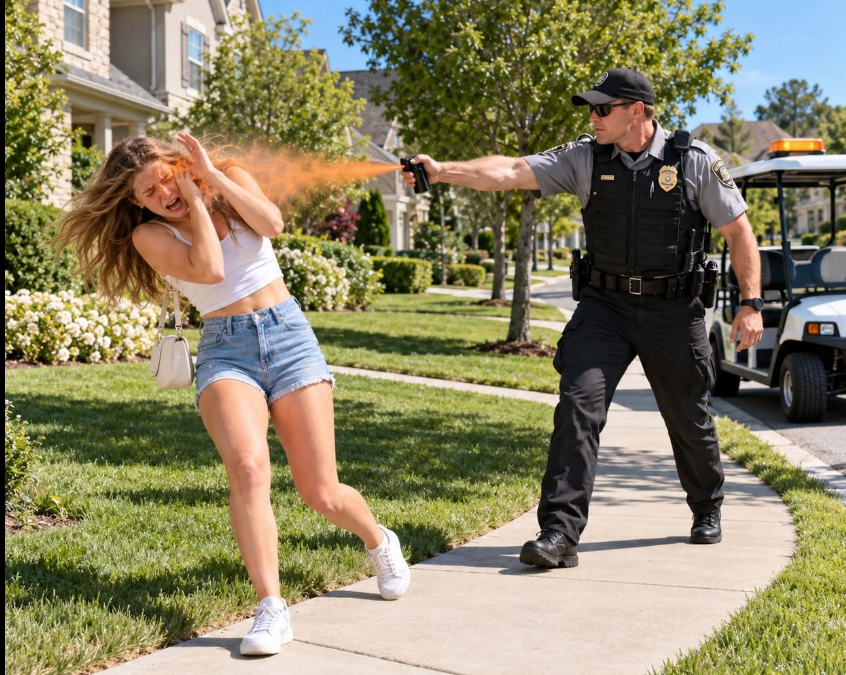
HOA Patrol Pepper-Sprayed My 13-Year-Old Daughter for Walking Home Alone—Then He Handed Me the “Violation” and I Recognized the Law He Was Misusing.
By the time I reached Oak Trail, my thirteen-year-old daughter was on her knees, crying through a face full of pepper spray while an HOA patrol SUV lit her up like a criminal.
The man standing over her calmly handed me a violation notice and warned that next time she could lose access to the neighborhood’s common areas simply for walking home alone.
He still thought I was just another frightened homeowner until I told him I was Daniel Mercer, a state senator, a former civil rights attorney, and one of the people who had helped write the very law he was pretending to enforce.
The first thing I remember was the smell.
Pepper spray has a metallic, chemical bite to it that gets into the back of your throat even when you are not the person who was sprayed.
The second thing I remember was Lily’s breathing.
Short.
Panicked.
Humiliated.
My daughter sat beside Oak Trail with one hand pressed against her face and the other wrapped around her library card as though that tiny piece of plastic was the only proof she had that she had been doing something completely ordinary.
Walking home.
That was it.
She had walked home from the community library by herself.
Thirteen years old.
Broad daylight when she started.
A trail she had used hundreds of times.
A route that ran through a public easement recorded with the county long before Marcus Ellery ever decided he was king of Maplewood Oaks.
And somebody had pepper-sprayed her for it.
I dropped beside her.
“Lily.”
She turned toward my voice.
“Dad?”
“I’m here.”
“My eyes.”
“I know.”
“It burns.”
“I know, sweetheart.”
I pulled the saline bottle from the first-aid kit I kept in the car.
“Keep your eyes open if you can.”
“I can’t.”
“You can.”
She tried.
The liquid ran across her cheek, carrying orange residue toward the pavement. Her whole body trembled.
Behind us, an engine idled.
The HOA patrol SUV.
Ray sat inside wearing mirrored sunglasses even though the sun was already dropping behind the trees.
Marcus Ellery stood beside the vehicle.
Marcus was the HOA president.
At least that was the title he used.
He held himself like a county sheriff, a judge, and a governor had somehow been combined into one middle-aged man carrying a laminated binder.
He did not look sorry.
PART2:
That was the first thing that separated the moment from an accident.
A person who accidentally watches a child get hurt reacts.
They step forward.
They ask if she is okay.
They call for medical help.
They apologize.
Marcus watched Lily crying on the pavement and lifted his chin.
“Policy breach.”
I stopped pouring saline.
“What?”
“Your daughter violated our safety rule.”
I looked at him.
The words did not fit the scene.
Lily coughed beside me.
Marcus continued.
“Minors are required to be accompanied by an adult on the trail.”
I stood slowly.
“My daughter was pepper-sprayed.”
“She refused to comply with a lawful safety directive.”
“Who sprayed her?”
Marcus glanced toward Ray.
That was enough.
I looked at the SUV.
Ray did not move.
“Ray.”
His window lowered a few inches.
“She was warned.”
I stared at him.
PART3:
“You sprayed a thirteen-year-old girl.”
“She became noncompliant.”
Lily whispered behind me.
“I was scared.”
I turned.
“What happened?”
She wiped her face with the edge of the towel.
“He stopped the car.”
“Who?”
“Ray.”
I looked toward him again.
“He told me I couldn’t walk alone.”
“What did you say?”
“I said I was going home.”
“Then what?”
“He told me to stop.”
Her voice cracked.
“I kept walking.”
Marcus interrupted.
“Exactly.”
I turned on him.
“Exactly what?”
“She ignored an enforcement officer.”
“Enforcement officer?”
Marcus gestured toward the patrol SUV.
“Community safety.”
Ray’s SUV had magnetic HOA patrol decals on the doors, a light bar, and enough equipment to make an uninformed person assume he had government authority.
He did not.
He was employed through the HOA’s private security arrangement.
Nothing more.
I asked Lily again.
“What happened after you kept walking?”
“He got out.”
Her breathing quickened.
“He grabbed my backpack.”
My jaw tightened.
“He grabbed you?”
“He pulled the strap.”
“And?”
“I turned around.”
She squeezed her eyes shut again.
“He said I was resisting.”
I looked at Ray.
“You called a child resisting?”
“She refused commands.”
“What command?”
“To stop.”
“For what crime?”
Marcus stepped forward.
“This is not about criminal law.”
“No?”
“It is about community policy.”
I almost laughed.
Not because anything was funny.
Because my brain was trying to reject the stupidity of the sentence.
“You used force on my child over an HOA policy?”
Marcus’s expression barely changed.
“Actions have consequences.”
That phrase did something to me.
I felt anger rise hard enough that my ribs tightened around it.
But anger was heat.
I had spent too many years as an attorney to confuse heat with leverage.
I turned back to Lily.
“Can you see me?”
“Kind of.”
“Blurred?”
“Yes.”
“Any trouble breathing?”
“My throat hurts.”
“We’re getting you checked.”
“I want to go home.”
“We will.”
Marcus held out a sheet of paper.
“Before you leave.”
I stared at it.
“What is that?”
“Notice of violation.”
For a second, I genuinely thought I had misheard him.
“My daughter is injured and you’re giving me a violation?”
“Unaccompanied minor on the Oak Trail.”
He pushed the paper toward me.
I took it.
There was a Maplewood Oaks logo at the top.
Large block letters read:
NOTICE OF SAFETY NONCOMPLIANCE.
Below that:
UNACCOMPANIED MINOR.
There was no ordinance number.
No properly cited bylaw section.
No statutory authority.
Just Marcus’s signature and a list of possible consequences.
Daily fines.
Suspension of common-area privileges.
Further enforcement.
I folded the paper once.
Then again.
“Marcus.”
“Yes?”
“This trail is a public easement recorded with the county.”
His expression tightened a fraction.
“The HOA maintains it.”
“Maintenance does not convert a county easement into private property.”
“We retain authority to regulate community safety.”
“No.”
“Yes.”
“No.”
His chin lifted.
“The board disagrees.”
I slipped my phone from my pocket and started recording.
Marcus noticed.
“Record all you want.”
“I intend to.”
“The board decides what is safe.”
“That is not how law works.”
“We are within our rights.”
“You are not.”
His mouth tightened.
“You don’t know our bylaws.”
“I know more about your legal exposure than you apparently do.”
Ray’s window lowered another inch.
Marcus gave him a quick look.
Then turned back to me.
I continued.
“Use of force against a minor on a public easement is not an HOA policy issue.”
Marcus opened his mouth.
I raised one finger.
“I’m not finished.”
That surprised him.
Most people in Maplewood Oaks had learned not to interrupt Marcus.
I had not.
“You have a private security employee using chemical force against a thirteen-year-old over a rule you cannot even cite properly.”
I held up the notice.
“You have no ordinance number.”
I pointed toward the trail.
“You do not own this easement.”
Then toward Ray.
“And your patrol officer does not have police authority.”
Marcus’s smirk returned.
Smaller this time.
“Then challenge it through the proper process.”
“I will.”
“Good.”
“And when I do, your insurer will see it.”
That changed him.
Barely.
But I saw it.
Insurance.
Board officers loved talking about authority.
They became much less philosophical when somebody mentioned coverage exclusions and personal liability.
I stepped closer.
“Do you know what happens when intentional conduct falls outside the carrier’s coverage?”
Marcus did not answer.
“Do you know what happens when a board knowingly exceeds its authority after counsel has warned it?”
His eyes shifted.
That caught my attention.
He knew something.
Not everything.
But something.
I lowered my voice.
“And do you know what happens when force is used against a minor while enforcing a rule that may never have been validly adopted?”
Ray’s engine fan hummed.
Oak leaves moved overhead.
Marcus stared at me.
Then he said, “You’re trying to intimidate the board.”
“No.”
I looked at Lily.
“I’m trying very hard not to let what you did to my daughter decide how I handle you.”
His face hardened.
“Tell her to walk with an adult next time.”
That was when I gave him the part he had not bothered to learn.
“My name is Daniel Mercer.”
“I know your name.”
“No.”
I shook my head.
“You know what’s printed on my mailbox.”
Marcus rolled his eyes.
“I don’t care what you do for a living.”
“You should.”
Ray turned his head slightly.
I looked directly at Marcus.
“I’m a state senator.”
His expression froze.
I continued.
“Before that, I spent years practicing civil rights law.”
The smirk disappeared.
“And I chaired the committee that worked on the state statute you keep pretending gives you authority to do this.”
Ray removed his mirrored sunglasses.
Marcus stared at me.
“You’re lying.”
I almost smiled.
“That would be incredibly easy for you to verify.”
Silence.
Lily reached for my wrist.
“Dad.”
The anger left me instantly.
I crouched beside her again.
“I’m here.”
“I want Mom.”
The words hit deeper than anything Marcus could have said.
Caroline had been gone three years.
Cancer.
Fast enough that part of me still sometimes expected to hear her moving around the kitchen.
Lily had been ten when we buried her.
Oak Trail meant something to us because of Caroline.
She loved those oaks.
When we first bought the house, she walked that path nearly every evening. After Lily was born, we pushed the stroller there. After Caroline became sick, we walked more slowly. Later, when walking became difficult, we sat on the bench beneath the oldest trees.
Caroline once scratched a tiny C into the underside of that bench.
Technically vandalism.
She laughed while she did it.
“Our secret.”
After she died, Lily and I touched that carving every time we walked the trail.
A ritual.
A promise.
We were still here.
Caroline was still with us somehow.
And now my daughter was afraid of the same trail.
I stood.
“We’re leaving.”
Marcus pointed toward the notice.
“You’ll need to respond within ten business days.”
I looked at him.
“No.”
His eyebrows rose.
“You don’t get to tell me what I need to do tonight.”
He stepped toward us.
“Senator or not, the HOA rules apply equally.”
“Good.”
I lifted my phone.
“Then equality means your board records are open to the same scrutiny as everyone else.”
He stopped.
I helped Lily stand.
She leaned against me.
Her sneakers squeaked on the pavement.
Neighbors had begun gathering.
Some behind fences.
Some holding phones.
Victor stood outside number 114.
He had canvassed with me once during a school board election, years before I entered the state senate.
He watched Marcus with an expression I recognized.
Not surprise.
Recognition.
That bothered me.
It meant this was not new.
I guided Lily toward the car.
As we passed the bench beneath the oaks, she stopped.
Her fingers trembled.
She reached under the wood.
Touched Caroline’s carved initial.
Then pulled her hand back.
“Can we go?”
“Yes.”
I got her into the car.
Before closing the door, I looked back at Marcus.
“You chose the wrong ground.”
His chin lifted again.
“And the wrong family.”
“We’ll see.”
“We will.”
I closed the door.
That night, after a doctor confirmed Lily’s eyes would recover and the worst of the chemical exposure had passed, I brought her home.
She barely spoke.
Her aunt came over and stayed close.
I set the violation notice on the coffee table.
The paper looked absurdly harmless.
That was the thing about institutional intimidation.
It rarely looked like violence.
Sometimes it looked like letterhead.
A logo.
A signature.
A deadline.
A threat printed in twelve-point font.
My phone buzzed.
Victor.
You’re not the first.
A photograph followed.
His wife’s roses.
They had been cited because they grew above the approved fence height.
Another message.
Teenage boy fined for walking the trail alone while wearing earbuds.
Another.
Nurse threatened with a lien because her car remained on the street overnight after a twelve-hour hospital shift.
A retired teacher fined for hosting her granddaughter’s birthday party without prior authorization.
A family ordered to repaint their front door.
An elderly woman threatened because her walker had been left outside overnight.
I sat on the couch and scrolled.
Incident after incident.
Nothing as violent as what happened to Lily.
But together they formed a pattern.
Not safety.
Control.
Caroline used to joke that HOAs were little monarchies disguised as landscaping committees.
I had always laughed.
That night, I did not.
I opened my laptop.
First step:
Oak Trail.
I pulled county GIS records.
Then property filings.
Then the recorded easement.
There it was.
Public pedestrian easement.
Clear.
I downloaded it.
Next:
Maplewood Oaks governing documents.
The neighborhood portal had some.
County filings had others.
I requested the rest formally.
Then I sent a preservation notice through counsel channels because I had no intention of letting meeting recordings disappear.
My phone rang.
Victor.
“You okay?”
“Lily will be.”
“I saw what happened.”
“How much?”
“Enough.”
“Has Ray done this before?”
“Sprayed a kid?”
“Yes.”
“Not that I know of.”
“What about stopping teenagers?”
“All the time.”
“And Marcus?”
Victor laughed without humor.
“You really don’t know?”
“No.”
“Daniel, he’s been running this place like a private government for years.”
“Why hasn’t anyone challenged him?”
“People have mortgages.”
“That doesn’t answer me.”
“It does.”
I sat back.
Victor continued.
“He threatens liens.”
“Valid ones?”
“Who wants to find out after paying a lawyer?”
Fair point.
“He threatens access suspensions.”
“To what?”
“Pool. Clubhouse. Parking privileges.”
“Based on what authority?”
“Exactly.”
“Board votes?”
Victor was quiet.
“What?”
“You should look at those.”
“I intend to.”
“Look closely.”
That was the second sign.
Marcus knew something.
Victor suspected something.
The records would tell me what.
The next morning, Lily stayed home with her aunt.
I walked to the Maplewood Oaks recreation center.
The bulletin board outside was covered in notices.
Dozens.
Grass violations.
Decorations.
Parking.
Visitors.
Noise.
Garden restrictions.
Pet restrictions.
One sheet warned that repeated noncompliance could result in escalating financial remedies.
Another warned of amenity suspension.
I photographed every page.
A woman standing nearby watched me.
“You’re Senator Mercer.”
“Daniel is fine.”
She looked toward the building.
“My mother got a violation.”
“For?”
“Her walker.”
I had already heard.
“She forgot it on the porch overnight.”
“Did you appeal?”
The woman laughed bitterly.
“To Marcus?”
“Yes.”
“That’s like appealing to the person who fined you.”
“What happened?”
“We paid.”
“How much?”
“Three hundred.”
“For a walker?”
“Late fees.”
I felt the anger again.
Light, not heat.
That became my rule.
Anger could show me where to look.
It could not decide what I did once I got there.
Another neighbor approached.
Then another.
Stories accumulated.
The system worked because everyone thought their problem was isolated.
One family thought they were the only ones threatened.
One resident thought she was uniquely targeted.
One teenager thought being stopped on the trail was just bad luck.
Isolation is one of the oldest tools of control.
Convince each person that everyone else is complying happily.
Make them believe resistance means being alone.
By noon, I knew enough to understand Lily’s assault was not an isolated enforcement mistake.
It was the most extreme result of a pattern.
That evening, my phone buzzed with an email.
No name.
Meet HOA office.
Noon tomorrow.
Come alone.
I knew who sent it.
Ellen Hargrove.
The board secretary.
At meetings, Ellen sat beside Marcus.
She rarely spoke.
Whenever she did, Marcus interrupted.
I had noticed.
I arrived at the HOA office at noon.
It occupied a small suite in a strip mall.
Beige walls.
Cheap carpet.
Printer toner.
Nothing about it looked powerful.
Ellen sat behind a desk.
A manila folder rested in front of her.
She looked terrified.
“You came.”
“You asked.”
Her eyes went to the door.
“You didn’t get this from me.”
I sat.
“I haven’t gotten anything yet.”
She looked at the folder.
Her fingers tapped against it.
Once.
Twice.
Three times.
“Marcus pushes things through.”
“What things?”
“Rules.”
“How?”
“He tells us they passed.”
“Did they?”
“Sometimes.”
“That means sometimes they didn’t.”
Her mouth tightened.
I waited.
Silence is useful with frightened witnesses.
People rush to fill it if you give them room.
Ellen finally whispered, “We didn’t have quorum.”
“For which vote?”
“The child safety amendment.”
My pulse slowed.
That is what happens when a case starts becoming clear.
You stop feeling surprised.
You start organizing.
“Who was present?”
“Two directors.”
“How many required?”
“Four.”
“Proxies?”
She looked down.
“Not valid ones.”
“What does that mean?”
“He created them afterward.”
I stared at her.
“Marcus created proxy votes?”
“He told me to record the minutes as if five directors voted.”
“Did five directors vote?”
“No.”
“Did you write it?”
Her eyes filled.
“Yes.”
“Why?”
“He threatened to remove me.”
“That doesn’t make falsifying records okay.”
“I know.”
I said it gently.
But I said it.
She needed honesty more than comfort.
Ellen nodded.
“I know.”
Then she pushed the folder toward me.
Inside were copies of minutes.
Attendance lists.
Versions with handwritten edits.
Numbers that changed between drafts.
The same motion recorded differently.
“Why now?” I asked.
She rubbed her hands together.
“Because of Lily.”
I said nothing.
“I saw the video.”
“What video?”
“Someone posted part of it privately.”
She swallowed.
“Your daughter crying.”
Her voice broke.
“I kept telling myself what we were doing was paperwork.”
She looked at me.
“But paperwork did that.”
I closed the folder.
“Is there more?”
“Yes.”
“What?”
“Recordings.”
“Of meetings?”
“Zoom backups.”
“Do you have them?”
“Not here.”
“Can you get them?”
She looked at the door again.
“I already did.”
I waited.
“Meet me tomorrow.”
“Where?”
“Coffee shop near the pharmacy.”
“What time?”
“Ten.”
I stood.
Ellen looked almost relieved.
Then I paused.
“Did counsel ever advise Marcus about the trail?”
Her face changed.
There it was.
“Yes.”
“What did counsel say?”
“You need to see the memo.”
“Do you have it?”
“Tomorrow.”
I left with the folder under my arm.
When I reached home, a red-letter notice was taped to my door.
NOTICE OF ESCALATION.
Failure to comply could result in daily fines and a lien.
I stood there reading it while Lily laughed faintly somewhere inside. Her aunt had convinced her to watch an old comedy.
That sound steadied me.
I photographed the notice.
Preserved the envelope.
Logged the time.
Then walked across the street to Victor.
He was watering the lawn.
“They’re circling you,” he said.
“Apparently.”
“Two board members came by.”
“For what?”
“Wanted me to sign a statement.”
“What statement?”
“That you’re disruptive.”
I laughed.
“Did you?”
“No.”
“Anyone else?”
“They’re going door to door.”
“What are people saying?”
“People are scared.”
“Of fines?”
“Fines. Liens. Losing access.”
Victor aimed the hose at the grass.
“That’s how Marcus works.”
“Flood people until someone breaks.”
He looked at me.
“Exactly.”
I tapped the folder under my arm.
“He has another problem now.”
Victor’s eyebrows rose.
“What?”
“Records.”
He smiled for the first time.
“Good.”
That night, Ray’s patrol SUV returned.
It parked outside my house.
Headlights directly into our living room.
Lily looked through the curtains.
Then jumped back.
“Dad.”
“I see him.”
“Why is he here?”
“Because he wants us to know he’s here.”
I opened the front door.
Walked outside.
Raised my phone.
Started recording.
“You planning to sit there all night?”
Ray did not answer.
“Because my daughter can see you.”
Nothing.
“You are not law enforcement.”
His silhouette moved.
“If you are here on legitimate HOA business, state the purpose.”
The SUV remained still.
“If you’re here to intimidate my family, keep sitting there. This recording will be useful.”
Ten seconds later, the headlights switched off.
The SUV rolled away.
Lily stood in the doorway.
“Is he gone?”
“Yes.”
She looked down the street toward the trail.
“I don’t want to go there anymore.”
That hurt more than I expected.
I walked back.
“You don’t have to.”
“Mom loved it.”
“I know.”
“She’d be mad.”
“At you?”
“At them.”
I smiled.
“Yes. She would.”
Caroline had been small, funny, and terrifying when angry.
“She’d probably chase the patrol car herself,” I said.
Lily almost smiled.
Then her eyes filled.
“I miss her.”
I pulled her against me.
“So do I.”
The next morning, another notice arrived.
Daily fines would accrue until Lily complied with the unaccompanied-minor restriction.
I read it twice.
They were not backing down.
That told me Marcus believed the rule was real enough that nobody would challenge its foundation.
I decided to go directly to that foundation.
The county administration building had digitized HOA filings.
I searched Maplewood Oaks.
Articles.
Amendments.
Bylaws.
Recorded changes.
Three years earlier, around the time Marcus became president, a proposed amendment appeared.
Child Safety and Common Pathway Use.
I opened it.
The language purported to authorize adult-accompaniment requirements for minors.
But the approval fields were blank.
No recorded ratification.
No valid quorum certification.
No final signatures.
Proposed.
Never properly adopted.
I printed it.
The county watermark appeared in the corner.
One piece of paper.
Yet it changed the entire structure of the dispute.
Marcus had not merely enforced a harsh rule.
Based on the record before me, he had enforced a rule that did not legally exist as an adopted HOA restriction.
I returned home.
Lily sat on the porch swing.
Her aunt beside her.
I held up the paper.
“The rule was never passed.”
Lily looked at me.
“What?”
“The one they used against you.”
“So Ray wasn’t allowed to stop me?”
“He never had the authority Marcus claimed.”
Her aunt exhaled.
Lily looked toward the trail.
“Does that mean I can walk again?”
The question stopped me.
Legally?
Probably.
Emotionally?
Not yet.
“You can.”
She studied my face.
“But?”
“But you don’t have to until you’re ready.”
She nodded.
I sat beside her.
“You know your mom and I walked that trail before you were born?”
“Yes.”
“She picked the house partly because of those trees.”
“I know.”
“She said they made the neighborhood feel older than it was.”
Lily smiled faintly.
“That sounds like Mom.”
“We carved her initial under the bench.”
“You carved it?”
“Technically, she did.”
“Vandal.”
“Absolutely.”
Lily leaned against me.
“That trail belongs to the county.”
“Yes.”
“But it feels like ours.”
“Yes.”
I looked toward the oaks.
“Nobody gets to turn it into something you fear forever.”
She was quiet.
Then she asked, “Are you going to destroy Marcus?”
“No.”
She looked disappointed.
I laughed.
“I’m serious.”
“So what are you going to do?”
“Make him explain himself in public.”
“That sounds worse.”
I smiled.
“It might be.”
Later, I showed the county filing to Victor.
He stared at it.
“He’ll say it’s technical.”
“He can say anything.”
“Will it matter?”
“No.”
Victor smiled.
“You really were a lawyer.”
“Still licensed.”
“I’d forgotten.”
“Marcus did too.”
“He won’t go quietly.”
“I know.”
That afternoon, I met Ellen at the coffee shop.
She looked worse than the day before.
No makeup.
Cardigan pulled tight despite the heat.
She kept scanning the door.
“You’re here,” she said.
“Barely.”
She put her bag on her lap.
“He’s checking loyalties.”
“Marcus?”
“He knows somebody leaked something.”
“Does he suspect you?”
“He suspects everyone.”
I placed the county filing on the table.
“The rule never passed.”
Ellen looked at it.
“I know.”
“You knew?”
“Yes.”
“When?”
“Before enforcement started.”
I kept my voice level.
“And you signed the minutes anyway.”
She looked down.
“Yes.”
“Why?”
“I told you.”
“I know why you were afraid.”
Her eyes filled.
“That isn’t the same as saying it was right.”
“I know.”
She unzipped her bag.
Pulled out a small flash drive.
Pink plastic flower on one end.
She set it on the table.
“What is it?”
“Board Zoom recordings.”
My pulse changed.
“Originals?”
“Backups.”
“Edited?”
“No.”
“What’s on them?”
“Marcus telling us to enforce the rule.”
“That alone isn’t enough.”
“I know.”
She swallowed.
“You can hear me tell him we don’t have quorum.”
I stared at her.
“What does he say?”
Ellen gave a broken laugh.
“Quorum is a feeling.”
I blinked.
“He actually says that?”
“Yes.”
She pushed the drive toward me.
“Texts too.”
“What texts?”
“Marcus told directors to skip meetings.”
“Why?”
“He said he had the numbers covered.”
“That makes no sense.”
“He planned to record the votes anyway.”
I said nothing.
Ellen continued.
“There’s more.”
“Counsel memo?”
She nodded.
“HOA attorney told him the trail was a public easement.”
“In writing?”
“Yes.”
“And?”
“She warned the board it did not have authority to regulate public pedestrian access.”
My hand tightened around the coffee cup.
“What about force?”
“She specifically warned that any physical enforcement against a minor could create civil rights and insurance exposure.”
“When?”
“Months ago.”
Marcus knew.
That was the line.
Negligence is one thing.
Ignorance is another.
Knowingly proceeding after counsel warns you changes the entire conversation.
“What did Marcus do with the memo?”
“He told me not to archive it.”
“Did you?”
“Yes.”
“Why?”
“Because I was scared.”
“That usually makes people delete things.”
“Not me.”
She looked at the flash drive.
“I save everything when I’m scared.”
Smart.
“What made you finally bring this to me?”
Ellen stared at the table.
“Lily.”
I waited.
“The crying.”
Her voice trembled.
“I’ve heard that sound before.”
“From who?”
“Everyone.”
I frowned.
“Not out loud.”
She looked at me.
“In meetings. When Marcus threatens people. When somebody realizes they can’t afford another fine. When an elderly resident is embarrassed. When parents feel like their kids are being watched.”
She wiped her eyes.
“People cry quietly.”
The coffee shop noise filled the space around us.
Espresso machine.
Cups.
Conversation.
Ellen whispered, “When I saw Lily, I realized I had spent three years helping build the thing that hurt her.”
“You were complicit.”
“I know.”
“You’ll need to own that.”
“I know.”
“But you can still do the right thing now.”
Her shoulders shook once.
Then steadied.
“Will you protect me?”
“Where I legally can.”
“Will you keep my name out of it?”
“Until the evidence has to be authenticated or until you choose to speak.”
She nodded.
“I’ll come to the meeting.”
“You don’t have to.”
“Yes.”
She looked at me.
“I do.”
I took the flash drive.
“Then come.”
Before leaving, she turned.
“End it clean, Senator.”
“I intend to.”
That night, I reviewed everything.
The first audio file was exactly as Ellen described.
Marcus’s voice.
Calm.
Casual.
“We’ll enforce regardless.”
Ellen said, “We don’t have quorum.”
Marcus replied, “Quorum is a feeling. Write it down. No one checks.”
I replayed it.
Once.
Twice.
Then stopped.
The texts were worse.
Skip tonight. I’ve got the numbers covered.
Another:
Safety sells. We’ll present it as protection for kids.
Another:
Compliance first. Complaints later.
The counsel memo was devastating.
Public easement.
No HOA authority over ordinary pedestrian use.
Warning against physical enforcement.
Warning about minors.
Warning about insurance coverage.
Marcus had not misunderstood.
He had been warned.
I printed everything.
Three sections.
Invalid process.
Fabricated records.
Ignored legal advice.
Then I added the Ray incident.
Lily’s medical record.
Photographs.
The notice.
The video.
I did not build a speech.
I built a record.
That distinction mattered.
The next morning, Victor hosted a group of neighbors at his dining room table.
The retired teacher.
The nurse.
A young couple.
A father whose teenage son had been stopped on the trail.
A woman whose mother used the walker.
They looked nervous.
I opened the folder.
“This is the county record.”
I showed the unratified amendment.
“The safety rule Marcus claims authorized what happened to Lily was never properly adopted.”
The retired teacher leaned forward.
“So he can’t enforce it?”
“Not as he claims.”
I showed the minutes.
“Attendance numbers appear manipulated.”
Then the transcripts.
“This is Marcus directing Ellen to record votes despite lacking quorum.”
The nurse covered her mouth.
I showed the counsel memo.
“This is the association’s own attorney warning him the trail is a public easement and warning about enforcement.”
Victor stared.
“He knew.”
“Yes.”
Silence.
I continued.
“This meeting cannot become revenge.”
The young husband frowned.
“Why not?”
“Because if we behave like Marcus, we prove nothing.”
“He assaulted your daughter.”
“Ray used the spray.”
“On Marcus’s rule.”
“Yes.”
“Then why shouldn’t we destroy him?”
“Because our goal is to stop abuse and repair governance.”
The teacher looked at me.
“You sound like a politician.”
“I’m trying very hard to sound like a lawyer.”
That got a few laughs.
Then I became serious.
“If we turn this into humiliation, Marcus will say we are a mob.”
Victor nodded.
“So what do we do?”
“Tell the truth.”
“That’s it?”
“Bring your notices.”
The teacher held up her folder.
“Six thousand dollars.”
“For roses?”
“Over years.”
I stared at her.
“Bring everything.”
The nurse spoke.
“He threatened a lien over my mother’s walker.”
“Bring it.”
The young couple said, “Our shutters.”
“Bring it.”
Victor looked around.
“We’re not spectators anymore.”
“No.”
I closed the folder.
“You’re witnesses.”
That evening, Maplewood Oaks felt strange.
Lawns empty.
Blinds tilted.
Cars arriving at the community hall.
Everyone knew something was coming.
Marcus arrived with Ray.
That told me he still thought intimidation would work.
Ray stood near the wall like security.
Marcus sat behind the board table.
His name placard in front of him.
A wooden gavel beside it.
He smiled when he saw me.
Thin.
Confident.
I set my briefcase beside my chair.
Residents filled the room.
More than I had ever seen at an HOA meeting.
The teacher brought photographs.
The nurse brought notices.
Victor brought copies of letters.
People were carrying their history.
At exactly six, Marcus struck the gavel.
“Meeting called to order.”
The room quieted.
“Tonight’s agenda concerns community safety, financial compliance, and ongoing disruptive conduct.”
His eyes found mine.
I smiled.
Barely.
Marcus began a speech about protecting children.
That part almost made me stand immediately.
Protecting children.
He spoke about property values.
Community order.
Responsibility.
He claimed recent resistance had endangered harmony.
Then Victor stood.
“Before we continue.”
Marcus looked annoyed.
“You’ll have public comment later.”
“This concerns the validity of the agenda.”
“Sit down.”
Victor stayed standing.
“Residents request Senator Mercer be allowed to address the legal basis of the child safety rule.”
Murmurs.
Marcus glanced around.
“No.”
More murmurs.
The nurse stood.
“I want to hear him.”
Then the teacher.
“Me too.”
Then others.
Marcus struck the gavel.
“Order.”
Nobody shouted.
They simply remained standing.
That was more powerful.
Marcus’s eyes moved across the room.
He realized refusing me would look worse than allowing me.
“Fine.”
He leaned back.
“Briefly.”
I stood.
Picked up the case.
Walked to the center aisle.
Every eye followed me.
I opened the clasp.
The sound echoed.
I removed one page.
County watermark.
“This is the amendment Marcus claims gives the HOA authority to restrict minors from walking Oak Trail alone.”
Marcus folded his arms.
I held up the page.
“It was filed three years ago.”
Then I pointed at the blank section.
“No ratification.”
Another blank.
“No valid quorum certification.”
Another.
“No final signatures.”
Marcus interrupted.
“Technical filing defect.”
I looked at him.
“No.”
“The intent of the board was clear.”
“The law does not recognize imaginary votes based on intent.”
Murmurs.
Marcus stood.
“You’re deliberately misleading residents.”
“I’m reading the county record.”
“Sit down.”
I smiled.
“You gave me the floor.”
“I’m taking it back.”
Victor spoke.
“Let him finish.”
Then another voice.
“Finish.”
Another.
“Let him talk.”
Marcus struck the gavel.
“Order.”
I waited.
The room quieted.
Then I placed the next documents on a chair.
“These are internal meeting records.”
Marcus’s face shifted.
Not much.
Enough.
I continued.
“They show attendance figures inconsistent with actual participation.”
Marcus looked toward Ellen.
She sat near the back.
Pale.
Cardigan wrapped tight.
He understood.
“Where did you get those?”
“That is not the relevant question.”
“It absolutely is.”
“The relevant question is whether they are authentic.”
“They aren’t.”
I connected the laptop.
Victor helped project the screenshot.
Marcus’s text filled the wall.
SKIP TONIGHT. I’VE GOT THE NUMBERS COVERED.
The room reacted instantly.
Marcus stood.
“Private communications taken out of context.”
I changed the slide.
SAFETY SELLS. WE’LL PUSH IT AS PROTECTION FOR KIDS.
The teacher stood.
“You fined my roses under fake votes?”
Marcus hit the gavel.
“Sit down.”
She did not.
“You took six thousand dollars from me.”
“That is unrelated.”
“No.”
Her voice shook.
“It’s all related.”
Marcus looked toward Ray.
Ray shifted.
I played the audio.
Ellen’s voice:
“We don’t have quorum.”
Marcus:
“Quorum is a feeling. Write it down. No one checks.”
You could feel the room change.
Not noise.
Pressure.
Marcus looked toward Ellen.
Her face went white.
He pointed.
“You recorded board sessions without authorization.”
Ellen stood.
Her hands shook visibly.
“The platform recorded them.”
“You stole records.”
“No.”
Her voice cracked.
Then strengthened.
“I saved them.”
Marcus stepped around the table.
“You violated confidentiality.”
Ellen’s fear almost pulled her backward.
I watched.
Then she lifted her chin.
“You told me to falsify minutes.”
The room erupted.
Marcus shouted, “That is a lie.”
“No.”
Ellen gripped the chair.
“You told me two directors were enough.”
“Because proxies existed.”
“They didn’t.”
“You signed the minutes.”
“I did.”
Marcus pointed at her.
“Then you are equally responsible.”
Ellen flinched.
I stepped in.
“She has acknowledged her role.”
Marcus turned toward me.
“Stay out of this.”
“No.”
“This is internal board business.”
“No.”
I held up the final document.
“This is counsel’s memo.”
That stopped him.
Complete silence.
I unfolded it.
“Your association attorney advised the board that Oak Trail is a county easement.”
Marcus’s face drained.
“She advised that the HOA had no authority to regulate ordinary pedestrian passage.”
He shook his head.
“That is privileged.”
I did not debate privilege in the middle of a community hall.
This was not a courtroom.
I stayed with the substance.
“She warned against enforcement beyond HOA authority.”
Marcus pointed at Ellen.
“You had no right.”
Ellen whispered, “You told me not to archive it.”
Gasps.
I continued.
“She also warned specifically about civil-rights exposure and the use of force against minors.”
Ray shifted again.
Everyone looked at him.
Marcus barked, “Ray acted independently.”
Ray’s head snapped toward him.
There it was.
The first fracture.
“Independently?”
Ray stepped away from the wall.
“You told me to enforce it.”
Marcus stared.
“I told you to enforce community rules.”
“You said stop every unaccompanied kid.”
“I did not tell you to spray anyone.”
Ray looked around the room.
“You said if they refused, escalate.”
The room exploded.
Marcus hammered the gavel.
“Order!”
Once.
Twice.
Three times.
The fourth strike broke the handle.
The wooden head bounced across the plastic tablecloth.
Nobody moved.
The symbolism was almost too perfect.
Marcus stared at the broken gavel.
Then at me.
“This is a setup.”
I shook my head.
“No.”
“You used your office.”
“No.”
“You’re a state senator intimidating private citizens.”
“That is exactly why I have not used my office to direct any government action against you.”
Marcus hesitated.
I continued.
“I obtained public county records.”
I pointed at residents.
“They brought their own notices.”
I pointed toward Ellen.
“She brought internal evidence voluntarily.”
Then Ray.
“And your own patrol contractor is describing your instructions.”
Marcus’s voice rose.
“You think your title makes you untouchable?”
“No.”
I stepped closer.
“That’s the difference between us.”
Silence.
“My title does not make me above rules.”
I held up Lily’s violation notice.
“And yours did not give you the power you pretended it did.”
The nurse stood.
“My mother’s walker.”
Marcus looked at her.
“You threatened a lien.”
“That was a parking and storage issue.”
“She’s seventy-six.”
The teacher lifted her folder.
“My roses.”
A young father spoke next.
“My son was stopped on the trail.”
The couple said, “Our shutters.”
Another voice.
“My granddaughter’s birthday.”
Another.
“My trash cans.”
Another.
“My door.”
The stories came faster.
Not shouting at first.
Testimony.
Years of it.
Every small humiliation Marcus had counted on people hiding.
Every notice that seemed insignificant alone became part of something larger once placed beside the rest.
Marcus backed toward the table.
“You people begged for stronger enforcement.”
Victor laughed.
“Who?”
“The community.”
“Show us the vote.”
Marcus’s eyes flashed.
Victor pointed toward the screen.
“Oh. Right.”
A few bitter laughs.
Marcus grabbed the remaining half of the gavel.
“This meeting is adjourned.”
“No.”
The word came from the teacher.
Marcus stared.
She was trembling.
But standing.
“We call for a removal vote.”
Marcus laughed.
“You cannot.”
Victor stood.
“We can under the bylaws.”
“Not tonight.”
“Emergency removal for gross misconduct.”
“That does not apply.”
I stayed silent.
This part needed to belong to them.
Not me.
Victor held up the governing document.
“It does.”
Marcus looked at me.
“You coached them.”
“No.”
“You organized this.”
“I showed them records.”
“You are abusing your position.”
“No government staff organized this meeting.”
“You’re here as a senator.”
I shook my head.
“I’m here as Lily’s father and as a homeowner.”
That was the truth.
My office did not need to save me.
The neighborhood needed to save itself.
Marcus looked toward his fellow board members.
One avoided his eyes.
Another stood.
“I support a vote.”
Marcus stared.
“You can’t be serious.”
“I am.”
“You approved these rules.”
“I approved what you told us had passed.”
“That’s cowardice.”
“Maybe.”
The director looked around.
“But I’m done.”
That was when Marcus understood.
He had lost.
Not the vote yet.
The room.
Power rarely disappears at the official moment.
Usually it vanishes earlier, when people stop acting as though you possess it.
For years, Marcus entered rooms and everyone adjusted themselves around him.
That night, nobody did.
The vote proceeded.
Hands rose.
Then more.
Residents spoke.
Procedures were checked.
Ellen authenticated the records she had kept.
Marcus objected.
People listened.
Then continued.
The result was overwhelming.
Marcus Ellery was removed as president of the Maplewood Oaks HOA.
No cheer followed.
That surprised me.
Just silence.
Deep.
Heavy.
Marcus stood behind the table.
The broken gavel lay in front of him.
For years, he had measured authority through fear.
Now he looked like a man who had suddenly realized fear was rented power.
And the lease had expired.
He looked at me.
“You happy?”
“No.”
That answer confused him.
“You destroyed me.”
“No.”
“You think because your daughter cried, you had the right to tear apart this board?”
My anger returned.
For the first time that night, I let some of it reach my voice.
“My daughter did not merely cry.”
The room went still.
“She was chemically sprayed while walking home because a grown man acting under your enforcement scheme told her an invalid HOA policy gave him control over a public trail.”
Marcus started to speak.
“No.”
I raised a hand.
“You spoke for three years.”
He stopped.
“You threatened families.”
I pointed toward the residents.
“You manufactured authority.”
Toward the records.
“You ignored your own counsel.”
Toward Ellen.
“You pressured your secretary to falsify minutes.”
Toward Ray.
“And when the consequences finally arrived, you blamed everyone except yourself.”
Marcus looked around.
Nobody defended him.
I lowered my voice.
“I am not happy.”
I thought about Lily.
“I would trade every page in this file to erase what happened to my child.”
That silenced even him.
“You lost your position because your neighbors no longer trusted you.”
I closed the briefcase.
“That belongs to you.”
Marcus walked out.
Ray followed several minutes later.
Not beside him.
Behind everyone else.
The meeting dissolved slowly.
People did not know what to do without fear organizing the room.
Victor came over.
“You gave them the truth.”
“No.”
I looked around.
“They already had it.”
“What do you mean?”
“They just thought they were carrying it alone.”
Outside, the night air smelled like chlorine from the community pool and cut grass.
Residents walked home in groups.
The teacher carried her violation folder against her chest.
The nurse talked to another neighbor.
Ellen sat on the steps for a long time.
I approached.
“You okay?”
“No.”
“Good answer.”
She almost smiled.
“What happens to me?”
“That depends on the board and whatever formal review follows.”
“I falsified records.”
“Yes.”
She closed her eyes.
“I was scared.”
“I know.”
“I kept telling myself Marcus would eventually stop.”
“People like that rarely stop because you cooperate.”
“I know now.”
She looked at me.
“Do you hate me?”
“No.”
“Why?”
“Because hate is lazy.”
She blinked.
“I do think you are responsible for what you signed.”
She nodded.
“And I think you did something difficult when it finally mattered.”
Tears appeared.
“That doesn’t erase the rest.”
“No.”
“Nothing does.”
“No.”
She breathed out.
“Thank you.”
“For what?”
“For not lying to make me feel better.”
I understood.
I left her there with Victor’s wife.
When I got home, Lily sat on the porch swing.
Her aunt beside her.
She looked up immediately.
“Well?”
I walked toward her.
“It’s over.”
“Marcus?”
“Removed.”
Her eyes widened.
“Really?”
“Yes.”
“Because you’re a senator?”
I stopped.
“No.”
She studied me.
“Really?”
“Really.”
I sat beside her.
“The county record helped. The audio helped. Ellen helped. Victor helped. The neighbors helped.”
“And you?”
“I talked.”
She smiled.
“You talk a lot.”
“Occupational hazard.”
Her aunt laughed.
Lily looked toward the trail.
“Can we go?”
“Tonight?”
She nodded.
“You sure?”
“No.”
I stood.
“That’s enough.”
We walked slowly.
No patrol SUV.
No headlights.
No Marcus.
Just oaks.
Summer insects.
Moonlight breaking across the pavement.
Lily stayed close at first.
Every sound made her shoulders tighten.
I did not tell her not to be afraid.
Fear after something like that was not irrational.
It was memory doing its job too aggressively.
We reached the bench.
She stopped.
Her fingers moved beneath the seat.
Found Caroline’s carved initial.
“Mom would’ve loved tonight.”
“She would’ve complained the meeting took too long.”
Lily laughed softly.
“She hated meetings.”
“She hated bad coffee more.”
“She hated your speeches.”
“That is slander.”
“She told me.”
“Your mother had questionable judgment.”
Lily leaned against me.
For a while, we said nothing.
Then she stepped away from the bench.
Looked down the trail.
“Can I walk ahead?”
Every protective instinct in my body screamed no.
But the whole fight had been about her right to move through her own community without somebody inventing authority over her.
I could not win that argument and then become another person controlling her out of fear.
“How far?”
“To the curve.”
“Phone?”
She held it up.
“Stay where I can see you.”
She rolled her eyes.
“Dad.”
“I’m learning.”
She walked.
Ten feet.
Twenty.
Thirty.
Her sneakers scuffed the path.
At the curve, she turned.
For a second, moonlight caught her face.
She lifted one hand.
I lifted mine.
Then she walked back.
Not dramatic.
Not heroic.
Just a thirteen-year-old girl walking alone on a trail.
Exactly what Marcus had tried to turn into a crime.
The neighborhood did not heal overnight.
Removing one man could not undo years of fear.
The new interim board reviewed fines.
Some were voided.
Others were refunded where records supported it.
The so-called child safety restriction was formally abandoned.
Policies had to be properly noticed, voted, recorded, and reviewed.
The board stopped using Ray’s patrol arrangement while the incident was examined.
Residents demanded clearer limits on private security.
Meeting minutes became accessible.
Votes were documented.
Legal counsel’s warnings could no longer simply disappear into a drawer because the president disliked them.
Ellen resigned as secretary.
Before she did, she provided a full statement.
She acknowledged what she had done.
She apologized publicly.
Some residents forgave her.
Others did not.
That was their right.
The retired teacher let her roses grow.
The nurse’s mother kept her walker on the porch whenever she pleased.
The young couple left their shutters exactly the same color.
No one’s property value collapsed.
Children continued walking.
Teenagers continued wearing earbuds.
Society survived.
Lily did not immediately return to walking the trail alone every day.
Some mornings she asked me to go.
Some evenings she went with Victor’s granddaughter.
Then one Saturday, I realized she was missing.
Not missing.
Gone for twenty minutes without telling me.
My heart stopped.
I called.
She answered.
“Dad?”
“Where are you?”
“Library.”
“Lily.”
“What?”
“You didn’t tell me.”
“I’m thirteen.”
“That is not an answer.”
“I walked.”
I sat at the kitchen table.
“You walked the trail?”
“Yes.”
“Alone?”
“Yes.”
Silence.
“Dad?”
“I’m here.”
“Are you mad?”
“No.”
That was true and not true.
I was terrified.
But not angry.
“When are you coming home?”
“Ten minutes.”
“I’ll meet you.”
“No.”
I closed my eyes.
“Lily.”
“Dad.”
Caroline’s stubbornness lived perfectly inside that child.
“I’m walking home alone.”
I looked through the window toward Oak Trail.
Then said, “Okay.”
“Okay?”
“Okay.”
She sounded suspicious.
“That easy?”
“No.”
She laughed.
“I’ll be home soon.”
I waited on the porch.
Ten minutes became twelve.
At thirteen, I stood.
Then I saw her.
Backpack over one shoulder.
Library book in one hand.
Walking beneath the oaks.
No patrol car.
No violation.
Nobody asking where her adult was.
She reached the house.
I tried to act normal.
She looked at me.
“You were counting minutes.”
“No.”
“Twelve.”
“I was not.”
“You absolutely were.”
She climbed the porch steps.
Then turned.
“How did I do?”
I smiled.
“Terrible.”
She hit my arm with the library book.
I laughed.
“You did fine.”
That became our new normal.
The political part of my life continued too.
I returned to the state capitol.
Committee hearings.
Constituent meetings.
Budget negotiations.
Bills.
Staff.
The strange machinery of government that moves both too quickly and too slowly depending on what you need.
People learned what happened.
Some colleagues asked about it.
I answered carefully.
I never wanted Lily turned into a political symbol.
She was my daughter.
Not campaign material.
Not a talking point.
Not evidence that I was somehow uniquely heroic.
In fact, my title had mattered less than people assumed.
Yes, it shocked Marcus.
Yes, my legal background helped me identify the right records quickly.
But if the system required every bullied resident to be a state senator or former civil rights attorney before rules were followed, the system would already be broken.
The important part was that the documents existed.
The easement existed.
The voting requirements existed.
The residents had rights before I ever mentioned my title.
I simply knew where to look.
That realization stayed with me.
Power often works by making ordinary people believe knowledge belongs to someone else.
The board knows.
The lawyer knows.
The president knows.
The officer knows.
You do not.
So obey.
But public records are public for a reason.
Procedures matter for a reason.
Quorums matter.
Signatures matter.
Notice matters.
Appeals matter.
Not because paperwork is sacred.
Because process is often the only thing standing between legitimate authority and one person’s preferences.
Marcus had called the missing quorum a technicality.
It was not.
The quorum was the difference between a rule approved by representatives and a rule invented by a man who wanted control.
The signatures were not technicalities.
They were evidence of consent.
The public easement was not a technicality.
It defined the boundary of the HOA’s authority.
The attorney memo was not a technicality.
It proved the board had been warned.
And Lily’s age was certainly not a technicality.
She was a child.
Months later, the new board invited me to speak at a community meeting.
I nearly refused.
Victor insisted.
“People want closure.”
“They want free legal advice.”
“That too.”
Lily came with me.
She sat in the front row.
No one used a gavel.
I appreciated that.
The new president, a quiet woman named Sandra, opened the meeting.
“We’re not here to relive what happened.”
Lily whispered, “That means we’re definitely reliving what happened.”
I whispered back, “You’ve attended too many political events.”
Sandra continued.
“We’re here to decide what kind of community we want after it.”
That interested me.
Residents discussed transparency.
Appeals.
Limits on private patrol authority.
Accessibility.
Youth policies.
Recordkeeping.
Nobody agreed on everything.
Good.
Healthy communities are not places where everyone agrees.
They are places where disagreement does not require fear.
At one point, Sandra looked at Lily.
“Would you like to say anything?”
Lily immediately shook her head.
Then half the room laughed.
Sandra smiled.
“Fair.”
Lily changed her mind.
She stood.
My heart tightened.
“I don’t really have a speech.”
People waited.
“I just want to walk.”
Silence.
“That’s it.”
She looked around.
“I want to go to the library. I want to walk to Victor’s house. I want to sit by my mom’s bench.”
Her voice wavered.
“And I don’t want to wonder if somebody is going to stop me because they made up a rule.”
She sat.
No applause at first.
Then the retired teacher started.
Soft.
The rest joined.
Lily leaned toward me.
“I said I didn’t have a speech.”
“That was a speech.”
“I hate you.”
“I’m proud of you too.”
She rolled her eyes.
The new policies passed properly.
Notice.
Quorum.
Recorded votes.
Legal review.
No imaginary numbers.
No quorum is a feeling.
Victor wanted that phrase printed on a T-shirt.
I strongly discouraged him.
He did it anyway.
Months later, I saw him mowing his lawn wearing a shirt that read:
QUORUM IS A FEELING.
Underneath:
MARCUS ELLERY, FORMER HOA PRESIDENT.
I stopped my car.
“You did not.”
He grinned.
“Free speech.”
“You’re impossible.”
“State senator opposes First Amendment.”
“Do not start.”
He laughed.
Sometimes humor is how communities reclaim places once filled with fear.
Oak Trail changed too.
Not physically.
Emotionally.
Parents used it.
Kids rode bikes.
Joggers passed.
The bench beneath the oaks became just a bench again.
Except to Lily and me.
Caroline’s C remained hidden underneath.
Weather softened its edges.
One afternoon, Lily brought a small bottle of wood sealant.
“What’s that?”
“Protection.”
“For?”
She pointed under the bench.
“You cannot preserve graffiti.”
“It’s Mom.”
“That is an extremely strong legal argument.”
“You’re helping.”
I did.
We cleaned around the carving.
Added enough sealant to protect that small patch.
Nothing more.
Lily stepped back.
“Better.”
“Your mother would be proud of this criminal enterprise.”
“She started it.”
“True.”
We sat.
A breeze moved through the leaves.
Lily asked, “Did Mom know you’d become senator?”
“She knew I was thinking about running.”
“What did she say?”
“She asked why anybody would voluntarily choose more meetings.”
Lily laughed.
“Definitely Mom.”
“She supported me.”
“Even though she hated politics?”
“She didn’t hate politics.”
“What did she hate?”
“People pretending titles made them important.”
Lily looked toward me.
“That sounds familiar.”
“Yes.”
“She would’ve hated Marcus.”
“Probably.”
“She would’ve yelled at him.”
“Definitely.”
“Would she have let you handle it?”
I thought.
“No.”
Lily smiled.
“I knew it.”
Caroline would have been furious that anyone hurt Lily.
But she also would have been the first person to remind me that revenge and accountability were not the same thing.
That distinction had guided everything.
I had never needed Marcus afraid.
I needed him stopped.
I needed the invalid rule exposed.
I needed Ray’s conduct examined.
I needed the board records corrected.
I needed Lily to know what happened to her was not normal and not something she caused by walking alone.
That last part took longer.
Children can internalize blame in strange ways.
Weeks after the incident, Lily asked me, “If I had stopped when Ray told me, none of this would’ve happened.”
I looked at her.
“That is probably true.”
She seemed surprised.
Then I continued.
“But that does not make what happened your fault.”
“But if I had listened—”
“Listen carefully.”
She did.
“You made a choice.”
“Yes.”
“Ray made a choice.”
“Yes.”
“Marcus made choices.”
“Yes.”
“Ellen made choices.”
She nodded.
“Each person is responsible for their own choices.”
“But mine caused—”
“No.”
I shook my head.
“Your choice created a situation where they had to decide how to respond. That isn’t the same as causing their response.”
She was quiet.
I continued.
“If somebody tells you something unlawful or unreasonable and you refuse, their decision to hurt you is still theirs.”
She looked down.
“Okay.”
“You understand?”
“Kind of.”
“That’s enough.”
Years as a civil rights attorney had taught me that victims often asked themselves what they could have done differently.
The question can be useful.
It can also become poison.
Yes, choices matter.
Situational awareness matters.
Safety matters.
But responsibility has to stay attached to the person who made the harmful decision.
Lily had been a thirteen-year-old walking home.
Ray had been the adult.
Marcus had been the president.
That difference mattered.
Ray eventually lost the HOA patrol role.
I did not celebrate.
He faced the consequences generated by his own choices and the reviews that followed.
The association replaced the entire private patrol arrangement with a much narrower service focused on actual property concerns, not policing residents.
Sandra insisted every future contractor receive written limits on authority.
Good.
One person should not have to remember those limits from instinct.
Systems should make them explicit.
Marcus disappeared from meetings.
For a while, I rarely saw him.
Then one morning, several months later, I found him standing near Oak Trail.
Alone.
No binder.
No gavel.
No Ray.
I almost walked past.
He spoke.
“Senator.”
I stopped.
“Daniel.”
His jaw moved.
“Daniel.”
I waited.
“I’m told they refunded half the fines.”
“Some.”
“They’re bankrupting the association.”
“I haven’t reviewed the budget.”
“You know what I mean.”
“No.”
“Standards cost money.”
“So does misconduct.”
His eyes narrowed.
“You really think I was some kind of dictator.”
“I think you exercised authority you did not have.”
“I was trying to make the neighborhood safer.”
“By falsifying votes?”
He looked away.
“That got exaggerated.”
“The recording was clear.”
“Ellen was weak.”
“She was scared of you.”
“Leadership makes people uncomfortable sometimes.”
I looked toward the trail.
“Leadership also requires legitimate authority.”
He laughed bitterly.
“You politicians love that phrase.”
“I loved it before politics.”
He looked at me.
“You destroyed my reputation.”
“No.”
“You stood in that room and—”
“You were recorded.”
“That recording never should have been released.”
“You said what you said.”
He shook his head.
“You don’t understand what it’s like to keep order here.”
I almost smiled.
“I’m a legislator.”
“That’s different.”
“Yes.”
I nodded.
“In government, when I want a rule to become law, I need votes.”
Marcus’s expression hardened.
“Committees.”
I continued.
“Notice.”
“Debate.”
“Procedure.”
“Record.”
“Usually signatures.”
I looked at him.
“You tried to skip everything except enforcement.”
He said nothing.
“Then you called the missing process technicalities.”
Marcus stared at the ground.
After a while, he said, “I never told Ray to spray Lily.”
“I believe you.”
He looked up, surprised.
“I do.”
“Then you know—”
“I also believe you built the system that placed Ray there with an invalid rule and pressure to enforce it.”
“That isn’t the same.”
“No.”
“It isn’t.”
I agreed.
“Responsibility can be shared without being identical.”
He seemed to have no response.
I stepped away.
“Daniel.”
I stopped.
“Is Lily okay?”
The question surprised me.
“Yes.”
“Does she still walk here?”
“Yes.”
Marcus looked down the path.
“Good.”
I could not tell whether he meant it.
I decided I did not need to.
“Goodbye, Marcus.”
I walked away.
That was the last substantial conversation we ever had.
I did not need an apology.
Apologies matter when they help repair something.
Forced apologies are theater.
Marcus losing control of the HOA repaired more than any speech could have.
Lily walking freely repaired more.
Transparent governance repaired more.
Neighbors speaking to one another repaired more.
Victor’s terrible T-shirt repaired almost nothing, but he loved it.
A year after the incident, Lily was fourteen.
She had grown taller.
More independent.
More sarcastic.
She walked Oak Trail constantly.
Sometimes alone.
Sometimes with friends.
The library became her second home.
One Friday afternoon, she came through the front door carrying three books.
“You realize libraries allow you to return books before borrowing more.”
“That sounds fake.”
“It is literally how libraries work.”
“I need these.”
“For what?”
“School.”
“All three?”
“One is not for school.”
“Which?”
She hid the cover.
“Give me that.”
“No.”
I took it.
A biography of a famous civil rights lawyer.
I looked at her.
She grabbed it back.
“Don’t make a thing out of it.”
“I wasn’t.”
“You were about to.”
“I absolutely was.”
She groaned.
“Dad.”
I smiled.
“Your mother would’ve made it worse.”
“I know.”
She headed upstairs.
Then stopped.
“Did you always know you wanted to be a lawyer?”
“No.”
“What did you want to be?”
“Baseball player.”
She laughed.
“I’m serious.”
“You’re terrible at baseball.”
“That was discovered later.”
She disappeared upstairs.
I stood in the hallway smiling.
That was what I had wanted from the beginning.
Not a dramatic victory.
Not Marcus humiliated.
Not headlines about a state senator fighting his HOA.
I wanted normal.
A teenager carrying too many library books.
A trail beneath oak trees.
A house where Caroline’s memory remained warm instead of tragic.
A community where a title did not matter more than a person.
People often tell stories about power as if the dramatic reveal is the moment everything changes.
The senator badge.
The attorney credentials.
The government title.
The powerful friend.
The hidden identity.
In my case, Marcus’s face certainly changed when he learned who I was.
But the truth is that my title should not have mattered.
Lily deserved the same protection if her father had been a plumber.
A mechanic.
A teacher.
Unemployed.
Unknown.
Nobody should need political office to force an HOA president to respect recorded property boundaries and valid procedures.
Nobody should need a law degree to question a piece of paper with no legal citation.
Nobody should need connections to ask why a private patrol officer is using force.
That became the part of the story I carried with me.
Not:
He didn’t know I was a state senator.
But:
He thought I needed to be someone important before he had to listen.
That was the real failure.
Marcus had spent years dividing residents into two categories.
People who obeyed.
People he could punish.
The night Lily was sprayed, he placed us into the second category.
Then my title complicated his calculation.
But the neighborhood’s recovery only became real when everyone understood that rights do not depend on being impressive.
The retired teacher mattered.
The nurse mattered.
The elderly woman with the walker mattered.
The teenager with earbuds mattered.
Ellen mattered even while being accountable for what she had done.
Victor mattered.
Lily mattered.
No title required.
One autumn afternoon, almost exactly a year after the incident, Lily asked me to walk Oak Trail with her.
We left near sunset.
The leaves had begun turning.
Red.
Gold.
Brown.
Caroline loved that time of year.
We reached the bench.
Lily sat.
I joined her.
She touched the carving underneath.
“Do you still think about that night?”
“Yes.”
“Every time we come here?”
“Not every time.”
“Most times?”
“Less now.”
She nodded.
“Me too.”
We watched a little boy ride past on a bicycle.
His mother followed several yards behind.
No HOA patrol stopped him.
No one asked for documentation.
Lily smiled.
“You know what’s weird?”
“What?”
“I don’t remember the spray as much anymore.”
“What do you remember?”
“You kneeling beside me.”
I looked at her.
“Your hands were shaking.”
“They were?”
“Yes.”
“I don’t remember that.”
“They were.”
She leaned back.
“I thought you were never scared.”
I laughed softly.
“I was terrified.”
“Really?”
“You were hurt.”
“But you looked angry.”
“I was both.”
She thought about that.
“Can you be brave if you’re not scared?”
“Probably.”
“But?”
“I think courage matters most when fear is present.”
She nodded.
Then looked beneath the oaks.
“Mom would like that answer.”
“Your mom would call it overly dramatic.”
Lily laughed.
We sat until the light faded.
Then she stood.
“Race you home.”
“You have a thirty-year advantage.”
“That sentence makes no sense.”
“Neither does me running.”
She took off.
I followed at a dignified pace.
Which is what middle-aged fathers call losing.
At the trail curve, Lily stopped.
Waited.
Then continued beside me.
No fear.
No patrol.
No violation notice.
Just footsteps.
I realized something then.
Marcus’s greatest defeat had not happened when the vote removed him.
It happened every time Lily used the trail afterward.
Every ordinary step contradicted everything he had tried to make her believe.
That she needed permission.
That she was unsafe alone.
That his paperwork controlled her movement.
That questioning him made her a problem.
He had tried to turn a path into a boundary.
She turned it back into a path.
When we reached home, Victor was standing near his mailbox.
Still wearing that ridiculous quorum shirt.
I pointed.
“You need new clothes.”
“No.”
“People are going to think I approved that.”
“You’re the one who exposed the quote.”
“That is not consent.”
“Quorum is a feeling.”
“Go inside, Victor.”
He laughed.
Lily looked at me.
“You realize this is never going away.”
“I know.”
“Good.”
“Why good?”
“Because it’s funny.”
“You were traumatized and somehow I’m the one being punished.”
She grinned.
“Actions have consequences.”
I stopped walking.
She burst out laughing.
That phrase.
Marcus’s phrase.
The words that had made me furious the night she was hurt.
Now Lily had taken them.
Changed them.
Made them harmless.
Maybe that was healing too.
Not forgetting.
Reclaiming.
The next spring, Maplewood Oaks held its first neighborhood picnic in years without three pages of enforcement notices attached.
People brought food.
Children ran through the grass.
Someone’s dog stole a hamburger.
Nobody issued a fine.
Sandra walked over.
“You know what is remarkable?”
“What?”
“Nothing happened.”
I looked around.
“That usually happens at picnics.”
“No crisis.”
“No.”
“No enforcement emergency.”
“Disappointing.”
She laughed.
Then became serious.
“We reviewed the last of Marcus’s old policies.”
“And?”
“Half were never properly adopted.”
“I’m shocked.”
“You’re not.”
“No.”
“We’re cleaning everything.”
“Good.”
She looked toward Lily sitting with friends beneath a tree.
“She okay?”
“Yes.”
“Really?”
“Yes.”
Sandra nodded.
“I’m glad.”
“So am I.”
She started walking away.
Then turned.
“Would you consider joining the board?”
“No.”
She laughed.
“I hadn’t finished.”
“The answer remains no.”
“We could use someone who understands procedure.”
“You have counsel.”
“You live here.”
“I have enough meetings.”
She smiled.
“That’s what Caroline would say?”
“Exactly.”
Sandra raised her hands.
“Fine.”
I watched her go.
Then looked at the picnic.
People before procedure without abandoning procedure.
That was the balance Marcus never understood.
Rules were not the enemy.
Bad authority was not defeated by having no rules.
It was defeated by legitimate rules applied with judgment, transparency, and restraint.
That was why I never supported dismantling the HOA entirely.
Some neighbors wanted to.
I understood the impulse.
But sidewalks still needed maintenance.
Common areas still cost money.
Budgets still mattered.
Shared spaces required decisions.
The problem was not governance.
The problem was governance without accountability.
Marcus believed procedure slowed him down.
It did.
That was the point.
Good process is often deliberately inconvenient.
It forces discussion.
It creates records.
It allows disagreement.
It slows the person who wants everything immediately.
Especially the person who thinks certainty is the same as correctness.
Years earlier, as a civil rights attorney, I had represented people facing much more serious abuses of authority.
Cases where jobs disappeared.
Homes were threatened.
Police powers were misused.
Rights were denied.
Compared with those, an HOA dispute could look small.
Then Lily got sprayed.
Scale becomes irrelevant when harm becomes personal.
But I also knew not to inflate the situation beyond what the evidence showed.
Marcus was not the state.
Ray was not a police officer.
The HOA was not a government.
That distinction mattered precisely because Marcus wanted residents to forget it.
He borrowed the appearance of government.
Notices.
Patrol vehicles.
Hearings.
Fines.
Official language.
A gavel.
Those symbols made people feel as though disobedience carried the same weight as breaking law.
It did not.
That was the illusion we finally broke.
A year and a half after everything, I found the original violation notice in my desk.
UNACCOMPANIED MINOR.
The paper had yellowed slightly near the edges.
Marcus’s signature remained at the bottom.
I almost threw it away.
Then Lily walked into the study.
“What’s that?”
I showed her.
“Oh.”
“You want it?”
“Why?”
“I don’t know.”
She took it.
Read it.
Then smiled.
“What?”
“Can I?”
“Can you what?”
She tore it in half.
Then quarters.
Then smaller pieces.
She dropped them into the trash.
I stared at her.
“I was preserving that.”
“For what?”
“Historical evidence.”
“Dad, you have twelve digital copies.”
“True.”
She wiped her hands dramatically.
“There.”
“There what?”
“Case closed.”
She walked out.
I looked at the trash.
Then laughed.
She was right.
Some records you preserve.
Some you let go.
That evening we walked the trail.
Lily went ahead.
I did not count the distance.
That was progress.
At the bench, she waited.
We touched Caroline’s carving.
Then continued.
No dramatic speech.
No final showdown.
No Marcus emerging from the shadows.
Life rarely provides perfect endings.
It gives you routines.
New habits.
Scars that stop hurting when touched.
Names carved beneath benches.
A daughter who eventually walks faster than you.
Neighbors who learn to speak before fear makes decisions for them.
An HOA meeting where quorum is actually counted.
Those are endings too.
When people later heard the shortened version of what happened, they usually focused on the reveal.
“Marcus pepper-sprayed a senator’s daughter?”
Technically Ray sprayed her.
But yes, the enforcement came from Marcus’s system.
“And he didn’t know who you were?”
No.
“Did his face drop when you told him?”
Yes.
That part was satisfying for about five seconds.
Then my daughter was still hurt.
The title did not wash pepper spray from her eyes.
The senate did not undo her fear.
My old legal career did not make Caroline alive again to comfort her.
Power has limits.
Titles have limits.
That night reminded me.
Father first.
Everything else after.
If Marcus had known from the beginning that I was a state senator, maybe he would have behaved differently.
That possibility bothered me more than if he had treated everyone equally badly.
Because good systems should not depend on knowing who someone’s father is.
Justice that appears only after a powerful person identifies himself is not much of a system.
So whenever I tell Lily the story now, I do not frame it as:
He picked the wrong family.
I tell her:
He should not have treated any family that way.
That is the lesson worth keeping.
Not that bullies sometimes choose targets stronger than expected.
But that strength should not be the price of dignity.
Not everyone has legal training.
Not everyone knows a county clerk.
Not everyone knows how to read bylaws.
Not everyone has neighbors willing to step forward.
Those people still deserve legitimate process.
They still deserve to know when somebody is bluffing.
They still deserve to walk home.
One late summer evening, almost two years after the incident, Lily returned from the library carrying a stack of books and a cold drink.
She stopped beside the bench.
I happened to be farther down the trail.
I watched her bend.
Touch Caroline’s carving.
Then continue.
She did not look around for patrol vehicles.
Did not hurry.
Did not call me.
She simply walked.
A teenager on her way home.
The simplest thing in the world.
I stood beneath the oaks and watched until she disappeared around the curve toward our house.
Then I looked at the trail.
Marcus once believed the board could decide who was allowed to move through it.
Ray once believed a magnetic patrol decal gave him authority to enforce that belief with force.
Ellen once believed signing bad minutes was safer than resisting.
Residents once believed silence protected them.
I once believed knowing the law would be enough to keep my family safe.
We had all learned something.
Authority has boundaries.
Fear thrives in isolation.
Records matter.
Procedure matters.
Witnesses matter.
And courage rarely arrives looking dramatic.
Sometimes courage is a secretary sliding a flash drive across a coffee-shop table.
Sometimes it is an elderly teacher standing up with photographs of roses.
Sometimes it is a nurse admitting she paid fines because she was afraid.
Sometimes it is a neighbor opening his dining room to frightened residents.
Sometimes it is a thirteen-year-old girl walking alone on the same trail where somebody once made her believe she needed permission to exist.
That final version is my favorite.
Because years after the broken gavel, the leaked recordings, the county filing, the removal vote, and Marcus’s collapse, Lily’s victory remained stubbornly ordinary.
She walked.
No escort.
No patrol.
No violation.
No fear controlling the next step.
Just her.
And every time I watched her disappear beneath those oak trees, I remembered the night Marcus stood beside that SUV, handed me a fake-looking notice, and told me actions had consequences.
He was right about one thing.
They did.
He just never imagined the consequences would begin with a frightened father opening a county record and end with an entire neighborhood discovering that the power they feared had never been as solid as it looked.
Oak Trail is still there.
Caroline’s initial is still beneath the bench.
Victor still owns the worst political T-shirt in Virginia.
The roses grow above the fence.
The walker sometimes sits on the porch.
Teenagers use earbuds.
Children walk.
Meetings have quorums.
And my daughter comes home whenever she is ready.
That is enough.
More than enough.
Because Marcus wanted obedience.
What the neighborhood finally chose was something better.
Accountability.
And Lily wanted something simpler than either of those words.
She wanted to walk home.








