HOA Karen Turned My Vacant Lot Into Her $200-a-Month Trailer Business—Then Six Tow Trucks Arrived at Her Spring Gala and She Had to Pay $400 for Her Own Escalade.
PART2:
She left me with our thirteen-year-old son, Eli, a paid-off house, and two acres of cleared bottomland that had belonged to her family since her grandfather bought the larger Cumberland tract in 1953.
The second acre sat across the road from our house.
Mostly flat.
A little uneven near the back.
Hackberry trees along one edge.
Good access to the county road.
Nothing built on it.
People driving past saw vacant land.
I did not.
Heather and I had a plan for that lot.
My mother has Parkinson’s.
Slow moving.
Not the version where everything changes overnight.
The crueler kind, in some ways.
A little more shaking.
A little less balance.
Buttons getting harder.
Steps becoming decisions.
Heather and I had talked for years about building a small cottage there.
Two bedrooms.
Wide porch.
Accessible bathroom.
Close enough that Mama could live independently while Eli could walk over after school.
Heather wanted the kitchen window facing the hackberries.
She said my mother liked watching birds.
I had promised both women I would build it.
Then Heather got sick.
Everything stopped.
After she died, I could not bring myself to start again.
For two years, that acre just sat.
I mowed it twice a season.
PART3:
Kept weeds down.
Stacked cedar fence posts near the back.
Every few months, I told myself:
This fall.
Then:
Next spring.
Then another season passed.
Grief does not always look like crying.
Sometimes it looks like a pile of unused fence posts aging in the sun.
That empty lot was still Heather’s plan in my mind.
Loretta Brennan saw free parking.
The first trailer appeared on a Saturday.
Landscape rig.
Yellow paint cracking along the fenders.
BLUFF HAULING LLC painted on the side.
It sat in the middle of my grass.
I assumed somebody had pulled over.
Maybe phone call.
Mechanical problem.
Wrong turn.
I did not make a big deal out of it.
The following weekend, two trailers were there.
Then three.
One flatbed.
One landscape rig.
One enclosed cargo trailer.
I remember slowing down in my truck and thinking:
That’s strange.
Still, I did nothing.
That was mistake number one.
Trespass grows quickly when the owner seems indifferent.
The person who finally explained it was Joyce Tilman.
Joyce lived on the other side of the gravel road.
Retired schoolteacher.
Quiet most of the time.
Sharp enough to remember things everybody else hoped she had forgotten.
She caught me near the community mailboxes one afternoon.
“Calvin.”
“Joyce.”
“You give Loretta permission?”
“For what?”
She stared at me.
“The lot.”
“What lot?”
“Your lot.”
I laughed.
That clearly was not the answer she expected.
“Why?”
“She’s renting spots.”
The laugh disappeared.
“What?”
“For trailers.”
I looked across the road.
There were four now.
“Who told you that?”
“My nephew.”
“Your nephew rents one?”
“No. His lawn-care guy does.”
“How much?”
“Two hundred a month.”
I just stared.
Joyce lowered her voice.
“She calls it the auxiliary equipment lot.”
“What auxiliary equipment lot?”
“Apparently yours.”
That afternoon I walked across with Eli.
There were five trailers.
Two landscape rigs.
One enclosed construction trailer.
A flatbed.
A small boat trailer with no boat.
Each had a laminated card zip-tied near tongue.
White card.
Green border.
WILLOW GLEN AUTHORIZED EQUIPMENT PARKING
Below it:
Permit number.
Expiration date.
A phone number.
I recognized the neighborhood name immediately.
Willow Glen Estates sat about a quarter mile north.
One hundred eighty homes.
Clubhouse.
Pool.
HOA.
Loretta Brennan had been president for nine years.
Heather and I technically lived beside Willow Glen, not inside it.
Our house and the vacant lot predated the subdivision.
We used Willow Glen’s community mailboxes because the postal layout had been consolidated years earlier, which is how Joyce knew everybody.
But our property had never joined the HOA.
That mattered.
I took a picture of one permit.
Called the number.
Loretta answered.
“Willow Glen community services.”
Not “hello.”
Not “Loretta.”
Community services.
“This is Calvin Whitlock.”
Pause.
“Calvin.”
“You renting parking spaces on my lot?”
Silence.
Then:
“Oh. That.”
That.
“Yes. That.”
“I thought we had discussed temporary use.”
“No.”
“You weren’t using it.”
“That is not permission.”
“Calvin, these are local contractors serving Willow Glen. We needed to get trailers off neighborhood streets.”
“So you put them on my land?”
“It’s practical.”
“You’re charging them?”
“A maintenance contribution.”
“How much?”
“That’s between association vendors and management.”
“Are payments going to HOA?”
Another pause.
“I manage the program.”
That was not an answer.
“Get the trailers off.”
“Calvin.”
“All of them.”
“You’ve let them sit there for months.”
“I didn’t know you were selling spaces.”
“We’re not selling anything.”
“Two hundred a month sounds like rent.”
“It covers administration, mowing, security, and access.”
“I mow it.”
She ignored that.
“The lot has functionally served as Willow Glen overflow for years.”
“No.”
“You’ve never objected.”
“I am objecting now.”
Her voice changed.
Still polite.
Less soft.
“You should think about the benefit.”
“What benefit?”
“Reduced street parking.”
“I don’t live in Willow Glen.”
“You live beside it.”
“So?”
“Property values are connected.”
I looked at Heather’s lot.
“You have until next Friday.”
“To do what?”
“Remove every trailer.”
“That is not reasonable.”
“Neither is renting my dirt.”
She sighed.
“This is exactly why people get frustrated with inherited-property owners.”
I almost laughed.
Heather’s family had owned that dirt seventy years.
Loretta had moved to Willow Glen in 2012.
But fine.
“Friday.”
Then I hung up.
Friday came.
Two trailers left.
Three stayed.
By Monday, one returned.
Then another.
I called Loretta.
Voicemail.
Texted.
No answer.
Sent email.
Nothing.
That was when I did what surveyors do.
I went to records.
My deed was clear.
Parcel 041-092.03.
2.07 acres.
No HOA ownership.
No parking easement.
No access license benefiting Willow Glen.
There was a narrow utility easement along the road edge.
That was it.
I pulled the subdivision plat too.
Willow Glen ended seventy-six feet north of my property.
Not close enough for honest confusion.
Then I searched the county register for anything involving Heather, me, the Whitlock family, or the lot.
Nothing.
No lease.
No license.
No memorandum.
No HOA agreement.
The next Saturday, seven trailers were parked there.
That was the moment I stopped believing Loretta misunderstood.
I drove to Willow Glen clubhouse.
She was there preparing for some committee meeting.
Loretta was fifty-seven.
Dark red hair.
Perfect makeup.
Pearls often enough that I assumed they came with office.
She wore a fitted cream jacket and looked like the kind of woman who had never once walked into a room unsure of whether she belonged there.
“Calvin.”
“We need to talk.”
She gestured toward conference table.
“I’ve got ten minutes.”
“I need about two.”
I placed parcel map down.
Then deed.
“Lot is mine.”
“I know that’s your position.”
I stared.
“My position?”
“Ownership is more complicated than tax maps.”
“I’m a surveyor.”
“I know.”
“Then don’t say that to me like I don’t know difference.”
She sat.
“The HOA has historically used that area.”
“When?”
“Before you became involved.”
“Heather owned it.”
“Her father allowed overflow parking.”
“No.”
“You don’t know everything your father-in-law agreed to.”
“Show me.”
Loretta smiled.
“I don’t carry thirty years of HOA files in my purse.”
“Show me anything.”
“The board has relied on historical permission.”
“Written?”
“I’d have to check.”
“Check.”
She folded her hands.
“Calvin, right now the trailer program provides an orderly solution. These are vetted operators. We keep them out of residential streets. We monitor the area.”
“You do not monitor my land.”
“We have cameras.”
That caught me.
“Where?”
“One faces the lot from subdivision entrance.”
“Your camera watches my property?”
“For security.”
“How much are you collecting?”
She leaned back.
“That is association business.”
“Then it goes to association?”
She smiled again.
“You’re fixating on accounting.”
That answer was worse than no.
I stood.
“You have ten days.”
“Until?”
“I start towing.”
Her expression changed.
“You cannot tow community-authorized vehicles.”
“From my land?”
“This arrangement has existed long enough that unilateral disruption could expose you to liability.”
I almost admired sentence.
Could expose you.
Not:
Will.
Not:
You have right.
Pressure language.
I said:
“Ten days.”
She stood too.
“If you touch those trailers, I will call the sheriff.”
“Please do.”
I left.
I did not tow them in ten days.
That surprises people.
I wanted to.
Eli wanted me to.
Joyce definitely wanted me to.
“Tow every damn one.”
That was Joyce’s legal opinion.
But I had spent my career watching boundary disputes become expensive because somebody acted before documenting.
So I slowed down.
First certified letter.
To Loretta personally.
To Willow Glen HOA registered office.
To HOA property-management company.
To each trailer owner I could identify.
No permission exists for vehicle or trailer storage on parcel 041-092.03. Any prior informal permission, if any existed, is revoked. Remove all vehicles within fourteen days. Future unauthorized storage may result in towing according to applicable private-property towing requirements.
I included parcel map.
Photos.
My contact information.
Some owners called.
One man named Luis operated a landscape company.
“Mr. Whitlock?”
“Yes.”
“I got letter.”
“Okay.”
“Loretta said this was HOA lot.”
“It isn’t.”
“She rents me space.”
“How long?”
“About eighteen months.”
“How much?”
“Two hundred.”
“To who?”
He hesitated.
“Brennan Community Services.”
“Not Willow Glen HOA?”
“That’s what Venmo says.”
Interesting.
“Do you have contract?”
“Parking agreement.”
“Send it?”
“Why?”
“Because I own land you’re parking on.”
He emailed.
One-page form.
Header:
WILLOW GLEN AUXILIARY CONTRACTOR PARKING PROGRAM
Managed by:
Brennan Community Services LLC
Parking location described only as:
South Auxiliary Lot, Willow Glen Service Area
Not parcel number.
Not street address.
At bottom:
Parking administrator warrants authority to manage designated property.
Signed:
Loretta Brennan.
I read that line twice.
Luis said:
“I’ll move trailer.”
“Thank you.”
“Can I get my month’s money back?”
“Ask Loretta.”
He laughed.
“Yeah.”
Two other trailer owners moved.
Four remained.
Then new one appeared.
A black enclosed trailer.
That was not misunderstanding anymore.
I filed a sheriff’s non-emergency report.
Not to get Loretta arrested.
To create record.
Deputy named Marcus Bell came.
I showed deed.
Signs? Not yet.
Trailers.
Letters.
Parking agreement.
He said:
“This is probably civil until towing or confrontation creates issue.”
“I know.”
“You want trespass warnings?”
“For Loretta if she enters, yes. For trailer owners, I mainly want removal.”
He documented.
Suggested conspicuous signs and written notice before nonconsensual towing.
I called three tow companies.
Two declined trailers because liability.
The third, Tennessee Valley Recovery, had experience with private commercial lots.
Owner was a man named Sam Booker.
He came out.
Looked.
“Ownership clear?”
I handed deed copy.
“Signs?”
“Not yet.”
He explained exactly what his company required before they would touch anything.
Clear property-owner authorization.
Conspicuous posted notices.
Photographic documentation.
Reasonable opportunity for owners already on site to remove voluntarily.
Accurate VIN/plate recording.
Notification to law enforcement as required by their procedures.
No tricks.
No midnight ambush.
No pretending a private dispute created police authority.
I liked him immediately.
“How long?”
“I’d give it sixty days from first final notice if you want clean record.”
“Why so long?”
“Because when somebody screams stolen trailer, I want a folder thicker than their scream.”
Good answer.
That became day one of sixty-eight.
We installed signs.
Not tiny.
Not hidden behind trees.
Three large reflective signs.
At the road entrance.
Center of lot.
Rear edge.
PRIVATE PROPERTY — CALVIN WHITLOCK
NO PUBLIC OR HOA PARKING
NO TRAILER STORAGE WITHOUT WRITTEN OWNER PERMISSION
UNAUTHORIZED VEHICLES MAY BE TOWED AT OWNER’S EXPENSE
Tow company name and contact.
I also installed two cameras.
Visible.
One solar.
One hardwired from utility pole on my side after proper work.
Loretta called within two hours.
“You are creating an eyesore.”
“Good morning.”
“Those signs violate Willow Glen entrance aesthetics.”
“They aren’t in Willow Glen.”
“They’re visible from Willow Glen.”
“So is Tennessee.”
“This antagonism is unnecessary.”
“Move the trailers.”
“Those renters have contracts.”
“With you.”
“With program.”
“Your LLC.”
Silence.
Then:
“How did you get that?”
“One of your customers.”
“They had no authority to distribute proprietary agreement.”
“Do you own my lot?”
“We have usage rights.”
“Show me.”
“You know the history.”
“Show me.”
“I’m not doing this with you every week.”
“Then stop calling.”
She hung up.
Day six.
One trailer moved.
Day nine.
Another appeared overnight.
Camera caught Loretta’s Escalade entering at 6:12 a.m.
A man in pickup followed.
They uncoupled a utility trailer.
Loretta pointed toward signs.
The man appeared concerned.
Audio wasn’t good enough for words.
She waved dismissively.
He parked anyway.
That video became important.
I sent Loretta still image.
Subject:
FINAL WARNING — NEW STORAGE AFTER NOTICE
No reply.
Day twelve.
Hoa management company’s attorney called.
His name was Jason Webb.
“Mr. Whitlock, I represent Willow Glen HOA.”
“Good.”
“We received your notice.”
“Good.”
“The board is evaluating historical use.”
“Great.”
“In meantime, we’d ask that you not tow vehicles.”
“Why?”
“Potential longstanding license.”
“Written?”
“We are searching records.”
“Loretta is still adding new trailers.”
Pause.
“I was not aware.”
“I have video.”
“Send.”
I did.
Three days later Jason wrote:
The HOA itself does not claim ownership of Parcel 041-092.03 based on records currently available. The board is reviewing whether any separate historical license exists. Until review concludes, the association has directed that no additional equipment be placed on the parcel.
There it was.
The HOA did not claim ownership.
I printed it.
Put in folder.
Loretta called that evening.
“You went around me.”
“To your lawyer?”
“To board counsel.”
“He contacted me.”
“You are attempting to embarrass me.”
“No.”
“You know exactly what you’re doing.”
“Yes. Protecting land.”
She said:
“Brennan Community Services is separate from HOA.”
That was first time she admitted separation.
“Then why are your permits labeled Willow Glen?”
“Marketing.”
“Why does agreement call it Willow Glen Service Area?”
“Location description.”
“Why did you tell people HOA authorized it?”
“I never said HOA owned it.”
I nearly laughed.
“You told me community had historical rights.”
“Usage.”
“Your company charges two hundred a month.”
“For management.”
“What management?”
“Mowing.”
“I mow.”
“Security.”
“My cameras.”
“Administrative overhead.”
“You mean invoices?”
Her voice sharpened.
“You don’t understand business.”
“I understand renting land you don’t own.”
“You sat on it empty for years.”
There.
The truth.
Not easement.
Not historic permission.
Not community need.
Empty.
Therefore available.
I said:
“Vacant is not abandoned.”
She answered:
“Maybe not legally.”
Then hung up.
I wrote exact sentence in field notebook.
Maybe not legally.
People tell you who they are when irritated.
Day nineteen.
Board meeting.
I attended.
Not to speak about Loretta personally.
I brought deed.
Jason’s letter.
Parking contracts.
Loretta sat at center.
President.
Seven board members.
Maybe thirty residents.
During homeowner comments, I stood.
“My name is Calvin Whitlock. I own parcel directly south of Willow Glen entrance.”
Loretta interrupted.
“This is under legal review.”
Jason, seated side table, said:
“Let him finish.”
That surprised her.
I explained.
Trailers.
$200 monthly fees.
Brennan Community Services.
No permission.
Signs.
Certified notices.
Then asked one question.
“Has Willow Glen HOA authorized Loretta Brennan or her company to rent parking spaces on my parcel?”
Silence.
Treasurer looked at Loretta.
Secretary looked at Jason.
Loretta said:
“The board has long recognized auxiliary contractor parking.”
The treasurer, a man named Howard Ellis, frowned.
“I haven’t.”
Another board member:
“Me neither.”
Loretta:
“This predates several of you.”
Howard:
“Does HOA receive revenue?”
Loretta:
“No.”
“Then why are we discussing it as HOA program?”
“Because it serves HOA vendors.”
Jason leaned toward microphone.
“My preliminary review has found no deed, lease, license, or board resolution authorizing the association to use Mr. Whitlock’s parcel for paid trailer storage.”
Room shifted.
Loretta’s face did not.
She was good.
“The absence of a centralized document does not erase historical practice.”
Jason:
“It does affect what we can claim legally.”
Howard asked:
“Does Brennan Community Services collect parking money?”
Loretta:
“Yes.”
“How much?”
“Varies.”
“Two hundred a month?”
“For full-size trailers.”
“How many?”
“Currently?”
“Yes.”
“I’d have to check.”
I knew.
Eight active permits.
Maximum I had photographed over previous year: eleven.
Howard did math in head.
“Why is a company owned by HOA president charging vendors to use land neither company nor HOA owns?”
Loretta:
“This is becoming accusatory.”
Correct.
Because question deserved answer.
The board voted that night to formally disavow any current HOA claim to my lot pending proof otherwise.
Six to one.
Loretta voted no.
Then directed management to notify vendors Willow Glen did not guarantee parking there.
I thought trailers would disappear.
Four did.
Three stayed.
Two new ones appeared over next three weeks.
Both had fresh Brennan permits.
That was when this stopped being HOA confusion.
Loretta was continuing personally.
Day twenty-six.
I hired attorney.
Name: Rebecca Sloan.
Commercial/property disputes.
She sent Loretta and Brennan Community Services formal demand:
Stop advertising.
Stop accepting payment.
Remove all customer equipment.
Account for fees collected through unauthorized use.
Do not enter.
Do not place vehicles.
Do not represent ownership, leasehold, easement, license, or HOA authority.
Loretta’s lawyer responded.
For first time she had her own.
He claimed implied license based on historic tolerance.
Rebecca laughed.
“Tolerance isn’t perpetual commercial lease.”
“Can we tow now?”
“We’re getting there.”
She wanted cleanest record possible.
We gave every remaining trailer owner individual notice.
Certified and taped copy in weatherproof sleeve to trailer tongue without damaging anything.
Thirty days.
Then fifteen.
Then seven.
Most owners were cooperative once they understood.
A concrete contractor named Danny Harris said:
“I paid through June.”
“Not to me.”
“I know.”
“Move trailer.”
“Can I sue her?”
“Ask lawyer.”
He moved.
One excavation company refused.
Owner told me:
“Loretta says you’re bluffing.”
“Okay.”
Another said:
“She promised HOA police would stop towing.”
Willow Glen had no police.
It had a security patrol.
Amber lights.
No arrest power.
I called the sheriff again.
Deputy Bell updated report.
He also contacted Loretta after she apparently told vendors deputies had “recognized HOA access.”
They had not.
Bell later told me:
“I explained we weren’t validating her property claim.”
Good.
Day thirty-nine.
Loretta herself drove onto lot and removed one of my signs.
Camera caught everything.
She walked to center sign.
Read.
Pulled it from T-post.
Laid it face down.
Got back in Escalade.
I watched video twice.
Then called Rebecca.
“Do not go confront her.”
“I know.”
“You sound like you’re putting boots on.”
“I always wear boots.”
“Calvin.”
“Fine.”
Sheriff report number three.
Sign replaced.
This time with tamper-resistant hardware.
I sent Loretta invoice for damaged mounting hardware.
$84.
She sent back check with memo:
WITHOUT ADMISSION — RIDICULOUS
I deposited.
Eli thought that was funniest part of entire dispute.
Day forty-five.
We discovered scale of business.
One former renter gave me screenshot of Loretta’s advertising message in local contractor Facebook group:
Secure Willow Glen equipment parking available. Convenient Spring Hill location. HOA-monitored. $200/month per standard trailer. Oversize quoted separately. Limited spaces. Contact Loretta Brennan / Brennan Community Services.
Posted nearly two years earlier.
Comments.
“Is this HOA-owned?”
Loretta replied:
Association-controlled auxiliary area.
Another:
“24-hour access?”
Yes. Patrol monitored.
Another:
“Need be Willow Glen contractor?”
Preference given but not required.
Not even limited to HOA vendors.
She was renting my land to strangers.
I sat at kitchen table with Eli.
He was fifteen by then.
Three years since Heather died.
“Dad?”
“Yeah?”
“You okay?”
“No.”
He looked at screenshots.
“She made money off Mom’s land.”
That sentence changed my anger.
Not because land had magical sanctity.
But because Heather and I had postponed building cottage while I grieved, and Loretta had interpreted my inability to act as opportunity.
I said:
“We’re fixing it.”
“When?”
“Soon.”
“You always say soon.”
Fair.
He meant cottage too.
Not just trailers.
That hurt.
Day fifty.
Rebecca subpoena? Not yet without suit. We hadn’t filed. But could gather payments from renters voluntarily.
Seven former/current renters shared receipts.
Over twenty-three months:
One paid $4,400.
One $3,800.
Another $2,600.
Others shorter.
Known total:
$26,200.
That was only seven.
We estimated gross likely above $40,000.
Not all profit.
Maybe mowing? She didn’t mow. Security? HOA patrol nearby, not her expense. Admin? Minimal.
Still.
I filed civil suit.
Trespass.
Unjust enrichment.
Declaratory judgment.
Injunctive relief.
Interference with property.
Maybe deceptive trade claims depending facts? Rebecca kept claims conservative.
We did not sue HOA initially because board had disclaimed rights and was cooperating.
We sued Loretta and Brennan Community Services.
Her lawyer accused me of retaliation.
Fine.
Then annual spring gala approached.
Willow Glen loved spring gala.
Food trucks.
Auction.
Band.
Pool reopening.
Loretta had organized it for years.
Even after board disavowed lot, she remained president because governance moved slowly and some members still supported her.
Recall petition had started but vote not scheduled.
Spring gala parking was always crowded.
In prior years, people used my lot informally during event.
I had never objected when families parked for a few hours.
Important.
Permission by tolerance.
Not paid trailer storage.
But after everything, no.
I sent notice sixty days into process:
No gala parking on Whitlock parcel this year. Private property. Existing trailer owners must remove by April 15. Unauthorized vehicles after that date may be towed.
Signs added:
NO EVENT PARKING
TOW-AWAY ZONE
Rebecca reviewed.
Sam Booker at Tennessee Valley Recovery reviewed.
Sheriff non-emergency notified of planned enforcement because we expected dispute.
Not asking deputies to approve civil tow.
Just notice.
Every trailer owner received final date.
April 15 passed.
Six remained.
Six.
That became number.
Sam inspected day sixty-five.
Photographed each.
Plates.
VIN where visible.
Notice copies.
Signs.
Entrances.
No ambiguity.
He asked:
“When do you want to do it?”
“Saturday.”
“Gala?”
“Yes.”
He looked at me.
“Why then?”
Because I wanted Loretta there.
That answer sounded petty.
I corrected.
“Because I expect more unauthorized vehicles and I want one enforcement action, not trucks coming daily.”
He studied.
“Are you waiting for her vehicle specifically?”
“No.”
That had to be true.
I wasn’t setting trap.
If Loretta stayed off property, great.
We’d tow trailers anyway.
Sam said:
“We’ll dispatch six rigs at six-thirty. Anything parked after posted deadline and properly authorized by you gets processed under same rules.”
“Fine.”
He looked at me.
“Once we hook, people will get emotional.”
“I know.”
“Do not unhook because somebody yells.”
“That’s your call.”
“Exactly.”
Friday night I barely slept.
Not fear.
Adrenaline.
At 5:50 Saturday, I made coffee.
Eli came down.
“You’re up.”
“So are you.”
“I want to watch.”
“No.”
“Dad.”
“No.”
“I’m fifteen.”
“Exactly.”
“This is our land.”
“And adults are going to yell.”
“I can handle yelling.”
I looked at him.
He had Heather’s eyes.
That makes saying no difficult.
“You stay on porch.”
“Across road?”
“Yes.”
“No crossing unless I tell.”
“Fine.”
At 6:31, first tow truck arrived.
Then second.
Third.
By 6:43, six Tennessee Valley trucks lined roadside shoulder.
Sam walked property with me.
Final authorization forms.
One per trailer.
Photos.
Time.
Signs.
Then towing started.
No smashing locks.
No dragging equipment.
Professional.
Some trailers required specialized hookup.
One owner arrived while his enclosed trailer was being connected.
He ran across road.
“Wait!”
Sam stopped work momentarily.
Owner showed ID.
I approached.
“Are you moving it now?”
“Yes.”
Sam released before tow completed because company policy allowed owner removal if not yet departed, with dispatch/service fee question handled separately.
The man glared at me.
“You couldn’t call?”
“I sent three letters.”
“I thought Loretta was handling.”
“She isn’t owner.”
He looked toward clubhouse.
Then at signs.
“Yeah.”
He hooked trailer himself and left.
Five remained.
At 7:03, gala volunteers began arriving.
They parked inside Willow Glen.
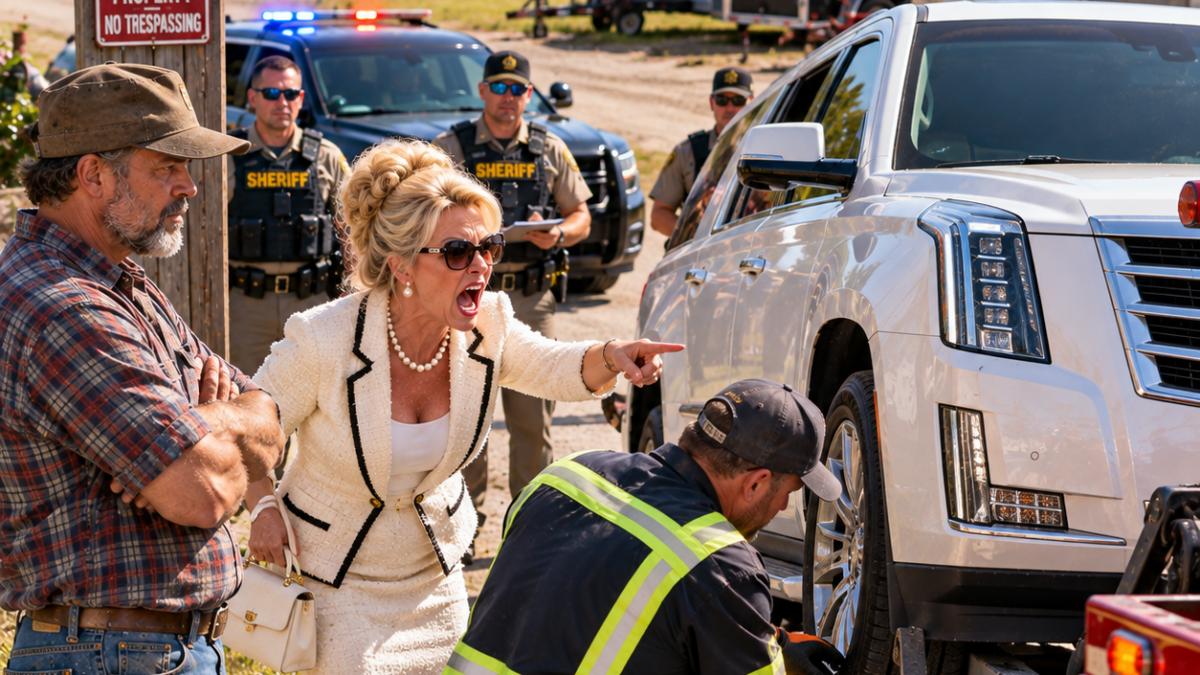
At 7:08, pearl-white Cadillac Escalade turned onto my lot.
I recognized before camera alert.
Loretta.
She entered past NO EVENT PARKING sign.
Past tow-away sign.
Past center sign.
Parked near front where two trailers had already been removed.
She got out in a pale green dress.
Carried boxes of table decorations.
Looked directly at tow truck.
Then at me.
She walked over.
“What is happening?”
I said:
“Enforcement.”
“You are not doing this today.”
“Yes.”
“The gala starts in two hours.”
“Not on my land.”
“These trailers belong to community vendors.”
“Some don’t.”
“You will stop those trucks.”
“No.”
She pointed.
“This lot has been used for parking for years.”
“Not anymore.”
Her face flushed.
“You cannot manufacture a crisis on the morning of our largest event.”
“I gave sixty-eight days.”
She lowered voice.
“You’ve been planning this.”
“Yes.”
Maybe she expected denial.
There wasn’t.
“I’ve been planning lawful removal after repeated notice.”
She looked at Sam.
“You work for him?”
Sam:
“He’s property owner.”
“I am HOA president.”
Sam:
“Okay.”
“This is Willow Glen auxiliary property.”
I handed copy of board resolution disavowing claim.
She barely glanced.
“You have no authority to remove vehicles under active parking contracts.”
“Your contracts.”
“Valid contracts.”
“For land you don’t own.”
Her lips tightened.
Then she pointed toward Escalade.
“I’ll be back. Don’t touch my car.”
And walked to clubhouse.
Sam looked at me.
“Authorized?”
I stared at Escalade.
Parked directly beside tow-away sign.
No special treatment.
“Yes.”
He photographed.
Checked plate.
Form.
At 7:21, a wheel-lift truck backed up.
At 7:28, rear wheels were secured.
At 7:31, Loretta came running.
Not walking quickly.
Running.
“What are you doing?”
Sam said:
“Vehicle parked on posted private property.”
“That is my car!”
“Yes, ma’am.”
“Put it down.”
“You’ll need contact dispatch.”
“I am telling you to put it down.”
“Property owner authorized tow.”
She turned to me.
“Calvin.”
“No.”
“You do not want to do this.”
“It’s already done.”
“You are retaliating.”
“You drove past three signs.”
“This property belongs to HOA.”
That was when she called 911.
7:32.
She told dispatcher:
“Multiple vehicles are being stolen from Willow Glen property.”
Not towed.
Stolen.
“Six unauthorized wreckers.”
She used word “unauthorized.”
Then:
“My vehicle is currently being taken.”
Sam kept working.
Loretta stood in front of tow truck.
He stopped.
“Ma’am, step away from vehicle.”
“No.”
“I’m not moving while you’re there.”
“Good.”
She planted herself.
Gala volunteers gathered.
Phones out.
Eli stood across road on porch exactly where told.
Joyce appeared beside him with binoculars.
Of course she had binoculars.
Three sheriff units arrived faster than I expected because of reported vehicle theft and prior reports.
Deputy Bell first.
He stepped out.
Saw me.
Saw Loretta.
Saw six tow trucks.
Closed eyes for maybe one second.
“Morning, Calvin.”
“Morning.”
Loretta stormed toward him.
“Arrest these men.”
Bell held one hand.
“Slow down.”
“They’re stealing HOA property.”
“Which property?”
“All of this.”
She swept arm across lot.
Bell looked at me.
I handed folder.
Not dramatically.
I had prepared one labeled:
PROPERTY / TOW DOCUMENTATION
Deed.
Parcel map.
Survey.
Board counsel letter.
Board resolution.
Certified notices.
Photos of signs.
Tow company authorization.
Sheriff report numbers.
Rebecca’s contact.
Court filing.
Copies of parking advertisements.
Everything.
Bell flipped.
Second deputy spoke with Sam.
Third photographed signs.
Loretta kept talking.
“This is a civil dispute.”
Bell:
“It may be.”
“Then stop towing.”
“I’m determining whether there is criminal theft occurring as you reported.”
“There is.”
“Do you own this parcel?”
“The association controls it.”
“Do you have document?”
“It has been used for years.”
“That’s not document.”
She pointed at me.
“He put those signs up as harassment.”
“They’ve been there how long?”
“Months.”
“So you saw them before parking?”
She froze.
Just enough.
Then:
“They are invalid.”
Bell looked at Escalade.
“You parked after seeing them?”
“I parked on property I am authorized to use.”
“By who?”
“I administer parking.”
“Who owns land?”
“The ownership is disputed.”
I spoke:
“Not by HOA board.”
Bell held hand.
“Let her answer.”
Good.
Loretta said:
“The board has been manipulated.”
Then Willow Glen treasurer Howard appeared.
He had come for gala.
He walked into scene looking like a man who wished he’d stayed home.
Bell asked:
“Sir, are you on HOA board?”
“Yes.”
“Does Willow Glen claim ownership of this parcel?”
Howard looked at Loretta.
Then:
“No.”
You could hear a truck idling.
Loretta turned.
“Howard.”
He continued.
“Board voted it is not association property absent evidence. Counsel found none.”
“You know historical use—”
“That doesn’t mean we own it.”
Bell asked:
“Did board authorize paid trailer parking here?”
Howard:
“No.”
Loretta’s face changed completely.
Not panic.
Betrayal.
As though truth told publicly was act against her.
Sam’s dispatcher called him.
He said:
“Deputy, if we’re clear from theft concern, we need proceed or release.”
Bell looked at folder.
Then other deputy.
“Property ownership appears documented. Tow authorization is civil/private matter. We are not ordering tow stopped.”
Loretta shouted:
“This is outrageous!”
Bell:
“Ma’am, if you dispute tow, use civil process.”
“My car is right there!”
“Yes.”
“They want four hundred dollars!”
Sam corrected gently:
“Current release quote once transported is approximately four hundred and change depending storage/time.”
“You are extorting me!”
“No, ma’am.”
She turned to me.
“Make him put it down.”
“No.”
“Calvin.”
“You sold parking on my land.”
“I provided a service.”
“To yourself.”
“You allowed it!”
“I revoked anything you thought existed sixty-eight days ago.”
“This is revenge.”
“No.”
I looked at Escalade.
“This is same rule as everybody else.”
That was the line that broke her composure.
Maybe because she expected position to create exception.
She had spent two years selling access.
Nine years as president.
Everybody called.
Asked.
Needed.
Deferred.
Now her vehicle was just another unauthorized vehicle on same parcel.
She said:
“I will have your surveying license.”
“That would be interesting.”
“I will sue you personally.”
“You already have my lawyer’s number.”
“I will bankrupt you.”
Deputy Bell stepped closer.
“Ma’am.”
She pointed at him.
“You’re allowing theft.”
“No. We are declining to convert a documented private-property tow into criminal theft allegation.”
“I pay taxes for your salary.”
Bell looked tired.
“Yes, ma’am.”
Then:
“Please step away from truck.”
She did.
Good.
No handcuffs.
No shove.
No cartoon meltdown.
Just anger losing its audience.
Sam’s driver pulled Escalade away.
Loretta watched.
Pearl-white Cadillac disappeared behind tow truck.
Joyce lowered binoculars across road and shouted:
“ABOUT TIME.”
I turned.
“JOYCE.”
“What?”
Everyone laughed except Loretta.
She walked away toward clubhouse.
Gala still happened.
That’s important.
Music started.
Kids played.
Silent auction.
Food trucks.
Willow Glen did not collapse because president’s SUV got towed.
By nine-thirty, lot was clear.
All unauthorized trailers either removed by owners or towed.
Grass visible again.
Ruts.
Oil spot.
Some crushed areas.
But mine.
Empty.
For first time in nearly two years.
Eli crossed after trucks left.
He stood beside me.
“Mom’s lot looks weird.”
“How?”
“Empty.”
I understood.
For years I had called it Heather’s.
Then Loretta filled it.
Now blank again.
Not healed.
Just available.
Eli said:
“Are we building Grandma’s house now?”
That question hit harder than anything Loretta said.
I looked at cedar posts.
“Yeah.”
He stared.
“For real?”
“For real.”
He hugged me.
At fifteen, boys do hugs quickly like somebody may issue citation.
Still counted.
Loretta retrieved Escalade that afternoon.
I know because Sam emailed final tow record.
Total release:
$412.75.
Tow.
Administrative processing.
No overnight storage because she picked up same day.
She paid.
Credit card.
I did not receive that money.
Tow company did.
Important.
I did not “charge” Loretta four hundred dollars.
Her decision to park on clearly posted land resulted in standard tow charges.
Less satisfying sentence.
More accurate.
She filed complaint against Tennessee Valley.
It went nowhere after documentation reviewed.
Then civil case changed.
Discovery.
Brennan Community Services bank records.
Permit lists.
Texts.
Advertising.
Loretta had rented between five and thirteen spaces at different times over twenty-six months.
Gross receipts documented:
$46,800.
Some refunds.
Some expenses she claimed.
Mowing payments?
None to me.
Security?
No payments attributable to lot.
Insurance?
Her LLC had general business policy but did not list my parcel as leased location.
She had never paid property tax.
Never paid me rent.
Never possessed lease.
The most damaging evidence was not money.
It was message to a prospective renter.
He asked:
Who owns lot?
Loretta replied:
Private family technically, but HOA has permanent use rights and owner has never objected.
Date:
Six months before Joyce told me.
She knew privately owned.
Another text after my first phone call:
Owner is getting fussy. Keep current trailers in place. Long use is on our side.
She had started thinking about use becoming leverage.
Maybe not legally sophisticated.
Still intentional.
Another:
If he wants this back he can compensate existing permit holders.
My land.
Her customers.
My compensation obligation?
No.
Then we found HOA communications.
Loretta had asked board two years earlier whether Willow Glen wanted to lease overflow lot.
Treasurer replied:
Do we own or have permission?
Loretta:
Owner family has always allowed informal overflow. I can manage separately and keep HOA out of liability.
Howard apparently interpreted that as she had personal arrangement.
She didn’t.
When asked in deposition:
“Did Calvin or Heather Whitlock authorize your company to charge others for parking?”
“No written authorization.”
“Or oral?”
“I believed historical permission transferred.”
“From whom?”
“Heather’s father allowed community overflow.”
“Paid commercial trailer storage?”
“He allowed parking.”
“Did he authorize Brennan Community Services?”
“Company didn’t exist then.”
“Did Heather?”
“No.”
“Did Calvin?”
“No.”
“Did any owner ever agree to $200 monthly commercial storage?”
“No.”
That was case.
Not clever.
No hidden forged deed.
Just entitlement growing inside an assumption until somebody monetized it.
She tried arguing adverse possession.
Didn’t work.
Time far too short, use not matching requirements, owner interruptions, permissions alleged by her own side, and other legal problems.
Then easement by prescription.
Same weaknesses.
Then license.
Even if old family had allowed occasional overflow, a revocable permission is not perpetual right to run business.
Especially after explicit revocation.
Rebecca didn’t need drama.
Documents.
The HOA removed Loretta as president before lawsuit settled.
Not because my tow alone.
Board members were furious she had used Willow Glen name in private contracts.
Residents wanted audit.
Recall petition got signatures.
Before recall vote, Loretta resigned.
Her letter blamed “personal vendettas and misinformation.”
Howard became interim president.
His first act was boring.
He emailed every contractor:
Willow Glen provides no off-site trailer parking. Prior permits issued through Brennan Community Services are not HOA contracts.
Good.
Then annual financial audit found no missing HOA money related to trailer lot.
That mattered.
Loretta had not embezzled HOA funds.
Her problem was using HOA identity and claimed authority to support a separate private business on land she did not own.
Different wrongdoing.
Do not exaggerate what records don’t prove.
The HOA sent me written apology.
Also offered landscaping repairs where some gala overflow had damaged shoulder over years.
I declined extra money beyond direct repair.
Again:
Residents were not Loretta.
They had thought area allowed because president told them.
Most parked maybe twice.
Normal people follow signs given by authority until someone shows authority false.
Brennan Community Services settled after mediation.
Terms were not secret in my version:
Loretta paid $39,000.
Why less than gross receipts?
Because civil settlement considers litigation risk, provable unjust enrichment, claimed expenses, legal fees, taxes, uncertainty over earlier informal parking, and desire to end.
She also reimbursed $11,600 of my legal costs.
Released any claimed interest.
Agreed not represent Willow Glen or herself as having rights in parcel.
Provided renter list.
Refunded several prepaid customers separately.
No mansion-changing judgment.
No prison.
No sheriff hauling her away.
A woman treated vacant land like unused office supply and had to give money back.
That was enough.
People online asked:
“Why didn’t you sue for $500,000?”
Because court is not slot machine.
Damages need basis.
My lot wasn’t destroyed.
I lost use, but I was not using it actively.
Grass damage repair maybe a few thousand.
She earned money wrongfully.
Legal costs.
Those are real.
The emotional insult of using Heather’s future cottage site does not automatically convert into six-figure punitive jackpot.
I wanted land.
I got land.
Then I did what I should have done before Loretta.
I built.
Not immediately.
Planning took months.
Mama’s Parkinson’s had progressed.
She was still living alone but struggling.
One evening I drove to her house.
She was trying to button cardigan.
Her hands shook.
I helped.
She hated that.
“I can do it.”
“I know.”
“Then let me.”
So I did.
It took two minutes.
Afterward she said:
“Heather wanted that cottage.”
“I know.”
“You don’t have to build because she’s dead.”
“I know.”
“She’d be mad if you turned promise into punishment.”
That sounded exactly like Heather.
My mother continued:
“Do you want to build it?”
I thought.
“Yes.”
“Then build.”
Simple.
Plans Heather and I had sketched were still in file.
Two bedrooms.
Wide doors.
No thresholds.
Roll-in shower.
Kitchen window toward hackberries.
Porch.
Eli helped choose siding.
Mama chose cabinets.
She complained about every price.
Healthy.
We broke ground eight months after tow morning.
Excavator arrived.
I stood where trailers had been.
For years that lot represented delay.
Then trespass.
Then fight.
Now foundation.
Joyce came across road.
Hands on hips.
“Well.”
“Well what?”
“About damn time.”
“Everybody’s a critic.”
She looked at stakes.
“You sure that porch is square?”
“Joyce.”
“You surveyors get cocky.”
I loved her.
The cottage finished following spring.
Mama moved in.
Slowly.
We installed grab rails.
Ramps.
Motion lights.
Eli built bird feeder outside kitchen window in shop class.
First morning, Mama sat with coffee and watched cardinals.
She cried.
Not dramatic.
Tears just came.
“Heather would’ve liked this.”
“Yes.”
“Too much beige.”
“She picked beige.”
“Then she was wrong.”
Life.
Loretta drove past during construction.
Never stopped.
Her Escalade was same.
One afternoon, while I was staking drainage, she pulled onto county shoulder.
Not lot.
Good.
Rolled window.
“Calvin.”
“Loretta.”
We hadn’t spoken directly since mediation.
“How’s your mother?”
“Moving in next month.”
She nodded.
Then:
“I didn’t know.”
“What?”
“What lot was for.”
I rested survey rod.
“You didn’t ask.”
“No.”
Silence.
“I thought it was vacant.”
“It was.”
“You know what I mean.”
“Yes.”
She looked at cottage framing.
“I’m sorry.”
I waited.
She added:
“For using it.”
Better.
“I told myself because Heather’s family let people park occasionally, it was basically community overflow.”
“Occasional football-game parking isn’t trailer business.”
“I know.”
“Now.”
“Yes.”
She smiled sadly.
“You enjoy that word.”
“What?”
“Now.”
“Maybe.”
Then:
“I was angry when you towed Escalade.”
“I noticed.”
“It cost four hundred twelve dollars.”
“Seventy-five cents.”
She stared.
“How do you know?”
“Tow record.”
That actually made her laugh.
First time.
Then:
“I deserved that.”
“You deserved equal rule.”
“Same thing.”
“No.”
She thought.
“Fair.”
That was important.
Not revenge.
Equal rule.
Her customers were towed.
Her vehicle was on same prohibited property.
If I’d exempted her because I wanted confrontation later? Different.
If I’d targeted only her? Could look retaliatory.
Instead same policy.
Same signs.
Same tow company.
Same process.
She happened to park.
The $412.75 became symbol because she finally paid cost she had shifted to everyone else.
She had charged people $200 to use my land.
Then paid twice that to remove her own SUV from it.
Poetic.
But still paperwork.
She left.
We were not friends.
I did not need enemies forever.
Loretta sold her home two years later.
Moved closer to Nashville, according to Joyce, who knows things against will of God.
Willow Glen changed presidents.
Howard served one term.
Then a younger woman named Priya Desai took over.
Her first interaction with me:
“Mr. Whitlock, we’re updating drainage along boundary. Can I send survey plan before contractor enters?”
I almost proposed marriage.
Not really.
“Please.”
She sent.
Everything stayed on HOA side except existing utility easement.
Contractor called before entering.
Twenty minutes.
Done.
No trailers.
No tow trucks.
No lawsuits.
Permission saves tremendous money.
My mother lived in cottage four years.
Parkinson’s kept progressing.
Eventually she needed more help than cottage could provide.
We moved her to assisted-living center ten minutes away.
She hated first month.
Then befriended woman named Patricia who cheated at bingo.
Cottage became Eli’s when he came home from college?
Not immediately.
I rented it to traveling physical therapist for a year.
Then Eli, twenty-one, returned for internship in Nashville and moved in.
First week, he texted:
There is some lady across road watching me with binoculars.
Joyce.
I replied:
You’re safe. That’s neighborhood surveillance.
He didn’t think funny.
The lot wasn’t empty anymore.
That’s what mattered.
The story about towing became local legend.
Exaggerated.
People said twenty tow trucks.
Six.
Said Loretta was arrested.
No.
Said deputies forced her to watch Escalade crushed.
Absolutely not.
She picked it up same afternoon.
Said towing cost $4,000.
No.
$412.75.
Said I waited until gala specifically because I wanted to humiliate her in front of everyone.
Half true only in timing sense.
I chose a morning when all remaining unauthorized storage could be cleared at once and expected additional parking pressure.
Did I know Loretta would be around?
Of course.
Did I know she would park on lot?
No.
I hoped she wouldn’t.
Because if she hadn’t, she could later claim she never accepted signs applied to her.
Instead she drove past them.
Parked.
Then claimed property.
Her own decision clarified dispute.
That’s different from trap.
People love traps in stories.
Real property law prefers notice.
Lots of notice.
Sixty-eight days.
Certified letters.
Signs.
Cameras.
Calls.
Sheriff reports.
Board records.
Tow authorization.
No surprise.
The satisfying part wasn’t surprise.
It was that surprise was impossible.
Loretta had every chance.
That’s what made result hold.
As surveyor, that’s lesson I kept.
People ask:
“What would you do differently?”
First trailer?
Act immediately.
Not tow.
Ask.
“Who told you to park here?”
Document.
Send notice early.
Vacant land invites assumptions.
Especially near subdivisions, businesses, construction.
People see no building and mentally downgrade ownership.
Empty equals unused.
Unused equals available.
Available becomes shared.
Shared becomes ours.
Then one day owner shows and everybody feels robbed.
That progression happens because silence gets interpreted.
Silence should not create ownership.
But silence creates expectations.
Expectations create conflict.
So mark land.
Know title.
If you allow temporary use, put it in writing:
Permission revocable.
No fee unless agreed.
No transfer.
No permanent rights.
Specific date.
Specific purpose.
This isn’t being unfriendly.
It protects friendship.
Heather’s father had let neighbors park on Thanksgiving.
Church picnics.
One high-school football night.
He never imagined future HOA president would say:
“Historic overflow.”
Old kindness became business premise.
That bothered me.
But also taught.
Generosity without boundaries can be misremembered by next person as obligation.
We updated estate documents.
Cottage parcel.
Main house.
Easements.
Everything.
Eli knows.
No mystery boxes.
One file:
WHITLOCK PROPERTY — READ THIS BEFORE SOMEONE TELLS YOU THEY OWN SOMETHING
He laughed.
“Dad.”
“You’ll thank me.”
“I know property lines.”
“You are graphic designer.”
“I can read plat.”
“We’ll see.”
He rolled eyes.
Heather would’ve sided with him.
Probably.
I still survey.
Less fieldwork.
Knees.
Younger crews carry GPS.
They still laugh at notebook.
One afternoon new technician asked why I handwrite vehicle plate numbers when phone photographs everything.
I said:
“Because one day battery dies.”
He said:
“Okay, Grandpa.”
I assigned him thorny fence line.
Respect elders.
The original field notebook from Loretta dispute remains.
Page with:
DAY 1 — FINAL NOTICE
Then dates.
Trailers.
Letters.
Photos.
Day 39:
Loretta removed sign 3:14 PM. Camera.
Day 68:
6:31 tow trucks arrived.
Then:
7:08 Loretta parked Escalade.
7:32 911 call.
8:11 deputy confirms no criminal theft determination.
8:18 Escalade departs tow.
Dry facts.
If you read page alone, no drama.
That’s how evidence should look.
Emotion lives elsewhere.
Heather’s photograph sits above desk.
The lot behind her in one old picture.
She was standing where cottage porch now sits.
Jeans.
Work gloves.
Holding measuring tape.
We had been debating width.
She wanted ten feet deep.
I said eight.
She won.
Of course.
Mama’s porch is ten feet.
Sometimes I sit there now.
Even though Mama moved.
Birds.
Hackberries.
Road.
Willow Glen entrance beyond.
Hard to imagine trailers covering yard.
Hard to imagine Loretta selling squares of grass for $200.
Land changes meaning when use changes.
But ownership shouldn’t change by somebody else’s confidence.
That’s where line is.
I think about Loretta’s sentence:
“You’ve let them sit there for months.”
As if delay surrendered authority.
No.
But delay complicates life.
If something matters, act.
Not violently.
Not recklessly.
Clearly.
I waited at first because grief had trained me not to start new battles.
During Heather’s cancer, every phone call felt like crisis.
Insurance.
Doctors.
Pharmacy.
School.
After she died, I avoided conflict whenever possible.
Trailer?
Not today.
Another?
Later.
Loretta benefited from that.
Not because she understood grief.
Maybe she simply saw nonresponse.
But grief can make you absent while standing on your own land.
Eli’s question woke me.
“Mom’s land.”
Not legally hers after inheritance, of course.
But emotionally.
I had been preserving emptiness because building meant admitting Heather would never see finished cottage.
Loretta filled emptiness before I could.
In weird way, fighting her forced me to decide.
Land could not remain memorial to unfinished plan forever.
Heather would hate that.
She wanted house.
For Mama.
So we built.
That’s why when people ask what I won, I don’t say $39,000 settlement.
Or $412 tow bill.
Or board recall.
I say porch.
Mama’s porch.
Ten feet deep.
Too much beige.
Cardinals outside kitchen.
That’s victory.
Loretta lost a parking business.
I stopped losing time.
Much better ending.
There is still one piece people misunderstand.
Why not put up chain first?
I eventually did, after lot cleared.
Low decorative agricultural gate at drive entrance.
Unlocked for cottage construction.
Then proper separate cottage driveway.
But before towing, I intentionally did not suddenly block trailers in.
I wanted owners able to remove freely during notice period.
No trapping property.
No confrontation.
That matters.
If goal is regain land, make exit easy before enforcement.
Every renter who called got instructions.
No fee from me.
No threats.
Just move.
Most did.
The six tows were people who ignored repeated warnings or trusted Loretta over owner.
I felt bad for some.
One young contractor had paid three months in advance.
Loretta refunded him after settlement.
Good.
He later hired me to survey his own commercial lot.
Funny.
He said:
“I’m checking everything before I park anything anywhere now.”
Good.
Lessons spread.
Willow Glen eventually turned unused strip inside its own property into legitimate contractor-parking area.
Leveled gravel.
Drainage.
Fenced.
Eight spaces.
HOA owns it.
Board approved.
Rates go to HOA.
Insurance.
Written permits.
Priya sent me plan joking:
“Please confirm we are not accidentally on your land.”
I did.
They weren’t.
“Looks good.”
That’s how it should have been from start.
The neighborhood did need trailer solution.
Loretta identified real problem.
She just solved it using somebody else’s asset.
Competence in one direction can create wrongdoing in another.
She was not stupid.
She organized gala well.
Improved clubhouse reserves.
Negotiated pool contract.
Residents liked her for years for reasons.
Power rarely comes only from bullying.
It comes because person delivers.
Then delivery creates belief that normal limits are obstacles to be managed.
That was Loretta.
Trailer parking worked.
Streets clearer.
Contractors happy.
She made money.
Nobody complained.
Until owner did.
Then instead of saying:
“I was wrong,”
she built arguments around result.
Historical use.
Community need.
Implied right.
Vacant land.
Administration.
Anything except:
I don’t own it.
That sentence could have ended everything.
She eventually got there.
Two years late.
$412.75 lighter.
I don’t hate her.
That surprises people.
Hatred requires carrying someone around.
I already carried Heather long enough.
I carry Mama’s illness.
My son.
Work.
Taxes.
Fence repairs.
There isn’t room.
Loretta became story.
Lesson.
Nothing more.
One day, after cottage finished, I found old yellow landscape trailer parked partly on county shoulder near entrance.
Not on my lot.
Same Bluff Hauling LLC from first day.
Owner Luis was working at Willow Glen.
He saw me.
Waved.
I waved.
He came over.
“You remember me?”
“Yes.”
“I was first trailer?”
“One of.”
“Loretta told me I was first.”
That interested me.
“Really?”
“Yeah. She said she needed somebody to make lot look established.”
I looked.
“Why?”
“She said once people saw equipment there they’d understand it was parking.”
Of course.
Physical reality precedes perceived right.
Same trick developers, trespassers, everybody uses unconsciously.
Put something there.
Leave long enough.
People stop asking.
“How much did you pay?”
“Two hundred.”
“First month?”
“She gave half off.”
I laughed.
“Founding member.”
He laughed too.
Then:
“Sorry, man.”
“You moved when I asked.”
“Still.”
“It’s fine.”
He went back work.
That conversation made first trailer different.
Not mistake.
Seed.
Loretta wanted lot to look occupied.
Normal.
Recognized.
Then add more.
Two years later even I initially assumed maybe some arrangement existed I had forgotten.
Appearances are persuasive.
Surveying taught me exactly opposite, yet I almost fell for it.
That humbles.
We all trust visible patterns.
That’s why records matter.
A row of trailers doesn’t prove parking right.
A fence doesn’t prove boundary.
A worn track doesn’t prove easement.
A sign doesn’t create ownership.
A president’s certainty doesn’t create authority.
And vacant ground is still somebody’s ground.
Find deed.
Find line.
Measure.
Measure again.
Then act.
Today, if you drive past, you won’t see a tow-away sign.
Cottage occupies most frontage.
Mama’s ramp still there.
Eli’s truck sometimes parked.
Hackberries bigger.
At rear, cedar posts Heather bought became fence around small garden.
I finally used them.
Joyce died last winter.
Ninety-one.
Her niece sold house.
Before she died, Joyce gave me binoculars.
Same ones she used on tow morning.
There was note:
For future HOA emergencies.
I keep them in kitchen.
Eli says creepy.
He is right.
I keep anyway.
Every spring, Willow Glen still holds gala.
Music carries over.
Families park inside HOA lots.
Priya once sent email:
If our gala ever spills onto your property, please tow me personally.
I replied:
Standard rate applies.
She sent laughing emoji.
Healthy neighbors can joke about boundaries because boundaries aren’t threatened.
That’s another thing I learned.
People who respect no can enjoy yes.
The cottage porch sometimes fills with Willow Glen neighbors during storms.
Mama had liked visitors.
Eli hosts friends.
I don’t stand with rifle yelling private property.
That’s never what this was.
I am generous when choice remains mine.
Loretta removed choice.
That is the offense beneath all paperwork.
She converted my silence into permission.
Permission into entitlement.
Entitlement into revenue.
Revenue into supposed authority.
Then when I said stop, she treated my ownership as disruption.
Sixty-eight days gave everyone chance to unwind peacefully.
She chose not.
So on the morning of her spring gala, six tow trucks rolled in.
No ambush.
No secret.
No violence.
Just consequences arriving on schedule.
And when her Escalade went up on the wheel lift, what finally bothered her wasn’t four hundred dollars.
Loretta could afford four hundred dollars.
It was discovering the sign applied to her.
For two years, she had been the person issuing permission.
Selling permission.
Explaining permission.
That morning she needed mine.
She did not have it.
A tow truck made that fact impossible to talk around.
There is a photograph Sam took before hauling Escalade.
Vehicle lifted.
Tow-away sign clearly behind it.
In background, Loretta pointing.
Deputy Bell listening.
I keep photograph only because case file.
I never posted it.
Never framed it.
Never sent online.
Humiliation does not need preservation once dispute ends.
The land itself is enough.
Mama’s cottage.
Heather’s plan.
Eli’s future maybe.
Bird feeder outside kitchen.
That’s what occupies frame now.
When I walk across road in morning, I still sometimes picture trailers.
Then I hear screen door.
Coffee.
A cardinal.
Life replacing conflict.
If Heather could see it, she would complain porch furniture doesn’t match.
I know exactly.
She would say:
“Calvin, why did you buy brown chairs with gray siding?”
And I would say:
“They were on sale.”
And she would say:
“That is not design philosophy.”
I miss arguments like that.
That’s grief now.
Not hospital.
Ordinary imagined conversations.
Better.
So yes.
Loretta Brennan used my vacant lot as a $200-a-month trailer business.
She called it an auxiliary HOA area.
She charged people for access she did not own.
She ignored certified letters.
Ignored board counsel.
Ignored signs.
Continued issuing permits even after HOA disclaimed the parcel.
Then on the sixty-eighth day she parked her own pearl-white Escalade under the same tow warning everybody else had received.
She called 911.
Deputies came.
Nobody arrested me.
Nobody arrested her.
They looked at documents.
The Escalade went to the tow yard.
She paid $412.75 to get it back.
Then the records did the rest.
She lost the business.
Lost presidency.
Returned money.
Paid settlement.
And learned something I had spent twenty-three years learning professionally:
What land looks like does not determine who owns it.
Whether it is fenced.
Built.
Vacant.
Mowed.
Forgotten.
Covered in trailers.
Covered in grief.
You find the record.
You find the monument.
You find the line.
And once you know where the line is, you stop pretending somebody else’s confidence can move it.
Loretta saw two empty acres and thought nobody was using them.
She was wrong.
Heather was still there in every plan we hadn’t finished.
Mama was there in every doorway we intended to widen.
Eli was there in a future we had not built yet.
And I was there too.
It just took me a little while to come back.
The tow trucks cleared the grass.
But the real thing I reclaimed that morning wasn’t the lot.
It was the right to decide what happened on it next.








