HOA Karen Blocked My Private Driveway With 6,000 Pounds of Concrete Barriers to Shut Down My Business—Then I Called a Retired Army Combat Engineer. She Never Expected What We Built Next.
PART3:
Nothing serious, but enough to scare a new mother.
Then Emma’s childcare arrangement fell apart.
Then her husband’s return was delayed.
One month became three.
Three became six.
By the time July arrived, I had learned more about formula, diapers, pacifiers, baby monitors, and sleep schedules than I had ever expected to know.
I loved every minute of it.
But Emma finally found her rhythm.
Her husband came home.
And one morning she found me standing in her kitchen staring at a photograph of Lake Whitmore on my phone.
“You miss it,” she said.
“I miss you too.”
“That isn’t what I said.”
I smiled.
“Yes.”
She hugged me.
“Go home, Dad.”
So I did.
I left Portland on July 17.
I reached Lake Whitmore the following afternoon.
July 18, 2024.
About four o’clock.
The first fifteen miles felt exactly the way I remembered them.
Pines.
Mountain air.
Dust rising behind my truck.
A hawk circling above the ridge.
When my cabin appeared between the trees, I felt something inside me relax.
Home has a way of doing that.
I parked beside the cabin.
Carried my bag inside.
Opened windows.
Turned the water back on.
Then I stepped onto the rear deck overlooking the lake.
For a moment, everything looked normal.
Blue water stretched beneath the mountains.
The forest reflected along the western shoreline.
A light wind made small ripples across the surface.
Then I noticed the eastern shore.
White roofs.
Dozens of them.
At first my brain refused to interpret what my eyes were seeing.
I thought maybe temporary construction trailers had been brought in for timber work beyond my boundary.
Then I picked up the binoculars hanging beside the deck door.
Cabins.
Not trailers.
Cabins.
Two-story in some cases.
Stone chimneys.
Glass fronts.
Decks cantilevered toward the water.
Boat slips.
Private docks.
Retaining walls.
Fresh gravel roads carved through timber that had been untouched when I left.
I counted.
Lost count.
Started again.
Twenty-seven.
Forty-three.
Sixty-eight.
Ninety.
More behind the trees.
I lowered the binoculars.
Then raised them again because some part of me expected the structures to disappear if I reset my eyes.
They didn’t.
A large timber sign stood near the center of the eastern shore.
WHITMORE LAKE PRESERVE.
LUXURY MOUNTAIN LIVING.
I stared at my own last name.
Then laughed.
Not because anything was funny.
There are moments when outrage arrives so completely that your body cannot decide what emotion belongs on your face.
I got in my truck.
Drove the eastern access road.
Or tried to.
Half a mile from the lake, I found a gate.
New.
Black steel.
Stone pillars.
Electronic keypad.
My road.
My land.
Their gate.
A brass plaque read:
WHITMORE LAKE PRESERVE HOMEOWNERS ASSOCIATION
PRIVATE RESIDENT ACCESS ONLY
I sat in the truck for several seconds.
Then backed up.
There was an old forestry route farther north.
Not maintained.
Still mine.
I took it.
Branches scraped both sides of the truck.
Twenty minutes later I emerged above the eastern shoreline.
What I saw from the deck had understated the scale.
One hundred and nine cabins.
I learned the exact number later.
At that moment, it looked like somebody had dropped a vacation village onto my grandfather’s land.
Workers everywhere.
Landscaping crews.
Concrete trucks.
Golf carts.
A sales pavilion.
Two excavators.
Temporary power.
A floating dock system extending into the lake.
Families touring model cabins.
A banner:
PHASE ONE SOLD OUT.
I parked in the middle of the road.
A man in a polo shirt and khakis approached.
“Sir, construction zone. I need you to move your vehicle.”
“Who are you?”
“Site manager.”
“Name?”
“Brandon Kell.”
“Who owns this land?”
He looked at me strangely.
“Whitmore Lake Preserve.”
“Who owns Whitmore Lake Preserve?”
“The association holds common parcels. Summit Legacy developed the cabins.”
“Who owns Summit Legacy?”
Brandon hesitated.
“You’ll need to speak with sales.”
“No.”
I pointed toward the ground.
“I need you to tell me who thinks they own what I’m standing on.”
His expression shifted.
“Do you have an appointment?”
“My name is James Whitmore.”
That worked.
Not because he recognized me personally.
Because he recognized the name.
His face changed.
Barely.
Then he reached for his radio.
“Stay here.”
I didn’t.
I walked to the sales pavilion.
Inside, a young woman sat behind a granite reception desk.
There was a scale model of the resort.
My lake in miniature.
My forest in miniature.
My grandfather’s valley turned into foam board, LED streetlights, and tiny decorative canoes.
The model even included my north cabin.
Except it was labeled:
HISTORIC LODGE — FUTURE CLUB AMENITY.
That was when I stopped laughing.
“Who runs this?”
The receptionist stood.
“Can I help you?”
“Get whoever is in charge.”
“Do you have—”
“My name is James Whitmore.”
Her eyes widened.
Thirty seconds later, a door opened.
A man came out wearing loafers, navy slacks, white shirt, no tie.
Mid-fifties.
Tanned.
Expensive watch.
Perfect hair.
He walked toward me smiling like we were meeting at a charity dinner.
“Mr. Whitmore.”
“You know me?”
“I know of you.”
“Good.”
I looked around.
“Then explain this.”
He offered his hand.
I ignored it.
The smile remained.
“Bradley Keene.”
Of course.
Bradley Keene.
President of the newly formed Whitmore Lake Preserve HOA.
Former resort developer.
Former county planning commissioner.
Former everything that made a man dangerous when he believed procedures were obstacles other people had invented.
“Let’s sit down,” he said.
“No.”
“There’s quite a bit to discuss.”
“You built cabins on my land.”
His smile narrowed.
“That is one interpretation.”
“No.”
I pointed outside.
“That is a sentence.”
Bradley folded his hands.
“Mr. Whitmore, the eastern shoreline parcel was transferred lawfully.”
“By who?”
“Silver Creek Holdings.”
“Never heard of them.”
“They acquired title from Mountain Heritage Trust.”
“Never heard of them either.”
“Then I imagine your issue is with your former estate management arrangement.”
“I don’t have an estate management arrangement.”
A pause.
Small.
Important.
Bradley said, “Your attorney can review the chain of title.”
“I will.”
“I encourage you to.”
I stepped closer.
“In the meantime, you will stop construction.”
His smile vanished.
“No.”
The receptionist looked down.
Bradley continued.
“We have 109 completed units, eighty-four closed sales, twenty-five pending, multiple lender interests, utility commitments, county permits, and over twelve million dollars invested.”
“You forgot one interest.”
“What?”
“Mine.”
He exhaled through his nose.
“Mr. Whitmore, even if there is some defect in your records, no court is going to order a fully constructed community demolished because an absentee landowner failed to monitor his property for eight months.”
There it was.
Absentee landowner.
Like leaving to help my daughter had somehow transferred title.
“I didn’t fail to monitor ownership.”
“You failed to notice a development.”
“Those are not the same thing.”
“They may become practically indistinguishable.”
He said it quietly.
Confidently.
That’s when I understood Bradley’s position.
He did not necessarily believe the title was clean.
He believed scale protected him.
Build enough.
Sell enough.
Borrow enough.
Create enough innocent third parties.
Then even if the original acquisition was wrong, courts would be afraid to unwind it.
He was building legal gravity.
I had seen developers do similar things with drainage.
Road access.
Environmental permits.
Construct first.
Litigate later.
Make reversal expensive.
Bradley said, “I suggest you retain experienced counsel.”
“I have.”
“Good.”
He looked toward the lake.
“Then perhaps everyone can reach a rational settlement.”
“How much?”
He seemed pleased.
“You’re asking the right question.”
“No.”
I looked at him.
“I’m asking how much you think it costs to buy back land stolen from me.”
His jaw tightened.
“No one stole anything.”
“Then show me a deed with my signature.”
He said nothing.
“Stop construction.”
“No.”
“You’re very sure.”
“I have lawyers.”
“So do I.”
“I have investors.”
“I have a deed.”
He leaned closer.
“And I have 109 families who believe they own lakefront property.”
That was not an answer.
It was a threat.
Maybe not legally.
Emotionally.
You won’t hurt all these innocent people, will you?
Bradley was counting on me caring more about his buyers than he had cared about my property.
The worst part was that he was right about one thing.
I did care.
I left without another word.
At my cabin, I opened the gun safe.
There were no guns inside anymore.
I had given those to my son years before.
What remained were documents.
Original deeds.
Surveys.
Dam records.
Water-right filings.
Tax receipts.
Engineering inspections.
My grandfather’s handwritten construction journals.
I found the eastern parcel deed.
No transfer.
No subdivision.
No sale.
Then I called my attorney.
Her name was Evelyn Shaw.
Seventy-one.
Real estate and water law.
Had represented my father before me.
She answered from Denver.
“James.”
“Are you sitting?”
“That usually means you aren’t.”
“Somebody built 109 cabins on the east shore.”
Silence.
Then:
“Say that again.”
I did.
Another silence.
“Don’t touch anything.”
“I wasn’t planning to burn it.”
“James.”
“I am joking.”
“You aren’t funny when you’re angry.”
“Neither was my father.”
“Exactly.”
I sent photographs.
Deed copies.
The names Bradley had given me.
Evelyn started searching.
By nine that night, she called back.
“I found Silver Creek Holdings.”
“Who?”
“Wyoming LLC. Created last December.”
“Owner?”
“Another LLC.”
“Of course.”
“Mountain Heritage Trust exists.”
“Since when?”
“January.”
“So neither existed when I left in November.”
“Correct.”
“What deed?”
“That’s the interesting part.”
I waited.
“A quitclaim deed was recorded February ninth transferring approximately six hundred eighty acres from Whitmore Family Holdings to Mountain Heritage Trust.”
“I don’t have a company called Whitmore Family Holdings.”
“I know.”
“Signature?”
“Yours.”
I stopped.
“What?”
“Purports to be.”
“Not mine.”
“Notary is Karen Wells, Summit County.”
“I’ve never met her.”
“The deed uses a mailing address in Oregon.”
Emma’s.
I felt something colder than anger.
They knew where I was.
This was not opportunistic confusion.
Someone had tracked me.
Evelyn continued.
“The deed was then transferred to Silver Creek Holdings, which subdivided and sold development rights to Summit Legacy.”
“Bradley’s company?”
“Yes.”
“County approved this?”
“With title insurance.”
“Based on a forged deed.”
“Apparently.”
“Who filed it?”
“Electronic recording agent.”
“Evelyn.”
“Yes?”
“Tell me exactly what not to do tonight.”
That made her laugh.
“Do not threaten anyone.”
“Fine.”
“Do not operate the dam.”
I went quiet.
She knew me too well.
“James.”
“The lake is mine.”
“The dam is yours.”
“Yes.”
“The water rights?”
“Mine.”
“I know.”
“Then—”
“Do not.”
Her voice sharpened.
“Not until we understand downstream obligations, environmental restrictions, current operating permits, buyer contracts, and whether any court could interpret a drawdown as retaliatory waste.”
I sighed.
“You ruin everything.”
“That is why you pay me.”
The next morning, we filed.
Emergency notice of title fraud.
Lis pendens.
Request to freeze pending sales.
Demand that construction stop.
Notice to county planning.
Notice to title insurers.
Notice to lenders.
Then I drove to the dam.
No dramatic music.
No turning wheels.
Just inspection.
The south dam was exactly as I had left it.
Concrete sound.
Control house locked.
Instrumentation active.
Reservoir elevation within seasonal range.
One inspection sensor needed recalibration.
Otherwise normal.
The main outlet system could lower the reservoir in a controlled manner.
That had always been part of its purpose.
I maintained the lake recreationally high because I wanted a lake.
But the reservoir was not legally required to remain at full recreational elevation year-round.
That mattered.
My grandfather’s water rights prioritized irrigation storage and downstream release obligations.
Recreation was incidental.
The resort’s marketing brochures told buyers something very different.
PERMANENT 800-ACRE PRIVATE LAKE.
YEAR-ROUND WATERFRONT LIVING.
BOAT FROM YOUR BACK DOOR.
GUARANTEED LAKE ACCESS.
I showed the brochure to Evelyn.
She stared.
“Guaranteed by who?”
“Apparently God.”
“No.”
She tapped the page.
“By the HOA.”
“That seems ambitious.”
“Did you ever give them water-access rights?”
“No.”
“Dock rights?”
“No.”
“Shoreline easements?”
“No.”
“Minimum-pool covenant?”
“No.”
“Recreational water agreement?”
“No.”
She smiled for the first time.
Bradley had not merely built on disputed land.
He had sold a lake he did not control.
That changed everything.
We investigated.
The title fraud was ugly.
A notary named Karen Wells had notarized the fake deed remotely.
She claimed a man had appeared by video using identification in my name.
The identification was fraudulent.
The email used to schedule the notarization was created two days earlier.
Payment came from Silver Creek Holdings.
Karen had completed nearly four hundred remote notarizations that year.
She barely remembered mine.
But metadata did.
The video session originated from an office IP address belonging to Summit Legacy Development.
Bradley’s company.
Bradley denied knowledge.
His chief acquisitions officer, Martin Hale, stopped answering questions.
Then disappeared from work for three days.
County investigators became involved.
The title insurer froze policies.
Lenders froze draws.
Construction slowed.
But Bradley didn’t stop.
He held a resident meeting.
I obtained the recording later.
He stood inside the new clubhouse and told buyers:
“Mr. Whitmore is attempting to exploit an administrative discrepancy to extort money from this community.”
Administrative discrepancy.
Forgery has never sounded so polite.
He continued:
“The lake and shoreline are secure.”
They weren’t.
“Your investments are protected.”
Debatable.
“No individual can simply remove a lake.”
That sentence became famous later.
At the time, I only heard about it from a homeowner named Rachel Simmons.
Rachel was forty-three.
Emergency room nurse.
Single mother.
She had bought cabin 37.
$610,000.
Most of her savings.
She came to my cabin two days after Bradley’s meeting.
I almost didn’t answer.
She stood there holding a folder.
“Mr. Whitmore?”
“Yes.”
“My name’s Rachel.”
“I know.”
She looked surprised.
“I saw your closing documents.”
Her face tightened.
“You have my closing documents?”
“Through litigation.”
“Oh.”
She shifted.
“Can we talk?”
I let her in.
She looked around my cabin.
Old wood stove.
Worn leather chair.
Family photographs.
Nothing resembling the villainous billionaire absentee land baron Bradley had described.
“My daughter loves that lake,” she said.
“I imagine.”
“Bradley says you’re trying to get the cabins demolished.”
“I haven’t requested demolition.”
“Yet?”
“No.”
She studied me.
“Do you own the land?”
“Yes.”
“Can you prove it?”
“Yes.”
“Did you sell it?”
“No.”
She looked down.
“Then somebody stole my money too.”
That was the first buyer who understood.
Not me versus residents.
The same fraud had harmed both of us differently.
Rachel spread papers across the table.
Her purchase agreement contained a “Lake Amenity Covenant.”
Supposedly guaranteeing perpetual access through the HOA.
Signed by Bradley.
Not me.
She asked:
“Can he guarantee access if he doesn’t own the lake?”
“No.”
“What happens to us?”
“I don’t know.”
Honest answers rarely comfort.
She appreciated it anyway.
Over the next week, eight more homeowners contacted me.
Then twenty-three.
Some angry.
Some terrified.
Some hostile.
One man named Douglas Trent showed up yelling.
“You cannot take our lake away!”
I stood on my porch.
“Your lake?”
“You know what I mean.”
“I do.”
“We paid for waterfront property.”
“To Bradley.”
“You’re playing games.”
“No.”
He pointed toward the water.
“Do you know what my place is worth without that lake?”
“Yes.”
That answer shocked him.
“Then why would you threaten to drain it?”
“I haven’t.”
“Bradley says you have.”
“Bradley says a lot.”
Douglas stepped closer.
“You’d destroy 109 families to make a point?”
“No.”
“I’ll sue you personally.”
“You should speak to your lawyer.”
“I already have.”
“Good.”
He left furious.
A week later, he came back quieter.
His lawyer had read the documents.
“I owe you an apology.”
I nodded.
“Not yet.”
He looked confused.
“Save it until we know the facts.”
He respected that.
The county issued stop-work orders on all unfinished construction.
Seventeen cabins were not fully complete.
Ninety-two were structurally finished.
Eighty-four had closed.
Twenty-three were occupied full-time or semi-permanently.
The rest were vacation properties.
The FBI eventually became involved because the fraudulent identification and interstate electronic transactions crossed jurisdictions.
I had nothing to do with that.
Despite what Bradley later claimed.
Then the county water commissioner visited.
Her name was Denise Parker.
We had worked together years earlier.
She knew my career.
She also knew the dam.
We sat in the control house.
“James.”
“Denise.”
“You’re thinking about lowering it.”
“I’ve thought about many things.”
“That’s not a no.”
“I need sediment work.”
She looked at me.
“Do you?”
“Yes.”
That wasn’t invented.
The reservoir had accumulated sediment near the northern creek mouths.
I had planned a partial drawdown for years.
Never done it because timing was inconvenient.
A controlled seasonal reduction would expose shoreline, allow repairs, vegetation management, intake inspection, and dam work.
All legitimate.
Denise said, “How low?”
“Within the historical operating range.”
“That could move the shoreline hundreds of feet on the east flats.”
“Yes.”
“And make all those new docks useless.”
“Yes.”
She stared.
“Are you doing this because of them?”
I thought carefully.
“No.”
That answer required explanation.
“I am doing maintenance I have lawful authority and engineering reasons to perform. The fact their business model assumed I would never exercise that authority is their problem.”
Denise smiled slightly.
“That’s a lawyer’s answer.”
“My lawyer trained me.”
“But true?”
“Yes.”
She reviewed plans.
Environmental constraints.
Fish protections.
Downstream release schedule.
Emergency storage.
We developed a permitted controlled drawdown.
Slow.
Monitored.
Safe.
No theatrical opening of all the gates.
No wall of water.
No flood.
Anyone expecting revenge porn would have been disappointed by the actual mechanics.
Water management is boring when done correctly.
The effect was not.
Bradley received formal notice.
The HOA received formal notice.
Residents received notice.
The lake would be lowered incrementally beginning September 3 for dam inspection, shoreline maintenance, sediment management, and reservoir operations.
Target level:
Thirty-two feet below summer recreational pool.
Rachel called.
“Is that a lot?”
“On your side?”
“Yes.”
“You’re on a shallow shelf.”
Silence.
“How far will water move?”
“Possibly six hundred to nine hundred feet from some cabins.”
“Oh.”
“I’m sorry.”
“No.”
She sighed.
“You didn’t sell me a permanent lake.”
“No.”
“Bradley did.”
“Yes.”
That distinction began spreading.
Bradley filed for an injunction.
He argued:
Irreparable harm.
Retaliation.
Waste.
Bad faith.
Danger to property values.
Interference with contractual relations.
His attorney stood before a judge and said:
“Mr. Whitmore intends to weaponize control of a major water resource to force settlement.”
Evelyn stood.
“My client intends to operate his privately owned reservoir within recorded water rights and an approved maintenance plan.”
The judge asked:
“Is any applicant before me able to identify a covenant requiring Mr. Whitmore to maintain a minimum recreational pool for these properties?”
Silence.
Bradley’s attorney cited marketing commitments.
The judge asked:
“Commitments by whom?”
Another silence.
The injunction was denied.
Not because the judge endorsed revenge.
Because Bradley could not create rights to somebody else’s reservoir by promising those rights to customers.
September 3 arrived.
Media gathered.
Of course they did.
Someone leaked the date.
Television vans parked along the county road.
A drone hovered until my attorney threatened action.
Headlines said:
MAN THREATENS TO DRAIN LAKE BENEATH 109 LUXURY CABINS.
I hated that wording.
The lake was not beneath cabins.
The cabins were beside it.
And I wasn’t threatening.
The maintenance plan was approved.
Still, drama sells.
At eight in the morning, Denise, two dam technicians, an environmental monitor, and I entered the control house.
Bradley stood outside the security fence with attorneys.
Homeowners gathered farther back.
Rachel was there.
Douglas too.
I didn’t wave.
The first release adjustment was modest.
Nothing visible immediately.
Water simply began leaving the reservoir at a controlled rate consistent with the operating plan.
By afternoon, the gauge had dropped inches.
By the next day, more.
By day four, wet shoreline appeared beneath docks.
By day seven, several floating docks rested awkwardly against mud.
By day ten, the eastern shore transformed.
Water withdrew across the broad shallow shelf.
The “lakefront” cabins were no longer lakefront.
They faced a widening plain of wet sediment, old tree stumps, exposed rocks, and the winding channels of the original creeks.
Bradley called it environmental vandalism.
Denise responded publicly:
“The reservoir is operating within its authorized range.”
That sentence ended most arguments.
At twenty feet below summer pool, boat access from the resort side disappeared.
At twenty-five, the decorative marina sat entirely on mud.
At thirty, some cabins were almost half a mile from open water.
The western side remained steeper.
My old cabin still overlooked water.
That fact did not help public perception.
Bradley used it.
“Mr. Whitmore selectively destroyed only our shoreline.”
Hydrology disagreed.
Topography had existed before Bradley.
You cannot sue a slope for being steeper on one side.
Then something emerged from the lakebed.
A road.
Old gravel.
My grandfather’s original construction road.
It crossed the exposed basin and disappeared beneath deeper water.
County surveyors noticed.
So did Evelyn.
“James.”
“Yes.”
“You know where that goes?”
“Old dam construction staging.”
“Look at the resort parcel map.”
I did.
The original road crossed directly through several supposed private lots.
Meaning the developer’s survey was based on the assumption that current waterline defined parcel boundaries.
It didn’t.
The legal boundaries followed historical metes and bounds.
Bradley’s subdivision documents were wrong.
Worse.
The drawdown revealed survey monuments.
Old iron pins.
Three of them.
All on land that had been underwater at full pool.
They confirmed my deed.
The eastern shoreline parcel had never legally separated from the larger Whitmore tract.
Bradley’s surveyor had relied on the forged deed and modern waterline.
Once the lake dropped, physical evidence resurfaced.
I couldn’t have planned it.
Bradley called it staged.
One surveyor laughed when asked.
“You think Mr. Whitmore moved fifty-year-old iron monuments under thirty feet of water?”
That clip went viral.
The public narrative changed.
No longer:
Old man drains lake to punish homeowners.
Now:
Luxury resort apparently built on stolen land.
Then Martin Hale disappeared.
Not physically.
Legally.
He retained separate counsel.
That always gets interesting.
Two weeks later he agreed to cooperate.
Martin had been Bradley’s acquisitions chief.
He admitted knowing I was in Oregon.
Admitted hiring an investigator to locate me.
Admitted creating Whitmore Family Holdings because the name sounded plausible.
Admitted arranging the fraudulent remote notarization.
Bradley, he said, knew everything.
Why?
Because Bradley believed possession would beat title.
Martin quoted him:
“By the time Whitmore figures it out, we’ll have so many owners and lenders in place no judge will unwind it.”
Exactly what I had suspected.
Scale as protection.
Bradley was arrested.
Fraud.
Forgery conspiracy.
Wire fraud.
Identity theft-related counts.
Multiple state offenses.
He posted bond.
Then returned to the resort.
That surprised people.
Not me.
Pride rarely knows when to evacuate.
He held another HOA meeting.
This one erupted.
Rachel stood.
“You knew?”
Bradley said, “These allegations are unproven.”
Martin’s cooperation was public by then.
“You knew the deed was false?”
“My attorney has advised me—”
“You sold me a lake you did not own!”
Applause.
Bradley tried to maintain control.
“Everyone needs to remain calm.”
Douglas shouted:
“My house is now overlooking a swamp!”
I would have corrected him.
Technically exposed reservoir bed.
Not the time.
Another owner:
“My lender froze my refinance!”
Another:
“My title insurer says coverage is under investigation!”
Bradley pounded the table.
“This association will defend your interests.”
Rachel laughed.
“You are the reason we need defending.”
The board voted him out that night.
Seventy-eight to six.
The new HOA president?
Rachel Simmons.
An ER nurse who had never wanted anything to do with neighborhood politics.
She called me the next morning.
“I hate you.”
“Understandable.”
“They elected me.”
“I heard.”
“I work twelve-hour shifts.”
“That seems incompatible.”
“You think?”
She sighed.
“Can we meet?”
We did.
Evelyn attended.
So did the HOA’s new independent counsel.
That was the beginning of the actual solution.
The homeowners had claims against:
Summit Legacy.
Bradley.
Silver Creek Holdings.
Title insurers.
Closing attorneys.
Lenders.
Possibly county officials.
They also had houses physically sitting on my land.
I had choices.
I could seek removal.
Potentially.
But litigation would last years.
Innocent buyers would be destroyed.
The structures themselves had value.
The land still mattered to me.
I refused to simply transfer ownership at the price Bradley had effectively chosen.
So Evelyn proposed something complicated.
A land trust and leasehold conversion.
The developed footprint would remain under my underlying ownership.
Existing good-faith homeowners could enter long-term ground leases at controlled rates.
No additional cabins.
No expansion.
No automatic lake rights.
No permanent minimum water level.
Strict environmental restrictions.
Public records correcting title.
Summit Legacy’s remaining interests forfeited through settlement and claims.
The HOA would fund restoration of damaged forest and shoreline.
A large conservation buffer would be created around undeveloped portions.
Owners who wanted out could pursue title insurance claims and sell into a settlement pool.
It wasn’t perfect.
Perfect had disappeared when the fake deed was recorded.
Rachel read the proposal.
“Why would you do this?”
“Because you didn’t forge anything.”
“Some people knew something was weird.”
“Did you?”
“No.”
“Then I’m not interested in punishing you for Bradley.”
She looked at Evelyn.
“And the lake?”
I answered.
“The lake remains mine.”
“Access?”
“Negotiated seasonal access.”
“Docks?”
“Only where approved.”
“Water level?”
“No guarantees.”
She smiled sadly.
“That’s going to hurt sales values.”
“You aren’t running a resort anymore.”
That was the point.
The $12 million luxury lakefront empire was gone.
Not because I destroyed it.
Because it had never lawfully existed.
The cabins remained.
But they became mountain cabins near a privately operated reservoir whose owner controlled it according to water rights, safety, ecology, and maintenance—not real estate brochures.
Some owners hated that.
Some left.
Some sued.
Some settled.
Rachel stayed.
Douglas stayed too.
His cabin became a running joke.
At low pool, he called it “premium creek-adjacent.”
Eventually the reservoir refilled.
Slowly.
Snowmelt came.
Maintenance ended.
I raised the operating level according to normal seasonal practice.
Water returned.
But not all the way to the artificial “guaranteed shoreline” Bradley had advertised.
I chose a slightly lower normal operating pool for engineering reasons.
More flood-storage margin.
Better shoreline stability.
Less erosion near newly disturbed areas.
The state approved it.
Some resort docks never floated again.
Others were relocated through agreements.
The former marina became a meadow restoration site.
Nature has a sense of irony if you are patient enough.
The criminal case against Bradley took eighteen months.
His defense insisted Martin Hale had acted independently.
Then prosecutors produced text messages.
Bradley:
WHITMORE STILL IN OREGON?
Martin:
YES. DAUGHTER’S HOUSE.
Bradley:
GOOD. RECORD BEFORE SPRING ACCESS.
Another:
MAKE THE CHAIN LOOK CLEAN. TITLE COMPANY WON’T DIG IF FIRST POLICY WRITES.
Then:
BUILD FAST. ONCE FAMILIES ARE IN, NOBODY IS TEARING IT DOWN.
There it was.
No ambiguity.
His entire strategy.
Build fast.
Make victims useful.
Put innocent people between himself and consequences.
At trial, his attorney asked me:
“You enjoyed lowering that lake, didn’t you?”
Evelyn objected.
Overruled.
I thought.
“No.”
The attorney looked disappointed.
“No?”
“No.”
“You expect this jury to believe you felt no satisfaction watching the development lose waterfront access?”
“I felt satisfaction seeing lawful control restored.”
“That sounds like yes.”
“No.”
I looked toward the jury.
“I spent thirty-five years working around dams. If you ever find yourself enjoying moving large volumes of water because you’re angry, you shouldn’t be operating one.”
The courtroom went quiet.
The prosecutor smiled.
Bradley’s attorney moved on.
The state water commissioner testified.
Maintenance legitimate.
Permits valid.
Release rates compliant.
No flooding.
No environmental violation.
No sabotage.
The defense had spent months portraying me as a vengeful engineer who “pulled the plug.”
Reality was less exciting and more damaging to them.
I followed procedure.
Bradley had not.
That contrast became the case.
The prosecutor’s closing argument was simple.
“Mr. Keene believed construction could become a substitute for consent.”
He pointed toward the exhibit showing the forged deed.
“He believed that if he built fast enough, borrowed enough, and sold to enough families, ownership would become politically inconvenient to enforce.”
Then he showed the text:
ONCE FAMILIES ARE IN, NOBODY IS TEARING IT DOWN.
“He didn’t accidentally create innocent victims.”
Pause.
“He planned to use them.”
Bradley was convicted.
Multiple counts.
He received prison time.
Restitution orders.
Professional consequences that mattered almost as much.
His development company entered bankruptcy.
Several county employees were investigated.
One permitting clerk had ignored inconsistencies in parcel history because Summit Legacy pressured supervisors.
No criminal charge.
But the county changed its title-verification procedures for large subdivisions adjoining private reservoirs.
The notary, Karen Wells, lost her commission and faced separate penalties.
She cooperated.
I did not hate her.
That surprised me.
She had been careless.
Carelessness can cause enormous harm without containing dramatic evil.
She testified that Summit Legacy processed so many documents through her that she stopped treating each notarization as what it was:
A statement to the world that a person had proved their identity and signed willingly.
Routine made her sloppy.
Sloppiness gave fraud a doorway.
That lesson interested me almost as much as Bradley.
Systems rarely fail only because one villain is clever.
They fail because ordinary people stop doing boring things carefully.
Check identification.
Verify ownership.
Read maps.
Compare signatures.
Walk the boundary.
Ask why a company created six weeks ago is selling hundreds of acres.
Boring work protects people.
Engineering taught me that decades before law did.
The buyers’ civil settlement became final two years after I came home.
Title insurers paid heavily.
Summit Legacy’s remaining assets funded claims.
The ground-lease structure held.
Eighty-one cabins remained under it.
Fourteen were purchased through settlement and removed over several years because they sat in particularly sensitive shoreline zones.
The remaining fourteen entered various owner buyouts, relocations, or consolidation agreements.
So no, I did not bulldoze 109 cabins.
Despite what social media claimed.
I did something Bradley never expected.
I separated guilty people from innocent ones.
That was harder.
Revenge is simple.
Remediation requires spreadsheets.
Rachel once told me:
“You would make a terrible movie villain.”
“Why?”
“Too much paperwork.”
Fair.
The eastern shore slowly changed.
Decorative lawns gave way to native grasses.
Stone seawalls in unstable sections were removed.
Two old creek channels were restored.
Artificial lighting was reduced.
No new motorboats without restrictions.
Fishing improved.
The elk came back to one meadow after three years.
Rachel sent me a photo.
“Your tenants are trespassing.”
Five elk stood outside cabin 37.
I replied:
THEY HAVE HISTORIC ACCESS.
She sent a laughing emoji.
We became friends.
Not close.
But enough.
Her daughter, Sophie, learned to fly-fish.
I taught her.
First trout took two summers.
When she finally caught one, she screamed loud enough to scare everything from the cove.
Bradley had sold Rachel a fantasy.
I got the privilege of watching her family build something real instead.
That mattered.
My daughter Emma struggled with the whole situation from Oregon.
“Dad.”
“What?”
“Are you safe?”
“Yes.”
“People online know where you live.”
“People always knew.”
“You’re sixty-five.”
“Thank you.”
“That’s not what I mean.”
She came out during the trial.
Brought my grandson.
He was two.
We sat on the north deck.
The lake was partially refilled.
He pointed.
“Big water.”
“Yes.”
Emma smiled.
“Grandpa made it.”
“No.”
I looked toward the old dam.
“My grandfather did.”
She knew the history but let me tell it again.
Families do that.
We repeat origins because repetition is how inheritance becomes memory.
Emma asked:
“What happens when you’re gone?”
There are questions you avoid until somebody has a child of their own.
“The land?”
“All of it.”
“You and your brother inherit.”
She looked at the lake.
“You think we can maintain this?”
“Maybe.”
“That’s not reassuring.”
“It shouldn’t be.”
I had spent years preserving land because my grandfather did.
But inheritance can become a burden disguised as tradition.
“I don’t need you to keep all of it forever.”
She looked surprised.
“You don’t?”
“No.”
“Grandpa would’ve.”
“My grandfather is dead.”
The sentence sounded harsher than intended.
I continued.
“He wanted silence. I understand that. But land can’t become a test descendants have to pass.”
Emma said, “Then what do you want?”
I looked across the reservoir.
“Don’t let somebody else make the decision for you.”
That was it.
Sell some someday.
Conserve some.
Keep the lake.
Don’t.
But decide honestly.
What Bradley stole first wasn’t acreage.
It was choice.
People focus on property rights because of money.
The deeper right is decision.
To say yes.
To say no.
To wait.
To change your mind.
To keep something unreasonable simply because it is yours and the law allows it.
To sell it for ten dollars.
Or refuse ten million.
Bradley couldn’t tolerate a choice that belonged to someone else.
That was his real crime before the criminal ones.
Five years after I returned from Oregon, I retired from active dam maintenance.
Not ownership.
I hired a licensed operator and engineering firm to handle regular inspections.
Getting older is another form of respecting water.
Knowing when you should no longer be the only person with the key.
I still kept one.
But not the only one anymore.
That detail ruined the favorite version of the story.
People loved saying:
“He was the only man with the key.”
For a while, I was.
Then I made the system safer.
Drama and good engineering rarely point in the same direction.
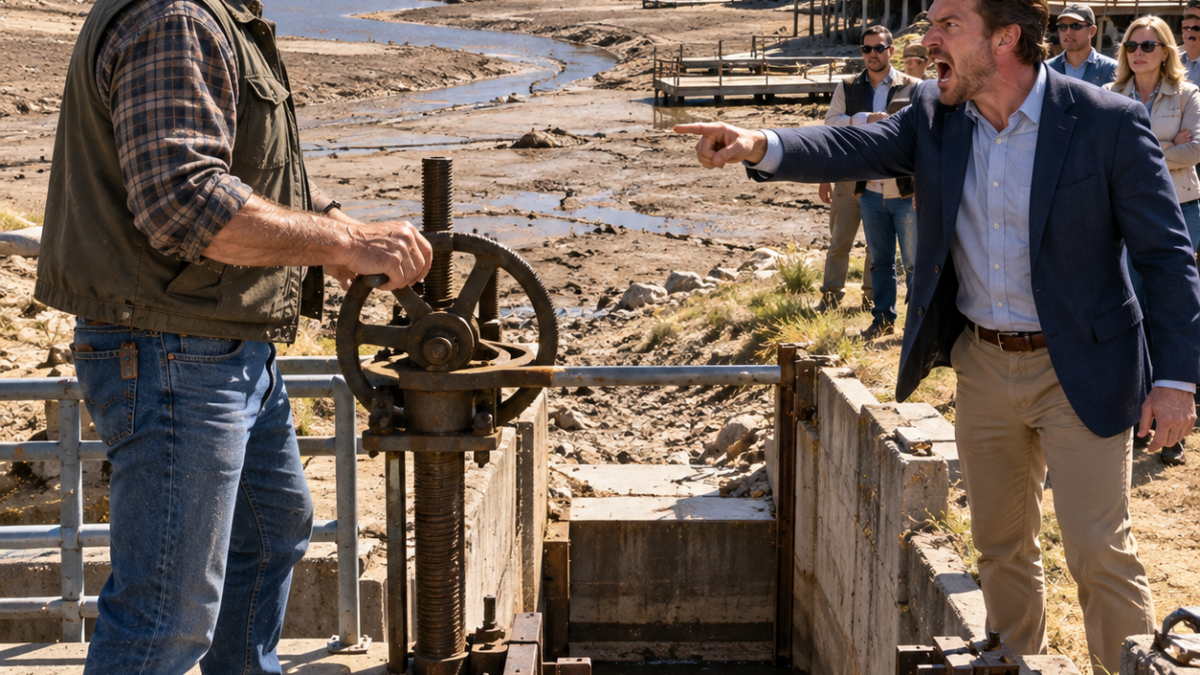
A documentary crew once asked me to recreate the moment I “opened the dam gates.”
I refused.
They wanted a close-up.
My hand on a steel wheel.
Water exploding out.
There was no exploding water.
There were controlled adjustments.
Logs.
Phone calls.
Permits.
Inspections.
They looked disappointed.
“You understand that’s less cinematic.”
“Yes.”
“Could you just turn the wheel for B-roll?”
“No.”
“Why?”
“Because we don’t operate hydraulic infrastructure for B-roll.”
That line made the documentary anyway.
The resort became known locally as East Whitmore.
The word “Preserve” disappeared.
The giant entrance sign came down.
The HOA kept functioning because shared roads and utilities needed management.
Rachel stayed president three years.
Then quit before it consumed her personality.
Her replacement was an accountant named Marcus Lee who considered excitement evidence of poor governance.
I liked him immediately.
HOA meetings became boring.
Financial statements.
Snow removal.
Waste contracts.
Road repairs.
Exactly how they should be.
One meeting agenda contained:
LAKE STATUS UPDATE — OWNER REPORT.
Marcus called me.
“What do you want me to tell residents?”
“The water is wet.”
“James.”
“Seasonal target level unchanged.”
“Thank you.”
Boring.
Healthy.
Bradley wrote me a letter from prison.
I almost didn’t read it.
Evelyn told me I could throw it away.
I opened it.
Six pages.
The first three blamed Martin.
The next two blamed banks.
County.
Market pressure.
Investors.
By page six, he finally reached himself.
He wrote:
I convinced myself the development was inevitable, and therefore any obstacle to it was temporary.
That sentence I understood.
He continued:
When you refused, I stopped seeing you as an owner and started seeing you as a problem to solve.
There.
That was the whole thing.
He apologized.
Not perfectly.
Maybe sincerely.
I never answered.
Forgiveness is not correspondence.
I did not need him punished forever.
I also did not need a relationship.
Years later, after his release, Bradley never returned.
At least not that I knew.
Summit Legacy disappeared.
Silver Creek Holdings dissolved.
Mountain Heritage Trust dissolved.
Whitmore Family Holdings—the fake company bearing my name—was administratively terminated.
I requested a certified copy of the termination.
Evelyn laughed.
“Why?”
“I like paperwork.”
“Emotional support documents.”
“You started that.”
“Because it’s true.”
I framed the fake company’s dissolution and hung it inside the dam control house.
Not my most mature decision.
Still makes me smile.
The original forged deed sits in my safe beside the real one.
Two sheets of paper.
One true.
One false.
For nearly eight months, the false one moved millions of dollars.
Secured permits.
Created loans.
Transferred supposed rights.
Sold homes.
Built roads.
That should terrify anyone who thinks documents are boring.
Paper doesn’t become powerful because ink is magical.
It becomes powerful because systems trust it.
That trust has to be defended.
Same with engineering.
Same with ownership.
Same with institutions.
Same with people.
By the time I turned seventy, Lake Whitmore looked different from the lake I had left in 2023.
There were cabins on part of the eastern horizon.
No undoing that completely.
At first, I resented every light.
Every roof.
Every chimney.
Then something changed.
Not the facts.
Me.
I watched Sophie catch trout.
Watched Rachel paddle at sunrise.
Watched children skate on a protected cove in winter.
Watched homeowners participate in shoreline restoration because they had learned exactly what fragile meant.
The cabins stopped feeling like Bradley’s monument.
They became houses occupied by people who had also been lied to.
That distinction saved me from becoming bitter.
My grandfather wanted silence.
He got decades of it.
I wanted control over what happened next.
I got that.
Not everything we preserve has to remain unchanged.
But change without consent is theft.
That is the line.
One autumn morning, I walked the exposed northern shore during the annual low-water period.
My grandson was eight by then.
Emma had brought him out.
His name was Robert.
After my grandfather.
He found an old tree stump exposed below normal waterline.
“How did a tree grow underwater?”
“It didn’t.”
He frowned.
“The lake wasn’t always here.”
His eyes widened.
“What?”
So I told him.
Three creeks.
Valley.
His great-great-grandfather.
Dam.
Water rising.
He looked at the reservoir differently after that.
“Can you make it go away?”
Children ask direct questions.
“Yes.”
“All of it?”
“Most.”
“Would you?”
“Not unless there was a reason.”
“Why not?”
I looked at the water.
“Because having power to do something isn’t the same as having a good reason.”
He considered that.
Then pointed toward the eastern cabins.
“Did you make it go away because those people were bad?”
“No.”
“They weren’t bad.”
“Somebody was.”
“One man did bad things.”
“Then why did everybody’s water disappear?”
“Because the lake had work that needed doing, and they had been promised something nobody had the right to promise them.”
Robert thought.
“That sounds complicated.”
“It was.”
“Mom says you make everything complicated.”
“Your mother is wise.”
We walked.
He picked up stones.
Asked about fish.
Forgot the entire lesson within twenty minutes.
That’s childhood.
You plant things.
Some grow later.
When people tell my story now, they usually tell the dramatic version.
HOA builds 109 cabins on man’s private lake.
Owner comes home.
Developer laughs at him.
Owner opens dam.
Twelve-million-dollar resort dries up.
The end.
It makes a good headline.
It misses almost everything that mattered.
I didn’t win because I controlled the dam.
I won because my grandfather had recorded the deed.
Because I paid taxes.
Because surveys existed.
Because water rights existed.
Because Evelyn understood title law.
Because Denise insisted on proper reservoir operations.
Because Rachel separated truth from the man who sold her a lie.
Because Martin eventually testified.
Because digital records survived.
Because a judge cared about what contracts actually said.
Because engineers respected permits.
Because innocent buyers were treated as victims instead of enemy soldiers.
The dam was only visible.
Law was underneath.
That’s usually how it works.
The dramatic moment gets remembered.
The boring foundation makes it possible.
Would Bradley’s resort have survived if I had kept the lake at full pool?
Probably not.
The title fraud alone would have destroyed Summit Legacy eventually.
But the drawdown exposed something useful.
Literally.
The real terrain.
Old roads.
Survey pins.
Creek channels.
Physical truth beneath eight hundred acres of water.
For months, Bradley had sold a picture.
Glass cabins reflecting blue water.
Kayaks.
Sunsets.
Permanent lakefront.
Then the water moved.
And underneath was mud.
Stone.
History.
Property lines.
The landscape before marketing.
I liked that symbolism more than I should.
Reality underneath the rendering.
It reminded me of engineering.
Every beautiful dam has ugly concrete somewhere.
Every resort has drainage.
Every promise has documents.
Every lake has a bottom.
You ignore the bottom because the surface is prettier.
Until the water drops.
I still lower Lake Whitmore periodically.
Not thirty-two feet every time.
Only as operational needs require.
Whenever it happens, people from East Whitmore call.
Not angrily anymore.
They ask.
“What level this year?”
“When do you expect refill?”
“Can we move docks beforehand?”
“Any fish concerns?”
Questions.
Coordination.
Consent.
The first time Marcus called and asked permission for the HOA to hold a fishing event, I almost said yes before he finished.
Then I made him finish.
Habit.
“Would the Whitmore family permit residents to access the north dock Saturday from eight to noon for the children’s fishing clinic?”
“Yes.”
He paused.
“That easy?”
“You asked.”
Silence.
Then laughter.
“You really are impossible.”
“That’s in the lease.”
The fishing clinic became annual.
I attend.
Pretend not to.
Stand far enough away.
Fix tangled lines.
Children call me Mr. Lake sometimes.
I hate it.
Robert loves it.
Rachel brings coffee.
She once stood beside me watching twenty kids along the shore.
“Your grandfather would hate this.”
I smiled.
“Probably.”
“You okay with that?”
“Yes.”
That surprised her.
I looked around.
“He had his life.”
Pause.
“I get mine.”
Ownership isn’t obedience to dead people either.
That’s another boundary worth respecting.
When I eventually die, the dam will not care.
Water won’t care.
Lake Whitmore will keep responding to gravity.
Snowmelt.
Rain.
Drought.
Gates.
Spillway elevations.
The physical world is wonderfully indifferent to human ego.
Bradley thought money could overpower title.
My grandfather thought concrete could shape a valley.
Both changed landscapes.
Only one had permission.
That difference is everything.
I keep one photograph on the wall above my desk.
Not the resort dry.
Not Bradley in court.
Not the forged deed.
It’s the photograph Emma caught of me the afternoon I returned in July 2024.
She wasn’t there physically.
I had sent her a video call.
She took a screenshot.
I am standing on the north deck.
Phone in hand.
Binoculars hanging around my neck.
Behind me, across the lake, tiny white roofs line the eastern shore.
My expression is pure disbelief.
Emma printed it.
Underneath she wrote:
DAD DISCOVERS 109 NEW NEIGHBORS.
I laughed when she gave it to me.
Then asked why she would preserve the worst afternoon of my retirement.
She said:
“Because that’s the last moment before you knew you could handle it.”
Children know how to reframe their parents too.
She was right.
At that moment, I saw invasion.
Loss.
Fraud.
A problem too big to reverse.
What followed taught me something I should have learned earlier despite thirty-five years of engineering.
Large systems can fail from small false assumptions.
A bridge calculation.
A valve setting.
A forged signature.
A developer assuming an old man won’t come home.
Bradley’s whole twelve-million-dollar empire rested on assumptions.
That I would stay in Oregon.
That the fake deed would survive.
That title insurers wouldn’t look deeper.
That county staff would trust paperwork.
That enough houses would make the theft irreversible.
That residents would defend him because their money depended on it.
And most of all:
That the lake was permanent.
The lake was never permanent.
It was managed water held in place by infrastructure my family owned and maintained.
Bradley saw blue water and assumed nature.
He never asked what held it there.
That was the mistake underneath all the others.
He built 109 “lakefront” cabins around a reservoir without securing rights to the reservoir.
Then told me lawyers would bury me until I gave up.
He had lawyers.
He had money.
He had investors.
He had 109 cabins.
I had a deed.
A dam.
Sixty years of records.
And patience.
Patience turned out to be more expensive than anything he owned.
The first time I watched the shoreline withdraw from his marina, I felt no triumph.
Mostly sadness.
Mud is ugly.
So are exposed mistakes.
But sometimes things need to be exposed before they can be repaired.
By the following spring, the water came back.
Not Bradley’s resort.
Not his empire.
Not his guarantee.
The water.
Because that was the part he never understood.
He didn’t own the lake.
I did.
And ownership never meant I could do anything I wanted.
It meant I carried the responsibility for what happened to it.
That’s why I didn’t dump eight hundred acres downhill in a fit of anger.
That’s why engineers monitored every release.
That’s why fish protections mattered.
That’s why downstream users received notice.
That’s why permits existed.
Real ownership comes with limits.
Bradley wanted the benefits without the limits.
That is not ownership.
That’s entitlement with paperwork.
Today, if you stand on the east side of Lake Whitmore at summer pool, some of the surviving cabins look lakefront again.
Beautiful, even.
But every lease contains language Bradley would have hated:
WATER LEVELS ARE VARIABLE.
NO MINIMUM RESERVOIR ELEVATION IS GUARANTEED.
SHORELINE ACCESS EXISTS ONLY BY EXPRESS AGREEMENT.
THE RESERVOIR REMAINS PRIVATELY OWNED.
Nobody can say they weren’t told.
Rachel helped write that section.
She calls it the Bradley Clause.
I call it common sense.
Every new resident signs beneath it.
Every one asks questions.
Good.
Questions are cheaper than lawsuits.
And every few years, when the lake drops for maintenance and the old creek channels begin appearing through the mud, new owners walk out and stare at the exposed valley.
Some are disappointed.
Some fascinated.
Children love it.
They find old fence posts.
Stumps.
Stones.
One kid found a horseshoe.
They see something tourists in Bradley’s glossy brochure never did.
The lake before the lake.
The truth underneath the surface.
Sometimes I stand there with them.
I point toward the southern end.
Explain where my grandfather built the dam.
Tell them three creeks still flow under all that water.
Tell them the lake exists because somebody chose to hold those creeks back.
Then I usually add:
“And anything held up by one man’s decision should never be sold by another man as permanent.”
Adults understand immediately.
Children ask whether there are buried pirate ships.
I prefer the children.
The story started because I came home expecting silence.
Instead I found 109 cabins.
A gate on my road.
A sales office on my land.
And a man who believed the amount of money already spent was a substitute for my consent.
He told me he wasn’t moving a single structure.
He told me he’d bury me in court.
He told buyers no individual could simply remove a lake.
On that last point, technically, he was right.
No responsible person simply removes eight hundred acres of water.
You inspect.
You permit.
You notify.
You lower carefully.
You respect downstream people.
You respect fish.
You respect gravity.
Then, if the lawful operating plan calls for it, you let the water go where it was always capable of going.
And when we did, Bradley’s “permanent waterfront” retreated almost nine hundred feet from some of the cabins he had sold.
His marina settled into mud.
His promotional photographs became evidence.
His survey monuments emerged from beneath the reservoir and contradicted his own maps.
And the people he thought would shield him became witnesses against him.
I did not destroy his resort.
Bradley did that the day he decided another man’s absence was the same thing as permission.
The water merely made the lie visible.
That is what I remember whenever someone tells me I “got revenge.”
No.
Revenge would have been emotional.
Fast.
Destructive.
What happened was slower.
Documents.
Engineers.
Courts.
Permits.
Survey pins.
Drawdown schedules.
Insurance claims.
Restoration plans.
Years.
Repair always takes longer than trespass.
But it lasts longer too.
Lake Whitmore still exists.
My grandfather’s dam still stands.
The north cabin is still mine.
The east shore still has homes.
Children fish there now.
Elk cross behind them.
And once or twice a year, when the morning is perfectly calm, I sit on the dock with coffee and watch the mountain reflection stretch across the water.
Sometimes I think about that afternoon in July.
The binoculars.
The white roofs.
The sign carrying my name.
The man who thought he had built something too large to undo.
Then I look south toward the dam.
Most people barely notice it.
Concrete against rock.
One steel building.
A few instruments.
Nothing glamorous.
But I know what it means.
It reminds me of something my grandfather told me when I was fourteen, back when I thought the dam was the most powerful thing on the property.
He shook his head.
“The dam isn’t powerful, Jimmy.”
I asked what he meant.
He pointed at the lake.
“The water is powerful.”
Then he tapped the concrete with his boot.
“This just tells it where it’s allowed to go.”
I didn’t understand then.
I do now.
Property law works the same way.
So do boundaries.
So does consent.
They don’t create power.
They tell power where it is allowed to go.
Bradley Keene spent twelve million dollars pretending those boundaries didn’t exist.
Then the lake dropped.
And underneath all that beautiful blue water, there they were.








