“Hide in the Basement!” Mom Snapped. “Your Sister’s Fiancé Is a War Hero—Don’t Embarrass Us!” Then He Saw Me, Dropped His Glass, and Fell to His Knees: “Captain… You Saved My Life!”
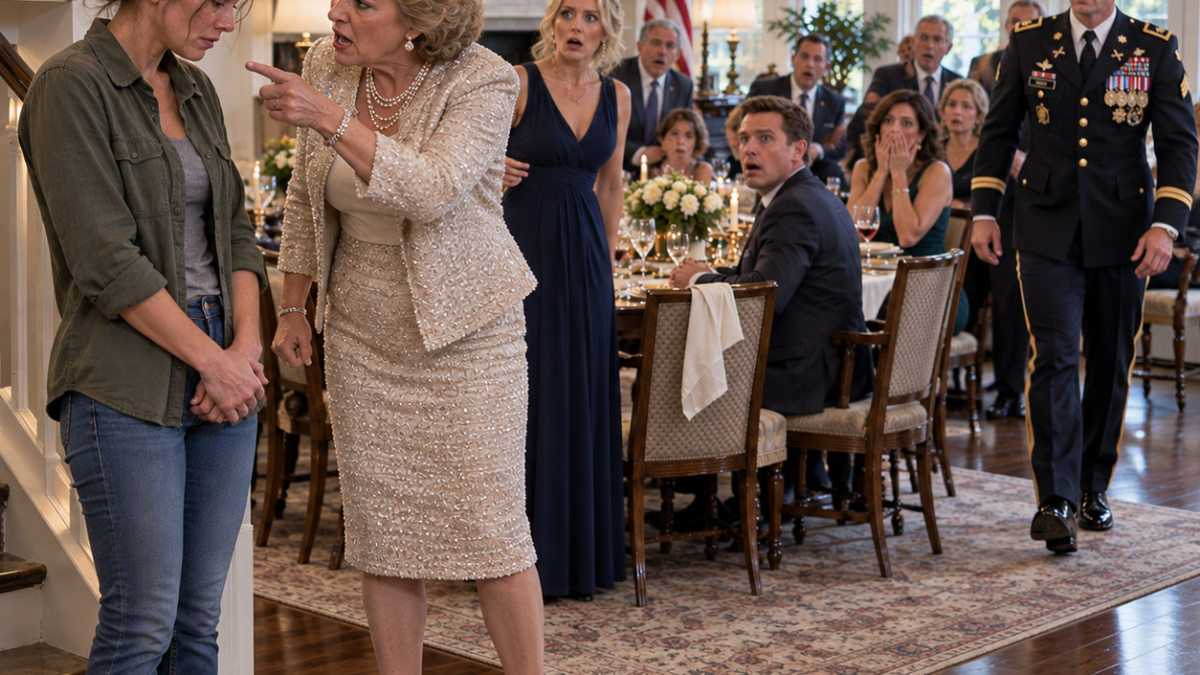
PART3:
Sudden bangs still turned my body before my mind caught up.
Nothing about me was dramatic enough to satisfy people who thought trauma was supposed to announce itself with screaming nightmares and shattered liquor bottles.
I functioned.
I worked.
I paid my bills.
I laughed sometimes.
I forgot groceries.
I watched terrible detective shows.
I planted tomatoes every spring and killed half of them.
I also avoided fireworks and sat facing restaurant doors without thinking about it.
Life was complicated.
My mother preferred categories.
Successful.
Unsuccessful.
Impressive.
Embarrassing.
Claire had always understood those categories.
My younger sister was thirty-eight and beautiful in the way magazines teach women to be beautiful.
Dark hair.
Sharp cheekbones.
Expensive clothes worn as though price tags were character references.
She owned an interior design studio in Cincinnati and specialized in high-end homes for people who wanted their kitchens to look like nobody had ever eaten in them.
Claire was good at what she did.
That mattered.
I loved her, or at least I loved enough memories of her to make the present difficult.
When we were children, she used to crawl into my bed during thunderstorms.
When I left for basic officer training, she cried harder than Mom.
For my twenty-fifth birthday she mailed me homemade cookies that arrived as crumbs and tasted like cardboard, and I ate every one.
Families rarely become strangers all at once.
It happens by erosion.
One joke.
One assumption.
One conversation you do not correct because you are tired.
Another because you are hurt.
Another because you tell yourself people who love you should eventually notice the difference between silence and agreement.
They often do not.
I carried a tray of wineglasses into the dining room.
Claire entered from the stairs wearing an emerald dress.
She stopped when she saw me.
“You’re wearing that?”
I looked at my navy slacks and cream blouse.
“It’s clean.”
“That wasn’t what I meant.”
“I know.”
She frowned.
“You could’ve borrowed something from me.”
“We’re not the same size.”
“We’re close.”
“We’re not.”
Claire checked her reflection in the hall mirror.
“Whatever.”
She adjusted one earring.
“Nathan should be here any minute.”
“So Mom mentioned.”
“Please be normal.”
I turned toward her.
She immediately looked annoyed.
“What?”
“Define normal.”
“God, Mara.”
“I’m asking.”
“You know exactly what I mean.”
I waited.
Claire sighed.
“Please don’t get weird if military stuff comes up.”
My hand tightened slightly around the tray.
“What would weird look like?”
“That thing you do.”
“What thing?”
“Where you go quiet.”
“I’m quiet most of the time.”
“Yes, exactly.”
I stared at her until she looked away.
Then she added, “Mom already told Nathan you work in shipping.”
“I do work in shipping.”
“You know what I mean.”
“No.”
Claire lowered her voice.
“Please don’t tell him you used to work for the government in that mysterious way you do. Nathan’s actually served.”
The sentence was so absurd that at first I thought I had misunderstood.
“Actually served?”
“You know what I mean.”
Again.
Always that phrase.
I wondered how many families survive on the assumption that everyone knows what everyone means and no one ever has to say the ugly part aloud.
Before I could respond, the doorbell rang.
My mother appeared as if summoned by electricity.
Her posture changed.
Her smile widened.
“Oh, that must be Nathan.”
Claire nearly floated toward the door.
I carried the wine into the dining room.
The front door opened.
Male voices.
Claire laughing.
My mother performing delight.
Then Captain Nathan Cole stepped into the house.
The first thing I noticed was the uniform.
Army dress blues.
Captain’s bars.
Combat decorations.
Airborne wings.
Ranger tab.
The second thing I noticed was that he looked uncomfortable with admiration.
My mother clasped both his hands.
“Nathan, finally. We have heard so much about you.”
“Hopefully not all of it.”
Diane laughed too loudly.
Claire kissed his cheek.
“My mother has been preparing for three weeks.”
“Then I’m terrified.”
That made me smile despite myself.
He was tall.
Broad shoulders.
Early forties.
Dark hair cut close.
A thin pale scar ran from the corner of his jaw toward his ear.
He carried a bottle of wine Claire had apparently told him not to bring.
My mother protested.
Nathan ignored her politely and carried it himself.
Good.
Then his cuff shifted.
A narrow black bracelet appeared around his wrist.
My hand stopped above the decanter.
Black metal.
Worn edges.
Coordinates engraved in tiny lettering.
A date.
October 14.
The room disappeared.
Not literally.
Memory just moved closer than the present.
Rotor wash.
Dust.
Radio static.
Someone screaming for plasma.
A young lieutenant on his back in a dry riverbed with blood pumping between his fingers.
My own voice saying, Stay with me.
His eyes too wide.
A helicopter pilot shouting that we had ninety seconds.
The call sign over the radio.
Osprey.
I set the decanter down before my hand could shake.
I did not recognize Nathan immediately.
That bothered me.
Faces change over eleven years.
Hairlines move.
Bodies thicken.
Fear disappears from the eyes.
But the bracelet—
I knew those bracelets existed.
Seven men had ordered them after Helmand.
I had never seen one in person.
Nathan turned toward the dining room.
Claire said something.
He laughed.
My mother gestured toward me as though introducing staff.
“Mara was kind enough to help tonight.”
Nathan’s eyes passed over me.
Then returned.
My mother continued.
“She’s wonderful with practical things.”
Claire smiled.
“She spends all day keeping forklifts from crashing into each other. Setting a dinner table is basically senior management for her.”
Diane laughed.
Nathan did not.
He stared at me.
I had seen recognition come over wounded soldiers before.
Sometimes in hospital corridors.
Sometimes years later.
Once in an airport when an old pararescueman spotted me beside baggage claim and burst into tears before he could explain himself to his wife.
Nathan’s recognition was different.
Immediate.
Violent.
His face drained of color.
The crystal tumbler slipped from his fingers.
It struck the hardwood floor.
Shattered.
Claire jumped.
“Nathan!”
He did not look down.
He stared at me.
Then he whispered, “Captain Ellison?”
My mother frowned.
Claire gave a small nervous laugh.
“What?”
Nathan stepped toward me.
His medals made the faintest metallic sound.
“Captain Mara Ellison?”
I did not answer.
Not yet.
His eyes moved across my face as though correcting eleven years of memory.
Then his hand went to the black bracelet.
“Call sign Osprey.”
Something inside me became very still.
“Yes.”
His breath left him.
“Oh my God.”
Claire looked between us.
“Nathan?”
He moved another step.
“You were the flight nurse.”
Silence.
“Helmand Province. October fourteenth.”
My mother’s smile disappeared.
“Nathan, I think there’s some confusion.”
He did not even glance at her.
“You were there.”
“Yes.”
“The riverbed.”
“Yes.”
“The evacuation crew.”
“Yes.”
His knees actually softened.
He caught the back of a chair.
Claire reached for him.
“What is happening?”
Nathan stared at me as if the dead had entered the dining room.
“You carried us out.”
My mother said, “Mara?”
That one word sounded different now.
Uncertain.
I looked at Nathan’s bracelet.
“You were Lieutenant Cole.”
He laughed once.
It broke halfway through.
“You remember me?”
“You had a femoral bleed.”
He sat down hard.
His hand touched his right thigh.
“Jesus.”
The room had become so quiet I could hear the heating system click behind the wall.
Claire looked at me.
Then at him.
“Can somebody please explain?”
Nathan slowly stood again.
“Your sister saved my life.”
My mother let out a strange little laugh.
“No, Nathan, Mara had an administrative role.”
He turned toward her.
“Administrative?”
Claire stepped in quickly.
“She was in the Air Force for a while.”
Nathan stared.
“For a while?”
I knew what was happening before either of them did.
Their story about me was colliding with a witness.
Not a document.
Not a medal.
A man they respected.
A decorated soldier.
Someone whose words automatically carried credibility mine apparently never had.
And I hated how much that hurt.
Nathan pulled the black bracelet from beneath his cuff.
“Our convoy was hit in Helmand.”
His voice had changed.
He was no longer speaking as Claire’s fiancé.
He was briefing the room.
“An IED disabled the lead vehicle. Small-arms fire started almost immediately. We had seven wounded, two critical. Communications were intermittent. Our designated landing zone was compromised.”
Claire folded her arms.
“Okay.”
Nathan looked at her.
“The evacuation aircraft was told to hold outside the valley.”
My mother glanced at me.
Nathan continued.
“Captain Ellison was the senior medical officer aboard.”
Diane shook her head.
“No.”
I looked at my mother.
She did not say, I didn’t know.
She said no.
As if reality had made a factual error.
Nathan’s jaw tightened.
“They were ordered not to land.”
He looked at me.
“You came down anyway.”
Memory pulled at me.
The pilot, Major Rob Keating, shouting through the headset.
Command says abort.
The crew chief pointing through dust.
Seven litters.
Gunfire striking rock.
Me asking how much fuel we had.
Keating saying, Not enough for your stupid idea.
Then doing it anyway.
I had not ordered anyone.
That story grew later.
I had told Keating the medical reality.
Two men would die if we left.
He made the landing decision.
Then we all accepted what followed.
But soldiers remember survival emotionally, not administratively.
Nathan said, “She got off the aircraft.”
Claire looked at me.
I could see genuine uncertainty replacing irritation.
Nathan touched his thigh.
“I had an arterial bleed. I was conscious maybe half the time. She packed the wound, kept pressure on it, stabilized another casualty, then got me aboard.”
I remembered him.
Too young.
Dirt pasted to sweat.
Apologizing because he thought he had gotten his men killed.
Asking me to tell his mother something I could no longer remember.
“I woke up twice during the flight,” Nathan said.
His eyes shone.
“Every time I did, she was there.”
My mother whispered, “That can’t be right.”
It was a small sentence.
Four words.
It struck deeper than anything she had said in the hallway.
Because disbelief was still her first instinct.
Nathan looked at her.
“It is right.”
Claire’s voice sharpened.
“If Mara had done something like that, she would have told us.”
Nathan turned slowly toward her.
“Why?”
“What?”
“Why would she have told you?”
Claire blinked.
“Because we’re her family.”
No one answered.
Nathan’s gaze moved toward me again.
“People who survive things like that don’t always build dinner stories around them.”
Diane looked at me.
“Mara, say something.”
For years, my testimony had not been required.
Now that a man in medals had contradicted her, suddenly I was the missing witness.
“I served.”
My mother’s eyes narrowed.
“That isn’t what I asked.”
“It’s the answer.”
Claire stared at my face.
“Were you actually a captain?”
I looked at her.
“Yes.”
“A real captain?”
Nathan flinched.
I said, “There isn’t a decorative version.”
He almost smiled.
Claire did not.
My mother moved toward a chair.
“Why would you hide something like this?”
“I didn’t.”
“You never told us.”
“I came home wearing my uniform.”
That silenced her.
Four years earlier.
Dayton International Airport.
Rain against the terminal glass.
Me walking toward baggage claim in service dress because my civilian clothes were buried somewhere inside checked luggage.
Captain’s bars visible.
Ribbons on my chest.
My mother waiting near the exit.
Her first words had been, You look exhausted.
Her second:
Can you change before lunch? People stare at uniforms.
I had obeyed.
We stopped at a gas station.
I changed in the restroom.
That afternoon she introduced me to a neighbor as “back from government work.”
She knew.
Maybe not Helmand.
Maybe not the citations.
But she knew enough.
Nathan saw something move across my mother’s face.
“Mrs. Ellison, you knew her rank?”
Diane straightened.
“I knew she had some title.”
“Captain.”
“Military ranks are confusing.”
“They’re really not,” I said.
Her eyes flashed.
Stop.
The old command.
I did not.
Nathan looked at Claire.
“What did you tell me about her?”
Claire’s face tightened.
“Nothing.”
He stared.
“Nathan—”
“You said she left the military because she couldn’t handle responsibility.”
The room changed again.
I turned toward my sister.
“When did you tell him that?”
Claire lifted her chin.
“It was context.”
“For what?”
“For why you’re like this.”
“Like what?”
“Detached.”
She began counting now, because once Claire felt cornered she became prosecutorial.
“You work nights. You never date. You barely come to family events. You rent—”
“I own my house.”
“Fine. You live in a tiny house. You drive a car with primer on the door. You act like nothing matters.”
Nathan stared at her.
Claire heard herself too late.
She tried to recover.
“I just meant Mara has had a difficult few years.”
“You told me she washed out,” Nathan said.
“I did not use those exact words.”
“You told me she couldn’t deal with pressure.”
“I was simplifying.”
I looked at my sister.
“For whom?”
She glared at me.
“Why are you making me the villain because I misunderstood something you deliberately refused to discuss?”
“I didn’t ask you to explain me.”
“You never explain yourself.”
“You never ask.”
“We’ve asked plenty.”
“No. You’ve told.”
Claire’s mouth closed.
My mother moved between us.
“This is getting emotional.”
“I’m not emotional,” I said.
That irritated her more than anger would have.
Nathan looked at me.
“Do you have your separation records?”
“Yes.”
“Your citations?”
“Some copies.”
“Where?”
“In my car.”
He glanced toward my mother and sister.
“Would you show them?”
I understood why.
He had realized words would never be enough here.
I walked outside.
Cold October air hit my face.
My sedan waited beneath a maple tree.
Ten years old.
Gray.
A long patch of primer across the passenger door from a grocery-store hit-and-run.
My mother hated that car as though its dent had personally damaged the family name.
I opened the trunk.
Lifted an old blanket.
Pulled out the green canvas portfolio.
I kept copies of important documents there because I had been planning to meet a veterans’ benefits coordinator the following Monday.
Nothing mystical.
Nothing theatrical.
Just paperwork.
When I returned, Nathan stood near the table.
Claire had moved closer to him.
He had moved away.
My mother gripped the back of a chair.
I unzipped the portfolio.
DD-214.
Performance reports.
Medical separation paperwork.
Commendations.
Deployment records.
A copy of the Distinguished Flying Cross citation.
My mother touched the document.
Her fingertips trembled.
Claire leaned over her shoulder.
Nathan did not look at the medal citation first.
He saw the photograph.
Seven soldiers beside an evacuation aircraft.
I had forgotten the photograph was there.
He picked it up.
His face changed.
“That’s us.”
He looked younger in the picture.
Twenty-eight maybe.
Thinner.
Alive in the startled way survivors sometimes appear.
My mother stared at the image.
Nathan turned it over.
Seven names had been written on the back.
Below them, in faded marker, was a line from Colonel James Avery, my squadron commander.
Survivors requested contact with Capt. Ellison. Family notification address returned all correspondence.
Nathan read it again.
Then looked at me.
“What does that mean?”
“I don’t know.”
I looked toward my mother.
She stopped breathing.
Nathan noticed.
So did Claire.
My sister whispered, “Mom?”
Diane immediately shook her head.
“I don’t remember anything.”
There were many things my mother could claim convincingly.
Forgetfulness was not one of them.
Diane remembered the price of Claire’s first prom dress.
She remembered which neighbor had failed to send a thank-you note after my father’s funeral.
She remembered an argument I had with her in 1998 almost word for word.
Nathan placed the photograph on the table.
“Our unit tried to contact Captain Ellison.”
Diane waved one hand.
“Military mail is complicated.”
“How many letters?” I asked.
My mother looked at me.
“I don’t know what you’re talking about.”
Nathan pulled out his phone.
“Seven families sent correspondence.”
My mother’s eyes moved toward him.
Too quickly.
He saw it.
“Our liaison officer used her home-of-record address.”
“My address?” I asked.
Nathan nodded.
I already knew the answer.
For nearly a year after separating, my permanent mailing address had remained my parents’ house.
I had been moving between temporary rentals, medical appointments, and contract work.
“Mom?”
Diane’s shoulders tightened.
“Things may have arrived.”
“What things?”
“Letters.”
“How many?”
“I don’t know.”
“Were they opened?”
Silence.
Claire whispered, “Mom.”
Diane snapped, “She had just come home.”
I felt something cold pass through me.
“That wasn’t my question.”
“You were exhausted.”
“Were they opened?”
“You weren’t sleeping.”
“Were they opened?”
My mother slapped one palm against the table.
“Yes!”
The chandelier seemed to vibrate.
“Yes, Mara. I opened some letters.”
Nathan stared.
“Why?”
Diane looked at him as though he had no right to ask.
“Because my daughter had just returned from a war zone barely functioning.”
I almost corrected her.
Barely functioning.
I had started work seven weeks after returning.
I paid my own rent.
I drove myself to appointments.
I helped my father recover from knee surgery.
But I understood what she meant.
I was not performing recovery in a way she liked.
“You could have given them to me.”
“They were upsetting.”
“You read them.”
“Yes.”
“And decided for me.”
“You weren’t well.”
Nathan’s face hardened.
“Those men were trying to thank her.”
Diane turned on him.
“With respect, Captain Cole, you met Mara in the worst moment of your life. I am her mother.”
“And?”
The question stopped her.
Nathan continued.
“Being her mother doesn’t make her memories your property.”
Claire closed her eyes.
I looked at him.
He seemed embarrassed by his own anger.
Then Claire said, “This is exactly what she does.”
We all turned.
My sister’s cheeks were flushed.
“She says almost nothing, and somehow everyone else ends up feeling guilty.”
“Claire,” Nathan warned.
“No. I’m serious. Mara turns silence into a weapon.”
I stared at her.
She continued.
“She won’t explain what she wants. She won’t tell anyone what she’s thinking. Then years later suddenly we’re villains because we didn’t magically understand.”
“You told your fiancé I couldn’t handle responsibility.”
“I was explaining why you came home.”
“You didn’t know why I came home.”
“You never told me.”
“You could have asked.”
“You would’ve given me some two-word answer.”
“Maybe.”
She threw up her hands.
“Exactly.”
I nodded.
“Then you would have had two words of truth instead of two years of lies.”
Claire’s eyes flashed.
Nathan turned toward her.
“You told me Diane supported Mara financially after she got out.”
My head lifted.
“What?”
Claire froze.
Nathan realized from my face that I had never heard that one.
He looked uncomfortable.
“She said your mother paid your rent.”
A laugh escaped me.
Not because it was funny.
Because it was so ridiculous my body rejected it.
“My mortgage is automatically drafted from my account.”
Claire said quickly, “I meant she supported you generally.”
Nathan shook his head.
“No, you didn’t.”
My mother stepped forward.
“This is Claire’s engagement dinner.”
I stared at her.
Somehow that remained the emergency.
Not the hidden letters.
Not the fabricated military history.
Dinner.
“Your engagement dinner,” Diane repeated, looking at Claire. “In your home.”
“My home,” I said.
Silence.
Claire frowned.
“What?”
I immediately regretted saying it.
Not because it was false.
Because there were already too many broken doors open in one evening.
Claire laughed.
“Mom owns this house.”
I looked at my mother.
She had gone pale.
“No,” I said. “Dad left the property to me.”
Claire’s smile vanished.
“What?”
“Mom has lifetime occupancy.”
“What does that mean?”
“It means she can live here as long as she wants. I can’t remove her. I don’t want to remove her. But the deed is in my name.”
Claire turned toward Diane.
“Mom?”
My mother gripped the chair.
“This has nothing to do with tonight.”
Maybe it did not.
But something inside me had begun rearranging itself.
My father’s will had always seemed strange.
Thomas Ellison had been an accountant.
Quiet.
Methodical.
A man who could spend forty minutes comparing prices on lawn fertilizer and five years avoiding a difficult emotional conversation.
When he died suddenly of a stroke, his estate had been divided oddly.
Claire received his investment account.
A little over four hundred thousand dollars.
My mother received lifetime occupancy of the family home and most personal property.
I received the house itself.
The will contained one sentence I had never fully understood.
Property transfer reflects prior financial distributions made to other beneficiary.
I had assumed that referred to Claire’s investment account.
Balanced inheritance.
Reasonable.
Now my sister stared at me as if I had stolen the roof.
“Why would Dad leave you the house?”
“I don’t know.”
“That doesn’t make sense.”
“I agree.”
Diane said, “Enough.”
Nathan looked at the photograph again.
“Mara, after you separated, who handled your mail?”
“My parents sometimes.”
“Financial documents too?”
“My dad.”
My mother spoke quickly.
“Your father handled all financial matters.”
I looked at her.
No one had mentioned finances.
Then something slipped from the open portfolio and landed beneath the sideboard.
An envelope.
I bent down.
My name was written across the front.
MARA ELLISON.
The return address belonged to Samuel Brennan.
My father’s estate attorney.
The envelope was sealed.
Postmarked five years earlier.
A year after I returned.
Several months before Dad died.
My mother saw it.
Her face changed.
“Where did that come from?”
“My folder.”
“That doesn’t make sense.”
I turned it over.
Still sealed.
“What is it?”
“Mara.”
I opened it.
Inside was a single page.
Your father has asked me to prepare updated estate documents and requested that I meet privately with you regarding an account previously created in your name.
I read it twice.
“What account?”
My mother sat down.
Claire looked at her.
“Mom?”
“I don’t know.”
I stared at Diane.
She avoided my eyes.
There are lies that remain invisible because you want to believe the person telling them.
Then there are lies you can suddenly see physically.
Breathing changes.
Hands move.
The gaze drifts somewhere it has no reason to go.
My mother looked toward my father’s old study.
I noticed.
So did Claire.
I walked toward the hall.
“Mara.”
I kept going.
My mother followed.
“Don’t start tearing through your father’s things.”
“They’re my father’s things too.”
The study smelled exactly the same.
Old books.
Wood polish.
Dust.
The green banker’s lamp still sat on his desk.
Dad’s reading glasses remained in the top drawer, although the man who wore them had been dead four years.
I opened the filing cabinet.
Taxes.
Insurance.
Utilities.
Estate documents.
A folder labeled CLAIRE.
Another labeled DIANE.
Then mine.
MARA.
Empty.
Behind it sat a thick accordion folder.
EDUCATION / SERVICE.
My hands went cold.
I opened it.
Military letters.
VA correspondence.
Handwritten envelopes.
Thank-you cards.
All addressed to me.
All opened.
Nathan stood behind us in the doorway.
Claire beside him.
My mother remained in the hall.
I picked up one envelope.
Mrs. Teresa Ruiz.
Texas.
Another.
The Cole Family.
Virginia.
Nathan inhaled.
“That’s my mother’s handwriting.”
I looked at him.
He stepped closer and took the envelope.
His thumb moved over the faded address.
“She wrote this.”
Inside was a letter.
Captain Ellison,
You do not know us, but our son Nathan says you are the reason he is still here.
My throat tightened.
I stopped.
Nathan looked away.
I put the letter down.
Beneath the correspondence were bank statements.
The first was eleven years old.
Account holder:
Mara T. Ellison.
Balance:
$184,622.
I stared.
I had never seen the account.
“What is this?”
My mother closed her eyes.
“Diane,” Nathan whispered, almost to himself.
I turned.
“What is this?”
She said, “Your father handled the finances.”
“That is not an answer.”
“I don’t know every account he opened.”
Claire picked up another statement.
Her eyes narrowed.
“There are withdrawals.”
My stomach dropped.
I took it.
Two thousand dollars.
Then three thousand.
Then eight thousand.
Labels like household reimbursement.
Education expense.
Property tax reconciliation.
Withdrawal after withdrawal.
I looked at my mother.
“What did you do?”
Diane’s expression changed from fear to anger.
That was her oldest escape route.
“You have no right to stand in this house and accuse me of stealing.”
“My name is on the account.”
“Your father managed it.”
“Mom.”
“Mara, tonight has become completely insane. Everyone is emotional. Put the documents down, go home, and we will discuss this later.”
Nathan stared at her.
Claire said quietly, “No.”
My mother turned.
“What?”
Claire held a bank statement.
“No, Mom.”
Something in her voice had changed.
For the first time that evening, my sister was not standing where Diane expected.
My mother’s face hardened.
“Claire, this is your engagement celebration. You are allowing Mara to destroy it.”
That sentence ended something for Nathan.
He looked at Claire.
“I’m leaving.”
Her head snapped toward him.
“What?”
“I’m not staying for dinner.”
“Nathan.”
“I need to go.”
Tears filled her eyes instantly.
“You’re ending our engagement because my sister has medals?”
“No.”
“Then why?”
He took a slow breath.
“I’m leaving because tonight I learned how you talk about someone when you think they have nothing you want.”
Claire flinched.
“That isn’t fair.”
“For months, you described Mara as lazy.”
“I was frustrated.”
“You said she was a burden.”
“I was venting.”
“You said your mother carried her financially.”
“I misunderstood.”
“You said she couldn’t handle pressure.”
Claire’s voice cracked.
“I didn’t know!”
Nathan looked at her.
“I didn’t know either.”
That silenced her.
He removed her hand from his sleeve.
“I believed you.”
Claire began crying.
“Nathan, please.”
He shook his head.
“The problem isn’t that you were wrong.”
His eyes moved toward me.
“The problem is what you did after you found out.”
Then he walked outside.
I followed.
The night had turned cold.
Dry leaves scraped across the driveway.
Nathan stood beside his car with both hands on the roof.
For a few seconds neither of us spoke.
Then he laughed quietly.
“I used to imagine meeting you.”
“Probably not like this.”
“No.”
He touched the black bracelet.
“My mother wrote you three letters.”
“I’m sorry.”
“Why are you apologizing?”
“I didn’t answer.”
“You never received them.”
“I know.”
He looked toward the house.
“Did you know Claire didn’t know?”
“About what?”
“The mission.”
“No.”
He nodded.
“She knew the story. Not your name.”
“That makes sense.”
“Does it?”
“We used call signs. People moved units.”
He studied me.
“I told her about Osprey.”
My chest tightened.
“She never connected it to you because she believed your mother.”
I nodded.
He looked embarrassed.
“I believed her too.”
“You had no reason not to.”
“I had reasons tonight.”
He opened his car door, then stopped.
“Captain?”
“Please call me Mara.”
A tired smile.
“Mara.”
He held out his hand.
I took it.
His grip tightened.
“Thank you for my life.”
My eyes burned.
“You’re welcome, Nathan.”
He drove away.
When I returned inside, Claire had gone upstairs.
My mother stood at the dining table.
The food was cold.
Wine remained untouched.
Glass glittered near Nathan’s chair.
For an evening she had spent weeks perfecting, everything looked surprisingly ordinary in ruins.
“Did you know he was one of them?” I asked.
“No.”
“Did Claire?”
“I don’t know.”
“Did you answer any of those letters?”
My mother stiffened.
“Mara.”
“Did you?”
“I was protecting you.”
I stared at her.
“From gratitude?”
“From obsession.”
“What does that mean?”
“You came home different.”
“I was different.”
“You barely slept.”
“That doesn’t give you the right to become me.”
She stepped closer.
“I was your mother.”
“You were not my commanding officer, my doctor, or my legal guardian.”
“You wouldn’t talk to anyone!”
“Then you could have sat beside me.”
My voice rose for the first time.
“You could have made coffee. You could have asked if I wanted to drive somewhere. You could have watched television with me. You could have done nothing.”
She stared.
“You did not have to rewrite my life because you were uncomfortable with the parts I couldn’t explain.”
Her eyes filled.
“I was terrified.”
I believed that.
That was what made everything harder.
Fear and love can do terrible things when people decide good intentions excuse control.
I picked up the bank statement.
“What is this account?”
She looked away.
“I don’t know.”
I almost argued.
Then I stopped.
There are moments when truth matters more than immediate victory.
I took the documents.
My green portfolio.
The unopened attorney letter.
The photograph.
The bank statements.
The opened family letters.
My mother moved toward me.
“You cannot take things from my house.”
“My name is on them.”
“Mara.”
I looked at her.
“This is my house too.”
Her face went white.
I walked out.
I did not sleep.
At two in the morning, I sat at my kitchen table under a weak pendant light while the refrigerator clicked behind me.
My bungalow was quiet.
Small.
Paid for mostly with my salary and the money I earned after separation.
Everything inside had been chosen by me.
Secondhand dining table.
Faded couch.
Books stacked beside the television.
No designer furniture.
No rooms built to impress visitors.
I had never been ashamed of it.
Other people had been ashamed for me.
I spread the statements across the table.
The account had been opened eleven years earlier.
I was deployed.
Deposits arrived irregularly.
$5,000.
$12,000.
$25,000.
$60,000.
Some descriptions mentioned family trust transfers.
One referred to an estate distribution.
Withdrawals began several years later.
Small.
Then larger.
Education.
Household reimbursement.
Business expense.
Tax adjustment.
By the time my father died, more than ninety thousand dollars had been removed.
The investments had grown afterward, which explained the current balance.
I called Samuel Brennan at eight the next morning.
His receptionist transferred me immediately.
That scared me.
Samuel’s voice was older than I remembered.
“Mara Ellison.”
“Yes.”
A pause.
“I wondered if you would ever call.”
My fingers tightened around the phone.
“You sent me letters.”
“Several.”
“I didn’t receive them.”
Another pause.
“I was afraid of that.”
We met at eleven.
Samuel Brennan’s office occupied the second floor of an old brick building downtown.
The same brass directory.
The same dark carpet.
The same ceramic bowl of peppermints from my father’s estate meeting.
Samuel stood when I entered.
Seventy-three.
White hair.
Careful eyes.
Before I sat down, he said, “I owe you an apology.”
“For what?”
“For accepting your father’s request to use the family residence as your primary contact address.”
I placed the bank statement in front of him.
“What is this?”
He removed his glasses.
“That account originated with your grandfather.”
“My grandfather?”
“Eugene Hart.”
“My mother’s father?”
“Yes.”
“Mom said he left everything to her.”
Samuel’s expression tightened.
“That was not accurate.”
My heart began to pound.
“How much did he leave me?”
“Approximately two hundred and sixty thousand dollars.”
I stared at him.
The number sounded unreal.
Not life-changing wealth.
But enough.
Enough for a home.
Enough for retirement.
Enough to make decades easier.
“What happened?”
“Your grandfather divided assets among Diane, Claire, and you.”
“I never received anything.”
“You were overseas.”
“So?”
“Your father held a limited financial power of attorney for certain domestic matters.”
I remembered signing it before deployment.
Vehicle registration.
Insurance.
Tax issues.
Nothing more.
Samuel continued.
“An account was created in your name.”
“Could my parents withdraw from it?”
“Not for personal purposes.”
I looked at the statements.
“Someone did.”
“Yes.”
“Who?”
Samuel folded his hands.
“I cannot prove who personally initiated every transaction.”
“Can you tell me what my father believed?”
His eyes met mine.
“Yes.”
My stomach tightened.
“He believed your mother had used the funds.”
I looked away.
“For what?”
“Claire’s education.”
Of course.
“Some expenses associated with her design studio. Household expenses. A previous wedding engagement. Your father believed approximately ninety thousand dollars had been diverted.”
I felt nothing for several seconds.
Then everything at once.
Claire’s Chicago design school.
Paid.
Her first studio.
Paid.
Trips.
Furniture.
My mother’s constant comments about my cheap car.
My supposedly wasted potential.
All while money left to me had helped create the life she compared mine against.
“Did Claire know?”
“I do not know.”
“Did Dad?”
“Not initially.”
“When did he find out?”
“About nine months before his death.”
I closed my eyes.
“What did he do?”
“He confronted Diane.”
“And?”
“She argued the money had benefited the family and could be restored.”
“It wasn’t.”
“No.”
“Why didn’t he tell me?”
Samuel looked tired.
“Your father hated conflict.”
A bitter laugh escaped me.
“Yes.”
“He wanted to correct the problem without destroying the family.”
“So he hid it.”
“Yes.”
The honesty surprised me.
Samuel opened a file.
“That sentence in his will regarding prior distributions?”
I nodded.
“It referred to this.”
“The house.”
“Yes.”
“He left it to me to compensate me.”
“In part.”
I leaned back.
“Why give Claire four hundred thousand dollars then?”
“The investment account already had beneficiary arrangements he chose not to change entirely. He believed removing Claire’s inheritance for decisions she may not have understood would create another injustice.”
That sounded like Dad.
Compensating.
Balancing.
Moving numbers around emotional disasters.
Trying to create peace without ever forcing truth into the room.
Samuel opened a drawer.
“There’s something else.”
He removed a sealed envelope.
Dad’s handwriting.
MARA.
My hands shook.
I opened it.
Mara,
I have spent much of my life avoiding conflict and calling it peace.
They are not the same thing.
I stopped.
Samuel turned toward the window.
I continued.
Your grandfather left you money because he admired your independence. While you were overseas, decisions were made regarding those funds that should never have been made without you.
I discovered them too late.
I confronted your mother.
She insisted that the money had been used for the family and would eventually be replaced.
I allowed myself to believe repairing the numbers quietly would repair the wrong.
It would not.
My eyes blurred.
I wiped them.
I failed you by trying to correct something privately that required truth publicly.
The house is partly my attempt to restore what was taken.
It is not enough.
I know that.
I have also allowed your mother to describe your military service in ways I know are untrue because challenging her would require admitting how little I asked you about your life when you returned.
That failure is mine.
I swallowed hard.
My father had known.
Not everything.
But enough.
The letter continued.
You were always easier for me to admire than to understand.
You never asked us to be impressed.
Somehow I allowed that to become an excuse not to look closely.
If I have the courage, I will tell you all of this myself.
If you are reading this because I did not, then I failed twice.
Do not let quiet become the place where other people hide what they have done.
Dad had signed it six weeks before his stroke.
I sat in Samuel Brennan’s office holding the letter until the words steadied.
My phone rang.
Claire.
I almost ignored it.
Then answered.
Her voice sounded destroyed.
“Nathan ended the engagement.”
I closed my eyes.
“I’m sorry.”
“Are you?”
“Yes.”
She began crying.
For several seconds I listened.
Then she said, “Mom told me you went to Brennan.”
My eyes opened.
Of course.
“What exactly did Dad leave you?”
I met Claire that afternoon at a coffee shop halfway between our houses.
She arrived without makeup.
Gray sweater.
Leggings.
Hair pulled into a loose knot.
For the first time in years she looked like the sister who used to crawl into my bed during storms.
She sat across from me.
“Nathan returned the ring.”
I said nothing.
“He said he doesn’t trust my version of anything anymore.”
“That must hurt.”
Her eyes snapped toward me.
“You don’t have to pretend you care.”
“I’m not.”
“Then how are you so calm?”
I leaned back.
That question.
Again.
Pain had to perform before my family believed it existed.
“I learned a long time ago that volume doesn’t determine truth.”
She looked away.
After a while she said, “What did Brennan tell you?”
“Grandpa left me money.”
Claire frowned.
“He left Mom money.”
“He left all three of us money.”
She looked genuinely confused.
“How much did you get?”
“Originally around two hundred and sixty thousand.”
Her face changed.
“That’s impossible.”
“It isn’t.”
“I never got that much.”
“Your share went into a trust Dad managed until you were thirty.”
Claire stared.
“How do you know?”
“Samuel.”
She looked down.
Then I said, “Money was withdrawn from mine.”
“How much?”
“More than ninety thousand before Dad died.”
Her hand stopped around the coffee cup.
“What was it used for?”
I watched her face.
“Your school.”
She went pale.
“Your studio. Possibly some expenses associated with your first engagement.”
“No.”
“I have records.”
“No, I mean—”
She covered her mouth.
I waited.
“The Chicago tuition.”
“What about it?”
Claire stared at the table.
“One night Dad and Mom were fighting.”
“When?”
“I was twenty-seven.”
“About money?”
“Yes.”
She swallowed.
“I heard Mom say, ‘Mara doesn’t even need hers right now.’”
Cold moved across my skin.
“You remember that?”
“I thought she meant college savings or some family account.”
“Why didn’t you ask?”
“I was twenty-seven and selfish.”
At least she did not dress it up.
“I wanted the tuition paid.”
She looked at me.
“I didn’t know.”
I believed her.
Not because I wanted to.
Because confusion has a texture.
Hers was real.
“I believe you.”
She exhaled.
Then I added, “That doesn’t erase the other things.”
Her face tightened.
“I know.”
“You lied about me to Nathan.”
“Yes.”
“You told him I couldn’t handle responsibility.”
“I know.”
“Why?”
Claire looked out the window.
Traffic moved beyond the glass.
Finally she said, “I was jealous of you.”
I almost laughed.
“Of me?”
“All my life.”
“You spent four years telling people I was a failure.”
“I know.”
“You mocked my job.”
“I know.”
“My clothes.”
“I know.”
“My car.”
“I know.”
“And you were jealous?”
Tears filled her eyes.
“When we were kids, you were the one teachers trusted.”
I said nothing.
“Grandpa loved talking to you. Dad listened when you spoke. You never seemed to care if people liked you, which made them like you more.”
“That is not how I remember childhood.”
“I know.”
She laughed weakly.
“I’ve learned that two people can live in the same family and grow up in completely different countries.”
That was good.
Painfully good.
Claire continued.
“Then you joined the Air Force and suddenly everybody asked about Mara.”
“They stopped.”
“Because Mom made them stop.”
I stared.
Claire twisted the cardboard sleeve around her coffee.
“She hated not understanding what you did.”
“What does that mean?”
“You wouldn’t send photos.”
“Security rules.”
“You didn’t talk about deployments.”
“Security rules.”
“You didn’t want ceremonies.”
“Personal preference.”
“She couldn’t brag about you properly.”
I almost smiled at the absurdity.
Claire didn’t.
“She could brag about my clients. My studio. My house. My clothes. She understood those things.”
“And when I came home?”
“You didn’t want a party.”
“No.”
“You took a warehouse job.”
“Yes.”
“You bought a used car.”
“Yes.”
“Mom started saying you had struggled in the service.”
I felt sick.
“Dad knew that was false.”
Claire’s eyes lowered.
“Yes.”
“How?”
“Because I heard them fighting.”
The coffee shop seemed to disappear.
“When?”
“A few months after you came home.”
“What did he say?”
Claire hesitated.
“Tell me.”
“He told Mom to stop telling people you’d had trouble in the Air Force.”
I closed my eyes.
“She said she was giving people an explanation for why you were ‘like this.’”
Like this.
Quiet.
Tired.
Functional.
Alive.
“What did Dad say?”
Claire wiped one tear.
“He said, ‘She saw enough people die. She doesn’t need to come home and watch you turn her life into a disappointment because that makes yours easier to explain.’”
My breath caught.
Dad had defended me.
Privately.
Of course privately.
Even his courage had avoided witnesses.
Claire whispered, “I heard that.”
“And still repeated Mom’s story.”
“Yes.”
“Why?”
“Because I wanted it to be true.”
The answer hurt.
It was also the first completely clean truth she had given me.
“If you had failed,” she continued, “then I had won something.”
I looked at her.
“We weren’t competing.”
“I was.”
My phone vibrated.
Unknown number.
I opened the message.
Mara, my name is Teresa Ruiz. Nathan Cole gave me your contact information and asked permission before passing yours along. I hope this is all right.
My heart began beating harder.
A photograph appeared.
Daniel Ruiz.
Older now.
Standing beside a teenage girl in a graduation gown.
Another message.
I have been trying to thank you for eleven years.
I stared.
Claire noticed my face.
“What?”
A third message appeared.
There is something else you should know.
Years ago, someone answered one of our letters.
They said they were speaking on your behalf and that hearing from survivors was damaging your recovery.
We were asked never to contact you again.
We believed that request came from you.
My fingers went numb.
Claire read over my shoulder.
Her face changed.
“Mom.”
This time neither of us defended her.
We returned to Diane’s house two days later.
Together.
That frightened my mother more than any accusation.
Claire and I had rarely presented a united front as adults.
Diane stood in the kitchen.
I placed Teresa’s message on the counter.
“Did you answer the survivor families?”
My mother looked at the phone.
Then at us.
“I answered some.”
“You told them not to contact me.”
“I told them you needed space.”
“You pretended I had requested that.”
“I said I was speaking for you.”
“Without asking me.”
“You weren’t well.”
Claire made a sound of disbelief.
“Stop saying that.”
Diane looked at her.
“You have no idea what those months were like.”
“Neither did you, apparently.”
My mother stiffened.
Claire continued.
“You told everyone Mara failed.”
“I never said failed.”
“You told me she couldn’t handle military life.”
“I said she had difficulties.”
“You took her letters.”
“I protected her.”
I put Dad’s envelope on the counter.
My mother saw his handwriting.
Her shoulders dropped.
“You found Samuel.”
“Yes.”
She sat.
For the first time in my life, my mother looked old.
Not weak.
Not helpless.
Just stripped of the energy required to control the room.
“How much did you know about Grandpa’s account?” I asked.
Silence.
“Mom.”
“All of it.”
Claire closed her eyes.
I felt almost nothing.
The confession had arrived after too many discoveries.
“Why?”
Diane looked at me.
“Because you were gone.”
“That’s your answer?”
“You had military housing. Salary. Benefits.”
“The money was mine.”
“Claire needed tuition.”
Claire whispered, “Oh my God.”
“She needed help starting the business.”
“The money was mine.”
“It was family money.”
“No.”
My voice stayed quiet.
“That is the lie underneath every other lie.”
Diane stared.
“It was mine.”
She began crying.
“I was trying to help both my children.”
“You helped one child with the other child’s property.”
“Mara—”
“You decided I needed less because I wasn’t standing in front of you asking.”
She looked away.
I finally understood.
Not everything.
But the architecture.
Claire was present.
Claire wanted.
Claire performed closeness.
Claire allowed Diane into every decision.
I was overseas.
Then independent.
Then quiet.
Then inconvenient.
My absence became permission.
“You used my inheritance,” I said.
“Yes.”
“You hid letters.”
“Yes.”
“You described me as unsuccessful.”
Her lips trembled.
“I didn’t know how to explain you.”
“You didn’t have to explain me.”
“I am your mother.”
“That does not make me your story.”
She covered her face.
For years I had imagined what vindication might feel like.
Warm.
Powerful.
Triumphant.
It did not.
Clarity was cold.
There was no pleasure in seeing your mother reduced to the truth.
Only sadness.
Claire asked, “Did Dad know everything?”
“Eventually,” Diane whispered.
“What happened?”
“He was furious.”
“With you?”
“Yes.”
“And?”
“I told him we would restore it.”
“You didn’t.”
“We intended to.”
“Mom.”
“We didn’t take ninety thousand at once.”
Silence.
Even Diane heard what she had said.
Not at once.
As if theft became moral when divided into installments.
Small withdrawals.
Small lies.
Small humiliations.
Nothing large enough on any single day to force a reckoning.
That was how our family had broken.
Not with one explosion.
With permissions.
One after another.
Diane looked at me.
“You think I hate you.”
“No.”
That surprised her.
“I think you loved me as long as I fit inside something you understood.”
Her eyes filled.
“When I didn’t, you rewrote me.”
“Mara.”
“You made my ordinary life evidence that I had failed.”
“I was worried.”
“You mocked my car.”
“I—”
“You mocked my job.”
“I wanted more for you.”
“You wanted something more visible.”
She stared.
“There is dignity in warehouse work.”
“I know that.”
“No, you didn’t.”
I looked around the kitchen.
The granite countertops.
Custom cabinets.
Claire had designed the room.
Possibly with money taken from me.
Strange.
I felt no desire to take any of it.
“I spoke to an attorney.”
My mother became still.
“I am not suing you.”
Her breath escaped.
Claire looked at me.
“But the account is being transferred entirely into my control.”
Diane nodded rapidly.
“And the house?”
“You keep your lifetime occupancy.”
Her face crumpled with relief.
“I am not putting my mother on the street.”
“Mara—”
“But I’m taking full control of taxes, insurance, structural repairs, and property records.”
Her relief disappeared.
“No more informal arrangements.”
She nodded.
“I’m also stepping away.”
“How long?”
“I don’t know.”
“Thanksgiving?”
“I don’t know.”
“Christmas?”
“Mom.”
She stopped.
“I don’t know.”
Her tears came harder.
I felt sorry for her.
That did not mean I changed my decision.
Forgiveness and access are different things.
Claire followed me outside.
We stood on the porch.
She looked exhausted.
“What about us?”
I studied my sister.
She had benefited unknowingly from some things.
Knowingly from others.
Money did not make her cruel.
Comparison had.
She had lied because my supposed failure made her feel safer.
“I don’t know.”
She nodded.
That answer hurt.
It was also true.
Three weeks later, ordinary life returned with astonishing speed.
Forklifts beeped.
Trucks arrived late.
A supervisor named Dennis left coffee cups beside terminal three.
Inventory software crashed at the worst possible time.
The warehouse did not care that my family had imploded.
I liked that.
At 4:35 on a Friday afternoon, my general manager called me into his office.
A man was waiting.
Late fifties.
Gray hair.
Civilian clothes.
Military posture.
He stood.
“Captain Ellison?”
I froze.
Colonel James Avery.
Retired.
My former squadron commander.
I had not seen him in eight years.
“Sir.”
He smiled.
“Still doing that, huh?”
“You were my colonel.”
“Was.”
He held a folder.
“I’ve been trying to find you.”
I almost laughed.
“Apparently everybody has.”
Then he said, “Your father contacted me before he died.”
That stopped me.
We sat in the break room after my shift.
Vending machines humming.
Half-empty pretzel bag on the counter.
Workers in reflective vests moving beyond the window.
Dad would have hated the setting for an important conversation.
That made me like it.
Avery placed the folder between us.
“Your father called me about six months before his stroke.”
“How did he find you?”
“Persistence.”
That surprised me.
“What did he want?”
“To know whether you had been disciplined.”
I closed my eyes.
“Mom’s story.”
“I gathered.”
“What did you tell him?”
“The truth.”
Avery had told Dad I left honorably.
That my evaluations had been excellent.
That I had been offered paths toward promotion.
That repeated injuries and accumulated operational strain had influenced my decision to separate, but no one had forced me out.
“He asked about Helmand.”
My chest tightened.
“What did you tell him?”
“What I was authorized to.”
Avery looked at me.
“Enough.”
I stared at the vending machine.
“He cried.”
I looked back.
“My father?”
“Yes.”
Dad almost never cried.
Avery leaned back.
“He said something I remember exactly.”
“What?”
“He said, ‘I let Diane tell me silence meant shame because it was easier than admitting my daughter had lived through things I never had the courage to ask about.’”
My eyes burned.
Avery slid a small envelope toward me.
“He mailed this later. Asked me to give it to you if I found you.”
Inside was a photograph.
My commissioning.
Twenty-three-year-old Mara.
Smiling.
Dad beside me in a gray suit.
One hand on my shoulder.
On the back:
I should have remembered how proud I was before fear and silence made our family smaller.
I pressed my thumb against the handwriting.
Avery waited.
Then said, “The survivors want to meet you.”
I looked up.
“Who?”
“Helmand.”
My heart kicked.
“All seven?”
“All seven.”
For eleven years, I had imagined them frozen at twenty-something.
Bleeding.
Terrified.
I knew logically that life had continued.
Emotionally, some people remain exactly where you last saved or lost them.
“They’ve stayed in touch.”
Avery smiled.
“Cole found you. Word traveled.”
“What do they want?”
“To see you.”
He paused.
“But only if you want to see them.”
That mattered.
Choice.
Simple.
Clean.
Mine.
“I do.”
A month later, seven men and pieces of seven families gathered in a rented community room outside Columbus.
No uniforms.
No reporters.
No ceremony.
Those were my conditions.
Nathan arrived alone.
The first man who approached me was Daniel Ruiz.
He walked with a slight limp.
Gray in his beard.
Beside him stood the girl from Teresa’s photograph.
“Sofia,” he said.
She looked at me for half a second.
Then hugged me.
No warning.
I stiffened.
Then held her.
She whispered into my shoulder.
“Thank you for my dad.”
That nearly destroyed me.
Not medals.
Not citations.
A seventeen-year-old girl.
A life that existed because another life had continued.
Daniel cried.
I cried.
There was no graceful way through it.
So I stopped trying.
The men introduced spouses.
Children.
Parents.
One had become a middle-school teacher.
One repaired heavy equipment.
Nathan had stayed Army.
Daniel ran a construction company.
Another survivor, Marcus Bell, had named his son Robert after the crew chief who died two years after Helmand from cancer.
Ordinary lives.
That was the miracle.
Not legend.
Not heroism.
Ordinary Tuesday mornings.
Mortgage payments.
School plays.
Arguments over dishes.
Teenagers borrowing cars.
Everyday things that almost never happened.
They gave me a bronze challenge coin.
Seven marks around the edge.
One for each survivor.
I held it.
“I don’t deserve this alone.”
Daniel nodded.
“We know.”
Good answer.
“We sent one to Keating too.”
I laughed.
“Then I’ll take mine.”
Nathan waited until most people had moved toward the food tables.
Then approached.
“Claire and I are done.”
“I heard.”
“She started therapy.”
I nodded.
“I’m not telling you that to make you forgive her.”
“I know.”
“She asked me if I thought you would.”
“What did you say?”
“That it wasn’t my question.”
I smiled.
“Good answer.”
He looked around the room.
“My mother kept copies of the letters.”
“I read one.”
“She always wondered why you never answered.”
“I’m sorry.”
“Mara.”
I looked at him.
“Stop apologizing for something someone else stole from you.”
The sentence stayed with me.
Over the next year, I saw Claire occasionally.
Coffee shops.
Parks.
Dad’s grave once.
Never family dinners.
Never holidays.
Not yet.
She apologized differently now.
No explanations attached.
No demand that I reassure her.
“I was cruel because I liked feeling above you.”
That was one apology.
Another:
“I repeated Mom’s lies after I knew Dad disputed them.”
And once:
“Nathan didn’t leave me because you came to dinner. He left because he finally saw me clearly.”
I never argued.
Claire sold her luxury SUV.
Without telling me first, she deposited money into an escrow account through an attorney.
Her lawyer contacted mine.
She wanted to repay part of what had been used for her tuition and business.
I initially refused.
Then Samuel called.
“Mara, sometimes accepting restitution is not the same as accepting blame.”
So I accepted one payment.
Under a written agreement.
Then told Claire to stop.
She called me.
“I still owe you.”
“Legally, you don’t.”
“Morally.”
“Then pay it differently.”
“How?”
“Become someone who doesn’t repeat it.”
She was silent.
Then said, “Okay.”
My mother took longer.
For months, her messages began with:
I know you’re angry, but—
I deleted them.
Then:
I understand how you feel, but—
Deleted.
Then one day:
I understand why you do not trust me.
No but.
I read that one twice.
Another came a week later.
I made your silence into permission.
I’m sorry.
I answered:
Thank you.
That was all.
Some relationships should not be restored to their previous shape.
The previous shape was the problem.
I visited Diane the following spring because the porch railing had rotted.
Technically my responsibility.
I arrived with lumber and a drill.
She brought coffee.
Sat on the porch.
Did not tell me how to repair anything.
That counted as growth.
At the warehouse, I accepted a promotion.
Operations manager.
My mother was confused.
“You could go back to medicine.”
“I could.”
“Do you want to?”
“No.”
“What about veterans’ organizations?”
“I volunteer.”
“But for work?”
“I like logistics.”
She almost said something.
Stopped.
Then nodded.
“I’m glad.”
That may have been the first time she accepted a choice without trying to improve it.
The dented sedan lasted another eighteen months.
Transmission failed on I-75.
I bought a used blue Subaru.
Claire saw it outside a coffee shop.
She laughed automatically.
Then stopped.
Her face fell.
“Sorry.”
“It’s fine.”
“No.”
She shook her head.
“That was the old reflex.”
I looked at her.
“Catching it matters.”
“I’m trying.”
“I know.”
That tiny moment did more than some of her larger apologies.
Two years after Nathan dropped the wineglass, I came home from work and found a package on my porch.
Inside was a challenge coin.
Different from the first.
A note from Daniel Ruiz.
Sofia graduated today.
Nursing school starts in August.
Thought you should know what your decision kept moving forward.
I sat on my porch steps until the sky turned dark.
Cars passed.
A dog barked.
Someone down the street started a lawn mower far too late in the evening.
I held the coin.
For years, I had remembered Helmand through blood.
Now I could remember it through Sofia.
That changed something.
Not everything.
Some memories stay sharp because they should.
But the ending was larger now.
Three years after the engagement dinner, my mother called on a Sunday afternoon.
“I found another letter.”
My body tightened.
“From who?”
“Your grandfather.”
Eugene.
The man who had left me the money.
“What does it say?”
“I didn’t open it.”
That mattered.
She asked if she could bring it over.
I almost said no.
Then I said yes.
Diane arrived forty minutes later.
No silk blouse.
No pearl earrings.
Jeans.
A cardigan.
She looked smaller than the woman who had once grabbed my arm and warned me not to embarrass the family.
We sat at my kitchen table.
She slid the sealed envelope toward me.
I opened it.
My grandfather’s handwriting covered two pages.
Most of it was ordinary.
He complained about doctors.
Asked whether I was eating well overseas.
Mentioned the hardware stores.
Then near the end:
Mara,
You have always been quieter than the rest of us.
Do not let loud people convince you that quiet means weak.
But remember something else.
When somebody crosses a line, silence afterward is not always dignity.
Sometimes dignity is naming the line.
I read that paragraph twice.
Mom watched me.
“I should have given you that years ago.”
“Yes.”
“I’m sorry.”
“I know.”
She waited.
In the past, this would have been the point where she expected absolution.
A hug.
A declaration that everything was over.
This time, she reached for her coffee.
We sat together for twenty minutes.
Weather.
The porch.
My promotion.
Her neighbor’s ridiculous new mailbox.
Ordinary conversation.
No miracle reconciliation.
No grand speech.
Just two women learning what remained after control was removed from love.
When she left, I watched her car disappear.
Then I placed Grandpa’s letter beside Dad’s.
The green canvas portfolio remained in my closet.
My medals stayed inside.
I did not hang them on the wall.
I did not need visitors to ask.
The first challenge coin stayed on my nightstand.
Daniel’s coin sat in the kitchen where I saw it before work.
One morning, Nathan called.
We had become friends in the strange way people do when their lives were once connected by blood before their names were connected by conversation.
He had transferred into a training command.
“Guess what happened,” he said.
“What?”
“New lieutenant complained logistics was boring.”
I smiled.
“Fire him.”
“I told him I know an operations manager who could ruin his week.”
“You’re learning.”
He laughed.
Then grew quiet.
“Mara.”
“Yeah?”
“Do you ever wish that dinner never happened?”
I thought about it.
My mother’s nails in my arm.
Claire’s joke.
The shattered glass.
Dad’s hidden letter.
Grandpa’s money.
Teresa Ruiz.
Sofia.
Everything that followed.
“No.”
“Really?”
“I wish some things before it hadn’t happened.”
“Yeah.”
“But the dinner?”
I looked at Daniel’s coin.
“No.”
Nathan was quiet.
Then said, “Me either.”
After we hung up, I drove to work.
The Subaru needed gas.
Traffic was terrible.
A delivery truck had arrived eighteen minutes late and Dennis had somehow lost a clipboard he had been holding five minutes earlier.
Nothing heroic happened.
Nobody saluted me.
Nobody called me Captain.
Nobody knew about Helmand except my manager, because I eventually told him enough to explain why Veterans Day sometimes made me take a longer lunch.
At 2:15, a forklift alarm sounded.
At 3:40, we fixed a manifest error that would have sent eighty thousand dollars in components to Kentucky instead of Indiana.
At 6:05, I locked my office.
I loved that day.
Because once I believed meaningful life had to justify itself.
My mother’s values had infected me more than I admitted.
Somewhere deep inside, I thought that if I was not saving lives anymore, maybe I had become smaller.
I had not.
A human life is not valuable only when it is dramatic.
Warehouse work did not erase Afghanistan.
Afghanistan did not make warehouse work beneath me.
A dented car was not evidence of failure.
An expensive kitchen was not proof of success.
Silence was not weakness.
But silence was not always strength either.
That was the lesson that cost me the most.
For years I thought refusing to defend myself was dignity.
Sometimes it was.
Sometimes walking away protected my peace.
Sometimes refusing an argument kept another person from controlling me.
But sometimes my silence created empty space.
And people who needed a convenient version of me filled it.
My mother filled it with failure.
Claire filled it with laziness.
My father filled it with avoidance.
I eventually understood that truth does not have to shout.
But it does need somewhere to live.
My mother had not despised me because I worked in a warehouse.
She had despised what my ordinary life did to the story she understood.
There was nothing she could display.
No impressive civilian hospital title.
No expensive car.
No husband with status.
No photographs from my classified deployments she could show neighbors.
So she converted uncertainty into disappointment.
Claire needed comparison.
If I was the failed sister, she could be the successful one.
If I lacked ambition, her ambition became virtue.
If I was emotionally defective, her social charm became proof of health.
Dad knew enough to object.
But he mistook avoiding confrontation for keeping the family together.
By the time he tried to repair things, money was missing, lies had settled into habits, and his daughters barely knew one another.
Nathan did not destroy Claire’s engagement.
Claire’s choices did.
I did not break my relationship with my mother by discovering the truth.
Her decisions had been creating that fracture for years.
My father did not leave me the house because he loved me more.
He left it because he finally recognized that private guilt does not correct public harm.
And the night Nathan dropped that glass was not powerful because a decorated soldier finally proved I was impressive.
That part mattered least.
What mattered was that someone from outside our family walked into a room where my identity had already been decided and accidentally carried the truth with him.
Once truth entered, every lie had to move around it.
Some collapsed immediately.
Others took months.
A few took years.
Five years after the dinner, Sofia Ruiz invited me to her nursing-school graduation.
I almost did not go.
Crowds still exhausted me.
Ceremonies still made something inside me restless.
Then Daniel called.
“She asked for you specifically.”
So I went.
I sat three rows behind Teresa.
When Sofia’s name was called, Daniel stood and shouted so loudly everyone around him laughed.
Sofia crossed the stage.
Received her diploma.
Found us in the crowd.
For one second, her eyes met mine.
She touched her heart.
I cried.
Afterward, she found me outside.
“Captain Osprey.”
I laughed.
“Absolutely not.”
“Dad told me that was your call sign.”
“Your dad talks too much.”
Daniel shouted from ten feet away, “Saved your life!”
Sofia hugged me.
Then she said something I still think about.
“I used to imagine you as this huge hero.”
“Oh no.”
She smiled.
“Then Dad told me you manage a warehouse.”
“That sounds closer.”
She laughed.
“I like it better.”
“Why?”
“Because it means people who do incredible things can still become normal.”
I looked at her.
“Normal is underrated.”
She nodded.
“I want normal.”
I thought of the riverbed.
Her father bleeding.
Nathan staring at me through fading consciousness.
Keating yelling about fuel.
Seven young men who believed their futures were ending.
Then I looked at Sofia.
“Then go build it.”
She did.
A year later, she sent me a photograph from her first hospital shift.
Blue scrubs.
Badge crooked.
Terrified smile.
I put it on my refrigerator.
My mother saw it during one of her occasional visits.
“Who’s that?”
“Daniel Ruiz’s daughter.”
“The soldier?”
“Yes.”
Diane stared at the photograph.
“She became a nurse?”
“Yes.”
My mother touched the corner of the picture.
Then whispered, “That exists because of you.”
Years earlier, hearing her say that might have healed something enormous.
Now it simply felt true.
I shook my head.
“It exists because a lot of people did their jobs.”
She looked at me.
“But you were one of them.”
“Yes.”
This time, I let the word stand.
Not denial.
Not false modesty.
Not performance.
Yes.
I had been there.
I had done difficult things.
I had saved lives.
I had also been injured, frightened, exhausted, and imperfect.
Then I came home and built something quieter.
Both lives belonged to me.
Diane nodded.
“I’m proud of you.”
I looked at my mother.
There was a time I would have given anything for those words.
I still appreciated them.
But they no longer decided anything.
“Thank you.”
She smiled.
That was enough.
When she left, I stood in the kitchen alone.
The challenge coin gleamed near the window.
Dad’s letter was upstairs.
Grandpa’s letter beside it.
The green portfolio in the closet.
Everything in its place.
My phone buzzed.
Claire.
A photograph of her new design project.
Not a mansion.
A small counseling center for veterans and their families.
She had started volunteering there before eventually redesigning the common room at cost.
Her message read:
No gold fixtures. You’d be proud.
I smiled.
Typed back:
Miracles happen.
Three dots appeared.
Then:
Coffee Sunday?
I stared at the screen.
Five years earlier, I would have assumed forgiveness required saying yes.
Three years earlier, I might have said no simply to protect the boundary.
Healing made room for another answer.
Yes. 10:30.
Her reply came immediately.
No fancy place. I promise.
I put the phone down.
Outside, evening rain began tapping against the windows.
For a moment, I remembered another October evening.
My mother’s house.
Rosemary chicken.
Cabernet.
Crystal breaking on hardwood.
Nathan staring at me.
Captain Ellison?
Call sign Osprey.
My mother insisting there must be a mistake.
I sometimes wonder what would have happened if Nathan had arrived in civilian clothes.
If his cuff had stayed down.
If I had never seen that black bracelet.
If he had forgotten my face.
Maybe dinner would have continued.
Claire would have married him.
My mother would have kept my letters in a cabinet.
I might never have found Grandpa’s account.
Dad’s apology could have remained unread.
Teresa Ruiz might have died believing I wanted nothing to do with her family.
Sofia might still have become a nurse.
But I would not have known.
There is a strange cruelty in lives that change one another and never discover the connection.
I am grateful ours did.
Not because everyone was punished.
Punishment was never the ending I wanted.
Nathan left because trust mattered to him.
Claire changed because losing him forced her to look at the person she had become.
My mother lost control of the story and had to learn that love without respect can become another kind of possession.
My father was gone before he could finish repairing what his silence had allowed, but his letter gave me something he had rarely managed in life.
The complete truth.
And I learned to stop confusing disappearance with peace.
I still do not tell strangers about Helmand.
I do not introduce myself with medals.
I do not need people at work to know what a Distinguished Flying Cross is.
Most days I am Mara from operations.
The woman who checks manifests twice.
The one who hates meetings without agendas.
The one who knows which vending machine steals dollar bills.
The one Dennis calls when inventory software freezes.
That life is not the aftermath of something greater.
It is the life I chose.
The old me does not outrank the current one.
Sometimes strength is landing an aircraft where everyone tells you not to land because wounded men will die if you wait.
Sometimes strength is holding pressure on a stranger’s artery while rounds strike the earth around you.
Sometimes it is coming home afterward.
Taking an ordinary job.
Learning how to sleep again.
Allowing a quiet life to be enough.
Sometimes strength is confronting your mother without becoming cruel.
Sometimes it is accepting that your sister may change without requiring yourself to forget who she used to be.
Sometimes it is reading a dead father’s apology and allowing love and disappointment to exist in the same room.
And sometimes dignity is exactly what Grandpa wrote.
Naming the line.
The night my mother ordered me to stay out of sight because she thought my life would embarrass my sister’s decorated fiancé, I obeyed for a little while.
I poured the wine.
I carried the plates.
I let them laugh.
Then a soldier walked through the door wearing a bracelet engraved with the date we both almost died.
He looked at the warehouse worker my family had spent years dismissing.
The glass fell from his hand.
And in the silence after it shattered, the version of me my family had invented finally shattered with it.
They had believed I was quiet because there was nothing to say.
The truth was simpler.
I had survived enough noise to stop needing attention.
But I also learned something that night I wish I had understood much earlier.
You do not have to brag about your life.
You do not have to prove your worth to people committed to misunderstanding you.
You do not have to become loud just because other people refuse to listen.
But when someone starts using your silence to rewrite your name, take your choices, spend your money, bury your history, or turn your dignity into evidence against you, you are allowed to speak.
Not for applause.
Not for revenge.
Not because a uniformed man finally makes people believe you.
Because the truth belongs somewhere.
And sometimes the quietest person in the room is not hiding because she has nothing to be proud of.
Sometimes she is simply waiting for everyone else to stop talking long enough to hear what was true all along.








