Boss Karen Fired Me After 27 Years for Leaving on Time to Care for My Wife—Then Her $12 Million Sale Collapsed When the Buyer Learned I Owned the Patents.
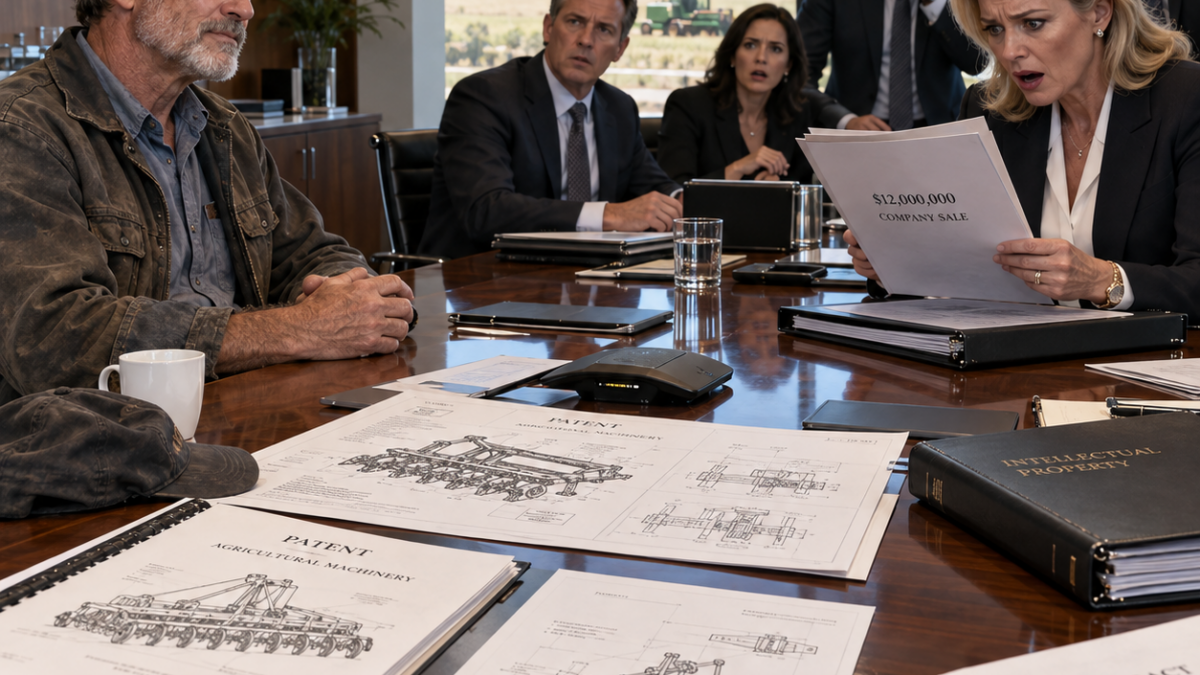
PART2:
Kids who had started picking mushrooms after school got married, had babies, and eventually brought those babies to Christmas barbecues.
I stayed.
I liked the place.
People hear mushroom farm and imagine rows of little white caps growing prettily in dirt.
That’s not how commercial mushrooms work.
They grow indoors.
Temperature controlled.
Humidity controlled.
Compost underneath.
Casing layer over the top.
Airflow matters.
Moisture matters.
Timing matters.
Tiny changes can ruin yield.
One of the most important jobs after the casing layer goes on is ruffling it.
You disturb the top layer so mycelium develops evenly and mushrooms emerge consistently instead of in patchy clumps.
When I started, our old ruffling equipment was hopeless.
The growing beds ran in long stacked shelves.
Years of wear meant the rails weren’t perfectly level.
The machine head would dig too deep in one section, scrape casing away in another, and barely touch the next bed.
Workers constantly adjusted it by eye.
Every operator had his own method.
Results varied.
One winter I started tinkering.
Not because Stuart asked.
Because bad machinery irritated me.
My wife Elaine says I’ve always had an unhealthy emotional relationship with things that rattle.
She’s probably right.
I built a floating head that could follow changes in bed height.
Then I redesigned the tine arrangement.
Counter-rotating spring tines.
Enough movement to lift and loosen the casing without compressing it.
The first prototype looked terrible.
Stuart came into the shed.
“What the hell is that?”
“Improvement.”
“Looks like a possum got trapped in a lawnmower.”
“Then don’t touch it.”
He laughed.
The second version worked.
The third worked better.
Then I designed a quick-change cassette system because switching shelf configurations took forever.
We’d spend an hour and a half adjusting things between room types.
My cassette let us change widths and indexed depth settings in around ten minutes.
No computers.
No fancy electronics.
Steel.
Pins.
Bushings.
Springs.
Geometry.
Simple enough that a mechanic could repair it.
Clever enough that nobody else had built exactly that combination.
We tested it for a year.
Same compost mix.
Same strains.
Same rooms.
Same picking crews.
Saleable yield improved around ten to twelve percent depending on the cycle.
That doesn’t sound dramatic until you multiply it across tons of mushrooms.
Less damage.
Better flushes.
More uniform product.
Lower labor cost.
One afternoon Stuart stood watching the machine run.
The floating head rose slightly over a high spot.
Dropped again.
Casing stayed even.
He folded his arms.
“Dez.”
“Yeah?”
“This isn’t maintenance anymore.”
I shrugged.
“Still fixes a problem.”
“No.”
He pointed at the machine.
“That’s yours.”
I laughed.
“Don’t start.”
“I’m serious.”
Stuart had spent enough time around equipment companies to understand intellectual property.
I hadn’t.
To me it was something I had fabricated in the same workshop where I’d repaired pallet jacks.
Stuart insisted we speak to lawyers.
Not one lawyer.
Two.
One for Southern Cap.
One for me.
That mattered later.
A lot.
In 2016, we signed a deed.
The board approved it.
The arrangement was added to my employment contract.
Three specific inventions and defined improvements belonged to me personally.
Southern Cap received a long-term, non-exclusive license to use the system at its existing farm.
The company paid me eighteen hundred dollars a month.
The license could not be assigned or sublicensed without my written consent.
It did not authorize Southern Cap to manufacture copies for other locations.
Over the next few years, I filed three Australian standard patents in my own name and kept the renewals current.
Stuart called the payment “Dez’s clever bloke money.”
Elaine called it “the only good thing you’ve ever brought home covered in mushroom compost.”
Nobody thought much about it after that.
Southern Cap paid monthly.
I maintained the machine.
The office kept a folder.
Elaine Foster, our administration manager, wrote DEZ’S GADGETS across the front in blue marker.
For years, that was that.
Then Stuart turned seventy-five.
Judy had died several years earlier.
Cancer.
He still came to the farm most mornings, but age had changed something in him.
He started talking about fishing.
Travel.
Seeing his grandchildren.
Things he’d postponed for forty years.
He stepped back from daily operations but kept a large ownership stake and board seat.
The board hired Karen Whitmore as managing director.
She came from Melbourne.
Large food-processing company.
MBA.
Corporate vocabulary.
Beautiful suits.
Sharp haircut.
Sharper memory.
The first time she shook my hand she looked me directly in the eye and said, “I’ve heard you’re the man who keeps this place running.”
I liked her.
That’s worth saying.
The version of this story where Karen walked in wearing a villain cape would be easier.
It also wouldn’t be true.
Karen was good at some things.
Very good.
Within her first month, she renegotiated a packaging contract we’d been overpaying on for years.
Saved serious money.
Then she restructured logistics.
Reduced empty truck movements.
Implemented preventive maintenance tracking that I actually appreciated.
She introduced electronic work orders instead of the grease-stained paper slips people used to shove under my toolbox.
The younger staff loved her dashboards.
The board loved her monthly reports.
Labor dollars per kilogram.
Reject rates.
Waste.
Downtime.
Everything became a number.
Colored bars on screens in the lunchroom.
Green meant good.
Red meant somebody was getting called into an office.
At first, I had no problem with that.
Numbers matter.
What I didn’t understand yet was that Karen had begun to believe only measurable things mattered.
An hour was measurable.
Loyalty wasn’t.
A kilogram was measurable.
Experience wasn’t.
A swipe-card time was measurable.
Why a man needed to leave at 3:30 suddenly wasn’t.
Eight months after Karen arrived, Elaine found the lump.
She came home from a routine appointment and stood in the kitchen holding her handbag in both hands.
“Dez.”
I knew before she said anything.
You know your wife after thirty-two years.
You know the voice she uses when the washing machine breaks.
The voice she uses when one of the kids calls with bad news.
The voice she uses when she’s afraid and doesn’t want you to be.
This was the third one.
“They found something.”
Breast cancer.
Stage two.
Treatable.
That was the word everyone used.
Treatable.
Doctors love words that give hope without making promises.
Surgery first.
Then chemotherapy.
Every three weeks in Melbourne.
An hour and a half each way on a good day.
Blood tests.
Oncology appointments.
Pharmacy visits.
Scans.
Then the days after treatment.
Those were worst.
Days three through five, Elaine could barely move from the bedroom to the couch.
Food tasted metallic.
Her bones hurt.
Sometimes she’d sit with a bowl in her lap because nausea arrived too fast to reach the bathroom.
She lost her hair.
She pretended not to care.
I found her crying in the shower the first morning handfuls came out.
Our children lived interstate.
Our oldest son, Michael, was in Brisbane.
Our daughter Sophie was in Perth.
They flew down whenever they could.
But Australia is large.
Love doesn’t shorten flights.
Somebody had to drive Elaine.
Help her shower on bad days.
Cook.
Keep track of medications.
Sit beside her at two in the morning when she whispered, “What if this doesn’t work?”
That somebody was me.
So after twenty-seven years of giving Southern Cap hours I was never required to give, I did something radical.
I worked my contract.
Seven in the morning.
Three-thirty in the afternoon.
Monday through Friday.
No automatic Saturdays.
No casual six a.m. starts.
No staying until seven because somebody mentioned a vibration that could wait until morning.
If Elaine had treatment, I used leave.
Annual leave.
Carer’s leave.
Long-service leave when the others ran low.
Every request documented.
Every absence approved.
I kept the maintenance schedule current.
I stocked spare parts.
I trained Lachlan Pierce, the production manager, on things he’d need if trouble happened while I was away.
Lachlan had started as a picker at twenty-two.
By then he was forty.
Good worker.
Better man.
Two teenagers.
Mortgage.
He knew the farm nearly as well as I did.
Nothing collapsed.
Production targets were met.
Maintenance downtime did not increase.
The casing system kept running.
The only visible difference was my ute wasn’t in the car park before six anymore.
Karen noticed.
One Monday morning her assistant called.
“Karen wants a quick chat.”
Quick chats rarely are.
Karen’s office had once belonged to Stuart.
He’d kept photographs of Judy and the farm’s first mushroom crop on the wall.
Karen replaced them with framed company values.
ACCOUNTABILITY.
PERFORMANCE.
OWNERSHIP.
One of those words would become funny later.
She had reports printed on her desk.
Swipe-card data.
My name highlighted.
“Sit down, Desmond.”
I did.
She tapped the page.
“I’m seeing a shift in your engagement.”
“What shift?”
She turned the page toward me.
“These are your hours.”
“Correct.”
“Compared with the previous three years.”
I looked.
Old Dez.
5:56.
6:08.
6:12.
Saturday.
Saturday.
Late departure.
Early arrival.
New Dez.
7:01.
3:31.
6:58.
3:33.
Approved leave.
7:02.
3:29.
“You’re comparing unpaid extra time with my contracted hours.”
“I understand that.”
“Then what’s the issue?”
Karen folded her hands.
“Southern Cap is moving toward a high-performance culture.”
I waited.
“We need people who demonstrate discretionary effort.”
There’s a phrase for you.
Discretionary effort.
It sounds much nicer than free labor.
“My work isn’t behind.”
“No.”
“Downtime hasn’t increased.”
“No.”
“Preventive maintenance is current.”
“Yes.”
“So?”
She looked at me with what I think she believed was compassion.
“You’ve always been someone who went above expectations.”
“And?”
“Now you’re meeting them.”
I almost laughed.
“That’s the complaint?”
“Don’t be defensive.”
That annoyed me.
“I’m not defensive.”
“Your behavior has changed.”
“My wife has cancer.”
Karen’s expression softened by maybe five percent.
“I’m sorry to hear that.”
“You know.”
“I was aware she had health issues.”
“Chemotherapy isn’t a health issue, Karen.”
She shifted slightly.
“Of course.”
“Every third Wednesday I’m driving her to Melbourne.”
“I understand personal responsibilities can be difficult.”
“They’re not personal responsibilities.”
I felt anger rising.
“She’s my wife.”
“I didn’t mean—”
“Yes, you did.”
Karen leaned back.
“This is exactly the emotional reaction I’m concerned about.”
I stared at her.
She continued.
“I need to think long-term about resilience in key operational roles.”
“Meaning?”
“Whether the maintenance function requires someone with more capacity right now.”
I remember the sentence exactly.
More capacity.
As though Elaine’s cancer had reduced my amperage.
I stood.
“If my work isn’t being done, document it.”
“Desmond—”
“If I’m missing targets, document it.”
“Sit down.”
“If I’ve breached my contract, document it.”
“That’s enough.”
“No.”
I pointed toward the swipe times.
“Don’t turn twenty-seven years of extra work into evidence against me because I stopped donating it.”
Then I left.
That was the beginning.
Six weeks later, HR appeared on a video screen.
External consultant.
Never met me.
Karen sat at the table.
Lachlan wasn’t there.
Elaine Foster wasn’t there.
Nobody who knew what I did was there.
The consultant spoke first.
“Desmond, following an organizational review, Southern Cap has determined that your position is no longer required in its current form.”
I looked at Karen.
She didn’t look away.
“My position?”
“Your duties will be redistributed.”
“To who?”
“A junior maintenance technician will assume routine work, supported by an external service provider for specialist tasks.”
I laughed.
I couldn’t help it.
“Who diagnoses production failures at two in the morning?”
Karen answered.
“We’re implementing a more scalable model.”
“Who understands the old climate panels in Rooms Three through Eight?”
“Documentation exists.”
“No, Karen.”
I shook my head.
“I exist.”
The HR consultant interrupted.
“Desmond, this isn’t a performance termination.”
Of course it wasn’t.
Performance would require evidence.
“This is a redundancy.”
I looked back at Karen.
Six weeks earlier she had questioned my “capacity.”
Now my job had disappeared.
They offered statutory notice.
Redundancy pay.
Unused leave.
A reference.
Twenty-seven years.
Eleven minutes.
I walked to my locker.
Lachlan was waiting outside the workshop.
“They’re doing it?”
“Yep.”
His face went red.
“This is bullshit.”
“Don’t.”
“Dez—”
“You’ve got kids.”
“So?”
“So don’t lose your job fighting over mine.”
He looked toward the office.
“Everyone knows why.”
“Knowing and proving aren’t the same.”
I cleaned my toolbox.
That was harder than getting fired.
Every drawer held twenty-seven years.
A screwdriver Stuart gave me after I snapped one in 1999.
A photo of the first maintenance Christmas barbecue.
Old keys nobody remembered.
A note from Judy thanking me for fixing her car when she broke down.
Elaine’s handwriting on a lunch bag.
HAPPY 50TH OLD MAN.
I sat on the stool.
Lachlan pretended to organize spare bearings until I could breathe again.
The junior technician replacing me was named Ben.
Twenty-three.
Smart kid.
Not his fault.
He stood near the workshop door looking like he’d rather be anywhere else.
“Dez.”
“Yeah?”
“I’m sorry.”
“Don’t be.”
“I didn’t know they were—”
“I know.”
I held out the maintenance notebook.
“Room Six circulation motor’s running hot.”
He blinked.
“What?”
“Bearing probably has two weeks.”
“Okay.”
“Don’t wait for it to scream.”
He nodded.
“Room Eleven’s humidity sensor lies when the air gets too wet.”
“How do you know?”
“It reads exactly seventy-eight percent when it fails.”
I handed him the book.
“It’s in there.”
He stared.
“Thanks.”
I carried my toolbox out.
Nobody escorted me.
Karen later told people I “left professionally.”
What else was I supposed to do?
Burn the compost yard?
Elaine was on the couch when I got home.
Gray cardigan.
Blanket.
Heater on even though the house wasn’t cold.
She looked surprised.
“You’re early.”
I sat beside her.
“They made me redundant.”
She went completely still.
“When?”
“Today.”
“Why?”
I didn’t answer quickly enough.
Her eyes filled.
“It’s me.”
“No.”
“All the days.”
“Elaine.”
“Chemo.”
“No.”
“Dez, it’s because of me.”
I took her hand.
“Don’t you dare take ownership of somebody else’s cowardice.”
She cried anyway.
Then came the practical fear.
“What about money?”
“Redundancy.”
“Mortgage?”
“Fine for now.”
“Treatment?”
“We’re fine.”
“Patent payment?”
I looked at her.
That eighteen hundred dollars a month was suddenly more than a nice bonus.
“The license continues.”
“You’re sure?”
“Yes.”
At least I thought I was.
Elaine leaned her head against my shoulder.
“You loved that place.”
“Yeah.”
“I thought they loved you.”
“So did I.”
That hurt more than losing the job.
I wasn’t planning revenge.
That’s another part people misunderstand.
When someone hurts you, sometimes you don’t immediately plot their destruction.
Sometimes you’re tired.
Your wife is sick.
Your mortgage exists.
The grass needs cutting.
Dinner still needs cooking.
I had spent twenty-seven years giving Southern Cap time.
I wasn’t giving them my evenings too.
The only call I made was to my union.
Organizer named Paul Brennan.
He listened without interrupting.
Then asked three questions.
“Did Karen know your wife had cancer?”
“Yes.”
“Were the leave requests lawful and approved?”
“Yes.”
“Did anyone question your hours before the diagnosis?”
“No.”
He paused.
“Dez, you’ve got twenty-one days.”
“For what?”
“General protections application.”
He explained.
Employers cannot lawfully take adverse action because an employee exercises workplace rights such as approved leave or because of certain caring responsibilities.
Calling something a restructure doesn’t magically cleanse the reason behind it.
“Can we prove it?”
“Maybe.”
“Worth doing?”
“Yes.”
I filed.
Then went home.
For three weeks, my life got smaller.
In a good way.
I drove Elaine to appointments.
Learned which parking level at the hospital filled last.
Made soup.
Fixed the dripping tap she’d complained about for eighteen months.
Sat beside her during infusions.
Read terrible magazines.
Watched nurses hang medication bags that looked harmless and made her sick for days.
I started understanding something I’d missed for years.
Work can replace you.
Family cannot.
Then Lachlan called one evening.
“Dez?”
“What’s broken?”
“Nothing.”
“Then why are you calling?”
He lowered his voice.
“There are blokes in suits photographing your machine.”
I sat up.
“What blokes?”
“Brennick Agricultural.”
I’d heard of them.
Large agribusiness group.
Farms in multiple states.
Food processing.
Serious money.
“They’ve been here all day.”
“What are they looking at?”
“Everything.”
“Normal acquisition stuff?”
“Looks like it.”
Then he said the sentence that changed the whole situation.
“Karen keeps telling them your casing system can be rolled out across six sites.”
I went quiet.
“What?”
“She brought them through Rooms Eight and Nine.”
“Did she call it licensed?”
“No.”
“What did she call it?”
“Proprietary Southern Cap technology.”
I stood from the kitchen table.
Elaine looked up.
Lachlan continued.
“Word is Brennick’s offering around twelve million for the business.”
“Twelve?”
“And Karen gets some senior operations role with them if it closes.”
I didn’t care about that.
Not yet.
“Lachie.”
“Yeah?”
“Did anybody mention my patents?”
Silence.
“No.”
That bothered me.
A lot.
Monday morning, Karen called.
Her voice was so friendly I almost checked the number.
“Desmond.”
“Karen.”
“How is Elaine?”
That was the first time she’d asked since firing me.
“Why are you calling?”
Pause.
Straight to business, then.
“We’ve encountered a small administrative matter during due diligence.”
Of course.
“What matter?”
“There are several patents associated with the casing equipment registered in your personal name.”
“Yes.”
“We believe that’s an historical filing anomaly.”
“No.”
Another pause.
“We’d like to tidy the position before transaction completion.”
“Tidy how?”
“Assignment.”
“To Southern Cap?”
“Yes.”
“No.”
She laughed softly.
Not because something was funny.
The laugh executives use when employees haven’t understood their place.
“Desmond, perhaps I’m not explaining this clearly.”
“You’re explaining fine.”
“The inventions were developed during your employment.”
“Yes.”
“Using company resources.”
“Some.”
“On company premises.”
“Some.”
“So ownership properly belongs with the enterprise.”
“No.”
Her voice cooled slightly.
“Our lawyers take a different view.”
“Have they seen the 2016 deed?”
Silence.
“What deed?”
That was the moment.
Not victory.
Not revenge.
Just clarity.
Karen had no idea.
I leaned back.
“The deed Stuart and I signed.”
“What exactly are you referring to?”
“The one approved by the board.”
More silence.
“Karen?”
“I’m going to have legal review the file.”
“Good idea.”
“We’d still prefer a commercial resolution.”
“What does that mean?”
“In recognition of your historical contribution, Southern Cap is prepared to offer forty thousand dollars for assignment of all related rights.”
I actually moved the phone away from my ear.
Elaine watched me.
“What?” she mouthed.
I held up one finger.
“Forty thousand?”
“Yes.”
“For all three patents?”
“Yes.”
“No.”
“Desmond, before rejecting—”
“No.”
“We haven’t negotiated.”
“We’re not negotiating until I get advice.”
Her voice hardened.
“Your relationship with Southern Cap has always been positive.”
I laughed.
“You fired me three weeks ago.”
“That was an operational decision.”
“And this is an intellectual property decision.”
“Yes.”
“Then we’ll treat it like one.”
I hung up.
Elaine stared.
“What?”
“They want the patents.”
“How much?”
“Forty grand.”
She blinked.
“For all of them?”
“Yep.”
“How much are they worth?”
“No idea.”
She thought for a second.
“Find out.”
That afternoon, I called a patent attorney in Melbourne.
Her name was Priya Raman.
Recommended by the retired solicitor who had advised me in 2016.
She requested documents.
Patent numbers.
Deed.
Employment agreement.
License.
Renewal records.
I sent everything.
Next morning she called.
“Mr. Hale?”
“Dez.”
“Dez, I’ve reviewed the register.”
“And?”
“The patents are in force.”
“Good.”
“The deed is unusually clear.”
“Stuart liked clear.”
“Southern Cap owns none of the specified inventions.”
I exhaled.
“The company has a non-exclusive license limited to the identified existing site.”
“Yes.”
“Non-transferable?”
“Without your written consent.”
“And they can’t build copies elsewhere?”
“Not under this license.”
I smiled for the first time in days.
Then Priya said, “Do not sign anything.”
“I wasn’t planning to.”
“Good.”
She brought in an independent technology valuer.
That’s when the numbers became interesting.
He studied the improvements.
Remaining patent life.
Southern Cap’s productivity data.
Potential rollout across multiple farms.
Installation costs.
Expected savings.
Competitive alternatives.
His report did not value the patents at some fantasy billion-dollar figure.
This wasn’t Silicon Valley.
It was mushroom equipment.
But a six-site commercial license over the remaining patent term?
That was worth real money.
Far more than forty thousand dollars.
Elaine read the valuation twice.
Then put the page down.
“No.”
“What?”
“I’m telling you now.”
She pointed at me.
“You are not taking Karen’s forty thousand dollars because I’m worried about hospital parking.”
I laughed.
“I wasn’t.”
“Good.”
She looked at the number again.
“Dez.”
“Yeah?”
“You built this?”
“Apparently.”
She smiled.
“I always knew marrying a man who smelled like compost would pay off.”
Through Priya, I formally rejected the assignment offer.
I said I was willing to negotiate a proper commercial license with any legitimate buyer.
Karen stopped sounding friendly after that.
Southern Cap’s lawyers sent a letter.
The inventions, they argued, had been developed in the course of my employment using company tools, materials, and time and therefore should belong to Southern Cap.
Priya read it.
Then smiled.
“Do they not have the deed?”
“They apparently do now.”
She drafted a reply.
Attached the 2016 agreement.
Highlighted the clause stating that specified inventions belonged to me notwithstanding use of company facilities and development during employment.
Attached board approval.
Attached Stuart’s signature.
Attached the license limitation.
Then she sent copies to Brennick’s lawyers.
That was where Karen’s problem became much larger than mine.
Because Karen had apparently told Brennick something different.
In the sale materials, the casing system was described as:
COMPANY-OWNED PROPRIETARY TECHNOLOGY CAPABLE OF SCALABLE DEPLOYMENT ACROSS MULTIPLE FACILITIES.
Company-owned.
It wasn’t.
Scalable deployment.
Not without me.
Brennick’s lawyers asked questions.
Then more.
Could the existing license transfer with the asset sale?
Not without consent.
Could the equipment be relocated?
Maybe physically.
But the license was site-specific.
Could Brennick manufacture copies?
No.
Could Southern Cap grant access to six other farms?
No.
Had Southern Cap already obtained my agreement?
No.
Had Southern Cap informed them that the inventor had been terminated?
Apparently not clearly enough.
Brennick froze the transaction.
Karen called me again.
This conversation was different.
“Desmond, your solicitor has created significant confusion.”
“No.”
“What?”
“Your sale documents created confusion.”
“We disagree.”
“That’s becoming a pattern.”
She ignored that.
“The patents have limited value independent of Southern Cap.”
“Then why are we talking?”
Silence.
“Desmond, you need to understand that if this transaction collapses, employees may suffer.”
There it was.
The first guilt card.
“Don’t.”
“I’m stating reality.”
“No.”
I stood in my kitchen, looking at Elaine asleep on the couch.
“Don’t fire me for taking care of my wife and then call me about loyalty to employees.”
“This isn’t personal.”
“You made it personal the day you printed my swipe times.”
“We restructured your role for legitimate commercial reasons.”
“Great.”
“Then we’ll let Fair Work decide.”
She went quiet.
“You filed a claim?”
“Three weeks ago.”
That silence was better.
I hung up.
The next stage was ugly.
Karen began telling people I was holding the company hostage.
I know because people called me.
Some believed her.
One supervisor I’d known fifteen years said, “Dez, can’t you just sign something and sort the rest later?”
“What would you sign?”
“That’s different.”
“No.”
I kept my answer simple.
“Southern Cap can keep using the system exactly as it always has.”
“I’m not shutting the farm down.”
“I’m not increasing their current license.”
“I’m not stopping production.”
“The issue is they promised rights they don’t own.”
Most people understood.
Not everyone.
A few stopped calling.
That hurt.
Then Brennick asked for a meeting.
Farm boardroom.
The same room where I’d been fired.
Priya came.
Brennick sent its operations director, Nathan Cole.
Quiet man.
Late fifties.
New Zealander.
Had actually grown mushrooms earlier in his career.
That became important.
Karen was there.
Southern Cap’s lawyer.
Two directors.
Stuart joined by video at first.
Karen opened.
She spoke for fifteen minutes.
Strategic opportunity.
Mutual value.
Legacy arrangements.
Administrative ambiguity.
Disproportionate response.
That was my favorite.
Then Nathan turned to me.
“Mr. Hale.”
“Dez.”
“The quick-change cassette.”
“Yes.”
“If I move from your older 1.2-meter shelving to 1.4-meter beds with higher-moisture casing, what changes?”
Karen looked confused.
I didn’t.
“Different index pins.”
He nodded.
“Plate stack?”
“Depends on head clearance.”
“What about skid shoes?”
“Recheck them.”
“Why?”
“Wetter mix rides differently.”
“How much?”
“Usually start two millimeters higher and watch the first ten meters.”
Nathan leaned back.
“Spring rate?”
I answered.
“Tine spacing?”
Answered.
“Drive torque?”
Answered.
“Failure mode if an operator runs too deep?”
Answered.
Two minutes.
Maybe three.
Then Nathan turned toward Karen.
“Who handles commissioning at our other sites?”
Karen didn’t miss a beat.
“Our engineering team.”
Nathan looked at her.
“Which engineering team?”
Pause.
“Our technical personnel in conjunction with Southern Cap maintenance.”
“Names?”
Karen glanced toward Lachlan, who had been invited for operations questions.
Lachlan looked miserable.
“Lachlan?”
Nathan asked.
“Do you build these?”
Lachlan said, “No.”
“Install them?”
“No.”
“Design changes?”
“No.”
“Who does?”
Every eye came to me.
Nathan wrote something.
The meeting ended forty minutes later.
On the way out, he shook my hand.
“We’ll contact your attorney.”
Karen heard him.
Her face changed.
A week later, Lachlan called at night.
“Dez.”
“What?”
“She wants two heads built.”
I sat forward.
“Who?”
“Karen.”
“For what?”
“Brennick pilot.”
“Where?”
“One of their other farms.”
“Has Brennick signed?”
“No.”
“Has she got a license?”
“No.”
“I told her we couldn’t.”
“What did she say?”
“She said Southern Cap owns workshop drawings.”
“Did she put the instruction in writing?”
Pause.
“After I asked.”
I closed my eyes.
“Forward it.”
“To you?”
“To the board first.”
“Dez, I don’t want to get fired.”
I understood.
Karen had already shown what happened to people who stopped being useful.
“You got savings?”
“Not much.”
“Mortgage?”
“Big.”
“Kids?”
“You know.”
We were quiet.
Then I said, “Don’t build anything tonight.”
“I wasn’t going to.”
“Forward the instruction to the chairman and ask for authorization confirmation.”
“What if Karen comes after me?”
“Then we document that too.”
He breathed out.
“All right.”
The email went to the board.
No machines were built.
No infringement occurred.
But Karen had now ordered staff to manufacture copies of patented equipment for an unlicensed external site while a disputed transaction was under legal review.
Brennick’s lawyers loved that.
By loved, I mean the opposite.
Then my Fair Work claim turned dangerous for her.
Southern Cap’s lawyers began reviewing internal records for conciliation.
Email.
Board papers.
Meeting notes.
Redundancy documents.
They found Karen’s recommendation.
Three paragraphs.
Most was corporate language.
One sentence mattered.
DESMOND HALE’S ONGOING PERSONAL CIRCUMSTANCES AND REDUCED DISCRETIONARY AVAILABILITY MAKE HIM AN UNRELIABLE LONG-TERM RESOURCE FOR A HIGH-PERFORMANCE OPERATING MODEL.
Unreliable long-term resource.
Because my wife had cancer.
Stuart read that email at home.
He called me that evening.
First time since I was fired.
“Dez.”
“Stew.”
There was an awkward pause.
Then he said, “Are you holding up my retirement?”
I nearly hung up.
“What?”
“The Brennick sale.”
“Ask Karen.”
“She says you’re refusing to release company IP.”
“It’s my IP.”
“They say that’s disputed.”
“Did you forget what you signed?”
Silence.
Then he snapped, “Don’t talk to me like I’m senile.”
“Then stop acting like Karen told you the whole story.”
Longer silence.
“Why were you leaving at three-thirty?”
I almost laughed.
“You approved the restructure and don’t know?”
“She said engagement had fallen.”
“My wife is on chemotherapy.”
Nothing.
Not silence.
Absence.
Like the phone line had disconnected.
Then Stuart whispered, “Elaine?”
“Yes.”
“Cancer?”
“Yes.”
“How long?”
“Months.”
“Why didn’t you tell me?”
I lost my temper.
“Because I didn’t know I had to send the retired owner a medical bulletin to keep my job.”
“Dez—”
“I used approved leave.”
“I worked my contract.”
“Nothing broke.”
“She called me unreliable.”
“I didn’t know.”
“You didn’t ask.”
That shut both of us up.
Stuart had spent two years caring for Judy before she died.
He knew.
He knew better than most.
The next morning, his car pulled into my driveway.
Elaine was wearing the gray cardigan.
No wig.
Her hair had begun growing back in soft patches.
Stuart stood at the front door holding flowers and looking twenty years older than I remembered.
He hugged her before he spoke to me.
They sat at the kitchen table for an hour.
Cancer treatment.
Hospitals.
Metallic taste.
Nurses.
Judy.
Grief.
Finally Elaine went to lie down.
Stuart stayed.
“I remember signing the deed.”
“Good.”
“I remember exactly why.”
I waited.
“You built it.”
“Yes.”
“We benefited.”
“Yes.”
“It was fair.”
“Yes.”
He rubbed his face.
“I should’ve read the redundancy papers properly.”
“Probably.”
“I trusted Karen.”
“So did I.”
He looked toward the hallway where Elaine had disappeared.
“I should’ve asked why you’d changed.”
“Yes.”
He nodded.
“That’s on me.”
No excuse.
That mattered.
He opened a folder.
Inside was Karen’s email.
Sale documents.
Board summaries.
“She told us the role could be replaced cheaper.”
“It can.”
I didn’t pretend otherwise.
“Routine maintenance can.”
“But?”
“Experience isn’t routine until something goes wrong.”
Stuart nodded.
“She also told us the buyer was paying a premium for proprietary process technology.”
I looked at him.
“Did she tell you the premium included mine?”
“No.”
There was the second betrayal.
Karen hadn’t merely overlooked the patents.
She had built her own future on them.
Brennick’s offer included a senior position for her after acquisition.
Performance bonus tied to transaction completion.
The more valuable Southern Cap looked, the better for Karen.
My casing system was a major part of the pitch.
She had fired its inventor to cut labor cost.
Then marketed his inventions as company property.
Stuart took the documents to the board.
Karen was removed from sale negotiations pending investigation.
Not fired.
Yet.
That irritated Lachlan.
It irritated me too.
Stuart explained.
“Her contract’s complicated.”
“Funny how contracts matter when it’s hers.”
He winced.
“Fair.”
The company settled my Fair Work claim before conciliation.
I won’t give the figure.
It wasn’t a lottery win.
It mattered.
More important, the settlement included no admission from me that the redundancy was genuine.
Southern Cap made no claim to the patents.
Karen remained managing director under supervision while the board reviewed conduct.
Then Brennick withdrew from the acquisition.
Twelve-million-dollar deal gone.
Karen’s executive role gone with it.
I expected that to be the end.
It wasn’t.
Nathan Cole called Priya.
Then me.
“Dez.”
“Nathan.”
“We still want your system.”
“You don’t own Southern Cap.”
“We don’t need Southern Cap.”
That sentence changed my life.
Brennick already owned farms.
What they wanted wasn’t another mushroom shed in Victoria.
They wanted the casing technology.
The efficiency.
The process.
The know-how.
Four months of negotiation followed.
Real negotiation.
Lawyers.
Engineers.
Valuation.
Site definitions.
Quality control.
Patent warranties.
Confidentiality.
Manufacturing standards.
I didn’t sell the patents.
I licensed them.
Non-exclusive.
Brennick paid an upfront fee.
Then royalties by site.
They could build approved machines for their own facilities.
I retained ownership.
And there was one clause I insisted on.
Consulting days.
Limited number each year.
Scheduled by agreement.
My choice.
Nathan laughed when he read it.
“Your choice?”
“Yes.”
“What if we have an emergency?”
“Then ask nicely.”
He smiled.
“Fair.”
Elaine read the agreement.
“How many days?”
“Twenty-four maximum a year.”
“Too many.”
“Elaine.”
“Eighteen.”
“It’s my contract.”
“Eighteen.”
We settled on twenty.
Marriage is negotiation too.
The upfront payment cleared the rest of our mortgage.
We put money aside for the kids.
Bought the caravan Elaine had been circling in classifieds for fifteen years.
But Southern Cap now had another problem.
Stuart still wanted to retire.
The twelve-million-dollar buyer was gone.
The business remained profitable.
Just worth less without national patent rights it had never owned.
That is when Lachlan came to my house on a Sunday.
Not alone.
With Elaine Foster, the office manager.
Raj Singh, head grower.
Mick Daniels from compost.
And a folder.
Elaine my wife looked from the window.
“You expecting the farm?”
“No.”
Lachlan sat at my table.
“What if we buy it?”
I laughed.
He didn’t.
“You’re serious.”
“Yes.”
“With what?”
“Money.”
“Helpful.”
They had been planning for weeks.
Senior employees wanted to form a consortium.
Management buyout.
Stuart would sell a controlling stake.
Employees would invest savings.
Bank financing.
Vendor finance from Stuart for part of the balance.
The valuation would exclude nationwide patent expansion because Southern Cap didn’t own it.
Still millions.
Still risky.
I spent two hours telling them why it was a bad idea.
Crop disease.
Energy prices.
Labor.
Debt.
Customer concentration.
Equipment replacement.
Interest rates.
Lachlan answered most questions.
Elaine Foster answered the rest.
They had accountants.
Forecasts.
Stress tests.
Worst-case models.
They weren’t dreaming.
They were working.
Then Lachlan said, “There’s one piece we’re missing.”
I knew.
“My license.”
He nodded.
Southern Cap’s existing license covered the original farm.
If the employee group expanded rooms at the same property, wording got complicated.
If they acquired a second nearby site, definitely not covered.
“What do you want?”
“Broaden it.”
“In exchange?”
He looked nervous.
“Equity.”
I stared.
“How much?”
He slid a proposal across.
Small share in the employee holding company’s stake.
And a board seat.
I laughed again.
“You want me on the board?”
“One meeting a month.”
“I spent twenty-seven years avoiding meetings.”
“No swipe card.”
That got me.
Elaine my wife called from the doorway.
“Take it.”
I turned.
“You weren’t invited.”
“You need supervision.”
Stuart reviewed the employee proposal.
He surprised everyone.
Said yes.
Not immediately.
He read everything.
Questioned financing.
Met the bank.
Talked to advisers.
Then told me something privately.
“Judy would’ve liked this.”
“Why?”
“She always said the place should belong to people who knew the smell.”
I understood.
The final deal gave the employee consortium fifty-five percent.
Stuart retained forty-five, reducing over time under agreed arrangements.
My equity came from the employee stake.
Not huge.
Enough.
I broadened Southern Cap’s license.
Fair terms.
No tricks.
Karen knew employees were trying to buy the company.
She told the board it was unrealistic.
What she didn’t know was that I was part of it.
That was not deliberate revenge.
Confidential negotiations stayed confidential.
Still, I won’t pretend I didn’t wonder about the moment she’d find out.
The share transfer completed on a Thursday.
First board meeting under new ownership was Monday.
I wore my cleanest work shirt.
Elaine said no.
“What?”
“You are not walking into a board meeting dressed like you’re repairing a pump.”
“I might have to.”
She handed me a jacket.
I hated it.
She won.
Lachlan sat beside me.
Stuart at the head.
Two employee directors.
External accountant.
Karen arrived carrying a black folder.
She was talking to her assistant as she entered.
Then she saw me.
Stopped.
Actually stopped.
“Desmond?”
“Morning.”
Her eyes moved to the table.
Then the board papers in front of me.
“What are you doing here?”
I almost said servicing the air conditioner.
Didn’t.
“I’m a director.”
Her face lost color.
Stuart cleared his throat.
“Karen, sit down.”
She did.
Slowly.
Lachlan looked at me once.
I looked straight ahead.
This wasn’t entertainment.
At least I tried to tell myself that.
Stuart spoke.
“The ownership transfer completed Thursday.”
Karen nodded.
“I was aware.”
“The employee holding company appointed three directors.”
She looked at me again.
Stuart continued.
“Desmond’s patent license formed part of the transaction.”
Karen’s jaw tightened.
“I see.”
“Second matter.”
He opened another folder.
“The governance review has concluded.”
Silence.
Karen sat straighter.
“The board has considered your handling of the Brennick transaction, representations regarding intellectual property, instructions concerning unlicensed manufacture, and the circumstances surrounding Desmond’s redundancy.”
Her face hardened.
“I reject the characterization.”
“You’ll have an opportunity to address the written findings.”
“I was acting in the company’s interests.”
Stuart’s voice stayed calm.
“The board disagrees.”
Karen looked toward the employee directors.
“This is retaliation.”
Lachlan finally spoke.
“No.”
She turned.
“You’re replacing professional management with workers who have personal grievances.”
Elaine Foster’s expression changed.
“Workers?”
Karen realized the mistake.
Too late.
She looked toward me.
“You orchestrated this.”
I shook my head.
“No.”
“You blocked the sale.”
“No.”
“You went to Brennick.”
“They came to me.”
“You filed claims.”
“After you fired me.”
“You undermined confidence in management.”
I leaned back.
“Karen.”
She stopped.
“You promised something you didn’t own.”
Silence.
“You fired the person who did.”
Her eyes flashed.
“You’re enjoying this.”
That one deserved honesty.
“No.”
And I meant it.
I didn’t enjoy seeing a person lose a career.
Even Karen.
I remembered driving home after twenty-seven years.
Elaine blaming herself.
The gray cardigan.
The fear about money.
I wouldn’t wish that feeling on anyone.
But consequences aren’t cruelty just because the person facing them dislikes them.
Stuart continued.
“The board has resolved to terminate your appointment under the provisions of your executive contract.”
Karen looked at him.
“My bonus?”
“Transaction completion bonus does not apply.”
“My retention package?”
“Counsel will address contractual entitlements.”
“And my proposed Brennick role?”
Nathan wasn’t buying the company.
There was no role.
Nobody had to say it.
Karen closed her folder.
For one second, she looked smaller.
Not defeated.
Human.
Then she stood.
“Who takes operations?”
“Lachlan,” Stuart said.
She looked at him.
“You aren’t ready.”
Lachlan held her gaze.
“Maybe.”
That surprised her.
He continued.
“But I know what I don’t know.”
That was the difference.
Karen believed uncertainty was weakness.
Lachlan treated it like information.
She left.
No shouting.
No security.
No cardboard box scene.
Just a woman walking down the same hallway I’d walked months earlier.
I watched the door close.
Stuart looked at me.
“You all right?”
“Elaine has an appointment tomorrow.”
He blinked.
“That’s not what I asked.”
“It is what matters.”
The lunchroom dashboards stayed.
I want that known.
Karen wasn’t wrong about everything.
Data helped.
We kept production cost.
Waste.
Yield.
Downtime.
But Lachlan changed two things.
He removed the screen ranking individual employees by swipe-card hours.
Then he added safety incidents, sick leave pressure, overtime, and maintenance backlog.
“Numbers need context,” he said.
Funny.
Simple idea.
I was on the board.
One meeting a month became sometimes two.
I complained every time.
My consulting work with Brennick began.
First installation was in New South Wales.
Nathan walked me through their growing rooms.
Different rails.
Different casing moisture.
Different operators.
We adjusted.
Ran trials.
Yield improvement wasn’t exactly Southern Cap’s twelve percent.
Closer to eight at first.
Still valuable.
Second crop improved.
By the third, they were happy.
They paid royalties exactly on time.
Every invoice made me laugh.
Not because of money.
Because Karen had offered forty thousand dollars for everything.
Elaine finished chemotherapy that autumn.
We stood in the oncology hallway after her last infusion.
Nurse removed the line.
Elaine rang the brass bell on the wall.
People clapped.
She hated every second.
“Ridiculous tradition,” she said in the car.
“You cried.”
“Allergies.”
“Indoors?”
“Shut up.”
Her scans came back clear.
For now.
Cancer survivors know those two words.
For now.
You don’t celebrate them loudly.
You breathe.
You make plans.
Then pretend not to count days until the next scan.
Her hair grew back curly.
She had always had straight hair.
This offended her personally.
“I look like a poodle.”
“You look beautiful.”
“Liar.”
“Married liar.”
We bought the caravan.
Used.
Twenty-one feet.
Small bathroom.
Awning.
Elaine inspected everything.
Then said, “Where first?”
I looked at my calendar.
“No work next month.”
She raised an eyebrow.
“Are you sure Southern Cap can survive?”
“Apparently they replaced me with a scalable model.”
She threw a cushion at me.
We drove the Great Ocean Road.
Stopped whenever we wanted.
No swipe card.
No six a.m. compressor checks.
I kept waking early anyway.
Twenty-seven years doesn’t leave your body quickly.
One morning Elaine found me outside the caravan at 5:50 drinking coffee.
“What are you doing?”
“Nothing.”
“You look guilty.”
“I feel like I should be somewhere.”
She sat beside me.
“You are somewhere.”
That sentence nearly undid me.
Months later, Stuart invited me to lunch.
Just us.
He looked healthier.
Retirement suited him.
“Do you hate me?”
I wasn’t expecting that.
“No.”
“Should.”
“No.”
“I approved your redundancy.”
“Yes.”
“Without asking enough questions.”
“Yes.”
“That’s failure.”
“It’s a mistake.”
“Difference?”
I thought.
“A failure is what you do after learning it was a mistake.”
He smiled.
“That’s annoyingly reasonable.”
“I’ve been spending time with Elaine.”
“Clearly.”
He looked toward the farm.
“I almost sold the place to people who would’ve stripped it.”
“Maybe.”
“They might’ve been good owners.”
“Maybe.”
“You really don’t care?”
“I care less than I used to.”
Stuart nodded.
“Good.”
Then he pulled a small envelope from his jacket.
“What?”
“Found this cleaning my desk.”
Inside was a photograph.
Me.
Thirty-two years old.
Standing beside the original casing machine prototype.
Hair.
Much more hair.
Stuart in the background laughing.
On the back Judy had written:
DEZ’S CRAZY THING — 2016.
I stared.
“She wrote that?”
“Yep.”
I put the photo in my wallet.
Still there.
The biggest surprise came nearly a year after Karen left.
I saw her in Melbourne.
Hospital.
Same oncology building where Elaine had been treated.
I was waiting near the pharmacy while Elaine had a follow-up.
Karen walked past.
At first I wasn’t sure.
No suit.
Jeans.
Sweater.
Hair pulled back.
She looked tired.
She saw me.
Stopped.
For half a second, neither of us knew what role we were supposed to play.
Former boss.
Former employee.
Adversaries.
Strangers.
“Desmond.”
“Karen.”
She glanced toward oncology.
“Elaine?”
“Checkup.”
“How is she?”
“Clear so far.”
Her face softened.
“I’m glad.”
I almost said thank you and walked away.
Then I noticed the hospital wristband in her hand.
“You?”
“My sister.”
She looked toward the elevators.
“Ovarian.”
“I’m sorry.”
“Thank you.”
Silence.
Then Karen said, “I owe you an apology.”
Hospitals make people tell the truth.
Maybe because everyone inside eventually understands control is an illusion.
I didn’t rescue her from the discomfort.
She continued.
“I was wrong about you.”
“That covers a lot.”
She almost smiled.
“I deserved that.”
I said nothing.
“When you stopped doing the extra hours…”
She looked down.
“I saw a cost increase.”
“Not a person.”
“No.”
“At the time I believed good management meant removing inefficiency.”
“My wife wasn’t inefficiency.”
Karen closed her eyes.
“I know.”
“Now?”
She looked toward the oncology doors.
“Yes.”
That answer carried more weight than any corporate apology could.
She continued.
“I told myself your redundancy was structural.”
“Was it?”
A long pause.
“Partly.”
Honest.
“We did need to reduce maintenance cost.”
“Okay.”
“But your situation influenced the timing.”
There it was.
Finally.
“You looked less committed.”
“I was exactly as committed.”
“I know that now.”
“No.”
I shook my head.
“I was differently committed.”
She looked at me.
“My priorities changed.”
“Yes.”
“And that frightened you.”
Karen thought.
“Maybe.”
“Why?”
“Because I built my career believing the person who stayed latest cared most.”
I laughed softly.
“So did I.”
That surprised her.
“I let Southern Cap take too much of me for years.”
“Stuart rewarded you.”
“Sometimes.”
“But?”
“My children remember me missing things.”
I looked toward oncology.
“Elaine remembers dinners alone.”
Karen nodded slowly.
“So maybe you didn’t create that problem.”
“No.”
“You just punished me for finally fixing it.”
Her eyes filled.
“Yes.”
I didn’t need more.
She looked embarrassed.
“There’s something else.”
“The patents?”
She winced.
“I deserved that too.”
“You didn’t read the deed.”
“No.”
“How?”
Karen actually laughed.
“I still ask myself.”
Then she explained.
The due diligence index listed patent registrations.
Her finance team had assumed company ownership because the technology was integrated into operations.
A junior lawyer raised the names.
Karen believed it was administrative.
She rushed.
Why?
The transaction timeline.
Her bonus.
Brennick position.
Board pressure.
She had seen what she needed to see.
That was her real flaw.
Not ignorance.
Certainty.
“I thought because I was responsible for the business, everything valuable inside it belonged to the business.”
I nodded.
“That’s not how ownership works.”
“I know.”
“Now.”
“Yes.”
She looked at me.
“What did they pay you?”
I smiled.
“Nice try.”
She laughed.
Then became serious again.
“I am sorry about Elaine.”
“Thank you.”
“And about the way I treated you.”
I studied her.
“I believe you.”
Her eyes filled.
“Does that mean you forgive me?”
I thought about the question.
“I don’t spend enough time thinking about you to need to forgive you every day.”
That sounded harsher out loud.
Karen blinked.
Then unexpectedly smiled.
“That’s probably healthier.”
“Probably.”
We shook hands.
Then went different directions.
No friendship.
No dramatic reconciliation.
She didn’t come work for us.
I didn’t invite her to dinner.
Sometimes closure is simply seeing the person who hurt you as human without giving them power over the rest of your life.
Southern Cap is still operating.
Employee ownership changed the culture.
Not magically.
Workers still complain.
Managers still make bad decisions.
Machines still break Friday afternoon five minutes before everyone wants to go home.
Lachlan became managing director.
He hates the title.
Still answers his own phone.
Elaine Foster became company secretary.
Raj runs production.
Mick runs compost and still smells like it permanently.
Ben, the twenty-three-year-old tech who replaced me?
He’s still there.
Good technician now.
Better than I was at his age.
I helped train him properly after joining the board.
At first he was embarrassed.
“Feels weird.”
“What?”
“You teaching me after I took your job.”
“You didn’t take it.”
“Karen gave it.”
“Exactly.”
He nodded.
Then asked how to diagnose the Room Eleven humidity fault.
I made him figure it out.
Took three hours.
He remembers now.
Last month, Lachlan called.
Sunday afternoon.
I was under the caravan fixing a water connection.
“Cassette jam.”
“Which room?”
“Nine.”
“Operator?”
“Jamie.”
“Depth?”
“Standard.”
“Did you check the right index pin?”
Pause.
“Yes.”
“Actually check?”
Longer pause.
“No.”
I heard movement.
Then distant voices.
Then Lachlan came back.
“Wrong pin.”
“I’m a genius.”
“Don’t get excited.”
He paused.
“Can you come in tomorrow anyway?”
“Why?”
“Ben wants to go through a vibration.”
I looked at the calendar.
Elaine had a scan appointment.
“No.”
Pause.
Old version of me would have explained.
Apologized.
Rearranged.
New version didn’t.
“I’ve got Elaine’s checkup.”
Lachlan said, “Thursday?”
“Thursday.”
“Fine.”
That’s it.
No guilt.
No discussion about commitment.
No dashboard turning red because I wasn’t there.
Thursday was fine.
It always could have been.
That may be the part of this story that matters most.
Not the patents.
Not Karen losing the twelve-million-dollar deal.
Not her promised executive job disappearing.
Not me sitting at the boardroom table when she walked in.
Those are satisfying details.
I won’t pretend otherwise.
But victory wasn’t becoming more important to Southern Cap after they fired me.
Victory was realizing I didn’t need to be.
For twenty-seven years, I believed my value came from being the person who always said yes.
Can you stay?
Yes.
Can you come early?
Yes.
Saturday?
Yes.
Holiday?
Yes.
Emergency?
Yes.
A machine needs you?
Yes.
A manager forgot to order parts and now wants you to save him?
Yes.
Somewhere along the way, generosity became expectation.
Then expectation became measurement.
Then the first time I said, “My wife needs me more,” somebody looked at the spreadsheet and decided I’d changed.
They were right.
I had.
Cancer has a brutal way of correcting priorities.
You sit in an oncology ward beside the person you’ve loved for thirty-two years and suddenly labor efficiency per kilogram doesn’t feel like a moral philosophy.
You watch chemotherapy drip through a line into your wife’s arm and realize the company you’ve given half your life to would post your vacancy before your funeral.
That isn’t cynicism.
It’s perspective.
Companies aren’t families.
Good companies can contain people who care deeply.
Southern Cap did.
Stuart cared.
Lachlan cared.
Elaine Foster cared.
Hundreds of people cared.
But companies are structures.
They buy labor.
They own assets.
They measure output.
You can love your work without confusing the employment contract with a marriage vow.
Karen didn’t understand that either.
She demanded devotion from employees while treating them as variables.
When I gave Southern Cap extra time, she counted it.
When I stopped, she treated the difference as loss.
She never asked who had been receiving that time before the company got it.
Elaine.
My children.
Me.
And the patents taught another lesson.
For years, nobody cared about that old deed.
The folder sat in a cabinet.
Eighteen hundred dollars transferred each month.
Routine.
Boring.
Then somebody wanted to sell something they assumed belonged to them.
Suddenly the boring paperwork mattered.
Stuart had done one extraordinary thing in 2016.
He had been fair when he didn’t have to be.
He could have pressured me.
Could have claimed the invention.
Could have buried me in legal costs.
Instead he said, “This is yours. Let’s do it properly.”
That decision sat quietly for years.
Then protected me after he himself failed to.
People think justice always arrives loudly.
Courtroom.
Judge.
Applause.
Sometimes justice is a signed deed in an old folder.
Sometimes it’s a clause nobody bothered reading.
Sometimes it’s a patent renewal you remembered to pay in March.
Sometimes it’s an email a manager was arrogant enough to write.
Sometimes justice looks boring right up until the moment someone needs it.
A few weeks ago, I went to Southern Cap for the board meeting.
I’m sixty now.
Elaine’s latest scan is clear.
For now.
We still use those words.
The caravan has thirty-eight thousand kilometers on it.
My hair is nearly gone.
Stuart has fully retired.
He sends photos of fish nobody asked to see.
Brennick has the casing system operating at five sites, with a sixth scheduled next year.
Royalties arrive.
The employee consortium has paid down more debt than expected.
Southern Cap had a strong season.
Not perfect.
Strong.
After the meeting, I walked through the workshop.
The machine was running.
Same basic floating head.
New guarding.
Better bearings.
Ben had redesigned one bracket.
Good change.
I stood watching.
A young apprentice came beside me.
Maybe nineteen.
“Are you Dez?”
“Depends who wants to know.”
He grinned.
“They said you invented this.”
“Parts of it.”
He looked impressed.
“How long’d it take?”
“Years.”
“Did you know it’d be worth heaps?”
“No.”
“What were you trying to do?”
I looked at the machine.
That question took me back.
Cold winter morning.
Bad rails.
Uneven casing.
Stuart swearing.
Me irritated because machinery wasn’t doing its job.
“Save ninety minutes.”
The apprentice laughed.
“Seriously?”
“Seriously.”
Most valuable things begin that way.
Not with a plan to become valuable.
With someone trying to fix a problem properly.
He went back to work.
I stood there another minute.
Then my phone rang.
Elaine.
“Where are you?”
“Farm.”
“You said lunch.”
I checked the time.
I was late.
Old habits.
“Leaving now.”
“You better.”
“Yes, boss.”
She hung up.
I smiled.
Then walked out.
Past the workshop.
Past the office.
Past the car park where my ute had once been judged by what hour it arrived.
Lachlan was standing near the loading dock.
“See you Thursday?”
“Maybe.”
He laughed.
“Board meeting next month?”
“Unfortunately.”
I got in the car.
At the gate, I looked back once.
Twenty-seven years of my life lived inside those sheds.
I used to think getting fired meant Karen had taken them away from me.
She hadn’t.
No one can fire you from your own history.
The early mornings were mine.
The machines I repaired were mine to remember.
The friendships were mine.
The mistakes.
The invention.
The cracked coffee mugs.
Judy’s photograph.
Stuart’s terrible jokes.
The people I trained.
All of it.
What Karen ended was a job.
She did not get to rewrite the meaning of the years before it.
And she certainly did not get to own the thing I created during them.
Maybe that’s why, when people ask whether I got revenge on her, I always say no.
Revenge would have meant destroying Southern Cap because Karen hurt me.
I didn’t.
I licensed the technology.
Settled the claim.
Helped the employees buy the farm.
Trained the young technician.
Kept the machines running.
I never shut Southern Cap down for one hour.
Karen destroyed her own deal.
She fired an employee without understanding his contract.
She marketed patents without checking ownership.
She promised rights the company didn’t have.
She ordered unlicensed copies in writing.
She documented that my wife’s illness had made me, in her words, an “unreliable long-term resource.”
Then due diligence did what due diligence is supposed to do.
It looked.
That’s all.
No elaborate trap.
No hidden scheme.
No dramatic sabotage.
Just documents.
Signatures.
Dates.
Emails.
Ownership.
And one woman who had become so convinced everyone beneath her was replaceable that she never considered whether the old mechanic she was removing might own the one thing her buyer actually wanted.
Sometimes people ask what I would tell someone who’s been loyal to the same company for decades.
I’d say be loyal if the people deserve it.
Work hard.
Take pride.
Help people.
Teach the young ones.
Stay late sometimes because work done well feels good.
But keep your paperwork.
Know what you own.
Know what you signed.
Take the leave you’re entitled to.
Go to the hospital appointment.
Attend your child’s school event.
Take your wife to chemotherapy.
Don’t confuse being needed with being loved.
And never let somebody convince you that the extra pieces of yourself you’ve been giving freely were part of the original bargain.
Because one day life may ask you to take those pieces back.
A good employer will understand.
A bad one may call you lazy.
Karen called me lazy.
Then she offered forty thousand dollars for my patents.
Then she tried to sell them for millions.
Then she watched the sale collapse.
A year later, I sat in the chair she once occupied while the people who actually knew how the farm worked owned most of the company.
That is satisfying.
Of course it is.
I’m not a monk.
But my favorite ending isn’t Karen leaving the boardroom.
It’s a phone call.
Lachlan rang last month.
“Dez, cassette’s jammed. Need you today.”
And I looked across the kitchen at Elaine.
Her hospital letter was on the table.
Scan day.
For twenty-seven years, I would’ve felt my chest tighten.
Work needs me.
I have to go.
That old reflex still lives somewhere inside.
Then Elaine looked up.
I told Lachlan, “Can’t today, mate.”
He asked, “Thursday?”
I said yes.
And there was a pause.
Then he said the four words Karen never understood.
“Thursday’s perfectly fine.”
It was.
It always should have been.
And after twenty-seven years of arriving early, staying late, and believing the company would collapse if I ever chose my family first, I finally learned the most valuable thing I ever owned wasn’t one of those patents.
It was my time.
This time, I knew better than to sign it away.








