A 90-Year-Old Farmer Sold His Two Best Cows to Save His Aging Sheepdog—Then His Son Saw Him Walk Into a Gate and Realized Why He Couldn’t Live Without That Dog.
A 90-Year-Old Farmer Sold His Two Best Cows to Save His Aging Sheepdog—Then His Son Saw Him Walk Into a Gate and Realized Why He Couldn’t Live Without That Dog.
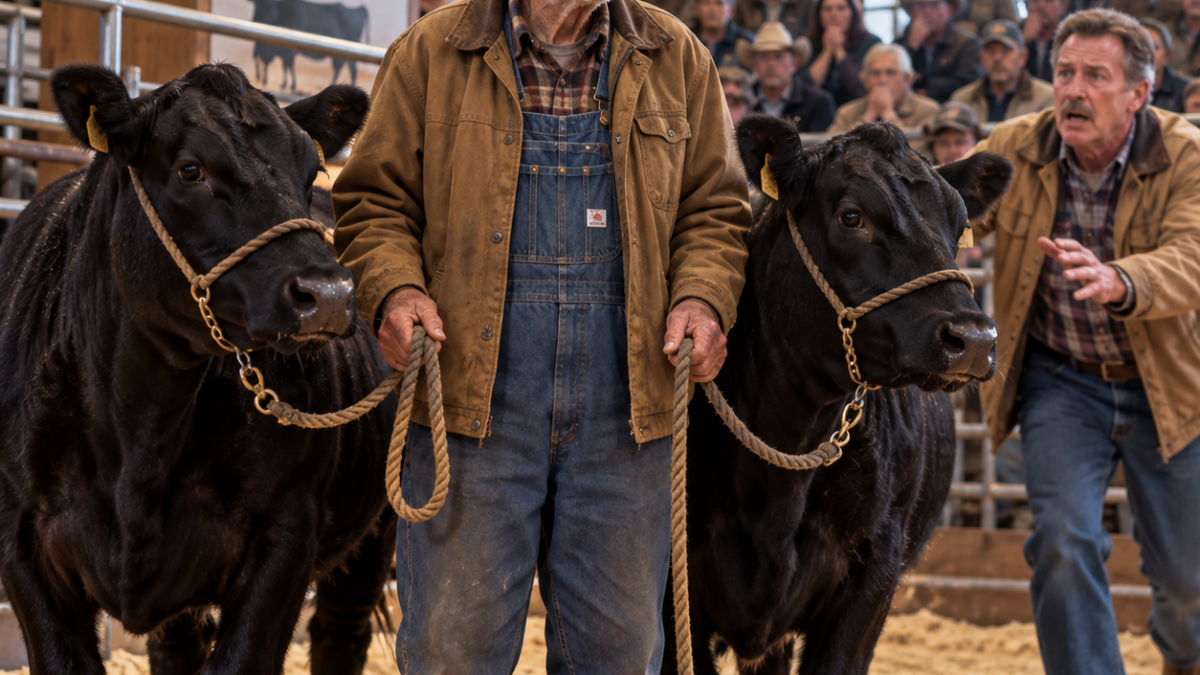
Everyone at the auction thought ninety-year-old Elmer Hoyt had finally lost his judgment when he led his two best pregnant Angus cows into the sale ring just to pay $4,800 for surgery on an aging border collie.
Then Elmer walked straight into a steel gate post, dropped to his knees, and began feeling desperately beside his left leg for a dog that was lying eleven miles away in a veterinary hospital—and his son realized the old farmer had secretly been almost blind for three years.
But the cruelest truth came later, when Dale learned why that particular dog mattered so much: Kip had belonged to the nineteen-year-old son Dale lost in an icy wreck, and before dying, the boy had written one final instruction in a forgotten notebook—“Kip’s job: Grandpa. My job: Dad.”
The old man in the auction ring was crying.
That alone was enough to silence the Spencer Livestock Exchange.
Elmer Hoyt was ninety years old, and most of Clay County had never seen him cry.
Not when his wife June died.
Not when corn prices fell so low in 1987 that he burned furniture scraps in the shop because propane was too expensive.
Not when a tornado peeled half the tin roof from his machine shed.
Not even eight years earlier, when his nineteen-year-old grandson Tyler rolled a pickup truck into a frozen ditch and never came home.
Elmer Hoyt was not a man who made a spectacle of grief.
He endured it.
That was what farmers of his generation called strength.
You got up.
You fed cattle.
You fixed fence.
You drank coffee.
You buried people.
Then the sun came up and you did it again.
So when tears slid silently down Elmer’s weathered face that Tuesday morning, nobody in the sale barn knew what to do with them.
He stood in the sawdust beneath the auction lights wearing faded bib overalls, a brown canvas chore coat, and a seed-company cap older than half the bidders in the bleachers.
One rope in each hand.
Rosie stood on his right.
Belle on his left.
Two Black Angus cows so broad and glossy they looked almost polished beneath the fluorescent lights.
Both bred.
Both calm.
Both proven mothers.
The kind of cattle you spent years building a herd around.
The kind Elmer never sold.
Lyle Brandt had run the Spencer sale barn for thirty-four years.
He knew everybody’s cattle nearly as well as they did.
He leaned toward the microphone.
“Elmer.”
The old farmer raised his head slightly.
“You certain?”
Elmer’s jaw moved once.
“Sell ’em.”
Lyle hesitated.
That was unusual too.
PART2:
Auctioneers do not hesitate when livestock is in the ring.
Seconds are money.
But Lyle looked at Rosie.
Then Belle.
Then the old man.
“You want to maybe sleep on it?”
“I slept.”
“Elmer—”
“Sell ’em, Lyle.”
The bleachers whispered.
It began low.
Then spread.
“Ninety years old.”
“He’s slipping.”
“Those are his best two.”
“Why’s he selling now?”
“I heard it’s that dog.”
“What dog?”
“Border collie.”
“Old one?”
“Nine years.”
“Needs surgery.”
“How much?”
PART3:
“Nearly five grand.”
“For a dog?”
Somebody laughed softly.
Not cruelly, perhaps.
But Elmer heard.
He heard everything.
His eyesight had failed him.
His ears had compensated.
He could distinguish the idle of his own 4020 John Deere from Dale’s half-ton Chevrolet at three hundred yards.
He could tell Rosie from Belle by the cadence of their bawls.
He knew where Kip was in the pasture by the rhythm of the dog’s panting.
And he heard a man three rows up say:
“Hell, for forty-eight hundred dollars you can buy ten border collies.”
Elmer’s fingers tightened on the ropes.
He said nothing.
Nobody noticed the way he had entered the auction ring.
Nobody except, perhaps, Lyle.
Elmer had taken twenty-eight small steps from the back gate.
His left hand had slid continuously along the steel rail.
When there was a break in the railing, he had stopped.
Felt ahead.
Found the next bar.
Continued.
He had not once looked directly at Rosie or Belle.
His pale blue eyes drifted slightly past everything.
The people.
The lights.
The gate.
And every few seconds, his left hand dropped beside his knee.
Fingers curling instinctively toward empty space.
As if searching for something that should have been walking there.
Something was sticking out of the top pocket of his bib overalls.
A red leather dog collar.
Old.
Cracked.
A brass tag hanging from it.
Lyle inhaled.
“All right, ladies and gentlemen.”
He looked at Rosie.
“Here’s a bred Angus cow worth every bit of—”
The rear door slammed open.
“Dad!”
Every head turned.
Dale Hoyt pushed through the crowd.
Sixty-two.
Thick through the middle.
Gray mustache.
Tan work jacket with SPENCER CO-OP GRAIN stitched above the pocket.
Dale had managed the grain elevator in town thirty-one years.
People knew him too.
His face was red.
Not from cold.
He reached the rail.
“What are you doing?”
Elmer did not turn immediately.
“Dad.”
This time Elmer turned toward the voice.
His head turned.
His eyes did not quite find Dale.
“That’s Rosie.”
“I know.”
“And Belle.”
“I know my own cows.”
“You can’t sell those two.”
“Watch me.”
Dale gripped the rail.
“Lyle called me.”
Elmer’s expression hardened.
“Shouldn’t have.”
Lyle suddenly became intensely interested in the microphone cable.
Dale lowered his voice.
“Is this about Kip?”
Elmer said nothing.
“Forty-eight hundred dollars?”
Silence.
“Dad, he’s nine years old.”
Elmer’s hand went to the red collar.
“He’s a dog.”
That caused a visible reaction.
Not from Elmer.
From Dale.
The words had come out too harsh.
Even he knew it.
But eight years of grief had been living behind his teeth, and sometimes grief waits for the wrong door to open.
Dale swallowed.
“Forty-eight hundred dollars on a nine-year-old dog.”
Elmer stared somewhere near his shoulder.
“The surgery’s already done.”
“So now you sell half your breeding stock?”
“Two cows ain’t half.”
“You know what I mean.”
Elmer’s jaw tightened.
“A cow can’t herd cattle.”
Dale let out a short, bitter breath.
“You’re ninety.”
The barn went silent.
“You shouldn’t be running cattle alone anyway.”
Elmer’s head lifted.
That was the dangerous sentence.
Dale knew it the moment it left him.
“Dad—”
“I’ve run that farm seventy-one years.”
“I know.”
“Before you were born.”
“I know.”
“Before half these people’s daddies were born.”
“I know.”
“You think I forgot how?”
“No.”
“Then quit talking to me like I did.”
Dale lowered his eyes.
People in bleachers pretended they were not listening.
No one fooled anyone.
Dale said quietly:
“We both know this isn’t really about cattle.”
Elmer’s thumb rubbed the dog tag in his pocket.
“It’s about Kip.”
“Yes.”
“And we both know why you can’t let that dog go.”
Elmer’s face changed.
Warning.
Dale saw it.
Still continued.
“Because of who he belonged to.”
Elmer’s hand closed around collar.
“Don’t.”
“Dad—”
“Not here.”
Dale’s voice cracked.
“You can’t keep holding on to Tyler through a dog forever.”
A sound moved through the crowd.
Not speech.
Recognition.
Everybody in Clay County remembered Tyler Hoyt.
Dale’s only boy.
Elmer’s only grandson.
Nineteen years old.
Iowa State freshman.
Pickup wreck on an icy county road.
January.
Eight years earlier.
Elmer stood perfectly still.
Then handed Rosie’s rope to Lyle’s assistant.
Then Belle’s.
“Sell ’em.”
Dale stared.
“Dad.”
Elmer turned toward the exit.
He walked three steps.
Four.
Five.
Straight into a steel gate post.
The clang echoed through the entire barn.
Elmer’s cap flew off.
His body twisted.
He dropped hard to one knee in sawdust.
Someone gasped.
Dale was over the rail before anyone else moved.
“Dad!”
Elmer did not answer.
He reached beside his left knee.
Palm sweeping sawdust.
Once.
Twice.
Again.
“Kip?”
Dale froze.
His father’s hand searched empty air.
“Kip?”
Elmer’s voice sounded suddenly old.
Not ninety-year-old stubborn farmer.
Just an old man lost somewhere he could not see.
“Where’d you go, boy?”
Dale looked at the gate post.
Bright galvanized steel.
Six inches wide.
Visible from the bleachers.
Then at his father.
Elmer’s eyes were open.
Cloudy.
Unfocused.
Looking slightly left of Dale’s face.
Dale lifted one hand.
Three fingers.
Six inches from his father’s nose.
“Dad.”
Elmer frowned.
“How many fingers?”
The old man’s eyes moved.
Not toward hand.
Past it.
“What kind of damn question—”
“How many?”
Silence.
Elmer squinted.
“Two.”
Dale slowly lowered his hand.
All the anger left him.
Only fear remained.
“How long?”
His father said nothing.
“Dad.”
Lyle turned away.
The barn felt suddenly too public.
Dale picked up the old seed cap.
Put it on his father’s head.
Then helped him stand.
“We’re leaving.”
“My cows.”
“I’ll handle it.”
“Don’t stop the sale.”
“Dad—”
“Sell ’em.”
Dale looked toward Lyle.
Lyle gave tiny nod.
Elmer let his son guide him from the ring.
People moved aside.
Nobody whispered now.
Outside, Dale half-walked, half-carried his father toward pickup.
Elmer counted steps beneath his breath.
“Thirty-one.”
“Thirty-two.”
“Thirty-three.”
Dale heard.
His heart broke a little more with each number.
Inside truck, he turned heater high.
Neither man spoke.
Wind pushed brown corn leaves across gravel.
Sale barn loud behind them.
Dale lifted three fingers again.
This time he did it slowly.
“Dad.”
Elmer sighed.
“Don’t.”
“How many?”
“Dale.”
“How many?”
Elmer looked toward his hand.
Or tried.
His gaze stopped short.
“Two.”
Dale leaned back.
“How long?”
Silence.
“Please.”
Elmer rubbed thumb over seam of overalls.
“Three years.”
Dale stared.
“What?”
“Three years.”
“How?”
“Macular degeneration.”
The words came matter-of-fact.
“Doc in Spencer told me.”
Dale’s mouth opened.
Closed.
“The center’s gone.”
Elmer looked through windshield at nothing.
“Edges are better.”
“Light.”
“Dark.”
“Shapes some days.”
Dale gripped steering wheel.
“You’ve been blind for three years.”
“Not blind.”
“Dad.”
“I see some.”
“You walked into a steel post.”
“Post ought not have been there.”
Dale nearly laughed.
Nearly shouted.
Instead his eyes filled.
“You have been running a cattle farm alone for three years.”
Elmer’s jaw set.
“Yes.”
“You drive.”
“Slow.”
“You run equipment.”
“Some.”
“You walk pasture.”
“Yes.”
“You cross the creek.”
“When it’s low.”
“You never told me.”
Elmer’s expression hardened.
“You’d have put me in Lakeside.”
Dale stopped.
Lakeside Manor.
Assisted-living facility in Spencer.
Clean.
Warm.
Safe.
A place Dale had suggested twice after his father turned eighty-eight.
Elmer continued:
“You’d sell farm.”
“I would not—”
“You would.”
Dale opened mouth.
Then stopped.
Because he would have.
Not from greed.
Not cruelty.
Fear.
He had spent eight years afraid of losing another person from that farm.
After Tyler, every risk looked unforgivable.
He would have moved Elmer.
Sold cows.
Leased ground.
Locked tractor.
Called it safety.
Elmer knew him.
“You would,” the old man repeated.
“And I’d be dead in month.”
“That’s dramatic.”
“Sitting in some chair.”
He gestured toward windshield.
“Staring at wall I can’t see.”
Dale lowered his head.
“Then how?”
Elmer turned slightly.
“What?”
“How have you done it?”
For first time that day, the old man smiled.
“Kip.”
One word.
Dale’s face closed.
Of course.
The dog.
Always the dog.
Elmer did not see reaction.
He continued.
“First summer eyes got bad, I tripped over north trough.”
“Cracked two ribs.”
“You told me cow knocked you down.”
“Cow got blamed unfairly.”
Dale stared.
“Next morning Kip started walking on my left.”
“What?”
“Right here.”
Elmer tapped knee.
“Pressed against me every step.”
Dale said nothing.
“If there’s a rut, he bumps my leg.”
“If step’s coming, he slows.”
“If I turn toward creek bank, he gets in front.”
“When bull’s in pasture, Kip goes between us.”
Elmer’s voice softened.
“He brings cows to gate so I count them by sound.”
“He finds dropped keys.”
“He walks me home after dark.”
“I never taught him any of it.”
“He figured it out.”
Dale stared through windshield.
His father said:
“A cow can’t herd cattle.”
Then quieter:
“But that ain’t what I meant in there.”
Pause.
“That dog herds me.”
Dale covered his face.
For years he had looked at Kip and seen the wrong survivor.
The animal that came home when Tyler did not.
Now he learned that while he stayed away from the farm because grief made it unbearable, the dog had quietly become his father’s eyes.
Dale started truck.
“Where?”
“Where what?”
“Where’s Kip?”
Elmer reached for collar.
“Lindgren’s.”
Eleven miles south.
Dale drove.
Dr. Karen Lindgren met them at clinic door.
Fifty-six.
Sturdy.
Reading glasses on chain.
She had treated Hoyt cattle for twenty years and household animals almost as long.
She looked at Dale.
“So he finally told you.”
Dale stopped.
“You knew?”
Karen folded arms.
“About his eyes?”
“Yes.”
“Everybody knows except me?”
“No.”
“Then why didn’t you call?”
“He asked me not to.”
“He’s ninety.”
“He’s still competent.”
“He’s blind.”
“Mostly.”
Dale looked ready to explode.
Karen interrupted:
“Before you start, ask him how he got Kip here.”
Dale turned.
Elmer stared toward voice.
Karen continued.
“Sunday night, two twelve a.m.”
“Kip’s stomach twisted.”
“GDV.”
“Bloat.”
“Deep-chested dogs can die in hours.”
Dale knew enough.
He had heard.
“He needed emergency surgery.”
Karen nodded.
“Your father called me.”
“Then what?”
“He drove here.”
Dale looked at Elmer.
“No.”
Elmer shrugged.
“Had to.”
“Eleven miles.”
“Yes.”
“In dark.”
“Yes.”
“You can’t see.”
“I can see road edge some with headlights.”
Dale’s voice rose.
“You drove eleven miles blind?”
“Fifteen miles an hour.”
“With hazards.”
“As if that makes it better.”
Karen said:
“Kip was dying in passenger seat.”
Elmer looked at his son like answer obvious.
“What else was I gonna do?”
Dale turned away.
Anger had nowhere useful to go.
Karen led them into recovery.
Kip lay in steel kennel on thick blankets.
Black-and-white border collie.
Lopsided blaze.
One front leg white.
Other black.
Tip missing from left ear.
Shaved belly.
Long row of staples.
He looked old.
Not ancient.
But gray had entered muzzle.
The moment Elmer’s boots scraped concrete, Kip’s head lifted.
He tried standing.
Back legs shook.
“Elmer.”
Karen warned.
The old man was already kneeling.
He felt kennel frame.
Door.
Reached inside.
Kip pushed his whole face into Elmer’s palm.
A small whine escaped.
Elmer’s forehead lowered until almost touching dog.
“Easy, boy.”
His voice cracked.
“Easy.”
Dale stood behind.
He had not touched Kip in eight years.
Not once.
He hated himself for it.
Still could not move.
Karen cleared throat.
“Surgery went well.”
“Stomach viable.”
“No rupture.”
“We fixed torsion.”
“He should recover.”
Elmer nodded.
“Bill’s forty-eight hundred.”
“You’ll have it Friday.”
Karen looked at Dale.
Then Elmer.
“I did surgery on trust.”
Elmer reached inside bib pocket.
Pulled red collar.
He buckled it around Kip.
Dented brass tag swung.
Dale saw.
KIP.
IF FOUND, CALL TYLER.
Below it, Tyler’s old phone number.
Dale stopped breathing.
Young vet tech named Megan leaned closer.
“Who’s Tyler?”
Nobody answered immediately.
Elmer rubbed Kip’s notched ear.
“My grandson.”
He said.
“Dale’s boy.”
Megan smiled uncertainly.
Then noticed Dale’s face.
Elmer added:
“He’d have been twenty-eight this spring.”
Dale walked out.
Clinic door slammed.
He sat in truck.
Engine off.
Hands shaking.
Eight years earlier, Tyler had been everything Dale understood about his future.
Only son.
Freckled.
Tall.
Too much energy.
Always outdoors.
Loved cattle.
Loved Grandpa Elmer’s farm in a way Dale never had.
Dale grew up there.
That was why he left.
He remembered drought.
Debt.
Broken machinery.
Winter calves born at two in morning.
His father’s silence when bank called.
He wanted more for Tyler.
College.
Engineering.
Office.
A life where rain was weather instead of financial event.
Tyler wanted farm.
At fourteen he spent every summer with Grandpa.
Up before sunrise.
Home after dark.
At eighteen, graduation money bought border collie puppy.
Skinny runt.
Crooked blaze.
One white leg.
First week, pup caught ear on barbed wire.
Elmer joked:
“Now he’s got character.”
Tyler named him Kip.
He trained him every evening in north pasture.
Come-bye.
Away.
Lie down.
Walk up.
That’ll do.
By a year old, Kip could move forty head alone.
Dale hated how proud Elmer looked.
Not because dog.
Because of what it represented.
Farm pulling Tyler away.
Senior year arguments became ugly.
“You’re throwing away your brain.”
“I can use a brain farming.”
“You know what I mean.”
“No, Dad. I know what you think.”
“I worked thirty years so you wouldn’t have to do this.”
“You don’t do it.”
“I grew up doing it.”
“Exactly.”
“You think Grandpa’s life is some postcard.”
“I think it’s his.”
“You’re eighteen.”
“I’m old enough to know.”
“You are going to college.”
“Or what?”
Dale remembered that question.
He had no answer good enough.
Tyler went to Iowa State.
Ag business.
Compromise.
But every weekend he drove home.
Not Dale’s house in Spencer.
Elmer’s farm.
And Kip.
January of freshman year, Sunday night, freezing rain.
Tyler stayed too late.
Dale had called.
“Roads are bad.”
“I know.”
“Stay at Grandpa’s.”
“I’ve got Monday class.”
“Skip.”
“Since when do you want me skipping college?”
Those were last words they exchanged.
Not I love you.
Not drive safe.
A joke with irritation underneath.
Tyler drove.
At bend by Swanson place, gravel glazed.
Pickup slid.
Rolled.
He died before sheriff arrived.
Kip rode passenger side.
Window shattered.
Dog crawled out.
Bleeding shoulder.
Walked two miles through snow back to Elmer’s.
Scratched farmhouse door at eleven.
Elmer opened.
Saw dog alone.
He knew.
Before sheriff called.
After funeral, Dale went to farm once.
Kip ran toward him.
Tail low.
Whining.
Dale looked at blood-stained shoulder bandage.
And all he could think was:
Why are you here?
Why him?
Why did dog get out?
Why didn’t my boy?
The thought was irrational.
Cruel.
He knew.
Did not matter.
He could not touch Kip.
Could not hear collar tag.
Could not watch dog wait by driveway for truck that never came.
So Kip stayed with Elmer.
And Dale stayed away more than he admitted.
Birthdays.
Holidays.
Feed deliveries.
Short visits.
Never long enough to see what dog became.
Now he sat outside vet clinic and realized he had spent eight years hating the last living thing his son trained with his own hands.
The clinic door opened.
Elmer felt along side of truck.
Climbed passenger seat.
They sat.
Dale stared ahead.
“You should’ve sold him.”
Elmer did not respond.
“Eight years ago.”
Still nothing.
“After Tyler died.”
Dale’s voice went flat.
“You should have found him another home.”
Elmer’s hand tightened on cane he had recently begun carrying mostly for public appearances.
“Every time I see that dog…”
Dale swallowed.
“I see the ditch.”
Silence.
“I see sheriff standing at my door.”
“I see Tyler’s truck upside down.”
“Elmer stared toward windshield.
Dale whispered:
“I hate him.”
The words sounded terrible aloud.
“I know it’s wrong.”
“But I hate that he came home.”
His voice broke.
“And Tyler didn’t.”
Elmer said nothing for almost a minute.
Then:
“Kip didn’t choose.”
“I know.”
“Tyler didn’t choose.”
“I know.”
“You didn’t choose.”
“I know!”
Dale hit steering wheel.
Then immediately looked ashamed.
“I know.”
Elmer reached across.
Missed Dale’s shoulder by inches.
Dale took his father’s hand.
Placed it there.
The old man squeezed once.
No sermon.
Dale drove him home.
Did not come inside.
Thursday morning Lyle called.
“Elmer.”
“Yep.”
“Cows sold.”
“How much?”
Pause.
“Twenty-six hundred each.”
Elmer frowned.
“Bull.”
“No.”
“Rosie’s worth maybe fifteen.”
“Phone bidder.”
“Who?”
“He wouldn’t let anyone top him.”
“Who?”
Lyle sighed.
“Bidder made me promise.”
“I don’t like secrets.”
“Funny coming from you.”
Elmer grunted.
“Fifty-two hundred?”
“Yep.”
“Enough vet.”
“Yep.”
Elmer sat at kitchen table.
Quiet house.
No Kip.
Without dog, blindness became enormous.
He left one hand on walls.
Counted from kitchen to bathroom.
Twelve steps.
From bathroom to bedroom.
Nine.
He did not go barn after dark.
For first time, farm felt hostile.
Kip came home nine days later.
Dale drove them from clinic.
The old dog was thinner.
Stiff.
Long pink scar down belly.
When tailgate opened in farmyard, Kip jumped carefully.
Sniffed.
Then went straight to Elmer’s left knee.
Pressed shoulder against denim.
Elmer laughed.
Not chuckle.
Full laugh.
Kip began walking toward porch.
Elmer followed.
Dale stood beside truck.
Watched.
Dog slowed before step.
Bumped Elmer.
Old man lifted boot.
Up.
Dale’s throat tightened.
Everything his father described.
True.
Three weeks later, rain came.
Three days straight.
Willow Creek rose brown and fast.
Dale was driving county road near farm.
He told himself he was checking fences.
Really checking father.
He still had not resumed visits.
Shame makes distance feel easier even after anger fades.
Then he saw Elmer.
Old man walking down south pasture.
Alone.
No dog visible.
Heading toward creek.
Dale slowed.
Rain had eaten bank.
Six-foot drop.
Water boiling below.
Elmer could not see it.
“Dad!”
Dale braked.
Jumped.
“Dad!”
Wind carried voice wrong direction.
Elmer kept walking.
Ten feet.
Eight.
Six.
Dale climbed fence.
Boot caught.
He fell.
Got up.
“Dad!”
Then black-and-white streak exploded from barn.
Kip.
Running harder than his recovering body should.
Across pasture.
Four feet.
Three.
Kip cut in front.
Planted sideways against Elmer’s shins.
The old man stopped.
Two feet from edge.
Dale froze.
Elmer reached down.
Found dog’s head.
“All right.”
He laughed softly.
“I hear you.”
Kip leaned.
Pushed.
One step backward.
Then another.
He turned Elmer.
Bumped knee at rut.
Stopped at wire.
Guided through gate.
All the way to barn.
Exactly as described.
Dale stood in rain with hand over mouth.
Something eight years old inside him finally cracked.
He walked to barn.
Elmer heard boots.
“Who’s that?”
“It’s me.”
Pause.
“Didn’t expect you.”
Dale’s voice broke.
“I saw him.”
Elmer said nothing.
“At creek.”
Rain drummed tin.
Dale stepped closer.
“I saw what he did.”
Kip sat at Elmer’s left.
Dale looked at him.
“I bought cows.”
Elmer’s head lifted.
“What?”
“Rosie and Belle.”
Silence.
“I called Lyle from clinic parking lot.”
“I told him not to tell.”
Elmer’s expression changed slowly.
“Why?”
Dale wiped face.
“Because you’d sell every cow you own before you let that dog die.”
“Probably.”
“I know you.”
Dale laughed through tears.
“I’ve got them in my pole barn.”
“Both?”
“Both.”
“What are you feeding?”
“Same hay you feed.”
“Too rich for Belle.”
“Then tell me what.”
Elmer smiled.
Dale’s face collapsed.
“I couldn’t let you do it alone.”
He looked at Kip.
“And I hated him.”
The words came harder now.
“I hated that dog eight years.”
Elmer stayed still.
“I know it wasn’t fair.”
“But every time I looked at him…”
Dale sobbed once.
Raw.
“Why him?”
“Why did God leave me the dog?”
No one answered.
Rain.
Cattle shifting.
Kip watching.
“And whole time…”
Dale bent down.
“…he’s been keeping you alive.”
His knees hit straw.
“Doing what I should’ve done.”
“What Tyler would have done.”
He held out hand.
Kip did not move.
Dale’s hand shook.
Then memory came.
Tyler at sixteen.
North pasture.
Two-note whistle.
Rising.
Dale put fingers in mouth.
Whistled.
Kip’s head snapped.
The dog stood.
Slowly crossed straw.
Sniffed Dale’s hand.
Long.
Then pushed his whole head into Dale’s palm.
Exactly the way he had pushed into Tyler’s.
Dale broke.
He wrapped both arms around dog.
Sobs into black-and-white fur.
Not restrained.
Not farmer.
Not elevator manager.
Just father who had spent eight years furious at survivor because dead son was beyond reach.
Elmer found his shoulder.
Put hand there.
Kip stayed between them.
That was beginning of five more years.
Dale came next morning.
6:30.
Before grain elevator.
He told himself chores.
Then next morning.
Coffee.
Then breakfast.
Soon it became routine.
Kip met his truck at end of lane.
Trotted alongside bumper.
Then stood porch until Dale went inside.
Elmer laughed first time he learned.
“He’s herding you.”
“Dog needs hobby.”
“He’s got one.”
Over those five years, Dale learned father again.
Not father from childhood.
Not stubborn old tyrant who could outwork everybody.
A ninety-one-year-old man navigating house by touch.
Ninety-two.
Ninety-three.
Elmer remained on farm.
But Dale installed railings.
Marked steps with textured strips.
Set up talking thermometer.
Moved tools.
Removed hazards.
He did what he once would have done through control but learned to do through partnership.
“Don’t move my damn wrench rack.”
“You can’t see wrench rack.”
“I know where it is.”
“That’s why I’m not moving wrenches. I’m removing broken rake in front.”
“Oh.”
“Anything else?”
“No.”
“Then quit yelling.”
“Your mother never talked to me like this.”
“She had patience.”
“True.”
They learned.
Kip worked.
Every day.
Brought cattle.
Walked fences.
Stopped Elmer at hazards.
Dale watched dog’s muzzle gray.
White leg stiffen.
At fourteen, Kip slept afternoons in sun.
But when Elmer stood, dog stood.
Job.
Always job.
Then November.
Snow coming.
Radio warned storm by dark.
Cattle scattered north pasture.
Elmer stood porch.
“Kip.”
Old dog lifted head.
“Go get ’em.”
Kip rose painfully.
Stretched.
Then walked out.
Dale stood beside Elmer.
“You sure?”
“He’s sure.”
Dog moved low through grass.
Slow.
Then gathered speed.
Circled wide.
Exactly as Tyler taught eighteen years before.
Come-bye.
Pressure.
Release.
Cattle bunched.
Turned.
Started toward barn.
It took nearly hour.
Kip brought every cow.
Then returned porch.
Elmer reached.
Found his back.
“Good boy.”
At dusk, Elmer wanted mailbox.
Dale offered arm.
“No.”
“Kip.”
Dog went left knee.
Walked old man down lane.
Bump at rut.
Pause at ditch.
Mailbox.
Back.
Last walk.
That evening first flakes fell.
Kip ate half dinner.
Then stood by door.
Dale opened.
“Bathroom?”
Dog walked past yard.
Past barn.
Toward north field.
“Kip.”
No response.
Elmer heard bell on collar fade.
“Where’s he going?”
“North.”
Dale watched dog crossing gray field.
Toward old cottonwood at fence.
The tree Tyler loved.
As boy he sat there summer evenings with puppy.
Watched sunset.
Planned farm.
Dale nearly followed.
Elmer said:
“Let him.”
So they did.
Kip reached cottonwood.
Turned once.
Lay down.
Facing house.
Snow fell.
He did not come back.
Morning white.
Elmer stood porch calling.
“Kip!”
Nothing.
Again.
“Kip!”
Dale knew before he reached tree.
Dog lay curled.
Nose on white paw.
Frost dusting fur.
Peaceful.
Facing home.
Dale knelt.
Touched ribs.
Nothing.
He carried Kip back.
Fourteen-year-old border collie felt lighter than grief.
Elmer knelt in snow.
Hands searched.
Found notched ear.
Tag.
Cold chest.
He made no sound for long time.
Then:
“North field.”
Dale nodded.
“Under cottonwood.”
“Yes.”
“Big stone.”
“Yes.”
Pause.
“That’s where I want to go too.”
“Dad.”
“When time comes.”
Elmer touched Kip’s face.
“Right beside him.”
Dale could not speak.
He dug frozen ground three hours.
Pickax.
Shovel.
Hands blistered.
He refused neighbor help.
Some jobs belong to person.
They buried dog.
Afterward Elmer stopped.
That frightened Dale more than blindness.
Stopped eating.
Stopped walking fence.
Stopped laughing.
Without Kip, farm vanished.
Not emotionally.
Physically.
Elmer could no longer navigate.
He fell porch twice.
Got lost between machine shed and house.
Dale found him in snow one morning.
Old man turning slowly.
“Kip?”
“Kip!”
Dale approached.
“It’s me.”
Elmer’s face crumpled.
“Oh.”
Not disappointment in son.
Recognition of absence.
He sat kitchen window all day.
Facing north field he could not see.
On tenth day Dale drove to Lakeside Manor.
Came home with admission packet.
He hated himself.
But what else?
He still worked elevator.
Could not leave Elmer alone.
He sat kitchen table.
Page one.
Name.
Age.
Medical history.
Mobility.
Vision.
Page two:
PERSONAL BELONGINGS RESIDENT WISHES TO BRING.
Dale stopped.
What do you take when a man has lived seventy-one years in same house?
One chair?
Seed cap?
Wedding photo?
Cowbell?
Radio?
How do you reduce life to approved belongings?
He looked at father at window.
Then went upstairs.
Tyler’s room.
Door stiff.
Elmer had never changed it.
Iowa State pennant.
Narrow bed.
Cattle magazines.
Old baseball glove.
Dust.
Dale had not entered in thirteen years.
He sat on bed.
Could smell nothing of Tyler anymore.
That hurt.
On nightstand, spiral notebook.
He opened.
Tyler’s handwriting.
June 3 — Kip learned come-bye. Brought in six head.
July 19 — 40 head by himself!!! Grandpa says best dog in Clay County.
August 2 — Kip finally listens when excited. Mostly.
Page after page.
Dog training.
Farm notes.
Teenager jokes.
Dale smiled.
Then cried.
Last entry.
Dated one week before wreck.
Heading back to Ames tomorrow.
Dale read.
Gave Kip his new job: take care of Grandpa while I’m gone. He’s getting old and won’t admit it. Kip gets it, I swear he does.
Dale stopped breathing.
Next lines:
My job: fix things with Dad.
I’m going to tell him I’ll finish degree in ag business. Then come home and run farm with Grandpa.
Maybe Dad will actually be proud of that.
Maybe he’ll come out on weekends.
All three of us.
Then final:
Kip’s job: Grandpa.
My job: Dad.
Deal.
Dale read three times.
Then carried notebook downstairs.
Sat opposite Elmer.
“Dad.”
No answer.
“I found something.”
“What?”
“Tyler’s.”
Elmer’s hands tightened.
Dale read entire page.
When finished, old man’s shoulders shook.
No sound.
Dale put notebook down.
“He did it.”
Elmer whispered:
“What?”
“Kip.”
Dale wiped face.
“He did both jobs.”
Elmer lifted head.
“Tyler told him to take care of you.”
“He did.”
“Thirteen years.”
“Eyes.”
“Creek.”
“Bull.”
“Every step.”
Elmer nodded.
“But Tyler never got to do his job.”
Dale’s voice broke.
“He never got to fix things with me.”
Silence.
“So Kip did.”
Elmer frowned.
Dale laughed through tears.
“Every morning he met my truck.”
“Every morning he walked me to your door.”
“If he hadn’t…”
Dale looked toward north field.
“…I’d have dropped feed and left.”
“I know myself.”
“I’d have kept hating him.”
“Kept avoiding this house.”
“Until you were gone.”
He covered face.
“That stubborn dog herded me home.”
Elmer reached across table.
His hand landed near Dale’s wrist.
Dale caught it.
For a long time, neither spoke.
Then Dale picked up Lakeside papers.
Tore in half.
Then again.
Elmer heard.
“What’re you doing?”
“I’m not putting you anywhere.”
“You work.”
“Thirty-one years.”
“So?”
“I retire January.”
“Dale.”
“I’m moving in upstairs.”
Elmer’s mouth opened.
“Tyler’s room.”
“Yes.”
“You don’t have to.”
Dale squeezed hand.
“You need somebody left side.”
Elmer started crying.
Dale continued:
“I’m not as smart as Kip.”
That made old man laugh.
“But I’m learning.”
Spring came.
First warm Saturday April, diesel engine climbed long lane.
Elmer stood porch.
He could not see stock trailer.
He heard.
Rattle.
Tailgate.
Then a deep bawl.
His head lifted.
“Rosie?”
Dale smiled.
He led Rosie down ramp.
Then Belle.
Older now.
Gray at eyes.
Still beautiful.
Behind them:
Two daughters born in Dale’s pole barn.
Five years before, Elmer led two cows into auction ring to save dog.
Now son led them home.
Elmer came down steps.
Dale at left side.
He held hand.
Rosie’s warm nose pushed palm.
Old man laughed until tears came.
Half sale-barn crowd arrived that afternoon.
Lyle Brandt.
Dr. Lindgren with casserole.
Reyes? No, different story. Don’t.
Neighbors.
Friends.
People who had whispered at auction.
Some embarrassed.
Nobody mentioned it.
Lyle brought flatbed with winch.
On it:
Pink granite fieldstone.
They hauled to north cottonwood.
Set beside grave.
Carving:
KIP
GOOD DOG
HE DID BOTH JOBS
Elmer traced every letter.
Slowly.
Then:
“Leave room.”
Dale looked.
“Where?”
“Left side.”
“Why left?”
Elmer smiled.
“That’s where he always walked.”
They stood in spring wind.
Rosie and Belle grazed nearby.
Their daughters behind.
When time to go home, Elmer reached down beside left knee.
Habit.
Fingers curled into empty air.
Dale saw.
He moved.
Took father’s hand.
Right where Kip had been.
They started across north field.
Slow.
Dale watched ground.
At first rut, he bumped his father gently at knee.
Elmer smiled.
“Trying too hard.”
“I’m new.”
Second rut.
Bump.
Fence wire.
Pause.
Gate.
Turn.
Dale walked him all way home.
Did not let him fall.
Elmer lived another three years.
He died at ninety-eight.
Not at Lakeside.
At farm.
In upstairs? No, his room downstairs. Let’s continue.
Dale had retired.
Moved into Tyler’s room.
He cooked badly.
Burned eggs.
Over-salted soup.
Elmer complained about all of it.
Rosie died before Elmer.
Belle lived longer.
Their daughters carried herd.
Dale learned cattle late.
Not enough to call himself farmer.
Enough.
Every morning they drank coffee.
Elmer sat kitchen facing east though he could no longer tell sunrise from cloudy sky.
Dale read weather.
Markets.
Sometimes Tyler’s notebook.
They rarely talked directly about grief.
They did not need.
It had become furniture.
Always there.
Less sharp.
One summer morning, Elmer asked:
“You still mad at me?”
“For what?”
“Tyler.”
Dale knew.
“For making him love farm?”
Elmer nodded.
Dale thought long.
“No.”
“You were.”
“Yes.”
“Why?”
“Because if he didn’t love it, maybe he wouldn’t have been on that road.”
Elmer said nothing.
Dale continued:
“But that’s not fair either.”
“No.”
“He loved it.”
“Yes.”
“He loved you.”
Elmer’s chin shook.
“He loved you too.”
Dale looked toward ceiling.
Tyler’s room above.
“I know now.”
That was enough.
Elmer’s final winter was mild.
He slept more.
Stopped going far pasture.
Dale walked him to north field on good days.
Always left side.
When Elmer stumbled, Dale caught him.
When ground dipped, bumped knee.
“Show-off.”
“You trained me.”
“No.”
“Dog did.”
“True.”
In February, Elmer developed pneumonia.
Hospital recommended admission.
He refused.
Home hospice arranged.
Bed by kitchen window.
Dr. Lindgren visited though veterinarian, not human doctor.
Brought pie.
Sat.
Elmer asked:
“Kip still north?”
Dale smiled through tears.
“Still north.”
“Tyler?”
Dale swallowed.
“I think so.”
Elmer nodded.
“Good.”
He died before sunrise three days later.
Dale held hand.
No drama.
One breath.
Then another.
Then none.
Funeral was largest rural church had seen in years.
Sale-barn men.
Farmers.
Grain elevator workers.
People who remembered Elmer young.
Kids he once let ride tractor.
Lyle gave eulogy.
He told auction story.
Not to shame.
To explain.
“Ninety-year-old man walked two best cows into my ring because a dog needed him.”
Lyle paused.
“Turns out he needed dog more.”
Everyone cried.
They buried Elmer under north cottonwood.
Left of Kip.
Exactly as requested.
Stone beside dog.
ELMER HOYT
1932–2030? Wait current date story unknown. Avoid dates.
FARMER. HUSBAND. FATHER. GRANDFATHER.
HE STAYED HOME.
Dale stood after everyone left.
Two stones.
Dog and man.
He reached down.
Touched Kip’s carving.
GOOD DOG.
HE DID BOTH JOBS.
Then touched father’s.
For years Dale believed grief had taken Tyler and left him nothing but reminders.
Dog.
Farm.
Old man.
Every reminder hurt, so he kept distance.
He had mistaken pain for evidence he should stay away.
But the very things he avoided were the things Tyler had loved enough to leave instructions for.
Take care of Grandpa.
Fix things with Dad.
Tyler did not get time.
Kip did.
Not magically.
Not because dog understood human reconciliation.
He did what border collies do.
He moved bodies where they needed to go.
Cattle to gate.
Blind farmer from creek.
Grieving father to farmhouse door.
Again.
Again.
Until Dale finally stayed.
Years later, Dale still lived on farm.
Not because he suddenly became farmer Tyler wanted to be.
He leased most acreage.
Kept a small herd descended from Rosie and Belle.
Enough.
Every spring, calves appeared.
Every fall, sale barn.
He sat in same bleachers where he once shouted at father.
People occasionally asked if he regretted paying double for cows.
He always gave same answer.
“No.”
“Best thing I ever bought.”
They thought he meant cattle.
Maybe.
Mostly he meant time.
Five years with father reconciled.
Three more caring for him.
Chance to learn dog.
Chance to read notebook.
Chance to bring cows home.
You cannot buy time.
But sometimes money prevents losing more.
Dr. Lindgren kept old clinic photo.
Kip after surgery, red collar.
Elmer’s hand through kennel.
Dale barely visible in background.
Years later she gave it to Dale.
On back she had written:
He saved both of you.
Dale crossed out both.
Wrote:
All three.
Because Elmer saved Kip by selling cows.
Kip saved Elmer from blindness turning farm fatal.
And somehow dog also saved Dale from spending rest of life angry at dead son, dead dog, living father.
Relationships are not simple enough for single rescuer.
People carry one another.
Sometimes without knowing.
The original auction gossip became family story.
Not bitter.
Dale laughed telling it.
“Ninety-year-old man sells best cows for dog.”
Then:
“Turns out cows came back.”
“Dog stayed five years.”
“Dad stayed eight.”
Good trade.
One autumn, a young farmer at sale barn recognized Dale.
Asked:
“You’re Hoyt?”
“Yep.”
“The dog story?”
“Unfortunately.”
“My dad says old man was crazy.”
Dale smiled.
“My dad was crazy.”
Young farmer looked uncertain.
Dale continued:
“He drove blind through snow at two in morning with dying dog.”
“That’s crazy.”
“Yep.”
“Sold bred cows for surgery.”
“Crazy.”
“Wouldn’t leave farm.”
“Extremely crazy.”
The young man laughed.
Then Dale said:
“But he knew something.”
“What?”
“You don’t decide value by replacement cost.”
The young farmer frowned.
Dale nodded toward cattle ring.
“You can replace cow.”
“Replace dog sometimes.”
“You can buy another truck.”
“Another farm maybe.”
“But sometimes what you’re paying for isn’t animal.”
“It’s years.”
“Memory.”
“Promise.”
“What it connects.”
He looked toward ring where Elmer once stood.
“People laughed because forty-eight hundred sounded stupid for old dog.”
Pause.
“But they didn’t know what dog was doing.”
Young man quiet.
That was the whole story.
People saw Elmer selling cattle.
They did not see blindness.
Saw aging border collie.
Did not see guide dog he had invented himself.
Saw red collar.
Did not see dead nineteen-year-old boy.
Saw Dale angry.
Did not see father who had never forgiven surviving dog.
Saw auction price.
Did not see Tyler’s unfinished promise.
Most judgments are cheap because they are made from visible part.
Truth costs attention.
Kip understood none of that in words.
He knew jobs.
Tyler gave one.
Take care of Grandpa.
He did.
Then somehow, through habit and stubborn presence, he did another.
Bring Dale home.
Border collies herd what moves away.
Maybe that is all.
Maybe saying “Kip did Tyler’s job” is humans putting poetry onto dog behavior.
Dale knew that.
Did not care.
Because every morning for five years, Kip met his truck at lane.
Every morning, waited.
Every morning, walked him to Elmer’s door.
Dale could have turned around.
He didn’t.
That was his choice.
But dog made choice easier.
Sometimes healing arrives like that.
Not revelation.
Routine.
A dog standing at driveway.
Coffee waiting.
One more morning.
One more conversation.
One more chance not to leave.
After Elmer’s funeral, Dale found red collar in kitchen drawer.
The brass tag still said:
KIP. IF FOUND, CALL TYLER.
The number had been disconnected nearly two decades.
Dale held it.
He considered replacing tag when dog lived.
Never did.
Now he understood Elmer.
Some things do not need updating because their purpose changes.
That tag no longer helped strangers call owner.
It connected boy to dog.
Dog to grandfather.
Grandfather to father.
A small brass bridge.
Dale hung collar beside Tyler’s notebook.
Not shrine.
Just shelf.
His children? We haven’t established Dale had other kids. Avoid.
Visitors ask.
He tells if they have time.
Not short story.
Because short version misses point.
“Dog saved blind farmer.”
True.
Not enough.
“Farmer sold cows.”
True.
Not enough.
“Son secretly bought them.”
True.
Not enough.
“Dog belonged to dead grandson.”
Closer.
Still.
The story is about what grief makes people unable to see.
Elmer lost center of vision literally.
Dale lost it another way.
For eight years, every time he looked at Kip, he saw only what was missing.
Tyler.
He could not see what remained.
Training.
Loyalty.
Purpose.
Love transferred through ordinary routines.
Kip’s body became reminder of death until Dale finally watched him at creek and saw life instead.
That changed everything.
Sometimes sight returns before eyes do.
Elmer never regained vision.
Dale did.
There is no way to know whether Tyler truly believed dog could care for Grandpa thirteen years.
He was nineteen.
He probably meant:
Keep him company while I’m at college.
Maybe nip heels.
Bring cattle.
Teenage promise.
He could not know macular degeneration.
Could not know dog would adapt.
Could not know father would spend eight years avoiding farm.
Could not know final notebook entry would be read more than decade later.
We rarely know where small intentions travel.
Tyler wrote:
Kip’s job: Grandpa.
My job: Dad.
Then life interrupted.
But love had momentum.
Kip kept first assignment because dogs thrive on patterns.
Dale eventually picked up second assignment because grief finally loosened enough.
Maybe that is legacy.
Not grand monuments.
Unfinished work somebody else chooses to carry.
On the first anniversary of Elmer’s death, Dale walked north field alone.
Snow thin.
Cottonwood bare.
He brought coffee in thermos.
Sat between stones.
On left, Kip.
On right, Elmer.
Or maybe Elmer left of dog? We said Elmer left of Kip per request. Let’s align: from viewer, leave room left side of Kip. Dale sat near both.
He read Tyler’s entry aloud.
Wind moved branches.
No answer.
Good.
Dale said:
“I finished mine.”
Then after thinking:
“No.”
He smiled.
“We did.”
He poured small amount coffee into grass for father.
Then laughed because Elmer would call that waste.
He stood.
Walked toward house.
Halfway, his boot caught rut.
He stumbled.
Caught himself.
For one strange second he expected pressure against his knee.
Nothing.
Then he remembered.
He smiled.
“Yeah, yeah.”
He could almost hear father:
Watch where you’re going.
Could almost see Kip moving ahead.
Could almost hear Tyler whistle across pasture.
Memory stopped being knife.
Became company.
That is perhaps best grief ever gives.
Not disappearance.
Transformation.
The people you lose no longer only remind you of moment they died.
Eventually, if you are lucky, they remind you how they lived.
Tyler became more than ditch.
Kip more than dog who survived it.
Elmer more than old blind man walking into auction post.
They returned to fuller selves.
Boy with plans.
Dog with work.
Farmer with impossible stubbornness.
Father learning late.
Rosie and Belle stayed on farm until old age.
Their daughters calved.
Dale kept one granddaughter cow with white mark at tail.
Elmer would have complained about keeping sentimental cattle.
Dale did it anyway.
At sale barn Lyle once asked:
“You going soft?”
Dale said:
“Runs in family.”
Lyle laughed.
The steel gate post Elmer hit remained.
Every Tuesday Dale passed.
Sometimes touched it.
Not because sacred.
Because it was point when secret broke.
Painful.
Necessary.
If Elmer had not hit post, maybe blindness remained hidden.
Maybe Kip returned and kept guiding.
Maybe creek still safe.
Maybe not.
Maybe Dale never sees.
Never admits cows.
Never kneels.
Never reconnects.
Life pivots on humiliating moments.
An old man walking into post in front of everyone can become beginning of family repair.
That does not mean humiliation good.
It means truth sometimes enters through cracks pride cannot cover.
Elmer had been terrified of losing independence.
Reasonable.
He hid blindness.
Dangerous.
Dale had been terrified of losing father.
Reasonable.
His likely answer would have been control.
Also dangerous in another way.
They both learned.
Elmer accepted help without surrendering home.
Dale helped without taking over.
That balance took years.
Kip was bridge.
Dog did not argue.
Did not fill forms.
Just stood left side and showed model:
Close enough to catch.
Not so controlling that old man stopped walking.
That became Dale’s caregiving philosophy.
He told hospice nurse.
“When he moves, I move.”
“When he stops, I stop.”
“I stay left.”
The nurse asked why.
“Dog taught me.”
She probably thought dementia.
He let her.
At ninety-seven, Elmer once told Dale:
“You crowd me.”
“I’m two feet away.”
“Kip gave me six inches.”
“Kip weighed forty pounds.”
“He was better looking.”
“Thanks.”
Elmer laughed.
That laugh became one of Dale’s favorite memories.
Not funeral.
Not auction.
Not creek.
Kitchen insults.
Ordinary.
People want dramatic rescue.
But relationships are saved mostly by ordinary.
Breakfast.
Farm chores.
Showing up at 6:30.
Staying for coffee.
Helping without announcing sacrifice.
Kip’s best work was not stopping Elmer at creek.
It was thousands of boring steps.
Porch to barn.
Barn to gate.
Gate to house.
Again.
That is love in practice.
Repetition.
If this story had ended at auction, town would remember foolish old farmer who sold premium cattle for old dog.
If it ended at vet, they would remember sentimental attachment to dead grandson.
If at creek, hero dog.
If at Dale’s confession, reconciliation.
But it kept going.
That is why meaning changed.
A single act can be misunderstood until time reveals what it belongs to.
The cows were never “just cows.”
Kip never “just dog.”
Elmer’s stubbornness never just pride.
Dale’s anger never just cruelty.
Tyler’s notebook never just teenage scribble.
Every piece connected.
And at very end, years after auction, north-field stone told simplest version:
KIP.
GOOD DOG.
HE DID BOTH JOBS.
People who did not know asked what jobs.
Dale sometimes explained.
Other times he said:
“He kept people where they belonged.”
That was enough.
One spring afternoon, school agriculture class visited farm.
Teacher brought teenagers to see rotational grazing.
A boy noticed stone.
“Was Kip cattle dog?”
Dale nodded.
“Good one?”
“Best.”
“What’s ‘both jobs’?”
Dale looked toward farmhouse.
He could still imagine Elmer standing porch.
Kip at left knee.
Tyler running field years earlier.
He said:
“He herded cattle.”
The boy waited.
“And?”
Dale smiled.
“Family.”
Teenager laughed because sounded impossible.
Dale did too.
“Yeah.”
“It sounds dumb.”
“No.”
Dale looked at stone.
“Sounds that way till you’ve lived long enough.”
They moved on.
Dale stayed a second.
Put hand on granite.
Then followed.
At sale barn, auctioneer Lyle retired eventually.
Final sale, Dale attended.
After last lot, Lyle told story into microphone.
Not names first.
“Years ago old farmer brought two best cows in.”
People quiet.
“Said sell them for dog.”
Some knew.
“Everybody thought he was crazy.”
Lyle smiled.
“I thought maybe too.”
Then:
“Turns out old man was blind.”
“Dog was his eyes.”
“Son bought cows back.”
“Dog brought son back too.”
He looked at Dale.
“I’ve sold thousands head in this ring.”
“Most expensive thing I ever saw bought here wasn’t cattle.”
“It was second chance.”
Dale looked down.
Public emotion still uncomfortable.
Like father.
After sale, he told Lyle:
“Too dramatic.”
Lyle laughed.
“You Hoyts hate good story.”
“Prefer facts.”
“Fact is I got twenty-six hundred each for cows worth fifteen.”
“You should be charged.”
“Statute passed.”
They laughed.
The people who once whispered were old now.
Some gone.
Their children heard story.
Version changed.
That is what stories do.
But Dale always corrected one part.
Whenever someone said:
“Your dad sold cows to save Tyler’s dog.”
Dale said:
“No.”
“He sold them to save his dog.”
Important.
By then Kip belonged to Elmer too.
Love does not remain frozen under first owner.
The dog carried Tyler’s history.
But relationship with Elmer was its own.
Dale had spent years reducing Kip to memorial.
That was mistake.
Kip was not relic.
He was living being doing work.
That is part of why resentment lasted.
Dale looked backward.
Kip lived forward.
Dogs are good at that.
They remember people.
They wait.
They grieve in ways we recognize imperfectly.
But they still eat.
Work.
Sleep in sun.
Follow next task.
Humans can learn.
When Dale eventually downsized herd, he did not feel betrayal.
Elmer was gone.
Tyler gone.
Kip gone.
Farm could change.
Love survived change.
That took him decades to learn.
He leased north pasture but kept cottonwood area untouched.
No plow.
No cattle feeder.
Just grass.
Stone.
Room.
His own burial plan eventually included spot nearby.
Not because he wanted recreate family exactly.
Because that field had become place where unfinished things settled.
He told lawyer:
“Near them.”
“Which side?”
Lawyer asked.
Dale laughed.
“Doesn’t matter.”
Then thought.
“Actually…”
He smiled.
“Put me where I can see driveway.”
Lawyer did not understand.
Dale did.
Maybe some dog would still be herding late arrivals.
In old age, Dale’s eyesight also worsened.
Not as severe.
Cataracts.
Surgery helped.
Before operation he joked to Dr. Lindgren, retired now:
“Wish we had another Kip.”
She said:
“They don’t make two.”
He nodded.
“No.”
They don’t.
That is why replacement-cost argument at auction was always nonsense.
You can buy another border collie.
Maybe ten.
You cannot buy that dog.
The one your son trained.
The one who walked home bleeding after wreck.
The one who taught himself to guide blind grandfather.
The one who saved him from creek.
The one who waited at lane until grieving father came inside.
The one who fulfilled teenager’s scribbled assignment thirteen years without knowing words.
Value is not species.
Age.
Market price.
Expected remaining years.
It is relationship plus time plus irreplaceability.
Sometimes forty-eight hundred dollars is ridiculous.
Sometimes it is cheapest bargain of your life.
Elmer knew before everyone.
That was why he stood in sale ring with tears.
Not because he was confused.
Because he understood exactly what he was trading.
Rosie and Belle.
Good cows.
He loved them.
But cows were assets and companions in one way.
Kip was something else.
At ninety, nearly blind, Elmer was choosing between preserving herd and preserving the living creature who had kept him independent.
The town saw old man making sentimental decision.
He saw practical one.
“A cow can’t herd cattle.”
They laughed.
He meant:
A cow cannot guide me home.
Cannot stop me at creek.
Cannot stand between me and bull.
Cannot lead me through darkness.
Cannot carry last piece of grandson.
Cannot bring son back.
A dog can.
So he sold cows.
And because family, eventually, stopped running from grief, cows came home anyway.
That is part Dale loved most.
Not because happy endings restore everything.
They don’t.
Tyler remained dead.
Kip eventually died.
Elmer eventually died.
No amount of reconciliation changes that.
But healing returned what could return.
Rosie.
Belle.
Dale.
Home.
Sometimes that is enough.
On warm evenings before his own knees got bad, Dale walked to north field.
He took no dog.
No need.
Path known.
He sat beneath cottonwood.
Read Tyler’s last note from memory.
Not paper.
He knew every word.
Kip’s job: Grandpa.
My job: Dad.
Deal.
Then he would look toward stones and say:
“Show-off.”
Because dog did both.
And if there is a final lesson, Dale would say it is not that dogs are better than people.
Though he joked they often are.
It is that loyalty without pride can accomplish things pride prevents.
Elmer would not admit blindness.
Dale would not admit grief.
Neither man could reach other.
Kip never cared who was right.
He simply moved toward whoever needed him.
He walked beside Elmer.
He waited for Dale.
He kept doing job.
Sometimes love is less about knowing what to say than refusing to leave your post.
Kip never left his.
Not through Tyler’s death.
Not through Elmer’s blindness.
Not through Dale’s resentment.
Not through age.
Not until his final day.
He gathered cattle.
Walked Elmer to mailbox.
Then went back to place where boy who gave him first commands once sat beneath cottonwood.
And rested.
The people who loved him had to finish without him.
They did.
Dale learned left side.
Elmer learned to accept son’s hand.
The cows came home.
The farm stayed family farm.
And a pink granite stone stood at edge of north field with six words that looked simple to strangers.
KIP. GOOD DOG. HE DID BOTH JOBS.
Elmer ran his fingers over those letters once before he died.
Then turned toward son.
“Leave room.”
Dale had asked why left side.
Elmer answered:
“That’s where he always walked.”
Years later, that sentence still carried whole story.
Because when they started back toward farmhouse, Elmer reached beside his left knee from habit.
For one painful second, there was nothing.
No warm shoulder.
No black-and-white coat.
No dog.
Then a hand found his.
Dale’s.
He moved into place.
He watched the ruts.
He slowed at the gate.
He bumped his father’s knee gently before uneven ground.
And the man who had spent eight years unable to touch his dead son’s dog finally understood what Kip had been teaching him all along.
You do not honor the ones you lose by refusing to move without them.
You honor them by carrying forward the job they left in your hands.
So Dale walked his father home.
Slowly.
On the left side.
And he did not let him fall.








