A 9-Year-Old Boy Risked His Life to Pull a Biker’s 8-Year-Old Daughter From an Icy River—Then Hid the Truth While Everyone Blamed Her Father. But When the Boy Suddenly Collapsed From Hypothermia, the Giant Biker Discovered What He Had Done…
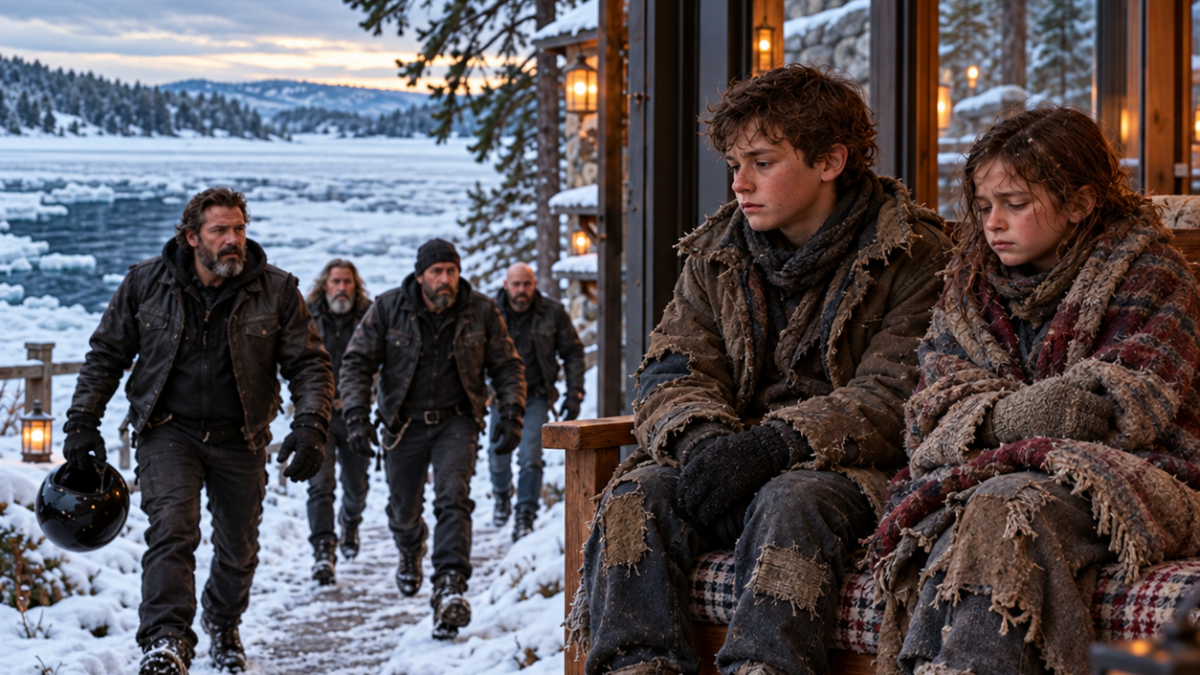
PART3:
Theo repeated the rules automatically.
“Not the dock.”
“The dock stairs.”
“That’s different.”
Opal stared.
Theo corrected himself.
“Not the dock. Not the bank. Not the ice.”
“Why?”
“Ice that looks solid is a liar.”
“Good.”
“You say that every day.”
“I’ll say it tomorrow too.”
Behind Opal, on the narrow hallway wall, hung a small black-and-white photograph.
A boy.
Maybe nine.
Wool cap.
Round cheeks.
Standing beside a frozen creek.
Theo had asked who he was several times.
Opal never answered properly.
“Family.”
“What family?”
“Mine.”
“That means mine too.”
“Go shovel.”
So Theo stopped asking.
But he had noticed that his grandmother dusted that photograph every morning.
She dusted nothing else every morning.
Not the lamp.
Not the trophy case.
Not even the framed photograph of Theo’s mother, who lived in Spokane and called twice a month when life allowed.
Only that boy.
Every morning.
Theo lifted the shovel over one shoulder.
Opal caught him before he reached the side door.
“Say the rules again.”
He rolled his eyes.
“The back stairs only.”
“No river.”
“No ice.”
“Come straight back.”
“And?”
Theo frowned.
Opal waited.
“If anything feels wrong…”
“Come get an adult.”
Theo nodded.
She touched his hood.
“Good.”
He went outside.
Spruce Bend Lodge had been in Opal’s family since 1974.
Twenty rooms.
Log walls.
Stone fireplace.
Old brass numbers on doors.
River behind it.
Mountain road in front.
In summer, fishermen loved it.
In fall, hunters.
In December, people came for snow.
January was death.
Empty rooms.
Frozen pipes.
Heating bills.
Roof repairs.
The east wing needed nine thousand dollars of work before spring.
So when a man named Lloyd Beckett called in November asking to reserve fourteen rooms for a winter coat collection weekend, Opal said yes before she asked what kind of group it was.
“Selkirk Iron Brotherhood.”
“What’s that?”
“Motorcycle club.”
Silence.
Lloyd laughed.
“We’re housetrained.”
Opal did not.
“What do you want fourteen rooms for?”
“Coat drive.”
“What kind?”
“Elementary schools.”
That confused her.
Lloyd explained that each January the chapter collected winter coats, gloves, and boots for rural schools across three counties.
Many of their members worked construction, trucking, emergency medicine, forestry, mechanics.
They gathered donations all winter.
Spruce Bend sat roughly halfway between two distribution points.
Opal took a deposit.
Then spent two months regretting it.
The first rider through the front door was Dwight Lockridge.
He looked exactly like the mistake she imagined she had made.
Six-foot-three.
Maybe two-forty.
Fifty-eight.
Shoulders broad enough to block half the doorway.
Scar through left eyebrow.
Tattooed knuckles.
Black vest under an insulated riding coat.
Gray beard.
He stamped snow from his boots.
Opal arranged her face into the expression she used for county tax officials.
“Reservation.”
“Beckett.”
“Name?”
“Dwight Lockridge.”
She found the page.
“Room six.”
“East wing?”
“Yes.”
“Can I switch to parking side?”
“Why?”
“Daughter.”
That surprised her.
“Problem with the river view?”
“Problem with my daughter loving water.”
Opal looked up.
Dwight’s expression remained serious.
“She’s eight.”
“Wanders when she draws.”
“She’ll be in my sight this whole weekend, but I’d rather remove one bad option if I can.”
Opal respected the sentence despite wanting not to.
“Room eleven.”
“Thank you.”
The door opened again.
A silver-haired woman came in carrying a knitting bag.
Behind her walked a little girl wrapped in a red scarf.
Small.
Gray eyes.
Dark blond hair.
Sketchbook against chest.
She stopped immediately beneath the mounted trout above the fireplace.
Stared.
Completely.
Dwight walked over.
Opal watched.
He did not bark:
Hazel.
Shoes.
Move.
Instead he knelt.
Right knee directly into melted snow.
His face level with hers.
Slowly unwound the scarf.
One loop.
Then another.
He asked a question too quietly for Opal to hear.
Hazel kept staring at the fish.
Dwight waited.
Five seconds.
Ten.
Most adults, Opal knew, could not tolerate a silent child that long.
They filled space.
Repeated.
Prompted.
Threatened.
Dwight simply waited.
Hazel eventually whispered something.
Dwight nodded.
She smiled.
Then laughed.
Opal looked away.
Performance.
Men who frightened people often learned when to look gentle.
Dwight brought Hazel to the desk.
“Hazel.”
She looked at Opal.
“Mrs. Granger.”
Hazel held the sketchbook tighter.
“Mr. Beckett said there are swans.”
Opal looked toward the river.
Two trumpeter swans wintered near a patch of open current below the lodge.
“Sometimes.”
Hazel brightened.
“Can I draw them?”
“No.”
The answer came sharper than intended.
Dwight looked at Opal.
Hazel shrank slightly.
Opal continued:
“The back porch is closed.”
“River bank is off-limits.”
“Ice too.”
“You don’t go down there.”
Hazel nodded.
“Yes, ma’am.”
Dwight said:
“Those are also my rules.”
Opal glanced at him.
“Good.”
For the next two hours, the lodge filled with wet boots, laughter, coffee, and donated coats.
Not chaos.
Organization.
Two hundred sixty coats went into the barn.
Sorted by size.
Children.
Women.
Men.
Gloves.
Hats.
Boots.
Opal found herself irritated by their efficiency.
It made disliking them inconvenient.
One rider, Mitch Garrity, repaired a loose hinge on the pantry door without being asked.
Clyde Mayberry carried firewood.
A woman named Renée cleared ice from the front steps.
Lloyd Beckett, chapter president, spent twenty minutes helping Theo find a missing shovel even though it was leaning exactly where Opal said it would be.
Still, Opal remained watchful.
She had watched things her whole life.
River.
Guests.
Weather.
Doors.
Children.
Especially children.
At 3:20, Theo stood at the bottom of the dock stairs scraping ice.
He was not on the dock.
Technically.
His boots remained on the final stone landing several feet above it.
He chipped the last frozen ridge.
Then saw red.
A flash through white.
He looked downstream.
Hazel.
Red scarf.
Sketchbook.
She was walking down the bank.
Toward the shelf ice.
Theo froze.
For half a second his mind refused the image.
Nobody went on the river.
Everyone knew.
Grandma said.
Dwight said.
Opal had said it directly to Hazel.
But Hazel was moving toward open water where two swans floated in the dark seam of current.
She stopped.
Opened her sketchbook.
Took another step.
Theo dropped the shovel.
“H-H—”
Nothing.
Fear seized his tongue.
“Haz—”
No sound.
He ran.
The first crack came before he reached the bank.
Not loud.
Short.
Dry.
Like somebody breaking a cracker in a quiet room.
Hazel looked down.
Ice dropped.
She vanished.
Theo ran harder.
His boots slid.
He fell on one knee.
Got up.
By the time he reached the edge, Hazel’s head had surfaced.
One mitten slapped at the ice.
Then the other.
Her mouth opened.
No scream.
Cold had taken that first.
Theo stared.
Grandma.
Get an adult.
Lodge.
One hundred fifty yards.
Wind.
His voice.
How long?
Theo did not know how children drown.
But he knew how long a minute felt when you could not breathe.
The sensible answer:
Run.
The remembered answer came from dinner conversations Opal had never realized were lessons.
“If somebody goes through ice, you don’t run out standing up.”
Theo heard her voice.
“You spread your weight.”
“You lie down.”
“You reach with something.”
“Shovel.”
“Branch.”
“Rope.”
“Anything longer than your arm.”
“If they can grab it, pull.”
Theo dropped to his stomach.
He shoved the snow shovel handle-first across the ice.
“H-Hazel!”
She did not look.
The current was pushing her beneath the shelf.
Theo crawled forward.
The ice groaned.
“G-Grab!”
Her mitten found aluminum.
Slipped.
Found it again.
Both hands.
Theo pulled.
Nothing.
Hazel felt impossible.
Fifty pounds plus water plus current became a truck.
Theo dug his elbows into snow.
Pressed boot toes against a frozen ridge.
Pulled.
Hazel’s shoulders reached the edge.
Ice cracked beneath Theo.
He stopped breathing.
Pulled again.
The shelf collapsed.
The river hit him.
Cold so violent it did not feel cold at first.
It felt like being hit with electricity.
Theo dropped to his chest.
Then realized his boots had found gravel.
Water three feet deep near shore.
He stood.
Gasping.
Could not breathe.
Could not think.
Hazel slid backward.
Theo grabbed her under arms.
“NO!”
His voice worked now.
Fear finally broke it loose.
“No.”
He heaved.
Hazel came over broken ice.
Theo climbed after.
Hands slipping.
Knees scraping.
They reached snow.
Lay there.
Breathing.
Neither cried.
Not yet.
The swans floated fifteen feet away.
Uninterested.
Theo rolled.
“Get up.”
Hazel stared.
“G-Get up.”
“I can’t.”
“You h-have to.”
He stood.
Almost fell.
Pulled her.
Twenty yards uphill, the closed seasonal back porch waited.
Glass walls.
Door not actually locked because Opal hated locking doors that might freeze shut.
Theo dragged Hazel inside.
His fingers barely worked.
He remembered blankets.
Cedar chest.
He opened it.
Cream wool throws.
Summer guests used them around fire pits.
Theo stripped Hazel’s soaked outer coat.
Her red scarf.
Wet gloves.
He did not know what else was right.
He wrapped her.
One blanket.
Then second.
Sat her on bench.
Then sat beside her because suddenly standing seemed impossible.
His jeans froze first.
He could feel fabric stiffening.
Hazel’s teeth hammered.
Theo’s did too.
For several minutes neither spoke.
Then Hazel whispered:
“My sketchbook.”
Theo looked.
River.
Gone.
“I’m sorry.”
Hazel cried.
Not about almost drowning.
About drawings.
Children choose what they can understand.
“My dad said don’t go.”
Theo said nothing.
“He’s going to be mad.”
“No.”
“Yes.”
“He’s not like that.”
“You don’t know him.”
Hazel was right.
Theo barely knew any of them.
She tightened blanket.
“He’ll take me home.”
“No swans.”
Tears.
“Please don’t tell.”
Theo looked toward lodge.
Then river.
Then his wet clothes.
Grandma.
Her rules.
Her face.
He had broken every one.
Dock.
Bank.
Ice.
He imagined disappointment.
Worse than anger.
He whispered:
“If you don’t tell about me.”
Hazel looked at him.
“What?”
“I went on ice.”
“You saved me.”
“Grandma said never.”
Hazel thought.
Children understood bargains.
“Promise?”
Theo nodded.
“Promise.”
They sat.
Shoulders touching.
Wet clothes cooling beneath blankets.
Theo did not know the danger had shifted.
The river had not finished with him merely because he climbed out.
Inside the great room, nobody noticed at first.
At 3:52, Joyce Beckett looked up from knitting.
Hazel’s chair empty.
Cards scattered.
She assumed bathroom.
Five minutes.
Then kitchen.
Then room.
By 4:00, concern spread.
“Has anyone seen Hazel?”
Dwight stood.
Very slowly.
No chair scrape.
No sudden movement.
That frightened Joyce more than panic would have.
“Which door?”
“I don’t know.”
Dwight looked at floor.
At card table.
At Hazel’s pencil case.
No coat.
No sketchbook.
“Was her scarf here?”
“No.”
Dwight nodded.
“Okay.”
Joyce’s voice broke.
“I only looked away—”
Dwight put one hand on her shoulder.
“Stop.”
She stared.
“You didn’t make her walk anywhere.”
“We find first.”
“Blame later if we need it.”
He moved.
Twenty minutes.
Barn.
Rooms.
Road.
Parking lot.
Dwight rode one mile down highway checking ditches.
Lloyd organized property search.
No shouting at first.
Then names.
Hazel.
Hazel.
At 4:10, Clyde Mayberry walked river path.
He saw broken ice.
Black hole.
Shovel.
Then a sketchbook frozen at the edge, pages spread and stiff.
His heart stopped.
“DWIGHT!”
The shout hit the lodge.
Dwight had just returned.
He dropped helmet.
Ran.
Opal heard.
Something old woke inside her.
Not thought.
Memory.
River.
Ice.
Boy in wool cap.
She did not go to the bank.
She went to back porch because it was closest.
Door open.
Two children.
Bench.
Blankets.
Still.
Hazel’s hair wet.
Theo gray.
Opal dropped.
“Theo.”
He looked at her.
She saw wet.
Blankets.
Fear.
“Did you go on the ice?”
Theo’s mind closed.
“N-No.”
Opal believed him because the alternative was unbearable.
She turned toward Hazel.
Boots thundered.
Dwight entered.
Helmet still in hand.
He saw his daughter.
His face disintegrated.
One second.
Then control returned.
Opal stood.
All fear became anger because anger was a shape she could hold.
“You let an eight-year-old walk to my river.”
Dwight did not defend himself.
He knelt in front of Hazel.
Not touching.
Looked at lips.
Breathing.
Hands.
Eyes.
“Hazel.”
She stared.
“I’m not asking questions.”
“Just checking you.”
He reached slowly.
Two fingers at wrist.
Pulse.
“Dad.”
“I’m here.”
“I’m not telling.”
Everyone heard.
Dwight’s eyes flicked toward Theo.
That phrase mattered.
I’m not telling.
Not:
I don’t remember.
Not:
I don’t know.
Not:
Nothing happened.
A child protecting a secret.
Dwight knew secrets.
He had spent twenty-four years listening to children carry them.
Opal said:
“What does that mean?”
Dwight answered Hazel.
“It means you don’t have to tell me anything yet.”
Opal exploded.
“There is a hole in my river.”
“Her book is frozen to it.”
“And you’re telling her not to speak?”
“Yes, ma’am.”
“Not yet.”
Gwen Haskell, a lodge guest from Spokane, stood in doorway.
Phone already in hand.
“Somebody should call police.”
Nobody stopped her.
For nine minutes, Dwight became the man everyone watched.
Hazel changed into dry clothing behind blankets.
She refused to move from bench.
When Dwight tried to lift her, she grabbed sleeve and panicked.
He stopped instantly.
No force.
“Okay.”
“We bring warm here.”
Propane heater.
Hand warmers.
Dry socks.
Coat.
No argument.
Deputy Nick Ellsworth arrived at 4:31.
Thirty-one.
Bonner County Sheriff.
He read scene instantly and incorrectly.
Wet child.
Broken ice.
Motorcycle club.
Angry lodge owner.
Biker father.
He approached.
“Which one is father?”
Dwight stood.
“I am.”
“Name?”
“Dwight Lockridge.”
“Step away from your daughter.”
Dwight stepped.
No protest.
Ellsworth crouched.
“Hey, sweetheart.”
Hazel shrank.
“My name’s Nick.”
“Did somebody hurt you?”
Dwight spoke.
“Deputy.”
Ellsworth turned.
“Please don’t ask like that.”
Silence.
“What?”
“Don’t put answer inside question.”
Ellsworth straightened.
“I know how to interview a child.”
“Then you know yes-or-no questions from a uniform can create compliance.”
“Funny thing for you to know.”
Dwight’s face changed almost imperceptibly.
“I’ve watched it go wrong.”
Ellsworth frowned.
“Sir, stay back.”
Dwight stepped farther.
Opal crossed arms.
Finally someone official.
Finally order.
Clyde brought shovel.
“This was on ice.”
Opal immediately said:
“Theo’s.”
“He was clearing stairs.”
“He must’ve dropped it and gone for help.”
She turned to Theo.
“That right?”
Theo looked down.
“I don’t know.”
Opal heard what she needed.
Ellsworth wrote.
Dwight looked.
Really looked.
Theo’s parka was dark below waist.
Not snowmelt.
Too much.
Jeans frozen from knees down.
White crust.
River silt line.
Hands gray-violet under nails.
Shivering hard.
Hazel had blankets.
Changed clothes.
Warmth.
Theo had sat beside her in soaked denim for nearly forty minutes.
Dwight looked at shovel.
Looked at Hazel’s repeated glance toward Theo.
Understood.
Almost.
Only timing missing.
Opal said something to deputy.
Dwight did not hear.
He watched Theo.
The boy whispered to Hazel.
No stutter.
Words slow.
Smooth.
Slurred.
Danger.
Dwight said:
“Mrs. Granger.”
She turned.
“I think your grandson is colder than he looks.”
Her fear attacked.
“Don’t.”
“Ma’am—”
“Don’t stand there with your daughter’s trouble and put it on him.”
“He’s wet to chest.”
“He’s been by heater.”
“Not enough.”
Ellsworth said:
“Mr. Lockridge, back.”
Dwight obeyed.
No authority.
No trust.
Only observation.
So he watched.
4:49.
Theo stopped shivering.
Dwight’s entire body went cold.
People often thought shivering stopping meant warming.
In significant hypothermia it could mean the opposite.
The body losing its ability to fight.
“Mrs. Granger.”
“No.”
His voice changed.
Flat.
Command.
“Look at him.”
She turned.
Theo tried:
“I’m o—”
Nothing.
His eyelids dropped.
Head tipped toward Hazel.
Hazel screamed.
“Theo!”
Dwight crossed room.
Opal grabbed his sleeve.
“Don’t touch him.”
He froze.
Did not pull away.
Did not raise voice.
“Look at his lips.”
She looked.
Gray.
Her grip changed.
Anger vanished.
“What do I do?”
“You listen.”
Dwight knelt.
“Move him gently.”
“Very gently.”
“Cold heart can become unstable.”
“No rubbing.”
“No standing.”
“Keep him flat.”
He unzipped wet parka.
“Kitchen shears.”
Opal ran.
Seventy-four years old.
No hesitation.
Returned.
She put shears into the hand she had feared.
Dwight cut denim.
Slow.
Ankle to hip.
Removed wet fabric without jostling.
“Dry blankets.”
Lloyd moved.
“Mitch. Sleeping bag in my truck.”
Mitch moved.
“Hand warmers.”
Clyde.
“Deputy, radio.”
Ellsworth hesitated one second.
Then:
“Dispatch, second patient.”
“Male, nine.”
“Moderate hypothermia.”
“Shivering ceased.”
“Altered mental status.”
“Slurred speech.”
Ambulance seventeen minutes.
Dwight wrapped core.
Towels around warmers.
Chest.
Armpits.
Groin.
Not hands.
Not feet.
Opal asked:
“Why not his legs?”
“Core first.”
“Warming limbs first can push cold blood back to heart too fast.”
Ellsworth stared.
“Where did you learn this?”
Dwight did not look up.
“Wilderness medicine.”
“How?”
“I run winter camp.”
“For who?”
“Foster kids.”
Everyone went quiet.
Dwight continued working.
“Forty-hour WFR.”
“Renewed every three years.”
“Because children don’t always tell you when they’re cold until they’re very cold.”
The biker they had treated as a threat was suddenly directing the room.
No triumph.
No “I told you.”
Only tasks.
Four large men formed wind wall.
Knees to porch boards.
Leather blocking drafts.
Theo lay in sleeping bag.
Small.
Pale.
Hazel crawled near.
Dwight said:
“Theo.”
Boy’s eyelids fluttered.
“Tell me about swans.”
Nothing.
“Theo.”
“Two.”
Stutter returned.
Dwight almost smiled.
Fight.
Words catching meant brain still working harder.
“Two what?”
“S-swans.”
“What were they doing?”
“S-swimming.”
“Who wanted to draw them?”
“H-Hazel.”
Hazel started crying.
Dwight kept voice low.
“Tell me about promise.”
Theo looked at Hazel.
Then Opal.
“I p-promised.”
“What?”
“N-not to tell.”
“Why?”
“She’d g-get in trouble.”
Hazel whispered:
“And him.”
Theo shut eyes.
Dwight said:
“Promises matter.”
Everyone listened.
“But some secrets stop somebody from being safe.”
“You’re allowed to put those down.”
Theo’s eyes opened.
“Whose secret?”
“M-mine.”
“So you choose.”
“No one takes it.”
Theo looked at Opal.
“Grandma.”
Her hands trembled around his.
“I went on ice.”
Opal stopped breathing.
“H-Hazel fell.”
Theo cried.
“I c-couldn’t yell.”
“So I l-laid down.”
“Like you said.”
“I used shovel.”
“I pulled.”
“Then ice b-broke.”
“I got wet.”
“I got her out.”
Hazel said:
“He didn’t let go.”
Dwight looked away.
Clyde Mayberry cried openly.
Nobody laughed.
Opal bent over grandson.
“You did right.”
Again.
“You did right.”
Again.
“You did exactly right.”
Her voice changed.
Not grandmother.
A thirteen-year-old girl speaking across sixty-one years.
Ambulance at 5:09.
Paramedic Joel Ambrose entered.
Dwight gave report.
“Shivering stopped 4:49.”
“Slurring 4:52.”
“Wet clothing removed.”
“Passive and active core rewarming.”
“No peripheral warming.”
“Kept horizontal.”
“No oral fluids.”
Paramedic looked at him.
“Medical?”
“No.”
“Wilderness responder.”
“Good work.”
Theo loaded.
Opal climbed with him.
Hazel stable but chilled.
Dwight rode with deputy because his motorcycle was useless for transporting an eight-year-old in twenty-two-degree weather.
At hospital, Theo’s core temp:
89.2.
Dr. Janet Kershaw later crouched before Opal.
“He’s 97 now.”
“Rhythm normal.”
“Warm fluids.”
“Forced-air warming.”
“He’ll keep all fingers and toes.”
Opal sat.
Doctor continued:
“Another hour without appropriate warming and conversation changes.”
“Who started treatment?”
Opal looked across waiting room.
Dwight sat alone.
Vest still on.
Hands folded.
“He did.”
“Who?”
“Her father.”
Doctor nodded.
“He did everything right.”
“Hypothermic children get hurt when people panic.”
“Rubbing limbs.”
“Hot baths.”
“Forcing walking.”
“Rough movement.”
“He avoided all of it.”
Opal stood.
Went to vending machine.
Bought two terrible coffees.
Carried one to Dwight.
Sat.
Silence.
He did not fill it.
Finally:
“My brother was Gordon.”
Dwight looked at her.
“He was nine.”
“1965.”
“Sand Creek.”
“Dog went out on ice.”
“He followed.”
“I was thirteen.”
“I ran for help.”
Her voice did not shake.
Sixty-one years had sanded grief smooth.
“By time men came…”
She stopped.
Dwight said nothing.
“My mother never blamed me.”
“She didn’t have to.”
“I did it for her.”
“My whole life.”
“I kept river out.”
“I made rules.”
“I kept Theo on a leash made out of fear.”
She laughed.
“And today he did every single thing I ever taught him.”
“Lie down.”
“Reach.”
“Pull.”
“Don’t stand.”
“I taught him how to save somebody.”
“And when he did it…”
Her face collapsed.
“I couldn’t let myself believe it.”
Dwight waited.
Opal looked at vest.
“I looked at you and decided what you were.”
Dwight glanced down.
“Most do.”
“That’s not an excuse.”
“No.”
“I thought leather told me enough.”
“No.”
“It told me nothing.”
Dwight looked at hands.
“It wasn’t me.”
“It was Theo.”
“I just noticed.”
Opal stared.
“That is exactly what I mean.”
At 10:00, Deputy Ellsworth arrived.
Cap in hands.
Referral from child welfare closed.
No neglect finding.
No abuse.
No unsafe intentional exposure.
Accident.
Child rescue.
Delayed recognition of Theo’s condition.
He approached Dwight.
“Can I ask you something?”
Dwight nodded.
“At academy, child interview course.”
“Second day.”
“We watched a video.”
“Six-year-old girl.”
“Wouldn’t speak nine days.”
“Interviewer sat on floor ninety minutes.”
“Never suggested answer.”
Dwight became still.
Ellsworth continued:
“I wrote one word.”
“Wait.”
“The tape said Lockridge.”
Dwight looked away.
“Panhandle Children’s Advocacy Center.”
Silence.
Ellsworth stared.
“That was you.”
Dwight answered:
“Long time.”
“How long?”
“Twenty-four years.”
“How many interviews?”
Dwight did not answer.
Lloyd did from across room.
“Over three thousand kids.”
Opal looked at him.
Lloyd continued:
“He helped build interview protocol in north Idaho.”
“Trained deputies.”
“Case workers.”
“Prosecutors.”
“Quit five years ago.”
Ellsworth turned back.
“I told you I knew how to talk to scared kids.”
Dwight gave small tired smile.
“You did what your training gave you.”
“I did it badly.”
“You stopped when asked.”
“That matters.”
Ellsworth looked at vest.
“Why didn’t you say who you were?”
Dwight frowned.
“You didn’t ask.”
The sentence stayed in room.
You didn’t ask.
Opal reached toward Dwight.
Straightened folded collar of leather vest.
Gentle.
Almost maternal.
No words.
Sunday morning, Theo woke hungry.
Good sign.
Applesauce.
Toast.
Hazel came in.
Sketchbook warped from river.
Clyde retrieved it from ice.
Joyce dried pages all night.
First ruined.
Second:
two swans.
Dark water.
Hazel tore it out.
“For you.”
Theo took it.
“Th-thanks.”
Nobody rushed his word.
Nobody finished it.
Nobody looked away.
Three weeks later, Opal changed one thing.
On back porch bench, she left cream wool throw draped over arm.
Not locked in chest.
Available.
Because rules could protect.
But access mattered too.
Because children heard more than adults thought.
Because fear could teach life-saving things if it did not become prison.
Because a boy in 1965 had died.
And a boy in 2026 had lived.
Not because history repeated.
Because somebody learned from it.
The Selkirk Iron Brotherhood returned next January.
Opal reserved sixteen rooms.
When Lloyd called, he asked:
“Still take leather?”
Opal replied:
“I take cash.”
He laughed.
Then she added:
“And coffee’s free for anyone who knows hypothermia.”
Dwight brought Hazel.
Now nine.
Theo ten.
They went nowhere near ice without adults.
Both complained constantly.
Opal considered that proof she was doing her job.
The story spread farther than anyone wanted.
Headline:
9-YEAR-OLD SAVES BIKER’S DAUGHTER FROM ICY RIVER.
Another:
HELL’S ANGEL SAVES CHILD HERO FROM HYPOTHERMIA.
Dwight hated both.
Theo hated being called hero.
“It was shovel.”
People laughed.
He meant it.
He had not felt brave.
He had felt terrified.
At school assembly, principal asked him to speak.
Theo refused.
Then agreed to demonstrate ice rescue.
He lay on gym floor.
Pushed broom handle.
“D-don’t stand.”
“Spread weight.”
“Reach.”
“Call help first if there’s time.”
“And don’t go out if you can throw something.”
Teacher asked:
“Were you scared?”
Theo nodded.
“Very.”
“Then why did you go?”
He thought.
“Because she was more scared.”
That sentence went viral.
Theo disliked that too.
Dwight understood.
“People like turning hard moments into clean sentences.”
Theo asked:
“Why?”
“Easier to remember.”
“Is that bad?”
“Not always.”
“What do they get wrong?”
Dwight looked at him.
“That brave people know what to do.”
Theo frowned.
“You did.”
“No.”
“I knew some things.”
“Different.”
They developed friendship.
Unusual.
Nine-year-old boy and biker father.
Dwight taught Theo that a stutter did not need correction.
Theo taught Dwight that eight-year-old daughters could manipulate both fathers and grandmothers with equal precision.
Hazel visited lodge.
Sketched constantly.
Swans.
Motorcycles.
Theo.
Opal.
Dwight sitting with coffee.
One day Theo found drawing of Dwight kneeling beside him.
Leather wall around.
“Why’d you draw that?”
Hazel shrugged.
“Because that’s when everybody stopped being scared of him.”
Theo looked at picture.
“Were you scared?”
“No.”
“Why?”
“He’s my dad.”
Theo understood.
Appearance was relative.
To Hazel, black leather meant home.
To Opal, danger.
To deputy, suspicion.
To foster children at winter camp, Dwight’s vest meant the man who always waited at bottom of ski hill until last child came down.
Same object.
Different story.
Months later Opal finally showed Theo photograph.
Boy in wool cap.
“Gordon.”
“My brother.”
Theo sat at kitchen table.
“What happened?”
“Ice.”
She told whole story.
Dog.
Creek.
Break.
She ran.
Gordon gone.
Theo listened.
Then:
“Is that why you hate river?”
“Yes.”
“Do you hate me going in?”
Opal closed eyes.
“Yes.”
“But I had to.”
“I know.”
“Are you mad?”
“No.”
“Were you?”
“I was scared enough to call it anger.”
Theo thought.
“Dwight says adults do that.”
Opal snorted.
“Dwight says too much.”
Then she became serious.
“I was proud.”
Theo looked surprised.
“Really?”
“Yes.”
“And terrified.”
“Both can live same house.”
Theo smiled.
“That sounds like Dwight.”
Opal pointed fork.
“Don’t tell him.”
At age eleven, Hazel asked why Dwight knew so much about talking to children.
He had avoided details.
Now she asked directly.
“Were you police?”
“No.”
“Therapist?”
“Sort of team.”
“What happened?”
Dwight told age-appropriate truth.
He worked at advocacy center.
Children who had been hurt.
Interviewed them carefully.
Hazel asked:
“Did it make you sad?”
“Yes.”
“Why’d you stop?”
He hesitated.
“Last girl.”
There was always a last one.
A nine-year-old named Emily Torres.
She disclosed abuse after four interviews.
Dwight sat with her ninety minutes.
She trusted him.
Case proceeded.
Months later placement failed.
She ran.
Overdosed at fourteen.
Not Dwight’s fault.
Still broke something.
He quit.
Rode more.
Joined Brotherhood.
Needed places where nobody asked him to hear terrible things.
But skill remained.
Observation remained.
Patience remained.
The porch called it back.
Hazel listened.
“Did Theo save me because you used to help kids?”
“No.”
“Did you save Theo?”
“I helped.”
“Grandma Opal says you saved him.”
“Grandma Opal exaggerates when emotional.”
Hazel smiled.
“You’re bad at compliments.”
“Yes.”
At twelve, Theo’s stutter worsened after middle-school bullying.
One boy mimicked him.
Another filmed.
Video online.
Theo stopped speaking in class.
Opal wanted war.
Dwight offered something else.
“Bring him to clubhouse.”
Opal raised eyebrow.
“Why?”
“Because half these idiots can’t finish a sentence sober.”
She laughed.
Theo came.
No therapy session.
No lecture.
Pool.
Pizza.
Motorcycle maintenance.
Nobody rushed him.
When he got stuck on word, they waited.
First uncomfortable.
Then normal.
Jed—one rider with scarred neck—stuttered too.
Had since childhood.
He told Theo:
“People think stutter means your brain doesn’t know word.”
“It means traffic jam.”
“Word’s there.”
“Road’s crowded.”
Theo repeated.
“Traffic jam.”
“Exactly.”
Months later, he gave school presentation.
Slow.
Stuttered.
Finished.
Class applauded.
Not hero applause.
Normal.
He liked that.
At thirteen, Theo became junior volunteer with local search and rescue.
Opal said no.
Then yes under supervision.
He specialized in cold-water safety.
Of course.
Dwight teased:
“Could choose chess.”
Theo replied:
“Boring.”
Hazel became artist.
At fourteen she won regional youth art competition.
Painting:
two swans.
Black water.
Broken ice.
On shore, small boy holding shovel.
No biker.
No adults.
Title:
BEFORE ANYONE SAW.
Judge asked why.
Hazel answered:
“Because sometimes the important thing happens before grown-ups arrive.”
Dwight cried privately.
Hazel knew.
Said nothing.
Opal aged.
At eighty, still ran lodge.
At eighty-two, finally let Theo handle booking software.
At eighty-three, roof repaired after Brotherhood organized fundraiser without permission.
Opal furious.
Then saw check.
Less furious.
Lloyd said:
“You housed us before you liked us.”
Opal replied:
“I still don’t like half of you.”
“Progress.”
They laughed.
Deputy Ellsworth changed too.
After porch, he returned to child-interview training.
Not because Dwight embarrassed him.
Because he saw how quickly assumptions formed.
He invited Dwight to train deputies.
Dwight refused twice.
Third time accepted.
First slide:
NO UNASKED YES/NO QUESTIONS.
Second:
BEHAVIOR IS DATA.
Third:
WHAT ARE YOU ASSUMING BECAUSE OF WHO IS IN FRONT OF YOU?
Ellsworth sat first row.
Took notes.
Years later became sergeant.
When training new deputies, he told story.
Not names at first.
“Cold-water incident.”
“Child witnesses.”
“Adult suspect assumptions.”
Then showed photo of Dwight.
Vest.
Scar.
Tattooed knuckles.
Asked class:
“What do you see?”
Answers cautious.
Motorcycle club.
Possible intimidation.
Older male.
Then second photo.
Dwight at children’s advocacy center twenty years earlier.
Business-casual shirt.
Sitting on floor across from child drawing.
“Same man.”
Room changed.
Ellsworth said:
“Your first read matters.”
“It also lies.”
“Check it.”
At sixteen, Theo saved another person.
Not dramatically.
School bus crash on icy road.
He helped younger student out.
Kept him warm.
No headlines.
Better.
He called Dwight after.
“I knew what to do.”
Dwight said:
“Good.”
“I wasn’t scared.”
Pause.
Then Theo corrected:
“I was.”
“Better.”
At eighteen, Theo graduated.
Opal sat front.
Dwight and Hazel behind.
Theo’s speech therapy helped but stutter remained.
He had stopped hating it.
He gave graduation speech because classmates elected him.
Opening:
“I’ve spent a lot of my life waiting for words.”
Audience quiet.
“So I learned waiting isn’t empty.”
He looked at Dwight.
“Sometimes waiting is the kindest thing a person can do.”
Dwight lowered head.
Theo continued:
“When someone’s scared, don’t finish their sentence.”
“When someone looks different, don’t finish their story.”
Opal cried.
Dwight pretended allergies.
Hazel sketched.
Theo studied emergency medicine.
Not because hero story.
Because he liked knowing what to do when minutes mattered.
Paramedic.
Then wilderness EMT.
Eventually flight medic.
First winter as licensed paramedic, call:
ice rescue.
Adult fisherman.
Hypothermia.
Theo heard dispatch and became nine again for half second.
Then training.
Patient out.
Wet.
Shivering.
Core warming.
Gentle.
Hospital.
Lived.
Theo sat afterward in ambulance.
Hands shaking.
Partner said:
“You okay?”
“Yeah.”
Then:
“No.”
They sat.
He called Opal.
She answered second ring.
“I had ice call.”
Silence.
“Patient okay?”
“Yes.”
“Good.”
Theo waited.
Opal said:
“You did it right?”
“Yes.”
“Then come eat.”
Simple.
Home.
Hazel went to art school.
Painted large works about memory.
One exhibit featured worn clothing.
Uniforms.
Hospital gowns.
Fire gear.
Leather vest.
Curator asked about vest.
Hazel said:
“People think clothing is evidence.”
“Of what?”
“Character.”
“Isn’t it?”
“No.”
“It’s evidence of clothing.”
Critics loved phrase.
Dwight hated art critics.
He attended anyway.
At one gallery opening, wealthy donor stared at Dwight in vest.
Asked:
“Are you part of installation?”
Hazel laughed for five minutes.
Dwight did not.
Opal died at eighty-eight.
In room at Spruce Bend.
Window facing river.
Theo beside.
Hazel.
Dwight.
Snow outside.
Before dying, she asked Theo:
“You still afraid of ice?”
“Yes.”
“Good.”
He laughed through tears.
She touched hand.
“Fear’s useful.”
“Just don’t let it become landlord.”
That was new.
Theo smiled.
“Dwight say that?”
“No.”
“Mine.”
After funeral, they found envelope addressed Theo.
Inside photograph of Gordon.
On back:
I RAN FOR HELP.
YOU STAYED.
NEITHER CHILD WAS WRONG.
THAT SENTENCE TOOK ME 61 YEARS.
DON’T TAKE THAT LONG WITH YOURSELF.
Theo cried harder reading than funeral.
Because he had carried guilt too.
He saved Hazel.
Yes.
But also lied.
Broke rules.
Almost died.
People called him hero.
He sometimes felt fraud.
Opal knew.
Even without him saying.
Spruce Bend passed to Theo’s mother legally, then management to Theo and a cousin.
Theo preserved porch.
Not shrine.
Still used.
Cream blanket remained.
Replaced many times.
Tradition formed accidentally:
one wool throw always draped on arm.
Available.
No locked chest.
Guests asked why.
Staff said:
“Long story.”
Dwight aged.
Stopped riding long distances at seventy.
Still attended lodge weekends by truck.
Hazel mocked.
“You became cage driver.”
“Heat works.”
At seventy-four, he developed Parkinson’s symptoms.
Mild tremor.
Theo noticed before Dwight admitted.
“Doctor?”
“Yes.”
“Treatment?”
“Yes.”
“Scared?”
Dwight looked at him.
“Yes.”
“Good.”
Dwight smiled.
“Smartass.”
Tremor progressed slowly.
He continued training child advocates remotely.
Patience unchanged.
At seventy-six, he attended Theo’s wedding.
Opal gone.
Lloyd gone.
Many Brotherhood members younger now.
Theo married another paramedic named Mara.
Hazel maid of honor.
Dwight sat front.
During toast, Theo said:
“There are two people who taught me that saving someone is sometimes the easy part.”
Audience quiet.
“My grandmother taught me rules.”
“Dwight taught me attention.”
He looked at biker.
“And both taught me fear can either sharpen you or blind you.”
Dwight cried.
Publicly.
Did not care.
Years later, Theo and Mara had daughter.
Named Gordon? No.
Opal? Maybe middle.
They chose Anna Opal Granger.
When Anna turned five, Theo taught river rules.
Stay off ice.
Stay near adults.
If someone falls:
do not run onto ice.
Call help.
Reach from shore.
Throw.
Lie flat if absolutely necessary.
Mara watched.
“You’re scaring her.”
Theo stopped.
Old pattern.
Fear becoming inheritance.
He crouched.
“Anna.”
She looked.
“I’m telling you rules because I want you safe.”
“Not because river wants you.”
She frowned.
“Rivers don’t want things.”
Theo smiled.
Exactly.
He adjusted.
Opal had taught through fear because grief convinced her river had intent.
Theo taught through information.
History changed slightly.
That mattered.
Hazel had children too.
She taught them draw swans from shore.
Dwight became grandfather figure to all.
No formal title.
Kids called him D.
At eighty-one, he returned to Spruce Bend for coat drive.
Smaller Brotherhood turnout.
Forty riders.
Most came trucks.
Snow.
He sat on porch.
Cream throw over knees.
Theo sat beside.
They watched river.
“Do you remember?”
Theo asked.
“Everything.”
“I don’t.”
“What don’t you?”
“Getting cold.”
Dwight nodded.
“Brain protects.”
“I remember Hazel.”
“Shovel.”
“Grandma’s face.”
“Then pieces.”
Dwight looked at water.
“I remember your lips.”
Theo smiled.
“Romantic.”
“Gray.”
“Less romantic.”
They laughed.
Theo said:
“You know everybody thought you were bad father.”
“I know.”
“Did that hurt?”
Dwight thought.
“At time?”
“Yes.”
“Now?”
“Less.”
“Why?”
“Hazel knows.”
Theo nodded.
Dwight continued:
“Problem with reputation is you start wanting wrong people to understand you.”
“That can eat life.”
Theo looked.
“Who are right people?”
“People whose safety depends on truth.”
“People you love.”
“Maybe court.”
They laughed.
“Everybody else can catch up or not.”
Theo stored sentence.
Months later Dwight died.
Stroke.
Quick.
Hazel beside him.
Theo arrived too late.
That hurt.
He had spent career arriving.
Sometimes not.
At funeral, Hazel brought sketchbook page from river.
Two swans.
The one she gave Theo as child had stayed framed in Theo’s home.
She made copy.
Placed in casket.
Theo placed something else:
small patch from old leather vest.
Not club insignia.
Name strip:
LOCKRIDGE.
After service, young biker approached Theo.
“I heard story.”
Theo nodded.
“He saved you.”
Theo corrected:
“He saw me.”
The rider frowned.
“That’s what saved me.”
Years later, Spruce Bend Lodge still stood.
East roof repaired twice.
River still froze.
Swans still returned.
Back porch reopened each winter only under supervision.
On wall inside lobby, three photographs hung.
Gordon in wool cap.
Theo and Hazel wrapped in blankets.
Dwight kneeling beside them, black leather filling half frame.
Underneath:
LOOK TWICE.
Guests asked.
Theo usually told short version.
“Kids went through ice.”
“One pulled other out.”
“Biker noticed hypothermia.”
“Everyone lived.”
If they wanted dramatic story, internet had it.
He preferred lesson.
One afternoon a guest stared at Dwight photo.
Said:
“I wouldn’t trust a guy who looked like that around my kid.”
Theo was fifty by then.
Gray in curls.
Stutter still appeared when tired.
He looked at guest.
“That man interviewed more abused children than almost anyone in Idaho.”
Guest flushed.
“I didn’t mean—”
“I know.”
Theo smiled kindly.
“That’s the point.”
Years after rescue, Hazel returned alone.
Winter.
Sketchbook.
She walked to porch.
Not ice.
Never ice.
Two swans floated in open seam.
She drew them.
Then drew porch.
Bench.
Cream throw.
A small boy.
Large man.
Old woman.
No faces.
Only shapes.
Title:
THE THINGS WE THOUGHT WE SAW.
It became her most famous painting.
Critics wrote about prejudice.
Family.
Masculinity.
Trauma.
Childhood memory.
Hazel answered interviews politely.
But when asked:
“What is painting actually about?”
She said:
“My friend was freezing.”
“And nobody noticed because we were all looking at my dad.”
That was whole story.
Not that Theo saved biker’s daughter.
Not that biker saved Theo.
Those made good titles.
Truth was subtler.
A boy saved girl before adults saw.
Then adults arrived and began telling themselves story.
Biker negligent father.
Grandmother responsible guardian.
Quiet boy witness.
Deputy authority.
Leather danger.
Uniform safety.
Each label carried enough truth to become dangerous.
Dwight had lost sight of daughter for one minute.
True.
Opal loved Theo fiercely.
True.
Theo was frightened.
True.
Deputy wanted protect child.
True.
Bikers looked intimidating.
True.
None of those truths were enough.
Because Theo was not witness.
He was rescuer.
And victim.
Dwight was not just biker.
He was child interviewer.
Wilderness responder.
Father.
Opal was not just strict grandmother.
She was thirteen-year-old girl still running for help across sixty-one years.
Hazel was not just rescued child.
She was keeper of secret because she thought punishment worse than silence.
Ellsworth was not bad deputy.
He was competent man whose assumptions arrived faster than questions.
Everybody needed second look.
That was what cold afternoon taught.
Not “never judge.”
People judge constantly.
Brains must.
Danger exists.
But first judgment should be pencil, not ink.
Something revisable.
That was Dwight’s gift to porch.
And Theo’s.
At age sixty, Theo still worked part-time with wilderness medicine education.
At end of hypothermia class, he always asked:
“What’s dangerous sign people misunderstand?”
Students:
“Confusion.”
“Slurred speech.”
“Loss coordination.”
Then someone eventually:
“Stopping shivering.”
Theo nodded.
“Yes.”
“Why?”
They answer.
Body failing to generate heat.
Core cooling.
He would pause.
“My shivering stopped when I was nine.”
Class looked.
“Someone noticed.”
He touched old scar on palm from ice.
“That’s why I’m here.”
Then final slide appeared.
Photograph of Dwight.
Scar.
Leather.
Tattooed hands.
Students often surprised.
Theo said:
“This is person who noticed.”
Then photograph switched.
Dwight twenty years earlier at child advocacy center.
Then winter camp.
Then porch.
Same man.
Theo said:
“Clinical skill isn’t always wearing scrubs.”
“Competence isn’t always wearing badge.”
“Risk isn’t always wearing leather.”
“Look at patient.”
Not costume.
Then he told them something Dwight said in hospital waiting room long ago:
“All I did was stay out of his way.”
Theo disagreed.
Staying out of way was often hard.
Adults rush.
Fill silence.
Demand answers.
Force movement.
Need to feel useful.
Dwight knew when action mattered.
And when restraint mattered.
He warmed Theo aggressively enough to save him but gently enough not to hurt him.
He defended Hazel from leading questions but did not forbid investigation.
He saw Theo’s secret but let Theo tell it.
He had spent lifetime learning difference between doing something and controlling something.
That skill does not look heroic.
It looks patient.
Near end of life, Opal wrote another note.
Found in lodge desk years later.
Not addressed.
Theo kept it.
It read:
I spent most of my life believing danger announces itself.
Thin ice.
Stranger.
River.
Motorcycle.
Dark road.
It does not.
Sometimes danger is certainty.
Sometimes safety is person you told yourself not to trust.
I taught Theo never to go on ice.
He went because Hazel was there.
I taught Theo to help.
He listened.
I thought those lessons contradicted each other.
They did not.
Rules are for ordinary moments.
Character is what happens when rules collide.
Theo framed it beneath Gordon photo.
Because Gordon mattered.
Not as reason Theo saved Hazel.
As reason Opal taught him what to do.
Tragedy did not happen for purpose.
But people could decide whether pain ended with them or became knowledge.
Opal transformed fear imperfectly.
Theo inherited both fear and technique.
He kept technique.
Worked on fear.
That was enough.
One January afternoon, decades after original rescue, group of schoolchildren toured lodge for winter safety demonstration.
Teacher pointed to river.
Theo showed rescue pole.
One boy asked:
“Is this where you saved Hazel?”
“Yes.”
“Were you hero?”
Theo smiled.
“No.”
Kids disappointed.
“I was nine.”
“I was scared.”
“I made one good decision after another until I ran out.”
“What does that mean?”
“First I went toward her.”
“Then lay down.”
“Then used shovel.”
“Then stood because bottom shallow.”
“Then got her warm.”
“Then made a bad decision.”
“What?”
“Kept secret.”
Children listened.
“Then Dwight made good decision.”
“He looked at me.”
“Grandma made good decision.”
“She listened.”
“Deputy made good decision.”
“He called ambulance.”
“Paramedics.”
“Doctors.”
Theo pointed around.
“People love one hero because story fits in sentence.”
“Real rescue usually messy.”
“Many people.”
“Some wrong first.”
“Then right.”
Girl asked:
“Did Hazel really make you promise?”
“Yes.”
“Why?”
“She thought dad would be mad.”
“Was he?”
Theo thought of Dwight.
Kneeling.
Waiting.
“No.”
“He was scared.”
“People confuse those.”
Teacher smiled.
Another kid pointed at photo.
“Why did everyone think he was bad?”
“Because he looked like somebody they were taught to fear.”
“Was he Hell’s Angel?”
Theo paused.
“Motorcycle brotherhood.”
“Close enough for town.”
Kids laughed.
“Were they criminals?”
“Some had records.”
“Some didn’t.”
“Was Dwight?”
“No.”
“So people were wrong.”
Theo shook head.
“They were incomplete.”
That was better word.
Not wrong.
Incomplete.
Opal saw leather.
Incomplete.
Ellsworth saw possible risk.
Incomplete.
Guests saw negligent father.
Incomplete.
Dwight saw hypothermia.
More complete.
Theo saw frightened girl.
Enough to act.
Hazel saw friend.
Enough to keep secret.
Everybody sees fragments.
Wisdom is remembering fragment is not whole.
At end of tour, children walked past back porch.
Cream wool throw still on bench.
One girl asked:
“Why is blanket always there?”
Theo smiled.
“Because somebody might need warm before they know how to ask.”
That was Opal’s final legacy.
Not rules.
Preparedness without fear.
Warmth within reach.
Years later, when Spruce Bend finally changed owners, contract included strange clause.
Back porch bench stays.
Cream wool throw stays.
Photographs stay.
Buyer asked attorney:
“Why?”
Theo said:
“Nonnegotiable.”
Buyer shrugged.
Agreed.
The river kept flowing.
Ice formed.
Ice broke.
Swans came.
Guests changed.
Motorcycles still arrived some winters.
Fewer old faces.
New patches.
One Saturday, young father entered lodge with daughter.
Black leather.
Tattooed hands.
Front-desk clerk did not stiffen.
Not because every biker safe.
Because clothing no longer did entire introduction.
She asked:
“Checking in?”
“Yes.”
“River-facing room okay?”
Father looked at daughter.
“She sleepwalks.”
“Parking side then.”
“Thanks.”
Small change.
No headline.
Better.
Theo, retired, sometimes sat by fireplace.
He heard conversations.
Watched people.
Stutter almost gone, not because cured, because he no longer fought it.
Hazel visited with grandchildren.
They drew swans.
From window.
Always.
One evening, snow drove sideways like first day.
Hazel sat beside Theo.
“Do you ever think about promise?”
“What promise?”
“Not tell.”
He laughed.
“Worst promise ever.”
“I was eight.”
“I was nine.”
“We were idiots.”
“Children.”
She looked toward river.
“You saved me.”
Theo shook head.
“Shovel saved you.”
She elbowed him.
“Stop.”
He smiled.
“You pulled me out.”
“Yes.”
“Then almost died.”
“Yes.”
“Dwight saved you.”
“He noticed.”
Hazel became quiet.
“Dad always said noticing was first rescue.”
Theo looked at her.
“He was right.”
They sat.
No dramatic music.
No crowd.
Just two adults carrying memory of two freezing children.
Outside, snow softened ground.
River black between white banks.
Swans gone for season.
Hazel asked:
“What do you think Grandma Opal would say now?”
Theo considered.
“Stay off ice.”
Hazel laughed.
Then:
“And Dad?”
Theo smiled.
“Wait.”
Those were the two instructions that saved them.
Opal:
Know danger.
Dwight:
Give truth time.
Between them, Theo learned life.
The viral version of story remained online somewhere.
A 9-Year-Old Boy Pulled the Biker’s Daughter From the Icy River Before Anyone Saw.
True.
But incomplete.
Because the most important part came later.
After rescue.
After adults arrived.
After assumptions.
After silence.
A nine-year-old boy sat in soaked clothes because he was more afraid of disappointing his grandmother than of saying what he had done.
An eight-year-old girl protected him because she believed love could be lost through disobedience.
An old woman protected herself with anger because river had already taken one boy from her.
A deputy protected procedure because uncertainty is frightening.
A room full of people protected their first impressions because changing your mind feels like admitting weakness.
And one biker protected nothing.
He simply looked.
At wet jeans.
At gray nails.
At stopped shivering.
At slurred speech.
At the space between what children said and what bodies were telling him.
Then he acted.
No demand for trust.
No speech about prejudice.
No anger.
He used what he knew.
He waited where waiting mattered.
Moved where moving mattered.
And by nightfall everyone at Spruce Bend Lodge had learned the same thing:
The most dangerous mistake was not that they had judged Dwight by his leather.
It was that while they were busy deciding what kind of man he was, they failed to notice what kind of condition Theo was in.
A child had already done the heroic part.
He had gone into the river.
He had held on.
He had brought Hazel out.
The adults’ job should have been simpler.
Look at him.
They didn’t.
Dwight did.
And sometimes that is the difference between a story ending with blankets and applesauce—
or ending with a framed photograph on a hallway wall that someone dusts every morning for sixty-one years.








