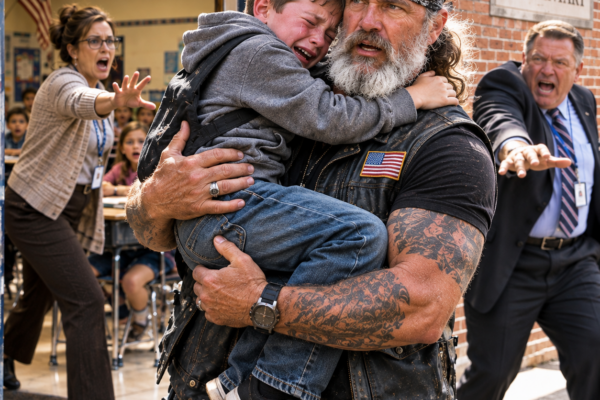
FULL STORY:“SHE’S 19—THROW HER OUT AND GIVE MY MOTHER HER ROOM!” My Stepmother Tried to Erase Me From My Own Home—Then My Dad Came Home Early and Heard What She Really Thought of Me
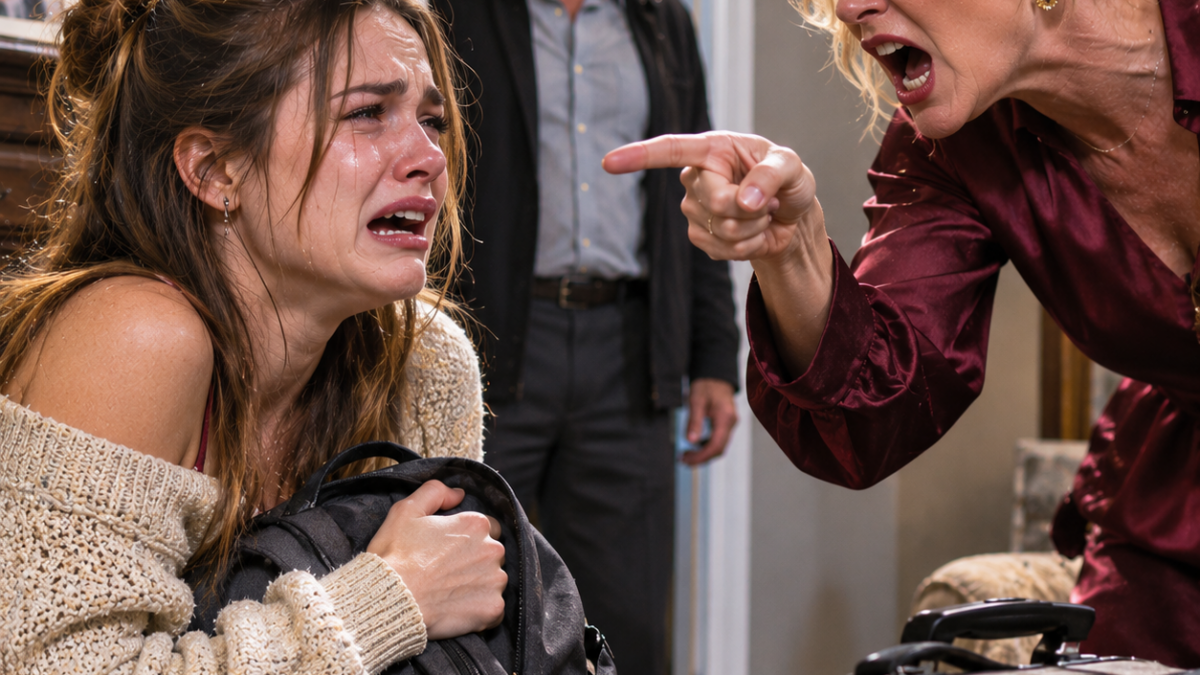
PART2
“Fine.”
Sarah smiled.
“If you want to choose your daughter over your wife, let’s see what happens to this family.”
She walked upstairs.
Dad watched her go.
Then turned toward me.
“How long were you outside?”
“Almost forty minutes.”
His face tightened.
“Why didn’t you call?”
“My phone’s at eight percent.”
“And I thought…”
“What?”
I stared toward the staircase.
“You shouldn’t have said that.”
“Why?”
“Because she’ll make me pay for it tomorrow.”
Dad stopped breathing for half a second.
“What do you mean?”
I immediately wished I could pull the words back.
“Nothing.”
“Emily.”
“Please.”
He crouched slightly so our eyes were level.
“What happens in this house when I’m at work?”
I looked away.
“Nothing.”
“Don’t protect me.”
“I’m not.”
“You’re shaking.”
“It’s cold.”
“No.”
He touched my hands.
“Your hands are cold.”
“But that’s not why you’re shaking.”
I started crying.
That made me furious with myself.
Sarah hated tears from me.
She called them manipulation.
Dad said:
“Talk to me.”
“Please don’t get mad.”
“At you?”
“No.”
“At her.”
That answer visibly frightened him.
“Emily.”
“What happens?”
I sat on the bottom stair.
Dad sat beside me.
For a long time, I could hear only the refrigerator hum.
Then:
“She says you work hard enough.”
Dad waited.
“So?”
“So I shouldn’t make myself your problem.”
His eyebrows pulled together.
“She says weekends are for your real family.”
“What does that mean?”
“Sometimes she sends me to Grandma Rose’s.”
“My mother?”
I nodded.
“She told me you wanted me there.”
Dad’s face changed.
“I never said that.”
“I know now.”
“How long?”
I swallowed.
“Since you married her.”
He stood so abruptly I flinched.
He saw.
That hurt him more than anything I had said.
He sat again.
“Why didn’t you tell me?”
I stared at him.
Then I laughed.
Not because anything was funny.
“I did.”
Dad went quiet.
“Three months ago, I told you she made me eat dinner alone.”
His expression shifted.
“You said I was being dramatic.”
“Emily—”
“Last Christmas I told you she wouldn’t let me stand in the family pictures.”
Dad closed his eyes.
I remembered that conversation perfectly.
Sarah had organized matching sweaters.
Dad.
Sarah.
Mason.
Grandma Carol—Sarah’s mother.
Then when the photographer arrived, Sarah asked me to take pictures instead of standing in them.
When I complained later, Dad said:
“Em, stop acting jealous.”
I looked at him now.
“You told me to stop being jealous.”
Dad rubbed both hands over his face.
“And when I told you she called me a burden…”
I hesitated.
“You told me she was adjusting to having a stepdaughter.”
Dad looked sick.
“You told me to give her a chance.”
Silence.
I wiped my cheeks.
“Are you going to believe me this time?”
Before Dad answered, someone moved at the top of the stairs.
Mason.
Eighteen.
Tall.
Still wearing his school sweatshirt.
His face looked guilty.
“Dad.”
Dad turned.
“Mason.”
Mason came down slowly.
Sarah had married Dad when Mason was fifteen.
He had called my father by his first name for months.
Then one day:
Dad.
Nobody forced it.
Dad had pretended not to notice because he cried in the garage afterward.
Mason sat on the opposite stair.
“Please don’t.”
I looked at him.
“Don’t what?”
Mason swallowed.
“There’s something he needs to know.”
“Mason.”
“It’s okay.”
“No.”
He shook his head.
“It isn’t.”
Dad looked between us.
“What happened?”
Mason said:
“Emily was late because of me.”
Dad stared.
“What?”
“Mom told her to pick me up from Tyler’s house.”
“When?”
“Eight forty-five.”
My curfew was nine.
Dad’s face slowly changed.
I looked down.
Mason continued.
“I was supposed to be home at nine too.”
“Mom didn’t want to drive.”
“She told Emily to go.”
Dad looked at me.
“You left fifteen minutes before curfew?”
“Yes.”
“How far is Tyler’s?”
“Fifteen minutes each way if there’s no traffic.”
“There was construction.”
Dad stood.
“Sarah.”
No answer.
He shouted:
“Sarah, come down here.”
Her footsteps appeared.
She descended halfway.
“What now?”
Dad pointed at Mason.
“Did you tell Emily to pick him up?”
Sarah stared at Mason.
“Why are you telling him our business?”
Mason’s face hardened.
“Because you lied.”
“Go to your room.”
“No.”
Dad’s voice stopped him.
“Mason stays.”
Sarah descended the rest of the stairs.
“She still broke curfew.”
Dad almost laughed.
“You sent her out fifteen minutes before curfew.”
“She knew the rule.”
“You knew she couldn’t make it back.”
“That’s not my problem.”
I watched Dad’s expression.
For the first time, he was seeing something I had seen for years.
Sarah was not arguing because she thought she was right.
She was arguing because being challenged felt intolerable.
Dad said:
“Did you deliberately set her up?”
Sarah rolled her eyes.
“Oh, please.”
“You’re seriously going to make this into some conspiracy because your princess came home ten minutes late?”
Mason stood.
“Mom.”
“What?”
“Last Saturday I got home after midnight.”
Sarah froze.
Mason continued:
“You didn’t say anything.”
“That’s different.”
Dad said:
“Why?”
Sarah looked at Mason.
Then me.
Then made the mistake.
“Because he’s my son.”
Silence.
Mason’s eyes changed.
Dad’s voice became very quiet.
“And what exactly is Emily?”
Sarah crossed her arms.
“She’s your daughter.”
Not:
My stepdaughter.
Not:
Family.
Your daughter.
Dad stared at her.
Then:
“Sleep in the guest room.”
Sarah laughed.
“You’re putting your wife out of her bedroom?”
“Tonight.”
“We’ll talk tomorrow.”
“You’re going to regret choosing her.”
Dad said:
“Go upstairs.”
Sarah did.
She passed me on the stairs.
Her perfume hit first.
Then her whisper.
“Enjoy tonight.”
I looked up.
She smiled.
“It won’t last.”
Dad heard.
His face changed again.
That night, I barely slept.
I kept waiting for Sarah to come into my room.
She never did.
Dad sat downstairs until nearly three.
Mason came into my room around one.
He leaned against the doorframe.
“I’m sorry.”
“For what?”
“I should’ve said something sooner.”
“You did tonight.”
“That’s not what I mean.”
He sat on the floor.
“Mom talks about you all the time.”
My stomach tightened.
“What does she say?”
“That you manipulate Dad.”
“That you’re obsessed with your mom.”
“That you’ll never accept her.”
“That you act helpless so he’ll feel guilty.”
I laughed bitterly.
“Do you believe that?”
Mason looked ashamed.
“Sometimes.”
Honest.
“That’s better than lying.”
He nodded.
Then:
“She asks me to tell her what you say to Dad.”
I stared.
“What?”
“I usually don’t.”
“Usually?”
He looked down.
“Sometimes I told her when you were upset.”
“Because I thought she wanted to fix things.”
I wanted to be angry.
Instead, he looked eighteen.
A kid trapped between his mother and a family he actually liked.
“I’m not mad.”
“You should be.”
“Probably.”
I smiled sadly.
“Give me time.”
He nodded.
Then stood.
“Good night, sis.”
He had never called me that before.
I pretended not to notice until he left.
Then I cried again.
Morning should have been calmer.
It wasn’t.
At 7:30, a moving truck pulled into the driveway.
Dad was making coffee.
I came downstairs in pajama pants.
Mason followed.
Sarah entered from the guest room fully dressed.
She looked at the window.
“Oh.”
Dad turned.
“What’s that?”
Sarah did not answer.
The doorbell rang.
Dad opened it.
Carol stood outside.
Sarah’s mother.
Sixty-seven.
Perfect blowout.
Three suitcases.
Two boxes.
A lamp.
Behind her, movers unloaded more boxes.
She smiled.
“Morning.”
Dad stared.
“Carol.”
“Yes?”
“What are you doing here?”
Her smile faded.
“Moving in.”
Dad turned toward Sarah.
“What?”
Sarah lifted her chin.
“My mother’s moving in.”
“Since when?”
Carol looked confused.
“Sarah told me everything was arranged.”
Dad said:
“No.”
“It wasn’t.”
Sarah sighed.
“She gave up her apartment.”
Dad looked at Carol.
“Where exactly were you planning to stay?”
Carol answered:
“Emily’s room.”
I stopped breathing.
Mason whispered:
“Mom…”
Dad slowly turned toward Sarah.
“What did she just say?”
Sarah looked at me.
“Mom needs a bedroom.”
“Emily can stay with your mother.”
“My mother?”
Dad’s voice rose.
“Emily lives here.”
“She’s nineteen.”
“She’s old enough to live somewhere else.”
My chest tightened.
Sarah continued:
“She’s in college.”
“Lots of people move out.”
“Then why didn’t you discuss it with me?”
“Because you never make decisions when Emily is involved.”
“You let guilt run this house.”
Carol said:
“Sarah told me Emily was moving out this weekend.”
Dad stared.
“You told your mother my daughter was moving out?”
Sarah’s face hardened.
“She should.”
I whispered:
“You already packed some of my things.”
Everyone looked at me.
Dad said:
“What?”
I had noticed two boxes in the back of my closet the previous week.
Books.
Summer clothes.
A few childhood things.
Sarah said she was “organizing.”
Now I understood.
I went upstairs.
Dad followed.
“Emily.”
I opened my closet.
Pulled one box.
Mom’s old book.
High-school yearbook.
Winter sweaters.
Another box.
Photo albums.
Dad stared.
“When?”
“Last week.”
Sarah appeared behind us.
“We needed to prepare.”
Dad turned.
“For what?”
“For reality.”
“She’s nineteen.”
“This is not healthy.”
“What isn’t healthy is you deciding where my daughter lives without speaking to either of us.”
Sarah said:
“Someone had to make a decision.”
Dad took out his phone.
Sarah’s face changed.
“Who are you calling?”
“My mother.”
“Why?”
“Because apparently you arranged for Emily to live in her house too.”
Grandma Rose answered after two rings.
“Morning, sweetheart.”
“Mom.”
Dad glanced at me.
“Did Sarah call you about Emily moving in?”
Silence.
Then:
“Yes.”
My stomach dropped.
Dad’s voice cracked.
“When?”
“Two weeks ago.”
“What did she say?”
“That Emily was causing problems.”
“That you both thought some distance might help.”
“That she might move into my guest room.”
Dad closed his eyes.
“And what did you tell her?”
Grandma answered:
“Emily is welcome anytime.”
“But I told Sarah I wasn’t taking your daughter away from you.”
Sarah snapped:
“That is not what you said.”
Grandma’s voice sharpened through the speaker.
“Sarah.”
“I told you to speak to my son before moving a single toothbrush.”
Dad stared at his wife.
“So you lied to my mother.”
Then toward Carol downstairs.
“And you lied to your own mother.”
Sarah’s composure cracked.
“For God’s sake.”
“I was trying to solve a problem.”
“I’m the problem?”
I asked.
She looked at me.
“Yes.”
At least honest.
Then everything spilled out.
“Nothing in this house ever changes.”
She pointed toward the hallway.
“Your first wife is everywhere.”
Dad froze.
“Sarah.”
“Her photographs are everywhere.”
“Her daughter gets whatever she wants.”
“I am supposed to walk around here pretending this is my family when every room reminds me I came second.”
Dad said:
“You knew I was a widower when you married me.”
“Yes.”
“And I thought you would eventually move on.”
My chest hurt.
Dad’s too.
He said:
“Move on does not mean erasing Laura.”
My mother.
Laura.
Sarah hated hearing her name.
I saw it.
“There.”
She pointed.
“That.”
“You still say her name like she’s sitting here.”
Dad stared.
“She was my wife for seventeen years.”
“She is Emily’s mother.”
“Nothing you do changes that.”
Sarah shouted:
“Then what am I?”
Dad’s face softened for one second.
“My wife.”
“That should have been enough.”
“It never was.”
Sarah laughed bitterly.
“Because I always knew I was living in someone else’s house.”
Dad said:
“Then talk to me about our marriage.”
“Don’t take it out on my daughter.”
I stepped forward.
“You want to know what I gave up?”
Sarah rolled her eyes.
“What?”
I could not stop anymore.
“I clean the house.”
“I drive Mason to practice.”
“I make dinner when you say you’re busy.”
“I stay upstairs when your friends come because you say I make things awkward.”
“Stop talking.”
“No.”
My voice shook.
“I stopped inviting my friends here because you said they were too loud.”
“I stopped asking Dad to school events because you said he needed weekends with you.”
Dad stared at me.
“What?”
I continued.
“I stopped talking about Mom because every time I said her name, you got mad.”
Sarah snapped:
“Your mother isn’t here anymore.”
The room went silent.
I whispered:
“Stop saying that.”
“She isn’t.”
“Sarah.”
Dad warned.
But she was past warnings.
“She is dead, Emily.”
“Mason!”
Carol shouted downstairs.
Maybe trying to stop what came next.
Sarah reached toward my dresser.
There was one photograph.
Mom sitting on the porch with me at age seven.
Summer dress.
Bare feet.
Her arm around me.
The last photograph taken before her diagnosis.
I moved.
“Don’t touch that.”
Sarah picked it up.
“This.”
She held it.
“This is what I mean.”
Dad said:
“Put the photo down.”
Sarah looked at him.
“Maybe if you stopped treating your first wife like she is still here, we could finally have a normal family.”
“Give it back.”
I reached.
Sarah pulled away.
“No.”
“Please.”
That word came out like I was five.
Dad moved closer.
“Sarah.”
“Put it down.”
Emily careful.
I reached again.
The frame slipped.
Or Sarah dropped it.
To this day, I do not know.
It hit the hardwood.
Glass exploded.
My mother’s face disappeared beneath shattered pieces.
No one moved.
I stared.
Then dropped to my knees.
Dad immediately grabbed my shoulders.
“Emily, careful.”
“Don’t touch the glass.”
I could not hear him.
“That was the last picture.”
My voice barely worked.
“That was the last one.”
Sarah said:
“Oh, come on.”
“It’s a photo.”
Dad stood.
Slowly.
His face had changed completely.
Not angry.
Done.
“Pack your things.”
Sarah stared.
“What?”
“You’re leaving.”
Carol stepped forward.
“You can’t throw my daughter out.”
Dad looked at her.
“Then she can stay with you while we figure this out.”
Carol looked stunned.
“My apartment is gone.”
Dad’s voice stayed calm.
“I didn’t tell you to give it up.”
“You were lied to.”
“I’m sorry.”
“But Emily is not leaving her home because Sarah decided she wanted her bedroom.”
Sarah stared.
“You’re ending our marriage because of her?”
“No.”
Dad shook his head.
“I’m ending it because of what you’ve been doing to her.”
“And because when I finally saw it, you wouldn’t stop.”
Sarah laughed.
“You’ll regret this.”
Dad looked at the broken photograph.
“I already regret something.”
“What?”
“I ignored my daughter every time she tried to tell me.”
His voice cracked.
“That was the mistake.”
Sarah turned toward Mason.
“Go pack.”
He did not move.
“What?”
“I don’t want to go right now.”
Sarah’s eyes widened.
“What did you say?”
Mason swallowed.
“Why do you hate her so much?”
“I don’t hate her.”
“Then why do you make her cry all the time?”
Sarah stared.
Mason continued.
“She helps me with homework.”
“She drives me to practice.”
“She covers for me when I screw up.”
“You told me Emily was trying to break up our family.”
He looked around.
“But you’re the one who broke it.”
Sarah slapped one hand against the wall.
“Enough.”
“No.”
Mason’s voice shook.
“You never punish me like her.”
“Last week I came home after midnight.”
“You didn’t care.”
“You made her sleep outside for ten minutes when you sent her to get me.”
“It was forty,” I whispered.
Mason looked sick.
“Forty.”
Sarah pointed upstairs.
“You’re grounded.”
“Give me your phone.”
“No.”
“Mason.”
“Don’t test me.”
Dad stepped between them.
“Enough.”
Sarah looked at him.
“You’re taking my son too now?”
Dad shook his head.
“No.”
“Mason goes with you tonight because you’re his mother.”
“But tomorrow?”
He looked at Mason.
“You call me.”
“We’ll talk.”
Mason’s eyes filled.
“You’ll still talk to me?”
Dad looked genuinely hurt.
“Of course.”
“You’re my stepson.”
“That doesn’t disappear because your mom and I have problems.”
Sarah laughed.
“Wonderful.”
“You get my husband.”
“My son.”
“My house.”
I stood.
“I didn’t want any of this.”
She looked at me.
“Yes, you did.”
“No.”
My voice shook.
“I wanted you to stop hurting me.”
“That’s all.”
For the first time, Sarah had no immediate answer.
Carol began helping her pack.
Not happily.
But something in her expression had changed too.
She had realized she had been used.
Three hours later, Sarah left.
Mason stood at the front door with his backpack.
He looked at me.
“I’m sorry.”
“You already said that.”
“I mean for leaving.”
“You’re not leaving me.”
His eyes filled.
I hugged him.
Sarah said:
“Mason.”
He ignored her for another second.
Then:
“Bye, sis.”
I whispered:
“Bye, brother.”
Dad stood behind me.
“Call tomorrow.”
Mason nodded.
The door closed.
Silence entered the house.
The kind after a storm.
Dad looked at the broken photograph on the table.
He had carefully collected every piece.
The picture itself was scratched but not torn.
“I’ll fix it.”
I stared.
“You can’t fix everything.”
His shoulders dropped.
“I know.”
That was the first correct thing he said all night.
I went upstairs.
Locked my door.
Dad did not ask me to open it.
The next morning, Grandma Rose arrived before eight.
I heard her before I saw her.
“Where is my granddaughter?”
I came downstairs.
“Grandma.”
She crossed the room.
Wrapped me in both arms.
“Oh, Emily.”
I cried into her coat.
Dad stood near the kitchen.
Grandma looked at him.
“What happened?”
“I’ll explain.”
She held up one hand.
“You will.”
“But not before you understand something.”
Dad went still.
“This is not fixed because Sarah left.”
He nodded.
“I know.”
“Good.”
Grandma looked at me.
“She may not trust that you’ll protect her tomorrow just because you did it yesterday.”
Dad swallowed.
“I know.”
That sentence became the beginning of everything that came after.
Because Dad had spent one night finally choosing me.
Now he had to prove I could rely on him when there was no crisis forcing the decision.
I had a concert Friday.
College chamber ensemble.
Cello.
Nothing enormous.
But Mom had attended every concert until she got too sick.
Then Dad took over.
After marrying Sarah, he came less often.
Business.
Dinner plans.
Sarah’s events.
I had stopped asking.
Thursday night, Dad knocked on my bedroom door.
“Yeah?”
He opened it slightly.
“Can I come in?”
That was new.
I nodded.
He stood near the door.
“Concert tomorrow.”
I stared.
“You remember?”
“Seven.”
“Campus auditorium.”
I swallowed.
“Mom used to sit third row.”
Dad’s eyes filled.
“I know.”
“I’ll sit third row.”
I wanted to believe him.
That was the problem.
I said:
“Okay.”
He did not ask:
Are you happy?
Do you forgive me?
He simply left.
Friday at 6:45, I stood behind the curtain.
Cello in hand.
Looked through the small opening.
Third row.
Empty seat.
My stomach dropped.
Of course.
I hated myself for caring.
6:48.
Still empty.
6:52.
Then Dad appeared.
Running.
Tie crooked.
Carrying something flat under one arm.
Grandma Rose behind him.
Aunt Melissa—Dad’s sister—beside her.
Dad sat in the third row.
Exactly where Mom used to sit.
Our eyes met.
He raised one hand.
I almost cried before the concert began.
Afterward, he waited near the lobby.
He held the package.
“Emily.”
“What’s that?”
He unwrapped it.
Mom’s photograph.
The frame repaired.
Not identical.
The old frame could not be saved completely.
A professional framing shop had restored the damaged wooden sections and replaced the glass.
The photograph itself had been cleaned and stabilized.
I touched it.
“You fixed it.”
“Aunt Melissa helped.”
Dad smiled sadly.
“I didn’t trust myself to pick the frame.”
Aunt Melissa said:
“He chose four terrible ones.”
“Traitor.”
I laughed.
Then Dad said:
“I know this doesn’t fix what happened.”
“No.”
“It fixes the frame.”
That mattered.
Precise.
No bigger claim.
I hugged him.
Not fully forgiven.
But closer.
Mason appeared at the end of the hallway.
I stared.
“Mason?”
He smiled awkwardly.
“Hey.”
His phone rang.
Sarah.
He answered.
“Mom.”
We all heard her voice through the speaker because she was shouting.
“Where are you?”
“At Emily’s concert.”
“Get out of there.”
“Right now.”
Mason’s face hardened.
“No.”
Silence.
Then Sarah:
“She is not your sister.”
Mason looked at me.
“Yes, she is.”
“Mason.”
“I don’t care what you say.”
“You married her dad.”
“I lived with her.”
“She helped me.”
“She’s my sister.”
Sarah shouted something else.
Dad took one step forward.
“Mason.”
He held out his hand.
Mason handed over the phone.
Dad said:
“Sarah.”
“You need to stop making him feel guilty for caring about Emily.”
Sarah laughed.
“So now you’re parenting my son?”
“No.”
“I’m reminding you he’s allowed to love people you’re angry with.”
“Stay out of this.”
“You called while he was standing in front of me.”
“Hard to stay out.”
Sarah hung up.
Mason exhaled.
Then:
“Can we get pizza?”
I laughed.
“Dad?”
Dad smiled.
“You.”
“Me.”
“Grandma.”
“Melissa.”
“Mason.”
“My treat.”
Grandma said:
“No.”
“I’m paying.”
Dad rolled his eyes.
“Mom.”
“I’m your mother.”
“Authority.”
I laughed.
Dad looked at me.
I saw him remember Sarah’s sentence.
Authority does not mean you can do whatever you want.
He smiled.
“Fine.”
“Grandma pays.”
We ate pizza after my concert.
Five people.
No Sarah.
No performance.
No speeches.
Mason stole my crust.
Normal.
For two hours, I forgot everything.
Then reality returned Monday morning.
A letter arrived from Sarah’s attorney.
Dad read it at the kitchen counter.
I watched his face change.
“What?”
He folded the letter.
“Nothing you need to worry about.”
That old sentence.
I immediately stiffened.
Dad noticed.
Then unfolded it again.
“You’re right.”
“What?”
“You should know what’s happening if it affects your home.”
He handed it to me.
Sarah intended to file for divorce.
She sought temporary support.
A portion of marital property.
Access to the home for belongings.
Potential temporary occupancy arguments.
And she alleged Dad had “abruptly expelled” her after a domestic disagreement.
I looked up.
“Can she take the house?”
Dad answered carefully.
“I don’t know.”
That frightened me.
But I appreciated the honesty.
He continued.
“The house belonged to me before we married.”
“Your mother and I bought it.”
“Sarah may have marital claims involving improvements or finances.”
“But no one is moving you out while I’m alive and capable of stopping it.”
I swallowed.
“What about Carol?”
“She’s staying with Sarah temporarily.”
“Her apartment?”
“They’re working something out.”
I looked down.
“I feel bad for her.”
Dad nodded.
“So do I.”
“She was lied to.”
“Yes.”
That became important.
Sarah had hurt her own mother too.
Carol called a week later.
Not Dad.
Me.
I almost did not answer.
Then did.
“Emily?”
“Hi, Carol.”
Silence.
“I owe you an apology.”
I waited.
“Sarah told me you were moving voluntarily.”
“She said college was overwhelming you.”
“That you wanted independence.”
“She told me you and your father had already discussed it.”
I looked at the wall.
“She lied.”
“Yes.”
Carol’s voice broke.
“I should have called your father.”
“Yes.”
“I wanted to believe my daughter.”
I understood that more than she knew.
She continued.
“I gave up my apartment because the lease was ending and she said everything was settled.”
“I was excited.”
“Not because I wanted your room.”
“Because I thought I was going to live near my daughter and grandson.”
My anger softened slightly.
Then she said:
“I never knew Sarah treated you that way.”
I answered:
“You saw pieces.”
Silence.
“Yes.”
That honesty mattered.
“I saw her speak sharply.”
“I told myself stepfamilies are difficult.”
“I should have asked more.”
Everyone in this story had some version of that sentence.
I should have asked more.
I should have listened.
I should have challenged.
Abuse grows inside the spaces other people label complicated.
Dad hired an attorney.
Megan Pierce.
Family-law attorney.
Fifty-something.
Direct.
She met with Dad at our dining table.
I stayed upstairs initially.
Then Dad called me down.
Only after asking if I wanted to participate.
Megan said:
“Emily, you are an adult.”
“Your father’s marriage is legally between him and Sarah.”
“But some factual issues involve you.”
“Your housing.”
“Communications.”
“The planned move.”
“Would you be comfortable preserving texts and messages?”
“Yes.”
No dramatic revenge.
No secret recording scheme.
We simply preserved what already existed.
Sarah’s messages to me.
Your father needs a break from your drama.
Grandma Rose would love having you.
At nineteen, most girls are grateful for independence.
Then a text sent three weeks before the lockout.
I had not understood it then.
Start deciding what you actually need in your room. We may finally be reorganizing upstairs.
Megan read.
“Interesting.”
Then Mason provided messages.
His mother to him:
Emily is moving soon, so don’t get dragged into her moods.
Another:
Once Carol is here, things will finally feel like my house too.
Another:
Your dad is too sentimental about Emily and Laura. I’m fixing it.
Dad read that one three times.
His face turned pale.
Megan said:
“David.”
Dad’s name.
David Harper.
“Stop reading when you’re too emotional to process.”
He placed the phone down.
“I married someone who thought my daughter was a household problem to solve.”
Megan said:
“You married someone whose behavior you now understand differently.”
“Do not turn hindsight into another weapon against yourself.”
I looked at her.
Good lawyer.
Dad needed that.
Because guilt had begun becoming another way to center himself.
Every morning:
I failed you.
Every evening:
I’m sorry.
At first I needed it.
Then it became exhausting.
One night at dinner, Dad apologized because Sarah had once excluded me from a restaurant reservation eight months earlier.
I put down my fork.
“Dad.”
“What?”
“Stop.”
His face fell.
“I thought you wanted me to acknowledge—”
“I do.”
“But every apology turns into me comforting you.”
He stared.
I continued.
“You say you failed.”
“Then I tell you you’re not a terrible father.”
“You say you should’ve known.”
“Then I tell you Sarah was convincing.”
“I’m tired.”
Dad became very quiet.
“What do you need?”
That was the right question.
“Change.”
“Not guilt.”
He nodded.
“I can do that.”
He started therapy the next week.
I did too.
Not family therapy immediately.
Separate.
My therapist was Dr. Nina Patel.
She asked:
“What are you most angry about?”
“Sarah.”
“Of course.”
“And?”
“Dad.”
“And?”
“Myself.”
Her eyebrows lifted.
“Why?”
“Because I kept changing.”
“What do you mean?”
“I got quieter.”
“I stopped inviting people.”
“I stopped talking about Mom.”
“I stayed upstairs.”
“I let Sarah take more and more.”
Dr. Patel said:
“You were surviving a power imbalance.”
“I was nineteen.”
“Eighteen when it got bad.”
“You were dependent on the adults around you.”
I said:
“I should have fought.”
She asked:
“With what power?”
I hated that question.
Because the answer was:
Not much.
I had words.
Dad repeatedly minimized them.
Sarah controlled the home atmosphere.
So I adapted.
Dr. Patel said:
“Survival strategies can become embarrassing after danger passes.”
“That does not mean they were stupid when you needed them.”
I cried.
Therapy.
Annoying.
Useful.
Dad changed behavior in ways that did not require applause.
He stopped traveling as much for several months.
Not permanently.
His job required it.
But he reorganized.
He told me where he was going.
Asked what I needed before leaving.
Made sure Grandma Rose was available if I wanted company.
Not surveillance.
Not babysitting.
Choice.
He attended my school events.
Not every one.
That would have felt performative.
The important ones.
He stopped allowing Sarah’s name to dominate every conversation.
When I mentioned Mom, he listened instead of looking anxious.
One evening I told him:
“Mom used to sing the wrong lyrics to Fleetwood Mac.”
Dad laughed.
“She did it on purpose.”
“What?”
“She knew the words.”
“No.”
“Yes.”
“She thought it made you laugh.”
I stared.
For years, Sarah had made Mom’s memory feel radioactive.
Now Dad and I talked about her again.
Not worship.
Memory.
Human.
Funny.
Imperfect.
Ours.
The divorce became ugly.
Not theatrical every day.
Paperwork ugly.
Sarah argued that Dad had prioritized Emily unreasonably throughout the marriage.
Her filing described me as:
“An adult child who remained overly dependent on the marital household.”
That phrase hurt.
Dad’s attorney told me not to read filings.
I read them anyway.
Bad idea.
Sarah claimed our relationship had prevented normal marital boundaries.
Part of me wondered:
Was she right?
Had I been too dependent?
Had Dad failed to create space for a second marriage?
Therapy helped separate two truths.
Yes, widowed parents can struggle to rebuild.
Yes, adult children can have difficulty with remarriage.
Yes, couples need private space.
None of that justified locking me outside.
Excluding me from meals.
Planning my removal without telling me.
Using Mason as leverage.
Punishing references to my dead mother.
Breaking photographs.
Both things could exist.
Complexity does not erase accountability.
Mason struggled too.
Sarah moved into a temporary apartment.
Carol eventually found another smaller rental.
Mason stayed primarily with his mother because he was finishing high school.
But he came over Tuesday evenings.
Then Sundays.
Then whenever he wanted.
Sarah hated it.
She sent Dad messages:
Stop undermining me with my own son.
Dad responded:
I will not ask Mason to choose between people he cares about.
That was all.
No argument.
Mason told me:
“She says you stole her marriage.”
I answered:
“You know that isn’t true.”
“I know.”
“Then why tell me?”
He looked tired.
“Because sometimes I need someone else to say it.”
Fair.
“She ended her marriage herself.”
I said.
“But your dad played a role too.”
Mason looked surprised.
“How?”
“He ignored problems.”
“He avoided conflict.”
“He let resentment grow between them.”
“Adults can fail each other without it becoming a child’s fault.”
Mason stared.
“You sound like a therapist.”
“Mine is expensive.”
“I steal material.”
He laughed.
We became closer.
Sarah’s greatest fear came true.
Not because I plotted it.
Because trying to force Mason away from me made him question why she needed that separation so badly.
At graduation, Mason invited Dad.
Sarah objected.
He invited me anyway.
We sat three rows behind Sarah.
No drama.
No confrontation.
When Mason’s name was called, Dad stood and cheered.
Sarah did too.
For ten seconds, we were simply three adults proud of the same kid.
Then life continued.
After graduation, Mason chose a college forty minutes away.
Sarah wanted him living with her.
He moved into a dorm.
She blamed Dad.
Mason corrected her.
“No.”
“I wanted the dorm.”
That became a pattern.
He learned to say:
That was my decision.
Not Emily’s.
Not David’s.
Mine.
Important skill.
The divorce settlement happened almost eleven months after the night I was locked outside.
The house remained Dad’s because of its premarital ownership structure, though Sarah received appropriate marital-property adjustments and her share of assets accumulated during the marriage.
I did not celebrate numbers.
Money was never the point.
Sarah received enough to restart her life.
Dad paid what his attorney advised.
He did not try to punish her financially.
That mattered to me.
I did not want justice to become another form of control.
The final hearing was quiet.
Sarah did not look at me.
I attended only because Dad asked and I decided I wanted to.
Mason sat beside me.
When the divorce became final, Sarah walked past us.
Then stopped.
“Emily.”
My body tightened.
“Hi.”
She looked older.
Not dramatically.
Just tired.
She said:
“I know you think I hated you.”
I waited.
She continued.
“I didn’t.”
I thought of the locked door.
The family photos.
My mother’s picture.
“You did a convincing impression.”
She flinched.
Fair.
Then:
“I hated what you represented.”
“What?”
“The life your father had before me.”
“Your mother.”
“The house.”
“The history.”
“He already knew how to be a husband before me because someone else taught him.”
Her voice shook.
“And everywhere I looked, there was proof.”
I stared.
“You punished me for Mom dying.”
Sarah closed her eyes.
“No.”
“You punished me because Dad loved her first.”
“I didn’t think of it that way.”
“That doesn’t change what happened.”
“No.”
She looked toward Mason.
Then back.
“I am sorry about the photograph.”
Not enough.
But something.
I said:
“Thank you.”
She seemed surprised I did not forgive her.
Then perhaps surprised I had not attacked her.
She walked away.
Mason exhaled.
“You okay?”
“No.”
“Pizza?”
I laughed.
“Always.”
Dad did not start dating immediately.
Thank God.
For almost two years, he lived quietly.
Worked.
Therapy.
Family.
Then he met Rachel.
Not my therapist.
Different Rachel.
Widowed herself.
Library director.
She had two adult sons.
The first time Dad told me, he looked terrified.
“I’m seeing someone.”
I stared.
“Okay.”
“That’s it?”
“What do you want?”
“I don’t know.”
“Maybe yelling.”
I smiled.
“Dad.”
“Do you like her?”
“Yes.”
“Does she lock people outside?”
His face fell.
I immediately regretted it.
“Sorry.”
“No.”
He nodded.
“I earned that one.”
Rachel came to dinner.
She did something important before anyone asked.
She said:
“I know this is your family home.”
She looked at me.
“I’m not here to replace anyone.”
I almost cried into my potatoes.
Not because I needed a woman to say she would not replace Mom.
Because nobody had acknowledged how terrified I was of repetition.
Rachel and Dad dated slowly.
She kept her own home.
They did not marry until four years later.
By then, I had my own apartment.
Not because someone removed me.
Because I wanted one.
That distinction mattered more than I can explain.
Dad helped me move.
At the front door of the old house, he held my key.
“You keeping this?”
I stared.
“You want it back?”
“No.”
He put it into my palm.
“This is still home.”
My throat tightened.
“Even if Rachel moves in?”
“Especially then.”
Rachel heard from the kitchen.
“Agreed.”
I laughed.
I moved into my apartment by choice.
That night, I slept terribly.
Funny.
For years I had wanted independence.
Then leaving the house voluntarily felt almost frightening because Sarah had tried to turn leaving into rejection.
The next morning Dad texted:
Coffee?
I said yes.
No crisis.
No guilt.
Normal.
I finished college.
Then graduate school.
Music education.
The concert that Dad nearly missed became one of the reasons I chose teaching.
I loved performance.
But more than performing, I loved watching nervous students realize they could make something beautiful in front of other people.
I became a middle-school orchestra teacher.
Yes.
Middle school.
I willingly spend my days around thirteen-year-olds holding bows.
People question my judgment.
The first concert I conducted, Dad sat third row.
Same habit.
Grandma Rose beside him.
Aunt Melissa.
Mason.
Rachel.
When the students finished, Dad stood first.
I pointed my baton at him.
“Sit.”
He sat.
Everyone laughed.
Grandma Rose died when I was twenty-seven.
Before she died, she gave me a small jewelry box.
Inside was Mom’s old wedding locket.
I cried.
Grandma said:
“You’re allowed to remember people without making memory your whole life.”
I knew exactly why she said it.
Sarah had once convinced me that talking about Mom prevented everyone else from moving forward.
Grandma corrected that.
Memory and movement are not enemies.
You can carry someone without living backward.
I wore Mom’s locket at Dad’s wedding to Rachel.
Rachel noticed.
Touched it gently.
“Beautiful.”
No jealousy.
No tension.
No:
Does Laura have to be part of today?
Just:
Beautiful.
That nearly made me cry more than Dad’s vows.
Mason married before I did.
He asked me to be in the wedding party.
Sarah attended.
So did Dad and Rachel.
Everyone behaved.
Almost.
At rehearsal dinner, someone asked how Mason and I were related.
Mason answered:
“She’s my sister.”
No step.
No explanation.
Sarah heard.
Her face changed.
But she said nothing.
Progress.
Later, she approached me.
“You’re good to him.”
“He’s good to me.”
“I know.”
Then:
“I used to think if he loved you, he had less loyalty to me.”
I said:
“Love doesn’t work like that.”
“I know now.”
That may have been the closest we ever came to reconciliation.
Not forgiveness.
Understanding.
Enough.
Dad eventually told me the part of the story he had never said out loud.
The night Sarah locked me out, he had come home early because a jobsite meeting canceled.
If the meeting had continued?
He would have returned after midnight.
I might have sat outside longer.
Or Sarah might eventually have let me in.
Maybe Mason would never have spoken.
Carol might have moved into my room that weekend.
I might have ended up at Grandma Rose’s.
And Dad might have accepted Sarah’s version:
Emily wanted independence.
Emily was causing tension.
Emily chose to leave.
That possibility haunted him.
One night he asked:
“What would have happened?”
I answered:
“I don’t know.”
He looked destroyed.
I continued:
“But you did come home.”
“Yes.”
“And then?”
“I almost failed again.”
“What?”
“You found me outside and still needed Mason to prove she set me up.”
Dad flinched.
I did not say it to hurt him.
It was true.
He whispered:
“I know.”
I said:
“The important part isn’t that you arrived at the perfect moment.”
“It’s that once you finally saw the truth, you stopped asking me to carry your marriage.”
That was his real growth.
Before, keeping Sarah happy had become everyone’s responsibility.
Mine.
Mason’s.
Even Dad’s mother’s.
Afterward, Dad accepted:
His marriage was his responsibility.
Sarah’s unhappiness was not something a nineteen-year-old girl had to cure by disappearing.
That sounds obvious.
It was not obvious inside our house.
Years later, one of my students came to rehearsal late.
Fifteen minutes.
I was irritated.
Big concert.
Everyone waiting.
Old instincts surfaced.
Consequences.
Rules.
Respect.
Then I asked:
“What happened?”
He looked terrified.
“My mom forgot me.”
That was all.
No punishment.
We adjusted.
Rules matter.
Context matters too.
Sarah had used my curfew as moral theater.
She already knew why I was late.
That is different from discipline.
Discipline responds to behavior.
Control manufactures behavior and then punishes it.
I understand the difference now.
If she had said:
Emily, you were ten minutes late.
Next weekend you’re home earlier.
Fine.
If I had been irresponsible?
Fine.
But she sent me into an impossible situation.
Then used my failure as evidence that I did not deserve home.
That is what Dad finally understood.
Consequences should teach.
They should not erase belonging.
I tell my students a version of that.
Miss rehearsal?
We address it.
Forget music?
We solve it.
Behave badly?
Consequences.
But nobody loses their place in the orchestra because they made a mistake.
Their chair remains.
That may sound sentimental.
I do not care.
Chairs matter to me.
Rooms matter.
Seats matter.
Doors matter.
When someone has spent years being told they take up too much space, physical belonging becomes emotional language.
My bedroom.
Third row.
Dining table.
Front door.
Every one became part of the story.
Dad repaired Mom’s photograph.
But he also did something else I did not notice immediately.
After Sarah left, he moved every family photograph back into the common rooms.
Not a shrine.
Balance.
Mom.
Dad.
Me.
Mason.
Grandparents.
Later Rachel.
Later grandchildren.
No one person erased another.
That is what family photographs should do.
Add.
Not replace.
The repaired picture of Mom and me remains in my house now.
Same image.
New glass.
You can still see one tiny scratch near the lower corner.
Aunt Melissa once offered to have it digitally restored.
I said no.
“Why?”
“Because I know where that scratch came from.”
She looked sad.
“Exactly.”
People think healing means removing all evidence that something happened.
Sometimes healing means the evidence stops controlling you.
I can see the scratch without hearing Sarah’s voice anymore.
That is progress.
Dad is sixty-one now.
Still working too much.
Still sits third row.
Still knocks on my door even though I have not lived with him in years.
Habit.
When I visit, he says:
“Can I come in?”
I laugh.
“You own the house.”
“I know.”
“Still asking.”
Good.
Mason has two kids.
They call Dad Grandpa David.
Sarah is Grandma Sarah.
Rachel is Grandma Rachel.
Nobody melted from the complexity.
Children handle multiple relationships better than adults when adults stop demanding loyalty tests.
One Christmas, Mason’s daughter asked:
“Is Aunt Emily your real sister?”
Mason said:
“Yes.”
“But you have different moms.”
“Yes.”
The child frowned.
Then:
“Okay.”
Conversation over.
Adults could learn something.
Sarah and I are not close.
We are civil.
That is enough.
She apologized more fully once, years after everything.
Not because I demanded it.
She asked to meet for coffee.
I almost said no.
Then curiosity won.
She arrived early.
No perfume I recognized.
Different hairstyle.
She said:
“I was cruel to you.”
I waited.
“I want to say that without explaining it first.”
Good.
She continued.
“I locked you outside because I knew your father would defend you if he saw it.”
“I thought if he didn’t come home, I could tell him you stormed off.”
My stomach tightened.
She admitted it.
Deliberate.
“I asked you to get Mason because I knew you’d be late.”
“I planned my mother moving in because I wanted your room changed before David could hesitate.”
“I thought if your things were already gone, he would accept the new arrangement because undoing it would feel like conflict.”
That hurt.
Because it was accurate.
Old Dad might have.
Sarah continued:
“I hated Laura.”
My eyes hardened.
She raised a hand.
“Not her.”
“The idea of her.”
“I never knew her.”
“But she got to be perfect because she was dead.”
“Everyone remembered her kindly.”
“I compared myself to a woman who could never make another mistake.”
There was truth there.
Not enough to excuse me.
But truth.
I said:
“Mom wasn’t perfect.”
“I know.”
“You didn’t.”
“No.”
Sarah looked down.
“I was competing with a ghost.”
“And then I punished the only person in the house who actually lost her.”
That sentence broke something open.
I had never framed it that way.
Yes.
Sarah felt threatened by Mom’s memory.
But I was the child who had buried her.
She made my grief carry the cost of her insecurity.
Sarah started crying.
“I’m sorry.”
I did not say:
I forgive you.
Instead:
“I believe you’re sorry.”
She nodded.
That was enough.
Maybe forgiveness came later.
Maybe it never became one clean decision.
I stopped needing the answer.
The old house eventually became Dad and Rachel’s home.
Not Laura’s shrine.
Not Sarah’s battlefield.
Their home.
When Dad renovated the upstairs bathroom, I joked:
“Mom chose those terrible tiles.”
He looked horrified.
“Your mother loved those.”
“I know.”
“They’re hideous.”
Rachel agreed.
Dad protested.
We replaced them.
Memory survived.
That matters too.
Moving on is not betrayal.
Erasure is.
Different.
I married at thirty.
His name is Ben.
He is a pediatric physical therapist.
We met because his niece played violin in my school orchestra and broke her wrist.
He asked too many questions during recovery.
I thought he was annoying.
Good beginning.
Before we married, I told him the entire Sarah story.
He listened.
Then asked:
“What makes you feel safe in a home?”
I had never been asked that.
I thought.
“Keys.”
He smiled.
“Keys?”
“Yes.”
“Not because locks matter.”
“Because I need to know no one can decide overnight that I don’t belong.”
Ben nodded.
When we bought our house, closing day, he handed me every key first.
Front.
Back.
Garage.
Mailbox.
Then said:
“No one takes these from you.”
I cried in the title-company parking lot.
Poor man had no idea marriage would involve so much symbolic hardware.
Our daughter is six.
Named Laura Rose.
After Mom and Grandma.
When Dad heard the name, he cried for approximately an hour.
Rachel brought tissues.
Sarah sent a card.
Beautiful name.
No complicated message.
Just that.
One evening Laura Rose locked herself outside accidentally.
I found her sitting on the porch.
For half a second, nineteen-year-old me came back.
Cold.
Backpack.
Frost.
Then my daughter looked up.
“Mommy, I forgot my key.”
I opened the door.
“You never need permission to come home.”
She stared.
“I know.”
Of course she knew.
That was the whole point.
Children should know.
They should not have to earn that certainty.
That night I called Dad.
“Something happened.”
His voice instantly worried.
“What?”
“Laura locked herself outside.”
Silence.
Then Dad exhaled.
“Was she okay?”
“Yes.”
“I opened the door.”
He became quiet.
Then:
“Good.”
We both understood more than we said.
Home should be the place where consequences happen inside belonging.
You can be grounded.
You can lose your phone.
You can have an uncomfortable conversation.
You can disappoint people.
You can screw up badly.
But a healthy parent does not use homelessness—even symbolic homelessness—as discipline.
Sarah taught me that by doing the opposite.
Dad taught me later by correcting it.
At my daughter’s first school concert, Dad sat third row.
Of course.
He came forty minutes early.
Ben asked:
“Why third?”
I smiled.
“Family tradition.”
Laura Rose played three wrong notes and one note that may not exist in Western music.
Dad applauded like Carnegie Hall.
Afterward, he handed her flowers.
She asked:
“Grandpa, did Mommy play violin too?”
“Cello.”
“Was she good?”
Dad looked at me.
“She was wonderful.”
I said:
“I was adequate.”
He ignored me.
“She was wonderful.”
Some things never change.
After the concert, we ordered pizza.
Dad.
Rachel.
Ben.
Laura.
Mason and his family.
Grandma Carol was gone by then; she had died peacefully years earlier.
Sarah came too.
Yes.
By then, enough time had passed that gatherings were possible without making every room choose sides.
Not always.
Some holidays separate.
Some together.
Nobody forces.
Sarah sat across from me.
Laura Rose reached for pizza.
Sarah helped her.
Then looked at me.
For one second, memory flashed.
Food is for our family.
Different story.
Different stepmother.
Same wound.
Sarah seemed to recognize something in my face.
She put the serving plate down.
“Emily?”
“I’m okay.”
She nodded.
No need to discuss it.
I looked around the table.
Mason.
Dad.
Rachel.
Ben.
Children.
Sarah.
Me.
Family had become something far messier than nineteen-year-old me could have imagined.
And much safer.
Because nobody had to disappear to make another person legitimate.
That was Sarah’s original mistake.
She thought joining the family required someone else leaving.
Laura’s memory.
Then me.
She treated belonging like a room with only one available chair.
If she wanted the chair, she had to remove whoever sat there.
But love does not obey real-estate logic.
Families can add rooms.
Add chairs.
Add names.
Add grief.
Add new marriages.
Add stepchildren.
Add people who were once enemies and later become simply complicated relatives.
The only thing that truly destroys a family is making love conditional on erasing someone else.
Dad learned that too late for his marriage to Sarah.
But not too late for us.
When people hear the story, they love the dramatic pieces.
Locked outside.
Secret plan to give my room away.
Broken photograph.
Dad saying:
Pack your things.
Mason standing up to his mother.
Divorce papers.
Concert.
Those parts make good Facebook stories.
But the hardest part happened long before the front door locked.
It happened every time I told Dad something smaller and he explained it away.
Dinner alone.
“Sarah is adjusting.”
Family picture.
“Don’t be jealous.”
Called a burden.
“Give her time.”
Friends unwelcome.
“Try to keep peace.”
Mom’s name upsetting Sarah.
“Maybe don’t bring it up so much.”
No single sentence felt catastrophic.
Together, they taught me:
Your discomfort is less important than the marriage.
Your grief is inconvenient.
Your needs create conflict.
If you speak, you may damage Dad’s happiness.
That is why I did not tell him more.
Not because Sarah had some magical ability to silence me.
Because Dad had trained me, accidentally, to expect disbelief.
That truth was the hardest for him to hear.
One afternoon years later, he said:
“I thought you stopped telling me because Sarah scared you.”
“She did.”
I answered.
“But you scared me too.”
Dad looked devastated.
“Me?”
“I was afraid every time I told you something, you’d explain why I was wrong.”
He sat down.
“I never wanted that.”
“I know.”
“That’s why it matters.”
Intent is important.
Impact is real.
Both.
Dad asked:
“How do parents avoid that?”
I laughed.
“You’re asking me?”
“You teach kids.”
“Orchestra.”
“Still kids.”
I thought.
Then:
“Believe the feeling before deciding whether the interpretation is perfect.”
Dad frowned.
I explained.
“If your kid says someone makes them feel unsafe, you don’t have to immediately conclude the person is evil.”
“But you believe the kid feels unsafe.”
“You investigate.”
“You ask.”
“You stay curious.”
“You don’t say, ‘That doesn’t sound like her.’”
Dad closed his eyes.
That sentence again.
He nodded.
“Okay.”
He became a better grandfather because of that.
When Mason’s son once said a coach scared him, Dad did not dismiss it.
He asked why.
Turned out the coach was not abusive.
Just loud.
The child needed preparation.
Problem solved.
Listening did not require declaring the coach a monster.
It required taking the child seriously.
That distinction may be one of the greatest things our family learned.
The repaired photograph of Mom sits on my piano now.
Not hidden.
Not worshiped.
Laura Rose once pointed at it.
“Is that Grandma Laura?”
“Yes.”
“Do I look like her?”
I stared.
Same eyes.
Maybe.
“A little.”
She smiled.
“Cool.”
Then ran away.
No burden.
No competition.
A dead woman’s photograph can simply be a photograph when the living people are secure enough.
Sarah was never secure.
Dad was never brave enough to confront that until the cost became impossible to ignore.
I was never responsible for either problem.
That took me years to accept.
The last time Dad apologized for the night I was locked outside was on my thirtieth birthday.
He came early.
Helped Ben hang lights.
After everyone left, we sat on the porch.
Same temperature.
Cold.
Not freezing.
Dad looked at the front door.
“Ten years.”
“What?”
“Since that night.”
I had not realized.
He said:
“I’m sorry.”
I sighed.
“Dad.”
“I know.”
“You told me to stop.”
“I’m not asking you to forgive anything.”
“I just need you to know I remember.”
I looked at him.
He continued:
“You were sitting outside your own home because an adult I brought into your life decided your belonging was conditional.”
“And I had given her enough power over you that you thought she could make me agree.”
My throat tightened.
“That’s the part I can’t forget.”
I said:
“Maybe you shouldn’t.”
He looked at me.
“Not to punish yourself.”
“But to remember what happens when you choose comfort over listening.”
Dad nodded.
Then smiled slightly.
“Teacher.”
“Orchestra teacher.”
“Still teacher.”
We sat quietly.
Then he asked:
“Do you know what I remember most?”
“What?”
“When you told me I shouldn’t have threatened to make Sarah leave.”
“Because you knew she’d punish you the next day.”
His eyes filled.
“I realized you understood her better than I did.”
“I had lived with her behavior.”
“You had lived with her performance.”
He looked toward our warm house.
“I’m glad your daughter will never understand that distinction.”
Me too.
That is the justice I care about now.
Not Sarah losing Dad.
Not the divorce settlement.
Not even Dad choosing me on the staircase.
The justice is Laura Rose assuming without question that home is home.
Mason’s children calling me Aunt Emily.
Dad keeping every concert promise he makes.
Rachel never asking us to erase Mom.
Sarah eventually recognizing that her son loving me does not steal anything from her.
And me walking into my own house every evening without looking at the lock and wondering who gets to decide whether I belong.
The night the whole thing exploded, Dad told Sarah:
“You will never make my daughter feel like she doesn’t have a home here.”
He meant the house.
At the time, so did I.
But homes change.
Dad sold one house eventually.
I bought another.
Bedrooms disappear.
Photographs move.
Keys change.
The deeper promise became:
You will not make my daughter believe love can be revoked because someone else finds her inconvenient.
That was the promise Dad had broken before he understood he was breaking it.
Then spent years keeping.
And that is why, when people ask whether he chose his daughter over his wife, I correct them.
No.
That is too simple.
Dad did not end his marriage because I demanded to win.
I never wanted Sarah gone.
I wanted the door opened.
I wanted dinner without being told I was extra.
I wanted to say Mom’s name.
I wanted to attend my own family photographs.
I wanted my room to remain mine until I chose to leave it.
I wanted my father to hear me before a crisis forced him to listen.
Sarah could have stayed.
She could have apologized.
She could have admitted jealousy.
Asked for therapy.
Asked Dad to create new traditions with her.
Asked me for space without demanding my disappearance.
She had choices.
She kept choosing control.
Dad had choices too.
For years, he kept choosing avoidance.
That night, both patterns collided.
The lock was only the visible part.
The real door had been closing for years.
Dad finally opened it.
And afterward, he learned that opening a door once is not the same as making a home safe.
That takes repetition.
Promises kept.
Concerts attended.
Questions asked.
Apologies without demands.
Rooms respected.
Memories allowed.
Children believed.
Years later, my father still sits in the third row.
Mason still steals my pizza crust.
Sarah is no longer my stepmother legally, but she remains Mason’s mother and therefore part of the wider map of my life.
Rachel never replaces Mom.
Ben never asks me to stop talking about the past.
Laura Rose knows the woman in the repaired photograph as Grandma Laura.
And I keep an extra key beneath a small ceramic bird beside my front door.
Ben once asked why.
“Emergency.”
“For who?”
“Anyone in the family.”
He smiled.
“Even Mason?”
“Especially Mason.”
“What about your dad?”
“He has his own.”
“Rachel?”
“Hers too.”
Ben laughed.
“How many people have keys to our house?”
“Enough.”
Because I spent one night nineteen years old, sitting outside a locked door, learning how terrifying it is when someone decides a key is really permission to belong.
I will never teach that lesson to anyone I love.
In my family, consequences happen.
Arguments happen.
Doors slam sometimes.
People get angry.
People leave to cool down.
Children get grounded.
Adults get divorced.
Life gets messy.
But nobody gets told:
You are not family because I am angry with you.
Nobody loses their chair because another person wants the room.
Nobody has to stop remembering one parent to make room for another.
Nobody is locked outside to prove a point.
And every time my daughter races through our front door without knocking, throws her backpack onto the floor, and shouts, “Mom, I’m home,” some nineteen-year-old part of me still hears it.
Not the noise.
The certainty.
I’m home.
No question.
No permission.
No one standing on the other side deciding whether she has earned the right to come inside.
That is how the story finally ended for me.
Not with Sarah packing.
Not with divorce papers.
Not with the repaired photograph.
Not even with Dad sitting in the third row.
It ended when home stopped being something another person could threaten to take away.