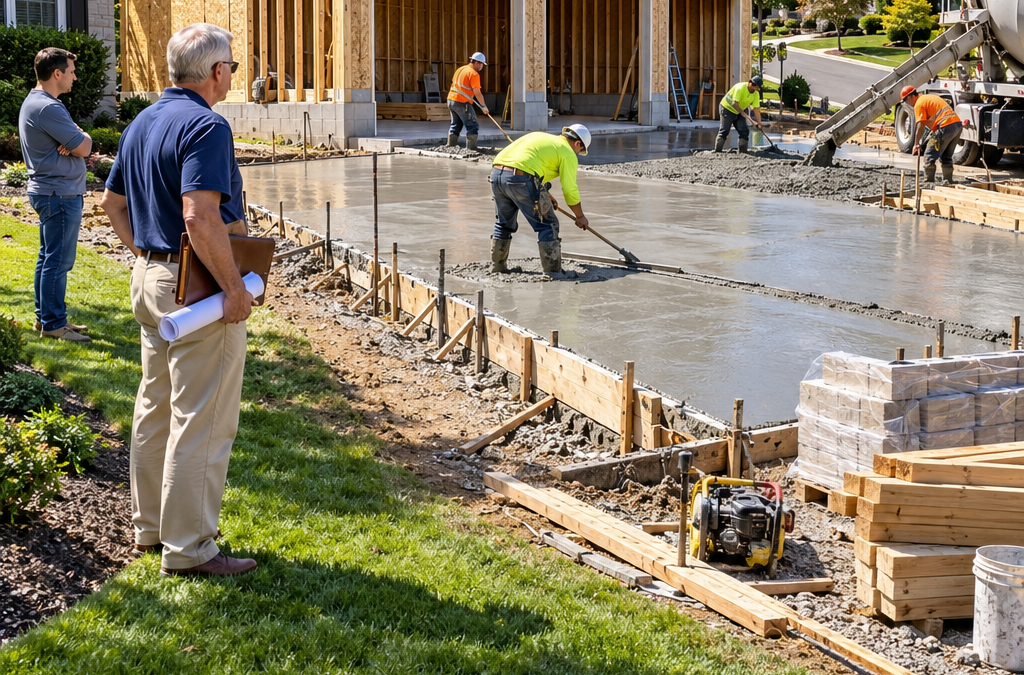
𝗙𝗨𝗟𝗟 𝗦𝗧𝗢𝗥𝗬 They poured concrete onto land I had owned for years, then warned me I could be fined if I interfered with the HOA’s “community project.” So I stopped arguing, stepped back, and watched Dale Pruitt spend the next two months making the building more expensive than I ever would have dared.
𝗙𝗨𝗟𝗟 𝗦𝗧𝗢𝗥𝗬
I sat in the front row.
Dale continued organizing papers while residents talked behind me.
When the meeting began, he moved through minutes and landscaping reports before finally reaching “new business.”
A rendering of the garage appeared on a projector.
Dale stood.
“For those who may not have received the announcement, the board is excited to confirm that construction on our new maintenance and equipment facility is scheduled to begin this month.”
A few people applauded.
I waited.
Dale described storage problems.
Landscaping tools were currently kept off-site.
Holiday decorations were stored in part of the clubhouse.
Pool chemicals required better organization.
The garage, he explained, would solve all of it.
When he finished, I raised my hand.
He pointed toward me.
“Renata.”
“That location is Lot 15, correct?”
He glanced at the projection.
“Yes.”
“I own Lot 15.”
Several people turned toward me.
Dale laughed.
Not nervously.
Not politely.
He genuinely laughed.
“Renata, Lot 15 is common area.”
“No, it isn’t.”
“It has always been treated as common area.”
“Treatment isn’t ownership.”
He put one hand on the table.
“Our property maps identify that area as association-controlled land.”
“Then your maps are wrong.”
A few residents shifted uncomfortably.
I continued.
“I bought that parcel separately several years ago. I have the deed.”
Dale gave me the expression adults use when children misunderstand something obvious.
“I think you’re confusing your side-yard boundary with the larger open-space tract.”
“I’m not.”
“The association has maintained that ground for years.”
“You’ve mowed part of it.”
“Exactly.”
“That doesn’t make it yours.”
Beverly looked toward Dale.
He ignored her.
“Our attorney reviewed the project.”
“Did your attorney review the deed?”
Dale’s smile disappeared.
“Renata, the board has already approved the budget.”
“That doesn’t answer my question.”
“The garage is happening.”
The room became quiet.
I could feel my heartbeat in my throat.
I had come expecting someone to apologize.
Maybe say they would check.
Maybe postpone construction.
Instead, Dale was talking to me as though I had wandered into his project and invented ownership to cause trouble.
I held up the flyer.
“You’re planning to build a permanent structure on property titled in my name.”
“Again, our records disagree.”
“I can bring the deed.”
“You are welcome to submit documents for board review.”
“Then pause construction until you review them.”
Dale leaned back.
“No.”
I stared at him.
“No?”
“We have contractor commitments.”
“That is not my problem.”
“It becomes your problem when individual homeowners interfere with approved community improvements.”
I felt something cold settle in my chest.
“Are you threatening me?”
“I am explaining association procedure.”
“Procedure for what?”
“If you obstruct contractors, equipment access, or authorized site work, the board can issue a violation.”
A woman behind me whispered, “Seriously?”
Dale heard her.
He ignored it.
I said, “You would fine me for stopping construction on my own land?”
His answer came without hesitation.
“If you interfere with an approved HOA project, yes.”
That was the moment everything changed.
Not when I saw the flyer.
Not when he denied the deed.
Right there.
Because confusion can be corrected.
Arrogance is different.
Dale had been given a chance to stop.
I had told him directly that the property belonged to me.
Instead of checking, he threatened me.
I wanted to pull the deed from my bag.
I had almost brought it.
But I suddenly decided not to.
Something inside me said:
Go home.
Verify everything.
Then decide what to do.
So I stood.
“Okay.”
Dale seemed surprised.
“Okay?”
“Yes.”
I folded the flyer.
“Good night.”
He looked almost disappointed that I had stopped arguing.
I left.
By the time I reached home, my hands were shaking.
My husband, Michael, was sitting in the kitchen.
He took one look at me.
“What happened?”
“They’re building it.”
“After you told them?”
“Dale says the lot belongs to the HOA.”
Michael stared at me.
“But we bought it.”
“I know.”
“You have the deed.”
“I know.”
“So show him.”
“I almost did.”
“Why didn’t you?”
I put my purse down.
“Because now I want to make sure there isn’t something I’m missing.”
That night, I opened the fireproof cabinet.
The blue folder was exactly where I remembered.
I laid everything across the dining table.
Warranty deed.
Title insurance.
Settlement statement.
County recording stamp.
Tax bills.
Parcel map.
LOT 15.
My name.
Not Brook Haven Ridge HOA.
Not common property.
Not a shared tract.
Mine.
Michael read the deed over my shoulder.
“They can’t build there.”
“I know.”
“Call them tomorrow.”
“No.”
He looked at me.
“No?”
“I’m calling a lawyer.”
The next morning, I contacted Vincent Marr.
Vincent specialized in real estate and property disputes.
A friend from work had used him during a boundary fight several years earlier.
He answered his own phone.
I explained the situation.
He interrupted only twice.
“Do you own the lot personally?”
“Yes.”
“Recorded deed?”
“Yes.”
“Send me everything.”
I emailed the full packet.
He called me three days later.
“Renata?”
“Yes.”
“Your deed is clean.”
I exhaled.
“So they have to stop?”
“They shouldn’t start.”
“That’s not the same thing.”
“No.”
“Can you send them a letter?”
“I can.”
I waited.
He did not continue.
“But?”
Vincent gave a small laugh.
“You said construction has not begun yet?”
“Just survey flags.”
“Have you granted permission?”
“No.”
“Signed anything?”
“No.”
“Any easement allowing structures?”
“No.”
“Any HOA declaration claiming ownership?”
“Not that I know.”
“I’ve reviewed the recorded plat. I don’t see one.”
“Then stop them.”
Another pause.
“That’s one option.”
I sat straighter.
“What is the other option?”
“Let them build.”
I thought I had misheard him.
“Excuse me?”
“Let them build.”
“On my property?”
“Yes.”
“Why would I do that?”
“Because permanent improvements attached to land can become fixtures associated with the real property. Your state follows a fairly traditional fixture analysis. Ownership questions can become more complicated depending on contracts, good-faith improvements, unjust enrichment, and other equitable doctrines, so I’m not promising you a free building. But their position becomes considerably worse if they knowingly construct a permanent structure on land they don’t own after being warned.”
I was silent.
Vincent continued.
“Did you tell them the land is yours?”
“At the board meeting.”
“Witnesses?”
“Half the neighborhood.”
“Did the president respond?”
“He said their records showed otherwise.”
“Anything else?”
“He said the garage was happening anyway.”
Vincent sounded interested now.
“Did he say that exactly?”
“Yes.”
“Anything about you interfering?”
“He threatened to fine me if I interfered with construction.”
Another pause.
Then he said, “That was stupid.”
I almost laughed.
“So what do I do?”
“First, we document that you gave notice.”
“Send them a letter?”
“Eventually. Timing matters.”
“Why?”
“Because right now, they can still correct the mistake cheaply.”
“That sounds fair.”
“It is fair.”
“But?”
“But you told me they threatened to fine you rather than investigate title.”
“Yes.”
“So now we decide what outcome you want.”
I thought about Dale laughing.
The way he had waved away my ownership.
The threat.
The arrogance.
“What happens if they finish?”
Vincent chose his words carefully.
“If they complete a permanent improvement entirely on your parcel without a valid right to occupy, they create a very serious problem for themselves. They may be forced to remove it, negotiate with you, or potentially lose rights in the improvement depending on how the court applies fixture and equitable principles.”
“So the building could become mine.”
“Possibly. But don’t reduce this to a slogan. Real property law is messier than that.”
“Still possible.”
“Yes.”
I looked through the window toward Lot 15.
The survey flags moved in the wind.
“What would you do?”
“I would document everything.”
“That’s not an answer.”
“It’s the answer you’re paying me for.”
I smiled despite myself.
“Should I stop them?”
“I will not advise you to manufacture damages or mislead anyone. You have already notified the board verbally. We will preserve that fact. If they proceed despite actual notice and without checking title, that choice belongs to them.”
That was enough for me.
Construction began the following Monday.
At 7:12 in the morning, a white pickup pulled onto Lot 15.
Then a trailer.
Then an excavator.
I stood at my kitchen window holding coffee.
Michael joined me.
“You’re really going to let them?”
“For now.”
“This is insane.”
“I know.”
“Are you sure Vincent knows what he’s doing?”
“I hope so.”
The excavator scraped away grass.
I felt physically sick.
Knowing I owned the land did not make watching strangers dig into it easier.
Around eight, Dale appeared.
He wore khakis and a Brook Haven Ridge polo shirt.
He spoke with the contractor.
Pointed.
Measured with his hands.
Then he looked toward my house.
We made eye contact through the kitchen window.
He smiled.
Actually smiled.
Then lifted one hand in a little wave.
I waved back.
Michael stared at me.
“That was creepy.”
“Which one of us?”
“Both.”
By afternoon, the topsoil was gone.
Vincent had told me to record dates.
So I did.
Photographs.
Video.
Equipment company names.
License plates where visible from public property.
Contractor signage.
I created a folder on my computer.
LOT 15 CONSTRUCTION.
Every day, it grew.
The concrete forms went in.
Then reinforcement.
Then plumbing conduit.
Then the slab.
I photographed everything.
Dale posted weekly HOA updates celebrating progress.
I saved those too.
WEEK ONE: SITE PREPARATION COMPLETE!
WEEK TWO: FOUNDATION POURED!
WEEK THREE: FRAMING BEGINS!
Each announcement described the project as an HOA asset.
Each one became another piece of documentation.
The original approved budget was around twenty thousand dollars.
At least that was what residents had initially been told.
That did not last.
Dale loved upgrades.
The first change was insulation.
He said the garage needed climate control to protect equipment.
Then electrical service expanded.
Then additional lighting.
Then security cameras.
Then custom cabinets.
Then a polished epoxy floor.
Then an EV charging station.
When Beverly questioned the expense at a board meeting, Dale said future boards would thank him for “building correctly the first time.”
I sat in the back and said nothing.
By then, Vincent had instructed me very specifically.
“If they ask whether you object, tell the truth.”
“I object.”
“Correct.”
“If they ask if the land is mine?”
“Say yes.”
“I’ve already told them.”
“Good.”
“Why aren’t we sending the formal notice?”
“Because we’re preserving strategy while confirming all permitting and contractual issues. But you cannot affirmatively trick them.”
“I don’t need to.”
“No, apparently Dale is handling that himself.”
One afternoon, Dale walked over while I was watering flowers.
The framing was nearly complete.
“Coming along nicely,” he said.
I looked toward the structure.
“It certainly is.”
He seemed pleased.
“You’ll appreciate having the storage out of the clubhouse.”
“I don’t use HOA storage.”
“Still benefits everyone.”
“Does it?”
He ignored the question.
“We’re considering a side patio.”
I nearly dropped the hose.
“A patio?”
“Small one. Maybe pavers.”
“On my land.”
His smile vanished.
“Renata, we’ve discussed this.”
“Yes. We have.”
“Our position hasn’t changed.”
“Neither has my deed.”
He sighed.
“I don’t understand why you’re determined to be difficult.”
That almost impressed me.
He was building an unauthorized structure on my parcel and somehow I was difficult.
“Dale, have you personally checked the county property records?”
“The board has maps.”
“That wasn’t my question.”
“We’ve relied on association records for decades.”
“Have you checked the deed?”
“I don’t need to debate this every time I see you.”
“You came to my yard.”
He frowned.
Then he said, “When this is finished, I think you’ll see it’s an improvement.”
I looked directly at him.
“Oh, I think I’ll appreciate it very much.”
He did not understand why I smiled.
The project became ridiculous.
What had started as a storage garage began looking more like a private workshop.
The exterior got stone accents matching the clubhouse.
There were insulated overhead doors.
LED lighting.
A small utility sink.
Custom workbench.
Wall-mounted storage systems.
A mini refrigerator.
That last item became important later.
At a neighborhood barbecue, Dale stood near the grill talking to several residents.
I happened to be close enough to hear.
Someone asked about the cost.
Dale waved one hand.
“Quality costs money.”
“How much now?”
“Final number isn’t settled.”
Beverly, who was standing nearby, said, “We’re over seventy thousand.”
Several people reacted.
Dale laughed.
“But look at what we’re getting.”
He pointed toward Lot 15.
“That garage will be the crown jewel of Brook Haven Ridge.”
I had my phone recording because Vincent had encouraged me to document public statements concerning the property.
Dale continued.
“We’re putting in cabinetry, board storage, private meeting capability, everything.”
Someone joked, “You’ll move your office in there.”
Dale laughed.
“Don’t tempt me.”
Then he said something about having his own refrigerator.
Everybody laughed.
I didn’t.
Because I had seen the invoice during an HOA budget attachment.
Custom compact refrigerator.
Engraved plate.
D. PRUITT.
Nearly nine hundred dollars.
Paid through the project budget.
That was when I began realizing the garage was no longer merely an HOA mistake.
Dale had personalized it.
He had taken a community-funded structure and started turning part of it into his own little clubhouse.
Beverly seemed increasingly uncomfortable.
At the next meeting, she challenged him openly.
“We approved equipment storage.”
“And that’s what it is.”
“Why does equipment storage need an EV charger?”
“For future fleet vehicles.”
“We don’t own an electric vehicle.”
“We may someday.”
“Why custom cabinetry?”
“Organization.”
“Why a refrigerator with your name on it?”
The room went silent.
Dale laughed.
“That was a vendor misunderstanding.”
“Then return it.”
“We can remove the plate.”
Beverly looked exhausted.
I watched from the back.
Dale noticed me.
His expression hardened.
For the first time, I think he sensed I was not simply waiting to lose.
By the sixth week, the building was enclosed.
Roof finished.
Doors installed.
Electrical nearly complete.
The construction cost crossed eighty thousand dollars.
Vincent called.
“We’re approaching the point.”
“The point?”
“Substantial completion.”
“What happens?”
“We send formal notice.”
I looked out my window.
The garage looked good.
That irritated me.
Stone veneer.
Dark doors.
Clean lines.
It matched my house better than I would have expected.
“Can we wait until it’s completely done?”
Vincent laughed.
“You’ve developed a taste for this.”
“They’re installing the epoxy next week.”
“Renata.”
“What?”
“I am your attorney, not your revenge consultant.”
“I know.”
“We act when legally appropriate.”
“Fine.”
He waited.
Then added, “Although the epoxy is probably already contracted.”
I smiled.
The final week arrived.
The neighborhood group chat filled with excitement.
Dale announced a ribbon-cutting ceremony for Saturday.
Coffee.
Pastries.
Children’s activities.
A banner.
He even arranged for a local council member to send a congratulatory plaque recognizing Brook Haven Ridge for “continued investment in shared community infrastructure.”
Shared community infrastructure.
On my lot.
Dale posted photographs of the finished interior.
I stared at them in disbelief.
Gray epoxy floor.
White cabinetry.
Workbench.
LED fixtures.
Security system.
Charging station.
Mini fridge.
Finished walls.
The final project total was just over $85,000.
Vincent called me Monday.
“Ready?”
“I’ve been ready for two months.”
He sent certified notices Tuesday morning.
One to Dale.
One to every board member.
One to the HOA’s registered agent.
One to the construction company.
One to the HOA attorney.
The language was direct.
Lot 15 was privately owned by Renata Cole.
No conveyance, lease, easement, license, or other agreement authorized the HOA to construct or occupy the building.
The HOA had been verbally notified before construction.
Continued entry following formal notice would constitute unauthorized occupation and could constitute trespass.
The letter demanded that the board immediately cease claiming ownership until the parties resolved the improvement.
By Wednesday afternoon, my phone started ringing.
Dale first.
I did not answer.
He called again.
Then again.
Voicemail.
“Renata, this is Dale. We need to discuss the letter your attorney sent. There appears to be some confusion.”
Confusion.
I saved it.
Then Richard called.
Then Beverly.
I answered Beverly.
“Renata?”
“Yes.”
“Is that deed real?”
“Yes.”
“Oh God.”
She sounded genuinely shaken.
“Beverly?”
“Dale told us the title issue was nonsense.”
“I showed him the parcel information at the meeting.”
“He said you owned the strip beside the lot, not the lot itself.”
“That isn’t true.”
“I know that now.”
She went quiet.
“How much did we spend?”
“You’re the treasurer.”
“Eighty-five thousand, four hundred and something.”
I closed my eyes.
“I’m sorry.”
“For what?”
“You weren’t the one who threatened to fine me.”
Another silence.
Then she said, “What are you going to do?”
“Follow my attorney’s advice.”
On Thursday, Vincent confirmed we could secure access to our own parcel, provided we did not damage property or interfere with any lawful emergency interest.
The garage doors themselves had locks installed by the contractor.
There was also a vehicle gate Dale had ordered at the entrance from the service lane.
I hired a licensed locksmith.
We re-keyed the building.
New lock on the access gate.
New chain.
New padlock.
Every old HOA key became useless.
Then I posted signs.
PRIVATE PROPERTY
NO TRESPASSING
AUTHORIZED ACCESS ONLY
I stood in front of the garage after the locksmith left.
For months, the thing had represented everything that infuriated me about Brook Haven Ridge.
Arrogance.
Waste.
Entitlement.
Dale deciding that his vote mattered more than my deed.
But now, standing there, I could appreciate something else.
It was beautiful.
Expensive.
Finished.
And sitting entirely inside the boundaries of Lot 15.
My lot.
Michael came outside.
He stared at the padlock.
“So this is really happening.”
“Apparently.”
“What do we do with an eighty-five-thousand-dollar garage?”
“I have no idea.”
He smiled.
“Workshop?”
“Maybe.”
“Car collection?”
“We have two cars.”
“Then we start collecting.”
Saturday morning was clear.
Perfect ribbon-cutting weather.
I woke early.
Not because I was nervous.
At least that is what I told myself.
By nine, neighbors began arriving.
Lawn chairs.
Coffee cups.
Children.
A folding table with pastries.
The HOA had ordered a huge blue banner.
BROOK HAVEN RIDGE COMMUNITY GARAGE GRAND OPENING.
I almost admired the commitment.
Dale arrived wearing navy slacks and a white polo embroidered with the HOA logo.
He had a microphone.
Of course he had a microphone.
The council plaque stood on an easel.
I stayed near my driveway until the crowd settled.
People noticed the signs immediately.
Whispers started.
Somebody tried the gate.
Locked.
Dale was busy talking with the council representative and did not notice at first.
At exactly ten, he tapped the microphone.
“Good morning, everyone.”
People clapped.
He smiled.
“Today marks a historic moment for Brook Haven Ridge.”
I bit the inside of my cheek.
Michael stood beside me.
“Historic,” he whispered.
“Behave.”
Dale continued.
“This project represents what can happen when neighbors work together toward a common goal.”
A man near the gate raised his hand.
“Dale?”
Dale ignored him.
“Our board made the decision last year to invest—”
“Dale.”
This time several people turned.
The man pointed.
“Why is there a padlock?”
Dale stopped.
He looked toward the garage.
Then he saw the signs.
From where I stood, I watched his face change.
Confusion first.
Then recognition.
Then fear.
Not dramatic fear.
The quiet kind.
He walked toward the gate.
“What is this?”
He grabbed the padlock.
Pulled.
Then reached into his pocket.
Keys.
He tried one.
Nothing.
Another.
Nothing.
The crowd started murmuring.
Beverly was standing near the back.
She did not move.
She already knew.
Dale looked around.
“Who changed these locks?”
I stepped forward.
“I did.”
Every head turned.
Dale stared at me.
“You?”
“Yes.”
“You had no authority to do that.”
I nearly laughed.
Instead, I walked toward him holding the folder Vincent had prepared.
“Actually, Dale, I have exactly the authority.”
His jaw tightened.
“This is HOA property.”
“No.”
“We are not doing this today.”
“You chose today.”
He looked at the crowd.
Then lowered his voice.
“Renata, unlock the gate.”
“No.”
“I am telling you—”
“You don’t get to tell me what to do on Lot 15 anymore.”
People went quiet.
I opened the folder.
“Before this ceremony goes any further, everyone here deserves to know why those locks changed.”
I pulled out the deed.
“This is the recorded warranty deed for Lot 15.”
I held it high enough for people nearby to see.
“My name.”
Then the parcel map.
Then the title policy.
“The HOA does not own this lot.”
Dale interrupted.
“That is disputed.”
“No. You disputed it. The county records don’t.”
“You’re misrepresenting—”
I pulled out Vincent’s certified notice.
“Your attorney received this three days ago.”
The HOA attorney was not present.
That probably saved Dale some embarrassment.
I continued.
“I told this board before construction began that Lot 15 belonged to me.”
Several people nodded.
They had been at the meeting.
“Dale laughed.”
Someone muttered, “I remember.”
“I offered to show my deed.”
Dale snapped, “You never provided it.”
“Because you said construction was happening regardless.”
His face darkened.
“That doesn’t mean—”
“And you threatened to fine me if I interfered.”
Beverly closed her eyes.
A neighbor called out, “Did you really?”
Dale pointed at me.
“She is distorting a procedural conversation.”
“No, I’m not.”
I looked around.
“Many of you were there.”
More nodding.
Then I placed the documents on the folding refreshment table.
“While they were building, my attorney verified ownership.”
I pointed toward the garage.
“This structure sits entirely on my privately owned parcel.”
One board member stepped forward.
Richard.
“Can I see that?”
I handed him the folder.
He read the first page.
Then the second.
His expression collapsed.
He looked at Dale.
“You checked this, right?”
Dale said nothing.
“Dale?”
“Our association maps—”
“I asked whether you checked the county deed.”
“The parcel has historically been treated as common area.”
Richard stared at him.
“You didn’t check.”
“It was reasonable to rely on existing records.”
Beverly came forward.
She took the deed from Richard.
Her hands were visibly trembling.
“This is recorded.”
“Yes,” I said.
She looked at the parcel number.
Then at the garage.
Then back at Dale.
“Why didn’t you stop the project when she told us?”
Dale raised his voice.
“Because every indication we had showed community ownership.”
“No,” Beverly said. “Our internal map showed community use.”
He glared at her.
She did not back down.
“That’s not title.”
The crowd became louder.
Questions came from everywhere.
“How much did this cost?”
“Did the board know?”
“Why wasn’t there a title search?”
“Are our dues paying for this?”
“What happens to the building?”
Dale lifted the microphone.
“Everyone calm down.”
Nobody listened.
That was probably the first time in years.
I stood near the gate while the entire authority structure Dale had built around himself cracked apart in public.
A woman named Susan asked the question everyone wanted answered.
“So who owns the garage?”
The crowd quieted again.
I looked at Vincent’s letter.
Then at Dale.
“My attorney’s position is that this is a permanent improvement built on my land without my consent, after the HOA was notified that I owned the parcel.”
Dale immediately said, “That does not make it yours.”
“I suggest you discuss that with counsel.”
“You’re trying to steal community property.”
That angered me.
For the first time that morning, my voice rose.
“Steal?”
The word carried.
“You dug up my land.”
Dale said nothing.
“You poured concrete on my property.”
Silence.
“You framed walls on my property.”
Nothing.
“You installed wiring, cabinets, cameras, a refrigerator, and an EV charger on property I told you I owned.”
His face was red.
“And now you’re calling me a thief?”
Nobody spoke.
I took a breath.
Then lowered my voice.
“No, Dale. We’re finished with that.”
The ribbon-cutting ceremony ended without a ribbon being cut.
The council representative quietly removed the plaque.
The pastries stayed.
People still ate them.
Neighborhood crises apparently do not reduce appetite.
By Monday, the HOA attorney was involved.
His name was Leonard Shaw.
He called Vincent.
Over the next week, the tone changed completely.
No more warnings.
No threats.
No talk about obstruction.
Just attorneys.
Documents.
Surveys.
Invoices.
The HOA hired an independent surveyor.
He confirmed what Vincent already knew.
The garage sat within Lot 15.
Entirely.
Not partially.
Not six inches over.
Every wall.
Every support.
The entire slab.
Mine.
Then came the difficult legal question.
What happened to the building?
The answer was not as simple as neighborhood gossip made it sound.
Some residents were already saying I had gotten a “free garage.”
Vincent repeatedly corrected me when I said that.
“Nothing is free until the dispute is resolved.”
The HOA could make equitable arguments.
Good-faith improvement.
Unjust enrichment.
Mistake.
Removal.
Compensation.
Fixture law.
The fact that I had known construction continued would matter.
The fact that I had warned the board before construction also mattered.
Dale’s threat mattered.
Board meeting witnesses mattered.
The final result would depend on negotiations or, if necessary, court.
The HOA had options.
None were good.
Option one was removal.
They could dismantle the garage and restore my land.
A contractor estimated demolition, removal, utility termination, concrete breakup, hauling, and site restoration at close to thirty thousand dollars.
And even after spending that, the HOA would have no garage.
Option two was negotiation.
They could attempt to purchase or lease Lot 15.
I refused to sell.
Dale had made sure of that.
Option three was to leave the permanent structure in place and resolve compensation and ownership of the improvement with me.
That became the least financially destructive path.
An emergency HOA meeting was called.
Dale presided.
Barely.
The clubhouse was packed.
Beverly presented the numbers.
Original budget.
Approximately $20,000.
Actual cost.
More than $85,000.
Potential demolition.
Approximately $30,000 additional.
Legal fees.
Survey costs.
Possible restoration expenses.
People were furious.
One resident stood.
“Why did an equipment garage cost eighty-five grand?”
Dale began explaining material inflation.
Beverly interrupted.
“The original scope changed.”
“How?”
She read from the invoices.
Insulation upgrade.
Cabinet package.
Enhanced electrical service.
Epoxy flooring.
Security cameras.
EV charging unit.
Custom workbench.
Refrigerator.
Someone asked, “Why does a landscaping garage need a refrigerator?”
Nobody answered.
Then Beverly said, “The refrigerator included a personalized engraved identification plate.”
Silence.
A man near the back said, “You’ve got to be kidding.”
Dale leaned forward.
“The engraving was insignificant.”
“Whose name?”
Nobody needed the answer.
The room already knew.
Beverly said quietly, “Dale Pruitt.”
That ended him.
The question stopped being just:
How did the HOA build on Renata’s property?
It became:
How much community money had Dale spent creating a space he intended to use personally?
Residents demanded invoices.
The board voted to release them.
They showed upgrades had been approved incrementally, often under discretionary project authority.
Nothing individually catastrophic.
Together, they transformed a simple equipment shed into an expensive building.
The EV charger alone angered people.
The HOA owned no electric maintenance vehicle.
Dale owned a luxury electric SUV.
I never accused him of installing it for himself.
I didn’t need to.
Neighbors reached their own conclusions.
The board eventually voted to negotiate with me rather than demolish the garage.
Vincent handled it.
I did not demand $85,000 in cash.
That never made sense.
Instead, the settlement resolved all claims regarding the unauthorized construction.
The HOA relinquished any ownership interest in the permanent structure.
It paid an agreed amount reflecting damages, legal expenses, and certain costs.
I retained Lot 15.
The garage remained.
The HOA removed its movable equipment.
The personalized refrigerator stayed until someone from the board asked if I wanted it removed.
I said yes.
Not because I needed the space.
Because every time I opened it and saw D. PRUITT, I knew I would get annoyed.
They took it.
The EV charger stayed.
Michael was thrilled.
“We don’t own an electric car.”
“Apparently we’re going to.”
“You said no car collection.”
“I changed my mind.”
Dale resigned six days after the emergency meeting.
His email was short.
He claimed increased hostility had made continued service impossible.
He said he had always acted in what he believed was the best interest of Brook Haven Ridge.
Maybe he believed that.
I think that was part of the problem.
People who know they are dishonest sometimes show caution.
People convinced they are always right can become dangerous.
Dale was not stupid.
He simply believed his authority insulated him from having to question his assumptions.
The HOA had mowed Lot 15.
Therefore, it belonged to the HOA.
The board had voted.
Therefore, the board had authority.
Construction had been budgeted.
Therefore, construction had to continue.
I objected.
Therefore, I was obstructive.
That chain of logic worked perfectly until it touched one recorded deed.
After his resignation, Beverly served as interim president.
Her first major proposal required formal title verification before the HOA funded any future permanent construction outside existing platted common areas.
It passed unanimously.
Someone at the meeting joked, “We should call it the Renata Rule.”
I said, “Please don’t.”
They laughed.
I was serious.
I had spent months being discussed enough.
The garage became part workshop, part storage, part personal project space.
Michael took one bay.
I took another.
We installed shelving.
I moved gardening equipment inside.
Eventually, I set up a small office in the finished side room Dale had envisioned for private board meetings.
That part pleased me more than it probably should have.
The custom cabinetry was beautiful.
I kept it.
The security cameras were useful.
The epoxy floor was excellent.
The insulation kept the temperature comfortable.
The charging station eventually got used after Michael bought a used electric crossover.
Whenever he plugged it in, he would say, “Thank Dale.”
I told him to stop.
He never did.
The weirdest part was how quickly the neighborhood adapted.
For two months, the garage had been promoted as the future crown jewel of Brook Haven Ridge.
Then suddenly it was simply Renata’s garage.
People walking past would look.
Some laughed.
Some shook their heads.
One neighbor stopped me while I was trimming flowers.
“I still can’t believe you watched them build the whole thing.”
“I told them before they started.”
“I know.”
“Dale threatened to fine me.”
“I remember.”
“What was I supposed to do?”
He grinned.
“I would’ve put lawn chairs out and watched every day.”
“I basically did.”
Another woman asked whether I felt guilty.
That question surprised me.
“About what?”
“Knowing they were making a mistake.”
“I warned them.”
“But after that.”
I thought carefully before answering.
There had been moments during construction when I could have screamed louder.
Called the contractor directly sooner.
Parked my car across the lot.
Filed for an emergency injunction.
Vincent could have sent formal correspondence at the earliest stage.
There were certainly more aggressive ways to physically stop construction.
But the board had actual verbal notice.
Dale had dismissed it.
He threatened penalties.
He proceeded.
Did I feel guilty?
“No,” I said.
“I feel like adults should check who owns land before spending eighty-five thousand dollars building on it.”
She laughed.
“Fair enough.”
Still, the experience changed how I thought about property.
Before Dale, ownership seemed passive.
I paid taxes.
I had a deed.
The end.
After Dale, I realized a right nobody is willing to verify or defend can become strangely fragile.
Not legally fragile.
Socially fragile.
If everyone believes a piece of property belongs to the HOA, people begin behaving as though it does.
Someone mows it.
Then someone stores decorations there.
Then someone installs a bench.
Then someone updates an internal map.
Ten years later, a board president points at the map and tells the actual owner:
Our records say this belongs to us.
Habit becomes assumption.
Assumption becomes confidence.
Confidence becomes authority.
And authority becomes a concrete slab.
That is how ridiculous things happen.
Not all at once.
One unchallenged assumption at a time.
About six months after the settlement, I found the original blue flyer in a kitchen drawer.
EXCITING NEWS!
I nearly threw it away.
Then I stopped.
I framed it.
Michael laughed when he saw it hanging inside the garage office.
“You’re petty.”
“It’s history.”
“It says ‘community equipment garage.’”
“I know.”
“It’s your garage.”
“I know.”
“That’s why you framed it.”
I smiled.
“Maybe.”
The deed hangs beside it now.
Not the original.
A copy.
I am not crazy enough to hang the original deed in a garage.
Underneath, Michael put a small brass plaque.
LOT 15.
Nothing else.
No joke.
No insult.
No mention of Dale.
We did not need one.
Anyone who lived in Brook Haven Ridge already knew.
The land had always been mine.
That was the part Dale never understood.
The ribbon cutting did not fail because I pulled off some magical legal trick.
The garage dispute did not begin with a padlock.
It began at a folding table months earlier when I gave him the easiest possible opportunity to avoid everything.
“That lot is mine.”
Five words.
That was all.
He could have said:
Let us check.
He could have postponed the project for one day.
He could have pulled county records.
Called the title company.
Asked the HOA attorney.
Reviewed the plat.
Any one of those choices would have saved Brook Haven Ridge tens of thousands of dollars and Dale his presidency.
Instead, he laughed.
Then he threatened me.
That was his real mistake.
The concrete came later.
So did the walls.
The cabinets.
The cameras.
The epoxy.
The charger.
The locks.
All of it grew out of one assumption:
That someone with less authority would eventually surrender to someone acting like they had more.
I didn’t.
I did something that turned out to be far more effective.
I opened my fireproof cabinet.
I found my deed.
I called someone who understood what it meant.
Then I waited.
There were days when waiting felt impossible.
Watching concrete pour onto my land made every instinct tell me to run outside and stop the trucks.
Watching the walls rise made me angry.
Seeing Dale walk around the project giving instructions made me furious.
The first time I watched him enter the nearly completed building with a contractor and point toward the place where he wanted additional cabinetry installed, I nearly called Vincent and told him I was done being patient.
Instead, I took another photograph.
That became the rhythm of those two months.
Dale spent.
I documented.
Dale upgraded.
I documented.
Dale announced.
I saved the announcement.
Dale bragged.
I recorded him.
He believed silence meant defeat.
In reality, silence was giving him room to create evidence.
By the time Vincent finally sent the certified notices, there was almost nothing left to argue about factually.
We had the deed.
The tax records.
The plat.
My earlier warning.
Witnesses.
Construction photographs.
HOA newsletters.
Invoices.
Dale’s statements.
Survey confirmation.
An $85,000 permanent structure anchored directly into my land.
Paper by paper, photograph by photograph, Dale had built the case almost as carefully as he built the garage.
He just did not realize both were going up at the same time.
I saw him once after he resigned.
About four months later.
I was leaving a grocery store.
He was loading bags into his vehicle.
We made eye contact.
For a second, I thought he might ignore me.
Instead, he closed the trunk.
“Renata.”
“Dale.”
His hair was less perfect than usual.
No HOA polo.
No portfolio.
Just a man standing beside a shopping cart.
He looked toward my car.
“How’s the garage?”
It was such an absurd question that I almost laughed.
“Useful.”
He nodded.
“I figured.”
Silence.
Then he said, “You could’ve stopped it.”
There it was.
I had wondered whether he would ever say that.
“You mean when I told you it was my land?”
His jaw tightened.
“You knew we didn’t believe you.”
“That’s not my responsibility.”
“You watched the association spend money.”
“I warned the president.”
“Verbally.”
“In a public meeting.”
“You could’ve had your lawyer contact us immediately.”
“And you could’ve checked a deed immediately.”
He looked away.
“People lost money.”
“No, Dale. The HOA spent money.”
“That’s residents’ money.”
“You approved the spending.”
His face hardened.
“I made decisions based on the information available.”
“The information available included me telling you I owned Lot 15.”
“You expected everyone to accept your word.”
“No.”
I shook my head.
“I expected you to verify it.”
He did not answer.
I continued.
“If I walked into your backyard tomorrow and told you my records said it belonged to the HOA, would you let me pour a foundation before checking?”
“That isn’t the same.”
“It is exactly the same.”
He stared at me.
I could still see the old Dale inside him.
The man who wanted the last word.
But he did not have a board table anymore.
No microphone.
No agenda.
No authority to hide behind.
Finally, he said, “I hope you’re happy.”
I considered that.
“I’m happy you can’t fine me for using it.”
He did not smile.
I did.
Then I left.
I never saw him again.
The next board election drew the largest turnout Brook Haven Ridge had seen in years.
Beverly ran for president.
She won.
Her campaign slogan was not really a slogan.
It was one sentence in her candidate statement:
Verify first. Vote second.
I liked that.
Meetings became dull afterward.
Beautifully dull.
No grand speeches.
No surprise projects.
No presidential vanity additions.
Budgets included itemized costs.
Major expenditures required independent review.
The board published parcel maps with actual county references.
People complained that meetings took longer.
I considered that progress.
One evening, almost a year after the ribbon-cutting disaster, I sat inside the garage office with the door open.
Rain tapped against the metal roof.
Michael was working on a shelf.
The EV charger hummed quietly beside his car.
I looked around.
Insulated walls.
Custom cabinets.
Polished floor.
Security system.
Every upgrade Dale had insisted was necessary.
Michael caught me smiling.
“What?”
“Nothing.”
“You’re looking at the cabinets again.”
“They’re good cabinets.”
“They should be. We paid nothing for them.”
I pointed at him.
“Legally inaccurate.”
“Vincent would be proud.”
“He would.”
Michael sat on the workbench.
“Do you ever wish you’d built something here yourself?”
I looked toward the house.
For years, Lot 15 had been grass.
I had imagined a workshop maybe.
Nothing this elaborate.
“Not like this.”
“Too fancy?”
“Too expensive.”
He laughed.
“Definitely too expensive.”
Then he said, “You know what the craziest part is?”
“What?”
“If Dale had listened to you for five minutes, none of this exists.”
I looked around again.
He was right.
The entire building was a monument to refusing to check.
That was what made the story funny afterward.
But while living through it, it had not been funny.
I had felt dismissed.
Threatened.
Powerless.
A group of people who collected money from me every year had looked at my recorded property right and decided their internal map mattered more.
Dale assumed I would back down because HOA disputes usually exhaust people.
Most homeowners do not want lawyers.
They do not want hearings.
They do not want certified letters.
They want to come home after work and live peacefully.
That makes intimidation effective.
A fifty-dollar fine is often cheaper than an argument.
A hundred-dollar fine is cheaper than a lawyer.
So people comply.
Boards learn that pressure works.
Presidents like Dale slowly forget there is a line between enforcing legitimate covenants and acting like a private government with unlimited jurisdiction.
Lot 15 reminded Brook Haven Ridge where that line was.
The HOA could regulate things authorized by the governing documents.
It could maintain genuine common property.
It could collect lawful assessments.
It could enforce legitimate restrictions.
What it could not do was vote itself ownership of my land.
No board resolution could erase my deed.
No internal map could move my boundary.
No construction budget could create title.
And no threat of an HOA fine could transform trespass into permission.
Years have passed now.
Lot 15 is still mine.
The garage is still there.
The grass around it has grown back.
The holes from construction equipment disappeared long ago.
Newer residents sometimes assume I built the structure myself.
I usually let them.
Every once in a while, someone who knows the story explains it.
Then the new resident looks at me differently.
“You really let them finish the whole thing?”
“Yes.”
“Eighty-five thousand dollars?”
“Approximately.”
“And they didn’t know?”
“They knew I claimed ownership.”
“That’s insane.”
I always correct that.
“No. What’s insane is that they didn’t check.”
There is a difference.
The garage was not created by ignorance alone.
Ignorance is fixable.
It was created by arrogance.
Dale heard a fact that threatened his plan.
Instead of verifying it, he treated the person delivering the fact as an obstacle.
That happens far beyond HOAs.
People become attached to plans.
Budgets.
Titles.
Authority.
They start believing that because they have already decided something, reality has an obligation to cooperate.
Reality rarely does.
Sometimes reality is a recorded deed sitting quietly inside a blue folder.
Sometimes it waits while concrete dries.
Sometimes it watches walls go up.
And sometimes, three days before the ribbon cutting, it changes the locks.
I still have the padlock.
Not on the gate.
In a drawer inside the garage.
Michael wanted to throw it away after we replaced the temporary security setup.
I kept it.
It cost less than forty dollars.
Probably the cheapest object involved in the entire dispute.
Yet whenever I see it, I remember Dale standing in front of the crowd with that microphone.
Historic moment.
He was right.
Just not for the reason he thought.
Brook Haven Ridge did change that morning.
People stopped assuming the board must know what it was doing.
Board members stopped treating questions as disobedience.
Residents started reading documents.
Property maps got checked.
Budgets got challenged.
Authority had to be explained instead of merely announced.
As for me, I learned something simpler.
There is a moment in some fights when anger stops helping.
You can yell.
Threaten.
Argue.
Or you can become very quiet and start collecting documents.
Dale had the microphone.
I had the deed.
He had a board vote.
I had a county recording stamp.
He had contractors.
I had photographs.
He had $85,000 of somebody else’s money.
I had time.
And by the time he finally understood that difference, the foundation had cured, the walls were finished, the cameras were connected, the epoxy had dried, and the key in his pocket no longer opened the door.
Sometimes I stand in that garage now with the lights off and the doors open.
From inside, I can see my house on one side and the quiet street beyond the other.
It feels strange remembering that this whole building once represented somebody trying to take control of my property.
Now it holds our tools.
Michael’s car.
Holiday decorations.
My gardening supplies.
A workbench where I restore old furniture on weekends.
Nothing dramatic.
Just life.
My life.
On my land.
That matters more to me than the price of the building.
Because the real victory was never getting an expensive garage.
It was refusing to let someone else’s confidence rewrite something that had already been clearly recorded.
Lot 15 had always belonged to me.
Before the concrete.
Before the HOA vote.
Before the flyer.
Before Dale’s threat.
Before the ribbon.
Every document that mattered said so.
He just never bothered to look.
And that is how Brook Haven Ridge spent $85,000 teaching itself one very expensive lesson:
Before you build anything on somebody else’s land, read the deed.







