𝗙𝗨𝗟𝗟 𝗦𝗧𝗢𝗥𝗬 The HOA Said 18 Acres of My Family Farm Had Always Belonged to Them, but One Date in the County Archive Made No Sense
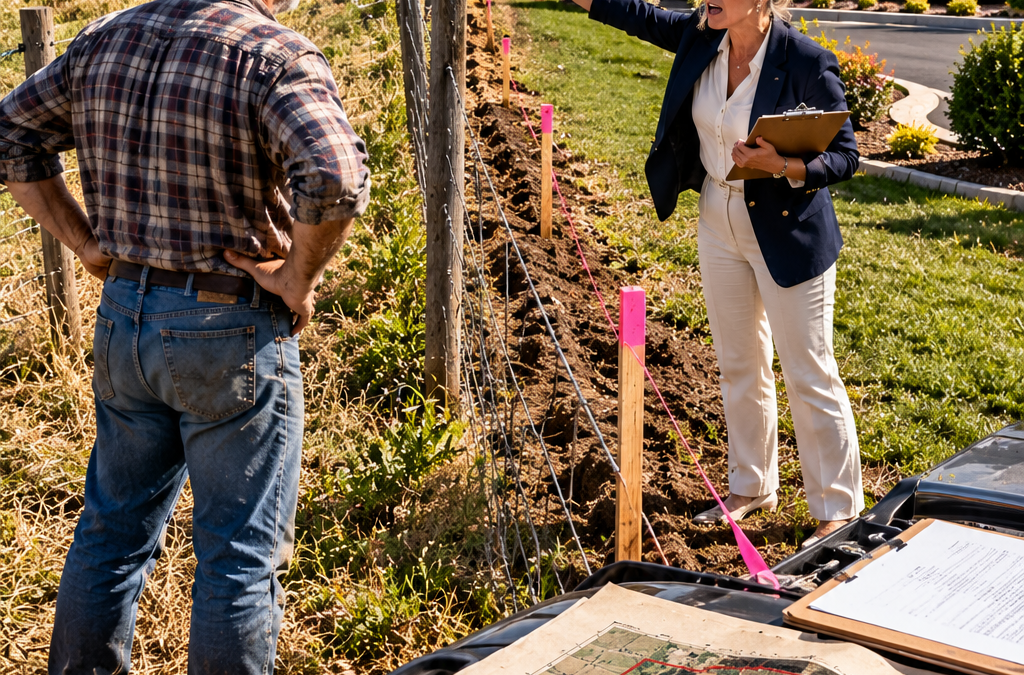
𝗙𝗨𝗟𝗟 𝗦𝗧𝗢𝗥𝗬
She wrote something on the clipboard.
“Until then, I’d advise against making permanent improvements.”
“I’m replacing a rotten fence post.”
“Which could complicate matters.”
I looked at the hole in the ground.
“Denise, this post went into this same hole before your subdivision existed.”
Her jaw tightened.
“The county will sort it out.”
Then she smiled again.
That same cold smile.
I remember it because later I would think about how calm she looked.
Like the outcome had already been decided somewhere I couldn’t see.
She walked away.
I finished replacing the post.
For the next three weeks, nothing happened.
Then I received a letter from the county assessor’s office.
I remember exactly where I was standing when I opened it.
At the kitchen counter.
Coffee in one hand.
Envelope in the other.
The letter used language that sounded routine.
Boundary correction.
Updated adjacent plat.
Administrative adjustment.
Recorded acreage reconciliation.
Boring phrases.
Then I reached the sentence that mattered.
Eighteen acres along the eastern portion of my property had supposedly been identified as overlapping land incorporated into the Clearwater development plat.
I read the sentence again.
Eighteen acres.
Not eleven feet.
Not a strip along the fence.
Eighteen acres.
I sat down.
The notice included a parcel map.
The shaded section swallowed almost the entire eastern field, part of the orchard access, and a portion of the pond drainage area.
I called the county immediately.
A clerk answered.
I gave her the parcel number.
She typed for a while.
“Yes, sir. I see the correction.”
“What correction?”
“Boundary reconciliation.”
“What does that mean?”
“It appears an updated survey was accepted for the adjoining development.”
“Accepted by who?”
“The assessor’s office.”
“Who requested it?”
Another pause.
“It was submitted by an adjacent association.”
“Which association?”
“I’m not sure I can disclose information from the submission file over the phone.”
“You just told me eighteen acres of my farm aren’t mine anymore.”
“I understand that this is frustrating.”
“No.”
I kept my voice controlled.
“You don’t understand. My grandfather bought that property in 1956. I have the deed.”
“Then you may need to file an appeal.”
“Who approved this?”
“The adjustment is already reflected in the record.”
“That isn’t what I asked.”
She hesitated.
Then said, “You can request the file in person.”
I drove there that afternoon.
The county building was a concrete box from the seventies with fluorescent lights and chairs designed to make everyone uncomfortable.
I took a number.
Waited forty minutes.
Then sat across from a woman at the records counter.
She pulled up my parcel.
The computer showed exactly what the letter had said.
Original acreage: sixty-two.
Adjusted acreage affected by boundary overlap: eighteen.
I pointed at the screen.
“When was this done?”
She clicked into another window.
“The underlying boundary correction references a 1998 filing.”
“1998?”
“Yes.”
“That’s impossible.”
She looked at me.
“Why?”
“Because the subdivision wasn’t built yet.”
“The filing may predate final development.”
“Who filed it?”
“I’d need to pull the document image.”
She did.
A scanned page appeared.
County stamp.
Parcel numbers.
Survey references.
And a signature that was supposed to belong to my father.
I felt something inside me go cold.
My father had died years earlier, but I knew his signature.
This one was close.
Not right.
Close.
I leaned toward the screen.
“Print that.”
“There’s a copy fee.”
“I don’t care.”
She printed it.
I took the page home.
I didn’t sleep well that night.
Two days later, a second letter arrived.
This one was not from the county.
Clearwater Pines Homeowners Association.
PAST DUE ASSESSMENT NOTICE.
I opened it on the porch.
The HOA claimed the eighteen-acre section had been part of the association’s recorded territory since 1998.
Therefore, according to them, unpaid assessments had accumulated against the property.
Years of them.
They calculated dues.
Late charges.
Administrative fees.
Legal fees.
Special assessments.
The total was absurd.
I called the number.
A management employee answered.
I gave my name.
There was an uncomfortable pause.
Then she transferred me.
Denise answered.
Not the association president.
Denise.
“Mr. Puit.”
“You expecting me?”
“I assumed you might call.”
“This letter says I owe HOA dues going back to 1998.”
“That’s correct.”
“I’ve never belonged to your HOA.”
“The corrected record suggests otherwise.”
“I didn’t even know this development existed in 1998.”
“That doesn’t affect the recorded obligation.”
“Your houses weren’t here.”
“The planning entity existed before construction.”
I stared across my kitchen toward the eastern field.
“How much of my property are you claiming?”
“We’re not claiming anything. We’re enforcing the recorded boundaries.”
“Eighteen acres.”
“That’s what the county record shows.”
“And you expect me to believe I somehow owed HOA dues on farmland while my family was planting corn there?”
“I expect you to resolve the account before collection proceeds.”
“What collection?”
“Lien enforcement.”
I almost laughed.
“There is no lien.”
“Not yet.”
She said it casually.
Like she was reminding me rain was expected.
“If the balance remains unpaid, the process is automatic.”
I gripped the phone harder.
“Denise, did you submit the boundary correction?”
“I’m not discussing internal association matters.”
“You stood at my fence three weeks before the county letter arrived.”
“And?”
“You told me the county would sort it out.”
“They did.”
Then she hung up.
The next morning, I drove to the HOA office.
Clearwater Pines had converted a former sales building near the development entrance into an administrative center.
Stone facade.
Glass doors.
Perfect landscaping.
Inside, everything smelled new.
Denise sat behind a glass-topped desk in a conference room.
She had a folder waiting.
I didn’t sit.
She gestured toward the chair.
“Please.”
“I’m fine.”
She pushed the folder toward me.
“This should answer your questions.”
Inside was a copy of the same corrected boundary record I had seen at the county.
It had a county stamp.
Official-looking parcel identifiers.
Survey language.
The kind of document most people would see and assume the argument was over.
I looked at the stamp.
Something bothered me.
I didn’t know what yet.
Maybe it was too dark.
Maybe too sharp.
Maybe I was simply suspicious because everything else felt wrong.
“This is your proof?”
“It’s the county’s proof.”
“Where’s the original?”
“That is a certified reproduction.”
“Of what?”
“The recorded filing.”
“Where is it recorded?”
She tapped the page.
“It’s right there.”
“No. I mean the original archive.”
Her eyes narrowed.
“Why does that matter?”
That question mattered.
If the record was legitimate, she should have welcomed verification.
Instead she looked irritated that I wanted to look deeper.
“It matters because eighteen acres of my farm don’t disappear because someone printed a stamp.”
She leaned back.
“You’re making this unnecessarily difficult.”
“No.”
I closed the folder.
“Somebody else made it difficult when they changed the boundary.”
“The boundary wasn’t changed.”
“It was corrected.”
“Same difference when I lose eighteen acres.”
She smiled.
“Mr. Puit, property records evolve. Surveys improve. Errors get discovered.”
“My grandfather’s fence didn’t move.”
“A fence isn’t necessarily a legal boundary.”
“The orchard didn’t move.”
“No.”
“The pond didn’t move.”
She sighed.
“What exactly do you want?”
“My land.”
“You still own your land.”
“Then stop sending me bills for it.”
She folded her hands.
“The board takes compliance seriously.”
“There it is.”
“What?”
“Compliance.”
I shook my head.
“You’re talking about farmland my grandfather bought before you were born as if I forgot to paint a mailbox the correct color.”
Her face stiffened.
“You should speak to counsel.”
“I probably will.”
“I think that would be best.”
I walked out.
Instead of going home, I drove back to the courthouse.
This time, I didn’t ask for the digital record.
I asked for archives.
The older clerk at the desk looked confused.
“Which archive?”
“The original source for this filing.”
I placed the copy in front of him.
He examined the reference number.
“That should be on microfilm.”
“Good.”
“You want a certified image?”
“I want to see the reel.”
He looked at me over his glasses.
“Most people don’t want to see the reel.”
“I do.”
That started a process.
Forms.
Supervisor approval.
Another wait.
Eventually, an employee took me downstairs to a records room where the air smelled like dust, cardboard, and old paper.
Rows of cabinets.
Microfilm drawers.
Equipment that looked older than some of the people upstairs.
She found the reference.
Then frowned.
“What?”
“Nothing.”
She checked again.
Pulled another index.
Then another.
“What’s wrong?”
“The reel number.”
“What about it?”
“It’s not from 1998.”
My stomach tightened.
“What year?”
She checked the catalog.
“This reel series was created two years ago.”
I stared at her.
“That can’t be right.”
“That’s what the index says.”
“So how can a 1998 document have been copied from a reel created two years ago?”
She looked uncomfortable.
“Older records can be transferred onto newer reels.”
“Fine. Where’s the source reel?”
She searched.
Nothing.
“Maybe it was migrated from paper.”
“Then where’s the paper index?”
She checked again.
Nothing.
I felt my heartbeat in my throat.
“Can I see whatever image is on the reel?”
She loaded it.
The document appeared.
Same page.
Same signature.
Same county stamp.
I leaned closer.
The employee enlarged it.
Something became obvious.
The font.
The typed date.
The formatting.
It looked modern.
Not just clean.
Modern.
I had spent enough years signing agricultural paperwork to recognize old county forms.
Forms from the nineties had uneven type.
Different margins.
Different coding.
Different stamps.
This looked like something created with a modern word processor and made to resemble an older filing.
I asked the clerk to pull legitimate 1998 boundary documents from nearby parcel numbers.
She did.
We compared them.
They looked nothing alike.
Different header.
Different stamp arrangement.
Different recording language.
Even the signature blocks were formatted differently.
My hands started shaking.
Not from age.
From anger.
“Who added this image?”
She went very still.
“I can’t answer that.”
“Can you tell me when?”
She checked the metadata available to her.
Her face changed.
“What?”
“I think you should speak with the assessor’s office.”
“When was it added?”
She lowered her voice.
“Two years ago.”
There it was.
A document claiming to have been filed in 1998 had entered the archive two years ago.
I requested certified copies of everything.
The index.
The reel creation date.
Comparison documents.
Digital metadata.
Every page they would legally give me.
Then I went upstairs.
I returned to the assessor’s counter.
A woman I hadn’t spoken with before helped me.
I laid the records down.
“This document is being used to remove eighteen acres from my property.”
She nodded cautiously.
“I see.”
“It says 1998.”
“Yes.”
“The archive it comes from is two years old.”
Her face lost color.
I continued.
“There is no older source reel.”
Silence.
“The form doesn’t match county forms from 1998.”
She stared at the papers.
“The signature block doesn’t match.”
Nothing.
“The digital metadata says this record was added two years ago.”
She swallowed.
“I need to get my supervisor.”
I had expected that.
What I didn’t expect was the name on the office door when he came out.
CALLOWAY.
Robert Callaway.
He was in his early sixties.
Gray suit.
County identification badge.
Carefully neutral expression.
The name hit me before anything else.
I looked at him.
Then at the employee.
Then back at him.
“Callaway?”
“Yes.”
“Any relation to Denise Callaway?”
His face barely moved.
“My wife.”
The room seemed to tilt.
Not physically.
But everything I thought I understood changed at once.
Denise at my fence.
The county correction.
The HOA demand.
The supervisor standing in front of me.
“You’re her husband.”
“Yes.”
“And you supervise the office that accepted this boundary record?”
His expression hardened.
“I oversee multiple functions. I did not personally create every record processed here.”
“That isn’t what I asked.”
“Mr. Puit, if you are alleging misconduct, there is a formal process.”
“I’m asking whether you supervised this office when the correction was entered.”
He looked toward the counter employee.
Then back at me.
“I will not discuss internal personnel matters.”
That answer was enough.
I gathered my papers.
“I need certified copies.”
The employee looked at him.
He said nothing.
She processed them.
I left.
By the time I reached my truck, my hands were shaking again.
This was no longer an HOA disagreement.
It wasn’t even a boundary dispute.
A woman on the HOA board was pushing a claim against my property while her husband supervised the county office holding the record that made the claim possible.
Maybe there was an innocent explanation.
I tried to tell myself that.
For about five minutes.
Then I remembered Denise’s smile.
The county will sort it out.
She had said that before the boundary correction notice ever arrived.
I hired a lawyer the next morning.
His name was Samuel Kerr.
Sixty years old.
Quiet.
The kind of attorney who let other people talk themselves into trouble.
I brought him two boxes.
Deeds.
County records.
Microfilm information.
HOA letters.
Tax bills.
Farm surveys.
Everything.
He spent almost three hours reviewing them.
Finally, he took off his glasses.
“Do not communicate with Denise or her husband directly again.”
“Why?”
“Because from this point forward, I want everything preserved.”
“You think they forged it?”
“I think there are enough irregularities that I’m not going to speculate.”
“That’s lawyer language.”
“Yes.”
“What’s normal-person language?”
He looked at the backdated document.
“This stinks.”
That was good enough for me.
Samuel immediately filed an administrative challenge to the boundary correction.
He demanded preservation of county metadata.
Requested the original submission packet.
Requested user logs showing who uploaded or modified the record.
Requested the survey supposedly supporting the correction.
He also notified the HOA that its claim was disputed and demanded suspension of collections.
For about ten days, everything went quiet.
I started believing the pressure had worked.
Then I found the foreclosure notice.
It was nailed to my barn door.
Not taped.
Not mailed.
Nailed.
Three sheets beneath a bright cover page.
The HOA claimed unpaid liens associated with the disputed eighteen acres had now attached across the full tax parcel because of “boundary ambiguity and integrated parcel liability.”
Sixty-two acres.
All of it.
My house.
The orchard.
The barn.
The pond.
The cornfield.
Everything.
I stood in front of that barn for a long time.
There are moments when fear doesn’t feel like fear.
It feels like heat.
My face burned.
My stomach went cold.
I read the notice three times.
Then I sat on the porch.
The farm was quiet.
Wind moved through the orchard.
A tractor from another property droned somewhere far off.
I remember staring at the pond and thinking about Grandpa.
Not in some poetic way.
I was furious at him.
That surprised me.
I thought, Why didn’t you make this easier?
Why didn’t you put everything somewhere obvious?
Why did you trust a system that could do this?
Then I heard his voice in my head.
Not literally.
A memory.
I was twelve.
We were sitting in an old bank lobby while he handled something at the counter.
He told me never to keep the only copy of an important document in the same building as the thing it protected.
I asked why.
He said, “Fire.”
Then after a pause he added, “Or people.”
At the time, I laughed.
That night, I remembered something else.
A steel box.
Not at the farmhouse.
At the bank.
Grandpa had mentioned it more than once.
Original deed.
Water papers.
Mineral documents.
“Just in case anybody ever tries something.”
I always thought he was paranoid.
The next morning, I drove into town.
The bank had changed names twice since Grandpa used it, but the safe-deposit records survived.
Because the box had passed through the estate, I still had authorized access.
An employee led me into the vault.
The box was long and narrow.
Metal.
Heavy for its size.
I sat in a private room and opened it.
Inside were envelopes bound with brittle rubber bands.
Original deed.
Recorded survey.
Water access reservation.
Mineral rights documentation.
A county carve-out agreement I had never seen.
I unfolded it carefully.
The language was old-fashioned and dense.
I read it twice and understood almost none of it.
Then I saw a phrase that mattered.
Reserved independently from any present or future subdivision platting.
Another section protected access and title integrity for the entire Croft parcel because water and mineral rights crossed multiple internal tracts.
I called Samuel from the bank parking lot.
“I found something.”
“How interesting?”
“Grandfather-in-a-bank-vault interesting.”
“Bring it.”
I drove straight to his office.
He read the document slowly.
Then again.
Then pulled up the current deed.
Compared legal descriptions.
Checked recording references.
Finally, he leaned back.
“Walt.”
“What?”
“If this is what I think it is, their correction cannot work the way they claim.”
My pulse jumped.
“Meaning?”
“This agreement predates the subdivision by decades.”
“I know.”
“It preserves the Croft parcel outside later subdivision incorporation unless a formal release is executed.”
“Was one?”
“I haven’t found one.”
“So the HOA can’t absorb eighteen acres.”
“Not through a later plat correction.”
“What about the county record?”
“If the county record conflicts with a controlling recorded instrument and was also backdated…”
He stopped.
“What?”
“We’re not dealing with a mistake anymore.”
The hearing was scheduled twelve days later.
Those twelve days felt longer than the previous month.
Samuel subpoenaed records.
The county suddenly became much less cooperative.
Requests needed review.
Files were unavailable.
Employees were out.
Metadata was being retrieved.
One document had supposedly been misindexed.
Samuel smiled every time they delayed.
“Why are you smiling?”
“Because honest records are usually boring.”
“These aren’t.”
“Exactly.”
Two days before the hearing, we finally received internal county logs.
The boundary correction had been entered into the digital system twenty-six months earlier.
Not 1998.
Twenty-six months.
The account used belonged to a supervisory credential.
Samuel wouldn’t tell me more until the hearing.
He wanted the evidence introduced correctly.
I hated that.
But I trusted him.
The hearing room was smaller than I expected.
County panel at the front.
Counsel tables.
Rows of chairs.
Denise sat three seats away from her husband.
She wore navy blue.
Pearls.
Hair perfectly arranged.
Clipboard on the table.
Of course.
She looked at me once.
No smile this time.
Robert Callaway sat beside county counsel.
He looked exhausted.
Samuel placed Grandpa’s original deed and reservation agreement into evidence.
The county attorney objected to part of our foundation.
Samuel handled it.
Then came the digital record.
The panel chair looked at the 1998 date.
Then at the archive information.
“Mr. Kerr, are you saying this document did not exist in the county system in 1998?”
Samuel answered carefully.
“I am saying the county has produced no verifiable evidence that it did.”
He held up another page.
“And the system audit supplied to us shows its current digital entry was created twenty-six months ago.”
The room changed.
You could feel it.
One panel member leaned forward.
“Created by whom?”
Samuel looked toward county counsel.
“That is a question we would also like answered.”
Robert Callaway shifted in his seat.
The county attorney objected.
The panel chair overruled him.
Samuel introduced the user log.
Supervisory credentials.
Robert Callaway’s department.
Not proof by itself that Robert personally typed anything.
But enough to turn every head in the room.
Then Samuel moved to Denise.
She had submitted a written statement supporting the HOA claim.
That opened the door.
He asked her to testify.
She looked irritated but agreed.
At first, she was calm.
She described the issue as an old surveying inconsistency.
She said Clearwater Pines had relied on county records.
She denied influencing county staff.
Then Samuel asked:
“Mrs. Callaway, before you first approached Mr. Puit about his fence, had you already reviewed the disputed boundary filing?”
“I don’t recall.”
“Did you discuss the property with your husband?”
“I discuss many community issues with my husband.”
“Yes or no?”
“I may have.”
“Did you know the county correction would be issued when you told Mr. Puit, quote, ‘The county will sort it out’?”
She looked toward me.
“I don’t remember using those exact words.”
“I do,” I said quietly.
Samuel glanced at me.
I stopped.
He continued.
Then came the question I had not expected.
“Mrs. Callaway, is Whitfield your maiden name?”
Her face changed.
Not dramatically.
That made it more obvious.
Her eyes stopped moving.
Her mouth tightened.
County counsel stood.
“Relevance?”
Samuel answered immediately.
“Potential personal interest in the disputed boundary.”
The panel chair allowed it.
Samuel asked again.
“Is your maiden name Whitfield?”
Denise looked at him.
“Yes.”
Samuel placed an old court file on the table.
I had never seen it.
“Are you related to Earl Whitfield?”
Silence.
“Mrs. Callaway?”
“He was my great-uncle.”
I looked at Samuel.
He had found something without telling me.
He opened the file.
“Earl Whitfield filed a boundary action against Elias Puit in 1964, correct?”
Denise’s jaw tightened.
“I wasn’t alive for most of that.”
“That wasn’t my question.”
“I know there was some family dispute.”
Samuel held up the judgment.
“Your great-uncle claimed part of the same eastern acreage now being claimed by Clearwater Pines.”
No one moved.
“He lost that case.”
Denise looked toward her husband.
Robert would not look back.
Samuel continued.
“Not narrowly. The court confirmed the Puit boundary and rejected the Whitfield claim.”
Denise’s voice sharpened.
“That has nothing to do with this.”
“Perhaps.”
Samuel stepped closer to the table.
“But you were aware of that family dispute before approaching Mr. Puit, weren’t you?”
“No.”
“Never discussed it?”
“No.”
Samuel pulled out another document.
“Then can you explain this email?”
Her face went pale.
He read only the relevant line.
A message sent by Denise to another HOA board member months earlier.
Reference to “correcting the old Whitfield mistake.”
I felt every muscle in my body tighten.
She had known.
This wasn’t just a convenient land grab.
It was old.
Personal.
Something handed down through a family like resentment.
Denise looked toward her attorney.
Then toward Robert.
Samuel didn’t raise his voice.
“Mrs. Callaway, what did you mean by ‘the old Whitfield mistake’?”
She said nothing.
The panel chair asked her to answer.
Finally she said, “My family always believed the original ruling was wrong.”
The room became absolutely silent.
There it was.
Sixty years.
A dead man’s grievance.
Passed forward.
My grandfather had won a boundary dispute decades before.
And Denise had found herself sitting on an HOA board beside the same land while her husband supervised the county office capable of making a record look different.
I felt sick.
Not victorious.
Sick.
Samuel placed the original 1956 deed beside the later reservation instrument.
“The land was never incorporated into Clearwater Pines.”
He pointed to the recording references.
“The protected parcel status predates the development.”
Another page.
“There is no release.”
Another.
“No transfer.”
Another.
“No valid survey placing these eighteen acres inside the HOA.”
Then the final page.
“And the document used to create that appearance entered the county system twenty-six months ago while bearing a date of 1998.”
Denise stared straight ahead.
Her husband stared at the table.
For the first time since this began, neither of them looked powerful.
The hearing lasted another three hours.
Attorneys argued.
County officials tried to characterize the digital problem as a record-management irregularity.
Samuel asked how an “irregularity” managed to benefit the HOA president whose husband supervised the relevant office.
Nobody gave a satisfying answer.
The foreclosure was suspended immediately.
The boundary correction went under formal review.
Three days later, the county issued its ruling.
Void.
The entire correction.
Void from inception.
The eighteen acres remained mine.
The HOA assessments attached to them had no legal foundation.
The liens were invalid.
The foreclosure collapsed.
Not reduced.
Not negotiated.
Gone.
All sixty-two acres remained exactly where they had been before Denise ever stood at my fence.
The state received the backdated document and county metadata for investigation.
Robert Callaway was placed on administrative leave.
Denise resigned from the HOA board three days later.
The association sent me a carefully worded letter saying it regretted any “confusion arising from reliance on disputed public records.”
I read that sentence several times.
Confusion.
That was the word they chose.
I handed the letter to Samuel.
He read it.
“Lawyers wrote this.”
“I gathered.”
“You want to respond?”
“No.”
“Good.”
The HOA canceled every charge.
They removed all references to my property from their maps.
Their attorney confirmed in writing that Croft Hollow was outside association jurisdiction.
The fence stayed exactly where it had always been.
Eleven feet of supposed green-space encroachment disappeared the moment the false boundary disappeared.
Funny how that worked.
The investigation continued beyond anything I personally needed.
State officials examined who created the backdated document, who authorized its use, and whether other records had been altered.
I cooperated.
Provided copies.
Answered questions.
Then I stepped away.
I didn’t need to watch every consequence.
That surprised me.
At the beginning, I wanted Denise ruined.
I wanted her to feel what I had felt sitting on that porch with a foreclosure notice nailed to my barn.
I wanted Robert to understand what it was like to have your future changed by someone behind a county counter.
But anger burns differently once the immediate danger is gone.
Eventually, you either put it down or let it become another person’s inheritance.
I had seen enough of inherited resentment.
Denise had carried Earl Whitfield’s grievance for sixty years after the original dispute.
I wasn’t going to carry hers.
That summer, I repaired the fence.
The same one that started everything.
Most of the posts were fine.
A few needed replacing.
I worked slowly.
At sixty-seven, you stop pretending your back is twenty-five.
One evening, I found an old post with my grandfather’s initials carved near the bottom.
E.P.
Barely visible.
I sat in the grass beside it.
For almost a year, I had thought about him mostly in legal terms.
His deed.
His signature.
His court case.
His bank box.
His reservation agreement.
Evidence.
That bothered me.
Because Grandpa wasn’t paperwork.
He was the man who taught me to drive a tractor.
The man who made terrible pancakes on Sundays.
The man who could sit beside a pond for an hour without saying anything and somehow make the silence feel full.
I ran my thumb over those initials.
“You knew, didn’t you?”
The orchard moved softly in the wind.
No answer.
Of course there wasn’t.
But I thought about the steel box.
He had protected the deed from fire.
And people.
At twelve, I thought that sounded paranoid.
At sixty-seven, it sounded experienced.
A month later, I asked Samuel to come out to the farm.
He arrived in shoes that were far too clean.
I made fun of him.
He ignored me.
We walked toward the eastern boundary.
He stopped beside the fence.
“So this is the famous eleven feet.”
“Apparently.”
He looked through the wire toward the subdivision.
Kids were riding bicycles on the path.
A woman pushed a stroller.
Sprinklers clicked across manicured lawns.
“Looks peaceful.”
“It usually was.”
Samuel leaned against a post.
“You know what bothers me most about this case?”
“What?”
“The scale.”
“Sixty-two acres?”
“No.”
He shook his head.
“How little it took.”
I knew what he meant.
One digital record.
One false date.
One county stamp.
One HOA letter.
One lien notice.
That was nearly enough.
Most people imagine losing property requires some dramatic act.
A bulldozer.
Armed men.
A courthouse auction.
Sometimes it starts with a database.
A field changes.
A map gets updated.
A letter arrives.
Then everyone after that trusts the letter before they trust the person standing in front of them.
I looked across the field.
“If I hadn’t asked for the microfilm…”
Samuel nodded.
“If you had simply relied on the digital copy, the fight would have been much harder.”
“If I hadn’t remembered the bank box?”
“Harder again.”
“If Grandpa hadn’t kept it?”
He looked at me.
“Then we would have found another route.”
“That isn’t what I asked.”
He was quiet.
“No.”
It was a frightening answer.
How many people had received an official notice and assumed officials couldn’t be wrong?
How many people didn’t know their grandparents had stored something in a bank vault?
How many people couldn’t afford an attorney?
How many surrendered because the paperwork looked more legitimate than their own memory?
Those questions stayed with me.
I started reorganizing every farm record I owned.
Scanned copies.
Certified copies.
Off-site copies.
Digital backups.
I created a binder for the next person in my family.
DEEDS.
SURVEYS.
WATER.
MINERAL.
TAX.
BOUNDARY.
I even wrote a note inside the front cover.
DO NOT ASSUME THE COUNTY COPY IS THE ONLY COPY.
That sounded paranoid.
Good.
Maybe paranoia is just preparation after someone proves what they’re willing to do.
The orchard had a good year.
Apples everywhere.
The pond stayed full through August.
Corn came in a little weak because the summer was dry, but the hay was decent.
Ordinary problems.
I appreciated them more.
A broken irrigation line is honest.
It leaks where you can see it.
A tractor doesn’t pretend it isn’t broken.
Land tells you what’s wrong if you pay attention.
People are more complicated.
One morning that fall, I saw Denise on the walking path beyond the fence.
First time since her resignation.
She stopped.
I stopped.
For a few seconds, neither of us spoke.
She looked older.
Maybe I did too.
Finally she said, “Walt.”
“Denise.”
She looked at the fence.
“You replaced some posts.”
“Yes.”
Silence.
Then she said, “My family talked about that lawsuit my whole childhood.”
I didn’t respond.
“My grandmother said your grandfather cheated Earl.”
“There was a court judgment.”
“I know.”
“Your great-uncle lost.”
“I know that now.”
I stared at her.
“You knew it at the hearing too.”
She looked away.
“I knew the story my family told.”
“That isn’t the same thing as truth.”
“No.”
It was the first thing she had ever said to me that sounded humble.
She looked toward the orchard.
“I convinced myself I was correcting something.”
“By changing a county record?”
She flinched.
“The investigation is still ongoing.”
“I didn’t ask about the investigation.”
“I can’t discuss that.”
“Then don’t.”
She nodded.
For a moment, I considered walking away.
Instead I asked the question that had bothered me most.
“When did eighteen acres become sixty-two?”
Her face changed.
“The foreclosure?”
“Yes.”
“That wasn’t supposed to happen that way.”
I laughed once.
“You nailed it to my barn.”
“I didn’t personally—”
“Stop.”
She went quiet.
“I’m not asking whose hand held the hammer.”
I stepped closer to the fence.
“When did taking eighteen acres stop being enough?”
She looked down.
“I thought you’d fight the boundary.”
“I did.”
“And the broader lien gave the association leverage.”
There it was.
Leverage.
A word people use when they don’t want to say threat.
“You were going to risk my whole farm to pressure me into giving up eighteen acres.”
She looked miserable.
“I told myself it wouldn’t go that far.”
“That’s what everyone says after something goes too far.”
She didn’t argue.
I looked at her for a long time.
Then I said, “My grandfather knew your great-uncle.”
She nodded.
“He never talked about him.”
That surprised her.
“What?”
“I grew up on this land. Grandpa told stories about everybody.”
I pointed toward the north field.
“Neighbors. Contractors. Men he fought with. Men he worked with. I never once heard Earl Whitfield’s name.”
Denise stared at me.
“You know what that means?”
She shook her head.
“It means your family spent sixty years carrying a fight mine had already forgotten.”
Her eyes filled.
I didn’t feel good saying it.
But it was true.
I picked up my fence pliers.
“I hope you let it end here.”
She stood there another moment.
Then continued down the path.
We never spoke again.
The next spring, I stood beside the pond at sunrise.
Mist hung over the water.
The orchard behind me was beginning to flower.
The eastern fence followed exactly the same line it had when my grandfather first set it.
Eleven feet into nobody’s green space.
Eighteen acres inside nobody’s HOA.
Sixty-two acres belonging exactly where they always had.
I thought about the word ownership.
For months, people had treated ownership like something a computer could grant or remove.
Click.
Change a record.
Print a notice.
Suddenly one person owned less and somebody else claimed more.
But standing there, I realized ownership was layered.
Yes, there was law.
Deeds.
Recording systems.
Surveys.
Courts.
Those matter.
Without them, chaos wins.
But there was also stewardship.
Grandpa had spent fifty-two years caring for that ground.
My father spent decades after him.
I had worked it most of my life.
That history didn’t replace a deed.
But it was why the deed mattered.
The paper protected something real.
Something lived.
Something earned through time.
That was what Denise never understood.
To her, eighteen acres were a line she could shift.
Leverage.
Green space.
Development value.
To me, one corner of those eighteen acres was where Grandpa taught me to drive a tractor.
Another held two apple trees my father grafted by hand.
The lower section flooded every third spring.
The fence line had been repaired so many times that no single piece of wire was original anymore, but the line itself remained.
Taking that land wasn’t correcting a map.
It was rewriting my family.
That was why I fought.
Not because every inch of dirt is sacred.
Because nobody gets to change history simply because they have access to a database.
The state investigation eventually produced consequences.
Enough that local papers ran stories.
I didn’t keep the clippings.
Robert never returned to the same supervisory role.
The county changed access controls on historical records.
Dual authorization for certain parcel modifications.
Mandatory audit trails.
Independent review for corrections affecting occupied property.
The HOA rewrote its own procedures too.
Any land claim now required outside title review.
Board members had to disclose family or financial conflicts.
Funny how organizations discover safeguards after somebody abuses the absence of them.
I attended one county meeting where they discussed those reforms.
A commissioner thanked me for bringing the issue forward.
I didn’t thank him back.
I simply said, “It should never have needed me.”
He looked uncomfortable.
Good.
Systems should be uncomfortable when they almost erase someone.
Then life returned to normal.
That was the ending I wanted.
Not revenge.
Normal.
Corn.
Hay.
Pruning trees.
Fixing fences.
Watching geese land on the pond every October.
One afternoon, I took my oldest grandson to the bank.
He was thirteen.
Bored immediately.
I rented a new safe-deposit box.
Put certified copies of the deed inside.
The 1956 original stayed in archival storage through our attorney.
My grandson watched me organize the documents.
“Why are we putting this stuff here?”
I smiled.
I had asked Grandpa almost the same question.
“Fire.”
He nodded.
That made sense.
Then I added:
“Or people.”
He laughed.
Exactly the way I had.
I let him.
Someday he might understand.
Hopefully he never has to.
On the drive home, we passed Clearwater Pines.
Big stone entrance.
Perfect landscaping.
Same walking trail along the eastern side.
He looked toward it.
“That the HOA that tried taking the farm?”
“Yes.”
“Why?”
Long question.
Short word.
I thought about Denise.
Her husband.
Earl Whitfield.
The digital record.
The foreclosure notice.
The bank vault.
“Because they thought paperwork could make something true.”
He looked confused.
“Couldn’t it?”
“Sometimes.”
“That doesn’t make sense.”
“No.”
I turned onto the farm road.
“That’s why you keep your own paperwork.”
He laughed again.
Maybe Grandpa was laughing somewhere too.
The old farmhouse appeared ahead.
Barn to the left.
Orchard behind it.
The pond shining beyond the trees.
All sixty-two acres.
Nothing dramatic about them.
That was the beauty of it.
They were simply still there.
A year earlier, one government record almost made eighteen acres disappear.
A lien almost swallowed the rest.
People with titles and offices and polished explanations almost convinced an entire system that my family’s land had belonged somewhere else for decades.
They had a stamped document.
I had memory.
At first, their document carried more weight.
Then I found the date.
Then the archive.
Then Grandpa’s steel box.
And eventually truth became heavier than the paperwork built around the lie.
I keep the original foreclosure notice in my desk.
Not because I enjoy seeing it.
Because I don’t want to forget how close it came.
The nail hole is still through the top.
Sometimes I take it out and read the line claiming the association could proceed against the full sixty-two-acre parcel.
It sounds almost ridiculous now.
It didn’t sound ridiculous that night on my porch.
That night, it sounded like the end of my family’s farm.
That is the part people don’t understand when they hear the story later.
Once you know the ending, every danger seems smaller.
Of course the deed saved him.
Of course the record was exposed.
Of course the foreclosure failed.
But I didn’t know any of that when I was sixty-seven years old staring at a piece of paper telling me three generations might disappear through a legal process I barely understood.
I didn’t know the bank document would be enough.
I didn’t know Samuel would find the old Whitfield case.
I didn’t know the county log would exist.
I didn’t know Denise would reveal what she knew.
I only knew something was wrong.
And sometimes that has to be enough to make you keep looking.
The eastern fence is still there today.
I replaced three more posts last winter.
One leans slightly because the ground froze before I finished setting it.
Clearwater Pines probably hates that.
Not my problem.
My orchard still produces more apples than I can use.
The pond still floods near the south edge after heavy spring rain.
The barn roof still leaks in one corner.
And every so often, I stand by that fence and think about the first morning Denise appeared with her clipboard.
She told me the county would sort it out.
In a strange way, she was right.
The county did sort it out.
Just not the way she expected.
The boundary never needed correcting.
The record did.
And once that happened, the land remained what it had always been.
My grandfather’s work.
My father’s inheritance.
My responsibility.
Sixty-two acres.
Every last inch.
𝗧𝗛𝗘 𝗘𝗡𝗗
The HOA Said 18 Acres of My Family Farm Had Always Belonged to Them, but One Date in the County Archive Made No Sense
They tried to erase three generations of my family with one county stamp, turning eighteen acres of my farm into HOA property and then using the lie to reach for the other forty-four. What scared me most wasn’t how bold they were—it was how official everything looked until I found a date that could not possibly be true.
My name is Walt Puit.
I was sixty-seven years old when somebody tried to convince me that the land I had worked most of my life had never really belonged to my family.
Sixty-two acres.
That number may not sound like much beside the giant ranches you hear about out West, but to us it was everything.
My grandfather cleared the first field himself in 1956.
There wasn’t much there when he bought it.
Brush.
Rock.
Wet ground along the eastern edge.
A stand of stubborn hardwood trees.
And an old wagon path barely wide enough for a truck.
He spent decades turning it into something useful.
Corn in the lower field.
Hay farther north.
A small orchard behind the farmhouse.
A pond he dug with borrowed equipment and more patience than any man should have possessed.
I grew up there.
So did my father.
By the time the place came to me, almost every acre carried a memory.
I knew where Grandpa had broken his wrist repairing the old windmill.
I knew which apple tree my father planted after I was born.
I knew where a cow once chased me through a fence when I was fourteen.
I knew which section of creek flooded first when the spring rains came hard.
The place wasn’t valuable to me because of acreage.
It was valuable because I couldn’t walk fifty yards without remembering someone who was gone.
That was why I never sold.
Developers asked.
More than once.
They started circling the area in the late nineties when farmland around us began turning into subdivisions.
First came a shopping center six miles away.
Then a widened highway.
Then two developments on the south side of town.
Eventually, a company bought the property east of mine.
They cleared trees.
Installed sewer lines.
Cut roads.
Within a few years, rows of large houses stood where cattle had grazed.
The subdivision was called Clearwater Ridge.
Later, when the homeowners association formed, they renamed some of the common areas Clearwater Pines.
The distinction never meant much to me.
I wasn’t part of either.
My farm predated all of it.
By decades.
A wire fence separated my eastern field from the development.
Their side had ornamental trees, stone entrance signs, decorative streetlights, and lawns trimmed so evenly they looked artificial.
My side had fence posts leaning at different angles and patches of mud after heavy rain.
I preferred my side.
For the first several years, we coexisted.
A few homeowners complained about tractor noise.
One complained about manure smell.
Another called because my rooster apparently violated a noise rule written by an HOA I didn’t belong to.
I explained that politely.
Nothing came of it.
Then Denise Callaway appeared.
I first met her on a Wednesday morning in late March.
I was replacing a section of fence near the orchard when I noticed a woman standing on the other side.
White pants.
Dark blue jacket.
Large sunglasses.
Clipboard.
That clipboard became familiar later.
At the time, I barely noticed it.
“You’re Mr. Puit?”
“That depends who’s asking.”
She didn’t smile.
“I’m Denise Callaway. Clearwater Pines HOA board.”
“Morning.”
She looked down at the fence line.
“This fence is improperly located.”
I thought she was joking.
“Improperly located where?”
“Approximately eleven feet inside community green space.”
I leaned against the post.
“Community green space?”
“Yes.”
I looked behind her.
There was a narrow strip of grass, then a walking trail, then the backs of expensive houses.
“This fence has been here longer than your houses.”
“That doesn’t necessarily establish ownership.”
“No.”
I tapped the post.
“The deed does.”
She gave me a small smile.
It wasn’t friendly.
It was the kind of smile people use when they think patience is something they’re generously extending to someone less informed.
“The subdivision plat shows a shared open-space corridor along this boundary.”
“My survey doesn’t.”
“You may have an older survey.”
“I definitely have an older survey. My land is older.”
She ignored that.
“The county may need to clarify the issue.”
“That’s fine.”
That seemed to surprise her.
Maybe she expected an argument.
I shrugged.
“Have them call me.”
She wrote something on the clipboard.
“Until then, I’d advise against making permanent improvements.”
“I’m replacing a rotten fence post.”
“Which could complicate matters.”
I looked at the hole in the ground.
“Denise, this post went into this same hole before your subdivision existed.”
Her jaw tightened.
“The county will sort it out.”
Then she smiled again.
That same cold smile.
I remember it because later I would think about how calm she looked.
Like the outcome had already been decided somewhere I couldn’t see.
She walked away.
I finished replacing the post.
For the next three weeks, nothing happened.
Then I received a letter from the county assessor’s office.
I remember exactly where I was standing when I opened it.
At the kitchen counter.
Coffee in one hand.
Envelope in the other.
The letter used language that sounded routine.
Boundary correction.
Updated adjacent plat.
Administrative adjustment.
Recorded acreage reconciliation.
Boring phrases.
Then I reached the sentence that mattered.
Eighteen acres along the eastern portion of my property had supposedly been identified as overlapping land incorporated into the Clearwater development plat.
I read the sentence again.
Eighteen acres.
Not eleven feet.
Not a strip along the fence.
Eighteen acres.
I sat down.
The notice included a parcel map.
The shaded section swallowed almost the entire eastern field, part of the orchard access, and a portion of the pond drainage area.
I called the county immediately.
A clerk answered.
I gave her the parcel number.
She typed for a while.
“Yes, sir. I see the correction.”
“What correction?”
“Boundary reconciliation.”
“What does that mean?”
“It appears an updated survey was accepted for the adjoining development.”
“Accepted by who?”
“The assessor’s office.”
“Who requested it?”
Another pause.
“It was submitted by an adjacent association.”
“Which association?”
“I’m not sure I can disclose information from the submission file over the phone.”
“You just told me eighteen acres of my farm aren’t mine anymore.”
“I understand that this is frustrating.”
“No.”
I kept my voice controlled.
“You don’t understand. My grandfather bought that property in 1956. I have the deed.”
“Then you may need to file an appeal.”
“Who approved this?”
“The adjustment is already reflected in the record.”
“That isn’t what I asked.”
She hesitated.
Then said, “You can request the file in person.”
I drove there that afternoon.
The county building was a concrete box from the seventies with fluorescent lights and chairs designed to make everyone uncomfortable.
I took a number.
Waited forty minutes.
Then sat across from a woman at the records counter.
She pulled up my parcel.
The computer showed exactly what the letter had said.
Original acreage: sixty-two.
Adjusted acreage affected by boundary overlap: eighteen.
I pointed at the screen.
“When was this done?”
She clicked into another window.
“The underlying boundary correction references a 1998 filing.”
“1998?”
“Yes.”
“That’s impossible.”
She looked at me.
“Why?”
“Because the subdivision wasn’t built yet.”
“The filing may predate final development.”
“Who filed it?”
“I’d need to pull the document image.”
She did.
A scanned page appeared.
County stamp.
Parcel numbers.
Survey references.
And a signature that was supposed to belong to my father.
I felt something inside me go cold.
My father had died years earlier, but I knew his signature.
This one was close.
Not right.
Close.
I leaned toward the screen.
“Print that.”
“There’s a copy fee.”
“I don’t care.”
She printed it.
I took the page home.
I didn’t sleep well that night.
Two days later, a second letter arrived.
This one was not from the county.
Clearwater Pines Homeowners Association.
PAST DUE ASSESSMENT NOTICE.
I opened it on the porch.
The HOA claimed the eighteen-acre section had been part of the association’s recorded territory since 1998.
Therefore, according to them, unpaid assessments had accumulated against the property.
Years of them.
They calculated dues.
Late charges.
Administrative fees.
Legal fees.
Special assessments.
The total was absurd.
I called the number.
A management employee answered.
I gave my name.
There was an uncomfortable pause.
Then she transferred me.
Denise answered.
Not the association president.
Denise.
“Mr. Puit.”
“You expecting me?”
“I assumed you might call.”
“This letter says I owe HOA dues going back to 1998.”
“That’s correct.”
“I’ve never belonged to your HOA.”
“The corrected record suggests otherwise.”
“I didn’t even know this development existed in 1998.”
“That doesn’t affect the recorded obligation.”
“Your houses weren’t here.”
“The planning entity existed before construction.”
I stared across my kitchen toward the eastern field.
“How much of my property are you claiming?”
“We’re not claiming anything. We’re enforcing the recorded boundaries.”
“Eighteen acres.”
“That’s what the county record shows.”
“And you expect me to believe I somehow owed HOA dues on farmland while my family was planting corn there?”
“I expect you to resolve the account before collection proceeds.”
“What collection?”
“Lien enforcement.”
I almost laughed.
“There is no lien.”
“Not yet.”
She said it casually.
Like she was reminding me rain was expected.
“If the balance remains unpaid, the process is automatic.”
I gripped the phone harder.
“Denise, did you submit the boundary correction?”
“I’m not discussing internal association matters.”
“You stood at my fence three weeks before the county letter arrived.”
“And?”
“You told me the county would sort it out.”
“They did.”
Then she hung up.
The next morning, I drove to the HOA office.
Clearwater Pines had converted a former sales building near the development entrance into an administrative center.
Stone facade.
Glass doors.
Perfect landscaping.
Inside, everything smelled new.
Denise sat behind a glass-topped desk in a conference room.
She had a folder waiting.
I didn’t sit.
She gestured toward the chair.
“Please.”
“I’m fine.”
She pushed the folder toward me.
“This should answer your questions.”
Inside was a copy of the same corrected boundary record I had seen at the county.
It had a county stamp.
Official-looking parcel identifiers.
Survey language.
The kind of document most people would see and assume the argument was over.
I looked at the stamp.
Something bothered me.
I didn’t know what yet.
Maybe it was too dark.
Maybe too sharp.
Maybe I was simply suspicious because everything else felt wrong.
“This is your proof?”
“It’s the county’s proof.”
“Where’s the original?”
“That is a certified reproduction.”
“Of what?”
“The recorded filing.”
“Where is it recorded?”
She tapped the page.
“It’s right there.”
“No. I mean the original archive.”
Her eyes narrowed.
“Why does that matter?”
That question mattered.
If the record was legitimate, she should have welcomed verification.
Instead she looked irritated that I wanted to look deeper.
“It matters because eighteen acres of my farm don’t disappear because someone printed a stamp.”
She leaned back.
“You’re making this unnecessarily difficult.”
“No.”
I closed the folder.
“Somebody else made it difficult when they changed the boundary.”
“The boundary wasn’t changed.”
“It was corrected.”
“Same difference when I lose eighteen acres.”
She smiled.
“Mr. Puit, property records evolve. Surveys improve. Errors get discovered.”
“My grandfather’s fence didn’t move.”
“A fence isn’t necessarily a legal boundary.”
“The orchard didn’t move.”
“No.”
“The pond didn’t move.”
She sighed.
“What exactly do you want?”
“My land.”
“You still own your land.”
“Then stop sending me bills for it.”
She folded her hands.
“The board takes compliance seriously.”
“There it is.”
“What?”
“Compliance.”
I shook my head.
“You’re talking about farmland my grandfather bought before you were born as if I forgot to paint a mailbox the correct color.”
Her face stiffened.
“You should speak to counsel.”
“I probably will.”
“I think that would be best.”
I walked out.
Instead of going home, I drove back to the courthouse.
This time, I didn’t ask for the digital record.
I asked for archives.
The older clerk at the desk looked confused.
“Which archive?”
“The original source for this filing.”
I placed the copy in front of him.
He examined the reference number.
“That should be on microfilm.”
“Good.”
“You want a certified image?”
“I want to see the reel.”
He looked at me over his glasses.
“Most people don’t want to see the reel.”
“I do.”
That started a process.
Forms.
Supervisor approval.
Another wait.
Eventually, an employee took me downstairs to a records room where the air smelled like dust, cardboard, and old paper.
Rows of cabinets.
Microfilm drawers.
Equipment that looked older than some of the people upstairs.
She found the reference.
Then frowned.
“What?”
“Nothing.”
She checked again.
Pulled another index.
Then another.
“What’s wrong?”
“The reel number.”
“What about it?”
“It’s not from 1998.”
My stomach tightened.
“What year?”
She checked the catalog.
“This reel series was created two years ago.”
I stared at her.
“That can’t be right.”
“That’s what the index says.”
“So how can a 1998 document have been copied from a reel created two years ago?”
She looked uncomfortable.
“Older records can be transferred onto newer reels.”
“Fine. Where’s the source reel?”
She searched.
Nothing.
“Maybe it was migrated from paper.”
“Then where’s the paper index?”
She checked again.
Nothing.
I felt my heartbeat in my throat.
“Can I see whatever image is on the reel?”
She loaded it.
The document appeared.
Same page.
Same signature.
Same county stamp.
I leaned closer.
The employee enlarged it.
Something became obvious.
The font.
The typed date.
The formatting.
It looked modern.
Not just clean.
Modern.
I had spent enough years signing agricultural paperwork to recognize old county forms.
Forms from the nineties had uneven type.
Different margins.
Different coding.
Different stamps.
This looked like something created with a modern word processor and made to resemble an older filing.
I asked the clerk to pull legitimate 1998 boundary documents from nearby parcel numbers.
She did.
We compared them.
They looked nothing alike.
Different header.
Different stamp arrangement.
Different recording language.
Even the signature blocks were formatted differently.
My hands started shaking.
Not from age.
From anger.
“Who added this image?”
She went very still.
“I can’t answer that.”
“Can you tell me when?”
She checked the metadata available to her.
Her face changed.
“What?”
“I think you should speak with the assessor’s office.”
“When was it added?”
She lowered her voice.
“Two years ago.”
There it was.
A document claiming to have been filed in 1998 had entered the archive two years ago.
I requested certified copies of everything.
The index.
The reel creation date.
Comparison documents.
Digital metadata.
Every page they would legally give me.
Then I went upstairs.
I returned to the assessor’s counter.
A woman I hadn’t spoken with before helped me.
I laid the records down.
“This document is being used to remove eighteen acres from my property.”
She nodded cautiously.
“I see.”
“It says 1998.”
“Yes.”
“The archive it comes from is two years old.”
Her face lost color.
I continued.
“There is no older source reel.”
Silence.
“The form doesn’t match county forms from 1998.”
She stared at the papers.
“The signature block doesn’t match.”
Nothing.
“The digital metadata says this record was added two years ago.”
She swallowed.
“I need to get my supervisor.”
I had expected that.
What I didn’t expect was the name on the office door when he came out.
CALLOWAY.
Robert Callaway.
He was in his early sixties.
Gray suit.
County identification badge.
Carefully neutral expression.
The name hit me before anything else.
I looked at him.
Then at the employee.
Then back at him.
“Callaway?”
“Yes.”
“Any relation to Denise Callaway?”
His face barely moved.
“My wife.”
The room seemed to tilt.
Not physically.
But everything I thought I understood changed at once.
Denise at my fence.
The county correction.
The HOA demand.
The supervisor standing in front of me.
“You’re her husband.”
“Yes.”
“And you supervise the office that accepted this boundary record?”
His expression hardened.
“I oversee multiple functions. I did not personally create every record processed here.”
“That isn’t what I asked.”
“Mr. Puit, if you are alleging misconduct, there is a formal process.”
“I’m asking whether you supervised this office when the correction was entered.”
He looked toward the counter employee.
Then back at me.
“I will not discuss internal personnel matters.”
That answer was enough.
I gathered my papers.
“I need certified copies.”
The employee looked at him.
He said nothing.
She processed them.
I left.
By the time I reached my truck, my hands were shaking again.
This was no longer an HOA disagreement.
It wasn’t even a boundary dispute.
A woman on the HOA board was pushing a claim against my property while her husband supervised the county office holding the record that made the claim possible.
Maybe there was an innocent explanation.
I tried to tell myself that.
For about five minutes.
Then I remembered Denise’s smile.
The county will sort it out.
She had said that before the boundary correction notice ever arrived.
I hired a lawyer the next morning.
His name was Samuel Kerr.
Sixty years old.
Quiet.
The kind of attorney who let other people talk themselves into trouble.
I brought him two boxes.
Deeds.
County records.
Microfilm information.
HOA letters.
Tax bills.
Farm surveys.
Everything.
He spent almost three hours reviewing them.
Finally, he took off his glasses.
“Do not communicate with Denise or her husband directly again.”
“Why?”
“Because from this point forward, I want everything preserved.”
“You think they forged it?”
“I think there are enough irregularities that I’m not going to speculate.”
“That’s lawyer language.”
“Yes.”
“What’s normal-person language?”
He looked at the backdated document.
“This stinks.”
That was good enough for me.
Samuel immediately filed an administrative challenge to the boundary correction.
He demanded preservation of county metadata.
Requested the original submission packet.
Requested user logs showing who uploaded or modified the record.
Requested the survey supposedly supporting the correction.
He also notified the HOA that its claim was disputed and demanded suspension of collections.
For about ten days, everything went quiet.
I started believing the pressure had worked.
Then I found the foreclosure notice.
It was nailed to my barn door.
Not taped.
Not mailed.
Nailed.
Three sheets beneath a bright cover page.
The HOA claimed unpaid liens associated with the disputed eighteen acres had now attached across the full tax parcel because of “boundary ambiguity and integrated parcel liability.”
Sixty-two acres.
All of it.
My house.
The orchard.
The barn.
The pond.
The cornfield.
Everything.
I stood in front of that barn for a long time.
There are moments when fear doesn’t feel like fear.
It feels like heat.
My face burned.
My stomach went cold.
I read the notice three times.
Then I sat on the porch.
The farm was quiet.
Wind moved through the orchard.
A tractor from another property droned somewhere far off.
I remember staring at the pond and thinking about Grandpa.
Not in some poetic way.
I was furious at him.
That surprised me.
I thought, Why didn’t you make this easier?
Why didn’t you put everything somewhere obvious?
Why did you trust a system that could do this?
Then I heard his voice in my head.
Not literally.
A memory.
I was twelve.
We were sitting in an old bank lobby while he handled something at the counter.
He told me never to keep the only copy of an important document in the same building as the thing it protected.
I asked why.
He said, “Fire.”
Then after a pause he added, “Or people.”
At the time, I laughed.
That night, I remembered something else.
A steel box.
Not at the farmhouse.
At the bank.
Grandpa had mentioned it more than once.
Original deed.
Water papers.
Mineral documents.
“Just in case anybody ever tries something.”
I always thought he was paranoid.
The next morning, I drove into town.
The bank had changed names twice since Grandpa used it, but the safe-deposit records survived.
Because the box had passed through the estate, I still had authorized access.
An employee led me into the vault.
The box was long and narrow.
Metal.
Heavy for its size.
I sat in a private room and opened it.
Inside were envelopes bound with brittle rubber bands.
Original deed.
Recorded survey.
Water access reservation.
Mineral rights documentation.
A county carve-out agreement I had never seen.
I unfolded it carefully.
The language was old-fashioned and dense.
I read it twice and understood almost none of it.
Then I saw a phrase that mattered.
Reserved independently from any present or future subdivision platting.
Another section protected access and title integrity for the entire Croft parcel because water and mineral rights crossed multiple internal tracts.
I called Samuel from the bank parking lot.
“I found something.”
“How interesting?”
“Grandfather-in-a-bank-vault interesting.”
“Bring it.”
I drove straight to his office.
He read the document slowly.
Then again.
Then pulled up the current deed.
Compared legal descriptions.
Checked recording references.
Finally, he leaned back.
“Walt.”
“What?”
“If this is what I think it is, their correction cannot work the way they claim.”
My pulse jumped.
“Meaning?”
“This agreement predates the subdivision by decades.”
“I know.”
“It preserves the Croft parcel outside later subdivision incorporation unless a formal release is executed.”
“Was one?”
“I haven’t found one.”
“So the HOA can’t absorb eighteen acres.”
“Not through a later plat correction.”
“What about the county record?”
“If the county record conflicts with a controlling recorded instrument and was also backdated…”
He stopped.
“What?”
“We’re not dealing with a mistake anymore.”
The hearing was scheduled twelve days later.
Those twelve days felt longer than the previous month.
Samuel subpoenaed records.
The county suddenly became much less cooperative.
Requests needed review.
Files were unavailable.
Employees were out.
Metadata was being retrieved.
One document had supposedly been misindexed.
Samuel smiled every time they delayed.
“Why are you smiling?”
“Because honest records are usually boring.”
“These aren’t.”
“Exactly.”
Two days before the hearing, we finally received internal county logs.
The boundary correction had been entered into the digital system twenty-six months earlier.
Not 1998.
Twenty-six months.
The account used belonged to a supervisory credential.
Samuel wouldn’t tell me more until the hearing.
He wanted the evidence introduced correctly.
I hated that.
But I trusted him.
The hearing room was smaller than I expected.
County panel at the front.
Counsel tables.
Rows of chairs.
Denise sat three seats away from her husband.
She wore navy blue.
Pearls.
Hair perfectly arranged.
Clipboard on the table.
Of course.
She looked at me once.
No smile this time.
Robert Callaway sat beside county counsel.
He looked exhausted.
Samuel placed Grandpa’s original deed and reservation agreement into evidence.
The county attorney objected to part of our foundation.
Samuel handled it.
Then came the digital record.
The panel chair looked at the 1998 date.
Then at the archive information.
“Mr. Kerr, are you saying this document did not exist in the county system in 1998?”
Samuel answered carefully.
“I am saying the county has produced no verifiable evidence that it did.”
He held up another page.
“And the system audit supplied to us shows its current digital entry was created twenty-six months ago.”
The room changed.
You could feel it.
One panel member leaned forward.
“Created by whom?”
Samuel looked toward county counsel.
“That is a question we would also like answered.”
Robert Callaway shifted in his seat.
The county attorney objected.
The panel chair overruled him.
Samuel introduced the user log.
Supervisory credentials.
Robert Callaway’s department.
Not proof by itself that Robert personally typed anything.
But enough to turn every head in the room.
Then Samuel moved to Denise.
She had submitted a written statement supporting the HOA claim.
That opened the door.
He asked her to testify.
She looked irritated but agreed.
At first, she was calm.
She described the issue as an old surveying inconsistency.
She said Clearwater Pines had relied on county records.
She denied influencing county staff.
Then Samuel asked:
“Mrs. Callaway, before you first approached Mr. Puit about his fence, had you already reviewed the disputed boundary filing?”
“I don’t recall.”
“Did you discuss the property with your husband?”
“I discuss many community issues with my husband.”
“Yes or no?”
“I may have.”
“Did you know the county correction would be issued when you told Mr. Puit, quote, ‘The county will sort it out’?”
She looked toward me.
“I don’t remember using those exact words.”
“I do,” I said quietly.
Samuel glanced at me.
I stopped.
He continued.
Then came the question I had not expected.
“Mrs. Callaway, is Whitfield your maiden name?”
Her face changed.
Not dramatically.
That made it more obvious.
Her eyes stopped moving.
Her mouth tightened.
County counsel stood.
“Relevance?”
Samuel answered immediately.
“Potential personal interest in the disputed boundary.”
The panel chair allowed it.
Samuel asked again.
“Is your maiden name Whitfield?”
Denise looked at him.
“Yes.”
Samuel placed an old court file on the table.
I had never seen it.
“Are you related to Earl Whitfield?”
Silence.
“Mrs. Callaway?”
“He was my great-uncle.”
I looked at Samuel.
He had found something without telling me.
He opened the file.
“Earl Whitfield filed a boundary action against Elias Puit in 1964, correct?”
Denise’s jaw tightened.
“I wasn’t alive for most of that.”
“That wasn’t my question.”
“I know there was some family dispute.”
Samuel held up the judgment.
“Your great-uncle claimed part of the same eastern acreage now being claimed by Clearwater Pines.”
No one moved.
“He lost that case.”
Denise looked toward her husband.
Robert would not look back.
Samuel continued.
“Not narrowly. The court confirmed the Puit boundary and rejected the Whitfield claim.”
Denise’s voice sharpened.
“That has nothing to do with this.”
“Perhaps.”
Samuel stepped closer to the table.
“But you were aware of that family dispute before approaching Mr. Puit, weren’t you?”
“No.”
“Never discussed it?”
“No.”
Samuel pulled out another document.
“Then can you explain this email?”
Her face went pale.
He read only the relevant line.
A message sent by Denise to another HOA board member months earlier.
Reference to “correcting the old Whitfield mistake.”
I felt every muscle in my body tighten.
She had known.
This wasn’t just a convenient land grab.
It was old.
Personal.
Something handed down through a family like resentment.
Denise looked toward her attorney.
Then toward Robert.
Samuel didn’t raise his voice.
“Mrs. Callaway, what did you mean by ‘the old Whitfield mistake’?”
She said nothing.
The panel chair asked her to answer.
Finally she said, “My family always believed the original ruling was wrong.”
The room became absolutely silent.
There it was.
Sixty years.
A dead man’s grievance.
Passed forward.
My grandfather had won a boundary dispute decades before.
And Denise had found herself sitting on an HOA board beside the same land while her husband supervised the county office capable of making a record look different.
I felt sick.
Not victorious.
Sick.
Samuel placed the original 1956 deed beside the later reservation instrument.
“The land was never incorporated into Clearwater Pines.”
He pointed to the recording references.
“The protected parcel status predates the development.”
Another page.
“There is no release.”
Another.
“No transfer.”
Another.
“No valid survey placing these eighteen acres inside the HOA.”
Then the final page.
“And the document used to create that appearance entered the county system twenty-six months ago while bearing a date of 1998.”
Denise stared straight ahead.
Her husband stared at the table.
For the first time since this began, neither of them looked powerful.
The hearing lasted another three hours.
Attorneys argued.
County officials tried to characterize the digital problem as a record-management irregularity.
Samuel asked how an “irregularity” managed to benefit the HOA president whose husband supervised the relevant office.
Nobody gave a satisfying answer.
The foreclosure was suspended immediately.
The boundary correction went under formal review.
Three days later, the county issued its ruling.
Void.
The entire correction.
Void from inception.
The eighteen acres remained mine.
The HOA assessments attached to them had no legal foundation.
The liens were invalid.
The foreclosure collapsed.
Not reduced.
Not negotiated.
Gone.
All sixty-two acres remained exactly where they had been before Denise ever stood at my fence.
The state received the backdated document and county metadata for investigation.
Robert Callaway was placed on administrative leave.
Denise resigned from the HOA board three days later.
The association sent me a carefully worded letter saying it regretted any “confusion arising from reliance on disputed public records.”
I read that sentence several times.
Confusion.
That was the word they chose.
I handed the letter to Samuel.
He read it.
“Lawyers wrote this.”
“I gathered.”
“You want to respond?”
“No.”
“Good.”
The HOA canceled every charge.
They removed all references to my property from their maps.
Their attorney confirmed in writing that Croft Hollow was outside association jurisdiction.
The fence stayed exactly where it had always been.
Eleven feet of supposed green-space encroachment disappeared the moment the false boundary disappeared.
Funny how that worked.
The investigation continued beyond anything I personally needed.
State officials examined who created the backdated document, who authorized its use, and whether other records had been altered.
I cooperated.
Provided copies.
Answered questions.
Then I stepped away.
I didn’t need to watch every consequence.
That surprised me.
At the beginning, I wanted Denise ruined.
I wanted her to feel what I had felt sitting on that porch with a foreclosure notice nailed to my barn.
I wanted Robert to understand what it was like to have your future changed by someone behind a county counter.
But anger burns differently once the immediate danger is gone.
Eventually, you either put it down or let it become another person’s inheritance.
I had seen enough of inherited resentment.
Denise had carried Earl Whitfield’s grievance for sixty years after the original dispute.
I wasn’t going to carry hers.
That summer, I repaired the fence.
The same one that started everything.
Most of the posts were fine.
A few needed replacing.
I worked slowly.
At sixty-seven, you stop pretending your back is twenty-five.
One evening, I found an old post with my grandfather’s initials carved near the bottom.
E.P.
Barely visible.
I sat in the grass beside it.
For almost a year, I had thought about him mostly in legal terms.
His deed.
His signature.
His court case.
His bank box.
His reservation agreement.
Evidence.
That bothered me.
Because Grandpa wasn’t paperwork.
He was the man who taught me to drive a tractor.
The man who made terrible pancakes on Sundays.
The man who could sit beside a pond for an hour without saying anything and somehow make the silence feel full.
I ran my thumb over those initials.
“You knew, didn’t you?”
The orchard moved softly in the wind.
No answer.
Of course there wasn’t.
But I thought about the steel box.
He had protected the deed from fire.
And people.
At twelve, I thought that sounded paranoid.
At sixty-seven, it sounded experienced.
A month later, I asked Samuel to come out to the farm.
He arrived in shoes that were far too clean.
I made fun of him.
He ignored me.
We walked toward the eastern boundary.
He stopped beside the fence.
“So this is the famous eleven feet.”
“Apparently.”
He looked through the wire toward the subdivision.
Kids were riding bicycles on the path.
A woman pushed a stroller.
Sprinklers clicked across manicured lawns.
“Looks peaceful.”
“It usually was.”
Samuel leaned against a post.
“You know what bothers me most about this case?”
“What?”
“The scale.”
“Sixty-two acres?”
“No.”
He shook his head.
“How little it took.”
I knew what he meant.
One digital record.
One false date.
One county stamp.
One HOA letter.
One lien notice.
That was nearly enough.
Most people imagine losing property requires some dramatic act.
A bulldozer.
Armed men.
A courthouse auction.
Sometimes it starts with a database.
A field changes.
A map gets updated.
A letter arrives.
Then everyone after that trusts the letter before they trust the person standing in front of them.
I looked across the field.
“If I hadn’t asked for the microfilm…”
Samuel nodded.
“If you had simply relied on the digital copy, the fight would have been much harder.”
“If I hadn’t remembered the bank box?”
“Harder again.”
“If Grandpa hadn’t kept it?”
He looked at me.
“Then we would have found another route.”
“That isn’t what I asked.”
He was quiet.
“No.”
It was a frightening answer.
How many people had received an official notice and assumed officials couldn’t be wrong?
How many people didn’t know their grandparents had stored something in a bank vault?
How many people couldn’t afford an attorney?
How many surrendered because the paperwork looked more legitimate than their own memory?
Those questions stayed with me.
I started reorganizing every farm record I owned.
Scanned copies.
Certified copies.
Off-site copies.
Digital backups.
I created a binder for the next person in my family.
DEEDS.
SURVEYS.
WATER.
MINERAL.
TAX.
BOUNDARY.
I even wrote a note inside the front cover.
DO NOT ASSUME THE COUNTY COPY IS THE ONLY COPY.
That sounded paranoid.
Good.
Maybe paranoia is just preparation after someone proves what they’re willing to do.
The orchard had a good year.
Apples everywhere.
The pond stayed full through August.
Corn came in a little weak because the summer was dry, but the hay was decent.
Ordinary problems.
I appreciated them more.
A broken irrigation line is honest.
It leaks where you can see it.
A tractor doesn’t pretend it isn’t broken.
Land tells you what’s wrong if you pay attention.
People are more complicated.
One morning that fall, I saw Denise on the walking path beyond the fence.
First time since her resignation.
She stopped.
I stopped.
For a few seconds, neither of us spoke.
She looked older.
Maybe I did too.
Finally she said, “Walt.”
“Denise.”
She looked at the fence.
“You replaced some posts.”
“Yes.”
Silence.
Then she said, “My family talked about that lawsuit my whole childhood.”
I didn’t respond.
“My grandmother said your grandfather cheated Earl.”
“There was a court judgment.”
“I know.”
“Your great-uncle lost.”
“I know that now.”
I stared at her.
“You knew it at the hearing too.”
She looked away.
“I knew the story my family told.”
“That isn’t the same thing as truth.”
“No.”
It was the first thing she had ever said to me that sounded humble.
She looked toward the orchard.
“I convinced myself I was correcting something.”
“By changing a county record?”
She flinched.
“The investigation is still ongoing.”
“I didn’t ask about the investigation.”
“I can’t discuss that.”
“Then don’t.”
She nodded.
For a moment, I considered walking away.
Instead I asked the question that had bothered me most.
“When did eighteen acres become sixty-two?”
Her face changed.
“The foreclosure?”
“Yes.”
“That wasn’t supposed to happen that way.”
I laughed once.
“You nailed it to my barn.”
“I didn’t personally—”
“Stop.”
She went quiet.
“I’m not asking whose hand held the hammer.”
I stepped closer to the fence.
“When did taking eighteen acres stop being enough?”
She looked down.
“I thought you’d fight the boundary.”
“I did.”
“And the broader lien gave the association leverage.”
There it was.
Leverage.
A word people use when they don’t want to say threat.
“You were going to risk my whole farm to pressure me into giving up eighteen acres.”
She looked miserable.
“I told myself it wouldn’t go that far.”
“That’s what everyone says after something goes too far.”
She didn’t argue.
I looked at her for a long time.
Then I said, “My grandfather knew your great-uncle.”
She nodded.
“He never talked about him.”
That surprised her.
“What?”
“I grew up on this land. Grandpa told stories about everybody.”
I pointed toward the north field.
“Neighbors. Contractors. Men he fought with. Men he worked with. I never once heard Earl Whitfield’s name.”
Denise stared at me.
“You know what that means?”
She shook her head.
“It means your family spent sixty years carrying a fight mine had already forgotten.”
Her eyes filled.
I didn’t feel good saying it.
But it was true.
I picked up my fence pliers.
“I hope you let it end here.”
She stood there another moment.
Then continued down the path.
We never spoke again.
The next spring, I stood beside the pond at sunrise.
Mist hung over the water.
The orchard behind me was beginning to flower.
The eastern fence followed exactly the same line it had when my grandfather first set it.
Eleven feet into nobody’s green space.
Eighteen acres inside nobody’s HOA.
Sixty-two acres belonging exactly where they always had.
I thought about the word ownership.
For months, people had treated ownership like something a computer could grant or remove.
Click.
Change a record.
Print a notice.
Suddenly one person owned less and somebody else claimed more.
But standing there, I realized ownership was layered.
Yes, there was law.
Deeds.
Recording systems.
Surveys.
Courts.
Those matter.
Without them, chaos wins.
But there was also stewardship.
Grandpa had spent fifty-two years caring for that ground.
My father spent decades after him.
I had worked it most of my life.
That history didn’t replace a deed.
But it was why the deed mattered.
The paper protected something real.
Something lived.
Something earned through time.
That was what Denise never understood.
To her, eighteen acres were a line she could shift.
Leverage.
Green space.
Development value.
To me, one corner of those eighteen acres was where Grandpa taught me to drive a tractor.
Another held two apple trees my father grafted by hand.
The lower section flooded every third spring.
The fence line had been repaired so many times that no single piece of wire was original anymore, but the line itself remained.
Taking that land wasn’t correcting a map.
It was rewriting my family.
That was why I fought.
Not because every inch of dirt is sacred.
Because nobody gets to change history simply because they have access to a database.
The state investigation eventually produced consequences.
Enough that local papers ran stories.
I didn’t keep the clippings.
Robert never returned to the same supervisory role.
The county changed access controls on historical records.
Dual authorization for certain parcel modifications.
Mandatory audit trails.
Independent review for corrections affecting occupied property.
The HOA rewrote its own procedures too.
Any land claim now required outside title review.
Board members had to disclose family or financial conflicts.
Funny how organizations discover safeguards after somebody abuses the absence of them.
I attended one county meeting where they discussed those reforms.
A commissioner thanked me for bringing the issue forward.
I didn’t thank him back.
I simply said, “It should never have needed me.”
He looked uncomfortable.
Good.
Systems should be uncomfortable when they almost erase someone.
Then life returned to normal.
That was the ending I wanted.
Not revenge.
Normal.
Corn.
Hay.
Pruning trees.
Fixing fences.
Watching geese land on the pond every October.
One afternoon, I took my oldest grandson to the bank.
He was thirteen.
Bored immediately.
I rented a new safe-deposit box.
Put certified copies of the deed inside.
The 1956 original stayed in archival storage through our attorney.
My grandson watched me organize the documents.
“Why are we putting this stuff here?”
I smiled.
I had asked Grandpa almost the same question.
“Fire.”
He nodded.
That made sense.
Then I added:
“Or people.”
He laughed.
Exactly the way I had.
I let him.
Someday he might understand.
Hopefully he never has to.
On the drive home, we passed Clearwater Pines.
Big stone entrance.
Perfect landscaping.
Same walking trail along the eastern side.
He looked toward it.
“That the HOA that tried taking the farm?”
“Yes.”
“Why?”
Long question.
Short word.
I thought about Denise.
Her husband.
Earl Whitfield.
The digital record.
The foreclosure notice.
The bank vault.
“Because they thought paperwork could make something true.”
He looked confused.
“Couldn’t it?”
“Sometimes.”
“That doesn’t make sense.”
“No.”
I turned onto the farm road.
“That’s why you keep your own paperwork.”
He laughed again.
Maybe Grandpa was laughing somewhere too.
The old farmhouse appeared ahead.
Barn to the left.
Orchard behind it.
The pond shining beyond the trees.
All sixty-two acres.
Nothing dramatic about them.
That was the beauty of it.
They were simply still there.
A year earlier, one government record almost made eighteen acres disappear.
A lien almost swallowed the rest.
People with titles and offices and polished explanations almost convinced an entire system that my family’s land had belonged somewhere else for decades.
They had a stamped document.
I had memory.
At first, their document carried more weight.
Then I found the date.
Then the archive.
Then Grandpa’s steel box.
And eventually truth became heavier than the paperwork built around the lie.
I keep the original foreclosure notice in my desk.
Not because I enjoy seeing it.
Because I don’t want to forget how close it came.
The nail hole is still through the top.
Sometimes I take it out and read the line claiming the association could proceed against the full sixty-two-acre parcel.
It sounds almost ridiculous now.
It didn’t sound ridiculous that night on my porch.
That night, it sounded like the end of my family’s farm.
That is the part people don’t understand when they hear the story later.
Once you know the ending, every danger seems smaller.
Of course the deed saved him.
Of course the record was exposed.
Of course the foreclosure failed.
But I didn’t know any of that when I was sixty-seven years old staring at a piece of paper telling me three generations might disappear through a legal process I barely understood.
I didn’t know the bank document would be enough.
I didn’t know Samuel would find the old Whitfield case.
I didn’t know the county log would exist.
I didn’t know Denise would reveal what she knew.
I only knew something was wrong.
And sometimes that has to be enough to make you keep looking.
The eastern fence is still there today.
I replaced three more posts last winter.
One leans slightly because the ground froze before I finished setting it.
Clearwater Pines probably hates that.
Not my problem.
My orchard still produces more apples than I can use.
The pond still floods near the south edge after heavy spring rain.
The barn roof still leaks in one corner.
And every so often, I stand by that fence and think about the first morning Denise appeared with her clipboard.
She told me the county would sort it out.
In a strange way, she was right.
The county did sort it out.
Just not the way she expected.
The boundary never needed correcting.
The record did.
And once that happened, the land remained what it had always been.
My grandfather’s work.
My father’s inheritance.
My responsibility.
Sixty-two acres.
Every last inch.







