𝗙𝗨𝗟𝗟 𝗦𝗧𝗢𝗥𝗬 The HOA Quietly Listed Eight Luxury Lots Across My Family’s Mountain and Expected Me to Never Notice
𝗙𝗨𝗟𝗟 𝗦𝗧𝗢𝗥𝗬
I stood up.
“Authorized by who?”
“I’m only seeing the application.”
“Is there a signed authorization?”
“Not attached to what I’m viewing.”
“I never gave them one.”
Her tone changed immediately.
Less routine.
More cautious.
“You may want to submit that concern in writing.”
“Did the county approve anything?”
“No transfer. No subdivision approval. This is only a survey-related request.”
“Has anyone been on the property?”
“I wouldn’t know, sir.”
That was when the knot started.
You know the feeling.
Nothing is proven yet.
Maybe it’s paperwork.
Maybe somebody entered the wrong parcel.
Maybe some assistant clicked the wrong number.
But your body knows before your mind catches up that something is wrong.
I drove up the mountain the next morning.
It was cold enough that frost still clung to the shaded grass.
I passed the Birchwood entrance and followed the gravel road toward the cabin.
Maybe half a mile past the last occupied home, I saw orange.
At first I thought it was trail marking tape.
Then I saw the stake.
Bright orange survey flag.
Numbered.
Driven into the ground twenty feet inside my property.
I stopped the truck.
Got out.
Walked to it.
Then saw another farther up.
And another.
I followed them.
Dozens.
They ran along part of the eastern ridge.
Not random.
Not preliminary in the casual sense.
Someone had laid out divisions.
I walked almost a mile.
The stakes formed what looked suspiciously like lot boundaries.
Rectangles and wedges following topography.
Each positioned to capture a view.
One included the overlook where Grandpa used to take me in the evenings.
Another ran directly through an old logging trail.
I remember standing there with my hands on my hips while wind moved through the pines.
I kept thinking there had to be an explanation.
Then I saw the sign.
It was laminated and zip-tied to a tree.
FUTURE PHASE 2 DEVELOPMENT
BIRCHWOOD RIDGE ESTATES
COMING SOON
For a few seconds, I genuinely couldn’t process the words.
Coming soon.
On my tree.
On my land.
I tore the sign down so hard one corner ripped around the zip tie.
Then I stopped myself.
I pulled out my phone.
Photographed the sign where it had been.
Photographed the stakes.
Recorded video.
Captured GPS coordinates.
Years of dealing with property had taught me one thing:
Anger makes you want to remove evidence.
Experience teaches you to photograph it first.
I put the sign in my truck and drove straight to the HOA office.
Gary Wexler had been president for about two years.
Late fifties.
Former commercial insurance executive.
Always wore golf shirts even when it was too cold for them.
Gary had a talent for sounding reasonable while saying things that weren’t.
I’d never personally had trouble with him.
We’d spoken at meetings.
He’d once asked whether I’d consider allowing the HOA to extend a walking trail closer to the ridge.
I’d said no.
He’d smiled.
That had been the end of it.
At least I thought it had.
Gary was sitting behind his desk when I entered.
No appointment.
Didn’t care.
He looked up.
“Daniel.”
I dropped the laminated sign onto his desk.
His eyes went to it.
Then back to me.
“Want to explain this?”
He leaned back.
“Where did you get that?”
“From a tree on my mountain.”
Gary’s expression barely changed.
“Those are preliminary planning materials.”
“For what?”
“Nothing’s finalized.”
“Finalized for what, Gary?”
He took a breath.
“We’ve been evaluating potential Phase 2 expansion options.”
“On my property.”
“There are some unresolved questions about the upper boundary.”
“No, there aren’t.”
“Our consultant believes portions of that ridgeline may fall within the association’s historical expansion zone.”
I stared at him.
“Historical expansion zone?”
“It’s complicated.”
“No, it isn’t.”
I put both hands on his desk.
“I have the deed.”
Gary’s eyes dropped briefly to my hands.
“I have the 1987 survey. I have the county plat. I have every recorded boundary document back to my grandfather.”
“Older surveys aren’t always consistent with modern GIS mapping.”
I almost laughed.
“You’re going to explain surveying to me using GIS?”
“I’m saying there can be discrepancies.”
“Then why are there lot stakes?”
“Preliminary.”
“Why is there a Phase 2 sign?”
“Conceptual.”
“Why did your HOA list itself as authorized representative on a county request for my parcel?”
That got him.
Not much.
But enough.
His jaw shifted.
“We’re reviewing that.”
“You filed it.”
“I don’t personally handle every submission.”
“Who authorized your management company to represent me?”
Gary folded his hands.
“Daniel, I think you’re escalating this unnecessarily.”
There it was.
The move.
Turn the person objecting into the problem.
“I’m escalating?”
“Nothing has been sold.”
“You’ve marked my land for houses.”
“Conceptually.”
“Without asking me.”
“We’ll look into the authorization issue.”
I stared at him.
“We’ll look into it?”
“Yes.”
“No.”
His eyebrows lifted.
“No?”
“You stop.”
“Daniel—”
“You tell your surveyors not to come back. You remove every marker you put on my property. You withdraw whatever county filing you’re using my parcel number for.”
“We need counsel to review—”
“You need my permission to be up there.”
“The HOA may have rights you aren’t considering.”
I leaned closer.
“Then put them in writing.”
Gary stopped.
“Show me.”
“I don’t have the documents in front of me.”
“Of course you don’t.”
I picked up the sign.
He watched me.
“We’ll sort it out,” he said.
“No, Gary.”
I opened the office door.
“You’ll prove it.”
Then I left.
For the next two days, nothing happened.
No email.
No call.
I drove the ridge again.
Nobody there.
I told myself maybe I’d stopped it early.
That was naive.
Three weeks later, Carla Munroe called me.
Carla had lived in Birchwood for more than ten years.
Retired school administrator.
Sharp woman.
The kind of neighbor who knew when people moved in, when they moved out, which houses had drainage problems, and exactly how many board meetings Gary had canceled over the previous six months.
Her voice sounded wrong the moment I answered.
“Daniel, are you at home?”
“Yeah.”
“You need to see something.”
“What?”
“I think they’re selling your property.”
Everything inside me went still.
“What did you say?”
“I’m sending you a link.”
My phone buzzed.
I opened it.
Commercial real estate site.
Birchwood Ridge Estates — Phase 2.
MOUNTAIN VIEW HOMESITES.
Exclusive investor preview.
Eight parcels.
High-resolution architectural renderings.
Wraparound decks.
Huge glass windows.
Outdoor fireplaces.
Mountain views.
Starting at $185,000 per lot.
My mountain.
Not near it.
Not beside it.
My mountain.
The map was unmistakable.
The ridge.
The old logging trail.
The overlook.
Even a small stream was marked as a natural feature.
Somebody had taken my land, divided it graphically, assigned parcel numbers, created marketing materials, and put prices on it.
I zoomed in.
Lot 3 included part of Grandpa’s apple orchard.
My hands started shaking.
Not metaphorically.
Actually shaking.
I sat down.
Carla was still on the phone.
“Daniel?”
“I’m here.”
“Did you know?”
“No.”
“Oh my God.”
“How long has this listing been up?”
“I don’t know. Someone shared it in the neighborhood group this morning.”
“Has Gary posted anything?”
“No. Board hasn’t said a word.”
I scrolled.
Two lots showed PENDING.
That was when anger became fear.
Because a fake plan is one thing.
Money changes everything.
If buyers had put deposits down, this had gone far beyond Gary pretending there was a boundary misunderstanding.
I thanked Carla.
Saved everything.
Screenshots.
PDF copies.
Images.
Page source printouts.
Then I called the listing agent.
I didn’t tell her who I was.
“Hi,” I said. “I’m calling about Birchwood Ridge Phase 2.”
Her voice brightened instantly.
“Absolutely. Which lot were you interested in?”
“I’m still looking. Are these actually released for sale?”
“Yes. We’re doing early investor marketing now.”
“Title cleared?”
“As far as our seller materials indicate.”
“HOA approved?”
“Oh yes. The board approved the subdivision concept last month.”
I looked out my window toward the mountain.
“Any issues with access?”
“No. There’s an existing road through Birchwood.”
“And utilities?”
“Planned extensions.”
“Can buyers tour?”
“Saturday. We’re doing a private investor preview. Tour bus leaves the clubhouse at ten, and we’ll be taking people up the mountain.”
My grip tightened around the phone.
“Up the mountain?”
“Yes. Lunch is included afterward.”
I nearly laughed.
Lunch.
They were selling pieces of my grandfather’s land and serving lunch.
“How many lots are available?”
“Eight total. Two are already under reservation.”
“Deposits?”
“Yes.”
“Refundable?”
“Sir, are you an investor?”
“Just doing my homework.”
She laughed lightly.
“Smart. These are expected to move quickly.”
“I bet.”
I ended the call.
For a long time, I didn’t move.
The cabin window faced west.
Grandpa’s apple trees stood just beyond it.
The oldest one had split years ago but kept producing.
I remember staring at those trees and feeling something I hadn’t felt when I first saw the survey stakes.
Violation.
Not legal.
Personal.
My grandfather had spent half his life making sure that land couldn’t be taken through confusion.
Gary wasn’t confused.
Not anymore.
I had stood in his office and told him directly.
He kept going.
They had turned our mountain into inventory.
Eight units.
One hundred eighty-five thousand dollars each.
Nearly $1.5 million in proposed lot sales before houses were even built.
And they expected investors on Saturday.
Then I remembered the road.
I went to the filing cabinet.
Pulled out the easement documents.
Read them again even though I knew what they said.
My grandfather had retained private access rights when the lower road corridor was developed.
The easement protected ingress and egress to Parcel 7.
It also limited use of the private upper access route for third-party commercial development without written permission from the dominant estate owner where such access crossed into our parcel.
Me.
Gary could drive neighborhood maintenance crews through Birchwood roads.
He could invite guests to the clubhouse.
What he could not do was conduct commercial investor tours over my private mountain access to sell my land.
I called Marcus Hill.
Marcus was a real estate attorney and an old friend.
He had helped me with a timber contract dispute several years earlier.
He answered around seven that evening.
“Please tell me you aren’t suing another logger.”
“Worse.”
I sent him the listing.
Survey notice.
Photographs.
Recorded easement.
Phase 2 sign.
My deed.
1987 survey.
Screenshots showing two pending lots.
Marcus stopped joking.
“Give me ten minutes.”
He called back in nine.
“Daniel.”
“Yeah.”
“This isn’t a boundary disagreement anymore.”
“That’s what I figured.”
“Who’s the listing seller?”
“Looks connected to an HOA development entity.”
“Any executed contracts?”
“I don’t have copies.”
“Deposits?”
“Listing agent says two reservations have deposits.”
Silence.
Then Marcus said, “If they’re accepting money tied to parcels they don’t own and representing them as saleable real estate, we may be looking at fraud.”
I felt my stomach drop despite already suspecting it.
“Could they claim mistake?”
“They can claim anything.”
He continued.
“But you’ve already put Gary on direct notice.”
“Three weeks ago.”
“Did you document it?”
“Not the conversation.”
“Anything after?”
“I emailed him that evening summarizing the meeting and demanding removal of the stakes.”
“Response?”
“He wrote, ‘Board counsel is reviewing the boundary issue.'”
Marcus exhaled.
“Good.”
“Good?”
“Evidence of notice.”
I looked toward the road.
“They’re bringing investors up Saturday.”
“What time?”
“Ten.”
Another pause.
“Can you legally restrict the upper access?”
“Read the easement.”
“I am.”
I heard pages moving.
Then:
“Yes.”
“Completely?”
“Within the terms of your private access rights, you can deny unauthorized third-party entry onto Parcel 7. We need to be careful not to unlawfully obstruct residents from their own homes or emergency access.”
“I don’t need their neighborhood.”
“Exactly.”
He paused.
“Do you have gates?”
“No.”
“Get gates.”
That was all I needed.
Friday afternoon, I loaded a trailer.
Chain-link gate panels.
Steel cable.
Heavy-duty locks.
Reflective markers.
No homemade traps.
No trenches.
No nonsense.
Everything visible.
Everything safe.
Everything positioned at entry points onto my property, not across roads residents needed for their homes.
I mapped every route.
Main gravel access.
Old forestry trail.
Maintenance spur.
A narrow cut used occasionally by ATVs.
Every place a vehicle could cross from association-controlled ground onto Parcel 7.
Marcus checked the map.
Then checked it again.
“You understand this isn’t revenge.”
“I understand.”
“This is property access control.”
“Correct.”
“You cannot block emergency services.”
“I won’t.”
“Put contact information on every gate.”
“Already printed.”
He laughed.
“Your grandfather trained you well.”
By midnight, every vehicle route onto my three hundred acres was closed.
Chains.
Locks.
NO TRESPASSING — PRIVATE PROPERTY.
PARCEL 7 ACCESS BY WRITTEN PERMISSION ONLY.
Attorney contact information.
My phone number.
Emergency access instructions.
I stood at the main gate after locking it.
Moonlight cut through the trees.
For the first time in weeks, the mountain felt quiet again.
Then Marcus called.
“I’ve been busy.”
“That’s rarely good.”
“I contacted county counsel, records, and the sheriff’s civil division.”
“You what?”
“You sent me evidence of potential fraudulent land marketing involving active deposits.”
“Will they come?”
“I don’t know.”
“Saturday?”
“Don’t count on anything.”
“But?”
“But keep your coffee hot.”
Saturday morning, I parked just inside my gate before sunrise.
The ridge was cold.
Mist sat low between trees.
I had a thermos in the cab.
Grandpa’s cabin was farther up the road behind me.
Nothing looked like a development.
No model homes.
No utility trenches.
No graded lots.
Just forest.
At 9:47, I heard the bus.
Diesel carries a long way in the mountains.
A white tour coach appeared below the curve.
Behind it came four SUVs.
Then Gary Wexler’s silver sedan.
The convoy looked ridiculous on the gravel road.
A parade of people arriving to inspect something they had already convinced themselves they could own.
The bus slowed.
Stopped at the gate.
Gary’s sedan pulled partly around it.
He got out.
He stared at the chain.
Then the sign.
Then the padlock.
I waited.
He walked toward the gate.
Touched the chain.
Looked around.
Then I stepped out from behind my truck.
“Morning, Gary.”
He turned.
His face changed.
“Daniel.”
“Heard you’ve got investors who want to see my land.”
Behind him, faces appeared in bus windows.
Gary lowered his voice.
“What are you doing?”
“Controlling access.”
“You can’t block this road.”
“I didn’t.”
He looked at the gate.
“It’s clearly blocked.”
“This is the entrance to Parcel 7.”
“The HOA has access.”
“Not for commercial tours of my property.”
“Move the gate.”
“No.”
“Daniel, there are twenty-three people on that bus.”
“Then you owe twenty-three people an explanation.”
His jaw clenched.
“We have a scheduled tour.”
“I know.”
“You are interfering with association business.”
“You’re selling eight lots on land you don’t own.”
He looked toward the bus.
“Keep your voice down.”
That told me everything.
If Gary believed he was right, he would have wanted the investors to hear.
I stepped closer.
“Did you take deposits?”
“That’s confidential.”
“On my property?”
“We have counsel reviewing title.”
“You were reviewing title three weeks ago.”
“These things take time.”
“Apparently not enough time to stop you from listing it.”
Gary’s face reddened.
“The board believes it has development rights to the ridge.”
“Show me.”
“Not here.”
“Then nobody goes up.”
A man stepped off the bus.
Late sixties.
Polo shirt.
Expensive sunglasses.
He held a brochure.
“Excuse me.”
Gary turned quickly.
“Sir, we’re resolving a temporary access issue.”
The man looked at me.
“Are you the property owner?”
“Yes.”
Gary cut in.
“There is a title dispute.”
“No,” I said.
“There is a fraudulent listing dispute.”
Gary spun.
“Watch yourself.”
I almost answered.
Then I saw two vehicles coming up the road.
A county sheriff’s SUV.
Behind it, a white county vehicle with clerk markings.
Gary saw them too.
The color left his face.
Marcus hadn’t told me they’d definitely come.
Apparently he wanted to preserve the surprise for both of us.
The sheriff’s deputy parked behind Gary.
A woman from the county vehicle stepped out holding a document folder.
The deputy looked at the gate.
Then me.
“Mr. Pierce?”
“Yes.”
“I’m Deputy Hall.”
We shook hands.
He turned to Gary.
“Mr. Wexler?”
Gary straightened.
“Yes.”
“We need to speak with you regarding real estate marketing associated with Parcel 7.”
Gary glanced at the investors.
“This isn’t the appropriate setting.”
The county employee opened her folder.
“Sir, there are active public listings describing subdivision lots on Parcel 7.”
“Our attorney—”
“County records show Parcel 7 titled to Daniel Pierce.”
“There’s an expansion claim.”
“Is there a recorded conveyance?”
Gary didn’t answer.
She continued.
“Subdivision approval?”
“We submitted preliminary—”
“Approved subdivision?”
“No.”
“Recorded plat?”
“Pending.”
“Ownership transfer?”
Gary’s voice became quieter.
“No.”
Around us, investors started talking.
One woman stepped out of an SUV.
“Wait. What does that mean?”
Gary raised one hand.
“We’re dealing with an administrative conflict.”
The older man with the brochure looked at me.
“Is this land for sale or not?”
Gary turned.
I answered first.
“No.”
Everyone went quiet.
“It never was.”
The man’s expression changed.
“I put down twenty-five thousand dollars.”
Gary looked at him.
“Your deposit is protected.”
“Protected by what?”
“Our transaction documents.”
“You told me the HOA controlled the property.”
“The board’s legal position—”
The second investor emerged from the bus.
“I put down ten percent on Lot 6.”
Phones came out.
The real estate agent had been sitting near the front.
She stepped off looking pale.
“Gary, you told our brokerage title review was complete.”
“It was substantially complete.”
“Substantially?”
Her voice rose.
“You gave us a seller package.”
“We relied on counsel.”
“Which counsel?”
Gary didn’t answer.
Deputy Hall stepped between them.
“Nobody is being arrested at this point. But I need everyone to remain calm.”
At this point.
Gary definitely heard those words.
So did I.
The county employee asked him for documents.
He said they were at the HOA office.
She told him not to alter or destroy anything related to Phase 2.
That sentence landed harder than yelling.
Preserve all records.
Emails.
Draft plats.
Deposit documentation.
Board minutes.
Marketing authorizations.
Survey requests.
Communications with brokerages.
The investor tour was over.
Nobody ate lunch.
By noon, every online listing I had found had been pulled.
Not edited.
Gone.
But screenshots don’t disappear.
Neither do cached documents.
Marcus had already preserved them.
So had I.
Carla called before I even reached the cabin.
“What happened?”
“You already know.”
“Half the neighborhood knows.”
“That was fast.”
“Daniel, people watched a sheriff drive past their houses behind an investor bus.”
Fair point.
“Gary’s telling people there was a paperwork misunderstanding.”
“Of course he is.”
“Was there?”
“No.”
She went quiet.
Then:
“How bad?”
“Two buyers say they paid deposits.”
“Oh my God.”
“County’s looking at it.”
“And your property?”
“Still mine.”
“Road?”
“Still locked.”
“Good.”
I smiled for the first time that day.
“Thanks, Carla.”
“No.”
Her voice softened.
“Thank you for catching it.”
That sentence stayed with me.
Catching it.
Because that was the part that bothered me most.
What if I hadn’t registered for the county alert?
What if Susan at records hadn’t mentioned Birchwood listed itself as authorized representative?
What if Carla hadn’t found the real estate listing?
What if the investor tour happened without me knowing?
Would people have walked my ridge discussing house placements while I sat in the cabin half a mile away?
Would someone have signed a contract?
Closed?
Started clearing trees?
At what point does an outrageous lie become difficult to unwind because too many people have relied on it?
That thought kept me awake more than Gary did.
The HOA held an emergency meeting Monday night.
I went.
So did half the neighborhood.
Gary sat at the front with four board members and their attorney.
Nobody looked comfortable.
The room usually smelled like coffee and carpet cleaner.
That night, it smelled like anger.
A homeowner stood before Gary finished his opening statement.
“Did you sell land the HOA didn’t own?”
Gary held up a hand.
“No property sale closed.”
“That’s not what I asked.”
Another resident:
“Were deposits taken?”
The attorney stepped in.
“We need to be cautious about pending legal matters.”
Carla spoke from the second row.
“Why did the HOA submit a survey request on Daniel’s parcel calling itself authorized representative?”
The room turned toward Gary.
He adjusted his microphone.
“Management used standard application language.”
I almost laughed.
Carla didn’t.
“Who authorized management?”
“The board approved exploratory planning.”
“Exploratory planning of land we don’t own?”
Gary’s jaw tightened.
“Our understanding of historical development documents suggested certain rights.”
I stood.
“What rights?”
Everyone looked at me.
Gary’s eyes narrowed.
“Daniel, counsel is reviewing—”
“You’ve said that for a month.”
“Because legal review takes time.”
“Then why were you taking deposits before review was complete?”
Silence.
His attorney leaned toward him.
Whispered something.
Gary didn’t answer.
The board treasurer did.
“We weren’t told title was unresolved.”
That changed the room.
Gary turned toward her.
“Linda.”
She kept talking.
“The materials presented to the board described Phase 2 as available expansion acreage.”
Gary’s face darkened.
“That is not accurate.”
Linda opened a folder.
“I brought the packet.”
People murmured.
She held up one page.
“The parcel ownership line says ‘Association expansion control.'”
I stared at Gary.
So did everyone else.
One board member removed his glasses and rubbed his face.
“When did we get an ownership opinion?”
Gary said, “Our consultant provided historical interpretation.”
“Not an ownership opinion.”
“No.”
“Did you tell the brokerage we had title?”
Gary looked toward the attorney.
The attorney looked like he wanted to vanish.
I realized something then.
Gary had not necessarily told the full board what he was doing.
That didn’t excuse the HOA.
Their name was on everything.
Their approvals mattered.
But Gary had apparently moved pieces faster than some board members understood.
It made sense.
He expected momentum to protect him.
Once stakes were in.
Once lots were listed.
Once buyers were interested.
Once deposits existed.
Then resolving ownership would become negotiation instead of prevention.
That was the play.
Create facts on the ground.
Then tell me removing them would be unreasonable.
I’d seen enough land disputes to know the pattern.
Gary finally said:
“The intention was to secure expansion opportunities for the community.”
I spoke from the back.
“By selling my grandfather’s land?”
His face hardened.
“Nobody intended to deprive you of lawful property.”
“You put prices on eight pieces of it.”
A homeowner laughed bitterly.
Gary continued.
“We believed the association possessed development rights.”
“Then show them.”
No answer.
“Show one recorded document giving Birchwood ownership or development authority over Parcel 7.”
The attorney finally said:
“At present, we have not identified a recorded instrument conveying title.”
The room erupted.
That sentence ended Gary’s presidency whether he knew it yet or not.
No recorded instrument conveying title.
Everything else was decoration.
Marketing materials.
Expansion zones.
Historical intentions.
Consultant interpretation.
None of it changed ownership.
The county investigation moved quickly after that.
Survey submissions were reviewed.
The management company’s authorization was questioned.
The brokerage turned over records.
Both buyers who had paid deposits filed complaints.
Their money was eventually returned.
Neither blamed me.
One called me personally.
The older man from the bus.
His name was Stephen.
“I owe you an apology.”
“You don’t owe me anything.”
“I almost bought part of your property.”
“You were told it was for sale.”
“Still.”
He paused.
“I should have done more research.”
“That’s what title companies are for.”
“I’ve invested in property for twenty-seven years.”
He sounded genuinely embarrassed.
“I’ve never seen anything like this.”
“Neither have I.”
“What are you going to do with the land?”
I looked out over the apple trees.
“Same thing I’ve been doing.”
“Nothing?”
I smiled.
“Exactly.”
He laughed.
Then said, “Good.”
Gary resigned the following week.
The official announcement said he was stepping down to avoid distracting from the board’s efforts to restore confidence.
Nobody believed that phrasing.
The board issued a formal written apology.
Very carefully drafted.
Very legal.
It acknowledged that the HOA had exceeded its authority in surveying, marketing, and facilitating proposed transactions involving property not owned by the association.
It recognized Parcel 7 as privately owned.
It agreed to remove every survey stake, sign, marketing reference, and development notation associated with Phase 2.
Marcus reviewed every word before I accepted it.
I asked him whether I should sue anyway.
He sat across from me in his office.
“Do you want money?”
“No.”
“Punitive satisfaction?”
“Maybe.”
“Honest answer.”
“I want this impossible to repeat.”
“Then focus on recorded protections.”
We did.
The county record was cleaned up.
The unauthorized representative notation was formally corrected.
A notice regarding Parcel 7 ownership and access was added to the relevant planning file.
Birchwood amended its own development documents to state clearly that Phase 2 did not exist and that the HOA held no ownership interest in my mountain tract.
I kept the gates.
That became the only part some residents initially disliked.
A few had used the upper trails recreationally over the years.
Not because they had legal access.
Because I had never stopped them.
After what happened, informal access ended.
I hated doing that.
One family had walked the ridge every Thanksgiving.
A teenager liked photographing deer near the west meadow.
Two retired men picked blackberries along the old logging road.
None of them had anything to do with Gary.
But once an HOA tries to turn tolerated access into development control, informality becomes dangerous.
Marcus was blunt.
“You either control the easement or you don’t.”
So I controlled it.
Residents who asked respectfully could still get written permission for specific visits.
But gates stayed locked.
Names recorded.
No assumption.
No commercial tours.
No surveyors without written authorization.
No investor buses ever again.
For months, every morning I checked the main padlock.
It became a ritual.
Coffee.
Truck.
Gate.
Chain.
Lock.
Then I’d stand there looking across the ridge.
Three hundred acres.
Exactly the same mountain.
Yet it didn’t feel the same.
Before, ownership had been something I rarely thought about.
It was background.
A fact.
After Gary, I saw boundaries everywhere.
I saw the stakes that had been removed.
The trees where signs had hung.
The routes where strangers had walked carrying plans.
I found one piece of orange flagging months later caught beneath pine needles.
I picked it up and just stood there holding it.
Such a small thing.
Plastic ribbon.
Maybe two inches wide.
Yet it had once represented somebody else’s belief that they could divide what my grandfather spent a lifetime protecting.
I took it home.
Didn’t throw it away.
I put it inside the old filing cabinet with the legal documents.
Marcus thought that was strange.
“Evidence?”
“Reminder.”
“Of Gary?”
“No.”
“Then what?”
“That ownership can be obvious to you and negotiable to somebody else.”
Marcus nodded.
“That’s why people hire me.”
“Unfortunately.”
The apple harvest came that fall.
Carla helped.
So did three other Birchwood neighbors.
We filled baskets from the old trees.
One of the trees near what had been marketed as Lot 3 produced more than it had in years.
I stood beneath it looking at apples scattered across the ground.
Carla noticed.
“What?”
I pointed.
“They put a house rendering here.”
“Seriously?”
“Deck would’ve been about where you’re standing.”
She stepped sideways dramatically.
“Better?”
I laughed.
“Much.”
Then she got quiet.
“Do you ever think about selling?”
“The mountain?”
“Yeah.”
“No.”
“Never?”
“I won’t say never because life enjoys punishing people who say that.”
She smiled.
“But not now.”
“No.”
“Even for one point four million?”
I looked up at the ridge.
“That’s not what it was worth to them.”
“What do you mean?”
“The listings totaled about one point four just for raw lots.”
“Right.”
“Then buyers build houses. HOA gets dues. Developers get contracts. Property values rise. It turns into several million dollars of activity.”
She nodded.
“So they weren’t trying to steal cheap land.”
“No.”
“They were trying to convert your land into their money.”
Exactly.
That’s what bothered me about the phrase boundary confusion.
Boundary confusion sounds passive.
Like two old fences don’t align.
Like somebody read a map wrong.
Gary’s plan wasn’t passive.
Somebody chose eight lot locations.
Somebody commissioned renderings.
Somebody priced them.
Somebody hired a brokerage.
Somebody accepted deposits.
Somebody scheduled a bus.
At every step, there was another opportunity to ask the most basic question in real estate:
Who owns this?
They didn’t ask because I suspect they already knew the answer was inconvenient.
That is very different from confusion.
The county never shared every detail of its internal review with me, and Marcus reminded me that investigations move according to evidence, not neighborhood gossip.
I was fine with that.
I didn’t need Gary publicly destroyed.
I needed my land protected.
That was the difference I struggled to explain to people.
Neighbors wanted drama.
They wanted to know whether Gary would be arrested.
Whether somebody would sue him personally.
Whether his house would be liened.
Whether the brokerage would go after him.
I didn’t know.
And after a while, I didn’t care.
The mountain was mine.
The listings were gone.
The buyers were refunded.
The false Phase 2 map was dead.
That was enough.
Mostly.
There was one conversation I had with Gary afterward.
About two months after his resignation.
I was at the mailbox cluster when his silver sedan pulled in.
He parked.
Walked toward me.
For a second, I considered getting back into my truck.
Then I stayed.
He stopped about ten feet away.
“Daniel.”
“Gary.”
He looked older.
Maybe he wasn’t.
Maybe authority had simply made him seem larger before.
He put his hands in his jacket pockets.
“I wanted to say something.”
I waited.
“The Phase 2 situation got out of control.”
I almost laughed.
“Got out of control?”
He nodded.
“I should’ve slowed it down.”
“Slowed it down?”
His face tightened.
“I’m trying to apologize.”
“Then apologize.”
Silence.
Wind moved dead leaves across the pavement.
Finally he said:
“I should have handled the ownership question differently.”
I stared at him.
“That’s not an apology.”
“I just said—”
“You handled it exactly how you intended.”
His eyes narrowed.
“You don’t know that.”
“I told you the land was mine.”
“We had documents suggesting—”
“You had no deed.”
“There were historical development plans.”
“You had no deed.”
“The HOA believed—”
“You took deposits.”
He stopped.
I stepped closer.
“You don’t accidentally create eight listings. You don’t accidentally hire an agent. You don’t accidentally tell surveyors you’re authorized representative for somebody else’s property. You don’t accidentally drive twenty-three investors toward land after the owner told you to stop.”
Gary’s jaw worked.
I could see anger returning.
That old reflex.
Then he looked away.
“We thought you would negotiate.”
There it was.
Not an apology.
Truth.
I went still.
“Negotiate what?”
“Expansion rights.”
“You never asked.”
“We assumed once the value was clear—”
“The value to who?”
He didn’t answer.
“You thought if you got far enough, I’d sell.”
“We thought a financial arrangement could be reached.”
“So you marketed it first.”
“Preliminary marketing.”
“Deposits aren’t preliminary.”
Gary looked toward the road.
“I made mistakes.”
I nodded.
“Yes.”
“You’re not going to let this go, are you?”
That surprised me.
“Let what go?”
“The hostility.”
I almost felt sorry for him.
Almost.
“Gary, I don’t think about you most days.”
That seemed to hurt him more than anger would have.
“I think about the gate.”
He looked at me.
“I think about the deed. I think about whether my property records are current. I think about whether strangers are walking my ridge. You changed how I protect my land.”
He said nothing.
“But you?”
I shook my head.
“You’re not important enough to carry around.”
Then I got in my truck and left.
That was the last real conversation we had.
Birchwood changed after him.
Board meetings became boring again.
Good.
The new president, Linda, instituted rules requiring outside title verification before any future expansion proposal.
No property could appear in an HOA planning document unless ownership had been independently confirmed.
Survey requests required documented authorization.
Real estate marketing required board approval in open session.
Residents received minutes.
Nothing revolutionary.
Just controls that should have existed from the beginning.
Linda asked me whether I’d ever consider reopening informal walking access.
I thought about it.
Then agreed to a limited permit system.
Residents could request day access for hiking during certain seasons.
No motor vehicles.
No commercial activity.
No surveying.
No organized tours.
No assumption of permanent rights.
Somebody joked at a meeting that I had turned the mountain into a national park.
I said national parks don’t require you to text Daniel before entering.
People laughed.
That felt good.
Normal laughter.
Not courtroom laughter.
Not nervous anger.
Community.
The first Thanksgiving after everything ended, I walked the ridge alone.
Cold day.
Clear sky.
From the overlook, I could see Birchwood below.
Forty roofs.
Curved roads.
Clubhouse.
Beyond that, the highway.
Farther still, town.
From above, all of it looked peaceful.
It struck me that Gary had probably stood in that exact place and seen potential.
Eight lots.
Maybe more later.
Road extensions.
Utilities.
Revenue.
He wasn’t wrong that the land had development value.
That was never the issue.
The issue was whose decision that was.
Mine.
Property rights sound abstract until somebody decides your “no” is merely the beginning of negotiations you never agreed to.
Grandpa knew that.
Maybe that’s why he documented everything.
He wasn’t anti-development.
He wasn’t paranoid.
He just understood that ownership without records can become memory against ambition.
And ambition usually has lawyers.
I walked down toward the cabin.
Passed the apple trees.
Opened the old metal filing cabinet.
There was the deed.
The 1987 survey.
Road easement.
Tax maps.
Everything.
I added the county correction documents.
The HOA apology.
Marcus’s final legal summary.
The preserved Phase 2 brochure.
Then I looked at the original photograph of Grandpa beside his truck.
He looked proud.
I laughed softly.
“You were right.”
Of course he couldn’t answer.
He never needed to.
Paper did.
Over the next year, life settled.
I repaired part of the cabin roof.
Cleared deadfall from the western trail.
Rebuilt a footbridge near the creek.
The mountain went back to being land instead of evidence.
That mattered.
For months, every feature had reminded me of the dispute.
Lot 2.
Lot 4.
Investor overlook.
Proposed utility corridor.
Eventually those labels disappeared from my mind.
The ridge became the ridge again.
The meadow became the meadow.
The apple orchard became Grandpa’s orchard.
Not Lot 3.
Never Lot 3.
I sometimes wonder about the two buyers.
Stephen visited once.
Not as an investor.
As a guest.
He called first.
Asked whether he could see the ridge he’d nearly purchased.
I thought about it.
Then said yes.
We walked up together.
At the overlook, he stood for a long time.
“I understand why they thought this would sell.”
“Beautiful.”
“Very.”
He looked toward me.
“I would’ve built a house right there.”
He pointed.
Exactly where one rendering had shown it.
“I know.”
“That bother you?”
“No.”
“Really?”
“You were buying what somebody told you was legitimate.”
He nodded.
Then said, “Still feels strange.”
“What does?”
“I had plans.”
“What kind?”
“Retirement place. Big windows. Deck.”
He laughed.
“My wife picked stone samples before we’d even closed.”
I smiled.
“I’m sorry.”
“Don’t be.”
He looked around.
“This shouldn’t have been mine.”
That sentence meant more to me than he knew.
Not because I needed validation.
Because it reminded me that not everyone on the other side of a bad transaction is the enemy.
Stephen was lied to too.
The brokerage was misled.
Some board members were misled.
Residents had Phase 2 presented as opportunity.
Gary had built momentum by distributing pieces of responsibility so widely that nobody stopped to verify the foundation.
Ownership.
One fact.
Everything rested on it.
Nothing supported it.
Stephen visited the apple trees before leaving.
He took one apple.
With permission.
I told him that mattered.
He laughed.
“Very funny.”
“I’ve become particular.”
“I noticed the gates.”
“Those are new.”
“Understandably.”
He left before sunset.
I never saw him again.
The gate at the main road is heavier now.
I replaced the temporary chain-link panel with a proper steel ranch gate.
Simple.
Dark.
Nothing flashy.
There is a small sign.
PRIVATE PROPERTY
PIERCE FAMILY LAND
ACCESS BY PERMISSION
No threats.
No warnings about prosecution.
No cameras pictured.
Just clarity.
Sometimes that’s enough.
Every morning I’m at the cabin, I walk to that gate.
Check the lock.
Not because I expect another bus.
I doubt Birchwood will ever make that mistake again.
It’s habit now.
Hand on steel.
Padlock secure.
Road quiet.
Then I look back at the mountain.
Three hundred acres.
Forest.
Rock.
Creek.
Apple trees.
A cabin built by a man who bought land everyone else considered worthless.
The irony isn’t lost on me.
When Grandpa purchased it, people thought he was wasting money.
When Gary tried to sell it, people thought each tiny piece was worth $185,000 before construction.
The land didn’t change.
People did.
That’s another thing Grandpa understood.
Value is often just attention with a price attached.
For decades, nobody cared about that mountain because it was inconvenient.
Then the county grew.
Views became valuable.
Privacy became luxury.
Steep land became exclusive hillside development.
Suddenly the same features that made the property undesirable became sales copy.
Remote became secluded.
Steep became elevated.
Forest became private woodland.
Old gravel access became scenic mountain road.
Nothing had changed except demand.
That’s why the documents mattered.
Trends change faster than ownership should.
I once asked Marcus whether Gary might actually have succeeded if I hadn’t noticed early.
He was careful.
“Eventually, a proper title search should have exposed the ownership problem.”
“Should have?”
“Never build your life around should have.”
“Comforting.”
He smiled.
“Could a legitimate closing have transferred your title without your signature? No.”
“Then I was safe.”
“Your ownership, probably.”
“Probably again.”
“Your sanity? Less so.”
He explained.
Buyers might have spent money.
Contractors might have mobilized.
Trees might have been cut.
Roads might have been graded.
Then injunctions.
Claims.
Counterclaims.
Insurance disputes.
Refund fights.
Broker liability.
Years.
Even when the law is clear, unwinding bad acts costs time.
That was the lesson.
Protecting property isn’t only about winning eventually.
It’s about stopping damage early.
The gate did that.
Some people thought chaining the roads was dramatic.
Maybe.
But a gate is reversible.
Selling somebody else’s land isn’t.
I chose the reversible thing.
I didn’t destroy equipment.
Didn’t threaten investors.
Didn’t confront surveyors with a weapon.
Didn’t dig trenches.
I closed access I had the right to control and called people whose job was handling the rest.
That was enough.
There’s a temptation in stories like this to make the ending about revenge.
Gary humiliated.
Board defeated.
Investors shocked.
Police arriving.
Those moments happened.
But revenge is not what I remember most.
I remember Saturday evening.
After the bus left.
After the sheriff drove away.
After Marcus called twice.
After Carla told me the neighborhood group had exploded.
I drove to the cabin.
Walked to the apple orchard.
Sat beneath the oldest tree.
Nothing dramatic.
Just me.
Wind.
Birds.
Mountain.
I looked down at the ground and realized how close I’d come to learning about the sale after the fact.
That scared me more than anything Gary said.
I put my hand against the tree trunk.
Rough bark.
Same tree my grandfather planted.
The Phase 2 map had placed a luxury home almost directly there.
The rendering showed landscaped stone.
A fire pit.
Deck chairs.
Maybe nobody would’ve kept the tree.
Maybe they would have called it diseased.
Too old.
In the way.
I sat there until dark.
And I made myself a promise.
Nobody would ever again be confused about where my land began.
Not the HOA.
Not the county.
Not an investor.
Not me.
The following week, I hired an independent surveyor.
Not because the boundary was uncertain.
Because I wanted every corner re-marked.
Fresh monuments.
Updated coordinates.
Recorded references.
We walked the entire perimeter.
It took days.
When he finished, he handed me the packet.
“You’re documented about as well as anybody I’ve seen.”
“Good.”
“You expecting war?”
“No.”
“Then why all this?”
I looked toward Birchwood.
“Because peace is easier when everyone knows where the line is.”
He nodded.
“Fair.”
That’s how I see the mountain now.
Not as something I conquered.
Not as something I beat Gary over.
Something I was trusted with.
Grandpa held it.
Then my father.
Now me.
Someday somebody else.
My job is to make sure the papers are clear enough that person doesn’t have to fight the same fight again.
The old Phase 2 sign still exists.
I kept it.
It’s in the barn.
Bent.
One corner torn.
FUTURE PHASE 2 DEVELOPMENT.
COMING SOON.
Every once in a while I see it behind tools and laugh.
Phase 2 never came.
No luxury lots.
No decks.
No investment homes.
No subdivision roads climbing the ridge.
The apple trees still bloom.
Deer still cross the meadow.
The creek still floods after heavy rain.
The cabin roof still needs more maintenance than it should.
And the gravel road still winds through Birchwood Ridge exactly where my grandfather fought to preserve access nearly sixty years ago.
The difference is the gate.
Gary thought the road belonged to the HOA because the neighborhood had grown around it.
He forgot that older rights don’t disappear simply because newer houses look more official.
He forgot to read the easement.
Maybe he never thought I’d read it either.
That was his biggest mistake.
He thought he was dealing with empty land.
Then he thought he was dealing with one quiet owner.
What he was really dealing with was sixty years of recorded history.
Deeds.
Surveys.
Easements.
County files.
And one grandson who still remembered what an old man told him when he was twelve.
The day somebody wants your land, paper is the difference between yours and theirs.
Grandpa was right.
The HOA had plans.
I had title.
They had renderings.
I had a deed.
They had investors.
I had the road.
They had eight luxury lots drawn across my mountain.
I had three hundred acres that never stopped being mine.
And every morning when I close that steel gate behind me, I look up toward the ridge and know exactly where the line is.
𝗧𝗛𝗘 𝗘𝗡𝗗
The HOA Quietly Listed Eight Luxury Lots Across My Family’s Mountain and Expected Me to Never Notice
They drove up my grandfather’s gravel road with survey equipment, investment folders, and glossy renderings of houses they planned to build on three hundred acres that had never belonged to them. By the time I understood how far the HOA had gone, strangers were already putting money down on pieces of my family’s mountain.
My name is Daniel Pierce, and until this happened, I thought the easiest way to keep peace with a homeowners association was to give them as little reason as possible to notice you.
I paid my dues.
Kept my cabin maintained.
Answered emails when they mattered.
Waved to neighbors.
Avoided board politics.
If somebody wanted to spend three hours arguing about mailbox colors in the Birchwood Ridge clubhouse, I wished them well and stayed home.
I had better things to do.
My family owned three hundred acres above the development.
Forest.
Steep ridgelines.
Rock shelves.
Two spring-fed creeks.
A few open meadows.
And one long gravel road that wound through Birchwood Ridge before climbing toward our property.
It wasn’t glamorous land.
At least not when my grandfather bought it.
Today, real estate agents would call it breathtaking mountain acreage with panoramic views.
Back then, people called it useless.
Too steep.
Too remote.
Too much timber.
Too difficult to reach.
My grandfather, Walter Pierce, apparently heard all those warnings and decided that meant nobody would bother him there.
He bought the property nearly sixty years ago.
I still have the photograph from his first summer.
He’s standing beside an old pickup truck with one boot on the bumper, sleeves rolled up, looking about thirty years younger than I ever remember him.
Behind him is nothing but mountain.
No subdivision.
No paved road.
No power lines.
No clubhouse.
Just timber.
He cleared the first trail by hand.
Later, he widened part of it enough for a truck.
He built a small cabin near the western slope with local stone and lumber he milled himself.
The cabin wasn’t beautiful.
The floor tilted.
One bedroom window never closed completely.
Rain made the tin roof sound like somebody dumping gravel from the sky.
But every board in that place had his fingerprints somewhere on it.
He planted apple trees beside the cabin.
Six originally.
Four survived.
They still produce fruit every fall.
Not supermarket apples.
They’re smaller.
Some come off misshapen.
Birds get to them.
Deer eat the low ones.
But every October, when the leaves turn and those trees start dropping fruit into the grass, I can almost hear my grandfather complaining that I’m letting good apples rot.
That mountain wasn’t an investment to him.
It was proof.
Proof that he’d managed to own something nobody could decide for him.
He’d grown up renting.
His father rented.
Most of what their family worked belonged to somebody else.
So when Grandpa finally bought those acres, he documented everything.
Deed.
Survey.
Water rights.
Road easement.
Timber agreements.
He kept copies inside a metal filing cabinet in the cabin.
Once when I was twelve, I asked why he had so many papers for land nobody seemed to want.
He looked at me like I’d asked why doors had locks.
“Because the day somebody does want it,” he said, “paper is the difference between yours and theirs.”
I remembered that sentence more than forty years later.
By then, everybody wanted the mountain.
Birchwood Ridge began as a small residential development at the base of the eastern slope.
At first, there were maybe fifteen homes.
Then twenty.
Then forty.
Most of the people were normal.
Retired couples.
Families.
People who liked living close to trails without being completely isolated.
The development road intersected the old route my grandfather had always used to reach Parcel 7, which was the formal parcel designation for our mountain acreage.
When the developers first built Birchwood, there had been negotiations about road access.
That history mattered.
My grandfather wasn’t willing to surrender the route simply because somebody built houses around it.
So the recorded documents preserved his access.
The road through the development was subject to a private easement connected specifically to Parcel 7.
Our land.
It meant the neighborhood could use and maintain the road for its own purposes, but the HOA did not own my right to cross it.
More importantly, certain access beyond the developed section could not simply be opened to third-party use of my mountain without authorization from the Parcel 7 owner.
That owner was now me.
For years, nobody cared.
I used the road.
They used the road.
Sometimes maintenance trucks passed.
Neighbors walked dogs.
Life went on.
I paid HOA dues related to the small cabin parcel and shared road services where required, even though the bulk of the mountain remained separately deeded.
I never created problems.
I assumed that meant no one would create problems for me.
That assumption lasted until a Tuesday morning in early spring.
I was at home drinking coffee and checking email when a county GIS notification appeared.
I nearly deleted it.
Years earlier, I’d registered for property alerts after the county changed its online mapping system.
Mostly they were useless.
Tax updates.
Recorded document notices.
Occasional mapping corrections.
This one said:
SURVEY ACTIVITY REQUEST — PARCEL 7.
I stared at it.
Then opened the attachment.
There was a reference number.
A filing date.
An authorization field.
Birchwood Ridge HOA Management.
I read that line twice.
Then a third time.
I hadn’t requested a survey.
Hadn’t spoken to the HOA about a survey.
Hadn’t authorized anybody to represent me before the county.
I called the planning and records office.
A woman named Susan answered.
I gave her the reference number.
She typed for a few seconds.
“Yes, sir. I see it.”
“Who requested it?”
“Birchwood Ridge HOA management.”
“On my parcel?”
Pause.
“Parcel 7?”
“Correct.”
“That’s my land.”
Another pause.
I could hear her typing again.
“They listed themselves as authorized representatives for preliminary boundary review.”
I stood up.
“Authorized by who?”
“I’m only seeing the application.”
“Is there a signed authorization?”
“Not attached to what I’m viewing.”
“I never gave them one.”
Her tone changed immediately.
Less routine.
More cautious.
“You may want to submit that concern in writing.”
“Did the county approve anything?”
“No transfer. No subdivision approval. This is only a survey-related request.”
“Has anyone been on the property?”
“I wouldn’t know, sir.”
That was when the knot started.
You know the feeling.
Nothing is proven yet.
Maybe it’s paperwork.
Maybe somebody entered the wrong parcel.
Maybe some assistant clicked the wrong number.
But your body knows before your mind catches up that something is wrong.
I drove up the mountain the next morning.
It was cold enough that frost still clung to the shaded grass.
I passed the Birchwood entrance and followed the gravel road toward the cabin.
Maybe half a mile past the last occupied home, I saw orange.
At first I thought it was trail marking tape.
Then I saw the stake.
Bright orange survey flag.
Numbered.
Driven into the ground twenty feet inside my property.
I stopped the truck.
Got out.
Walked to it.
Then saw another farther up.
And another.
I followed them.
Dozens.
They ran along part of the eastern ridge.
Not random.
Not preliminary in the casual sense.
Someone had laid out divisions.
I walked almost a mile.
The stakes formed what looked suspiciously like lot boundaries.
Rectangles and wedges following topography.
Each positioned to capture a view.
One included the overlook where Grandpa used to take me in the evenings.
Another ran directly through an old logging trail.
I remember standing there with my hands on my hips while wind moved through the pines.
I kept thinking there had to be an explanation.
Then I saw the sign.
It was laminated and zip-tied to a tree.
FUTURE PHASE 2 DEVELOPMENT
BIRCHWOOD RIDGE ESTATES
COMING SOON
For a few seconds, I genuinely couldn’t process the words.
Coming soon.
On my tree.
On my land.
I tore the sign down so hard one corner ripped around the zip tie.
Then I stopped myself.
I pulled out my phone.
Photographed the sign where it had been.
Photographed the stakes.
Recorded video.
Captured GPS coordinates.
Years of dealing with property had taught me one thing:
Anger makes you want to remove evidence.
Experience teaches you to photograph it first.
I put the sign in my truck and drove straight to the HOA office.
Gary Wexler had been president for about two years.
Late fifties.
Former commercial insurance executive.
Always wore golf shirts even when it was too cold for them.
Gary had a talent for sounding reasonable while saying things that weren’t.
I’d never personally had trouble with him.
We’d spoken at meetings.
He’d once asked whether I’d consider allowing the HOA to extend a walking trail closer to the ridge.
I’d said no.
He’d smiled.
That had been the end of it.
At least I thought it had.
Gary was sitting behind his desk when I entered.
No appointment.
Didn’t care.
He looked up.
“Daniel.”
I dropped the laminated sign onto his desk.
His eyes went to it.
Then back to me.
“Want to explain this?”
He leaned back.
“Where did you get that?”
“From a tree on my mountain.”
Gary’s expression barely changed.
“Those are preliminary planning materials.”
“For what?”
“Nothing’s finalized.”
“Finalized for what, Gary?”
He took a breath.
“We’ve been evaluating potential Phase 2 expansion options.”
“On my property.”
“There are some unresolved questions about the upper boundary.”
“No, there aren’t.”
“Our consultant believes portions of that ridgeline may fall within the association’s historical expansion zone.”
I stared at him.
“Historical expansion zone?”
“It’s complicated.”
“No, it isn’t.”
I put both hands on his desk.
“I have the deed.”
Gary’s eyes dropped briefly to my hands.
“I have the 1987 survey. I have the county plat. I have every recorded boundary document back to my grandfather.”
“Older surveys aren’t always consistent with modern GIS mapping.”
I almost laughed.
“You’re going to explain surveying to me using GIS?”
“I’m saying there can be discrepancies.”
“Then why are there lot stakes?”
“Preliminary.”
“Why is there a Phase 2 sign?”
“Conceptual.”
“Why did your HOA list itself as authorized representative on a county request for my parcel?”
That got him.
Not much.
But enough.
His jaw shifted.
“We’re reviewing that.”
“You filed it.”
“I don’t personally handle every submission.”
“Who authorized your management company to represent me?”
Gary folded his hands.
“Daniel, I think you’re escalating this unnecessarily.”
There it was.
The move.
Turn the person objecting into the problem.
“I’m escalating?”
“Nothing has been sold.”
“You’ve marked my land for houses.”
“Conceptually.”
“Without asking me.”
“We’ll look into the authorization issue.”
I stared at him.
“We’ll look into it?”
“Yes.”
“No.”
His eyebrows lifted.
“No?”
“You stop.”
“Daniel—”
“You tell your surveyors not to come back. You remove every marker you put on my property. You withdraw whatever county filing you’re using my parcel number for.”
“We need counsel to review—”
“You need my permission to be up there.”
“The HOA may have rights you aren’t considering.”
I leaned closer.
“Then put them in writing.”
Gary stopped.
“Show me.”
“I don’t have the documents in front of me.”
“Of course you don’t.”
I picked up the sign.
He watched me.
“We’ll sort it out,” he said.
“No, Gary.”
I opened the office door.
“You’ll prove it.”
Then I left.
For the next two days, nothing happened.
No email.
No call.
I drove the ridge again.
Nobody there.
I told myself maybe I’d stopped it early.
That was naive.
Three weeks later, Carla Munroe called me.
Carla had lived in Birchwood for more than ten years.
Retired school administrator.
Sharp woman.
The kind of neighbor who knew when people moved in, when they moved out, which houses had drainage problems, and exactly how many board meetings Gary had canceled over the previous six months.
Her voice sounded wrong the moment I answered.
“Daniel, are you at home?”
“Yeah.”
“You need to see something.”
“What?”
“I think they’re selling your property.”
Everything inside me went still.
“What did you say?”
“I’m sending you a link.”
My phone buzzed.
I opened it.
Commercial real estate site.
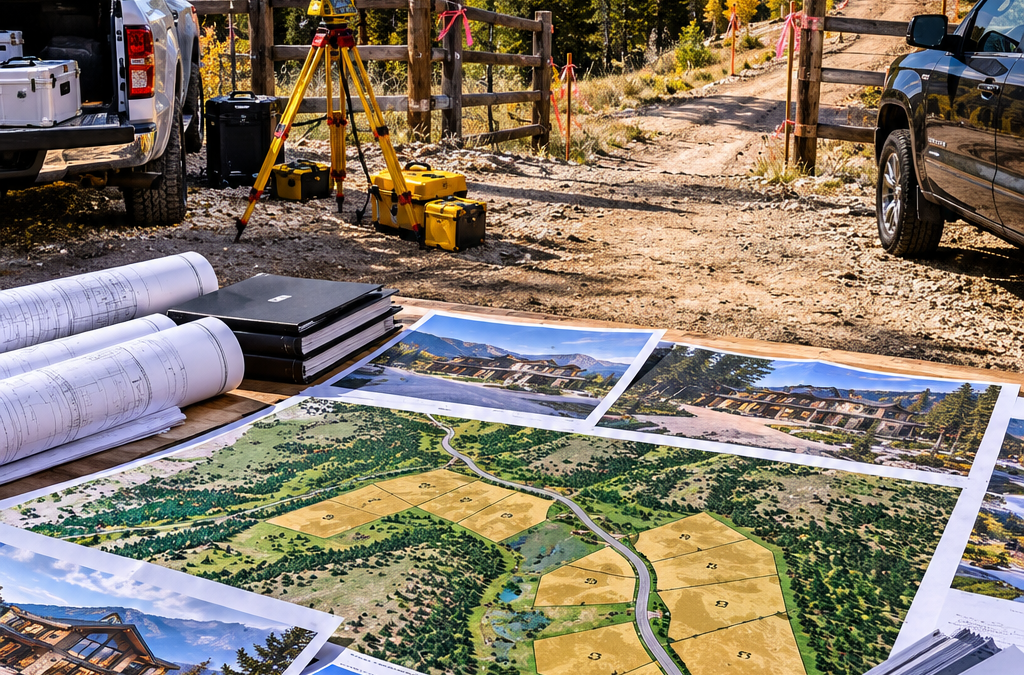
Birchwood Ridge Estates — Phase 2.
MOUNTAIN VIEW HOMESITES.
Exclusive investor preview.
Eight parcels.
High-resolution architectural renderings.
Wraparound decks.
Huge glass windows.
Outdoor fireplaces.
Mountain views.
Starting at $185,000 per lot.
My mountain.
Not near it.
Not beside it.
My mountain.
The map was unmistakable.
The ridge.
The old logging trail.
The overlook.
Even a small stream was marked as a natural feature.
Somebody had taken my land, divided it graphically, assigned parcel numbers, created marketing materials, and put prices on it.
I zoomed in.
Lot 3 included part of Grandpa’s apple orchard.
My hands started shaking.
Not metaphorically.
Actually shaking.
I sat down.
Carla was still on the phone.
“Daniel?”
“I’m here.”
“Did you know?”
“No.”
“Oh my God.”
“How long has this listing been up?”
“I don’t know. Someone shared it in the neighborhood group this morning.”
“Has Gary posted anything?”
“No. Board hasn’t said a word.”
I scrolled.
Two lots showed PENDING.
That was when anger became fear.
Because a fake plan is one thing.
Money changes everything.
If buyers had put deposits down, this had gone far beyond Gary pretending there was a boundary misunderstanding.
I thanked Carla.
Saved everything.
Screenshots.
PDF copies.
Images.
Page source printouts.
Then I called the listing agent.
I didn’t tell her who I was.
“Hi,” I said. “I’m calling about Birchwood Ridge Phase 2.”
Her voice brightened instantly.
“Absolutely. Which lot were you interested in?”
“I’m still looking. Are these actually released for sale?”
“Yes. We’re doing early investor marketing now.”
“Title cleared?”
“As far as our seller materials indicate.”
“HOA approved?”
“Oh yes. The board approved the subdivision concept last month.”
I looked out my window toward the mountain.
“Any issues with access?”
“No. There’s an existing road through Birchwood.”
“And utilities?”
“Planned extensions.”
“Can buyers tour?”
“Saturday. We’re doing a private investor preview. Tour bus leaves the clubhouse at ten, and we’ll be taking people up the mountain.”
My grip tightened around the phone.
“Up the mountain?”
“Yes. Lunch is included afterward.”
I nearly laughed.
Lunch.
They were selling pieces of my grandfather’s land and serving lunch.
“How many lots are available?”
“Eight total. Two are already under reservation.”
“Deposits?”
“Yes.”
“Refundable?”
“Sir, are you an investor?”
“Just doing my homework.”
She laughed lightly.
“Smart. These are expected to move quickly.”
“I bet.”
I ended the call.
For a long time, I didn’t move.
The cabin window faced west.
Grandpa’s apple trees stood just beyond it.
The oldest one had split years ago but kept producing.
I remember staring at those trees and feeling something I hadn’t felt when I first saw the survey stakes.
Violation.
Not legal.
Personal.
My grandfather had spent half his life making sure that land couldn’t be taken through confusion.
Gary wasn’t confused.
Not anymore.
I had stood in his office and told him directly.
He kept going.
They had turned our mountain into inventory.
Eight units.
One hundred eighty-five thousand dollars each.
Nearly $1.5 million in proposed lot sales before houses were even built.
And they expected investors on Saturday.
Then I remembered the road.
I went to the filing cabinet.
Pulled out the easement documents.
Read them again even though I knew what they said.
My grandfather had retained private access rights when the lower road corridor was developed.
The easement protected ingress and egress to Parcel 7.
It also limited use of the private upper access route for third-party commercial development without written permission from the dominant estate owner where such access crossed into our parcel.
Me.
Gary could drive neighborhood maintenance crews through Birchwood roads.
He could invite guests to the clubhouse.
What he could not do was conduct commercial investor tours over my private mountain access to sell my land.
I called Marcus Hill.
Marcus was a real estate attorney and an old friend.
He had helped me with a timber contract dispute several years earlier.
He answered around seven that evening.
“Please tell me you aren’t suing another logger.”
“Worse.”
I sent him the listing.
Survey notice.
Photographs.
Recorded easement.
Phase 2 sign.
My deed.
1987 survey.
Screenshots showing two pending lots.
Marcus stopped joking.
“Give me ten minutes.”
He called back in nine.
“Daniel.”
“Yeah.”
“This isn’t a boundary disagreement anymore.”
“That’s what I figured.”
“Who’s the listing seller?”
“Looks connected to an HOA development entity.”
“Any executed contracts?”
“I don’t have copies.”
“Deposits?”
“Listing agent says two reservations have deposits.”
Silence.
Then Marcus said, “If they’re accepting money tied to parcels they don’t own and representing them as saleable real estate, we may be looking at fraud.”
I felt my stomach drop despite already suspecting it.
“Could they claim mistake?”
“They can claim anything.”
He continued.
“But you’ve already put Gary on direct notice.”
“Three weeks ago.”
“Did you document it?”
“Not the conversation.”
“Anything after?”
“I emailed him that evening summarizing the meeting and demanding removal of the stakes.”
“Response?”
“He wrote, ‘Board counsel is reviewing the boundary issue.'”
Marcus exhaled.
“Good.”
“Good?”
“Evidence of notice.”
I looked toward the road.
“They’re bringing investors up Saturday.”
“What time?”
“Ten.”
Another pause.
“Can you legally restrict the upper access?”
“Read the easement.”
“I am.”
I heard pages moving.
Then:
“Yes.”
“Completely?”
“Within the terms of your private access rights, you can deny unauthorized third-party entry onto Parcel 7. We need to be careful not to unlawfully obstruct residents from their own homes or emergency access.”
“I don’t need their neighborhood.”
“Exactly.”
He paused.
“Do you have gates?”
“No.”
“Get gates.”
That was all I needed.
Friday afternoon, I loaded a trailer.
Chain-link gate panels.
Steel cable.
Heavy-duty locks.
Reflective markers.
No homemade traps.
No trenches.
No nonsense.
Everything visible.
Everything safe.
Everything positioned at entry points onto my property, not across roads residents needed for their homes.
I mapped every route.
Main gravel access.
Old forestry trail.
Maintenance spur.
A narrow cut used occasionally by ATVs.
Every place a vehicle could cross from association-controlled ground onto Parcel 7.
Marcus checked the map.
Then checked it again.
“You understand this isn’t revenge.”
“I understand.”
“This is property access control.”
“Correct.”
“You cannot block emergency services.”
“I won’t.”
“Put contact information on every gate.”
“Already printed.”
He laughed.
“Your grandfather trained you well.”
By midnight, every vehicle route onto my three hundred acres was closed.
Chains.
Locks.
NO TRESPASSING — PRIVATE PROPERTY.
PARCEL 7 ACCESS BY WRITTEN PERMISSION ONLY.
Attorney contact information.
My phone number.
Emergency access instructions.
I stood at the main gate after locking it.
Moonlight cut through the trees.
For the first time in weeks, the mountain felt quiet again.
Then Marcus called.
“I’ve been busy.”
“That’s rarely good.”
“I contacted county counsel, records, and the sheriff’s civil division.”
“You what?”
“You sent me evidence of potential fraudulent land marketing involving active deposits.”
“Will they come?”
“I don’t know.”
“Saturday?”
“Don’t count on anything.”
“But?”
“But keep your coffee hot.”
Saturday morning, I parked just inside my gate before sunrise.
The ridge was cold.
Mist sat low between trees.
I had a thermos in the cab.
Grandpa’s cabin was farther up the road behind me.
Nothing looked like a development.
No model homes.
No utility trenches.
No graded lots.
Just forest.
At 9:47, I heard the bus.
Diesel carries a long way in the mountains.
A white tour coach appeared below the curve.
Behind it came four SUVs.
Then Gary Wexler’s silver sedan.
The convoy looked ridiculous on the gravel road.
A parade of people arriving to inspect something they had already convinced themselves they could own.
The bus slowed.
Stopped at the gate.
Gary’s sedan pulled partly around it.
He got out.
He stared at the chain.
Then the sign.
Then the padlock.
I waited.
He walked toward the gate.
Touched the chain.
Looked around.
Then I stepped out from behind my truck.
“Morning, Gary.”
He turned.
His face changed.
“Daniel.”
“Heard you’ve got investors who want to see my land.”
Behind him, faces appeared in bus windows.
Gary lowered his voice.
“What are you doing?”
“Controlling access.”
“You can’t block this road.”
“I didn’t.”
He looked at the gate.
“It’s clearly blocked.”
“This is the entrance to Parcel 7.”
“The HOA has access.”
“Not for commercial tours of my property.”
“Move the gate.”
“No.”
“Daniel, there are twenty-three people on that bus.”
“Then you owe twenty-three people an explanation.”
His jaw clenched.
“We have a scheduled tour.”
“I know.”
“You are interfering with association business.”
“You’re selling eight lots on land you don’t own.”
He looked toward the bus.
“Keep your voice down.”
That told me everything.
If Gary believed he was right, he would have wanted the investors to hear.
I stepped closer.
“Did you take deposits?”
“That’s confidential.”
“On my property?”
“We have counsel reviewing title.”
“You were reviewing title three weeks ago.”
“These things take time.”
“Apparently not enough time to stop you from listing it.”
Gary’s face reddened.
“The board believes it has development rights to the ridge.”
“Show me.”
“Not here.”
“Then nobody goes up.”
A man stepped off the bus.
Late sixties.
Polo shirt.
Expensive sunglasses.
He held a brochure.
“Excuse me.”
Gary turned quickly.
“Sir, we’re resolving a temporary access issue.”
The man looked at me.
“Are you the property owner?”
“Yes.”
Gary cut in.
“There is a title dispute.”
“No,” I said.
“There is a fraudulent listing dispute.”
Gary spun.
“Watch yourself.”
I almost answered.
Then I saw two vehicles coming up the road.
A county sheriff’s SUV.
Behind it, a white county vehicle with clerk markings.
Gary saw them too.
The color left his face.
Marcus hadn’t told me they’d definitely come.
Apparently he wanted to preserve the surprise for both of us.
The sheriff’s deputy parked behind Gary.
A woman from the county vehicle stepped out holding a document folder.
The deputy looked at the gate.
Then me.
“Mr. Pierce?”
“Yes.”
“I’m Deputy Hall.”
We shook hands.
He turned to Gary.
“Mr. Wexler?”
Gary straightened.
“Yes.”
“We need to speak with you regarding real estate marketing associated with Parcel 7.”
Gary glanced at the investors.
“This isn’t the appropriate setting.”
The county employee opened her folder.
“Sir, there are active public listings describing subdivision lots on Parcel 7.”
“Our attorney—”
“County records show Parcel 7 titled to Daniel Pierce.”
“There’s an expansion claim.”
“Is there a recorded conveyance?”
Gary didn’t answer.
She continued.
“Subdivision approval?”
“We submitted preliminary—”
“Approved subdivision?”
“No.”
“Recorded plat?”
“Pending.”
“Ownership transfer?”
Gary’s voice became quieter.
“No.”
Around us, investors started talking.
One woman stepped out of an SUV.
“Wait. What does that mean?”
Gary raised one hand.
“We’re dealing with an administrative conflict.”
The older man with the brochure looked at me.
“Is this land for sale or not?”
Gary turned.
I answered first.
“No.”
Everyone went quiet.
“It never was.”
The man’s expression changed.
“I put down twenty-five thousand dollars.”
Gary looked at him.
“Your deposit is protected.”
“Protected by what?”
“Our transaction documents.”
“You told me the HOA controlled the property.”
“The board’s legal position—”
The second investor emerged from the bus.
“I put down ten percent on Lot 6.”
Phones came out.
The real estate agent had been sitting near the front.
She stepped off looking pale.
“Gary, you told our brokerage title review was complete.”
“It was substantially complete.”
“Substantially?”
Her voice rose.
“You gave us a seller package.”
“We relied on counsel.”
“Which counsel?”
Gary didn’t answer.
Deputy Hall stepped between them.
“Nobody is being arrested at this point. But I need everyone to remain calm.”
At this point.
Gary definitely heard those words.
So did I.
The county employee asked him for documents.
He said they were at the HOA office.
She told him not to alter or destroy anything related to Phase 2.
That sentence landed harder than yelling.
Preserve all records.
Emails.
Draft plats.
Deposit documentation.
Board minutes.
Marketing authorizations.
Survey requests.
Communications with brokerages.
The investor tour was over.
Nobody ate lunch.
By noon, every online listing I had found had been pulled.
Not edited.
Gone.
But screenshots don’t disappear.
Neither do cached documents.
Marcus had already preserved them.
So had I.
Carla called before I even reached the cabin.
“What happened?”
“You already know.”
“Half the neighborhood knows.”
“That was fast.”
“Daniel, people watched a sheriff drive past their houses behind an investor bus.”
Fair point.
“Gary’s telling people there was a paperwork misunderstanding.”
“Of course he is.”
“Was there?”
“No.”
She went quiet.
Then:
“How bad?”
“Two buyers say they paid deposits.”
“Oh my God.”
“County’s looking at it.”
“And your property?”
“Still mine.”
“Road?”
“Still locked.”
“Good.”
I smiled for the first time that day.
“Thanks, Carla.”
“No.”
Her voice softened.
“Thank you for catching it.”
That sentence stayed with me.
Catching it.
Because that was the part that bothered me most.
What if I hadn’t registered for the county alert?
What if Susan at records hadn’t mentioned Birchwood listed itself as authorized representative?
What if Carla hadn’t found the real estate listing?
What if the investor tour happened without me knowing?
Would people have walked my ridge discussing house placements while I sat in the cabin half a mile away?
Would someone have signed a contract?
Closed?
Started clearing trees?
At what point does an outrageous lie become difficult to unwind because too many people have relied on it?
That thought kept me awake more than Gary did.
The HOA held an emergency meeting Monday night.
I went.
So did half the neighborhood.
Gary sat at the front with four board members and their attorney.
Nobody looked comfortable.
The room usually smelled like coffee and carpet cleaner.
That night, it smelled like anger.
A homeowner stood before Gary finished his opening statement.
“Did you sell land the HOA didn’t own?”
Gary held up a hand.
“No property sale closed.”
“That’s not what I asked.”
Another resident:
“Were deposits taken?”
The attorney stepped in.
“We need to be cautious about pending legal matters.”
Carla spoke from the second row.
“Why did the HOA submit a survey request on Daniel’s parcel calling itself authorized representative?”
The room turned toward Gary.
He adjusted his microphone.
“Management used standard application language.”
I almost laughed.
Carla didn’t.
“Who authorized management?”
“The board approved exploratory planning.”
“Exploratory planning of land we don’t own?”
Gary’s jaw tightened.
“Our understanding of historical development documents suggested certain rights.”
I stood.
“What rights?”
Everyone looked at me.
Gary’s eyes narrowed.
“Daniel, counsel is reviewing—”
“You’ve said that for a month.”
“Because legal review takes time.”
“Then why were you taking deposits before review was complete?”
Silence.
His attorney leaned toward him.
Whispered something.
Gary didn’t answer.
The board treasurer did.
“We weren’t told title was unresolved.”
That changed the room.
Gary turned toward her.
“Linda.”
She kept talking.
“The materials presented to the board described Phase 2 as available expansion acreage.”
Gary’s face darkened.
“That is not accurate.”
Linda opened a folder.
“I brought the packet.”
People murmured.
She held up one page.
“The parcel ownership line says ‘Association expansion control.'”
I stared at Gary.
So did everyone else.
One board member removed his glasses and rubbed his face.
“When did we get an ownership opinion?”
Gary said, “Our consultant provided historical interpretation.”
“Not an ownership opinion.”
“No.”
“Did you tell the brokerage we had title?”
Gary looked toward the attorney.
The attorney looked like he wanted to vanish.
I realized something then.
Gary had not necessarily told the full board what he was doing.
That didn’t excuse the HOA.
Their name was on everything.
Their approvals mattered.
But Gary had apparently moved pieces faster than some board members understood.
It made sense.
He expected momentum to protect him.
Once stakes were in.
Once lots were listed.
Once buyers were interested.
Once deposits existed.
Then resolving ownership would become negotiation instead of prevention.
That was the play.
Create facts on the ground.
Then tell me removing them would be unreasonable.
I’d seen enough land disputes to know the pattern.
Gary finally said:
“The intention was to secure expansion opportunities for the community.”
I spoke from the back.
“By selling my grandfather’s land?”
His face hardened.
“Nobody intended to deprive you of lawful property.”
“You put prices on eight pieces of it.”
A homeowner laughed bitterly.
Gary continued.
“We believed the association possessed development rights.”
“Then show them.”
No answer.
“Show one recorded document giving Birchwood ownership or development authority over Parcel 7.”
The attorney finally said:
“At present, we have not identified a recorded instrument conveying title.”
The room erupted.
That sentence ended Gary’s presidency whether he knew it yet or not.
No recorded instrument conveying title.
Everything else was decoration.
Marketing materials.
Expansion zones.
Historical intentions.
Consultant interpretation.
None of it changed ownership.
The county investigation moved quickly after that.
Survey submissions were reviewed.
The management company’s authorization was questioned.
The brokerage turned over records.
Both buyers who had paid deposits filed complaints.
Their money was eventually returned.
Neither blamed me.
One called me personally.
The older man from the bus.
His name was Stephen.
“I owe you an apology.”
“You don’t owe me anything.”
“I almost bought part of your property.”
“You were told it was for sale.”
“Still.”
He paused.
“I should have done more research.”
“That’s what title companies are for.”
“I’ve invested in property for twenty-seven years.”
He sounded genuinely embarrassed.
“I’ve never seen anything like this.”
“Neither have I.”
“What are you going to do with the land?”
I looked out over the apple trees.
“Same thing I’ve been doing.”
“Nothing?”
I smiled.
“Exactly.”
He laughed.
Then said, “Good.”
Gary resigned the following week.
The official announcement said he was stepping down to avoid distracting from the board’s efforts to restore confidence.
Nobody believed that phrasing.
The board issued a formal written apology.
Very carefully drafted.
Very legal.
It acknowledged that the HOA had exceeded its authority in surveying, marketing, and facilitating proposed transactions involving property not owned by the association.
It recognized Parcel 7 as privately owned.
It agreed to remove every survey stake, sign, marketing reference, and development notation associated with Phase 2.
Marcus reviewed every word before I accepted it.
I asked him whether I should sue anyway.
He sat across from me in his office.
“Do you want money?”
“No.”
“Punitive satisfaction?”
“Maybe.”
“Honest answer.”
“I want this impossible to repeat.”
“Then focus on recorded protections.”
We did.
The county record was cleaned up.
The unauthorized representative notation was formally corrected.
A notice regarding Parcel 7 ownership and access was added to the relevant planning file.
Birchwood amended its own development documents to state clearly that Phase 2 did not exist and that the HOA held no ownership interest in my mountain tract.
I kept the gates.
That became the only part some residents initially disliked.
A few had used the upper trails recreationally over the years.
Not because they had legal access.
Because I had never stopped them.
After what happened, informal access ended.
I hated doing that.
One family had walked the ridge every Thanksgiving.
A teenager liked photographing deer near the west meadow.
Two retired men picked blackberries along the old logging road.
None of them had anything to do with Gary.
But once an HOA tries to turn tolerated access into development control, informality becomes dangerous.
Marcus was blunt.
“You either control the easement or you don’t.”
So I controlled it.
Residents who asked respectfully could still get written permission for specific visits.
But gates stayed locked.
Names recorded.
No assumption.
No commercial tours.
No surveyors without written authorization.
No investor buses ever again.
For months, every morning I checked the main padlock.
It became a ritual.
Coffee.
Truck.
Gate.
Chain.
Lock.
Then I’d stand there looking across the ridge.
Three hundred acres.
Exactly the same mountain.
Yet it didn’t feel the same.
Before, ownership had been something I rarely thought about.
It was background.
A fact.
After Gary, I saw boundaries everywhere.
I saw the stakes that had been removed.
The trees where signs had hung.
The routes where strangers had walked carrying plans.
I found one piece of orange flagging months later caught beneath pine needles.
I picked it up and just stood there holding it.
Such a small thing.
Plastic ribbon.
Maybe two inches wide.
Yet it had once represented somebody else’s belief that they could divide what my grandfather spent a lifetime protecting.
I took it home.
Didn’t throw it away.
I put it inside the old filing cabinet with the legal documents.
Marcus thought that was strange.
“Evidence?”
“Reminder.”
“Of Gary?”
“No.”
“Then what?”
“That ownership can be obvious to you and negotiable to somebody else.”
Marcus nodded.
“That’s why people hire me.”
“Unfortunately.”
The apple harvest came that fall.
Carla helped.
So did three other Birchwood neighbors.
We filled baskets from the old trees.
One of the trees near what had been marketed as Lot 3 produced more than it had in years.
I stood beneath it looking at apples scattered across the ground.
Carla noticed.
“What?”
I pointed.
“They put a house rendering here.”
“Seriously?”
“Deck would’ve been about where you’re standing.”
She stepped sideways dramatically.
“Better?”
I laughed.
“Much.”
Then she got quiet.
“Do you ever think about selling?”
“The mountain?”
“Yeah.”
“No.”
“Never?”
“I won’t say never because life enjoys punishing people who say that.”
She smiled.
“But not now.”
“No.”
“Even for one point four million?”
I looked up at the ridge.
“That’s not what it was worth to them.”
“What do you mean?”
“The listings totaled about one point four just for raw lots.”
“Right.”
“Then buyers build houses. HOA gets dues. Developers get contracts. Property values rise. It turns into several million dollars of activity.”
She nodded.
“So they weren’t trying to steal cheap land.”
“No.”
“They were trying to convert your land into their money.”
Exactly.
That’s what bothered me about the phrase boundary confusion.
Boundary confusion sounds passive.
Like two old fences don’t align.
Like somebody read a map wrong.
Gary’s plan wasn’t passive.
Somebody chose eight lot locations.
Somebody commissioned renderings.
Somebody priced them.
Somebody hired a brokerage.
Somebody accepted deposits.
Somebody scheduled a bus.
At every step, there was another opportunity to ask the most basic question in real estate:
Who owns this?
They didn’t ask because I suspect they already knew the answer was inconvenient.
That is very different from confusion.
The county never shared every detail of its internal review with me, and Marcus reminded me that investigations move according to evidence, not neighborhood gossip.
I was fine with that.
I didn’t need Gary publicly destroyed.
I needed my land protected.
That was the difference I struggled to explain to people.
Neighbors wanted drama.
They wanted to know whether Gary would be arrested.
Whether somebody would sue him personally.
Whether his house would be liened.
Whether the brokerage would go after him.
I didn’t know.
And after a while, I didn’t care.
The mountain was mine.
The listings were gone.
The buyers were refunded.
The false Phase 2 map was dead.
That was enough.
Mostly.
There was one conversation I had with Gary afterward.
About two months after his resignation.
I was at the mailbox cluster when his silver sedan pulled in.
He parked.
Walked toward me.
For a second, I considered getting back into my truck.
Then I stayed.
He stopped about ten feet away.
“Daniel.”
“Gary.”
He looked older.
Maybe he wasn’t.
Maybe authority had simply made him seem larger before.
He put his hands in his jacket pockets.
“I wanted to say something.”
I waited.
“The Phase 2 situation got out of control.”
I almost laughed.
“Got out of control?”
He nodded.
“I should’ve slowed it down.”
“Slowed it down?”
His face tightened.
“I’m trying to apologize.”
“Then apologize.”
Silence.
Wind moved dead leaves across the pavement.
Finally he said:
“I should have handled the ownership question differently.”
I stared at him.
“That’s not an apology.”
“I just said—”
“You handled it exactly how you intended.”
His eyes narrowed.
“You don’t know that.”
“I told you the land was mine.”
“We had documents suggesting—”
“You had no deed.”
“There were historical development plans.”
“You had no deed.”
“The HOA believed—”
“You took deposits.”
He stopped.
I stepped closer.
“You don’t accidentally create eight listings. You don’t accidentally hire an agent. You don’t accidentally tell surveyors you’re authorized representative for somebody else’s property. You don’t accidentally drive twenty-three investors toward land after the owner told you to stop.”
Gary’s jaw worked.
I could see anger returning.
That old reflex.
Then he looked away.
“We thought you would negotiate.”
There it was.
Not an apology.
Truth.
I went still.
“Negotiate what?”
“Expansion rights.”
“You never asked.”
“We assumed once the value was clear—”
“The value to who?”
He didn’t answer.
“You thought if you got far enough, I’d sell.”
“We thought a financial arrangement could be reached.”
“So you marketed it first.”
“Preliminary marketing.”
“Deposits aren’t preliminary.”
Gary looked toward the road.
“I made mistakes.”
I nodded.
“Yes.”
“You’re not going to let this go, are you?”
That surprised me.
“Let what go?”
“The hostility.”
I almost felt sorry for him.
Almost.
“Gary, I don’t think about you most days.”
That seemed to hurt him more than anger would have.
“I think about the gate.”
He looked at me.
“I think about the deed. I think about whether my property records are current. I think about whether strangers are walking my ridge. You changed how I protect my land.”
He said nothing.
“But you?”
I shook my head.
“You’re not important enough to carry around.”
Then I got in my truck and left.
That was the last real conversation we had.
Birchwood changed after him.
Board meetings became boring again.
Good.
The new president, Linda, instituted rules requiring outside title verification before any future expansion proposal.
No property could appear in an HOA planning document unless ownership had been independently confirmed.
Survey requests required documented authorization.
Real estate marketing required board approval in open session.
Residents received minutes.
Nothing revolutionary.
Just controls that should have existed from the beginning.
Linda asked me whether I’d ever consider reopening informal walking access.
I thought about it.
Then agreed to a limited permit system.
Residents could request day access for hiking during certain seasons.
No motor vehicles.
No commercial activity.
No surveying.
No organized tours.
No assumption of permanent rights.
Somebody joked at a meeting that I had turned the mountain into a national park.
I said national parks don’t require you to text Daniel before entering.
People laughed.
That felt good.
Normal laughter.
Not courtroom laughter.
Not nervous anger.
Community.
The first Thanksgiving after everything ended, I walked the ridge alone.
Cold day.
Clear sky.
From the overlook, I could see Birchwood below.
Forty roofs.
Curved roads.
Clubhouse.
Beyond that, the highway.
Farther still, town.
From above, all of it looked peaceful.
It struck me that Gary had probably stood in that exact place and seen potential.
Eight lots.
Maybe more later.
Road extensions.
Utilities.
Revenue.
He wasn’t wrong that the land had development value.
That was never the issue.
The issue was whose decision that was.
Mine.
Property rights sound abstract until somebody decides your “no” is merely the beginning of negotiations you never agreed to.
Grandpa knew that.
Maybe that’s why he documented everything.
He wasn’t anti-development.
He wasn’t paranoid.
He just understood that ownership without records can become memory against ambition.
And ambition usually has lawyers.
I walked down toward the cabin.
Passed the apple trees.
Opened the old metal filing cabinet.
There was the deed.
The 1987 survey.
Road easement.
Tax maps.
Everything.
I added the county correction documents.
The HOA apology.
Marcus’s final legal summary.
The preserved Phase 2 brochure.
Then I looked at the original photograph of Grandpa beside his truck.
He looked proud.
I laughed softly.
“You were right.”
Of course he couldn’t answer.
He never needed to.
Paper did.
Over the next year, life settled.
I repaired part of the cabin roof.
Cleared deadfall from the western trail.
Rebuilt a footbridge near the creek.
The mountain went back to being land instead of evidence.
That mattered.
For months, every feature had reminded me of the dispute.
Lot 2.
Lot 4.
Investor overlook.
Proposed utility corridor.
Eventually those labels disappeared from my mind.
The ridge became the ridge again.
The meadow became the meadow.
The apple orchard became Grandpa’s orchard.
Not Lot 3.
Never Lot 3.
I sometimes wonder about the two buyers.
Stephen visited once.
Not as an investor.
As a guest.
He called first.
Asked whether he could see the ridge he’d nearly purchased.
I thought about it.
Then said yes.
We walked up together.
At the overlook, he stood for a long time.
“I understand why they thought this would sell.”
“Beautiful.”
“Very.”
He looked toward me.
“I would’ve built a house right there.”
He pointed.
Exactly where one rendering had shown it.
“I know.”
“That bother you?”
“No.”
“Really?”
“You were buying what somebody told you was legitimate.”
He nodded.
Then said, “Still feels strange.”
“What does?”
“I had plans.”
“What kind?”
“Retirement place. Big windows. Deck.”
He laughed.
“My wife picked stone samples before we’d even closed.”
I smiled.
“I’m sorry.”
“Don’t be.”
He looked around.
“This shouldn’t have been mine.”
That sentence meant more to me than he knew.
Not because I needed validation.
Because it reminded me that not everyone on the other side of a bad transaction is the enemy.
Stephen was lied to too.
The brokerage was misled.
Some board members were misled.
Residents had Phase 2 presented as opportunity.
Gary had built momentum by distributing pieces of responsibility so widely that nobody stopped to verify the foundation.
Ownership.
One fact.
Everything rested on it.
Nothing supported it.
Stephen visited the apple trees before leaving.
He took one apple.
With permission.
I told him that mattered.
He laughed.
“Very funny.”
“I’ve become particular.”
“I noticed the gates.”
“Those are new.”
“Understandably.”
He left before sunset.
I never saw him again.
The gate at the main road is heavier now.
I replaced the temporary chain-link panel with a proper steel ranch gate.
Simple.
Dark.
Nothing flashy.
There is a small sign.
PRIVATE PROPERTY
PIERCE FAMILY LAND
ACCESS BY PERMISSION
No threats.
No warnings about prosecution.
No cameras pictured.
Just clarity.
Sometimes that’s enough.
Every morning I’m at the cabin, I walk to that gate.
Check the lock.
Not because I expect another bus.
I doubt Birchwood will ever make that mistake again.
It’s habit now.
Hand on steel.
Padlock secure.
Road quiet.
Then I look back at the mountain.
Three hundred acres.
Forest.
Rock.
Creek.
Apple trees.
A cabin built by a man who bought land everyone else considered worthless.
The irony isn’t lost on me.
When Grandpa purchased it, people thought he was wasting money.
When Gary tried to sell it, people thought each tiny piece was worth $185,000 before construction.
The land didn’t change.
People did.
That’s another thing Grandpa understood.
Value is often just attention with a price attached.
For decades, nobody cared about that mountain because it was inconvenient.
Then the county grew.
Views became valuable.
Privacy became luxury.
Steep land became exclusive hillside development.
Suddenly the same features that made the property undesirable became sales copy.
Remote became secluded.
Steep became elevated.
Forest became private woodland.
Old gravel access became scenic mountain road.
Nothing had changed except demand.
That’s why the documents mattered.
Trends change faster than ownership should.
I once asked Marcus whether Gary might actually have succeeded if I hadn’t noticed early.
He was careful.
“Eventually, a proper title search should have exposed the ownership problem.”
“Should have?”
“Never build your life around should have.”
“Comforting.”
He smiled.
“Could a legitimate closing have transferred your title without your signature? No.”
“Then I was safe.”
“Your ownership, probably.”
“Probably again.”
“Your sanity? Less so.”
He explained.
Buyers might have spent money.
Contractors might have mobilized.
Trees might have been cut.
Roads might have been graded.
Then injunctions.
Claims.
Counterclaims.
Insurance disputes.
Refund fights.
Broker liability.
Years.
Even when the law is clear, unwinding bad acts costs time.
That was the lesson.
Protecting property isn’t only about winning eventually.
It’s about stopping damage early.
The gate did that.
Some people thought chaining the roads was dramatic.
Maybe.
But a gate is reversible.
Selling somebody else’s land isn’t.
I chose the reversible thing.
I didn’t destroy equipment.
Didn’t threaten investors.
Didn’t confront surveyors with a weapon.
Didn’t dig trenches.
I closed access I had the right to control and called people whose job was handling the rest.
That was enough.
There’s a temptation in stories like this to make the ending about revenge.
Gary humiliated.
Board defeated.
Investors shocked.
Police arriving.
Those moments happened.
But revenge is not what I remember most.
I remember Saturday evening.
After the bus left.
After the sheriff drove away.
After Marcus called twice.
After Carla told me the neighborhood group had exploded.
I drove to the cabin.
Walked to the apple orchard.
Sat beneath the oldest tree.
Nothing dramatic.
Just me.
Wind.
Birds.
Mountain.
I looked down at the ground and realized how close I’d come to learning about the sale after the fact.
That scared me more than anything Gary said.
I put my hand against the tree trunk.
Rough bark.
Same tree my grandfather planted.
The Phase 2 map had placed a luxury home almost directly there.
The rendering showed landscaped stone.
A fire pit.
Deck chairs.
Maybe nobody would’ve kept the tree.
Maybe they would have called it diseased.
Too old.
In the way.
I sat there until dark.
And I made myself a promise.
Nobody would ever again be confused about where my land began.
Not the HOA.
Not the county.
Not an investor.
Not me.
The following week, I hired an independent surveyor.
Not because the boundary was uncertain.
Because I wanted every corner re-marked.
Fresh monuments.
Updated coordinates.
Recorded references.
We walked the entire perimeter.
It took days.
When he finished, he handed me the packet.
“You’re documented about as well as anybody I’ve seen.”
“Good.”
“You expecting war?”
“No.”
“Then why all this?”
I looked toward Birchwood.
“Because peace is easier when everyone knows where the line is.”
He nodded.
“Fair.”
That’s how I see the mountain now.
Not as something I conquered.
Not as something I beat Gary over.
Something I was trusted with.
Grandpa held it.
Then my father.
Now me.
Someday somebody else.
My job is to make sure the papers are clear enough that person doesn’t have to fight the same fight again.
The old Phase 2 sign still exists.
I kept it.
It’s in the barn.
Bent.
One corner torn.
FUTURE PHASE 2 DEVELOPMENT.
COMING SOON.
Every once in a while I see it behind tools and laugh.
Phase 2 never came.
No luxury lots.
No decks.
No investment homes.
No subdivision roads climbing the ridge.
The apple trees still bloom.
Deer still cross the meadow.
The creek still floods after heavy rain.
The cabin roof still needs more maintenance than it should.
And the gravel road still winds through Birchwood Ridge exactly where my grandfather fought to preserve access nearly sixty years ago.
The difference is the gate.
Gary thought the road belonged to the HOA because the neighborhood had grown around it.
He forgot that older rights don’t disappear simply because newer houses look more official.
He forgot to read the easement.
Maybe he never thought I’d read it either.
That was his biggest mistake.
He thought he was dealing with empty land.
Then he thought he was dealing with one quiet owner.
What he was really dealing with was sixty years of recorded history.
Deeds.
Surveys.
Easements.
County files.
And one grandson who still remembered what an old man told him when he was twelve.
The day somebody wants your land, paper is the difference between yours and theirs.
Grandpa was right.
The HOA had plans.
I had title.
They had renderings.
I had a deed.
They had investors.
I had the road.
They had eight luxury lots drawn across my mountain.
I had three hundred acres that never stopped being mine.
And every morning when I close that steel gate behind me, I look up toward the ridge and know exactly where the line is.







