𝗙𝗨𝗟𝗟 𝗦𝗧𝗢𝗥𝗬 The HOA President Turned My Family Marina Into Her Daughter’s 3,000-Guest Wedding Venue Without Ever Asking Me
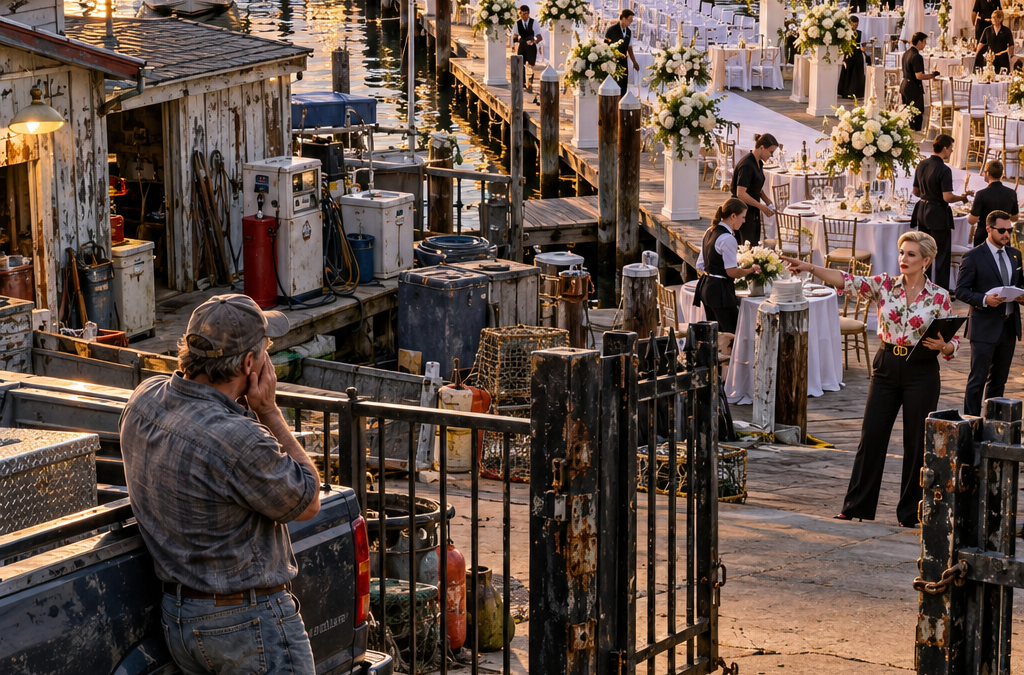
𝗙𝗨𝗟𝗟 𝗦𝗧𝗢𝗥𝗬
I knew maybe a dozen by name.
Then Vanessa Holloway became president of the Seaside Crest HOA.
Technically, she had been president for years before I paid much attention.
Fifteen, according to people who lived there.
I only began noticing her when the board started behaving less like a homeowners association and more like a small municipal government.
Vanessa had a talent for authority.
Not actual legal authority.
The appearance of it.
She wore structured jackets.
Spoke in short sentences.
Carried binders.
Used phrases like community asset, strategic access, governing discretion, and board authority.
People said she could quote fence-height restrictions from memory.
Maybe that was true.
What I know is that most people stopped arguing with her because arguing with Vanessa meant turning one disagreement into six.
That summer, her daughter Brooke was getting married.
Not a normal wedding.
A spectacle.
Three thousand guests, if the plans were accurate.
Political donors.
Business owners.
County officials.
Television crews.
A celebrity musician who was supposedly performing for twenty minutes.
People in Seaside Crest talked about it for months.
I didn’t care.
I had my own life.
My twelve-year-old daughter Emma lived with me most of the week.
Her mother and I had separated years earlier without turning it into a war, which I remain grateful for.
Emma had inherited my grandfather’s habit of waking early.
She loved the marina.
Most mornings before school she would come down to the docks with me.
The morning everything began, I was standing at the end of Dock Two before sunrise.
The harbor was flat.
Only a soft slap of water beneath the boards.
Emma came running from the office carrying two cereal bowls.
“Dad.”
I did not turn around.
“Dad.”
Still nothing.
She stopped beside me.
“You’re doing the thing.”
“What thing?”
“The staring-at-the-water thing.”
“I’m working.”
“You’re standing.”
“Management work.”
She handed me cereal.
“Very intense.”
I smiled.
That was the last peaceful morning of the week.
Up the hill, Vanessa was planning where to put three thousand people.
And apparently she had decided my marina would solve several of her problems.
The story, as I later reconstructed it, began at an HOA planning meeting.
The original wedding venue was supposed to use the Seaside Crest clubhouse grounds.
But the clubhouse lawn had limited water views.
The road into the development created traffic problems.
Parking was already a nightmare.
Then someone mentioned the marina.
Our docks sat lower than the community and opened directly onto the harbor.
At sunset, the water turned copper.
There was room for large tents near the old storage field.
The docks could support decorative lighting.
Photographs would look spectacular.
Vanessa pointed at a site map.
“There.”
One board member apparently said:
“That’s Daniel Mercer’s property.”
Vanessa replied:
“It’s within the Seaside Crest shoreline footprint.”
“It isn’t HOA property.”
“Not yet.”
That sentence would matter later.
The next morning, a certified letter arrived.
NOTICE OF TEMPORARY COMMUNITY USE.
I stood in the marina office reading it.
Then read it again.
The HOA claimed it would exercise temporary use of the marina property from Friday evening through Sunday morning for a “community-sponsored ceremonial event.”
Community-sponsored.
That was how Vanessa described her daughter’s wedding.
The letter said setup crews would require access.
The docks would be temporarily restricted.
I would be expected to suspend ordinary marina operations during the event.
The HOA would “coordinate restoration.”
There was no request.
No rental offer.
No proposed contract.
No question.
They had written the letter as though the decision had already been made.
Emma came into the office.
“You look mad.”
“I’m deciding whether something is stupid enough to be funny.”
“Is it?”
“Still deciding.”
I called the number.
The HOA office.
A receptionist answered.
I asked for Vanessa.
“She’s in a meeting.”
“Tell her Daniel Mercer from Mercer Marina called.”
The receptionist paused.
“She knows.”
That was not reassuring.
An hour later, a white luxury SUV pulled through the marina entrance and stopped outside the office.
Vanessa stepped out wearing a red blazer.
I remember the color because later, when everything collapsed around her, I kept thinking how strange it was that someone could dress like an alarm light and still ignore every warning.
She walked toward me.
“Mr. Mercer.”
“Mrs. Holloway.”
“I assume you received the notice.”
“I did.”
“Good.”
“I assume it’s a mistake.”
Her expression barely moved.
“It isn’t.”
“This marina is private property.”
“I’m aware of your position.”
“My position?”
“Yes.”
“It’s not a position.”
I pointed toward the ground.
“It’s property ownership.”
She exhaled as though I were wasting time.
“Daniel, Brooke’s wedding is Saturday.”
“Congratulations.”
“We need the waterfront.”
“No.”
She blinked.
That was all.
Just one blink.
But something changed.
Vanessa had probably heard the word no many times in fifteen years.
I suspect most people eventually converted it into yes.
She stepped closer.
“You misunderstand.”
“I don’t.”
“I’m not asking to take your marina.”
“Good.”
“I’m telling you the association is exercising temporary community access.”
“No.”
Her lips tightened.
“The event will last less than twenty-four hours.”
“No.”
“We’ll restore everything.”
“No.”
“This is becoming unnecessarily difficult.”
I almost laughed.
“You mailed me a letter telling me you were taking over my business for your daughter’s wedding.”
“It’s not my daughter’s wedding in a private sense. This event has community significance.”
That may have been the most Vanessa sentence I ever heard.
“A wedding is private when the bride’s your daughter.”
She ignored that.
“Three thousand guests have been invited.”
“That sounds like a planning problem.”
“Many are important people.”
“They can still be important somewhere else.”
Her eyes narrowed.
“I run Seaside Crest.”
“Then run Seaside Crest.”
“The marina lies directly adjacent to the community.”
“Still mine.”
“We have shoreline-use authority.”
“Show me.”
“We have attorneys.”
“Great. Have one call me.”
She stepped closer to the gate.
“Do you really want to fight me over chairs and flowers?”
I thought of Granddad.
Keep the deed.
“Yes.”
For the first time, she looked genuinely offended.
Then she smiled.
Not warmly.
“One phone call can make permits difficult.”
I stared at her.
“My permits?”
“Businesses rely on cooperative relationships.”
“Is that a threat?”
“It’s advice.”
“No.”
I let the word sit.
Then I said:
“You need to leave.”
She held my eyes.
“I run this town, Daniel.”
That made me laugh.
Not loudly.
Just once.
“No, Vanessa. You run an HOA.”
She walked back to her SUV.
Before getting inside, she looked at the marina.
Not like a visitor.
Like a person measuring something she already believed was hers.
That bothered me.
That evening, I drove into town to see Ruth Callaway.
Ruth had represented my family for years.
Sixty-two.
Small office above a pharmacy.
No polished glass conference room.
No giant staff.
But she knew property law, title records, and county politics better than anyone I trusted.
I handed her the notice.
She read it.
Then read it again.
“Did you tell her no?”
“Several times.”
“Good.”
“Why do I feel like you think this gets worse?”
“Because people who send letters like this usually aren’t asking whether they’re right.”
“What are they asking?”
“Whether you’ll resist.”
She looked toward me.
“When was the last time you read the original deed?”
I hesitated.
“Years.”
“Bring it.”
We drove back to the marina.
Emma was doing homework in the office.
I opened Granddad’s lockbox.
Ruth unfolded the 1962 deed on the desk.
She read slowly.
Then reached for her glasses.
Read again.
“What?”
She pointed.
The property description contained an old exclusion clause tied to subdivision rights and future association encumbrances.
In plain language, the marina parcel had been deliberately excluded from any later residential association governance created on surrounding land.
Ruth looked up.
“Daniel.”
“Yeah?”
“This marina was never part of Seaside Crest.”
“I know.”
“No.”
She tapped the paper.
“I mean legally insulated from it.”
“Forever?”
“Unless your family later signed something changing it.”
“We didn’t.”
“Then not then. Not now.”
I looked at Emma.
She had stopped pretending not to listen.
Ruth continued.
“But Vanessa will attack the age of the document.”
“How?”
“Claim superseding plats. Later easements. Annexation. Recorded amendments. Something.”
“Are there any?”
“I don’t know yet.”
“What do we need?”
“Certified county copy.”
She folded the deed carefully.
“Recorded. Stamped. Current chain confirmed.”
I barely slept.
At seven the next morning, I was at the county records office.
The clerk was named Meredith Sloan.
I gave her the parcel number.
She disappeared into records.
Twenty minutes.
Forty.
Almost an hour.
Then she returned carrying a thick file.
“Found your original recording.”
My heart started beating harder.
She laid it beneath a scanner.
Walter Mercer.
Marina parcel.
Exclusion language intact.
No later document annexing it into Seaside Crest.
No HOA easement.
No temporary-use clause.
No community-access right.
Nothing.
Meredith stamped the certified copies.
County seal.
Date.
I held them differently than ordinary paper.
Granddad had been right.
The deed was the marina.
When I returned, I made a sign.
Not decorative.
Black board.
White letters.
PRIVATE MARINA
NO HOA JURISDICTION
ACCESS BY OWNER PERMISSION ONLY
Emma watched.
“Subtle.”
“I learned restraint from your mother.”
“Mom says you don’t know what restraint means.”
“Your mother says many hurtful things.”
We mounted the sign on the iron gate.
Thursday afternoon, Vanessa drove past.
Braked.
Backed up.
Read it.
From fifty yards away, I could see her face change.
That evening, Seaside Crest held an emergency board meeting.
I did not attend.
Later, Linda Park, the HOA treasurer, told me what happened.
Vanessa placed my sign photograph on a projector.
“This is hostile conduct.”
Linda asked:
“How is a private-property sign hostile?”
Vanessa ignored her.
She proposed an emergency easement.
Apparently that was the phrase she had chosen.
Emergency easement.
As though easements could be voted into existence over somebody else’s land.
Linda said:
“I don’t think we can do that.”
Vanessa replied:
“Then vote.”
Several board members looked uneasy.
But nobody wanted to be the person who ruined Brooke’s wedding two days before it happened.
Fear of immediate embarrassment defeated concern about legality.
They voted.
Temporary emergency community access approved.
On Friday afternoon, trucks began entering Seaside Crest.
Tent company.
Rental chairs.
Floral trucks.
Catering vans.
Generators.
Portable restrooms.
Lighting equipment.
Security personnel.
I watched from below.
They did not enter the marina.
Not yet.
Around nine that night, Emma was asleep in the small apartment above the marina office.
I was finishing paperwork when my phone buzzed.
Security camera motion alert.
I opened the feed.
Three men stood at my gate.
One carried bolt cutters.
For several seconds, I could not understand what I was seeing.
Then the jaws closed around the chain.
Snap.
The chain fell.
The gate opened.
I grabbed my keys.
Drove down from the apartment.
By the time I reached the main entrance, a forklift was already inside.
Another truck followed.
Floodlights came on.
My marina transformed in minutes.
Workers unloaded white chairs.
Hundreds.
Then more.
Men rolled flooring over the gravel.
Others carried floral structures toward the docks.
A chandelier frame appeared beneath one tent.
I drove toward them.
A large security guard stepped into the road.
Black jacket.
Dark glasses, even at night.
Badge clipped to his chest.
RICK DOLAN – EVENT SECURITY.
He raised a hand.
“Sir, this is a private event area.”
I looked at him.
“This is my marina.”
“I need you to step back.”
“You are standing on my property.”
“We’ve been authorized by Seaside Crest.”
“They don’t own this.”
“Sir—”
“Move.”
Then Vanessa appeared.
Clipboard.
Red blazer replaced by a dark coat.
Calm.
Almost cheerful.
“Daniel.”
“What the hell are you doing?”
“The board exercised the access resolution.”
“You cut my lock.”
“You denied reasonable access.”
“This is trespass.”
“The board has voted.”
“The board can’t vote itself my land.”
Rick took half a step toward me.
I looked at Vanessa.
“Tell him to move.”
“You should go home.”
“I am home.”
She smiled.
“The marina belongs to the community for the weekend.”
My grandfather’s voice came back.
Don’t let anybody take it because they talk louder than you.
I pulled out my phone.
Called the sheriff’s office.
“I need a deputy at Mercer Marina.”
The dispatcher asked what was happening.
“People cut my gate and entered with construction equipment.”
“Any weapons?”
“Security guards. I don’t know whether they’re armed.”
“Are you in immediate danger?”
“No.”
“Stay separated.”
“I will.”
The deputy arrived about twenty minutes later.
Young man.
Polite.
Overwhelmed.
He listened to me.
Then Vanessa.
She produced the HOA resolution.
I produced the certified deed.
He read both.
Looked at the hundreds of workers.
Looked at the security guards.
Then said the sentence property owners dread.
“This appears to be a civil matter.”
I felt my stomach drop.
“They cut my chain.”
“I understand.”
“They entered after being told not to.”
“I understand.”
“This deed says they have no rights here.”
“I can’t adjudicate competing property claims on-site.”
Vanessa smiled behind him.
Not broadly.
Just enough.
I wanted to argue.
Instead, I called Ruth.
She answered on the second ring.
“They’re inside.”
“Who?”
“Everyone.”
“How?”
“Cut the chain.”
“Deputy there?”
“Yes.”
“What did he say?”
“Civil matter.”
A pause.
Then Ruth’s voice became extremely calm.
“Daniel, do not touch anyone.”
“They’re building a wedding on my docks.”
“I know.”
“Ruth—”
“Listen to me.”
I did.
“I’m going to Judge Harmon.”
“Tonight?”
“Tonight.”
“You can do that?”
“I can try.”
“What do I do?”
“Record everything.”
I stared at Vanessa.
“That’s it?”
“No arguments. No touching equipment. No cutting power. Nothing that lets her turn this into mutual misconduct.”
I looked across the marina.
The flower arch was being assembled near Dock One.
Granddad used to fish there.
“Daniel.”
“I’m here.”
“If Harmon signs the temporary order, the sheriff won’t have a civil ambiguity anymore.”
I swallowed.
“Do it.”
The deputy left.
Workers continued.
Vanessa continued.
And I sat in my truck.
All night.
I recorded timestamps.
Truck numbers.
Workers.
Security staff.
Every chair placed.
Every fixture hung.
Every section of temporary flooring.
Around midnight, crystal chandeliers went up beneath the main tent.
At two in the morning, workers wrapped lights around pilings my grandfather had driven into the harbor floor.
At four, florists built an arch at the exact end of the dock where he used to sit with Emma when she was little.
Watching it felt less like losing property than watching strangers decorate a grave.
I could have driven away.
I didn’t.
Around five-thirty, someone approached my truck.
Young woman.
Cream cardigan.
Hair pulled back.
No makeup.
She looked exhausted.
I recognized her from photographs.
Brooke Holloway.
The bride.
She stopped beside the driver’s window.
“Mr. Mercer?”
I lowered it.
“Morning.”
She looked toward the marina.
“My mother says this is public community property.”
I studied her.
“No.”
Her expression changed.
“What?”
“My family has owned this parcel since 1962.”
“She said there’s an easement.”
“There isn’t.”
“She said the HOA voted.”
“HOAs can’t vote themselves someone else’s property.”
Brooke looked back toward the tents.
Workers were carrying tablecloths.
“My wedding is here.”
“Apparently.”
“You didn’t agree?”
“No.”
She went pale.
“I’m sorry.”
“You didn’t cut my gate.”
“No.”
“Then don’t apologize for something you didn’t do.”
She looked toward the largest tent.
“My mother told me everything was settled.”
“I’m sure she did.”
Brooke walked away slowly.
For the first time, I realized Vanessa’s daughter might be another person she had decided for.
At seven, a silver sedan arrived.
Ruth stepped out carrying an envelope.
She looked as though she had not slept.
“Judge signed.”
I opened the truck door.
“Everything?”
“Temporary restraining order preserving your possession and prohibiting unauthorized HOA use until the property question is reviewed.”
“And the deed?”
She raised another document.
“Certified chain confirmed.”
I could have hugged her.
Instead:
“What now?”
“Now we call Sheriff Brennan.”
Tom Brennan had been sheriff twenty-six years.
Fifty-one.
Known for reading before speaking.
He arrived around eight with two deputies.
Vanessa came toward him immediately.
“Sheriff, I’m glad you’re here.”
He held up a hand.
“Morning.”
“We have a major private event today and this owner has been attempting—”
“I’ll speak with you.”
Then he looked toward Ruth.
“Counsel?”
She handed him the court order.
Then deed.
Brennan read.
Slowly.
Every page.
He read the deed twice.
Then looked at me.
“Mr. Mercer.”
“Yes, sir.”
“This is your property.”
Those five words took something off my chest.
Vanessa stepped forward.
“There is an emergency HOA easement.”
Brennan looked at her.
“Where is it recorded?”
“The board approved it.”
“That’s not what I asked.”
“Our counsel advised—”
“Show me a recorded easement.”
She had nothing.
Brennan looked around.
“Until this order changes, nobody enters without Mr. Mercer’s permission.”
Vanessa stared at him.
“The wedding is today.”
“I understand.”
“You can’t shut this down.”
Brennan folded the court order.
“I’m not shutting anything down.”
He looked toward the docks.
“I’m enforcing ownership and a court order.”
Vanessa walked away.
But she still believed something would rescue her.
I could see it.
Maybe politics.
Maybe pressure.
Maybe three thousand arriving guests.
She believed scale would become leverage.
By noon, vehicles were lining the coastal road.
Luxury sedans.
Shuttles.
Limousines.
Guests in formal clothes.
Women in pastel dresses.
Men in dark suits.
Photographers.
Television crews.
The line stretched farther than I could see.
Vanessa moved through the crowd smiling.
Hugging donors.
Greeting a county commissioner.
Acting as though nothing was wrong.
My gate remained open only for removal crews and sheriff personnel.
Then Brennan stopped everyone.
He lifted his radio.
“Dispatch.”
“Go ahead.”
“Get county recorder on this line.”
He gave the parcel number.
“Verify current owner, HOA encumbrance, and any recorded access easement.”
We waited.
Ruth stood beside me.
My hands were cold despite the warm day.
The radio crackled.
“Confirmed. Parcel sixty-two-one-fourteen, Mercer Marina. Recorded 1962. Current owner Daniel Mercer. No Seaside Crest HOA jurisdiction. No recorded community access easement.”
Brennan lowered the radio.
The sound of the crowd seemed to fade.
Then he looked at Vanessa.
“Mrs. Holloway. We need to talk.”
She marched toward us.
Her face was flushed.
“The wedding starts in one hour.”
Brennan nodded.
“You will not let this man ruin my daughter’s wedding.”
“Ma’am—”
“Three thousand people are here.”
“Step back.”
She froze.
There it was.
A command she had spent years giving other people.
Now directed at her.
“Do you know who I am?”
Brennan looked at her.
“Yes.”
She waited.
“You’re someone standing in front of a court order.”
Silence.
I stepped forward.
Not aggressively.
Deed in my hand.
Vanessa looked at me.
I said:
“You can’t take it.”
Her jaw clenched.
“You can’t take what was never yours.”
She turned toward Rick Dolan.
“Remove him.”
Rick moved one step.
Brennan turned.
“Mr. Dolan.”
Rick stopped.
“If you touch the property owner after I’ve told you the legal status of this site, you’re going to spend the wedding somewhere else.”
Rick stepped back.
Another security guard stepped away.
Then another.
It happened almost invisibly.
Men who had been confident when Vanessa’s authority seemed unlimited suddenly remembered they were contractors.
Not soldiers.
Not law enforcement.
Not owners.
Within seconds, she stood alone.
Brennan ordered the iron gate closed.
I swung it.
The same gate Vanessa’s crew had cut open hours earlier.
A deputy ran a temporary chain through it.
Locked.
Outside stood nearly three thousand guests.
Phones rose.
People whispered.
Questions moved through the crowd.
“What’s happening?”
“Who owns this?”
“Is this legal?”
“Did the HOA take his marina?”
Vanessa started speaking to the commissioner.
Then a woman pushed through the crowd carrying a thick folder.
Linda Park.
The HOA treasurer.
Her face was white.
Hands shaking.
“Sheriff.”
Brennan turned.
“What is it?”
“There’s something else.”
Vanessa’s head snapped toward her.
“Linda.”
Linda ignored her.
“I should have reported this months ago.”
She handed Brennan the folder.
Bank statements.
Transfer records.
Payment authorizations.
Invoices.
Brennan read the first page.
Then the second.
His expression changed.
Ruth moved closer but did not touch the file.
I asked:
“What is it?”
Linda looked at me.
“Four hundred eighty thousand dollars.”
“For what?”
“Wedding expenses.”
The crowd nearest us went quiet.
Linda continued.
“From the HOA reserve fund.”
I thought I had misheard.
“The reserve fund?”
She nodded.
Money earmarked for roof repairs.
Flood-wall maintenance.
Drainage work.
Emergency reserves.
Nearly half a million dollars transferred to cover tents, security, flowers, generators, entertainment, and event services.
Every authorization apparently tied to Vanessa.
Vanessa stepped forward.
“Those were temporary advances.”
Linda looked at her.
“We never approved them.”
“Don’t do this here.”
“You moved the money.”
“It was going to be reimbursed.”
“By whom?”
Vanessa said nothing.
Behind us, someone began crying.
I turned.
Brooke.
She stood in the road wearing her wedding dress.
Ivory.
Simple compared with everything else Vanessa had constructed around her.
She had heard enough.
“Mom.”
Vanessa turned.
Brooke walked closer.
Tears ran down her face.
“Tell me that’s not true.”
“Brooke, not now.”
“Did you use HOA money for my wedding?”
“This is complicated.”
“Did you?”
“I was protecting the event.”
Brooke stared.
“What does that mean?”
Vanessa reached for her.
Brooke stepped back.
That single step seemed to break something.
Sheriff Brennan closed the folder.
“Mrs. Holloway.”
Vanessa turned.
“You’ll need to come with us so we can document these records and your explanation.”
Her eyes widened.
“I’m not being arrested.”
“I didn’t say you were.”
“The wedding starts in less than an hour.”
“The state attorney will review these transactions.”
“I have guests.”
“I understand.”
For fifteen years, Vanessa had probably believed every problem could be managed by controlling the room.
Now there were too many rooms.
Sheriff.
County recorder.
Court order.
Board records.
Three thousand guests.
Her daughter.
No single voice could dominate all of them.
She looked toward the cameras.
Then at the gate.
Then at me.
For once, she said nothing.
The HOA board gathered that afternoon.
Emergency session.
Vanessa absent.
Linda presented the records.
Other directors produced emails.
The vote to remove Vanessa as president was overwhelming.
Linda became acting chair.
Their first formal statement concerned me.
SEASIDE CREST HOMEOWNERS ASSOCIATION ACKNOWLEDGES THAT MERCER MARINA IS PRIVATELY OWNED PROPERTY OUTSIDE HOA GOVERNANCE AND CLAIMS NO RIGHT OF POSSESSION OR ACCESS WITHOUT OWNER CONSENT.
Ruth read it aloud.
“Frame it.”
“I’m serious.”
“So am I.”
By late afternoon, most wedding guests had left.
Some went back to hotels.
Others drove home.
The county road cleared.
The huge tents stood half dismantled.
The marina looked exhausted.
So did I.
I was walking Dock One when Brooke found me.
She had changed out of her wedding dress.
Jeans.
White sweater.
No makeup.
Her eyes were red.
“Mr. Mercer?”
“Daniel.”
She stopped.
“I’m sorry.”
“You already said that.”
“I didn’t know any of this.”
“I believe you.”
She looked toward the water.
“My fiancé’s family thinks the wedding is over.”
“I’m sorry.”
She laughed once, bitterly.
“It’s unbelievable.”
I leaned against a piling.
“I suppose.”
“My mother did all this because she wanted it perfect.”
I looked around at the workers removing flowers from my grandfather’s dock.
“Perfection usually gets expensive.”
She wiped her cheek.
“I should go.”
She started away.
Then I said:
“Brooke.”
She turned.
“What do you actually want?”
Her expression changed.
“What?”
“Not your mother.”
“Not three thousand guests.”
“You.”
She looked toward the water for a long moment.
Then said:
“I wanted to get married.”
“That’s all?”
“That’s all.”
“How many people do you actually care about being there?”
She thought.
“Forty?”
I nodded.
“That sounds manageable.”
She stared at me.
“What are you saying?”
I looked at the docks.
The property was mine again.
Legally.
Physically.
Emotionally.
No one was taking it.
And because of that, I finally had the freedom to choose what happened next.
“You can still get married here.”
Her mouth opened.
“Daniel—”
“Forty people.”
“No security army.”
“No three thousand chairs.”
“No HOA declaration.”
“No one cuts a lock.”
She started crying again.
“I can’t ask you to do that.”
“You didn’t.”
I smiled.
“I’m offering.”
“After everything my mother did?”
“Your mother isn’t the bride.”
She covered her mouth.
I continued.
“She made her choices.”
“You don’t inherit them.”
At sunset, Brooke married the man she loved on my grandfather’s dock.
Forty guests.
No television crew.
No politicians.
No giant tent.
Someone found simple folding chairs.
The florist salvaged enough arrangements to line the end of the pier.
Emma carried a small basket of flowers.
She loved that assignment so much she practiced walking straight for twenty minutes.
The harbor turned gold.
The wind calmed.
I stood behind everyone with Ruth.
“You realize nobody will believe this part.”
“I barely believe it.”
“You’re too forgiving.”
“No.”
I looked toward Brooke.
“I’m choosing.”
That distinction mattered.
Friday night, Vanessa had acted as though allowing something and being forced into something were the same.
They weren’t.
Consent changes everything.
Ownership is not valuable because it lets you say no forever.
It is valuable because your yes means something when you are free to give it.
Brooke said her vows.
Her husband cried first.
She laughed at him.
Emma looked back at me during the ceremony.
I winked.
For the first time in three days, the marina felt like ours again.
After everyone left, I walked to the gate.
The temporary chain had been replaced.
The broken original sat on my workbench.
I put my hand against the cold iron bars.
Granddad’s voice came back.
Keep the deed.
Don’t let anybody take this place.
I looked toward the docks.
“We kept it.”
The water moved quietly below.
I stood there for a long time.
The weeks after the wedding were less dramatic and more important.
Investigators reviewed the HOA finances.
I stayed out of that as much as possible.
I was not interested in revenge.
The property issue was settled.
Vanessa’s financial decisions belonged to the board, insurers, auditors, and whatever authorities had jurisdiction.
What mattered to me was preventing anything like it from happening again.
Ruth recorded updated notices against my parcel clarifying the absence of HOA jurisdiction.
The county confirmed the marina boundaries.
I replaced the gate lock.
Then replaced the gate itself six months later.
Not because Vanessa had damaged it badly.
Because I wanted something stronger.
Emma helped paint the new sign.
PRIVATE MARINA.
OWNER ACCESS ONLY.
She added a tiny fish in one corner.
“Professional,” I told her.
“Adds value.”
“It adds a fish.”
“Exactly.”
The new Seaside Crest board also changed.
Linda did not stay chair permanently.
She said she had spent enough time looking at bank statements to last a lifetime.
A new president was elected.
His first conversation with me lasted approximately four minutes.
He came to the gate.
Did not open it.
Waited.
I walked over.
“Mr. Mercer?”
“Daniel.”
“I’m Stephen Hargrove, new HOA president.”
“I heard.”
“I wanted to introduce myself.”
“Okay.”
He looked at the sign.
Then at me.
“We intend to stay on our side of it.”
I laughed.
“That’s an excellent platform.”
He smiled.
“We also want to ask permission before any future community event uses anything connected to the marina.”
“That’s usually how permission works.”
“So I’ve learned.”
That was the beginning of a much healthier relationship.
The new board discovered something Vanessa never understood.
Asking was easier.
A year later, Seaside Crest held a charity fishing event.
Stephen came down three months beforehand.
Presented insurance certificates.
Proposed dates.
Asked what fee I wanted.
We negotiated.
Signed a contract.
The event went perfectly.
No deputies.
No court orders.
No bolt cutters.
Amazing what happens when adults acknowledge ownership before planning around it.
Brooke visited occasionally.
She and her husband moved away from Seaside Crest not long after the wedding.
I never asked whether that was because of Vanessa.
Some things are private.
A year after the ceremony, Brooke mailed Emma a photograph.
Emma standing at the end of the dock holding flowers.
On the back Brooke had written:
Thank you for making the day feel like ours again.
Emma kept it on her bedroom wall.
I kept another photograph.
Granddad and me.
I was maybe fourteen.
We were replacing boards on Dock Two.
He had one hand on a hammer.
I was holding a plank crooked.
He looked annoyed.
That photograph sits beside the certified deed now.
The deed went back into a new fireproof safe.
Not Granddad’s old lockbox.
That one rusted around the hinges.
I kept it anyway.
Some things do not need to remain useful to remain valuable.
There are nights when I replay Friday.
Watching strangers cut the chain.
Sitting in my truck while chandeliers rose over my docks.
The deputy calling it civil.
That helplessness stayed with me longer than Vanessa’s threats.
People imagine ownership as certainty.
A deed.
A line.
A lock.
But ownership becomes surprisingly fragile when someone acts first and forces you to prove it afterward.
Vanessa understood that instinctively.
She believed possession for one weekend would become reality.
If the chairs were already there, if guests were already coming, if three thousand people were dressed and waiting, then surely nobody would stop the event.
Social pressure would overcome law.
That was her strategy.
Make reversal too embarrassing.
Too expensive.
Too public.
Too late.
She almost succeeded.
That is the part people miss.
Not legally.
She was wrong legally.
But pressure does not need to be lawful to be effective.
Imagine standing at your own gate with thousands of wedding guests staring at you.
A bride crying.
Cameras recording.
County officials watching.
How easy would it be to say:
Fine.
Just today.
We’ll deal with it Monday.
That sentence was what Vanessa counted on.
I almost said it.
Not because she was right.
Because innocent people were standing there.
Brooke.
Her fiancé.
Guests who knew nothing.
Workers just following instructions.
It would have been easy to surrender my boundary to protect everyone from discomfort.
Then Granddad’s words returned.
Don’t let anybody take it because they talk louder than you.
If I had yielded under pressure, the problem would not have ended Sunday.
Seaside Crest would have proven it could occupy the marina first and negotiate later.
The next president could point backward.
Previous community use.
Established access.
Historical practice.
People build claims out of yesterday’s surrender.
So the gate had to close.
Only after it closed could I choose to open it for Brooke.
That was why the small wedding mattered.
It was not weakness.
It was the first decision all weekend that actually belonged to me.
Emma understood that better than most adults.
A few months after everything, she asked:
“Dad?”
“Yeah?”
“If you were going to let Brooke use the marina anyway, why couldn’t you just let the big wedding happen?”
We were repairing a dock cleat.
I stopped.
“Because she didn’t ask.”
“Brooke?”
“Her mother.”
Emma frowned.
“That’s it?”
“Mostly.”
“Three thousand people had to leave because somebody didn’t ask?”
I smiled.
“When you put it that way, it sounds ridiculous.”
“It is ridiculous.”
I sat beside her on the dock.
“Suppose somebody takes your bicycle.”
“Okay.”
“They ride it all day.”
She frowned.
“Then when you find them, they say they needed it, so you’re not allowed to complain.”
“I’d take it back.”
“Even if they’re almost done?”
“Yes.”
“Why?”
“Because it’s mine.”
“Exactly.”
She thought.
“Then if I get it back, I can let them borrow it.”
“If you want.”
“Because then it’s my choice.”
I nodded.
She returned to the cleat.
“Adults make simple stuff weird.”
“They do.”
Vanessa had made something simple very weird.
My marina was private.
She wanted to use it.
The correct sequence was:
Ask.
Negotiate.
Accept the answer.
Instead:
Declare.
Threaten.
Vote.
Break the lock.
Occupy.
Then rely on spectacle to prevent anyone from stopping her.
That pattern was bigger than one wedding.
It was the way she had governed.
Authority first.
Consent second, if ever.
That was why Seaside Crest changed after she left.
Residents began attending meetings.
Budgets became easier to inspect.
Major expenditures required multiple signatures.
Reserve transfers required documented votes.
Contracts were disclosed.
The board adopted a conflict policy.
No president could authorize significant spending alone.
Those were boring reforms.
Boring is underrated.
Boring keeps reserve funds from becoming wedding budgets.
Boring keeps private marinas private.
Boring prevents sheriffs from appearing at weddings.
Years later, people still tell the story wrong.
Some say I had Vanessa arrested at the gate.
I didn’t.
Some say the sheriff canceled the wedding.
Not exactly.
The sheriff enforced an order.
The location disappeared because it was never Vanessa’s to promise.
Some say I humiliated her in front of three thousand people.
I never tried.
Humiliation came from her own certainty colliding with public records.
And some say I let Brooke marry there because I felt guilty.
That may be the version I dislike most.
I did not feel guilty.
Brooke deserved kindness because she had not done what her mother did.
Those are different things.
Holding one person accountable does not require punishing everyone connected to them.
That lesson became important to Emma too.
She grew up around the marina.
By seventeen, she could operate almost every piece of equipment I owned.
At eighteen, she went to college but came home summers.
One evening she asked what would happen to the marina when I died.
I nearly dropped a wrench.
“I’m fifty-something.”
“That’s not what I asked.”
“You planning something?”
“Dad.”
I laughed.
Then became serious.
“It’ll probably be yours.”
Her expression changed.
“Really?”
“If you want it.”
She looked toward the harbor.
“I do.”
I thought about Granddad.
The old lockbox.
The bedroom.
Keep the deed.
“Then there’s one condition.”
“What?”
“You learn the paperwork.”
She groaned.
“No.”
“Yes.”
“I know the marina.”
“You know the docks.”
“Same thing.”
“That’s what I thought at your age.”
I took her into the office.
Pulled out the safe.
Showed her the certified deed.
The updated county recording.
The survey.
The court order from Brooke’s wedding weekend.
Every document.
She read them.
Then looked at me.
“This is why Grandpa made you keep that old box.”
“Exactly.”
She nodded.
“Okay.”
That was one of the proudest moments of my life.
Not because she wanted the land.
Because she understood stewardship.
Wood rots.
Chains rust.
People forget.
Records outlive confidence.
The marina looks different now.
We replaced Dock Three.
Modern electrical pedestals.
Better lighting.
Storm-resistant pilings.
The old fuel shed became storage.
But I kept part of the original Dock One.
The section where Granddad fished.
The section where Brooke married.
Boards patched.
Rails weathered.
Still there.
Sometimes visitors ask why I have not modernized it.
I say:
“Because not everything old is broken.”
Granddad would like that.
Vanessa never returned to the marina.
Not once.
I heard pieces of her life through other people.
Investigations.
Legal expenses.
Civil disputes.
The financial consequences of the HOA transfers.
I did not follow closely.
I had gotten what I needed.
Ownership acknowledged.
Property restored.
Gate secured.
I did not need to spend the next decade measuring her suffering to know whether I had won.
That would have kept her in my life longer than the wedding did.
One evening, years after everything, I was closing the marina when an unfamiliar SUV stopped outside.
A woman got out.
Maybe sixty.
She introduced herself as a new Seaside Crest resident.
“I heard this is the marina from the wedding story.”
I sighed.
“Apparently I’m never escaping that.”
She laughed.
“I wanted to ask whether residents can walk down here.”
“Public dock ends over there.”
I pointed.
“These docks are private.”
“Okay.”
That was it.
No argument.
No demand.
She thanked me and walked away.
I stood there amused.
One question.
One answer.
Boundary respected.
Civilization survived.
It reminded me how little energy respect actually requires.
The three days with Vanessa had felt enormous.
Police.
Court.
Thousands of guests.
Money.
Cameras.
But the original conflict could have been resolved in five minutes.
“Daniel, can we rent the marina for Brooke’s wedding?”
“No.”
Or maybe:
“How much?”
Or:
“Can we use just the dock for photographs?”
Perhaps I would have said yes.
Perhaps not.
We’ll never know.
Because she never allowed the question to exist.
She believed asking weakened her.
In reality, refusing to ask destroyed her control.
The night before each summer season begins, I still walk the docks alone.
Check cleats.
Lights.
Lines.
Gate.
Then I stand where Granddad used to stand.
One year, Emma came down behind me.
“You’re doing the thing.”
I smiled without turning.
“What thing?”
“The staring-at-the-water thing.”
“You used to bring cereal.”
“I’m twenty-one.”
“So?”
She handed me coffee.
“Upgrade.”
We stood together.
The iron gate was visible up the hill.
New chain.
New lock.
Same property line.
Emma said:
“Do you ever think about that wedding?”
“Sometimes.”
“You angry?”
“No.”
“Really?”
I thought.
“Not anymore.”
“What do you feel?”
I looked toward Dock One.
“Grateful.”
She laughed.
“That’s weird.”
“I know.”
“For Vanessa?”
“No.”
“For Granddad.”
“Why?”
“Because he taught me to keep the deed before I understood why.”
Emma nodded.
Then said:
“You would’ve figured it out.”
“Maybe.”
“But?”
I looked at her.
“Sometimes the thing that saves you was taught long before the problem arrived.”
She took a sip of coffee.
“That’s annoyingly wise.”
“I’m getting old.”
“Finally admitting it?”
“Get off my dock.”
She laughed.
My dock.
Two simple words.
They never meant domination to me.
They meant responsibility.
Taxes.
Repairs.
Storm damage.
Insurance.
Splinters.
Early mornings.
They also meant memory.
A grandfather.
A father.
A daughter.
A promise handed from one generation to another.
That was what Vanessa could not see when she looked at the marina on a map.
She saw scenery.
Capacity.
Parking.
Waterfront.
A backdrop.
She saw an asset she could temporarily command.
I saw my grandfather driving pilings.
My father teaching me to coil rope.
Emma eating cereal before sunrise.
She was trying to take a venue.
I was defending a history.
That difference is why I could not simply let it go.
And yet, when Brooke stood there crying because her wedding had collapsed, history did not require cruelty from me.
Granddad never taught me that protecting what was ours meant becoming hard.
He taught me to know what was ours.
That was enough.
The deed remained in the safe.
The gate remained locked when it needed to be.
The marina remained ours.
And because it remained ours, I could open it when I chose.
That is the part of the story I remember most clearly now.
Not Vanessa shouting.
Not the sheriff’s radio.
Not thousands of guests outside the gate.
Sunset.
Forty chairs.
Emma carrying flowers.
Brooke standing beside the man she loved at the end of my grandfather’s dock.
A wedding finally small enough to belong to the two people getting married.
Afterward, I stood alone by the gate.
Touched the iron.
The same place Vanessa had ordered men to cut through the night before.
I looked down toward the marina.
Lights reflected across the water.
For a moment, I could almost picture Granddad beside me.
Old cap.
Work shirt.
Hands permanently rough from wood and rope.
He would probably have complained about the chandeliers.
Then he would have asked whether I still had the deed.
I did.
I still do.
And every time I open that safe, I remember that he had never really been warning me about paper.
He was warning me about people who mistake confidence for ownership.
About people who believe a vote can erase a boundary.
About people who assume that if enough guests arrive, enough money gets spent, and enough pressure builds, the word no will eventually lose its meaning.
It didn’t.
The marina stayed.
The gate stayed.
Our name stayed on the deed.
And the promise I made to my grandfather stayed intact.
Nobody took it.
Nobody ever will.
𝗧𝗛𝗘 𝗘𝗡𝗗
The HOA President Turned My Family Marina Into Her Daughter’s 3,000-Guest Wedding Venue Without Ever Asking Me
Three days before the biggest wedding our county had ever seen, the HOA president informed me that the marina my grandfather had built with his own hands now belonged to her community for the weekend.
By Friday night, strangers had cut the chain off my gate, covered my docks in white chairs and crystal chandeliers, and left me sitting in my truck watching my own property disappear beneath somebody else’s celebration.
My name is Daniel Mercer.
The marina was the last thing my grandfather left me.
Not his house.
Not his truck.
Not a bank account.
A piece of shoreline, several weathered docks, a small workshop, an old fuel shed, and an iron gate that groaned every time I opened it in winter.
To most people, Mercer Marina was modest.
To me, it was family history built in lumber, iron, and salt-stained rope.
My grandfather, Walter Mercer, bought the property in 1962.
Back then, the coastal road was barely paved and almost everything uphill from the water was scrub grass, pine, and sand.
There were no gates.
No clubhouse.
No matching mailboxes.
No HOA president standing over maps deciding what belonged to whom.
Granddad built the first dock himself.
My father helped him add the second one years later.
By the time I was old enough to carry a hammer without hitting my thumb, I spent summers replacing planks, painting cleats, fixing pilings, and learning which knots mattered when the wind came hard off the water.
Granddad believed land was not something you merely owned.
You kept it.
You maintained it.
You knew where the lines were.
And above everything else, you protected the paperwork.
The last week he was alive, he called me into his bedroom.
He had gotten thin by then.
Cancer had taken his appetite, his strength, and finally the deep voice I remembered from childhood.
But his mind was still sharp.
He pointed toward an old steel lockbox sitting beneath his dresser.
“Bring that here.”
I placed it on his bed.
He gave me the key.
Inside were tax records.
Old photographs.
Survey maps.
Boat registrations.
And a folded deed so old the paper felt almost like cloth.
“That’s the marina.”
“I know.”
“No. That’s the marina.”
He tapped the deed.
“People think the docks are the marina. They’re wrong.”
He looked at me.
“This is.”
I understood what he meant.
“Keep it safe.”
“I will.”
“Don’t let anybody take that place because they talk louder than you.”
I smiled.
“Nobody’s taking it.”
“You say that now.”
His hand closed around my wrist.
“Keep the deed.”
Those were among the last clear instructions he ever gave me.
After he died, I kept the lockbox exactly where I knew I could reach it.
For years, I never needed to open it.
Then Seaside Crest Estates grew up the hill.
The development had started smaller.
A few expensive homes overlooking the bay.
Then another phase.
Then another.
Eventually the hillside above my property became a gated community of polished stone entrances, landscaped medians, immaculate lawns, and enough architectural rules to make a person nervous about choosing the wrong shade of beige.
I was never part of Seaside Crest.
The marina existed decades before the neighborhood.
Our parcel was separately recorded.
Our road access was separate.
Our utility arrangements were separate.
I paid no HOA dues.
Received no HOA newsletters.
Asked no HOA permission.
For years, that worked perfectly.
Most residents were decent people.
Some kept boats at my marina.
Others came down with their children to buy bait or watch the sunset from the public side of the harbor.
I knew maybe a dozen by name.
Then Vanessa Holloway became president of the Seaside Crest HOA.
Technically, she had been president for years before I paid much attention.
Fifteen, according to people who lived there.
I only began noticing her when the board started behaving less like a homeowners association and more like a small municipal government.
Vanessa had a talent for authority.
Not actual legal authority.
The appearance of it.
She wore structured jackets.
Spoke in short sentences.
Carried binders.
Used phrases like community asset, strategic access, governing discretion, and board authority.
People said she could quote fence-height restrictions from memory.
Maybe that was true.
What I know is that most people stopped arguing with her because arguing with Vanessa meant turning one disagreement into six.
That summer, her daughter Brooke was getting married.
Not a normal wedding.
A spectacle.
Three thousand guests, if the plans were accurate.
Political donors.
Business owners.
County officials.
Television crews.
A celebrity musician who was supposedly performing for twenty minutes.
People in Seaside Crest talked about it for months.
I didn’t care.
I had my own life.
My twelve-year-old daughter Emma lived with me most of the week.
Her mother and I had separated years earlier without turning it into a war, which I remain grateful for.
Emma had inherited my grandfather’s habit of waking early.
She loved the marina.
Most mornings before school she would come down to the docks with me.
The morning everything began, I was standing at the end of Dock Two before sunrise.
The harbor was flat.
Only a soft slap of water beneath the boards.
Emma came running from the office carrying two cereal bowls.
“Dad.”
I did not turn around.
“Dad.”
Still nothing.
She stopped beside me.
“You’re doing the thing.”
“What thing?”
“The staring-at-the-water thing.”
“I’m working.”
“You’re standing.”
“Management work.”
She handed me cereal.
“Very intense.”
I smiled.
That was the last peaceful morning of the week.
Up the hill, Vanessa was planning where to put three thousand people.
And apparently she had decided my marina would solve several of her problems.
The story, as I later reconstructed it, began at an HOA planning meeting.
The original wedding venue was supposed to use the Seaside Crest clubhouse grounds.
But the clubhouse lawn had limited water views.
The road into the development created traffic problems.
Parking was already a nightmare.
Then someone mentioned the marina.
Our docks sat lower than the community and opened directly onto the harbor.
At sunset, the water turned copper.
There was room for large tents near the old storage field.
The docks could support decorative lighting.
Photographs would look spectacular.
Vanessa pointed at a site map.
“There.”
One board member apparently said:
“That’s Daniel Mercer’s property.”
Vanessa replied:
“It’s within the Seaside Crest shoreline footprint.”
“It isn’t HOA property.”
“Not yet.”
That sentence would matter later.
The next morning, a certified letter arrived.
NOTICE OF TEMPORARY COMMUNITY USE.
I stood in the marina office reading it.
Then read it again.
The HOA claimed it would exercise temporary use of the marina property from Friday evening through Sunday morning for a “community-sponsored ceremonial event.”
Community-sponsored.
That was how Vanessa described her daughter’s wedding.
The letter said setup crews would require access.
The docks would be temporarily restricted.
I would be expected to suspend ordinary marina operations during the event.
The HOA would “coordinate restoration.”
There was no request.
No rental offer.
No proposed contract.
No question.
They had written the letter as though the decision had already been made.
Emma came into the office.
“You look mad.”
“I’m deciding whether something is stupid enough to be funny.”
“Is it?”
“Still deciding.”
I called the number.
The HOA office.
A receptionist answered.
I asked for Vanessa.
“She’s in a meeting.”
“Tell her Daniel Mercer from Mercer Marina called.”
The receptionist paused.
“She knows.”
That was not reassuring.
An hour later, a white luxury SUV pulled through the marina entrance and stopped outside the office.
Vanessa stepped out wearing a red blazer.
I remember the color because later, when everything collapsed around her, I kept thinking how strange it was that someone could dress like an alarm light and still ignore every warning.
She walked toward me.
“Mr. Mercer.”
“Mrs. Holloway.”
“I assume you received the notice.”
“I did.”
“Good.”
“I assume it’s a mistake.”
Her expression barely moved.
“It isn’t.”
“This marina is private property.”
“I’m aware of your position.”
“My position?”
“Yes.”
“It’s not a position.”
I pointed toward the ground.
“It’s property ownership.”
She exhaled as though I were wasting time.
“Daniel, Brooke’s wedding is Saturday.”
“Congratulations.”
“We need the waterfront.”
“No.”
She blinked.
That was all.
Just one blink.
But something changed.
Vanessa had probably heard the word no many times in fifteen years.
I suspect most people eventually converted it into yes.
She stepped closer.
“You misunderstand.”
“I don’t.”
“I’m not asking to take your marina.”
“Good.”
“I’m telling you the association is exercising temporary community access.”
“No.”
Her lips tightened.
“The event will last less than twenty-four hours.”
“No.”
“We’ll restore everything.”
“No.”
“This is becoming unnecessarily difficult.”
I almost laughed.
“You mailed me a letter telling me you were taking over my business for your daughter’s wedding.”
“It’s not my daughter’s wedding in a private sense. This event has community significance.”
That may have been the most Vanessa sentence I ever heard.
“A wedding is private when the bride’s your daughter.”
She ignored that.
“Three thousand guests have been invited.”
“That sounds like a planning problem.”
“Many are important people.”
“They can still be important somewhere else.”
Her eyes narrowed.
“I run Seaside Crest.”
“Then run Seaside Crest.”
“The marina lies directly adjacent to the community.”
“Still mine.”
“We have shoreline-use authority.”
“Show me.”
“We have attorneys.”
“Great. Have one call me.”
She stepped closer to the gate.
“Do you really want to fight me over chairs and flowers?”
I thought of Granddad.
Keep the deed.
“Yes.”
For the first time, she looked genuinely offended.
Then she smiled.
Not warmly.
“One phone call can make permits difficult.”
I stared at her.
“My permits?”
“Businesses rely on cooperative relationships.”
“Is that a threat?”
“It’s advice.”
“No.”
I let the word sit.
Then I said:
“You need to leave.”
She held my eyes.
“I run this town, Daniel.”
That made me laugh.
Not loudly.
Just once.
“No, Vanessa. You run an HOA.”
She walked back to her SUV.
Before getting inside, she looked at the marina.
Not like a visitor.
Like a person measuring something she already believed was hers.
That bothered me.
That evening, I drove into town to see Ruth Callaway.
Ruth had represented my family for years.
Sixty-two.
Small office above a pharmacy.
No polished glass conference room.
No giant staff.
But she knew property law, title records, and county politics better than anyone I trusted.
I handed her the notice.
She read it.
Then read it again.
“Did you tell her no?”
“Several times.”
“Good.”
“Why do I feel like you think this gets worse?”
“Because people who send letters like this usually aren’t asking whether they’re right.”
“What are they asking?”
“Whether you’ll resist.”
She looked toward me.
“When was the last time you read the original deed?”
I hesitated.
“Years.”
“Bring it.”
We drove back to the marina.
Emma was doing homework in the office.
I opened Granddad’s lockbox.
Ruth unfolded the 1962 deed on the desk.
She read slowly.
Then reached for her glasses.
Read again.
“What?”
She pointed.
The property description contained an old exclusion clause tied to subdivision rights and future association encumbrances.
In plain language, the marina parcel had been deliberately excluded from any later residential association governance created on surrounding land.
Ruth looked up.
“Daniel.”
“Yeah?”
“This marina was never part of Seaside Crest.”
“I know.”
“No.”
She tapped the paper.
“I mean legally insulated from it.”
“Forever?”
“Unless your family later signed something changing it.”
“We didn’t.”
“Then not then. Not now.”
I looked at Emma.
She had stopped pretending not to listen.
Ruth continued.
“But Vanessa will attack the age of the document.”
“How?”
“Claim superseding plats. Later easements. Annexation. Recorded amendments. Something.”
“Are there any?”
“I don’t know yet.”
“What do we need?”
“Certified county copy.”
She folded the deed carefully.
“Recorded. Stamped. Current chain confirmed.”
I barely slept.
At seven the next morning, I was at the county records office.
The clerk was named Meredith Sloan.
I gave her the parcel number.
She disappeared into records.
Twenty minutes.
Forty.
Almost an hour.
Then she returned carrying a thick file.
“Found your original recording.”
My heart started beating harder.
She laid it beneath a scanner.
Walter Mercer.
Marina parcel.
Exclusion language intact.
No later document annexing it into Seaside Crest.
No HOA easement.
No temporary-use clause.
No community-access right.
Nothing.
Meredith stamped the certified copies.
County seal.
Date.
I held them differently than ordinary paper.
Granddad had been right.
The deed was the marina.
When I returned, I made a sign.
Not decorative.
Black board.
White letters.
PRIVATE MARINA
NO HOA JURISDICTION
ACCESS BY OWNER PERMISSION ONLY
Emma watched.
“Subtle.”
“I learned restraint from your mother.”
“Mom says you don’t know what restraint means.”
“Your mother says many hurtful things.”
We mounted the sign on the iron gate.
Thursday afternoon, Vanessa drove past.
Braked.
Backed up.
Read it.
From fifty yards away, I could see her face change.
That evening, Seaside Crest held an emergency board meeting.
I did not attend.
Later, Linda Park, the HOA treasurer, told me what happened.
Vanessa placed my sign photograph on a projector.
“This is hostile conduct.”
Linda asked:
“How is a private-property sign hostile?”
Vanessa ignored her.
She proposed an emergency easement.
Apparently that was the phrase she had chosen.
Emergency easement.
As though easements could be voted into existence over somebody else’s land.
Linda said:
“I don’t think we can do that.”
Vanessa replied:
“Then vote.”
Several board members looked uneasy.
But nobody wanted to be the person who ruined Brooke’s wedding two days before it happened.
Fear of immediate embarrassment defeated concern about legality.
They voted.
Temporary emergency community access approved.
On Friday afternoon, trucks began entering Seaside Crest.
Tent company.
Rental chairs.
Floral trucks.
Catering vans.
Generators.
Portable restrooms.
Lighting equipment.
Security personnel.
I watched from below.
They did not enter the marina.
Not yet.
Around nine that night, Emma was asleep in the small apartment above the marina office.
I was finishing paperwork when my phone buzzed.
Security camera motion alert.
I opened the feed.
Three men stood at my gate.
One carried bolt cutters.
For several seconds, I could not understand what I was seeing.
Then the jaws closed around the chain.
Snap.
The chain fell.
The gate opened.
I grabbed my keys.
Drove down from the apartment.
By the time I reached the main entrance, a forklift was already inside.
Another truck followed.
Floodlights came on.
My marina transformed in minutes.
Workers unloaded white chairs.
Hundreds.
Then more.
Men rolled flooring over the gravel.
Others carried floral structures toward the docks.
A chandelier frame appeared beneath one tent.
I drove toward them.
A large security guard stepped into the road.
Black jacket.
Dark glasses, even at night.
Badge clipped to his chest.
RICK DOLAN – EVENT SECURITY.
He raised a hand.
“Sir, this is a private event area.”
I looked at him.
“This is my marina.”
“I need you to step back.”
“You are standing on my property.”
“We’ve been authorized by Seaside Crest.”
“They don’t own this.”
“Sir—”
“Move.”
Then Vanessa appeared.
Clipboard.
Red blazer replaced by a dark coat.
Calm.
Almost cheerful.
“Daniel.”
“What the hell are you doing?”
“The board exercised the access resolution.”
“You cut my lock.”
“You denied reasonable access.”
“This is trespass.”
“The board has voted.”
“The board can’t vote itself my land.”
Rick took half a step toward me.
I looked at Vanessa.
“Tell him to move.”
“You should go home.”
“I am home.”
She smiled.
“The marina belongs to the community for the weekend.”
My grandfather’s voice came back.
Don’t let anybody take it because they talk louder than you.
I pulled out my phone.
Called the sheriff’s office.
“I need a deputy at Mercer Marina.”
The dispatcher asked what was happening.
“People cut my gate and entered with construction equipment.”
“Any weapons?”
“Security guards. I don’t know whether they’re armed.”
“Are you in immediate danger?”
“No.”
“Stay separated.”
“I will.”
The deputy arrived about twenty minutes later.
Young man.
Polite.
Overwhelmed.
He listened to me.
Then Vanessa.
She produced the HOA resolution.
I produced the certified deed.
He read both.
Looked at the hundreds of workers.
Looked at the security guards.
Then said the sentence property owners dread.
“This appears to be a civil matter.”
I felt my stomach drop.
“They cut my chain.”
“I understand.”
“They entered after being told not to.”
“I understand.”
“This deed says they have no rights here.”
“I can’t adjudicate competing property claims on-site.”
Vanessa smiled behind him.
Not broadly.
Just enough.
I wanted to argue.
Instead, I called Ruth.
She answered on the second ring.
“They’re inside.”
“Who?”
“Everyone.”
“How?”
“Cut the chain.”
“Deputy there?”
“Yes.”
“What did he say?”
“Civil matter.”
A pause.
Then Ruth’s voice became extremely calm.
“Daniel, do not touch anyone.”
“They’re building a wedding on my docks.”
“I know.”
“Ruth—”
“Listen to me.”
I did.
“I’m going to Judge Harmon.”
“Tonight?”
“Tonight.”
“You can do that?”
“I can try.”
“What do I do?”
“Record everything.”
I stared at Vanessa.
“That’s it?”
“No arguments. No touching equipment. No cutting power. Nothing that lets her turn this into mutual misconduct.”
I looked across the marina.
The flower arch was being assembled near Dock One.
Granddad used to fish there.
“Daniel.”
“I’m here.”
“If Harmon signs the temporary order, the sheriff won’t have a civil ambiguity anymore.”
I swallowed.
“Do it.”
The deputy left.
Workers continued.
Vanessa continued.
And I sat in my truck.
All night.
I recorded timestamps.
Truck numbers.
Workers.
Security staff.
Every chair placed.
Every fixture hung.
Every section of temporary flooring.
Around midnight, crystal chandeliers went up beneath the main tent.
At two in the morning, workers wrapped lights around pilings my grandfather had driven into the harbor floor.
At four, florists built an arch at the exact end of the dock where he used to sit with Emma when she was little.
Watching it felt less like losing property than watching strangers decorate a grave.
I could have driven away.
I didn’t.
Around five-thirty, someone approached my truck.
Young woman.
Cream cardigan.
Hair pulled back.
No makeup.
She looked exhausted.
I recognized her from photographs.
Brooke Holloway.
The bride.
She stopped beside the driver’s window.
“Mr. Mercer?”
I lowered it.
“Morning.”
She looked toward the marina.
“My mother says this is public community property.”
I studied her.
“No.”
Her expression changed.
“What?”
“My family has owned this parcel since 1962.”
“She said there’s an easement.”
“There isn’t.”
“She said the HOA voted.”
“HOAs can’t vote themselves someone else’s property.”
Brooke looked back toward the tents.
Workers were carrying tablecloths.
“My wedding is here.”
“Apparently.”
“You didn’t agree?”
“No.”
She went pale.
“I’m sorry.”
“You didn’t cut my gate.”
“No.”
“Then don’t apologize for something you didn’t do.”
She looked toward the largest tent.
“My mother told me everything was settled.”
“I’m sure she did.”
Brooke walked away slowly.
For the first time, I realized Vanessa’s daughter might be another person she had decided for.
At seven, a silver sedan arrived.
Ruth stepped out carrying an envelope.
She looked as though she had not slept.
“Judge signed.”
I opened the truck door.
“Everything?”
“Temporary restraining order preserving your possession and prohibiting unauthorized HOA use until the property question is reviewed.”
“And the deed?”
She raised another document.
“Certified chain confirmed.”
I could have hugged her.
Instead:
“What now?”
“Now we call Sheriff Brennan.”
Tom Brennan had been sheriff twenty-six years.
Fifty-one.
Known for reading before speaking.
He arrived around eight with two deputies.
Vanessa came toward him immediately.
“Sheriff, I’m glad you’re here.”
He held up a hand.
“Morning.”
“We have a major private event today and this owner has been attempting—”
“I’ll speak with you.”
Then he looked toward Ruth.
“Counsel?”
She handed him the court order.
Then deed.
Brennan read.
Slowly.
Every page.
He read the deed twice.
Then looked at me.
“Mr. Mercer.”
“Yes, sir.”
“This is your property.”
Those five words took something off my chest.
Vanessa stepped forward.
“There is an emergency HOA easement.”
Brennan looked at her.
“Where is it recorded?”
“The board approved it.”
“That’s not what I asked.”
“Our counsel advised—”
“Show me a recorded easement.”
She had nothing.
Brennan looked around.
“Until this order changes, nobody enters without Mr. Mercer’s permission.”
Vanessa stared at him.
“The wedding is today.”
“I understand.”
“You can’t shut this down.”
Brennan folded the court order.
“I’m not shutting anything down.”
He looked toward the docks.
“I’m enforcing ownership and a court order.”
Vanessa walked away.
But she still believed something would rescue her.
I could see it.
Maybe politics.
Maybe pressure.
Maybe three thousand arriving guests.
She believed scale would become leverage.
By noon, vehicles were lining the coastal road.
Luxury sedans.
Shuttles.
Limousines.
Guests in formal clothes.
Women in pastel dresses.
Men in dark suits.
Photographers.
Television crews.
The line stretched farther than I could see.
Vanessa moved through the crowd smiling.
Hugging donors.
Greeting a county commissioner.
Acting as though nothing was wrong.
My gate remained open only for removal crews and sheriff personnel.
Then Brennan stopped everyone.
He lifted his radio.
“Dispatch.”
“Go ahead.”
“Get county recorder on this line.”
He gave the parcel number.
“Verify current owner, HOA encumbrance, and any recorded access easement.”
We waited.
Ruth stood beside me.
My hands were cold despite the warm day.
The radio crackled.
“Confirmed. Parcel sixty-two-one-fourteen, Mercer Marina. Recorded 1962. Current owner Daniel Mercer. No Seaside Crest HOA jurisdiction. No recorded community access easement.”
Brennan lowered the radio.
The sound of the crowd seemed to fade.
Then he looked at Vanessa.
“Mrs. Holloway. We need to talk.”
She marched toward us.
Her face was flushed.
“The wedding starts in one hour.”
Brennan nodded.
“You will not let this man ruin my daughter’s wedding.”
“Ma’am—”
“Three thousand people are here.”
“Step back.”
She froze.
There it was.
A command she had spent years giving other people.
Now directed at her.
“Do you know who I am?”
Brennan looked at her.
“Yes.”
She waited.
“You’re someone standing in front of a court order.”
Silence.
I stepped forward.
Not aggressively.
Deed in my hand.
Vanessa looked at me.
I said:
“You can’t take it.”
Her jaw clenched.
“You can’t take what was never yours.”
She turned toward Rick Dolan.
“Remove him.”
Rick moved one step.
Brennan turned.
“Mr. Dolan.”
Rick stopped.
“If you touch the property owner after I’ve told you the legal status of this site, you’re going to spend the wedding somewhere else.”
Rick stepped back.
Another security guard stepped away.
Then another.
It happened almost invisibly.
Men who had been confident when Vanessa’s authority seemed unlimited suddenly remembered they were contractors.
Not soldiers.
Not law enforcement.
Not owners.
Within seconds, she stood alone.
Brennan ordered the iron gate closed.
I swung it.
The same gate Vanessa’s crew had cut open hours earlier.
A deputy ran a temporary chain through it.
Locked.
Outside stood nearly three thousand guests.
Phones rose.
People whispered.
Questions moved through the crowd.
“What’s happening?”
“Who owns this?”
“Is this legal?”
“Did the HOA take his marina?”
Vanessa started speaking to the commissioner.
Then a woman pushed through the crowd carrying a thick folder.
Linda Park.
The HOA treasurer.
Her face was white.
Hands shaking.
“Sheriff.”
Brennan turned.
“What is it?”
“There’s something else.”
Vanessa’s head snapped toward her.
“Linda.”
Linda ignored her.
“I should have reported this months ago.”
She handed Brennan the folder.
Bank statements.
Transfer records.
Payment authorizations.
Invoices.
Brennan read the first page.
Then the second.
His expression changed.
Ruth moved closer but did not touch the file.
I asked:
“What is it?”
Linda looked at me.
“Four hundred eighty thousand dollars.”
“For what?”
“Wedding expenses.”
The crowd nearest us went quiet.
Linda continued.
“From the HOA reserve fund.”
I thought I had misheard.
“The reserve fund?”
She nodded.
Money earmarked for roof repairs.
Flood-wall maintenance.
Drainage work.
Emergency reserves.
Nearly half a million dollars transferred to cover tents, security, flowers, generators, entertainment, and event services.
Every authorization apparently tied to Vanessa.
Vanessa stepped forward.
“Those were temporary advances.”
Linda looked at her.
“We never approved them.”
“Don’t do this here.”
“You moved the money.”
“It was going to be reimbursed.”
“By whom?”
Vanessa said nothing.
Behind us, someone began crying.
I turned.
Brooke.
She stood in the road wearing her wedding dress.
Ivory.
Simple compared with everything else Vanessa had constructed around her.
She had heard enough.
“Mom.”
Vanessa turned.
Brooke walked closer.
Tears ran down her face.
“Tell me that’s not true.”
“Brooke, not now.”
“Did you use HOA money for my wedding?”
“This is complicated.”
“Did you?”
“I was protecting the event.”
Brooke stared.
“What does that mean?”
Vanessa reached for her.
Brooke stepped back.
That single step seemed to break something.
Sheriff Brennan closed the folder.
“Mrs. Holloway.”
Vanessa turned.
“You’ll need to come with us so we can document these records and your explanation.”
Her eyes widened.
“I’m not being arrested.”
“I didn’t say you were.”
“The wedding starts in less than an hour.”
“The state attorney will review these transactions.”
“I have guests.”
“I understand.”
For fifteen years, Vanessa had probably believed every problem could be managed by controlling the room.
Now there were too many rooms.
Sheriff.
County recorder.
Court order.
Board records.
Three thousand guests.
Her daughter.
No single voice could dominate all of them.
She looked toward the cameras.
Then at the gate.
Then at me.
For once, she said nothing.
The HOA board gathered that afternoon.
Emergency session.
Vanessa absent.
Linda presented the records.
Other directors produced emails.
The vote to remove Vanessa as president was overwhelming.
Linda became acting chair.
Their first formal statement concerned me.
SEASIDE CREST HOMEOWNERS ASSOCIATION ACKNOWLEDGES THAT MERCER MARINA IS PRIVATELY OWNED PROPERTY OUTSIDE HOA GOVERNANCE AND CLAIMS NO RIGHT OF POSSESSION OR ACCESS WITHOUT OWNER CONSENT.
Ruth read it aloud.
“Frame it.”
“I’m serious.”
“So am I.”
By late afternoon, most wedding guests had left.
Some went back to hotels.
Others drove home.
The county road cleared.
The huge tents stood half dismantled.
The marina looked exhausted.
So did I.
I was walking Dock One when Brooke found me.
She had changed out of her wedding dress.
Jeans.
White sweater.
No makeup.
Her eyes were red.
“Mr. Mercer?”
“Daniel.”
She stopped.
“I’m sorry.”
“You already said that.”
“I didn’t know any of this.”
“I believe you.”
She looked toward the water.
“My fiancé’s family thinks the wedding is over.”
“I’m sorry.”
She laughed once, bitterly.
“It’s unbelievable.”
I leaned against a piling.
“I suppose.”
“My mother did all this because she wanted it perfect.”
I looked around at the workers removing flowers from my grandfather’s dock.
“Perfection usually gets expensive.”
She wiped her cheek.
“I should go.”
She started away.
Then I said:
“Brooke.”
She turned.
“What do you actually want?”
Her expression changed.
“What?”
“Not your mother.”
“Not three thousand guests.”
“You.”
She looked toward the water for a long moment.
Then said:
“I wanted to get married.”
“That’s all?”
“That’s all.”
“How many people do you actually care about being there?”
She thought.
“Forty?”
I nodded.
“That sounds manageable.”
She stared at me.
“What are you saying?”
I looked at the docks.
The property was mine again.
Legally.
Physically.
Emotionally.
No one was taking it.
And because of that, I finally had the freedom to choose what happened next.
“You can still get married here.”
Her mouth opened.
“Daniel—”
“Forty people.”
“No security army.”
“No three thousand chairs.”
“No HOA declaration.”
“No one cuts a lock.”
She started crying again.
“I can’t ask you to do that.”
“You didn’t.”
I smiled.
“I’m offering.”
“After everything my mother did?”
“Your mother isn’t the bride.”
She covered her mouth.
I continued.
“She made her choices.”
“You don’t inherit them.”
At sunset, Brooke married the man she loved on my grandfather’s dock.
Forty guests.
No television crew.
No politicians.
No giant tent.
Someone found simple folding chairs.
The florist salvaged enough arrangements to line the end of the pier.
Emma carried a small basket of flowers.
She loved that assignment so much she practiced walking straight for twenty minutes.
The harbor turned gold.
The wind calmed.
I stood behind everyone with Ruth.
“You realize nobody will believe this part.”
“I barely believe it.”
“You’re too forgiving.”
“No.”
I looked toward Brooke.
“I’m choosing.”
That distinction mattered.
Friday night, Vanessa had acted as though allowing something and being forced into something were the same.
They weren’t.
Consent changes everything.
Ownership is not valuable because it lets you say no forever.
It is valuable because your yes means something when you are free to give it.
Brooke said her vows.
Her husband cried first.
She laughed at him.
Emma looked back at me during the ceremony.
I winked.
For the first time in three days, the marina felt like ours again.
After everyone left, I walked to the gate.
The temporary chain had been replaced.
The broken original sat on my workbench.
I put my hand against the cold iron bars.
Granddad’s voice came back.
Keep the deed.
Don’t let anybody take this place.
I looked toward the docks.
“We kept it.”
The water moved quietly below.
I stood there for a long time.
The weeks after the wedding were less dramatic and more important.
Investigators reviewed the HOA finances.
I stayed out of that as much as possible.
I was not interested in revenge.
The property issue was settled.
Vanessa’s financial decisions belonged to the board, insurers, auditors, and whatever authorities had jurisdiction.
What mattered to me was preventing anything like it from happening again.
Ruth recorded updated notices against my parcel clarifying the absence of HOA jurisdiction.
The county confirmed the marina boundaries.
I replaced the gate lock.
Then replaced the gate itself six months later.
Not because Vanessa had damaged it badly.
Because I wanted something stronger.
Emma helped paint the new sign.
PRIVATE MARINA.
OWNER ACCESS ONLY.
She added a tiny fish in one corner.
“Professional,” I told her.
“Adds value.”
“It adds a fish.”
“Exactly.”
The new Seaside Crest board also changed.
Linda did not stay chair permanently.
She said she had spent enough time looking at bank statements to last a lifetime.
A new president was elected.
His first conversation with me lasted approximately four minutes.
He came to the gate.
Did not open it.
Waited.
I walked over.
“Mr. Mercer?”
“Daniel.”
“I’m Stephen Hargrove, new HOA president.”
“I heard.”
“I wanted to introduce myself.”
“Okay.”
He looked at the sign.
Then at me.
“We intend to stay on our side of it.”
I laughed.
“That’s an excellent platform.”
He smiled.
“We also want to ask permission before any future community event uses anything connected to the marina.”
“That’s usually how permission works.”
“So I’ve learned.”
That was the beginning of a much healthier relationship.
The new board discovered something Vanessa never understood.
Asking was easier.
A year later, Seaside Crest held a charity fishing event.
Stephen came down three months beforehand.
Presented insurance certificates.
Proposed dates.
Asked what fee I wanted.
We negotiated.
Signed a contract.
The event went perfectly.
No deputies.
No court orders.
No bolt cutters.
Amazing what happens when adults acknowledge ownership before planning around it.
Brooke visited occasionally.
She and her husband moved away from Seaside Crest not long after the wedding.
I never asked whether that was because of Vanessa.
Some things are private.
A year after the ceremony, Brooke mailed Emma a photograph.
Emma standing at the end of the dock holding flowers.
On the back Brooke had written:
Thank you for making the day feel like ours again.
Emma kept it on her bedroom wall.
I kept another photograph.
Granddad and me.
I was maybe fourteen.
We were replacing boards on Dock Two.
He had one hand on a hammer.
I was holding a plank crooked.
He looked annoyed.
That photograph sits beside the certified deed now.
The deed went back into a new fireproof safe.
Not Granddad’s old lockbox.
That one rusted around the hinges.
I kept it anyway.
Some things do not need to remain useful to remain valuable.
There are nights when I replay Friday.
Watching strangers cut the chain.
Sitting in my truck while chandeliers rose over my docks.
The deputy calling it civil.
That helplessness stayed with me longer than Vanessa’s threats.
People imagine ownership as certainty.
A deed.
A line.
A lock.
But ownership becomes surprisingly fragile when someone acts first and forces you to prove it afterward.
Vanessa understood that instinctively.
She believed possession for one weekend would become reality.
If the chairs were already there, if guests were already coming, if three thousand people were dressed and waiting, then surely nobody would stop the event.
Social pressure would overcome law.
That was her strategy.
Make reversal too embarrassing.
Too expensive.
Too public.
Too late.
She almost succeeded.
That is the part people miss.
Not legally.
She was wrong legally.
But pressure does not need to be lawful to be effective.
Imagine standing at your own gate with thousands of wedding guests staring at you.
A bride crying.
Cameras recording.
County officials watching.
How easy would it be to say:
Fine.
Just today.
We’ll deal with it Monday.
That sentence was what Vanessa counted on.
I almost said it.
Not because she was right.
Because innocent people were standing there.
Brooke.
Her fiancé.
Guests who knew nothing.
Workers just following instructions.
It would have been easy to surrender my boundary to protect everyone from discomfort.
Then Granddad’s words returned.
Don’t let anybody take it because they talk louder than you.
If I had yielded under pressure, the problem would not have ended Sunday.
Seaside Crest would have proven it could occupy the marina first and negotiate later.
The next president could point backward.
Previous community use.
Established access.
Historical practice.
People build claims out of yesterday’s surrender.
So the gate had to close.
Only after it closed could I choose to open it for Brooke.
That was why the small wedding mattered.
It was not weakness.
It was the first decision all weekend that actually belonged to me.
Emma understood that better than most adults.
A few months after everything, she asked:
“Dad?”
“Yeah?”
“If you were going to let Brooke use the marina anyway, why couldn’t you just let the big wedding happen?”
We were repairing a dock cleat.
I stopped.
“Because she didn’t ask.”
“Brooke?”
“Her mother.”
Emma frowned.
“That’s it?”
“Mostly.”
“Three thousand people had to leave because somebody didn’t ask?”
I smiled.
“When you put it that way, it sounds ridiculous.”
“It is ridiculous.”
I sat beside her on the dock.
“Suppose somebody takes your bicycle.”
“Okay.”
“They ride it all day.”
She frowned.
“Then when you find them, they say they needed it, so you’re not allowed to complain.”
“I’d take it back.”
“Even if they’re almost done?”
“Yes.”
“Why?”
“Because it’s mine.”
“Exactly.”
She thought.
“Then if I get it back, I can let them borrow it.”
“If you want.”
“Because then it’s my choice.”
I nodded.
She returned to the cleat.
“Adults make simple stuff weird.”
“They do.”
Vanessa had made something simple very weird.
My marina was private.
She wanted to use it.
The correct sequence was:
Ask.
Negotiate.
Accept the answer.
Instead:
Declare.
Threaten.
Vote.
Break the lock.
Occupy.
Then rely on spectacle to prevent anyone from stopping her.
That pattern was bigger than one wedding.
It was the way she had governed.
Authority first.
Consent second, if ever.
That was why Seaside Crest changed after she left.
Residents began attending meetings.
Budgets became easier to inspect.
Major expenditures required multiple signatures.
Reserve transfers required documented votes.
Contracts were disclosed.
The board adopted a conflict policy.
No president could authorize significant spending alone.
Those were boring reforms.
Boring is underrated.
Boring keeps reserve funds from becoming wedding budgets.
Boring keeps private marinas private.
Boring prevents sheriffs from appearing at weddings.
Years later, people still tell the story wrong.
Some say I had Vanessa arrested at the gate.
I didn’t.
Some say the sheriff canceled the wedding.
Not exactly.
The sheriff enforced an order.
The location disappeared because it was never Vanessa’s to promise.
Some say I humiliated her in front of three thousand people.
I never tried.
Humiliation came from her own certainty colliding with public records.
And some say I let Brooke marry there because I felt guilty.
That may be the version I dislike most.
I did not feel guilty.
Brooke deserved kindness because she had not done what her mother did.
Those are different things.
Holding one person accountable does not require punishing everyone connected to them.
That lesson became important to Emma too.
She grew up around the marina.
By seventeen, she could operate almost every piece of equipment I owned.
At eighteen, she went to college but came home summers.
One evening she asked what would happen to the marina when I died.
I nearly dropped a wrench.
“I’m fifty-something.”
“That’s not what I asked.”
“You planning something?”
“Dad.”
I laughed.
Then became serious.
“It’ll probably be yours.”
Her expression changed.
“Really?”
“If you want it.”
She looked toward the harbor.
“I do.”
I thought about Granddad.
The old lockbox.
The bedroom.
Keep the deed.
“Then there’s one condition.”
“What?”
“You learn the paperwork.”
She groaned.
“No.”
“Yes.”
“I know the marina.”
“You know the docks.”
“Same thing.”
“That’s what I thought at your age.”
I took her into the office.
Pulled out the safe.
Showed her the certified deed.
The updated county recording.
The survey.
The court order from Brooke’s wedding weekend.
Every document.
She read them.
Then looked at me.
“This is why Grandpa made you keep that old box.”
“Exactly.”
She nodded.
“Okay.”
That was one of the proudest moments of my life.
Not because she wanted the land.
Because she understood stewardship.
Wood rots.
Chains rust.
People forget.
Records outlive confidence.
The marina looks different now.
We replaced Dock Three.
Modern electrical pedestals.
Better lighting.
Storm-resistant pilings.
The old fuel shed became storage.
But I kept part of the original Dock One.
The section where Granddad fished.
The section where Brooke married.
Boards patched.
Rails weathered.
Still there.
Sometimes visitors ask why I have not modernized it.
I say:
“Because not everything old is broken.”
Granddad would like that.
Vanessa never returned to the marina.
Not once.
I heard pieces of her life through other people.
Investigations.
Legal expenses.
Civil disputes.
The financial consequences of the HOA transfers.
I did not follow closely.
I had gotten what I needed.
Ownership acknowledged.
Property restored.
Gate secured.
I did not need to spend the next decade measuring her suffering to know whether I had won.
That would have kept her in my life longer than the wedding did.
One evening, years after everything, I was closing the marina when an unfamiliar SUV stopped outside.
A woman got out.
Maybe sixty.
She introduced herself as a new Seaside Crest resident.
“I heard this is the marina from the wedding story.”
I sighed.
“Apparently I’m never escaping that.”
She laughed.
“I wanted to ask whether residents can walk down here.”
“Public dock ends over there.”
I pointed.
“These docks are private.”
“Okay.”
That was it.
No argument.
No demand.
She thanked me and walked away.
I stood there amused.
One question.
One answer.
Boundary respected.
Civilization survived.
It reminded me how little energy respect actually requires.
The three days with Vanessa had felt enormous.
Police.
Court.
Thousands of guests.
Money.
Cameras.
But the original conflict could have been resolved in five minutes.
“Daniel, can we rent the marina for Brooke’s wedding?”
“No.”
Or maybe:
“How much?”
Or:
“Can we use just the dock for photographs?”
Perhaps I would have said yes.
Perhaps not.
We’ll never know.
Because she never allowed the question to exist.
She believed asking weakened her.
In reality, refusing to ask destroyed her control.
The night before each summer season begins, I still walk the docks alone.
Check cleats.
Lights.
Lines.
Gate.
Then I stand where Granddad used to stand.
One year, Emma came down behind me.
“You’re doing the thing.”
I smiled without turning.
“What thing?”
“The staring-at-the-water thing.”
“You used to bring cereal.”
“I’m twenty-one.”
“So?”
She handed me coffee.
“Upgrade.”
We stood together.
The iron gate was visible up the hill.
New chain.
New lock.
Same property line.
Emma said:
“Do you ever think about that wedding?”
“Sometimes.”
“You angry?”
“No.”
“Really?”
I thought.
“Not anymore.”
“What do you feel?”
I looked toward Dock One.
“Grateful.”
She laughed.
“That’s weird.”
“I know.”
“For Vanessa?”
“No.”
“For Granddad.”
“Why?”
“Because he taught me to keep the deed before I understood why.”
Emma nodded.
Then said:
“You would’ve figured it out.”
“Maybe.”
“But?”
I looked at her.
“Sometimes the thing that saves you was taught long before the problem arrived.”
She took a sip of coffee.
“That’s annoyingly wise.”
“I’m getting old.”
“Finally admitting it?”
“Get off my dock.”
She laughed.
My dock.
Two simple words.
They never meant domination to me.
They meant responsibility.
Taxes.
Repairs.
Storm damage.
Insurance.
Splinters.
Early mornings.
They also meant memory.
A grandfather.
A father.
A daughter.
A promise handed from one generation to another.
That was what Vanessa could not see when she looked at the marina on a map.
She saw scenery.
Capacity.
Parking.
Waterfront.
A backdrop.
She saw an asset she could temporarily command.
I saw my grandfather driving pilings.
My father teaching me to coil rope.
Emma eating cereal before sunrise.
She was trying to take a venue.
I was defending a history.
That difference is why I could not simply let it go.
And yet, when Brooke stood there crying because her wedding had collapsed, history did not require cruelty from me.
Granddad never taught me that protecting what was ours meant becoming hard.
He taught me to know what was ours.
That was enough.
The deed remained in the safe.
The gate remained locked when it needed to be.
The marina remained ours.
And because it remained ours, I could open it when I chose.
That is the part of the story I remember most clearly now.
Not Vanessa shouting.
Not the sheriff’s radio.
Not thousands of guests outside the gate.
Sunset.
Forty chairs.
Emma carrying flowers.
Brooke standing beside the man she loved at the end of my grandfather’s dock.
A wedding finally small enough to belong to the two people getting married.
Afterward, I stood alone by the gate.
Touched the iron.
The same place Vanessa had ordered men to cut through the night before.
I looked down toward the marina.
Lights reflected across the water.
For a moment, I could almost picture Granddad beside me.
Old cap.
Work shirt.
Hands permanently rough from wood and rope.
He would probably have complained about the chandeliers.
Then he would have asked whether I still had the deed.
I did.
I still do.
And every time I open that safe, I remember that he had never really been warning me about paper.
He was warning me about people who mistake confidence for ownership.
About people who believe a vote can erase a boundary.
About people who assume that if enough guests arrive, enough money gets spent, and enough pressure builds, the word no will eventually lose its meaning.
It didn’t.
The marina stayed.
The gate stayed.
Our name stayed on the deed.
And the promise I made to my grandfather stayed intact.
Nobody took it.
Nobody ever will.








