𝗙𝗨𝗟𝗟 𝗦𝗧𝗢𝗥𝗬 The HOA President Told Me Her Son Deserved My Lake Cabin More Than I Did—So I Started Reading the Old Property Maps
𝗙𝗨𝗟𝗟 𝗦𝗧𝗢𝗥𝗬
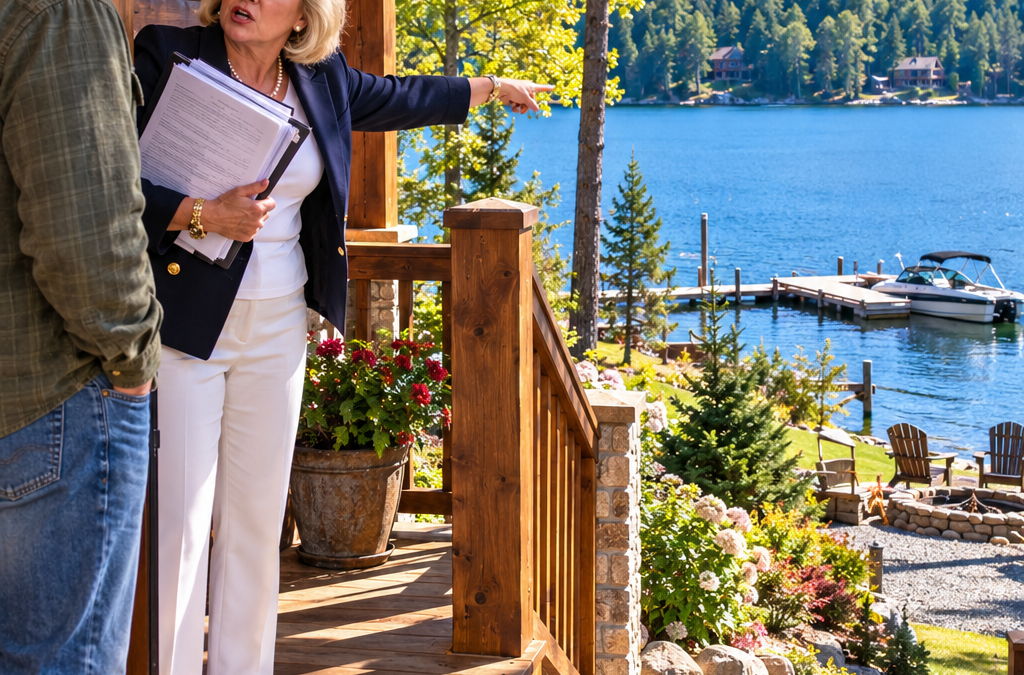
I flipped to the first page.
The dock was supposedly two inches wider than the approved dimension.
The shutters were the wrong shade of blue.
The porch light did not match the current approved fixture list and was described as a potential fire hazard.
I read the line twice.
“My porch light is a fire hazard?”
“It hasn’t been approved.”
“That’s different.”
“The board considers unapproved electrical exterior fixtures a liability.”
“It was installed twenty years ago.”
“That doesn’t grandfather it automatically.”
I looked back toward the lake.
Then at Patricia.
“Anything else?”
“The shed may need repainting.”
“Of course it does.”
Her eyes narrowed.
“I understand this feels like a lot.”
“No. It feels ridiculous.”
The pleasant expression slipped for half a second.
Then returned.
“We’re trying to preserve property values.”
“I inherited a cabin, Patricia. I didn’t apply for admission to a private club.”
“The cabin is inside our community.”
“Is it?”
She stared at me.
I hadn’t meant it as a legal question.
At least, not yet.
She said, “You’ll find everything explained in the packet.”
I thanked her because some habits are difficult to break.
Then I closed the door.
The first thing I did was make coffee.
The second was search county records online.
By noon, I had learned something useful.
Some of the rules Patricia gave me might apply.
Some almost certainly did not.
Gerald’s parcel predated much of the current association documentation.
Several older properties around Crescent Lake existed under a complicated patchwork of easements, shared roads, access rights, and later HOA covenants created as newer homes were built.
My cabin sat near one of those boundaries.
I couldn’t determine exactly where HOA authority began or ended.
But I knew enough to avoid blindly accepting Patricia’s packet.
I did nothing.
That irritated her.
A week later, I received my first violation notice.
Dock dimension.
$75.
Three days after that:
Exterior shutter color.
$50.
Then:
Unapproved porch fixture.
$100.
The amounts weren’t ruinous.
That was part of the strategy.
Small enough that paying might feel easier than fighting.
I didn’t pay.
Instead, I mailed a short response asking the board to identify the recorded covenant authorizing each fine against my parcel.
No anger.
No insults.
Just documentation.
Patricia responded personally.
The board has determined your property is subject to community architectural standards.
No citation.
No recording number.
No deed reference.
Just a determination.
That bothered me.
Gerald’s sentence kept coming back.
Don’t let them push you around.
Two weeks after Patricia’s first visit, she returned.
This time she wasn’t alone.
Her son stood beside her.
Brandon Holloway.
Thirty-one.
Tall.
Expensive sunglasses.
Shoes too clean for gravel.
A haircut that probably cost more than my first car payment.
Patricia introduced him as though I had been waiting for the opportunity.
“This is Brandon.”
He shook my hand.
Weakly.
Then immediately turned toward the lake.
The cabin sat on one of the best portions of Crescent Lake.
Not the largest parcel.
Not the grandest house.
But the view was nearly unobstructed.
Gerald had placed the building high enough on the slope that you could see the water through a break in the pines.
At sunset, the whole lake turned copper.
Brandon walked to the porch railing.
“Wow.”
I said nothing.
He looked toward the dock.
“This is exactly the kind of place I’ve been looking for.”
That sentence changed the entire visit.
Not:
Nice property.
Not:
Beautiful view.
Exactly the kind of place I’ve been looking for.
I looked at Patricia.
She was smiling.
“Brandon has been hoping to stay near the lake.”
“Good for Brandon.”
She ignored the tone.
“There aren’t many available properties with direct water access.”
“I’ve noticed.”
“Especially not at reasonable prices.”
Brandon turned.
“Most people renovate these old cabins anyway.”
I glanced back at my house.
Gerald’s uneven porch.
The cedar siding.
The cracked stone chimney.
“Some people like old cabins.”
Brandon shrugged.
“Sure.”
He looked like he didn’t understand why anyone would.
Patricia stepped closer.
“There is another matter we wanted to discuss.”
Of course there was.
“The board has been reviewing long-term use designations around the western lake edge.”
“What does that have to do with me?”
“Your parcel is unusual.”
“How?”
“Location. Access. Proximity to common shoreline areas.”
I waited.
Patricia opened her clipboard.
“The HOA may eventually consider reclassifying certain parcels for community recreational use.”
I looked at her.
“My cabin?”
“Potentially.”
“You’re saying the HOA wants to turn private lakefront property into a recreation zone?”
“I’m saying the board evaluates what is best for the community.”
“That’s not an answer.”
She smiled.
“It doesn’t need to become adversarial.”
That sentence always means somebody plans to make something adversarial.
Brandon leaned against the railing.
Patricia continued.
“For owners who struggle with compliance costs, there are alternatives.”
“I don’t struggle with compliance costs.”
“You’ve ignored three violation notices.”
“I disputed three violation notices.”
“Same result.”
“No. Very different result.”
Patricia closed the clipboard.
“We may be able to avoid all of this.”
“All of what?”
“The fines. Hearings. Potential liens. Legal expense.”
There it was.
I felt my body become very still.
“What are you proposing?”
She gave me a number.
For a second, I thought I had misunderstood.
The number was about forty percent below what comparable lakefront properties were selling for.
I looked at Brandon.
Then at Patricia.
“Who is buying?”
She hesitated just long enough.
“Brandon is prepared to make an offer.”
And suddenly every violation notice became something else.
The dock.
The shutters.
The porch light.
The threats.
The language about compliance.
None of it was primarily about community standards.
She was trying to soften the property.
Make ownership unpleasant.
Create cost.
Create fear.
Then place her son beside me with a discounted offer.
I felt anger rise behind my ribs.
Not explosive anger.
Cold anger.
The useful kind.
I asked, “Is the HOA involved in Brandon’s offer?”
Patricia’s expression changed.
“Don’t be ridiculous.”
“You just told me the HOA might reclassify my parcel, fine me, put a lien on me, create legal expenses, and then immediately suggested your son buy the cabin below market value.”
“I said no such thing.”
“You said all of those things.”
“Not in the way you’re implying.”
Brandon pushed away from the railing.
“Mom, maybe this isn’t the time.”
She ignored him.
“Damon, you’re new here. You don’t understand how this community works.”
“I understand enough.”
“No, you don’t.”
Her voice sharpened.
“Your uncle spent years fighting everyone around him. He refused reasonable improvements. He challenged every board decision. People were tired of it.”
I stepped closer.
“You came to my property with your son and tried to use HOA enforcement to push a sale.”
Patricia’s face hardened.
“You should be careful how you characterize this.”
“And you should leave.”
Brandon looked uncomfortable now.
“Mom.”
Patricia stared at me.
Then she said something I never forgot.
“This association can make ownership here very difficult.”
I laughed once.
Not because it was funny.
Because she had finally stopped pretending.
“How difficult?”
“You’ll find out.”
She tucked the clipboard under her arm.
Before turning away, she looked at the cabin.
Then at Brandon.
Then back at me.
“You may eventually decide this property is more responsibility than it’s worth.”
I said, “Not to your son.”
Her eyes flashed.
She walked away.
Brandon followed.
I stood on the porch until their SUV disappeared around the bend.
Then I went inside.
Gerald’s note was still on the refrigerator.
Don’t let them push you around.
I took it down.
Read it again.
For the first time, I wondered whether Gerald had known Patricia.
Not casually.
Known her.
Known what she was capable of.
I started going through his records that night.
Gerald kept everything.
Old survey maps.
Tax bills.
Handwritten notes.
Copies of county plats.
Letters from neighbors who had been dead for twenty years.
Documents yellowed at the folds.
Receipts for lumber purchased in 1986.
There were folders labeled ROAD.
LAKE.
DOCK.
EASEMENTS.
I didn’t fully understand most of them.
But one thing became clear.
The western edge of Crescent Lake had never been simple.
The original land had been divided decades earlier.
Several owners shared access strips.
Road rights crossed parcels.
Some easements had been formally recorded.
Others were informal arrangements that survived because nobody challenged them.
The modern HOA had grown over that mess like a layer of paint.
It looked clean from above.
Underneath, the old lines remained.
That was when I hired Cecile Morgan.
Licensed surveyor.
Recommended by an attorney friend.
Quiet.
Methodical.
The kind of person who spoke only after measuring something twice.
Cecile arrived on a Monday morning with a GPS unit, tripod, old maps, and absolutely no interest in neighborhood politics.
I liked her immediately.
I gave her every document I had.
She spread them across my dining table.
“This is messy.”
“That seems to be the theme.”
She traced several lines with one finger.
“Your uncle had old access rights along here.”
“Do they matter?”
“Depends what exists now.”
Over the next two days, Cecile walked the property.
She found survey pins buried under years of leaves.
She measured setbacks.
She compared the recorded plat with later HOA maps.
She disappeared into the western pines for hours.
On the second afternoon, I found her standing near the edge of the old community road staring toward a squat tan building about a hundred yards away.
The HOA headquarters.
I had been there once to drop off a written dispute.
It was a one-story structure with a small office, meeting room, records storage, and a covered area where Patricia parked her golf cart.
Nothing impressive.
But symbolically, it was Patricia’s castle.
Every monthly board meeting happened there.
Every violation file sat inside.
Every threatening letter was printed there.
Cecile called me over.
“Damon.”
I walked toward her.
“What?”
She held up an old plat.
“Who owns that building?”
“The HOA.”
“You sure?”
“I assumed.”
She looked toward me.
“Don’t.”
That got my attention.
She crouched and spread the map across the hood of her truck.
“This strip here was created in 1979.”
I leaned closer.
A narrow rectangular parcel ran from the county road through what was now the middle of the HOA complex.
“Shared access?”
“Originally.”
“For who?”
“Several landowners.”
She pointed to names.
Three were unfamiliar.
The fourth wasn’t.
Gerald Voss.
I stared.
“My uncle?”
“Looks like it.”
“What does that mean?”
“Potentially, part of the strip passed through his chain of title.”
“And now mine?”
“Potentially.”
I looked at the HOA building.
The driveway leading to it crossed the old strip.
So did the golf-cart route.
So did the only practical vehicle entrance.
Cecile continued.
“I haven’t finished the chain yet.”
“Could the HOA own it?”
“Maybe.”
“Could they have an easement?”
“Maybe.”
“Could they have nothing?”
She looked at me.
“Yes.”
That answer kept me awake all night.
The next morning, I called Victor Hale.
Real estate attorney.
Forty years old.
Sharp suit.
No patience for speculation.
I explained the dispute with Patricia.
Then showed him Cecile’s preliminary survey.
Victor’s expression changed almost immediately.
“Where did you get this plat?”
“Gerald’s files.”
“Original copy?”
“County certified.”
He studied it.
Then asked:
“Has anyone ever filed a deed transferring Gerald’s interest?”
“I don’t know.”
“That is the question.”
He spent the next week pulling records.
Not just modern records.
Old ones.
Deeds.
Plat maps.
Road agreements.
Recorded easements.
County tax records.
Association filings.
Successor documents.
The chain of title went back decades.
I barely understood half of what Victor explained.
But the conclusion was clear.
The HOA had been using the strip for years.
Decades, possibly.
But there was no clean deed conveying full ownership to the association.
No formal easement granting unrestricted vehicle access for the HOA office.
No document extinguishing Gerald’s recorded interest.
The structure sat adjacent to and partly dependent on land that had never been legally tidied up.
Victor leaned back in his chair.
“This is one of those situations everyone assumes was solved twenty years ago because nobody challenged it.”
“What happens if I challenge it?”
“That depends on what outcome you want.”
“I want Patricia off my property.”
He smiled slightly.
“Different issue.”
“I know.”
“But related emotionally.”
“Very.”
Victor looked down at the documents.
“You could bring a quiet-title action.”
“How long?”
“Months. Possibly longer.”
“Expensive?”
“Yes.”
“Anything faster?”
He was quiet.
Then he said:
“You appear to hold a legitimate co-ownership interest in part of the access strip.”
“Meaning?”
“Meaning you have property rights there.”
“What kind?”
“That depends on exact boundaries and use.”
He pulled Cecile’s final survey toward us.
“Your portion lies here.”
He pointed.
The line crossed directly over the approach to the HOA office.
I felt something shift.
Victor looked at me.
“You could fence your portion.”
I stared at him.
“Fence it?”
“If done entirely within your legal boundary, consistent with county rules, yes.”
“What would that do?”
He looked toward me.
“You already know.”
I did.
It would cut off the driveway.
Not the building itself.
Not pedestrian access completely.
But the only convenient vehicle approach Patricia used every day.
Her golf cart.
Board members’ cars.
Maintenance vans.
Delivery trucks.
All of them crossed the strip.
I sat back.
“Would it be legal?”
“If we do it correctly.”
“Could the HOA remove it?”
“Not without risking trespass.”
“Could they sue?”
“Anyone can sue.”
“That isn’t comforting.”
“It isn’t supposed to be.”
Victor folded his hands.
“If they have a valid access right we haven’t found, they’ll produce it.”
“And if they don’t?”
“Then they have a problem.”
I thought about Patricia standing on my porch.
This association can make ownership here very difficult.
Victor continued.
“Do not treat this as revenge.”
“I’m listening.”
“If you build a fence purely to harass them, that can create unnecessary arguments. We document your ownership claim. We establish the boundary. We comply with county requirements. We notify them that use of your portion is disputed and restricted.”
I nodded.
“Legal.”
“Legal.”
“Boring.”
“Preferably.”
I told him I’d think about it.
I lasted four days.
On day one, Patricia issued a violation claiming my firewood stack was visible from a community road.
On day two, I received a notice about “excessive shoreline vegetation.”
On day four, a certified letter arrived.
Unauthorized accessory structure.
The accessory structure was my bird feeder.
I stood in my kitchen holding that letter and stared at the bird feeder through the window.
Cedar.
Four feet tall.
Probably fifteen dollars.
Patricia had finally managed to make bureaucracy funny.
I called Victor.
“Let’s build the fence.”
He didn’t sound surprised.
Cecile returned and marked the boundary.
Victor filed the necessary notices.
A fencing contractor obtained the county approvals required for the location.
Everything documented.
Everything surveyed.
No shortcuts.
If Patricia wanted paperwork, I was going to give her enough paperwork to choke on.
The fence went up Monday morning.
Seven feet of professionally built cedar.
Heavy posts.
Concrete footings.
It followed my legal portion of the access strip exactly.
It didn’t touch HOA property.
It didn’t damage the office.
It didn’t block pedestrians from reaching the building through another route.
But vehicle access from the main path?
Gone.
At 7:45 a.m., Patricia discovered it.
I had been waiting on my porch with coffee.
Not proudly.
Not nervously.
Just curious.
Her white golf cart came around the bend.
Clipboard on the passenger seat.
Coffee in the holder.
She was wearing sunglasses.
Then she saw the fence.
The golf cart stopped so abruptly the coffee tipped.
Patricia sat there.
For a long time.
I could see her head turning left.
Then right.
Looking for a gap.
There wasn’t one.
A laminated notice hung at eye level.
PROPERTY BOUNDARY NOTICE.
Access restricted pursuant to recorded ownership interest.
Attorney contact information below.
Patricia climbed out of the cart.
Walked to the fence.
Read the notice.
Then read it again.
Finally she turned toward my cabin.
Even at that distance, I could feel the anger.
My phone rang eleven minutes later.
I let it ring twice.
Then answered.
“Morning, Patricia.”
“What did you do?”
Her voice had lost every trace of politeness.
“I built a fence.”
“You blocked the HOA office.”
“No. I restricted vehicle access across my property.”
“That road belongs to the association.”
“My attorney disagrees.”
“You cannot just wake up and seize community property.”
“I didn’t.”
“This is outrageous.”
“Is it?”
“We have a board meeting this morning.”
“I know.”
“You knew?”
“You schedule them publicly.”
“We have elderly board members who cannot walk from the lower parking area.”
“Then you should verify your access rights.”
She inhaled sharply.
“You’re doing this because of Brandon.”
“No.”
“You are.”
“I’m doing this because you threatened me using HOA authority while trying to push my cabin to your son.”
“That is a lie.”
“Then you’ll have no trouble producing documents proving your authority.”
Silence.
I continued.
“Victor Hale’s number is on the fence. Have your attorney call him.”
She lowered her voice.
“You have no idea what you’re starting.”
I looked at Gerald’s note on the refrigerator through the open kitchen door.
“I think I do.”
She hung up.
Within an hour, the show began.
First Patricia’s attorney called Victor.
Then Gerald Stein, one of the board members, appeared at my property line.
Then two others.
They didn’t cross.
Smart.
Gerald looked exhausted already.
“Damon.”
“Gerald.”
“Is this really necessary?”
I glanced toward the fence.
“Patricia thinks my bird feeder is an unauthorized structure.”
He closed his eyes briefly.
“This is bigger than bird feeders.”
“I agree.”
“You’ve cut off access.”
“I’ve restricted use of my property.”
“The association has used that road for decades.”
“Then the association should have documents.”
He shifted uncomfortably.
“Patricia says the HOA owns the strip.”
“Good. Show me the deed.”
Silence.
One board member, Ellen Cross, finally spoke.
“We’re trying to avoid escalation.”
I almost laughed.
“For six weeks, I’ve received violation notices while your president tries to buy my cabin for her son.”
Gerald looked toward Patricia’s house.
“I wasn’t aware of that.”
“You’re aware now.”
Ellen said, “Maybe the fence could come down temporarily while we sort this out.”
“No.”
“Damon—”
“No.”
She stopped.
I wasn’t rude.
I didn’t raise my voice.
But something had changed in me.
For weeks, Patricia had treated every no as an opening bid.
I wasn’t bidding anymore.
I said:
“The fence stays until your attorney establishes an access right.”
They left.
Then something happened I had not expected.
Patricia’s attorney began researching aggressively.
Not just the access strip.
Everything.
The HOA’s formation documents.
Its recorded covenants.
Corporate filings.
Renewal records.
Insurance.
Authority to enforce fines.
Victor called me three days later.
His voice sounded strange.
“What?”
“I found something.”
“About the road?”
“Bigger.”
I sat down.
“What?”
“The association’s corporate charter.”
“What about it?”
“It lapsed.”
I waited.
“What does that mean?”
“Potentially a lot.”
He explained.
The Crescent Lake HOA operated through a nonprofit corporate entity created years earlier.
That entity required periodic filings and renewal under state law.
Someone had stopped filing.
Four years earlier.
No renewal.
No reinstatement.
Nothing.
I stared at the wall.
“So the HOA doesn’t exist?”
“Careful.”
Victor hated simple statements.
“The community covenants don’t necessarily evaporate because a corporate registration lapses. Property law is more complicated than that.”
“Of course it is.”
“But the entity currently issuing fines, entering contracts, threatening liens, collecting assessments, and representing itself as the active association may lack proper corporate standing to exercise some of those functions.”
My pulse increased.
“What about my fines?”
“Questionable at minimum.”
“Patricia knows?”
“She does now.”
I stood.
Walked to the window.
Across the lake, wind moved through the pines.
“What happens next?”
“County counsel will probably want to look at it.”
“Why county counsel?”
“Because their records show the association has been representing itself as active in several matters.”
“How many?”
“Enough.”
Then he added:
“And your access-strip dispute triggered the review.”
I started laughing.
I couldn’t help it.
Not triumphant laughter.
Disbelief.
Patricia had tried to force me out over shutters and a bird feeder.
Now her lawyer, trying to defeat my fence, had opened a filing cabinet big enough to swallow the entire HOA.
The county became involved the following week.
Requests went out.
Records.
Meeting minutes.
Financial statements.
Filing history.
Lien activity.
Assessment notices.
The HOA office became very busy.
Patricia stopped sending me violations.
Completely.
The silence was almost unnerving.
Then a reporter called.
Her name was Megan Lowe.
Local newspaper.
Investigative desk.
She said she was looking into governance issues at Crescent Lake.
I asked who gave her my number.
She said:
“Someone who thinks property owners should know where their dues are going.”
I did not ask again.
I also did not tell anyone Victor’s paralegal had a cousin at the paper.
Some mysteries deserve to remain pleasant.
Megan started asking questions.
When did the charter lapse?
Who knew?
Why were fines still being issued?
What authority did the board rely on?
How were annual dues being held?
Who signed contracts?
Were financial statements audited?
How much had been spent on legal enforcement under Patricia?
Those questions terrified the board more than my fence ever had.
A fence is physical.
You can photograph it.
Measure it.
Argue about it.
Financial records are different.
They reveal patterns.
The first newspaper story didn’t accuse anyone of theft.
It didn’t need to.
The headline asked whether Crescent Lake’s homeowners association had continued enforcement after its corporate registration lapsed.
Residents went insane.
Phones rang.
Emails circulated.
People started reading documents they had ignored for years.
A man three streets over discovered he had paid $4,200 in fines over a shed dispute during the lapsed period.
Another homeowner had been threatened with foreclosure over assessments.
An elderly widow had paid legal fees after challenging landscaping violations.
Everyone wanted answers.
Patricia tried to control the narrative.
She called an emergency board meeting.
Held at the HOA office.
Or attempted to.
There was still no vehicle access.
Board members had to park farther down and walk.
I attended.
Mostly because I wanted to see her face.
The meeting room was packed.
Thirty residents inside.
Another fifteen outside.
Patricia sat at the front table.
No smile.
No blazer this time.
Just a gray sweater and a stack of documents.
She opened by saying:
“There has been a great deal of misinformation.”
Someone laughed.
Not me.
Patricia continued.
“The HOA remains committed to serving the Crescent Lake community.”
A man in the back shouted:
“Is the HOA legally active or not?”
Gerald tried to calm everyone.
Patricia said:
“Our counsel is addressing an administrative filing issue.”
“Four years is administrative?”
Another voice:
“Why were you issuing liens?”
Another:
“Where are the dues?”
Another:
“Who approved Brandon’s property offer?”
That one changed her face.
She looked toward me.
I said nothing.
She continued.
“The matter involving Damon Voss is a private property dispute and has no relationship to association governance.”
I finally spoke.
“It has every relationship.”
The room went quiet.
Patricia stared.
I stood.
“You threatened HOA enforcement while asking me to sell my cabin to your son.”
“That is false.”
“You brought Brandon to my property.”
“To introduce him.”
“You offered forty percent below market value.”
Her mouth tightened.
“That was a private offer.”
“After you told me the HOA could make ownership difficult.”
“Those are your words.”
“No.”
I reached into my folder.
“I wrote yours down.”
That was something Gerald taught me without realizing it.
If someone threatened you politely, write the exact sentence while you still remembered it.
I read:
“This association can make ownership here very difficult.”
The room changed.
Not dramatically.
But people leaned forward.
Patricia said:
“You are taking that out of context.”
“What context makes it better?”
No answer.
Gerald finally said:
“We need to move back to the corporate-status issue.”
Fine.
We did.
The attorney spoke.
He used a lot of words.
Administrative defect.
Corrective filings.
Continuity of covenant obligations.
Good-faith governance.
Potential reinstatement.
What he did not say was:
Everything is fine.
Because it wasn’t.
The charter lapse did not automatically erase every covenant around Crescent Lake.
But it created enough uncertainty around enforcement, contracting, fines, and board actions that the association faced a massive internal problem.
Then came finances.
Residents demanded an independent review.
Patricia resisted.
That was a mistake.
Nothing makes people more suspicious than someone refusing an audit while insisting there is nothing to see.
The vote passed overwhelmingly.
Independent accounting review.
Full legal review.
Suspension of new fines until authority was clarified.
Patricia voted no.
Gerald abstained.
The room noticed.
Over the next month, the HOA began collapsing from the inside.
Not because of one dramatic revelation.
Because years of unchecked arrogance look terrible when exposed to daylight.
Fines had been issued inconsistently.
Patricia’s allies received warnings.
Others received penalties.
Legal expenses had risen sharply during her presidency.
Board approvals were poorly documented.
Some meetings lacked proper quorum records.
Several enforcement actions depended on interpretations no attorney had reviewed.
And then there was Brandon.
Megan, the reporter, found something I hadn’t known.
Patricia had discussed my property during a closed board conversation before ever bringing him to my porch.
Not formally voted.
Not properly recorded.
But emails existed.
One message from Patricia described my parcel as:
“a likely compliance attrition opportunity.”
I read that phrase three times.
Compliance attrition opportunity.
That was my home.
My uncle’s cabin.
A place Gerald built with his hands.
Patricia had reduced it to a strategy.
Another email mentioned:
“potential acquisition by an interested family party.”
Family party.
Brandon.
That email destroyed whatever credibility she had left.
Residents were furious.
Not because they cared deeply about me.
Because if Patricia could weaponize violations to soften one owner’s property for someone in her family, she could do it to anyone.
At the next board meeting, someone asked her directly:
“Did you use HOA enforcement to pressure Damon into selling to your son?”
Patricia replied:
“Absolutely not.”
Then Megan published the email.
Two days later.
The article didn’t call Patricia corrupt.
It didn’t need to.
The documents spoke.
The board began discussing dissolution.
At first, I thought that sounded extreme.
Victor did too.
But the association had a deeper problem.
Crescent Lake wasn’t a typical modern subdivision where every parcel depended on one HOA for roads, utilities, or common infrastructure.
Many of the properties predated it.
The association mainly handled aesthetic enforcement, limited common spaces, and a handful of shared services that could be reassigned through simpler agreements.
Once residents lost confidence in the board and learned the corporate entity had been improperly maintained, dissolution became realistic.
People started asking a dangerous question.
What exactly are we paying this organization to do?
Patricia had no good answer.
Six weeks after my fence went up, Crescent Lake residents met at the county community center.
Not the HOA office.
Too small.
Nearly every household attended.
Victor sat beside me.
Patricia sat across the room with an attorney.
Brandon wasn’t there.
The meeting lasted four hours.
Documents were reviewed.
Legal consequences explained.
Outstanding obligations listed.
Options presented.
Reinstate and restructure.
Replace the board.
Create a new limited association.
Dissolve and transfer necessary shared functions into separate agreements.
When the final vote came, residents chose dissolution.
Not unanimously.
But decisively.
The Crescent Lake HOA, as Patricia had known it, was finished.
She didn’t speak after the vote.
For years, she had sat at the head of meeting tables telling people what color shutters they could have.
Now residents walked past her without asking permission for anything.
I expected to feel victorious.
I didn’t.
Mostly I felt tired.
Outside, Victor stood beside me in the parking lot.
“Well.”
“Well what?”
“You wanted her to leave you alone.”
I looked toward the building.
“This seems excessive.”
He laughed.
“You didn’t let the charter lapse.”
“I know.”
“You didn’t issue the fines.”
“I know.”
“You didn’t write the emails.”
“I know.”
“You built a fence on land you own.”
I nodded.
“That part I enjoyed.”
Victor smiled.
“Keep the fence.”
The dissolution process took months to complete properly.
Contracts had to be transferred or terminated.
Financial accounts reconciled.
Common areas assigned.
Insurance handled.
Records preserved.
Old enforcement matters reviewed.
Some owners received refunds or settlements relating to improper fees.
Others simply chose to move on.
Patricia fought some of it.
Then, slowly, she stopped.
Three months after the vote, a FOR SALE sign appeared outside her house.
I saw it from the road.
No celebration.
No champagne.
No photograph.
I just slowed down for half a second.
Then kept driving.
Brandon, according to one neighbor, had moved into an apartment forty minutes inland.
He never bought lakefront property.
At least not at Crescent Lake.
Patricia’s house sold quickly.
The day the moving truck came, I was splitting wood near my cabin.
Around noon, a white SUV drove past.
Patricia behind the wheel.
For one second, our eyes met.
She slowed.
I wondered if she would stop.
She didn’t.
Neither did I.
There was nothing left to say.
The fence remained.
Technically, I could remove it.
Victor told me the new access arrangements around the former HOA office no longer depended on my strip.
After dissolution, the building itself was eventually repurposed as a privately managed community meeting space with access from another side.
Nobody needed my land.
I still left the fence.
Not out of spite.
Mostly.
Every time I walked past it, I remembered what happened when Patricia assumed old property lines didn’t matter because nobody had questioned them.
She had built an entire authority structure around assumptions.
Then one forgotten survey forced everyone to look underneath.
That became the real lesson for me.
Patricia’s power had looked enormous when I first arrived.
Clipboard.
Board title.
Fine schedule.
Letters.
Hearings.
Lien threats.
A fourteen-page compliance packet.
She seemed to control everything.
But her authority depended on people accepting the frame she created.
The HOA says this.
The board decided that.
Community standards require it.
Most homeowners didn’t have time to investigate every claim.
They had jobs.
Children.
Mortgages.
Lives.
So they complied.
Gerald hadn’t.
That was why Patricia hated him.
I realized that slowly.
Gerald wasn’t difficult because he enjoyed conflict.
Well, maybe he did a little.
But mostly he understood property documents better than Patricia expected.
He knew the lake had old boundaries.
He knew some access rights were unresolved.
He probably knew the HOA office sat on shaky ground.
Maybe that was why he never fought them over it.
He didn’t need to.
He just kept the documents.
Stored the maps.
Preserved the chain.
Then left them to me with five words.
Don’t let them push you around.
The note stayed on my refrigerator.
It still does.
The cabin changed too.
I repaired the porch.
Replaced the dangerous old light Patricia had complained about.
Not because she was right.
Because the wiring really was terrible.
I repainted the shutters.
A darker blue.
Definitely not on the old HOA approved list.
That part was intentional.
I repaired the dock.
Exactly the same width Gerald built it.
Two inches too wide according to Patricia.
Perfect according to me.
Life became quiet.
Really quiet.
Without the HOA, neighbors still managed to mow lawns.
Trash still disappeared on collection day.
Nobody painted a house neon purple.
The lake did not collapse into chaos.
People talked directly more often.
When the shared shoreline needed maintenance, owners coordinated.
When the road needed repair, we created a cost-sharing agreement.
It wasn’t effortless.
Freedom rarely is.
But the neighborhood discovered something Patricia had spent years convincing everyone was impossible.
Adults can solve problems without a clipboard threatening fines.
A few months after everything settled, Gerald Stein—the former board member, not my uncle—stopped by.
He stood outside the fence line.
“Can I come in?”
That mattered.
He asked.
“Sure.”
We sat on the porch.
He looked toward the lake.
“I owe you an apology.”
“For what?”
“For not stopping her.”
I knew exactly who he meant.
“You weren’t president.”
“No. But I knew Patricia was going too far.”
“How long?”
He looked uncomfortable.
“Years.”
That answer irritated me.
“Why didn’t anybody say anything?”
“She was effective.”
“At what?”
“Getting things done.”
“So is a bulldozer.”
He smiled weakly.
“I know.”
He explained how Patricia gained influence.
Committee work.
Volunteer projects.
Record keeping.
Vendor relationships.
She always showed up.
Then gradually, showing up turned into deciding.
People deferred.
Gerald continued.
“If someone disagreed, she made the disagreement exhausting.”
That was Patricia perfectly.
Not unbeatable.
Exhausting.
A violation.
A hearing.
A letter.
Another meeting.
Another interpretation.
Another threat.
Eventually, most people surrendered because they wanted to go back to living their lives.
I said:
“She told me Brandon deserved the cabin.”
Gerald looked toward me.
“She said that?”
“Not those exact words the first time.”
“What did she say?”
I told him.
Compliance costs.
Reclassification.
Buyout options.
Then Brandon saying the property was exactly what he wanted.
Gerald shook his head.
“That sounds like her.”
“You knew?”
“Not about Brandon. But she always thought she knew the best use for everybody’s property.”
We sat quietly.
Then he looked toward the western trees.
“Gerald knew about that strip.”
My head turned.
“My uncle?”
“Yes.”
That got my attention.
“How?”
“He mentioned it once years ago.”
“What did he say?”
Gerald smiled.
“He said Patricia should be careful where she parks her golf cart.”
I laughed so hard I nearly spilled my coffee.
There it was.
Uncle Gerald.
He had known.
Maybe not about the charter.
Maybe not about Brandon.
But he knew the access strip existed.
Knew the HOA had never cleaned up the title.
And he had done nothing.
Why?
At first that confused me.
Then I understood.
Gerald wasn’t looking for war.
He was keeping leverage.
There’s a difference.
He didn’t wake up every morning trying to destroy Patricia.
He simply preserved enough information that she couldn’t destroy him.
That was why the files were so complete.
Why he kept the maps.
Why the easement documents were organized.
Why the note existed.
Gerald didn’t leave me a weapon.
He left me insurance.
I only used it because Patricia forced the issue.
One summer evening, almost a year after the dissolution vote, I sat on the dock with a beer.
The lake was completely still.
The kind of evening Gerald loved.
No motorboats.
No wind.
Just insects over the water and the occasional sound of a fish breaking the surface.
I thought about the first day Patricia came to my porch.
Fourteen pages.
Thirty days to comply.
She had looked so powerful.
I had felt like an intruder in a place I legally owned.
That was the trick.
Authority often works by controlling atmosphere before it ever controls law.
Patricia walked like she owned the neighborhood.
Spoke like she owned the rules.
Threatened like she owned the consequences.
Brandon looked at my lake view as if ownership were only a matter of persuading the current occupant to disappear.
But property records don’t care about confidence.
Neither do deeds.
Neither do surveys.
Old facts wait.
Sometimes for decades.
Then somebody finally asks the right question.
Who actually owns this?
That question destroyed Patricia’s certainty.
Not me.
Not Victor.
Not Cecile.
The documents.
The same boring records most people never read.
Patricia’s mistake was thinking nobody would.
Sometimes I wondered what would have happened if she had simply left me alone.
Probably nothing.
I would have lived at the cabin.
Paid whatever legitimate shared expenses existed.
Fixed the porch.
Fished.
Maybe attended an occasional meeting.
The access strip would still be forgotten.
The charter lapse might have gone unnoticed longer.
The financial questions might never have surfaced.
Patricia could have kept her title.
Her office.
Her clipboard.
Her little golf cart.
She lost all of it because she wanted my cabin for her son.
That was the arrogance of it.
She already had influence.
What she didn’t have was enough.
People like Patricia rarely recognize enough.
One more parcel.
One more rule.
One more person pushed into compliance.
One more favor for family.
She assumed every tool that worked before would keep working forever.
Until she used it on someone whose uncle kept old maps.
There are still people around Crescent Lake who think I destroyed the HOA.
A few have said it directly.
I always correct them.
I didn’t let the charter lapse.
I didn’t issue unauthorized fines.
I didn’t manipulate enforcement.
I didn’t threaten an owner while arranging a family purchase.
I didn’t hide questionable governance behind community language.
All I did was defend a property line.
The rest was already broken.
My fence simply forced people to look.
That’s an important distinction.
You don’t cause rot by removing the paint covering it.
You reveal it.
Most residents understand that now.
A few don’t.
That’s fine.
I don’t need everyone to agree.
Gerald certainly never did.
The cabin remains exactly where it was.
The western pines are taller.
The porch boards are newer.
The stone chimney still leans if you stare too long.
The old coffee maker finally died.
I kept it in the garage because throwing it away felt strangely disrespectful.
And Gerald’s handwritten note remains on the refrigerator.
The paper is curling at the edges.
The tape has been replaced twice.
Sometimes visitors ask what it means.
I usually say:
“Long story.”
Because it is.
A story about a cabin.
A fence.
An old access strip.
A woman who mistook a board presidency for ownership.
A son who looked at someone else’s home and saw an opportunity.
A surveyor who noticed one line on an old plat.
An attorney who understood that sometimes the strongest answer to intimidation is not a louder argument but a recorded deed.
Mostly, though, it’s a story about what happens when someone assumes resistance will disappear if they apply enough pressure.
Patricia thought fines would wear me down.
Then threats.
Then the possibility of liens.
Then the promise that owning the cabin could become exhausting.
She was right about one thing.
Fighting her was exhausting.
There were nights I wondered whether keeping the place was worth it.
I had inherited a quiet cabin and somehow ended up reading nonprofit filings at midnight.
I paid Victor more money than I wanted to admit.
I learned survey terminology I hope never to use again.
I attended meetings where adults argued over words like “authority,” “quorum,” and “standing” until I wanted to walk into the lake.
At times, selling would have been easier.
That’s what Patricia counted on.
Not that she was right.
That surrender was cheaper.
That is how small abuses of power survive.
Most people don’t give in because they believe the bully.
They give in because they are tired.
Gerald understood that.
Don’t let them push you around.
He didn’t write:
Win.
Destroy them.
Make them pay.
Just:
Don’t let them push you around.
There is restraint in that sentence I didn’t appreciate at first.
Defend your boundary.
Nothing more.
Nothing less.
I try to remember that.
The fence is still standing today.
Seven feet of cedar weathered to a softer brown.
Vines have started growing along one end.
I considered staining it last spring.
Never did.
From my porch, I can see part of it through the trees.
Sometimes I think about taking it down.
The HOA office no longer exists in any meaningful sense.
Patricia is gone.
Nobody is trying to cross.
Victor says there is no legal reason I need to keep the barrier.
Maybe someday I won’t.
But not yet.
It reminds me of something useful.
A boundary does not become unreasonable merely because someone else is inconvenienced by it.
My property was not available because Brandon liked the view.
My rights were not negotiable because Patricia held a title.
My uncle’s cabin was not a community resource because the board wanted leverage.
And an old road does not become somebody else’s simply because they have used it for a long time without asking questions.
That last one seems obvious now.
Almost everything does after the fact.
The view from the porch is still perfect.
Better than perfect.
Not because the lake changed.
Because silence feels different after someone spends months trying to take it from you.
Some mornings, I carry coffee outside before sunrise.
Mist sits low over Crescent Lake.
The dock disappears into gray.
A few lights glow across the water.
No golf carts.
No clipboard.
No inspection notices.
No fourteen-page packet.
Just the cabin Gerald built in 1987.
Still mine.
Still standing.
And on those mornings, I finally understand what my uncle actually left me.
It wasn’t only property.
It wasn’t only access rights.
It wasn’t even the maps.
Gerald left me proof that ownership means very little if you’re too afraid to defend it.
He knew somebody would eventually test the boundary.
Maybe he knew exactly who.
Maybe that was Patricia.
Maybe not.
But he prepared anyway.
That was Gerald.
He didn’t trust the world to remain reasonable.
He trusted records.
Lines.
Deeds.
And whoever came after him to have enough backbone to read them.
I wish he had been there the morning Patricia found the fence.
He would have loved that.
He probably would have stood beside me with coffee saying nothing.
Then, after her golf cart turned around, he would have looked at me and said:
“Took you long enough.”
And he would have been right.
𝗧𝗛𝗘 𝗘𝗡𝗗
The HOA President Told Me Her Son Deserved My Lake Cabin More Than I Did—So I Started Reading the Old Property Maps
Patricia Holloway stood on my porch, looked past me at the lake, and told me her son deserved my cabin more than I did. She promised the HOA could make my life miserable until I sold, never realizing I had already spent three weeks studying an old strip of land that ran straight beneath the center of her little empire.
Eighteen months earlier, my uncle Gerald died and left me the only place he had ever truly loved.
A lake cabin on Crescent Lake.
Calling it a cabin made it sound more charming than it was.
Gerald built the place himself in 1987, mostly with help from two friends, a borrowed truck, and the kind of confidence people have before they understand how difficult construction actually is.
The floors were uneven.
One bedroom window stuck whenever the weather turned humid.
The stone fireplace leaned slightly left if you stared at it too long.
The back deck had been rebuilt three separate times because Gerald believed building codes were suggestions written for people without common sense.
But the place had something money couldn’t reproduce.
It had history.
His history.
Mine too, in a way.
When I was a kid, my parents sent me there every summer.
Gerald taught me how to fish from the old dock.
He taught me to split wood without putting an axe through my shin.
He taught me to back a trailer down a gravel ramp.
He also taught me to distrust anyone who carried too many forms.
“People with paper,” he used to say, “usually want something they can’t take without getting your signature first.”
Gerald had opinions about almost everything.
He hated subdivisions.
He distrusted committees.
He believed a man’s property line should be easier to understand than a tax return.
And he had spent thirty-five years refusing to allow anyone around Crescent Lake to tell him what to do with his land.
When he died, I was forty-one.
I had a decent career, a small apartment in the city, and absolutely no plan to become the owner of a weathered lake cabin two hours away from everything familiar.
Then Gerald’s attorney handed me the will.
The property went to me outright.
No mortgage.
No co-owner.
No conditions.
Just the cabin, the land beneath it, a narrow strip of wooded acreage running west toward the lake road, and several old easement rights described in legal language I barely understood.
At the bottom of Gerald’s personal file was a folded piece of yellow notebook paper.
Three words across the front.
FOR DAMON ONLY.
Inside, written in Gerald’s crooked block handwriting, was one sentence.
Don’t let them push you around.
That was it.
No explanation.
No names.
No clue who “them” was supposed to be.
I remember laughing.
It sounded exactly like Gerald.
Even dead, he was issuing instructions.
I taped the note to my refrigerator after moving in.
Six days later, I understood it wasn’t a joke.
Her name was Patricia Holloway.
President of the Crescent Lake Homeowners Association.
She arrived at 8:12 on a Wednesday morning.
I remember the time because I had been awake since six trying to figure out why the old coffee maker hissed like a steam engine every time it heated.
There was a knock.
Three sharp taps.
I opened the door.
Patricia stood there holding a clipboard against her chest.
Mid-fifties.
Maybe early sixties.
Perfect blond bob.
Navy blazer.
White pants.
Gold watch.
The expression of someone who had already decided how the conversation would go.
She smiled.
“You must be Damon.”
“I am.”
“Patricia Holloway.”
She waited.
I assumed I was supposed to recognize the name.
When I didn’t react, she continued.
“President of the Crescent Lake HOA.”
“Okay.”
Her smile tightened slightly.
“We’ve been expecting you.”
That was a strange thing to say to someone standing on his own porch.
She held out a thick packet.
Fourteen pages.
Color-coded tabs.
WELCOME TO CRESCENT LAKE COMMUNITY ASSOCIATION.
“I’ve prepared your compliance materials.”
“My what?”
“Your property review.”
I looked down at the packet.
“I just moved in.”
“Exactly. It’s always easier to begin correctly.”
There are moments when you can feel trouble arriving before you understand its shape.
That was one.
I stepped onto the porch and flipped through the pages.
Dock dimensions.
Exterior color requirements.
Lighting rules.
Storage regulations.
Trash container screening.
Landscaping expectations.
Architectural approval forms.
I looked at Patricia.
“My uncle lived here thirty-five years.”
“Yes.”
“He never mentioned any of this.”
Her smile became almost sympathetic.
“Gerald was difficult.”
I stared at her.
“Gerald was Gerald.”
“I don’t mean that unkindly.”
It sounded unkind.
She tapped the packet with one fingernail.
“You have thirty days to bring the property into full compliance.”
“With what?”
“The association standards.”
I flipped to the first page.
The dock was supposedly two inches wider than the approved dimension.
The shutters were the wrong shade of blue.
The porch light did not match the current approved fixture list and was described as a potential fire hazard.
I read the line twice.
“My porch light is a fire hazard?”
“It hasn’t been approved.”
“That’s different.”
“The board considers unapproved electrical exterior fixtures a liability.”
“It was installed twenty years ago.”
“That doesn’t grandfather it automatically.”
I looked back toward the lake.
Then at Patricia.
“Anything else?”
“The shed may need repainting.”
“Of course it does.”
Her eyes narrowed.
“I understand this feels like a lot.”
“No. It feels ridiculous.”
The pleasant expression slipped for half a second.
Then returned.
“We’re trying to preserve property values.”
“I inherited a cabin, Patricia. I didn’t apply for admission to a private club.”
“The cabin is inside our community.”
“Is it?”
She stared at me.
I hadn’t meant it as a legal question.
At least, not yet.
She said, “You’ll find everything explained in the packet.”
I thanked her because some habits are difficult to break.
Then I closed the door.
The first thing I did was make coffee.
The second was search county records online.
By noon, I had learned something useful.
Some of the rules Patricia gave me might apply.
Some almost certainly did not.
Gerald’s parcel predated much of the current association documentation.
Several older properties around Crescent Lake existed under a complicated patchwork of easements, shared roads, access rights, and later HOA covenants created as newer homes were built.
My cabin sat near one of those boundaries.
I couldn’t determine exactly where HOA authority began or ended.
But I knew enough to avoid blindly accepting Patricia’s packet.
I did nothing.
That irritated her.
A week later, I received my first violation notice.
Dock dimension.
$75.
Three days after that:
Exterior shutter color.
$50.
Then:
Unapproved porch fixture.
$100.
The amounts weren’t ruinous.
That was part of the strategy.
Small enough that paying might feel easier than fighting.
I didn’t pay.
Instead, I mailed a short response asking the board to identify the recorded covenant authorizing each fine against my parcel.
No anger.
No insults.
Just documentation.
Patricia responded personally.
The board has determined your property is subject to community architectural standards.
No citation.
No recording number.
No deed reference.
Just a determination.
That bothered me.
Gerald’s sentence kept coming back.
Don’t let them push you around.
Two weeks after Patricia’s first visit, she returned.
This time she wasn’t alone.
Her son stood beside her.
Brandon Holloway.
Thirty-one.
Tall.
Expensive sunglasses.
Shoes too clean for gravel.
A haircut that probably cost more than my first car payment.
Patricia introduced him as though I had been waiting for the opportunity.
“This is Brandon.”
He shook my hand.
Weakly.
Then immediately turned toward the lake.
The cabin sat on one of the best portions of Crescent Lake.
Not the largest parcel.
Not the grandest house.
But the view was nearly unobstructed.
Gerald had placed the building high enough on the slope that you could see the water through a break in the pines.
At sunset, the whole lake turned copper.
Brandon walked to the porch railing.
“Wow.”
I said nothing.
He looked toward the dock.
“This is exactly the kind of place I’ve been looking for.”
That sentence changed the entire visit.
Not:
Nice property.
Not:
Beautiful view.
Exactly the kind of place I’ve been looking for.
I looked at Patricia.
She was smiling.
“Brandon has been hoping to stay near the lake.”
“Good for Brandon.”
She ignored the tone.
“There aren’t many available properties with direct water access.”
“I’ve noticed.”
“Especially not at reasonable prices.”
Brandon turned.
“Most people renovate these old cabins anyway.”
I glanced back at my house.
Gerald’s uneven porch.
The cedar siding.
The cracked stone chimney.
“Some people like old cabins.”
Brandon shrugged.
“Sure.”
He looked like he didn’t understand why anyone would.
Patricia stepped closer.
“There is another matter we wanted to discuss.”
Of course there was.
“The board has been reviewing long-term use designations around the western lake edge.”
“What does that have to do with me?”
“Your parcel is unusual.”
“How?”
“Location. Access. Proximity to common shoreline areas.”
I waited.
Patricia opened her clipboard.
“The HOA may eventually consider reclassifying certain parcels for community recreational use.”
I looked at her.
“My cabin?”
“Potentially.”
“You’re saying the HOA wants to turn private lakefront property into a recreation zone?”
“I’m saying the board evaluates what is best for the community.”
“That’s not an answer.”
She smiled.
“It doesn’t need to become adversarial.”
That sentence always means somebody plans to make something adversarial.
Brandon leaned against the railing.
Patricia continued.
“For owners who struggle with compliance costs, there are alternatives.”
“I don’t struggle with compliance costs.”
“You’ve ignored three violation notices.”
“I disputed three violation notices.”
“Same result.”
“No. Very different result.”
Patricia closed the clipboard.
“We may be able to avoid all of this.”
“All of what?”
“The fines. Hearings. Potential liens. Legal expense.”
There it was.
I felt my body become very still.
“What are you proposing?”
She gave me a number.
For a second, I thought I had misunderstood.
The number was about forty percent below what comparable lakefront properties were selling for.
I looked at Brandon.
Then at Patricia.
“Who is buying?”
She hesitated just long enough.
“Brandon is prepared to make an offer.”
And suddenly every violation notice became something else.
The dock.
The shutters.
The porch light.
The threats.
The language about compliance.
None of it was primarily about community standards.
She was trying to soften the property.
Make ownership unpleasant.
Create cost.
Create fear.
Then place her son beside me with a discounted offer.
I felt anger rise behind my ribs.
Not explosive anger.
Cold anger.
The useful kind.
I asked, “Is the HOA involved in Brandon’s offer?”
Patricia’s expression changed.
“Don’t be ridiculous.”
“You just told me the HOA might reclassify my parcel, fine me, put a lien on me, create legal expenses, and then immediately suggested your son buy the cabin below market value.”
“I said no such thing.”
“You said all of those things.”
“Not in the way you’re implying.”
Brandon pushed away from the railing.
“Mom, maybe this isn’t the time.”
She ignored him.
“Damon, you’re new here. You don’t understand how this community works.”
“I understand enough.”
“No, you don’t.”
Her voice sharpened.
“Your uncle spent years fighting everyone around him. He refused reasonable improvements. He challenged every board decision. People were tired of it.”
I stepped closer.
“You came to my property with your son and tried to use HOA enforcement to push a sale.”
Patricia’s face hardened.
“You should be careful how you characterize this.”
“And you should leave.”
Brandon looked uncomfortable now.
“Mom.”
Patricia stared at me.
Then she said something I never forgot.
“This association can make ownership here very difficult.”
I laughed once.
Not because it was funny.
Because she had finally stopped pretending.
“How difficult?”
“You’ll find out.”
She tucked the clipboard under her arm.
Before turning away, she looked at the cabin.
Then at Brandon.
Then back at me.
“You may eventually decide this property is more responsibility than it’s worth.”
I said, “Not to your son.”
Her eyes flashed.
She walked away.
Brandon followed.
I stood on the porch until their SUV disappeared around the bend.
Then I went inside.
Gerald’s note was still on the refrigerator.
Don’t let them push you around.
I took it down.
Read it again.
For the first time, I wondered whether Gerald had known Patricia.
Not casually.
Known her.
Known what she was capable of.
I started going through his records that night.
Gerald kept everything.
Old survey maps.
Tax bills.
Handwritten notes.
Copies of county plats.
Letters from neighbors who had been dead for twenty years.
Documents yellowed at the folds.
Receipts for lumber purchased in 1986.
There were folders labeled ROAD.
LAKE.
DOCK.
EASEMENTS.
I didn’t fully understand most of them.
But one thing became clear.
The western edge of Crescent Lake had never been simple.
The original land had been divided decades earlier.
Several owners shared access strips.
Road rights crossed parcels.
Some easements had been formally recorded.
Others were informal arrangements that survived because nobody challenged them.
The modern HOA had grown over that mess like a layer of paint.
It looked clean from above.
Underneath, the old lines remained.
That was when I hired Cecile Morgan.
Licensed surveyor.
Recommended by an attorney friend.
Quiet.
Methodical.
The kind of person who spoke only after measuring something twice.
Cecile arrived on a Monday morning with a GPS unit, tripod, old maps, and absolutely no interest in neighborhood politics.
I liked her immediately.
I gave her every document I had.
She spread them across my dining table.
“This is messy.”
“That seems to be the theme.”
She traced several lines with one finger.
“Your uncle had old access rights along here.”
“Do they matter?”
“Depends what exists now.”
Over the next two days, Cecile walked the property.
She found survey pins buried under years of leaves.
She measured setbacks.
She compared the recorded plat with later HOA maps.
She disappeared into the western pines for hours.
On the second afternoon, I found her standing near the edge of the old community road staring toward a squat tan building about a hundred yards away.
The HOA headquarters.
I had been there once to drop off a written dispute.
It was a one-story structure with a small office, meeting room, records storage, and a covered area where Patricia parked her golf cart.
Nothing impressive.
But symbolically, it was Patricia’s castle.
Every monthly board meeting happened there.
Every violation file sat inside.
Every threatening letter was printed there.
Cecile called me over.
“Damon.”
I walked toward her.
“What?”
She held up an old plat.
“Who owns that building?”
“The HOA.”
“You sure?”
“I assumed.”
She looked toward me.
“Don’t.”
That got my attention.
She crouched and spread the map across the hood of her truck.
“This strip here was created in 1979.”
I leaned closer.
A narrow rectangular parcel ran from the county road through what was now the middle of the HOA complex.
“Shared access?”
“Originally.”
“For who?”
“Several landowners.”
She pointed to names.
Three were unfamiliar.
The fourth wasn’t.
Gerald Voss.
I stared.
“My uncle?”
“Looks like it.”
“What does that mean?”
“Potentially, part of the strip passed through his chain of title.”
“And now mine?”
“Potentially.”
I looked at the HOA building.
The driveway leading to it crossed the old strip.
So did the golf-cart route.
So did the only practical vehicle entrance.
Cecile continued.
“I haven’t finished the chain yet.”
“Could the HOA own it?”
“Maybe.”
“Could they have an easement?”
“Maybe.”
“Could they have nothing?”
She looked at me.
“Yes.”
That answer kept me awake all night.
The next morning, I called Victor Hale.
Real estate attorney.
Forty years old.
Sharp suit.
No patience for speculation.
I explained the dispute with Patricia.
Then showed him Cecile’s preliminary survey.
Victor’s expression changed almost immediately.
“Where did you get this plat?”
“Gerald’s files.”
“Original copy?”
“County certified.”
He studied it.
Then asked:
“Has anyone ever filed a deed transferring Gerald’s interest?”
“I don’t know.”
“That is the question.”
He spent the next week pulling records.
Not just modern records.
Old ones.
Deeds.
Plat maps.
Road agreements.
Recorded easements.
County tax records.
Association filings.
Successor documents.
The chain of title went back decades.
I barely understood half of what Victor explained.
But the conclusion was clear.
The HOA had been using the strip for years.
Decades, possibly.
But there was no clean deed conveying full ownership to the association.
No formal easement granting unrestricted vehicle access for the HOA office.
No document extinguishing Gerald’s recorded interest.
The structure sat adjacent to and partly dependent on land that had never been legally tidied up.
Victor leaned back in his chair.
“This is one of those situations everyone assumes was solved twenty years ago because nobody challenged it.”
“What happens if I challenge it?”
“That depends on what outcome you want.”
“I want Patricia off my property.”
He smiled slightly.
“Different issue.”
“I know.”
“But related emotionally.”
“Very.”
Victor looked down at the documents.
“You could bring a quiet-title action.”
“How long?”
“Months. Possibly longer.”
“Expensive?”
“Yes.”
“Anything faster?”
He was quiet.
Then he said:
“You appear to hold a legitimate co-ownership interest in part of the access strip.”
“Meaning?”
“Meaning you have property rights there.”
“What kind?”
“That depends on exact boundaries and use.”
He pulled Cecile’s final survey toward us.
“Your portion lies here.”
He pointed.
The line crossed directly over the approach to the HOA office.
I felt something shift.
Victor looked at me.
“You could fence your portion.”
I stared at him.
“Fence it?”
“If done entirely within your legal boundary, consistent with county rules, yes.”
“What would that do?”
He looked toward me.
“You already know.”
I did.
It would cut off the driveway.
Not the building itself.
Not pedestrian access completely.
But the only convenient vehicle approach Patricia used every day.
Her golf cart.
Board members’ cars.
Maintenance vans.
Delivery trucks.
All of them crossed the strip.
I sat back.
“Would it be legal?”
“If we do it correctly.”
“Could the HOA remove it?”
“Not without risking trespass.”
“Could they sue?”
“Anyone can sue.”
“That isn’t comforting.”
“It isn’t supposed to be.”
Victor folded his hands.
“If they have a valid access right we haven’t found, they’ll produce it.”
“And if they don’t?”
“Then they have a problem.”
I thought about Patricia standing on my porch.
This association can make ownership here very difficult.
Victor continued.
“Do not treat this as revenge.”
“I’m listening.”
“If you build a fence purely to harass them, that can create unnecessary arguments. We document your ownership claim. We establish the boundary. We comply with county requirements. We notify them that use of your portion is disputed and restricted.”
I nodded.
“Legal.”
“Legal.”
“Boring.”
“Preferably.”
I told him I’d think about it.
I lasted four days.
On day one, Patricia issued a violation claiming my firewood stack was visible from a community road.
On day two, I received a notice about “excessive shoreline vegetation.”
On day four, a certified letter arrived.
Unauthorized accessory structure.
The accessory structure was my bird feeder.
I stood in my kitchen holding that letter and stared at the bird feeder through the window.
Cedar.
Four feet tall.
Probably fifteen dollars.
Patricia had finally managed to make bureaucracy funny.
I called Victor.
“Let’s build the fence.”
He didn’t sound surprised.
Cecile returned and marked the boundary.
Victor filed the necessary notices.
A fencing contractor obtained the county approvals required for the location.
Everything documented.
Everything surveyed.
No shortcuts.
If Patricia wanted paperwork, I was going to give her enough paperwork to choke on.
The fence went up Monday morning.
Seven feet of professionally built cedar.
Heavy posts.
Concrete footings.
It followed my legal portion of the access strip exactly.
It didn’t touch HOA property.
It didn’t damage the office.
It didn’t block pedestrians from reaching the building through another route.
But vehicle access from the main path?
Gone.
At 7:45 a.m., Patricia discovered it.
I had been waiting on my porch with coffee.
Not proudly.
Not nervously.
Just curious.
Her white golf cart came around the bend.
Clipboard on the passenger seat.
Coffee in the holder.
She was wearing sunglasses.
Then she saw the fence.
The golf cart stopped so abruptly the coffee tipped.
Patricia sat there.
For a long time.
I could see her head turning left.
Then right.
Looking for a gap.
There wasn’t one.
A laminated notice hung at eye level.
PROPERTY BOUNDARY NOTICE.
Access restricted pursuant to recorded ownership interest.
Attorney contact information below.
Patricia climbed out of the cart.
Walked to the fence.
Read the notice.
Then read it again.
Finally she turned toward my cabin.
Even at that distance, I could feel the anger.
My phone rang eleven minutes later.
I let it ring twice.
Then answered.
“Morning, Patricia.”
“What did you do?”
Her voice had lost every trace of politeness.
“I built a fence.”
“You blocked the HOA office.”
“No. I restricted vehicle access across my property.”
“That road belongs to the association.”
“My attorney disagrees.”
“You cannot just wake up and seize community property.”
“I didn’t.”
“This is outrageous.”
“Is it?”
“We have a board meeting this morning.”
“I know.”
“You knew?”
“You schedule them publicly.”
“We have elderly board members who cannot walk from the lower parking area.”
“Then you should verify your access rights.”
She inhaled sharply.
“You’re doing this because of Brandon.”
“No.”
“You are.”
“I’m doing this because you threatened me using HOA authority while trying to push my cabin to your son.”
“That is a lie.”
“Then you’ll have no trouble producing documents proving your authority.”
Silence.
I continued.
“Victor Hale’s number is on the fence. Have your attorney call him.”
She lowered her voice.
“You have no idea what you’re starting.”
I looked at Gerald’s note on the refrigerator through the open kitchen door.
“I think I do.”
She hung up.
Within an hour, the show began.
First Patricia’s attorney called Victor.
Then Gerald Stein, one of the board members, appeared at my property line.
Then two others.
They didn’t cross.
Smart.
Gerald looked exhausted already.
“Damon.”
“Gerald.”
“Is this really necessary?”
I glanced toward the fence.
“Patricia thinks my bird feeder is an unauthorized structure.”
He closed his eyes briefly.
“This is bigger than bird feeders.”
“I agree.”
“You’ve cut off access.”
“I’ve restricted use of my property.”
“The association has used that road for decades.”
“Then the association should have documents.”
He shifted uncomfortably.
“Patricia says the HOA owns the strip.”
“Good. Show me the deed.”
Silence.
One board member, Ellen Cross, finally spoke.
“We’re trying to avoid escalation.”
I almost laughed.
“For six weeks, I’ve received violation notices while your president tries to buy my cabin for her son.”
Gerald looked toward Patricia’s house.
“I wasn’t aware of that.”
“You’re aware now.”
Ellen said, “Maybe the fence could come down temporarily while we sort this out.”
“No.”
“Damon—”
“No.”
She stopped.
I wasn’t rude.
I didn’t raise my voice.
But something had changed in me.
For weeks, Patricia had treated every no as an opening bid.
I wasn’t bidding anymore.
I said:
“The fence stays until your attorney establishes an access right.”
They left.
Then something happened I had not expected.
Patricia’s attorney began researching aggressively.
Not just the access strip.
Everything.
The HOA’s formation documents.
Its recorded covenants.
Corporate filings.
Renewal records.
Insurance.
Authority to enforce fines.
Victor called me three days later.
His voice sounded strange.
“What?”
“I found something.”
“About the road?”
“Bigger.”
I sat down.
“What?”
“The association’s corporate charter.”
“What about it?”
“It lapsed.”
I waited.
“What does that mean?”
“Potentially a lot.”
He explained.
The Crescent Lake HOA operated through a nonprofit corporate entity created years earlier.
That entity required periodic filings and renewal under state law.
Someone had stopped filing.
Four years earlier.
No renewal.
No reinstatement.
Nothing.
I stared at the wall.
“So the HOA doesn’t exist?”
“Careful.”
Victor hated simple statements.
“The community covenants don’t necessarily evaporate because a corporate registration lapses. Property law is more complicated than that.”
“Of course it is.”
“But the entity currently issuing fines, entering contracts, threatening liens, collecting assessments, and representing itself as the active association may lack proper corporate standing to exercise some of those functions.”
My pulse increased.
“What about my fines?”
“Questionable at minimum.”
“Patricia knows?”
“She does now.”
I stood.
Walked to the window.
Across the lake, wind moved through the pines.
“What happens next?”
“County counsel will probably want to look at it.”
“Why county counsel?”
“Because their records show the association has been representing itself as active in several matters.”
“How many?”
“Enough.”
Then he added:
“And your access-strip dispute triggered the review.”
I started laughing.
I couldn’t help it.
Not triumphant laughter.
Disbelief.
Patricia had tried to force me out over shutters and a bird feeder.
Now her lawyer, trying to defeat my fence, had opened a filing cabinet big enough to swallow the entire HOA.
The county became involved the following week.
Requests went out.
Records.
Meeting minutes.
Financial statements.
Filing history.
Lien activity.
Assessment notices.
The HOA office became very busy.
Patricia stopped sending me violations.
Completely.
The silence was almost unnerving.
Then a reporter called.
Her name was Megan Lowe.
Local newspaper.
Investigative desk.
She said she was looking into governance issues at Crescent Lake.
I asked who gave her my number.
She said:
“Someone who thinks property owners should know where their dues are going.”
I did not ask again.
I also did not tell anyone Victor’s paralegal had a cousin at the paper.
Some mysteries deserve to remain pleasant.
Megan started asking questions.
When did the charter lapse?
Who knew?
Why were fines still being issued?
What authority did the board rely on?
How were annual dues being held?
Who signed contracts?
Were financial statements audited?
How much had been spent on legal enforcement under Patricia?
Those questions terrified the board more than my fence ever had.
A fence is physical.
You can photograph it.
Measure it.
Argue about it.
Financial records are different.
They reveal patterns.
The first newspaper story didn’t accuse anyone of theft.
It didn’t need to.
The headline asked whether Crescent Lake’s homeowners association had continued enforcement after its corporate registration lapsed.
Residents went insane.
Phones rang.
Emails circulated.
People started reading documents they had ignored for years.
A man three streets over discovered he had paid $4,200 in fines over a shed dispute during the lapsed period.
Another homeowner had been threatened with foreclosure over assessments.
An elderly widow had paid legal fees after challenging landscaping violations.
Everyone wanted answers.
Patricia tried to control the narrative.
She called an emergency board meeting.
Held at the HOA office.
Or attempted to.
There was still no vehicle access.
Board members had to park farther down and walk.
I attended.
Mostly because I wanted to see her face.
The meeting room was packed.
Thirty residents inside.
Another fifteen outside.
Patricia sat at the front table.
No smile.
No blazer this time.
Just a gray sweater and a stack of documents.
She opened by saying:
“There has been a great deal of misinformation.”
Someone laughed.
Not me.
Patricia continued.
“The HOA remains committed to serving the Crescent Lake community.”
A man in the back shouted:
“Is the HOA legally active or not?”
Gerald tried to calm everyone.
Patricia said:
“Our counsel is addressing an administrative filing issue.”
“Four years is administrative?”
Another voice:
“Why were you issuing liens?”
Another:
“Where are the dues?”
Another:
“Who approved Brandon’s property offer?”
That one changed her face.
She looked toward me.
I said nothing.
She continued.
“The matter involving Damon Voss is a private property dispute and has no relationship to association governance.”
I finally spoke.
“It has every relationship.”
The room went quiet.
Patricia stared.
I stood.
“You threatened HOA enforcement while asking me to sell my cabin to your son.”
“That is false.”
“You brought Brandon to my property.”
“To introduce him.”
“You offered forty percent below market value.”
Her mouth tightened.
“That was a private offer.”
“After you told me the HOA could make ownership difficult.”
“Those are your words.”
“No.”
I reached into my folder.
“I wrote yours down.”
That was something Gerald taught me without realizing it.
If someone threatened you politely, write the exact sentence while you still remembered it.
I read:
“This association can make ownership here very difficult.”
The room changed.
Not dramatically.
But people leaned forward.
Patricia said:
“You are taking that out of context.”
“What context makes it better?”
No answer.
Gerald finally said:
“We need to move back to the corporate-status issue.”
Fine.
We did.
The attorney spoke.
He used a lot of words.
Administrative defect.
Corrective filings.
Continuity of covenant obligations.
Good-faith governance.
Potential reinstatement.
What he did not say was:
Everything is fine.
Because it wasn’t.
The charter lapse did not automatically erase every covenant around Crescent Lake.
But it created enough uncertainty around enforcement, contracting, fines, and board actions that the association faced a massive internal problem.
Then came finances.
Residents demanded an independent review.
Patricia resisted.
That was a mistake.
Nothing makes people more suspicious than someone refusing an audit while insisting there is nothing to see.
The vote passed overwhelmingly.
Independent accounting review.
Full legal review.
Suspension of new fines until authority was clarified.
Patricia voted no.
Gerald abstained.
The room noticed.
Over the next month, the HOA began collapsing from the inside.
Not because of one dramatic revelation.
Because years of unchecked arrogance look terrible when exposed to daylight.
Fines had been issued inconsistently.
Patricia’s allies received warnings.
Others received penalties.
Legal expenses had risen sharply during her presidency.
Board approvals were poorly documented.
Some meetings lacked proper quorum records.
Several enforcement actions depended on interpretations no attorney had reviewed.
And then there was Brandon.
Megan, the reporter, found something I hadn’t known.
Patricia had discussed my property during a closed board conversation before ever bringing him to my porch.
Not formally voted.
Not properly recorded.
But emails existed.
One message from Patricia described my parcel as:
“a likely compliance attrition opportunity.”
I read that phrase three times.
Compliance attrition opportunity.
That was my home.
My uncle’s cabin.
A place Gerald built with his hands.
Patricia had reduced it to a strategy.
Another email mentioned:
“potential acquisition by an interested family party.”
Family party.
Brandon.
That email destroyed whatever credibility she had left.
Residents were furious.
Not because they cared deeply about me.
Because if Patricia could weaponize violations to soften one owner’s property for someone in her family, she could do it to anyone.
At the next board meeting, someone asked her directly:
“Did you use HOA enforcement to pressure Damon into selling to your son?”
Patricia replied:
“Absolutely not.”
Then Megan published the email.
Two days later.
The article didn’t call Patricia corrupt.
It didn’t need to.
The documents spoke.
The board began discussing dissolution.
At first, I thought that sounded extreme.
Victor did too.
But the association had a deeper problem.
Crescent Lake wasn’t a typical modern subdivision where every parcel depended on one HOA for roads, utilities, or common infrastructure.
Many of the properties predated it.
The association mainly handled aesthetic enforcement, limited common spaces, and a handful of shared services that could be reassigned through simpler agreements.
Once residents lost confidence in the board and learned the corporate entity had been improperly maintained, dissolution became realistic.
People started asking a dangerous question.
What exactly are we paying this organization to do?
Patricia had no good answer.
Six weeks after my fence went up, Crescent Lake residents met at the county community center.
Not the HOA office.
Too small.
Nearly every household attended.
Victor sat beside me.
Patricia sat across the room with an attorney.
Brandon wasn’t there.
The meeting lasted four hours.
Documents were reviewed.
Legal consequences explained.
Outstanding obligations listed.
Options presented.
Reinstate and restructure.
Replace the board.
Create a new limited association.
Dissolve and transfer necessary shared functions into separate agreements.
When the final vote came, residents chose dissolution.
Not unanimously.
But decisively.
The Crescent Lake HOA, as Patricia had known it, was finished.
She didn’t speak after the vote.
For years, she had sat at the head of meeting tables telling people what color shutters they could have.
Now residents walked past her without asking permission for anything.
I expected to feel victorious.
I didn’t.
Mostly I felt tired.
Outside, Victor stood beside me in the parking lot.
“Well.”
“Well what?”
“You wanted her to leave you alone.”
I looked toward the building.
“This seems excessive.”
He laughed.
“You didn’t let the charter lapse.”
“I know.”
“You didn’t issue the fines.”
“I know.”
“You didn’t write the emails.”
“I know.”
“You built a fence on land you own.”
I nodded.
“That part I enjoyed.”
Victor smiled.
“Keep the fence.”
The dissolution process took months to complete properly.
Contracts had to be transferred or terminated.
Financial accounts reconciled.
Common areas assigned.
Insurance handled.
Records preserved.
Old enforcement matters reviewed.
Some owners received refunds or settlements relating to improper fees.
Others simply chose to move on.
Patricia fought some of it.
Then, slowly, she stopped.
Three months after the vote, a FOR SALE sign appeared outside her house.
I saw it from the road.
No celebration.
No champagne.
No photograph.
I just slowed down for half a second.
Then kept driving.
Brandon, according to one neighbor, had moved into an apartment forty minutes inland.
He never bought lakefront property.
At least not at Crescent Lake.
Patricia’s house sold quickly.
The day the moving truck came, I was splitting wood near my cabin.
Around noon, a white SUV drove past.
Patricia behind the wheel.
For one second, our eyes met.
She slowed.
I wondered if she would stop.
She didn’t.
Neither did I.
There was nothing left to say.
The fence remained.
Technically, I could remove it.
Victor told me the new access arrangements around the former HOA office no longer depended on my strip.
After dissolution, the building itself was eventually repurposed as a privately managed community meeting space with access from another side.
Nobody needed my land.
I still left the fence.
Not out of spite.
Mostly.
Every time I walked past it, I remembered what happened when Patricia assumed old property lines didn’t matter because nobody had questioned them.
She had built an entire authority structure around assumptions.
Then one forgotten survey forced everyone to look underneath.
That became the real lesson for me.
Patricia’s power had looked enormous when I first arrived.
Clipboard.
Board title.
Fine schedule.
Letters.
Hearings.
Lien threats.
A fourteen-page compliance packet.
She seemed to control everything.
But her authority depended on people accepting the frame she created.
The HOA says this.
The board decided that.
Community standards require it.
Most homeowners didn’t have time to investigate every claim.
They had jobs.
Children.
Mortgages.
Lives.
So they complied.
Gerald hadn’t.
That was why Patricia hated him.
I realized that slowly.
Gerald wasn’t difficult because he enjoyed conflict.
Well, maybe he did a little.
But mostly he understood property documents better than Patricia expected.
He knew the lake had old boundaries.
He knew some access rights were unresolved.
He probably knew the HOA office sat on shaky ground.
Maybe that was why he never fought them over it.
He didn’t need to.
He just kept the documents.
Stored the maps.
Preserved the chain.
Then left them to me with five words.
Don’t let them push you around.
The note stayed on my refrigerator.
It still does.
The cabin changed too.
I repaired the porch.
Replaced the dangerous old light Patricia had complained about.
Not because she was right.
Because the wiring really was terrible.
I repainted the shutters.
A darker blue.
Definitely not on the old HOA approved list.
That part was intentional.
I repaired the dock.
Exactly the same width Gerald built it.
Two inches too wide according to Patricia.
Perfect according to me.
Life became quiet.
Really quiet.
Without the HOA, neighbors still managed to mow lawns.
Trash still disappeared on collection day.
Nobody painted a house neon purple.
The lake did not collapse into chaos.
People talked directly more often.
When the shared shoreline needed maintenance, owners coordinated.
When the road needed repair, we created a cost-sharing agreement.
It wasn’t effortless.
Freedom rarely is.
But the neighborhood discovered something Patricia had spent years convincing everyone was impossible.
Adults can solve problems without a clipboard threatening fines.
A few months after everything settled, Gerald Stein—the former board member, not my uncle—stopped by.
He stood outside the fence line.
“Can I come in?”
That mattered.
He asked.
“Sure.”
We sat on the porch.
He looked toward the lake.
“I owe you an apology.”
“For what?”
“For not stopping her.”
I knew exactly who he meant.
“You weren’t president.”
“No. But I knew Patricia was going too far.”
“How long?”
He looked uncomfortable.
“Years.”
That answer irritated me.
“Why didn’t anybody say anything?”
“She was effective.”
“At what?”
“Getting things done.”
“So is a bulldozer.”
He smiled weakly.
“I know.”
He explained how Patricia gained influence.
Committee work.
Volunteer projects.
Record keeping.
Vendor relationships.
She always showed up.
Then gradually, showing up turned into deciding.
People deferred.
Gerald continued.
“If someone disagreed, she made the disagreement exhausting.”
That was Patricia perfectly.
Not unbeatable.
Exhausting.
A violation.
A hearing.
A letter.
Another meeting.
Another interpretation.
Another threat.
Eventually, most people surrendered because they wanted to go back to living their lives.
I said:
“She told me Brandon deserved the cabin.”
Gerald looked toward me.
“She said that?”
“Not those exact words the first time.”
“What did she say?”
I told him.
Compliance costs.
Reclassification.
Buyout options.
Then Brandon saying the property was exactly what he wanted.
Gerald shook his head.
“That sounds like her.”
“You knew?”
“Not about Brandon. But she always thought she knew the best use for everybody’s property.”
We sat quietly.
Then he looked toward the western trees.
“Gerald knew about that strip.”
My head turned.
“My uncle?”
“Yes.”
That got my attention.
“How?”
“He mentioned it once years ago.”
“What did he say?”
Gerald smiled.
“He said Patricia should be careful where she parks her golf cart.”
I laughed so hard I nearly spilled my coffee.
There it was.
Uncle Gerald.
He had known.
Maybe not about the charter.
Maybe not about Brandon.
But he knew the access strip existed.
Knew the HOA had never cleaned up the title.
And he had done nothing.
Why?
At first that confused me.
Then I understood.
Gerald wasn’t looking for war.
He was keeping leverage.
There’s a difference.
He didn’t wake up every morning trying to destroy Patricia.
He simply preserved enough information that she couldn’t destroy him.
That was why the files were so complete.
Why he kept the maps.
Why the easement documents were organized.
Why the note existed.
Gerald didn’t leave me a weapon.
He left me insurance.
I only used it because Patricia forced the issue.
One summer evening, almost a year after the dissolution vote, I sat on the dock with a beer.
The lake was completely still.
The kind of evening Gerald loved.
No motorboats.
No wind.
Just insects over the water and the occasional sound of a fish breaking the surface.
I thought about the first day Patricia came to my porch.
Fourteen pages.
Thirty days to comply.
She had looked so powerful.
I had felt like an intruder in a place I legally owned.
That was the trick.
Authority often works by controlling atmosphere before it ever controls law.
Patricia walked like she owned the neighborhood.
Spoke like she owned the rules.
Threatened like she owned the consequences.
Brandon looked at my lake view as if ownership were only a matter of persuading the current occupant to disappear.
But property records don’t care about confidence.
Neither do deeds.
Neither do surveys.
Old facts wait.
Sometimes for decades.
Then somebody finally asks the right question.
Who actually owns this?
That question destroyed Patricia’s certainty.
Not me.
Not Victor.
Not Cecile.
The documents.
The same boring records most people never read.
Patricia’s mistake was thinking nobody would.
Sometimes I wondered what would have happened if she had simply left me alone.
Probably nothing.
I would have lived at the cabin.
Paid whatever legitimate shared expenses existed.
Fixed the porch.
Fished.
Maybe attended an occasional meeting.
The access strip would still be forgotten.
The charter lapse might have gone unnoticed longer.
The financial questions might never have surfaced.
Patricia could have kept her title.
Her office.
Her clipboard.
Her little golf cart.
She lost all of it because she wanted my cabin for her son.
That was the arrogance of it.
She already had influence.
What she didn’t have was enough.
People like Patricia rarely recognize enough.
One more parcel.
One more rule.
One more person pushed into compliance.
One more favor for family.
She assumed every tool that worked before would keep working forever.
Until she used it on someone whose uncle kept old maps.
There are still people around Crescent Lake who think I destroyed the HOA.
A few have said it directly.
I always correct them.
I didn’t let the charter lapse.
I didn’t issue unauthorized fines.
I didn’t manipulate enforcement.
I didn’t threaten an owner while arranging a family purchase.
I didn’t hide questionable governance behind community language.
All I did was defend a property line.
The rest was already broken.
My fence simply forced people to look.
That’s an important distinction.
You don’t cause rot by removing the paint covering it.
You reveal it.
Most residents understand that now.
A few don’t.
That’s fine.
I don’t need everyone to agree.
Gerald certainly never did.
The cabin remains exactly where it was.
The western pines are taller.
The porch boards are newer.
The stone chimney still leans if you stare too long.
The old coffee maker finally died.
I kept it in the garage because throwing it away felt strangely disrespectful.
And Gerald’s handwritten note remains on the refrigerator.
The paper is curling at the edges.
The tape has been replaced twice.
Sometimes visitors ask what it means.
I usually say:
“Long story.”
Because it is.
A story about a cabin.
A fence.
An old access strip.
A woman who mistook a board presidency for ownership.
A son who looked at someone else’s home and saw an opportunity.
A surveyor who noticed one line on an old plat.
An attorney who understood that sometimes the strongest answer to intimidation is not a louder argument but a recorded deed.
Mostly, though, it’s a story about what happens when someone assumes resistance will disappear if they apply enough pressure.
Patricia thought fines would wear me down.
Then threats.
Then the possibility of liens.
Then the promise that owning the cabin could become exhausting.
She was right about one thing.
Fighting her was exhausting.
There were nights I wondered whether keeping the place was worth it.
I had inherited a quiet cabin and somehow ended up reading nonprofit filings at midnight.
I paid Victor more money than I wanted to admit.
I learned survey terminology I hope never to use again.
I attended meetings where adults argued over words like “authority,” “quorum,” and “standing” until I wanted to walk into the lake.
At times, selling would have been easier.
That’s what Patricia counted on.
Not that she was right.
That surrender was cheaper.
That is how small abuses of power survive.
Most people don’t give in because they believe the bully.
They give in because they are tired.
Gerald understood that.
Don’t let them push you around.
He didn’t write:
Win.
Destroy them.
Make them pay.
Just:
Don’t let them push you around.
There is restraint in that sentence I didn’t appreciate at first.
Defend your boundary.
Nothing more.
Nothing less.
I try to remember that.
The fence is still standing today.
Seven feet of cedar weathered to a softer brown.
Vines have started growing along one end.
I considered staining it last spring.
Never did.
From my porch, I can see part of it through the trees.
Sometimes I think about taking it down.
The HOA office no longer exists in any meaningful sense.
Patricia is gone.
Nobody is trying to cross.
Victor says there is no legal reason I need to keep the barrier.
Maybe someday I won’t.
But not yet.
It reminds me of something useful.
A boundary does not become unreasonable merely because someone else is inconvenienced by it.
My property was not available because Brandon liked the view.
My rights were not negotiable because Patricia held a title.
My uncle’s cabin was not a community resource because the board wanted leverage.
And an old road does not become somebody else’s simply because they have used it for a long time without asking questions.
That last one seems obvious now.
Almost everything does after the fact.
The view from the porch is still perfect.
Better than perfect.
Not because the lake changed.
Because silence feels different after someone spends months trying to take it from you.
Some mornings, I carry coffee outside before sunrise.
Mist sits low over Crescent Lake.
The dock disappears into gray.
A few lights glow across the water.
No golf carts.
No clipboard.
No inspection notices.
No fourteen-page packet.
Just the cabin Gerald built in 1987.
Still mine.
Still standing.
And on those mornings, I finally understand what my uncle actually left me.
It wasn’t only property.
It wasn’t only access rights.
It wasn’t even the maps.
Gerald left me proof that ownership means very little if you’re too afraid to defend it.
He knew somebody would eventually test the boundary.
Maybe he knew exactly who.
Maybe that was Patricia.
Maybe not.
But he prepared anyway.
That was Gerald.
He didn’t trust the world to remain reasonable.
He trusted records.
Lines.
Deeds.
And whoever came after him to have enough backbone to read them.
I wish he had been there the morning Patricia found the fence.
He would have loved that.
He probably would have stood beside me with coffee saying nothing.
Then, after her golf cart turned around, he would have looked at me and said:
“Took you long enough.”
And he would have been right.







