𝗙𝗨𝗟𝗟 𝗦𝗧𝗢𝗥𝗬 The HOA President Demanded Access to My Cabin, Never Realizing the Deed in My Wife’s Hand Had Already Stripped Her of Every Right She Claimed
𝗙𝗨𝗟𝗟 𝗦𝗧𝗢𝗥𝗬
That was our second mistake.
We had no reason to think it mattered.
Yet.
The first HOA letter arrived about three weeks after we moved in.
WELCOME TO PINE HOLLOW RIDGE.
Below the cheerful heading was a list of reminders.
Trash container placement.
Exterior lighting.
Parking.
Seasonal decorations.
Mailbox appearance.
Architectural approvals.
Nothing aggressive.
We skimmed it.
Then came a second letter.
NOTICE OF UNAPPROVED ALTERATION.
It referred to the sunroom.
Maria read it twice.
“This was built before we bought the house.”
“I know.”
“It says we failed to obtain approval.”
“We didn’t build it.”
“Exactly.”
The notice instructed us to provide plans within ten days or face fines.
I called the number at the bottom.
A woman answered.
“Pine Hollow Ridge HOA.”
“Hi. My name is Daniel. We recently bought Lot 14.”
There was a pause.
“Daniel Mercer?”
“Yes.”
“This is Karen Whitfield.”
The tone changed when she said her own name.
Not introduction.
Announcement.
“I received a letter about our sunroom.”
“Yes.”
“We didn’t build it.”
“That doesn’t change the violation.”
“The previous owner added it.”
“Then you purchased an unapproved structure.”
“It was permitted by the county.”
“The county is not the HOA.”
I remember looking at Maria across the kitchen.
She raised one eyebrow.
“I’m aware,” I said. “But if the work is structurally permitted, what exactly is your concern?”
“Architectural approval.”
“Do you have the original application?”
“There isn’t one.”
“Have you asked the previous owner?”
“We don’t need to chase prior owners. The property is now yours.”
“Okay. What do you want us to do?”
“Submit plans retroactively.”
“Plans for something already built?”
“Correct.”
I almost laughed.
“Why?”
“Because every exterior modification requires board review.”
Maria whispered, “Ask her about the deed.”
I shook my head slightly.
Not yet.
I wanted to understand what kind of person we were dealing with.
“Can you send me the specific covenant provision?”
Karen’s voice cooled.
“It’s in the governing documents.”
“Which section?”
“You received them at closing.”
“We received a packet.”
“Then read it.”
She hung up.
I stared at the phone.
Maria said, “Pleasant.”
“Very.”
Two days later, we met our neighbor Diane.
She lived in the cabin directly east of ours.
Early sixties.
Former nurse.
She brought banana bread, which automatically made her my favorite person in Pine Hollow Ridge.
We were standing in our kitchen when she noticed the HOA letter.
“Oh.”
That one syllable carried history.
I looked at her.
“You know Karen.”
Diane laughed without humor.
“Everybody knows Karen.”
“She seems intense.”
“That’s one word.”
Maria poured coffee.
“What word would you use?”
Diane sat down.
“Exhausting.”
Then she told us.
Karen Whitfield had been HOA president for nearly fifteen years.
She ran meetings.
Controlled violation letters.
Led architectural review.
Directed the management company.
And, according to Diane, treated every disagreement like an attack on civilization.
“She fined the Petersons for their mailbox.”
“What was wrong with it?” I asked.
“Wrong shade of bronze.”
I thought she was joking.
She wasn’t.
“She fined another couple because their grass was supposedly overfertilized.”
Maria blinked.
“Overfertilized?”
“Too green.”
“That’s a violation?”
“With Karen, apparently.”
Diane tore a piece of banana bread.
“She took the Millers to small claims over a wind chime.”
“You’re kidding.”
“I wish.”
“Did she win?”
“No.”
“What happened?”
“They moved anyway.”
That stayed with me.
Not because someone had moved over a wind chime.
Because whatever Karen was doing had become so unpleasant that leaving their home felt easier than continuing to fight.
Diane continued.
“People don’t challenge her anymore.”
“Why?”
“Because she doesn’t stop.”
“What does that mean?”
“It means if you beat one violation, another shows up.”
Maria and I exchanged a look.
That evening, we pulled out the old exclusion document again.
I read every line.
The more I read, the clearer it became.
Lot 14 was not just vaguely exempt.
The exclusion was explicit.
The original owner had refused to join the association when it formed.
The county had recorded that refusal.
There was no expiration date.
I searched our closing documents.
Nothing showed that a later owner had voluntarily joined.
Yet previous owners had apparently been paying HOA dues.
That made no sense.
“Could they have joined later without this being in our packet?” Maria asked.
“Maybe.”
“We should check.”
“I’ll call the title company.”
I did.
The woman who handled our closing promised to look.
Then work got busy.
Life got busy.
Karen sent another letter.
This one more aggressive.
FINAL ARCHITECTURAL COMPLIANCE DEMAND.
The sunroom had to be submitted for review.
Potential daily fine: five hundred dollars.
Maria stared at the number.
“Five hundred a day?”
“Apparently.”
“For a room the county already approved?”
“Apparently.”
She tapped the old deed restriction.
“We need to deal with this.”
“I know.”
Before I could, Karen decided patience wasn’t useful.
That Saturday began like any other.
Maria was inside making coffee.
I was on the front porch replacing a loose railing board.
Cold sun.
Clear sky.
Quiet road.
Then I heard tires.
Fast.
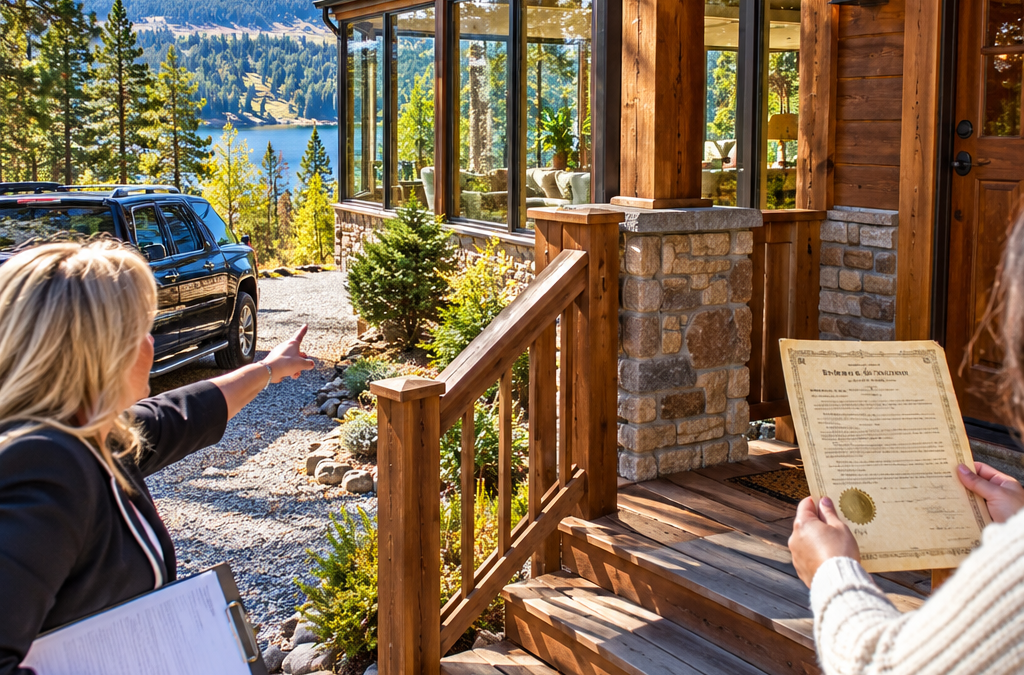
A dark SUV came around the bend and turned sharply into our driveway.
Gravel sprayed.
I straightened.
The SUV stopped too close to my truck.
Driver’s door opened.
Karen Whitfield stepped out.
I’d never met her in person.
I recognized her instantly.
She had the energy of someone arriving already offended.
Late fifties.
Perfectly arranged hair.
Dark sunglasses despite the shade.
Clipboard in one hand.
Phone in the other.
The phone was recording.
She started speaking before she reached the porch.
“Daniel Mercer?”
“Yes.”
“I’ve had enough.”
That was her opening.
Not hello.
Not good morning.
I’ve had enough.
I put the screwdriver down.
“Of what?”
“Your refusal to comply.”
She climbed the porch steps.
“I know you’re hiding violations in there.”
She pointed at our front door.
“Open it.”
For a second, I honestly thought I’d misheard.
“What?”
“You heard me.”
She raised the phone slightly.
“This inspection is being documented.”
“Inspection of what?”
“The interior.”
“No.”
Her face changed.
“What did you say?”
“No.”
“I have received multiple complaints concerning unauthorized renovations.”
“From who?”
“Confidential.”
“Then send us a written notice.”
“I’m giving you notice now.”
“You don’t have permission to enter our home.”
“I don’t need your permission.”
That was when Maria came outside.
Coffee mug in hand.
Sweater pulled around her shoulders.
“What’s going on?”
Karen pointed at her.
“You must be Maria.”
Maria looked at the finger.
Then Karen.
“Yes.”
“Your husband is obstructing an association inspection.”
“No, he’s telling you that you can’t enter our house.”
Karen laughed sharply.
“Every residence in this community falls under HOA jurisdiction.”
Maria’s expression changed.
Not dramatically.
Just enough that I knew exactly what she was thinking.
The yellow paper upstairs.
Karen continued.
“I have authority to inspect for structural, safety, and aesthetic violations.”
“Aesthetic violations inside the house?” I asked.
“Don’t twist my words.”
“You said interior inspection.”
“I said compliance inspection.”
“Same problem.”
By then, neighbors had started noticing.
Diane stepped onto her porch.
A man across the road came outside.
Another door opened.
Karen saw them.
Instead of calming down, she became louder.
That was something I would later understand about her.
She performed authority.
An audience made her stronger.
“You added an unauthorized extension,” she said, jabbing the clipboard toward the back of the cabin. “The sunroom violates association architectural requirements.”
“We didn’t add it.”
“You own it.”
“It was built by the prior owner.”
“Then you inherited the violation.”
“It was permitted.”
“The county doesn’t override the HOA.”
“County law absolutely matters.”
“I said HOA approval.”
Maria set her coffee on the porch rail.
“The contractor was licensed.”
“I don’t care.”
“County inspection passed.”
“I don’t care.”
“The title company knew it was there.”
“I don’t care.”
Karen stepped closer.
“You have seventy-two hours to submit demolition plans if the board determines the structure can’t be retroactively approved.”
My stomach tightened.
“Demolition?”
“Correct.”
“You’re threatening to make us tear down a permitted sunroom?”
“If necessary.”
“At five hundred dollars a day?”
“Beginning after the cure period.”
Across the road, someone whispered something.
Karen turned.
“Anyone interfering with an active compliance investigation can be cited.”
That brought silence.
Not respect.
Fear.
I saw it on Diane’s face.
She had seen this before.
Karen turned back to us.
“Now open the door.”
“No,” Maria said.
Karen leaned forward.
“Excuse me?”
Maria’s hands were trembling.
At first, I thought she was scared.
Then I recognized something else.
Anger.
Cold anger.
“Karen,” she said slowly, “before you go any further, there’s something you need to see.”
Karen scoffed.
“Unless it’s an approved architectural application for that sunroom, I have no interest.”
“It isn’t.”
“Then don’t waste my time.”
Maria turned and walked inside.
Karen looked at me.
“What is she doing?”
I smiled slightly.
“You’ll find out.”
Her mouth tightened.
“I’m calling the sheriff if you continue obstructing.”
“For what?”
“Interference with HOA authority.”
I almost laughed.
“Please call them.”
That wasn’t the response she expected.
Her eyes narrowed.
Thirty seconds later, Maria came back outside.
In one hand was the old folded county document.
Yellowed edges.
Faded type.
Recorder’s stamp.
Karen looked at it with open annoyance.
“What is that?”
Maria unfolded it carefully.
“This is the original deed restriction and exclusion document recorded when Pine Hollow Ridge HOA was formed in 1989.”
Karen rolled her eyes.
“Old paperwork doesn’t override current covenants.”
Maria didn’t raise her voice.
“Actually, this one does.”
Something changed in the crowd.
People leaned closer.
Karen looked from Maria to me.
“What are you talking about?”
Maria turned the paper around.
“Our cabin was built in 1987.”
“I’m aware.”
“Two years before your association existed.”
“That doesn’t matter.”
“It matters because the original owner refused to submit Lot 14 to the HOA declaration.”
Karen froze.
Only for half a second.
Then:
“That’s impossible.”
Maria continued.
“He filed a permanent exclusion with the county.”
“No.”
“Lot 14 remained independent.”
“No.”
“It’s recorded.”
“Every property in Pine Hollow Ridge is under association jurisdiction.”
“Not this one.”
Maria pointed to the legal description.
“Lot 14 was specifically carved out.”
Karen snatched the paper from her hand.
I stepped forward.
“Careful.”
She ignored me.
Her eyes moved across the document.
Fast.
Then slower.
Her face changed.
The confidence didn’t disappear completely.
It cracked.
“This isn’t valid.”
“It has the county recorder’s stamp,” Maria said.
“This could be an old draft.”
“It’s recorded.”
“You don’t understand how association declarations work.”
Maria smiled.
“My husband called the title company yesterday.”
That wasn’t entirely true.
I’d called earlier in the week.
But I appreciated the timing.
Karen looked at me.
“What did they say?”
“They’re pulling the chain of title.”
Karen’s fingers tightened around the page.
“You’ve been paying dues.”
That sentence came too quickly.
Maria caught it immediately.
“We have.”
Karen stared at her.
“Which proves membership.”
“No,” Maria said. “Payment doesn’t automatically create covenant jurisdiction if the property was legally excluded.”
Karen opened her mouth.
Then closed it.
I watched something happen behind her eyes.
Calculation.
Not whether the document was valid.
Something else.
She handed the paper back.
“This needs to be verified by the board.”
“Fine.”
“I’ll have counsel review it.”
“Please.”
Karen took one step backward.
Then said something that changed everything.
“I’ve been collecting dues from this address for years.”
Silence.
She seemed to realize what she’d said at the exact same moment everyone else did.
Maria’s expression sharpened.
“You’ve been collecting?”
Karen’s face went pale.
“I mean the association has.”
“For how long?” I asked.
“That’s not relevant.”
“It became very relevant when you said it.”
“I need to check the files.”
“Karen.”
She looked at me.
“How long?”
Her mouth opened.
Nothing came out.
Diane stepped off her porch.
She walked slowly toward us.
“My lot is thirteen.”
Karen turned.
Diane’s voice was quiet.
“Daniel’s is fourteen.”
No one said anything.
Diane continued.
“The old owner who built their cabin was related to the man who owned mine.”
Karen looked toward her SUV.
Diane stepped closer.
“Was Lot 13 excluded too?”
“I don’t know.”
“You’ve been president fifteen years.”
“I don’t memorize every deed.”
“But you’ve billed me every year.”
“Diane, this isn’t the time.”
“It feels exactly like the time.”
Karen pulled out her phone.
“I’m calling Robert.”
The name meant nothing to me.
It meant something to her.
Her hand shook slightly as she dialed.
She walked several feet away.
We could hear pieces.
“Lot 14.”
“Old exclusion document.”
“Yes.”
“No, I need you here.”
She ended the call.
Maria whispered, “Who’s Robert?”
Diane answered.
“Robert Halpern.”
“Board member?”
“Former.”
She looked toward Karen.
“Original board.”
That got my attention.
About twenty minutes later, another vehicle pulled into the driveway.
An older man climbed out.
Gray hair.
Work jacket.
No clipboard.
No dramatic entrance.
He carried a thick folder under one arm.
Karen visibly stiffened.
“Robert.”
He looked at her.
“You called me about Lot 14.”
“There’s some confusion.”
Robert glanced toward the cabin.
Then toward Maria and me.
“No.”
His voice was calm.
“There isn’t.”
Karen frowned.
“What does that mean?”
He walked up the driveway.
“My father built this cabin.”
I stared at him.
Maria did too.
Robert stopped near the porch.
“Arthur Halpern.”
I remembered the name.
It was on the exclusion document.
Maria held it up.
“Your father signed this.”
Robert nodded.
“I know.”
Karen interrupted.
“Robert, the question is whether that document still has legal effect.”
“It does.”
Her jaw tightened.
“You can’t know that without reviewing the current governing documents.”
“I filed the exclusion paperwork myself.”
Silence.
Robert looked at us.
“I was twenty-nine.”
He smiled faintly.
“My father hated homeowners associations before this one even existed.”
Diane laughed once.
Robert continued.
“When Pine Hollow Ridge was formed in 1989, Dad refused to place Lot 14 under the declaration.”
He pointed toward Diane’s cabin.
“And my uncle refused Lot 13.”
Diane’s face changed.
“What?”
Robert nodded.
“Both parcels were excluded.”
Diane covered her mouth.
Karen stepped forward.
“That doesn’t account for later amendments.”
Robert opened his folder.
“Neither property ever opted in.”
“You’re certain?”
“I kept copies.”
He pulled out several pages.
Original plat.
Declaration.
Recorded exclusion.
Later amendments.
No joinder agreement.
No voluntary submission.
Nothing bringing Lots 13 or 14 into HOA jurisdiction.
Karen looked like she was having trouble breathing.
Robert turned toward her.
“Why are they receiving violation notices?”
Karen answered quickly.
“The current member database lists them as association properties.”
“Then the database is wrong.”
“That’s not necessarily—”
“It is.”
Robert’s voice remained calm.
That made it worse for her.
He pulled out another document.
“Lot 14 was excluded in 1989.”
Another.
“Lot 13 was excluded the same day.”
Diane stepped forward.
“I’ve paid dues for thirty-five years.”
Robert looked at her.
“I know.”
“No, you don’t understand.”
Her voice cracked.
“I’ve paid every year.”
Robert’s face changed.
He looked at Karen.
Karen backed up slightly.
“There must have been a later administrative change.”
“Show me.”
“I don’t have every file in my car.”
“You don’t need every file.”
Robert’s voice hardened for the first time.
“You need the document that made these lots members.”
Karen said nothing.
Robert opened another folder section.
“I checked the current membership ledger before driving over.”
Karen stared.
“Why?”
“Because you sounded panicked.”
That landed hard.
He continued.
“Lot 14 has been billed annual assessments for twelve consecutive years.”
I felt Maria move beside me.
“Twelve?”
Robert nodded.
“Before that, there’s a gap.”
Karen looked at the ground.
“Lot 13 has been billed much longer.”
Diane whispered, “Thirty-five.”
Robert turned.
“I need to verify exact dates.”
Then he looked back at Karen.
“Your signature appears on the annual certification of the member ledger for each of the last twelve years.”
Karen’s face emptied.
“I certify what the management company provides.”
“That’s not what these forms say.”
He held one up.
“President certification.”
She took another step back.
“Robert, this is obviously some kind of clerical issue.”
“Clerical?”
Diane’s voice rose.
“You’ve fined me for thirty-five years.”
“Not me personally.”
“You signed them.”
“I signed board notices.”
“You threatened a lien when my deck stain was late.”
“That was association policy.”
“An association I wasn’t part of.”
Neighbors were coming closer now.
The audience had changed.
Before, people had stood back because Karen held authority.
Now they were moving toward her because that authority looked uncertain.
A man named Greg from across the road raised his hand.
“My lot used to belong to the same family.”
Robert looked at him.
“Which lot?”
“Fifteen.”
Robert frowned.
“Lot 15 should be under the declaration.”
Greg nodded.
“Okay.”
Then a woman behind him said, “What about Lot 9?”
Robert looked toward her.
“Why?”
“My closing packet had an old waiver.”
Karen snapped, “This is getting ridiculous.”
Robert turned slowly.
“No.”
He looked around the gathering crowd.
“This is exactly what needs to happen.”
Karen’s voice sharpened.
“We are not conducting a title audit in someone’s driveway.”
Robert closed the folder.
“Then we’ll conduct one at the clubhouse.”
He looked at Karen.
“Starting today.”
Her eyes narrowed.
“You don’t have authority to order that.”
“I’m still a voting member.”
“I’m president.”
“Maybe not for long.”
That was the first moment Karen looked truly frightened.
Not angry.
Not embarrassed.
Frightened.
Because the argument was no longer about our sunroom.
Or Lot 14.
It was about money.
History.
Records.
And whether Karen had spent years enforcing rules against properties she had no right to control.
Robert turned to me.
“Daniel, don’t pay another dime to the HOA until counsel reviews this.”
Karen snapped, “You cannot advise members to withhold assessments.”
Robert looked at her.
“They aren’t members.”
Silence.
That sentence changed the entire atmosphere.
Maria squeezed my hand.
I could feel hers shaking.
This time from relief.
Karen returned to her SUV without another word.
She didn’t apologize.
Didn’t ask for the old deed again.
Didn’t mention the sunroom.
She got inside.
Started the engine.
Then sat there for maybe fifteen seconds.
Nobody moved.
Finally, she backed out.
Slowly.
No gravel spray this time.
Diane watched until the SUV disappeared around the bend.
Then she turned to Robert.
“Thirty-five years?”
He sighed.
“Let me verify everything.”
“I want every statement.”
“You’ll get them.”
“I want every fine.”
“You should.”
“I want every payment.”
“Yes.”
Her eyes filled with tears.
Not sadness.
Anger so old it finally had somewhere to go.
“She made my husband repaint our deck twice.”
Robert looked down.
Diane continued.
“He was seventy-one the second time.”
No one said anything.
“He climbed a ladder because Karen said the stain was too red.”
Her voice broke.
“We weren’t even in the HOA.”
Maria put one hand on her arm.
Diane wiped her eyes angrily.
“I thought he was being stubborn for complaining.”
That was the cruelest part.
Karen hadn’t only taken money.
She had made people doubt themselves.
Within an hour, Pine Hollow Ridge was no longer talking about our cabin.
People were digging through files.
Calling title companies.
Searching county records.
Comparing original plats.
Robert went directly to the clubhouse.
Two current board members joined him.
The treasurer unlocked the financial archive.
Karen arrived later with an attorney.
By then, it was too late to control the story.
That afternoon, Robert called me.
“Daniel.”
“Yeah.”
“You need to hear this.”
I sat down.
Maria came closer.
I put the phone on speaker.
“Lot 14 was definitely excluded.”
Maria closed her eyes.
“Lot 13 too?”
“Definitely.”
Diane had been right.
Robert continued.
“We found two additional parcels that were billed despite recorded exclusions.”
“How many?”
“Four total so far.”
Maria stared at me.
“How long?”
“Different periods.”
“Why?”
“That’s what we’re trying to determine.”
“Clerical error?”
Robert was silent too long.
“Maybe at first.”
“At first?”
“The earliest incorrect entries appear to predate Karen’s presidency.”
That surprised me.
“But?”
“But the records were reviewed repeatedly after she took office.”
He exhaled.
“There were opportunities to correct them.”
“Did anyone notice?”
“That’s what the audit needs to answer.”
Then his tone changed.
“We also found something else.”
“What?”
“Lot 14 stopped paying dues for several years before Karen became president.”
“Okay.”
“Then billing restarted twelve years ago.”
“Why?”
“There’s a handwritten ledger notation.”
“What does it say?”
Robert read it.
“Reactivate assessments. Property benefiting from community standards.”
Maria and I looked at each other.
“Who wrote it?”
“We don’t know yet.”
“Signed?”
“No.”
“Date?”
“Twelve years ago.”
One year after Karen became president.
My stomach tightened.
“Could be anyone.”
“Yes.”
Robert was careful.
“That’s why we’re not making accusations yet.”
Good.
I respected that.
“What about Diane?”
“Lot 13 was billed almost continuously.”
“Even after the exclusion?”
“Yes.”
“How?”
“Looks like no one removed it from the original working list.”
“Thirty-five years of clerical error?”
“Potentially.”
He sounded unconvinced.
“But Karen certified the ledgers for fifteen.”
“Yes.”
We ended the call.
That night, Maria and I sat in the sunroom.
The room Karen had threatened to make us demolish.
Rain moved across the glass roof.
The old exclusion document lay on the table between us.
Maria touched one corner.
“We almost threw this away.”
“I know.”
“Imagine if we had.”
“The county still has it.”
“I know, but would we have looked?”
That was the question.
Without that paper, would we have challenged Karen?
Probably eventually.
But maybe not immediately.
Maybe we’d have paid for an architect.
Submitted retroactive plans.
Spent thousands trying to satisfy a board that had no jurisdiction.
Maybe we would have removed something.
Changed something.
Accepted something because everyone around us acted like Karen’s authority was normal.
Maria stared through the glass.
“She was going to walk into our house.”
“She wanted to.”
“Do you think she really believed she had the right?”
I thought about it.
“Yes.”
Maria looked at me.
“That’s worse.”
She was right.
A liar knows there’s a boundary.
A person who genuinely believes power has no boundary is more dangerous.
The board called an emergency meeting that evening.
Every homeowner received notice.
Usually, according to Diane, HOA meetings drew twelve people.
This one filled the clubhouse.
People stood along the back wall.
Some brought folders.
Others carried old violation notices.
A few looked frightened.
Most looked angry.
Karen sat at the front beside an attorney.
Robert sat opposite her.
The treasurer was there.
Two other board members.
Maria and I sat near Diane.
Before the meeting started, Diane whispered:
“I haven’t seen this many people since the wildfire evacuation meeting.”
Karen called the session to order.
Her voice was controlled.
Barely.
“This meeting concerns administrative discrepancies involving historic lot classifications.”
Discrepancies.
That word produced murmurs.
Robert leaned toward his microphone.
“Let’s call them what they are.”
Karen glared at him.
He continued.
“Properties were billed that were not legally subject to the association.”
Karen’s attorney whispered something.
She raised one hand.
“We don’t yet know that all billing was improper.”
Robert held up documents.
“We know four parcels have recorded exclusions.”
“Which may have been superseded.”
“Show the superseding instruments.”
Silence.
The room shifted.
Karen looked toward the attorney.
He did not speak.
Robert continued.
“Until those documents exist, those parcels were never members.”
A man in the second row stood.
“How much money?”
Karen immediately said, “Sit down.”
He didn’t.
“How much did you collect?”
“We’ll take questions later.”
“No.”
Someone else called:
“How much?”
Another:
“Show us the ledger.”
Karen struck the table with her gavel.
“Order.”
No one stopped.
That was the moment I realized something fundamental had changed.
Two days earlier, that gavel probably controlled the room.
Now it was just wood hitting wood.
Robert raised one hand.
People quieted.
He looked at the treasurer.
“Do we have a preliminary total?”
The treasurer looked uncomfortable.
“Not complete.”
“Preliminary.”
She adjusted her glasses.
“For the four identified lots, assessments, late fees, architectural penalties, and related charges appear to exceed eighty-six thousand dollars.”
The room erupted.
Eighty-six thousand.
Not including interest.
Not including potential legal fees.
Not including homeowners who may have paid contractors or changed property based on invalid enforcement.
Diane sat perfectly still.
I looked at her.
She whispered:
“My husband painted that deck twice.”
The number wasn’t what she cared about.
Robert waited for the room to settle.
Then said, “That figure may increase.”
Karen leaned toward the microphone.
“Everyone needs to understand that historical administrative errors do not automatically imply misconduct.”
Fair statement.
Technically.
Then she ruined it.
“This association has acted in good faith to preserve property values.”
Diane stood.
“Good faith?”
Karen looked annoyed.
“Diane—”
“Don’t.”
Diane had spoken quietly all day.
Not now.
“You threatened my husband with daily fines.”
“That was years ago.”
“He was sick.”
“I wasn’t aware.”
“You stood in our driveway.”
Karen’s face tightened.
“You told him if he didn’t repaint our deck you would start lien proceedings.”
“Because the records showed your property subject to architectural standards.”
“Records you certified.”
Karen’s attorney leaned over again.
Diane pointed toward Karen.
“We paid because we believed you.”
Karen said nothing.
Diane’s voice broke.
“We believed you knew what you were doing.”
That silenced the room more effectively than the gavel ever had.
Karen looked down.
Robert spoke next.
“We need a full independent financial and title audit.”
Karen looked up.
“Agreed.”
Several people laughed bitterly.
Robert ignored them.
“Effective immediately, enforcement actions should be suspended against any parcel with disputed membership status.”
Another board member nodded.
“Agreed.”
“All fines tied to the four excluded lots should be frozen.”
“Agreed.”
Karen shifted.
“And the board presidency?”
That came from the back of the room.
Everyone turned.
A homeowner named Michael stood.
“If the president signed annual certifications on records that were wrong for years, why is she still running this meeting?”
Karen’s face hardened.
“This is becoming a personal attack.”
“No,” Michael said. “It’s governance.”
Robert looked at the other board members.
The attorney closed his eyes briefly.
I could almost feel him wishing he were anywhere else.
A motion was made to suspend Karen from all presidential authority pending audit.
The vote happened that night.
She lost.
Not unanimously.
But decisively.
Karen sat motionless as the result was read.
For fifteen years, neighbors told me, she had controlled Pine Hollow Ridge.
Meetings.
Violations.
Architectural approvals.
Fines.
The entire enforcement culture.
That ended in less than one afternoon.
No dramatic resignation.
No police.
No courtroom.
Just a vote.
Robert took interim chair responsibilities.
Karen gathered her papers.
When she stood, several people moved aside instinctively.
Not because they were afraid anymore.
Because nobody wanted to touch her.
She walked down the aisle.
Her eyes landed on Maria.
Then on me.
She stopped.
For a second, I thought she might say something.
Maria had the old exclusion document inside a plastic sleeve on her lap.
Karen looked at it.
Then walked out.
The audit began the next morning.
It took weeks.
The more auditors found, the uglier the history became.
Not criminal conspiracy.
At least not according to the initial findings.
Something in some ways more ordinary.
Negligence.
Assumption.
Concentrated authority.
Weak controls.
When Pine Hollow Ridge formed, several lots had special statuses.
Some excluded.
Some partially subject to road agreements but not architectural covenants.
Some later joined voluntarily.
Over decades, recordkeeping became sloppy.
Old distinctions disappeared from simplified membership spreadsheets.
Karen inherited bad records.
That might have been understandable.
What wasn’t understandable was what happened afterward.
During her fifteen years as president, multiple homeowners had questioned whether certain lots were bound.
Instead of ordering title verification, Karen generally treated the database as definitive.
If the spreadsheet said member, member it was.
If somebody objected, she escalated.
The audit found at least three instances where owners had asked for underlying authority and received generic responses rather than recorded documents.
Lot 14 was the clearest.
Twelve years earlier, billing had resumed after a long pause.
No joinder agreement existed.
No recorded amendment.
No legal basis anyone could identify.
The note “Property benefiting from community standards” had apparently been treated as enough.
Who wrote it was never conclusively established.
But after the billing restarted, Karen certified the member ledger year after year.
That didn’t automatically prove she knew the property was excluded.
But it proved she never checked.
Then came the fines.
Lot 14’s previous owners had paid for mailbox violations.
Tree trimming.
Exterior lighting.
Parking.
One architectural review fee.
They never challenged membership.
They simply assumed the HOA knew better.
That made me angry in a way I hadn’t expected.
Not because we lost money.
Most of those charges belonged to people before us.
Because Karen had built an entire system around one idea:
Her certainty was proof.
If she said a lot belonged to the HOA, people accepted it.
If she said a color was wrong, people repainted.
If she said a structure violated rules, people paid.
If she said she could enter a house, she expected the door to open.
The audit broke that spell.
Diane became deeply involved.
She requested decades of records.
Every dues payment.
Every fine.
Every late fee.
Every architectural charge.
Robert helped.
The HOA’s new counsel helped.
Eventually, Lot 13’s history was reconstructed.
Diane and her late husband had paid more than twenty-seven thousand dollars over the years.
Assessments.
Fees.
Penalties.
None legally owed under the HOA declaration.
When Robert gave her the preliminary total, she cried.
I was there.
She sat at our kitchen table with both hands around a mug of coffee.
Twenty-seven thousand dollars.
Maria said softly, “Diane…”
She shook her head.
“It’s not the money.”
I understood.
“It’s him.”
She nodded.
“My husband.”
She looked toward the window.
“He spent years thinking he was difficult.”
Her voice cracked.
“Every time Karen sent something, he’d say, ‘Diane, this isn’t right.'”
She pressed one hand over her mouth.
“And I’d tell him to just pay it.”
Maria moved beside her.
Diane continued through tears.
“I told him I didn’t want trouble.”
No one spoke.
“He was right.”
That was the part no refund could fix.
Money can be returned.
Years can’t.
Confidence can’t always.
Arguments with someone who’s gone definitely can’t.
The board eventually established a restitution process for wrongly billed properties.
Insurance became involved.
Legal counsel became involved.
There were questions about statutes of limitation and which categories of payment could be recovered.
I stayed out of the details as much as possible.
Our situation was simpler.
We had paid only a small amount at closing.
That was refunded.
Every violation against us was withdrawn.
The five-hundred-dollar daily fine threat disappeared.
The sunroom required no HOA review because the HOA had no jurisdiction over Lot 14.
It remained exactly where it was.
County permitted.
Structurally sound.
Filled with Maria’s plants.
The first morning after we received written confirmation, I sat in there with coffee.
Maria walked in.
“You look smug.”
“I’m sitting.”
“Smugly.”
“Is that possible?”
“For you, yes.”
She sat across from me.
On the table was the formal letter from Pine Hollow Ridge.
LOT 14 IS NOT AND HAS NEVER BEEN SUBJECT TO THE ASSOCIATION DECLARATION.
One sentence.
That was the heart of it.
Maria looked outside.
“Remember when she said the county didn’t matter?”
I laughed.
“I do.”
“The county mattered.”
“Turns out recorded property rights are inconvenient that way.”
She smiled.
Then became serious.
“I keep thinking about everyone who didn’t have this paper sitting in a drawer.”
That stayed with me.
The exclusion document hadn’t created our rights.
It had merely helped us prove them quickly.
The right existed whether Maria found the paper or not.
But in real life, rights that can’t be easily proven often get treated like they don’t exist.
That is how people like Karen gain ground.
Not because they’re always legally correct.
Because they are administratively aggressive.
They send letters first.
They create deadlines.
They use official-looking stationery.
They make you feel late before you’ve even decided whether they have the right to ask anything.
They turn your confusion into their advantage.
Karen was exceptionally good at that.
She knew most homeowners had jobs.
Families.
Mortgages.
Health problems.
Things more important than spending six hours researching old county filings.
So she created a choice.
Pay two hundred dollars.
Or lose a weekend.
Repaint the mailbox.
Or attend a meeting.
Remove the wind chime.
Or risk a lawyer.
Most people chose peace.
Then after enough years, their peace became her power.
The board completed its initial audit about two months after Karen was suspended.
Her permanent removal followed shortly afterward.
There was no ceremony.
No final address.
No plaque.
Her name disappeared from the website.
Robert stayed temporarily until new elections could be held.
A retired accountant named Carol Vega became president.
The first letter Carol sent to the community was nothing like Karen’s.
It began:
The board exists to administer the association’s lawful responsibilities, not to expand them.
I read that sentence twice.
Then showed Maria.
“Frame it?” I asked.
“No.”
“Why not?”
“We already have enough paper.”
Fair.
Carol implemented several changes.
Membership status had to be verified against recorded documents.
Major fines required a second board review.
Interior inspections could not occur without owner consent or lawful authority.
Architectural complaints needed documented jurisdiction before enforcement.
No president could independently threaten liens.
Historical records were digitized.
Every homeowner received access to the association’s actual governing documents.
It shouldn’t have been revolutionary.
It felt revolutionary only because Karen had spent fifteen years making basic procedural restraint seem optional.
Diane ran for the board.
That surprised everyone except Maria.
“You should do it,” Maria told her.
“I hate HOAs.”
“Exactly why you should.”
Diane won.
At her first meeting, someone jokingly asked what her first priority would be.
She said:
“Determining how green everyone’s grass is.”
The room laughed.
Even Diane.
That mattered.
The neighborhood was learning how to laugh at things that once made them nervous.
Karen stayed in Pine Hollow Ridge for another few months.
We saw her occasionally.
The first time after her removal, Maria and I were walking near the community mailbox.
Karen pulled up.
She got out.
No clipboard.
No phone recording.
She opened her mailbox.
Maria nodded politely.
“Karen.”
Karen didn’t answer.
She took her mail.
Then turned toward us.
Her eyes moved from Maria to me.
“You’ve created a lot of problems.”
Maria’s face stayed calm.
“No.”
Karen looked at her.
“The audit, the legal expenses, the division in this neighborhood—”
“You came to our house.”
“Because you were noncompliant.”
“We weren’t members.”
“You benefited from community maintenance.”
“That doesn’t give you jurisdiction.”
Karen’s jaw tightened.
“You knew what would happen when you produced that document.”
Maria shook her head.
“No.”
Then she said the sentence I still remember.
“We knew what should stop happening.”
Karen stared at her.
Maria continued.
“You should stop threatening people when you don’t know whether you have the right.”
Karen stepped closer.
“I spent fifteen years protecting this community.”
I answered this time.
“Maybe you believed that.”
Her eyes snapped toward me.
“But protection doesn’t require making people afraid to ask questions.”
“You think everyone hated me?”
“No.”
I shook my head.
“I think too many people were scared of what you’d do if they disagreed.”
For the first time, Karen had no response.
She got into her SUV.
Drove away.
We never had another conversation.
By the end of the year, she sold her house.
Diane heard first.
The neighborhood gossip network survived the collapse of HOA authoritarianism with no difficulty whatsoever.
Karen moved out quietly.
No farewell.
No final confrontation.
Her moving truck passed our cabin on a cold Thursday morning.
Maria watched from the sunroom.
“That’s her.”
I looked.
Karen’s SUV followed behind the truck.
She slowed slightly near our driveway.
Maybe traffic.
Maybe she looked at the house.
I don’t know.
Then she continued down the mountain.
Maria stood beside me.
“How do you feel?”
I thought about it.
“Nothing.”
“Really?”
“Mostly relieved.”
“No victory?”
“No.”
I looked at the sunroom windows.
“This was never supposed to be a war.”
That’s what people often misunderstand about disputes like ours.
They imagine you want revenge.
You don’t.
At least I didn’t.
I wanted to drink coffee in my cabin.
Fix the porch.
Sit in the sunroom.
Live without a stranger arriving with a clipboard claiming she had the right to enter my home.
Normal things.
Karen turned normal life into resistance.
Once she was gone, there was nothing left to resist.
Months passed.
The cabin became ours in ways a deed alone couldn’t accomplish.
Maria planted herbs outside the sunroom.
I rebuilt part of the porch railing.
Diane started joining us for Sunday coffee.
Sometimes Robert came by.
He always looked slightly embarrassed about what had happened.
One afternoon, he stood in our sunroom studying the view.
“My father built most of this room’s original foundation.”
I looked at him.
“The sunroom?”
“No.”
He pointed down.
“The lower wall. This used to be an open deck.”
“Really?”
“Yeah.”
“He would’ve liked the addition.”
“Probably.”
Robert smiled.
“He liked windows.”
We sat down.
I asked him something I’d been wondering for months.
“Why did your father exclude the property?”
Robert laughed.
“The HOA wanted restrictions on exterior wood storage.”
“That’s it?”
“That and fence design.”
I stared.
“He opted out over firewood?”
“Basically.”
Maria laughed from the kitchen.
Robert continued.
“Dad said if he owned a mountain cabin and somebody wanted permission rights over where he stacked firewood, he’d rather not join.”
I smiled.
“I would’ve liked him.”
“You would.”
Robert looked toward the old exclusion document, now preserved in a proper archival sleeve.
“He knew paperwork mattered.”
“So did you.”
“I did when I was twenty-nine.”
He shook his head.
“Then I spent thirty years assuming the association remembered its own history.”
That was another lesson.
Institutions forget.
People retire.
Files move.
Spreadsheets replace deeds.
Someone creates a simplified list.
Then someone else treats that list as truth.
By the time Karen became president, the original reason Lot 14 sat outside the HOA had become obscure enough that she could ignore it.
Maybe she never knew.
Maybe she knew there were questions and simply didn’t care.
The audit never established that she deliberately invented membership.
What it did establish was enough.
She was repeatedly given reasons to verify.
She didn’t.
Because verification might have limited her authority.
That possibility seemed unacceptable to her.
The most striking thing wasn’t that she made mistakes.
Everybody does.
It was how she responded whenever someone suggested she might be wrong.
She escalated.
That’s the difference between error and abuse.
Error can be corrected.
Abuse defends itself.
We still keep the old paper.
Not in a drawer anymore.
Maria had it professionally preserved.
Archival sleeve.
Acid-free backing.
Fireproof safe.
I teased her.
“You protect that thing more carefully than our marriage certificate.”
“The marriage certificate has copies.”
“So does the county document.”
“Not the point.”
She won.
Again.
Sometimes visitors ask why we care so much about one old page.
The answer is complicated.
The paper saved us money.
Sure.
It stopped fines.
Protected the sunroom.
Kept Karen out of the cabin.
But that’s not why it matters most.
It reminds us how fragile certainty can be.
Karen arrived completely certain.
She had fifteen years behind her.
A title.
A clipboard.
A phone camera.
Neighbors who had learned to step aside.
She believed all of that added up to authority.
Maria had one piece of paper.
Old.
Folded.
Almost forgotten.
It contained something stronger than confidence.
Evidence.
I learned to respect that distinction.
A few months after Karen left, Pine Hollow held its annual summer gathering.
Maria wanted to go.
I didn’t.
“You hate HOA events.”
“It’s not really an HOA event anymore.”
“Still sounds dangerous.”
“Diane promised pie.”
We went.
Families filled the community lawn.
Kids played near the trees.
Someone set up folding tables.
No podium.
No gavel.
No violation announcements.
Carol, the new president, gave a two-minute update about road maintenance and insurance.
Then she said:
“And because apparently this needs to be said, no one from the board will be entering anyone’s home without an invitation.”
People laughed.
Maria squeezed my arm.
I laughed too.
Diane walked over carrying two slices of pie.
“Progress.”
“Remarkable,” I said.
She handed me one.
“Apple.”
“You’re officially my favorite board member.”
“Low bar.”
Later that evening, I stood near the edge of the lawn with Robert.
He looked toward the houses.
“Feels different.”
“Because Karen’s gone?”
“Partly.”
“What else?”
“People talk.”
I looked at him.
“They talked before.”
“Not about the HOA.”
That was true.
Fear creates silence even when everyone lives twenty feet apart.
Once the fear disappeared, stories surfaced.
The Petersons hadn’t really moved because of the wind chime.
That was just the final fight.
They’d endured years of citations.
Another family had wanted to install accessibility rails for an elderly parent and spent months arguing over appearance.
A single mother had been fined because her work vehicle carried commercial lettering.
A retired veteran had stopped flying a service flag because Karen objected to the size.
None of those stories proved every HOA action had been invalid.
Some rules probably were valid.
Some violations probably legitimate.
That wasn’t the point.
The problem was a culture where nobody believed questioning authority was safe.
Robert said:
“Maybe we should’ve stopped her sooner.”
“Probably.”
“That’s uncomfortable.”
“Most true things are.”
He nodded.
Then looked at me.
“You know, your wife scared her more than any attorney ever did.”
I laughed.
“Maria?”
“That paper.”
“Same thing.”
When we got home, Maria was watering plants in the sunroom.
I told her what Robert said.
She smiled.
“He gives me too much credit.”
“You enjoyed it.”
“A little.”
“A lot.”
She set down the watering can.
“Want to know what I was actually thinking when I walked inside?”
“What?”
“I was terrified I had misunderstood the document.”
I stared at her.
“You looked very calm.”
“I was dying.”
“Why didn’t you tell me?”
“Because you looked like you were two sentences away from telling Karen to get off the mountain.”
“Fair.”
Maria sat beside me.
“I kept thinking, what if this isn’t enough?”
“But you brought it out anyway.”
“Because she was trying to enter our house.”
She looked toward the front door.
“That was the line.”
I understood.
Everybody has one.
Before that morning, we might have negotiated.
Requested documents.
Submitted a letter.
Waited for legal review.
But when Karen demanded entry, the dispute changed.
She wasn’t asking us to paint something.
She wanted physical access to our private space.
Not because of an emergency.
Not because of a court order.
Because she believed her title entitled her to it.
Maria wasn’t going to let that happen.
Neither was I.
Years from now, I doubt I’ll remember the exact language in Karen’s letters.
I may forget the amount of the threatened fine.
The dates will blur.
But I’ll remember her standing at the bottom of the porch steps.
Clipboard raised.
“I know you’re hiding violations in there.”
As if our home belonged to her curiosity.
And I’ll remember Maria returning with that old document.
Not triumphantly.
Quietly.
She didn’t wave it.
Didn’t yell.
Didn’t threaten Karen.
She simply unfolded it.
That’s what made the moment powerful.
Karen had spent fifteen years building authority through noise.
Maria answered with proof.
The final restitution process took almost a year.
Diane recovered a significant portion of what she’d paid.
Not all.
Some older claims were complicated.
Some records incomplete.
But enough came back that she called us crying again.
This time she was laughing too.
“I’m buying a new deck.”
Maria said, “Any particular color?”
Diane replied:
“The wrong one.”
When the new boards went in, she stained them a warm cedar red.
Completely legal because Lot 13 wasn’t subject to the HOA’s architectural rules.
Carol came by during installation.
Diane looked at her.
“You here to cite me?”
Carol inspected the deck.
“Absolutely.”
Diane froze.
Carol continued.
“Violation: insufficient chairs for neighbors.”
Diane laughed so hard she had to sit down.
That became the neighborhood’s running joke.
Violations transformed from threat to humor.
Mailbox too shiny.
Dog too friendly.
Pie too good.
Lawn insufficiently oppressive.
The words lost power once the wrong person stopped controlling them.
Our sunroom became the center of our cabin.
Maria filled it with plants until it looked like she was preparing to open a botanical garden.
I bought the chair I’d imagined on our first visit.
Most mornings, I sit there with coffee while light comes over the ridge.
The old document stays locked away.
I don’t need to see it.
I know what it says.
Lot 14.
Excluded.
Independent.
Not subject.
Simple words with large consequences.
Sometimes I think about the people who had owned the cabin before us.
They paid dues they never owed.
They accepted fines they didn’t have to accept.
Why?
Probably the same reason everyone else did.
Because official-looking demands are exhausting to challenge.
Because a hundred-dollar fine feels cheaper than hiring a lawyer.
Because people assume somebody must have checked.
Because nobody wants to become “the difficult neighbor.”
Karen understood that psychology.
She relied on it.
Maybe she didn’t consciously think about it.
Maybe after fifteen years she truly believed every demand she made was justified.
That doesn’t make it better.
Power is most dangerous when the person using it no longer distinguishes between authority and habit.
Karen had been obeyed so long that obedience became evidence in her own mind.
People paid.
Therefore she was right.
People changed things.
Therefore she had authority.
People opened gates.
Therefore she could enter.
Then Maria said no.
And instead of stopping, Karen made the mistake people like her eventually make.
She demanded proof from someone who actually had it.
In the end, no dramatic secret destroyed Karen.
No hidden criminal file.
No billionaire connection.
No impossible coincidence.
Just a county record from 1989.
Signed.
Filed.
Ignored.
That was enough.
I sometimes wonder what would have happened if Arthur Halpern hadn’t insisted on recording the exclusion.
Maybe there would’ve been no proof.
Maybe later owners would have been absorbed informally.
Maybe Karen’s claim would’ve been harder to fight.
Arthur couldn’t have known a woman named Karen Whitfield would appear decades later and demand entry into a stranger’s cabin.
He simply understood that if he wanted to stay outside an association, the decision needed to exist somewhere stronger than memory.
So he put it on paper.
That choice protected people he would never meet.
Us.
Diane.
Future owners.
That’s the strange thing about property records.
They are conversations across generations.
Arthur spoke in 1989.
Maria answered Karen decades later.
The county recorder carried the message in between.
No.
This property is not yours to govern.
Karen arrived believing time had erased that sentence.
It hadn’t.
The cabin still looks almost exactly the way it did when we bought it.
Dark timber.
Stone chimney.
Gravel driveway.
Sunroom glowing in the morning.
I finished the porch railing.
Eventually.
Maria insists it took me six months.
I say craftsmanship can’t be rushed.
Neither of us mentions HOA approval.
We don’t need it.
That doesn’t mean we’ve become reckless neighbors.
We maintain the property.
Respect road rules.
Pay our share of voluntary maintenance agreements we actually participate in.
We don’t blast music at midnight or paint profanity across the roof just because we technically can.
Freedom from Karen didn’t mean freedom from consideration.
That’s another distinction people like her never understand.
You don’t need coercion to make decent neighbors behave decently.
Most people want to get along.
Rules can help.
But rules aren’t a substitute for judgment.
And authority isn’t a substitute for respect.
The best thing that happened after Karen left wasn’t that people suddenly did whatever they wanted.
It’s that people started talking before threatening.
A neighbor planned a shed?
They asked adjacent owners whether placement mattered.
Someone wanted a brighter exterior light?
They checked whether it would shine into another bedroom.
Road maintenance needed funding?
People reviewed bids.
Agreed on costs.
Paid voluntarily where appropriate.
It was less dramatic.
More human.
Maybe that’s why Pine Hollow felt quieter afterward.
Not physically.
Emotionally.
No one was waiting for an SUV to come up the driveway.
That mattered.
One winter morning, about a year after everything happened, I was fixing a loose step when another SUV turned onto our property.
For one split second, my body reacted before my mind did.
Chest tight.
Shoulders stiff.
Then I recognized Diane.
She got out carrying a pie.
“Why do you look terrified?”
“Trauma.”
“From me?”
“From SUVs.”
“Fair.”
She came onto the porch.
No clipboard.
“Apple?”
“Please.”
We sat in the sunroom.
Snow outside.
Coffee inside.
She looked around.
“Imagine tearing this down.”
I followed her gaze.
Plants.
Wood.
Light.
Mountain slope.
“I try not to.”
“Karen would’ve.”
“She would’ve tried.”
Diane smiled.
Then became quiet.
“I wish Frank had lived to see all this.”
Her husband.
I nodded.
“So do I.”
“He’d have liked you two.”
“Even Maria?”
Diane laughed.
“Especially Maria.”
Maria called from the kitchen:
“I heard that.”
Diane looked at me.
“That paper did more than save your room.”
I knew what she meant.
But I corrected her.
“No.”
She raised an eyebrow.
“People did.”
“Maybe.”
“Paper showed the truth.”
I took a drink.
“People still had to act on it.”
Robert had to open the records.
Board members had to vote.
Homeowners had to ask questions.
Auditors had to follow transactions.
Diane had to confront years of fear.
Maria had to walk back outside.
A document isn’t power by itself.
Evidence needs someone willing to use it.
That morning, Maria was willing.
So was I.
That is the part I carry with me.
Not that we beat Karen.
I don’t think about it that way.
We stopped accepting a claim simply because it was delivered loudly.
That’s different.
Karen lost authority because the authority she claimed over us never existed.
She lost the presidency because once people saw one false assumption, they finally examined the others.
Everything after that was consequence.
The old exclusion document is still in our safe.
Maria checks it every few months like it’s a family heirloom.
Maybe it is.
Not because Arthur Halpern was our relative.
Because history doesn’t have to share your blood to protect you.
Sometimes someone decades earlier makes one stubborn decision.
Files one page.
Refuses one signature.
And years later that choice becomes the line between your home and somebody else’s power.
Karen Whitfield came onto our property expecting us to open the door because she told us to.
She believed fifteen years as HOA president had turned confidence into permission.
It hadn’t.
She learned that on our porch.
One yellowed sheet at a time.
And if there is one image from that morning I’ll probably remember when I’m eighty, it won’t be Karen shouting.
It won’t be the neighbors gathering.
It won’t even be Robert proving the exclusion.
It will be Maria standing beside me with her coffee cooling on the porch rail, holding that old county paper in both hands.
Karen had the clipboard.
The phone.
The title.
The years of intimidation.
Maria had one recorded truth.
Only one of them mattered.







