𝗙𝗨𝗟𝗟 𝗦𝗧𝗢𝗥𝗬 On the Forty-Ninth Morning, I Called Oliver’s Name Into One More Empty Canyon and Heard Nothing Back
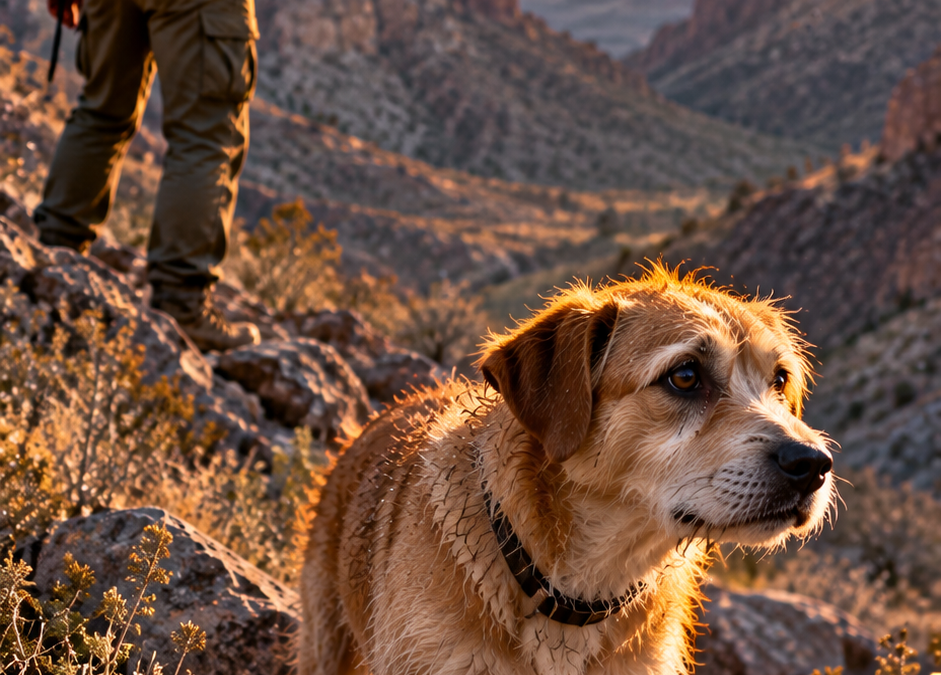
𝗙𝗨𝗟𝗟 𝗦𝗧𝗢𝗥𝗬
They crossed sand.
Then rock.
Gone.
“Oliver!”
Nothing.
I spent four hours searching before darkness made it dangerous.
I left food near the trailhead.
His blanket.
One of my shirts.
Water.
Then I drove home because a park ranger told me I had to.
“I’ll be back at sunrise.”
The ranger nodded.
“We’ll keep an eye out.”
I did return at sunrise.
And every sunrise after.
The first week, people helped.
Friends.
Neighbors.
Volunteers.
We printed flyers.
Posted photographs.
Called shelters.
Veterinary clinics.
Animal control.
Hikers.
Ranchers.
Search groups online.
Someone thought they saw him near a gas station twenty miles away.
We drove there.
Wrong dog.
A woman called at two in the morning because she had heard barking behind her property.
We searched with flashlights.
Coyotes.
A truck driver reported a small sandy dog near the highway.
I drove ninety minutes.
Nothing.
Every false sighting gave me Oliver back for an hour.
Then took him away again.
Week two, fewer people came.
I understood.
People have jobs.
Families.
Lives.
I had a life too, technically.
But mine had narrowed into a map.
I divided the desert into sections.
Marked each search area.
Talked to hunters.
A retired tracker.
Park rangers.
Veterinarians.
Anyone who might know something I didn’t.
“How long can a dog survive without water?”
“No one can tell you exactly.”
“What about food?”
“Longer.”
“What if he finds shade?”
“That helps.”
“What about predators?”
Silence.
I learned to hate silence.
One veterinarian finally looked at me and said, “Ethan, you need to prepare yourself.”
“No.”
“I’m not telling you to stop.”
“Then don’t tell me to prepare.”
He lowered his voice.
“Forty-degree nights. Ninety-degree days. Dehydration.”
“I know.”
“Rattlesnakes.”
“I know.”
“Coyotes.”
“I know.”
“Injuries.”
“I know.”
He stopped.
I stood.
“Then you know why I have to keep looking.”
Week three, I started searching alone.
Week four, people began using a different tone with me.
Gentler.
That frightened me more than directness.
“How are you doing?”
Fine.
“Are you sleeping?”
Enough.
“You know you did everything you could.”
No.
That one made me angry.
Everything you could.
How could anyone know that?
Had I checked every wash?
Every cave?
Every abandoned shed?
Every dry creek?
Every gap between boulders?
No.
Then I had not done everything.
At night, I dreamed about Oliver.
Always healthy.
Always close.
I would hear his collar.
See his tail.
Sometimes he stood on the other side of a road.
Sometimes in my kitchen.
Sometimes beside the bed.
I always reached for him.
Then woke.
The empty room became unbearable.
By day thirty, my sister came over.
She found me spreading maps across the kitchen floor.
“You need sleep.”
“I slept.”
“When?”
“Last night.”
“How long?”
I ignored her.
She crouched.
“Ethan.”
“I found another wash.”
“You searched that area.”
“Not the upper section.”
She looked at the map.
“How far?”
“Seven miles.”
“You can’t keep doing this.”
I stared at her.
“If your kid disappeared, how many days would you look?”
She flinched.
“That’s not fair.”
“I know.”
“Oliver is a dog.”
I stood.
The chair behind me fell backward.
She immediately regretted it.
“Ethan, I didn’t mean—”
“He’s my family.”
“I know.”
“No.”
My voice broke.
“You know he’s a dog.”
Silence.
“He’s the one who was here.”
She waited.
“After Dad died.”
I looked away.
“After Laura left.”
My sister said nothing.
“When I didn’t want to talk to anyone, he sat beside me.”
I swallowed.
“When I couldn’t sleep, he was there.”
My voice cracked.
“When I came home, somebody cared.”
She stepped closer.
“I’m sorry.”
I covered my face.
“What if he’s waiting?”
That was the question destroying me.
Not whether Oliver was dead.
Whether he was alive somewhere.
Waiting.
What if he was injured beneath a rock?
What if he heard vehicles but couldn’t move?
What if every evening he lifted his head because he thought I was coming?
What if I stopped one day too early?
My sister picked up the fallen chair.
Then looked at the maps.
“Which section tomorrow?”
I pointed.
She came with me.
Day forty.
Nothing.
Day forty-one.
Nothing.
Day forty-two, I found paw prints near a dry wash.
Too large.
Coyote.
Day forty-three, a rancher told me he’d seen a sandy dog two weeks earlier.
We searched his property.
Nothing.
Day forty-four, I collapsed from heat exhaustion near noon.
Not dramatic.
I became dizzy.
Vomited.
Sat beneath a rock until it passed.
My sister threatened to take my car keys.
I promised to carry more water.
Day forty-five.
Day forty-six.
Day forty-seven.
At some point, I stopped expecting to find him.
I searched anyway.
That is an important distinction.
Hope did not feel like hope anymore.
It felt like discipline.
Wake.
Dress.
Water.
Bread.
Map.
Drive.
Walk.
Call.
Listen.
Walk.
Call.
Listen.
Go home.
Try again.
Day forty-eight, I stood on a ridge until sunset.
“OLIVER!”
My voice returned from the canyon walls.
Oliver.
Oliver.
Oliver.
The echo was cruel.
I drove home in darkness.
That was the night I nearly stopped.
Then came morning forty-nine.
I made coffee.
Did not drink it.
Packed two bottles of water instead of one.
Bread.
First-aid kit.
A small towel.
Phone.
Power bank.
Map.
I drove northwest.
That direction had been on my list from the beginning, but I had avoided it because the terrain was difficult.
Steeper canyons.
Less vehicle access.
Fewer trails.
Too far from where Oliver disappeared.
It did not make logical sense.
By day forty-nine, logic had stopped being my only guide.
I parked at the edge of a dirt road around six thirty.
The sun had just cleared the horizon.
I stood beside the car.
Looked into the empty desert.
Then called.
“Oliver!”
Nothing.
I waited.
Again.
“Oliver!”
Wind through dry grass.
I adjusted my pack.
Started walking.
The first hour was easy.
Second harder.
By eight thirty, the heat had climbed.
By nine, sweat had soaked my shirt.
I followed a shallow canyon north.
Called every few minutes.
“Oliver!”
No answer.
I checked shadows beneath rock ledges.
Small caves.
Animal tracks.
Places where water might collect after rain.
Nothing.
Around ten, I climbed a steep slope and nearly turned my ankle.
I sat.
Drank.
Looked at the endless rock ahead.
“This is stupid.”
My voice sounded strange in the open space.
I had said that before.
Still kept going.
At eleven, I reached a cluster of large boulders.
I checked the GPS.
Farther than I intended.
The car was nearly two hours behind me.
I should turn around.
Heat shimmered across the ground.
My lips were cracked despite the water.
Sand had worked into my shoes.
“Oliver!”
Nothing.
I closed my eyes.
“All right.”
I don’t know who I was talking to.
Myself.
The desert.
Oliver.
God.
“All right.”
I turned.
Took five steps.
Then saw movement.
Small.
Under the shadow of a rock.
I stopped.
At first I thought it was a lizard.
Then the shape moved again.
Very slightly.
My heartbeat changed.
I stared.
The shadow was deep.
Something lay inside.
Animal.
My mind refused to name it.
I stepped closer.
“Hello?”
Nothing.
Another step.
Sandy fur.
My pack slid from my shoulder.
“No.”
I moved faster.
Then forced myself to slow down.
“No, no, no…”
A dog was lying beneath the rock.
Thin.
So thin.
I could see ribs before I saw the face.
Fur tangled with burrs and dried mud.
One rear leg stretched at a strange angle.
An eye half closed.
My whole body began shaking.
“Oliver?”
The dog’s ear moved.
I dropped to my knees.
“Oliver.”
His head lifted less than an inch.
Then I saw the scar.
Narrow line beside his nose.
White chest patch.
“Oh my God.”
I crawled toward him.
“Oliver.”
His eye opened.
Brown.
Cloudy with exhaustion.
But his.
I knew that eye.
Three years disappeared.
Shelter kennel.
Kitchen circles.
Thunderstorms.
Carrots.
All of it.
“Hey.”
My voice broke.
“Hey, buddy.”
Oliver tried to lift his head.
Failed.
Then his tail moved.
Barely.
One weak tap against the sand.
That sound destroyed me.
I laughed.
Cried.
Pressed one hand over my mouth.
“You’re alive.”
Another tiny movement.
“You’re alive.”
I leaned toward him, then stopped.
His body was covered in small wounds.
Pads cracked.
Skin raw in places.
Cactus spines along one shoulder.
I was terrified of hurting him.
“It’s me.”
Oliver’s nose moved.
He tried to sniff.
I placed my hand a few inches away.
He stretched his neck.
Touched my fingers.
Then his head dropped again.
“I found you.”
The words came out like a sob.
“I found you.”
For forty-nine days, I had imagined this moment.
Oliver running toward me.
Jumping.
Crying.
Tail flying.
Instead, he could barely move.
And somehow that made finding him feel even more impossible.
I touched his front paw.
Cold despite the heat.
His breathing was shallow.
Too fast.
I reached for the water bottle.
Then stopped.
I had read enough to know not to let a severely dehydrated animal gulp large amounts.
I poured a little water into the bottle cap.
Touched it to his lips.
Oliver’s tongue appeared.
Slow.
Dry.
He licked once.
Again.
I waited.
“Easy.”
More drops.
His eyes stayed on me.
“I know.”
More water.
“Slow.”
I don’t know whether I was calming him or myself.
“You’re okay.”
He wasn’t okay.
Not remotely.
But I needed the words.
“You’re okay.”
I examined him as carefully as I could.
No obvious major bleeding.
Cuts.
Scrapes.
Swollen paw.
Possible injury to the rear leg.
Skin stretched over bone.
I could count almost every rib.
His collar was gone.
I wondered where.
What had happened in those forty-nine days?
How far had he traveled?
Where had he found water?
Had someone fed him?
Had he hidden from coyotes?
Snakes?
Heat?
I wanted answers.
Oliver needed water.
“Can you stand?”
He did not move.
“That’s okay.”
I reached for my phone.
No signal.
Of course.
I climbed onto a nearby rock.
One bar appeared.
Then vanished.
I tried emergency services.
Failed.
Text to my sister.
No send.
I walked fifty feet.
Signal flickered.
I typed:
FOUND OLIVER. ALIVE. NW CANYON. NEED HELP.
The message stalled.
Then sent.
I almost collapsed.
I tried calling.
Nothing.
At least the message had gone.
I returned to Oliver.
He was still there.
For one irrational second, I had feared he would disappear while I stepped away.
“I’m back.”
His eye opened.
“I told you.”
I sat in the shade beside him.
That began the longest afternoon of my life.
At first, I thought someone would reach us quickly.
Then I looked around.
No road.
No easy coordinates.
The message might not include location data.
I sent another when signal appeared.
Dropped a GPS pin.
It showed pending.
I cursed.
Oliver watched.
“Sorry.”
His ear twitched.
“You’ve heard worse.”
I gave him more water.
Waited.
More.
A tiny piece of bread softened with water.
He smelled it.
Did not eat.
“Fine.”
I ate instead.
“See?”
Nothing.
“Excellent bread.”
He closed his eye.
“Rude.”
I kept talking.
Hours.
Everything I had not been able to tell him while he was missing.
“Mrs. Alvarez still asks about you.”
Oliver breathed.
“She put your flyer in her car.”
I touched his shoulder.
“Jason from the gas station called twice.”
His ear moved.
“He doesn’t even like dogs.”
I smiled.
“The couch still has your blanket.”
I swallowed.
“I didn’t wash it.”
Oliver opened his eye.
“That’s gross, technically.”
Tail movement.
Maybe.
Maybe I imagined it.
“I thought if I washed it…”
My voice failed.
I looked away.
The desert stretched in every direction.
“I thought maybe you’d come home and think I erased you.”
I wiped my eyes.
“That sounds stupid.”
Oliver remained still.
“I left your bowl too.”
I breathed.
“Couldn’t move it.”
I looked at him.
“Forty-nine days, buddy.”
His chest rose.
Fell.
“You scared the hell out of me.”
I leaned closer.
“You don’t get to do this again.”
His eye closed.
“That’s not agreement.”
Noon.
One.
Two.
No rescue.
I checked my phone repeatedly.
A message finally arrived from my sister:
CALLING RANGER. SEND LOCATION.
The GPS pin went through.
Relief nearly made me sick.
I replied:
OLIVER VERY WEAK. CANNOT MOVE FAST.
Then waited.
At two thirty, Oliver tried to stand.
I stopped him.
“Don’t.”
He planted his front paws.
Lifted his chest.
His rear legs shook.
Then he collapsed.
“Easy.”
His breathing quickened.
“Don’t prove anything.”
He looked at me.
“You survived forty-nine days. You’ve already won every argument.”
I gave him water.
At three, he tried again.
This time he stayed up for two seconds.
Then five.
I kept one hand beneath his chest without lifting.
“That’s it.”
His legs trembled.
“Easy.”
He took one step.
Collapsed.
I sat beside him.
“We are not walking back.”
That was when I heard something.
Distant.
Engine?
I stood.
Listened.
Nothing.
“Did you hear that?”
Oliver’s ear lifted.
I climbed the rock.
There.
Faint.
Then gone.
Maybe rescue.
Maybe wind.
I shouted.
No answer.
Fifteen minutes later, still nothing.
The sun moved west.
Shade lengthened.
At four, Oliver stood again.
One step.
Then a second.
“Stop.”
He tried another.
I realized what he was doing.
He wanted to move.
Maybe instinct.
Maybe because I was there.
Maybe because lying beneath that rock had been his entire world and suddenly it wasn’t.
“You want to go?”
Tail movement.
I laughed through tears.
“You’re insane.”
So was I.
I fashioned a support sling from the towel and straps from my pack.
Crude.
Enough to steady his hips without putting pressure on wounds.
We moved slowly.
Painfully slowly.
One step.
Pause.
Two.
Rest.
Oliver fell.
Stood again.
“That’s enough.”
He kept trying.
“You stubborn little idiot.”
Another step.
“Good.”
We covered maybe fifty yards in half an hour.
Then rested.
I gave him water.
Checked my phone.
No new message.
The car was miles away.
We were not going to make it before dark.
I knew that.
Oliver did not.
He stood again.
Five minutes for the first stretch.
Ten for the next.
Every movement cost him.
His paws slipped.
Rear leg dragged slightly.
But he moved.
Not because love gave him supernatural strength.
I don’t believe that.
His body was surviving on almost nothing.
Instinct mattered.
Adrenaline mattered.
Rest mattered.
But I know this:
After forty-nine days alone, Oliver heard my voice and tried to follow me home.
That was enough miracle for me.
Near sunset, we heard engines clearly.
This time real.
I shouted.
“HEY!”
Oliver stopped.
I shouted again.
A voice answered.
My knees nearly gave out.
“OVER HERE!”
Two park rangers appeared along the ridge.
Behind them came my sister.
She saw me.
Then Oliver.
She covered her mouth.
“Oh my God.”
I started crying again.
“He’s alive.”
She ran forward, then slowed when she saw his condition.
“Jesus, Ethan.”
Oliver’s tail moved at her voice.
She knelt.
“Hi, baby.”
He tried to step toward her.
Collapsed.
She sobbed.
One ranger immediately checked him.
“We need to get him out.”
“Can we carry him?”
“With support.”
They had brought a collapsible rescue litter.
We padded it with jackets.
Moving Oliver onto it was terrifying.
He whimpered once.
The first real sound I had heard from him.
I nearly stopped everything.
The ranger looked at me.
“We have to.”
I nodded.
“Okay.”
Oliver’s head stayed in my lap while we carried him out.
The walk to the vehicles took nearly two hours.
Darkness fell.
Headlamps moved across rock.
My sister walked beside me.
Every few minutes, I touched Oliver’s face.
“Still here?”
His eye opened.
“Good.”
Then closed.
When we finally reached the vehicle, I refused to sit anywhere he could not touch me.
The ranger drove.
My sister followed in my car.
Oliver lay beside me.
One hand on his ribs.
Heartbeat.
Weak.
Regular.
That rhythm became the only thing in the world.
Beat.
Beat.
Beat.
For forty-nine days, I had driven those roads too fast.
Searching.
Calling.
Stopping.
Turning around.
That night, the ranger drove slowly.
Every bump felt dangerous.
Oliver’s head rested against my thigh.
“You’re going home.”
His eye remained closed.
“You hear me?”
Nothing.
“Home.”
I kept saying it.
At the veterinary clinic, they were waiting.
My sister had called ahead.
A technician opened the door before the vehicle fully stopped.
They brought a stretcher.
I moved with them.
Inside, bright lights.
Metal table.
Hands.
Questions.
“How long missing?”
“Forty-nine days.”
“Any known water source?”
“I don’t know.”
“Eating?”
“Not with me.”
“Vomiting?”
“No.”
“Urination?”
“No.”
“Any trauma?”
“Rear leg. Feet. Cuts.”
A veterinarian named Dr. Harris examined him.
Temperature.
Gums.
Heart.
Abdomen.
Blood.
IV access.
I stood against the wall.
Useless.
“Is he going to die?”
Dr. Harris looked at me.
“We’re going to treat what we can see.”
“That wasn’t my question.”
“I know.”
“Is he?”
He took a breath.
“He is critically dehydrated.”
My stomach dropped.
“He has lost a tremendous amount of body weight.”
I nodded.
“His paw pads are badly damaged. There are multiple superficial wounds and at least one deeper injury.”
“What about his leg?”
“Likely soft-tissue injury. We’ll image it.”
I waited.
“But?”
Dr. Harris looked toward Oliver.
“But he’s here.”
I swallowed.
“Yes.”
“And he’s responsive.”
“Yes.”
“Those are good things.”
I stepped closer to the table.
Oliver’s eyes were half open.
“Can I stay?”
The technician looked at the doctor.
Dr. Harris nodded.
“For now.”
I sat on the floor beside the treatment table.
Hours passed.
Fluids.
Tests.
Cleaning wounds.
Removing cactus spines.
Pain medication.
Tiny amounts of food later.
Monitoring.
Every time someone touched him, Oliver looked toward me.
“I’m here.”
Again.
“I’m here.”
At three in the morning, Dr. Harris returned with blood results.
“Kidney values are elevated.”
My face changed.
“Permanent?”
“Too early to say. Severe dehydration can do that.”
“What else?”
“Electrolyte imbalance.”
I nodded as if I understood more than I did.
“Any infection?”
“Risk, yes. We’re starting antibiotics because of the wounds.”
“Can he eat?”
“Small amounts later.”
“Will he walk normally?”
“Let’s get him through tonight.”
That answer told me where we were.
Not recovery.
Survival.
I sat beside Oliver until sunrise.
At six, my sister brought coffee.
I didn’t drink it.
“You need something.”
“I’m fine.”
“You said that for forty-nine days.”
I looked at her.
She placed the cup beside me.
Then crouched by Oliver.
“He looks terrible.”
“Helpful.”
“He also looks alive.”
I laughed weakly.
“Better.”
She touched my shoulder.
“I thought…”
She stopped.
“I know.”
“No.”
She wiped her face.
“I thought we were looking for a body.”
The words hurt.
But they were true.
“Me too.”
I whispered it.
First time aloud.
“I thought so too.”
Oliver opened his eye.
I leaned closer.
“But I kept looking.”
His nose moved.
“Good thing you’re stubborn.”
The first forty-eight hours were unstable.
Oliver stayed at the clinic.
I went home once to shower.
The house was unbearable.
His blanket beside the bed.
His bowl.
His leash hanging near the door.
For seven weeks, those objects had been memorials.
Now they were waiting.
I knelt beside his blanket and cried harder than I had when he was missing.
Because suddenly hope was frightening again.
If Oliver died now, after I found him, I did not know what I would do.
I returned to the clinic within an hour.
Dr. Harris looked at me.
“Did you sleep?”
“Yes.”
“How long?”
I lied.
He knew.
Oliver was receiving fluids.
His gums looked better.
He had eaten a small amount.
“That’s good?”
“Yes.”
“How good?”
“Good enough that I’m more optimistic than yesterday.”
I nearly hugged him.
I didn’t.
Week one after finding Oliver was not the emotional reunion people imagine.
It was clinical.
Medication schedules.
Fluid checks.
Bandage changes.
Weight measurements.
Small meals.
Bathroom monitoring.
Blood tests.
Rest.
Oliver vomited once and I panicked.
Dr. Harris told me to calm down.
He developed diarrhea.
I panicked again.
His paw wound became inflamed.
Another antibiotic adjustment.
He refused breakfast.
I called the clinic before opening.
“Ethan.”
“Yes?”
“Dogs occasionally skip meals.”
“Not after losing half his weight.”
“Bring him in if he refuses the next one.”
He ate lunch.
I sat on the kitchen floor and applauded.
Oliver looked embarrassed.
Week two, he walked across the living room without support.
Seven steps.
Then lay down.
I had recorded it on my phone without realizing.
I watched the video twelve times.
Week three, his tail wagged hard enough to move his whole body.
That made me cry.
Week four, he stole a piece of chicken from my plate.
I almost celebrated.
Then remembered I had rules.
“No.”
Oliver swallowed it.
“You nearly die in the desert and return as a criminal?”
Tail wag.
“You’re unbelievable.”
Week five, Dr. Harris weighed him.
“Up six pounds.”
I smiled.
“That’s good.”
“Very.”
“Kidneys?”
“Improving.”
“Leg?”
“Still sore. Possibly always will be.”
I looked down.
Oliver was sitting beside my chair.
“Will he run?”
“Maybe.”
“Like before?”
Dr. Harris hesitated.
“Maybe not.”
My chest tightened.
Then Oliver stood and sniffed the treat jar.
I laughed.
“He doesn’t care.”
“Dogs often don’t.”
That was another thing Oliver taught me.
Humans compare recovery to who we were before.
Dogs mostly live inside what the body can do today.
Oliver did not grieve his lost speed.
He enjoyed the distance he could walk.
He did not stand in the yard remembering how fast he used to run.
He smelled grass.
He found sun.
He stole socks.
Life continued.
Two months after the rescue, I took him onto the front porch for the first time.
Not the desert.
Just home.
Oliver lay near my feet.
Sunset turned the horizon orange.
He stared west.
I watched him.
“Do you remember?”
His ear moved.
I wondered what he associated with the desert.
Fear?
Thirst?
Heat?
Pain?
Nothing?
We often assume dogs build stories the way we do.
Maybe Oliver did not spend forty-nine days thinking, Ethan is looking for me.
Maybe survival took every piece of his attention.
Find shade.
Find water.
Move at night.
Hide.
Rest.
I do not know.
What I do know is that when I called his name beneath that rock, he opened his eyes.
He knew me.
That was enough.
Six months later, Oliver was almost back to normal weight.
Almost.
The scar tissue on his paws remained.
Cold mornings made his rear leg stiff.
He no longer ran long distances.
I stopped letting him off leash in open country.
That part was not negotiable.
My sister bought me the strongest hiking leash she could find.
She handed it over at dinner.
“This is for Oliver.”
I inspected it.
“Climbing rope?”
“Basically.”
“You think I’m irresponsible.”
“I think Oliver is.”
Fair.
We began walking again.
Short neighborhood walks at first.
Then parks.
Then easy trails.
Never far.
Never in heat.
I carried more water than necessary.
Oliver wore a GPS tracker.
And identification tag.
And another backup tag.
My sister said he looked like a spy.
I didn’t care.
The first time we returned to the edge of the desert, Oliver stopped.
So did I.
We stood near the trailhead where he had disappeared.
My hands began sweating.
Oliver sniffed the air.
I could feel my heartbeat increasing.
“Maybe this was a bad idea.”
Oliver took one step.
Then looked back.
For three years before he disappeared, he had done that constantly.
Run ahead.
Look back.
Checking.
That small movement nearly broke me.
I knelt.
“Not today.”
He walked back.
Pressed his nose into my chest.
We sat beside the car instead.
That was enough.
A year after I found him, Oliver slept beside my bed again.
The blanket had finally been washed.
I had been terrified the first time.
Ridiculous.
But I stood beside the washing machine holding that old fabric, thinking about forty-nine days of refusing to let his scent disappear.
Then I put it in.
When it came out clean, it no longer smelled like Oliver.
That hurt.
Until he walked over.
Turned three circles.
Lay down on it.
By morning, it smelled like him again.
I laughed.
Of course.
That was the difference between memory and presence.
Memory must be protected.
Presence renews itself.
Today, Oliver is older.
So am I.
He does not run the way he once did.
Neither do I.
His rear leg sometimes stiffens in winter.
On cold mornings, he takes longer to stand.
I wait.
He stretches.
Looks at me.
Then we start the day.
Every morning, he places one paw on my hand.
I do not know why.
He developed the habit after coming home from the desert.
Maybe coincidence.
Maybe he likes contact.
Maybe he is checking.
I like to imagine it means:
Still here?
So I close my fingers around his paw and answer.
Still here.
Sometimes people ask how he survived forty-nine days.
I don’t have a satisfying answer.
Maybe he found pockets of water.
Maybe he ate insects.
Rodents.
Plants.
Whatever he could.
Maybe the nights were cool enough.
Maybe the rock shelter saved him.
Maybe he traveled farther than anyone realized.
Maybe someone fed him for part of that time.
I will never know.
People want me to say love kept him alive.
I understand why.
I have said it myself.
But I know survival is more physical than poetry.
Water matters.
Shade matters.
Instinct matters.
Luck matters.
Oliver’s body fought for him.
Still, there is one part I cannot reduce to biology.
He kept going.
So did I.
For forty-nine days, both of us were moving through different versions of the same desert.
His was physical.
Mine was uncertainty.
He fought thirst.
I fought the voice telling me to stop.
He searched for whatever would keep him alive another day.
I searched for a reason to believe another day mattered.
Neither of us knew the other was still trying.
That is what moves me now.
Not that some invisible force connected us across miles.
Maybe it did.
Maybe it didn’t.
What matters is that I did not need proof that he was alive to keep looking.
And Oliver did not need proof that I was coming to keep surviving.
We simply continued.
Day after day.
Until the distance between us finally became small enough to cross.
I still remember that first touch beneath the rock.
His nose against my fingers.
Weak.
Dry.
Alive.
The moment lasted less than a second.
It was the longest forty-nine days of my life.
Sometimes at night, Oliver dreams.
His paws move.
His breathing changes.
Occasionally he makes a small sound deep in his throat.
I always wake.
At first, after the desert, I would touch him immediately.
“Oliver?”
His eyes would open.
I would need to see them.
Need proof.
Alive.
Here.
Eventually I learned not to wake him.
Now I watch.
Let him run.
Wherever he goes in those dreams, he always wakes in the same room.
Beside me.
One evening last fall, we sat on the porch.
The desert horizon was visible in the distance.
Orange sky.
Long shadows.
Oliver rested with his chin across my shoe.
A neighbor stopped.
He knew the story.
Everyone around here eventually did.
“That the dog?”
I smiled.
“This is Oliver.”
“The one lost seven weeks?”
“Forty-nine days.”
He whistled.
“Unbelievable.”
Oliver opened one eye.
The man crouched.
“You’re one tough little guy.”
Oliver sniffed his hand.
The neighbor looked at me.
“You never gave up, huh?”
I almost answered yes.
That is the simple version.
Then I thought about morning forty-nine.
The ceiling fan.
The empty blanket.
The thought I did not want anyone to know.
Maybe he isn’t out there anymore.
“I almost did.”
The man looked surprised.
“Really?”
“Yes.”
“What made you go?”
I looked at Oliver.
“I didn’t want the day I stopped to be the day he was waiting.”
The neighbor nodded slowly.
Then left.
Oliver and I remained.
Sunset faded.
For years, I thought perseverance meant never doubting.
Now I know better.
Perseverance often looks like doubt putting on its shoes anyway.
It is not confidence.
It is not certainty.
It is waking after forty-eight failures and allowing yourself one more attempt.
That is what day forty-nine was.
Not heroic.
Not beautiful.
Just one more morning.
Had I searched northeast, I would not have found him.
Had I turned around ten minutes earlier, I would not have found him.
Had Oliver crawled beneath a different rock, I might never have seen him.
I understand how much luck lived inside our ending.
That knowledge makes me more grateful, not less.
Some people search and do not find.
Some dogs do not come home.
I know that.
My story does not prove that refusing to stop guarantees a miracle.
It doesn’t.
It proves only that on one specific day, in one vast desert, a tired man walked a little farther and found a tired dog still breathing.
That was enough to change the rest of my life.
After Oliver recovered, I framed one of the search flyers.
My sister thought that was strange.
“Why would you want to remember that?”
I looked at the photograph.
Oliver smiling at the camera.
LOST DOG.
Blue collar.
Reward.
Phone number.
“Because this mattered too.”
“What?”
“The looking.”
She frowned.
“Why?”
“Because I didn’t know the ending.”
That was the point.
Anyone can call perseverance meaningful after success.
The real thing happens before you know.
Before the phone call.
Before the movement beneath the rock.
Before the veterinarian says he might survive.
You choose what to do while the outcome is still hidden.
I kept the flyer because it reminds me who I was during those forty-nine days.
Tired.
Frightened.
Sometimes irrational.
Sometimes angry.
But moving.
Oliver’s recovery taught me the same thing.
The first day he stood, he fell.
Then tried again.
The first walk across the living room exhausted him.
The first steps outside were slow.
Nothing dramatic.
Progress rarely is.
One attempt.
Rest.
Another attempt.
Maybe that was what he had done in the desert.
Shade to shade.
Water to water.
Night to night.
Not forty-nine days at once.
One more hour.
One more place to rest.
One more sunrise.
That is how impossible distances are crossed.
I used to imagine that when Oliver heard me call beneath that rock, he thought:
You came.
I knew you would.
Maybe he did not.
Maybe dogs do not think like that.
Maybe he simply heard the voice he knew best and felt safe enough to move his tail.
I no longer need to know.
That tail was enough.
One weak movement against sand.
Proof.
Recognition.
Life.
I had spent forty-nine days shouting his name into empty places.
That afternoon, he answered without making a sound.
Today, if you come to my house early enough, you will see the same routine almost every morning.
I wake.
Oliver stretches.
He moves slowly now.
He walks to my side of the bed.
Places one paw on my hand.
I open my eyes.
“Morning.”
His tail moves.
I get up.
Fill his water bowl.
Make coffee.
We go outside.
Sometimes we walk.
Sometimes we sit.
On cold days, he prefers the porch.
Neither of us has anything left to prove.
The desert is still visible from there.
For months after his return, I hated looking at it.
It seemed enormous.
Cruel.
A place that had nearly taken him.
Then slowly, the feeling changed.
I stopped thinking of the desert as the enemy.
The desert did not hate Oliver.
It did not know him.
It simply existed.
Heat.
Rock.
Distance.
Silence.
Oliver survived inside it.
I survived outside it.
Now, when the evening sun turns the hills red, I sometimes think about everything that happened between the trailhead and that rock.
The parts I will never know.
Where he slept night one.
Whether he heard me on day twelve.
Where he found water.
What injured his leg.
Whether he ever moved toward the sound of a distant car thinking it might be mine.
Those questions used to torture me.
Now I let them remain unanswered.
I know the part that matters.
On the forty-ninth morning, Oliver was alive.
So was I.
We were both still trying.
And by noon, after weeks of walking through different kinds of fear, we were in the same place again.
That evening, as the rangers carried him toward the road, Oliver’s head rested in my lap.
I remember looking down at him and thinking I would never again complain when he woke me early.
Never again get angry about muddy paws.
Never again take an ordinary morning for granted.
Of course, I eventually did all three.
That is life.
Gratitude does not make humans perfect.
But sometimes, before I raise my voice because Oliver stole food or dragged dirt across the floor, I see that rock again.
Then I stop.
I look at him.
Older now.
Safe.
And think:
Forty-nine days.
That number no longer represents how long he was gone.
It represents how long neither of us stopped.
Oliver did not survive because he understood the future.
Neither did I.
We survived because the next day came and we did something with it.
Then another came.
And another.
Until one morning, after forty-eight mornings of nothing, I walked northwest.
Two hours into the desert.
Past the place where I almost turned around.
And found a small patch of sandy fur moving beneath the shadow of a rock.
I still dream about that moment sometimes.
But the dream has changed.
Before I found him, Oliver was always running away from me.
Now, in my dreams, I see the rock.
I call his name.
His eyes open.
His tail moves once.
And I hear no words, because none were ever necessary.
He is there.
I am there.
The searching is over.
When I wake, Oliver is usually asleep beside the bed.
I reach down.
His fur is warm.
His breathing steady.
Sometimes he wakes and looks at me as if I am the one acting strangely.
Maybe I am.
I smile.
“Go back to sleep.”
His eyes close.
My hand remains on him for another moment.
Just one.
Enough to feel the heartbeat.
Enough to know.
Home.
People like to say that love always finds a way.
I don’t know whether that is true.
I know love can get lost.
It can wander.
It can become injured.
It can lie exhausted beneath a rock miles from where it belongs.
Sometimes the path home is brutal.
Sometimes somebody has to search forty-nine days.
Sometimes both sides have to keep going without knowing whether the other is still there.
That is the version of love I believe in now.
Not the kind that guarantees happy endings.
The kind that keeps calling into empty canyons anyway.
The kind that wakes before sunrise even after hope has gone quiet.
The kind that takes one more step.
And sometimes—if you are very lucky—something moves beneath a distant rock.
A pair of exhausted eyes opens.
A tail touches the sand.
And after forty-nine days of silence, you finally have your answer.
Oliver is lying at my feet as I write this.
His breathing is slow.
His rear leg twitches occasionally when he dreams.
The old desert injury still bothers him in cold weather.
There are scars beneath his fur that will never disappear.
I have a few too.
Not visible ones.
Neither of us returned from those forty-nine days exactly as we had been.
Maybe that is what survival really means.
You do not return unchanged.
You return.
And tonight, when Oliver wakes, I will be here.
Tomorrow morning, when he puts his paw on my hand, I will be here.
And someday, when age makes him slower than he already is, when his walks shorten and his naps lengthen, I will still be here.
Because there was once a time when I did not know whether I would ever see him again.
Forty-nine mornings.
Forty-nine nights.
Forty-nine days calling his name into empty desert.
Then one tiny movement beneath a rock.
One tired eye opening.
One weak tail against the sand.
I found him.
He found me.
And ever since, neither of us has needed to ask whether the other will come back.
𝗧𝗛𝗘 𝗘𝗡𝗗
On the Forty-Ninth Morning, I Called Oliver’s Name Into One More Empty Canyon and Heard Nothing Back
On the forty-ninth morning after Oliver disappeared, I almost stayed home.
That is the part I rarely tell people.
They like the version where I never doubted.
Where I woke every morning filled with determination, packed my bag, walked into the desert, and believed with absolute certainty that somewhere beyond the next ridge my dog was still alive.
That would make me sound brave.
The truth is less impressive.
By day forty-nine, I was exhausted.
My feet were blistered.
My face was burned dark by the sun.
I had lost almost twelve pounds.
I was behind at work.
My friends had stopped asking whether I had found him because they no longer knew what to say.
And for the first time since Oliver vanished, I woke before sunrise, stared at the ceiling, and thought:
Maybe he isn’t out there anymore.
The thought made me hate myself.
I lay there in the dark, listening to the ceiling fan turn slowly above me.
Oliver’s blanket was still beside the bed.
I had moved everything else.
His water bowl.
Leash.
Toys.
Food container.
But not the blanket.
I couldn’t.
It still smelled faintly like him.
Dust.
Warm fur.
The ridiculous oatmeal shampoo I used because he hated anything with a stronger scent.
Every night, I reached down and touched the edge of that blanket before going to sleep.
Not because I thought it would bring him back.
Because I was afraid one morning I would wake up and no longer remember exactly what it felt like when he was there.
That morning, day forty-nine, I sat on the edge of the bed for nearly ten minutes.
Then I looked at the empty blanket.
“All right,” I whispered.
No one answered.
“One more.”
I stood.
That was how every search began near the end.
One more day.
One more canyon.
One more road.
One more place where he might have gone.
My name is Ethan.
Oliver had been my dog for three years.
Calling him my dog never felt completely accurate.
The first time I met him, he was the one who decided.
I had gone to a county shelter because my sister kept telling me I spent too much time alone.
“You come home from work, eat cereal over the sink, and talk to the television.”
“I don’t talk to the television.”
“You argued with a game show host last night.”
“He was wrong.”
She ignored me.
“You need something alive in the house.”
“A plant?”
“You killed two.”
“A fish?”
“No.”
“What exactly are you suggesting?”
She looked at me.
“A dog.”
I laughed.
Three weeks later, I was standing inside a shelter.
I told myself I was only looking.
Oliver was in the last row.
He wasn’t the dog I would have chosen from a photograph.
Small.
Scruffy.
Some kind of terrier mix with sandy fur, long legs, and ears that could never decide whether they wanted to stand or fold.
He had a white patch on his chest and a narrow scar running along one side of his nose.
When I stopped at his kennel, he did not bark.
He stepped forward.
Pressed his nose between the bars.
And stared at me.
The volunteer said, “He’s shy.”
Oliver wagged his tail.
“He doesn’t usually do that with strangers.”
I looked at the dog.
“Manipulative.”
Tail wag.
Twenty minutes later, I was filling out paperwork.
That was Oliver.
He made decisions quickly.
He decided where he slept.
My bed.
He decided which chair belonged to him.
The expensive one.
He decided whether I needed company in the bathroom.
Apparently, always.
He decided that 5:42 every morning was an appropriate breakfast time.
He hated thunder.
Loved carrots.
Refused to swim even though he would chase water from a garden hose for half an hour.
When he dreamed, his paws twitched.
When I came home, he ran circles around the kitchen island before greeting me because direct excitement was apparently not enough.
And every evening, no matter how tired I was, Oliver wanted to walk.
We lived near the edge of desert country.
Not the endless dunes people imagine.
Rock.
Brush.
Dry washes.
Steep gullies.
Long ridgelines.
Canyons cut through ancient stone.
There were trails, but people who knew the area also knew how quickly a trail could disappear.
Oliver loved the open space.
He ran ahead.
Returned.
Ran ahead again.
Never too far.
Always checking.
Until the day he didn’t come back.
It was a Saturday in early spring.
Cooler than usual.
Clouds moving in from the west.
I took Oliver out late in the afternoon to a trail we had walked dozens of times.
He wore his blue collar.
Red leash.
I remember those details because for weeks afterward I replayed the last hour again and again, looking for the exact moment I should have done something differently.
We had gone maybe two miles when the wind picked up.
Oliver became restless.
His ears kept turning toward sounds I couldn’t hear.
I should have leashed him.
That sentence still lives inside me.
I should have leashed him.
But Oliver had good recall.
Always.
So when he ran toward a patch of brush, I called.
“Oliver!”
He stopped.
Looked back.
Then something exploded from the bushes.
A jackrabbit, I think.
Maybe something else.
Oliver bolted.
“Oliver!”
He disappeared over a rise.
I ran after him.
At first, I wasn’t frightened.
Annoyed.
Then concerned.
Then afraid.
I reached the top of the ridge.
Nothing.
“Oliver!”
Wind.
I followed what I thought were paw prints.
They crossed sand.
Then rock.
Gone.
“Oliver!”
Nothing.
I spent four hours searching before darkness made it dangerous.
I left food near the trailhead.
His blanket.
One of my shirts.
Water.
Then I drove home because a park ranger told me I had to.
“I’ll be back at sunrise.”
The ranger nodded.
“We’ll keep an eye out.”
I did return at sunrise.
And every sunrise after.
The first week, people helped.
Friends.
Neighbors.
Volunteers.
We printed flyers.
Posted photographs.
Called shelters.
Veterinary clinics.
Animal control.
Hikers.
Ranchers.
Search groups online.
Someone thought they saw him near a gas station twenty miles away.
We drove there.
Wrong dog.
A woman called at two in the morning because she had heard barking behind her property.
We searched with flashlights.
Coyotes.
A truck driver reported a small sandy dog near the highway.
I drove ninety minutes.
Nothing.
Every false sighting gave me Oliver back for an hour.
Then took him away again.
Week two, fewer people came.
I understood.
People have jobs.
Families.
Lives.
I had a life too, technically.
But mine had narrowed into a map.
I divided the desert into sections.
Marked each search area.
Talked to hunters.
A retired tracker.
Park rangers.
Veterinarians.
Anyone who might know something I didn’t.
“How long can a dog survive without water?”
“No one can tell you exactly.”
“What about food?”
“Longer.”
“What if he finds shade?”
“That helps.”
“What about predators?”
Silence.
I learned to hate silence.
One veterinarian finally looked at me and said, “Ethan, you need to prepare yourself.”
“No.”
“I’m not telling you to stop.”
“Then don’t tell me to prepare.”
He lowered his voice.
“Forty-degree nights. Ninety-degree days. Dehydration.”
“I know.”
“Rattlesnakes.”
“I know.”
“Coyotes.”
“I know.”
“Injuries.”
“I know.”
He stopped.
I stood.
“Then you know why I have to keep looking.”
Week three, I started searching alone.
Week four, people began using a different tone with me.
Gentler.
That frightened me more than directness.
“How are you doing?”
Fine.
“Are you sleeping?”
Enough.
“You know you did everything you could.”
No.
That one made me angry.
Everything you could.
How could anyone know that?
Had I checked every wash?
Every cave?
Every abandoned shed?
Every dry creek?
Every gap between boulders?
No.
Then I had not done everything.
At night, I dreamed about Oliver.
Always healthy.
Always close.
I would hear his collar.
See his tail.
Sometimes he stood on the other side of a road.
Sometimes in my kitchen.
Sometimes beside the bed.
I always reached for him.
Then woke.
The empty room became unbearable.
By day thirty, my sister came over.
She found me spreading maps across the kitchen floor.
“You need sleep.”
“I slept.”
“When?”
“Last night.”
“How long?”
I ignored her.
She crouched.
“Ethan.”
“I found another wash.”
“You searched that area.”
“Not the upper section.”
She looked at the map.
“How far?”
“Seven miles.”
“You can’t keep doing this.”
I stared at her.
“If your kid disappeared, how many days would you look?”
She flinched.
“That’s not fair.”
“I know.”
“Oliver is a dog.”
I stood.
The chair behind me fell backward.
She immediately regretted it.
“Ethan, I didn’t mean—”
“He’s my family.”
“I know.”
“No.”
My voice broke.
“You know he’s a dog.”
Silence.
“He’s the one who was here.”
She waited.
“After Dad died.”
I looked away.
“After Laura left.”
My sister said nothing.
“When I didn’t want to talk to anyone, he sat beside me.”
I swallowed.
“When I couldn’t sleep, he was there.”
My voice cracked.
“When I came home, somebody cared.”
She stepped closer.
“I’m sorry.”
I covered my face.
“What if he’s waiting?”
That was the question destroying me.
Not whether Oliver was dead.
Whether he was alive somewhere.
Waiting.
What if he was injured beneath a rock?
What if he heard vehicles but couldn’t move?
What if every evening he lifted his head because he thought I was coming?
What if I stopped one day too early?
My sister picked up the fallen chair.
Then looked at the maps.
“Which section tomorrow?”
I pointed.
She came with me.
Day forty.
Nothing.
Day forty-one.
Nothing.
Day forty-two, I found paw prints near a dry wash.
Too large.
Coyote.
Day forty-three, a rancher told me he’d seen a sandy dog two weeks earlier.
We searched his property.
Nothing.
Day forty-four, I collapsed from heat exhaustion near noon.
Not dramatic.
I became dizzy.
Vomited.
Sat beneath a rock until it passed.
My sister threatened to take my car keys.
I promised to carry more water.
Day forty-five.
Day forty-six.
Day forty-seven.
At some point, I stopped expecting to find him.
I searched anyway.
That is an important distinction.
Hope did not feel like hope anymore.
It felt like discipline.
Wake.
Dress.
Water.
Bread.
Map.
Drive.
Walk.
Call.
Listen.
Walk.
Call.
Listen.
Go home.
Try again.
Day forty-eight, I stood on a ridge until sunset.
“OLIVER!”
My voice returned from the canyon walls.
Oliver.
Oliver.
Oliver.
The echo was cruel.
I drove home in darkness.
That was the night I nearly stopped.
Then came morning forty-nine.
I made coffee.
Did not drink it.
Packed two bottles of water instead of one.
Bread.
First-aid kit.
A small towel.
Phone.
Power bank.
Map.
I drove northwest.
That direction had been on my list from the beginning, but I had avoided it because the terrain was difficult.
Steeper canyons.
Less vehicle access.
Fewer trails.
Too far from where Oliver disappeared.
It did not make logical sense.
By day forty-nine, logic had stopped being my only guide.
I parked at the edge of a dirt road around six thirty.
The sun had just cleared the horizon.
I stood beside the car.
Looked into the empty desert.
Then called.
“Oliver!”
Nothing.
I waited.
Again.
“Oliver!”
Wind through dry grass.
I adjusted my pack.
Started walking.
The first hour was easy.
Second harder.
By eight thirty, the heat had climbed.
By nine, sweat had soaked my shirt.
I followed a shallow canyon north.
Called every few minutes.
“Oliver!”
No answer.
I checked shadows beneath rock ledges.
Small caves.
Animal tracks.
Places where water might collect after rain.
Nothing.
Around ten, I climbed a steep slope and nearly turned my ankle.
I sat.
Drank.
Looked at the endless rock ahead.
“This is stupid.”
My voice sounded strange in the open space.
I had said that before.
Still kept going.
At eleven, I reached a cluster of large boulders.
I checked the GPS.
Farther than I intended.
The car was nearly two hours behind me.
I should turn around.
Heat shimmered across the ground.
My lips were cracked despite the water.
Sand had worked into my shoes.
“Oliver!”
Nothing.
I closed my eyes.
“All right.”
I don’t know who I was talking to.
Myself.
The desert.
Oliver.
God.
“All right.”
I turned.
Took five steps.
Then saw movement.
Small.
Under the shadow of a rock.
I stopped.
At first I thought it was a lizard.
Then the shape moved again.
Very slightly.
My heartbeat changed.
I stared.
The shadow was deep.
Something lay inside.
Animal.
My mind refused to name it.
I stepped closer.
“Hello?”
Nothing.
Another step.
Sandy fur.
My pack slid from my shoulder.
“No.”
I moved faster.
Then forced myself to slow down.
“No, no, no…”
A dog was lying beneath the rock.
Thin.
So thin.
I could see ribs before I saw the face.
Fur tangled with burrs and dried mud.
One rear leg stretched at a strange angle.
An eye half closed.
My whole body began shaking.
“Oliver?”
The dog’s ear moved.
I dropped to my knees.
“Oliver.”
His head lifted less than an inch.
Then I saw the scar.
Narrow line beside his nose.
White chest patch.
“Oh my God.”
I crawled toward him.
“Oliver.”
His eye opened.
Brown.
Cloudy with exhaustion.
But his.
I knew that eye.
Three years disappeared.
Shelter kennel.
Kitchen circles.
Thunderstorms.
Carrots.
All of it.
“Hey.”
My voice broke.
“Hey, buddy.”
Oliver tried to lift his head.
Failed.
Then his tail moved.
Barely.
One weak tap against the sand.
That sound destroyed me.
I laughed.
Cried.
Pressed one hand over my mouth.
“You’re alive.”
Another tiny movement.
“You’re alive.”
I leaned toward him, then stopped.
His body was covered in small wounds.
Pads cracked.
Skin raw in places.
Cactus spines along one shoulder.
I was terrified of hurting him.
“It’s me.”
Oliver’s nose moved.
He tried to sniff.
I placed my hand a few inches away.
He stretched his neck.
Touched my fingers.
Then his head dropped again.
“I found you.”
The words came out like a sob.
“I found you.”
For forty-nine days, I had imagined this moment.
Oliver running toward me.
Jumping.
Crying.
Tail flying.
Instead, he could barely move.
And somehow that made finding him feel even more impossible.
I touched his front paw.
Cold despite the heat.
His breathing was shallow.
Too fast.
I reached for the water bottle.
Then stopped.
I had read enough to know not to let a severely dehydrated animal gulp large amounts.
I poured a little water into the bottle cap.
Touched it to his lips.
Oliver’s tongue appeared.
Slow.
Dry.
He licked once.
Again.
I waited.
“Easy.”
More drops.
His eyes stayed on me.
“I know.”
More water.
“Slow.”
I don’t know whether I was calming him or myself.
“You’re okay.”
He wasn’t okay.
Not remotely.
But I needed the words.
“You’re okay.”
I examined him as carefully as I could.
No obvious major bleeding.
Cuts.
Scrapes.
Swollen paw.
Possible injury to the rear leg.
Skin stretched over bone.
I could count almost every rib.
His collar was gone.
I wondered where.
What had happened in those forty-nine days?
How far had he traveled?
Where had he found water?
Had someone fed him?
Had he hidden from coyotes?
Snakes?
Heat?
I wanted answers.
Oliver needed water.
“Can you stand?”
He did not move.
“That’s okay.”
I reached for my phone.
No signal.
Of course.
I climbed onto a nearby rock.
One bar appeared.
Then vanished.
I tried emergency services.
Failed.
Text to my sister.
No send.
I walked fifty feet.
Signal flickered.
I typed:
FOUND OLIVER. ALIVE. NW CANYON. NEED HELP.
The message stalled.
Then sent.
I almost collapsed.
I tried calling.
Nothing.
At least the message had gone.
I returned to Oliver.
He was still there.
For one irrational second, I had feared he would disappear while I stepped away.
“I’m back.”
His eye opened.
“I told you.”
I sat in the shade beside him.
That began the longest afternoon of my life.
At first, I thought someone would reach us quickly.
Then I looked around.
No road.
No easy coordinates.
The message might not include location data.
I sent another when signal appeared.
Dropped a GPS pin.
It showed pending.
I cursed.
Oliver watched.
“Sorry.”
His ear twitched.
“You’ve heard worse.”
I gave him more water.
Waited.
More.
A tiny piece of bread softened with water.
He smelled it.
Did not eat.
“Fine.”
I ate instead.
“See?”
Nothing.
“Excellent bread.”
He closed his eye.
“Rude.”
I kept talking.
Hours.
Everything I had not been able to tell him while he was missing.
“Mrs. Alvarez still asks about you.”
Oliver breathed.
“She put your flyer in her car.”
I touched his shoulder.
“Jason from the gas station called twice.”
His ear moved.
“He doesn’t even like dogs.”
I smiled.
“The couch still has your blanket.”
I swallowed.
“I didn’t wash it.”
Oliver opened his eye.
“That’s gross, technically.”
Tail movement.
Maybe.
Maybe I imagined it.
“I thought if I washed it…”
My voice failed.
I looked away.
The desert stretched in every direction.
“I thought maybe you’d come home and think I erased you.”
I wiped my eyes.
“That sounds stupid.”
Oliver remained still.
“I left your bowl too.”
I breathed.
“Couldn’t move it.”
I looked at him.
“Forty-nine days, buddy.”
His chest rose.
Fell.
“You scared the hell out of me.”
I leaned closer.
“You don’t get to do this again.”
His eye closed.
“That’s not agreement.”
Noon.
One.
Two.
No rescue.
I checked my phone repeatedly.
A message finally arrived from my sister:
CALLING RANGER. SEND LOCATION.
The GPS pin went through.
Relief nearly made me sick.
I replied:
OLIVER VERY WEAK. CANNOT MOVE FAST.
Then waited.
At two thirty, Oliver tried to stand.
I stopped him.
“Don’t.”
He planted his front paws.
Lifted his chest.
His rear legs shook.
Then he collapsed.
“Easy.”
His breathing quickened.
“Don’t prove anything.”
He looked at me.
“You survived forty-nine days. You’ve already won every argument.”
I gave him water.
At three, he tried again.
This time he stayed up for two seconds.
Then five.
I kept one hand beneath his chest without lifting.
“That’s it.”
His legs trembled.
“Easy.”
He took one step.
Collapsed.
I sat beside him.
“We are not walking back.”
That was when I heard something.
Distant.
Engine?
I stood.
Listened.
Nothing.
“Did you hear that?”
Oliver’s ear lifted.
I climbed the rock.
There.
Faint.
Then gone.
Maybe rescue.
Maybe wind.
I shouted.
No answer.
Fifteen minutes later, still nothing.
The sun moved west.
Shade lengthened.
At four, Oliver stood again.
One step.
Then a second.
“Stop.”
He tried another.
I realized what he was doing.
He wanted to move.
Maybe instinct.
Maybe because I was there.
Maybe because lying beneath that rock had been his entire world and suddenly it wasn’t.
“You want to go?”
Tail movement.
I laughed through tears.
“You’re insane.”
So was I.
I fashioned a support sling from the towel and straps from my pack.
Crude.
Enough to steady his hips without putting pressure on wounds.
We moved slowly.
Painfully slowly.
One step.
Pause.
Two.
Rest.
Oliver fell.
Stood again.
“That’s enough.”
He kept trying.
“You stubborn little idiot.”
Another step.
“Good.”
We covered maybe fifty yards in half an hour.
Then rested.
I gave him water.
Checked my phone.
No new message.
The car was miles away.
We were not going to make it before dark.
I knew that.
Oliver did not.
He stood again.
Five minutes for the first stretch.
Ten for the next.
Every movement cost him.
His paws slipped.
Rear leg dragged slightly.
But he moved.
Not because love gave him supernatural strength.
I don’t believe that.
His body was surviving on almost nothing.
Instinct mattered.
Adrenaline mattered.
Rest mattered.
But I know this:
After forty-nine days alone, Oliver heard my voice and tried to follow me home.
That was enough miracle for me.
Near sunset, we heard engines clearly.
This time real.
I shouted.
“HEY!”
Oliver stopped.
I shouted again.
A voice answered.
My knees nearly gave out.
“OVER HERE!”
Two park rangers appeared along the ridge.
Behind them came my sister.
She saw me.
Then Oliver.
She covered her mouth.
“Oh my God.”
I started crying again.
“He’s alive.”
She ran forward, then slowed when she saw his condition.
“Jesus, Ethan.”
Oliver’s tail moved at her voice.
She knelt.
“Hi, baby.”
He tried to step toward her.
Collapsed.
She sobbed.
One ranger immediately checked him.
“We need to get him out.”
“Can we carry him?”
“With support.”
They had brought a collapsible rescue litter.
We padded it with jackets.
Moving Oliver onto it was terrifying.
He whimpered once.
The first real sound I had heard from him.
I nearly stopped everything.
The ranger looked at me.
“We have to.”
I nodded.
“Okay.”
Oliver’s head stayed in my lap while we carried him out.
The walk to the vehicles took nearly two hours.
Darkness fell.
Headlamps moved across rock.
My sister walked beside me.
Every few minutes, I touched Oliver’s face.
“Still here?”
His eye opened.
“Good.”
Then closed.
When we finally reached the vehicle, I refused to sit anywhere he could not touch me.
The ranger drove.
My sister followed in my car.
Oliver lay beside me.
One hand on his ribs.
Heartbeat.
Weak.
Regular.
That rhythm became the only thing in the world.
Beat.
Beat.
Beat.
For forty-nine days, I had driven those roads too fast.
Searching.
Calling.
Stopping.
Turning around.
That night, the ranger drove slowly.
Every bump felt dangerous.
Oliver’s head rested against my thigh.
“You’re going home.”
His eye remained closed.
“You hear me?”
Nothing.
“Home.”
I kept saying it.
At the veterinary clinic, they were waiting.
My sister had called ahead.
A technician opened the door before the vehicle fully stopped.
They brought a stretcher.
I moved with them.
Inside, bright lights.
Metal table.
Hands.
Questions.
“How long missing?”
“Forty-nine days.”
“Any known water source?”
“I don’t know.”
“Eating?”
“Not with me.”
“Vomiting?”
“No.”
“Urination?”
“No.”
“Any trauma?”
“Rear leg. Feet. Cuts.”
A veterinarian named Dr. Harris examined him.
Temperature.
Gums.
Heart.
Abdomen.
Blood.
IV access.
I stood against the wall.
Useless.
“Is he going to die?”
Dr. Harris looked at me.
“We’re going to treat what we can see.”
“That wasn’t my question.”
“I know.”
“Is he?”
He took a breath.
“He is critically dehydrated.”
My stomach dropped.
“He has lost a tremendous amount of body weight.”
I nodded.
“His paw pads are badly damaged. There are multiple superficial wounds and at least one deeper injury.”
“What about his leg?”
“Likely soft-tissue injury. We’ll image it.”
I waited.
“But?”
Dr. Harris looked toward Oliver.
“But he’s here.”
I swallowed.
“Yes.”
“And he’s responsive.”
“Yes.”
“Those are good things.”
I stepped closer to the table.
Oliver’s eyes were half open.
“Can I stay?”
The technician looked at the doctor.
Dr. Harris nodded.
“For now.”
I sat on the floor beside the treatment table.
Hours passed.
Fluids.
Tests.
Cleaning wounds.
Removing cactus spines.
Pain medication.
Tiny amounts of food later.
Monitoring.
Every time someone touched him, Oliver looked toward me.
“I’m here.”
Again.
“I’m here.”
At three in the morning, Dr. Harris returned with blood results.
“Kidney values are elevated.”
My face changed.
“Permanent?”
“Too early to say. Severe dehydration can do that.”
“What else?”
“Electrolyte imbalance.”
I nodded as if I understood more than I did.
“Any infection?”
“Risk, yes. We’re starting antibiotics because of the wounds.”
“Can he eat?”
“Small amounts later.”
“Will he walk normally?”
“Let’s get him through tonight.”
That answer told me where we were.
Not recovery.
Survival.
I sat beside Oliver until sunrise.
At six, my sister brought coffee.
I didn’t drink it.
“You need something.”
“I’m fine.”
“You said that for forty-nine days.”
I looked at her.
She placed the cup beside me.
Then crouched by Oliver.
“He looks terrible.”
“Helpful.”
“He also looks alive.”
I laughed weakly.
“Better.”
She touched my shoulder.
“I thought…”
She stopped.
“I know.”
“No.”
She wiped her face.
“I thought we were looking for a body.”
The words hurt.
But they were true.
“Me too.”
I whispered it.
First time aloud.
“I thought so too.”
Oliver opened his eye.
I leaned closer.
“But I kept looking.”
His nose moved.
“Good thing you’re stubborn.”
The first forty-eight hours were unstable.
Oliver stayed at the clinic.
I went home once to shower.
The house was unbearable.
His blanket beside the bed.
His bowl.
His leash hanging near the door.
For seven weeks, those objects had been memorials.
Now they were waiting.
I knelt beside his blanket and cried harder than I had when he was missing.
Because suddenly hope was frightening again.
If Oliver died now, after I found him, I did not know what I would do.
I returned to the clinic within an hour.
Dr. Harris looked at me.
“Did you sleep?”
“Yes.”
“How long?”
I lied.
He knew.
Oliver was receiving fluids.
His gums looked better.
He had eaten a small amount.
“That’s good?”
“Yes.”
“How good?”
“Good enough that I’m more optimistic than yesterday.”
I nearly hugged him.
I didn’t.
Week one after finding Oliver was not the emotional reunion people imagine.
It was clinical.
Medication schedules.
Fluid checks.
Bandage changes.
Weight measurements.
Small meals.
Bathroom monitoring.
Blood tests.
Rest.
Oliver vomited once and I panicked.
Dr. Harris told me to calm down.
He developed diarrhea.
I panicked again.
His paw wound became inflamed.
Another antibiotic adjustment.
He refused breakfast.
I called the clinic before opening.
“Ethan.”
“Yes?”
“Dogs occasionally skip meals.”
“Not after losing half his weight.”
“Bring him in if he refuses the next one.”
He ate lunch.
I sat on the kitchen floor and applauded.
Oliver looked embarrassed.
Week two, he walked across the living room without support.
Seven steps.
Then lay down.
I had recorded it on my phone without realizing.
I watched the video twelve times.
Week three, his tail wagged hard enough to move his whole body.
That made me cry.
Week four, he stole a piece of chicken from my plate.
I almost celebrated.
Then remembered I had rules.
“No.”
Oliver swallowed it.
“You nearly die in the desert and return as a criminal?”
Tail wag.
“You’re unbelievable.”
Week five, Dr. Harris weighed him.
“Up six pounds.”
I smiled.
“That’s good.”
“Very.”
“Kidneys?”
“Improving.”
“Leg?”
“Still sore. Possibly always will be.”
I looked down.
Oliver was sitting beside my chair.
“Will he run?”
“Maybe.”
“Like before?”
Dr. Harris hesitated.
“Maybe not.”
My chest tightened.
Then Oliver stood and sniffed the treat jar.
I laughed.
“He doesn’t care.”
“Dogs often don’t.”
That was another thing Oliver taught me.
Humans compare recovery to who we were before.
Dogs mostly live inside what the body can do today.
Oliver did not grieve his lost speed.
He enjoyed the distance he could walk.
He did not stand in the yard remembering how fast he used to run.
He smelled grass.
He found sun.
He stole socks.
Life continued.
Two months after the rescue, I took him onto the front porch for the first time.
Not the desert.
Just home.
Oliver lay near my feet.
Sunset turned the horizon orange.
He stared west.
I watched him.
“Do you remember?”
His ear moved.
I wondered what he associated with the desert.
Fear?
Thirst?
Heat?
Pain?
Nothing?
We often assume dogs build stories the way we do.
Maybe Oliver did not spend forty-nine days thinking, Ethan is looking for me.
Maybe survival took every piece of his attention.
Find shade.
Find water.
Move at night.
Hide.
Rest.
I do not know.
What I do know is that when I called his name beneath that rock, he opened his eyes.
He knew me.
That was enough.
Six months later, Oliver was almost back to normal weight.
Almost.
The scar tissue on his paws remained.
Cold mornings made his rear leg stiff.
He no longer ran long distances.
I stopped letting him off leash in open country.
That part was not negotiable.
My sister bought me the strongest hiking leash she could find.
She handed it over at dinner.
“This is for Oliver.”
I inspected it.
“Climbing rope?”
“Basically.”
“You think I’m irresponsible.”
“I think Oliver is.”
Fair.
We began walking again.
Short neighborhood walks at first.
Then parks.
Then easy trails.
Never far.
Never in heat.
I carried more water than necessary.
Oliver wore a GPS tracker.
And identification tag.
And another backup tag.
My sister said he looked like a spy.
I didn’t care.
The first time we returned to the edge of the desert, Oliver stopped.
So did I.
We stood near the trailhead where he had disappeared.
My hands began sweating.
Oliver sniffed the air.
I could feel my heartbeat increasing.
“Maybe this was a bad idea.”
Oliver took one step.
Then looked back.
For three years before he disappeared, he had done that constantly.
Run ahead.
Look back.
Checking.
That small movement nearly broke me.
I knelt.
“Not today.”
He walked back.
Pressed his nose into my chest.
We sat beside the car instead.
That was enough.
A year after I found him, Oliver slept beside my bed again.
The blanket had finally been washed.
I had been terrified the first time.
Ridiculous.
But I stood beside the washing machine holding that old fabric, thinking about forty-nine days of refusing to let his scent disappear.
Then I put it in.
When it came out clean, it no longer smelled like Oliver.
That hurt.
Until he walked over.
Turned three circles.
Lay down on it.
By morning, it smelled like him again.
I laughed.
Of course.
That was the difference between memory and presence.
Memory must be protected.
Presence renews itself.
Today, Oliver is older.
So am I.
He does not run the way he once did.
Neither do I.
His rear leg sometimes stiffens in winter.
On cold mornings, he takes longer to stand.
I wait.
He stretches.
Looks at me.
Then we start the day.
Every morning, he places one paw on my hand.
I do not know why.
He developed the habit after coming home from the desert.
Maybe coincidence.
Maybe he likes contact.
Maybe he is checking.
I like to imagine it means:
Still here?
So I close my fingers around his paw and answer.
Still here.
Sometimes people ask how he survived forty-nine days.
I don’t have a satisfying answer.
Maybe he found pockets of water.
Maybe he ate insects.
Rodents.
Plants.
Whatever he could.
Maybe the nights were cool enough.
Maybe the rock shelter saved him.
Maybe he traveled farther than anyone realized.
Maybe someone fed him for part of that time.
I will never know.
People want me to say love kept him alive.
I understand why.
I have said it myself.
But I know survival is more physical than poetry.
Water matters.
Shade matters.
Instinct matters.
Luck matters.
Oliver’s body fought for him.
Still, there is one part I cannot reduce to biology.
He kept going.
So did I.
For forty-nine days, both of us were moving through different versions of the same desert.
His was physical.
Mine was uncertainty.
He fought thirst.
I fought the voice telling me to stop.
He searched for whatever would keep him alive another day.
I searched for a reason to believe another day mattered.
Neither of us knew the other was still trying.
That is what moves me now.
Not that some invisible force connected us across miles.
Maybe it did.
Maybe it didn’t.
What matters is that I did not need proof that he was alive to keep looking.
And Oliver did not need proof that I was coming to keep surviving.
We simply continued.
Day after day.
Until the distance between us finally became small enough to cross.
I still remember that first touch beneath the rock.
His nose against my fingers.
Weak.
Dry.
Alive.
The moment lasted less than a second.
It was the longest forty-nine days of my life.
Sometimes at night, Oliver dreams.
His paws move.
His breathing changes.
Occasionally he makes a small sound deep in his throat.
I always wake.
At first, after the desert, I would touch him immediately.
“Oliver?”
His eyes would open.
I would need to see them.
Need proof.
Alive.
Here.
Eventually I learned not to wake him.
Now I watch.
Let him run.
Wherever he goes in those dreams, he always wakes in the same room.
Beside me.
One evening last fall, we sat on the porch.
The desert horizon was visible in the distance.
Orange sky.
Long shadows.
Oliver rested with his chin across my shoe.
A neighbor stopped.
He knew the story.
Everyone around here eventually did.
“That the dog?”
I smiled.
“This is Oliver.”
“The one lost seven weeks?”
“Forty-nine days.”
He whistled.
“Unbelievable.”
Oliver opened one eye.
The man crouched.
“You’re one tough little guy.”
Oliver sniffed his hand.
The neighbor looked at me.
“You never gave up, huh?”
I almost answered yes.
That is the simple version.
Then I thought about morning forty-nine.
The ceiling fan.
The empty blanket.
The thought I did not want anyone to know.
Maybe he isn’t out there anymore.
“I almost did.”
The man looked surprised.
“Really?”
“Yes.”
“What made you go?”
I looked at Oliver.
“I didn’t want the day I stopped to be the day he was waiting.”
The neighbor nodded slowly.
Then left.
Oliver and I remained.
Sunset faded.
For years, I thought perseverance meant never doubting.
Now I know better.
Perseverance often looks like doubt putting on its shoes anyway.
It is not confidence.
It is not certainty.
It is waking after forty-eight failures and allowing yourself one more attempt.
That is what day forty-nine was.
Not heroic.
Not beautiful.
Just one more morning.
Had I searched northeast, I would not have found him.
Had I turned around ten minutes earlier, I would not have found him.
Had Oliver crawled beneath a different rock, I might never have seen him.
I understand how much luck lived inside our ending.
That knowledge makes me more grateful, not less.
Some people search and do not find.
Some dogs do not come home.
I know that.
My story does not prove that refusing to stop guarantees a miracle.
It doesn’t.
It proves only that on one specific day, in one vast desert, a tired man walked a little farther and found a tired dog still breathing.
That was enough to change the rest of my life.
After Oliver recovered, I framed one of the search flyers.
My sister thought that was strange.
“Why would you want to remember that?”
I looked at the photograph.
Oliver smiling at the camera.
LOST DOG.
Blue collar.
Reward.
Phone number.
“Because this mattered too.”
“What?”
“The looking.”
She frowned.
“Why?”
“Because I didn’t know the ending.”
That was the point.
Anyone can call perseverance meaningful after success.
The real thing happens before you know.
Before the phone call.
Before the movement beneath the rock.
Before the veterinarian says he might survive.
You choose what to do while the outcome is still hidden.
I kept the flyer because it reminds me who I was during those forty-nine days.
Tired.
Frightened.
Sometimes irrational.
Sometimes angry.
But moving.
Oliver’s recovery taught me the same thing.
The first day he stood, he fell.
Then tried again.
The first walk across the living room exhausted him.
The first steps outside were slow.
Nothing dramatic.
Progress rarely is.
One attempt.
Rest.
Another attempt.
Maybe that was what he had done in the desert.
Shade to shade.
Water to water.
Night to night.
Not forty-nine days at once.
One more hour.
One more place to rest.
One more sunrise.
That is how impossible distances are crossed.
I used to imagine that when Oliver heard me call beneath that rock, he thought:
You came.
I knew you would.
Maybe he did not.
Maybe dogs do not think like that.
Maybe he simply heard the voice he knew best and felt safe enough to move his tail.
I no longer need to know.
That tail was enough.
One weak movement against sand.
Proof.
Recognition.
Life.
I had spent forty-nine days shouting his name into empty places.
That afternoon, he answered without making a sound.
Today, if you come to my house early enough, you will see the same routine almost every morning.
I wake.
Oliver stretches.
He moves slowly now.
He walks to my side of the bed.
Places one paw on my hand.
I open my eyes.
“Morning.”
His tail moves.
I get up.
Fill his water bowl.
Make coffee.
We go outside.
Sometimes we walk.
Sometimes we sit.
On cold days, he prefers the porch.
Neither of us has anything left to prove.
The desert is still visible from there.
For months after his return, I hated looking at it.
It seemed enormous.
Cruel.
A place that had nearly taken him.
Then slowly, the feeling changed.
I stopped thinking of the desert as the enemy.
The desert did not hate Oliver.
It did not know him.
It simply existed.
Heat.
Rock.
Distance.
Silence.
Oliver survived inside it.
I survived outside it.
Now, when the evening sun turns the hills red, I sometimes think about everything that happened between the trailhead and that rock.
The parts I will never know.
Where he slept night one.
Whether he heard me on day twelve.
Where he found water.
What injured his leg.
Whether he ever moved toward the sound of a distant car thinking it might be mine.
Those questions used to torture me.
Now I let them remain unanswered.
I know the part that matters.
On the forty-ninth morning, Oliver was alive.
So was I.
We were both still trying.
And by noon, after weeks of walking through different kinds of fear, we were in the same place again.
That evening, as the rangers carried him toward the road, Oliver’s head rested in my lap.
I remember looking down at him and thinking I would never again complain when he woke me early.
Never again get angry about muddy paws.
Never again take an ordinary morning for granted.
Of course, I eventually did all three.
That is life.
Gratitude does not make humans perfect.
But sometimes, before I raise my voice because Oliver stole food or dragged dirt across the floor, I see that rock again.
Then I stop.
I look at him.
Older now.
Safe.
And think:
Forty-nine days.
That number no longer represents how long he was gone.
It represents how long neither of us stopped.
Oliver did not survive because he understood the future.
Neither did I.
We survived because the next day came and we did something with it.
Then another came.
And another.
Until one morning, after forty-eight mornings of nothing, I walked northwest.
Two hours into the desert.
Past the place where I almost turned around.
And found a small patch of sandy fur moving beneath the shadow of a rock.
I still dream about that moment sometimes.
But the dream has changed.
Before I found him, Oliver was always running away from me.
Now, in my dreams, I see the rock.
I call his name.
His eyes open.
His tail moves once.
And I hear no words, because none were ever necessary.
He is there.
I am there.
The searching is over.
When I wake, Oliver is usually asleep beside the bed.
I reach down.
His fur is warm.
His breathing steady.
Sometimes he wakes and looks at me as if I am the one acting strangely.
Maybe I am.
I smile.
“Go back to sleep.”
His eyes close.
My hand remains on him for another moment.
Just one.
Enough to feel the heartbeat.
Enough to know.
Home.
People like to say that love always finds a way.
I don’t know whether that is true.
I know love can get lost.
It can wander.
It can become injured.
It can lie exhausted beneath a rock miles from where it belongs.
Sometimes the path home is brutal.
Sometimes somebody has to search forty-nine days.
Sometimes both sides have to keep going without knowing whether the other is still there.
That is the version of love I believe in now.
Not the kind that guarantees happy endings.
The kind that keeps calling into empty canyons anyway.
The kind that wakes before sunrise even after hope has gone quiet.
The kind that takes one more step.
And sometimes—if you are very lucky—something moves beneath a distant rock.
A pair of exhausted eyes opens.
A tail touches the sand.
And after forty-nine days of silence, you finally have your answer.
Oliver is lying at my feet as I write this.
His breathing is slow.
His rear leg twitches occasionally when he dreams.
The old desert injury still bothers him in cold weather.
There are scars beneath his fur that will never disappear.
I have a few too.
Not visible ones.
Neither of us returned from those forty-nine days exactly as we had been.
Maybe that is what survival really means.
You do not return unchanged.
You return.
And tonight, when Oliver wakes, I will be here.
Tomorrow morning, when he puts his paw on my hand, I will be here.
And someday, when age makes him slower than he already is, when his walks shorten and his naps lengthen, I will still be here.
Because there was once a time when I did not know whether I would ever see him again.
Forty-nine mornings.
Forty-nine nights.
Forty-nine days calling his name into empty desert.
Then one tiny movement beneath a rock.
One tired eye opening.
One weak tail against the sand.
I found him.
He found me.
And ever since, neither of us has needed to ask whether the other will come back.





