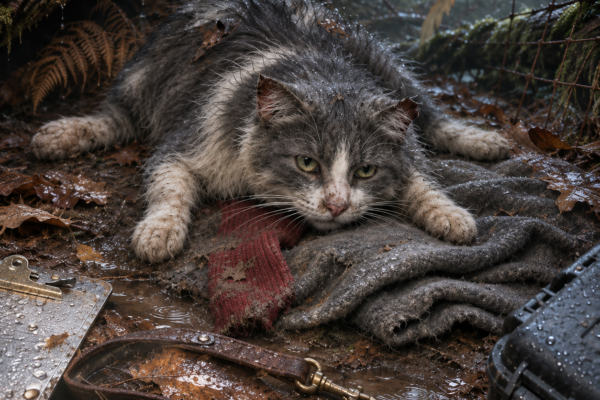
𝗙𝗨𝗟𝗟 𝗦𝗧𝗢𝗥𝗬 I Never Expected a Call From Kennel Twelve to Bring Back the Goodbye That Haunted Me for Six Years
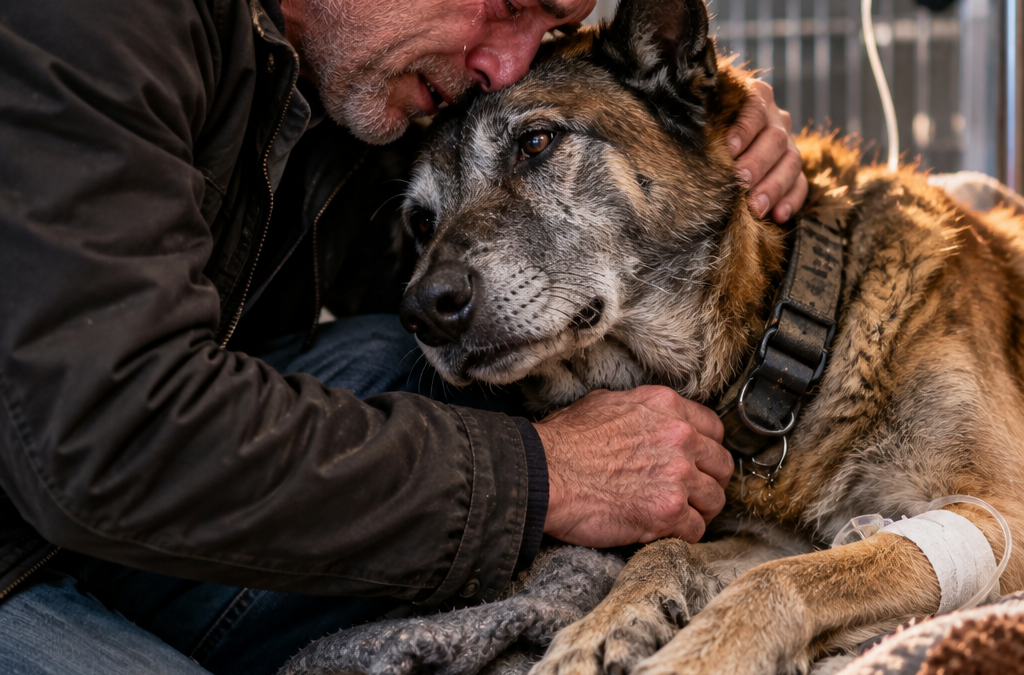
𝗙𝗨𝗟𝗟 𝗦𝗧𝗢𝗥𝗬
I learned his breathing.
He learned when I was serious.
I learned when he was pretending not to hear me.
Eventually, we reached a point where a small movement of my hand was enough to change his direction.
Sometimes I didn’t need to speak at all.
He would glance at me, read my posture, and know what I needed.
By the time we completed certification, Ranger had become more than my working partner.
He had become part of my family.
My wife, Laura, used to say Ranger was the only living creature who could make me smile after a sixteen-hour shift.
She wasn’t wrong.
I’d come home exhausted, my shoulders aching beneath my duty belt, and Ranger would jump down from the truck, run straight to the back door, and wait for me with his tail sweeping back and forth.
Laura would open the door.
“There are my two troublemakers.”
Ranger would rush inside.
I would follow, pretending to be offended.
“Nice to see you too.”
She would laugh.
“I was talking to the dog.”
We didn’t have children.
Not because we hadn’t wanted them.
Life simply hadn’t worked out that way.
After years of fertility treatments and disappointments, Laura and I had gradually stopped talking about what our family was supposed to look like.
Then Ranger came along.
He filled rooms with noise, hair, muddy footprints, and an astonishing ability to locate food that had supposedly been hidden from him.
He slept on a thick bed beside our bedroom door.
He followed Laura into the garden.
He learned that the sound of the refrigerator opening sometimes meant cheese.
And on evenings when I sat on the porch worrying about something I couldn’t discuss, he rested his head on my knee.
Laura used to watch us through the kitchen window.
“That dog loves you more than you realize,” she’d say.
I’d rub Ranger’s ears.
“He loves anybody who feeds him.”
She would shake her head.
“No, Daniel. That’s not what I mean.”
I understand now.
But back then, I thought we had all the time in the world.
For eight years, Ranger and I worked the streets of Greystone together.
We searched for missing children.
Tracked fleeing suspects.
Recovered evidence.
Found lost hikers in wooded areas where darkness could turn an ordinary afternoon into a tragedy.
There were dangerous nights.
Terrible nights.
Nights when I’d sit in my patrol car afterward with my hands shaking, grateful that neither of us had been seriously hurt.
And there were extraordinary nights when Ranger reminded me that courage doesn’t have to be loud.
One winter evening, we received a call about a seven-year-old boy named Caleb who had disappeared near a wooded recreation area.
Temperatures were falling below freezing.
Snow covered the trails.
Search teams had been working for three hours without success.
By the time Ranger and I arrived, the boy’s mother was standing beside an ambulance, wrapped in a blanket.
She looked at me with desperate eyes.
“Please find him.”
I remember nodding.
I remember wanting to promise her I would.
But police work teaches you not to promise what you cannot control.
Instead, I said, “We’re going to do everything we can.”
Ranger took the scent from the child’s jacket.
Within minutes, he pulled me away from the established trail.
The terrain grew rougher.
Branches scratched against my face.
Ice cracked beneath my boots.
Twice, I thought we’d lost the scent.
Twice, Ranger stopped, circled, and found it again.
Nearly a mile into the woods, he froze beside a narrow drainage ditch.
He looked at me.
Then toward the darkness.
I swept my flashlight across the trees.
Nothing.
“Find him, buddy.”
Ranger moved forward.
Thirty yards later, he stopped beside a fallen oak.
Underneath it, curled against the frozen ground, was Caleb.
He was barely conscious.
His lips were blue.
I dropped beside him and called for medical assistance.
Ranger lay down close enough to share his body heat while I wrapped the child in my emergency blanket.
Caleb’s small hand emerged from beneath the fabric.
He touched Ranger’s fur.
“Doggy,” he whispered.
I felt tears sting my eyes.
“Yeah, buddy. That’s Ranger.”
The boy looked toward him.
“Good dog.”
Ranger rested his head beside Caleb’s shoulder until rescuers arrived.
A week later, Caleb’s family visited the station.
His mother hugged me.
His father shook my hand.
But Caleb went straight to Ranger.
He knelt and wrapped his little arms around the dog’s neck.
“Thank you for finding me.”
Ranger wagged his tail.
I watched them and felt something shift inside my chest.
I had received commendations before.
Awards.
Letters from the chief.
None of them meant as much as that little boy whispering into Ranger’s fur.
That was the kind of dog he was.
Not just trained.
Not just useful.
He had a way of making frightened people feel less alone.
And somehow, without my realizing it, he was doing the same thing for me.
Then Laura got sick.
It began with exhaustion.
She’d been tired for weeks, but we blamed work and stress.
Then came the bruising.
The unexplained fevers.
The doctor’s appointment that became another appointment, then a hospital admission.
Acute leukemia.
I still remember how the specialist explained the diagnosis.
He spoke carefully.
Kindly.
But every sentence seemed to move farther away from me, as though I were hearing him from the bottom of a swimming pool.
Laura squeezed my hand.
I looked at her.
She smiled.
Not because she wasn’t afraid.
Because she knew I was.
We spent the next year moving between hospitals, treatment centers, and our house.
I used accumulated leave.
Reduced my schedule when the department could accommodate it.
Leaned on coworkers who quietly covered shifts without asking questions.
Ranger stayed with us whenever I wasn’t working.
He seemed to understand that something had changed.
He became gentler around Laura.
He stopped jumping onto the couch beside her.
Instead, he’d approach slowly and rest his chin on the edge of her blanket.
During the worst weeks, when she was too exhausted to speak, he’d lie beside her bed for hours.
Sometimes she would reach down and stroke his ears.
“Good boy, Ranger,” she’d whisper.
He would close his eyes.
She died eighteen months after her diagnosis.
I was fifty-one.
We had been married twenty-four years.
At her funeral, Ranger sat beside me in his working harness.
He remained perfectly still throughout the service.
When I finally broke down beside her grave, he pressed his head against my thigh.
I remember wrapping my arms around his neck.
I remember holding him so tightly that one of the other officers quietly stepped forward to check on us.
Ranger didn’t move.
He simply stayed.
After Laura died, the house became unbearable.
Her shoes remained beside the front door.
Her favorite sweater hung on the back of a chair.
There were dishes she had chosen and photographs I couldn’t bring myself to move.
Some nights, I slept on the couch because I couldn’t face the empty side of our bed.
Ranger slept on the floor beside me.
If I woke from a nightmare, he was there.
If I sat in the kitchen at two in the morning, staring at nothing, he followed.
If I cried, he rested his head in my lap.
He never asked me to explain.
Never looked uncomfortable.
Never told me it was time to move on.
I thought I was taking care of him.
But the truth was, Ranger was keeping me alive through the darkest months I’d ever known.
A year after Laura’s death, I returned to full duty.
I told everyone I was ready.
Maybe I even believed it.
Ranger was nine years old by then.
His muzzle had begun turning gray.
He still worked with the same determination, but the department veterinarian had started warning me about early arthritis in his hips.
We discussed retirement.
I wasn’t ready.
Neither was he.
But we agreed that another year would probably be his last.
Then came the accident.
It was a wet Tuesday night in October.
We were assisting officers searching for a suspect who had fled from a stolen vehicle near an industrial district.
The man had reportedly threatened someone with a knife.
He disappeared into an abandoned loading yard behind an old warehouse.
Ranger located the scent.
We followed it between stacked shipping containers and rusted machinery.
The ground was slippery.
Visibility was poor.
I remember hearing a metal gate rattle somewhere ahead.
Then Ranger stopped.
His ears lifted.
His body stiffened.
I gave him the command to hold position.
A shadow moved near the loading dock.
I stepped forward to get a clearer view.
The next few seconds became a blur.
A sudden crash.
A vehicle reversing from behind the warehouse.
A shout from another officer.
Headlights sweeping across wet pavement.
I pushed Ranger out of the vehicle’s path.
Then the rear corner of the truck struck me.
I remember hitting the ground.
I remember pain exploding through my back.
And I remember Ranger barking.
Not his ordinary warning bark.
Something fierce and desperate.
The truck stopped against a concrete barrier.
Officers rushed forward.
Someone shouted for an ambulance.
I tried to move.
Couldn’t.
I looked toward Ranger.
He was standing beside me, shaking with agitation, held back by another officer who was trying to keep him away from the damaged vehicle.
“Ranger,” I whispered.
His head snapped toward me.
“Down.”
He obeyed instantly.
Even then.
Even with chaos erupting around us.
He lay beside my shoulder and pressed his nose against my cheek.
I remember trying to smile.
“Good boy.”
Then everything went dark.
When I woke in the hospital, I learned that two vertebrae had been fractured and my spinal cord had been injured.
I could still move my legs, but walking was uncertain.
The doctors talked about surgery.
Rehabilitation.
Nerve damage.
The possibility that I would never return to patrol.
I listened to their explanations while staring at the ceiling.
Then I asked the only question that mattered to me.
“Where’s Ranger?”
My supervisor said he was safe.
He’d been checked by the veterinarian.
No major injuries.
I felt relief so powerful it almost made me dizzy.
“Bring him.”
Lieutenant Harris hesitated.
“Daniel, you’re in intensive care.”
“I don’t care.”
“You’ve got to recover first.”
“Please.”
He looked at me for a long moment.
Then nodded.
“We’ll see what we can do.”
Ranger visited the hospital nine days later.
The staff arranged for us to meet in a quiet room near the rehabilitation wing.
I was sitting in a wheelchair.
My back was strapped into a rigid brace.
I had barely slept.
When the door opened, Ranger entered on a leash beside Harris.
He stopped.
His ears rose.
For one terrible second, I wondered whether he recognized me.
Then he pulled forward.
Harris released enough slack for him to reach my chair.
Ranger pushed his nose against my hands.
Sniffed my knees.
Sniffed the wheelchair.
Then looked up at me.
His tail moved cautiously.
“Hey, buddy.”
My voice broke.
He stood on his hind legs for an instant, trying to get closer.
I caught his collar.
“Easy. Easy, partner.”
He lowered himself beside the chair.
I leaned forward as far as the brace allowed.
Pressed my forehead against his.
“I’m okay.”
That was a lie.
But he needed to hear my voice.
Maybe I did too.
We stayed like that until the physical therapist gently told us the visit had to end.
When Harris led Ranger toward the door, he looked back three times.
The last time, he resisted so hard that Harris had to stop.
I watched him from the wheelchair.
My heart was breaking.
“Go on, buddy,” I called.
Ranger stared at me.
“It’s okay.”
He finally followed Harris into the hallway.
I didn’t know it then, but that moment was the beginning of the worst decision of my life.
The surgery stabilized my spine.
It didn’t restore my old body.
I spent months learning how to stand, walk with support, and manage pain that seemed to change shape every day.
Some mornings, I made progress.
Other mornings, I couldn’t get out of bed without help.
My department placed Ranger on medical leave while evaluating his future.
His arthritis had worsened.
His working life was over.
He was almost ten.
After everything he’d done, retirement was the right decision.
But retirement meant finding him a permanent home.
And I couldn’t give him one.
Not then.
My house had stairs everywhere.
I couldn’t lift him.
Couldn’t walk him safely.
Couldn’t even guarantee I would be living independently when I left rehabilitation.
The doctors talked about assisted living, home modifications, and possibly moving closer to relatives.
I had no relatives nearby.
Laura was gone.
Our savings had been drained by medical expenses.
And I was terrified.
Terrified of losing my career.
My home.
My independence.
The dog who had carried me through my wife’s death.
Lieutenant Harris approached me one afternoon with a folder.
“We have a family interested in adopting Ranger.”
I stared at him.
“What family?”
“The Hollises. Martin and Evelyn. They’re retired teachers. Big fenced yard. Experience with working breeds.”
I looked away.
“He’s not a family pet.”
“Daniel.”
“He’s a police dog.”
“He’s a retired police dog.”
I hated the distinction.
Harris sat across from me.
“He’s not going back on duty.”
“I know.”
“He needs someone who can care for him every day.”
“I know that too.”
“Then help me make the right decision.”
I wanted to throw the folder across the room.
I wanted to tell Harris to get out.
Instead, I covered my face.
“Give me time.”
He nodded.
But time was the one thing none of us had enough of.
Ranger was staying temporarily with another K9 handler.
The arrangement couldn’t last indefinitely.
And every week my rehabilitation continued, the distance between the life I’d known and the life waiting for me seemed to grow.
Eventually, I met Martin and Evelyn Hollis.
They were good people.
That almost made it harder.
Martin had a quiet voice and large, weathered hands.
Evelyn wore a blue cardigan and carried a small bag of homemade dog biscuits.
They lived on three acres outside Millbrook.
Their previous German Shepherd had died two years earlier.
They had no children at home, but their granddaughter Lucy visited almost every weekend.
They showed me photographs of their house.
The fenced yard.
The shaded porch.
The soft bed they’d already bought.
Martin looked directly at me.
“Sergeant, I know this dog isn’t just an animal to you.”
I swallowed.
“No, sir.”
“We’re not trying to replace you.”
“I understand.”
“We just want to give him a good retirement.”
I studied the photographs.
Ranger would have room to move.
People who were home every day.
A warm place to sleep.
Someone to help him as his joints grew worse.
Everything I couldn’t guarantee.
Evelyn leaned forward.
“We’ll love him.”
I stared at her.
My eyes filled.
“Promise me something.”
“Anything.”
“If he gets sick, don’t let him suffer.”
Her expression softened.
“We won’t.”
“And don’t let him think he did something wrong.”
Evelyn reached across the table and touched my hand.
“Oh, sweetheart.”
That broke me.
I bowed my head and cried in front of two strangers.
A week later, Ranger officially retired.
The department held a small ceremony in the station garage.
Someone gave him a plaque.
Someone else brought a cake.
I was there in my wheelchair.
Ranger sat beside me wearing his polished service collar.
I rubbed the fur beneath his chin while the chief spoke about his years of service.
Eight years.
Forty-seven successful tracks.
Twenty-three missing-person searches.
Numerous evidence recoveries.
A lifetime of work summarized in numbers.
When the applause ended, I unclipped his working leash.
My hands were shaking.
Ranger looked up.
He didn’t understand the paperwork.
Didn’t know what retirement meant.
He only knew that something was changing.
Martin and Evelyn waited beside their vehicle.
I knelt as far as I could from the wheelchair and wrapped my arms around Ranger’s neck.
“I’m sorry, buddy.”
He licked my cheek.
“I’m so sorry.”
I tried to tell myself I was doing the right thing.
That love sometimes meant letting go.
That Ranger deserved more than a disabled man who couldn’t even walk across a room without assistance.
But my heart refused to accept it.
I held him until Harris quietly touched my shoulder.
“Daniel.”
I nodded.
Ranger stepped back.
I looked into his eyes.
“Be good, partner.”
He tilted his head.
I gave the command I’d used at the end of every long shift.
“All clear, Ranger.”
He relaxed slightly.
Martin approached with a new leash.
For one moment, Ranger resisted.
He looked toward me.
Then toward Martin.
Then back at me.
I wanted to call him.
I wanted to tell Martin I’d changed my mind.
I wanted to drag myself out of that wheelchair and take my dog home.
But I couldn’t.
So I smiled through tears.
“Go on, buddy.”
Ranger took one hesitant step.
Then another.
He followed Martin toward the car.
Just before climbing inside, he turned.
He looked straight at me.
I lifted my hand.
“Good boy.”
That was the last time I saw him.
For six years, I carried the memory of those eyes.
And on a rainy Thursday morning, when a shelter volunteer told me he was dying, that memory came rushing back with a force I wasn’t prepared to survive.
For the first few months after Ranger’s adoption, Evelyn sent me photographs.
She was kind enough to understand that seeing him happy mattered to me.
There was one of him lying beneath a tree.
Another showed him asleep on a porch with his head resting on Martin’s boots.
In one photograph, a little girl with dark curls and missing front teeth had wrapped a yellow blanket around Ranger’s shoulders.
Evelyn wrote beneath it:
Lucy says he’s a retired superhero and needs a cape.
I laughed when I saw that one.
For the first time since his retirement, I laughed without feeling guilty.
The Hollises sent updates about his appetite, his walks, and the way he liked to sleep beside the fireplace.
Evelyn told me he had eventually learned to play with a stuffed rabbit.
I had never managed to teach him that.
For years, Ranger had considered toys a serious matter. Unless an object was part of an exercise or something he was supposed to retrieve, he generally ignored it.
But there he was in the photograph, an old police dog resting his chin on a ridiculous pink rabbit.
I printed the picture and placed it beside Laura’s photograph.
It was proof that I’d made the right decision.
At least, that was what I told myself.
I continued physical therapy.
Some days, I hated every minute of it.
I’d spent nearly three decades being the person other people called when they needed help.
Now I needed assistance getting into the shower.
I couldn’t lift a laundry basket.
I couldn’t drive for months.
And the simplest tasks sometimes left me shaking with pain.
I grew angry.
At the doctors.
At the insurance company.
At the man who had been driving the truck.
At the world for continuing as though nothing extraordinary had happened.
Mostly, I was angry at myself.
I had pushed Ranger away from the vehicle.
I had saved him from being struck.
I didn’t regret that.
But sometimes, lying awake in the rehabilitation center, I wondered why the world had demanded that I lose him anyway.
After eleven months, I could walk with a cane.
I moved into a small, accessible apartment while modifications were made to my old house.
The department approved my medical retirement.
I packed away my uniforms.
Returned my service weapon.
Turned in the keys to the patrol car.
For the first time since I was twenty-one, I had nowhere I was expected to be at six in the morning.
That emptiness nearly swallowed me.
I considered contacting the Hollises and asking for Ranger back.
More than once.
I even wrote Evelyn a letter.
I told her I was recovering.
That I could walk again.
That I’d found a place where dogs were allowed.
Then I looked at the photograph of Ranger asleep beside Martin’s boots.
He looked comfortable.
Safe.
Happy.
He had already lost one home.
I couldn’t ask him to lose another just because I missed him.
So I tore up the letter.
I continued receiving photographs for another year.
Then Martin suffered a heart attack.
Evelyn wrote that he was recovering and that she might not have time to send regular updates.
I understood.
I sent flowers and a note wishing him well.
A few months later, she called to say he was doing better.
Ranger was still eating well, though his arthritis was becoming more noticeable.
I offered to help with veterinary expenses.
She thanked me but declined.
“We’re managing,” she said. “He’s family, Daniel.”
Those words comforted me.
They also reminded me that Ranger belonged to someone else now.
After that, communication became less frequent.
I sent Christmas cards.
Sometimes I received one in return.
Then nothing.
I called once, but the number had been disconnected.
I wrote to their old address and never received a response.
I asked a friend in Millbrook whether he’d heard anything about them. He hadn’t.
I assumed they’d moved closer to family.
I could have searched harder.
I know that now.
But I kept remembering Ranger standing beside their car, looking back at me.
I had given him away because I believed he deserved stability.
Trying to insert myself into his new life felt unfair.
So I kept the photographs.
And I tried to be grateful that somewhere, I hoped, an old dog I loved was sleeping peacefully in a warm house.
Eventually, my own house was renovated.
I moved back.
I built a small workshop in the garage.
I began repairing fishing rods and restoring old wooden furniture for neighbors.
It wasn’t the life I’d expected, but it was a life.
I learned to walk longer distances.
The cane stayed beside the front door, though some days I didn’t need it.
I even considered adopting another dog.
Twice, I drove to a rescue organization.
Both times, I sat in the parking lot and couldn’t bring myself to go inside.
It wasn’t that I believed loving another dog would betray Ranger.
I knew better.
I had watched people adopt new dogs after losing old ones.
I knew the heart had room for more than one kind of love.
But every time I imagined a dog sleeping beside my chair, I pictured Ranger.
His ears.
His eyes.
The white mark beneath his chin.
The way he’d lean against my knee when he knew I was upset.
I wasn’t ready.
And then, six years after our goodbye, Emily Carter called.
The drive to Millbrook County Animal Shelter took just over an hour.
I made it in forty-eight minutes.
I wasn’t proud of that.
But every time I slowed down, I imagined Ranger lying alone behind a kennel door.
Waiting.
Wondering why the people he’d trusted had disappeared.
My hands trembled on the steering wheel.
I kept seeing the last day of his retirement.
His head turning toward me.
The confusion in his eyes.
I wondered whether he still remembered.
Six years was a long time.
He’d been ten when we parted.
He would be almost sixteen now.
Old for a Belgian Malinois.
Very old.
I tried to prepare myself for the possibility that he wouldn’t recognize me.
Dogs change.
Memory fades.
Scent changes.
I’d grown older.
My hair had gone almost completely gray.
I walked differently.
My voice had changed after years of medication and too many nights spent alone.
Maybe the Ranger I remembered was gone.
Maybe I was racing toward a dog who no longer knew the man he’d once followed into danger.
But one thought kept returning.
Even if he doesn’t remember me, I remember him.
And that was enough.
The shelter sat outside Millbrook beside a county maintenance building.
It was a low brick structure with a faded green sign and a parking lot full of cars.
I pulled into an empty space and sat for a moment, trying to steady my breathing.
Then I got out.
The smell reached me before I opened the door.
Disinfectant.
Wet concrete.
Dog food.
The familiar sharp scent of animals living too close together.
I heard barking from somewhere inside.
A high-pitched whine.
The metallic clang of a kennel door.
I had been inside shelters before.
During my years on patrol, I’d helped recover abandoned dogs and brought in strays wandering along highways.
But I’d never entered one searching for my own partner.
A young woman stood behind the reception desk.
She looked up.
“Can I help you?”
“My name is Daniel Mercer.”
Her expression changed.
“Oh.”
She immediately stood.
“You’re here for Ranger.”
I nodded.
She came around the desk.
“I’m Emily.”
She couldn’t have been older than twenty-five.
Her brown hair was pulled into a loose ponytail, and there was a small scratch across the back of one hand.
She looked tired.
But when she saw me, something in her face softened.
“Thank you for coming.”
I swallowed.
“Where is he?”
“He’s in the medical wing.”
“Can I see him?”
“Of course.”
She hesitated.
“Before we go back, there’s something you should know.”
I felt my stomach tighten.
“Just tell me.”
She glanced toward the hallway.
“He came in five days ago. His owner had to surrender him because the family couldn’t provide the care he needed anymore.”
I stared at her.
“Why?”
“His adoptive mother is in assisted living now. Her husband passed away last year.”
Martin.
I closed my eyes.
Emily continued.
“Their daughter tried to keep him, but he needed frequent veterinary care, and her apartment doesn’t allow large dogs. She was hoping we could find an organization that specializes in senior animals.”
“Why didn’t anyone call me?”
My voice came out sharper than I intended.
Emily looked startled.
“I’m sorry?”
“Why didn’t the family call me?”
“I don’t think they knew about you.”
I stared at her.
She spoke gently.
“The people who brought him here called him Buddy. They said he’d been part of their family for years. They didn’t know he had been a police dog.”
I shook my head.
“That’s impossible.”
She hesitated.
“His collar was inside a box of belongings. I only found it yesterday.”
I looked past her toward the hallway.
“Can I see it?”
She nodded.
“Yes.”
Emily led me into a small office.
On a desk sat a cardboard box containing a worn blanket, two soft toys, an unopened package of senior dog treats, and a faded leather collar.
I recognized the collar immediately.
Black leather.
Brass buckle.
A small silver plate.
The edges were cracked with age.
I reached for it.
My fingers closed around the leather.
For a moment, I wasn’t standing in a shelter.
I was back in the department garage, fastening that same collar around Ranger’s neck before his retirement ceremony.
I’d paid for it myself.
The silver plate was engraved with his name and unit number.
I turned it over.
On the back were two small initials.
D.M.
I had scratched them there with an engraving tool one evening in the garage.
Not official.
Not part of department policy.
Just a small mark so I’d always know it was his.
I pressed the collar against my chest.
“It’s his.”
Emily’s eyes filled.
“I thought it might be.”
“How did you find me?”
She sat on the edge of the desk.
“I searched the unit number online. At first, I couldn’t find anything. Then I came across an archived newspaper article about a K9 team that located a missing boy in Greystone.”
Caleb.
My throat tightened.
“Your name was in the article.”
She smiled faintly.
“There was also a photograph of you and Ranger.”
I looked at her.
“And you remembered it?”
“I printed it.”
She reached for a sheet of paper.
There we were.
Ranger sitting beside me.
My hand resting on his head.
A caption beneath the photograph identifying us as the officers who had found Caleb.
I looked younger.
Stronger.
Alive in a way I hadn’t felt for years.
Emily pointed to the picture.
“I compared the white patch under his chin.”
I stared at her.
She continued quietly.
“Then I called the Greystone Police Department. They told me you’d retired and gave me your contact information after checking with you through an old colleague.”
I couldn’t speak.
A young volunteer had seen something in a box of discarded belongings that everyone else had overlooked.
A worn collar.
A scratched number.
A name from years ago.
And instead of deciding it didn’t matter, she’d kept looking.
“Why?” I finally asked.
Emily frowned.
“Why what?”
“Why did you go through all that trouble?”
She glanced toward the box.
“Because he seemed so sad.”
I felt my chest tighten.
She looked embarrassed.
“I know that sounds silly.”
“No.”
“He wasn’t barking or scratching at the kennel. He just lay there facing the door.”
Her voice grew softer.
“When I went in to clean, he’d lift his head and look past me. Whenever someone walked through the hallway, he’d try to stand.”
I closed my eyes.
Emily continued.
“He has a lot of pain in his hips. Standing is difficult. But he kept trying.”
She looked at me.
“And I thought maybe there was somebody he was hoping to see.”
I couldn’t answer.
Because I’d seen Ranger do that before.
He had waited at the door of our house whenever my patrol shift ended late.
He had waited outside Laura’s hospital room when staff asked me to leave him in the hallway.
He had waited beside my wheelchair during rehabilitation, watching every movement of the door.
Waiting had always been his way of loving.
Emily stood.
“Come on.”
She led me down a narrow hallway.
The barking became louder.
Dogs pressed against kennel doors as we passed.
Some jumped.
Some whined.
Others watched us quietly from blankets in the corners.
At the end of the corridor, Emily stopped outside a door marked Medical Care.
She looked at me.
“He’s in kennel twelve.”
I nodded.
My legs felt strangely weak.
She opened the door.
The room was smaller than I’d expected.
Six kennels lined one wall.
A sink stood in the corner.
There was a faint smell of medication and disinfectant.
A ceiling fan turned slowly overhead.
Emily walked toward the last kennel.
I followed.
And then I saw him.
For one terrible second, I didn’t recognize my own dog.
Ranger lay curled on a thick gray blanket.
His once-powerful body had become painfully thin.
The rich golden fur along his back had faded.
His muzzle was almost completely white.
His hips protruded beneath his coat.
One front leg was wrapped in a small bandage where a catheter had recently been placed.
He was sleeping.
Or at least trying to.
His breathing was shallow.
Every few seconds, a tremor passed through his hind leg.
I stopped.
My hand tightened around the doorframe.
This was not the dog who had once pulled me across training fields.
Not the animal who could clear a six-foot obstacle and race through a building in seconds.
Not the partner who had protected me when a truck came out of the darkness.
This was an old dog.
A terribly old dog.
And he looked exhausted.
Emily stood beside me.
“That’s him.”
I couldn’t answer.
My throat had closed.
She opened the kennel door quietly.
“Ranger,” she whispered.
His ears moved.
He didn’t lift his head.
She crouched.
“Hey, sweetheart. You’ve got a visitor.”
I stepped inside.
My knees began shaking.
I lowered myself carefully onto the blanket beside him.
For a long moment, I simply looked at him.
I was afraid to touch him.
Afraid he would flinch.
Afraid he’d look into my eyes with no recognition at all.
Then I noticed the white patch beneath his chin.
Smaller now.
Surrounded by gray.
But still there.
My Ranger.
The dog I’d held as a puppy.
The dog who had slept beside Laura’s bed.
The dog who had trusted me with his life.
I reached toward him.
“Hey, buddy.”
My voice cracked.
His ear twitched.
I swallowed.
“Ranger.”
Nothing.
I touched the side of his neck.
His skin felt loose beneath the thin fur.
“Hey, partner.”
He opened his eyes.
They were cloudy now.
Duller than I remembered.
But still the same warm brown.
He looked at me.
Then lowered his head again.
My heart sank.
He didn’t know me.
Of course he didn’t.
Six years.
A different smell.
A different voice.
A man who no longer looked the way he remembered.
I bowed my head.
“It’s okay.”
My tears fell onto the blanket.
“You don’t have to remember.”
I moved my hand slowly along his neck.
“I’m here anyway.”
Emily stood quietly outside the kennel.
I could hear her breathing.
I looked at Ranger again.
His eyes were half closed.
I wanted to tell him everything.
That I’d never stopped thinking about him.
That I’d kept his photographs.
That I’d tried to live a good life.
That I was sorry I’d let him go.
But the words wouldn’t come.
Instead, I did something I hadn’t done in six years.
I placed my hand gently against his chest.
Tapped twice.
And whispered the phrase that had always meant the danger was over.
“All clear, Ranger.”
His eyes opened.
His ears lifted.
I froze.
For one heartbeat, neither of us moved.
Then Ranger raised his head.
Slowly.
Painfully.
He turned toward me.
His nostrils moved.
He leaned forward and sniffed my hand.
Then my sleeve.
Then my face.
A low sound escaped his throat.
I knew that sound.
I’d heard it on winter mornings when I returned from the garage.
On nights when I came home after leaving him with Laura.
On the day he’d seen me sitting in a wheelchair at the rehabilitation center.
It was the soft, broken whine he made when he wanted desperately to get closer.
“Ranger?”
His tail moved.
Once.
Then again.
He pushed himself forward.
His front legs trembled.
I caught him gently.
“Easy, buddy.”
He pressed his nose against my chest.
Then buried his face beneath my arm.
The sound that came out of him wasn’t a bark.
It was a long, trembling whimper.
I wrapped both arms around him.
And I broke.
I cried harder than I had at Laura’s funeral.
Harder than I had after the accident.
Harder than I had during the morning I’d watched Martin drive away with him.
Because Ranger remembered.
After six years.
After everything.
Some part of him still knew me.
“Oh, my God,” I whispered.
He pushed closer.
“I’m here.”
His tail tapped weakly against the blanket.
“I’m here, buddy.”
I held him against my chest.
“I’m so sorry.”
He licked my chin.
That tiny movement nearly destroyed me.
I pressed my forehead against his.
“I never forgot you.”
Outside the kennel, Emily began crying.
I heard her step away.
Perhaps she wanted to give us privacy.
Perhaps she simply couldn’t watch anymore.
I didn’t care.
For the first time in six years, Ranger was in my arms.
And for several minutes, the rest of the world stopped existing.
Eventually, his strength gave out.
He sank against the blanket, breathing heavily.
I adjusted his body carefully, supporting his hips.
“That’s enough, buddy. You don’t have to get up.”
He rested his head on my knee.
His eyes stayed on me.
I stroked the fur behind his ears.
“You’ve gotten old.”
His tail moved.
I laughed through tears.
“Yeah. Me too.”
I looked around the kennel.
The bare walls.
The stainless-steel water bowl.
The folded towel.
The narrow window.
This was where he’d spent the last five days.
A dog who had once slept beside Laura’s fireplace.
A dog who had saved children.
A dog who had trusted human beings completely.
He had ended up here, in a room full of strangers, too weak to understand what was happening.
I felt anger rise in my chest.
Not at Emily.
Not at the shelter.
At the thought of Ranger being left behind after everything he’d given.
I looked toward the doorway.
“Emily?”
She appeared immediately.
“Yes?”
“Who surrendered him?”
She hesitated.
“The Hollis family’s daughter.”
“Is she still in Millbrook?”
“I believe so.”
I looked down at Ranger.
“Did she know he was dying?”
Emily crouched beside us.
“She knew he was very sick.”
“Then why leave him here?”
My voice sharpened.
“Why would anyone leave a dog like this in a kennel?”
Emily didn’t retreat.
She simply looked at Ranger.
“Mr. Mercer, I think she was desperate.”
I closed my eyes.
“I don’t care how desperate—”
“Please.”
Something in her voice stopped me.
“She was crying when she brought him in.”
I looked at her.
Emily continued.
“She had a little boy with her. He didn’t want to let go of the leash. He kept asking his mother whether Buddy would be okay.”
The anger in my chest faltered.
“She told us her father had died, her mother needed full-time care, and she had nowhere safe to keep him.”
I looked down.
Ranger’s head rested heavily against my leg.
Emily spoke softly.
“I don’t think she wanted to leave him.”
I rubbed my eyes.
For a moment, I remembered Martin and Evelyn sitting across from me years earlier.
Their kindness.
Their promises.
The photographs.
The love in every letter.
Perhaps I’d been too quick to imagine betrayal.
Perhaps the world had simply done to their family what it had done to mine.
Taken away the people who held everything together.
Left the survivors struggling to manage what remained.
“Can I speak with the veterinarian?” I asked.
Emily nodded.
“She’s expecting you.”
I stroked Ranger’s head.
Then looked at Emily.
“One more question.”
“Of course.”
“What’s going to happen to him?”
Her eyes filled again.
“That’s what we were hoping you could help us decide.”
I looked down at my old partner.
He was watching me.
His tail moved weakly when I touched his collar.
And in that moment, I knew one thing with absolute certainty.
Whatever time Ranger had left, he wasn’t spending it alone.
The shelter veterinarian was a woman named Dr. Priya Patel.
She met me in a small consultation room with Ranger’s medical chart resting on the table.
I kept one hand on his leash.
Emily had found a padded harness so I could help him walk the short distance from his kennel. Even with support, every step seemed to cost him something.
Dr. Patel watched us settle onto the floor.
Then she sat beside us instead of behind her desk.
That small gesture told me she understood.
“Mr. Mercer, Emily explained your history with Ranger.”
I nodded.
“She says he recognized you.”
I looked at the old dog resting against my leg.
“He did.”
Dr. Patel smiled sadly.
“I’m glad.”
Then her expression changed.
“I wish I had better news.”
I closed my eyes.
“Tell me.”
“His kidneys are failing. He’s severely underweight, dehydrated, and suffering from significant degenerative joint disease. We’re also concerned about a possible abdominal mass.”
“Can you treat him?”
“We’ve been treating his nausea and dehydration, and managing his pain as carefully as we can.”
“Will he get better?”
She didn’t answer immediately.
I appreciated that she didn’t lie.
“No, Mr. Mercer. Not in any lasting way.”
I stared at Ranger.
He was asleep with his muzzle resting against my knee.
“How much time?”
“That is difficult to predict. It could be a few days. Possibly a little longer. But I don’t believe we’re looking at months.”
I felt the familiar weight of helplessness settle over me.
I’d spent years learning how to respond to emergencies.
There had always been something to do.
Call for backup.
Apply pressure.
Clear the building.
Find the missing person.
Make the road safe.
But there was no command that could reverse old age.
No procedure that would return Ranger to the powerful dog he’d once been.
“Is he suffering?”
Dr. Patel took a slow breath.
“He’s uncomfortable. His condition is serious, but we’ve been able to relieve some of that discomfort. What matters now is making sure his remaining time is peaceful.”
I looked at her.
“Can I take him home?”
Her expression softened.
“Yes. If you’re prepared to provide hospice care, I think that could be a very good option.”
“I am.”
“You’ll need to monitor him closely. He may need help standing, eating, and going outside. I’ll arrange medications and written instructions. If his pain worsens or he begins to struggle, we’ll need to make another decision.”
“I understand.”
She studied me.
“Do you have someone who can help?”
I looked down at my cane leaning against the wall.
Six years earlier, that question would have defeated me.
Now I answered without hesitation.
“I’ll find someone.”
Dr. Patel nodded.
“Then we’ll help you get him home.”
I bent toward Ranger.
He opened one eye.
“Did you hear that, buddy?”
His ear moved.
I smiled through tears.
“You’re coming with me.”
He didn’t try to stand.
He simply pressed his nose against my hand.
And for the first time since receiving Emily’s call, I felt something other than fear.
I felt grateful.
Not because Ranger was going to survive.
I knew better.
But because he would not have to spend his final days wondering where everyone had gone.
Before we left, Emily brought me the cardboard box containing his belongings.
She had carefully folded the blanket.
The pink rabbit lay on top.
I picked it up and smiled.
“Evelyn said he loved this thing.”
Emily looked surprised.
“He still does. He had it beside him when he arrived.”
I squeezed the worn toy.
Its fabric was faded, and one ear had been repaired with thick blue thread.
Somewhere during the six years we had been apart, someone had sat down and sewn that ear back onto his favorite toy.
Such a small thing.
Yet it told me more about the Hollises than any explanation could have.
They had loved him.
They really had.
Emily handed me a folder containing his discharge instructions.
Then she hesitated.
“Mr. Mercer, there’s something else.”
I looked up.
“The woman who surrendered Ranger left a phone number in case we needed information about him.”
I nodded.
“Would you like me to ask her whether she’s willing to speak with you?”
I considered the question.
A part of me didn’t want to hear from her.
I wanted to blame somebody.
To find a person responsible for the sight of Ranger lying alone behind that kennel door.
But blame wouldn’t make him young.
It wouldn’t give him healthy kidneys.
It wouldn’t restore the years I’d missed.
And it wouldn’t change the fact that Emily had shown me a repaired toy and a blanket that smelled faintly of home.
“Yes,” I said.
“I’d like that.”
Twenty minutes later, a woman named Sarah Hollis called me.
Her voice sounded strained.
“Mr. Mercer?”
“Yes.”
“This is Sarah. Martin and Evelyn’s daughter.”
I looked through the office window toward the kennel hallway.
“Hello, Sarah.”
A pause.
Then she began crying.
“I’m so sorry.”
I closed my eyes.
“I know this is difficult.”
“You don’t understand. I didn’t know who you were. I didn’t know Buddy had another family before us.”
“His name was Ranger.”
She took a shaky breath.
“I know that now.”
I sat down.
Sarah began explaining.
Her father, Martin, had died eleven months earlier after a prolonged illness. Her mother had struggled terribly afterward.
At first, Evelyn managed with help.
Then her memory began to deteriorate.
She forgot appointments.
Left the stove running.
Started confusing days and nights.
Eventually, she needed supervised care.
Sarah had two children and worked full-time. Her rental apartment prohibited large dogs, and Ranger’s medical needs had grown beyond what she could manage.
She’d called rescue organizations.
Veterinary clinics.
Friends.
Relatives.
Every place she’d thought might help.
Some were full.
Others couldn’t accept a dog with his medical problems.
One organization offered to place him on a waiting list, but Ranger had already stopped eating regularly.
“I didn’t know what else to do,” she whispered.
I stared at my hands.
“Why didn’t you call the police department?”
She sounded confused.
“What?”
“He was a retired police dog.”
There was silence.
“Mom called him Buddy,” she finally said. “Dad sometimes called him Ranger, but he never really explained the old collar to me. I thought it was just something from before they adopted him.”
I swallowed.
“Your parents knew.”
“Yes. But Dad handled most of the paperwork, and Mom’s memory has been getting worse for years.”
She began crying again.
“I should have asked more questions. I should have tried harder.”
I thought of myself six years earlier, sitting in a wheelchair, believing I had no choice but to let Ranger go.
I’d wanted somebody to tell me that making the only decision available wasn’t the same as not caring.
Now Sarah needed to hear it.
“Did your parents love him?”
She answered immediately.
“More than anything.”
“Then tell me about that.”
For the next twenty minutes, Sarah told me about Ranger’s second life.
He had slept beside Martin’s recliner every evening.
He followed Evelyn from room to room.
When Lucy stayed overnight, Ranger slept outside her bedroom door.
He disliked thunderstorms.
He loved scrambled eggs.
He barked at the mail carrier but never at children.
He had once escaped through a gate and been found sitting beside Martin’s truck, apparently waiting for someone to take him for a drive.
I laughed at that.
It sounded exactly like him.
Sarah told me that during Martin’s final illness, Ranger rarely left his bedside.
After Martin died, he spent nearly a week sleeping beside the empty chair.
Evelyn had started calling him Buddy because she sometimes struggled to remember his original name.
Ranger answered anyway.
“He was so patient with her,” Sarah whispered.
“Even when she forgot he’d already eaten and tried to feed him again.”
I smiled.
“He probably didn’t mind that part.”
Sarah laughed through tears.
“No. I don’t think he did.”
Then she became quiet.
“Mr. Mercer, is he going to die?”
I looked toward the hallway.
“Yes.”
A soft sob came through the phone.
“Is he alone?”
“No.”
I swallowed.
“I’m taking him home.”
She began crying harder.
“Thank you.”
I stared at the floor.
“Would you like to see him before we leave?”
There was a long silence.
Then she whispered, “Could I?”
“Of course.”
Sarah arrived half an hour later with her twelve-year-old son, Noah.
The boy carried a small plastic bag.
When Ranger saw them, his tail moved against the blanket.
Noah dropped to his knees.
“Buddy!”
He wrapped his arms carefully around the old dog’s neck.
Ranger sniffed his hair.
Then rested his head against the boy’s shoulder.
Noah began crying.
“I thought nobody wanted you.”
Sarah covered her mouth.
I felt my own eyes fill.
I knelt beside them.
“That’s not true, son.”
Noah looked at me.
His face was wet with tears.
“Mom said he couldn’t live with us.”
“I know.”
“He used to sleep in my room.”
I nodded.
“Then he must have loved you a lot.”
Noah pulled something from the plastic bag.
A photograph.
It showed Ranger lying on a living room rug with a little boy sleeping against his side.
The pink rabbit was beside them.
“My grandpa took this,” Noah whispered.
“He said Buddy would never let anything bad happen to me.”
I looked at the photograph.
“He was right.”
Noah wiped his face.
“Are you his real owner?”
I hesitated.
Then I looked at Sarah.
She nodded gently.
“I was his first partner,” I answered.
“Before he lived with your grandparents.”
Noah studied me.
“Did he save people?”
“Yes.”
“A lot?”
I smiled.
“A lot.”
The boy looked down at Ranger.
“He never told us.”
Despite everything, I laughed.
“No. He wasn’t much of a talker.”
Noah leaned close to Ranger’s ear.
“You’re a hero, Buddy.”
Ranger’s tail moved.
Then Noah placed the photograph beside the pink rabbit.
“Can he take this with him?”
I swallowed.
“Absolutely.”
Sarah approached me while her son continued stroking Ranger’s fur.
“Thank you for letting us say goodbye.”
I looked at her.
“You didn’t stop loving him, Sarah.”
Her face crumpled.
“I felt like I did.”
“No.”
I shook my head.
“You ran out of options. That isn’t the same thing.”
She began crying again.
I placed a hand on her shoulder.
“I wish you’d known how to reach me. But I’m glad your parents gave him a good life.”
Sarah nodded.
“He made theirs better.”
I looked toward Ranger.
“He did that for me too.”
When it was time to leave, Emily helped us place Ranger into my truck.
We used a padded support harness and several folded blankets.
He lay on the passenger-side seat with his head resting on the edge of the cushion.
The pink rabbit was tucked beside his chest.
Emily leaned through the open door.
“Be good, sweetheart.”
Ranger lifted his nose toward her hand.
She kissed the top of his head.
Then she looked at me.
“Will you let me know how he’s doing?”
I nodded.
“I promise.”
Her eyes filled.
“I’m glad I found you.”
I looked at the silver plate on the old collar.
“So am I.”
As I drove away, I glanced at Ranger.
He was looking out the window.
His ears moved at the sound of passing cars.
For the first time in six years, he was riding beside me again.
There was no radio crackling with dispatch calls.
No tactical harness.
No urgent destination.
Just an old man driving an old dog home.
I reached across the seat and rested my hand against his shoulder.
“Remember this road, buddy?”
He looked toward me.
“We’re not going to work.”
I smiled.
“Not this time.”
He settled his head against the blanket.
“You’re retired now.”
The words made me laugh softly.
“Both of us.”
When we reached my house, I parked in the driveway and turned off the engine.
For a moment, I couldn’t move.
The last time Ranger had been here, Laura was still alive.
The porch had been painted blue.
There was a rosebush beside the steps.
The backyard fence had needed repairs.
So much had changed.
I wondered whether anything would be familiar to him.
I opened the passenger door and helped him onto the ramp Emily had lent me.
His legs shook.
But he wanted to walk.
Slowly, we made our way toward the front door.
Halfway up the path, Ranger stopped.
He lifted his head.
His nose moved.
He sniffed the air.
Then he turned toward the backyard.
I felt my throat tighten.
“Yeah, buddy.”
I followed his gaze.
“That’s where Laura used to grow her flowers.”
The flower beds were different now.
I’d replaced the old roses with low-maintenance plants years earlier.
But the maple tree still stood beside the fence.
And the wooden porch swing Laura loved was still hanging beneath the roof.
Ranger stared for several seconds.
Then took another step toward the house.
Inside, I’d prepared the living room.
A thick orthopedic bed stood beside the fireplace.
Food and water bowls were within easy reach.
The floor had been covered with nonslip rugs so his feet wouldn’t slide.
I placed his blanket on the bed.
Then the pink rabbit.
Ranger approached slowly.
Sniffed the cushion.
Circled once.
And lay down.
He sighed.
A long, tired breath.
I sat on the floor beside him.
“Welcome home.”
His tail moved against the blanket.
That night, I slept in the living room.
Not because Ranger needed constant attention at every moment.
Because I couldn’t bear the thought of waking upstairs and remembering I’d missed something important.
I placed my pillow on the couch and left a small lamp burning.
Around midnight, Ranger lifted his head.
I sat up immediately.
“What’s wrong, buddy?”
He looked toward the back door.
I helped him outside with the support harness.
The night air was cool.
Crickets sang in the garden.
He stood beneath the maple tree for several seconds, breathing in the familiar scents.
Then he looked toward the porch swing.
I remembered Laura sitting there years earlier with a blanket across her knees.
Ranger would lie beneath her feet while she read.
Sometimes she’d speak to him as though he understood every word.
I used to tease her.
“He’s a police dog, sweetheart. He doesn’t care about your book.”
She’d smile.
“He listens better than you do.”
I looked down at the old dog beside me.
“She was right, you know.”
Ranger lifted his head.
“She usually was.”
We stayed outside until he grew tired.
Then I helped him back into the house.
Before going to sleep, I took a photograph of him resting beside the fireplace.
I sent it to Emily.
Beneath it, I wrote:
He’s home.
She replied a few minutes later.
That’s exactly where he belongs.
For the next four days, I built my entire life around Ranger.
I gave him his medications according to Dr. Patel’s instructions.
Offered small meals.
Helped him outside.
Cleaned his blankets.
Sat beside him during the hours when he seemed restless.
Sometimes he slept.
Sometimes he watched me from his bed.
And sometimes, when I walked toward the kitchen, he’d lift his head and try to follow.
“Stay there, partner,” I’d tell him.
“I’m just getting coffee.”
He would watch until I returned.
Then settle again.
I began talking to him the way I had during our years on patrol.
I told him about the neighbors.
About the workshop.
About the old truck I’d finally replaced.
About the physical therapy that had helped me walk again.
I told him how much I missed Laura.
And how difficult the years had been without him.
One afternoon, I took out the box of photographs I’d kept since his adoption.
I sat beside his bed and spread them across the floor.
“Look at this.”
I held up the picture of Lucy wrapping him in a yellow blanket.
“You made a pretty good superhero.”
His ears twitched.
I picked up another.
Martin asleep in a chair, Ranger stretched across his feet.
“He looks like a good man.”
I smiled.
“Bet he snored.”
Ranger rested his chin on my knee.
I ran my fingers through his fur.
“I’m glad they loved you.”
That was the truth.
A painful truth, but a good one.
I had spent six years imagining the life Ranger might be living.
Sometimes those thoughts had been comforting.
Sometimes they had torn me apart.
Now I knew.
He had been loved.
He had known warm rooms and gentle hands.
He had watched children grow.
He had comforted another family through sickness and grief.
His life hadn’t ended when we parted.
It had continued.
Beautifully, in many ways.
And understanding that allowed me to forgive myself for the decision I’d made years earlier.
On the third evening, Lieutenant Harris came to visit.
He had retired the year before and moved to a town about forty minutes away.
When I called and told him Ranger was back, he became quiet.
Then he said, “I’ll be there tomorrow.”
He arrived carrying an old equipment bag.
When Ranger saw him, his ears lifted.
Harris crouched beside the bed.
“Well, I’ll be damned.”
He rubbed Ranger’s head.
“Look at you.”
Ranger sniffed his hand.
His tail moved.
Harris laughed softly.
“Still remember the ugly ones, huh?”
I sat beside them.
Harris reached into the bag.
“I found something.”
He pulled out Ranger’s old working harness.
The black fabric was faded, but the embroidered patch was still intact.
K9 RANGER — GREYSTONE POLICE
I stared at it.
“Where did you get that?”
“Storage room. They were clearing out old equipment. I couldn’t let them throw it away.”
He laid the harness beside Ranger.
Ranger sniffed it.
Then rested his paw on the fabric.
Harris looked away.
For a long time, neither of us spoke.
Then he said, “I’m sorry, Daniel.”
I frowned.
“For what?”
“For the way things happened.”
I shook my head.
“You found him a good home.”
“I know.”
“He was happy.”
“I know that too.”
Harris looked at me.
“But I remember that day in the garage. I remember how hard it was for you to let him go.”
I stared at the harness.
“I thought I was doing the right thing.”
“You were.”
“Then why did it feel so wrong?”
Harris took a breath.
“Because sometimes the right thing still costs you something.”
I looked at Ranger.
His eyes were closed.
One paw rested on his old harness.
I felt tears running down my face.
“I missed six years.”
Harris placed a hand on my shoulder.
“You gave him eight. The Hollises gave him six more. And now he’s here.”
He paused.
“That’s a lot of love for one dog.”
I laughed through tears.
“He’s always been greedy.”
Harris smiled.
“Yeah. He has.”
Before leaving, he knelt beside Ranger one more time.
“Thank you for taking care of my friend.”
Ranger opened his eyes.
Harris stroked his ear.
“Good boy.”
That night, Ranger slept with his old harness beside the bed.
I left it there.
On the fifth morning, something changed.
Ranger wouldn’t eat.
He turned away from the chicken I’d prepared.
Refused the small amount of food that had tempted him the day before.
When I helped him stand, his hind legs collapsed.
I caught him before he struck the floor.
“Easy.”
His breathing was faster.
His eyes looked tired.
I carried him back to the bed as carefully as my back allowed, using the support sling to take most of his weight.
Then I sat beside him.
I knew.
Before I called Dr. Patel.
Before she arrived.
Before she examined him and quietly told me his condition had deteriorated.
I knew.
The end had come.
Dr. Patel sat across from me in the living room.
“Daniel, I think it’s time.”
I looked at Ranger.
He was lying on his side.
His breathing was shallow.
“Are you sure?”
She nodded gently.
“His body is failing. I don’t believe we can keep him comfortable much longer.”
I swallowed.
“If we wait?”
“There’s a serious risk he’ll suffer a crisis. I would rather help him leave peacefully, here with you, than have his final hours become frightening.”
I stared at my hands.
Six years earlier, I’d made the decision to let Ranger go because I believed it would give him a better life.
Now I had to make another decision.
One that would spare him pain but leave me alone again.
I bent toward him.
“Hey, buddy.”
His eyes moved toward me.
I stroked the white fur beneath his chin.
“You’ve had a long road.”
His tail gave a faint movement.
“You don’t have to fight anymore.”
I called Emily.
She answered immediately.
“Daniel?”
I couldn’t speak for a moment.
Then I said, “It’s time.”
She began crying.
“I’m so sorry.”
“Would you tell the staff?”
“Of course.”
“And thank everyone who took care of him.”
“I will.”
She hesitated.
“Can I come?”
I looked down at Ranger.
“Yes.”
Emily arrived twenty minutes later.
She brought no flowers.
No gifts.
Just herself.
She knelt beside Ranger and kissed his forehead.
“Hi, sweetheart.”
His ears moved.
“You found your person.”
She looked at me.
“And he found you.”
I called Sarah too.
She couldn’t leave work, but Noah spoke to Ranger over the phone.
His small voice trembled.
“Bye, Buddy.”
Ranger’s ear twitched at the sound.
Noah sniffled.
“I love you.”
I held the phone closer.
“He knows, son.”
Sarah came on the line.
“Daniel?”
“Yes?”
“Please tell him Mom and Dad loved him.”
I closed my eyes.
“I will.”
After the call ended, I leaned close to Ranger.
“Martin and Evelyn loved you.”
I stroked his face.
“Sarah and Noah too.”
He rested his head against my palm.
“And Laura.”
My voice broke.
“Laura loved you so much.”
I looked at the photograph of my wife above the fireplace.
For a moment, I remembered her kneeling beside Ranger on the day he first came home.
She had laughed when he stole a dish towel from the kitchen.
She had kissed his head and called him her handsome boy.
I wished she could have been there.
Then I looked at Ranger.
Maybe, in some way, the love she’d given him had never really left.
Dr. Patel prepared everything quietly.
She explained each step and gave me time to ask questions.
I moved Ranger’s bed closer to the open patio doors.
A warm breeze came through the room.
The garden was bright with afternoon sunlight.
Somewhere outside, a bird was singing.
Ranger loved watching birds.
Not chasing them anymore.
Just watching.
I placed his old collar beside his head.
The silver plate caught the sunlight.
K9 Ranger.
Unit K-17.
I rested my hand against his chest.
Beneath my palm, I could feel his heartbeat.
Slow.
Tired.
Still trusting.
I thought of our first training day.
The stolen glove.
The wet grass.
The young dog racing across the field with more energy than he knew what to do with.
I thought of Caleb in the snow.
Laura in her hospital bed.
The countless nights Ranger had rested his head on my knee.
I thought of the accident.
The rehabilitation center.
The retirement ceremony.
Martin’s car disappearing down the street.
And the morning Emily called.
All those years.
All those miles.
All those moments when I had wondered whether we’d ever see each other again.
Now he was here.
My partner.
My friend.
My family.
I leaned down until my forehead touched his.
“You were never just a police dog.”
His eyes remained on mine.
“You know that, don’t you?”
I kissed the top of his head.
“You were the best thing that happened to me when I thought I’d lost everything.”
My voice broke.
“And I’m sorry I couldn’t keep you with me.”
I stopped.
Then shook my head.
“No.”
I rubbed his ears.
“I’m not going to spend your last minutes apologizing.”
I took a breath.
“I’m going to thank you.”
Tears fell onto his fur.
“Thank you for finding that little boy.”
I swallowed.
“Thank you for protecting me.”
His breathing remained steady.
“Thank you for loving Laura.”
I closed my eyes.
“And thank you for coming back to me.”
Emily was crying quietly beside the fireplace.
Dr. Patel waited.
I placed two fingers against Ranger’s chest.
Tapped gently.
Once.
Twice.
The signal we’d shared since our first year together.
“All clear, Ranger.”
His ears moved.
I smiled through tears.
“All clear, buddy.”
Dr. Patel administered the medication that would allow him to relax and sleep before the final injection.
Ranger’s eyes grew heavy.
His body settled against the blanket.
I kept one hand on his chest and the other beneath his head.
He was peaceful.
There was no struggle.
No fear.
Just the steady warmth of my hand and the familiar sound of my voice.
I leaned close.
“Good boy.”
His eyes closed.
I waited until Dr. Patel quietly told me he was deeply asleep.
Then I kissed his forehead.
“Rest now, partner.”
A few moments later, Ranger’s heart stopped.
I felt the silence before anyone spoke.
The house seemed to become completely still.
I kept my hand against his chest.
Part of me expected another heartbeat.
Another breath.
Another small movement of his tail.
But there was nothing.
Dr. Patel gently touched my shoulder.
“He’s gone, Daniel.”
I nodded.
Then bent over him and cried.
I cried because I’d found him.
Because I’d lost him.
Because five days hadn’t been enough.
Because six years had been too long.
And because loving an animal with your whole heart means eventually accepting a kind of pain you cannot prepare for.
Emily sat beside me.
She didn’t tell me to stop.
Didn’t say he’d lived a good life.
Didn’t offer the familiar words people use when they’re uncomfortable with grief.
She simply stayed.
After a while, I looked at Ranger’s old collar.
I picked it up.
Ran my thumb across the engraved plate.
And realized how close we’d come to never finding each other.
If Sarah had thrown the collar away.
If Emily hadn’t opened the box.
If she hadn’t searched the unit number.
If the department hadn’t been able to locate me.
Ranger might have died in kennel twelve without anyone knowing the life he’d once lived.
I thought of all the other old dogs in shelters.
Dogs with gray faces and aching joints.
Dogs whose records listed medical conditions but nothing about the years they’d spent loving people.
Dogs who had once been puppies carried home in someone’s arms.
Dogs who had slept beside children.
Waited by doors.
Comforted the sick.
Protected families.
And eventually, through illness or loss or circumstances beyond anyone’s control, found themselves behind kennel doors.
Every one of them had a story.
Ranger was fortunate because someone took the time to look for his.
A week later, the Greystone Police Department held a small remembrance for him.
Nothing extravagant.
No television cameras.
No speeches about heroism meant for strangers.
Just a gathering of officers, retired handlers, friends, and the people who had loved him.
Lieutenant Harris brought the old working harness.
Sarah and Noah came with photographs.
Emily attended with two volunteers from the shelter.
Caleb, the boy Ranger had found in the woods years earlier, came too.
He was a young man now.
Tall.
Broad-shouldered.
Working toward becoming a paramedic.
When he approached me, I almost didn’t recognize him.
“Sergeant Mercer?”
I looked up.
“Caleb?”
He smiled.
“Yes, sir.”
I stood slowly.
He embraced me.
“Mom told me about Ranger.”
My throat tightened.
“I’m glad you came.”
Caleb looked toward the framed photograph displayed beside Ranger’s collar.
“I wouldn’t be here if it weren’t for him.”
I shook my head.
“The search team did a lot that night.”
“I know.”
He looked at me.
“But Ranger found me.”
His voice became quiet.
“I don’t remember much. Just being cold.”
He paused.
“And a dog lying beside me.”
I felt my eyes fill.
Caleb smiled sadly.
“Mom says I talked about that dog for months afterward.”
I laughed softly.
“He would’ve enjoyed hearing that.”
Caleb looked toward the photograph again.
“I wish I could’ve thanked him one more time.”
I placed a hand on his shoulder.
“You already did.”
He frowned.
I smiled.
“When you were seven, you hugged him so hard he nearly fell over.”
Caleb laughed.
“I don’t remember that.”
“I do.”
I looked at Ranger’s photograph.
“And I’m pretty sure he did too.”
During the ceremony, Chief Harris spoke briefly about Ranger’s years of service.
Then he invited me forward.
I’d written a speech.
Three pages.
Carefully edited.
Full of dates and achievements.
I carried it in my jacket pocket.
But when I stood at the podium, I couldn’t bring myself to read it.
Instead, I looked at the people gathered in front of me.
Sarah holding Noah’s hand.
Emily wiping her eyes.
Caleb standing beside his mother.
Officers who remembered Ranger as a young K9.
People who’d known him only as an old family dog.
All connected by the same life.
I took a breath.
“When Ranger retired, I thought I’d failed him.”
The room became quiet.
“I’d promised myself that when his working days were over, he’d spend the rest of his life with me. I pictured us sitting on the porch, taking slow walks, and growing old together.”
I paused.
“But life changed.”
I looked down at the photograph.
“And I couldn’t keep that promise.”
My throat tightened.
“For six years, I carried the guilt of letting him go.”
I glanced toward Sarah.
“Then I learned something I should have understood a long time ago.”
I took a breath.
“Ranger didn’t stop being loved when he left my house.”
Sarah began crying.
“He had another family. Another home. Children who adored him. People who cared for him through years of retirement.”
I looked at Noah.
“He wasn’t forgotten.”
The boy wiped his eyes.
“He was loved in more places than I ever realized.”
I paused.
“Then, when illness and tragedy changed that family’s circumstances, a young volunteer found an old collar and decided the story behind it mattered.”
Emily covered her mouth.
I smiled at her.
“That decision gave me five days with my best friend.”
My voice broke.
“Five days to tell him thank you.”
I looked toward Ranger’s collar.
“Five days to show him that I remembered.”
I took a breath.
“And five days to say goodbye the way I should have been able to six years ago.”
I wiped my face.
“Ranger taught me many things during our years together. Courage. Patience. Trust.”
I looked across the room.
“But the greatest lesson he taught me was that loyalty doesn’t belong to a uniform.”
I paused.
“It doesn’t end when a dog retires. It doesn’t disappear when families change. And it doesn’t become less real simply because life separates the people who love each other.”
I folded my hands.
“Sometimes love means holding on.”
I looked at Ranger’s photograph.
“And sometimes it means making sure someone is safe, even when that means letting them go.”
I stepped away before my voice failed completely.
After the ceremony, the department presented me with Ranger’s old badge and a framed photograph of us standing beside our first patrol vehicle.
I hung them above the fireplace when I got home.
Beside Laura’s photograph.
For the first time in years, the mantel looked complete.
Not because everyone I loved was there.
But because the memories no longer felt like separate pieces of a life I’d lost.
They belonged together.
Laura.
Ranger.
The years of service.
The years of grief.
The love that had carried me through both.
A month later, I returned to the Millbrook County Animal Shelter.
Emily was cleaning a kennel when she saw me.
“Daniel!”
She hurried over.
“How are you?”
I considered the question.
“Some days are better than others.”
She nodded.
“I understand.”
I handed her a small envelope.
Inside was a donation designated for the medical care of senior dogs.
It wasn’t an enormous amount.
Just money I’d been saving to replace some tools in my workshop.
But I knew Ranger would have approved of it more than a new set of equipment.
Emily opened the envelope.
Her eyes filled.
“Daniel, you don’t have to do this.”
“I know.”
I looked toward the kennel hallway.
“I want to.”
She hugged me.
Then stepped back.
“There’s someone I’d like you to meet.”
I frowned.
“Who?”
She smiled gently.
“Just come with me.”
We walked into the adoption area.
Several dogs barked as we passed.
A young Labrador jumped against a kennel door.
A terrier spun in excited circles.
Then Emily stopped.
Inside the last kennel lay an elderly black-and-tan German Shepherd.
His muzzle was white.
One ear stood upright while the other folded slightly at the tip.
He watched us with tired but gentle eyes.
“This is Max,” Emily said.
“He was surrendered two weeks ago after his owner passed away.”
I looked at him.
He reminded me of Ranger.
Not because they looked exactly alike.
They didn’t.
Max was heavier.
His face was broader.
His coat was darker.
But there was something familiar in his expression.
The quiet uncertainty of an old dog whose world had changed without his permission.
Emily opened the kennel door.
“Want to say hello?”
I hesitated.
Then stepped inside.
Max lifted his head.
I crouched slowly, mindful of my back.
“Hey, old man.”
He sniffed my hand.
Then leaned forward.
His chin settled against my knee.
I closed my eyes.
For a moment, the grief returned so sharply that I almost stood up.
Then I remembered Ranger pressing his head against my chest in kennel twelve.
The way he’d trusted me.
The way he’d forgiven a separation I had spent years struggling to forgive myself for.
I rested my hand against Max’s neck.
“You’re a good boy.”
His tail moved once.
Emily watched quietly from the doorway.
“He’s very gentle.”
I nodded.
“How old?”
“About eleven.”
I rubbed his ears.
“Any medical problems?”
“Arthritis. Some hearing loss. Nothing we can’t manage right now.”
I looked around the kennel.
The blanket.
The water bowl.
The old dog waiting patiently for someone to notice him.
I wasn’t ready to adopt him that afternoon.
I still had Ranger’s bed beside the fireplace.
I still sometimes woke expecting to hear his nails against the floor.
Grief needed time.
But for the first time in six years, the thought of loving another dog didn’t feel like a betrayal.
It felt like something Ranger might have taught me how to do.
I sat beside Max for almost an hour.
When I finally stood to leave, he followed me to the kennel door.
I stopped.
He looked up.
I knelt again.
“Hey.”
His ears moved.
“I’m not promising anything today.”
He wagged his tail.
“But I’ll be back.”
And I meant it.
I began visiting Max three mornings a week.
Sometimes I brought approved treats.
Sometimes I helped brush his coat.
Sometimes I simply sat beside him, reading a newspaper while he slept.
Gradually, he began greeting me at the kennel door.
Then one morning, Emily handed me an adoption application.
She didn’t say anything.
Just smiled.
I looked at the paper.
Then at Max.
And for the first time in a very long while, I felt something that resembled hope.
Two weeks later, Max came home.
He didn’t replace Ranger.
Nobody could.
He had his own habits.
His own fears.
His own ridiculous preference for sleeping with one paw inside his water bowl.
He didn’t understand police commands.
He hated riding in trucks.
He snored louder than any dog I’d ever met.
And he loved sleeping beside my chair.
I learned to love him for exactly who he was.
Sometimes, when Max rested his head against my knee, I would look toward the mantel.
At Ranger’s photograph.
At the old collar.
At the silver plate engraved with the unit number Emily had found.
And I’d smile.
Because Ranger had given me something I hadn’t expected.
Not just five final days together.
Not just a chance to say goodbye.
He had given me permission to open my heart again.
The following spring, the Greystone Police Department placed a small memorial stone beside the K9 training field.
Ranger’s name was engraved beneath a silhouette of a Belgian Malinois.
There was no lengthy inscription.
Just a simple sentence.
Faithful in service. Forever family.
I visited on the anniversary of his death.
Max came with me.
We walked slowly across the grass.
The training field was empty.
For a moment, I could almost see Ranger racing toward me with a stolen glove in his mouth.
Young.
Strong.
Full of life.
I remembered the first time I’d called him my partner.
The nights we’d worked together.
The years we’d spent apart.
And the final afternoon when he rested in my arms, finally safe.
I touched the memorial stone.
“Hey, buddy.”
The wind moved softly through the trees.
Max sat beside me.
I smiled.
“Got someone I want you to meet.”
Max leaned against my leg.
I scratched his ears.
“He’s a good dog.”
I looked at Ranger’s name.
“Not as good at police work as you were, but we’re not holding that against him.”
For a moment, I laughed.
Then the tears came.
Not the desperate tears I’d cried in kennel twelve.
Not the grief that had nearly swallowed me after Laura died.
These were quieter.
They carried sadness.
But gratitude too.
I had spent six years believing Ranger’s story with me had ended the morning I watched him leave in another family’s car.
I was wrong.
His story had continued through every person who loved him.
Through Martin and Evelyn.
Through Lucy and Noah.
Through Sarah’s impossible decisions.
Through Emily’s determination to trace the number on an old collar.
Through five precious days beside my fireplace.
And now, through an aging shepherd named Max, who had found a home because Ranger reminded me that love was never meant to be locked away.
I rested my hand on the stone one final time.
“Thank you, partner.”
Then I stood and turned toward the truck.
Max rose beside me.
We walked together across the grass.
Behind us, the morning sunlight fell across Ranger’s name.
And I thought about that first phone call.
The shattered coffee cup.
The trembling voice of a stranger.
The words that had brought six years of buried grief back into the open.
Did you ever work with a police dog named Ranger?
I wished I could call Emily from that morning and tell her everything would be okay.
Not that Ranger would live.
Not that finding him would erase the pain of losing him.
But that an old dog near the end of his life could still bring people together.
That a family forced to surrender him could learn he hadn’t been forgotten.
That a little boy could know his beloved Buddy had once been a hero.
That a retired officer who had spent years blaming himself could finally understand the difference between abandoning someone and loving them enough to give them the care they deserved.
And that an elderly dog who had once been left behind would spend his final days in the arms of the person who knew him first.
When Max and I reached the truck, I opened the passenger door.
He sniffed the seat suspiciously.
Then looked at me.
I laughed.
“Come on, buddy. You’ve got this.”
He climbed in slowly.
I fastened his safety harness, closed the door, and walked around to the driver’s side.
Before starting the engine, I looked back toward the training field.
For an instant, I could almost hear Ranger barking in the distance.
The sound existed only in my memory.
But it was enough.
I placed one hand on the steering wheel and the other on Max’s shoulder.
Then I spoke the words I’d once used at the end of every shift, and later whispered to Ranger as he drifted peacefully into his final sleep.
“All clear, partner.”
Max rested his head against my hand.
I smiled through tears.
And this time, when I drove away, I didn’t feel as though I was leaving Ranger behind.
I was carrying everything he’d taught me.
Because the world had known Ranger as a police dog, the Hollises had known him as Buddy, and the shelter had known him as a sick old animal in kennel twelve. But I had known him as my partner.
And after everything we’d been through, that was still the name that mattered most.
He was my partner.
He had never stopped being my family.
And even when six years, two different homes, and the terrible weight of old age stood between us, the bond we’d shared was still there.
Waiting to be found.
Just like he was.