We Adopted the Puppy Nobody Wanted—Hours Later He Led Us to a Locked Basement Door and Found the Mother He Thought He’d Lost Forever
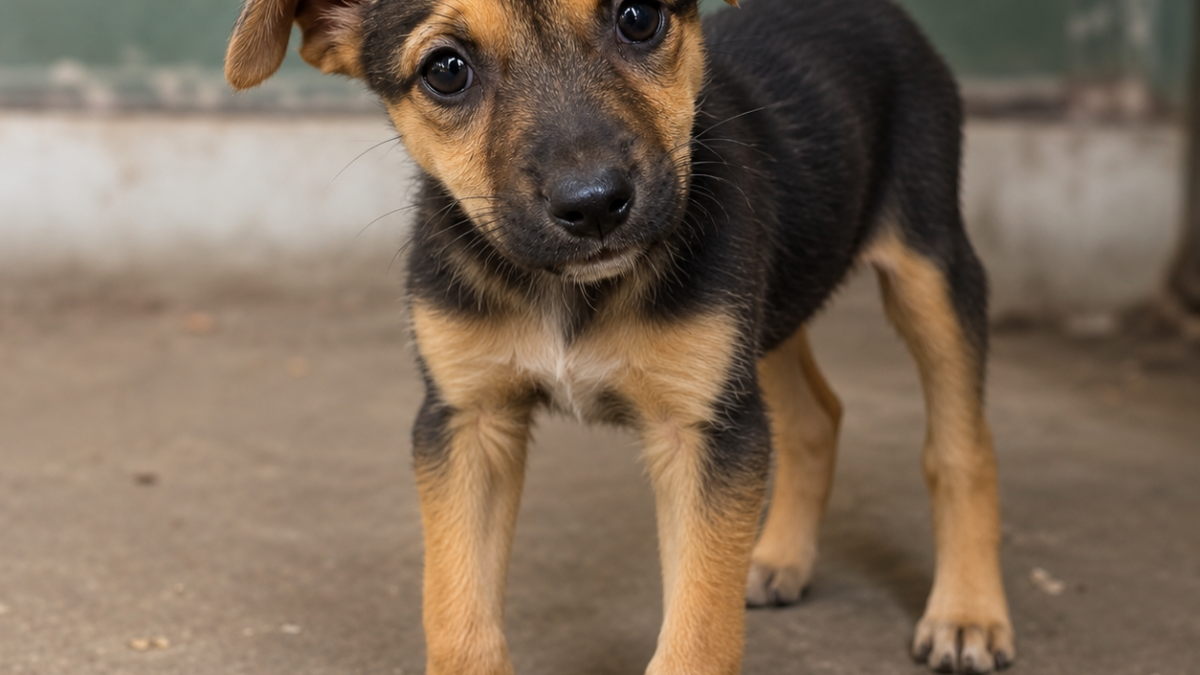
PART 2
For several seconds, Sarah and I just stared at each other.
“That’s a dog,” she whispered.
I nodded.
There was no mistaking it now.
Another faint scrape came from behind the door.
Then silence.
I tried the handle.
Locked.
“Milo.”
He scratched harder.
I crouched and pulled him back enough to look beneath the gap.
It was almost completely dark inside.
I could smell something, though.
Urine.
Rotting food.
Damp concrete.
And something metallic.
Sarah covered her mouth.
“Oh my God.”
I stood.
“We need the superintendent.”
Our building manager, Frank Ellis, lived on the first floor.
I called him three times before he answered.
“What?”
“Frank, come to the basement.”
“Why?”
“Now.”
“Michael, it’s Saturday.”
“There’s a dog locked in one of the storage rooms.”
Silence.
“What?”
“Bring the keys.”
He arrived five minutes later wearing slippers and an old sweatshirt.
The moment he saw which door we were standing beside, his expression changed.
“What’s in there?” I asked.
“Storage.”
“Whose?”
Frank hesitated.
“Unit belongs to the building, but someone rents it.”
“Who?”
“Fourth floor.”
My stomach tightened.
We lived on the third.
“Who on the fourth floor?”
“Darren Cole.”
I knew the name.
Not well.
Darren was a man in his late forties who had moved into the building maybe six months earlier.
Large.
Quiet.
Always wore work boots.
We sometimes passed in the lobby.
He rarely acknowledged anyone.
Sarah grabbed Frank’s arm.
“Open it.”
“I can’t just open a tenant’s rented storage space.”
“There is an animal inside.”
“I heard you.”
“Then open it.”
Frank looked uncomfortable.
“I need to call him.”
I took out my phone.
“No. We call animal control.”
Frank’s face tightened.
“Let’s not turn this into—”
A sound came from behind the door again.
This time louder.
A dog crying.
Frank stopped talking.
I called.
Animal control told us not to enter without authorization unless there was an immediate life-threatening emergency.
Frank finally produced a ring of keys.
“I’m not comfortable with this.”
Sarah looked at him.
“You’ll be less comfortable explaining why an animal died while you stood outside holding the key.”
That did it.
He unlocked the door.
The smell hit us first.
Sarah stepped backward.
“Jesus.”
I turned on my phone flashlight.
The room was maybe twelve feet by ten.
No windows.
Concrete walls.
Shelves on one side.
Old boxes.
And in the far corner, attached to a pipe by a short chain, was a dog.
A female.
Medium-sized.
Tan.
White patch on her chest.
One ear torn.
I looked down at Milo.
Then back at her.
They looked almost identical.
The female tried to stand.
Her legs failed.
Milo made a sound I had never heard from a dog before.
He pulled free of my hand and ran toward her.
“Milo!”
The female lifted her head.
For one second, she seemed confused.
Then her tail moved.
Once.
Milo reached her.
He crawled beneath her neck and began licking her face.
The dog pressed her nose against his head.
Sarah started crying.
“Michael…”
I couldn’t answer.
I already knew.
Maybe not scientifically.
Maybe not with proof.
But I knew.
“That has to be his mother.”
Animal control arrived fifteen minutes later.
Officer Lena Garcia entered first.
The moment she saw the female dog, her entire expression changed.
“How long has she been here?”
Frank shook his head.
“I don’t know.”
“Who rents this room?”
“Darren Cole.”
“Where is he?”
“I don’t know.”
Lena examined the dog.
She had no water except a dirty plastic container with maybe half an inch left at the bottom.
An empty food bag lay against the wall.
The chain around her neck was so short she couldn’t move more than three feet.
There were sores beneath the collar.
“How often does the renter come down here?” Lena asked.
Frank looked increasingly pale.
“I don’t know.”
“You manage the building.”
“I don’t monitor tenants.”
“Did you know he kept an animal here?”
“No.”
Milo refused to leave the female.
When Lena tried to move him, he growled.
Not aggressively.
Protectively.
“It’s okay,” Sarah whispered.
She sat beside him.
“We’re helping her.”
Eventually, they cut the chain.
The female couldn’t walk.
Two officers lifted her onto a stretcher.
Milo followed.
At the elevator, Lena turned.
“We’re taking her to Riverbend Veterinary Hospital.”
“We’re coming.”
“You don’t need to.”
Sarah wiped her face.
“Yes, we do.”
We drove behind the animal control van.
Milo stood with his front paws against the back of our seats the entire way.
He never lay down.
At the clinic, the female dog was rushed inside.
Milo paced.
Sarah sat on the floor with him.
I stood near the reception desk trying to make sense of what had just happened.
Two hours earlier, we’d adopted a dog from a shelter.
Then he led us into our own basement.
Now a dog who looked exactly like him was fighting for her life.
Dr. Karen Patel came out after nearly an hour.
“Who’s here with the tan female?”
We stood.
“Is she alive?”
“Yes.”
Sarah closed her eyes.
“How bad?”
“She’s severely dehydrated and underweight. She has pressure sores around her neck. One front leg has an untreated injury, probably several weeks old.”
“Will she survive?”
“I think so.”
I exhaled.
Dr. Patel looked toward Milo.
“Is that the puppy found with her?”
“No. We adopted him this morning.”
Her eyebrows lifted.
I explained.
Shelter.
Apartment.
Door.
Basement.
When I finished, Dr. Patel stared at Milo.
“Can I look at him?”
“Of course.”
She checked his teeth.
Body.
Scars.
Then his damaged ear.
“How long ago was he found?”
“Three weeks.”
She looked toward the treatment area.
“You think they’re related.”
“Yes.”
“I wouldn’t dismiss it.”
Sarah touched Milo’s head.
“Can we find out?”
“DNA could tell you.”
“Do it.”
I didn’t even ask what it cost.
While the female remained hospitalized, police came to the clinic.
Because once animal control saw the basement, the case stopped being simply about neglect.
Officer Garcia had found something else.
Several collars.
Three cages.
Empty medication bottles.
A notebook with names, dates, and dollar amounts.
And photographs.
Dogs.
Lots of dogs.
Some puppies.
Some adults.
Some marked with numbers.
Milo appeared in two photographs.
His torn ear was unmistakable.
The female appeared in several more.
Her name, according to the notebook, was Luna.
The police asked us to identify Darren Cole.
They showed us a photograph.
I recognized him.
Sarah did too.
“You think he owned Milo?” I asked.
Detective Noah Bennett nodded.
“Looks that way.”
“Then how did Milo end up at the shelter?”
“We’re investigating.”
“Did Darren dump him?”
“We don’t know.”
I looked at Milo.
He was lying near the clinic door.
Waiting.
“His ear…”
Detective Bennett followed my gaze.
“We’ll find out what we can.”
Darren did not come home that night.
Or the next.
Police searched his apartment under a warrant.
They found more records.
Cash.
Dog vaccination certificates with names that didn’t match any registered animals.
Online advertisements.
Messages discussing puppy sales.
Photographs of dogs kept in cages.
Darren had apparently been operating an illegal breeding business.
Not from our building originally.
He had moved recently after complaints at another property.
Luna had been one of his breeding females.
Milo was from her most recent litter.
Something had happened to his ear when he was very young.
One former buyer later told police she had visited Darren months earlier and saw puppies kept in overcrowded pens.
“Why didn’t she report it?” Sarah asked when we learned that.
I had no answer.
We would ask that question many times over the following months.
Why didn’t someone report it?
Why didn’t someone stop him?
Why did people look away?
The shelter records offered part of Milo’s story.
He had been found beside a dumpster behind a grocery store.
No collar.
Terrified.
Underweight.
A delivery driver had called animal control.
The shelter assumed he was simply abandoned.
Now investigators believed Darren had dumped him.
Why?
Because Milo’s ear was damaged.
Because he was timid.
Because nobody wanted to pay full price for an injured puppy.
One text message recovered from Darren’s phone backup said:
“Toss the bad one. No point feeding what won’t sell.”
Sarah read that message once.
Then walked into our bedroom and shut the door.
I found her sitting on the edge of the bed crying.
“He was talking about Milo.”
“I know.”
“He called him the bad one.”
I sat beside her.
Milo appeared in the doorway.
Sarah immediately wiped her eyes.
He approached slowly.
Still uncertain around sudden movement.
Then he placed his head on her knee.
She broke again.
“You aren’t the bad one.”
His tail moved.
“You hear me?”
She held his face gently.
“You were never the bad one.”
Luna spent six days in the hospital.
Milo visited every day.
The first time she was strong enough to stand, he stood outside her kennel.
She took two steps.
Collapsed.
Milo whined.
Dr. Patel helped her up.
“Slowly.”
Luna tried again.
Three steps.
Then four.
She reached Milo.
They pressed their faces together through the bars.
The DNA results arrived two days later.
Dr. Patel called us into her office.
“You were right.”
Sarah covered her mouth.
“Mother and son?”
“Probability is extremely high.”
I looked through the window toward Luna.
Milo had found his mother.
Not because he remembered the building.
He had never lived there.
Investigators eventually figured out what probably happened.
When Darren moved into our building, he brought Luna.
Milo had been dumped weeks earlier.
But the morning we adopted him, as soon as we opened our apartment door, Milo picked up a scent in the stairwell.
Darren.
Luna.
Something familiar.
Something connected to his earliest memories.
He followed it.
Downstairs.
Through the lobby.
To the basement.
His nose had led him to the one thing he thought he’d lost forever.
I started looking at Milo differently after that.
Before, I thought he’d been trying to escape us.
He hadn’t.
He’d been trying to find her.
Luna came home with us as a temporary foster.
Temporary.
That word lasted about three hours.
The moment she entered our apartment, Milo became a different dog.
He walked beside her.
Showed her the water bowl.
The blanket.
Our bedroom.
The balcony door.
When Luna hesitated at the living room rug, Milo crossed it first.
She followed.
Sarah watched them.
“We’re keeping her.”
“We haven’t even discussed it.”
“We’re keeping her.”
“Animal control hasn’t released her for adoption.”
“When they do.”
I sighed.
“We now have two dogs.”
“Yes.”
“This morning yesterday we had zero.”
“Life happens fast.”
Apparently.
Healing did not.
That part was slow.
Milo had spent weeks in a shelter after an unknown period of neglect.
Luna had spent months being used, confined, and eventually chained inside a basement.
Neither behaved like the dogs people show in adoption commercials.
They were not instantly grateful.
They didn’t magically understand they were safe.
Milo startled when metal clanged.
Luna panicked around closed doors.
If Sarah or I raised our voices—even at each other—they both disappeared.
Luna refused to eat if anyone stood near the bowl.
Milo hoarded food.
He would take pieces of kibble and hide them beneath the couch.
The first time I found a pile, I laughed.
Then I realized why he did it.
He didn’t know whether there would be food tomorrow.
I stopped laughing.
Instead, every morning, I filled the bowls at the same time.
Every evening, again.
Routine.
Predictability.
Safety.
Weeks passed.
The hidden food piles became smaller.
Then stopped.
Luna’s wounds healed.
Her coat improved.
She gained weight.
Her eyes changed too.
When we first found her, she looked at people the way Milo had looked at us in the shelter.
Through them.
Not expecting anything.
Eventually, she started looking at us.
Actually looking.
One Saturday morning, almost two months after the basement rescue, I woke to something touching my hand.
Luna.
She stood beside the bed.
I didn’t move.
She sniffed my fingers.
Then pressed her head beneath my palm.
I stopped breathing.
Sarah opened one eye.
“Don’t move.”
“I know.”
Luna stood there while I stroked her head.
It lasted maybe fifteen seconds.
Then she walked away.
Sarah smiled.
“She chose you.”
That meant more than I expected.
Meanwhile, the investigation into Darren grew.
At first, police believed the basement was the center of his operation.
It wasn’t.
It was just where he kept Luna after moving.
Records led them to a rented property outside the city.
By the time officers arrived, most of the animals were gone.
But neighbors remembered vans.
Barking.
People arriving to buy puppies.
One man remembered seeing dogs transferred late at night.
Another remembered a puppy with a torn ear.
Milo.
Detective Bennett kept calling us with questions.
Then one evening he asked:
“Did Milo have any medical paperwork from the shelter?”
“Just intake records.”
“No prior veterinary history?”
“No.”
“Okay.”
“Why?”
“We found a clinic.”
My stomach tightened.
“What clinic?”
“A place called North County Animal Care. Darren took animals there occasionally.”
“Did they treat Milo?”
“We think so.”
The veterinarian remembered the litter.
Five puppies.
One was attacked inside an overcrowded pen.
The injury tore part of his ear.
The vet had recommended separating the pups, improving the conditions, and treating the wound.
Darren paid for basic antibiotics.
Then never returned.
The vet had reported concerns.
The report went nowhere.
“Why?” I asked.
Detective Bennett sounded tired.
“Insufficient evidence at the time.”
“How many times does somebody have to notice before it’s sufficient?”
“I don’t know, Michael.”
That was the first time I heard frustration in his voice.
He was asking himself the same question.
Darren was finally arrested in another county.
Traffic stop.
Routine.
Officer ran his name.
Warrant came up.
When Bennett called, I expected satisfaction.
Instead I felt sick.
“What’s wrong?” Sarah asked.
“They got him.”
She went quiet.
Milo was asleep beside Luna.
“You okay?”
“No.”
“Me neither.”
I wanted Darren punished.
But seeing Milo sleep made anger feel strangely useless.
Nothing a judge did would give him back the first months of his life.
Nothing would erase Luna’s fear of chains.
Justice mattered.
But healing had already become more important.
Darren made bail.
That changed everything again.
His lawyer insisted the animals had been properly cared for.
Claimed Luna had medical problems unrelated to confinement.
Claimed Milo was abandoned by someone else.
Said the notebook was normal breeding documentation.
Then Darren returned to our building.
Frank called me before I saw him.
“He’s upstairs.”
“Why?”
“He still technically has a lease.”
“You’re letting him back?”
“My attorney says I can’t lock him out until the eviction process—”
I hung up.
Sarah was standing near the kitchen.
“What?”
“Darren’s back.”
Luna heard the name.
Or maybe she heard my tone.
Her body tightened.
Milo stood.
A few minutes later, footsteps sounded in the hallway.
Heavy work boots.
Milo froze.
Then backed away.
Luna started shaking.
That was enough.
I went into the hall.
Sarah grabbed my arm.
“Don’t.”
“I just want to make sure he stays away.”
“That sentence is how bad decisions begin.”
She was right.
So I stayed inside.
The footsteps reached our floor.
Stopped.
A shadow appeared beneath the door.
Milo growled.
Luna disappeared behind the couch.
Then someone knocked.
Three times.
I checked the camera we’d installed after the rescue.
Darren.
I called Detective Bennett.
Then spoke through the door.
“What do you want?”
“Open up.”
“No.”
“You have my dog.”
My hand tightened.
“Luna isn’t yours.”
“She legally is.”
“Animal control has custody.”
“You stole her out of my storage unit.”
I almost laughed.
“You chained her there without food.”
“You don’t know anything.”
“I know enough.”
Silence.
Then:
“You also have my puppy.”
That made something inside me snap.
I stepped toward the door.
Sarah whispered:
“Michael.”
I stopped.
Darren continued.
“You think you saved them?”
I said nothing.
“They’re animals.”
There was contempt in his voice.
“Replaceable.”
Milo growled louder.
I looked at the camera.
Everything was recording.
“You should leave.”
Darren laughed.
“Tell your wife to enjoy the dogs while you’ve got them.”
Then he walked away.
Detective Bennett arrived thirty minutes later.
He watched the recording twice.
“That’s useful.”
“Useful?”
“Potential intimidation.”
“He threatened my wife.”
“He implied something.”
“That’s a threat.”
“I know.”
I hated legal language.
Everything became “potential.”
“Possible.”
“Alleged.”
But Bennett took it seriously.
He told us to document everything.
We installed more cameras.
Changed locks.
Frank finally began eviction proceedings.
For the next week, nothing happened.
Then someone put raw meat outside our apartment door.
Sarah saw it before letting the dogs out.
There were crushed pills inside.
We called police.
Lab testing identified veterinary sedatives.
That transformed the situation.
Whoever left the food had intended the dogs to eat it.
Security footage from the hallway should have shown the person.
It didn’t.
Someone had covered the camera with tape for eleven minutes.
But a parking lot camera caught Darren entering the building.
Another showed him leaving.
He was arrested again.
This time, bail was revoked.
I slept properly for the first time in weeks.
The cruelty case expanded.
After Darren’s arrest, former buyers started contacting authorities.
Some because they saw the news.
Others because investigators found their names in his records.
People described puppies becoming sick days after purchase.
Congenital problems.
Poor socialization.
False vaccine records.
One family had bought a puppy that died within two weeks.
They had tried calling Darren.
He blocked them.
Another woman had purchased a dog she believed was eight weeks old.
A veterinarian later estimated the puppy was barely six.
One former employee finally came forward.
Her name was Rachel.
She had worked for Darren for four months.
She knew Luna.
“She was one of his favorites,” Rachel said during a recorded interview we later heard about.
At first that sounded strange.
Then she explained.
Favorite meant profitable.
Luna produced puppies with markings buyers liked.
Darren bred her too often.
When Luna’s health declined, her value declined.
Milo’s litter was one of her last.
When Milo’s ear was injured, Darren became angry.
“He said damaged puppies don’t sell.”
Rachel had offered to take him.
Darren refused.
Why?
“Because if employees started taking dogs, they’d ask questions about where the others went.”
So Milo disappeared.
Rachel assumed Darren had killed him.
When she saw his photograph in the newspaper months later, she cried.
The newspaper showed Milo standing beside Luna in our apartment.
Caption:
ABANDONED PUPPY LEADS NEW FAMILY TO HIS MOTHER.
That article spread farther than we expected.
Soon people from outside the county were sending messages.
Some offered money.
Some offered help.
Some simply wrote:
I adopted the dog nobody wanted too.
One elderly man sent Milo a blue blanket.
A child sent a drawing of him and Luna under a giant yellow sun.
Sarah taped it to the refrigerator.
Milo tried to eat the corner.
“Philistine,” I told him.
His tail wagged.
That was another sign of change.
Milo began wagging.
At first only with Luna.
Then Sarah.
Eventually me.
The dog who hadn’t reacted when his kennel opened now ran toward the door when we came home.
Not always.
Bad days remained.
But the empty stare disappeared.
His personality emerged.
And unfortunately, his personality was ridiculous.
He stole socks.
Not shoes.
Only socks.
Clean or dirty.
Didn’t matter.
He didn’t chew them.
He collected them.
We found sixteen beneath the guest bed.
Sarah stood with her hands on her hips.
“Milo.”
He sat beside the pile.
Proud.
“Why?”
I said, “He’s building savings.”
“With my socks?”
“Diversified portfolio.”
Luna watched from the doorway as though embarrassed by her son.
Then she started stealing dish towels.
Trauma recovery apparently included petty theft.
I loved them both.
There was no moment when I decided.
It happened gradually.
Until one day I realized I couldn’t imagine the apartment without nails clicking across the floor.
The legal custody hold on Luna lasted almost six months.
When animal control finally called, I answered from work.
“Mr. Carter?”
“Yes.”
“Luna has been officially released for adoption.”
I stood.
My coworker looked at me.
“Okay.”
“Would you like to submit an application?”
“Yes.”
“There are forms—”
“Yes.”
She laughed.
“You haven’t heard the requirements.”
“Yes.”
“Mr. Carter.”
“I am adopting her.”
Sarah signed the paperwork that afternoon.
We took a photograph outside the shelter.
Milo on one side.
Luna on the other.
Sarah kneeling between them.
Me holding the adoption certificate.
Someone online later commented:
“They rescued Luna.”
I read it.
Then looked at our dogs.
I’m not sure that was true.
They had changed us just as much.
The trial began nearly a year after we adopted Milo.
By then Darren faced charges involving animal cruelty, unlawful commercial breeding, falsification of veterinary records, witness intimidation, and attempted poisoning.
The courtroom was smaller than I expected.
Ordinary.
Fluorescent lights.
Wooden benches.
Darren sat at the defense table in a suit.
For the first time, he looked smaller than he had in our hallway.
I testified on the second day.
The prosecutor asked me to describe the shelter.
Milo’s behavior.
Our apartment.
The door.
His run down the stairs.
The basement.
“Did you know there was a dog behind that door?”
“No.”
“Had Milo ever been in your building before?”
“Not to my knowledge.”
“What did he do when you opened the basement?”
“He ran to Luna.”
“Could Luna walk?”
“Barely.”
“What was her condition?”
“Starving. Chained. Injured.”
The prosecutor showed photographs.
I hated seeing them.
Luna in the corner.
Chain.
Empty water.
The jury looked uncomfortable.
Good.
Then came the photograph of Milo and Luna touching noses at the clinic.
The prosecutor asked:
“What did DNA testing later establish?”
“That Luna was Milo’s mother.”
A woman on the jury wiped her eyes.
Darren’s attorney stood.
“Mr. Carter, you’re emotionally attached to these animals.”
“Yes.”
“You adopted both.”
“Yes.”
“You’ve participated in media coverage.”
“Some.”
“You have described my client as cruel.”
“I don’t remember using that exact word publicly.”
“But you believe it.”
I looked at Darren.
Then back at the attorney.
“Yes.”
“Your belief may affect your interpretation.”
“My interpretation of what?”
“The conditions.”
I almost laughed.
“An underweight dog was chained in a dark basement without adequate food or water.”
“Again, your interpretation.”
“No.”
I pointed toward the photograph.
“That’s a picture.”
The attorney changed direction.
Rachel testified.
The former employee.
Her testimony was worse for Darren than mine.
She described breeding schedules.
Overcrowded cages.
Sick puppies.
Milo’s injury.
Darren’s comment about damaged animals.
Then the prosecutor showed the recovered message.
“Toss the bad one. No point feeding what won’t sell.”
“Who was he referring to?”
Rachel looked toward Milo’s photograph.
“The puppy with the torn ear.”
My hands curled.
Sarah placed her hand over mine.
“He has a name,” she whispered.
“Milo.”
“Yes.”
“He has a name.”
Dr. Patel testified about Luna’s medical condition.
The shelter director described Milo’s intake.
Detective Bennett explained the records found in Darren’s apartment and storage room.
Then prosecutors introduced the poisoned meat.
The hallway camera.
The parking lot footage.
The recorded confrontation outside our apartment.
Darren’s voice filled the courtroom.
“They’re animals. Replaceable.”
That sentence did more damage than any emotional speech could have.
Replaceable.
The prosecutor let silence sit afterward.
Then asked Detective Bennett:
“Did the defendant attempt to recover the dogs through legal process?”
“No.”
“Did he file a petition?”
“No.”
“What happened instead?”
“Drugged food was left outside the witnesses’ apartment.”
The defense objected.
The judge allowed the evidence under the intimidation charge.
For the first time, Darren looked worried.
The trial lasted eight days.
The jury deliberated less than five hours.
Guilty.
Not on every count.
But on enough.
Cruelty.
Illegal breeding violations.
Falsified records.
Attempted harm to the animals after seizure.
Witness intimidation.
Darren stood without expression while the verdicts were read.
I expected to feel victorious.
I didn’t.
I looked at Sarah.
She looked tired.
So was I.
Later, outside the courthouse, reporters approached.
One asked:
“Do you feel Milo got revenge?”
The word bothered me.
Revenge.
I thought about it.
Then said:
“Milo doesn’t know what revenge is.”
The reporter waited.
“He wanted his mother.”
I swallowed.
“He found her.”
I walked away.
That became the line newspapers used.
Not the answer I expected to become public.
But it was true.
Milo didn’t destroy Darren.
He didn’t understand the investigation.
Didn’t care about verdicts.
He followed a scent.
He refused to ignore a cry behind a door.
Everything else happened because humans finally paid attention.
At sentencing, victims were allowed to speak.
A family described losing the puppy they bought from Darren.
Rachel described the guilt of working there and remaining silent.
Then Sarah spoke.
I hadn’t known she planned to.
She stood at the front of the courtroom holding Milo’s shelter photograph.
“This is the picture taken the day my husband and I adopted him.”
She showed it.
Milo in the kennel corner.
Torn ear.
Empty eyes.
“When we opened his cage, he didn’t wag his tail.”
Sarah’s voice trembled.
“He didn’t know freedom was good.”
Darren looked down.
“That’s what your treatment taught him.”
Silence.
“Less than two hours later, that same dog led us to his mother.”
She showed another photograph.
Luna after recovery.
Healthy.
Standing beside Milo in sunlight.
“You called animals replaceable.”
Sarah looked directly at Darren.
“You were wrong.”
She returned to her seat.
I held her hand.
The judge sentenced Darren to prison time, fines, restitution, and a permanent prohibition—subject to jurisdictional limits—from operating a breeding business or possessing animals after release without court approval.
His remaining dogs had already been seized.
The breeding operation ended.
But the part that felt most satisfying happened months later.
The rural property Darren had used before moving into our building was sold.
A nonprofit rescue bought it.
They tore down the worst kennels.
Rebuilt the rest.
Added exercise yards.
A small medical room.
Heating.
Clean water.
The place reopened as Haven House Rescue.
Sarah showed me the announcement.
I stared at the photograph.
“That’s his old property?”
“Yes.”
“Seriously?”
“Yes.”
I laughed.
Not because anything was funny.
Because sometimes justice is almost too perfectly shaped.
The place where animals had once been treated as inventory now existed to save them.
A year after opening, Haven House asked whether Milo and Luna could attend a fundraiser.
We hesitated.
Luna still disliked crowds.
Milo loved people now, but unfamiliar spaces sometimes made him nervous.
We agreed to visit early before the event.
When we arrived, the old property looked nothing like the crime-scene photographs.
Grass.
Clean runs.
Volunteers.
Dogs playing.
Sarah stood beside me.
“What do you think?”
“I think Darren would hate it.”
She smiled.
“Good.”
Milo sniffed everything.
Luna remained close to us.
Then a frightened puppy in one of the recovery yards began whining.
Milo stopped.
His head turned.
I knew that look.
The same one he’d had at our apartment door.
He walked toward the fence.
The puppy backed away.
Milo lay down.
He didn’t bark.
Didn’t push.
Just waited.
Five minutes later, the puppy came closer.
They touched noses through the fence.
I looked at Sarah.
Her eyes filled.
“He remembers.”
“Maybe.”
“Not the place.”
She watched him.
“The feeling.”
That possibility stayed with me.
Milo had once been the dog sitting in the back of the kennel.
Now he knew how to wait for another scared animal.
We started volunteering at Haven House.
At first once a month.
Then twice.
Sarah handled adoption events.
I fixed whatever was broken.
Milo became unofficial welcome committee.
Luna preferred staying home.
That was fine.
She had spent enough of her life being useful to humans.
She had earned the right to do absolutely nothing.
So she slept.
Demanded dinner.
Occupied the best section of the couch.
Occasionally judged everyone.
Years passed.
Milo’s torn ear became less noticeable because we stopped seeing it as damage.
It was simply his ear.
Children loved it.
One little boy asked:
“Does it hurt?”
“Not anymore.”
“Why does it look like that?”
“He got hurt when he was a puppy.”
The boy considered this.
“Does he know he’s different?”
I looked at Milo.
He was trying to steal a granola bar from the boy’s father.
“No.”
The child smiled.
“Good.”
That became how I thought about scars.
People see them as evidence of what happened.
Animals often just continue living around them.
Luna aged faster than Milo.
Her body had been through too much.
At nine, arthritis appeared.
At ten, her kidneys began struggling.
Medication helped.
Diet helped.
Milo helped most.
If Luna moved slowly, he slowed down.
If she stopped on walks, he stopped.
At night, they slept together.
Mother and son.
The puppy she had lost.
The mother he had found.
One winter morning, Luna couldn’t get up.
Dr. Patel came to our apartment.
She had treated Luna from the first day.
Now she sat beside her on our living room floor.
“It’s time.”
Sarah began crying immediately.
I looked at Milo.
He was lying beside Luna.
Their bodies touched.
“We can take her to the clinic.”
“No.”
I knew.
“She stays home.”
Dr. Patel nodded.
We spent the afternoon with her.
No dramatic final meal.
Luna didn’t want food.
She wanted warmth.
Milo.
Us.
Sarah sat with Luna’s head in her lap.
I rubbed the white patch on her chest.
“Remember the basement?”
Sarah shot me a look.
“What?”
“Terrible conversation.”
I smiled through tears.
“I know.”
I leaned closer.
“I thought we were rescuing you.”
Luna’s eyes opened slightly.
“We had no idea you came with baggage.”
Milo’s ear lifted.
“Literally.”
Sarah laughed through tears.
“We ended up with him.”
Luna breathed slowly.
“You did good.”
My voice broke.
“You kept him alive long enough to exist.”
I touched Milo.
“And he came back for you.”
Luna’s eyes moved toward him.
Maybe coincidence.
Maybe understanding.
I chose to believe she knew he was there.
“You can rest.”
Luna died with Milo pressed against her side.
For two weeks afterward, Milo searched for her.
Bedroom.
Kitchen.
Balcony.
He stood outside the closet where we kept her leash.
Sometimes he cried at night.
That destroyed me.
We couldn’t explain death to him.
So we did what he’d taught us from the beginning.
We stayed.
When he cried, we sat nearby.
When he didn’t eat, we waited.
When he carried Luna’s old blanket into the living room, we let him sleep on it.
Grief had no shortcut.
Eventually, one morning, Milo brought me a sock.
I stared.
“You’re stealing again?”
Tail wag.
I laughed so suddenly it hurt.
Sarah came in.
“What?”
“He stole my sock.”
She looked at Milo.
Then smiled.
“There he is.”
Life moved forward.
Not away from Luna.
Forward with her memory inside it.
We buried her ashes beneath a tree at Haven House.
The rescue placed a small plaque.
LUNA
SHE WAITED IN THE DARK.
HER SON FOUND THE DOOR.
I hated it at first.
Too emotional.
Then I read it again.
It was accurate.
Milo visited the tree every time we volunteered.
Probably because it smelled like other dogs.
Again, I resisted giving every behavior symbolic meaning.
But sometimes he would sit beneath the tree.
I let myself believe a little.
Milo became old.
The puppy nobody wanted eventually developed a gray muzzle.
His legs slowed.
His torn ear softened at the edges.
But he kept visiting Haven House.
There was one thing he never stopped doing.
Listening.
A nervous whine from another room?
Milo heard it.
A frightened dog behind a fence?
He noticed.
He would go as close as allowed.
Then lie down.
Wait.
Volunteers began calling it “the Milo method.”
No pressure.
No grabbing.
No demanding affection.
Just presence.
One young volunteer asked me:
“How did you train him to do that?”
“I didn’t.”
“Then who did?”
I thought about Luna.
The shelter.
The basement door.
“Life, I guess.”
That answer sounded sentimental.
But I couldn’t improve it.
Haven House eventually created a special room for dogs who were too frightened for normal kennels.
Quiet.
Soft lighting.
Soundproof walls.
Beds instead of metal floors.
On the door, they placed a small sign:
MILO’S ROOM
FOR THE ONES WHO DON’T KNOW THEY’VE BEEN CHOSEN YET.
Sarah cried when she saw it.
I pretended not to.
Failed.
Milo was twelve when his heart began failing.
Medication gave us almost another year.
A good year.
Slower walks.
Long naps.
Still socks.
One Saturday morning, we took him to Haven House.
He moved carefully through the halls.
Volunteers greeted him.
He accepted treats like royalty.
Then we entered Milo’s Room.
A small black dog sat in the corner.
Terrified.
Recently surrendered.
Wouldn’t approach anyone.
Milo looked at her.
Then lowered himself onto the floor.
It took effort.
His legs trembled.
But he lay there.
The black dog watched.
Five minutes.
Ten.
Then she moved forward.
Milo stayed still.
She reached him.
Sniffed his torn ear.
Then curled beside his front legs.
I sat outside the room and cried.
Sarah held my hand.
“He’s still doing it.”
“Yeah.”
“Even now.”
“Yeah.”
That was Milo.
He had been unwanted because he didn’t perform happiness for strangers.
He grew into a dog who never demanded happiness from anyone else.
A week later, Milo stopped eating.
I knew the rhythm by then.
The terrible rhythm.
Dr. Patel came again.
Same apartment.
Same living room.
Different dog.
Milo lay on Luna’s old blanket.
Sarah sat beside him.
I sat on the floor.
“You know,” I told him, “we only went to look.”
His tail moved faintly.
“Your mother ruined that.”
Sarah whispered:
“You chose him before Luna.”
“Technicality.”
I touched Milo’s ear.
The damaged one.
The reason shelter visitors had passed.
“People thought this made you ugly.”
My voice broke.
“They were idiots.”
Milo opened his eyes.
“You were perfect.”
I laughed.
“Annoying.”
Tail moved.
“Thief.”
Another movement.
“Terrible respect for personal property.”
Sarah smiled through tears.
Then I couldn’t joke anymore.
“You changed our lives.”
I put my forehead against his.
“And you found her.”
That was the truth I wanted him to carry.
Not the shelter.
Not Darren.
Not the kennel.
“You found your mother.”
His breathing slowed.
“You got her out of the dark.”
Sarah whispered:
“And you got yourself out too.”
Milo died between us.
Quietly.
No metal kennel.
No shelter noise.
No locked door.
Home.
We buried his ashes beside Luna’s tree at Haven House.
His plaque was simpler.
MILO
HE HEARD HER.
HE DIDN’T WALK AWAY.
Afterward, I thought the story was finished.
It wasn’t.
Stories like this rarely end where we think.
Haven House grew.
Milo’s Room helped hundreds of frightened dogs.
The “Milo method” became an actual volunteer training guideline.
Approach slowly.
Reduce pressure.
Allow choice.
Sit nearby.
Wait.
The shelter where we’d originally found Milo changed too.
A new director heard the story.
She removed the habit of judging dogs primarily by how enthusiastically they approached visitors.
They created quiet meet-and-greet spaces.
Volunteers spent time with withdrawn animals.
The dogs in back corners were no longer labeled “poor adoption candidates” simply because they were afraid.
I visited once.
The last kennel had another small dog sitting in the corner.
Black.
One cloudy eye.
Didn’t bark.
A couple walked past.
Then stopped.
The woman crouched.
I smiled.
Maybe he would be chosen.
Maybe not that day.
But someone had stopped.
That mattered.
Frank, our old building manager, changed too.
He never forgave himself for hesitating outside the basement.
One year after the trial, he required that all maintenance and storage spaces in the building be inspected regularly under legal lease provisions.
Pets could no longer be hidden in rented storage rooms.
He donated to Haven House every Christmas.
The first check came with a note:
I had the key and still hesitated. I won’t again.
I kept that note.
Detective Bennett occasionally visited the rescue.
He retired eventually.
At his retirement dinner, he told me Darren’s case had changed how his department handled animal-cruelty complaints.
“People used to think animals were property cases.”
“And now?”
“They’re still property legally in some contexts.”
He shrugged.
“But officers understand cruelty can signal other crimes.”
He looked toward Sarah.
“Intimidation. Fraud. Violence. Control.”
Darren had taught them that.
Milo and Luna forced them to pay attention.
As for Darren, he served his sentence.
I rarely thought about him after a few years.
That surprised me.
For a long time, he had occupied too much space in my mind.
Anger does that.
It convinces you the person who hurt something you love deserves permanent residence in your thoughts.
Eventually, I evicted him.
Not legally.
Emotionally.
The last I heard, he was living in another state under strict restrictions.
No breeding business.
No animals under the terms imposed at that time.
Some people asked whether I hoped he suffered.
No.
I hoped he never controlled another animal.
That was enough.
Haven House was the revenge.
Luna’s years on our couch were revenge.
Milo stealing socks was revenge.
Every frightened dog who entered Milo’s Room and later walked out with a family was revenge.
Not because anybody hurt Darren.
Because everything he treated as worthless proved valuable after escaping him.
That is a more satisfying kind of justice.
One evening, years after Milo died, Sarah and I attended Haven House’s anniversary dinner.
A large photograph hung near the entrance.
Milo and Luna together.
Healthy.
Luna standing.
Milo leaning against her.
Neither looking at the camera.
Underneath were the words:
THE DOOR THAT CHANGED EVERYTHING.
A young couple stood beside the photograph.
The woman was holding a leash.
At the other end was the black dog who had curled beside Milo during his final visit.
Her name was Pepper now.
She looked completely different.
Confident.
Bright eyes.
Tail wagging.
The woman noticed me looking.
“Do you know her?”
“I met her once.”
“She was impossible at first.”
I smiled.
“Was she?”
“She hid for weeks.”
The man said:
“The volunteers kept telling us not to force anything.”
“The Milo method,” the woman added.
I looked at Pepper.
She walked over.
Sniffed my hand.
Then leaned against my leg.
I couldn’t speak for a moment.
“Yeah,” I finally said.
“The Milo method.”
That night, driving home, Sarah stared out the window.
“Do you ever think about how random it was?”
“What?”
“That we picked him.”
“All the time.”
“We almost chose another dog.”
“I know.”
“We almost didn’t go to the shelter.”
“I know.”
She was quiet.
“Then Milo almost didn’t hear Luna.”
“He would have.”
“How do you know?”
I smiled.
“Because he heard everything.”
Sarah laughed.
Then became serious.
“If we hadn’t adopted him that morning…”
I knew what she was thinking.
Luna might have died in that basement.
Nobody knew how many days she had left.
Darren might have returned.
Moved her.
Disposed of evidence.
Whatever word you wanted to use.
Instead, Milo arrived in our apartment.
Smelled something familiar.
And refused to ignore it.
Sometimes life turns on enormous decisions.
Marriage.
Jobs.
Moving cities.
Sometimes it turns on a torn-eared puppy nobody else wanted.
Sarah reached across the center console and took my hand.
“We were lucky.”
I shook my head.
“Milo wasn’t.”
“At first.”
I thought about that.
“No.”
At first, he wasn’t.
But luck can arrive late.
Years later, our apartment building was renovated.
The basement storage rooms were removed.
The metal door Milo scratched no longer exists.
Before construction began, Frank called.
“You want something strange?”
“What?”
“The door.”
I laughed.
“Why would I want the door?”
“I figured maybe sentimental.”
“Frank, our dog nearly destroyed his paws on that thing.”
“Fair.”
Then I changed my mind.
“Wait.”
He kept a small section of the metal panel for me.
Just six inches square.
Scratches across the paint.
Milo’s scratches.
I took it to Haven House.
They mounted it inside Milo’s Room.
No dramatic explanation.
Just a small plaque:
HE KNEW SOMEONE WAS BEHIND THE DOOR.
One afternoon, I stood there looking at those marks.
A volunteer beside me asked:
“Was he scared?”
“When?”
“When he scratched the door.”
I remembered.
Milo crying.
Throwing himself against metal.
“He was terrified.”
“But he kept going.”
“Yes.”
The volunteer nodded.
“That’s brave.”
I hadn’t thought about it that way.
People often imagine courage as the absence of fear.
Milo taught me the opposite.
Courage can be fear with somewhere important to go.
He was frightened by the stairwell.
By the smell.
By the memory.
Maybe by Darren.
But Luna was behind the door.
So he stayed.
Sarah and I eventually adopted another dog.
Of course we did.
Her name was Rosie.
She came from Haven House.
Older.
Missing several teeth.
Nobody wanted her quickly because she wasn’t young or pretty.
The first time I saw her, she was sleeping in Milo’s Room.
I looked at Sarah.
“No.”
She said nothing.
“No.”
She smiled.
“We’re not doing this again.”
Rosie came home two days later.
Some lessons never stick.
She was not Milo.
That mattered.
She didn’t steal socks.
She stole bread.
She hated elevators.
Loved strangers.
Snored so loudly I sometimes checked whether construction had started outside.
She had her own story.
But because of Milo, I knew not to expect gratitude.
Because of Luna, I knew healing had its own schedule.
Because of both of them, I understood adoption differently.
We didn’t bring animals home because they owed us love.
We gave them a place where love could happen if and when they were ready.
Rosie became ready almost immediately.
Mostly for bread.
That was fine.
Sometimes I visit Milo and Luna’s tree alone.
Haven House has expanded.
There are more buildings now.
A veterinary wing.
Training yard.
Foster center.
Children visit on school field trips.
The old breeding property has almost disappeared beneath everything built afterward.
That’s fitting.
One day, a group of children gathered beneath the tree.
A volunteer told them the story.
“A puppy was adopted from a shelter,” she said, “and on his first day home, he heard another dog crying behind a basement door.”
One child interrupted.
“Was it really his mom?”
“Yes.”
“How did he know?”
“He smelled her.”
Another asked:
“Did he save her?”
The volunteer smiled.
“He helped people find her.”
I stood farther away.
Then one boy said:
“So he was a hero?”
I waited for the answer.
The volunteer looked toward Milo’s plaque.
“He was a dog who cared that someone was crying.”
That answer was better.
Hero sounds distant.
Impossible.
But caring?
Anyone can do that.
When the children left, I sat beneath the tree.
Rosie was beside me.
She sniffed Milo’s plaque.
Then Luna’s.
I touched the engraved letters.
For years, people had described the story as unbelievable.
What are the chances?
A puppy adopted from a shelter.
Taken to a random apartment.
Smelling his mother in the same building.
Leading his new family downstairs.
Maybe the odds were tiny.
But the thing that mattered wasn’t coincidence.
It was what happened once Milo heard her.
He could have hidden.
He could have stayed quiet.
He didn’t.
He scratched.
He cried.
He made enough noise that eventually we listened.
There are people and animals everywhere doing the same thing.
Maybe not literally scratching a door.
But asking.
Waiting.
Showing fear in ways we misunderstand.
Sitting in the back of shelters instead of jumping forward.
Avoiding eye contact.
Not performing happiness when someone comes near.
Milo looked unadoptable because he’d learned not to expect kindness.
If we’d judged him by his first reaction, we would have left.
Someone else might have taken him.
Maybe nobody would.
Luna might have remained behind that door.
That thought still frightens me.
So when people ask why I tell Milo’s story, that’s why.
Not to make him famous.
Not to make people hate Darren.
Darren doesn’t deserve to be the center.
Milo does.
Luna does.
The animals sitting quietly at the back of shelters do.
The ones who don’t know how to ask for help in a way humans find attractive.
Sometimes the dog that doesn’t jump into your arms has simply learned arms are dangerous.
Sometimes the one who won’t look at you is watching for what happens next.
Sometimes the “damaged” puppy is the one who hears what everyone else misses.
The day we adopted Milo, the shelter employee asked:
“That one?”
As if our choice were surprising.
Years later, I still hear those words.
That one?
Yes.
That one.
The puppy with the torn ear.
The one who didn’t wag.
The one nobody wanted.
That one ran down three flights of stairs and found his mother.
That one exposed an illegal breeding operation.
That one helped rescue other dogs he’d never meet.
That one taught shelters to look differently at frightened animals.
That one gave a room his name.
That one changed our marriage, our home, our idea of family.
That one.
If I could go back to the shelter for one minute, I would kneel in front of Milo’s kennel.
I wouldn’t tell him everything.
He wouldn’t understand.
I would simply say:
“This isn’t a mistake.”
Because that’s what his face looked like when the kennel opened.
Like he thought somebody would realize they’d chosen wrong.
Nobody did.
We chose him.
He chose Luna.
And somehow, in all the chaos that followed, those two choices became a life.
A family.
A rescue center.
Hundreds of second chances.
I still have the first photograph of Milo in our car.
Sarah holding him.
His eyes closed.
That tiny exhausted sigh.
At the time, I thought he was finally relaxing.
Now I wonder whether he had simply decided to risk sleeping.
Trust doesn’t always look dramatic.
Sometimes it is closing your eyes in someone’s arms.
Sometimes it is taking food without hiding it.
Sometimes it is sleeping in the middle of the room instead of against a wall.
Sometimes it is scratching a locked door because someone you love is on the other side.
And sometimes trust begins with two strangers standing outside a kennel saying:
“That one.”
Yes.
That one.
Always that one.








