They Returned a Blind Dog After Just 3 Days Because He Kept Calling for Them—Then an Old Man Learned What He Was Really Asking For
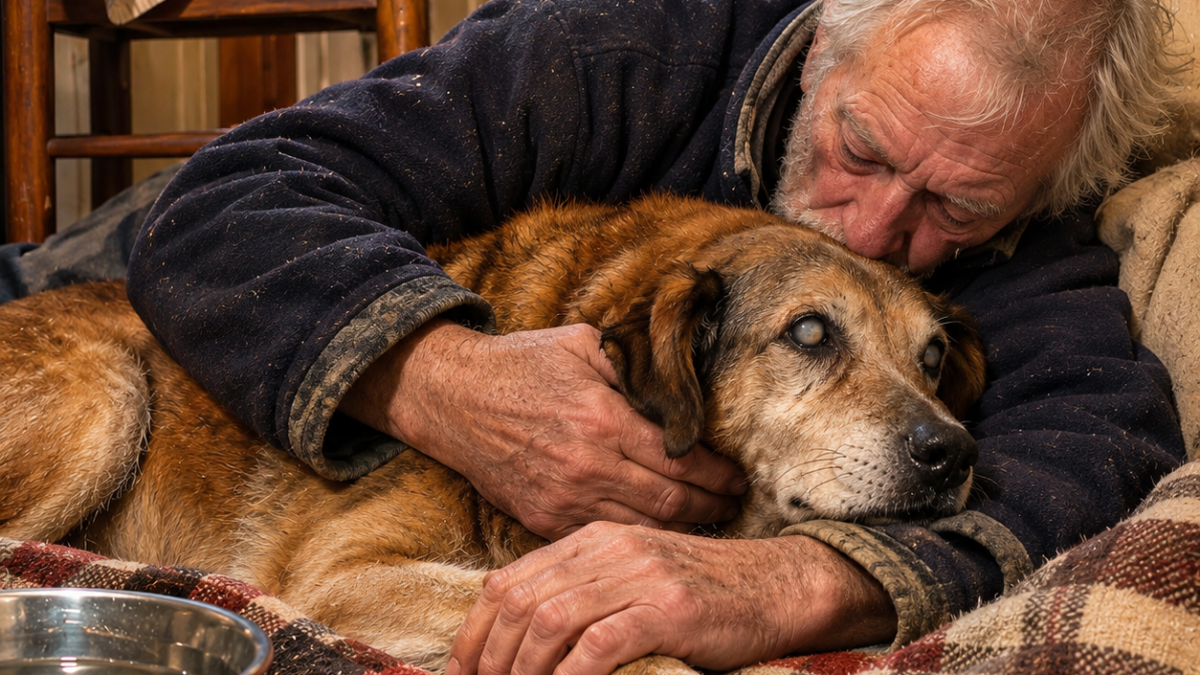
# **They Returned a Blind Dog After Just 3 Days Because He Kept Calling for Them—Then an Old Man Learned What He Was Really Asking For**
They brought the blind dog back to our shelter only three days after adopting him, saying they couldn’t live with the way he cried out every time he lost track of where they were, but when I watched him find his old water bowl without hesitation and then lie down facing the wall, I knew he wasn’t the one who had failed the adoption.
He had never seen a face, a doorway, or the hand reaching down to comfort him, yet he knew exactly when a room had gone empty—and every disappearing footstep seemed to convince him that the people he had finally trusted had vanished forever.
A week later I took him home believing patience and routine would be enough, never imagining that one ordinary sound in my hallway would eventually force everyone who had called him “too difficult” to reconsider what this blind dog had actually been trying to tell us all along.
I was at the shelter the afternoon they returned him.
I wasn’t an employee.
I was seventy-one, widowed, retired, and had started volunteering three mornings a week because my house had become unbearably quiet after my wife died.
Mostly I cleaned kennels, folded blankets, carried bags of food, and tried not to get too attached.
That last part never worked.
The couple arrived with the dog’s leash wrapped tightly around the man’s hand.
The woman looked embarrassed.
“He’s sweet,” she said immediately. “Really sweet.”
Whenever someone begins a surrender with those words, you already know what follows.
“But we can’t do this.”
The shelter worker glanced at the blind dog.
“What happened?”
“He screams when he can’t find us.”
“He calls out?”
“Constantly.”
The man sighed.
“If I go upstairs, he cries. If she goes into another room, he cries. At night he gets up and searches. He walks into things. We haven’t slept.”
“It’s only been three days.”
“We know.”
The woman’s eyes filled.
“We thought love would be enough.”
I looked at the dog.
He was standing perfectly still.
Not pulling toward anyone.
Not exploring.
Listening.
That was what he did when frightened.
He listened so hard his entire body seemed to disappear into his ears.
The paperwork was completed.
The couple left.
The door closed behind them.
The dog turned toward the sound.
He waited.
One minute.
Then another.
Finally he gave a low call.
Not a bark.
Almost a question.
Nobody answered.
The shelter worker led him back toward his old kennel.
The moment his paws crossed the familiar rubber mat, his body changed.
He walked directly to the corner where his water bowl had always been.
The bowl had been returned to the same place.
He found it immediately.
Drank.
Then walked to the back wall.
Turned once.
Lay down with his face toward the concrete.
I stood outside his kennel for a long time.
“Hey,” I said.
One ear moved.
I opened the door and sat on the floor.
“Well… you’re back.”
His head lifted sharply.
At the sound of my voice, he stood and moved toward me.
Slowly.
One paw testing the floor.
Then another.
His shoulder touched my knee.
He froze.
I didn’t move.
A second later, he pressed himself against me so hard that I had to brace one hand on the floor.
That was all it took.
A week later, I took him home.
The first night was terrible.
Whenever I left the room without speaking, he got up immediately.
He searched.
Hit a chair once.
Stopped.
Whined.
I came back.
“I’m here.”
He pressed against my leg.
An hour later, I went to the kitchen.
He panicked again.
So at midnight, exhausted and completely out of ideas, I carried a blanket into the kitchen, lay down on the floor beside him, and stayed there.
The next morning my neighbor Margaret saw me through the open back door.
She stared at the blanket.
Then at the blind dog asleep against my shoulder.
“You slept on the kitchen floor?”
“Yes.”
She shook her head.
“You’re going to return him too, aren’t you?”
I looked down at the dog.
“No.”
Margaret raised an eyebrow.
“You don’t know that.”
I did.
“We just haven’t figured out how to live together yet.”
From that day on, I changed everything.
I stopped leaving rooms silently.
“Kitchen.”
“Bathroom.”
“Bedroom.”
“Back in a minute.”
I kept the furniture in the same places.
Before touching him, I said his name.
Before opening a door near him, I warned him.
Before setting down food, I tapped the floor twice.
And slowly, his panic became shorter.
One month later, I was preparing for our morning walk when the leash slipped from my hand and hit the hallway floor.
Metal against wood.
A tiny sound.
From the bedroom came the rapid click of claws.
He rounded the corner without hitting the wall, stopped directly in front of me, and lifted his head.
For the first time since bringing him home, he had found me without calling to make sure I was still there.
And that was when I realized he had been learning far more than the layout of my house.
—
## **[END OF FACEBOOK OPENING — CONTINUE STORY BELOW]**
I stood in the hallway holding the leash and staring down at him.
He stared back in the only way a blind dog could.
His eyes were open, but they didn’t track my face.
They never had.
The veterinarian had explained that his blindness was permanent. Whatever had prevented his vision from developing had happened long before I met him, and there was nothing surgery, medication, or wishful thinking could change.
He would never see me.
But standing there that morning, I understood something I should have understood much sooner.
Seeing me had never been the point.
Knowing where I was had.
The leash had fallen.
He knew that sound.
The sound meant walk.
Walk meant me.
So instead of panicking because the room had gone quiet, he had used what information he had.
Sound.
Memory.
Routine.
He came.
I crouched.
“You found me.”
His tail began moving.
I laughed.
“Yes, I know. Very impressive.”
He nudged my hand.
I clipped the leash to his harness.
“Come on, Scout.”
That was his name.
The shelter had called him Scout because, as one employee joked, “He explores everything like he’s mapping new territory.”
At first I thought the name was cruelly ironic.
Eventually I realized it was perfect.
Scout did map everything.
Just not with his eyes.
The front door had a rough mat.
Three steps beyond it was the walkway.
To the left, grass.
Straight ahead, the gate.
At the gate I always said:
“Stop.”
He did.
Then:
“Step.”
He found the curb.
“Right.”
We turned.
We walked the same route for the first several weeks because familiarity gave Scout confidence.
Past Margaret’s house.
Along the hedge.
Across the quiet side street.
Around the small park.
Back home.
At first he stayed almost glued to my leg.
If the leash loosened too much, he hesitated.
If a car passed, he stopped.
If someone approached quickly, he moved behind me.
But every morning we repeated the route.
And every morning he remembered more.
By the end of the second month, Scout knew exactly where the grass began near the park.
He knew the bench where I stopped because my left knee had become unreliable after seventy.
He knew there was a mailbox at the corner because he once walked directly into it.
Only once.
The next morning he turned before reaching it.
I stopped beside the mailbox and looked at him.
“You remembered.”
Scout sniffed the grass.
He was unimpressed by my amazement.
One afternoon Margaret stood outside her house when we returned.
Scout heard her gate open and stopped.
“Hello, difficult dog,” she said.
His tail moved.
“You’re encouraging her,” I told him.
Margaret walked closer.
“Can I touch him?”
“Talk first.”
She crouched.
“Scout.”
His head turned.
She held out a hand.
Scout sniffed her fingers, then leaned forward.
Margaret scratched his chest.
“Well, you don’t look very traumatized.”
“That is because you are seeing him two months after the traumatizing part.”
She glanced at me.
“I still can’t believe somebody returned him after three days.”
I could.
Not because I agreed.
Because by then I understood exactly how exhausting those first nights could be.
The first family had not lied.
Scout had cried.
He had searched.
He had bumped into furniture.
He had stood in rooms and called for humans he could not locate.
He had made sleep difficult.
He had panicked every time a door closed unexpectedly.
All true.
What they had misunderstood was why.
They thought his behavior meant he could not adapt to a home.
I had begun to think the opposite.
Scout was desperate to adapt.
He simply didn’t yet have enough information.
That difference mattered.
Imagine being placed in a house you have never seen.
You cannot look across the room to check whether someone is still there.
You cannot see the doorway.
You cannot watch another person walk upstairs.
Then imagine every object smells unfamiliar.
The floor changes beneath your paws.
Voices disappear.
Footsteps stop.
You don’t know if the person has moved six feet away or left forever.
Scout’s crying had never meant:
I don’t want this home.
It meant:
Please tell me where you are.
So I did.
All day.
Sometimes I felt ridiculous.
“Going to the refrigerator.”
“Still in the kitchen.”
“Taking the trash out.”
“I am literally six feet away, Scout.”
Margaret once heard me talking while working in the yard.
She leaned over the fence.
“Who are you having a conversation with?”
“The dog.”
“You’ve lost your mind.”
“Probably.”
Scout barked from inside.
Margaret laughed.
“He agrees.”
But slowly, I had to narrate less.
Scout learned my routines.
At six thirty, the bedroom floor creaked when I got up.
At six thirty-five, the kettle clicked.
At six forty, his bowl touched the kitchen tile twice.
Walk followed breakfast.
When I put on my outdoor shoes, the soles made a different sound from my slippers.
Keys meant I might leave.
For a while, keys triggered panic.
The first time I picked them up after adoption, Scout began whining before I even reached the door.
I put the keys down.
Sat beside him.
“Okay.”
I had made a mistake.
I had spent weeks teaching him where I was while I was home.
I had done almost nothing to teach him that I could leave and return.
That lesson took longer.
The first practice lasted ten seconds.
I stepped outside.
Closed the door.
Counted to ten.
Scout cried on the third second.
I returned on ten.
“Here.”
He pressed against me.
We tried again later.
Fifteen seconds.
Then thirty.
One minute.
The goal was not to sneak out before he noticed.
That would only prove his fear correct.
I said the same phrase each time.
“Back soon.”
Then I left.
Then I came back.
Again.
Again.
Again.
Within two weeks I could walk to Margaret’s gate and return.
Then around the block.
Then to the small grocery store.
Scout still waited near the door.
But he stopped crying continuously.
One day I came home after twenty minutes and found him asleep.
I stood inside my own entryway holding a bag of milk and nearly cried.
He hadn’t heard me enter.
I set the bag down.
“Scout?”
His head lifted.
Tail.
He came toward me.
No panic.
Just greeting.
“You knew I’d come back.”
I wanted to believe that.
Maybe he simply got tired.
Either way, we were moving forward.
Then, three months after I adopted him, the first family returned to the shelter.
I was there cleaning bowls when I recognized the woman’s voice.
“We just wanted to know how he was doing.”
I froze.
The shelter manager looked toward me.
I said nothing.
The couple stood near reception.
The woman looked genuinely nervous.
“We’ve thought about him every day.”
The manager said:
“He was adopted.”
“Oh.”
Relief crossed her face.
Then regret.
“Is he okay?”
The manager looked toward me again.
I sighed.
“He’s fine.”
They turned.
The man recognized me.
“You volunteered here.”
“Yes.”
“You adopted him?”
“Yes.”
The woman put both hands over her mouth.
“Oh.”
There was so much emotion in that one sound that some of my anger disappeared.
Not all.
I had resented them.
That surprised me.
They had returned Scout legally.
They had not abandoned him on a road.
They had not mistreated him.
They had admitted they were overwhelmed and brought him somewhere safe.
Still, every time Scout woke frightened because I had moved to another room, I thought about three days.
Three days.
They had given him seventy-two hours to understand an entire invisible world.
The woman asked:
“Does he still cry?”
“Sometimes.”
Her face changed.
“So he hasn’t…”
“He’s adapting.”
The man looked confused.
“He cried constantly with us.”
“Yes.”
“What did you do?”
“I answered.”
Silence.
The woman blinked.
“What?”
“When he called, I answered.”
“We did too.”
“At first?”
“Yes.”
“And then?”
She looked down.
“We were told not to reinforce it.”
There it was.
Somebody had given them advice.
Ignore him.
He’ll learn.
Don’t reward anxious behavior.
Maybe that strategy works for some dogs in some contexts.
For Scout, silence was not neutral.
Silence was information.
Terrible information.
The woman started crying.
“We thought we were making it worse by answering him.”
My anger changed again.
They had not simply been impatient.
They had been scared of doing the wrong thing.
Then they had done the wrong thing.
That is painfully human.
I said:
“He needed to know where you were.”
“I know that now.”
The man asked:
“Can we see him?”
I hesitated.
Scout was at home.
My instinct was no.
Not because I thought they would take him.
Because some primitive part of me wanted to protect him from people who had already walked away once.
Then the shelter manager spoke gently.
“You don’t have to decide now.”
I nodded.
The woman wiped her face.
“No. We don’t need to upset him. We just wanted to know he was okay.”
I looked at her.
“He is.”
She smiled sadly.
“Good.”
They left.
I stood at the sink for a while.
The shelter manager came beside me.
“You were kinder than I expected.”
“I wasn’t trying to be.”
“Maybe that helped.”
I drove home angry at everyone.
Them.
The person who gave them bad advice.
Myself for judging them so easily.
Then Scout met me at the door.
Tail moving.
He found my hand.
Pressed his forehead into it.
And suddenly none of the anger mattered.
He was home.
That evening Margaret came over with soup.
She had apparently decided elderly widowers could not cook, despite the fact I had survived perfectly well before Scout entered the picture.
I told her about the couple.
“What did you say?”
“The truth.”
“That he’s perfect?”
“He is absolutely not perfect.”
Scout was currently trying to pull a dish towel off the oven handle.
Margaret pointed.
“Evidence.”
I took it from him.
“He’s learned where the towels are.”
“Brilliant.”
“He is.”
She rolled her eyes.
Then became serious.
“Would you ever give him back?”
“No.”
The answer came so quickly it surprised both of us.
Margaret smiled.
“I know.”
Scout settled beneath the kitchen table.
I looked down at him.
For the first time I understood something frightening.
Scout no longer simply depended on me.
I depended on him.
My wife, Rose, had died eighteen months earlier.
Cancer.
Eleven months from diagnosis to funeral.
For forty-six years, I had never lived alone.
Then suddenly every sound in the house belonged to me.
The refrigerator.
The heating system.
My own footsteps.
I stopped making proper meals.
Why cook for one?
I stopped sitting in the backyard.
Who was I sitting with?
I retired from a job I had loved.
Then Rose died.
The days became long in a way I didn’t know days could become.
Volunteering at the shelter had been Margaret’s idea.
Actually, it had been an order.
“You smell like grief,” she told me one morning.
“That is not a real smell.”
“It is from this side of the fence.”
She handed me a shelter flyer.
“Go.”
I went mainly to prove I hated it.
Then I kept going.
Dogs do not care whether you are grieving elegantly.
They need bowls cleaned.
Blankets washed.
Doors opened.
Meals delivered.
For three mornings a week, somebody needed me.
Then Scout needed me every day.
At first that responsibility frightened me.
What if my knees got worse?
What if I got sick?
What if I wasn’t enough?
Then I realized Scout had exactly the same fear.
What if the person disappears?
What if nobody answers?
What if I am alone?
Two nervous old creatures.
One blind.
One pretending not to be lost.
Maybe that was why we worked.
Six months after Scout came home, I stopped narrating every movement.
Not intentionally.
I simply forgot.
One afternoon I stood from my chair and walked into the bedroom to get a sweater.
Halfway there, I realized I hadn’t said anything.
I stopped.
No crying.
No claws searching.
Nothing.
I returned.
Scout was still lying beside the couch.
His head lifted when I entered.
“Didn’t miss me?”
Tail.
I laughed.
“Rude.”
But I understood.
He knew the house now.
More importantly, he knew me.
I could leave a room without leaving his life.
That was enormous.
New environments were still difficult.
The first time I took him to Margaret’s house, he moved cautiously.
Nose low.
One paw forward.
Then another.
She had moved a chair before we arrived and I nearly accused her of sabotage.
“Put it back.”
“It was there this morning.”
“Exactly.”
“You are becoming unreasonable.”
“Correct.”
Scout mapped her kitchen.
Door.
Table.
Rug.
Water.
Within twenty minutes, he was lying under her chair.
Margaret smiled.
“He trusts you.”
“He trusts the rug.”
“Let an old woman be sentimental.”
“You called me unreasonable.”
“Both can be true.”
Eventually Margaret became part of Scout’s map too.
Not a place.
A person.
Her voice.
Her perfume.
The sound of the bracelet she always wore.
If she came through the gate, Scout knew before I did.
At first I joked that he liked her more.
Then something happened that made the joke less funny.
I fell.
Not seriously.
The first time.
I was in the backyard after rain.
One foot slipped near the step.
My bad knee folded.
I went down hard.
Scout was several yards away.
He heard it.
Ran toward me.
Hit the side of the patio chair.
Recovered.
Found me.
He sniffed my face frantically.
“I’m okay.”
He whined.
“Scout.”
I sat up.
“My dignity is dead. Everything else works.”
He remained pressed against me.
Margaret heard me from next door.
“You all right?”
“Yes!”
She appeared at the fence.
“What happened?”
“Nothing.”
“You’re sitting on wet concrete.”
“I chose this.”
She opened the gate and came over.
Scout stayed between us.
Margaret looked at him.
“Did he come when you fell?”
“Yes.”
“Hm.”
“What?”
“Nothing.”
That “nothing” lasted four months.
Then came the night that changed everything.
It was late November.
Cold.
Rain tapping against the windows.
I had eaten dinner and fallen asleep in the chair.
Scout slept nearby.
At some point after midnight, I woke with pressure in my chest.
Not pain exactly.
A terrible weight.
I tried to stand.
The room shifted.
My legs failed.
I hit the floor.
The impact knocked the air out of me.
Scout jumped up.
He moved toward the sound.
Found my shoulder.
Licked my face.
“Scout.”
My voice barely worked.
He whined.
I tried reaching for the phone.
It was on the side table.
Too far.
I pushed myself forward.
The pressure intensified.
I stopped.
Scout began barking.
Once.
Twice.
Then continuously.
“No.”
I don’t know why I told him no.
Habit.
Neighbors don’t appreciate midnight barking.
Scout ignored me.
He barked again.
Then ran toward the hallway.
Returned.
Barked.
I understood what he was doing.
He couldn’t see whether I was standing.
But he knew I was not where I should be.
He knew something about my breathing sounded wrong.
He knew I wasn’t answering normally.
“Margaret.”
Her house.
Twenty yards.
But Scout could not open the door.
I dragged myself toward the entryway.
Couldn’t make it.
Scout ran to the front door.
Scratched.
Barked.
Returned to me.
Then the door.
Me.
Door.
The same pattern he had shown when frightened during his first nights.
Find human.
Call.
Search.
Call again.
Only now I was the one who could not answer properly.
Margaret told me later she heard him at 12:43.
She assumed he had seen—or rather heard—a cat.
Then the barking changed.
Continuous.
Urgent.
She turned on her bedroom light.
Scout began scratching the door.
Margaret called me.
My phone rang beside the chair.
I couldn’t reach it.
She called again.
No answer.
Scout barked.
Margaret put on a robe and came outside.
My door was locked.
She shouted:
“Frank?”
That was my name.
I heard her.
Could not answer loudly enough.
Scout did.
He went insane.
Margaret ran back for the spare key I had given her months earlier.
She opened the door.
Scout nearly knocked her over.
Then ran back toward me.
Margaret followed.
“Oh my God.”
She called emergency services.
I remember pieces after that.
Blue lights through the curtains.
Strangers.
Scout barking until Margaret held him.
A paramedic saying:
“Sir, stay with us.”
Margaret crying.
Hospital ceiling.
Then nothing until morning.
I had suffered a cardiac event complicated by an abnormal rhythm.
The doctor told me something I already knew.
“If your neighbor had found you much later, the outcome could have been very different.”
Margaret sat beside the hospital bed.
“You’re welcome.”
I smiled weakly.
“Very heroic.”
“I’m serious.”
“I know.”
She looked at me.
“It wasn’t me.”
I knew.
“Scout.”
“He wouldn’t stop.”
Margaret’s eyes filled.
“He kept going from you to the door.”
My chest tightened for a reason unrelated to my heart.
“He was calling.”
“Yes.”
The behavior that had gotten him returned.
The behavior somebody had called unbearable.
The behavior we had spent months teaching him to manage rather than suppress.
Scout had called for a human when a human disappeared from where he was supposed to be.
Only this time, the human was me.
I began laughing.
Which hurt.
Margaret looked alarmed.
“What is wrong with you?”
“Everything, apparently.”
“Why are you laughing?”
“They returned him for that.”
She understood.
Her face changed.
“Oh.”
Yes.
Oh.
Scout stayed with Margaret while I spent four days in the hospital.
Apparently he hated it.
Not Margaret.
The arrangement.
He knew her house but not as home.
The first night, he paced.
He searched for me.
Margaret slept on her kitchen floor.
When she told me later, I laughed so hard my doctor complained.
“You did?”
“I did.”
“After mocking me?”
“I was wrong.”
“Please say it again.”
“Absolutely not.”
Scout was allowed to visit me outside the hospital before discharge.
Margaret brought him.
I sat in a wheelchair.
She led him toward me.
“Scout.”
His head lifted.
He froze.
Then ran.
He found my knees.
Climbed halfway into my lap.
I buried my face against his neck.
“I’m here.”
He whined.
“I’m here.”
For several minutes I said nothing else.
The staff member nearby wiped her eyes.
Margaret pretended not to.
When I got home, Scout followed me everywhere again.
Every room.
Every trip to the bathroom.
Every kitchen visit.
The old fear had returned.
I understood.
From his perspective, I had vanished for four days.
Training did not erase fear permanently.
Trust can be shaken.
So we started again.
“Kitchen.”
“Bedroom.”
“Back soon.”
One minute outside.
Five.
Ten.
Return.
Again.
Within several weeks, his confidence came back.
So did mine.
The doctor forced changes.
Medication.
Cardiac rehabilitation.
Diet.
No pretending I was twenty years younger.
Margaret became unbearable.
“Did you take your pills?”
“Yes.”
“Show me.”
“No.”
“What did you eat?”
“Food.”
“What food?”
“Margaret.”
Scout adored her increased supervision because she carried treats.
Traitor.
The rescue staff learned what happened.
Someone asked whether they could share Scout’s story.
I hesitated.
I didn’t want him turned into an inspirational object.
Blind dog saves elderly man.
It sounded like a headline designed to make strangers cry.
Then the shelter manager said:
“There’s something else.”
“What?”
“We get blind dogs returned more often than people realize.”
I looked at her.
“Why?”
“People underestimate the adjustment.”
I knew.
“We could use his story to teach people what adjustment actually looks like.”
That changed my mind.
The shelter posted a short story.
Not my medical details.
Not anything dramatic.
Just the truth.
Scout had been returned after three days because he called for people whenever he lost track of them.
His next adopter changed the environment instead of demanding Scout understand it immediately.
Months later, that same calling behavior alerted a neighbor during a medical emergency.
The post spread.
Much farther than expected.
People wrote:
**I never thought about what silence feels like to a blind dog.**
**We adopted a blind senior and this explains so much.**
**Our dog cries when we move rooms. I thought she was being clingy.**
Then the first couple contacted the shelter.
Again.
This time they asked to speak with me.
I almost said no.
Then I remembered the woman crying months earlier.
I agreed.
We met at the shelter.
Scout came too.
I wanted them to see him.
Not as punishment.
Evidence.
He entered the lobby confidently.
The rubber floor was familiar.
He found the water station.
Drank.
Then walked back to me.
The woman started crying immediately.
“He looks so good.”
“He is.”
Scout heard her voice.
His head turned.
Did he remember?
I have no idea.
Smell and sound can remain in dogs for a long time, but I refuse to invent an emotional reunion because it would make the story cleaner.
He approached.
Sniffed her hand.
Tail moved slightly.
Then returned to my leg.
The man looked down.
“We failed him.”
I had imagined hearing those words.
I thought they would feel satisfying.
They didn’t.
I said:
“You were overwhelmed.”
“That’s not an excuse.”
“No.”
The woman wiped her face.
“We should have given him more time.”
“Yes.”
That answer mattered.
Not cruel.
Not softened into meaninglessness.
Yes.
Three days had not been enough.
She said:
“We were told if we answered every time he cried, we’d make him dependent.”
“I know.”
“We stopped answering.”
“I know.”
“And he got worse.”
I nodded.
“He thought you disappeared.”
She covered her face.
Scout leaned against my leg.
The man asked:
“How long did it take?”
“For what?”
“For him to stop.”
I thought about it.
“He never completely stopped checking.”
They looked surprised.
“He still listens when I move. If I’m gone unexpectedly, he worries. He’s blind. Information matters.”
“So he didn’t get cured.”
I almost laughed.
“Of being blind?”
“No. I mean…”
“I know.”
I crouched and scratched Scout’s chest.
“He learned the pattern.”
I stood again.
“And I learned his.”
The woman looked at Scout.
“I thought he had to adapt to us.”
“That was part of it.”
“What was the other part?”
“We had to adapt to him.”
Silence.
The man nodded.
“That’s what we missed.”
Yes.
That was exactly it.
Before leaving, the woman asked:
“Can I pet him?”
“Say his name.”
“Scout?”
His ears moved.
She touched his shoulder.
He stayed.
Then sniffed her wrist.
Her face crumpled.
“I’m sorry.”
Scout licked her once.
Dogs are terrible at revenge.
They rarely deliver the punishment humans think will make things feel balanced.
Scout did not understand seventy-two hours.
He did not know she had signed surrender papers.
He did not care whether her guilt was deserved.
She was a familiar voice offering a gentle hand.
That was enough.
After they left, the shelter manager said:
“How do you feel?”
“Hungry.”
“Frank.”
“I don’t know.”
“Did you want them to suffer?”
Maybe once.
Instead I watched Scout walk toward the hallway.
He heard a volunteer moving food bowls.
His tail wagged.
“I think I wanted them to understand.”
“Do they?”
“Yes.”
“Enough?”
I looked at Scout.
“Yes.”
That was enough.
The shelter changed its adoption process for blind and visually impaired dogs after that.
Not because of Scout alone.
Because his story made a problem easier to see.
Potential adopters received a longer orientation.
Furniture consistency.
Voice cues.
Scent cues when appropriate.
Texture markers.
Safe stairs.
How to announce touch.
Why sudden silence could create anxiety.
Most importantly:
Time.
The shelter started offering mandatory follow-up calls during the first two weeks.
Day one.
Day three.
Day seven.
Day fourteen.
Not to judge.
To help before panic became surrender.
The first blind dog adopted under the new system was a little terrier named June.
Her family called on day two.
“She cries every time we leave the room.”
The shelter worker smiled.
“We’ve heard that before.”
They talked through it.
The family stayed.
Three months later, June was still home.
I met her at a shelter event.
Scout sniffed her.
June sniffed him.
Then they ignored each other completely.
Heroes.
A year passed after my hospital stay.
Scout became more independent in some ways and more attached in others.
He no longer called every time I left a room.
But he still followed me into the kitchen because kitchens contain opportunity.
He learned Margaret’s gate.
He learned the shelter.
He learned my cardiologist’s office lobby because apparently I was now there often enough for it to count as territory.
We built more cues.
“Step up.”
“Step down.”
“Door.”
“Slow.”
“Wait.”
“Left.”
“Right.”
Scout became so confident on familiar routes that strangers sometimes did not realize he was blind.
One man at the park watched him navigate around a bench and asked:
“Is he partially sighted?”
“No.”
“Completely?”
“Yes.”
“But he avoided that.”
“He knows where it is.”
The man looked impressed.
“Dogs are incredible.”
Scout walked directly into my shin.
I said:
“Mostly.”
Confidence did not create sight.
It created recovery.
That distinction mattered.
Sometimes he still hit things.
Sometimes he misjudged a doorway.
Sometimes a bicycle appearing quietly on a path frightened him.
I stopped pretending a good life had to look exactly like a sighted dog’s life.
He had limitations.
Real ones.
He also had solutions.
One summer afternoon, Margaret decided I needed to replace my dining table.
“It’s falling apart.”
“It’s vintage.”
“It wobbles.”
“Character.”
“You’ve put folded cardboard under one leg.”
“Engineering.”
She bought me a new table anyway.
I came home and found delivery workers moving furniture.
Scout stood in the hallway.
Frozen.
I nearly had a heart attack for a second time.
“Stop!”
Everyone froze.
Margaret appeared.
“What?”
“You moved the table.”
“Yes.”
“The dog knows the table.”
“The old table was a public hazard.”
Scout took one uncertain step.
Hit one of the new chairs.
Stopped.
His breathing increased.
I was furious.
Then realized anger was useless.
“Scout.”
His head turned.
“Come here.”
I guided him around the new layout.
Slowly.
Chair.
Table leg.
Open pathway.
Water bowl unchanged.
Bed unchanged.
Door unchanged.
We walked the route three times.
By evening he understood.
By morning he moved normally.
Margaret crossed her arms.
“See?”
“That is not the lesson.”
“What is?”
“Warn me.”
She rolled her eyes.
But she learned.
We all did.
That is what living with Scout became.
Not a special-needs project.
Communication.
People who visited regularly learned to speak when entering.
“Hi, Scout.”
They stopped touching him suddenly from above.
Children learned quickly.
Adults needed reminders.
One little girl asked:
“Does he know what I look like?”
“No.”
She became sad.
Then asked:
“Does he know me?”
I smiled.
“What do you think?”
She said his name.
Scout immediately walked toward her because she always smelled faintly of peanut butter.
He sat on her shoe.
She laughed.
“Yes.”
Exactly.
He knew her.
That was enough.
Then came another challenge.
My hearing began getting worse.
Nothing dramatic.
Age.
But I began missing quiet sounds.
Margaret complained I turned the television too loud.
I told her to watch television at her house.
Then one morning Scout called from the hallway and I didn’t hear him immediately.
He called again.
I found him near the closed laundry room door.
Somehow he had wandered in when I was putting clothes away, and the door had swung almost shut behind him.
He was not trapped.
He could have pushed it.
But the unexpected barrier confused him.
When I opened the door, he pressed against me.
I realized something.
For years we had relied on voice.
What if one day my voice became weaker?
What if my hearing made me less responsive?
So we added touch signals.
A gentle tap on his shoulder.
Two taps for follow.
A hand resting lightly along his side before guiding.
Nothing complicated.
Just redundancy.
Scout’s world was built from overlapping information.
Mine increasingly was too.
We were aging together.
Margaret said:
“You two are becoming one functional person.”
“Between us we have four good legs.”
“You have two knees that complain about stairs.”
“Three and a half good legs.”
Scout wagged.
He always enjoyed insults when spoken warmly.
Two years after adoption, the shelter invited us to an anniversary event.
I almost declined.
Crowds were tiring.
Scout could handle them, but he didn’t love them.
Then I learned the event was specifically for adopters of older, disabled, or medically complicated animals.
We went.
Scout wore his harness.
I carried his old shelter tag in my pocket.
People spoke about dogs with three legs.
Deaf dogs.
Cats with chronic illness.
Senior animals.
One woman said something during a small discussion that stayed with me.
“We kept waiting for our dog to become normal.”
Everyone became quiet.
She continued:
“Then we realized she already was normal. We just had the wrong definition.”
I looked down at Scout.
He was asleep beneath my chair.
Yes.
That.
Afterward, a younger man approached me.
“Are you Scout’s owner?”
“I’m Scout’s roommate.”
He laughed.
“I read about him.”
“That is dangerous.”
“My wife and I are considering adopting a blind dog.”
“Good.”
“But we’re scared.”
“Also good.”
He looked surprised.
“Why?”
“People who aren’t scared usually haven’t thought about the responsibility.”
He asked what the hardest part was.
“The first weeks.”
“Because he couldn’t see?”
“Because neither of us understood the other yet.”
“What should we know?”
I thought about the kitchen floor.
“Do not measure the rest of an animal’s life by the first three days.”
He nodded.
I continued.
“If you’re overwhelmed, ask for help before deciding the animal can’t adapt.”
He and his wife adopted a blind spaniel two weeks later.
They called me once.
At eleven at night.
I almost didn’t answer.
“Hello?”
“Mr. Harris?”
Nobody called me that unless they wanted something.
“Yes?”
“It’s Ben. From the shelter.”
I sat up.
“What happened?”
“Nothing terrible.”
Then why eleven at night?
“She won’t stop crying.”
Of course.
“Where is she?”
“Living room.”
“Where are you?”
“Bedroom.”
“Does she know where you are?”
Silence.
Then:
“Oh.”
I almost laughed.
“Go talk to your dog.”
He did.
The next morning he sent me a message.
**She slept beside the bed. We slept too. Thank you.**
Three months later:
**She now leaves us to sleep on the couch because apparently we are no longer interesting.**
Progress.
Scout never knew his story was helping other dogs stay in homes.
That was fine.
Animals should not need to become inspirational symbols to earn love.
He just needed breakfast.
Over time, his anxiety transformed.
Not vanished.
Transformed.
If I left unexpectedly, he still worried.
If a stranger moved him to a new space and then disappeared, he sometimes called.
At the veterinarian, he wanted to know exactly where I was.
If a technician took him behind a door, he turned toward my voice.
So I kept talking.
The vet once said:
“You know he would survive thirty seconds without commentary.”
“Would you like me to leave?”
“No.”
“Then we agree.”
Scout’s trust became very specific.
He didn’t trust “humans” in the abstract.
He trusted patterns.
Frank returns.
Margaret announces herself.
Food comes after the bowl taps.
The front step is three inches down.
The park bench is twelve paces after the rough patch of sidewalk.
Life became predictable enough that he could relax.
That is what safety is for many animals.
Not constant comfort.
Predictability.
Then, around Scout’s seventh year with me, he began slowing.
We didn’t know exactly how old he had been when he first arrived at the shelter.
Maybe two.
Maybe three.
Now his muzzle had gray in it.
He still walked confidently.
But shorter.
My cardiologist approved.
Margaret said:
“Perfect. The two of you finally walk at the same speed.”
I ignored her.
Scout’s hearing remained excellent.
Mine did not.
Sometimes he alerted to Margaret entering the yard before I heard the gate.
I began following his ears.
He followed my voice.
Again, between us, one functional creature.
Then Scout developed arthritis.
Nothing unusual.
Medication helped.
We put rugs on slippery sections of floor.
Ramps where practical.
The same principle as blindness.
Change the environment.
Do not demand the body pretend it has no limitation.
I wished I had learned that lesson before turning seventy.
The biggest test came during a winter storm.
Heavy snow.
Power outage.
The house became unfamiliar because the normal background hum disappeared.
No refrigerator.
No heater.
No television.
Scout became restless.
I hadn’t realized how many environmental sounds he used as landmarks.
The refrigerator vibration.
Heating vents.
The ticking kitchen clock.
All gone.
He began searching.
Whining.
Old fear.
I sat on the floor.
“Scout.”
He found me.
I tapped the rug.
“Here.”
Margaret came over because apparently losing electricity meant she was legally required to supervise me.
She brought candles.
Scout hated the smell.
“He’s anxious,” she said.
“The house sounds wrong.”
She listened.
“It sounds quiet.”
“Exactly.”
For a blind dog, silence can move the walls.
So we created sound.
Battery radio.
Talking.
Tapping.
The clock still worked.
I moved it slightly closer to the hallway.
Within an hour, Scout relaxed.
By the next morning the power returned.
Refrigerator hummed.
Heat clicked.
Scout slept.
Margaret said:
“I never thought about appliances being landmarks.”
Neither had I.
Scout kept teaching us because we kept paying attention.
That was the entire secret.
Not patience in some saintly sense.
Observation.
What does this behavior mean?
What information is missing?
What can we change?
People love the phrase:
The dog needs training.
Sometimes.
Scout needed humans trained too.
Years after the first family returned him, the shelter asked if they could create a quiet room specifically for visually impaired dogs.
Better acoustic consistency.
Textured floor markers.
Stable furniture.
Fewer unnecessary obstacles.
The project was partly funded by donations inspired by Scout’s story.
I helped open it.
Margaret cut the ribbon because I refused.
“You love attention,” I told her.
“I do.”
Scout walked into the room.
Sniffed.
Mapped.
Found the water.
Lay down.
A young blind puppy occupied the adjoining kennel.
He cried when the worker left.
Scout’s ears moved.
He stood.
Walked toward the divider.
The puppy quieted slightly.
I stared.
Margaret whispered:
“Look.”
“I’m looking.”
Scout lay near the divider.
The puppy eventually lay on the opposite side.
I will not pretend Scout understood he was mentoring another blind dog.
Maybe he simply liked company.
But the image was beautiful anyway.
An animal once returned because his calls were inconvenient was now simply being present while another frightened animal called.
Sometimes healing repeats itself without knowing the story.
Then came the moment I feared.
Not Scout.
Me.
Another heart problem.
Less dramatic than the first.
But enough that my doctor sat across from me and said:
“You need to think realistically about support.”
I hated that word.
Support.
It sounded like I had become furniture.
“I have support.”
“Your neighbor?”
“Yes.”
“Family?”
My daughter lived three states away and had her own life.
She called often.
Visited.
But daily support?
Margaret.
Scout.
The doctor looked at my chart.
“You’re seventy-nine.”
“I know.”
“You live alone.”
“Scout disagrees.”
He did not laugh.
Doctors lose humor sometime during residency.
I went home angry.
Margaret saw me getting out of the car.
“What?”
“Nothing.”
“You walk differently when you are angry.”
“That is insulting.”
“What did the doctor say?”
“Apparently I’m old.”
“I could have saved you the copay.”
Scout came to the gate.
I opened it.
He found me.
Pressed against my leg.
Margaret’s expression softened.
“What happens to him if something happens to you?”
There it was.
The question I had avoided for years.
“I don’t know.”
“That is not acceptable.”
“I know.”
We made a plan.
Not because I intended to die.
Planning is not surrender.
That was another lesson Scout had accidentally taught me.
Margaret would take him immediately.
My daughter would decide long-term based on Scout’s needs.
The shelter would help.
No confusion.
No emergency surrender.
No stranger deciding blindly—no pun intended—that he was too difficult.
I wrote everything down.
His commands.
His routes.
Where the bowls stayed.
What “back soon” meant.
How he liked touch announced.
Medication.
Veterinarian.
Food.
Favorite blanket.
Margaret read it.
“This is twelve pages.”
“He is complex.”
“He eats, sleeps and walks.”
“Page seven is important.”
She looked.
**DO NOT MOVE THE DINING TABLE WITHOUT SHOWING HIM.**
Margaret rolled her eyes.
“You will never let that go.”
Never.
Scout continued thriving.
Maybe slower.
But happy.
Then one spring morning, while preparing for our walk, I dropped the leash.
Metal hit the hallway floor.
Scout was asleep in the living room.
His hearing was older now.
For a second, nothing happened.
I felt a strange ache.
Then his head lifted.
Claws clicked.
Slowly.
Not the rapid running of years earlier.
He came around the corner.
Stopped in front of me.
Lifted his gray face.
The exact same motion.
I could almost see the younger dog.
One month into our life together.
Leash hits floor.
Claws.
Find Frank.
No crying required.
I crouched with difficulty.
“You still know.”
Scout wagged.
I touched his head.
“You know where I am.”
That was the promise we had built together.
Not:
I will never leave.
No living creature can promise that.
Not:
You will never be afraid.
Impossible.
The real promise was:
When you don’t know where I am, there will be ways to find me.
Voice.
Footsteps.
Leash.
Routine.
Memory.
And if I cannot answer, someone else will.
That final part mattered because of what happened next.
Several months later, I had another medical episode.
Less severe.
I remained conscious.
Scout reacted immediately.
Barked.
Went toward the front door.
Returned.
Barked again.
Margaret heard him.
This time she did not wait.
She came straight over.
“Frank?”
“I’m fine.”
“You’re on the floor.”
“This floor is becoming important to our friendship.”
She called for help anyway.
At the hospital, the doctor said I would recover.
Margaret said:
“The dog has saved you twice.”
“Once and a half.”
“Stop negotiating.”
The local paper picked up the story.
I hated everything about that.
The headline read:
**BLIND RESCUE DOG SAVES OWNER AGAIN**
Margaret bought six copies.
“Why?”
“For your funeral.”
“That is deeply inappropriate.”
“You’re not dead.”
“Exactly.”
The article mentioned Scout’s original return.
That triggered another wave of online attention.
Some comments attacked the first adopters harshly.
I did not like that.
I asked the shelter to post something.
They did, using my words:
**Returning Scout after three days was the wrong outcome, but the people involved were overwhelmed, sought help, and brought him safely back rather than abandoning him. The lesson is not to shame people who struggle. The lesson is to give adopters better preparation, better support, and disabled animals enough time to learn.**
That mattered to me.
People always want a villain.
Life often gives us fear instead.
Inexperience.
Bad advice.
Exhaustion.
Those things can still hurt an animal.
But understanding them helps prevent the next failure better than humiliation does.
The former adopters sent me a letter after the article.
Not asking to meet.
Just apologizing.
The last paragraph said:
**For years we thought Scout couldn’t adapt to our home. Now we understand that we never gave ourselves enough time to adapt to him. We will regret that, but we are grateful he found you.**
I kept the letter.
Not because I wanted proof they were sorry.
Because they understood.
That was the only revenge worth having.
Scout had not punished them.
He had simply lived long enough to prove the conclusion wrong.
Too needy?
He became confident.
Unable to navigate?
He mapped multiple homes, parks, the shelter and Margaret’s kitchen better than I did.
Too dependent?
He learned to rest while I left.
Too difficult?
He became the easiest reason I had to get out of bed every morning.
And the behavior people found unbearable—calling when he could not find a human—had twice brought another human to me when I could not call loudly enough myself.
That was the full circle.
Not revenge through pain.
Truth through time.
Scout became an old dog.
Very old.
His muzzle whitened.
Arthritis shortened our walks to the end of the block.
Eventually we stopped going around the park.
We went to the bench by car sometimes.
I sat.
Scout stood in the grass.
Nose raised.
Blind from birth.
Yet he knew the park better than strangers who could see every tree.
He knew where squirrels crossed.
Where children dropped food.
Where the fountain was.
Where Margaret once spilled coffee.
Memory is its own kind of map.
One afternoon, a woman watched Scout carefully.
“Is he blind?”
“Yes.”
She crouched.
“Poor thing.”
I smiled.
I used to correct people.
Now I didn’t bother.
Scout was sniffing a tree with great seriousness.
The woman said:
“He must have had such a hard life.”
I thought about it.
The shelter.
The failed adoption.
Fear.
Yes.
Then my kitchen.
Walks.
Margaret.
Sleeping on couches.
Saving me.
Stealing toast.
Years.
“No,” I said.
“He had a hard beginning.”
That distinction mattered.
A beginning is not a life.
Scout had a life.
A good one.
Eventually I stopped volunteering at the shelter every week.
My body decided retirement should finally mean retirement.
But I visited.
Scout came when his joints allowed.
The staff changed over the years.
New volunteers knew his story before they knew me.
One teenager said:
“That’s the dog from the training guide.”
I stared.
“Training guide?”
The shelter manager smiled.
They had written a small adoption booklet:
**Living With a Blind Dog: Give Them Time to Build the Map.**
Scout’s story was in the introduction.
Not his medical rescue.
Not my heart problems.
Just the first month.
Returned after three days.
New home.
Kitchen floor.
Voice cues.
Leash dropping.
Confidence.
I liked that.
The lesson happened before anything dramatic.
Everything after only proved it.
The teenager asked:
“How long did it really take him to adapt?”
I thought.
“A month to look impressive.”
She laughed.
“And really?”
“Longer.”
“How long?”
“Depends what you mean by adapt.”
I looked at Scout.
He was asleep near the shelter office.
“He was still learning years later.”
“That sounds discouraging.”
“No.”
I smiled.
“So was I.”
That was the answer.
People ask the wrong question.
How long should I give an animal before deciding they don’t adapt?
Three days?
Three weeks?
Three months?
There is no magic number.
The better question is:
Are they failing to adapt, or are they still learning what this new life means?
And the harder question:
Are you adapting too?
Scout could not move the furniture.
Could not explain what frightened him.
Could not tell me silence felt like abandonment.
I had the language.
The hands.
The power to change the house.
So the responsibility was shared.
Once I understood that, everything became easier.
Not effortless.
Easier.
Near Scout’s final years, my daughter visited for a long weekend.
She watched us prepare for bed.
I said:
“Bedroom.”
Scout stood.
Followed slowly.
My daughter laughed.
“You still tell him where you’re going?”
“Sometimes.”
“He knows.”
“I know.”
“Then why?”
I thought about it.
“Habit.”
Maybe more.
Love often becomes routine long before we notice.
My wife Rose and I had said goodnight every night for forty-six years.
Not because either of us forgot the other existed.
Because repetition can be tenderness.
“Bedroom.”
“Back soon.”
“Here.”
Those words had become our version of that.
Scout knew.
I said them anyway.
One winter morning, snow covered the yard.
Scout was too stiff for a full walk.
I opened the door.
He stepped outside.
Cold touched his paws.
He stopped.
Nose into the air.
Then walked slowly across the familiar yard.
Margaret joined us.
She was eighty-two and still criticizing everything.
“Too cold.”
“You came outside.”
“To tell you it’s too cold.”
Scout sniffed the snow.
Margaret stood beside me.
“Remember the kitchen floor?”
“Yes.”
“You were insane.”
“Yes.”
“I thought you’d return him.”
“I know.”
She looked down at Scout.
“I’m glad you didn’t.”
So was I.
Scout eventually turned toward the door.
I said:
“Home.”
He walked inside.
No hesitation.
Home.
A simple word.
But for a dog once returned because a home was too confusing, it carried weight.
His water bowl still sat in the same corner.
His bed had changed many times.
The furniture mostly stayed put.
Mostly.
Margaret remained prohibited from interior decorating without approval.
Scout drank.
Then walked toward his bed.
He no longer needed my voice every time.
He no longer called to confirm I existed.
But if I sat beside him and said his name, his tail still moved.
That evening I found the original shelter paperwork in a drawer.
**Reason for return: Unable to settle. Vocalizes when owners leave room. Difficulty navigating home.**
I read it twice.
Unable to settle.
Scout was asleep so deeply beside my chair that he was snoring.
Difficulty navigating home.
He could walk from bedroom to kitchen half asleep.
Vocalizes when owners leave room.
He hadn’t called once that day.
I looked at him.
Paper records are snapshots.
They freeze a being inside one moment.
Behavior at three days.
Weight on one morning.
Fear in one room.
People make permanent decisions from temporary evidence all the time.
That frightened me.
Scout had needed more data.
More days.
More repetitions.
More chances to be understood.
I folded the paperwork.
On the back I wrote one sentence.
**He adapted. So did I.**
Then returned it to the drawer.
Scout’s story did not end with some miraculous moment when blindness stopped mattering.
Blindness always mattered.
We respected stairs.
Protected unfamiliar spaces.
Used voice.
Used touch.
Kept routines.
He aged blind.
Slept blind.
Dreamed blind.
Was happy blind.
A good ending did not require changing who he was.
It required building a life where who he was could work.
That was the thing the first three days had not been long enough to discover.
Years after someone said, “We can’t do this,” Scout slept beside my chair while snow fell outside and Margaret complained about my thermostat.
He had a water bowl he could find in darkness that was no different from daylight to him.
He had a route through every room.
He had a neighbor whose footsteps he recognized.
He had shelter staff who used his story to prepare other families.
He had me.
And I had him.
The blind dog who once called whenever a human disappeared had become the reason one old man never disappeared unnoticed.
If you want revenge, maybe that is it.
Not making the people who returned him suffer.
Not proving they were cruel.
Proving the judgment was wrong.
Scout was never incapable of adapting.
He had simply been given three days to learn a world he could not see.
I gave him time.
He gave me years.
And on the mornings when I dropped his leash and heard those familiar claws coming down the hallway, I still remembered the first time he found me without calling.
He would stop in front of me.
Lift his head.
Wait.
And I would say the same words every time.
“I’m here.”
Eventually I understood that those words had never only been for Scout.
I needed them too.








