They Left Blind Marty to Di3 in a Dark Storage Shed—Nine Months Later, the Woman Who Abandoned Her Saw What She Had Become
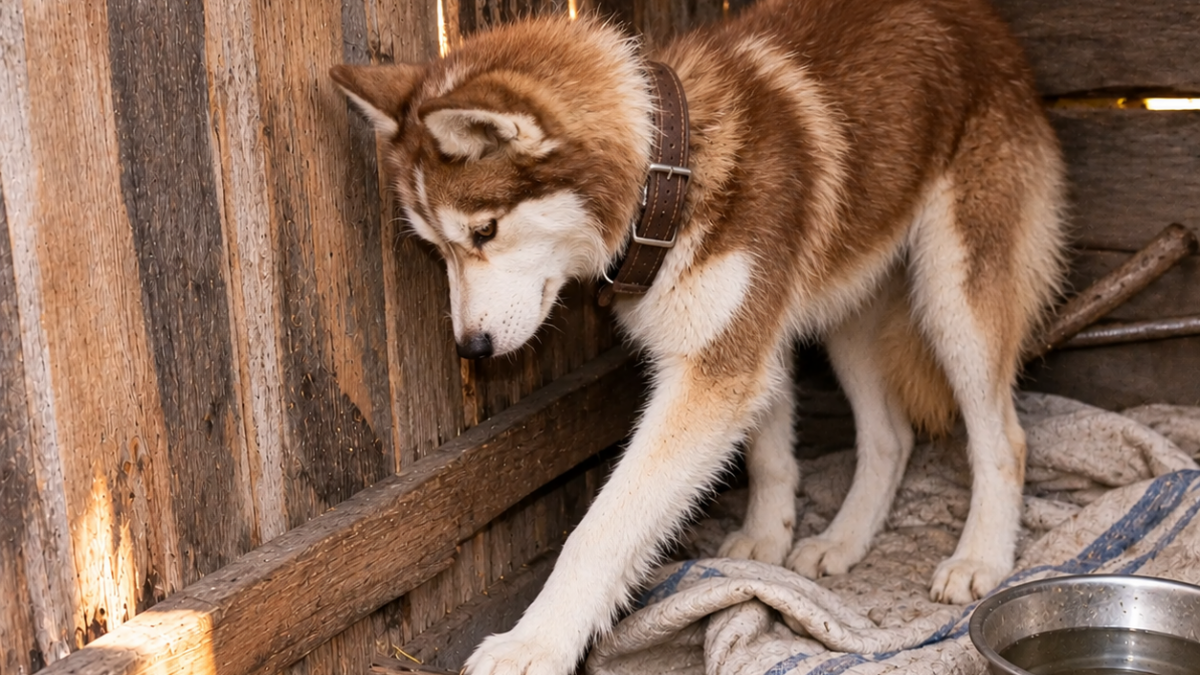
The first time I stepped into that dark storage shed, I could barely tell there was a dog in the corner at all, because Marty had lost so much fur and so much weight that her seven-kilogram body seemed to disappear into the dirt, old boxes, and shadows around her, while hundreds of fleas moved across skin stretched frighteningly tight over bone.
She couldn’t see me, she didn’t have enough strength to run, and when I whispered to her from only a few feet away, she didn’t lift her head at first—she simply remained curled against the wall as if she had already learned that footsteps usually meant nothing good and silence was the safest response she had left.
What I didn’t know as I reached into that darkness on Women’s Day was that saving Marty’s life would eventually force us to uncover who had left a blind dog to disappear inside that shed—and that nine months later, the person who had treated her like something worthless would see Marty walk into a new life stronger than anyone believed possible.
My name is Elena, and I’ve rescued animals long enough to know that the quiet calls are often the worst ones.
There was no screaming person on the phone that morning.
No dramatic description.
No blood.
No accident.
A woman simply said, “There’s a dog inside an old storage building. I think she’s dying.”
“Is she injured?”
“I don’t know.”
“Can she stand?”
A pause.
“I haven’t seen her stand.”
That was enough.
It was March 8—Women’s Day—and while restaurants and stores around the city were filling with flowers, our rescue van was heading toward a row of aging properties at the edge of an industrial neighborhood where half the warehouses had been abandoned and the other half looked as if they should have been.
The woman who had called us was waiting near a rusted gate.
Her name was Sofia.
She pointed toward a narrow building behind an empty house.
“There.”
“How long has the dog been inside?”
“I don’t know.”
“When did you notice her?”
“Yesterday.”
“Who owns the property?”
She shook her head.
“Nobody lives there now.”
Something about that answer bothered me.
Dogs do not usually lock themselves inside storage sheds.
I followed Sofia through weeds and broken concrete until we reached a warped wooden door hanging partly open.
The smell hit first.
Urine.
Damp fabric.
Old food.
Parasites.
Something rotten.
I switched on my flashlight.
“Hello?”
Nothing.
My partner Nina stepped behind me.
“Elena.”
“I know.”
Then the beam reached the corner.
At first, I saw bones.
Then skin.
Then two cloudy eyes reflecting almost no light at all.
The dog was tiny.
Maybe she had once been medium-sized, but starvation had reduced her until she seemed impossibly small.
Most of her coat was gone.
Bare gray-pink skin stretched over ribs and hips.
Fleas crawled everywhere.
Her ears were crusted.
Her nails were long.
A plastic bowl lay several feet away.
Dry.
Another contained water so dirty I wouldn’t have let a stray drink from it.
“Marty,” Sofia whispered behind us.
I looked back.
“You know her?”
Sofia hesitated.
“I heard someone call her that once.”
That was the first clue that this dog had not simply wandered in.
I crouched several feet away.
“Marty?”
One ear moved.
Her head lifted a fraction.
Then I saw her eyes properly.
Clouded.
Fixed.
Not following my flashlight.
I moved my hand slowly left.
Nothing.
Right.
Nothing.
“She can’t see,” Nina said.
I swallowed.
“Marty, I’m going to touch you.”
I spoke before moving because blind dogs deserve warning.
My fingers reached the side of her face.
She flinched.
Then froze.
I expected fear.
Maybe a snap.
Instead, Marty lowered her head into my palm.
There are moments in rescue when anger arrives before sadness.
That was one of them.
Someone had allowed this dog to become seven kilograms of bone, parasites, and exhaustion inside a dark shed.
And she still leaned into the first gentle hand that found her.
I slid a towel underneath her.
“Let’s get her out.”
When I lifted her, Marty didn’t struggle.
She weighed almost nothing.
Her head rested against my chest.
Outside, sunlight touched her face.
She couldn’t see it.
But she lifted her nose toward the warmth.
I whispered:
“This is the last day you disappear where nobody can see you.”
I had no idea whether she would survive long enough for me to keep that promise.
PART 2
The drive to the veterinary clinic lasted seventeen minutes.
I remember because I counted every one.
When you’re holding an animal whose body seems one breath away from giving up, time becomes something physical.
Every red light feels personal.
Every slow car becomes an enemy.
Nina drove.
I sat in the back.
Marty lay wrapped in two towels on my lap.
Her body temperature worried me.
She felt cold in places a living dog shouldn’t feel cold.
Her breathing was shallow but regular.
Every few seconds, I placed two fingers against her chest just to feel movement.
“You’re still here,” I whispered.
Her ear shifted.
I don’t know whether she heard me clearly.
But I kept talking.
“You don’t have to understand anything yet.”
Street noise outside.
Motorcycles.
Horns.
People.
Life moving around us as though nothing extraordinary was happening.
Meanwhile one tiny blind dog was crossing a line between being forgotten and being somebody’s emergency.
## Seven Kilograms
Dr. Marcus Levin met us at the side entrance.
He had worked with our rescue for years.
He rarely looked shocked anymore.
Marty shocked him.
He touched her ribs.
His jaw tightened.
“Scale.”
We lowered her gently.
The number stabilized.
Seven kilograms.
Dr. Levin stared.
“What should she be?”
Nina asked.
“Depending on her frame, significantly more.”
“How much more?”
“We’ll worry about target weight later.”
I hated when veterinarians did that.
Avoided numbers.
Avoided promises.
But he was right.
Marty didn’t need a goal weight yet.
She needed to survive the day.
He examined her gums.
Pale.
Skin.
Severely compromised.
Eyes.
Blindness obvious.
Body temperature low.
Dehydration severe.
Fleas everywhere.
Possible intestinal parasites.
Skin infections.
Muscle wasting.
Pressure sores.
He listened to her heart.
“Slow?”
I asked.
“Not dangerously right now.”
“Right now?”
“Elena.”
“What?”
“Let me work.”
I stepped back.
Mostly.
## Food Had to Wait
The first thing every human wants to do when seeing a starving dog is feed her.
A full bowl.
Chicken.
Meat.
Anything.
It feels like kindness.
It can also kill.
Dr. Levin explained what I already knew but needed to hear again.
Marty’s body had adapted to prolonged deprivation.
Refeeding too quickly could destabilize electrolytes and place dangerous stress on her heart and organs.
“So how much?”
“Small controlled meals.”
“She’ll still be hungry.”
“Yes.”
“I hate this.”
“So do I.”
We gave Marty her first portion.
She smelled it before the bowl touched the floor.
Her head snapped toward the scent.
For the first time since I found her, real urgency appeared in her body.
She tried to stand.
Her legs folded.
I caught her.
“Easy.”
Marty scrambled forward again.
Her nails scraped against the towel.
Food.
Everything in her narrowed to food.
We held the bowl close.
She ate too fast.
Dr. Levin lifted it.
Marty searched desperately with her nose.
My chest hurt.
“She thinks we’re taking it away.”
“I know.”
“Give it back.”
“Thirty seconds.”
“She doesn’t understand thirty seconds.”
“No.”
Marty pushed her nose against my wrist.
I hated every second.
Then the bowl returned.
Another few bites.
Removed again.
Slowly.
Carefully.
The first meal took almost twenty minutes.
When it ended, Marty continued licking the empty bowl.
Then the floor.
Then my fingers.
“There will be more,” I told her.
She didn’t believe me.
Not yet.
## The Fleas
Treating the parasites required care too.
Her skin was fragile.
Inflamed.
Patchy.
We found flea dirt everywhere.
Evidence that the infestation had been severe for a long time.
Stool testing confirmed intestinal parasites as well.
Parasites had been stealing nutrients from a dog who barely received enough food to begin with.
Nina looked at the lab results.
“How does somebody watch this happen?”
Dr. Levin didn’t answer.
I did.
“By deciding not to look.”
## Blindness
We confirmed what we’d suspected.
Marty could not see.
Her blindness did not appear new.
Exactly why she had lost vision would require further evaluation, but whatever sight she’d once had was gone.
“Can it be reversed?” I asked.
“Unlikely.”
“So she’ll stay blind.”
“Yes.”
I touched Marty’s head.
People often say things like:
Poor thing, she’s blind.
But standing beside her that day, blindness wasn’t what frightened me.
Blind dogs can live joyful, full lives.
They learn rooms.
Voices.
Scent.
Texture.
Routine.
Marty’s true emergency wasn’t darkness.
It was that someone had allowed darkness to become lonely.
## Sofia’s Secret
While Marty was being stabilized, I called Sofia.
“You said you heard someone call her Marty.”
Silence.
“Sofia?”
“Yes.”
“Who?”
“I don’t want trouble.”
That sentence told me there was trouble.
“I’m not asking you to confront anyone.”
Another pause.
“The woman who used to rent the house.”
“Name?”
“I don’t know her full name.”
“First name?”
“Carla.”
“Did Marty belong to Carla?”
“I think so.”
“How long?”
“I saw the dog there maybe two years.”
“Inside the shed?”
“Sometimes in the yard.”
“Was she blind then?”
“Not at first.”
My hand tightened around the phone.
“What happened?”
“I don’t know.”
“Did Carla move?”
“About a month ago.”
“And Marty?”
Silence.
“Sofia.”
“I thought she took her.”
The room felt colder.
“You thought.”
“Yes.”
“Then how did Marty end up locked in the shed?”
“I don’t know.”
I looked through the treatment-room window.
Marty was lying on fresh bedding while a technician cleaned her ears.
I said:
“We’re going to find out.”
## The First Night
Marty stayed at the clinic.
There was no question.
I stayed too.
Technically, I wasn’t supposed to.
Dr. Levin argued.
I ignored him.
At midnight, Marty woke.
Her nose lifted.
She couldn’t see.
The clinic lights meant nothing to her.
But she could hear machines.
Footsteps.
Dogs barking somewhere farther down the hall.
She tried to stand.
Her legs trembled.
I placed one hand against her side.
“I’m here.”
Marty froze.
Then leaned toward my voice.
I moved closer.
She rested her head against my arm.
Five minutes later, she slept.
The first night after rescue, I learned something important.
Marty wasn’t afraid of darkness.
She was afraid of being left inside it.
## Day Two
The scale barely changed.
Good.
We weren’t chasing quick weight.
We were chasing safe weight.
She ate every small meal.
Medication began working against parasites.
Fluids improved her hydration.
Her temperature stabilized.
Skin treatment started.
The fleas died.
That alone changed her behavior.
Imagine trying to sleep while insects continuously bite your skin.
When the itching decreased, Marty slept longer.
Deeply.
Her body had probably forgotten what uninterrupted rest felt like.
## The Property
Officer Daniel Ruiz from animal welfare visited the abandoned house.
The shed door had no functioning lock.
Inside, he found old food bags.
A broken leash.
A blanket.
Flea-treatment packaging that had expired more than a year earlier.
Several empty cheap-dog-food sacks.
And a plastic container with one handwritten word:
**Marty**
Not proof of who had abandoned her.
Proof she had belonged there.
Daniel called.
“We’re tracing the former tenant.”
“Carla?”
“You already have a name?”
“Sofia.”
“Good.”
“Find her.”
“Elena.”
“What?”
“I know how investigations work.”
“I know.”
“You sound like you’re about to teach me anyway.”
“I was.”
“Don’t.”
## Day Three
Marty stood.
Not fully.
Her front half rose.
Back legs shook.
Then she sat.
I almost celebrated.
Dr. Levin stopped me.
“Don’t make her excited.”
“She moved.”
“I noticed.”
“You’re impossible.”
“She needs conservation.”
Marty smelled food.
Tried again.
This time, both back feet made it underneath her.
She stood for less than two seconds.
Then folded onto the bed.
I started crying.
Dr. Levin sighed.
“Fine.”
“What?”
“Celebrate quietly.”
I whispered:
“You stood.”
Marty’s tail did nothing.
Not yet.
## Carla
Police located Carla Mendes two days later.
She had moved thirty miles away.
Marty was not with her.
That mattered.
Carla admitted owning a dog named Marty.
She claimed Marty had “run away.”
Daniel called me from outside the interview room.
“Her story is that Marty escaped before she moved.”
“Escaped.”
“Yes.”
“Blind?”
“She says the blindness happened after she lost the dog.”
I laughed.
“Of course.”
“She also says Marty was healthy when she last saw her.”
“How long ago?”
“About six weeks.”
I looked toward the skeletal dog on the clinic bed.
“Dr. Levin says this condition didn’t happen in a weekend.”
“I know.”
“Does Carla have veterinary records?”
“None yet.”
“Microchip?”
“No.”
“Photos?”
“We’re checking.”
“Neighbors?”
“Interviewing.”
I wanted everything to move faster.
Law never moves at the speed anger wants.
## The Photos
Sofia found old neighborhood photos on her phone.
Marty appeared in the background of two.
In the first, dated nearly a year earlier, she still had most of her fur.
Thin but not skeletal.
Eyes cloudy.
In the second, four months before rescue, Marty was standing near the shed.
Much thinner.
Large bald patches.
Her eyes looked opaque.
That photograph damaged Carla’s story immediately.
Marty had been blind and deteriorating long before Carla claimed she disappeared.
## A Neighbor Talks
An elderly man named Mr. Petrov lived across the alley.
He told Daniel he had seen Carla bringing food to Marty irregularly.
“How irregularly?” Daniel asked.
“Sometimes every day. Sometimes not for days.”
“Did Marty stay in the shed?”
“After she went blind, mostly.”
“Why?”
“Carla said she bumped into things.”
“Was she locked?”
“Door closed.”
“Did she get walks?”
Mr. Petrov shook his head.
“Not after the eyes.”
“Veterinarian?”
“Never saw one.”
“Did you report it?”
He looked down.
“No.”
“Why?”
“She said it was her dog.”
Those five words have protected a lot of suffering.
Her dog.
As though ownership turns neglect into privacy.
## Marty Finds My Hand
Day four.
I sat near her bed without touching her.
Marty lifted her nose.
Smelled.
Turned toward me.
Then slowly stretched one paw forward until it touched my shoe.
She froze.
I said:
“It’s me.”
Her paw moved higher.
Found my ankle.
Then she pulled herself forward until her head touched my knee.
She had looked for me.
Not food.
Not water.
Me.
That changed something.
## Her First Wag
Day five.
Nina entered carrying breakfast.
Marty heard her voice.
Her tail moved once.
We both froze.
“Did you see?”
“Yes.”
“Do it again.”
Nina said:
“Hi, Marty.”
Tail.
Another small movement.
I laughed.
“She likes you more.”
“She likes breakfast.”
Fair.
## The Skin
Her coat recovery would take time.
Maybe months.
Skin first.
Inflammation had to settle.
Nutrition had to improve.
Parasites had to clear.
We used medicated treatment carefully.
Her skin smelled different after the infection improved.
Less sour.
Less inflamed.
Small hairs started appearing around her shoulders.
Nina found them first.
“Look.”
I leaned closer.
Tiny fuzz.
“That counts.”
Everything counted.
## The Women’s Day Photo
Somebody had taken a photograph on rescue day.
Me holding Marty outside the shed.
Her body wrapped in a towel.
Head against my chest.
Women’s Day.
People later called it symbolic.
A female dog rescued on a day celebrating women.
I resisted making too much of that.
Marty didn’t know the calendar.
But I understood why people found meaning in it.
She had spent who knows how long treated as something inconvenient.
That day, somebody finally chose her.
## Carla Changes Her Story
When confronted with the photos, Carla changed her statement.
Marty had not run away.
She had “stayed behind temporarily.”
Temporary.
I nearly threw my phone.
Daniel continued:
“She says she planned to come back.”
“For six weeks?”
“That’s the problem.”
“She left food?”
“She claims she did.”
“How often?”
“No clear answer.”
“Water?”
“She says a neighbor checked.”
“Which neighbor?”
“She hasn’t identified one.”
“Medical care?”
“No.”
I looked at Marty.
“Then she left a blind dog to die.”
“We’re building the case.”
## The Locked Door
A forensic review of the shed revealed something else.
The interior latch was broken.
The door could be pulled shut from outside.
Marty couldn’t have opened it.
She hadn’t simply chosen to stay inside.
She had been confined.
Even if Carla intended to return, she had left a blind, sick dog unable to leave.
That fact turned my anger into something colder.
## One Week
Seven days after rescue, Marty weighed slightly more.
Not dramatically.
Enough.
Her hydration was better.
Parasite burden falling.
Stool improving.
Appetite intense.
She could stand for several seconds.
Take a few steps.
Still weak.
Still blind.
Still mostly hairless.
But alive.
Dr. Levin looked at her chart.
“She may actually do this.”
I stared at him.
“You doubted her?”
“I doubt everything until medicine proves otherwise.”
“You have no romance in your soul.”
“Correct.”
## Her First Walk
We used a soft harness.
Not around her neck.
Body support.
I stood a few feet away.
“Marty.”
Her head turned toward my voice.
“Come.”
One step.
Her front paw touched the floor.
Another.
She hesitated.
Blind dogs need to build a map every time they enter a new space.
I tapped the floor gently.
“Here.”
Marty followed sound.
Four steps.
Six.
Her legs trembled.
She reached me.
Pressed her face against my knee.
I crouched.
“You did it.”
Tail wag.
Real.
## The Smell of Food
Marty learned the clinic kitchen faster than any room.
Of course.
She couldn’t see, but she didn’t need to.
Cooked chicken has a map of its own.
One afternoon, she followed the scent down the hallway.
Dr. Levin caught her.
“You are supposed to be resting.”
Marty ignored him.
He guided her back.
She turned toward the kitchen again.
He looked at me.
“Your patient is disobedient.”
“My patient?”
“You’re here more than staff.”
Fair.
## Two Weeks
At fourteen days, her body changed visibly.
Ribs still clear.
But not knife-sharp.
Hips less frightening.
Skin calmer.
Hair beginning in patches.
She had energy to complain during treatments.
That was wonderful.
A dying animal rarely argues.
Marty began pulling her paw away during nail care.
Turning her head when she disliked medicine.
Refusing one type of food after discovering chicken existed.
Personality emerged as survival stopped consuming everything.
## Her Blindness Becomes Normal
We stopped saying “poor blind Marty.”
She was just Marty.
We used cues.
“Step.”
“Left.”
“Right.”
“Stop.”
“Door.”
She learned fast.
She mapped the clinic.
Food station.
Bed.
Water.
Outside door.
My chair.
Once she learned an area, she moved with surprising confidence.
People visiting often didn’t realize she couldn’t see until she walked directly past a hand held silently in front of her.
“Talk to her,” I’d say.
“Hi, Marty.”
Instant head turn.
Voice was vision.
## Carla Visits the Clinic
I wish she hadn’t.
She came without permission.
The receptionist recognized her from photographs.
Called Daniel.
Then called me.
Carla stood in the lobby.
Mid-forties.
Neat clothes.
No appearance of the monster people imagined.
That’s important.
Cruelty doesn’t always look cruel.
Sometimes it looks completely ordinary.
“I want to see Marty.”
“No.”
“She is mine.”
“No.”
“I never surrendered her.”
“You left her.”
“I was coming back.”
“When?”
Carla looked away.
“I had problems.”
“So did Marty.”
“You don’t know my situation.”
“You’re right.”
I stepped closer.
“But I know hers.”
“She had food.”
“Not enough.”
“I brought food.”
“How often?”
Silence.
“I couldn’t keep her where I moved.”
“So you left her in a shed.”
“Temporarily.”
“A blind dog.”
“I didn’t know she was that sick.”
I stared.
“How could you not know?”
Carla began crying.
Maybe genuinely.
“I couldn’t afford a vet.”
“Then surrender her.”
“I thought you’d judge me.”
That sentence hit hard.
“You were more afraid of being judged than of her dying?”
Carla didn’t answer.
## Marty Hears Her
Then Carla said:
“Marty.”
The dog was down the hallway.
Her ears lifted.
Her body froze.
She knew the voice.
I watched carefully.
Would Marty approach?
She didn’t.
She backed into her bed.
Carla saw it.
Her face changed.
“She remembers me.”
“Yes.”
Carla smiled through tears.
“She does.”
I looked at Marty’s body.
Tense.
Tail tucked.
“She remembers something.”
Not the reunion Carla wanted.
## Daniel Arrives
He escorted Carla out.
Not arrested.
Not then.
But documented.
He later told me:
“Her showing up was useful.”
“Why?”
“She admitted more than she should have.”
Good.
Sometimes entitlement builds its own evidence.
## Three Weeks
Marty left inpatient care.
I took her home as a foster.
Temporary.
That word has ruined many rescuers’ plans.
I prepared the house.
Rugs with different textures.
One near water.
One near food.
Runner through hallway.
Furniture fixed in place.
Baby gate near stairs.
Soft bed.
Scent marker near back door.
Blind dogs thrive on consistency.
Move a chair and you change the map.
I told everyone:
“Nothing moves without telling me.”
Nina laughed.
“You’ve become furniture police.”
“Yes.”
## First Night Home
Marty entered slowly.
Nose working.
One step.
Stop.
Listen.
Another.
She found water.
Then my couch.
Then the kitchen.
The kitchen immediately became her favorite room.
She bumped lightly into one wall.
Backed up.
Learned.
Hours later, she walked around it perfectly.
That night, I placed her bed beside mine.
Marty circled.
Lay down.
Then got up.
Moved toward my bed.
Whined once.
I lowered my hand.
She found it.
Settled.
We slept like that.
My hand hanging over the side.
Her nose against my fingers.
## The Yard
The first morning, I took her outside.
Grass.
Marty stopped.
Wind moved against her face.
Birds.
Cars far away.
Leaves.
She lifted her nose.
Then stepped forward.
Grass between her paws.
She smelled everything.
One plant.
Another.
Fence.
Tree.
Back to me.
Tail moving.
That was the first time I saw Marty look happy.
Not relieved.
Not fed.
Happy.
Blindness didn’t prevent it.
## Weight
Eight kilograms.
Then nine.
Slow.
Safe.
Dr. Levin praised progress.
I celebrated every number.
“Don’t overfeed.”
“I know.”
“She doesn’t need to become overweight.”
“She spent months at seven.”
“And now we’re building normal, not revenge weight.”
I laughed.
“Revenge weight.”
“Yes.”
Marty begged beside us.
## The Court Case
Prosecutors pursued animal neglect charges based on the evidence authorities could establish.
The timeline.
Photos.
Neighbor statements.
Physical condition.
Confinement.
Carla’s changing accounts.
Her admission that she’d left Marty behind.
The broken shed door.
Veterinary evidence showing prolonged malnutrition and parasite infestation.
I attended.
Marty did not.
She had better things to do.
## The Defense
Carla’s attorney argued poverty.
Housing instability.
Stress.
Inability to afford treatment.
Those things mattered.
They did.
Poverty isn’t cruelty.
Losing housing isn’t cruelty.
Being overwhelmed isn’t cruelty.
But leaving a blind dog confined without reliable food, water, or medical help crosses a line.
The prosecutor asked:
“Did you contact a shelter?”
“No.”
“A rescue?”
“No.”
“Animal control?”
“No.”
“A veterinarian to discuss surrender?”
“No.”
“Friends?”
“One.”
“What happened?”
“She couldn’t take the dog.”
“And after that?”
Carla looked down.
“Nothing.”
That word carried weeks of Marty’s suffering.
Nothing.
## Dr. Levin Testifies
The defense asked:
“Could parasites alone cause severe weight loss?”
“Yes.”
“Could chronic disease contribute?”
“Yes.”
“So you cannot say starvation was deliberate.”
Dr. Levin answered:
“I cannot describe intent.”
Good veterinarian.
Precise.
He continued:
“I can describe condition.”
The prosecutor asked:
“What condition?”
“Severe underweight, dehydration, flea infestation, intestinal parasites, skin disease, muscle wasting, untreated blindness, and generalized weakness consistent with prolonged inadequate care.”
The room became quiet.
## The Question of Money
Carla said she couldn’t afford treatment.
I believed that may have been true.
That complicated my anger.
Then the prosecutor asked:
“Why not surrender her?”
Carla’s answer:
“I thought she would be euthanized.”
That surprised me.
Maybe she believed leaving Marty in a shed gave her a chance.
People can convince themselves of impossible things when shame and fear take over.
The judge said:
“Whatever your concern about surrender, the animal was left without adequate care.”
No argument.
## The Outcome
Carla faced legal penalties and restrictions under the applicable animal-welfare laws.
She lost any claim to Marty.
That mattered most to me.
There were fines.
Probation-like conditions.
Restrictions concerning animal ownership for a period determined by the court.
People online wanted harsher consequences.
Some wanted her destroyed socially.
I didn’t.
Not by then.
I wanted Marty safe.
I wanted systems that gave desperate owners a path before neglect became abandonment.
Justice matters.
So does prevention.
## Marty Doesn’t Care
While court happened, Marty learned to chase sound.
I bought a ball with a bell inside.
Rolled it.
Jingle.
Marty’s ears lifted.
She ran toward it.
Missed.
Turned.
Found it.
Grabbed.
Tail everywhere.
I laughed until my stomach hurt.
The dog who had once waited motionless in a shed now ran after a sound she couldn’t see.
That became one of my favorite images.
## Her Fur
The coat returned slowly.
First fuzz.
Then soft patches.
Then enough that she looked like a different animal.
People who had seen rescue photos stopped recognizing her.
One volunteer touched her side.
“She has fur.”
Marty wagged.
“Yes, sweetheart. Congratulations on being fluffy.”
Months later, the problem would become completely opposite.
Too much hair.
Everywhere.
But we weren’t there yet.
## Trust
Trust arrived in pieces.
Marty stopped flinching when a hand approached after a verbal warning.
Then stopped flinching when familiar people touched her without warning.
She learned my footsteps.
Nina’s laugh.
Dr. Levin’s cough.
The sound of the food cabinet.
Especially the food cabinet.
She followed us.
Wanted contact.
Began sleeping belly-up.
That posture mattered.
An animal sleeping with the stomach exposed doesn’t expect immediate danger.
## Three Months
Marty reached a healthy trajectory.
Not yet ideal weight.
But close.
Skin healed.
Coat growing.
Parasites clear.
Muscles stronger.
She could walk confidently through familiar spaces.
Run short distances.
Climb onto low furniture.
Demand dinner.
The transformation didn’t happen with one dramatic moment.
It happened exactly as rescue usually happens.
Breakfast.
Medicine.
Nap.
Dinner.
Repeat.
The miracle was repetition.
## The Storage Shed
I returned once.
Why?
I’m still not sure.
Closure is a word humans invent because unfinished places bother us.
The shed looked smaller.
In daylight, less frightening.
Just old wood.
Dust.
Broken shelves.
I stood where Marty had been lying.
A darker stain remained on the floor.
I imagined seven kilograms of dog waiting there.
Blind.
No concept of calendar.
No idea rescue was coming on March 8.
I hated the room.
Then I realized Marty would never see it again.
Good.
Let humans keep the memory.
She didn’t need it.
## Sofia
Sofia became a rescue volunteer.
Guilt had been eating at her.
“I should’ve called sooner.”
“You called.”
“I saw Marty before.”
“When?”
“A few weeks earlier through the fence.”
“Why didn’t you report?”
“I thought Carla was coming back.”
I understood.
Assumptions protect neglect.
Someone else knows.
Someone else feeds.
Someone else will act.
Marty taught Sofia to stop assuming.
Months later, she reported another neglected dog before the situation became severe.
That animal was removed earlier.
Marty saved someone without knowing.
## Six Months
Marty was almost unrecognizable.
Healthy weight.
Thick coat.
Strong legs.
Bright behavior despite cloudy blind eyes.
She greeted visitors.
Played.
Loved blankets.
Loved chicken.
Hated baths.
She had one strange habit.
She carried socks.
Not destroyed them.
Just stole and relocated.
My house became a sock investigation.
Nina found six beneath Marty’s bed.
“Criminal.”
Marty wagged.
## Adoption Time
I had delayed the subject.
Everyone knew.
Susan from the rescue finally cornered me.
“Nine months is approaching.”
“I know.”
“Marty is ready.”
“No.”
“Elena.”
“She has medical needs.”
“Manageable.”
“Blind.”
“Adopters can handle blind dogs.”
“History.”
“Everyone has history.”
I hated rational people.
## Applications
We posted Marty carefully.
No tragedy porn.
No “poor blind dog needs hero.”
Just truth.
Senior-ish adult female.
Blind.
Recovered from severe neglect.
Needs stable layout.
Gentle handling.
Routine.
Ongoing veterinary care.
Loves people.
Bell toys.
Chicken.
Stealing socks.
Applications arrived.
More than expected.
Some wanted her because of the viral story.
Rejected.
One said:
“We want to show our children how lucky they are.”
Rejected.
Marty was not a lesson object.
Another said:
“We’ve always wanted a blind dog.”
Odd.
Rejected after poor vet references.
Then came the Martins.
Rachel and Tom.
Early fifties.
Teenage daughter Emma.
One-story house.
Fenced yard.
No current dogs after their senior spaniel died.
Excellent vet history.
Rachel worked from home.
They had cared for a diabetic dog for six years.
Their application contained one line:
**We don’t need Marty to inspire us. We just want to make sure she always knows where the furniture is.**
I laughed.
Then cried.
Then hated them.
Good adopters are inconvenient.
## First Meeting
Rachel sat on the floor.
No reaching.
No calling repeatedly.
Marty entered.
Smelled.
Stopped.
Rachel said softly:
“Hi, Marty.”
Marty turned.
Approached.
Smelled her knees.
Tom waited.
Emma remained quiet.
Marty walked past everyone.
Found Rachel’s tote bag.
Stole a sock.
I stared.
Rachel laughed.
“Is that good?”
“Unfortunately, yes.”
## Tom
Marty was initially cautious around Tom’s deeper voice.
He handled it perfectly.
Never forced contact.
Spoke before moving.
Sat sideways.
Offered treats near himself without reaching over her head.
By the third meeting, Marty walked directly toward him.
He smiled.
“Progress.”
Then she stole his glove.
More progress.
## Emma
The teenage daughter surprised me.
Teenagers can be wonderful with animals or far too enthusiastic.
Emma researched blindness.
She created textured markers from different rug samples.
One for water.
One for doors.
One for Marty’s bed.
She showed me.
“You already did this?”
“I thought it would help.”
I swallowed.
“Yes.”
It would.
## Home Visit
Their house was quiet.
One story.
Few obstacles.
Wide hallway.
Furniture unlikely to move often.
Rachel had already designated one room as Marty’s safe area for the first days.
Backyard secure.
No pool.
No dangerous steps.
Tom asked:
“Should we use scent markers?”
“Small consistent scents can help, but don’t overwhelm.”
“Furniture?”
“Don’t rearrange every weekend.”
Rachel laughed.
“He’s wanted to move the couch for seven years. Now he finally has a reason not to.”
Perfect.
## The Adoption Decision
Everyone thought yes.
I still resisted.
Not logically.
Emotionally.
Marty had survived because we showed up every day.
Part of me believed leaving us might feel like abandonment.
Dr. Levin corrected me.
“That’s your trauma.”
“What?”
“Not hers.”
I stared.
“She likes you.”
“Obviously.”
“She trusts you.”
“Yes.”
“She can also trust someone else.”
“I know.”
“Then don’t make your fear her ceiling.”
I hated him.
Again.
## Nine Months
Exactly nine months after rescue, Marty was adopted.
The timing felt impossible.
Seven kilograms in a storage shed.
Nine months later, walking into a family.
Rachel arrived with a harness.
Emma with Marty’s bell ball.
Tom with paperwork.
I packed medication.
Records.
Food.
Blanket.
Socks.
Not intentionally.
Marty found one in my bag.
Of course.
## Goodbye
I knelt.
“Marty.”
Head turn.
“You’re leaving.”
Tail wag.
“Very insensitive.”
She moved closer.
I touched her face.
On rescue day, the skin there had been thin and bare.
Now soft fur covered my fingers.
“You know what?”
Marty licked my wrist.
“You never have to go back.”
She had no idea what back meant.
Good.
## The Car
They used a ramp.
Marty smelled it.
One paw.
Another.
Rachel spoke from inside.
“Come on, girl.”
Marty climbed.
No panic.
No forcing.
Emma sat beside her.
I watched the car leave.
For several minutes, I remained standing there.
Then Nina came out.
“You okay?”
“No.”
“Good adoption?”
“Yes.”
“Then why are you crying?”
I looked at her.
“Have you ever done rescue?”
Fair.
## First Night
Photo.
Marty asleep on an orthopedic bed.
Second photo.
Marty on the couch.
Third.
Tom holding a sock.
Caption:
**She has begun operations.**
I laughed.
## Learning the House
Rachel sent updates.
Day one:
Marty found water.
Day two:
Mapped kitchen.
Day three:
Figured out bedroom.
Day four:
Stole Emma’s sock upstairs—except there were no stairs. Somehow that sounded even more criminal.
Within two weeks, she moved confidently.
She knew where doors were.
Where rugs changed.
Where food came from.
Where each person usually sat.
Blindness didn’t define her.
It simply shaped the map.
## The Shedding
Then the joke began.
Marty’s coat returned fully.
Thick.
Healthy.
Soft.
And apparently determined to occupy every surface in the Martins’ home.
Rachel texted:
**You failed to disclose the real medical condition.**
I panicked.
**What?**
Photo.
Black fur covering a cream couch.
**She sheds like she’s being paid by the hair.**
I laughed so hard I cried.
Months earlier, we had celebrated three new hairs.
Now her family complained because there was too much fur.
That was the kind of problem I wanted.
## Emma’s Clothes
Marty’s fur appeared on black shirts.
School uniforms.
Car seats.
Beds.
Food somehow.
Emma sent a picture:
**I brushed her for 20 minutes. There is still a whole second Marty left.**
Perfect.
## The First Anniversary
One year after rescue, the family brought Marty to visit.
I heard her before seeing her.
Bell on harness.
Then Rachel’s voice.
“Marty, Elena’s here.”
Marty froze.
Her head lifted.
I said:
“Hey, criminal.”
Her tail exploded.
She ran toward my voice.
Ran.
The dog who couldn’t stand.
She hit my legs.
I almost fell.
I crouched.
She pressed against me.
I cried into her fur.
There was a lot of fur.
## Carla Hears About Her
Carla eventually saw updates online.
We had not posted the family’s address or identifying details.
Just Marty’s progress.
She contacted the rescue.
Asked if she could see Marty.
I said no.
She wrote a long message.
Apology.
Explanation.
Regret.
She said:
“I didn’t think she would recover.”
That sentence made me stop.
Because maybe that had been part of the decision.
Marty already looked hopeless.
Why invest in a dog likely to die?
But worth is not predicted by recovery.
Even if Marty had died the first night, she deserved not to die alone in a shed.
I replied once.
**Marty is safe. Please respect her family’s privacy.**
Nothing more.
## The Real Revenge
People asked what happened to Carla.
They wanted the dramatic punishment.
Did she go to jail?
Lose everything?
Become publicly shamed?
The legal case had consequences.
She lost Marty permanently.
Faced penalties.
Restrictions.
A court record.
But none of that felt like the real revenge.
The real revenge was fur on Rachel’s couch.
The real revenge was Emma complaining that Marty stole socks.
The real revenge was Tom refusing to rearrange furniture because his blind dog knew the map.
The real revenge was medical bills paid without anyone asking whether Marty was “worth it.”
The real revenge was ordinary inconvenience accepted as love.
## Two Years
Marty remained healthy.
Not magically young.
Not cured of blindness.
But strong.
She gained and maintained healthy weight.
Coat spectacular.
Maybe too spectacular.
She walked every morning.
Short routes.
Always familiar.
Loved sniffing bushes.
Needed no sight to know neighborhood dogs.
## Bell Ball
Emma bought five bell balls.
Marty preferred the oldest one.
Of course.
One afternoon, the ball rolled beneath a chair.
Marty followed sound.
Lost it.
Searched.
Found it.
Brought it to Tom.
He rolled it again.
Ten minutes.
Twenty.
Thirty.
Blindness didn’t stop play.
Humans often underestimate adaptation because we imagine losing our own senses instead of watching how animals use theirs.
## Three Years
Marty slowed slightly.
Vet visits showed good general health.
Parasites long gone.
Skin excellent.
Blindness unchanged.
Rachel asked:
“Does she know she’s blind?”
I said:
“She knows her world.”
That was enough.
## The Shed Is Demolished
The old property was eventually sold.
Storage building demolished.
Sofia sent me a photo.
Nothing left but dirt.
I stared.
Marty’s worst room no longer existed.
It felt symbolic.
Maybe too symbolic.
Still satisfying.
## The Bowl
Rachel bought Marty a ceramic bowl with raised edges so food stayed easy to locate.
Marty memorized its position.
One evening Tom accidentally moved it two feet.
Marty stopped at the usual place.
Smelled.
Confused.
Rachel shouted from the kitchen:
“Who moved her bowl?”
Tom:
“Me.”
“You monster.”
He apologized to Marty.
She accepted compensation in chicken.
## Four Years
Gray appeared around Marty’s muzzle.
Age.
We didn’t know exact age.
Rescue estimates are imperfect.
But she was clearly becoming senior.
Emma left for college.
Marty searched her room after.
First weekend Emma returned, Marty recognized her voice from the doorway.
Tail everywhere.
Emma sat on the floor and cried.
Dogs remember what matters.
## College Fur
Emma took Marty’s fur to school accidentally on every sweater.
She joked:
“She attends classes remotely.”
## The Family’s New Puppy
Eventually, they considered another dog.
Carefully.
Marty deserved compatibility.
They fostered a calm young adult instead of a chaotic puppy.
Name: Henry.
At first, Marty ignored him.
Henry learned not to block her paths.
Very important.
Blind dogs rely on predictable lanes.
Within weeks, they slept near each other.
Henry began wearing a small bell indoors so Marty always knew where he was.
That worked beautifully.
## Marty Becomes the Teacher
Henry followed Marty through the house.
Irony.
Sighted dog following blind dog.
She knew the map better.
At the back door, Marty turned correctly before Henry.
Rachel laughed:
“Who needs eyes?”
## Five Years
Marty had lived with the Martins more than half a decade.
Nobody who saw the original rescue photo could believe it.
Seven kilograms.
Nearly hairless.
Blind.
Now older.
Fluffy.
Round enough that the vet once said:
“She could lose a pound.”
Rachel stared.
“You understand what she survived?”
“Yes.”
“You’re asking us to make her thinner?”
“One pound.”
I called when I heard.
“This is the greatest problem we’ve ever had.”
## Revenge Weight Returns
Tom called it “the diet scandal.”
Marty disagreed.
She protested reduced snacks.
Stood near the food cabinet.
Whined.
Rachel said:
“You used to starve.”
Then immediately regretted the phrasing.
She knelt.
“You never will again.”
Marty didn’t understand.
But she got half a carrot.
She hated it.
## Six Years
Arthritis began.
Medication.
Joint support.
Rugs.
Ramps.
Nothing dramatic.
The family adjusted.
That’s what love looks like when the exciting rescue story is over.
Adjust.
Again.
Again.
Again.
## Her Coat
Still shedding.
Always.
Rachel bought a robot vacuum.
Marty hated the sound.
Robot vacuum retired.
Human vacuuming returned.
Marty won.
## The Court File Closes
Daniel eventually retired.
Before he left, he told me:
“Marty’s case changed our intake guidance.”
“How?”
“Officers now ask more questions when someone reports an animal ‘left temporarily’ in a property.”
Temporary had become a warning word.
Good.
Maybe one dog’s suffering prevented another.
## Carla Again
Years later, I ran into Carla at a grocery store.
Unexpected.
She recognized me.
I recognized her.
We stood awkwardly.
She said:
“Is Marty alive?”
“Yes.”
Her eyes filled.
“Happy?”
“Yes.”
“Blind?”
“Yes.”
She nodded.
“I think about her.”
I didn’t answer.
“I was a terrible person then.”
I looked at her.
“Maybe you made a terrible decision.”
She seemed surprised.
“I don’t know which.”
“Does it matter?”
“To me.”
Fair.
She asked:
“Does she remember me?”
I thought about the clinic.
Marty freezing at her voice.
Years had passed.
“I don’t know.”
Carla nodded.
“I hope not.”
For the first time, I believed her regret had stopped being about getting Marty back.
We walked away.
No forgiveness ceremony.
No friendship.
Life is not television.
## The Difference Between Regret and Return
Carla regretting her actions did not mean Marty should return to her.
That distinction matters.
People can change.
Animals still deserve stability.
Forgiveness is not restoration of access.
The Martins were Marty’s family.
That never changed.
## Seven Years
Marty became very old.
Her walks shortened.
Hearing faded slightly.
Still blind.
Still interested in food.
Still shedding.
Still stealing socks if one was foolishly left near her bed.
Her world narrowed.
But remained good.
## Emma Comes Home
After college, Emma moved back temporarily.
Marty recognized her within seconds.
Voice.
Scent.
Hands.
She slept outside Emma’s room.
The same blind dog who once waited alone in darkness now chose which family member to guard.
## Henry
Henry became older too.
He still wore the bell sometimes.
When Marty couldn’t locate him, she followed the sound.
They slept together.
One sighted.
One blind.
Neither cared.
## The Final Health Change
Kidney values eventually shifted.
Age.
Not neglect.
Important distinction.
We monitored.
Diet changed.
Medication.
More frequent checkups.
Rachel learned every number.
Creatinine.
BUN.
Phosphorus.
Hydration.
Marty had people who knew her bloodwork better than their own.
## A Bad Week
Appetite dropped.
That terrified everyone.
For a dog whose story began with starvation, refusing food carries emotional weight.
Tom called.
“She didn’t finish dinner.”
“Vet?”
“Tomorrow morning.”
Tests.
Medication adjustment.
Marty improved.
Good.
Months more.
## The Final Winter
Cold bothered her joints.
Sweater.
She hated it.
Family insisted.
Marty developed a strategy.
Freeze when sweater appears.
Refuse movement.
Accept treat.
Eventually comply.
Senior dog negotiation.
## Fur on the Sweater
Rachel sent me one final joke.
Photo of the sweater covered in Marty’s own fur.
**She sheds onto clothing while wearing it. Explain.**
Impossible.
Miracle dog.
## The Final Spring
Marty spent mornings in sunlight.
She could not see the sun.
She felt it.
Warmth on fur.
Wind.
Birds.
Rachel beside her with coffee.
Henry sleeping nearby.
Nothing dramatic.
Perfect.
## The Call
Rachel called one afternoon.
Voice shaking.
“Elena.”
I knew.
Marty had stopped eating.
Stopped enjoying walks.
Kidneys worsening.
Arthritis painful despite medication.
She slept most of the day.
Vet said quality of life was declining.
“We don’t want to make her stay because we can’t let go.”
That sentence told me they were ready.
Good owners ask the question that hurts themselves.
## I Visit
Marty was on the couch.
Her couch.
I sat on the floor.
“Hey, criminal.”
One ear lifted.
Tail moved once.
She recognized me.
Years.
Still.
I pressed my forehead to hers.
“You did good.”
Rachel cried.
Tom stood behind us.
Emma held Marty’s paw.
Henry lay nearby.
## One Last Sock
Emma put an old clean sock beside Marty.
Marty smelled it.
Picked it up weakly.
Everyone laughed through tears.
Of course.
The thief remained.
## Chicken
Final dinner.
Chicken.
No diet.
No kidney restrictions now.
Comfort.
Marty ate three bites.
Then rested.
Nobody asked for a fourth.
## The Last Night
The family slept in the living room.
Marty on the couch.
Humans on mattresses and floor cushions.
Henry nearby.
No one wanted her alone.
That was the opposite of the shed.
Full circle without needing poetry.
## Morning
The veterinarian came to the house.
Marty stayed in familiar surroundings.
No clinic.
No strange room.
No fear.
Rachel sat beside her.
Tom stroked her back.
Emma held her paw.
I touched her shoulder.
The vet administered sedation.
Marty relaxed.
Her breathing slowed.
Rachel whispered:
“You never have to be alone again.”
Marty’s tail moved once.
Then rested.
## Goodbye
The final medication.
Breathing.
Slow.
Slower.
Still.
The veterinarian listened.
Waited.
Looked up.
“She’s gone.”
Nobody moved.
Henry smelled her.
Then lay down nearby.
Emma cried into Tom’s shoulder.
Rachel pressed her face into Marty’s coat.
And then she laughed.
We all looked at her.
Rachel held up her shirt.
Covered in fur.
“She got me one last time.”
That broke us.
We laughed and cried at once.
Perfect ending for Marty.
## Seven Kilograms
For years, people remembered the number.
Seven kilograms.
I stopped using it eventually.
Marty wasn’t a number.
But the contrast mattered.
Seven kilograms had been the weight of neglect.
Healthy weight became the weight of care.
Then old age became the weight of time.
## The Storage Shed Versus Home
In the shed:
Darkness.
Parasites.
Empty bowl.
Cold floor.
Silence.
At home:
Blindness.
Still darkness.
But also voices.
Food.
Rugs.
Bell toys.
Socks.
Fur everywhere.
Family.
The darkness had never been the enemy.
Loneliness was.
## Carla’s Punishment
Some readers still asked:
“What happened to the woman?”
Legal consequences.
Restrictions.
Loss of ownership.
Public record.
Regret.
But the best answer was:
Marty lived without her.
Not because Carla needed emotional punishment.
Because Marty discovered that one person’s failure had never been the measure of her worth.
## The Real Revenge
The real revenge was ordinary.
A dog who had once been nearly hairless became so fluffy her family bought a stronger vacuum.
A dog who had once been unable to stand became overweight enough to need a small diet.
A dog who had once eaten desperately became picky enough to reject carrots.
A dog who had once been locked alone became annoyed when people stopped petting her.
A blind dog learned an entire house by heart.
A forgotten dog became impossible to forget.
That’s revenge I can believe in.
## The First Photo and the Last Photo
First:
Marty in my arms outside a storage shed.
Bones.
Bare skin.
Cloudy eyes.
Last:
Marty asleep on a couch, gray muzzle buried in a blanket, fur everywhere, one sock near her paw.
If you showed me the second photo on rescue day, I might have thought it impossible.
Miracles are often just enough ordinary days stacked together.
## What Rescue Really Looked Like
Not one dramatic moment.
It looked like:
Breakfast.
Medication.
Parasite treatment.
Bath.
Rest.
Small meal.
Repeat.
Bloodwork.
Walk.
Rug map.
Bell ball.
Vet.
More food.
More sleep.
Nine months.
Family.
Years.
That’s the miracle.
Consistency.
## Marty’s Women’s Day
Every March 8, I thought about her.
Not because she knew.
Because I did.
The date marked the day we opened a shed and decided the life inside wasn’t too small, too blind, too sick, or too forgotten to matter.
## The Shed Is Gone
Eventually, nothing remained of the building.
No dark corner.
No empty bowl.
No floor where Marty waited.
Sometimes places deserve to disappear.
## Marty Remains
Not physically.
But in policy.
In volunteers.
In Sofia calling sooner.
In Daniel’s intake questions.
In Emma telling friends blind dogs aren’t broken.
In Rachel adopting another senior years later.
In me every time someone says:
“She probably has no chance.”
I remember Marty.
## A New Rescue
Years after Marty’s death, we found another blind dog.
Not starving.
Just abandoned.
A volunteer said:
“Blind dogs are so sad.”
I answered:
“No.”
She looked at me.
“Being blind isn’t sad.”
I thought of Marty chasing a bell ball.
“Being unloved is.”
## THE END
When we found Marty on Women’s Day, she was lying inside a storage shed as if she had already stopped expecting anything from the world.
Seven kilograms.
Almost no coat.
Fleas.
Parasites.
Blind eyes.
Bones beneath skin.
No reliable food.
No proper care.
No way to understand whether anybody was ever coming back.
People later called her recovery a miracle.
I understand why.
But I don’t think the miracle began when her coat returned.
Or when she gained weight.
Or when she learned to run toward a bell.
Or even when a family signed the adoption papers nine months later.
The miracle began in the least dramatic moment.
A door opened.
Somebody looked inside.
And instead of saying:
“Too late.”
We said:
“She’s alive.”
That was enough.
Alive was enough to begin.
We didn’t know whether Marty would reach a healthy weight.
We didn’t know whether her skin would heal.
We didn’t know whether she’d trust us.
We knew her blindness was likely permanent.
We didn’t know if anyone would adopt a dog who needed consistency and patience for the rest of her life.
None of those answers were required before we decided she mattered.
That’s important.
People love rescue stories because of the transformation.
The beautiful after photo.
The thick coat.
The wagging tail.
The adoption.
But Marty didn’t become worthy after she got beautiful.
She was worthy inside the shed.
At seven kilograms.
Covered in fleas.
Blind.
Fragile.
Before anybody knew the ending.
That’s the part I want remembered.
Nine months later, Marty entered a home where the furniture stayed in place because her family cared about the map inside her head.
They bought toys that made sounds.
They announced themselves before touching her.
They learned her routes.
They paid veterinary bills.
They cleaned fur from couches.
And then more fur.
And more.
Eventually they joked that the tiny nearly hairless dog we’d rescued had become a full-time shedding machine.
I loved that complaint.
Because once, we celebrated the first new hairs appearing on Marty’s skin.
Years later, her family complained they couldn’t remove those hairs fast enough from the sofa.
That is what healing looks like sometimes.
Your tragedy becomes an inconvenience.
Your emergency becomes a joke at dinner.
Your survival becomes ordinary.
Carla once looked at Marty’s blindness, illness, and dependence and saw a problem too difficult to carry.
Rachel, Tom, and Emma looked at the same dog and rearranged their lives around keeping her safe.
Not because they were saints.
Because that is what family does.
They didn’t need Marty to see.
They needed her to know where the couch was.
They didn’t need her to become independent.
They helped her learn.
They didn’t need her to forget the shed.
They simply gave her enough better days that the shed stopped mattering.
And when Marty became old, truly old, her body began failing again.
This time nobody disappeared.
Nobody closed a door and walked away.
Nobody left a bowl and hoped it would be enough.
Her people stayed.
On Marty’s final night, her entire family slept in the living room around her.
Not because she was afraid of darkness.
Marty had lived in darkness for years.
They stayed because no dog who had once been left alone to die should ever have to wonder where everybody went again.
The next morning, Marty left this world on the couch she had claimed as hers, surrounded by voices she knew better than sight.
Rachel.
Tom.
Emma.
Mine.
The veterinarian.
Henry nearby.
Her last moments were not silent.
They were full.
Hands.
Tears.
Laughter when her fur covered Rachel’s shirt one final time.
Love.
That’s how Marty died.
Not seven kilograms in a storage shed.
Not forgotten.
Not waiting.
Home.
I think about the first morning sometimes.
The smell.
The darkness.
The tiny body in the corner.
If I could speak to that version of Marty, I would tell her:
“You can’t see what’s coming.”
And then I would smile, because that sentence would mean something different for her than it does for us.
“You can’t see the woman who is going to sit on the floor and wait for you to smell her hand.”
“You can’t see the teenager who will make textured mats so you can find your way through a house.”
“You can’t see the bell ball you’re going to chase.”
“You can’t see the couch you’ll cover in fur.”
“You can’t see the socks you’re going to steal.”
“You can’t see the garden.”
“You can’t see the people who will cry when you die because they got years they once couldn’t imagine.”
“But none of that matters.”
“You don’t need to see them yet.”
“You just have to survive today.”
Marty did.
Then tomorrow.
Then another tomorrow.
Until one rescue day became nine months.
Nine months became adoption.
Adoption became years.
And the blind dog who had once been left alone in a dark shed eventually taught all of us something painfully simple:
Courage isn’t always seeing a road ahead.
Sometimes courage is taking one more step because a familiar voice is calling from somewhere in the darkness.
Marty kept taking those steps.
And eventually, every step led home.
**THE END**








