They Left a Two-Month-Old Kitten Paralyzed Beside a Busy Road—Then One Tiny Paw Moved Under My Hand
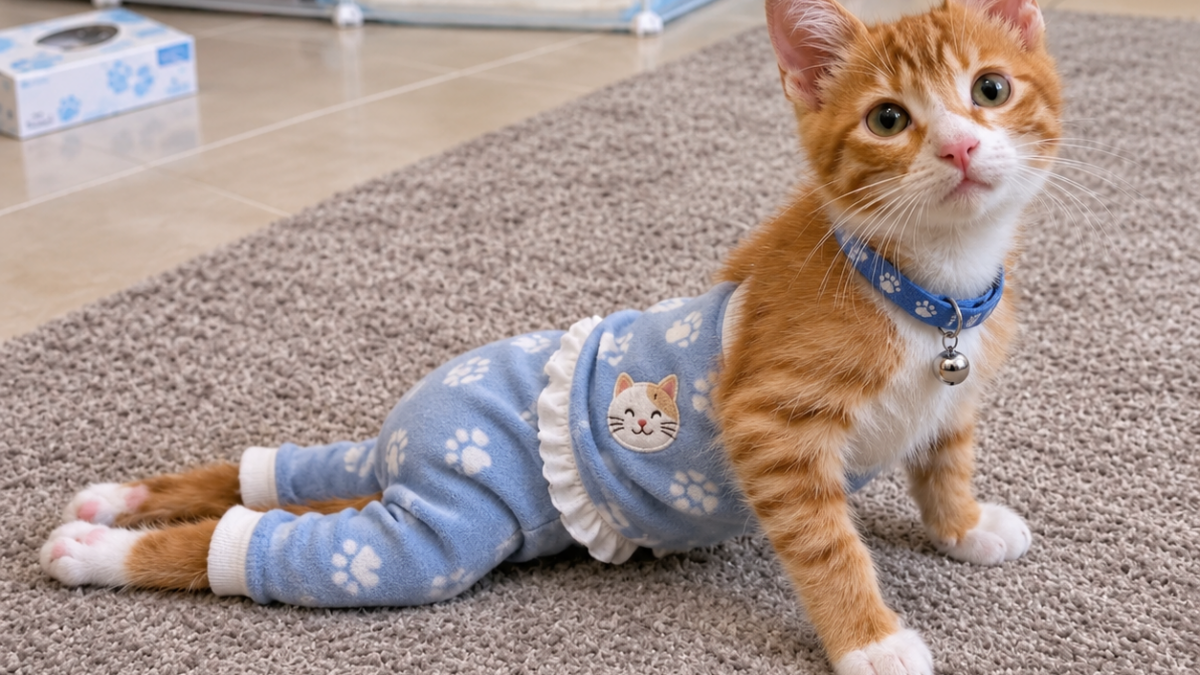
Wasim was barely two months old when I saw him dragging his tiny body along the edge of a busy road, his front paws trembling with every pull while both back legs trailed uselessly behind him. Cars rushed past only a few feet away, dust clung to his matted fur, and when I reached for him, he looked up at me with the exhausted expression of an animal who had already learned that nobody was coming back. I thought getting him off that road would be the hardest part, until the veterinarian placed a hand on his motionless legs and told me what caring for him might actually require.
My name is Sara, and I had been helping abandoned cats for several years, but I had never seen a kitten move the way Wasim did.
At first, I wasn’t even sure he was a kitten.
I was driving slowly through afternoon traffic when I noticed something small near the curb.
It moved a few inches.
Stopped.
Then moved again.
I pulled over.
The moment I got closer, my stomach tightened.
He was tiny.
Maybe eight weeks old.
His coat should have been soft and fluffy, but it was coated with dust and tangled into dirty clumps around his belly.
His front paws were spread wide on the pavement.
They shook every time he pulled.
His back half didn’t follow naturally.
It dragged.
Both rear legs lay behind him like they belonged to someone else’s body.
“Oh, baby.”
He heard me.
His head lifted.
He didn’t run.
He couldn’t.
A truck passed behind me, sending a blast of hot air and dust across the shoulder.
Wasim flattened himself against the ground.
I crouched.
“Come here.”
He stared.
His breathing was fast.
I moved one hand toward him.
He tensed.
“Nobody’s going to hurt you.”
I wish I could say he believed me.
He didn’t.
He simply had no strength left to escape.
When I slipped my hands beneath his chest and stomach, I expected him to struggle.
Instead, he went limp.
His back legs hung beneath my arm.
No kicking.
No pushing.
Nothing.
That frightened me more than a cry would have.
I carried him to the car.
His front paws clung weakly to my shirt.
“You don’t have to pull yourself anymore.”
At the clinic, the veterinarian examined him almost immediately.
Dr. Kareem touched Wasim’s spine first.
Then his hips.
His knees.
His paws.
“Any movement?” I asked.
He didn’t answer.
He pinched gently between Wasim’s toes.
Nothing.
He changed sides.
Still nothing.
My hands tightened around the edge of the examination table.
“Doctor?”
He looked at me.
“Both rear legs are paralyzed.”
The room seemed to shrink.
“Permanent?”
“I don’t know yet.”
Wasim looked between us as if the conversation had nothing to do with him.
“What happened to him?”
“We can’t know from an examination alone. There could have been trauma, nerve damage, a spinal injury, something congenital. We’ll need imaging and time.”
“Can he survive?”
Dr. Kareem nodded.
“Yes.”
Then his expression changed.
“But you need to understand something.”
“What?”
“He can’t urinate normally.”
I stared at him.
“What do you mean?”
“His bladder is filling, but he’s unable to empty it properly on his own.”
My chest tightened.
“So what happens?”
“Someone has to help him.”
“How?”
The veterinarian placed his hands gently around Wasim’s lower abdomen.
“You manually express his bladder.”
I watched as pressure was applied carefully.
Seconds later, urine began to flow.
Wasim remained quiet.
I covered my mouth.
“How often?”
“Several times every day. If his bladder remains full, he can develop infections, kidney problems, even life-threatening complications.”
I looked at the kitten.
He had survived being abandoned beside traffic.
He had dragged himself forward on two trembling front paws because nobody had been there to carry him.
And now even something as basic as going to the bathroom depended on another person.
Dr. Kareem continued.
“He’ll need help eating too, at least for now. His front legs are exhausted from carrying all his weight.”
“Show me.”
“Sara, this may not be temporary.”
I looked at him.
“Show me.”
Later that evening, I placed Wasim into a small padded bed.
He tried to reposition himself.
His front paws pushed.
His back legs remained still.
I reached toward them.
Wasim’s entire body tensed.
“It’s okay.”
I began the first gentle massage exactly as Dr. Kareem had shown me.
One leg.
Then the other.
Warm hands.
Slow movements.
No force.
For ten minutes, I rubbed two tiny legs that gave me absolutely nothing back.
Then I reached his left paw.
And I remember whispering the same words over and over, even though I had no idea whether they would ever become true.
“Come on, Wasim.”
“Give me something.”
“Anything.”
[END OF FACEBOOK OPENING]
[FULL STORY CONTINUATION]
The paw didn’t move.
Not that night.
Not the next morning.
Not the morning after that.
For the first few days, I kept expecting something dramatic because that is how hope behaves when you’re scared. It makes you stare at every muscle, every breath, every twitch of fur and wonder whether you’re watching the beginning of a miracle.
Wasim gave me nothing.
His back legs remained limp.
When I lifted one paw and released it gently, it dropped back onto the blanket.
When I touched the pads, he didn’t react.
When I massaged his thigh, his eyes sometimes followed my hands, but the leg itself seemed disconnected from him.
Dr. Kareem had warned me.
“Don’t expect recovery on a schedule.”
I nodded when he said it.
Understanding those words and living them were completely different things.
## The First Night Home
I took Wasim home three days after he was found.
Not because he was healthy.
Because the clinic had stabilized him enough that his ongoing care could happen outside a hospital setting, and because somebody needed to do it.
That somebody had become me.
I set up a small recovery area in the quietest corner of my living room.
Soft blankets.
Absorbent pads.
Low-sided litter trays even though he couldn’t use them normally yet.
Food.
Water.
A heating pad beneath half the bed so he could move away from the warmth if he wanted.
I placed everything close because Wasim couldn’t simply stand and walk toward what he needed.
He watched me arranging the room.
His ears moved every time I shifted something.
“Very luxurious,” I told him.
No reaction.
“Five-star accommodations.”
Still nothing.
I sat beside the bed.
He looked up.
“I know.”
I didn’t know what I meant.
Maybe I was apologizing.
Not for anything I had done.
For what someone else had failed to do.
For leaving him.
For the road.
For those useless little legs.
For the fact that a kitten his age should have been climbing curtains and attacking shoelaces instead of learning how to survive with half his body refusing to cooperate.
I prepared his evening meal.
Wasim was hungry.
That part had never been the problem.
The problem was balance.
Every time he lowered his head toward the bowl, his back end collapsed sideways.
His front paws spread wider to compensate.
Within seconds, they began trembling.
So I brought out the soft support harness the clinic had shown me how to use.
I slipped it carefully beneath his hips.
Wasim stiffened.
“Easy.”
I lifted just enough to support his back half.
Suddenly his body was level.
His front paws no longer had to hold everything.
He stared at the food.
Then he ate.
At first cautiously.
Then faster.
I held him there the entire time.
“You’ve got it.”
He swallowed.
His ears relaxed.
A little food stuck to his nose.
I laughed.
“You missed a spot.”
Wasim looked up at me with complete seriousness.
I wiped his nose.
He returned to the bowl.
That became our routine.
I held.
He ate.
For a few minutes, the paralysis disappeared from the center of our attention.
He was simply a hungry kitten having dinner.
Then came the bladder.
That was the part I dreaded most.
Dr. Kareem had trained me before discharge.
Find the bladder.
Cup it gently.
Apply steady, controlled pressure.
Never squeeze suddenly.
Stop if there is pain or resistance.
Monitor color and amount.
Contact the clinic if anything changes.
I had practiced under supervision.
Doing it alone was different.
My hands shook.
Wasim lay on a towel.
“Sorry, little guy.”
I felt his abdomen.
There.
Small, firm.
I adjusted my fingers.
“Please don’t let me mess this up.”
Pressure.
Nothing.
I repositioned.
Tried again.
A few drops.
Then a stream.
Relief hit me so hard I laughed.
“Yes.”
Wasim looked offended.
“I’m sorry. This is apparently what my life is now.”
When it was over, he curled on the towel.
I cleaned him.
Changed the pad.
Wrapped him in a dry blanket.
Then I massaged his back legs.
Ten minutes.
Left thigh.
Calf.
Paw.
Right leg.
Paw.
Slow circles.
Gentle flexion.
The muscles felt soft and unresponsive.
Wasim watched me.
He didn’t purr.
He didn’t relax.
He tolerated me.
That was all.
That first night I slept on the couch beside his bed.
Around two in the morning, I heard scratching.
I sat up.
Wasim was awake.
His front paws were trying to pull his body toward the water bowl.
“Wait.”
I got down beside him.
He stopped.
His chest rose quickly.
Those little paws were already trembling again.
I moved the water closer.
He drank.
Then I lifted his hips and helped him settle.
“You don’t have to do everything yourself anymore.”
His head lowered onto the blanket.
Within minutes, he slept.
I didn’t.
## Learning His Body
Caring for Wasim forced me to learn details about his body that most people never have to think about with a healthy kitten.
How full his bladder felt.
Whether his urine looked normal.
How warm his rear paws were.
Whether the skin along his belly was becoming irritated from dragging.
Whether his hips developed pressure sores.
Whether one leg felt stiffer than the other.
Whether his appetite changed.
Whether he was gaining weight.
Whether his bowel movements were normal.
I kept a notebook.
7:00 a.m. — bladder expressed.
7:15 — breakfast with harness.
7:30 — massage.
11:30 — bladder.
12:00 — food.
2:00 — passive range-of-motion exercises.
It looked ridiculous.
A medical schedule for a kitten who still wanted to bite the corner of my notebook whenever it came within reach.
That was one of the first encouraging things about him.
His front half worked perfectly well.
And once he began eating regularly, his personality started emerging.
He hated being cleaned.
He loved chicken.
He was fascinated by shoelaces.
He believed tissues existed solely to be destroyed.
And he had a habit of grabbing my fingers when I tried to adjust his blankets.
“Wasim.”
He held on.
“Those are attached to me.”
He bit gently.
“Thank you for your concern.”
The kitten who had stared at me silently beside the road was learning that he could complain.
I welcomed every complaint.
## Week Two
Two weeks after rescue, I took him back for evaluation.
Dr. Kareem watched Wasim drag himself across the padded examination surface.
His front legs had already grown stronger.
That should have made me happy.
Instead, seeing him move that way broke something in me.
Pull.
Drag.
Pull.
Drag.
His back paws followed helplessly.
“Does he feel anything?” I asked.
The doctor tested again.
Minimal reaction.
Maybe none.
It was hard to tell.
“What does that mean?”
“It means we’re still waiting.”
“Is that good?”
“It isn’t bad.”
I hated answers like that.
“Can you tell me whether he’ll walk?”
“No.”
“Even an estimate?”
“No.”
I looked away.
Dr. Kareem waited.
Then he said, “Sara, if I give you false certainty, I’m not helping you.”
“I know.”
“We support him. We prevent complications. We give his nervous system time.”
“And if nothing changes?”
He looked at Wasim.
“Then we adapt.”
I swallowed.
Adapt.
Not give up.
Not stop caring.
Adapt.
That mattered.
I picked Wasim up.
He grabbed my shirt with his front paws.
Dr. Kareem smiled.
“He’s stronger.”
“Only the front.”
“For now.”
Those two words followed me home.
For now.
## The Stiffness
Around the third week, I thought we were losing ground.
Wasim’s right back leg became harder to flex.
During massage, the knee resisted slightly.
Not dramatically.
But I noticed.
I’d touched those legs hundreds of times by then.
I knew every angle.
Every small difference.
That morning, the right leg felt wrong.
“Wasim.”
He was chewing a stuffed mouse.
I gently bent the joint.
Resistance.
My stomach dropped.
I called the clinic.
Dr. Kareem saw us that afternoon.
He examined both legs.
“Muscle tightness.”
“Why?”
“Disuse. Neurological injury can also cause abnormal tone.”
“Is it getting worse?”
“Not necessarily.”
“It feels worse.”
He looked at me.
“I know.”
I hated how calm he was.
“Should we increase massage?”
“Massage and passive motion, but gently. More is not always better.”
“What else?”
“Continue the plan.”
I stared at him.
“That’s it?”
“That’s it.”
I wanted a machine.
A drug.
A procedure.
Something dramatic.
Instead, he handed me the same little paralyzed kitten and asked me to keep doing what I’d already been doing.
That night I cried in the kitchen.
Not loudly.
Wasim was asleep nearby.
I didn’t want to wake him.
I leaned against the counter and let myself be angry.
At whoever had abandoned him.
At his body.
At uncertainty.
At the absurdity of celebrating whether a kitten could urinate.
At how desperately I wanted two legs to move when they had given me nothing for weeks.
Then I wiped my face and went back to the living room.
Massage time.
Wasim looked at me.
“Don’t start.”
He blinked.
“You had nothing to do with this.”
I picked up his right leg.
Slow circle.
Gentle stretch.
Release.
Again.
## The First Purr
Wasim didn’t purr for me during the first month.
He purred once for food.
Maybe.
I wasn’t even sure.
During massage, he usually tensed.
His shoulders rose.
His front paws gripped the blanket.
I understood.
Hands near his useless legs probably felt strange even if they didn’t hurt.
So I never forced affection into therapy.
I didn’t talk constantly.
Didn’t kiss his head every ten seconds.
Didn’t tell him everything was wonderful when it clearly wasn’t.
I simply worked.
Touch.
Massage.
Stretch.
Release.
One evening, around the fifth week, I was rubbing his left thigh when I felt vibration against my wrist.
I stopped.
Wasim stared at me.
“Was that you?”
The vibration continued.
Purring.
Soft.
Uneven.
But unmistakable.
I smiled.
“Seriously?”
Wasim’s eyes began to close.
I resumed the massage.
The purr grew louder.
Something about that sound nearly destroyed me.
Not because it meant his legs were healing.
It didn’t.
Because it meant he had stopped experiencing my hands as something to fear.
For weeks, his body had tensed every time I touched him.
Now the same routine that once frightened him had become comforting.
I leaned closer.
“Okay.”
My voice broke.
“We’ll take that too.”
## The Twitch
The twitch happened on an ordinary Tuesday morning.
No camera.
No veterinarian.
No dramatic setup.
Wasim had eaten breakfast.
I had expressed his bladder.
He was lying on his side on a gray towel.
I began massage.
Right leg first.
Nothing.
Left thigh.
Nothing.
I moved toward the paw.
I pressed my thumb gently against the pad.
Something moved beneath my fingers.
I froze.
Wasim looked at me.
I thought I’d caused it.
Maybe I’d shifted his leg.
Maybe my hand had moved.
I touched the paw again.
Nothing.
My heart started pounding.
“Wasim.”
He blinked.
I touched the same spot.
A tiny movement.
One toe.
Maybe two.
Barely visible.
But I felt it.
I pulled my hand away.
“No.”
I stared at the paw.
“Do that again.”
Nothing.
I laughed nervously.
“Come on.”
I touched him.
The paw twitched.
I gasped.
Then I started crying so suddenly that Wasim startled.
“Sorry.”
I wiped my face.
“I’m sorry.”
I grabbed my phone.
My hands were shaking.
I called Dr. Kareem.
“His paw moved.”
“What kind of movement?”
“It twitched.”
“Was it voluntary?”
“I don’t know.”
“Reflex?”
“I don’t know.”
“Can you record it?”
“I’ll try.”
Of course, Wasim refused to perform for the phone.
For twenty minutes.
Nothing.
I began doubting myself.
Maybe I’d imagined it.
Maybe my fingers had moved him.
Then the paw twitched again.
This time the camera caught it.
Tiny.
Almost meaningless to anyone else.
To me, it was everything.
## The Clinic Saw It Too
Dr. Kareem watched the video three times.
Then examined Wasim.
He applied gentle stimulation.
The paw responded.
Not strongly.
But enough.
The doctor looked at me.
“There is some neurological response.”
I gripped the edge of the table.
“Meaning he’ll walk?”
He didn’t answer quickly enough.
“Doctor.”
“It means there’s a response.”
“That’s not what I asked.”
“I know.”
He turned toward me.
“Sara, don’t turn one twitch into a promise his body hasn’t made yet.”
I hated him for saying it.
For about ten seconds.
Then I knew he was right.
Hope could become another kind of cruelty if I demanded too much from Wasim.
So I changed the question.
“What do we do now?”
Dr. Kareem smiled slightly.
“Exactly what you’ve been doing.”
I almost laughed.
“Of course.”
## Movement
The twitch didn’t become walking overnight.
It became another twitch.
Then small resistance when I flexed the paw.
Then a faint pulling motion in the leg.
Weeks passed.
Sometimes nothing happened for days.
Then Wasim would surprise me.
During one massage, his toes spread.
During another, his hip muscle tightened.
Once, when I tickled the fur between his pads, he pulled the leg slightly toward his body.
I called everyone.
Dr. Kareem.
My sister.
A fellow rescuer.
“His leg moved.”
“How far?”
“Maybe half an inch.”
Silence.
Then my sister laughed.
“You’re celebrating half an inch?”
“Yes.”
“Okay.”
“It’s a very important half inch.”
Wasim sat beside me chewing a piece of paper.
Completely unimpressed.
## Growing Up Differently
Wasim grew.
That created new problems.
A tiny paralyzed kitten was one thing.
A larger one placed more pressure on his front legs and skin.
We had to adjust.
New harness.
More padding.
Different exercises.
He began developing his own way of moving.
Fast.
Much faster than you’d expect.
Front paws pull.
Hips slide.
Turn.
Launch.
He could cross the room before I finished telling him not to.
“Wasim!”
He disappeared beneath the table.
I crawled after him.
“You are disabled, not invisible.”
His face appeared from behind a chair.
I reached.
He backed away using only his front legs.
“You’ve become impossible.”
He looked extremely pleased with himself.
I realized then how much had changed.
At the beginning, every movement terrified me because it represented injury.
Now I was chasing him around furniture because he had become mischievous.
His body was still limited.
His personality wasn’t.
## The Toy Chase
One afternoon, I rolled a small ball across the floor.
Wasim’s head snapped toward it.
He launched.
Front paws moving rapidly.
Back legs dragging behind.
The ball stopped beneath the sofa.
Wasim reached it.
Patted it.
It rolled farther underneath.
He looked at me.
“Don’t look at me. You caused this.”
He reached.
Couldn’t get it.
I retrieved the ball.
Rolled it again.
He chased.
This time, something happened.
As his front body pulled forward, one rear leg flexed slightly.
Not enough to stand.
But enough that the paw didn’t drag completely flat for one step.
I stopped.
Wasim kept going.
“Wait.”
He ignored me.
I grabbed the phone.
The next roll, I recorded.
Again.
Tiny lift.
The right rear paw shifted.
I sent it to Dr. Kareem.
He replied:
**That’s meaningful. Keep exercises controlled. Don’t overwork him.**
I showed Wasim the message.
“The doctor says you’re impressive.”
Wasim bit the phone case.
“Very mature.”
## The First Time He Stayed Up
Months after rescue, eating no longer required me to support his hips every second.
We still used the harness for proper positioning, but Wasim had started pushing down through his rear legs occasionally.
One evening, after he finished eating, I loosened my grip on the support.
Normally his hips dropped immediately.
This time they didn’t.
One second.
Two.
Three.
Wasim stayed upright.
My hand hovered beneath him.
“Wait.”
His front legs were planted.
His back paws touched the floor.
His hips shook.
Four seconds.
Then he collapsed gently into the harness.
I grabbed him.
“Oh my God.”
Wasim looked annoyed because dinner had ended.
“You stood.”
He licked his mouth.
“Wasim, you stood.”
He wanted more food.
I laughed.
“Of course that’s all you care about.”
I gave him one extra bite.
He had earned it.
## The Bathroom Battle
Bladder expression remained part of life much longer.
Some days it was easy.
Others weren’t.
Wasim began resenting the process as he became stronger.
He knew the routine.
The towel came out.
He tried to escape.
“Wasim.”
Drag faster.
“Come back.”
He disappeared beneath the couch.
I lay on the floor.
Two eyes stared from darkness.
“You have two choices.”
No movement.
“Bathroom now or bathroom in ten minutes.”
Wasim backed farther away.
“Those are your choices.”
Eventually, I learned to laugh at the absurdity.
A year earlier, I would never have imagined negotiating bladder expression with a cat hiding beneath furniture.
Yet I also knew how serious it was.
We monitored him carefully for urinary infections.
Any unusual smell.
Cloudiness.
Straining.
Lethargy.
Fever.
One mild infection sent me into panic.
Dr. Kareem prescribed treatment.
Wasim recovered quickly.
Still, it reminded me that paralysis wasn’t just about walking.
Keeping him alive meant managing everything his damaged nerves affected.
## The Wheelchair Question
At one point, someone suggested a mobility cart.
I asked Dr. Kareem.
“Would it help?”
“Possibly later, depending on how his recovery develops.”
I researched.
Measurements.
Fittings.
Cat mobility devices.
Training.
But Wasim kept changing.
That complicated everything.
His rear legs weren’t completely static anymore.
He had intermittent movement.
Some weight-bearing.
Some reflex.
A cart might eventually help, but we didn’t want it replacing opportunities for appropriate strengthening.
So we waited.
Again.
Waiting had become the central skill of loving Wasim.
## The Day He Tried to Climb
I walked into the living room and found Wasim halfway up a scratching post.
I stopped.
“Absolutely not.”
He had pulled himself up using his front legs.
His back half dangled.
I rushed over.
“Wasim.”
He looked down.
“Do you have any idea how many medical appointments are invested in you?”
He climbed higher.
I grabbed him gently.
“No.”
He protested.
I set him on the floor.
He immediately went back.
“Are you serious?”
That evening, I ordered a low climbing structure with ramps and padded platforms.
If Wasim wanted vertical territory, I would make it safer.
When it arrived, he ignored it for two days and played in the cardboard box.
Naturally.
## Massage Became Our Language
By six months, massage no longer felt medical.
It became ours.
After dinner, Wasim would settle near me.
Sometimes he rolled onto his side before I even touched him.
I placed my hands on his legs.
Warm.
Slow.
He purred.
The muscles felt different now.
Not normal.
But present.
There was tone.
Resistance.
Occasional active movement.
I remembered the first weeks when those legs felt like empty sleeves beneath fur.
Now Wasim sometimes pushed against my fingers.
“That’s right.”
He purred louder.
“You hated this once.”
His eyes closed.
“Now look at you.”
The purr continued.
I began to understand that recovery wasn’t only happening in his nerves.
It was happening in trust.
## Someone Asked Why I Was Doing It
A neighbor visited one afternoon.
She watched me help Wasim with his bladder.
Then she asked:
“How long will you have to do that?”
“I don’t know.”
“Maybe forever?”
“Maybe.”
She stared at the kitten.
“That’s a lot.”
I knew what she meant.
It was a lot.
Hours.
Money.
Appointments.
Laundry.
Cleaning.
Interrupted plans.
Worry.
But something about her tone irritated me.
“He’s a lot of work,” she said.
I looked at Wasim.
He was attacking a shoelace.
“He’s also a cat.”
She smiled awkwardly.
“I didn’t mean—”
“I know.”
And I did.
She wasn’t cruel.
She was asking a practical question.
But it revealed something I’d stopped seeing.
To outsiders, Wasim’s care looked like a burden.
To me, it had become routine.
You feed.
You clean.
You express.
You massage.
You worry.
You laugh.
You repeat.
Love makes complicated routines feel ordinary.
Not easy.
Ordinary.
There is a difference.
## Adoption Was Supposed to Be the Goal
I had always been a foster.
That was the agreement.
Rescue.
Stabilize.
Rehabilitate.
Then find the right permanent home.
Wasim was supposed to follow the same path.
Around nine months after rescue, the organization began discussing his future.
“He’s stable,” our coordinator said.
I nodded.
“Medically manageable.”
“Yes.”
“We could start looking for an experienced adopter.”
My stomach tightened.
“Right.”
She watched me.
“You don’t sound enthusiastic.”
“I’m realistic.”
“About what?”
“Most people aren’t going to want to manually express a cat’s bladder.”
“Some will.”
“They need to understand mobility support.”
“We’ll screen.”
“They need to continue therapy.”
“We’ll make that clear.”
“They need to monitor his urinary health.”
“Sara.”
I stopped.
The coordinator smiled.
“You’ve already decided.”
“No.”
“You have.”
“I haven’t.”
Wasim pulled himself across the floor carrying his ball.
The coordinator looked at him.
Then at me.
“Okay.”
“What?”
“We’ll pretend.”
## A Potential Family
One couple expressed interest.
They sounded wonderful.
Experienced with special-needs animals.
Stable home.
No young children.
A veterinarian reference.
Everything I should have wanted.
They visited.
Wasim surprised me by liking them.
He sniffed the man’s hand.
Allowed the woman to scratch his chin.
Even played with his ball.
I should have felt relieved.
Instead, I spent the entire visit noticing problems that weren’t problems.
Their voices were loud.
Their apartment had tile.
They lived farther from Dr. Kareem.
Their work schedule.
Their furniture.
After they left, the coordinator sat beside me.
“You hated them.”
“No.”
“They were excellent.”
“I know.”
“Then what’s wrong?”
I stared at Wasim.
He was lying beside my leg.
“Nothing.”
“Exactly.”
I wiped my palms against my jeans.
“They’d take good care of him.”
“Yes.”
“He might be happy.”
“Yes.”
I hated every yes.
## That Night
I barely slept.
Wasim did.
Of course.
He lay beside my pillow, a privilege he’d earned despite the rule I’d once had about cats sleeping in bed.
At three in the morning, I woke.
His head rested against my arm.
One rear paw touched my wrist.
I stared at it.
The same paw that had first twitched beneath my fingers months earlier.
I remembered the roadside.
His trembling front legs.
The way his back body dragged through dirt.
The first bladder expression.
The first supported meal.
The stiffness.
The purr.
The twitch.
Three seconds standing.
All the laundry.
All the appointments.
All the ordinary mornings that had somehow become our life.
I whispered, “You’re supposed to go somewhere else.”
Wasim slept.
“That was the plan.”
Nothing.
I touched his paw.
It flexed slightly.
I laughed.
“That’s not fair.”
By morning, I knew.
## The Call
I phoned the rescue coordinator.
“I’m adopting him.”
She was silent for exactly one second.
Then she laughed.
“I know.”
“You don’t know.”
“Sara.”
“I could’ve let him go.”
“Of course.”
“I seriously considered it.”
“I’m sure you did.”
“You sound annoying.”
“Would you like the adoption forms?”
I looked at Wasim.
He was trying to climb into an empty laundry basket.
“Yes.”
“Congratulations.”
I swallowed.
“Thank you.”
Then I sat on the floor.
Wasim crawled into my lap.
I held him.
“Apparently you’re staying.”
He purred.
“No reaction?”
Louder purr.
“Fine.”
I kissed his head.
“Home.”
## One Year
On the anniversary of the day I found Wasim, I drove past the same road.
I hadn’t planned to.
My route simply took me nearby.
Traffic was just as bad.
Motorcycles.
Cars.
Buses.
Dust.
I slowed when I reached the place where he’d been dragging himself.
The curb looked ordinary.
That bothered me.
Somewhere inside me, I expected a place that important to look different.
It didn’t.
Places rarely know what happened on them.
I parked safely farther away.
Wasim was at home.
Warm.
Fed.
Probably asleep on my pillow.
I stood near the sidewalk.
For a moment, I could see him again.
Tiny front paws.
Dusty fur.
Two legs trailing.
I remembered kneeling.
His fast breathing.
The way he looked at me.
I had thought I was rescuing a helpless kitten.
I didn’t understand yet how stubborn he was.
## His First Birthday With Me
We didn’t know Wasim’s exact birthday.
So I chose the approximate date based on the vet’s age estimate.
I bought him a new ball.
A soft tunnel.
A ridiculous little bed he ignored.
My sister came over.
Dr. Kareem sent a message:
**Tell my most stubborn patient happy birthday.**
I held up the phone.
“The doctor insulted you.”
Wasim attacked the wrapping paper.
My sister laughed.
“He’s very offended.”
I watched him play.
He used his front legs powerfully.
His back legs participated more than they once had.
Not perfectly.
He still had neurological limitations.
He still needed help with bladder care.
He wasn’t suddenly transformed into a completely able-bodied cat.
That wasn’t the miracle.
The miracle, if I used that word at all, was that his life had become larger than his paralysis.
He was no longer defined by what didn’t work.
He was Wasim.
Annoying.
Affectionate.
Food-obsessed.
Stubborn.
Playful.
Mine.
## What Progress Really Looked Like
People sometimes asked:
“Can he walk now?”
The answer depended on what they meant.
Could Wasim move around the house?
Absolutely.
Could he support himself better than before?
Yes.
Did his rear legs show meaningful response?
Yes.
Could he stand for moments?
Yes.
Could he sometimes take assisted or awkward steps?
Yes.
Was he a typical walking cat?
No.
And that distinction mattered.
His story didn’t need a false miracle.
It was already extraordinary.
A cat can have a beautiful life without becoming physically perfect.
Recovery doesn’t always mean returning to what a body would have been without injury.
Sometimes recovery means building a life around what is possible.
Wasim taught me that.
## The First Time He Chased Me
One morning, I walked through the hall carrying his breakfast.
Wasim followed.
Fast.
I turned.
He stopped.
I moved again.
He came after me.
“You are literally chasing me for chicken.”
His front paws flew across the floor.
His back legs pushed intermittently.
He looked ridiculous.
Determined.
Alive.
I walked faster.
He followed.
I laughed.
“You’re supposed to wait.”
He made a tiny demanding sound.
I set the bowl down.
Then I used the harness to support his hips.
But before I lifted fully, I let him find his balance.
Wasim pushed.
One second.
Two.
His rear legs engaged.
He stayed up longer than he had months earlier.
Then I supported him.
He ate.
I watched him.
And suddenly I thought about the first supported meal.
His front paws had trembled because they were exhausted from dragging his whole body.
Now they were strong enough to chase me down a hallway.
## Revenge
There was a period when I wanted to find whoever abandoned him.
I imagined confronting them.
Showing them the veterinary records.
The videos.
The countless hours of care.
I imagined asking:
“How do you leave a paralyzed eight-week-old kitten beside traffic?”
I wanted an answer.
Maybe anger.
Maybe shame.
Anything.
We never found one.
No witness gave us a reliable identity.
There was no useful microchip.
No owner appeared.
No confession.
For a while, that bothered me deeply.
Then Wasim did what animals often do better than humans.
He moved on without needing an apology.
He didn’t know somebody had failed him.
He knew breakfast.
Warm blankets.
Massage.
Toys.
My voice.
Home.
His revenge wasn’t making the person who abandoned him suffer.
It was becoming impossible to reduce to the thing they had discarded.
Someone had left a paralyzed kitten on the edge of a road.
A year later, that kitten owned my bedroom.
That seemed fair.
## The Bladder Routine at One Year
We still had to help him.
That didn’t disappear.
Morning and evening, plus additional care based on his schedule and veterinary guidance.
Wasim knew exactly what was happening.
And he still disliked being interrupted for it.
One morning he saw the towel.
He turned.
“Don’t.”
He accelerated.
“Wasim.”
He disappeared beneath the dining table.
I followed.
He moved to the other side.
“This is necessary.”
He stared.
“I know you don’t care.”
I crawled left.
He went right.
Eventually, I caught him.
He complained.
“Your feedback has been noted.”
The procedure took less than a minute.
Afterward, I gave him a treat.
He forgave me instantly.
That was our life.
Medical necessity mixed with comedy.
## The Scar Nobody Could See
Wasim didn’t have a dramatic visible scar from paralysis.
His injury existed in function.
In the way his hips moved.
The way his back legs sometimes crossed.
The way his bladder needed help.
But I had begun thinking of another scar.
Fear.
When he first arrived, he tensed whenever I reached toward him.
Months later, he leaned into my hands.
Massage time became purr time.
If I stopped too early, he looked at me as though I’d violated a contract.
One night I rubbed his back leg.
His paw flexed under my thumb.
Not much.
But enough.
I smiled.
“Remember when that first twitch made me cry?”
Wasim purred.
“I called three people.”
He closed his eyes.
“It was embarrassing.”
Louder purring.
“Fine. I’d do it again.”
## His Favorite Place
Wasim eventually chose the window.
I placed a low padded platform beneath it so he could access the area safely.
He climbed using mostly his front body.
Then settled in the sunlight.
Birds passed.
His tail twitched.
Sometimes he chirped at them.
Completely normal cat behavior.
Completely extraordinary to me.
I would walk through the room, see him there, and remember the road.
Dust.
Traffic.
A helpless kitten dragging himself because he had no other choice.
Now he chose where to move.
That distinction mattered.
## A New Kitten
Months after adoption, I fostered another rescue kitten.
Healthy.
Four working legs.
Too much energy.
I worried about how Wasim would respond.
The newcomer bounced toward him.
Wasim stared.
The kitten swatted his tail.
Wasim looked offended.
Then the kitten ran.
Wasim chased.
Not fast enough to catch him.
But enough.
Front paws working.
Rear legs pushing in their strange rhythm.
I watched them disappear behind the couch.
Seconds later, something crashed.
“Wasim!”
Two faces appeared.
I laughed.
That was the moment I stopped seeing him primarily as a patient.
He had become the older cat teaching another kitten how to cause trouble.
## Dr. Kareem’s Visit
At his one-year follow-up, Dr. Kareem placed Wasim on the examination table.
“Look at you.”
Wasim immediately tried to steal the stethoscope.
“Same personality,” I said.
“Better grip.”
The doctor examined his legs.
Reflex.
Tone.
Movement.
Then smiled.
“He’s made meaningful progress.”
“That’s doctor language for what?”
“For saying I’m impressed without promising something unrealistic.”
I laughed.
“Can he keep improving?”
“Possibly.”
“Possibly.”
He smiled.
“You still hate that word?”
“Very much.”
“But you understand it now.”
I looked at Wasim.
“Yeah.”
Dr. Kareem checked his urinary health.
Everything looked stable.
Then he handed Wasim back.
“You’ve done well.”
I shook my head.
“He did most of it.”
“Both of you did.”
## The Video
For Wasim’s one-year update, I recorded him playing.
No staged miracle.
No attempt to make him look more physically capable than he was.
Just Wasim.
He attacked a soft toy.
Rolled.
Pulled himself after a ball.
Used his back legs when they responded.
Ignored them when they didn’t.
Climbed into my lap.
Purred.
Then tried to bite the camera strap.
I watched the video afterward.
The opening frame showed him looking directly into the lens.
Bright eyes.
Clean fur.
Healthy weight.
I paused.
Then found an old photograph from the day he was rescued.
Dusty.
Tiny.
Back legs trailing.
Front paws spread on pavement.
I placed them side by side.
My throat tightened.
The difference wasn’t simply physical.
The kitten on the road looked like the world had narrowed to one question:
*How do I move another few inches?*
The cat beside me now had an entire home to explore.
## The Morning He Surprised Me Again
One morning, almost fourteen months after rescue, I put Wasim down after breakfast.
I turned to rinse his bowl.
Behind me came a strange tapping sound.
I looked back.
Wasim was upright.
No harness.
Front legs planted.
Back legs beneath him.
His body shook.
I froze.
“Wasim.”
He stayed there.
One second.
Two.
Three.
Four.
Then one rear paw moved forward.
Not beautifully.
Not strongly.
But deliberately.
His body shifted.
The other paw tried to follow.
He collapsed gently onto his side.
I dropped the bowl.
Wasim looked at me.
I laughed.
Then cried.
“You did not just do that.”
He began grooming his shoulder.
I grabbed my phone.
Of course he refused to repeat it.
For the next three hours.
I didn’t care.
I had seen it.
One tiny, imperfect step.
A year earlier, I had begged for a twitch.
Now he was giving me this.
## I Stopped Asking How Far He Would Go
That day changed me more than him.
Until then, some small part of me had always been waiting for the next milestone.
The next movement.
The next improvement.
Then I realized I was in danger of turning Wasim’s entire life into a rehabilitation project.
He didn’t need that.
He didn’t wake every morning wondering whether he could impress us with a new neurological achievement.
He wanted breakfast.
Sunlight.
Toys.
Affection.
So I stopped measuring his worth in steps.
We kept therapy.
Kept veterinary care.
Kept the exercises.
But progress stopped being the condition for celebration.
Wasim didn’t need to become more complete.
He already was.
## The Road One More Time
On the second anniversary of his rescue, I drove past the old road again.
This time Wasim came with me.
He rode in a secure carrier.
I parked in a safe area away from traffic.
I didn’t take him close to the road.
There was no reason.
I simply sat in the car beside him for a moment.
Wasim looked outside.
Traffic moved.
People passed.
Nobody knew.
I opened the carrier door inside the locked car.
Wasim crawled into my lap.
“That’s where I found you.”
He looked at the dashboard.
“Over there.”
No interest.
“Very emotional.”
Wasim began kneading my shirt with his front paws.
I laughed.
“Fine.”
I stroked his head.
“I’m glad you don’t care.”
And I meant it.
That road belonged to my memory.
Not his future.
## What I Would Tell the Person Who Left Him
If the person who abandoned Wasim ever appeared, I don’t think I would scream.
I used to imagine it.
Now I would probably say:
“You were wrong about him.”
Not because I know why they left him.
Maybe fear.
Maybe money.
Maybe ignorance.
Maybe cruelty.
I don’t know.
But whatever calculation made a paralyzed two-month-old kitten disposable was wrong.
Wasim required work.
A lot of it.
But work and worth are not opposites.
He needed help urinating.
Still worth it.
He needed help eating.
Worth it.
He needed massage.
Worth it.
He needed medical visits.
Worth it.
He might never walk normally.
Still worth it.
That is the answer.
## The Home He Gets to Keep
Wasim is asleep on my couch as I write this part of his story.
He is bigger now.
His coat is soft.
His front legs are powerful.
His rear legs still tell the truth about what happened to his body.
Sometimes they cooperate.
Sometimes less.
We adapt.
He has a ramp near the couch.
Padded surfaces where he moves most.
His own food station.
His massage blanket.
A drawer full of medical supplies.
And far too many toys.
He also has a habit of sleeping exactly where I want to sit.
I move.
He doesn’t.
That is the hierarchy in our home.
## The One-Year Photograph
My favorite photograph isn’t the one where Wasim is standing.
It isn’t the first twitch.
It isn’t even his birthday.
It’s a picture of him asleep.
Completely stretched out.
Belly exposed.
Back legs relaxed behind him.
No tension.
No fear.
The kitten on the roadside had used every ounce of his strength to drag himself forward.
The cat in that photograph had nowhere he needed to go.
That is what safety looks like to me now.
## The Sound of Purring
Every evening, I still massage his legs.
Not because I believe every session will produce a miracle.
Because it helps.
Because it’s routine.
Because he likes it.
I sit on the floor.
Wasim lies on his side.
I start with the left leg.
Slow circles.
Warm hands.
The same motion I used during that first week.
Then the paw.
Sometimes the toes flex.
Sometimes they don’t.
Then the right leg.
Wasim purrs.
The sound fills the quiet room.
I remember when he used to tense beneath my hand.
I remember whispering:
“Give me something.”
Now I don’t ask.
He already gave me enough.
## EPILOGUE — THE FIRST TWITCH
People who see Wasim now often focus on how far he came.
I understand.
Transformation is powerful.
But when I think about his story, I always return to one tiny moment.
That first twitch.
It lasted less than a second.
No one applauded.
There wasn’t a room full of people.
No camera captured the first one.
Just my fingers around a little paw and a movement so small I could have convinced myself I’d imagined it.
But I’d spent weeks touching those legs.
I knew.
Something had answered.
Not a promise.
An answer.
That was enough.
Wasim’s recovery happened in pieces.
A twitch.
A purr.
A few seconds upright.
A small push through one leg.
A clumsy step.
But his life changed in bigger ways.
He went from abandoned to expected.
From roadside dust to clean blankets.
From pulling himself toward scraps to chasing breakfast through my hallway.
From tensing when hands approached to falling asleep during massage.
From being a kitten nobody claimed to becoming the cat whose name is on veterinary files, food orders, medication labels, and the little tag attached to his carrier.
Most importantly, he became mine.
Or, if I’m being accurate, I became his.
I sometimes look at his front paws.
They’re larger now.
Strong.
Those were the paws that saved him before I ever arrived.
When his back legs failed, those tiny paws pulled his whole body forward.
Across dirt.
Along pavement.
Away from traffic as best he could.
They trembled.
But they kept moving.
I used to feel sad when I thought about that.
Now I see them differently.
They were doing the only thing Wasim knew how to do.
Keep going.
He did it before anyone helped him.
Then we joined him.
And that is the part of his story I never want to romanticize.
Wasim shouldn’t have needed to be that strong.
A two-month-old kitten shouldn’t have been abandoned beside a road.
He shouldn’t have had to drag himself anywhere.
But when that became his reality, he survived long enough for someone to notice.
After that, survival became a shared job.
His job was to eat.
Rest.
Trust.
Play.
Grow.
Mine was everything else.
Lift.
Clean.
Express.
Massage.
Hold.
Wait.
Repeat.
A year after finding him, I signed the papers that made permanent what had already become obvious.
Wasim wasn’t going anywhere.
The kitten nobody returned for finally had a home he couldn’t lose because somebody had decided he was too difficult.
One evening after the adoption was official, I placed the paperwork on the table.
Wasim immediately crawled across it.
“That’s legally important.”
He sat on the page.
“Of course.”
I tried to move him.
He refused.
I laughed.
“Fine. It’s yours.”
He looked up at me.
Then started purring.
That document had my name.
His name.
Our address.
Ordinary information.
But I stared at the word **adopted** longer than I expected.
There had been a time when I didn’t know whether Wasim would survive the week.
Now I was promising him years.
Whatever they looked like.
However much care they required.
Years.
I signed.
Wasim slept on the paperwork.
That felt appropriate.
Today, if you come into my house in the morning, you might hear him before you see him.
A toy skidding across the floor.
Front paws racing after it.
A small chirp when he wants breakfast.
Maybe the sound of me saying:
“Wasim, stop trying to climb that.”
Then he’ll appear.
Bright-eyed.
Healthy.
Moving in the strange, determined way his body learned.
Some days his back legs help more.
Some days less.
I no longer judge the day by that.
If he eats, plays, purrs, annoys me, naps in the sun, and demands another turn with his ball, it has been a good day.
And sometimes, when I massage his back paws in the evening, one will twitch under my fingers.
That movement doesn’t make me cry anymore.
Usually.
Instead, I smile.
Because I remember the first time.
I remember leaning over a tiny kitten on a gray towel, begging his silent legs for any sign that something inside them was still connected.
I thought the twitch was the beginning of his transformation.
I was wrong.
His transformation had started earlier.
It started on the roadside when his two trembling front paws pulled him forward one more time.
It continued when he let me pick him up.
When he ate while I held his hips.
When he tolerated the first massage.
When he learned to purr beneath my hands.
The twitch was only the first time his body let me see what Wasim had been doing all along.
Trying.
That is why I don’t think of him as the paralyzed kitten anymore.
I think of him as the little boy who found a way forward before he had any reason to believe a home was waiting.
And now, every time those strong front paws carry him through the rooms that belong to him, he doesn’t have to wonder where he’s going.
He already knows.
Home.
[END OF STORY]








