PART 2: They Dumped Sarita Under a Tree to Rot Alive—Then the Greyhound Who Was Never Supposed to Walk Took Her First Step
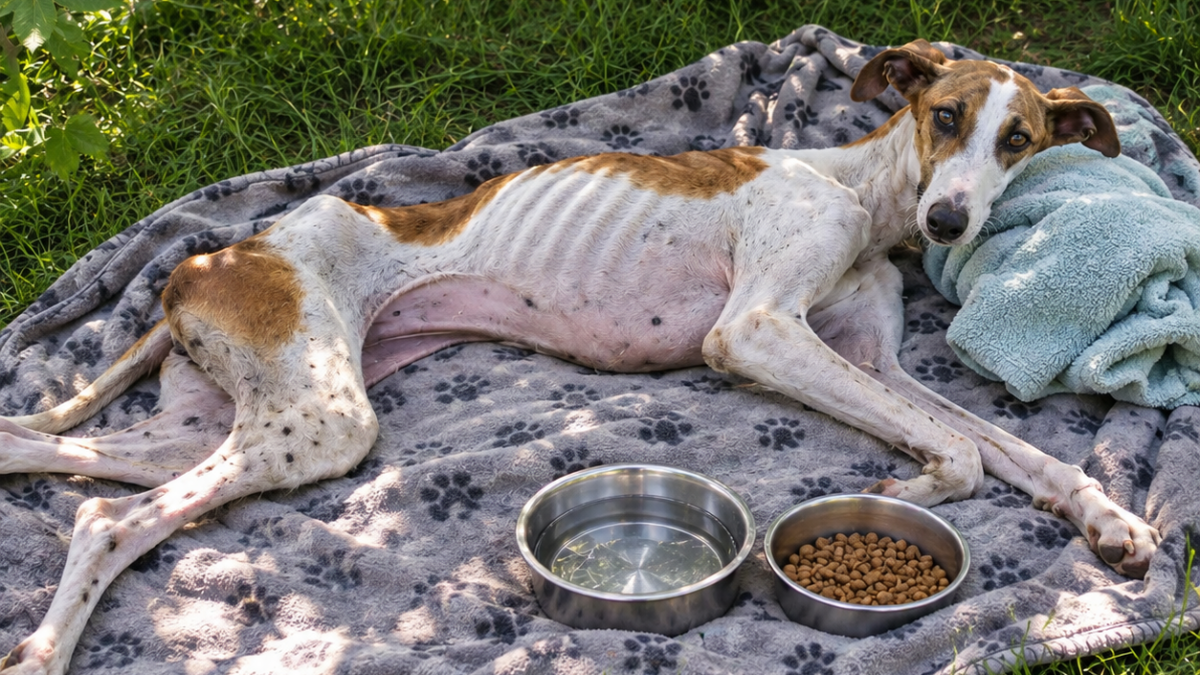
The first time I saw Sarita, she was lying beneath a lonely tree at the edge of an empty piece of land where whoever had left her clearly believed nobody would look closely enough to notice a dying greyhound, and the smell coming from the wounds along her body told me she had already been there long enough for infection, heat, flies, and time to begin doing what her injuries had not finished.
People had passed that place before we arrived—some had slowed down, one person admitted stopping long enough to look, and another had even taken a photograph—but Sarita had received no water, no food, no blanket, and no help while maggots moved through damaged flesh and her useless back legs remained stretched behind a body that could no longer carry itself away.
But when I knelt beside her and those exhausted eyes lifted toward mine, I had no idea that the dog everyone assumed would never stand again was about to lead us back to the person who had thrown her away—and that months later, the same broken legs left motionless beneath that tree would become the most devastating answer we could ever give the person who thought her life had already ended.
My name is Elena, and I’ve spent enough years in rescue to know that there is a terrible difference between an animal that becomes lost and an animal that has been placed somewhere to disappear.
Sarita had been placed.
You could tell by the location.
There were no houses immediately beside her, no busy sidewalks, no open yards she might have escaped from. The land sat behind an old industrial road, bordered by weeds, a concrete drainage channel, a few scattered trees and an abandoned storage building whose windows had been broken for years. Cars passed in the distance, but unless somebody deliberately turned onto the dirt service road, there was almost no reason to stop there.
Someone wanted privacy.
They had gotten it.
The call came from a young man named Mateo who worked at a warehouse half a mile away. He had seen something pale beneath the tree while riding his motorcycle to work.
“At first I thought she was dead,” he told me over the phone.
“What made you stop?”
“She moved her head.”
“Can she stand?”
“No.”
“Is she bleeding?”
“I don’t know. There are wounds. They’re bad.”
“Stay there.”
I grabbed my emergency bag and called my partner Nina.
By the time we arrived, Mateo stood several yards away with his shirt pulled over his nose.
The smell hit before I reached Sarita.
Rot.
Infection.
Old blood.
Waste.
Heat.
I had smelled it before.
I never got used to it.
Sarita was a small greyhound-type dog, painfully thin, ribs visible beneath dusty skin. Several wounds had opened along her flank and hip. Flies rose when I approached.
Then I saw movement inside one wound.
Maggots.
Nina stopped behind me.
“Oh God.”
“Get the stretcher.”
I crouched.
“Hey, sweetheart.”
Sarita didn’t bark.
Didn’t growl.
Didn’t try to crawl away.
She simply lifted her eyes.
That was all she had left.
I placed one hand near her nose so she could smell me.
Her nostrils moved.
“You don’t have to move.”
Her head lowered again.
When I touched her shoulder, she flinched.
Not aggressively.
Pain.
I looked down the length of her body.
Her front legs moved weakly.
Her back legs did not.
Not even when a fly landed on one paw.
That was when fear became something colder.
“Nina.”
“I see.”
I pinched gently between two rear toes.
No meaningful withdrawal.
Another paw.
Nothing.
“Spine,” Nina whispered.
“Maybe.”
Mateo asked from behind us, “Is she going to live?”
I didn’t answer.
I had learned long ago that rescuers shouldn’t make promises merely because a stranger desperately wants one.
Instead, I slipped a blanket beneath Sarita while Nina stabilized her hips and spine.
When we rolled her carefully, I saw another wound.
Deeper.
The maggots were worse there.
Nina swallowed hard.
“How long?”
“Too long.”
Someone had left this dog unable to walk and waited long enough for her wounds to begin decomposing while she was still alive.
I looked toward the road.
Tire marks crossed the dirt near the tree.
Not proof.
Still, I noticed them.
Mateo noticed me noticing.
“I saw a van here two nights ago.”
I turned.
“What van?”
“White. Old. I thought somebody was dumping trash.”
“Did you see the driver?”
“No.”
“Plate?”
“No.”
Nina looked at me.
That could wait.
Sarita couldn’t.
We lifted her.
For the first time, she made a sound.
A tiny broken cry.
I pressed my forehead briefly against hers.
“I know.”
Her eyes stayed on me.
“You’re leaving this place.”
I didn’t know whether she would ever walk.
I didn’t know whether she would survive the night.
I only knew one thing with absolute certainty.
Whoever had placed Sarita beneath that tree had intended it to be the end of her story.
I was carrying her away before they got their wish.
PART 2
## The Ride That Felt Too Long
Sarita cried only once during the drive to the emergency hospital, and somehow that single sound was harder to hear than constant screaming would have been. It came when the van hit a shallow dip in the road and the stretcher shifted less than an inch despite every strap we had placed around it. Her front paw moved. Her rear legs remained still.
“Sorry, sweetheart,” Nina whispered from the driver’s seat.
I sat beside Sarita on the floor.
Flies had followed us into the van.
I killed one with my hand.
Another landed near the bandage I’d loosely placed over her worst wound.
I moved it away.
Her breathing was fast.
Gums pale.
Body hot in some areas, strangely cool in others.
Shock and infection do confusing things.
I called ahead.
“Female greyhound-type dog, severe trauma, suspected spinal injury, multiple infected open wounds with myiasis, possible fractures, nonambulatory, unknown duration.”
Dr. Samuel Reed answered personally.
“Neurologic response in rear?”
“Very poor.”
“Deep pain?”
“I couldn’t establish.”
“Do not keep testing it in transit. Support spine. We’re ready.”
I looked at Sarita.
“We’re ready.”
She didn’t know what that meant.
Maybe neither did I.
## The Emergency Room
The doors opened before we’d stopped completely.
Two technicians came out with a gurney.
Dr. Reed followed.
He took one look at Sarita.
“Trauma bay.”
Everything happened quickly.
IV catheter.
Blood pressure.
Temperature.
Oxygen.
Pain medication.
Blood samples.
Wound assessment.
Clipping.
Flushing.
Neurologic exam.
X-rays ordered.
Ultrasound.
One nurse called out numbers.
Another documented.
Sarita lay almost motionless beneath their hands.
I stood near her head.
“She’s responsive?”
Dr. Reed checked her pupils.
“Yes.”
“Rear legs?”
“Give me a minute.”
He pinched carefully.
Checked reflexes.
Moved the limbs.
Watched.
His expression changed.
I hated it immediately.
“What?”
“Some reflexes are present.”
“That’s good.”
“Reflexes don’t necessarily mean conscious sensation.”
“Deep pain?”
“I need imaging and a more controlled exam.”
“Will she walk?”
“Elena.”
“Just tell me.”
“I can’t.”
Those two words followed us through almost every serious rescue.
I can’t.
I don’t know.
Maybe.
Later.
Honesty is emotionally brutal.
It is still kinder than false certainty.
## The Wounds
The maggots had to be removed.
Hundreds.
Maybe more.
Some visible.
Others buried deeper.
The veterinary team clipped the hair around every lesion, flushed wounds repeatedly and removed damaged tissue.
It took hours.
When the first basin filled with contaminated fluid, Nina looked away.
Dr. Reed didn’t.
“This wound has been necrotic for a while.”
“How long?”
“Impossible to say exactly.”
“More than a day?”
“Yes.”
“More than two?”
“Very possible.”
“So somebody left her like this.”
“Her wounds were already present before she was found.”
That distinction mattered.
Sarita had not injured herself beneath the tree and then happened to get maggots overnight.
She had arrived there injured.
## X-Rays
The films showed multiple fractures.
Pelvic damage.
A fracture involving one hind limb.
Older trauma mixed with more recent injury.
Then came the spine.
Compression.
Traumatic changes.
Areas that explained why the back half of Sarita’s body seemed disconnected from the front.
Dr. Reed brought us into the imaging room.
He pointed.
“This is what worries me most.”
“Spinal cord?”
“Yes.”
“Severed?”
“We can’t say that from X-rays.”
“Compressed?”
“Certainly affected.”
“Can surgery fix it?”
“Maybe not surgery. Maybe medical management and rehabilitation. We need neurology.”
“Will she walk?”
He looked at me.
Again.
“I don’t know.”
Nina crossed her arms.
“What are the chances?”
“Right now?”
“Yes.”
“Poor.”
That word sat heavier than anything else.
## The Question
By evening, Sarita had been stabilized.
Pain medication was working.
Her wounds were clean enough for the next stage.
Antibiotics started.
Fluids running.
But then Dr. Reed asked the question.
“Have you discussed humane euthanasia?”
I stared at him.
Nina looked down.
“Do you think that’s what we should do?”
“I think it’s an option that must be considered.”
“Because she can’t walk?”
“Not only that.”
He counted quietly.
“Severe wounds. Infection. Multiple fractures. Spinal trauma. Extreme pain before admission. Potential paralysis. Prolonged rehabilitation. Unknown continence. Unknown long-term neurologic function.”
I looked through the glass.
Sarita lay on a thick pad.
Her eyes were open.
A nurse moved past.
Sarita’s gaze followed.
“Is she suffering now?”
“Pain is controlled.”
“Is she dying?”
“Not immediately.”
“Can she eat?”
“We’ll see.”
“Can her wounds heal?”
“Yes, potentially.”
“Can a paralyzed dog have quality of life?”
“Absolutely.”
“Then why stop now?”
Dr. Reed did not become defensive.
“Because I need you making the decision for Sarita, not against whoever abandoned her.”
That hit.
Hard.
“You think I want to save her to prove something?”
“I think you’re human. Anger makes all of us vulnerable to that.”
I looked back at Sarita.
“What would you do?”
“I’d give her a short stabilization window and reassess. If pain can be controlled, infection responds, she eats, and her neurologic condition isn’t deteriorating, rehabilitation is reasonable.”
“So you wouldn’t stop tonight?”
“No.”
That was all I needed.
“Neither will we.”
## Cata
We met Cata the next afternoon.
Her full name was Catalina Morales, but nobody called her Catalina unless paperwork demanded it.
She had fostered medical dogs for our rescue before, although nothing as complicated as Sarita.
Cata was one of those people who never entered a room loudly. She watched first. Asked questions. Took notes.
She stood beside Sarita’s kennel.
“Can I touch her?”
Dr. Reed nodded.
“Speak first.”
Cata crouched.
“Hi, Sarita.”
The name had come from one of our volunteers.
Little princess.
It suited her better than the condition we’d found her in.
Cata held her hand near Sarita’s nose.
Sarita smelled.
Then allowed Cata to touch her forehead.
“Hello, beautiful.”
Sarita’s eyelids softened.
Cata looked at me.
“When can she leave?”
I laughed.
“You’ve known her thirty seconds.”
“I asked when, not whether.”
That’s how Cata entered the story.
## The First Meal
Sarita ate that evening.
Not much.
Soft food.
Small portion.
But she ate.
Dr. Reed called me over.
“Look.”
Sarita swallowed slowly.
Paused.
Then took another bite.
Hope is ridiculous.
One hour, you’re discussing death.
The next, six bites of food make grown adults cry.
Cata watched.
“She wants to live.”
Dr. Reed answered carefully.
“Eating is a good clinical sign.”
Cata smiled.
“Doctor translation.”
He rolled his eyes.
## The Tree
While Sarita remained hospitalized, I returned to the place where we’d found her.
Daniel Ruiz from animal welfare came too.
We photographed the area.
Tire marks.
Discarded cloth.
A piece of rope.
Nothing definitively connected to Sarita.
Mateo met us.
“You said white van?” Daniel asked.
“Yes.”
“Time?”
“Maybe around nine. Two nights before I called.”
“You didn’t think anything of it?”
“No. People dump rubbish there.”
“Anyone else see it?”
“Warehouse security maybe.”
Daniel looked toward the industrial buildings.
“Now we’re talking.”
## The First Camera
The nearest warehouse camera didn’t face the tree.
But it caught the service road.
At 9:17 p.m., a white van entered.
At 9:26, it left.
Nine minutes.
Plate unreadable.
Logo absent.
Rear window damaged.
Mateo pointed.
“That’s it.”
“Certain?”
“Pretty sure.”
Pretty sure is useful for direction.
Not enough for accusation.
Daniel began checking businesses and vehicle records.
I returned to Sarita.
## Day Three
Sarita’s infection markers remained high.
But not higher.
Good.
Her wounds looked cleaner.
Good.
She ate.
Better.
Rear legs?
Nothing meaningful.
That was the bad part.
Dr. Reed repeated the examination.
Front paws pulled away normally.
Rear reflexes present.
Conscious movement almost nonexistent.
“Does she feel them?”
“Maybe some sensation.”
“Maybe?”
“Yes.”
I hated that word.
Cata didn’t.
“Then we work with maybe.”
She had already begun talking like Sarita belonged to her.
Nobody pointed that out.
Yet.
## The First Night With Cata
Sarita wasn’t medically cleared to leave the hospital, so Cata stayed near the clinic in a small apartment we sometimes used for foster emergencies. Every evening she visited.
She learned wound care before discharge.
How to turn Sarita without twisting her spine.
How to inspect pressure points.
How to express the bladder if needed.
How to keep skin dry.
How to perform gentle passive range-of-motion exercises.
How to recognize infection.
How to use warm compresses.
How to know when hope became dangerous denial.
Cata asked everything twice.
“What if she never walks?”
Dr. Reed answered:
“Then we build a life where walking isn’t required.”
Cata nodded.
No hesitation.
That mattered more than any promise about recovery.
## The Owner’s Name
Daniel called four days after rescue.
“We found the van.”
I stopped walking.
“Who?”
“Registered to a man named Rafael Torres.”
“Does he own dogs?”
“Yes.”
“How do you know?”
“Neighbors.”
“What kind?”
“One describes a greyhound-type female.”
My anger returned.
“Alive?”
“The dog disappeared recently.”
“Name?”
“Unknown.”
“Ask for photos.”
“Already doing it.”
Rafael lived eleven miles from where Sarita had been found.
No missing-dog report.
No public search.
No calls to shelters.
Nothing.
## Rafael’s First Story
When Daniel interviewed him, Rafael denied Sarita was his.
Never owned a greyhound.
Didn’t know the dumping site.
Had not used the van that evening.
Then Daniel mentioned the camera.
Story changed.
Yes, he’d been on that road.
Why?
Delivering scrap material.
Where?
Couldn’t remember.
Did he dump trash?
Maybe.
Dog?
No.
Then a neighbor produced an old phone photograph.
Rafael standing outside his home.
Greyhound beside him.
White chest.
Same facial markings.
Sarita.
The story changed again.
Yes.
He had owned a similar dog.
But she had “run away.”
When?
Three weeks earlier.
The camera showed the van at the tree less than a week before rescue.
Truth was beginning to narrow his options.
## Sarita’s First Week
Seven days after rescue, Sarita’s wounds looked dramatically different.
Still ugly.
Still open.
But healthy tissue had begun appearing beneath areas that had once been black and rotting.
No new maggots.
No foul odor.
Fever controlled.
Appetite stronger.
Her eyes changed too.
That was what Cata noticed.
“They’re softer.”
“What do you mean?”
“She isn’t waiting for the next bad thing every second.”
I looked.
Cata was right.
Sarita slept deeply now.
Sometimes with her head resting against Cata’s hand.
A dog that sleeps deeply beside you is giving you something enormous.
Vulnerability.
## Discharge
Sarita left the hospital after the acute infection was controlled enough for home nursing.
Not home-home.
Cata’s temporary foster apartment near the clinic.
We carried Sarita inside on a support stretcher.
Cata had rearranged everything.
Low mattress.
Washable pads.
No sharp furniture.
Non-slip rugs.
Water within reach.
Medical supplies organized in labeled containers.
A chart on the wall.
Medication times.
Food.
Wound care.
Rehab exercises.
Cata looked at Sarita.
“Welcome.”
Sarita’s tail moved once.
We all saw it.
Cata cried immediately.
## The Reality of Paralysis
People imagine caring for a paralyzed dog as inspirational.
It is.
It is also exhausting.
Laundry.
Constant laundry.
Bladder management.
Skin inspection.
Pressure sores.
Accidents.
Medication.
Schedules.
Lifting.
Cleaning.
Fear.
Was the urine darker?
Did she eat enough?
Is that wound wetter?
Did she move that leg?
Was it voluntary?
Did the paw twitch?
Does that mean anything?
Cata slept in two-hour blocks at first.
She never complained in front of Sarita.
She complained to me constantly.
Good.
Rescuers who pretend caregiving isn’t difficult burn out.
## The First Bad Night
Sarita developed a fever.
Cata called at 2:18 a.m.
“She’s hot.”
“Temperature?”
She gave me the number.
Too high.
“Clinic.”
We drove.
Possible wound infection flare.
Bloodwork.
Medication adjustment.
More cleaning.
No new systemic crisis.
By dawn, fever down.
Cata sat on the floor beside the hospital kennel.
“I thought we lost everything.”
Dr. Reed said:
“Recovery isn’t a straight line.”
I looked at Sarita.
That sentence would define months.
## Rafael’s Neighbor
An elderly woman named Mrs. Alvarez lived beside Rafael.
She agreed to speak.
Sarita had belonged to him for at least two years.
She’d been healthy.
Fast.
Friendly.
Then Mrs. Alvarez remembered a night.
“I heard a dog scream.”
“When?”
“About a week before she disappeared.”
“What happened?”
“I looked out. Rafael’s gate was open. There was a motorcycle on the ground.”
“Motorcycle?”
“Yes.”
“Did you see Sarita?”
“Later.”
“How?”
“She dragged herself with front legs.”
My stomach turned.
“Back legs?”
“No.”
“Did Rafael take her anywhere?”
“Not that I saw.”
“How many days did she stay?”
“Maybe two.”
Then she disappeared.
No vet.
No hospital.
No surrender.
Just van.
Tree.
## The Motorcycle
Investigators now believed Sarita’s fractures and spinal trauma may have happened during an accident at Rafael’s property, possibly involving the motorcycle.
Exactly how could not be proven.
Maybe she was struck.
Maybe crushed.
Maybe another mechanism.
But Mrs. Alvarez had seen her unable to use her rear legs before she vanished.
That mattered.
Rafael knew she was severely injured.
## The Confrontation
Daniel brought Rafael in again.
“Your neighbor saw the dog after an accident.”
Rafael denied.
“Different dog.”
Daniel showed photos.
Same markings.
Then medical records.
Injuries consistent with major trauma.
Then camera.
Van.
Then another piece.
A service station camera closer to Rafael’s home had captured his van leaving that night.
Something pale visible in the rear.
Wrapped in a blanket.
Rafael’s attorney asked for a break.
Truth was closing.
## Why?
People always want motive.
Cruelty?
Money?
Panic?
Rafael eventually admitted Sarita had been injured.
He claimed he could not afford surgery.
That part I could understand.
Then Daniel asked:
“Did you contact a rescue?”
“No.”
“Shelter?”
“No.”
“Veterinarian?”
“One.”
“What did they say?”
“Expensive.”
“Did they offer euthanasia if treatment was impossible?”
Rafael looked down.
“Yes.”
“Did you take that option?”
“No.”
“Why?”
“I couldn’t.”
“Then what did you do?”
Silence.
Rafael whispered:
“I left her.”
There it was.
## “I Thought She Would Die Quickly”
The sentence came later.
“I thought she would die quickly.”
When Daniel told me, I had to sit down.
Rafael had not left Sarita believing someone would find her.
He had chosen a secluded place because he believed death would happen without him having to watch.
He didn’t put her down humanely.
Didn’t seek surrender.
Didn’t ask strangers.
He outsourced death to heat, infection, thirst, flies and time.
That was what I couldn’t forgive easily.
Not poverty.
Avoidance.
## Cata’s Response
I told Cata.
She was changing Sarita’s dressing.
Her hands stopped.
“He thought she’d die quickly?”
“Yes.”
Cata looked at Sarita.
Then back at the wound.
“Good.”
I frowned.
“Good?”
“I want her to live long enough to make him wrong.”
There was our revenge.
Not violence.
Life.
## Rehabilitation Begins
Once fractures had stabilized enough, formal rehabilitation began.
The first session looked like nothing.
Gentle massage.
Passive flexion.
Extension.
Warm compresses.
Stimulating paw pads.
Supported position.
Sarita lay on her side.
Cata spoke constantly.
“Good girl.”
No movement.
Again.
“Good girl.”
Nothing.
The therapist, Dr. Lucia Ramos, explained:
“We are preserving muscle, protecting joints, stimulating pathways.”
“Can pathways come back?”
“Sometimes.”
“What are her odds?”
“Don’t ask me for numbers.”
Everyone hated numbers now.
## Week Two
Sarita learned the therapy routine.
Not because she liked it.
Because treats came after.
She began lifting her front half higher.
Dragging herself short distances if allowed.
We limited that because friction damaged skin.
Cata bought a support sling.
Soon Sarita could “walk” with front legs while Cata carried some rear weight.
It looked awkward.
But Sarita loved being upright.
She smelled everything.
## The First Time Outside
Cata carried her into a small garden behind the clinic.
Grass.
Sun.
Wind.
Sarita’s nose lifted.
For several minutes she simply smelled.
Then her front paws tried to move.
Cata supported her back end.
They took three assisted steps.
Sarita’s tail wagged.
Cata cried.
Dr. Lucia laughed.
“You cry a lot.”
“I know.”
## Week Three
No voluntary hind-leg movement.
That scared us.
The longer time passed, the harder optimism became.
Cata never lied.
One night she asked me:
“What if this is it?”
“Then this is it.”
“Wheelchair?”
“Maybe.”
“Diapers?”
“If needed.”
“She can still be happy?”
“Yes.”
Cata nodded.
“Okay.”
That’s when I knew Sarita was already home.
Cata simply hadn’t admitted it.
## The Legal Case
Rafael faced charges and violations under local animal-welfare laws related to abandonment and failure to obtain care, with the precise legal outcome depending on what prosecutors could prove.
Public anger exploded after the story became known.
People wanted his address.
We refused.
Threats appeared.
We condemned them.
Justice doesn’t become stronger because strangers promise violence.
Sarita didn’t need a mob.
She needed treatment.
Evidence would do the rest.
## The Hearing
Rafael’s attorney argued financial hardship.
The prosecutor did not deny that treatment could be expensive.
Instead, she asked:
“Were other options available?”
Rescue.
Shelter surrender.
Humane euthanasia.
Payment plans.
Animal welfare agencies.
Even calling police for assistance.
Rafael had used none.
The issue wasn’t that he couldn’t afford advanced spinal surgery.
The issue was what he chose instead.
A tree.
## Sarita’s Photos
The court saw the rescue photographs.
We hated using them.
But evidence mattered.
Maggots.
Necrotic tissue.
Body condition.
Pressure wounds.
The defense attorney asked whether some deterioration could have happened after abandonment.
Yes.
Obviously.
Then Dr. Reed said:
“That is precisely why abandoning a severely injured nonambulatory animal is medically catastrophic.”
Nothing more needed saying.
## Month One
Sarita was alive.
Wounds healing.
Fractures forming callus.
No systemic infection.
Still no independent hind-leg function.
She had gained weight.
Coat brighter.
Eyes playful.
Cata bought her a squeaky rabbit.
Sarita destroyed one ear.
Excellent.
## Hydrotherapy
Once wounds allowed, hydrotherapy began.
Warm water supported Sarita’s weight.
A therapist held her torso.
Front legs paddled.
Back legs?
At first, floated.
Then reflexive movement appeared.
Small.
Rhythmic.
Could be spinal pattern.
Not necessarily conscious.
Cata saw it anyway.
“Look!”
Dr. Lucia raised a hand.
“Don’t overinterpret.”
“Too late.”
## The Difference Between Reflex and Movement
This became our emotional torture.
A twitch.
Was it voluntary?
A kick.
Reflex?
A paw reposition.
Intentional?
Every therapist warned us.
Cata filmed everything.
Sent videos.
“Did you see?”
I saw.
I had no idea.
Hope loves ambiguous evidence.
## Month Two
Sarita’s wounds finally closed.
No bandages.
No smell.
No maggots.
Hair returning around scars.
She looked like a dog again rather than a medical emergency.
People who saw new photos thought recovery was almost done.
They had no idea.
Spinal recovery had barely begun.
## The Wheelchair Discussion
Dr. Lucia brought up a mobility cart.
Cata became defensive.
“Does that mean we’re giving up on walking?”
“No.”
“Then why now?”
“Because mobility is quality of life, not surrender.”
That changed her thinking.
Sarita was fitted temporarily for a rear-support cart.
First attempt?
Disaster.
She froze.
Wouldn’t move.
Looked betrayed.
Cata encouraged.
Treat.
One step.
Another.
Soon Sarita realized the wheels moved when she did.
Five minutes later, she was trying to chase a pigeon.
Everyone laughed.
## Freedom Before Recovery
The cart changed her personality.
Sarita could explore.
Go outside.
Move faster.
Choose direction.
Paralysis no longer meant being carried everywhere.
That mattered.
Sometimes assistive equipment isn’t admission of defeat.
It’s freedom while healing decides what it will do.
## The Twitch
The unforgettable day came almost three months after rescue.
Cata was massaging Sarita’s left hind leg.
Nothing special.
Warm compress.
Massage.
Flex.
Extend.
Then the toes moved.
Cata stopped.
“Lucia.”
No response.
“Lucia.”
The therapist looked.
“Do it again.”
Cata stimulated the paw.
Nothing.
Her face fell.
Then Sarita shifted.
The thigh contracted.
Tiny.
But visible.
Dr. Lucia knelt.
Repeated stimulation.
Waited.
Sarita looked toward Cata.
The leg moved again.
Not reflex pattern.
A small attempt to reposition.
Cata screamed.
Actually screamed.
Sarita startled.
I was called immediately.
“COME HERE.”
“What’s wrong?”
“SHE MOVED.”
“What?”
“HER LEG.”
I drove too fast.
## The Movement
By the time I arrived, Sarita had done it twice more.
Dr. Lucia refused to call it a miracle.
She called it “promising voluntary motor return.”
Rescue people are unbearable around clinical language.
Cata hugged Sarita.
“You moved.”
Sarita licked her chin.
She had no idea.
## The First Supported Stand
Weeks later, Sarita bore some weight through one hind leg.
Then both.
Only seconds.
Cata’s hands hovered under her belly.
Dr. Lucia watched alignment.
“Don’t let go.”
“I won’t.”
Sarita stood.
Front legs strong.
Rear trembling.
One second.
Two.
Three.
Four.
Then collapsed into the sling.
Cata sobbed.
Sarita looked for the treat.
Correct priorities.
## Rafael’s Sentencing
The legal outcome arrived around the same period.
Rafael was found responsible for abandonment and neglect-related violations supported by the evidence. The court imposed penalties, animal-ownership restrictions, fines, and financial obligations where authorized. He could not simply acquire another injured animal and repeat the same choice without consequences.
People online celebrated.
I watched Sarita stand for four seconds.
That felt bigger.
## The Reporter
A local reporter asked me:
“Do you feel justice was served?”
I looked at Sarita.
“Ask me when she doesn’t need to be carried.”
The reporter used the quote.
I regretted it.
Not because it was wrong.
Because Sarita would still have value even if she never walked.
That mattered.
I corrected myself later.
“Justice isn’t conditional on her recovery. She deserved help whether she walked again or not.”
That was the truth.
## The First Step
It happened on an ordinary afternoon.
No cameras ready.
No crowd.
Cata had Sarita in the support sling.
Dr. Lucia placed a treat several feet ahead.
“Forward.”
Sarita moved her front legs.
Cata expected to carry the rear.
Instead, Sarita’s right hind paw came forward.
Placed.
Then the left dragged slightly.
Right again.
Cata froze.
“Keep moving,” Lucia said.
“I can’t.”
“You can cry later. Move.”
Cata laughed through tears.
Sarita stepped again.
One.
Two.
Three.
Not normal.
Not graceful.
But hers.
The little greyhound everyone believed might never walk again was moving forward under her own neurologic control.
## Cata Calls Me
She didn’t say hello.
“She walked.”
I closed my eyes.
“How far?”
“Four steps.”
“Video?”
“No.”
I laughed.
“Of course.”
“I don’t care.”
Neither did I.
Some moments don’t need evidence to be real.
## Learning Again
Walking did not suddenly become easy.
The next day, Sarita couldn’t repeat four steps.
Cata panicked.
Dr. Lucia didn’t.
“Nervous systems fatigue.”
Two steps.
Then none.
Rest.
Next week, five.
Then seven.
Progress zigzagged.
## Falling
Sarita fell often.
Soft mats.
Harness.
Controlled environment.
Still fell.
Each time, she’d try again.
Cata joked:
“She has no sense of embarrassment.”
Good.
Embarrassment would have slowed everything.
## Eating Standing Up
The first time Sarita ate standing on four legs, Cata called it more emotional than walking.
“Why?”
“Because this is normal.”
She sent video.
Sarita at a bowl.
Four paws under body.
Slightly wide stance.
Eating.
Nothing dramatic.
That’s why it mattered.
## The Cart Becomes Optional
Eventually, Sarita used the cart for longer outings but walked short distances without it.
Then longer.
Muscle returned.
Balance improved.
The left hind remained weaker.
No one cared.
## Running?
Months earlier, the word would’ve sounded cruel.
Now Dr. Lucia said:
“Don’t let her run yet.”
Cata stared.
“Did you just say yet?”
“Yes.”
Cata called me.
“YET.”
I knew.
## The First Jog
Sarita chased the squeaky rabbit.
Three steps.
Then a clumsy little hop.
Then another.
Cata panicked.
“SARITA!”
She stopped.
Looked back.
Tail wag.
Apparently rehabilitation rules were suggestions.
## Foster Failure
By then, Sarita had lived with Cata for months.
Applications came in once she became medically stable.
Cata ignored the subject.
I brought it up.
“Sarita is technically adoptable soon.”
“No.”
“You didn’t let me finish.”
“No.”
“You’re fostering.”
“No.”
I smiled.
“What does no mean?”
“She isn’t leaving.”
“There it is.”
Cata looked at Sarita asleep on the couch.
“I told myself I was keeping her close to the clinic.”
“Sure.”
“I told myself somebody more suitable would come.”
“Right.”
“I told myself I wasn’t attached.”
“Obviously.”
Cata looked at me.
“I was lying.”
Yes.
## The Adoption Paperwork
Cata signed.
No dramatic event.
No huge ceremony.
Just papers.
Sarita slept through most of it.
When Cata signed the final line, I said:
“Congratulations.”
She cried.
Again.
“Stop.”
“You’re the one crying.”
“I know.”
## Forever Family
The phrase can sound sentimental.
For Sarita, it meant something practical.
No more uncertainty.
Cata would make the medical decisions.
Pay future bills.
Manage therapy.
Adapt the home.
Stay.
That’s what forever really means.
Not a photograph.
Responsibility.
## The Yard
Cata eventually moved back to her regular home, which had a fenced yard.
Sarita explored slowly at first.
Then faster.
Grass.
Trees.
Other rescued dogs.
She made friends.
One small terrier named Paco became obsessed with her.
He’d follow Sarita everywhere.
She tolerated him.
Mostly.
## Running
The day came.
Not a perfect greyhound sprint.
Not yet.
But running.
Cata threw a toy.
Sarita launched.
All four legs moving.
Uneven.
Beautiful.
She crossed the yard.
Turned.
Came back.
Cata dropped the phone because she was crying.
The video ended with grass.
I laughed when she sent it.
“Perfect cinematography.”
“Shut up.”
## The Woman at the Tree
A woman contacted us after seeing Sarita’s story.
She admitted she had driven past the tree the day before rescue.
“I saw her.”
“Why didn’t you stop?”
“I thought she was dead.”
“Did you call anyone?”
“No.”
She cried.
“I’ve thought about it every day.”
I didn’t attack her.
“What will you do next time?”
“Stop.”
Good.
Guilt is only useful if it changes future behavior.
## The Man Who Took the Photo
Another person had photographed Sarita from the roadside.
He’d posted it in a neighborhood group asking if anyone knew whose dog it was.
Then left.
When challenged online, people attacked him.
I refused to join.
He had at least created information that later helped establish timeline.
Would I wish he’d called immediately?
Yes.
But public humiliation rarely teaches as well as clarity.
“Next time, don’t post first. Call first.”
He agreed.
## The Lesson
Sarita had been seen.
That’s the part that haunted people.
Not hidden perfectly.
Seen.
But seeing suffering is not the same as taking responsibility.
Everyone assumes someone else will.
Until someone doesn’t.
Mateo stopped.
That difference saved her.
## Rafael Requests to See Sarita
Months after sentencing, Rafael sent a message through his attorney.
He wanted to know if she lived.
I didn’t respond personally.
Legal counsel handled it.
Eventually he received confirmation.
Alive.
No location.
No family details.
Then he asked for a photograph.
Cata said:
“No.”
I expected that.
Then, after a week, she changed her mind.
“One photo.”
“Why?”
“I want him to see her standing.”
That was the revenge Cata allowed herself.
## The Photograph
Sarita stood in the yard.
Four legs.
Head high.
Scars visible beneath thin greyhound coat.
Cata beside her.
No caption.
The photograph went through the attorney.
Rafael sent nothing back.
No apology.
No explanation.
He didn’t need to.
The image answered enough.
## One Year
On the first anniversary of rescue, Sarita returned to the tree.
I wasn’t sure I liked the idea.
Cata insisted.
Not to traumatize her.
Dogs do not necessarily attach our narrative meanings to places.
We went quietly.
The area looked smaller than I remembered.
Sarita smelled the grass.
Walked.
Walked.
On four legs.
She had no dramatic reaction.
Didn’t freeze.
Didn’t cry.
Eventually urinated on the tree.
Cata laughed so hard she had to sit down.
“That is revenge.”
I couldn’t argue.
## No Monument
We didn’t leave flowers.
Didn’t install a plaque.
Sarita’s worst place did not deserve to become sacred.
Her home did.
## Rehabilitation Continues
People assumed walking meant therapy ended.
No.
Strength.
Balance.
Muscle symmetry.
Joint protection.
Scar tissue.
Spinal health.
Sarita continued rehab.
Hydrotherapy became something she loved.
Acupuncture sometimes.
Massage.
Exercises.
Cata turned the living room into a gym.
Paco frequently sabotaged sessions.
## The Zoomies
One afternoon, Sarita had her first real greyhound zoomies.
Cata panicked.
“Stop her!”
I watched the video.
Sarita ran circles around the yard.
Not neurological circles.
Joy.
Fast.
Loose.
Tail tucked in happy speed.
The dog once motionless beneath a tree now running because she wanted to.
## Two Years
Sarita became confident.
She greeted visitors.
Loved children.
Slept under blankets.
Greyhounds are professional blanket users.
She collected beds despite needing only one.
Cata had four.
Sarita used the couch.
Of course.
## The Back Legs
Not perfect.
Never completely.
One remained slightly weaker.
Cold weather caused stiffness.
Long runs required rest.
Occasional therapy.
But functional.
Hers.
Enough.
## The Spine
Follow-up imaging showed stable changes.
No reason for surgery.
The spinal cord had recovered more function than early exams predicted.
Dr. Reed shook his head.
“What?”
“Nothing.”
“You didn’t think she’d walk.”
“I thought odds were poor.”
“Say it.”
“No.”
“You were wrong.”
He smiled.
“Happily.”
## The First Vet Who Suggested Euthanasia
People sometimes became angry at Dr. Reed after hearing he had discussed euthanasia.
They shouldn’t.
He had done his job.
Humane euthanasia was a valid option when Sarita arrived with catastrophic injuries and uncertain quality of life.
Discussing it wasn’t giving up.
It was respecting the possibility of suffering.
He also gave her the chance to show us what she could do.
Good medicine lives between those things.
## The Rescue Myth
People love saying:
“Never give up.”
I stopped using that sentence without context.
Sometimes letting go is the most loving decision.
Sarita’s case justified continuing because pain could be controlled and meaningful recovery was possible.
The lesson wasn’t “always fight.”
The lesson was “look carefully at the patient in front of you.”
Sarita told us to continue.
Not with words.
With appetite.
Alertness.
Connection.
Progress.
## Rafael’s Life
People kept asking.
“Did he suffer?”
Financial penalties.
Restrictions.
Court record.
Community judgment.
His van eventually disappeared.
He moved.
I didn’t track him.
There comes a point when watching someone else’s punishment steals attention from the animal who survived.
Sarita didn’t care where Rafael lived.
She cared whether Cata had chicken.
Better focus.
## Three Years
Sarita gained a little too much weight.
For a greyhound, noticeable.
Dr. Reed said:
“Diet.”
Cata stared.
“She was skeletal.”
“Three years ago.”
“You want me to tell her no treats?”
“Yes.”
“You’re cruel.”
Sarita agreed.
The dog once dehydrated beneath a tree now needed portion control.
Another beautiful problem.
## Children
Sarita adored children because they sat on the floor.
One little boy asked:
“Why does she have scars?”
Cata answered:
“She got hurt a long time ago.”
“Did it hurt?”
“Yes.”
“Does it hurt now?”
“Not usually.”
The child thought.
Then gave Sarita a toy.
Children often understand present tense better than adults.
## Paco
Paco died at sixteen.
Sarita searched for him.
His bed.
The yard.
Door.
Cata helped her through it.
Eventually another foster dog arrived.
Sarita became the stable dog teaching someone else safety.
Circle completed.
## Four Years
Sarita no longer attended formal rehab weekly.
Home exercises.
Occasional checkups.
Swimming in warm months.
She ran.
Not every day.
Enough.
## The Old Video
Cata kept the first walking video.
Four steps.
No sound except her crying.
Whenever Sarita did something ridiculous—stealing bread, refusing rain, barking at delivery trucks—Cata sometimes watched those four steps again.
Perspective.
## The Delivery Driver
Mateo remained in contact.
He visited once a year.
Sarita liked him.
He always said:
“I didn’t do anything.”
I disagreed.
“You stopped.”
Sometimes that’s everything.
## Five Years
Sarita developed arthritis in the previously injured areas.
Expected.
Medication.
Supplements.
Weight management.
Warm bed.
No tragedy.
Consequences of surviving trauma and then living long enough to age.
## Cata’s Promise
She once told me:
“I promised her she’d never be left unable to move again.”
I corrected her.
“You can’t promise that.”
She looked at me.
“What?”
“She could become sick. Old. Paralyzed again. You can’t control that.”
Cata frowned.
“What can I promise?”
“That if she can’t move, she won’t be alone.”
Better.
She kept that promise.
## The Greyhound Who Runs
Sarita became something of a symbol locally.
People expected Cata to bring her to events.
She did occasionally.
But Sarita hated crowds after about thirty minutes.
So they left.
An animal’s inspirational value never outweighed her comfort.
Important.
## The Scars
Hair never fully covered some scars.
Greyhound skin is thin.
People stared.
Cata stopped explaining unless asked kindly.
Sarita did not know she looked different.
Excellent.
## Six Years
Another medical scare.
A benign lump.
Surgery.
Recovery.
Cata panicked more than Sarita.
Normal.
## Rafael’s Apology
Unexpectedly, years later, a letter arrived through our attorney.
From Rafael.
I almost threw it away.
Cata chose to read it.
He admitted he had been afraid.
Money.
Shame.
Panic.
He said he had convinced himself Sarita would die quickly and that leaving her was easier than facing euthanasia.
He wrote:
“I understand now that easier for me meant torture for her.”
That was the most honest sentence he’d ever given us.
Cata read the whole letter.
Then folded it.
“Do you forgive him?”
She thought.
“I don’t need to decide.”
Good answer.
## Change
Rafael said he’d completed required animal-welfare education and no longer kept dogs.
Whether that represented true change, I couldn’t know.
Accountability does not require us to pretend transformation is impossible.
Nor does someone else’s transformation require a victim to restore access.
Sarita would never go back.
That boundary was permanent.
## Seven Years
Sarita’s face turned gray.
A gray greyhound becoming grayer.
Funny.
Her rear legs weakened slightly with age.
Cata immediately panicked about spinal recurrence.
Imaging showed mostly arthritis and normal aging.
“Normal aging.”
Those words made Cata cry.
The dog left to die had made it to normal aging.
## The Cart Returns
Eventually, on longer walks, Sarita sometimes used a support cart again.
Not because recovery had failed.
Because bodies age.
Cata worried it meant going backward.
Dr. Lucia, now older too, corrected her.
“Assistive equipment isn’t backward.”
She was right.
Sarita loved the cart because it let her travel farther.
Same lesson twice.
## Eight Years
Sarita no longer ran full-speed often.
But occasionally, cool morning, soft grass, she’d surprise everyone.
A little burst.
Five seconds.
Then trot.
Cata cheered every time.
## The Tree Disappears
Development reached the old dumping site.
Land cleared.
Tree cut down.
A small commercial building went up.
Cata sent me a photo.
“The tree is gone.”
I stared.
“Good.”
She agreed.
## The Place Where She Was Supposed to Die
Now people bought plumbing supplies there.
Ordinary.
Nobody knew.
That felt right.
Worst places don’t need eternal power.
## The Woman Who Walked Past
The woman who once admitted passing Sarita became a regular donor to emergency rescue transport.
Small amounts.
Every month.
She wrote:
“For the next one I might not see.”
Guilt transformed.
Again.
## Nine Years
Sarita’s kidneys began changing.
Early chronic disease.
Diet.
Monitoring.
Fluids later.
Cata learned everything.
Creatinine.
Phosphorus.
Hydration.
Urine.
The care charts returned.
Like the first year.
Different reason.
Age, not abandonment.
## The Rear Legs Weaken
Arthritis and old neurologic injury combined.
Sarita slipped more.
Rugs returned everywhere.
Cata placed runners through the house.
Support harness.
No shame.
## One Bad Morning
Sarita couldn’t rise.
Cata called me crying.
“We’re back.”
“No.”
“She can’t stand.”
“Clinic.”
Testing.
Pain flare.
Arthritis.
Neurologic weakness.
Medication adjusted.
By evening, Sarita stood with support.
Days later, walking.
Not back.
Just another chapter.
## Ten Years Since Rescue
We didn’t know Sarita’s exact age when found.
But ten years had passed.
Ten years since maggots.
Ten years since the tree.
Ten years since “poor prognosis.”
Cata threw no huge party.
Sarita hated parties.
Chicken.
Blanket.
Sun.
Perfect.
## The Foster Who Never Let Go
People asked Cata when she knew.
She always lied:
“The day I adopted her.”
No.
We all knew she was finished the moment she asked “When can she leave?” instead of “Will she survive?”
## The Final Winter
Sarita became frail.
Not neglected-frail.
Old-frail.
Important difference.
Her ribs became more visible because old dogs lose muscle.
Cata worried constantly.
Dr. Reed said:
“You are allowed to let an old greyhound look old.”
Hard lesson.
## Appetite
Then Sarita stopped finishing meals.
Kidneys worsening.
Pain.
Fatigue.
Medications adjusted.
Good days returned.
Then fewer.
## The Question Comes Back
Years earlier, we’d asked whether euthanasia was too soon.
Now the question became whether waiting would be too late.
Cata sat with me on the floor.
“How do I know?”
“You won’t get perfect certainty.”
“What if she has another good day tomorrow?”
“She might.”
“What if I steal that day?”
“What if you steal a peaceful ending by waiting for a crisis?”
Cata cried.
This is the part rescue stories often skip.
The end is another act of care.
## The Quality-of-Life List
Food.
Water.
Sleep.
Pain.
Mobility.
Interest.
Connection.
More good than bad?
Then less.
Sarita still enjoyed Cata.
Still liked sunshine.
But food became work.
Standing became difficult.
Breathing changed some nights.
Kidney values worsened.
Dr. Reed said:
“We’re close.”
## One Last Yard Day
Warm morning.
Cata carried Sarita outside with the support harness.
Placed her in grass.
Sarita stood.
Four legs.
Shaky.
She took three steps.
Then lay down in sunlight.
Cata sat beside her.
No toy.
No running.
No need.
## Mateo Visits
The man who found her came.
He sat several feet away.
“Sarita.”
Tail moved once.
He cried.
“I almost didn’t stop.”
Cata answered:
“But you did.”
That’s what mattered.
## Dr. Lucia
Her rehabilitation therapist visited too.
She touched Sarita’s hind paw.
The same leg that had twitched years earlier.
“Remember when this moved?”
Cata laughed.
“I screamed.”
“You scared the dog.”
“Yes.”
Sarita slept through the memory.
## The Final Decision
Home euthanasia.
Cata insisted.
“No clinic.”
Good.
Sarita had spent enough of life in treatment rooms.
## Final Meal
Chicken.
Very small.
She ate a few bites from Cata’s hand.
Then turned away.
No one pushed.
## The Last Night
Cata slept on the floor beside her.
Like the early foster nights.
No alarms except medication.
No wound cleaning.
No maggots.
No fear of whether she would survive until morning.
Only grief.
Cata placed one hand on Sarita’s side.
“I said temporary.”
Sarita slept.
“You ruined everything.”
Tail barely moved.
## Morning
Dr. Reed came to the house.
Same veterinarian who once explained that euthanasia might be humane.
Older now.
He sat beside Sarita.
“You proved me wrong about a few things.”
I said:
“He’ll never admit exactly which.”
Cata laughed through tears.
Sarita’s ears moved.
## Goodbye
Sedation first.
Cata held Sarita’s head.
I sat beside her.
Nina came.
Dr. Lucia.
Not a crowd.
Family.
Cata whispered:
“You never have to fight again.”
Sarita relaxed.
Her back legs stretched comfortably.
The legs that had once been useless.
Then twitching.
Then standing.
Walking.
Running.
Aging.
Now resting.
Final medication.
One breath.
Another.
Quiet.
Dr. Reed listened.
Waited.
Then nodded.
Cata pressed her face into Sarita’s neck.
## The Promise Kept
Sarita couldn’t move at the end.
But she wasn’t alone.
That was the promise.
## The Ashes
Cata kept them in a simple wooden urn.
No dramatic inscription.
Just:
**Sarita**
Underneath:
**Chosen.**
One word.
Enough.
## Rafael Hears
Through official channels, Rafael eventually learned Sarita had lived for more than a decade after he abandoned her.
He sent one final message:
“I thought she had hours.”
Cata read it.
Then said:
“She had years.”
That was all.
## The Revenge
People wanted punishment.
They wanted Rafael to lose everything.
Maybe they imagined Sarita recognizing him one day and turning away.
Dogs don’t provide screenplay justice.
Sarita’s revenge was better.
He thought she had hours.
She had years.
He left her unable to stand.
She ran.
He left her without water.
She later became picky about which bowl Cata used.
He left her wounds rotting.
She healed enough that only scars remained.
He believed her body had become worthless.
That body carried her through a decade.
He put her somewhere nobody was supposed to find.
Thousands eventually knew her story.
He believed abandonment ended responsibility.
Sarita taught an entire community the opposite.
## The Tree Versus the Couch
I keep two images in my mind.
Sarita beneath the tree.
And Sarita asleep upside down on Cata’s couch years later.
The first image is dramatic.
The second is success.
## What Walking Meant
People loved the walking videos.
I understand.
Paralyzed dog stands.
Emotional.
But walking wasn’t the proof Sarita deserved life.
She deserved life while paralyzed too.
That’s important.
If she had never moved a hind paw, Cata would have adopted her anyway.
The miracle was not becoming physically typical.
The miracle was being chosen before anyone knew whether recovery would happen.
## Cata
When people praised Cata, she became uncomfortable.
“I just cleaned wounds.”
No.
She cleaned wounds at midnight.
Expressed a bladder.
Changed sheets.
Lifted thirty pounds incorrectly once and hurt her back.
Learned therapy exercises.
Drove to appointments.
Paid bills.
Cancelled plans.
Cried.
Got angry.
Stayed.
“Just” is a dangerous word around caregivers.
## The Rescue Team
No one person saved Sarita.
Mateo stopped.
We transported.
Dr. Reed stabilized.
Nurses removed maggots.
Surgeons managed fractures.
Dr. Lucia rehabilitated.
Daniel investigated.
Prosecutors acted.
Cata stayed.
Sarita participated.
Rescue is a chain.
One broken link can end everything.
## People Who Passed
I no longer think about them with the anger I once did.
Some thought she was dead.
Some were afraid.
Some assumed someone else called.
Those aren’t excuses.
They are explanations.
The lesson is simple.
If you see suffering, don’t make your first action a post.
Call.
Stop if safe.
Get help.
One person doing that changed Sarita’s entire timeline.
## Her Eyes
I never forgot the look she gave me.
Under the tree.
No bark.
No cry.
Just eyes.
At the time, I imagined the question:
*Is this finally the day someone chooses me?*
Maybe that’s human projection.
Maybe Sarita was simply exhausted.
It doesn’t matter.
We chose her.
Cata kept choosing her every day afterward.
## The Most Important Day
People would say the day Sarita took her first step.
No.
That was beautiful.
The most important day was earlier.
The day Cata said:
“If she never walks, we’ll build a life around that.”
Because love offered only after recovery isn’t rescue.
It’s reward.
Sarita didn’t need to earn a home by moving her legs.
## The First Twitch
Still, I’ll admit it.
That twitch was unforgettable.
One tiny contraction.
Something most people would miss.
To us?
A door opening.
Not certainty.
Possibility.
Hope begins small.
## The First Run
Years later, I watched the video again.
Sarita running across the yard.
Cata yelling because she thought Sarita would hurt herself.
Camera shaking.
Paco barking.
Sunlight.
No cinematic music.
Better without it.
## The Last Three Steps
On her final yard day, Sarita took three steps.
Slow.
Painful.
Old.
Cata cried harder than she had at the first four.
I understood.
First steps had meant beginning.
Last steps meant enough.
Both mattered.
## If I Could Go Back
If I could return to that tree, I’d kneel beside Sarita before lifting her.
She’d look at me.
I’d say:
“You’ve been left here to die.”
Not kind.
True.
“The person who brought you thinks you have hours.”
Her eyes would stay still.
“He’s wrong.”
A fly would land.
I’d move it away.
“You’re going to a hospital.”
“You’ll hate parts of it.”
“They’ll remove things from your wounds that should never have been there.”
“You’ll get antibiotics.”
“Pain medication.”
“X-rays.”
“People will say your spine is badly damaged.”
“Some will wonder whether letting you go is kinder.”
“You’ll meet a woman named Cata.”
“She’ll say you’re temporary.”
“She lies.”
Sarita would blink.
“You won’t move your back legs for a long time.”
“Then one will twitch.”
“Cata will scream.”
“You’ll stand.”
“Fall.”
“Stand again.”
“You’ll take four steps when nobody has a camera ready.”
“Eventually you’ll run.”
“You’ll become slightly overweight.”
“A veterinarian will put you on a diet.”
“You’ll lose friends.”
“Gain new ones.”
“Grow gray.”
“Get arthritis.”
“Develop kidney disease.”
“Normal old-dog things.”
“And years from now, when those back legs finally become too weak again, you won’t be lying beneath a tree wondering whether anybody saw you.”
“You’ll be inside your home.”
“Cata’s hand will be on you.”
“People who remember your first step will be there for your last breath.”
Then I’d tell her:
“This isn’t where your story ends.”
## The Best Revenge
The best revenge against abandonment is belonging.
Not punishment.
Belonging.
Rafael believed Sarita could be placed somewhere and erased.
Cata made her impossible to erase.
Not through fame.
Through routine.
Breakfast.
Therapy.
Couch.
Walk.
Vet.
Blanket.
Again.
Again.
Again.
A decade of ordinary love outweighed nine terrible minutes on a dirt road.
## THE END
Sarita’s story began in the place somebody chose because they believed nobody would find her.
That detail matters.
She wasn’t abandoned outside a shelter.
Not tied to a veterinary clinic door.
Not left in a busy park where help was likely.
She was taken away from people.
Placed beneath a tree.
Unable to use her hind legs.
Multiple fractures.
Spinal trauma.
Open wounds.
Infection.
Maggots.
No water.
No food.
Then the vehicle drove away.
The person responsible later admitted something that I think about more often than the legal case.
He believed she would die quickly.
That sentence is horrifying because it reveals the decision.
He didn’t misunderstand her condition.
He knew she was catastrophically injured.
He simply chose a version of death he didn’t have to witness.
But Sarita did not die quickly.
First, that was terrible.
Every extra hour before rescue meant more suffering.
Then Mateo stopped.
After that, every extra hour became opportunity.
That’s the strange thing about time.
Before rescue, time was killing her.
After rescue, time became medicine.
Another hour of antibiotics.
Another meal.
Another dressing.
Another night without maggots.
Another therapy session.
Another attempt.
Another twitch.
Another step.
Eventually another year.
Then another.
Then another.
When Sarita arrived at the hospital, people talked about paralysis.
Quality of life.
Pain.
Euthanasia.
Those conversations were necessary.
No animal should be forced through endless suffering because humans are afraid to let go.
But Sarita gave us enough evidence to continue.
She ate.
She connected.
Her pain could be managed.
Her infection responded.
Her body stabilized.
So we tried.
Not because we knew she would walk.
We didn’t.
That distinction matters more than anything else in her story.
Sarita was not saved because she eventually walked.
She was saved while nobody knew whether she ever would.
Cata chose her when she still needed to be turned on a mattress.
When laundry never ended.
When bladder care was part of daily life.
When wounds were ugly.
When every appointment might bring worse news.
Cata didn’t say:
“I’ll love her if she recovers.”
She said:
“If this is the body she has, we’ll work with it.”
That is why the first twitch meant so much.
Not because it made Sarita more worthy.
Because it gave her more freedom.
One movement.
Then another.
One supported stand.
One step.
Another.
Four steps.
Five.
Seven.
The videos spread.
People cried.
But Cata saw everything the videos didn’t.
The days Sarita couldn’t repeat yesterday’s progress.
The falls.
The frustration.
The nights when Cata wondered whether she was imagining movement because she wanted it so badly.
The first time the wheelchair gave Sarita enough independence to chase a bird.
The day the wheelchair became optional.
The day Sarita ate standing.
The day she ran.
Healing isn’t a montage.
It is repetition.
Sarita’s body repeated enough small victories that eventually something impossible-looking became normal.
She walked to her water bowl.
Normal.
She climbed onto the couch.
Normal.
She ran after toys.
Normal.
She needed a diet.
Normal.
She grew older.
Normal.
That’s the ending I wanted.
Not a dog frozen forever as an inspirational symbol.
A dog who became ordinary enough to have ordinary problems.
Rafael’s legal consequences mattered.
Animal-abandonment laws matter.
Ownership restrictions matter.
Accountability matters because another animal could have been hurt.
But the court could not give Sarita back the hours she spent beneath that tree.
It could not remove the maggots retroactively.
It could not make her spine uninjured.
The most complete answer to what happened came from Sarita herself.
Not through anger.
Through time.
He thought she had hours.
She lived years.
He thought she would never leave the tree.
She ran through a yard.
He believed her body wasn’t worth the cost of treatment.
Cata spent years caring for it without asking for a return.
He left Sarita because he couldn’t face her suffering.
Cata stayed through every difficult version of it.
That is why, when people ask me for the revenge part of Sarita’s story, I tell them about a photograph.
No court.
No police.
No shouting.
Sarita standing in Cata’s yard on four legs.
That photograph eventually reached the man who had abandoned her.
He knew the dog.
Knew the scars.
Knew exactly what those legs had looked like when he drove away.
There was no caption.
None was necessary.
She stood.
That was enough.
But years later, I came to believe even that wasn’t the greatest revenge.
The greatest revenge was that Sarita eventually stopped needing to stand.
Age arrived.
Her legs weakened.
Kidneys failed.
One morning, many years after rescue, she couldn’t rise easily.
And this time, nobody loaded her into a van and took her somewhere to disappear.
Cata moved the water closer.
Placed rugs.
Lifted her.
Called the veterinarian.
Adjusted medication.
Sat beside her.
When mobility declined further, a support harness appeared.
When the cart helped, they used it.
When treatment stopped being enough, they discussed peace.
That is the difference between being abandoned for disability and being loved through disability.
Sarita experienced both.
So on her final night, she lay on a bed in the home she’d once entered as a “temporary” foster.
Cata slept beside her.
No maggots.
No flies.
No thirst.
No stranger walking past.
No empty road.
Just a woman’s hand resting against her side.
In the morning, people gathered quietly.
Mateo, the stranger who had stopped.
Dr. Reed, who had once explained the possibility of euthanasia.
Dr. Lucia, who had watched the first twitch become a step.
Nina.
Me.
Cata.
Sarita.
One family built from a terrible beginning.
The final medication entered.
Sarita relaxed.
The back legs that had carried so much meaning stretched behind her.
Once paralyzed.
Then rehabilitated.
Then strong enough to run.
Then old.
Now finally allowed to rest.
She died at home.
That sentence matters more than any before-and-after photo.
At home.
The place nobody could throw her away from.
Afterward, Cata chose one word for the urn.
**Chosen.**
I can’t think of a better summary.
Sarita was seen beneath that tree.
But Mateo did more than see her.
He chose to stop.
We chose treatment.
Doctors chose another day.
Cata chose the hardest version of her.
Sarita chose—if animals can be said to choose anything in these moments—to keep engaging with the world in front of her.
And eventually, the dog somebody had treated like discarded waste became the center of a home.
That’s why I don’t remember Sarita primarily as the paralyzed greyhound.
I remember the dog who hated rain.
The dog who wanted the wrong treats.
The dog who chased toys.
The dog who bullied Cata into giving up couch space.
The dog who grew gray.
The dog who once needed a wheelchair and later needed it again for a completely different reason.
The dog who got old.
I remember ordinary things because ordinary life was what abandonment almost stole.
If you look only at Sarita’s first photograph, you might think her story is about cruelty.
It isn’t.
Cruelty is the first chapter.
Her story is about what happened after somebody finally stopped.
A phone call.
A stretcher.
Medicine.
Cata.
Therapy.
One twitch.
One step.
One home.
Years.
And that is how a dog left beneath a tree to die became the dog who taught all of us that moving forward doesn’t always begin with walking.
Sometimes it begins the moment somebody decides you’re worth carrying.
**THE END**








