They Chased This Injured Dog Out of His Village for “Bad Luck”—Then He Chose the One Woman Who Refused to Leave Him
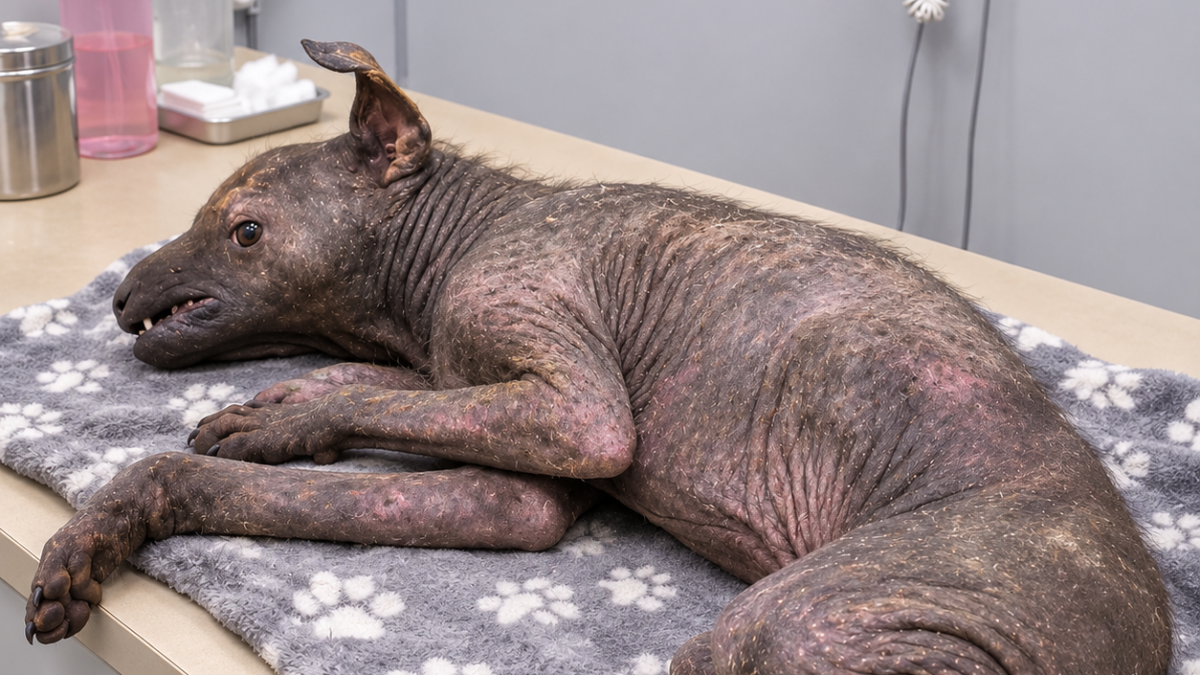
The villagers had already decided Krouch was cursed, so when he became badly injured, they didn’t help him—they chased him farther away.
By the time I found him, he was burning with fever, barely able to stand, and still terrified enough to run from the first person who tried to save him.
What happened after I finally got close to him would make me question how an entire community could look at one suffering animal and somehow decide that compassion was the dangerous thing.
My name is Elena.
I first saw Krouch on a narrow road at the edge of a village I passed through several times a month for work.
I didn’t know his name then.
I didn’t know anything about him.
All I saw was a dog moving slowly beside a drainage ditch.
He wasn’t walking normally.
Every few steps, one of his back legs seemed to give out.
His coat was dirty and tangled, and there were dark patches along his side that I couldn’t identify from the car.
I slowed down.
The dog noticed me.
Even from a distance, his reaction was immediate.
His body dropped.
His ears flattened.
Then he ran.
Or tried to.
He made it perhaps twenty yards before stumbling near an abandoned stone wall.
I pulled over.
“Hey.”
He looked back.
“I’m not going to hurt you.”
The moment I took one step toward him, he forced himself up and ran again.
Something was badly wrong.
A healthy dog would have disappeared down the road.
This one couldn’t.
I followed slowly, keeping my distance.
A woman carrying groceries came around the corner.
“Do you know that dog?” I asked.
She glanced at him.
Her expression changed.
“That one?”
“Yes.”
“Leave him.”
I thought I’d misunderstood.
“He’s hurt.”
“He brings trouble.”
“What?”
She adjusted the bag against her hip.
“People don’t want him here.”
“Why?”
She looked almost embarrassed.
“Bad things happen when he’s around.”
I stared at her.
“He’s a dog.”
She shrugged.
“I’m telling you what people say.”
Krouch had stopped farther down the road.
He was watching us.
I could see now that one side of his body was badly wounded.
Flies moved around the damaged skin.
His breathing was fast even though he’d barely run.
“How long has he been like this?”
The woman looked away.
“I don’t know.”
“Does anyone feed him?”
“Not anymore.”
“Why not?”
She lowered her voice.
“People chase him away.”
I felt anger rise so quickly that I had to remind myself the dog mattered more than the argument.
I grabbed a bottle of water and some food from my car.
When I approached again, Krouch retreated.
I stopped.
Placed everything on the ground.
Then backed away.
For several minutes, he did nothing.
Cars passed.
Someone rode by on a bicycle.
Two boys stopped and looked.
One picked up a small stone.
“Don’t.”
My voice came out sharper than I intended.
The boy froze.
“Put it down.”
He dropped it.
“Why were you going to throw that?”
“He shouldn’t be here.”
“Who told you that?”
One boy looked toward the houses.
“Everyone.”
Krouch was still watching.
I crouched.
Not close.
Just low enough that I wasn’t towering over him.
“Come on.”
He didn’t move.
“Food.”
His nose lifted.
His body wanted the meal.
His fear wanted distance.
Hunger finally won by a few inches.
One step.
Then another.
He reached the food.
Sniffed.
Looked at me.
Ate once.
Then again.
I didn’t move.
When he finished, I slid the water closer.
He drank.
For almost a full minute.
Then he looked up at me.
I slowly extended my hand.
He flinched.
I stopped.
“Okay.”
I lowered it.
“You decide.”
Several minutes passed.
Then Krouch did something I hadn’t expected.
He moved toward me.
Not much.
Just close enough to smell my fingers.
His nose touched my hand.
I felt his breath.
Hot.
Too hot.
I moved my fingers beneath his chin.
He didn’t run.
For the first time since I’d seen him, Krouch allowed a human being to touch him.
And the moment my hand reached his neck, I felt how badly his entire body was trembling.
I called the nearest veterinary hospital.
“Bring him now,” they told me.
Getting Krouch into my car took another twenty minutes.
He didn’t want to be lifted.
He was afraid of the blanket.
Afraid of the open door.
Afraid of my hands moving too quickly.
But eventually, he climbed in.
On the drive, he curled against the far side of the back seat and watched me through the mirror.
“I’m taking you somewhere safe.”
His eyes stayed open.
“You don’t believe me yet.”
I couldn’t blame him.
At the hospital, the veterinarian took one look at him and called for help.
His temperature was dangerously high.
The wounds were infected.
He was dehydrated.
Underweight.
Weak.
After the initial examination, the veterinarian came back to me with a face I already knew I wasn’t going to like.
“How bad?”
She sat down.
“Very.”
“Can you treat him?”
“We can try.”
“Then try.”
She hesitated.
“Elena, I need you to understand what we’re looking at.”
I waited.
“He may not survive the week.”
My chest tightened.
Then she said something else.
Something I wasn’t prepared to hear.
“Considering his condition and the amount of suffering he’s already endured, euthanasia would also be a reasonable option.”
Through the treatment-room window, I could see Krouch lying beneath a blanket.
The same dog people had chased from one road to another because they believed he brought bad luck.
The same dog who had run from me because every human being who came close had apparently taught him to expect pain.
And now I was being asked whether his story should end there.
I looked at the veterinarian.
“What would treatment cost?”
She gave me an estimate.
I knew immediately I didn’t have enough.
Not comfortably.
Not even close.
I opened my banking app.
Looked at what I had.
Then looked through the window at Krouch.
“Start treatment.”
**— END OF FACEBOOK OPENING —**
The veterinarian studied me.
“Elena.”
“I said start.”
“I need to make sure you’re not deciding emotionally.”
“Of course I’m deciding emotionally.”
She blinked.
I took a breath.
“But I’m listening to the medical facts too. You’re telling me treatment isn’t impossible.”
“No.”
“You’re telling me there’s a chance.”
“A small one.”
“How small?”
She hesitated.
“I can’t put an honest percentage on it.”
“Then don’t.”
I looked toward Krouch.
“If he crashes and you tell me there’s nothing more that can reasonably be done, I’ll listen.”
The veterinarian nodded slowly.
“But we’re not there yet.”
“No.”
“Then treat him.”
She stood.
“All right.”
I transferred the deposit.
Watching the number leave my account made my stomach twist.
That money had been my emergency savings.
Car repair.
Rent problems.
Anything unexpected.
Apparently, Krouch was the unexpected thing.
When the receptionist handed me the receipt, I almost laughed.
“What?”
She looked confused.
“Nothing.”
I folded it.
“I guess he’s my emergency.”
Krouch spent that first night on IV fluids.
Antibiotics were started immediately.
The veterinary team cleaned the infected wounds and removed damaged tissue.
His fever remained dangerously high.
He barely ate.
When I returned the next morning, he was lying exactly where I’d left him.
I crouched beside his kennel.
“Hey.”
His eyes opened.
That was all.
No tail movement.
No attempt to stand.
But he looked at me.
“I came back.”
His eyes closed again.
I sat there for twenty minutes.
On day two, his fever went higher.
On day three, he refused food completely.
The veterinarian called me at work.
“I want you to know he’s weaker today.”
I stood in a supply room with my phone pressed against my ear.
“How much weaker?”
“Enough that I’m concerned.”
“Should I come?”
“You can.”
That meant yes.
I left work early.
Krouch was breathing quickly when I arrived.
A fan moved air through the room.
A cooling pad lay beneath him.
The veterinarian showed me his bloodwork.
Most of the numbers meant nothing to me.
Her expression meant everything.
“Is this it?”
“I don’t know.”
I sat beside him.
“Krouch.”
His ear moved.
I had learned his name that morning.
One of the hospital assistants had spoken to a man from the village who remembered the dog from years earlier.
“Krouch,” the man had said.
Nobody knew exactly who had named him.
But the dog responded slightly when we used it.
So Krouch he became again.
I slid my fingers through the kennel bars.
His nose moved toward them.
“You know me?”
No response.
“I spent my emergency fund on you, so you should at least pretend.”
His nose touched my hand.
I smiled.
“Good.”
That night I stayed until the clinic closed to visitors.
Before leaving, I whispered, “I’ll see you tomorrow.”
The receptionist heard me.
“You sound very sure.”
“I have to be.”
The next morning, Krouch was still alive.
Then another.
And another.
But survival wasn’t recovery.
Some days his fever dropped.
Then climbed again.
One wound improved while another became inflamed.
He ate one meal.
Refused the next two.
He gained a little strength.
Lost it.
The hospital called me so often that I started recognizing every number from memory.
My coworkers knew about him.
My sister knew.
My landlord knew.
Even the woman at the café where I bought coffee asked:
“How’s the dog?”
“Still fighting.”
That became my answer.
Still fighting.
A week passed.
The same week Krouch wasn’t supposed to survive.
On the seventh morning, I walked into the clinic carrying cooked chicken.
The receptionist smiled.
“Someone’s popular.”
“Is he awake?”
“Yes.”
“Fever?”
“Still there.”
I went back.
Krouch lifted his head.
That was new.
“Hi.”
His ears moved.
I opened the container.
Chicken.
His nose lifted.
The veterinarian had warned me not to feed him without permission, so I waited until a technician gave me a nod.
I offered one small piece.
Krouch sniffed.
Then ate it.
My eyes filled immediately.
“You ate.”
Another piece.
Gone.
“Okay, don’t make me emotional over chicken.”
Another.
He ate six small pieces.
Then turned his head away.
That was enough.
The veterinarian came in.
“He likes your cooking.”
“He has excellent taste.”
“He’s still critical.”
“I know.”
“But…”
I looked at her.
“But what?”
She smiled slightly.
“He wasn’t interested in food yesterday.”
I looked at Krouch.
“So we celebrate chicken?”
“We celebrate everything.”
That became our rule.
We celebrated everything.
Two bites.
Three hours without fever climbing.
A wound looking cleaner.
Krouch sitting with his head up.
His tail moving half an inch when I walked into the room.
Some victories were so small that another person would never notice them.
We noticed.
At the end of the second week, Krouch’s fever finally broke.
Not dropped temporarily.
Broke.
The veterinarian called me before I arrived.
“I have good news.”
I stopped walking.
“Say that again.”
“Good news.”
“About Krouch?”
“Yes.”
His temperature had been normal for nearly twenty-four hours.
His bloodwork was improving.
The deepest wound was beginning to close.
He had eaten breakfast.
I cried in the parking lot.
By the time I entered the hospital, I had wiped my face.
It didn’t matter.
The veterinarian knew.
“You’ve been crying.”
“No.”
“Your eyes are red.”
“Allergies.”
“In winter?”
“Very aggressive pollen.”
She laughed.
Then she opened the treatment-room door.
Krouch was standing.
Not well.
Not for long.
But standing.
I covered my mouth.
He looked like a completely different dog and still looked terrible.
He was thin.
Shaved in several places.
Bandaged.
Weak.
But upright.
“Krouch.”
His tail moved.
Once.
Then twice.
I knelt.
He took one slow step.
Then another.
Toward me.
That was when I lost it.
I sat on the floor and cried.
Krouch reached me.
I put my arms around him carefully.
“You weren’t supposed to make it.”
His chin rested against my shoulder.
“I’m glad you don’t listen.”
The veterinarian stood in the doorway.
“He’s not out of danger.”
“I know.”
“But?”
She smiled.
“But now I’m cautiously optimistic.”
“That’s the most beautiful phrase I’ve ever heard.”
Krouch remained hospitalized for another three weeks.
Treatment was slow because the wounds had been neglected for so long.
Some required repeated cleaning.
He needed high-quality nutrition.
Medication.
Monitoring.
Every day, after work, I visited.
At first, I brought food.
Then a blanket.
Then a rubber toy.
Krouch ignored the toy.
“Ungrateful.”
He looked at me.
“I paid five euros for that.”
Nothing.
The next day the toy was in his bed.
I smiled.
“You moved it.”
A technician ruined the moment.
“He knocked it over accidentally.”
“Please leave.”
She laughed.
Krouch became stronger.
He started recognizing my footsteps.
I discovered this accidentally.
One evening I was walking down the hallway when his tail started hitting the kennel wall before I had said anything.
Thump.
Thump.
Thump.
I stopped.
The technician beside me smiled.
“He knows.”
“Knows what?”
“You.”
I stepped forward.
“Krouch?”
His whole body shifted.
Tail faster.
That feeling is difficult to describe.
Weeks earlier, this dog had run from me.
Now he heard me coming.
Not leaving.
Coming.
I began wondering what would happen when he was discharged.
The rescue organization we’d contacted offered to find a foster home.
That should have made me happy.
Instead, every time someone mentioned it, I felt sick.
One afternoon, my sister called.
“You know you’re going to adopt him.”
“I am not.”
“You visit him every day.”
“Because he’s sick.”
“You cook for him.”
“He needs food.”
“You bought him a blanket.”
“The hospital blankets are ugly.”
“You changed your work schedule.”
“Temporary.”
She laughed.
“What?”
“You’re already his person.”
I looked through the kennel window.
Krouch was sleeping.
“I work too much.”
“So?”
“He needs someone around.”
“Then figure it out.”
“It’s not that simple.”
“No.”
My sister’s voice softened.
“But don’t pretend you’re worried because you don’t love him.”
I didn’t answer.
That was the problem.
I did.
I loved a dog I hadn’t planned for.
A dog who had emptied my savings.
A dog whose future health was uncertain.
A dog whose first instinct when I met him was to run.
I loved him anyway.
But love wasn’t the only thing happening.
Questions about Krouch’s past were starting to surface.
The animal rescue had posted his case online.
Not dramatically.
Just asking whether anyone knew him or where he had lived.
Messages arrived.
Some were useless.
Others were disturbing.
A shopkeeper remembered Krouch sleeping behind his building.
“He used to feed him,” the rescue coordinator told me.
“Used to?”
“Until people complained.”
“What people?”
“Village residents.”
“Why?”
She looked uncomfortable.
“Apparently there had been a series of accidents.”
I stared at her.
“And they blamed the dog?”
“A child broke an arm.”
“Krouch broke the child’s arm?”
“No.”
“A farmer lost livestock?”
“No.”
“Then what?”
“They believed seeing Krouch before something bad happened meant he caused it.”
I laughed.
Nobody else did.
“Oh.”
I stopped.
“You’re serious.”
“Very.”
The story became stranger.
Krouch had once belonged to an elderly man near the edge of the village.
When that man died, Krouch became a stray.
Shortly afterward, several unrelated incidents happened.
A storm damaged roofs.
A farmer lost two animals.
Someone crashed a motorcycle.
Krouch had happened to be seen near those places.
A superstition grew.
At first people joked.
Then they stopped joking.
Children chased him.
Adults threw water.
Some threw stones.
Stores stopped feeding him.
If Krouch slept near a house, someone drove him off.
Everywhere he went, people taught him the same lesson.
Leave.
The rescue coordinator showed me a video sent by a teenager.
Krouch was walking near a market.
A man shouted.
The dog froze.
Another man threw something.
Krouch ran.
People laughed.
I stopped the video.
“Who is that?”
She pointed.
“His name is Stefan.”
“The man throwing?”
“Yes.”
“Is he the one who started this?”
“Possibly.”
We learned Stefan owned a small farm and was one of the loudest voices claiming Krouch brought bad luck.
When livestock died after an illness, he blamed Krouch.
When a tractor broke, Krouch.
When his son failed an exam, I wouldn’t have been surprised if Krouch received credit for that too.
I felt furious.
“People can’t seriously believe this.”
“They can.”
“Enough to starve him?”
“Fear makes people justify things they normally wouldn’t.”
“No.”
I shook my head.
“Fear explains behavior. It doesn’t excuse it.”
Animal welfare authorities began collecting statements.
Most villagers denied harming Krouch.
Nobody had seen anything.
Nobody remembered.
Nobody knew.
Funny how an entire village could apparently chase one dog while every individual person somehow had nothing to do with it.
Then a teenager named Adrian contacted the rescue.
“I filmed some of it.”
The footage was ugly.
Krouch being chased from the town square.
Krouch limping while several men shouted.
A stone hitting the ground beside him.
Another hitting his side.
Krouch yelping.
Stefan was visible in two recordings.
Not the only person.
But visible.
Animal control and local police became involved.
I didn’t tell Krouch.
Obviously.
He had more important things to do.
Like stealing food from my bag.
By the fifth week, he could walk down the clinic hallway.
Slowly.
His scars were still visible.
But his coat had begun growing back.
He was gaining weight.
The veterinarian changed his prognosis.
“From almost certainly dying to…?”
I waited.
“To likely making a good recovery.”
I smiled.
“That’s better than cautiously optimistic.”
“Much.”
“When can he leave?”
“Soon.”
My stomach twisted.
There it was again.
Leave.
The word everyone had taught Krouch.
But this time it was supposed to mean something good.
A foster placement was arranged.
I hated it immediately.
Not because the foster was bad.
She was excellent.
A woman named Lisa.
Large fenced yard.
Experience with traumatized dogs.
Perfect references.
I visited with Krouch.
He walked around.
Sniffed.
Accepted treats from Lisa.
Everything looked right.
Then I headed toward the gate.
Krouch followed.
Lisa called him.
He ignored her.
I stopped.
“Krouch.”
Tail wag.
“Stay.”
He moved closer.
Lisa smiled.
“You might have a problem.”
“What?”
“He thinks he’s leaving with you.”
“I visit him every day.”
“Exactly.”
I crouched.
“Krouch.”
He pressed himself against my leg.
I looked at Lisa.
“I work nine-hour days.”
“So do millions of people with dogs.”
“He may need more.”
“Then hire a walker.”
“I don’t have a lot of money.”
“Neither do millions of people with dogs.”
I narrowed my eyes.
“You’re not helping your foster application.”
Lisa laughed.
“I don’t think I’m getting him.”
I looked down.
Krouch sat on my shoe.
Very subtle.
“You planned this.”
Lisa crossed her arms.
“Krouch did.”
The decision still terrified me.
I made lists.
Food.
Veterinary costs.
Schedule.
Exercise.
Emergency expenses.
The amount remaining in my savings account was insulting.
My sister listened.
Then said:
“You know what you’re doing?”
“Being responsible?”
“Looking for a mathematical reason not to make an emotional decision you’ve already made.”
“That’s called adulthood.”
“That’s called denial.”
Two months after I first found Krouch, the veterinarian called me into her office.
“He’s ready.”
I knew what she meant.
“For discharge?”
“Yes.”
I looked toward the hallway.
Krouch was walking with a technician.
Not limping much anymore.
Head higher.
Tail loose.
Two months.
The dog given less than a week to live.
“What happens now?”
The veterinarian smiled.
“I thought you were going to tell me.”
I exhaled.
“I brought something.”
“What?”
I opened my bag.
A collar.
Dark blue.
Simple.
A small metal tag.
**KROUCH**
On the back:
**HOME**
The veterinarian smiled.
“So you’ve decided.”
“I think he decided before I did.”
When I put the collar around his neck, Krouch stood perfectly still.
I clipped on the leash.
For one second, I remembered the first day.
Me reaching.
Krouch running.
Now I opened the clinic door.
He walked beside me.
No pulling.
No fear.
Just beside me.
The moment should have been the end of the story.
It wasn’t.
Because before I could take Krouch home, the animal welfare case exploded publicly.
Someone shared Adrian’s videos online.
The village became divided.
Some people were ashamed.
Others defensive.
Several insisted outsiders didn’t understand their traditions.
Stefan gave an interview to a local reporter.
He said:
“That dog has always brought trouble.”
I watched the video at home.
Krouch was asleep beside my couch.
Stefan continued.
“Since he disappeared, things have been calmer.”
I paused the video.
Looked at Krouch.
“Apparently you control weather, machinery, livestock disease and exam results.”
Krouch slept.
“Impressive résumé.”
Then Stefan said something that made me stop joking.
“If she wants that dog, she can keep him somewhere else. He shouldn’t come back here.”
There it was.
Not regret.
Not embarrassment.
A warning.
I closed the laptop.
Two days later, someone left a note on my car.
**KEEP THE CURSED DOG AWAY FROM OUR VILLAGE.**
I stared at it.
My first reaction was fear.
My second was fury.
My third was much calmer.
I photographed it.
Gave it to investigators.
Then installed cameras at home.
Krouch had spent enough of his life being afraid.
I wasn’t going to bring that fear to his new home.
Animal welfare authorities formally cited several individuals for documented acts of cruelty and harassment.
Stefan faced the most serious allegations because of the video evidence and witness statements.
He denied throwing anything directly at Krouch.
Adrian’s recording disagreed.
He denied encouraging others.
Several witnesses disagreed.
He claimed Krouch had attacked livestock.
There was no evidence.
The investigation became the first time anyone had forced the village to separate belief from fact.
Facts are inconvenient that way.
A dog had wounds.
People had thrown things.
A dog had been starved.
People had chased him away from food.
A dog had nearly died.
Superstition did not change any of those things.
At the hearing, I wasn’t there to argue about luck.
I testified only about what I had seen.
Krouch exhausted.
Wounded.
Running from me.
High fever.
The prognosis.
The weeks of treatment.
The money didn’t matter.
The fear did.
I described the way he flinched whenever someone raised an arm.
The way he woke at sudden voices.
The way he seemed surprised when food arrived twice in the same day.
Then Stefan’s lawyer asked:
“Can you prove my client caused every injury?”
“No.”
“Can you prove every villager refused to feed this dog?”
“No.”
“So your testimony is emotional.”
I looked at him.
“My testimony is about the condition he was in when I found him.”
“But you can’t say who caused it.”
“I can say what the videos show.”
The lawyer moved on.
Adrian testified next.
He was nineteen.
Nervous.
Stefan stared at him.
The lawyer asked why he’d filmed instead of intervening.
Adrian swallowed.
“Because I was scared.”
“Of the dog?”
“No.”
The room became quiet.
“Of the people.”
That sentence mattered more than anything I said.
Adrian described adults telling children Krouch was cursed.
He described people refusing to let him leave scraps behind the shop.
He described Stefan chasing the dog.
Then they played the video.
Nobody laughed this time.
In the recording, people laughed.
In the hearing room, they watched themselves.
That was different.
Stefan received penalties for documented animal cruelty, and the case led to restrictions related to animal ownership and treatment under the applicable local regulations.
Other individuals received lesser consequences.
But the legal ruling wasn’t what changed the village most.
The videos did.
Once people outside the village saw them, embarrassment replaced superstition very quickly.
Suddenly, many people wanted to explain.
“I never threw anything.”
“I fed him once.”
“I didn’t believe that story.”
“I only chased him because everyone else did.”
Everyone wanted to be the person who had secretly been kind.
Maybe some were telling the truth.
Maybe not.
I stopped caring.
Krouch didn’t need confessions.
He needed a life.
At home, his transformation continued.
The first night, he refused to sleep indoors.
I had placed a bed near my bedroom.
Soft blanket.
Water.
Everything.
Krouch walked onto the porch.
Curled near the door.
I tried coaxing him inside.
“No?”
He stayed.
I left the door open and sat on the floor.
An hour passed.
Then Krouch stood.
One paw inside.
Stop.
Second paw.
Stop.
He looked at me.
“It’s okay.”
He entered.
Sniffed everything.
Then returned to the doorway.
This happened four times.
Eventually, he lay on the rug.
Not the expensive dog bed.
The rug.
Of course.
At three in the morning, I woke and found him standing beside my bed.
I sat up.
“Krouch?”
He froze.
I patted the floor.
He lay down.
Not touching me.
Close enough.
By the end of the first week, he slept against the side of the bed.
By the end of the first month, he had decided my couch was a legal entitlement.
He loved walks.
That surprised me.
I thought roads would scare him.
At first, they did.
If someone approached quickly, Krouch moved behind me.
If a group of children shouted, his body tightened.
But slowly, walking became something new.
He wasn’t being chased.
He was going somewhere.
With someone.
There is a difference.
I learned his pace.
He learned my routines.
Morning coffee.
Breakfast.
Walk.
Work.
My neighbor, Mrs. Nolan, took him out midday.
I came home.
Krouch waited near the door.
The first time I saw him waiting, I nearly cried.
He wasn’t waiting because he was afraid I’d abandoned him.
He was waiting because experience had taught him I returned.
One evening, my sister visited.
She watched Krouch sleep with his head on my foot.
“You were too busy to adopt a dog.”
“I still am.”
“Clearly.”
“I rearranged things.”
“Exactly.”
Krouch opened one eye.
My sister smiled.
“You know what I like?”
“What?”
“He looks boring.”
I laughed.
“That’s rude.”
“No.”
She pointed.
“He isn’t a rescue story right now. He’s just a dog sleeping in a house.”
I understood.
That was exactly what I wanted.
Not for Krouch to spend the rest of his life representing cruelty.
Ordinary.
I wanted ordinary.
He got it.
Then, almost six months after I found him, something happened that I hadn’t planned.
I had to pass through the old village.
The main highway was closed.
The detour went directly through it.
Krouch was in the car.
I considered turning around.
Driving forty minutes out of the way.
Then I looked at him.
He was asleep.
I thought about that note.
**KEEP THE CURSED DOG AWAY.**
I had no intention of provoking anyone.
But I also refused to teach Krouch that an entire piece of the world belonged to people who hated him.
So I drove through.
Slowly.
Krouch woke.
His head lifted.
Nose toward the cracked window.
His body changed.
He knew.
I felt it immediately.
“Krouch.”
He stood.
Looked outside.
We passed the market.
The same place where Adrian had filmed people chasing him.
Krouch began panting.
I pulled over near the edge of the village.
Maybe that was stupid.
Maybe it was necessary.
I clipped his leash.
Opened the door.
“Want to walk?”
He hesitated.
Then jumped down.
We walked ten yards.
Krouch stopped.
Several people noticed us.
An older woman stared.
A man outside the shop crossed his arms.
Then someone said:
“That’s the dog.”
Krouch moved closer to me.
I kept walking.
“Come on.”
Then I saw Stefan.
He stood across the street.
For a moment, we looked at each other.
I didn’t intend to speak.
He did.
“You brought him back.”
I stopped.
“I’m passing through.”
“He shouldn’t be here.”
I felt Krouch press against my leg.
I looked down.
Then back at Stefan.
“This road doesn’t belong to you.”
Stefan stepped closer.
“You want trouble?”
“No.”
“Then take him.”
Something inside me became very calm.
“I did.”
He frowned.
“What?”
“I took him.”
I put one hand on Krouch’s shoulder.
“You all told him to leave.”
Stefan said nothing.
“So he did.”
I looked around.
Several villagers were listening now.
“He left starving, wounded and burning with fever.”
A woman lowered her eyes.
“I took him to a hospital where they gave him less than a week.”
Stefan’s jaw tightened.
“He survived.”
“I can see that.”
“Yes.”
I looked at Krouch.
“He did.”
Then a small voice came from behind us.
“Can I pet him?”
I turned.
A boy stood beside his mother.
Maybe seven.
His mother looked nervous.
Krouch looked at the boy.
I crouched.
“Slowly.”
The boy approached.
Hand low.
Krouch sniffed him.
Then allowed the child to touch his head.
The boy smiled.
“He’s nice.”
His mother looked toward Stefan.
Then back at Krouch.
“Yes.”
Something shifted.
Tiny.
But visible.
Another woman approached.
“I used to leave food behind the bakery.”
I didn’t know if that was true.
Krouch sniffed her hand.
Then another person came closer.
Not everyone.
Stefan stayed where he was.
A man beside him walked away.
Within minutes, Krouch was standing in the same village that had once chased him while three children gently scratched his back.
I didn’t plan the moment.
Didn’t need it.
Then the elderly grocery woman from the day I found Krouch appeared.
I recognized her immediately.
She stared.
“Is that him?”
“Yes.”
Her eyes filled.
“He looks different.”
“He feels different too.”
She looked ashamed.
“I told you to leave him.”
“I remember.”
“I was afraid.”
“I know.”
She crouched.
“Can I?”
I looked at Krouch.
He made the decision.
He stepped forward.
She touched his head.
Then started crying.
“I’m sorry.”
Krouch didn’t understand.
Or maybe dogs understand more than we think.
He simply stood there.
When we left, Krouch walked beside me.
Head up.
Tail loose.
No one chased him.
That was the moment people later called revenge.
Krouch returning.
Stefan watching.
Children touching the dog everyone had called cursed.
But I didn’t experience it as revenge.
I experienced it as correction.
The village had told a false story about Krouch.
That day, Krouch showed them the truth.
Not cursed.
Not dangerous.
Not bad luck.
A dog.
Just a dog.
A sweet, stubborn dog who wanted food, safety and someone to walk beside.
Weeks later, Adrian sent me a photograph.
Someone had painted over graffiti near the market.
The old words had accused Krouch of bringing misfortune.
In their place was a small mural.
A brown dog walking beside a woman.
Underneath:
**KINDNESS IS NEVER BAD LUCK.**
I stared at the picture.
Then looked at Krouch asleep on the couch.
“You’re famous.”
No response.
“I hope you’re planning to contribute financially.”
Tail movement.
“Not enough.”
A year passed.
Krouch’s scars softened beneath new fur.
Some remained visible.
His personality changed too.
He became playful.
Late.
As if puppyhood had been waiting somewhere inside him.
He discovered balls.
At first, he watched them roll.
Then chased.
He never returned them.
Apparently retrieval was below his dignity.
He learned to steal socks.
He hated the vacuum.
He loved cheese.
He loved my sister even though she pretended this was because she “happened to carry snacks.”
He loved Mrs. Nolan.
He tolerated the mail carrier.
He remained suspicious of men shouting.
That never fully disappeared.
Healing is not erasure.
But he recovered enough to choose curiosity over fear most days.
The veterinary hospital invited us back for a follow-up.
The receptionist saw him first.
“Krouch?”
His tail started.
Dr. Patel came around the corner.
She stopped.
“Oh my God.”
I laughed.
“You recognize him?”
“He’s fat.”
“He’s not fat.”
Krouch was slightly fat.
She knelt.
He went straight to her.
“This is the dog I told you might not survive the week?”
“Same one.”
She ran her hands over his sides.
Healthy muscle.
Full coat.
Normal temperature.
Clear eyes.
She smiled.
“I love being wrong sometimes.”
“So do I.”
We took a photograph.
On my phone, I still had one from his first day.
The difference hurt to see.
In the first photo, Krouch looked like an animal disappearing.
In the new one, he occupied space.
That phrase mattered.
Occupied space.
He no longer tried to become smaller when people approached.
No longer searched for the fastest exit from every room.
No longer ate as if each meal might be his last.
He existed confidently.
That’s a kind of healing people don’t always photograph.
At eighteen months, Krouch developed another habit.
Whenever I prepared to leave for work, he brought me one of my shoes.
Not both.
One.
Then stood in front of the door.
“You cannot come to the office.”
Tail.
“They do not employ dogs.”
Tail.
“Your computer skills are weak.”
He sat.
“No.”
Sometimes I took him anyway.
My workplace allowed dogs on occasional Fridays.
The first time, Krouch stayed beneath my desk.
Then discovered coworkers had food.
Confidence arrived quickly.
By lunchtime, he had made five friends and obtained approximately half a sandwich through methods I did not approve.
This was the cursed animal.
Apparently his supernatural powers involved manipulating adults into sharing lunch.
Years later, the superstition in the village became something people were embarrassed to discuss.
Adrian told me schools had used Krouch’s story in a lesson about animal welfare.
That surprised me.
The same children who once heard adults call him cursed were now being taught why cruelty justified by superstition was still cruelty.
That felt bigger than a punishment.
Stefan eventually moved away.
I heard his farm had struggled financially.
Some villagers called it karma.
I didn’t.
That would have been repeating the same logic that hurt Krouch.
Bad things happened because a dog walked past?
No.
Bad things happen.
Good things happen.
Sometimes because of choices.
Sometimes because of chance.
Krouch had been punished because people needed something simple to blame.
I refused to turn Stefan into the same kind of symbol.
He made cruel choices.
He faced consequences.
That was enough.
One afternoon, several years after Krouch came home, I returned to the village for a community animal vaccination event.
The organizers asked whether I could bring Krouch.
I hesitated.
Then agreed.
We set up tables near the old market.
Dogs arrived on leashes.
Cats in carriers.
Children running everywhere.
Krouch lay beneath my chair.
Relaxed.
A woman brought a thin stray.
Not critically thin.
But hungry.
She said she’d been feeding him for several weeks.
“We weren’t sure who to call.”
The rescue team took his information.
I looked around.
No stones.
No shouting.
Nobody saying the stray brought trouble.
People brought water.
Food.
One teenager made a cardboard sign:
**FOUND DOG — SAFE HERE**
I looked down at Krouch.
“Did you do this?”
He slept.
Maybe in a way, he had.
Not through magic.
Through survival.
People saw what cruelty had nearly done.
Then saw what care did instead.
That contrast became harder to ignore.
At the end of the event, the grocery woman approached.
Older now.
She handed me a bag.
“For Krouch.”
Inside were dog treats.
I smiled.
“He’ll appreciate these more than apologies.”
She laughed softly.
“I still think about that day.”
“So do I.”
“I should have stopped.”
I looked at her.
“You stopped eventually.”
“No.”
She shook her head.
“You did.”
There was no accusation in her voice.
Only regret.
I could have made her feel worse.
I didn’t.
“Then stop for the next one.”
She looked at me.
“What?”
“The next animal.”
I nodded toward the stray being loaded into the rescue vehicle.
“That’s how you fix it.”
She smiled.
“I can do that.”
Good.
That is what accountability should produce when possible.
Not endless shame.
Changed behavior.
Krouch became older.
The first gray hairs appeared around his muzzle.
His running slowed.
Walks became shorter.
He developed arthritis in one back leg—the same leg that had been injured when I first saw him.
The veterinarian prescribed medication.
I bought an orthopedic bed.
Krouch ignored it for two weeks.
Then one morning I found him sleeping on it.
“Finally.”
He opened one eye.
“Do you know how much that cost?”
Eye closed.
“Right.”
We still walked every evening.
That mattered to both of us.
Sometimes we’d go only around the block.
Krouch beside me.
Always beside me.
I thought often about the first day.
How he ran.
How impossible it seemed to get near him.
Now, if I accidentally dropped the leash, Krouch stopped.
He didn’t run.
He waited.
Trust, built in thousands of tiny repetitions.
Dinner comes.
Door opens.
Person returns.
Hand doesn’t hit.
Voice doesn’t chase.
Walk means together.
Home means safe.
The biggest changes in rescue animals often happen too slowly to notice day by day.
Then one day you remember who they used to be.
And you can’t understand how you traveled so far.
On Krouch’s tenth birthday—or the date we chose because nobody knew his real one—I made him a small meat cake.
My sister came.
Adrian came.
Dr. Patel came.
Even Mrs. Nolan.
Krouch wore a blue bandana.
He hated it.
We sang.
He looked offended.
Then ate the cake.
After everyone left, I found myself looking through old photographs.
Krouch at the hospital.
Bandages.
Thin face.
Eyes tired.
Then the first walk.
First night home.
First trip back to the village.
First Christmas.
First gray hair.
I started crying.
Krouch heard me.
He came over.
Pressed his head against my knee.
“You were supposed to die in a week.”
He leaned harder.
“Very inconsiderate of you to stay this long.”
Tail.
I laughed.
“I’m glad.”
Years passed more quickly after that.
Age does that.
Krouch’s hearing faded.
His eyesight softened.
He slept more.
Still ate well.
Still liked walks.
Still positioned himself strategically whenever cheese appeared.
Eventually, our walks became less about distance.
We would go to the small park.
Krouch would sniff one tree for an unreasonable amount of time.
Then we’d sit.
I didn’t rush him.
He had spent enough of his life being forced away from places.
If Krouch wanted ten minutes with one tree, he got ten minutes.
One evening, a little girl asked:
“Why does your dog walk so slow?”
“He’s old.”
“Was he always yours?”
I smiled.
“No.”
“Where was he before?”
I looked at Krouch.
“That is a very long story.”
The girl considered.
“Does it have a happy ending?”
Krouch sat on my foot.
“Yes.”
“Then tell me the short version.”
I thought.
“People kept telling him to go away.”
The girl frowned.
“Why?”
“They were afraid of something that wasn’t true.”
“What happened?”
“I stopped.”
“And?”
“He came home with me.”
She smiled.
“That is short.”
“It took a long time.”
She petted Krouch.
He closed his eyes.
The short version sounds simple.
A woman stopped.
A dog was saved.
A dog came home.
The long version is where the truth lives.
Fear.
Money.
Hospital nights.
Doubt.
Anger.
Fever.
Food.
Witness statements.
A leash.
An open doorway.
A dog choosing to enter.
Love is usually hidden inside the long version.
The final year of Krouch’s life was gentle.
That mattered to me.
His arthritis worsened.
We adjusted medication.
I put rugs on slippery floors.
Built a small ramp beside the porch steps.
He still insisted on trying the steps sometimes because Krouch had always been stubborn.
One morning, he couldn’t stand without help.
I knew.
Not immediately.
But somewhere inside me, I knew.
We went to Dr. Patel.
She examined him carefully.
Blood tests.
Heart.
Joints.
Everything.
Then she sat beside me.
“He’s tired.”
I looked at Krouch.
“What can we do?”
“We can keep him comfortable for a little while.”
“How long?”
“I don’t know.”
“Is he suffering?”
“Not significantly right now.”
That was all I needed.
We went home.
For three weeks, I gave Krouch everything he still enjoyed.
Short walks.
Chicken.
Sunlight.
Long naps near me.
One afternoon, I drove him to a hill overlooking the road where I’d first found him.
Not the village.
Nearby.
Krouch lay beside me.
I touched his scar.
Almost invisible beneath old fur.
“Do you remember running from me?”
His ear moved.
“I do.”
I smiled.
“You were fast for a dying dog.”
He put his head on my lap.
The world was quiet.
I realized I had spent years thinking I rescued Krouch because I stopped.
But rescue changed both directions.
Before Krouch, I had been busy.
Efficient.
Always going somewhere.
His entire life with me began because, for once, I interrupted my schedule.
Stopped the car.
Got out.
Waited.
Waited while he ran.
Waited while he approached.
Waited through treatment.
Waited while trust formed.
Krouch taught me that some of the most important things in life happen only when you stop trying to move quickly.
A week later, Krouch stopped eating.
Not completely.
Then completely.
I cooked chicken.
Nothing.
That frightened me more than anything.
Krouch had never refused chicken.
Dr. Patel came to the house.
I didn’t want his final memory to be a clinic.
She examined him.
Then looked at me.
I already knew.
“Today?”
She nodded.
“If you’re ready.”
Nobody is ready.
I sat on the floor beside his bed.
The orthopedic one he had eventually accepted.
Krouch’s head rested in my lap.
My sister came.
Adrian came briefly.
Mrs. Nolan stood at the doorway crying.
Then everyone left except me and Dr. Patel.
I held the blue collar.
The original one.
The tag still read:
**KROUCH**
**HOME**
“You know,” I whispered, “everyone thought you were bad luck.”
His eyes were partly closed.
“They were idiots.”
Tail.
Tiny.
I laughed and cried.
“You brought me nothing but trouble.”
Another tiny movement.
“Hospital bills. Destroyed shoes. Stolen food.”
I stroked his head.
“And the best years of my life.”
Krouch breathed slowly.
I put my forehead against his.
“When I found you, you ran from me.”
His breathing softened.
“Then one day you walked beside me.”
I looked at Dr. Patel.
She waited.
I whispered the words Krouch had waited his entire life to hear before meeting me.
“You don’t have to go anywhere.”
My voice broke.
“You’re home.”
Krouch died with my hand on his chest.
No stones.
No shouting.
No road to run down.
No person chasing him away.
Home.
That was his ending.
For weeks afterward, I still reached for his leash in the evening.
Still checked the floor before stepping out of bed.
Still expected his body against my leg while I cooked.
Grief is repetition without the person—or animal—who created the routine.
I kept his collar.
His photograph from the village mural.
And one picture I loved more than any other.
It was taken exactly two months after I found him.
Krouch was walking beside me.
I was looking down.
He was looking ahead.
A loose leash between us.
That photograph contains the whole story.
People had spent years telling Krouch to leave.
The first time I met him, he ran from me too.
Two months later, he chose to walk beside me.
And he kept choosing it for the rest of his life.
After Krouch died, the village rescue group asked whether they could rename their small community animal fund.
I already knew the answer before they told me.
**The Krouch Fund.**
It helped pay for emergency treatment for injured strays.
The grocery woman made the first donation.
Adrian helped organize it.
Children at the local school collected food.
The mural remained beside the market.
And underneath the painted dog walking beside a woman were the words:
**KINDNESS IS NEVER BAD LUCK.**
When I saw it again after Krouch was gone, I cried.
Because that was his final revenge.
Not Stefan’s penalties.
Not people being embarrassed.
Not the village admitting it had been wrong.
Krouch’s real revenge was becoming the name people used when they wanted to save the next animal.
The dog they once blamed for misfortune became the reason an injured stray could receive surgery.
The dog people refused to feed became the reason bowls of food appeared behind shops.
The dog children had been taught to chase became the story teachers used to explain compassion.
The dog everyone wanted gone became impossible to forget.
If superstition had nearly killed him, kindness outlived it.
And if anyone ever asks me whether Krouch really brought bad luck, I know exactly what I’ll say.
Yes.
He brought terrible luck to cruelty.
He brought terrible luck to indifference.
He brought terrible luck to the idea that suffering should be ignored because everyone else is ignoring it.
But to me?
Krouch brought a reason to stop.
A reason to spend money I had been saving for something I couldn’t even remember anymore.
A reason to rearrange my schedule.
A reason to come home.
A reason to walk more slowly.
And for years, he gave me the privilege of looking down and seeing a dog beside me who once believed every approaching human meant he had to run.
That’s how I remember him.
Not sick.
Not wounded.
Not surrounded by people shouting.
Walking.
Beside me.
Exactly where he belonged.








