They Abandoned Chester When He Got Sick—15 Days After Starting Insulin, He Became the Dog They Never Deserved
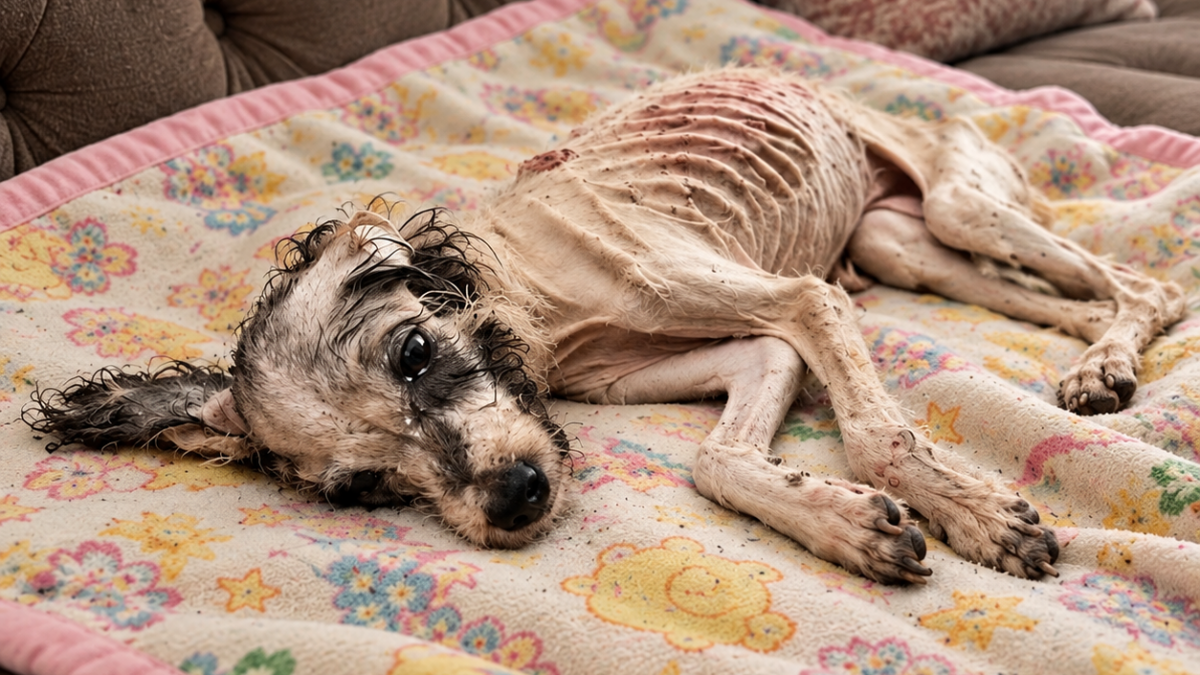
PART 2
I stared at the computer screen for several seconds without saying anything.
The microchip record showed Chester’s previous registered name, an address less than twelve miles from where we found him, and the name of a man named Aaron Whitmore.
My coworker, Melissa, stood beside me.
“That’s current?”
I refreshed the page.
“Registration was updated eleven months ago.”
“So he wasn’t somebody’s dog five years ago.”
“No.”
I looked toward Chester.
He was asleep in a padded bed near the treatment-room door.
His shaved body still looked fragile, but that morning he had eaten every bite of breakfast.
For the first time since we rescued him, I had allowed myself to imagine him surviving.
Now another question filled the room.
How had a dog with an active microchip ended up half-dead on the street?
Our veterinarian, Dr. Karen Patel, came into the office carrying Chester’s latest bloodwork.
“His glucose curve looks better.”
I turned the monitor toward her.
“We found the registered owner.”
She read the information.
Her expression changed.
“You recognize that name?”
“No. But look at the address.”
She leaned closer.
“Oh.”
The house was in Maple Ridge.
Not a neglected neighborhood.
Not an abandoned property.
Maple Ridge was one of the newer subdivisions outside town—large homes, manicured lawns, attached garages.
Melissa crossed her arms.
“So somebody living there couldn’t afford veterinary care?”
“We don’t know that,” Karen said.
She was always careful.
It was one reason I trusted her.
“We know Chester was registered there. We don’t know when he left, why he left, or whether this person still owned him when that happened.”
I nodded.
She was right.
I wanted anger because anger felt easier than uncertainty.
But we needed facts.
We called the number listed on the microchip registration.
Disconnected.
We called the alternate number.
A woman answered.
“Hello?”
I introduced myself and explained that we were with a rescue organization.
There was a pause.
Then she asked, “Is this about Chester?”
My fingers tightened around the phone.
“Yes.”
Another pause.
Longer this time.
“Is he alive?”
The question chilled me.
“Why wouldn’t he be?”
Silence.
“Ma’am?”
“I’m sorry. I can’t talk.”
The line went dead.
Melissa stared at me.
“She knew.”
“Maybe.”
“You heard her.”
“I heard her ask whether Chester was alive.”
“That’s not a normal question.”
No.
It wasn’t.
I immediately wrote down the exact time of the call and everything I remembered.
Then we contacted animal control.
Officer Daniel Ruiz arrived that afternoon.
Daniel had worked animal-cruelty cases for almost fifteen years.
He wasn’t dramatic.
He wasn’t loud.
He carried a small notebook and asked painfully specific questions.
Where exactly had Chester been found?
Who touched him first?
What was his body condition?
What medications had been given?
Had photographs been taken before bathing and shaving?
Fortunately, yes.
Our intake protocol required them.
Daniel studied each photograph.
He stopped at one showing Chester from above.
His spine looked like a ridge beneath his skin.
“How much did he weigh?”
Karen gave him the number.
“And estimated healthy weight?”
She gave him that too.
Daniel exhaled through his nose.
“How long would this level of weight loss take?”
“Impossible to give an exact period,” Karen said. “But this didn’t happen in two or three days.”
“Weeks?”
“At minimum.”
“Possibly months?”
“Yes.”
“What about the skin?”
“Same answer.”
“And diabetes?”
Karen nodded.
“Untreated diabetes could explain part of the weight loss and deterioration.”
“Would an average owner know something was wrong?”
Karen looked toward Chester.
“They might not know it was diabetes. But they would know he was sick.”
“How obvious?”
“Extremely.”
Daniel wrote something down.
Chester woke and lifted his head.
Daniel approached slowly.
“Hey, little man.”
Chester watched him.
His tail tapped the bed once.
Daniel crouched.
“You look like you’ve had a rough month.”
“More than a month,” I said.
He looked at me.
“You don’t know that yet.”
I hated that sentence.
Again, because he was right.
Facts first.
Feelings later.
Daniel took the microchip information and left.
For the next week, Chester’s world became very small.
Breakfast.
Insulin.
Rest.
Short walks.
Lunch.
Skin treatment.
More rest.
Dinner.
Another insulin injection.
His days followed a rhythm.
At first, I worried the injections would frighten him.
They didn’t.
Chester seemed to accept everything with that same quiet patience he had shown while I trimmed his nails.
I hated that patience sometimes.
It made me wonder how often he had learned that resisting people accomplished nothing.
“Okay, buddy,” I would whisper before every injection. “Tiny pinch.”
He would look at me.
Then I would give it.
Afterward came his reward.
One carefully approved treat.
By the end of the second week, he had learned the system.
Insulin meant treat.
When I approached with the syringe, Chester would sit down and stare directly at the treat container.
“You are developing expensive expectations.”
Tail wag.
“Blackmail.”
Another wag.
The first time he tried to play, I cried.
It happened accidentally.
Melissa dropped a soft blue toy in the hallway.
It rolled past Chester.
He watched it.
Then his ears lifted.
He followed it two steps.
Stopped.
Looked at us.
Then pounced.
It was not an impressive pounce.
His back legs slipped.
He landed partly on the toy and partly beside it.
Melissa covered her mouth.
“Oh my God.”
Chester grabbed the toy and shook it once.
I started laughing.
“You know how to play?”
He shook it again.
That day lasted perhaps thirty seconds.
Then Chester became tired and returned to bed.
But something had changed.
He wasn’t merely existing anymore.
He was becoming curious about life.
At his next checkup, Karen smiled before she even looked at the bloodwork.
“He gained weight.”
“How much?”
She told me.
I wanted to celebrate every ounce.
His glucose levels were stabilizing.
His skin was responding.
The worms had been treated.
New fur was beginning to appear along his shoulders.
“You’re getting fuzzy,” I told him.
Chester sneezed.
“I’ll take that as gratitude.”
But while Chester’s body improved, Daniel’s investigation was moving in the opposite direction.
The facts were getting uglier.
He came to the rescue on a Tuesday evening.
I knew from his face that something had happened.
“What did you find?”
He closed the office door.
“Aaron Whitmore admits Chester belonged to him.”
“Admits?”
“Yes.”
“What does he say happened?”
“He claims Chester escaped.”
I stared at him.
“When?”
“Approximately six weeks before you found him.”
“Six weeks?”
“Yes.”
“Did he report him missing?”
“No.”
“Post online?”
“Not that we’ve found.”
“Call shelters?”
“No.”
“Animal control?”
“No.”
“Veterinary offices?”
“No.”
I felt heat rising in my face.
“So his sick dog supposedly disappears and he does nothing?”
“That’s what we’re trying to establish.”
“What about the woman who answered the phone?”
“His sister, Paige.”
“She asked whether Chester was alive.”
“I know.”
“She told you why?”
Daniel gave me a look.
“She’s agreed to give a formal statement tomorrow.”
“What did she say?”
“I’m not discussing it until I have it documented.”
“Daniel.”
“Rachel.”
He was irritatingly good at using my name as a complete warning.
I leaned back in my chair.
“Fine.”
He looked through the glass toward Chester.
“There’s something else.”
“What?”
“Do you remember when Chester was shaved?”
“Of course.”
“Did you notice a rectangular patch where the fur was shorter?”
I thought.
“There was so much damage everywhere.”
Karen had taken dozens of photographs.
Daniel opened one on his tablet.
Near Chester’s shoulder was an area that, beneath the matting, appeared more recently clipped.
“What is that?”
“We’re not sure yet.”
Karen joined us.
Daniel showed her.
She enlarged the image.
“This could have been shaved for blood collection.”
“When?”
“Hard to say.”
“Could Chester have seen a veterinarian before you found him?”
“Absolutely.”
Daniel nodded.
“That’s what I thought.”
He had contacted clinics around Maple Ridge.
One had a record.
Chester had been examined nineteen days before we found him.
The owner listed?
Aaron Whitmore.
Reason for visit?
Weight loss.
Excessive thirst.
Frequent urination.
Weakness.
The veterinarian had recommended immediate diagnostic bloodwork.
Aaron authorized only a basic examination.
He refused the tests.
The doctor wrote that untreated endocrine disease was suspected.
He recommended urgent follow-up.
Aaron never returned.
I felt physically sick.
“He knew.”
“He knew Chester needed testing,” Daniel corrected.
“He knew enough.”
“Yes.”
“What happened after that visit?”
“We’re working on it.”
Chester walked slowly into the office.
He had started following me everywhere.
I lowered my hand.
He came over and rested his chin on my knee.
I looked at Daniel.
“This dog was begging for water because his glucose was out of control. Losing weight in front of them. Weak. Sick. And they watched.”
Daniel didn’t answer.
I touched Chester’s head.
“They watched.”
Paige Whitmore’s statement changed the case.
I didn’t hear the full details immediately.
Daniel called two days later and asked me to bring Chester’s original intake photographs to the county office.
When I arrived, Paige was leaving.
I recognized her voice before I recognized her face.
She was maybe thirty-five.
Dark hair pulled into a loose knot.
Pale.
She looked at Chester’s photograph in the folder under my arm.
Then at me.
“You’re the woman who found him?”
“Yes.”
Her eyes filled with tears.
“I should’ve done something.”
I stopped.
“About what?”
Daniel opened the office door.
“Paige.”
She shook her head.
“No. She deserves to know.”
Daniel looked at me.
“Nothing discussed here goes public while the investigation is open.”
“Understood.”
Paige pressed both hands together.
“My brother didn’t lose Chester.”
I already knew.
Still, hearing it hurt.
“What happened?”
“He got tired of dealing with him.”
I stared at her.
Paige continued.
“Chester started drinking constantly. He’d have accidents in the house. Aaron got angry.”
“How angry?”
“He yelled at him. Put him outside more.”
“Did he hit him?”
“I never saw him hit Chester.”
That distinction mattered.
“I told Aaron something was wrong. He kept saying Chester was being difficult.”
“Being difficult?”
“He thought Chester was drinking so much and having accidents because he was getting old or misbehaving.”
“How old was Chester?”
“Six.”
Six.
Not old.
“Then he lost weight,” Paige said. “Really fast.”
She wiped her face.
“I begged Aaron to take him to the vet.”
“He eventually did.”
“Yes.”
“But refused testing.”
Paige looked ashamed.
“He said the tests cost too much.”
“Could he afford them?”
Her mouth tightened.
“Yes.”
That one word carried more anger than anything else she had said.
Aaron Whitmore owned a flooring installation company.
He drove a new pickup.
Had recently installed a swimming pool.
And, according to Paige, spent more on a fishing trip the previous month than Chester’s entire recommended diagnostic workup would have cost.
But money wasn’t the whole reason.
Aaron did not want a sick dog.
That was what Paige finally admitted.
After the veterinary appointment, he complained to her that Chester was becoming “a money pit.”
Two days later, Paige visited the house.
Chester was gone.
Aaron told her he had surrendered him to a rescue organization.
“Which rescue?” I asked.
“He wouldn’t tell me.”
“And you believed him?”
“I wanted to.”
Her voice broke.
“God, I wanted to.”
Several weeks later, she saw an online photo posted by our rescue asking for information about Chester.
She recognized him instantly.
“That’s why you asked if he was alive.”
She nodded.
“I thought…”
She couldn’t finish.
I did.
“You thought Aaron had dumped him.”
“Yes.”
“Did you ask him?”
“Yes.”
“What did he say?”
Paige closed her eyes.
“He told me to mind my own business.”
The room was silent.
Then Daniel placed a clear evidence bag on the table.
Inside was a small red collar.
I recognized it.
Chester had been wearing it when we found him, though it was so filthy and loose around his wasted neck that we removed it immediately.
Daniel pointed to the buckle.
“There’s a pet-store loyalty number associated with the purchase.”
I looked at him.
“Aaron?”
“Paige bought it as Chester’s Christmas gift two years ago.”
Paige nodded.
Then Daniel added, “And we found something better.”
A traffic camera.
There was an intersection less than half a mile from where Chester had been found.
The camera wasn’t installed to monitor animal abandonment.
It monitored traffic because of repeated accidents at the junction.
Most footage was overwritten after thirty days.
But the county had preserved one segment because of a vehicle investigation.
On that video, recorded eighteen days before we found Chester, a dark pickup entered the side road at 11:47 p.m.
At 11:56, the same truck came back.
The registration belonged to Aaron Whitmore.
The footage did not show Chester.
It did not show Aaron removing him from the vehicle.
But it put Aaron’s truck on the exact road at the exact period when he claimed Chester had already been missing for several weeks.
“Is that enough?” I asked.
“For abandonment?”
“Is it?”
Daniel gave the answer I was beginning to hate.
“It helps.”
I wanted a movie moment.
A perfect video.
Aaron opening the truck door.
Chester being pushed out.
License plate glowing beneath a streetlamp.
A camera zooming in on his face.
Real life rarely gives you that.
Real evidence is messier.
A veterinary note.
A microchip.
A sister’s statement.
A traffic camera.
A collar.
A timeline.
Small things that become large when they fit together.
There was one more piece.
A neighbor.
Evelyn Hart lived across from Aaron.
She was seventy-two and knew everyone’s business without considering it gossip.
“I observe,” she told Daniel.
Apparently Evelyn had observed a lot.
She remembered Chester because he used to sit near Aaron’s front window every afternoon.
Then he disappeared.
A few days before Chester vanished, Evelyn heard Aaron complaining to another neighbor.
The words she remembered were simple.
“I’m not spending thousands on a dying dog.”
Aaron’s attorney later argued that the statement could have referred to hypothetical costs.
Perhaps.
But Evelyn also remembered the night Chester disappeared.
Aaron’s pickup left close to midnight.
Chester was in the passenger seat.
“How could she see him?” I asked.
“Porch light,” Daniel said. “She was taking her trash out.”
“And she’s sure?”
“She says Chester always stood with his front paws on the passenger door. She saw his head through the window.”
My hands went cold.
“So he drove Chester away.”
“That’s what she says.”
“And came home alone?”
“Yes.”
I looked toward Chester.
By then his fur had begun growing in enough that his skin no longer looked completely bare.
He was carrying the blue toy in his mouth.
“What happens?”
Daniel shut his notebook.
“We submit everything to the prosecutor.”
“And Aaron?”
“If charges are approved, he answers in court.”
I wanted to feel satisfied.
Instead I looked at Chester and thought about eighteen days.
That was how long he had been on the street before we found him.
Eighteen days while diabetic.
Eighteen days without insulin.
Eighteen days scavenging for food his body couldn’t properly use.
Drinking from puddles.
Sleeping wherever he could.
Skin deteriorating.
Parasites feeding on a body already starving from the inside.
Eighteen days.
And somehow he still trusted my hand.
Chester’s recovery did not happen in a straight line.
That mattered.
People like miracle stories because miracle stories are clean.
Before.
After.
Sick.
Healthy.
Sad.
Happy.
Real recovery is messier.
One morning Chester ate enthusiastically.
The next morning he refused breakfast.
Some glucose readings were excellent.
Others frightened us.
His insulin dosage required adjustment.
His skin infection flared before improving again.
One night he vomited twice, and I drove him to the emergency clinic convinced we were losing him.
Karen met us there.
“His glucose is high,” she said.
“Is he crashing?”
“No.”
“Are you sure?”
“Rachel.”
“I need you to be sure.”
She put her hand on my arm.
“I’m sure he is not crashing right now.”
Right now.
Those two words kept me awake until sunrise.
Chester slept with his head against my thigh.
At 3:14 a.m., he woke and looked at me.
“You’re terrifying,” I whispered.
Tail thump.
“You know that?”
Another thump.
“You’re lucky you’re cute.”
He went back to sleep.
I didn’t.
Over the following month, his insulin stabilized.
We learned his patterns.
How much food.
How much exercise.
When his glucose tended to rise.
What symptoms required concern.
I became able to prepare his injection half asleep.
Chester became able to detect the sound of the treat container from three rooms away.
He gained five pounds.
Then seven.
Then ten.
His fur returned slowly.
First a soft shadow over his back.
Then thicker patches around his neck and shoulders.
He still looked strange for a while.
Like several different dogs had been assembled into one.
Melissa took a photograph.
“He looks like a badly cut lawn.”
“Delete that.”
“I’m keeping it forever.”
Chester wagged at her.
“Traitor.”
Then something happened none of us expected.
He discovered children.
Our rescue partnered with a community center that brought small groups of kids to learn how to safely interact with animals.
I was nervous about Chester participating.
Not because he had shown aggression.
He hadn’t.
But children are unpredictable.
They move quickly.
Speak loudly.
Grab things.
I planned to keep Chester behind a gate where he could observe.
A little girl named Sophie changed the plan.
She was eight years old and painfully shy.
While the other children gathered around two energetic dogs, Sophie sat alone near the wall.
Chester saw her.
I watched his ears lift.
He walked toward the gate.
Sophie looked at him.
Chester sat.
She moved closer.
He stayed still.
“Can I touch him?” she asked.
“If he chooses to come to you.”
I opened the gate but kept hold of his harness.
Sophie held out her hand.
Chester sniffed it.
Then leaned his entire body against her legs.
Sophie smiled.
Not a polite smile.
A huge smile.
She wrapped her arms gently around his shoulders.
Chester closed his eyes.
I looked at Melissa.
She was crying.
“Don’t,” I whispered.
“You’re crying.”
“I am absolutely not.”
“You are literally crying.”
“Dust.”
“We’re indoors.”
“Indoor dust.”
From that day forward, Chester had a new job.
Unofficially at first.
He became the dog we brought out for frightened children.
Quiet children.
Children who had trouble approaching larger, more energetic animals.
He never rushed them.
Never jumped.
He simply sat.
Waited.
Trusted.
It was remarkable.
A dog abandoned when his body became difficult had become extraordinarily patient with people who needed extra patience themselves.
Karen once watched him with a boy who was afraid of dogs.
“You know what’s interesting?” she said.
“What?”
“He lets people come to him at their own speed.”
I looked at Chester.
“Maybe because nobody gave him that choice.”
Karen nodded.
“Maybe.”
The charges against Aaron were approved six weeks after Daniel submitted the case.
Animal abandonment.
Failure to provide necessary veterinary care under the applicable cruelty statute.
The legal language sounded clinical compared with what Chester had endured.
Aaron pleaded not guilty.
Then he made a mistake.
He came to the rescue.
It was a Friday afternoon.
I was at the front desk reviewing insulin supplies when a man walked through the door.
I knew who he was immediately.
Not because I had met him.
Because Daniel had shown me the photograph connected to the case.
Aaron Whitmore was forty-one.
Tall.
Broad shoulders.
Expensive sunglasses perched on his head.
He looked around.
“Where’s Chester?”
My entire body tightened.
“Why are you here?”
“I asked where my dog is.”
Behind me, Melissa stopped moving.
I stood.
“Chester is in protective custody through the rescue.”
“He’s registered to me.”
“You’re facing abandonment charges.”
“Charges aren’t convictions.”
“No.”
“I want my dog.”
Something about the possessive word made my stomach turn.
Your dog.
Chester had been his dog when Chester was thirsty enough to drink constantly.
His dog when weight fell from his body.
His dog when a veterinarian told him testing was needed.
His dog when he was allegedly driven out on a dark road.
Now Chester had gained weight.
His skin was healing.
Photographs of his recovery had circulated in local rescue groups.
And Aaron wanted his dog.
“You need to leave.”
“You people have had him long enough.”
Melissa picked up the phone.
Aaron noticed.
“I’m not threatening anyone.”
“I didn’t say you were.”
“I’m here to retrieve my property.”
I felt my anger go completely cold.
“Chester isn’t a lawn mower.”
“Legally, animals are property.”
“You should probably discuss that with your attorney.”
His jaw tightened.
“Do you have any idea how much trouble you’ve caused me?”
I almost couldn’t believe it.
“Me?”
“Yes.”
“You abandoned a sick dog.”
“Allegedly.”
“You refused diagnostic testing.”
“Because the veterinarian was trying to run unnecessary tests.”
“Chester has diabetes.”
“I know that now.”
“He was dying.”
“That’s your opinion.”
“No. That was his medical condition.”
Aaron stepped closer to the desk.
“He was always drinking. Peeing everywhere. Wouldn’t listen. Wouldn’t eat right. You make it sound like I wanted him sick.”
“He needed help.”
“I took him to a vet.”
“And refused the help they recommended.”
“I wasn’t spending thousands of dollars without knowing if it would even work.”
“You didn’t even pay for the tests that would tell you what was wrong.”
He looked past me.
“Where is he?”
“Not here.”
That part was true.
Chester was at Karen’s clinic for a glucose curve.
Aaron exhaled sharply.
“I’ll get him back.”
“No.”
His eyes narrowed.
“You don’t decide that.”
“You’re right.”
I met his stare.
“A judge does.”
Melissa had reached Daniel.
She turned the phone so I could hear.
“Rachel, step away from him,” Daniel said.
Aaron heard.
He laughed.
“This is insane.”
I moved behind the desk.
“You need to leave.”
For a second I thought he might refuse.
Then he looked around at the security cameras.
Smart enough to understand where he was.
“Tell Chester I came.”
I stared at him.
“He doesn’t need that message.”
Aaron left.
The door closed.
My hands started trembling.
Melissa looked at me.
“Sit.”
“I’m fine.”
“You’re shaking.”
“I’m furious.”
“You can be furious sitting down.”
I sat.
Daniel arrived twelve minutes later.
He reviewed the security footage.
“Did he threaten you?”
“Not directly.”
“Touch you?”
“No.”
“Refuse to leave?”
“No.”
“Okay.”
“Okay?”
“I’m documenting it.”
“He came here asking for Chester.”
“I heard.”
“Why?”
Daniel looked at me.
“Control, pride, legal strategy, genuine attachment—I’m not going to guess.”
“Genuine attachment?”
“Rachel.”
“No. Somebody who genuinely loves a dog doesn’t dump him because insulin might be inconvenient.”
Daniel remained quiet.
I hated that too.
Because silence left space for complexity.
And I didn’t want complexity.
I wanted Aaron to be entirely monstrous.
It would make everything easier.
But people are rarely monsters every second of every day.
Paige had shown us old photographs.
Aaron holding puppy Chester.
Chester sleeping against his chest.
Christmas pictures.
Camping trips.
For years, Aaron probably had loved him in whatever way he understood love.
Then Chester became sick.
Love became expensive.
Messy.
Inconvenient.
And Aaron’s version of love failed the moment it demanded sacrifice.
That was what made it worse.
Chester had not been abandoned by someone who had never cared.
He had been abandoned by someone he trusted because caring became difficult.
The court case lasted months.
During that time, Chester kept changing.
His coat became thick and soft.
His ribs disappeared beneath healthy muscle.
He gained confidence.
The blue toy became a permanent obsession.
So did car rides.
At first, I worried vehicles might remind him of being abandoned.
Instead, Chester loved them.
The moment keys jingled, he ran to the door.
“Not every drive is yours.”
He stared.
“I’m buying groceries.”
Tail wag.
“No.”
He sat.
“Absolutely not.”
Five minutes later, Chester was buckled into the back seat.
I had no authority in my own house.
Technically Chester was still a foster.
Temporary medical foster, the paperwork said.
Everyone knew that word had become ridiculous.
He slept beside my bed.
His medication filled one shelf of my refrigerator.
Three dog beds existed in my house.
He used none of them.
He preferred my couch.
“Are you adopting him?” Melissa asked one afternoon.
“We can’t discuss adoption until the case is resolved.”
“That wasn’t my question.”
“I’m following procedure.”
“Rachel.”
“What?”
“He has his own drawer in your kitchen.”
“That contains medical supplies.”
“And a personalized Christmas stocking.”
“That was on sale.”
“It says CHESTER.”
“They happened to have his name.”
“You ordered it.”
I ignored her.
Chester leaned against my leg.
Melissa smiled.
“Temporary.”
“Extremely.”
Aaron’s attorney tried to resolve the case before trial.
He offered a plea.
Reduced charge.
Fine.
No jail.
Aaron would voluntarily surrender ownership of Chester.
The prosecutor asked how I felt.
Legally, the decision wasn’t mine.
I appreciated being asked anyway.
“Would there be an animal-ownership ban?”
“Two years.”
“Only two?”
“That’s the offer.”
“Would he admit abandonment?”
“Yes.”
“Publicly?”
“In court.”
“What about the failure to provide treatment?”
“That count would be dismissed.”
I looked at Chester.
He was sleeping beneath the table.
“What do you think?”
The prosecutor leaned back.
“I think trials have risk.”
“He could walk?”
“Any defendant can be acquitted.”
“But you have the camera.”
“We have his truck.”
“Paige.”
“Yes.”
“Evelyn.”
“Yes.”
“The veterinary record.”
“Yes.”
“His visit here.”
“Not proof of abandonment.”
I knew.
“What does Daniel think?”
“He thinks the evidence is strong.”
“Then why offer a deal?”
“Because certainty has value.”
I hated legal language.
Certainty has value.
So does truth, I thought.
But truth doesn’t always arrive with a perfect video.
I finally said, “I want him barred from owning animals longer.”
“That may require trial and conviction.”
“Then go to trial.”
The prosecutor nodded.
It still wasn’t my decision.
But the plea agreement was rejected after Aaron refused the ownership restriction.
That surprised everyone.
Even his lawyer, apparently.
Aaron would admit no wrongdoing that limited his right to have another dog.
That decision ultimately cost him far more.
The trial began almost eight months after I found Chester.
By then, someone seeing him for the first time would never have recognized the dog from the intake photographs.
He had a full coat.
Bright eyes.
Healthy weight.
And an astonishing belief that any person entering my kitchen had arrived specifically to admire him.
The prosecutor warned me not to bring Chester to court unless requested.
“He’s evidence?”
“He’s also emotionally powerful.”
“So?”
“So the defense could argue we’re trying to prejudice the jury.”
I left Chester with Melissa.
“Behave.”
He sat by the door.
“Do not manipulate her.”
Tail wag.
Melissa laughed.
“He learned from you.”
The courtroom was smaller than I expected.
Aaron sat beside his attorney wearing a dark suit.
Paige sat three rows behind the prosecution.
She never looked at her brother.
Evelyn Hart wore a floral blouse and looked delighted to finally have official permission to tell everyone exactly what she had observed.
She became one of the strongest witnesses.
Aaron’s attorney tried to shake her.
“Mrs. Hart, you were taking trash outside at nearly midnight?”
“Yes.”
“Is that your normal routine?”
“No. My grandson had forgotten to take it.”
“You were not wearing your prescription glasses?”
“I wear contacts.”
The attorney paused.
“You could clearly identify the dog inside a moving vehicle at night?”
“The truck was stopped at the corner.”
“For how long?”
“Long enough.”
“How long is long enough?”
“Long enough to see Chester standing where he always stood.”
“How did you know it was Chester rather than another dog?”
Evelyn looked at him as though he had asked whether she could identify her own mailbox.
“Because I looked at him nearly every day for five years.”
The attorney tried another direction.
“You dislike Mr. Whitmore, correct?”
“I barely knew him.”
“You once complained about his lawn equipment.”
“I complained that he started a leaf blower at six-thirty on Sunday morning.”
A few people laughed.
The judge silenced them.
Evelyn continued.
“I dislike leaf blowers before coffee. That has nothing to do with Chester.”
I nearly smiled.
Paige’s testimony was harder.
The prosecutor showed old photographs.
Chester as a puppy.
Chester beside Aaron at a lake.
Chester wearing the red collar Paige had bought.
She cried while identifying them.
Then came the veterinary appointment.
Aaron complaining about money.
His statement that Chester had become “a money pit.”
The day Chester vanished.
“You asked your brother where Chester was?”
“Yes.”
“What did he tell you?”
“That he gave Chester to a rescue.”
“Did he name the rescue?”
“No.”
“Did you later learn Chester had actually been taken to a rescue?”
“Only after he was found on the street.”
“How did you react when you saw his photograph?”
Paige’s mouth trembled.
“I thought he was going to die.”
“Why?”
“Because I knew how sick he had already been before he disappeared.”
Aaron finally looked at her.
Paige didn’t look back.
The defense attorney stood.
“Ms. Whitmore, you and your brother have experienced disagreements over family finances, correct?”
“Yes.”
“You were angry with him?”
“Sometimes.”
“You believed he should help care for your mother financially?”
“Yes.”
“So you had reasons to resent him unrelated to Chester.”
“I had reasons to disagree with him.”
“You told police he said Chester was ‘a money pit.’ Could those words have been spoken out of frustration rather than as evidence he intended to abandon the dog?”
“Yes.”
The attorney seemed surprised.
Paige continued.
“People say things when they’re frustrated.”
“So you agree.”
“Yes.”
He smiled.
Then Paige added, “But people don’t accidentally drive a sick dog away at midnight and come home without him.”
The smile disappeared.
“Objection.”
The judge instructed the jury to consider only what she personally observed.
But everyone had heard it.
Karen testified about Chester’s medical condition.
Her testimony was brutal because she didn’t exaggerate.
She didn’t need to.
“How would you describe Chester when he arrived?”
“Severely underweight, dehydrated, parasitized, with significant dermatologic disease and profound weakness.”
“Was he diabetic?”
“Yes.”
“Was that diagnosed immediately?”
“No.”
“Why not?”
“Several conditions can cause similar symptoms. We performed testing.”
“What happened before the diagnosis?”
“Despite nutritional support and initial treatment, he continued declining.”
“And afterward?”
“We initiated insulin therapy and dietary management.”
“What did you observe?”
“Within approximately fifteen days, his appetite, energy, hydration, and general condition began noticeably improving.”
The prosecutor showed two photographs.
One from intake.
One several months later.
Even though I had seen both many times, the contrast hit me.
The courtroom became completely silent.
The defense attorney approached.
“Doctor, diabetes can be difficult for a layperson to recognize, correct?”
“Yes.”
“So Mr. Whitmore may not have known Chester was diabetic.”
“I never claimed he did.”
“Excessive thirst can have many causes.”
“Yes.”
“Weight loss can have many causes.”
“Yes.”
“Skin disease can have many causes.”
“Yes.”
“So these symptoms do not prove an owner intentionally neglected an animal.”
Karen looked directly at him.
“They prove an owner should seek veterinary evaluation.”
“He did.”
“One visit.”
“Correct.”
“He followed your profession’s recommendation by seeing a veterinarian.”
“He refused the diagnostic testing that veterinarian recommended.”
“Because of cost.”
“That was what the record stated.”
“Owners sometimes have financial limitations.”
“Yes.”
“Does that make them cruel?”
“No.”
He turned toward the jury.
“Thank you.”
Karen waited.
The attorney noticed.
“Something else?”
“Yes.”
He sighed.
“What?”
“There are alternatives when an owner cannot afford care.”
“Such as?”
“Payment programs. Charitable assistance. Surrender to a shelter. Surrender to a rescue. Humane euthanasia in terminal cases. Asking family for help. Returning for follow-up. Calling the veterinarian.”
The attorney’s expression tightened.
Karen continued.
“Leaving a seriously ill animal on the street is not a medical alternative.”
“No further questions.”
Daniel testified about the traffic camera.
The microchip.
The collar.
The timeline.
The absence of a missing-dog report.
Then I testified.
The prosecutor asked me to describe the morning we found Chester.
I closed my eyes briefly.
I could still see him.
That first version.
Thin body.
Broken coat.
Slow steps.
The little dog who looked as though walking had become work.
“I saw him moving beside parked cars.”
“What made you stop?”
“He looked sick.”
“How sick?”
“Sick enough that I was afraid he might collapse before I reached him.”
“Did he run?”
“No.”
“Show aggression?”
“Never.”
“What happened when you picked him up?”
“He put his head against me.”
My voice almost broke.
I took a breath.
“What did you do?”
“Told him he wasn’t alone anymore.”
The prosecutor handed me an intake photograph.
“Is this Chester?”
“Yes.”
Then a recent photograph.
“And this?”
I smiled despite myself.
“Yes.”
“What caused the change?”
“Treatment. Food. Insulin. Time.”
“And care?”
The defense attorney objected.
Sustained.
The prosecutor rephrased.
“Did Chester receive daily medical management?”
“Yes.”
“Was it burdensome?”
I thought about the syringes.
The glucose testing.
Scheduled meals.
Emergency visits.
Sleepless nights.
“Yes.”
“Did that make him difficult to care for?”
“At times.”
“Did it make him disposable?”
“Objection.”
Sustained.
I looked toward Aaron.
He looked away.
Cross-examination began.
His attorney was polished.
Friendly voice.
Small smile.
“Ms. Monroe, you love Chester.”
“Yes.”
“You hope to adopt him.”
I hesitated.
“Yes.”
“So you have a personal interest in whether my client’s ownership rights are terminated.”
“I have an interest in Chester being safe.”
“That wasn’t my question.”
“Then yes.”
“You work in animal rescue.”
“Volunteer.”
“And your organization receives donations?”
“Yes.”
“Did donations increase after Chester’s story became known?”
“Some donations were made for his medical care.”
“So Chester generated financial support.”
“For Chester.”
“But money came in.”
“And money went directly to veterinary expenses.”
The attorney nodded.
“You have publicly described abandonment as cruel.”
“Yes.”
“Before this trial?”
“Yes.”
“So you came into this case with strong opinions.”
“I came into this case holding a dog who was sick enough to die.”
He paused.
“You are not an eyewitness to anyone abandoning him.”
“No.”
“You did not see my client drive him anywhere.”
“No.”
“You did not hear my client say he intended harm.”
“No.”
“You cannot tell this jury what happened before you found Chester.”
“Not personally.”
“Exactly.”
He turned away.
I thought he was finished.
Then he turned back.
“When my client visited your rescue, you refused to give him Chester.”
“Yes.”
“Even though at that moment he had not been convicted of anything.”
“Chester was under protective hold.”
“You disliked my client.”
“I disliked what the evidence suggested he had done.”
“You’d already decided he was guilty.”
“I had decided Chester deserved protection.”
He stared at me.
I stared back.
Finally he sat down.
Aaron chose to testify.
That was when the case changed.
He told the jury Chester had been part of his life for years.
That was true.
He described camping trips.
Christmas mornings.
Chester sleeping at the foot of his bed.
Some jurors listened sympathetically.
Then he talked about Chester becoming sick.
“He started having accidents constantly,” Aaron said. “He was drinking gallons of water. Losing weight. I didn’t understand it.”
“Did you take him to a veterinarian?” his attorney asked.
“Yes.”
“Did you care about him?”
“Of course.”
“Why did you decline testing?”
“The estimate scared me.”
“Were you experiencing financial pressure?”
“Yes.”
The prosecutor’s head lifted.
That apparently contradicted something in discovery.
Aaron continued.
“My business was having cash-flow problems.”
His attorney asked what happened next.
Aaron said Chester escaped through a backyard gate.
“Did you abandon him?”
“No.”
“Did you drive him to the road where he was found?”
“No.”
“Why was your truck recorded there?”
“I use that road sometimes.”
“At midnight?”
“I don’t remember exactly where I was going.”
“Did you lie to your sister?”
“No.”
“Did you tell her you surrendered Chester?”
“I told her I was trying to find somewhere for him.”
That was not what Paige testified.
The prosecutor stood for cross-examination.
She carried one folder.
“Mr. Whitmore, you testified that finances prevented you from authorizing diagnostic testing.”
“Yes.”
“Your veterinary estimate was approximately four hundred dollars?”
Aaron shifted.
“For the initial tests.”
“Correct?”
“Yes.”
“Three days before that appointment, did you purchase a new fishing sonar system?”
Aaron’s attorney objected.
The judge allowed limited questioning after a sidebar.
Aaron answered.
“Yes.”
“How much?”
“I don’t remember.”
The prosecutor showed the receipt.
“Two thousand eight hundred forty-nine dollars?”
Aaron stared at it.
“Yes.”
The courtroom went silent.
“Two weeks before that, did you pay a contractor to install landscape lighting around your swimming pool?”
“Yes.”
“Cost?”
“I don’t remember.”
“Twelve thousand six hundred dollars?”
“That sounds possible.”
The prosecutor let the number sit.
“So when you said you could not afford four hundred dollars in diagnostic testing—”
“I said my business had cash-flow issues.”
“But you personally made these purchases.”
“Yes.”
“Then the issue wasn’t whether four hundred dollars existed.”
“Objection.”
Sustained.
The prosecutor changed direction.
“You said Chester escaped.”
“Yes.”
“From your backyard?”
“Yes.”
“What date?”
Aaron gave one.
“Your neighbor Mrs. Hart testified she saw Chester in your truck eleven days later.”
“She was mistaken.”
“Your sister testified you told her Chester had been surrendered.”
“She misunderstood.”
“The traffic camera showed your truck near the location where Chester was later found.”
“I drove there.”
“At 11:47 p.m.”
“Yes.”
“Why?”
“I don’t recall.”
“You returned nine minutes later.”
“I suppose.”
“Was Chester in your truck?”
“No.”
“Where was Chester?”
“Missing.”
The prosecutor took one paper from her folder.
“Mr. Whitmore, do you recognize this?”
His face changed.
Just slightly.
It was a text-message printout.
Daniel’s team had obtained it from Aaron’s old cloud backup after securing a warrant.
The message had been sent to Paige the morning after the truck appeared on the camera.
Paige had deleted it months earlier.
Aaron apparently had not realized a backup existed.
The prosecutor read it.
You wanted me to deal with the dog. I dealt with it. Don’t ask again.
The courtroom became utterly still.
Aaron’s attorney objected to interpretation.
The message had already been admitted.
The prosecutor approached the witness stand.
“What did ‘I dealt with it’ mean?”
“I was angry.”
“That wasn’t my question.”
“I was telling her to stop bothering me.”
“About what?”
“Chester.”
“Where was Chester when you sent that message?”
“I don’t know.”
“You had driven past the location where he was later found less than twelve hours earlier.”
“Yes.”
“Your neighbor says he was in your vehicle.”
“She’s wrong.”
“Your sister says you told her he had been surrendered.”
“She misunderstood.”
“You told investigators he escaped.”
“He did.”
“You told this jury finances prevented treatment.”
“They did.”
“You spent nearly three thousand dollars on fishing electronics days earlier.”
“That’s unrelated.”
The prosecutor paused.
Then she asked quietly, “Mr. Whitmore, isn’t the truth simply that Chester became sick, expensive, and inconvenient?”
“No.”
“And rather than surrender him to a shelter, where someone might ask why he was in that condition, you drove him away at night.”
“No.”
“You left him near an industrial road.”
“No.”
“And then you went home.”
“No.”
The prosecutor stepped closer.
“Without him.”
Aaron didn’t answer.
“Isn’t that what happened?”
“No.”
But this time the word sounded different.
Smaller.
The prosecutor returned to her table.
“No further questions.”
The jury deliberated for four hours.
I waited at the rescue with Chester.
I couldn’t stay inside the courthouse.
I needed him near me.
He slept beneath my chair while my phone sat on the table.
At 3:38 p.m., it rang.
Daniel.
“Verdict.”
My stomach dropped.
“What?”
“They’re ready.”
Melissa drove because my hands were shaking.
“You okay?”
“No.”
“Good. That would be weird.”
I stared out the window.
“What if they don’t believe us?”
“They don’t have to believe us.”
“What does that mean?”
“They have to believe evidence.”
“That was unexpectedly intelligent.”
“I have moments.”
We reached the courthouse.
I almost ran inside.
The jury entered.
Aaron stood.
So did everyone else.
The first verdict was read.
Guilty.
I closed my eyes.
The second.
Guilty.
A sound escaped Paige behind me.
Half sob.
Half exhale.
Aaron stood completely still.
I expected triumph.
I felt none.
I pictured Chester when I first picked him up.
That was all.
The judge scheduled sentencing and immediately entered an order preventing Aaron from reclaiming Chester.
His ownership rights were formally terminated.
I turned toward Daniel.
“Does that mean—”
“Yes.”
“He can be adopted?”
“After the paperwork clears.”
I started crying.
Daniel smiled.
“Thought you’d care more about that than the conviction.”
“You’re right.”
Outside the courthouse, reporters waited.
I walked past them.
I had nothing to say.
The most important part of the story was twelve miles away probably trying to convince Melissa’s husband that he had not eaten dinner.
Aaron’s sentencing came three weeks later.
The judge imposed fines.
Probation.
Community service.
Mandatory animal-care education.
He received the sentence allowed under the charges and evidence before the court, along with a multi-year prohibition on owning or possessing animals.
He was also ordered to reimburse documented veterinary costs associated with Chester’s emergency treatment.
Aaron’s lawyer argued that the public attention surrounding the case had already punished him.
His flooring company had lost customers.
Several online reviews mentioned Chester.
A local contractor stopped referring work.
I didn’t celebrate that.
Nobody had ordered people to stop hiring him.
They made their own decisions after the facts became public.
But the judge said something I remembered.
“Reputation is not a shield against accountability.”
Aaron looked down.
The most powerful moment came later.
Not from him.
From Paige.
Outside the courtroom, she approached me.
“Can I see Chester someday?”
I hesitated.
“He knows you?”
“I used to babysit him when Aaron traveled.”
“What happened when he saw you before?”
“I haven’t seen him since he disappeared.”
I thought about it.
Then said, “Come to the rescue Saturday.”
She did.
I brought Chester into the fenced yard.
Paige stood near the gate.
The instant Chester saw her, he froze.
Paige covered her mouth.
“Chester?”
His ears rose.
She crouched.
“Hey, buddy.”
For three seconds, nothing happened.
Then Chester ran.
Not fast at first.
Then faster.
He reached Paige and pushed his face against her chest.
She collapsed onto her knees.
“Oh my God.”
Chester’s tail moved so hard his entire body swayed.
Paige buried her face in his neck.
“I’m sorry.”
I stepped back.
“I’m so sorry.”
Chester licked her cheek.
She laughed and cried at the same time.
“You remember me.”
Of course he did.
She looked at me.
“I should have taken him.”
“You didn’t know.”
“I knew something was wrong.”
“That isn’t the same as knowing what Aaron was going to do.”
“I should’ve pushed harder.”
Maybe she should have.
Maybe all of us can imagine being braver after danger has passed.
But I had learned something during Chester’s case.
Guilt can either become a weight you carry forever or a reason you do better next time.
Paige chose the second.
She began volunteering with our rescue.
At first she cleaned kennels.
Then helped transport animals.
Eventually she became one of the people we called when an older or medically fragile dog needed temporary foster care.
She never turned one away because treatment looked difficult.
Especially then.
The day Chester became legally adoptable, Melissa placed the application in front of me.
I stared at it.
She stared at me.
“What?”
“Nothing.”
“You’re smiling.”
“I’m witnessing something historic.”
“What?”
“You finally admitting that the ‘temporary foster’ who sleeps on your pillow might be staying.”
“He does not sleep on my pillow.”
“He sleeps on seventy percent of your pillow.”
“That still leaves me thirty.”
“Fill out the form.”
I did.
The question near the bottom asked:
Why do you want to adopt Chester?
I thought about all the possible answers.
Because I loved him.
Because he trusted me.
Because my home already felt empty whenever he spent a day at the clinic.
Because my life had slowly reorganized around insulin times, special meals, glucose checks, walks, and one ridiculous blue toy.
Instead I wrote:
Because being sick should never cost him his family again.
Melissa read it.
Then quietly stopped making jokes.
The board approved the adoption.
Officially, Chester became mine on a sunny Saturday morning.
We held no huge event.
No cameras.
Karen came.
Daniel came.
Paige came.
Sophie—the shy little girl Chester had befriended—came with her mother.
Melissa handed me a folder.
“Medical records. Adoption contract. Microchip transfer.”
She paused dramatically.
“And ownership of one extremely demanding diabetic dog.”
I looked down.
Chester was sitting beside me.
“Any chance of returning him?”
“No.”
“Terrible policy.”
His tail wagged.
I signed.
Karen knelt beside him.
“Congratulations, Chester.”
He licked her nose.
She laughed.
“I kept you alive and that’s my thanks?”
Then Sophie approached holding something behind her back.
“I made him this.”
It was a blue bandana.
Small white stars covered it.
She tied it around Chester’s neck.
He sat perfectly still.
Sophie hugged him.
“He looks like a hero.”
I swallowed.
“He is.”
But Chester didn’t care about being a hero.
He cared about the treat in Sophie’s pocket.
His nose moved.
She giggled.
“He knows.”
“He always knows.”
That afternoon, I drove him home.
At the first red light, Chester stood in the back seat and put his front paws against the window.
For one instant, I thought about Evelyn describing him in Aaron’s truck.
Same position.
Different destination.
That night months earlier, Chester had looked through glass while someone drove him away from everything familiar.
Now he was riding toward home.
His home.
I pulled into my driveway.
“Ready?”
He jumped out.
Ran to the porch.
Then stopped at the door and looked back.
Waiting.
I caught up.
“Okay.”
I unlocked it.
“Let’s go home.”
Chester’s diabetes never disappeared.
That part matters too.
Love did not cure him.
Rescue did not magically repair his pancreas.
He still needed insulin.
Still needed carefully controlled meals.
Still needed regular veterinary appointments.
Still had occasional bad days.
But illness stopped defining the size of his life.
Several months after his adoption, I enrolled Chester in a basic therapy-dog preparation program.
I wasn’t sure he would qualify.
His health required careful management.
He could tire easily.
But temperament?
Chester surprised everyone.
During the first evaluation, the trainer dropped a metal bowl.
Chester looked toward it.
Stayed calm.
A stranger touched his paws.
He allowed it.
Someone approached using a walker.
Chester waited.
A child hugged him awkwardly.
He leaned into the child rather than pulling away.
The trainer looked at me.
“This dog has incredible patience.”
“I know.”
“He reads people.”
“I know that too.”
“Where did you get him?”
I looked down at Chester.
“He found us.”
Months of training followed.
We never rushed.
If Chester was tired, we stopped.
If his glucose wasn’t right, we canceled.
His health came before every certificate.
Eventually, he passed.
His first official visit was at a children’s reading program.
Children who struggled with reading aloud sat beside calm therapy dogs and read books to them.
No correction.
No embarrassment.
No impatient adults.
Just a dog listening.
Sophie was there.
She sat beside Chester with a book open across her knees.
“Ready?”
Chester rested his chin on her leg.
She began reading.
Slowly.
She stumbled over one word.
Stopped.
Looked at Chester.
He waited.
Sophie tried again.
Got it right.
She smiled.
I stood across the room trying not to cry.
Melissa whispered, “Indoor dust?”
“Shut up.”
Chester became the program’s favorite.
Not because he performed tricks.
He didn’t.
Not because he was dramatic.
He wasn’t.
He simply made people feel as though they had time.
Time to speak.
Time to read.
Time to be nervous.
Time to trust.
Exactly what he had needed when we found him.
A year after Chester’s rescue, Karen asked me to come to the clinic early.
“I have something.”
“What?”
“Just come.”
I brought Chester.
His annual examination was scheduled anyway.
Karen weighed him.
Healthy.
Checked his coat.
Beautiful.
Reviewed his bloodwork.
Stable.
Then she turned the monitor toward me.
On the left was Chester’s intake photograph.
On the right was a photograph taken that morning.
I stared.
I knew he had changed.
Of course I knew.
I saw him every day.
But seeing those two dogs side by side nearly took my breath away.
The first Chester seemed to have folded inward.
Head down.
Bare skin.
Thin legs.
No light in his expression.
The second stood squarely on all four feet.
Full coat.
Bright eyes.
Blue bandana.
Tail in motion.
“That’s impossible,” I whispered.
Karen smiled.
“Same dog.”
Chester sniffed beneath the exam table.
“He has no appreciation for symbolism.”
“He’s looking for dropped treats.”
“Exactly.”
Karen printed the images for me.
I framed them.
Not because I wanted to remember his suffering.
Because I wanted to remember what consistent care could do.
The difference between those photographs was not one miracle.
It was hundreds of ordinary decisions.
Give the insulin.
Prepare the right food.
Clean the skin.
Attend the appointment.
Run the bloodwork.
Wake up at midnight when something seems wrong.
Try again tomorrow.
And tomorrow.
And tomorrow.
That was what saved Chester.
Not one dramatic act.
Consistency.
Something his previous owner had decided was too much trouble.
I saw Aaron once after the trial.
Almost eighteen months later.
I was leaving a pet-supply store with Chester.
Aaron was crossing the parking lot.
We noticed each other at the same time.
He stopped.
So did I.
Chester looked at him.
His body stiffened.
I felt it through the leash.
Aaron looked different.
Older.
Less certain.
For several seconds, nobody spoke.
Then he said, “He looks good.”
I put my hand on Chester’s shoulder.
“He is.”
Aaron stared at him.
“Does he still need shots?”
“Twice a day.”
“Every day?”
“Every day.”
He nodded slowly.
“Expensive?”
“Sometimes.”
“Difficult?”
“Sometimes.”
Aaron looked at me.
I knew exactly what he was asking without asking it.
Was Chester worth it?
I answered anyway.
“Not once have I regretted it.”
His face tightened.
“I loved that dog.”
I believed he believed that.
Maybe he had.
So I said the only thing that felt true.
“Then you should have loved him when it became hard.”
Aaron looked away.
Chester moved closer to my leg.
Aaron swallowed.
“Can I pet him?”
I looked at Chester.
His ears were back.
“No.”
Aaron nodded.
He didn’t argue.
That surprised me.
“I figured.”
He took one step away.
Then stopped.
“I’m sorry.”
I didn’t say I forgave him.
That apology wasn’t mine to accept.
I only said, “I hope you mean it.”
Then I walked away with Chester.
He never looked back.
Neither did I.
For months I had imagined that moment.
The confrontation.
The anger.
The perfect sentence that would make Aaron understand every ounce of suffering he had caused.
When it finally happened, there was no satisfaction in hurting him.
The satisfying part was Chester.
Walking beside me.
Healthy.
Safe.
Wanted.
Aaron’s punishment was never something I needed to invent.
He had to live knowing that the dog he decided was too difficult had become the kind of dog children trusted with their fears.
The dog he considered too expensive had become priceless to someone else.
The dog he drove away had built a life so full that there was no empty space left for him.
That was enough.
Years passed.
Chester grew a little gray around the muzzle.
His insulin doses changed occasionally.
He slowed down on long walks.
But every time I opened the drawer containing his blue therapy bandana, his tail still started moving.
“You want to work?”
Wag.
“You know you don’t get paid.”
Wag.
“Terrible career choice.”
Wag.
We continued visiting the reading program.
Then a senior center.
Later, a diabetes education camp for children.
That one affected me most.
Many of the kids were newly diagnosed with Type 1 diabetes themselves.
They were learning about glucose.
Food.
Insulin.
Needles.
The first afternoon, a ten-year-old boy named Ethan refused his injection.
He was angry.
Embarrassed.
Tired of everyone telling him that needles were “no big deal.”
Because to him they were a big deal.
His mother looked exhausted.
A nurse knelt nearby.
“You need your insulin, Ethan.”
“No.”
“We’ve talked about this.”
“I hate it!”
He started crying.
I sat several feet away with Chester.
Chester watched him.
Ethan noticed.
“What’s wrong with that dog?”
“Nothing right now.”
“Why is he here?”
“He has diabetes.”
The boy stopped crying for a second.
“Dogs can get diabetes?”
“Yes.”
“He gets shots?”
“Twice every day.”
Ethan stared at Chester.
“For how long?”
“For the rest of his life.”
“That sucks.”
I smiled slightly.
“Sometimes.”
Ethan moved closer.
“Does he hate it?”
“Ask him.”
“That’s stupid. He can’t talk.”
“True.”
Ethan sat beside Chester.
I showed him the small medical pouch.
“This is his insulin.”
“You brought it?”
“He needs it soon.”
Ethan watched carefully.
When the time came, Chester sat.
I gave the injection.
He barely reacted.
Then immediately turned toward me expecting his reward.
Ethan laughed.
“He just wants food.”
“Pretty much.”
“You give him something every time?”
“Every time.”
The boy rubbed Chester’s ears.
“He’s brave.”
I shook my head.
“I don’t think he thinks about brave. It’s just something he has to do so he can keep doing everything else he loves.”
Ethan became quiet.
“What does he love?”
“Car rides. Children. His blue toy. Stealing my spot on the couch. Anything that smells like chicken.”
Ethan smiled.
“And shots let him do that?”
“Insulin helps keep him alive to do all of that.”
The boy looked at the nurse.
Then at Chester.
“Can he stay when I do mine?”
“Yes,” I said.
Chester lay beside him.
Ethan took his insulin.
Afterward, he gave Chester half an approved treat.
“Now we both get one.”
His mother turned away to wipe her eyes.
I did the same.
Later, while driving home, Chester slept in the passenger seat.
I reached over and touched his back.
“You know what you did today?”
Nothing.
“You helped that kid.”
Snore.
“Very humble.”
Chester slept on.
I thought about the first time I had held his paw.
His overgrown nails.
His damaged skin.
His complete stillness.
I had believed then that Chester’s trust was evidence of weakness.
Now I understood.
Gentleness and weakness were never the same thing.
Chester had survived abandonment without becoming afraid to offer trust again.
That was strength.
On the anniversary of the day I found him, I sometimes returned to the street where our paths first crossed.
The first year, Chester came with me.
I parked where our rescue van had been.
The neighborhood had changed slightly.
Different cars.
A renovated storefront.
A new coffee shop.
But I recognized the exact stretch of sidewalk.
“This is it.”
Chester sniffed a bush.
“Very emotional. Thank you.”
He continued sniffing.
I stood there remembering the thin dog moving between parked cars.
The cold.
The dirt.
How light he felt when I lifted him.
I wondered what had gone through his mind that morning.
Maybe nothing complicated.
Hunger.
Thirst.
Pain.
Keep moving.
Animals don’t need to understand betrayal the way we do for betrayal to hurt them.
They simply know someone is gone.
A door doesn’t open.
A bowl doesn’t appear.
A familiar voice never comes.
Then survival takes over.
Chester finished investigating the bush and looked up at me.
“Ready?”
We walked back toward the car.
He jumped into the passenger seat.
Before closing the door, I looked at the sidewalk one last time.
That place used to represent the worst thing that happened to Chester.
Now it represented the moment the worst part ended.
That felt better.
Chester eventually retired from therapy work.
His body told us before his spirit did.
He still became excited by the blue bandana.
Still headed toward the door.
But longer visits exhausted him.
Karen examined him and said gently, “He’s earned retirement.”
I looked at Chester.
“He’s going to hate that.”
“He can make occasional appearances.”
“Part-time consultant?”
“Exactly.”
So Chester became a professional couch dog.
He took the position very seriously.
His duties included sleeping.
Monitoring the refrigerator.
Walking short distances.
Greeting selected visitors.
And ensuring no chicken was ever consumed in my home without taxation.
Sophie, no longer eight years old, still visited.
By then she was a teenager.
She sat on my floor with Chester’s head in her lap.
“Remember when I was scared to talk to anybody?”
“I remember.”
“He wasn’t.”
“No.”
“He just sat there.”
“That’s always been his specialty.”
She scratched beneath his chin.
“I think I want to work with animals.”
I smiled.
“Because of Chester?”
“Partly.”
Chester opened one eye.
“You’re creating careers now,” I told him.
He closed it again.
Years earlier, someone had decided caring for Chester required too much.
Now his existence had changed people.
Paige fostered medically fragile dogs.
Sophie wanted to work with animals.
Ethan’s family sent us a Christmas card every year.
Daniel told me Chester’s case had helped convince the county to improve how abandonment complaints were documented.
Our rescue created a small emergency medical fund specifically for owners facing treatable illnesses they genuinely could not afford.
We named it Chester’s Fund.
The purpose was simple.
If money was the only reason someone thought they had to give up a sick animal, we wanted another option to exist.
The first dog helped through the fund was a diabetic terrier named Molly.
Her owner was an eighty-year-old widow living on Social Security.
She loved Molly desperately.
When the diagnosis came, she cried because she thought surrender was her only choice.
Chester’s Fund paid for initial testing and helped with insulin while we connected her with ongoing assistance.
Molly stayed home.
When I told Chester, he was eating dinner.
“Your name helped another diabetic dog stay with her family.”
Chester kept eating.
“I know. Very impressive.”
He licked the bowl.
“You could pretend to care.”
Nothing.
That was Chester.
Never interested in his own symbolism.
Only dinner.
One evening, many years after his rescue, I sat on my porch with Chester beside me.
His muzzle was mostly gray.
His eyes had become slightly cloudy.
He moved carefully now.
The reckless little pounce he had once made on the blue toy was long gone.
But the toy itself still sat inside near his bed.
I had kept replacing it whenever it wore out.
Six blue toys over the years.
Same shape.
Same ridiculous squeak.
Chester rested his head against my foot.
The sunset painted the yard gold.
I thought about time.
How much of it Chester almost lost.
Then how much he had received.
Not borrowed time.
His time.
Years that had always belonged to him if somebody had simply helped his body keep going.
I leaned down.
“You know something?”
His eyes opened.
“You were never too much trouble.”
His tail moved once against the porch boards.
That old gesture.
The same tiny movement I had seen during his first bath.
I smiled.
“Never.”
He closed his eyes again.
For a long time I sat there listening to him breathe.
The story people remembered about Chester was usually the dramatic part.
The abandonment.
The terrible photograph.
The diabetes diagnosis.
The transformation.
The court case.
But that was not the part I treasured most.
I treasured ordinary Tuesdays.
The mornings he stared at me while I prepared his insulin.
The evenings he stole my couch.
The reading sessions.
The children.
The muddy paw prints.
The veterinary appointments where Karen said, “Everything looks stable.”
The blue toys.
The quiet drives home.
The years.
Especially the years.
Aaron had once looked at Chester’s illness and seen an endless burden.
I looked back now and saw thousands of ordinary days I would have hated to miss.
That was the difference.
Chester lived long enough to become an old dog.
That sentence still feels like victory.
Not because he defeated diabetes.
He didn’t.
We managed it.
Not because everything damaged inside him disappeared.
Some things never completely did.
But because nobody abandoned him again.
Toward the end, his world became smaller.
The yard.
The porch.
My bedroom.
Karen’s clinic.
His favorite blanket.
My hand resting against his side.
One morning, I found him standing in front of the drawer containing his old therapy bandana.
“What?”
He looked at the drawer.
“You retired three years ago.”
Tail wag.
I opened it.
The blue bandana lay inside.
I tied it loosely around his neck.
“There.”
He walked toward the front door.
I laughed.
“You cannot possibly be serious.”
He looked back.
So I called the reading center.
They remembered him.
Of course they did.
We arranged a short visit.
Twenty minutes.
No more.
When Chester walked inside, several staff members cried.
One woman crouched immediately.
“Is that Chester?”
His tail moved.
A small group of children sat on the carpet.
Chester walked slowly toward them.
Then lay down.
A little boy opened a book.
He started reading.
Chester rested his gray chin across the boy’s shoe.
I stood near the wall.
That was his last therapy visit.
Not dramatic.
No speech.
No ceremony.
Just Chester listening to a child read.
Exactly where he wanted to be.
When Chester’s final day eventually came, it was peaceful.
I won’t turn it into something it wasn’t.
I didn’t want to let him go.
Nobody does.
But love had taught me the lesson Aaron never understood.
Caring for an animal means making decisions based on what they need, not on what is easiest for you.
Karen came to the house.
Chester lay on his favorite blanket.
The blue toy rested near his front paws.
Paige came.
Melissa came.
Sophie, now a young woman, sat beside him.
We gave Chester tiny pieces of chicken.
Far more than any diabetic dog should have eaten.
For once, nobody cared.
He took each piece gently.
Still Chester.
Still polite.
Still hopeful another one might appear.
I held his paw.
The same kind of paw I had held years earlier while trimming nails that had grown painfully long.
Back then, he had stayed perfectly still because somehow he trusted me.
Now he stayed still because he was tired.
“You did good,” I whispered.
His eyes remained on me.
“You hear me?”
His tail moved.
Once.
I started crying.
“You did so good.”
Karen waited until I nodded.
I kept my hand on Chester.
He left this world warm.
Fed.
Safe.
Surrounded by people who loved him.
No street.
No fear.
No abandonment.
His head rested against me just as it had the first morning I carried him into the rescue van.
But this time, he knew exactly who was holding him.
And I knew exactly how lucky I had been.
We buried Chester’s blue bandana with him.
I kept the toy.
It sits on a shelf in my office beside two photographs.
The first is his intake picture.
The second is Chester wearing that bandana at the children’s reading program.
For a long time, I thought his story was about cruelty.
Then I thought it was about justice.
Then diabetes.
Then recovery.
Now I think it was about worth.
Chester’s illness never reduced his worth.
His medications didn’t.
His special diet didn’t.
His accidents didn’t.
His veterinary bills didn’t.
The needles didn’t.
The bad days didn’t.
Age didn’t.
Nothing did.
He was worth caring for when caring was difficult.
That is the part some people never understand.
Love that exists only when life is convenient isn’t much of a promise.
Real love shows itself at 6:00 in the morning with an insulin syringe in your hand.
It shows itself when the veterinary bill arrives.
When sleep is interrupted.
When the dog gets older.
When treatment becomes routine.
When nobody is watching.
Especially then.
Aaron once walked away because Chester’s illness looked like an obligation without an ending.
He was wrong.
There was an ending.
He simply never stayed long enough to see what came before it.
He missed Chester discovering toys again.
He missed the fur growing back.
He missed the first full bowl Chester ate after insulin began working.
He missed Chester leaning against Sophie.
He missed children reading beside him.
He missed Ethan finding courage because a dog received insulin too.
He missed Chester’s ridiculous obsession with chicken.
He missed thousands of mornings.
Thousands of tail wags.
Thousands of moments that made every injection worth giving.
That was the consequence no judge could impose.
Aaron gave Chester away to avoid the difficult part.
And by doing so, he gave away every beautiful part that followed.
I got those instead.
I got all of them.
Sometimes people ask whether I believe Chester forgave the person who abandoned him.
I don’t know.
I never asked him to.
Dogs shouldn’t be required to teach us forgiveness just because humans hurt them.
What I know is that Chester didn’t allow the worst thing someone did to him to become the only thing his life meant.
He moved forward.
He trusted again.
Loved again.
Played again.
Worked.
Helped people.
Grew old.
And when his story finally ended, it ended exactly where I had promised him it would on the morning I first lifted him from that street.
He was not alone.
Not anymore.
Not ever again.








