The HOA Called Me a Dumb Farmer and Sued to Take My Farm—Then the Judge Opened My Binder
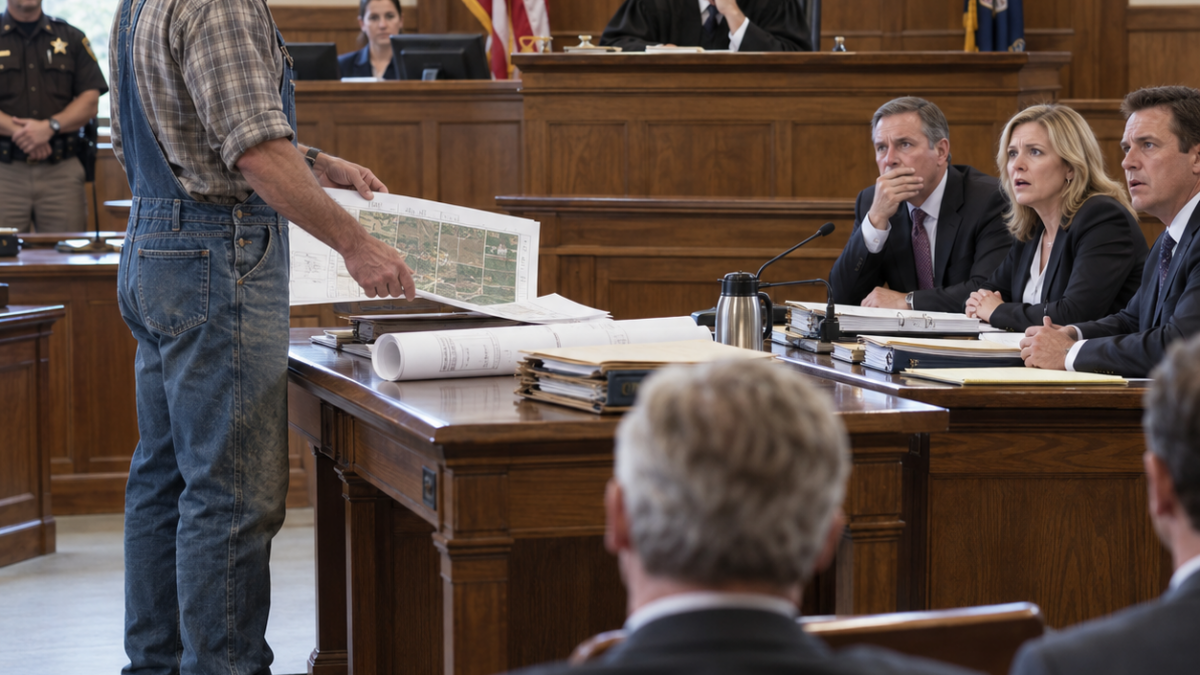
The HOA board spent months calling me an ignorant farmer who was too stubborn to understand their rules, then finally sued me for enough money to put a lien on the land my grandfather had left behind.
They walked into court with an expensive attorney, a stack of violation notices, and the confidence of people who had already decided what kind of man I was.
What they didn’t know was that every time they mocked my work boots and dirt-stained hands, I had been quietly adding one more page to the binder I planned to open in front of the judge.
“That fence is six and one-quarter inches too high.”
Karen Miller tapped her manicured fingernail against a clipboard and stared at the split-rail fence along the eastern edge of my farm.
I looked at the fence.
Then at her.
“That one?”
“There is only one fence in violation, Mr. Jones.”
The oak posts had been there almost fifty years.
My grandfather put them in after coming home from war, using timber cut from the property and tools I still kept in my barn.
They had gone silver with age.
One post leaned slightly.
Another carried the initials I carved into it when I was ten.
Karen saw six and one-quarter inches.
I saw my grandfather’s hands.
“You have forty-eight hours,” she continued. “After that, fines begin.”
Behind her, Creekwood Estates stretched across what had once been pastureland.
Rows of large beige houses.
Perfect lawns.
Matching mailboxes.
Not a tractor, feed shed, or crooked fence in sight.
My twenty-acre farm sat beside all of it like something left behind by another century.
Karen looked past me toward my winter greens and the red barn.
Her mouth tightened.
“Frankly, this entire agricultural experiment of yours is a blight on the neighborhood.”
That got my attention.
“Experiment?”
She gestured toward my farm.
“This.”
“My livelihood?”
“Call it whatever you want.”
I had spent twenty years in the Army as an engineer.
Logistics.
Infrastructure.
Construction.
Problems where shouting did nothing and measurements meant everything.
Retirement had brought me back to the land my grandfather bought with his mustering-out pay.
I wanted quiet.
Soil.
Work that had an honest beginning and end.
I didn’t want another fight.
Karen seemed disappointed when I didn’t give her one.
“I have your notice,” I said.
“That’s all?”
“That’s all.”
She smiled.
“Forty-eight hours.”
Then she turned and marched back toward the Creekwood sidewalk.
I waited until she disappeared.
Then I went to the barn.
Pulled out a tape measure.
Checked the fence.
Karen was right.
One post was exactly six and one-quarter inches above the HOA’s stated four-foot limit.
That precision bothered me more than the violation.
She hadn’t noticed my fence.
She had investigated it.
That night, I opened the Creekwood covenant packet.
Two hundred twelve pages.
I read every one.
Twice.
By midnight, I had yellow tabs sticking from half the binder.
By one in the morning, I found my first answer.
Pre-existing structures.
Two days later, I drove to the county records office.
The clerk pulled an old survey from 1972.
There it was in faded ink:
**EXISTING 4′ SPLIT-RAIL FENCE.**
My grandfather’s fence predated Creekwood Estates by decades.
I paid for a certified copy.
Then I went home and waited.
The first fine arrived exactly when expected.
Fifty dollars.
A week later:
One hundred.
Then two hundred.
I scanned each letter.
Filed the original.
Didn’t pay.
Then Karen found my barn.
I had repainted it the same deep red it had been since the 1950s.
She sent another violation.
Approved Creekwood colors were beige, gray, taupe, and several variations that looked like wet cement.
Barn red wasn’t one of them.
Another fine.
So I went back to the records office.
Found the 1958 building permit.
Found an old family photograph showing my grandfather standing in front of the same barn.
Same color.
Then I found the sentence buried in the HOA’s own architectural appendix:
**Historic agricultural structures may qualify for exemption from standard color requirements.**
I added everything to the folder.
Karen kept sending letters.
Compost pile.
Truck.
Farm equipment.
Each accusation more absurd than the last.
Each one filed.
Each one researched.
Each one answered in my private notes with county records, state law, or the HOA’s own language.
By the time my fines passed $1,000, I understood what she was doing.
She thought pressure would make me fold.
She thought I was just some stubborn farmer who couldn’t possibly understand the paper she was burying me under.
So I let her believe it.
Because one evening, after I slid another violation notice into the growing accordion file, I wrote two words across the front in black marker:
**COURT EXHIBITS.**
And that was the moment Karen stopped building a case against me.
Without realizing it, she had started building mine.
PART 2
The strange thing about being underestimated is that people begin doing your work for you.
Karen thought every new letter weakened me.
Every certified envelope.
Every doubling fine.
Every threat.
Every smug little paragraph explaining the consequences of “continued defiance.”
She believed paper created authority merely because it looked official.
I had spent too many years working around military contracts, construction specifications, engineering diagrams, procurement orders, and operational plans to make that mistake.
Paper didn’t create authority.
Correct paper did.
A wrong number on the wrong sheet could collapse a bridge.
A misplaced decimal could strand equipment in another country.
A clause nobody bothered to read could cost millions.
So I kept reading.
The fence was only the beginning.
The barn was next.
Then my compost pile.
Karen’s letter described it as “improper accumulation of refuse visible from neighboring residential properties.”
Refuse.
I stood beside the pile when I read that one.
Grass clippings.
Leaves.
Vegetable waste.
Manure.
Straw.
Materials farmers had been turning into soil long before anybody invented homeowners associations.
She fined me another hundred dollars.
I could have responded immediately.
Instead, I researched.
Virginia’s Right to Farm protections were exactly where I expected them to be.
Standard agricultural practices.
Existing farm use.
Protection against nuisance-style interference under qualifying conditions.
My compost pile wasn’t garbage.
It was part of an agricultural operation.
Print.
Highlight.
File.
Then came my truck.
Ford F-150.
Clean.
Registered.
No commercial lettering.
No oversized equipment rack.
Apparently Karen had seen bags of feed in the bed and decided it was a prohibited commercial vehicle.
Another notice.
Another fine.
I looked up Creekwood’s definition.
Then the state definition.
Then the motor vehicle registration.
My pickup did not meet the category she cited.
Print.
Highlight.
File.
The stack grew.
My outstanding balance climbed past two thousand dollars.
Then three.
The mathematics would have frightened most people.
That was the purpose.
Karen’s fines doubled or accumulated on schedules confusing enough that a homeowner could stop understanding the amount while still fearing it.
Fear fills gaps in information.
I refused to leave gaps.
I built a spreadsheet.
Violation number.
Date.
Covenant cited.
Actual covenant language.
Available exemption.
State statute.
County document.
Supporting photograph.
Fine amount.
Board action.
Potential procedural defect.
Every evening after farm work, I spent two hours at my grandfather’s old roll-top desk.
The same desk where he once kept seed invoices and handwritten cattle records now held statute printouts, certified surveys, and an HOA enforcement matrix.
I called the project something childish at first.
Operation Karen.
Eventually I stopped using the name.
Karen wasn’t the issue anymore.
The system was.
The first clue came from other homeowners.
I had assumed my farm made me unique.
It did.
But Karen’s behavior didn’t.
I discovered that by accident while walking through Creekwood one evening.
A man was fighting with a lawn mower.
Pull.
Nothing.
Pull.
Nothing.
He kicked the wheel.
I slowed.
“Flooded?”
He looked up.
“Probably possessed.”
“Mind if I look?”
He hesitated.
I was wearing work jeans, boots, flannel.
Not exactly the Creekwood uniform.
“Sure.”
Ten minutes later, the mower started.
He grinned.
“I was about to spend five hundred dollars.”
“Carburetor.”
“You live on the farm?”
“Sam Jones.”
His smile changed.
Not disappeared.
Changed.
Recognition.
“Oh.”
“That bad?”
“No.”
He wiped his hands.
“I’ve heard about you.”
“Let me guess. Dangerous agricultural radical.”
He laughed.
“Something like that.”
His name was Dave Collins.
Same age as me.
Two kids.
Worked in medical-device sales.
As we talked, I noticed the portable basketball hoop beside his garage.
Nothing unusual.
Then I saw the yellow HOA notice taped near the handle.
“You getting grief over that?”
Dave glanced toward the street before answering.
Three hundred dollars.
His ten-year-old son sometimes forgot to roll the hoop behind the garage by six in the evening.
Karen had photographed it three times.
Fifty-dollar fine.
Then another.
Then escalation.
“What happens if you challenge?”
“She doubles down.”
“You tried?”
“Once.”
He laughed bitterly.
“Suddenly I had a landscaping inspection.”
That sentence caught me.
“Related?”
“I can’t prove it.”
“Then don’t claim it.”
He looked at me strangely.
“You sound like a lawyer.”
“No.”
“What do you do?”
“Farm.”
“Before?”
“Army engineer.”
His expression changed again.
Karen had apparently neglected that detail when discussing me.
Dave pointed toward my farm.
“You fighting her?”
“I’m documenting her.”
He became serious.
“What’s the difference?”
“Fighting is emotional.”
I shrugged.
“Documentation waits.”
Dave stared at me.
Then nodded slowly.
“I have a folder.”
“Bring it sometime.”
That was the first domino.
Dave introduced me to Mrs. Gable.
Seventy-six.
Widowed.
Small brick house.
Rose garden that should have been photographed for magazines.
Karen fined her because a strand of solar-powered fairy lights remained wrapped around the rose trellis in July.
“Holiday illumination outside approved seasonal display period.”
One hundred dollars.
Mrs. Gable removed them.
“Why?” I asked.
She looked embarrassed.
“I didn’t want trouble.”
A young couple named Rachel and Tom Mercer had a newborn daughter.
They left a sealed diaper pail near the side of the house overnight after forgetting to wheel it behind the screen.
Karen photographed it.
Violation.
Fine.
Another family got written up because a child’s cedar swing set didn’t match the “preferred composite recreational materials.”
A retired accountant named George Peterson had been fined over an oak tree.
The ridiculous part?
The developer had planted it.
Karen’s board later changed the approved-species list.
Suddenly the tree supplied with the house was noncompliant.
George paid the first fine.
Then stopped.
When I invited him to the barn, he arrived carrying three folders.
He looked at my table.
My survey.
Barn permit.
Covenants.
Violation spreadsheet.
State statutes.
He whistled.
“This is thorough.”
“It has to be.”
Dave sat on a hay bale.
Mrs. Gable beside him.
Rachel and Tom stood near the door because their baby was sleeping in a carrier.
I looked at the group.
Six people.
Six sets of letters.
Six households who had each assumed they were alone.
“That’s how this works,” I said.
Dave frowned.
“How what works?”
“Isolation.”
I picked up Mrs. Gable’s fine.
“You think your fairy lights are the issue.”
Then Dave’s basketball notices.
“You think your son’s hoop is the issue.”
Then Rachel’s.
“You think a diaper pail is the issue.”
I placed my fence violation on top.
“Each person feels foolish making a big fight over something small.”
George nodded.
“And because each issue looks trivial, nobody compares patterns.”
“Exactly.”
Rachel looked toward the barn door.
“So what do we do?”
“Compare.”
The atmosphere changed.
Not revolution.
Not yet.
Recognition.
George took the financial angle immediately.
“Where do the fines go?”
Nobody knew.
“Operating budget?”
Maybe.
“Reserve?”
Maybe.
“Legal expenses?”
Maybe.
He shook his head.
“They’re a nonprofit corporation. Members should be able to inspect detailed financial records under the applicable statutes and governing documents.”
Rachel spoke.
“I asked last year.”
“What happened?”
“They sent a one-page summary.”
“Detailed ledger?”
“No.”
“Bank statements?”
“No.”
“Vendor invoices?”
“No.”
George smiled.
It wasn’t a pleasant smile.
“My turn.”
He drafted a records demand.
Formal.
Specific.
Three years of general ledgers.
Vendor invoices.
Bank statements.
Board minutes concerning major contracts.
Fine revenue accounting.
Related-party disclosures.
Management agreements.
He sent it certified.
Two weeks later, the HOA’s lawyer responded.
Not the board.
Not Karen.
The lawyer called George’s request “vexatious and unduly burdensome.”
George read that line in my barn.
Then read it again.
He adjusted his glasses.
“They’re refusing.”
“Looks that way.”
“Why?”
“Could be laziness.”
“Could be.”
“Could be incompetence.”
“Could be.”
He looked at me.
“Could be something else.”
“Yes.”
We needed a lawyer.
Mine came because Karen finally escalated from annoying to existential.
The balance in her letters crossed ten thousand dollars.
Most of it originated in compounding penalties layered onto violations I believed were invalid.
Then came the notice of intent to lien.
Thirty days.
Pay the amount.
Correct all violations.
Or Creekwood would record a lien against my property.
From there, their attorney threatened foreclosure remedies.
I sat at the kitchen table holding the letter.
The farm was quiet outside.
My barn glowed red in the late sun.
Fence silver.
Winter crop green.
My grandfather had bought those twenty acres with money earned after his war.
My father had worked there.
I had come home because it was the only place that never asked me to explain who I had been before.
Karen was threatening to turn paperwork into a claim against it.
For the first time, anger nearly won.
I imagined driving straight to her house.
Putting every letter on her front lawn.
Demanding she explain what gave her the right to threaten land older than her subdivision.
Then I remembered my own rule.
Documentation waits.
I called Ben Carter.
Former JAG.
Property litigator.
Known among veterans because he had a particular dislike for bureaucratic bullying.
His office overlooked downtown Richmond.
I brought four binders.
He stared.
“How long has this been going on?”
“Five months.”
“You made all this?”
“Yes.”
“You know normal clients bring me a grocery bag of random receipts.”
“I alphabetized exhibits.”
“I see that.”
For more than an hour, he read.
Fence.
Barn.
Truck.
Compost.
Certified survey.
1958 permit.
Historic photo.
Right-to-Farm statute.
Enforcement records.
Other homeowner affidavits.
Correspondence.
Financial-record refusal.
He finally removed his glasses.
“Sam.”
“Yes?”
“This is bad.”
“For me?”
“For them.”
He leaned back.
“Some HOA cases are legitimate. Homeowner builds a six-foot wall where the covenant clearly allows four. Board gives notice. Owner ignores everything. Court enforces.”
He tapped my binder.
“This isn’t that.”
“What is it?”
“A board trying to force agricultural property into a suburban template without respecting pre-existing status, exemptions, state law, or fair process.”
He picked up another tab.
“And if the selective-enforcement evidence is accurate, their equitable posture gets worse.”
“What about the lien?”
“Let them record it.”
I stared.
“That seems unusual advice.”
“It is.”
“They can threaten foreclosure.”
“They can.”
“My farm is collateral damage in your strategy.”
Ben leaned forward.
“No.”
His tone changed.
“We don’t risk property for theater.”
He tapped the documents.
“But Karen wants judicial enforcement. I think she believes court is where authority becomes automatic.”
“And?”
“She may be about to create the only venue where someone neutral forces her to prove every claim.”
That made sense.
Court was Karen’s confidence stripped of home-field advantage.
No clubhouse.
No board majority.
No delete button.
No newsletter.
Evidence.
Rules.
Judge.
I smiled slightly.
“Let her sue.”
Ben smiled back.
“Exactly.”
Then I said something that destroyed his smile.
“I want to question her.”
“You mean testify.”
“No.”
“Sam.”
“I want to handle my presentation.”
He stared.
“Absolutely not.”
“I know the evidence.”
“You are not a lawyer.”
“I know the covenants.”
“Not the Rules of Evidence.”
“Teach me.”
“Sam.”
“You can remain counsel.”
He stopped.
“I’m not letting you appear entirely pro se with a foreclosure claim hanging over your farm.”
“Fine.”
“Then what exactly do you want?”
“I want to be active in my own defense.”
Ben considered.
“We can structure that.”
“I want the judge to hear directly why each violation fails.”
“That part is testimony.”
“And if there’s a counterclaim hearing?”
“You want to participate in strategy.”
“I want Karen to underestimate me until the record is already in.”
Ben looked at my work boots.
Then the binders.
Then me.
Finally:
“You’re enjoying this.”
“No.”
He smiled.
“Liar.”
From then on, Ben trained me like we were preparing an operation.
He never allowed theatrics.
“No speeches.”
“Understood.”
“No calling Karen a tyrant.”
“Even if accurate?”
“Especially if accurate.”
“No guessing.”
“Fine.”
“No arguing when opposing counsel objects.”
“Fine.”
“No explaining five things when one answer works.”
“That may be difficult.”
“Work on it.”
We spent afternoons running questions.
He played opposing counsel.
“You deliberately refused every opportunity to cooperate with the association, correct?”
“No.”
“Bad.”
“What?”
“Explain.”
“I responded to each valid request and researched the others.”
“Still defensive.”
He tried again.
“Mr. Jones, isn’t it true you never lowered your fence?”
“Yes.”
“Why?”
“Because the certified 1972 survey establishes it as a pre-existing structure protected under Creekwood’s own grandfather clause.”
Ben smiled.
“Better.”
Facts.
Always facts.
Meanwhile, George pushed the financial-record issue through counsel.
The pressure worked.
Creekwood eventually produced ledgers and invoices during discovery.
George came to my barn carrying a box.
His face had changed.
Not excited.
Disturbed.
“What?”
“We have problems.”
He spread the financial records out.
Administrative-management fees were unusually high.
Vendor names repeated.
One company handling landscaping appeared again and again.
GreenLine Property Services.
Owner?
Karen’s brother-in-law.
That alone wasn’t illegal.
But there was no obvious competitive bidding.
Some invoices described work nobody remembered seeing.
Then a management-consulting entity.
Creekwood Community Strategies LLC.
George searched state registrations.
Registered agent shared Karen’s maiden surname and former mailing address.
The connection required more investigation.
We did not jump to conclusions.
Ben insisted.
“No accusations we can’t prove.”
Good advice.
But enough inconsistencies existed that discovery expanded.
Bank statements came next.
Then reimbursement records.
Then a discretionary “community outreach and board development” account.
Meals.
Travel.
Retail expenses.
George reviewed everything twice.
I watched him work.
Numbers are a language.
He became increasingly quiet.
Finally:
“Sam.”
“Yes?”
“This isn’t just sloppy.”
“How sure?”
“I want a forensic accountant.”
“Then get one.”
Ben did.
The report found transactions that appeared inconsistent with ordinary HOA purposes and required explanation.
Vendor relationships undisclosed in board minutes.
Payments without adequate supporting documentation.
Fine revenue moved into discretionary accounts without transparent reporting.
Enough that Ben amended our counterclaims and prepared to request referral if appropriate.
Then Creekwood filed suit.
Samuel T. Jones.
Defendant.
They wanted more than fifteen thousand dollars in fines.
Enforcement order.
Costs.
Attorney fees.
Lien validation.
Potential foreclosure remedies if the judgment went unpaid.
The process server delivered the summons at my farmhouse.
He looked apologetic.
“Sorry.”
“You didn’t write it.”
“Still.”
I signed.
Then walked to the barn.
Dave was there that evening.
George.
Rachel.
Mrs. Gable.
More than twenty others had joined our meetings by then.
Someone had brought chili.
Someone else cornbread.
Fear creates isolation.
Shared fear sometimes creates community.
Dave looked at the summons.
“They can take the farm?”
“If they win, obtain judgment, preserve the lien, and go through further procedures.”
Nobody spoke.
Mrs. Gable whispered:
“Sam, you don’t have to do this for us.”
I looked at her.
“I’m not.”
She seemed hurt.
Then I clarified.
“I’m doing it because it’s my farm.”
I pointed toward her folder.
“You’re doing your part because it’s your house.”
Then Dave.
“Your son.”
Rachel.
“Your family.”
George.
“Your money.”
I looked around.
“That’s the whole point. Nobody here is rescuing anybody.”
Silence.
“We’re just no longer pretending we’re alone.”
Court was six weeks away.
I worked mornings.
Prepared afternoons.
Studied evenings.
Law became another crop.
Research.
Prepare.
Check.
Repeat.
Ben brought me copies of cases addressing selective enforcement, waiver, grandfathered structures, association authority, statutory agricultural protections, lien requirements, due process.
Some helped.
Some didn’t.
I learned something important.
Good legal preparation includes finding the arguments that hurt you.
Not merely the ones you like.
One precedent favored broad HOA authority over later-acquired property.
Ben made me read it twice.
“Why?”
“Because Henderson will.”
Henderson was Creekwood’s attorney.
Big regional firm.
Expensive suit.
Collections specialist.
His letters had become increasingly confident.
He described my defenses as “meritless.”
Ben smiled when he read that.
“What?”
“Nothing.”
“You look happy.”
“Overconfidence creates bad discovery decisions.”
The night before court, I didn’t study.
That surprised everyone.
Sarah Mercer—the paralegal in our neighbor group—had created a perfect exhibit index.
George verified financial tabs.
Ben had our legal arguments.
I went to the barn.
Turned on one light.
Sat on an overturned bucket.
Looked at my grandfather’s old red boards.
I remembered helping him repair that fence.
I must have been nine.
Maybe ten.
He handed me a post-hole digger and let me struggle until I learned leverage.
“Don’t fight the ground,” he said.
“Understand it.”
I had forgotten that phrase for years.
Now it came back.
Don’t fight the ground.
Understand it.
Karen had fought everything.
History.
Agriculture.
Neighbors.
Documents.
Resistance.
Any fact she didn’t like became an attack.
I didn’t need to beat her.
I needed to understand the ground better.
The courthouse square was covered in October leaves.
My F-150 looked almost comic beside the sedans in the public lot.
I wore clean jeans.
Pressed flannel.
Dark blue blazer.
Work boots.
Ben saw me on the steps.
“Perfect.”
“Sarah told me to wear a tie.”
“She’s wrong.”
“She said you’d say that.”
We went inside.
Karen sat with Henderson.
Bright fuchsia suit.
Treasurer beside her.
No other board members.
Henderson looked at my clothes.
Then leaned toward Karen.
They smiled.
That was useful.
Behind me sat Dave.
George.
Mrs. Gable.
Rachel and Tom.
More Creekwood residents.
No signs.
No spectacle.
Just witnesses.
Judge Rebecca Hayes entered.
Everyone stood.
She was in her sixties.
Silver hair.
Expression suggesting she had spent thirty years hearing people explain why rules applied differently to them.
Creekwood presented first.
Henderson was good.
Very good.
He did not rant.
He made Karen’s case sound reasonable.
Community standards.
Written covenants.
Repeated notices.
Noncompliance.
Homeowner refusing correction.
Association forced to act.
He showed photographs.
Fence.
Red barn.
Truck.
Compost.
He showed certified-mail receipts.
Fine schedules.
My nonpayment.
Then he looked toward me.
“Creekwood has attempted repeatedly to resolve these issues.”
Resolve.
Interesting word.
He concluded:
“Community covenants have little value if individual members may disregard them whenever they personally disagree.”
Judge Hayes nodded.
“Mr. Carter?”
Ben stood.
“Your Honor, with the court’s permission, Mr. Jones will testify in narrative response on the individual violations, and I will address legal issues and objections.”
Henderson raised an eyebrow.
The judge looked at me.
“You understand you are represented?”
“Yes, Your Honor.”
“Your attorney remains responsible for legal presentation.”
“Yes.”
“All right.”
I took the stand.
Henderson watched like he had been handed a gift.
Ben asked:
“Mr. Jones, let’s start with the fence.”
A photograph appeared.
“Yes.”
“Does it exceed Creekwood’s current stated height limit?”
“At its highest point, six and one-quarter inches.”
Henderson smiled.
Good.
“Did you build it?”
“No.”
“Who did?”
“My grandfather.”
“When?”
“Approximately 1971 or 1972.”
“Evidence?”
I pointed toward Exhibit 14.
Certified county survey.
The clerk handed it to the judge.
“Eastern property boundary,” I said. “It notes an existing four-foot split-rail fence.”
Judge Hayes read.
Ben asked:
“Does Creekwood’s declaration address pre-existing structures?”
“Yes.”
“Where?”
“Article Three, Section Two.”
Another exhibit.
Grandfather clause.
The judge compared.
Henderson objected that dimensions may have changed over time.
Fair objection.
Ben produced dated photographs.
Then a surveyor affidavit.
Same principal posts.
Same line.
No evidence that I had increased height.
Judge Hayes wrote something.
Henderson’s smile faded slightly.
Barn.
Photo.
1958 permit.
Family photograph.
Historical-agricultural exemption language.
Judge Hayes asked:
“Did you request architectural review?”
“No.”
“Why?”
“Because the first contact I received was already a fine.”
“Did the guidelines permit review?”
“Yes.”
“So why not seek it afterward?”
Good question.
“Because once I located the historical exemption, I wrote the board requesting recognition of it.”
“Response?”
“Fine doubled.”
The judge looked toward Karen.
Then back at the documents.
Truck.
State definition.
Registration.
No commercial classification.
Agricultural use.
Compost.
Right-to-Farm protections and local agricultural-use records.
Each issue fell differently.
Not every HOA position was absurd on its face.
But their process had been.
Again and again:
Fine first.
Investigation later.
And when evidence contradicted Karen’s interpretation, escalation.
Henderson cross-examined.
He was smooth.
“Mr. Jones, you dislike homeowners associations, don’t you?”
“I had no strong opinion before this.”
“You refused to pay a single fine.”
“Correct.”
“Not one.”
“Correct.”
“You ignored multiple board directives.”
“I disputed them.”
“Did you comply?”
“With the ones I believed lawful and applicable.”
“There it is.”
Henderson looked toward the judge.
“Mr. Jones believes he gets to decide which rules apply.”
I waited.
He turned back.
“Do you?”
“No.”
“You just said you did.”
“I said I disputed them.”
“And refused to comply.”
“Pending evidence.”
“Who gave you authority to overrule the board?”
“No one.”
“Then why did you?”
“I didn’t.”
He paused.
“The board claimed violations. I requested review. I gathered records. The association chose litigation.”
Silence.
“I’m here because the court decides.”
Judge Hayes looked at Henderson.
He moved on.
That was the moment I felt the room change.
Not victory.
Credibility.
Henderson wanted me to be angry.
Arrogant.
A farmer saying nobody tells me what to do on my land.
Instead, I gave him documentation.
Phase one ended.
Then Ben stood.
“Your Honor, the defense also asserts selective enforcement and bad faith, which bear directly on the association’s request for equitable relief and our counterclaims.”
Henderson objected.
Relevance.
Judge Hayes considered.
Then allowed a limited presentation.
Dave testified first.
Basketball hoop.
Three fines.
Then photographs.
Three other hoops regularly visible after the stated time.
No corresponding enforcement found in produced records.
Henderson attacked.
“Are you aware whether those owners received warnings?”
“No.”
“So you cannot say the HOA ignored them.”
“I can say the violation ledger contains no fines.”
Good.
Mrs. Gable came next.
Tiny woman.
Soft floral dress.
Her hands shook.
Ben asked about the fairy lights.
She explained.
Karen had come to her door.
Described them as tacky.
Warned that continued display would become expensive.
Mrs. Gable removed them.
“How much is your monthly fixed income?”
Henderson objected.
Sustained.
Ben nodded.
“Why did you remove them?”
“I was scared of the fines.”
“Did you request a hearing?”
“No.”
“Why?”
She looked toward Karen.
“Because she said challenging would make things worse.”
The courtroom went still.
Henderson stood.
“Objection. Hearsay.”
Ben responded that it was offered regarding effect on witness and notice of intimidation pattern, not truth of underlying legal consequence.
Judge allowed limited testimony.
Mrs. Gable finished.
Rachel Mercer testified.
Diaper pail.
Fine.
Then an email obtained in discovery.
Karen to another board member:
**We need to make an example before people stop taking these notices seriously.**
Henderson objected to context.
Ben established authenticity.
The judge read it herself.
Karen whispered urgently to Henderson.
He didn’t answer.
Then George.
The financial part.
Ben first established George’s qualifications.
Retired CPA.
Forty-one years.
Audit work.
Nonprofit boards.
Henderson objected to him being treated as a formal forensic expert without proper designation.
Fair.
Ben narrowed.
George would testify as a member who reviewed produced records and explain arithmetic, while our retained forensic accountant’s report supplied expert analysis.
Smart.
George walked through numbers.
Management fees.
Related entities.
Landscaping vendor tied to Karen’s brother-in-law.
Questionable invoices.
Fine revenue.
Discretionary spending.
Henderson objected repeatedly.
Some sustained.
Some overruled.
This wasn’t television.
Evidence has rules.
Ben expected that.
Then our forensic accountant testified.
That was where the room truly changed.
She did not use dramatic words.
No “theft.”
No “embezzlement.”
She said:
“unsupported disbursement.”
“undisclosed related-party transaction.”
“insufficient documentation.”
“expense lacking apparent association purpose.”
“control weakness.”
Clinical language.
Devastating because it was precise.
One expense involved Karen’s personal property.
Another appeared to pay for landscaping tied to her residence.
Several charges required further investigation.
Judge Hayes asked:
“Were these produced voluntarily?”
“Ultimately through discovery.”
“Were members previously denied detail?”
George’s records request came in.
Then the lawyer’s refusal.
The judge read it.
Her face didn’t change.
But Henderson stopped smiling entirely.
Finally, Karen testified.
Ben had prepared for hours.
He handled the examination.
I sat beside him.
Karen took the stand with the same posture she used at HOA meetings.
Chin up.
Certainty.
Ben started gently.
“You are president of Creekwood Estates HOA?”
“Yes.”
“How long?”
“Four years.”
“You supervise enforcement?”
“I oversee it.”
“Do you personally inspect properties?”
“When necessary.”
“Mr. Jones’ fence?”
“Yes.”
“Did you measure it?”
“Yes.”
“How?”
“Tape measure.”
“From his property?”
“No.”
“Where were you standing?”
“Sidewalk and boundary area.”
“Did you review county records before issuing the violation?”
“That isn’t required.”
“Did you review whether the fence predated Creekwood?”
“No.”
“Did you know Creekwood’s governing documents contained provisions for pre-existing structures?”
“I am familiar with the covenants.”
“That wasn’t my question.”
Henderson objected.
Argumentative.
Sustained.
Ben rephrased.
“Before issuing Mr. Jones’ fence violation, did you investigate whether the structure qualified for grandfather treatment?”
“No.”
“Barn?”
“What about it?”
“Did you review its age?”
“No.”
“Historical exemption?”
“No.”
“Did you offer architectural review before fining?”
“The color was obviously noncompliant.”
The judge wrote something.
Ben continued.
“Mr. Jones then provided evidence of the barn’s age?”
“Yes.”
“What did you do?”
“Continued enforcement.”
“Why?”
“Because rules need consistency.”
“Even if an exemption may apply?”
“The board determines exemptions.”
“Did the board vote on his request?”
Karen paused.
“I don’t recall.”
We had minutes.
No vote.
Ben walked her through selective enforcement.
Basketball hoops.
Boats.
Satellite dishes.
Exceptions for board friends.
She claimed different circumstances.
Sometimes true.
Sometimes vague.
Then the email.
Make an example.
“What did you mean?”
“Residents need to understand standards.”
“So Rachel Mercer’s violation was intended as an example?”
“No.”
“But you wrote those words.”
“It was a general statement.”
“In an email specifically discussing her.”
Karen’s confidence cracked.
Only slightly.
Then finances.
“GreenLine Property Services.”
“Yes.”
“Owner?”
“I don’t manage their corporate filings.”
“Your brother?”
“Brother-in-law.”
“You knew?”
“Yes.”
“Was relationship disclosed in minutes before contract approval?”
“I’m sure it was.”
“Show us.”
Silence.
Henderson objected.
Documents speak for themselves.
Judge Hayes allowed Ben to establish absence in produced minutes through records custodian instead.
He did.
Then the community-strategy entity.
Registered through a name tied to Karen’s family history.
Karen denied controlling it.
The financial evidence showed payments.
The exact nature would require separate investigation.
Ben did not overreach.
That mattered.
Finally:
“Ms. Miller, why did Creekwood seek foreclosure-related remedies against Mr. Jones?”
“To enforce compliance.”
“For a fence predating the association?”
“For violations.”
“Historic barn?”
“Violations.”
“Farm compost?”
“Violations.”
“Truck?”
“Violations.”
“Did you ever visit the farm to discuss exemptions after receiving his records?”
“No.”
“Why?”
“He was hostile.”
I almost laughed.
Ben didn’t.
“Did he threaten you?”
“No.”
“Yell at you?”
“No.”
“Use profanity?”
“No.”
“What did he do?”
Karen stared at me.
“He refused.”
Ben nodded.
“No further questions.”
That sentence echoed longer than anything dramatic could have.
He refused.
That was Karen’s real grievance.
Not fence.
Not barn.
Refusal.
The court recessed.
Outside, Dave found me near a vending machine.
“You think we won?”
“No.”
“You always like this?”
“Yes.”
“Annoying.”
“Facts aren’t verdicts.”
Mrs. Gable sat beside Sarah.
She looked exhausted.
“You did well,” I told her.
“I hated it.”
“I know.”
“Will it matter?”
“Yes.”
Regardless of the case.
Her saying it aloud mattered.
We returned.
Judge Hayes reviewed documents silently.
Then looked at both tables.
“I am prepared to rule on the association’s request for enforcement and lien-related relief. Certain counterclaims may require additional proceedings.”
Important.
Not everything solved in one afternoon.
Reality.
She started with the fence.
Pre-existing.
Grandfather protections.
Creekwood failed to demonstrate valid basis for the fine.
Invalid.
Barn.
The court found the association had failed to provide meaningful review under its own historical-agricultural exemption before imposing penalties.
Fine invalidated subject to proper future process, though Judge Hayes strongly questioned whether Creekwood could lawfully compel color change given the evidence.
Truck.
Insufficient evidence of prohibited commercial-vehicle status.
Fine invalid.
Compost.
Protected agricultural practice on a qualifying pre-existing farm under applicable law.
Fine invalid.
Then the accumulated penalties.
Because the underlying notices substantially failed and escalation procedures contained defects, the lien could not stand.
“Accordingly,” Judge Hayes said, “the recorded lien is ordered released.”
I heard Mrs. Gable inhale behind me.
Karen went still.
Henderson started writing.
Then the judge addressed Creekwood’s request for injunction.
Denied.
Attorney fees.
The governing documents and state law permitted fee shifting in certain circumstances.
Given the court’s findings concerning bad-faith escalation, Creekwood—not me—would bear substantial portions of my recoverable defense costs, with the exact amount to be determined.
Karen whispered:
“This is unbelievable.”
Judge Hayes looked at her.
“Ms. Miller.”
Silence.
Then came the part nobody expected to resolve that day.
The finances.
Judge Hayes was careful.
Courts do not convict people of crimes because an HOA debt hearing becomes ugly.
She said exactly that.
“This court is not making a criminal finding.”
Karen visibly relaxed.
Too soon.
“However, the financial records admitted and the testimony concerning related-party transactions, unsupported expenditures, and member access to association records raise matters outside the narrow scope of this civil enforcement action.”
She looked at Ben.
Then Henderson.
“I will direct that the relevant portions of the record be preserved.”
Then toward the clerk.
“And copies of the exhibits and transcript may be transmitted to the appropriate state authorities for review.”
Karen’s face drained.
George looked down.
No celebration.
This was serious now.
Judge Hayes continued.
“The evidence also strongly suggests a pattern of selective and disproportionate enforcement inconsistent with the equitable relief the association requested.”
Then she looked directly at Karen.
“An association is not a private government exempt from its own rules.”
The courtroom was silent.
“Authority under covenants is bounded by the covenants, applicable statutes, procedural fairness, and good faith.”
She paused.
“A board cannot demand compliance from homeowners while treating its own limitations as optional.”
There it was.
The whole case.
One sentence.
The judge concluded by enjoining further collection action on the invalidated fines and preserving my right to pursue remaining counterclaims separately.
No Hollywood speech.
No “reign of terror is over.”
No instant handcuffs.
Something better.
A real ruling.
The lien was gone.
The farm was safe.
The fines collapsed.
The records were preserved.
The financial questions were headed somewhere Karen could no longer control.
Court adjourned.
For three seconds nobody moved.
Then Dave put both hands on my shoulders.
“You stubborn son of a—”
“Courtroom.”
“We’re outside now.”
“We are not.”
Mrs. Gable hugged me.
She cried.
I didn’t know what to do with my hands.
Sarah Mercer laughed through tears.
George stood quietly.
Ben closed his briefcase.
I looked across the aisle.
Karen remained seated.
Henderson spoke to her in a low voice.
She looked smaller.
Not physically.
Positionally.
For months, every room had bent around her authority.
This one hadn’t.
Outside, cold autumn air hit my face.
Leaves moved across the courthouse steps.
Ben joined me.
“You did well.”
“You did the hard part.”
“No.”
He shook his head.
“You did the important part five months ago.”
“What?”
“You didn’t throw away the first letter.”
I looked toward the street.
Maybe he was right.
The collapse accelerated from there.
State investigators requested Creekwood records.
Then more records.
Bank statements.
Vendor contracts.
Electronic communications.
The board panicked.
Two directors resigned within a week.
One said publicly that Karen had controlled most enforcement decisions and vendor relationships.
Another claimed she had signed documents without fully understanding them.
Maybe true.
Maybe self-preservation.
The management company distanced itself.
The association’s insurer hired independent counsel.
Creekwood meetings went from empty to packed.
Residents who once avoided Karen’s gaze now requested minutes, budgets, contracts.
Sunlight is inconvenient for people accustomed to shadow.
The state investigation lasted months.
Ben reminded everyone constantly:
“Investigation is not conviction.”
Important.
Rumors got ridiculous.
Secret offshore accounts.
Vacation homes.
Millions missing.
None supported.
The real findings were less cinematic and more credible.
Undisclosed related-party business.
Improper reimbursements.
Association funds used for expenses lacking legitimate community purpose.
Inflated vendor charges.
Weak controls.
Retaliatory enforcement patterns.
False or misleading accounting descriptions in several transactions.
Eventually prosecutors filed charges connected to fraud and misappropriation.
Karen’s attorney negotiated.
Some allegations were dismissed.
Others remained.
She ultimately entered pleas resolving multiple counts.
Restitution was ordered.
Financial penalties.
Probationary conditions.
Barriers to serving in fiduciary roles for a period of time.
Not a twenty-year prison sentence.
Not cinematic.
Accountability rarely is.
She sold her Creekwood house during the process.
Partly legal costs.
Partly because living among the people who had testified against her had become impossible.
The old board dissolved.
A temporary administrator helped stabilize the association while residents elected replacements.
George became treasurer.
Naturally.
Dave Collins became vice president.
Rachel Mercer, the paralegal, became secretary.
They tried to nominate me.
“No.”
The clubhouse laughed.
George adjusted his glasses.
“You started this.”
“I defended my farm.”
“You organized half the neighborhood.”
“You organized the financial records.”
“Leadership.”
“Punishment.”
Dave shouted:
“Sam for president!”
“No.”
Mrs. Gable raised her hand.
“All in favor?”
I stood.
“I will move.”
More laughter.
They elected a retired school principal named Eleanor Brooks.
Best choice possible.
First board meeting under Eleanor:
No gavel.
No elevated table.
Circular seating.
She opened with:
“If this board ever becomes interesting, we are probably doing something wrong.”
Everyone applauded.
The new board reviewed every unresolved fine.
Some were legitimate.
That surprised a few residents.
Rules still existed.
A homeowner who built a dangerous fence blocking a traffic sight line had to fix it.
Another who stored abandoned vehicles in a common parking area faced enforcement.
The difference was process.
Notice.
Conversation.
Reasonable cure period.
Hearing.
Actual evidence.
No punishment designed to humiliate.
Mrs. Gable got her fairy lights back out.
She invited me over.
“I’m leaving them up all year.”
“Rebellion?”
“Decoration.”
“Good.”
Dave’s son left the basketball hoop out after six.
Nothing happened.
A week later, Dave rolled it into the garage voluntarily.
I teased him.
“Compliance.”
“Choice.”
Exactly.
Rachel’s daughter grew out of diapers.
She kept the old violation notice in a scrapbook.
“Why?”
Rachel shrugged.
“Someday she’ll ask why our neighborhood constitution was rewritten because of her diaper pail.”
The new governing documents were shorter.
Not burned in a bonfire.
That was somebody’s joke.
Actual covenants cannot simply be destroyed with fire because residents feel liberated.
Law is less dramatic.
Amendment process.
Membership vote.
Recording requirements.
Attorney review.
Slow.
Boring.
Correct.
Creekwood adopted clearer agricultural exemptions for my historic tract and other pre-existing uses.
Grandfather provisions were rewritten.
Enforcement procedures gained due-process protections.
Financial transparency became mandatory.
Competitive bidding thresholds.
Related-party disclosures.
Independent annual review.
Limits on discretionary spending.
Accessible records.
No single president could control the entire system again.
My farm became formally recognized as a pre-existing agricultural property.
The fence stayed.
Same height.
Six and one-quarter inches too high at the tallest post.
The barn stayed red.
Deep historic red.
My truck remained in the driveway.
Compost continued becoming soil.
Life resumed.
But the farm no longer felt isolated from Creekwood.
That was unexpected.
Before Karen, I tolerated the subdivision.
During Karen, I resented it.
Afterward, I started knowing people.
Dave came over to help repair the barn roof.
George handled bookkeeping advice for my farm because apparently retirement had not cured him of spreadsheets.
Rachel helped me update a lease document.
Mrs. Gable brought tomatoes despite the fact I grew my own.
“You don’t grow these.”
“They’re tomatoes.”
“Not my tomatoes.”
Fair.
Children started coming to the farm during a school agriculture day.
I showed them compost.
One boy whispered:
“Is this the illegal compost?”
His teacher turned red.
I laughed.
“Historically controversial compost.”
He nodded solemnly.
The fence became famous.
Not nationally.
Just locally.
New Creekwood residents eventually heard the story.
They would walk past and point.
“That’s the fence.”
Sometimes someone asked:
“Which post?”
I always answered:
“The dangerous one.”
My grandfather would have found the whole thing hilarious.
One winter evening, years after the case, I found his hammer while cleaning the workshop.
Wooden handle.
Dark with use.
Head slightly mushroomed.
I sat on the bench and remembered him setting those fence posts.
I had complained about hauling rails.
He said:
“You’re not building for today.”
At ten years old, I thought that was old-man nonsense.
Now I understood.
He wasn’t talking about fences.
Anything worth building outlasts the inconvenience of the day.
A farm.
A family.
A reputation.
A community.
Karen built authority around fear.
It worked quickly.
Then collapsed quickly.
We rebuilt Creekwood around process.
Slower.
Less exciting.
Harder to destroy.
One year after the court case, Eleanor asked me to attend an annual meeting.
“I attend enough.”
“This one matters.”
“Why?”
“You’ll see.”
I reluctantly went.
No dramatic agenda.
Budget.
Pool maintenance.
Road repairs.
Landscaping.
Boring.
I loved it.
Then Eleanor called me forward.
I glared.
She ignored me.
“Last year, this association sued Sam Jones.”
Silence.
“That litigation cost this community money.”
A few heads lowered.
“It cost trust.”
She looked at me.
“And it revealed failures that had existed because too many of us believed governance was somebody else’s responsibility.”
That was fair.
No scapegoating.
No pretending Karen alone created the conditions.
“We owe Sam an apology.”
I shifted.
Eleanor continued.
“But more importantly, we owe ourselves a promise.”
A screen behind her showed four words:
**QUESTION. DOCUMENT. LISTEN. CORRECT.**
No giant moral speech.
Just four habits.
Question decisions.
Document reasons.
Listen to dissent.
Correct mistakes.
The membership adopted them as informal board principles.
Later, Dave found me near the coffee table.
“Dumb farmer.”
I looked at him.
“What?”
“That’s what Karen called you.”
“She never said it to my face.”
“She said it plenty elsewhere.”
He grinned.
“Henderson thought it too.”
“How do you know?”
“Looked at your boots.”
I smiled.
“Useful boots.”
He raised his coffee.
“To useful boots.”
We drank.
There is something satisfying about being underestimated.
But only after surviving it.
During the process, it mostly hurts.
People talk about dignity as if being dismissed should make you stronger automatically.
It doesn’t.
Sometimes it makes you doubt yourself.
There were nights I sat at my grandfather’s desk wondering if Karen was right about one thing.
Maybe I was making life harder than necessary.
I could have trimmed the post.
Painted the barn beige.
Moved the compost.
Parked the truck behind the barn.
Paid the fines.
Life would have become quiet again.
Maybe.
But quiet purchased through surrender is temporary.
The next letter would have come.
Then another.
Dave proved that.
Mrs. Gable proved that.
Rachel proved that.
Complying with unreasonable power rarely satisfies unreasonable power.
It teaches it what works.
Still, I learned another lesson.
Not every HOA rule is tyranny.
Not every fine is oppression.
Not every board member is Karen.
Communities need rules.
Farmers do too.
Water rights.
Pesticide rules.
Setbacks.
Animal welfare.
Equipment safety.
Environmental standards.
The question was never whether I had to follow rules.
I had followed rules my entire life.
The question was whether the people enforcing them would follow rules too.
That is what Judge Hayes saw.
She didn’t see a farmer above the law.
She saw a farmer asking the association to stay inside it.
That distinction saved everything.
Several years later, Ben retired.
We had lunch.
He ordered something expensive.
I complained.
“You owe me,” he said.
“I paid your invoice.”
“Emotional damages.”
“You’re a lawyer. You don’t have emotions.”
He laughed.
Then grew serious.
“Sam, do you know why that case worked?”
“Binders.”
“Partly.”
“Documents.”
“Partly.”
“Great lawyering.”
“Obviously.”
He smiled.
“But mostly restraint.”
I waited.
“You never gave them the angry-farmer moment they wanted.”
I thought about Karen’s first visit.
Forty-eight hours.
Blight.
Fines.
I had wanted to tell her exactly where to place the clipboard.
Instead:
I have your notice.
Maybe that mattered.
Ben continued.
“If you’d threatened her, screamed at her, blocked inspections aggressively, posted rants online—Henderson would have built his entire case around behavior.”
“I still would’ve had the documents.”
“Yes.”
“But the judge might have seen two unreasonable sides.”
“Exactly.”
He lifted his glass.
“Boring wins cases.”
I laughed.
“Tell Eleanor.”
“She already knows.”
Creekwood eventually stopped being known for the scandal.
New families moved in.
They didn’t care who Karen was.
Good.
Communities should outgrow their worst chapters.
Eleanor served two terms.
Then refused a third.
Rachel became president after her.
Imagine that.
The woman once fined over a diaper pail ran the HOA.
She was terrified.
I told her:
“Good.”
“Why?”
“People who desperately want authority worry me.”
“Helpful.”
“You’ll be fine.”
Her first mistake came three months later.
The board sent a violation to a homeowner for an unauthorized wheelchair ramp.
The ramp had been installed quickly after the homeowner’s father suffered a stroke.
Technically the proper architectural application had not been completed first.
Old Creekwood would have fined.
Rachel called me.
“We sent the letter.”
“And?”
“I hate it.”
“Then fix it.”
“We already sent it.”
“So?”
“We can’t look inconsistent.”
I laughed.
She became annoyed.
“What?”
“You’re doing it.”
“Doing what?”
“Karen.”
Silence.
“That’s not fair.”
“It is.”
She stayed quiet.
Then:
“What should I do?”
“What you know is right.”
The next day she visited the homeowner.
Apologized.
Waived enforcement.
Helped file the retroactive safety application.
The board approved it unanimously.
At the next meeting, Rachel announced the error publicly.
No cover-up.
No excuses.
“We handled this badly.”
Four words.
The room accepted it.
That was when I knew Creekwood had truly changed.
Not when Karen left.
When a new leader made a mistake and survived admitting it.
Power had become less fragile.
The farm changed too.
I expanded vegetable production.
Added a small orchard.
Restored the north pasture.
The red barn needed another coat of paint.
Same color.
I bought five gallons.
Dave stopped by.
“Did you submit color approval?”
I stared.
He laughed so hard he had to sit down.
We painted together.
George arrived later.
Then Rachel.
Then Mrs. Gable with sandwiches.
By sunset, half the barn looked new.
I stepped back.
Red boards.
Silver fence.
People standing in my yard.
Years earlier, those houses beyond the property line looked like an invading wall.
Now I knew names inside them.
That may have been the best revenge of all.
Karen tried to turn neighbor against farmer.
Her campaign did the opposite.
It forced us to meet.
Compare notes.
Help one another.
Eventually trust.
Not blind trust.
Better.
Informed trust.
I never saw Karen again.
I heard she moved two states away after selling her home.
Rumors followed.
Apartment.
Family.
New job.
I stopped listening.
There is a temptation after conflict to keep your enemy alive inside your head.
To revisit every insult.
Replay every victory.
Imagine them hearing about your happiness.
That still gives them power.
One morning, I realized I had gone three months without thinking about Karen.
That felt more final than the judge’s ruling.
She had become irrelevant to the life she once dominated.
Meanwhile, Judge Hayes retired.
Creekwood invited her to a community legal-education night.
To my surprise, she accepted.
I sat in the back.
Afterward, she approached.
“Mr. Jones.”
“Judge.”
“Rebecca now.”
“I’m not sure I can do that.”
She smiled.
“You kept the fence.”
“Yes.”
“I figured.”
I hesitated.
“Can I ask you something?”
“Depends.”
“When Henderson presented their case, did you think I was just a stubborn farmer?”
She considered carefully.
“At first?”
“Yes.”
“I thought you were a homeowner who had refused several notices.”
Fair.
“And then?”
“The survey.”
“Fence?”
“Yes.”
“Why?”
“Because you didn’t merely say they were wrong.”
She looked at me.
“You brought me the record that showed why.”
That was the answer.
Not genius.
Not secret military intelligence.
Not courtroom trickery.
Evidence.
She continued.
“People often come to court with conclusions.”
“I’m being treated unfairly.”
“They’re lying.”
“They hate me.”
“They’re corrupt.”
“Sometimes they’re right.”
She pointed toward the old binder I happened to have brought for the event.
“But courts work better with dates, documents, comparisons, procedures.”
I smiled.
“Boring.”
“Very.”
“Ben says boring wins.”
“Ben is occasionally correct.”
I liked her even more.
As she left, Judge Hayes stopped by the fence.
She looked at the highest post.
“That one?”
“Yes.”
“Six and one-quarter inches?”
“Yes.”
She shook her head.
Then walked away smiling.
I still have the binder.
Actually, several.
They sit on a shelf in my office.
I don’t open them often.
The first notice is Tab One.
Fence violation.
Forty-eight hours.
Sometimes visiting veterans ask about the case.
Sometimes farmers.
Sometimes neighbors dealing with their own HOA disputes.
I never tell them:
“Fight everything.”
That would be stupid.
I tell them:
“Read everything.”
Those are different philosophies.
Maybe you are wrong.
Find out.
Maybe the board is right.
Find out.
Maybe both sides have legitimate concerns.
Find out.
But don’t let intimidation replace understanding.
And don’t assume somebody’s clothes tell you how prepared they are.
That mistake nearly destroyed Creekwood’s old board.
Karen saw mud on boots.
Calluses.
Farm truck.
Barn.
She translated those details into ignorance.
Henderson saw the same thing in court.
So did some residents.
Then I opened the binder.
That is why the title people eventually gave the story always made me laugh.
“The dumb farmer case.”
I wasn’t smarter than everyone else.
I had simply spent enough time in systems where careless assumptions get people hurt.
Measure twice.
Verify.
Document.
Plan for failure.
Then act.
Farming reinforced those lessons.
You don’t argue with weather.
You prepare drainage.
You don’t intimidate soil.
You test it.
You don’t order plants to grow.
You create conditions.
Reality does not care about confidence.
Karen did.
Judge Hayes didn’t.
Years after the lawsuit, I replaced one rail in the old fence.
Not the tall post.
A lower rail rotted through.
I could have bought pressure-treated lumber.
Instead, I cut oak from the property.
Shaped it myself.
Slid it into the old posts.
As I worked, a little boy from Creekwood watched from the sidewalk.
“Mr. Sam?”
“Yes?”
“Is that the famous illegal fence?”
I laughed.
“Used to be.”
“Why illegal?”
“Long story.”
“My mom says a judge said it wasn’t.”
“Your mom is right.”
He pointed at the post.
“Is that the tall part?”
“Yes.”
“Why don’t you cut it now?”
I stopped.
Interesting question.
The fight was over.
No rule required me to cut it.
But nothing prevented me either.
Why preserve six and one-quarter inches?
Symbol?
Pride?
Stubbornness?
I considered.
“Because my grandfather made it that height.”
The boy nodded as if that answered everything.
Maybe it did.
He ran home.
I finished the rail.
Then sat on the grass.
My grandfather never knew Karen.
Never knew Creekwood.
Never knew Judge Hayes.
Never knew his fence would become Exhibit 14.
He built it because the farm needed a boundary.
Fifty years later, it still did.
Not merely between properties.
Between legitimate authority and overreach.
Between cooperation and fear.
Between what people assume and what records prove.
I rested my hand against the rough oak.
The post leaned slightly.
Six and one-quarter inches too high according to a rule written decades after it went into the ground.
Exactly where it belonged.
That evening, neighbors came over.
Dave brought burgers.
George brought spreadsheets because George could somehow bring spreadsheets to a barbecue.
Rachel brought her daughter, now old enough to laugh when we told the diaper-pail story.
Mrs. Gable arrived carrying roses.
We ate beside the red barn.
Kids shot basketballs at a portable hoop someone rolled over from Creekwood.
It stayed visible well past six.
Nobody died.
As sunset colored the pasture, Dave raised a beer.
“To the dumb farmer.”
Everyone laughed.
I shook my head.
“Still not funny.”
George raised his.
“To Exhibit Fourteen.”
Rachel:
“To diapers.”
Mrs. Gable:
“To fairy lights.”
We laughed again.
Then I looked around.
People who had once hidden from each other.
People who paid fines alone.
People afraid to speak.
Now friends.
That was the part no judgment could order.
A judge could release a lien.
Invalidate fines.
Award fees.
Refer records.
She could not create community.
We had to do that afterward.
That work was slower.
Less dramatic.
More important.
Karen’s board wanted Creekwood to look harmonious.
Matching paint.
Hidden trash cans.
Approved trees.
Correct fence heights.
Uniformity mistaken for peace.
But harmony is not everyone looking the same.
It is people capable of disagreement without destruction.
Creekwood finally learned that.
So did I.
I had once viewed every house beyond my fence as part of Karen’s kingdom.
That wasn’t fair either.
Those houses contained Dave.
George.
Mrs. Gable.
Rachel.
Children.
Families.
People who were afraid until someone else admitted being afraid too.
Karen did not own them.
She only convinced them for a while that resistance was too expensive.
Then the cost of silence became higher.
That is when systems change.
Not because a hero arrives.
Because ordinary people compare notes.
I did not liberate Creekwood by myself.
The judge didn’t either.
The truth is less cinematic.
Dave kept his letters.
Mrs. Gable testified despite trembling.
Rachel found an email.
George followed numbers.
Ben knew the law.
Judge Hayes listened.
I saved paperwork.
Every part mattered.
Remove one and maybe the outcome changes.
That is how real victories usually happen.
Not one decisive punch.
Accumulated preparation.
Like farming.
Seed.
Water.
Sun.
Work.
Time.
Then one morning, something breaks the surface.
The farm still produces vegetables every year.
My hands still get dirty.
My boots are still scratched.
The barn is still red.
My Ford is still parked where Karen once insisted no “commercial vehicle” should be visible.
And when newcomers ask why one fence post stands a little higher than Creekwood’s standard, I usually tell them:
“Historical variance.”
It sounds official.
They nod.
Sometimes I tell the whole story.
Usually I don’t.
Because I no longer need everyone to know I won.
That is another kind of peace.
The court file is closed.
Karen is gone.
Creekwood survived.
The farm survived.
The neighbors are friends.
And that fence post?
Still six and one-quarter inches too high.
I measure it occasionally.
Just to make sure.








