PART 2: She Was So Hungry She Ate Rocks to Feel Full—When I Saw What Years of Neglect Had Done to Alma, I Refused to Let Her Di3
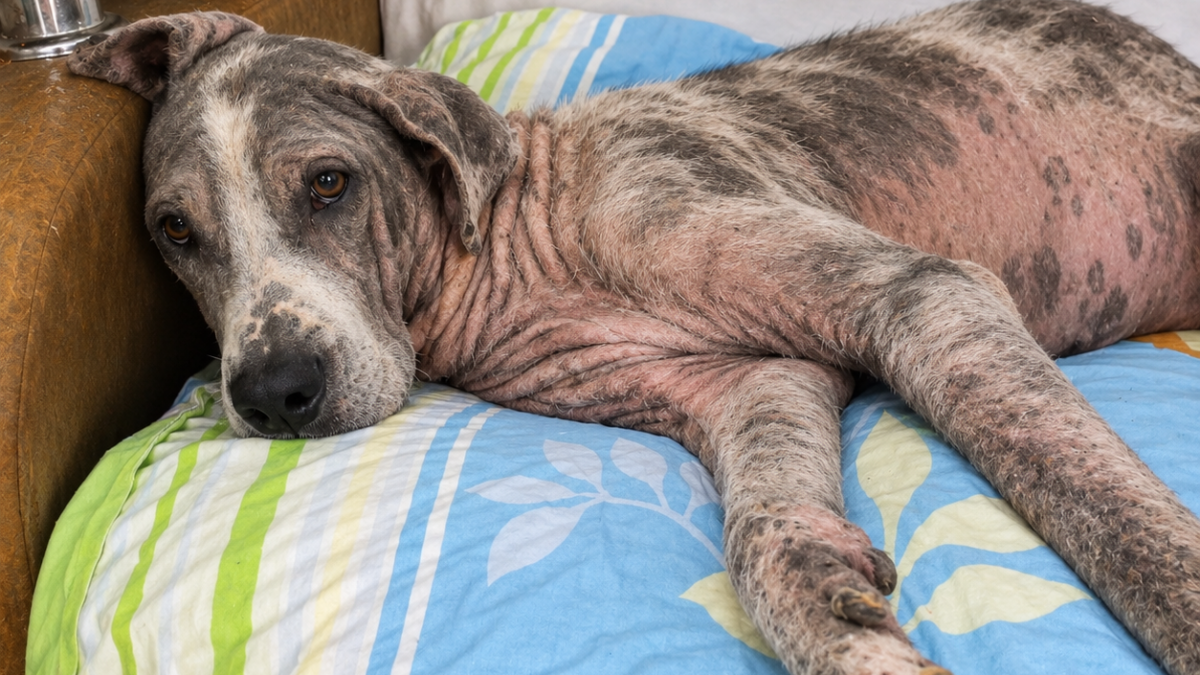
By the time I found Alma, she was so hungry she had started swallowing rocks and dirt just to make the emptiness in her stomach hurt a little less.
She had spent years in the same backyard while the people inside the house carried on with their lives as if the dog slowly disappearing behind their fence did not exist.
When I finally stepped through that gate, I thought the hardest part would be getting her out—but I had no idea how much worse the truth was going to become.
I had been working with a small animal rescue for almost eight years when the call came in.
It was late on a Tuesday afternoon.
A woman from several streets over said there was a dog behind a wooden fence who “didn’t look right.”
That phrase can mean almost anything in rescue.
Sometimes it means an elderly dog sleeping in the shade.
Sometimes it means an injured animal.
Sometimes it means something you wish you could forget.
“What exactly did you see?” I asked.
The woman hesitated.
“She’s very thin.”
“How thin?”
“I can see her bones.”
My hand tightened around the phone.
“Does she have water?”
“I don’t know.”
“Food?”
“I’ve never seen anyone feed her.”
“How long has she been there?”
Another silence.
“A long time.”
That answer bothered me more than all the others.
“What does that mean?”
“Years.”
Twenty-five minutes later, I was in our rescue van with another volunteer named Marcus.
The property sat in an ordinary neighborhood.
That was the first thing that struck me.
There was nothing dramatic about it.
No abandoned farmhouse.
No collapsed building.
No isolated dirt road.
Just a small house with faded siding, a mailbox near the curb, a plastic tricycle on the porch, and a backyard surrounded by a six-foot fence.
People lived there.
A family lived there.
There were curtains in the windows.
A television flickered inside.
Someone had planted flowers along the front walkway.
And somewhere behind that house was Alma.
We knocked.
No answer.
Knocked again.
Nothing.
The woman who had called us was waiting near the sidewalk.
She pointed toward the backyard.
“There’s a gap in the fence.”
I walked around the side.
Through a narrow opening between two warped boards, I saw a patch of dirt.
Then a dog moved into view.
At first, I thought my eyes were playing tricks on me.
Her skin hung in thick folds around her body.
Large areas were almost hairless.
The skin itself looked dark, hardened, and inflamed, as if years of untreated infection had turned it into something closer to leather than fur.
Her ribs stood out.
Her hips looked sharp enough to cut through her skin.
And yet her abdomen was strangely swollen.
Alma noticed me.
She froze.
I crouched.
“Hey, sweetheart.”
Her whole body flinched.
Not just her head.
Not just her shoulders.
All of her.
Like the sound of a human voice had become something dangerous.
She backed away.
There was no barking.
No growling.
Only fear.
Then she lowered her head and began licking at something near the ground.
I looked closer.
A stone.
She picked up a small rock in her mouth.
“Alma…”
She swallowed it.
I felt sick.
Marcus whispered behind me, “Did she just—”
“Yes.”
A few seconds later she nosed through the dirt and swallowed something else.
Another stone.
Then a mouthful of soil.
I had seen starved dogs eat garbage.
Plastic.
Paper.
Wood.
But watching Alma swallow rocks while standing only a few yards from a house where people were eating dinner was something different.
It made the entire scene feel unreal.
The neighbor started crying.
“I thought maybe she was chewing them.”
“No,” I said.
My voice sounded strange.
“She’s eating them.”
We called animal control.
Then we waited.
Alma stayed at the far end of the yard.
There was a plastic bowl near the wall.
Dry.
Another bowl was overturned.
No shelter except a cracked plastic kennel with no bedding inside.
The ground was mostly dirt and gravel.
Nothing else.
No toy.
No blanket.
No sign that this dog had ever been treated like part of the household.
When animal control arrived, the officer knocked again.
This time, a man finally opened the door.
He looked irritated.
The officer explained why we were there.
The man glanced toward the backyard.
“She’s old.”
“That isn’t what we asked.”
“She has skin problems.”
“Has she seen a veterinarian?”
He shrugged.
“She’s always been like that.”
I stared at him.
Alma was still eating dirt behind us.
The officer asked when she had last been fed.
The man’s face changed.
Not guilt.
Annoyance.
“She gets food.”
“When?”
“I don’t keep a schedule.”
That was when I knew we were not leaving without her.
The officer walked into the yard.
I followed.
Alma retreated until her body pressed against the fence.
I knelt several feet away.
She was trembling.
Her eyes looked dull.
Exhausted.
Almost resigned.
I placed a small piece of canned food on the ground.
For several seconds, she did nothing.
Then the smell reached her.
Her head lifted.
One step.
Pause.
Another.
And when she finally reached the food, she did not chew.
She swallowed it whole.
Then looked at me.
Not with trust.
Not yet.
With desperation.
And in that moment, I realized something terrifying.
Alma had not forgotten how to eat.
She had simply forgotten what it felt like to have enough.
PART 2
I will never forget the sound she made when I offered her the second piece of food.
It wasn’t a bark.
It wasn’t a whine.
It was almost a gasp.
A low, broken sound from somewhere deep inside her chest.
She moved toward me too quickly and nearly collapsed.
I caught myself before reaching for her.
Her fear was obvious.
Every time a hand moved, her muscles tightened.
So I stayed still.
“Easy,” I whispered.
Marcus crouched beside me.
“How do we get her out?”
“Slowly.”
The animal control officer had already spoken with the man inside.
His name was Dean Foster.
He claimed Alma belonged to the family.
He also claimed she was approximately ten years old.
Later, records would suggest she was probably closer to twelve.
According to him, she had “always been an outdoor dog.”
I hate that phrase.
Not because every dog must sleep in someone’s bed.
But because people often use “outdoor dog” when what they really mean is:
A dog I don’t want inside.
A dog I don’t want to clean up after.
A dog I don’t want near my furniture.
A dog I still want to call mine.
Dean stood by the back door watching us.
His arms were folded.
“She doesn’t like strangers.”
I looked at Alma.
“She doesn’t trust them.”
“Same thing.”
“No.”
I turned toward him.
“It isn’t.”
He rolled his eyes.
That tiny gesture made something hot rise in my chest.
But anger would not help Alma.
Not yet.
So I kept my voice calm.
“Has she ever been treated for her skin?”
“We put shampoo on her.”
“When?”
“I don’t know.”
“Has she been tested for parasites?”
“No.”
“Thyroid problems?”
“No.”
“Fungal infection?”
“No.”
“Allergies?”
“No.”
“Anything?”
He sighed.
“She’s a dog.”
As if that explained everything.
As if being a dog meant pain mattered less.
The animal control officer interrupted before I answered.
“Mr. Foster, based on her condition and the lack of food and water available, we are removing her for emergency veterinary evaluation.”
Dean’s face hardened.
“You can’t just take my property.”
Property.
That word.
Alma was less than twenty feet away, shaking so hard her legs could barely hold her up.
And he called her property.
The officer explained the emergency seizure procedure.
Dean started arguing.
Marcus quietly took out his phone and began photographing the yard.
The empty bowl.
The dirt.
The kennel.
The feces.
The gravel.
The condition of Alma’s skin.
Dean noticed.
“What are you doing?”
“Documenting.”
“Put that away.”
Marcus didn’t.
Dean stepped toward him.
The officer moved between them.
“Back up.”
For the first time, Dean looked less irritated and more nervous.
That mattered.
People can ignore suffering for years when they think nobody is watching.
Evidence changes the atmosphere.
### Getting Alma Out
We could not use a collar.
Her neck was too damaged.
We could not slip a harness on easily because her skin was cracked and painful.
So we created a wide loop using a soft blanket beneath her chest and another beneath her abdomen.
Even then, Alma panicked.
The moment the fabric touched her, she urinated.
Then flattened herself against the ground.
“I’m sorry,” I whispered.
Her eyes closed.
That was what broke me.
She didn’t fight.
She didn’t bite.
She just closed her eyes.
Like she expected pain.
Marcus turned his face away.
The animal control officer whispered something I couldn’t hear.
I sat in the dirt beside Alma.
“Listen to me.”
Her ear twitched.
“You don’t know me.”
Another tiny movement.
“I know.”
I swallowed.
“And I know you have no reason to believe me.”
Her breathing was fast.
“But I’m not leaving you here.”
I waited.
Then slowly placed the edge of the blanket beneath her body.
She flinched.
But she didn’t shut down completely.
We moved inch by inch.
It took almost thirty minutes to cover the distance from the back fence to the gate.
Thirty minutes for maybe twenty-five feet.
Alma’s legs gave out four times.
Each time, we stopped.
Each time, she looked behind us toward the yard.
I wondered what she was thinking.
Was she afraid of leaving?
People assume abused animals always understand rescue.
They don’t.
Familiar suffering is still familiar.
The unknown can feel worse.
When Alma reached the gate, she froze.
The opening led to the driveway.
Beyond that was the van.
Beyond that was a world she had probably not seen in years.
She pulled backward.
“No,” I whispered. “We’re not going back.”
Her eyes met mine.
I had no idea whether she understood the words.
But after several seconds, she moved one paw forward.
Then another.
She crossed the gate.
### The Ride
The smell inside the van became overwhelming within minutes.
Not because Alma was dirty.
Because infection had taken over so much of her skin.
We opened the windows slightly despite the cold.
She lay on several blankets in the back.
Marcus sat near her.
I drove.
Every few minutes, I looked in the mirror.
Alma didn’t sleep.
She watched everything.
The windows.
The movement.
Marcus.
Me.
She had no idea what was happening.
At one point, we stopped at a red light.
A school bus pulled beside us.
Children were laughing inside.
Alma lifted her head.
For a few seconds, she stared through the window.
I wondered if she had ever seen children that close.
Then her head dropped again.
We were less than ten minutes from the clinic when she vomited.
Marcus shouted my name.
I pulled over.
At first, I thought it was food.
It wasn’t.
There were stones.
Small ones.
Gravel.
Dirt.
And something that looked like a piece of plastic.
Marcus stared.
“Oh my God.”
Alma tried to eat the stones again.
That was the moment I nearly lost control.
I had to push the rocks away while she nosed desperately toward them.
“No, sweetheart.”
She searched the blanket.
“Not anymore.”
I was crying by then.
“You don’t have to eat that anymore.”
She kept looking.
She didn’t know.
How could she?
Hunger had taught her a rule.
If it fits in your mouth, maybe it will help.
Food.
Dirt.
Stone.
Plastic.
Anything.
### The Clinic
Dr. Melissa Harper met us at the emergency entrance.
She had treated rescue animals for years.
Very little shocked her.
Alma did.
The moment the blanket was lifted from the van, Melissa stopped.
“Oh, honey.”
That was all.
We carried Alma inside.
The exam room became quiet.
Technicians moved carefully.
Temperature.
Blood pressure.
Blood draw.
Weight.
Twenty-nine pounds.
For a dog her size, she should have weighed close to fifty.
Her abdomen was distended.
Her skin was infected in multiple areas.
There were pressure sores.
Her nails were overgrown.
Several teeth were broken.
Her ears were inflamed.
She had severe dehydration.
Anemia.
Parasites.
Possible endocrine disease.
And then came the X-rays.
Melissa called me into the imaging room.
The screen showed Alma’s abdomen.
I knew enough to recognize something was wrong before Melissa spoke.
Her stomach and intestines contained dozens of small dense shapes.
Stones.
I covered my mouth.
“How many?”
“We can’t count accurately from this image.”
“Will they pass?”
“Some might.”
“And the others?”
“If they obstruct…”
She didn’t finish.
“Can you operate?”
“Not immediately.”
“Why?”
“She may not survive anesthesia in this condition.”
I stared at the screen.
“So what do we do?”
“Stabilize her.”
“For how long?”
“As long as we can.”
I hated that answer.
“Melissa.”
She looked at me.
“Tell me the truth.”
She removed her glasses.
“The truth is she could die tonight.”
The room tilted.
I put one hand against the wall.
“But she walked in.”
“Barely.”
“We got her out.”
“I know.”
“She ate.”
“I know.”
“That means something.”
“It does.”
I could hear myself becoming irrational.
“I need you to save her.”
Melissa’s face softened.
“We are going to do everything we can.”
“That’s not what I asked.”
“I know.”
Then she said the thing I didn’t want to hear.
“I can’t promise.”
### The First Night
We admitted Alma into critical care.
Warm fluids.
Antibiotics.
Pain medication.
Careful nutrition.
Not too much.
That was important.
When an animal has been starved for a long time, feeding aggressively can be dangerous.
So Alma received tiny meals.
Controlled.
Measured.
She hated it.
The first time a technician removed the bowl after three spoonfuls, Alma tried to stand.
She cried.
That sound went through every person in the room.
“I know,” the technician whispered. “I know.”
Alma tried to follow the bowl.
Her legs failed.
I sat beside the kennel.
“There will be more.”
She stared at me.
“I promise.”
Three hours later, there was more.
Then three hours after that.
Small portions.
Again and again.
By midnight, Alma had stopped searching the floor for rocks.
Not because she understood yet.
Because she was too tired.
At two in the morning, her temperature dropped.
At four, her blood pressure worsened.
Melissa called me.
I was already asleep on a chair in the lobby.
I woke immediately.
“What?”
“She’s unstable.”
I ran.
Alma was lying beneath warming blankets.
A technician adjusted the IV.
Melissa listened to her heart.
I stood uselessly near the wall.
There are few feelings worse than watching professionals fight for an animal while knowing love is not a treatment.
Love cannot correct blood chemistry.
Love cannot kill infection.
Love cannot remove stones from an intestine.
Love is not medicine.
But sometimes love is the reason medicine keeps being attempted.
At five thirty, Alma’s blood pressure improved slightly.
At six fifteen, she lifted her head.
At seven, she ate two spoonfuls of food.
Melissa leaned against the counter.
“She’s stubborn.”
I laughed through tears.
“Good.”
### The Photographs
While Alma fought for her life, animal control built a case.
Marcus sent the photographs.
The officer collected statements from neighbors.
That was when the timeline became worse.
One neighbor had lived there for nine years.
Alma had been outside the entire time.
Another remembered her as a young dog.
Another said Alma once had more fur.
Another remembered seeing children playing near her years earlier.
Then, slowly, Alma stopped appearing near the fence.
Not because she went inside.
Because she became too weak to move much.
Several neighbors admitted they had noticed.
That part made me angry.
“How did nobody call?”
One woman cried.
“I thought somebody else would.”
Another said:
“I didn’t want problems with the family.”
Another:
“She was always there. You stop noticing.”
That sentence haunted me.
You stop noticing.
Cruelty does not always survive because nobody sees it.
Sometimes it survives because people see it too often.
The abnormal becomes scenery.
### Dean’s Version
Dean told investigators Alma had always been skinny.
He said she was difficult to feed.
He said she refused certain foods.
He said the skin disease had developed recently.
He said the rocks were “a weird habit.”
He said they had planned to take her to a vet.
Someday.
That was his favorite word.
Someday.
They were going to treat her someday.
Buy better food someday.
Fix the kennel someday.
Bring her inside someday.
Meanwhile, Alma had been starving now.
### Day Three
On the third day, Alma stood.
Only for three seconds.
But she stood.
I was there.
One technician supported her rear end.
I supported her chest.
“Come on.”
She shook.
Her legs looked too thin to hold anything.
“Come on, girl.”
One paw moved.
Then another.
She stood.
Melissa looked through the doorway.
“Oh.”
That one sound said everything.
Alma stayed upright for maybe three seconds.
Then folded.
I caught her.
“You did it.”
She was breathing hard.
“You did it.”
Her tail moved.
I froze.
“Did you see that?”
The technician smiled.
“I saw it.”
“Was that a wag?”
“Technically.”
It was pathetic.
Tiny.
Almost invisible.
It was also the most beautiful thing I had seen all week.
### The Stones
By day four, some of the stones had moved through Alma’s digestive system.
Others had not.
Melissa showed me another X-ray.
“There’s one cluster I don’t like.”
“Obstruction?”
“Not complete.”
“Yet.”
“Correct.”
“What do we do?”
“Wait if we can.”
“And if we can’t?”
“Surgery.”
I looked at Alma through the glass.
She was sleeping.
“Would she survive now?”
“Her odds are better than three days ago.”
“Better enough?”
Melissa did not answer quickly.
That told me everything.
### The First Bath
Alma’s skin needed treatment.
But even touching her hurt.
So the first bath was done with warm medicated solution and almost no pressure.
I sat on the floor nearby.
The technician soaked a cloth.
Alma flinched.
“Easy.”
Her skin came away in flakes.
Thick pieces.
Dark.
Infected.
The smell filled the room.
The technician’s eyes watered.
Not from the smell.
From anger.
“How long does skin get like this?”
She asked Melissa.
Melissa replied quietly.
“Not quickly.”
That sentence later became part of the legal case.
Not quickly.
Dean’s claim that Alma’s condition was recent did not match medicine.
### The First Time She Chose Touch
For almost a week, Alma tolerated us.
That is different from trusting us.
We fed her.
Cleaned her.
Moved her.
Medicated her.
She allowed it because she was weak.
Then one afternoon, I sat beside her bed.
No food.
No treatment.
No task.
Just me.
I kept my hands in my lap.
Alma looked at me.
Then away.
Minutes passed.
I was answering emails on my phone when I felt something touch my knee.
Her nose.
I stopped breathing.
She sniffed my jeans.
Then pulled away.
I didn’t move.
A minute later, she did it again.
This time, I lowered one hand slowly.
She froze.
I stopped.
She looked at my hand.
Then at me.
Then she moved forward and pressed her forehead against my fingers.
One second.
Maybe two.
Then she backed away.
I started crying.
A technician walked past.
“What happened?”
I whispered, “Nothing.”
She saw my face.
“That doesn’t look like nothing.”
“It was everything.”
### The Surgery
The obstruction happened on day eight.
Alma vomited twice.
Then refused food.
Her abdomen became tense.
Melissa looked at the new X-ray.
“We can’t wait.”
I knew what that meant.
“Surgery.”
“Yes.”
“Now?”
“Yes.”
My stomach dropped.
“Odds?”
“Better than before.”
“That is not a number.”
“I know.”
“Give me a number.”
“I can’t give you one that means anything.”
I looked through the window.
Alma lay curled on a blanket.
She had just started trusting us.
Just started eating without searching the floor.
Just started learning hands could be gentle.
And now we were going to open her abdomen because the hunger had left stones inside her.
“Do it.”
Melissa nodded.
### Waiting
Surgery took two hours and eleven minutes.
I know because I watched the clock.
Marcus arrived.
He brought coffee.
I didn’t drink it.
At one point he said, “You need to sit.”
“I am sitting.”
“You’ve stood up five times in ten minutes.”
“I hate waiting.”
“Everyone hates waiting.”
“No. I hate it professionally.”
He almost smiled.
Then the surgical door opened.
Melissa came out.
Her cap was still on.
There was a spot of blood near her sleeve.
I stood.
“She made it.”
My knees almost gave out.
“What did you find?”
“Three stones had lodged together. We removed them.”
“Anything else?”
“Inflammation. Damage. But no rupture.”
I covered my face.
“She made it.”
“So far.”
I looked at her.
Melissa held up one finger.
“Do not ignore those words.”
“I heard you.”
“She still has a long recovery.”
“I heard you.”
“Post-operative infection is a risk.”
“I heard you.”
“She is not safe yet.”
“I know.”
Then I hugged her.
Melissa stiffened.
She was not a hugger.
“Okay,” she said.
“I’m sorry.”
“No, you’re not.”
“No.”
### The Evidence Bag
The stones removed during surgery were sealed in a medical evidence container.
That felt strange.
Three rocks.
Ordinary backyard gravel.
Objects no one would notice under a shoe.
But those stones told Alma’s story better than any speech.
She had been so hungry she swallowed them.
The prosecutor later requested photographs.
Not the stones themselves.
But I saw them before they were discarded.
Gray.
Brown.
One white.
Small enough to fit in a dog’s mouth.
Large enough to nearly kill her.
### The Family
The investigation revealed Alma had once been a puppy inside the house.
There were photographs.
A neighbor found an old social media post.
Alma wearing a pink collar.
A child hugging her.
Caption:
Our new baby.
That photograph made me furious.
Because once, she had been wanted.
That somehow hurt more.
It meant the neglect had not begun with ignorance.
It began with change.
The children grew.
The novelty faded.
Alma scratched furniture.
Then she spent more time outside.
Then almost all the time outside.
Then the family bought another dog.
A smaller one.
That dog lived inside.
That was the detail that finally broke something in me.
They did know dogs could live in the house.
They simply stopped wanting Alma there.
The newer dog slept on a couch.
Alma ate rocks behind the fence.
### Dean Came to the Clinic
He arrived eleven days after Alma’s rescue.
I was in the hallway.
He walked in carrying nothing.
No blanket.
No toy.
No food.
Nothing.
“Where is she?”
My body went cold.
The receptionist stood.
“Sir, who are you?”
“I own Alma.”
I stepped forward.
“No.”
He looked at me.
“You.”
“Yes.”
“I want to see my dog.”
I almost laughed.
Your dog.
Now.
After years.
“Alma is under legal protective custody.”
“I know what they said.”
“Then you know you cannot remove her.”
“I didn’t say remove.”
“You want to see her?”
“Yes.”
“Why?”
His face hardened.
“Because she’s mine.”
Again.
Mine.
The word had become unbearable.
“She almost died.”
“She didn’t.”
“She had rocks removed from her intestine.”
“She eats weird stuff.”
My mouth went dry.
“She ate rocks because she was starving.”
“You don’t know that.”
“Her body knows it.”
He stepped closer.
“You people make everything dramatic.”
Melissa appeared behind me.
“No.”
Dean looked at her.
“You the vet?”
“Yes.”
“She always had skin problems.”
Melissa’s face became unreadable.
“This level of skin disease is chronic.”
“She was old.”
“Age did not starve her.”
“She wouldn’t eat.”
“Her stomach contained rocks.”
“She does that.”
Melissa stared at him.
Then she said quietly:
“A dog does not swallow gravel for years because she is quirky.”
Dean looked away.
That was the first time I saw discomfort.
Not remorse.
Discomfort.
Enough.
He left five minutes later.
Alma never saw him.
I was grateful.
### Learning the Bed
The first time we moved Alma from critical care into a regular recovery room, we gave her a soft orthopedic bed.
She refused to lie on it.
She stood beside it.
Then lowered herself onto the tile.
I moved the bed closer.
She moved away.
Marcus said, “Maybe it’s too soft.”
I looked at him.
“What does that mean?”
“She may not understand what it is.”
That thought crushed me.
I sat on the bed.
“Yes, I know. I look ridiculous.”
Alma watched.
I patted the edge.
“Come here.”
Nothing.
Later, we put one of her blankets on the bed.
Then placed food near it.
Then on it.
For three days, Alma stepped on the bed only to reach food.
On the fourth, I walked into the room and found her sleeping there.
Curled.
Head resting on the edge.
I stood in the doorway.
The technician beside me whispered, “Don’t wake her.”
“I’m not.”
We watched for nearly a minute.
Just watched.
A dog sleeping on a bed.
Ordinary.
Except nothing about it felt ordinary.
### Food Fear
Even after Alma gained strength, food remained complicated.
She ate too fast.
If another dog barked nearby, she panicked and tried to swallow faster.
If someone moved the bowl, she cried.
If food spilled, she searched frantically.
We started feeding her smaller meals more often.
A behavior specialist helped.
The first goal was simple.
Teach Alma that the bowl comes back.
Always.
Breakfast.
Lunch.
Dinner.
Snacks.
Same schedule.
Every day.
No one takes it forever.
For weeks, she watched the door after eating.
Waiting.
Eventually, one afternoon, she finished her meal and did something new.
She left a piece behind.
One small piece of kibble.
I stared at it.
Marcus looked at me.
“What?”
“She left food.”
“So?”
“She left food.”
He understood.
“Oh.”
Alma walked toward her bed.
She did not go back.
I picked up the uneaten piece and cried like an idiot.
That tiny leftover piece meant more than a full bowl.
It meant she believed another meal would come.
### Her Skin
Hair did not grow back quickly.
For months, Alma looked rough.
Dark patches.
Thin coat.
Scars.
But the infection improved.
The smell disappeared.
The inflammation softened.
She stopped scratching constantly.
Her skin no longer cracked when she moved.
And then one morning, Melissa called me over.
“Look.”
Tiny fuzz.
Near Alma’s shoulder.
I leaned closer.
“Is that hair?”
“Yep.”
I laughed.
“Alma.”
She looked at me.
“You are becoming fuzzy.”
Her tail moved.
By winter, the patch had spread.
Not evenly.
Not beautifully.
But enough.
Alma would never have a perfect coat.
She did not need one.
### The Hearing
The first court hearing happened four months after Alma’s rescue.
Dean and his wife sat on one side.
Animal control on the other.
I attended as a witness.
The prosecutor displayed photographs of the yard.
Then photographs of Alma.
Then X-rays.
The defense argued that Alma had a “behavioral tendency” to eat non-food objects.
Melissa testified.
“What is pica?” the prosecutor asked.
“The ingestion of non-food substances.”
“Can hunger contribute?”
“Yes.”
“Could chronic malnutrition contribute?”
“Yes.”
“Could neglect contribute?”
“Yes.”
“Was Alma malnourished?”
“Severely.”
“Would her skin condition have developed overnight?”
“No.”
“Over a week?”
“No.”
“Over a month?”
“Not to the degree we observed.”
Dean looked down.
The prosecutor then showed the photograph of Alma as a puppy.
Pink collar.
Inside the house.
Then the later photographs.
Outside.
Hair loss.
Thin.
Then ours.
Near death.
Time was visible.
Years of it.
### The Neighbor Testimony
The most powerful testimony came from a neighbor named Mrs. Alvarez.
She was seventy-two.
She had lived across the street for eleven years.
“I saw that dog every day,” she said.
The prosecutor asked:
“Did you ever see her leave the yard?”
“No.”
“Did you ever see anyone walking her?”
“No.”
“Playing with her?”
“No.”
“Taking her somewhere?”
“No.”
“Did you ever see food?”
Mrs. Alvarez looked uncomfortable.
“Sometimes.”
“How often?”
“I don’t know.”
“Did you ever see Alma eating dirt or rocks?”
Mrs. Alvarez’s eyes filled.
“Yes.”
“When?”
“The last year.”
“Why didn’t you report it sooner?”
Silence.
Then she said:
“I was ashamed to admit I knew.”
The courtroom became very quiet.
“I kept thinking it was not my business.”
She cried.
“And then one day I saw her fall when she tried to stand.”
She wiped her face.
“I called.”
The prosecutor nodded.
“Do you regret waiting?”
“Yes.”
That was all.
No dramatic speech.
No accusation.
Just yes.
### Custody
The judge permanently removed Alma from the Foster family’s custody.
Dean reacted angrily.
His wife cried.
Not for Alma.
For the “injustice.”
I sat behind the prosecutor.
When the judge said Alma would not be returned, my shoulders dropped for the first time in months.
Marcus whispered:
“She’s free.”
Not yet.
Legally, yes.
Emotionally, recovery would take longer.
But that day mattered.
### The Criminal Case
The neglect charges took longer.
Evidence had to be organized.
Veterinary records.
Photographs.
Statements.
Financial records showing the family had recently purchased expensive electronics and a newer vehicle while claiming they could not afford veterinary care.
That evidence mattered because Dean’s lawyer tried to frame Alma’s condition as poverty.
Poverty is not neglect.
Poor people love animals.
Poor people ask for help.
Poor people surrender animals when they cannot care for them.
Neglect is different.
Dean had options.
He did not use them.
The prosecution made that clear.
### The New Dog
Animal control also removed the family’s newer dog temporarily.
His name was Toby.
He was healthy.
Well-fed.
Clean.
Vaccinated.
Inside the house.
That contrast became devastating evidence.
Same family.
Same finances.
Two dogs.
One cared for.
One abandoned in the yard.
The defense could no longer argue that the family did not understand basic care.
They understood.
They chose.
Toby was eventually placed with a relative after legal review.
Alma never returned.
### Alma’s First Toy
Six months after rescue, Alma discovered a stuffed lamb.
We had offered toys before.
She ignored them.
Then one afternoon, a volunteer named Jess squeaked the lamb accidentally.
Alma’s head snapped around.
Jess froze.
“Sorry.”
Alma stood.
Walked over.
Sniffed it.
Then picked it up.
We all stopped talking.
Alma carried it to her bed.
Placed it between her paws.
Then stared at us.
Jess whispered, “Are we allowed to cry?”
“No,” I said.
Then I started crying.
Alma slept with that lamb for months.
### The Doorway
She hated doorways.
We didn’t understand why at first.
Every time we tried to lead her from one room into another, she stopped at the threshold.
Maybe doors had been associated with being pushed outside.
Maybe she had been yelled at near them.
Maybe we would never know.
So we stopped pulling.
We waited.
Food.
Treats.
Quiet voices.
Weeks later, Alma walked through a doorway without freezing.
Marcus cheered.
She jumped.
We all apologized.
Progress in rescue is strange.
Sometimes victory is a dog walking through a door.
### A Foster Home
Once Alma was medically stable, we needed to move her out of the clinic.
Shelters are loud.
Clinics are stressful.
She needed home life.
A foster volunteer named Carol offered.
Carol was fifty-nine.
Widowed.
No other pets.
Quiet house.
Large fenced yard.
Experience with fearful dogs.
Perfect.
Except Alma refused to get into Carol’s car.
We waited forty minutes.
Finally, Carol sat on the pavement.
“I have all day.”
Alma stared at her.
Carol opened a bag.
Chicken.
Alma took one piece.
Then another.
Eventually she stepped into the car.
Carol closed the door.
I felt unexpectedly emotional.
“What?”
Carol asked.
“Nothing.”
“You look like I’m kidnapping your child.”
“That’s not entirely inaccurate.”
She smiled.
“I’ll send updates.”
“You better.”
### First Night in a House
Carol sent a photo at 9:16 p.m.
Alma standing in the living room.
Another at 9:42.
Alma staring at the television.
Another at 10:03.
Alma lying beside the couch.
Then:
SHE WON’T SLEEP ON THE BED.
I replied:
Give her time.
At 2:11 a.m., my phone buzzed.
A photo.
Alma on the bed.
Stuffed lamb under her chin.
I cried.
Again.
Rescue involves an unreasonable amount of crying.
### The Kitchen
Carol told me Alma spent the first week staring at the kitchen.
Not begging.
Watching.
Every sound of food preparation pulled her attention.
Cabinet opens.
Head up.
Refrigerator.
Head up.
Bag crinkles.
Head up.
Carol began narrating.
“This is coffee.”
“This is bread.”
“This is not for dogs.”
“This is chicken.”
At the word chicken, Alma stood.
Carol laughed.
“Apparently your English is selective.”
Within a month, Alma stopped following every kitchen noise.
She had learned.
There would be food.
### The Backyard
The hardest place was the backyard.
The first time Carol opened the door, Alma backed away.
Outside had meant abandonment.
Outside had meant isolation.
Carol did not force her.
She sat on the porch.
Door open.
Alma stayed inside.
Ten minutes.
Twenty.
Then one paw reached the threshold.
The next day, two paws.
By the end of the week, Alma stepped onto the porch.
Carol sent me a video.
Alma standing in sunlight.
Looking back at the open door every few seconds.
Checking.
Still open.
Still open.
Still open.
That became part of the rehabilitation.
The door always stayed available.
Alma went outside.
Alma came back in.
Every time.
No one shut her out.
### The First Run
Three months into foster care, Alma ran.
Not far.
Not fast.
But she ran.
A squirrel crossed the yard.
Alma’s head lifted.
Then she lunged forward.
Carol screamed.
Not from fear.
Joy.
Alma ran maybe twenty feet.
Then stopped.
Her legs were still weak.
But her tail was high.
Carol sent the video to our rescue group chat.
Marcus replied:
I AM NOT CRYING.
Jess replied:
LIAR.
I watched the video six times.
The dog who once collapsed crossing a yard was chasing a squirrel.
### Dean’s Plea
The criminal case ended with a plea.
Several counts of animal neglect.
Restitution.
Probation.
A ban on owning animals for years.
Mandatory compliance checks.
Community service.
A period of incarceration under the sentence agreement.
People online argued it was not enough.
Maybe it wasn’t.
No sentence could equal Alma’s suffering.
No fine could put food in her stomach five years earlier.
No jail term could return her lost time.
But justice was not only punishment.
The order meant Dean could not legally replace Alma with another animal.
The family’s name became part of the public record.
And the veterinary costs they once refused to pay became restitution they were ordered to cover.
There was something satisfying about that.
They had once decided Alma was not worth spending money on.
Now the court decided otherwise.
### The Call From Dean
Months after sentencing, our rescue office received a voicemail.
Dean.
He wanted copies of Alma’s current photographs.
I almost deleted it.
Then I listened again.
His voice sounded different.
Not warm.
Not remorseful.
Tired.
He said:
“I just want to know what she looks like now.”
I hated that request.
Marcus said, “Ignore him.”
Carol said, “Your call.”
Melissa said, “Think about what helps Alma. Nothing else.”
That answer made the decision easy.
The photographs belonged to Alma’s life now.
Not his.
We did not send them.
### The Adoption Applications
When Alma became eligible for adoption, applications arrived.
More than we expected.
Her story had spread locally.
But popularity is complicated.
People sometimes fall in love with the idea of rescuing a broken animal.
Then reality arrives.
Medication.
Fear.
Training.
Patience.
So we screened carefully.
One family wanted a “miracle dog.”
No.
Another wanted to post her recovery online constantly.
No.
One man said his children needed to learn compassion.
No.
Alma did not exist to teach anyone a lesson.
Then came an application from a woman named Diane.
Sixty-three.
Retired school counselor.
No current pets.
Quiet home.
Fenced yard.
Experience with senior dogs.
She wrote one sentence that made me stop.
I do not need Alma to become anything different from what she is.
That mattered.
### The Meeting
Diane met Alma at Carol’s house.
We kept it quiet.
No crowd.
No pressure.
Diane sat on the floor.
Did not call Alma.
Did not reach.
Did not stare.
For fifteen minutes, Alma ignored her.
Then she approached.
Sniffed Diane’s shoe.
Walked away.
Diane smiled.
“That went well.”
Carol laughed.
“You think?”
“She decided not to leave.”
Good answer.
Twenty minutes later, Alma returned.
Diane offered one hand.
Alma sniffed.
Then left again.
Before going home, Diane said:
“I’d like to come back.”
No dramatic bond.
No instant miracle.
Perfect.
### The Third Visit
On the third visit, Alma placed her head on Diane’s knee.
That was it.
The room went silent.
Diane did not move.
Tears filled her eyes.
Alma stayed there.
One minute.
Two.
Then Diane whispered:
“I’m not going to make promises I can’t control.”
I looked at her.
She stroked Alma gently.
“But I can promise you will never be hungry in my house.”
I had to turn away.
### Adoption Day
The paperwork was signed on a Saturday.
Carol cried.
I cried.
Marcus cried.
He denied it.
Alma wore a soft blue collar.
No decorations.
No big crowd.
Diane brought a new bed.
Alma also brought the old one.
And the lamb.
Of course.
Before leaving, Carol crouched.
“You ready?”
Alma licked her chin.
Carol fell apart.
Diane waited.
No rushing.
Eventually, Alma walked to the car.
This time, she climbed in without needing forty minutes.
Progress.
### Home
Diane’s house had wide windows.
A sunroom.
A quiet backyard.
No gravel.
She had replaced part of the landscaping with grass because she worried stones might trigger Alma’s old behavior.
Maybe unnecessary.
Maybe not.
The first evening, Alma ate dinner.
Slowly.
She finished.
Then left three pieces in the bowl.
Diane sent me a photograph.
Caption:
SHE LEFT FOOD.
I replied:
That means she believes breakfast is coming.
Diane wrote:
It is.
### The Grocery Bag
One month after adoption, Diane dropped a grocery bag on the kitchen floor.
A bag of potatoes rolled out.
Alma panicked.
She backed away.
Tail tucked.
Diane immediately sat down.
“Okay.”
No reaching.
No chasing.
She waited.
Alma stared at the potatoes.
Maybe they looked like stones.
Maybe it was simply the sound.
Diane moved them away.
Later that night, Alma slept beside her bed.
Rehabilitation is not a straight line.
Trauma does not disappear because a dog gets adopted.
It changes.
Softens.
Returns unexpectedly.
Then softens again.
### The First Snow
That winter, Alma saw snow.
Maybe she had seen it before.
But this was different.
Diane opened the back door.
Alma hesitated.
Then stepped outside.
Snow touched her paws.
She lifted one.
Looked offended.
Diane laughed.
Alma tried again.
Then sniffed.
Then something extraordinary happened.
She rolled.
Right into the snow.
Her back.
Her side.
Legs in the air.
Diane recorded it.
The video shows a dog with patchy fur and scars twisting in fresh snow like a puppy.
No fear.
No yard prison.
No rocks.
Just joy.
### The Court Restitution
Months later, the rescue received the first restitution payment.
It did not cover everything.
Not even close.
Alma’s treatment had cost thousands.
Surgery.
Medication.
Hospitalization.
Testing.
Skin care.
Behavior support.
But the amount was not the point.
I held the payment notice.
Dean Foster.
Ordered restitution.
For Alma.
I thought about the empty bowl.
The expensive television visible through the window.
The newer dog inside.
The gravel in Alma’s stomach.
And I smiled.
Not because money erased anything.
Because once, they had decided she was not worth care.
Now the legal system had written her value into an order.
### Mrs. Alvarez
The neighbor who finally reported Alma began volunteering with us.
At first, she said it was guilt.
I told her guilt was not a job description.
She laughed.
Then kept coming.
She folded laundry.
Prepared food.
Drove donations.
One day, a volunteer asked why she started helping.
Mrs. Alvarez said:
“I waited too long once.”
That was enough.
Months later, she reported another case in her neighborhood.
Early.
Before disaster.
That dog received veterinary care while the situation was still fixable.
Maybe Alma saved that dog too.
### Alma’s Visit
One year after adoption, Diane brought Alma to the rescue.
I almost didn’t recognize her.
Not because she looked completely different.
She didn’t.
The scars remained.
Her coat had grown unevenly.
Her skin still had dark patches.
But her body was full.
Healthy.
Her eyes were bright.
She walked through the door confidently.
Marcus froze.
“Is that…”
“Yes.”
Alma saw me.
For a second, she stared.
Then she ran.
Not fast.
But directly toward me.
I dropped to my knees.
She hit my chest.
I fell backward.
She licked my face.
I laughed.
“You remember.”
Of course she remembered.
Maybe not the rescue day.
Maybe not the yard.
But something.
My smell.
My voice.
The first food.
The first gentle touch.
Diane stood nearby crying.
“I thought she might.”
Alma’s tail would not stop moving.
### The Stones in the Garden
Diane called me one spring morning.
Her voice sounded strange.
“What happened?”
“Nothing bad.”
I waited.
“I found Alma in the garden.”
“Okay.”
“She was standing near some stones.”
My stomach tightened automatically.
“And?”
“She sniffed them.”
I held my breath.
“Then she walked away.”
Silence.
I closed my eyes.
“She walked away?”
“She walked to her bowl.”
I laughed.
Then cried.
Again.
Alma had walked away from rocks.
Because food existed now.
Because hunger was no longer permanent.
Because survival had learned a new rule.
### The Man at the Pet Store
Two years after the case, I saw Dean.
Pure coincidence.
Pet supply store.
I was buying donated food.
He was near the register.
No animal with him.
He recognized me.
I recognized him.
For a moment, neither spoke.
Then he said:
“How is she?”
Alma.
Not “the dog.”
Not “my property.”
She.
I stared at him.
“Good.”
He nodded.
“Looks better?”
I nearly laughed.
“You’ve seen pictures?”
“No.”
“Then yes. She looks better.”
He looked uncomfortable.
“I didn’t think she was that bad.”
I felt anger rise.
Years old.
Still sharp.
“You lived in the same house.”
“I had work.”
“So?”
“Things got away from us.”
I looked at him.
No.
Not this time.
“Laundry gets away from you.”
He stared.
“Bills get away from you.”
I stepped closer.
“A dog does not starve in your backyard for years because things got away from you.”
His jaw tightened.
“I paid for what happened.”
“No.”
He looked at me.
“You paid what the court ordered.”
I picked up the food bag.
“Alma paid for what happened.”
Then I walked away.
That was the last time I saw him.
### Diane’s Promise
Alma lived with Diane for six years.
Six.
When I think about that number, I have complicated feelings.
Six years of safety.
Six years of meals.
Beds.
Sunlight.
Walks.
Chicken.
Snow.
Grass.
Six years is a gift.
It is also shorter than the years Alma lost.
But life does not return stolen time.
It gives you what remains.
Diane made those years matter.
### Alma’s Routine
Breakfast at seven.
Medication hidden in cheese.
Short walk at eight.
Nap near the window.
Lunch snack.
Backyard.
Dinner at five thirty.
No rocks.
No dirt.
No fear.
Every night, Diane said the same sentence.
“See you in the morning.”
At first, that phrase meant nothing.
Eventually, Alma learned.
Morning always came.
Diane always came too.
### Her Favorite Place
The sunroom became Alma’s favorite.
She had a bed near the window.
A thick one.
Too expensive.
Diane bought it anyway.
Afternoon sun warmed one side.
Alma would lie there for hours.
Sometimes Diane read beside her.
No television.
No noise.
Just quiet.
The kind of quiet that does not feel lonely.
That distinction matters.
### The Anniversary
Every year on the rescue anniversary, Diane brought Alma a special meal.
Chicken.
Rice.
Pumpkin.
Nothing fancy.
The first year, Alma devoured it.
The second, slower.
The third, she left a little.
The fourth, she ate half, then returned later.
By then, food was no longer an emergency.
That was the miracle.
### The Diagnosis
When Alma was probably seventeen, her kidneys began failing.
Old age.
Nothing related to the stones.
Nothing anyone caused.
Diane called me after the appointment.
“I knew this was coming.”
I could hear tears.
“I know.”
“I still hate it.”
“I know.”
The veterinarian believed we had time.
Months.
Maybe longer.
Supportive care.
Diet.
Medication.
Monitoring.
Diane did everything.
Of course she did.
### One More Visit
I went to see Alma.
She was thinner.
Older.
But still herself.
She recognized me.
Tail wag.
Slow.
Steady.
I sat beside her bed.
“You look terrible.”
Diane laughed.
“She looks great.”
“I’m trying to keep her humble.”
Alma rested her head on my leg.
I touched the scarred skin near her shoulder.
Hair had grown there.
Not perfect.
Never perfect.
Perfect was never the goal.
Safe was.
Loved was.
Enough was.
### The Backyard Again
Diane’s backyard looked nothing like the Foster yard.
Green grass.
Shade tree.
Water bowl.
Covered porch.
Open door.
That last part mattered most.
Open.
Alma could go in.
Alma could go out.
Choice.
One afternoon, I watched her walk to the far fence.
She stood there.
Looked around.
Then turned back toward the house.
Diane opened the door wider.
“Come on, sweetheart.”
Alma returned.
Every time.
### Her Last Week
The decline came quickly.
She stopped finishing meals.
Then stopped wanting chicken.
That was how Diane knew.
The veterinarian came to the house.
Pain management.
Fluids.
Comfort.
No panic.
No hospitalization unless necessary.
Alma hated clinics by then.
Diane wanted home.
I visited on Thursday.
Alma lay in the sunroom.
Stuffed lamb beside her.
Yes.
The same one.
Worn.
One ear missing.
But still there.
I sat on the floor.
Alma opened her eyes.
Tail.
One movement.
I touched her paw.
“You remember me?”
Diane said, “She does.”
I smiled.
“I know.”
### The Last Meal
Friday evening, Alma surprised everyone.
She ate.
Not much.
A little chicken.
Diane laughed and cried.
“Of course you do this now.”
Alma chewed slowly.
No desperation.
No swallowing whole.
No searching the floor.
She finished what she wanted.
Then stopped.
Diane did not encourage more.
No need.
Alma had finally earned the right to decide when enough was enough.
That detail destroyed me.
### Goodbye
Saturday morning was warm.
Diane carried Alma’s bed outside.
Under the shade tree.
Open door behind them.
I came.
Marcus came.
Melissa came.
Mrs. Alvarez came.
Not a crowd.
Family.
Alma lay in sunlight.
Her body was tired.
Her eyes were calm.
Diane sat beside her.
“I promised you something.”
Alma looked at her.
“You remember?”
Diane stroked her face.
“You would never be hungry in my house.”
Her voice broke.
“You never were.”
I turned away.
Mrs. Alvarez cried openly.
Melissa prepared the medication.
Diane looked at me.
“I don’t know how to do this.”
“Yes, you do.”
“No.”
“You already did the hard part.”
“What?”
“You gave her six years where goodbye was the only thing she had to fear.”
Diane sobbed.
Alma lifted her head slightly.
I knelt.
“Hey, girl.”
She looked at me.
I thought about the first yard.
The stones.
The dirt.
The dry bowl.
The cracked skin.
The closed gate.
Then I looked around.
Grass.
Bed.
Lamb.
Open door.
People.
Everything had changed.
Melissa gave the first injection.
Alma relaxed.
Diane held her head.
I kept one hand on her side.
Her breathing slowed.
Diane whispered:
“You were loved.”
One breath.
“You were wanted.”
Another.
“You were enough.”
Alma died under the open sky.
Not alone.
Not hungry.
Not invisible.
### After
Diane buried Alma’s ashes beneath the shade tree.
The rescue placed a small plaque there.
Not dramatic.
Just:
ALMA
SHE ALWAYS DESERVED ENOUGH.
I visit sometimes.
Not often.
Enough.
### The Real Revenge
People still ask me whether Dean ever apologized.
No.
Not really.
Whether I wanted him punished more.
Sometimes.
Whether it made me angry that Alma lost so many years.
Always.
But the older I get, the less interested I am in revenge that only creates more pain.
Alma’s revenge was different.
She survived.
That alone was something Dean never expected.
The dog he left behind lived long enough to sleep in a bed.
Long enough to chase squirrels.
Long enough to roll in snow.
Long enough to learn the bowl always came back.
Long enough to leave food uneaten because she knew there would be breakfast.
Long enough to become someone’s family.
And the family that once treated her as worthless had to watch the legal record say otherwise.
Their neglect became evidence.
Their excuses became testimony.
Their refusal to pay for care became restitution.
Their ownership ended.
Their control ended.
Alma’s life continued without them.
That is the kind of revenge I can live with.
### What Stayed With Me
Not the photographs.
Not the smell.
Not even the stones.
What stayed with me most was one small thing.
The first time Alma left a piece of food in her bowl.
People might not understand why that mattered.
But I do.
A starving dog eats everything because tomorrow is uncertain.
A safe dog can leave one piece behind.
Because tomorrow is coming.
Because breakfast is coming.
Because someone will still be there.
That one piece of kibble was trust.
### Years Later
Mrs. Alvarez still volunteers.
Marcus still denies crying during rescues.
Melissa still tells me I get too attached.
She is correct.
Carol fostered twenty-three more dogs after Alma.
Diane never adopted another dog.
She said Alma was enough.
I understood.
And me?
I still answer calls.
Not as many.
My knees complain now.
But I still go when I can.
Sometimes the reports are minor.
Sometimes terrible.
Every time I approach a neglected animal, I think of Alma.
I remember not to expect gratitude.
Not to expect trust.
Not to expect quick healing.
Just offer the next right thing.
Food.
Water.
Safety.
Time.
Repeat.
### The Backyard I Never Forgot
I drove past Alma’s old house once years later.
By accident.
The fence had been replaced.
New owners.
Different family.
A swing set in the yard.
No dog.
For a second, I saw everything again.
The gravel.
The dry bowl.
The cracked kennel.
Alma pressed against the fence.
I kept driving.
That yard did not own her story anymore.
### The Photograph on My Desk
There is one picture of Alma I keep.
Not the rescue picture.
I could never look at that every day.
This one was taken at Diane’s house.
Alma is lying in the sunroom.
Her coat is patchy.
Her scars are visible.
Her stuffed lamb is beside her.
There are three pieces of kibble left in her bowl.
She is asleep.
That photograph tells the whole story.
Not because she looks perfect.
Because she looks safe.
### If Alma Could Have Spoken
Sometimes I wonder what she would have said that first day.
Maybe nothing complicated.
Maybe:
I’m hungry.
I’m tired.
Please don’t leave me here.
Maybe that is all.
We humans like to make rescue stories poetic.
Animals are simpler.
Food.
Water.
Pain.
Fear.
Warmth.
Trust.
Love.
Enough.
Alma had been denied the simplest things for so long that each one became extraordinary.
A bowl of food.
A bed.
A hand.
An open door.
### The Last Stone
I kept one photograph from the surgery file.
Three stones on white gauze.
I do not show it often.
But sometimes, when someone says:
“It was just neglect.”
I think of those stones.
There is no “just” in neglect.
Neglect is active.
It happens every day someone sees suffering and decides not to act.
Every day food is not placed in a bowl.
Every day water is not changed.
Every day a wound goes untreated.
Every day someone says tomorrow.
Alma swallowed rocks because tomorrow kept not coming.
Until it did.
### The Day Tomorrow Arrived
For Alma, tomorrow arrived in a rescue van.
Then a clinic.
Then a bed.
Then Carol.
Then Diane.
It arrived slowly.
Not as a miracle.
As repetition.
Another meal.
Another gentle touch.
Another open door.
Another morning.
Again.
Again.
Again.
That is how a life is rebuilt.
Not with one heroic moment.
With hundreds of ordinary safe ones.
### Epilogue
Years after Alma died, I received a message from a young volunteer I barely knew.
She had just helped remove a dog from a neglect case.
The dog was thin.
Terrified.
Wouldn’t eat from a bowl.
Kept searching the ground.
The volunteer wrote:
I keep thinking about Alma. How long did it take before she believed food would keep coming?
I stared at the message.
Then I answered:
Longer than we wanted. Shorter than we feared.
She replied:
What should I do?
I wrote:
Keep showing up.
That was the answer Alma taught me.
Keep showing up.
When trust does not come.
Show up.
When healing is slow.
Show up.
When the dog flinches.
Show up.
When the court case drags on.
Show up.
When progress is one paw through a doorway.
Show up.
When breakfast is boring and dinner is ordinary.
Especially then.
Because ordinary is the goal.
Alma spent years living in a backyard where survival had become her entire world.
She ate rocks to feel full.
Dirt to silence hunger.
She slept on hard ground.
She learned people passed by.
She learned the gate stayed closed.
She learned pain could continue without anyone stopping it.
Then one day, people did stop it.
Not perfectly.
Not soon enough.
But they did.
And Alma learned new things.
Hands could heal.
Bowls could refill.
Beds could belong to her.
Doors could stay open.
Humans could return.
Tomorrow could be trusted.
I wish we had found her sooner.
That regret will never leave me.
But I also know this:
When Alma finally left that backyard, she did not spend the rest of her life as the dog who had been neglected.
She became Alma.
A dog who loved chicken.
A dog who hated potatoes rolling across the floor.
A dog who chased squirrels badly.
A dog who rolled in snow.
A dog who slept in sunlight.
A dog who left food in her bowl.
A dog who had a favorite toy.
A dog who chose when to go outside and when to come back in.
A dog who was missed when she left a room.
A dog whose death broke people’s hearts because her life had become important.
And that is the ending I want people to remember.
Not the rocks.
Not the empty bowl.
Not the family who failed her.
Remember the full bowl she walked away from because she knew another one was coming.
Remember the open door.
Remember the bed.
Remember Diane whispering that she would never be hungry again.
Remember Alma under the shade tree on her last morning, surrounded by people who knew exactly what she was worth.
She spent years waiting for someone to notice she was still there.
In the end, she did not disappear.
She became unforgettable.








