She Was Dumped Beneath a Bicycle Rack, Swollen and Dying—Then One Security Camera Exposed the Truth
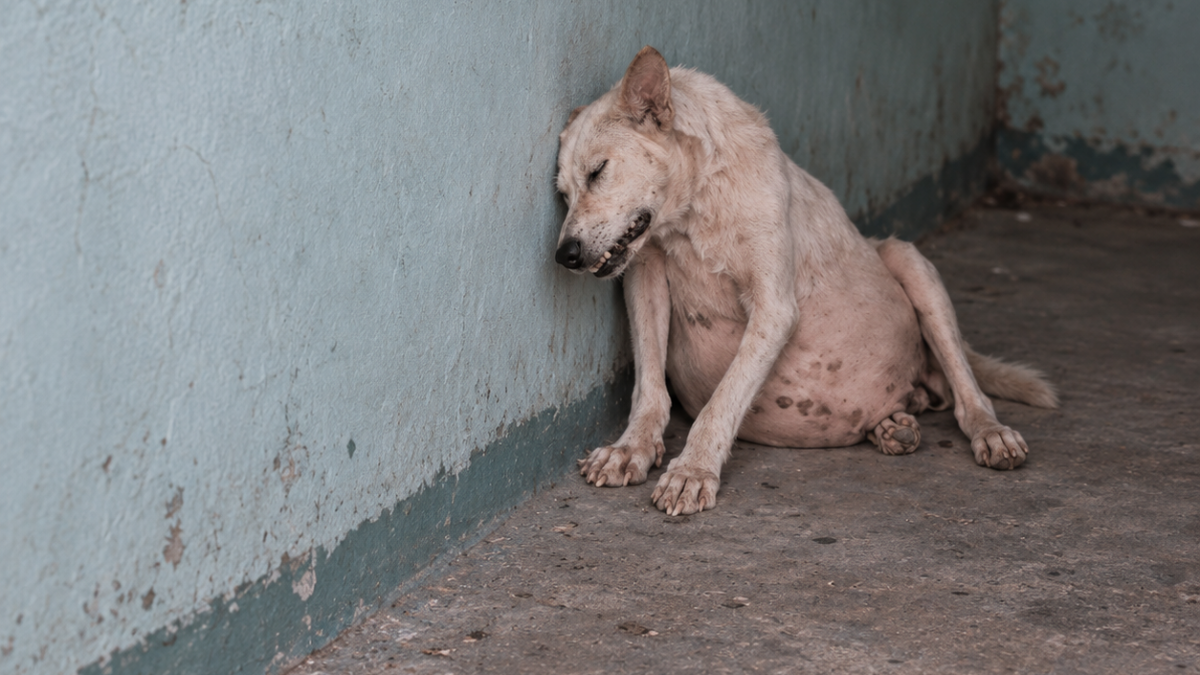
PART 2
The technician looked down at the scanner.
“Her name is Daisy.”
I repeated it softly.
“Daisy.”
For the first time, the dog under the heated blanket had a name.
The technician continued.
“The chip was registered almost four years ago to a woman named Rebecca Lawson.”
“Can you call her?”
“We already tried. The number has been disconnected.”
Dr. Patel stepped toward the operating-room doors.
“We’ll worry about ownership later. Right now, we keep Daisy alive.”
Then they took her away.
I sat alone in the waiting room with dried dirt on my jeans and one of Daisy’s brown hairs stuck to my sleeve.
I should have gone to work.
I should have called my supervisor.
I should have done a dozen normal Tuesday-morning things.
Instead, I sat beneath a muted television and stared at the double doors through which Daisy had disappeared.
I kept thinking about the way she had looked at me beneath that bicycle rack.
She hadn’t wagged her tail.
She hadn’t tried to crawl toward me.
She hadn’t even seemed frightened.
She had looked resigned.
There is a difference.
Fear means an animal still believes something might happen.
Resignation means it already has.
My phone buzzed.
My supervisor, Carl.
I answered.
“You coming in?”
“I’m at Northgate Emergency Vet.”
There was a pause.
“You okay?”
“I found a dog.”
Another pause.
Carl had known me for fourteen years.
He knew what that meant.
“Take the day.”
“Carl—”
“Take the day, Sam.”
“Thanks.”
I hung up.
My name is Samuel Carter.
Most people call me Sam.
I was forty-seven that morning, a maintenance supervisor for a commercial office complex outside Columbus, Ohio, divorced for six years, with a grown daughter living in Cincinnati and a house that had been too quiet since my old Labrador, Annie, died the previous winter.
I had promised myself I wasn’t getting another dog.
That promise lasted exactly until I heard Daisy crying beneath those bicycles.
Three hours passed before Dr. Patel came through the doors.
I stood so quickly that my knee struck the coffee table.
“She made it through surgery.”
My legs almost gave out.
“But?”
Dr. Patel gave me a tired smile.
“There’s always a but.”
She sat beside me.
“Her uterus was severely infected and close to rupturing. We removed it. There was already evidence of systemic infection, so the next twenty-four to forty-eight hours are critical.”
“How does something like that happen?”
“Pyometra can occur in unspayed females, usually after a heat cycle. Hormonal changes create conditions where bacteria can grow inside the uterus. In Daisy’s case, it had been developing for some time.”
“How long?”
“I can’t give you an exact number. But she didn’t become this sick overnight.”
That sentence stayed with me.
She didn’t become this sick overnight.
Someone had watched it happen.
Someone had seen her stop eating.
Seen her stomach swell.
Seen her grow weak.
And instead of taking her to a veterinarian, that person had driven her to a commuter station before sunrise and slid her beneath a bicycle rack.
“Can I see her?”
“For a minute.”
Daisy looked smaller after surgery.
The swelling was gone, but now I could see how thin she really was.
An IV line disappeared into her front leg.
Her eyes were half closed.
I stood beside the kennel.
“Hey, Daisy.”
One ear moved.
That was all.
“I know we just met, but you scared the hell out of me.”
Her eyes opened.
I put two fingers through the bars.
She sniffed them.
Then, slowly, she rested the side of her muzzle against them.
I had to look away.
Dr. Patel pretended not to notice.
Before I left, I paid the emergency deposit.
It was more than I should have spent without thinking.
I didn’t regret it for one second.
Outside, I sat in my truck.
Across the street, commuters came and went.
Normal traffic.
Normal morning.
Normal people living normal lives.
Then I remembered something.
The camera.
I turned the truck around.
Northgate Station was operated by the regional transit authority. The bicycle area sat beside a service entrance, and above the racks was a black dome camera.
I found the station supervisor inside the administrative office.
His name was Marcus Hill.
He looked to be about sixty.
When I explained what had happened, his expression hardened.
“What time did you find her?”
“About six-ten.”
“You think someone dumped her?”
“I know somebody did.”
“How?”
“There’s no way she walked far in that condition.”
Marcus looked toward the hallway.
“Come with me.”
The security room was barely bigger than a closet.
Four monitors showed different sections of the station.
Marcus pulled up recorded footage.
“What time should we start?”
“Maybe midnight.”
He rewound.
We watched commuters disappear.
Buses stopped running.
The parking lot emptied.
One o’clock.
Two.
Three.
At 4:37 a.m., headlights appeared at the far end of the service road.
A dark cargo van entered the lot.
My pulse quickened.
Marcus leaned closer.
The van drove past the main parking area.
It didn’t stop near the station doors.
It continued directly toward the bicycles.
“Son of a…”
Marcus stopped himself.
The driver backed into the loading lane beside the racks.
For several seconds, nothing happened.
Then the rear doors opened.
A man stepped out.
The camera was too far away for a clear face, but he appeared heavyset, wearing a dark hooded sweatshirt and baseball cap.
He reached into the van.
Then he dragged Daisy out.
I use the word dragged because that is what he did.
She couldn’t stand.
Her legs folded beneath her.
The man pulled her by a rope looped around her neck.
Marcus cursed quietly.
I felt something hot move through my chest.
The man looked around once.
Then he hauled Daisy behind the rack, removed the rope, walked back to his van, and drove away.
The entire thing lasted ninety-three seconds.
Ninety-three seconds to abandon a living creature who had probably trusted him.
“Can we get the plate?”
Marcus zoomed in.
The rear plate was visible for less than a second.
Blurred.
But not completely.
Ohio plate.
The first three characters looked like JQ7.
The last ones were harder.
Marcus replayed it.
JQ7.
Maybe 4.
Maybe A.
Then 2.
“I can save this,” he said.
“Please do.”
“I’ll also notify transit police.”
I looked again at the frozen image of the van.
Something about the side panel caught my attention.
“Go back.”
Marcus did.
“There.”
A lighter patch showed beneath the grime.
Part of a decal had been removed.
Three letters remained.
K9C.
Marcus looked at me.
“Business vehicle?”
“Maybe.”
I photographed the monitor.
Then I called Franklin County Animal Care and Control.
By noon, Officer Lena Ortiz was sitting across from me inside the station office.
She watched the video without speaking.
Then she watched it again.
“You found the dog?”
“Yes.”
“And she survived?”
“So far.”
“Where?”
“Northgate Emergency.”
She wrote the clinic name down.
“Did the veterinarian document her condition?”
“Yes.”
“Good.”
There was something about the way she said good that made me look at her.
“You think you can find him?”
“We can try.”
“That doesn’t sound very hopeful.”
“It sounds accurate.”
She closed her notebook.
“Animal-cruelty investigations are evidence-driven. Video helps. Medical documentation helps. A microchip helps. Vehicle information helps. But I need enough to connect a specific person to the dog and prove what happened.”
“She has a registered owner.”
“Who?”
“Rebecca Lawson.”
Officer Ortiz wrote it down.
“Do you know her?”
“No.”
“We’ll locate her.”
I handed over the photograph of the van.
“And this?”
She studied the faded letters.
“K9C.”
“That mean anything to you?”
“Not yet.”
It would.
Just not in the way any of us expected.
That afternoon, Officer Ortiz called Rebecca Lawson.
Unlike the number on Daisy’s microchip registration, the address attached to it was still current.
Rebecca answered her door.
Ten minutes later, Ortiz called me.
“Sam?”
“Yes.”
“I found the registered owner.”
My stomach tightened.
“Was she the one who dumped Daisy?”
“No.”
The answer surprised me.
“She started crying when I showed her the photo.”
“What happened?”
“Rebecca owned Daisy from puppyhood. About eighteen months ago, Rebecca lost her apartment after a divorce and had to move temporarily into housing that didn’t allow dogs.”
“So she gave Daisy away?”
“She surrendered her through an organization called Second Chance Family Pets.”
I wrote the name down.
“Is it a shelter?”
“Not exactly. Private placement group.”
“Who runs it?”
“A man named Travis Boone.”
That name meant nothing to me.
Yet.
“Rebecca says she was told Daisy had been adopted by a family with acreage outside the city.”
“Did she get proof?”
“She has emails.”
“Can we see them?”
“She already forwarded them.”
Officer Ortiz was quiet.
Then she added, “There’s something else.”
“What?”
“Rebecca told them Daisy was unspayed.”
My eyes closed.
I understood.
“You think they bred her.”
“I think we need evidence before we think anything.”
But her voice had changed.
That afternoon, I went back to the clinic.
Daisy was awake.
Barely.
When I approached her kennel, her tail moved once against the blanket.
One small thump.
Dr. Patel smiled.
“That’s the most enthusiastic she’s been all day.”
“I’ll take it.”
I sat on the floor.
Daisy rested her chin on my shoe.
Dr. Patel crouched beside me.
“We found something else during the examination.”
“What?”
“Her mammary tissue suggests she’s had multiple litters.”
“How many?”
“I can’t determine exactly. But certainly more than one.”
I thought about Rebecca surrendering a healthy dog because life had cornered her.
I thought about the promise she had apparently received.
A family with acreage.
Instead, Daisy’s body told a different story.
“Could repeated breeding have caused this?”
“Pyometra isn’t proof of breeding abuse. But leaving an unspayed female untreated while she was this sick certainly raises concerns.”
“What would she have gone through?”
Dr. Patel hesitated.
“You sure you want that answer?”
“Yes.”
“Increasing abdominal pressure. Fever. Nausea. Thirst. Weakness. Pain. Eventually organ failure, shock, rupture, and death.”
I looked at Daisy.
Her eyes were closed.
“How long before she would have died under that bicycle rack?”
“I can’t know.”
“But?”
“Without treatment?”
Dr. Patel looked toward the monitor.
“Possibly hours. Maybe a day.”
I sat there until visiting time ended.
Before leaving, I whispered, “You didn’t survive all this just to disappear now.”
Daisy opened her eyes.
I don’t pretend animals understand sentences the way we do.
But she looked at me.
And for the first time, I saw something in those eyes besides exhaustion.
The next morning, Officer Ortiz called again.
“We found Second Chance Family Pets.”
“And?”
“It hasn’t legally existed for eleven months.”
“What does that mean?”
“Boone dissolved it.”
“Why?”
“We don’t know yet.”
“Where is he?”
“We’re working on that.”
I hated those words.
Working on it.
They sounded too slow.
Daisy had nearly died while somebody else had eighteen months to cover their tracks.
After work, I searched the organization online.
There were old social media pages.
Happy photographs.
Dogs wearing bandanas.
Families kneeling beside new pets.
Captions about forever homes and second chances.
Travis Boone appeared in several pictures.
Fortyish.
Broad shoulders.
Dark beard.
Big smile.
The kind of man you would trust with a dog.
I found archived reviews.
Most were positive.
But buried beneath them were three strange complaints.
One woman said she surrendered a female Husky and later received inconsistent answers about where the dog had gone.
Another claimed Boone refused to provide adoption paperwork.
A third wrote:
“Something is wrong here. Do not surrender an unspayed female dog to this organization.”
The review was two years old.
I screenshotted everything.
The next morning, Daisy stood for the first time.
Only for a few seconds.
The technician supported her with a sling.
When she saw me, her tail moved.
Twice.
“Look at you,” I whispered.
She took one shaky step.
Then another.
By Friday, she was eating chicken from my hand.
The day she was discharged, Dr. Patel brought me three medications, a feeding schedule, incision instructions, and a warning.
“She’s not recovered yet.”
“I know.”
“No jumping. Short walks. Watch for fever, vomiting, lethargy.”
“I will.”
“And Sam?”
“Yes?”
“She may have behavioral trauma.”
I looked down at Daisy.
She was standing beside my leg.
“What kind?”
“Fear of confinement. Sudden sounds. Men. Vehicles. Being left alone. We won’t know until she settles.”
I signed the foster paperwork through a rescue group partnered with the clinic.
When I opened my truck door, Daisy froze.
Her whole body went rigid.
I realized why.
Van.
Vehicle.
Abandonment.
I sat on the pavement beside her.
“We’re not doing it that way.”
I climbed into the back seat.
The technician gently lifted Daisy inside.
Instead of putting her behind me alone, I stayed beside her while another employee drove my truck around the parking lot.
Daisy shook so hard her teeth clicked.
I kept my hand against her shoulder.
“You’re coming home.”
Eventually, she lowered her head into my lap.
That first night, Daisy refused to sleep on the dog bed I had bought.
Instead, she lay beside the front door.
I moved the bed there.
She moved away from it and returned to the floor.
Fine.
I slept on the couch.
At 2:14 a.m., I woke to find her standing five feet away, staring at me.
“Hey.”
Her tail moved.
Then she lay down again.
The next morning, I made scrambled eggs.
Daisy received boiled chicken.
She ate every bite.
I took her into the backyard on a leash.
She stopped at the grass as though she had forgotten what it felt like.
Then she stepped onto it.
The September sun was warm.
A breeze moved through the maple tree.
Daisy lifted her nose.
For almost a minute, she simply smelled the air.
Then she rolled onto her side.
Not from pain.
Because she wanted to.
I laughed.
It was the first time I had laughed in my backyard since Annie died.
Daisy looked at me like she had accomplished something.
Maybe she had.
That afternoon, Officer Ortiz called.
“We located Travis Boone.”
“Did he have Daisy?”
“He denies it.”
“Of course he does.”
“He claims all intake records were transferred when his rescue closed.”
“To who?”
“He says he doesn’t remember.”
“You believe that?”
“My beliefs aren’t evidence.”
I liked Ortiz.
I also wanted to throw my phone through a wall whenever she said things like that.
“Did you ask about the breeding?”
“Yes.”
“And?”
“He says every dog was placed appropriately.”
“What about Rebecca’s emails?”
“He admits receiving Daisy.”
My grip tightened around the phone.
“So he had her.”
“Eighteen months ago.”
“What does he say happened after?”
“He says she was transferred to a foster home.”
“Which foster home?”
“He can’t produce the record.”
“That’s convenient.”
“Very.”
That was the first time Ortiz allowed herself to sound irritated.
Then she said, “Sam, I need you to do something.”
“What?”
“Nothing.”
I almost laughed.
“You called me to tell me to do nothing?”
“I’m serious. Don’t contact Boone. Don’t post his name. Don’t confront anyone.”
“Why would I?”
“Because people get angry in cases like this. Angry people can accidentally destroy investigations.”
“I understand.”
“Good.”
“What can I do?”
“Take care of Daisy.”
So I did.
For the next two weeks, my world became medication alarms, tiny meals, slow walks, and learning the geography of Daisy’s fear.
Broomsticks frightened her.
Raised voices made her flatten against the floor.
If I reached toward her neck too quickly, she recoiled.
She hated closed doors.
She was terrified of hoses.
And if I left the room while she was eating, she stopped until I returned.
But every day, something changed.
On day nine, she brought me a sock.
On day eleven, she barked at the mail carrier.
On day twelve, she discovered my couch.
On day thirteen, she climbed onto it without permission, turned three circles, and fell asleep with her paws in the air.
I took a photograph.
Then I cried in my kitchen where she couldn’t see me.
Not because I was sad.
Because her body had finally decided it was safe enough to sleep deeply.
Rebecca Lawson came to visit the following Saturday.
She stood in my driveway for almost a minute before she could make herself knock.
When I opened the door, she looked terrified.
“Is she really here?”
“Yes.”
Daisy was behind me.
Rebecca saw her.
Her hand flew to her mouth.
“Oh my God.”
Daisy stared.
For one second, nothing happened.
Then her ears lifted.
Rebecca dropped to her knees.
“Daisy?”
The dog moved.
Not quickly.
But directly.
She pressed her head against Rebecca’s chest.
Rebecca broke.
“I’m sorry.”
She wrapped both arms around Daisy.
“I’m so sorry. I thought you were safe. I swear to God, baby, I thought you were safe.”
Daisy licked her chin.
I turned away.
Some moments don’t belong to strangers, even if they happen in your living room.
Rebecca stayed for two hours.
She showed me pictures on her phone.
Daisy as a puppy.
Daisy wearing reindeer antlers.
Daisy asleep beneath a Christmas tree.
Daisy sitting beside a little boy.
“That’s my son, Eli.”
“How old is he now?”
“Nine.”
“Does he know?”
She shook her head.
“Not everything.”
She wiped her eyes.
“When I lost my apartment, I had nowhere to take her. My mother had just moved into assisted living. My sister’s landlord wouldn’t allow dogs. I called every rescue I could find.”
“And Boone answered.”
“He sounded wonderful.”
She handed me her phone.
The old email was still there.
WE HAVE FOUND DAISY A BEAUTIFUL HOME WITH A RETIRED COUPLE ON FIVE ACRES. THEY HAVE EXPERIENCE WITH HER BREED AND WILL HAVE HER SPAYED THROUGH THEIR VETERINARIAN.
Rebecca stared at the screen.
“I read that email probably fifty times because Eli kept asking if Daisy was okay.”
“Did you ever ask for pictures?”
“Yes.”
“And?”
“He said the adopters wanted privacy.”
A terrible thought occurred to me.
“Did Second Chance charge you?”
“Two hundred dollars surrender fee.”
“And the new owners probably paid an adoption fee too.”
Rebecca looked sick.
“You think he sold her.”
“I don’t know.”
But I did know something.
People who abuse trust rarely do it only once.
Two days later, Officer Ortiz showed up at my house.
She wasn’t alone.
A detective from the sheriff’s office stood beside her.
“Sam, this is Detective Noah Harris.”
Harris shook my hand.
“Mind if we come in?”
Daisy was asleep on the couch.
Officer Ortiz smiled when she saw her.
“She looks like a different dog.”
“She is.”
Harris noticed Daisy’s reaction when he entered.
Her body stiffened.
He immediately stopped and crouched sideways instead of walking toward her.
“Good girl,” he said quietly.
Daisy watched him.
Harris stayed where he was.
Smart man.
We sat at the kitchen table.
He placed a folder down.
“We’ve identified the van.”
I leaned forward.
“Who owns it?”
“Registered to K9 Country Companions LLC.”
K9C.
The faded decal.
“Breeder?”
“Officially, they describe themselves as a canine boarding and training business.”
“Unofficially?”
Harris looked at Ortiz.
She answered.
“We received a complaint about them eight months ago involving suspected unlicensed breeding. We couldn’t establish enough probable cause to enter the property.”
“Who owns it?”
“Dennis Rourke.”
The name meant nothing to me.
Then Harris slid a photograph across the table.
My stomach turned.
The man in the picture was heavyset.
Dark hoodie.
Baseball cap.
“Is that him?”
“We’re not asking you to identify him from the video,” Harris said carefully.
“Why?”
“Because the image quality isn’t sufficient for a reliable facial identification.”
“Then why show me?”
“Because Dennis Rourke is Travis Boone’s brother-in-law.”
The room went silent.
I looked at Daisy.
She was sleeping.
“Boone sent her there.”
“We believe there was a relationship between the two businesses,” Ortiz said. “We’re establishing how extensive it was.”
“How many dogs?”
“We don’t know.”
“What did they do with them?”
“We don’t know that yet either.”
I stood and walked to the sink.
Outside, Daisy’s water bowl sat on the patio.
A tennis ball lay beside it.
For some reason, that yellow ball made me furious.
She had been learning how to play with it.
A six-year-old dog learning what a toy was.
“Sam.”
I turned.
Harris watched me.
“We need patience.”
“I’ve heard that.”
“I know.”
“If there are dogs on that property living like Daisy was living, patience feels a lot like leaving them there.”
His expression changed.
“I understand.”
“Do you?”
“Yes.”
The answer came without hesitation.
“My wife is a veterinary technician.”
That shut me up.
He continued.
“We’re trying to build a case that gets us onto that property legally. If we move too early and a judge says our warrant isn’t supported, we may lose our chance.”
“So what do you need?”
“Documentation.”
“From me?”
“Not yet.”
Not yet.
Three days later, I received a strange message through the neighborhood app.
A woman named Kelly Mercer had seen a photograph Rebecca posted of Daisy recovering.
Her message read:
Is that dog originally from Second Chance Family Pets?
I called Ortiz before answering.
She told me to ask Kelly for permission to share her contact information.
Kelly agreed.
By evening, Ortiz was interviewing her.
Kelly had surrendered a young female Golden Retriever named Penny to Second Chance two years earlier when her father entered hospice and she had to relocate.
Boone told Kelly that Penny had been adopted by a family near Dayton.
Six months later, Kelly’s coworker attended a flea market outside Lancaster.
A man in the parking area was selling Golden Retriever puppies.
Beside his trailer stood an adult female Golden.
Kelly’s coworker took a photograph because she thought the dog looked familiar.
It was Penny.
The location?
K9 Country Companions.
The connection grew.
Then another former owner came forward.
Then another.
Within ten days, Ortiz had spoken with six people who had surrendered unspayed female dogs to Boone.
At least four could be linked through photographs, microchip history, veterinary records, or witness accounts to K9 Country Companions.
Then Detective Harris called me.
“We got the warrant.”
“When?”
“Tomorrow morning.”
“Can I come?”
“No.”
The answer was immediate.
“I just want to—”
“No, Sam.”
“What if Daisy’s evidence matters?”
“It already does.”
I leaned against my kitchen counter.
“What happens now?”
“We do our jobs.”
I didn’t sleep much that night.
At 6:30 the next morning, I was sitting at my kitchen table with coffee I wasn’t drinking.
Daisy lay beneath my chair.
At 7:12, my phone rang.
Ortiz.
I answered.
“We’re on the property.”
“How bad?”
Silence.
That told me everything.
“Lena?”
Her professional tone had disappeared.
“Bad.”
I gripped the phone.
“How many?”
“Twenty-seven dogs so far.”
“Twenty-seven?”
“Some in outdoor kennels. Some inside a converted barn.”
“Are they alive?”
“Yes.”
“All of them?”
Another pause.
“Most.”
I closed my eyes.
“Is Rourke there?”
“Yes.”
“What is he saying?”
“I can’t discuss that right now.”
“Is Boone there?”
“No.”
“What about Daisy? Did you find anything connecting her?”
“We found records.”
My heart jumped.
“What records?”
“I need to go.”
“Lena—”
“Sam.”
Her voice softened.
“We found her name.”
The call ended.
I sat frozen.
Daisy nudged my hand.
I looked down.
“They found you.”
Her tail moved.
Several hours later, the story broke locally.
Sheriff’s deputies and animal-control officers had executed a warrant at a rural property outside Baltimore, Ohio.
Twenty-seven living dogs were removed.
Two deceased dogs were recovered from a freezer inside an outbuilding.
Seven females required urgent veterinary care.
Three had untreated mammary masses.
One had an infected wound.
Another was so thin she could not stand without assistance.
The news footage showed crates being carried from a gray barn.
I turned the television off.
I didn’t need to see more.
Daisy was lying beside me.
She deserved one evening without the ghosts of that place entering our home.
The following afternoon, Harris came by.
He carried copies of several documents.
“What did you find?”
“A handwritten breeding ledger.”
He placed a photocopy on the table.
Rows of names.
Dates.
Male dogs.
Female dogs.
Litter sizes.
Payments.
Then I saw it.
DAISY — BRN/WHT F — 6 pups.
Another line seven months later.
DAISY — 5 pups.
And another.
DAISY — 7 pups.
Three litters.
Eighteen puppies.
Beside the last entry were two words.
UTERUS ISSUE.
I stared at them.
“When was this written?”
“Twelve days before you found her.”
My hands began shaking.
“Twelve days.”
“Yes.”
“So they knew.”
“Looks that way.”
Below it was another notation.
NO VET. DONE.
I read it twice.
“What does ‘done’ mean?”
“We’ll let a prosecutor establish that.”
But I knew.
Daisy had stopped being profitable.
So she had become disposable.
“Did you find evidence that Boone sent her there?”
Harris turned another page.
It was a photocopy of a spreadsheet.
Dog names.
Intake sources.
Transfer dates.
Amounts.
Next to Daisy:
SCFP / BOONE — $150.
“He sold her for a hundred and fifty dollars?”
“That appears to be the transfer payment.”
I sat back.
Rebecca had paid Boone two hundred dollars because she believed he was finding Daisy a safe home.
Then Rourke paid Boone another hundred and fifty dollars to take her.
Daisy had become inventory twice.
“How many?”
Harris knew what I meant.
“We’ve identified at least thirteen dogs transferred from Boone to Rourke.”
“Thirteen.”
“Possibly more.”
“What happens to Boone?”
“We’re interviewing him again.”
“And Rourke?”
“In custody.”
The satisfaction I expected didn’t come.
I looked at Daisy sleeping beneath the window.
Nothing could return those eighteen months.
Nothing could erase the bicycle rack.
Nothing could make her body forget what it had endured.
“Sam?”
I looked at Harris.
“People always think justice feels like winning.”
He closed the folder.
“It usually doesn’t.”
He was right.
Justice, at that moment, felt like discovering exactly how much had been stolen.
Daisy continued recovering.
Her incision healed.
She gained six pounds.
Then ten.
Her coat became glossy.
Her face changed as the hollows around her eyes filled out.
Her personality appeared gradually, like sunlight moving across a room.
She loved cheese.
She hated rain.
She believed squirrels were a personal insult.
She refused to step around puddles and instead expected me to lift her over them.
At some point, the dog who had been too weak to raise her head began running circles through my backyard.
The first time she did it, I laughed so hard I had to sit down.
She sprinted from the maple tree to the porch, skidded in the grass, turned, and raced back toward me.
“Daisy!”
She nearly knocked me over.
Then she stood with her front paws against my chest, panting.
I held her face.
“You have no idea how close you came, do you?”
She licked my nose.
Maybe that was better.
Rebecca visited often.
So did Eli.
The first time Daisy saw him, she made a sound I had never heard before.
Half bark.
Half cry.
She ran toward him.
Eli dropped his backpack.
“DAISY!”
They met in the middle of my living room.
The boy wrapped his arms around her neck.
Daisy covered his face in kisses.
Rebecca stood behind them crying.
Eli looked at me.
“Is she coming home with us?”
Nobody spoke.
Rebecca had found a new apartment by then, one that allowed dogs.
She could have taken Daisy.
Legally, however, ownership had become complicated because of the surrender and ongoing cruelty case.
Emotionally, it was worse.
Rebecca sat beside Eli.
“Buddy, remember when we talked about Daisy being sick?”
He nodded.
“She’s been through a lot. Mr. Carter has been helping her feel safe.”
“But she remembers me.”
“I know.”
His eyes filled.
I knelt beside them.
“Eli, she absolutely remembers you.”
“Then why can’t she come home?”
I looked at Rebecca.
She looked devastated.
The truth was that she could probably apply to reclaim Daisy eventually.
I had known this possibility from the beginning.
I also knew something else.
Daisy slept beside my bed every night.
She waited at the front window when I went to work.
She had learned the sound of my truck.
And somewhere along the way, my house had become hers.
I forced a smile.
“When the court stuff is finished, your mom and I are going to decide what’s best for Daisy.”
“What does Daisy want?”
Children ask the questions adults spend entire lives avoiding.
I looked at the dog.
She had placed herself between Eli and me with her head resting on his knee.
“I think she wants both of us.”
That became our answer.
Not ownership.
Family.
Rebecca and Eli visited every week.
Daisy stayed with them occasionally once her health stabilized.
I stopped thinking of it as mine or theirs.
She had enough people making decisions about her life without considering her.
We weren’t going to repeat that.
Meanwhile, the criminal case grew.
Investigators recovered messages between Boone and Rourke.
Some were routine.
AVAILABLE FEMALE LAB MIX 2YO.
UNFIXED?
YES.
SEND HER.
Others were worse.
A message from Rourke concerning another dog read:
SHE’S GETTING OLD. ONE MORE LITTER THEN MOVE HER.
Boone replied:
DON’T BRING HER BACK.
Another conversation mentioned “dump spots.”
That phrase became important.
Investigators compared traffic-camera footage, witness statements, and found records to three previous abandoned-dog cases around the county.
One female Boxer had been found beside a dumpster.
A Husky had been discovered near an industrial park.
A German Shepherd had been left at a cemetery.
All three were older unspayed females.
Two had microchips that traced back through Second Chance Family Pets.
The prosecutor added charges.
Boone was arrested on a Thursday afternoon.
Rebecca called me.
“They got him.”
Her voice shook.
“I know.”
“He lied to my face.”
“I know.”
“I trusted him with her.”
I sat on my porch.
Daisy was in the yard carrying a stick twice the length of her body.
Rebecca started crying.
“I gave him my dog.”
“You gave Daisy to someone you believed was helping.”
“I should have checked.”
“You did what you could with what you knew.”
“I paid him.”
“Rebecca.”
“I handed him the leash.”
Her voice broke.
Daisy dropped the stick and looked at me.
“Rebecca, the person responsible for betraying your trust is the person who betrayed it.”
Silence.
Then she whispered, “I want to see him in court.”
“So do I.”
The defense process lasted months.
There were motions.
Continuances.
Evidence hearings.
Arguments about whether certain records belonged to Rourke or his company.
Arguments about admissibility.
Arguments about intent.
Arguments about which dog could be connected to which act.
I learned something during those months.
Real justice is boring until suddenly it isn’t.
There are no dramatic confrontations every day.
Most days are emails.
Forms.
Waiting rooms.
Voicemails.
Photocopies.
Calendars.
But beneath that paperwork are living things whose suffering has been translated into exhibits.
Daisy became Exhibit 17.
Her surgery photographs were Exhibit 18.
Her bloodwork was Exhibit 19.
The Northgate security footage became Exhibit 23.
I hated those numbers.
To the court, they were evidence.
To me, Exhibit 17 snored on my couch.
The prosecutor eventually offered both men plea agreements.
Rourke rejected his.
Boone initially accepted negotiations, then changed lawyers and rejected the offer.
So the case moved toward trial.
By spring, Daisy was almost unrecognizable from the dog I had found.
She weighed fifty-one pounds.
Her coat gleamed reddish brown in sunlight.
She had a white stripe beneath her chin that I hadn’t noticed when she was sick.
She attended beginner obedience classes.
Not because she needed discipline.
Because I wanted her to experience a room where people asked dogs to do things gently and rewarded them for succeeding.
The first class was difficult.
A metal crate door slammed across the room.
Daisy collapsed to the floor.
I crouched beside her.
“It’s okay.”
The instructor, Melanie, stopped the entire class.
Nobody stared.
Nobody approached.
We waited.
Daisy eventually stood.
At the end of class, Melanie handed me a small certificate.
Daisy had mastered sit, stay, touch, and come.
I hung it on my refrigerator.
Yes, I was that person now.
Then something unexpected happened.
Daisy began helping another dog.
The rescue that had handled her foster status asked whether I could temporarily house a frightened young Beagle named Milo after his foster placement fell through.
“Three nights,” Claire, the rescue director, promised.
“You said that about Daisy.”
“I absolutely did not.”
“You thought it.”
She laughed.
Milo spent his first evening hiding beneath my dining-room table.
Daisy approached him once.
Sniffed.
Then lay six feet away.
She didn’t pressure him.
She simply stayed.
Twenty minutes later, Milo crawled halfway out.
By midnight, he was sleeping beside her.
The next morning, I found them sharing the same patch of sunlight.
I took a picture and sent it to Rebecca.
She replied:
She knows what scared feels like.
I stared at that sentence for a long time.
Maybe survival had given Daisy something nobody could take.
Not just scars.
Understanding.
Three nights became nine.
Milo eventually found a permanent home with a retired teacher.
Daisy watched him leave from the porch.
Then she walked back inside and stole one of his forgotten toys.
Fair enough.
Two weeks before trial, Detective Harris called.
“Defense wants to challenge the identification of the van.”
“On what basis?”
“They’ll argue multiple vehicles could have had similar lettering and the plate image is incomplete.”
“But it was Rourke’s van.”
“We know that from separate evidence.”
“What separate evidence?”
“Automatic plate-reader data captured it less than two miles from Northgate seventeen minutes before Daisy was abandoned.”
I smiled.
“That sounds useful.”
“It is.”
“What else?”
“A gas station camera.”
My smile disappeared.
“What did it show?”
“Rourke fueling the van at 4:08 that morning.”
“Face?”
“Clear.”
“Clothes?”
“Dark sweatshirt. Baseball cap.”
The same clothes as the person in the station video.
Harris continued.
“And we recovered location history from a company tablet inside the van.”
“Northgate?”
“At 4:39 a.m.”
I sat back.
“So he can’t deny it.”
“He can deny anything.”
“Can he explain it?”
“That’s what trials are for.”
The first day of court, I arrived early.
Rebecca sat beside me.
Eli stayed with her sister.
Dr. Patel was there under subpoena.
Officer Ortiz sat near the prosecutor’s table.
Rourke entered first.
I recognized him immediately from the photograph.
Heavyset.
Short hair now.
Clean-shaven.
Suit.
For months, I had imagined what I would feel seeing him.
Anger.
Hatred.
Maybe satisfaction.
Instead, I felt strangely calm.
Then he looked toward the gallery.
Our eyes met.
He looked away.
That was enough.
Boone arrived ten minutes later.
He sat with his attorney on the opposite side.
Rebecca gripped the bench.
“That’s him.”
I covered her hand with mine.
“I know.”
The trial lasted six days.
Dr. Patel testified about Daisy’s condition.
The prosecutor displayed her admission photographs.
I looked away from the screen.
Rebecca didn’t.
She stared at every image.
When Dr. Patel explained the pain associated with advanced pyometra, one juror wiped her eyes.
The defense tried to suggest Daisy could have deteriorated quickly.
Dr. Patel remained calm.
“Could symptoms worsen quickly? Yes.”
“So it is possible the defendant did not understand the seriousness?”
“I can’t testify to what another person understood.”
“Then you cannot say he intentionally allowed her condition to worsen.”
“No.”
The defense attorney nodded.
Then Dr. Patel continued.
“But I can say the clinical signs visible at the time she was abandoned were severe enough that a reasonable person would recognize that she required medical attention.”
The attorney stopped smiling.
Officer Ortiz testified about the warrant.
The ledger.
The dogs.
The conditions.
Photographs showed rows of outdoor kennels.
Dirty water.
Broken shelter panels.
Rusting bowls.
A converted barn containing stacked crates.
The defense objected repeatedly.
Some evidence was limited.
Some was allowed.
Then came the Northgate video.
The courtroom lights dimmed.
I watched again as the van backed toward the bicycle racks.
The doors opened.
The man pulled Daisy onto the pavement.
Even after all those months, my chest tightened.
Rebecca whispered, “Oh God.”
The video continued.
Daisy collapsed.
The man dragged her beneath the rack.
Removed the rope.
Left.
Ninety-three seconds.
The prosecutor froze the final frame.
“Detective Harris, were you able to determine the identity of this vehicle?”
“Yes.”
“How?”
“Through registration records, business records, automated plate-reader data, gas station surveillance, recovered digital location data, and physical comparison of damage and markings visible on the vehicle.”
“Whose vehicle was it?”
“K9 Country Companions LLC, owned by Dennis Rourke.”
“Where was Mr. Rourke at 4:08 a.m. that morning?”
“At a Speedway approximately 3.1 miles from Northgate Station.”
“Do you recognize the person shown purchasing fuel?”
“Yes.”
“Who is it?”
“Dennis Rourke.”
Boone’s case was different.
He wasn’t accused of personally dumping Daisy.
Prosecutors argued that he had knowingly misrepresented placements, transferred dogs for money into an abusive breeding operation, falsified records, and facilitated repeated transactions despite evidence that dogs were being exploited.
Rebecca testified.
Her voice shook during the first few questions.
Then the prosecutor showed her the email promising Daisy had gone to a retired couple with five acres.
Rebecca looked directly at Boone.
“Did you write this?”
Boone’s attorney objected.
The judge instructed Rebecca to answer only questions.
The prosecutor asked again.
“Did you receive this email from Mr. Boone’s organization?”
“Yes.”
“What did you believe after reading it?”
“I believed my dog was safe.”
“What had actually happened?”
Rebecca swallowed.
“She was sold.”
“Objection.”
“Sustained.”
The prosecutor rephrased.
“What do the transfer records indicate occurred?”
“They indicate he transferred Daisy to Dennis Rourke for a hundred and fifty dollars.”
Rebecca’s eyes filled.
“After I paid him two hundred dollars to protect her.”
No one moved.
The prosecutor approached.
“Ms. Lawson, why did you surrender Daisy?”
“Because I had nowhere legal to keep her temporarily, and I thought giving her to a rescue was better than letting her become homeless.”
“Did you authorize Mr. Boone to transfer Daisy for breeding?”
“No.”
“Did he ever tell you she would be bred?”
“No.”
“Did you ever agree she could be transferred to K9 Country Companions?”
“No.”
“Did you know Dennis Rourke?”
“No.”
“What did Mr. Boone tell you?”
Rebecca looked toward the jury.
“That Daisy was living with a retired couple on five acres.”
When Rebecca stepped down, she passed Boone.
He didn’t look at her.
The moment that changed the trial came on day five.
The prosecution called a former K9 Country employee named Tyler Greene.
Nobody had told me much about him.
He looked nervous.
Twenty-six.
Maybe twenty-seven.
Work boots.
White shirt.
Tie that looked borrowed.
He had worked for Rourke for nine months.
The prosecutor asked him about Daisy.
Tyler nodded.
“I remember her.”
“Why?”
“She was quiet.”
“What do you mean?”
“Some dogs barked all day. Daisy didn’t. She mostly stayed in the back kennel.”
“Was she bred?”
“Yes.”
“How many times while you were employed there?”
“Twice while I was there. There had been another litter before I started.”
“Did you observe her health deteriorating?”
“Yes.”
“When?”
“A couple weeks before she disappeared.”
“What symptoms?”
“She stopped eating much. Drank a lot. Her belly got big. She was leaking stuff.”
“Did you tell anyone?”
Tyler stared at his hands.
“Yes.”
“Who?”
“Dennis.”
“What did he say?”
The courtroom became completely still.
“He said she was probably done.”
“Done breeding?”
“Yes.”
“Did you ask whether she needed a veterinarian?”
“Yes.”
“What did Mr. Rourke say?”
Tyler looked toward Rourke.
Then back at the prosecutor.
“He said the vet would cost more than the dog was worth.”
Rebecca made a small sound beside me.
The prosecutor waited.
“Did anything else happen?”
“Yes.”
“The night before Daisy disappeared, Dennis told me to put her in the van.”
“Why?”
“He said he was taking her somewhere.”
“What time?”
“Maybe around six in the evening.”
“Did you ask where?”
“No.”
“Why not?”
Tyler’s face reddened.
“Because I knew.”
The prosecutor stepped closer.
“What did you know?”
Tyler’s voice cracked.
“I knew he wasn’t taking her to a vet.”
No one in the courtroom moved.
“I should’ve stopped him.”
Rourke’s attorney stood.
“Objection to narrative.”
“Sustained.”
Tyler wiped his face.
The prosecutor changed direction.
“Did you see Daisy again at K9 Country?”
“No.”
“Did you later recognize her in news coverage?”
“Yes.”
“How did that make you feel?”
“Objection.”
“Sustained.”
The defense cross-examined aggressively.
“You continued working there after witnessing these alleged conditions?”
“For two weeks.”
“You accepted wages from Mr. Rourke?”
“Yes.”
“You never called police before the raid?”
“No.”
“So your testimony today helps you avoid potential charges, doesn’t it?”
Tyler looked toward the prosecutor.
Then the judge.
Then Rourke.
Finally, he said, “It doesn’t help me sleep.”
The defense attorney paused.
Tyler continued.
“I watched that dog get sick because I was scared to lose a job that paid fourteen dollars an hour.”
His eyes filled.
“I’m going to hate myself for that longer than anything you can do to me.”
No one objected.
The jury returned its verdict the following afternoon.
Rourke was found guilty on multiple animal-cruelty counts, evidence-related offenses, and charges connected to Daisy’s abandonment.
Boone was convicted on fraud-related and animal-cruelty-related counts tied to the transfer operation.
The exact legal language mattered to the court.
To Rebecca, it was simpler.
When the clerk said “guilty,” she covered her face.
I put my arm around her.
She whispered one word.
“Daisy.”
Sentencing happened six weeks later.
Victim-impact statements were permitted.
Rebecca spoke first.
She stood at the lectern holding a photograph.
Not one of Daisy sick.
One of Daisy as a puppy sitting beside Eli.
“This was who I gave you,” Rebecca said.
She looked toward Boone.
“A dog my son loved.”
The courtroom was silent.
“You didn’t steal money from me. Money can be replaced. You stole eighteen months of her life by lying about where she was going.”
Boone stared at the table.
Rebecca continued.
“For a long time, I blamed myself because I handed you her leash.”
Her voice steadied.
“I don’t anymore.”
Boone finally looked up.
“I asked for help. You saw desperation and turned it into profit. That belongs to you, not me.”
Then she stepped away.
When my name was called, I hadn’t planned to say much.
I stood before the judge.
“My name is Samuel Carter. I found Daisy on September third at approximately 6:10 in the morning.”
I looked toward Rourke.
“She was under a bicycle rack.”
He stared straight ahead.
“I want the court to understand something about that location.”
I paused.
“It was hidden.”
Rourke’s attorney shifted.
“The person who left her didn’t place her near the station entrance. He didn’t leave her near the ticket office where somebody might see her. He put her behind the last row of bicycles beside a concrete wall.”
I could hear my own heartbeat.
“I’ve spent a lot of time wondering why.”
The judge listened.
“I think the answer is simple. Whoever did it expected Daisy to disappear quietly.”
Rourke’s jaw tightened.
“She almost did.”
I breathed.
“But she didn’t.”
My voice broke slightly.
“She survived surgery. She survived infection. She learned to sleep without waking every time a door opened. She learned to ride in a car again. She learned toys. She learned grass. She learned that hands can reach toward her without hurting her.”
I looked directly at Rourke now.
“And there’s one thing you should know.”
His eyes met mine.
“Every day you treated her like she had no value, you were wrong.”
The judge later imposed jail time, probation conditions, restitution, and long-term prohibitions related to animal ownership and commercial animal activity under the applicable convictions.
The remaining dogs from the property were transferred to approved rescues as the legal process allowed.
The business closed.
Its kennels were emptied.
The sign eventually disappeared from the road.
Second Chance Family Pets was gone too.
But the consequences spread beyond those two men.
The case prompted county officials and local rescue groups to create a shared verification process for private animal-placement organizations.
Surrender agreements became clearer.
Transfer records were checked more aggressively.
Several legitimate rescues began publishing permanent microchip-contact policies so surrendered animals could still be traced if they resurfaced in dangerous situations.
It did not fix everything.
Nothing does.
But Daisy’s suffering stopped being invisible.
Tyler eventually contacted me through Officer Ortiz.
He wanted to see Daisy.
I didn’t know how I felt about that.
He had watched her decline.
He had loaded her into the van.
He had also testified.
I asked Rebecca.
She said, “Let Daisy decide.”
So one Sunday afternoon, Tyler came to my house.
He stood outside the fence.
Daisy was in the yard.
The moment she saw him, she stopped.
Her tail lowered.
Tyler didn’t move.
“Hey, Daisy.”
She stared.
His face crumpled.
“I’m sorry.”
I stayed beside her.
Daisy took one step backward.
Tyler nodded.
“That’s okay.”
He wiped his eyes.
“You don’t owe me anything.”
That sentence mattered.
Too many people had spent Daisy’s life believing she owed them something.
Puppies.
Money.
Obedience.
Forgiveness.
She owed nobody anything.
After a minute, Daisy walked toward the porch.
She didn’t approach Tyler.
I opened the door.
She went inside.
Tyler watched her leave.
“I deserved that.”
“This isn’t about what you deserve.”
He looked at me.
“It’s about what she chooses.”
He nodded.
Before leaving, he handed me an envelope.
Inside was a check for five hundred dollars.
“What is this?”
“First paycheck from my new job.”
“I can’t take this.”
“Give it to the rescue.”
I looked at him.
“I don’t want them putting my name anywhere.”
“They won’t.”
He left.
I donated it to the emergency medical fund that had helped cover some of Daisy’s treatment.
Months passed.
Then a year.
The anniversary of the morning I found Daisy arrived quietly.
At 5:45 a.m., I woke before my alarm.
Daisy was asleep beside the bed.
I watched her breathing.
Slow.
Easy.
Healthy.
An absurd idea came to me.
“Want to go somewhere?”
One eye opened.
Her tail thumped.
I drove her to Northgate Station.
Not because I wanted to frighten her.
I had debated it for days.
If she showed any fear, we would leave immediately.
The sun was just beginning to rise when we arrived.
I parked near the entrance.
Daisy jumped from the truck.
A year earlier, she had been terrified of vehicles.
Now she hopped down, shook herself, and looked at me expectantly.
We walked toward the bicycle area.
Her pace slowed.
I watched carefully.
“Easy.”
She sniffed the pavement.
Then the wall.
Then the metal rack.
Was she remembering?
I don’t know.
People often assign complicated human narratives to animals because we need to believe they understand the same symbols we do.
Maybe Daisy recognized nothing.
Maybe she recognized everything.
I only know she stood beside the exact place where I had found her.
Then she looked at me.
I crouched.
“That’s where you were.”
She sniffed my face.
“You were supposed to disappear there.”
Her tail wagged.
“Didn’t work.”
A bicycle commuter came around the corner.
He smiled.
“Beautiful dog.”
“Thank you.”
“What’s her name?”
“Daisy.”
He reached out cautiously.
Daisy sniffed his hand.
Then allowed him to pet her.
“Friendly girl.”
“Yeah.”
I smiled.
“She worked hard for that.”
We left the bicycle racks behind.
At the edge of the parking lot, Daisy began pulling toward a strip of grass.
I loosened the leash.
She ran.
Not away.
Forward.
There is a difference.
That afternoon, Rebecca and Eli came over.
So did Dr. Patel.
Officer Ortiz arrived carrying a ridiculous gift bag filled with dog treats.
Detective Harris brought his wife.
Claire from the rescue brought Milo and his new owner.
Nobody called it an anniversary party.
But that was what it was.
Eli presented Daisy with a blue bandana.
He had written her name inside it with a permanent marker where nobody could see.
“Can she wear it?”
“Absolutely.”
He tied it loosely around her neck.
Daisy strutted through the backyard like she had received a medal.
Later, Rebecca and I sat on the porch while Eli threw a tennis ball.
“You ever regret stopping that morning?” she asked.
I looked at her.
“Seriously?”
She smiled.
“No.”
“What about you?”
She watched Daisy running.
“I regret needing to surrender her.”
“That wasn’t what I asked.”
Rebecca understood.
She thought for a moment.
“No.”
Then she said, “Because if I keep wishing I could rewrite the past, I’m still letting Boone own part of it.”
I nodded.
Daisy returned with the ball.
She dropped it at our feet.
Rebecca threw it again.
After everyone left, Daisy collapsed on the couch.
I sat beside her.
She rolled onto her back.
I rubbed her stomach.
The surgical scar was barely visible beneath her fur.
There had once been a swollen, infected organ there threatening her life.
Now there was warm skin.
A full belly.
A heartbeat beneath my hand.
“You did pretty good,” I whispered.
Daisy opened one eye.
I laughed.
“Fine. We did pretty good.”
She closed it again.
I thought the story had ended there.
I was wrong.
Three months later, I received a letter from the county prosecutor’s office.
One of the dogs rescued from Rourke’s property had given birth shortly before the raid.
A female puppy had been adopted by a family in Cleveland.
DNA testing conducted during the criminal investigation suggested the puppy was likely from Daisy’s final surviving line.
I stared at the letter.
Daisy had produced eighteen recorded puppies.
Investigators had never been able to track all of them.
Some had been sold privately.
Some had disappeared into cash transactions.
Several had no reliable records.
But this one had surfaced.
Her name was Rosie.
The family had included a photograph.
I held it beside Daisy.
Same brown coat.
Same white chest.
Same crooked left ear.
“Look.”
Daisy sniffed the paper.
“That might be your daughter.”
She tried to eat the corner.
“Sentimental as always.”
With permission from everyone involved, Rosie’s family came down the following month.
I told myself not to expect anything.
Dogs do not organize family reunions the way humans do.
Daisy and Rosie met in the backyard.
They sniffed each other.
Rosie bounced backward.
Daisy stared at her.
Then Rosie sprinted in a circle.
Daisy followed.
Within thirty seconds, they were chasing each other around the maple tree.
Everyone laughed.
Rebecca cried again.
She cried a lot around Daisy.
Nobody gave her trouble about it.
Rosie’s owner, a woman named Michelle, watched them.
“We almost didn’t apply for her.”
“Why?”
“She was terrified of men.”
I looked at Daisy.
“So was her mother.”
Michelle smiled.
“My husband sat on the kitchen floor every night for almost three weeks without touching her. Eventually she climbed into his lap.”
“That sounds familiar.”
Rosie raced past us.
Daisy followed.
For an hour, they played.
When it was time for Rosie to leave, Daisy stood at the driveway.
I expected her to become anxious.
She didn’t.
Rosie climbed into the SUV.
The door closed.
The vehicle drove away.
Daisy watched.
Then she turned and walked back toward me.
That simple movement nearly broke my heart.
A vehicle leaving no longer meant abandonment.
Some goodbyes had returns attached to them.
Daisy knew that now.
So did I.
Over the next two years, Daisy became a regular foster companion.
Never more than one dog at a time.
I had limits.
Usually.
There was Cooper, an elderly Spaniel whose owner died.
Daisy taught him where the sunny spots were.
There was Luna, a terrified Shepherd rescued from a hoarding case.
Daisy taught her that the backyard gate always opened toward home.
There was Peanut, a Chihuahua who weighed seven pounds and somehow convinced Daisy that the entire couch belonged to him.
Daisy allowed this insult for twelve days.
On day thirteen, she sat on Peanut.
Problem solved.
Each foster eventually left.
Each time, Daisy watched.
Each time, she came back inside with me.
People sometimes asked why I continued fostering after what happened.
The answer was usually lying on my couch.
One Saturday, Claire brought a dog named Hazel.
Hazel had been found behind a grocery store.
Thin.
Frightened.
No collar.
When she entered my house, she froze.
Daisy approached slowly.
Hazel backed into the corner.
Daisy stopped.
Then she lay down.
Exactly as she had done with Milo.
No pressure.
No demand.
Just presence.
I sat across the room.
For twenty minutes, nothing happened.
Then Hazel moved one paw.
Then another.
Finally, she lay down five feet from Daisy.
Claire whispered, “She’s incredible.”
I shook my head.
“She remembers.”
That night, I sat on the kitchen floor while both dogs slept nearby.
My phone contained the original photograph I had taken at the clinic after Daisy’s surgery.
I almost never looked at it.
But that night, I did.
The dog in the photograph seemed almost impossible now.
Hollow eyes.
Shaved abdomen.
IV line.
Body curled beneath a blanket.
Then I looked toward the living room.
Daisy was stretched on her back with her feet pointed toward the ceiling.
Hazel was sleeping beside her.
That was when I finally understood what revenge looked like.
For months after Rourke’s conviction, part of me had wanted the story to end with punishment.
Handcuffs.
Closed kennels.
A guilty verdict.
A judge’s sentence.
I wanted the people who had treated Daisy like garbage to lose everything they had built from animals like her.
And in many ways, they did.
Their operation was gone.
Their names were public record.
Their dogs were removed.
Their ability to profit from those animals ended.
But that wasn’t the most satisfying part.
The most satisfying part was Daisy sleeping safely in a house they had never expected her to reach.
It was watching her gain weight.
Watching her run.
Watching her trust.
Watching her help other frightened dogs understand that the next hand reaching toward them might contain food instead of pain.
The people who had abandoned Daisy wanted one thing from her in the end.
They wanted her to disappear.
She refused.
Not consciously.
Not dramatically.
She simply kept breathing until somebody heard her.
Years have passed since that Tuesday morning.
The Northgate bicycle racks are still there.
Marcus retired.
Dr. Patel opened her own clinic.
Officer Ortiz was promoted.
Detective Harris occasionally sends me pictures of his wife’s newest rescue patients.
Rebecca remarried.
Eli is a teenager now.
He still visits Daisy.
And Daisy?
Her muzzle has started turning white.
She moves slower in the mornings.
She requires a little help climbing into my truck.
She still hates rain.
She still believes squirrels are criminals.
And she still sleeps beside my bed.
Last winter, during the first heavy snow, I woke around three in the morning.
The house was silent.
Daisy wasn’t beside the bed.
I found her in the living room standing near the front door.
For one terrifying second, I thought something was wrong.
Then I heard it.
A faint scratching sound outside.
Daisy looked at me.
“What is it?”
The scratching came again.
I opened the door.
A skinny orange cat shot beneath my porch.
Daisy followed me outside.
The cat was trembling beneath the steps.
I put out food and an insulated box.
Daisy stood nearby, watching.
Eventually the cat crept out.
He hissed at Daisy.
Daisy sat down.
The cat ate.
By morning, he was asleep inside the box.
Two weeks later, he was sleeping inside my house.
I named him Marcus.
The real Marcus complained when he found out.
Daisy didn’t care.
She and Marcus the cat now share the couch.
Occasionally, I sit across from them and think about probability.
A road closure sent me through a different entrance.
A faint cry reached me between rows of bicycles.
A security camera happened to be recording.
A partial decal remained on a van.
A woman kept old emails.
Another woman kept an old photograph.
An employee finally decided to testify.
A veterinarian refused to give up on a dog whose chances were uncertain.
Dozens of small things lined up.
People call that luck.
Maybe some of it was.
But luck explains only how Daisy was found.
It does not explain what happened afterward.
That required people choosing not to look away.
There is one object from the case I kept.
Not the court records.
Not photographs of Rourke.
Not newspaper clippings.
It is the jacket I placed beneath Daisy’s head when I found her.
The clinic washed it and returned it.
For months, it stayed folded in my closet.
One day, while cleaning, I put it on.
Daisy froze.
She walked toward me.
Sniffed the sleeve.
Then pressed her face against it.
Maybe she remembered.
Maybe it simply smelled familiar.
I sat on the floor.
She climbed halfway into my lap, despite being far too large.
“Yeah,” I whispered.
“This is where we started.”
She stayed there for a long time.
That jacket hangs beside my front door now.
Not because I enjoy remembering how close Daisy came to dying.
Because it reminds me of something else.
When I found her beneath that bicycle rack, I thought I was witnessing the end of her story.
A sick dog.
An empty parking area.
A person cruel enough to leave her there.
Everything about the scene felt final.
But endings and beginnings can look remarkably similar when you arrive in the middle.
Daisy had been abandoned.
That was true.
She had been exploited.
That was true.
She had suffered.
Also true.
But none of those things became the final definition of her life.
Her life became Saturday mornings in the yard.
Car rides with the windows cracked.
Eli bringing her ridiculous birthday toys.
Rebecca kissing the white fur growing around her nose.
Rosie visiting twice a year.
Foster dogs sleeping near her because somehow they understand she is safe.
A grumpy orange cat stealing her bed.
And me, waking every morning to the sound of her nails clicking down the hallway toward the kitchen.
Her story was never really about the people who hurt her.
They occupied eighteen terrible months.
Daisy got all the years after.
One warm evening not long ago, I sat on the porch while the sun dropped behind the houses.
Daisy was lying in the grass.
Her face had gone almost completely gray.
She watched children ride bicycles along the sidewalk.
One little girl stopped near the fence.
“Can I pet your dog?”
“If Daisy says yes.”
The girl held out her hand.
Daisy stood slowly.
She walked toward her.
Sniffed.
Then pushed her nose beneath the girl’s palm.
The girl laughed.
“She likes me.”
“Looks that way.”
“What happened to her ear?”
There was a small old tear along the edge.
“I don’t know.”
“Was she always your dog?”
I looked at Daisy.
“No.”
“Whose dog was she?”
That question had once been complicated.
Rebecca’s.
Boone’s responsibility.
Rourke’s inventory.
The county’s evidence.
My foster.
My dog.
Eli’s old friend.
Rosie’s mother.
But none of those answers felt right anymore.
So I said, “She’s Daisy.”
The girl nodded like that made perfect sense.
Maybe children understand identity better than adults.
She petted Daisy for another minute before riding away.
Daisy returned to the grass.
I sat beside her.
The evening was quiet.
No sirens.
No courtroom.
No cameras.
No one demanding anything from her.
I ran my hand along the white fur around her muzzle.
“You know something?”
Her ear moved.
“The guy who left you at that station probably thought that was the last anyone would ever know about you.”
Daisy rolled onto her side.
I rubbed her chest.
“He was very wrong.”
Her tail tapped the grass.
Once.
Twice.
The same small movement she had made from inside the veterinary kennel years earlier.
Only this time she wasn’t fighting to survive.
She was simply happy.
And after everything that had been taken from her, that became the ending I wanted most.
Not revenge built from cruelty.
Not pain returned for pain.
Something much harder for the people who had discarded her to erase.
A full life.
A safe home.
People who knew her name.
And proof that the dog they had hidden beneath a bicycle rack did not disappear.
She became impossible to forget.








