She Thr3w Her Senior Dog Away in Two Garbage Bags—Then Came Back When She Saw Someone Had Opened Them
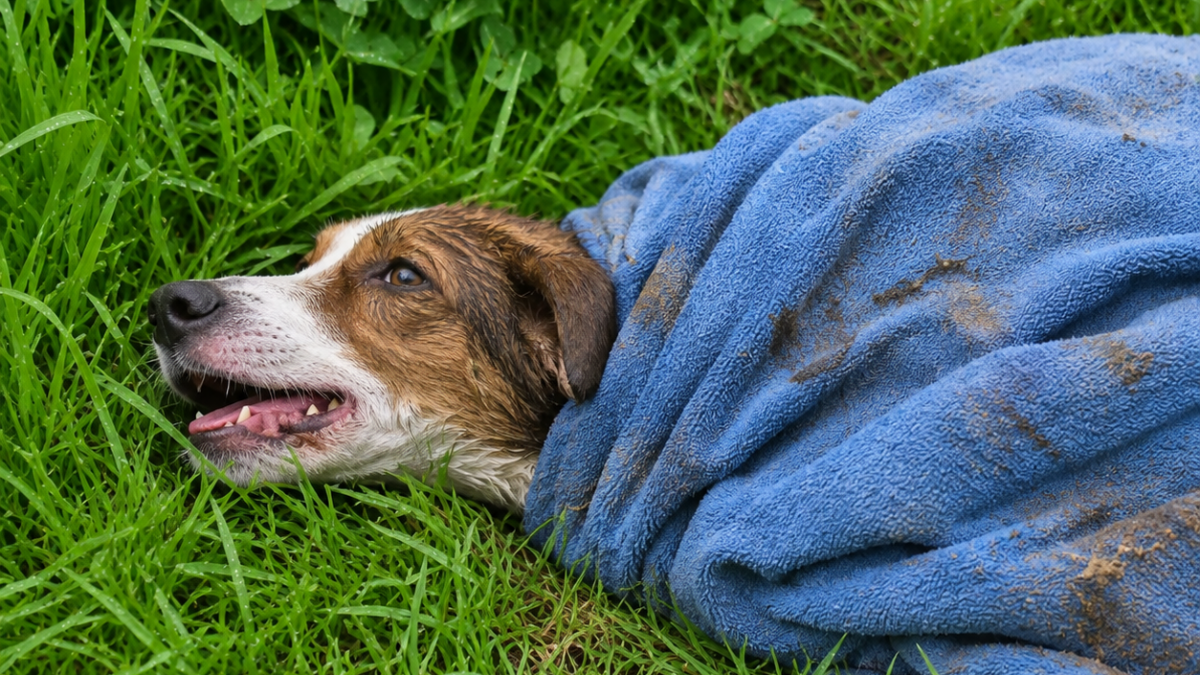
The call that changed my life began with a sentence I thought I had misheard: an elderly dog had been tied inside two garbage bags, dumped in a patch of grass, and left there alive while the woman who had brought her drove away as if she had thrown out nothing more important than household trash.
By the time I reached the couple who had opened those bags, the dog was sitting silently beside their porch with her head lowered, her gray muzzle resting almost against the ground, and there was something in the way she refused to look toward the street that made me feel as if whatever had happened inside those bags was only part of what had been broken.
What I didn’t know yet was that the woman who had tried to throw this old dog away would come back for her, deny what witnesses had seen, and eventually discover that getting rid of a life is much easier when nobody is watching.
My name is Elena, and I had been rescuing abandoned dogs for almost ten years when I received the call about Milagros.
At the time, she didn’t have that name.
She was simply “the old dog in the garbage bags.”
A man named David called me.
His voice was shaking.
“Can you come?”
“What happened?”
“My wife and I found a dog.”
“Is she injured?”
“I don’t know. She’s old. She’s scared. Somebody threw her away.”
I had heard every version of abandonment I thought existed.
Dogs tied to fences.
Dogs left outside shelters overnight.
Dogs pushed from cars.
Dogs abandoned in empty houses after owners moved.
But something in David’s voice made me sit straighter.
“What do you mean, threw her away?”
There was a pause.
“Literally.”
Twenty-five minutes later, I pulled into a quiet residential street and saw David waiting near the curb.
His wife, Laura, was sitting on their front steps.
Beside her was a small-to-medium-sized senior dog with a faded tan coat, cloudy brown eyes and a face already silver with age.
She wasn’t lying down.
She wasn’t trying to run.
She simply sat.
Still.
Too still.
I crouched several feet away.
“Hey, sweetheart.”
Her eyes moved toward me.
Her body didn’t.
Laura stroked her carefully.
“She lets us touch her.”
“Any biting?”
“No.”
“Vomiting?”
“No.”
“Can she walk?”
“Yes.”
I looked at David.
“Tell me exactly what happened.”
He pointed toward a grassy area near the end of the block.
“We were standing by our car when a woman pulled over.”
“What kind of car?”
“Gray sedan.”
“Did she get out?”
“Yes.”
Laura’s hand stopped moving on the dog’s back.
“She opened the trunk.”
David continued.
“She pulled out two black garbage bags tied together.”
My stomach tightened.
“At first, we thought she was dumping trash.”
“Then?”
“She threw them into the grass.”
“Threw?”
“Yes.”
Laura whispered, “Hard.”
I looked at the dog.
David swallowed.
“The woman walked back toward her car. Then the bags moved.”
For several seconds, I couldn’t speak.
Laura continued.
“I thought maybe there was a cat inside. We ran over.”
“Were the bags tied?”
“Yes.”
“Completely?”
“The inner one was tied tighter.”
My hands curled into fists.
David said, “We tore them open.”
“And she was inside.”
He nodded.
The old dog beside Laura lowered her head.
I sat on the pavement.
“What did the woman do?”
“She saw us.”
“And?”
“She came back.”
That surprised me.
“To help?”
David laughed once.
There was no humor in it.
“No.”
Laura’s voice hardened.
“She wanted the dog back.”
I stared at them.
“She put an elderly dog inside two garbage bags, threw her away, saw you rescue her, and then demanded her back?”
“Yes.”
“Why?”
David shook his head.
“She kept saying, ‘Give her to me. This has nothing to do with you.’”
Laura added, “She wasn’t asking if the dog was okay. She kept looking at our phones.”
Something clicked.
“She thought you’d recorded her.”
David nodded.
“I think she was afraid we’d report her.”
“Did you?”
“We called police.”
“And?”
“They took information, but the woman left before an officer arrived.”
I looked at the old dog again.
She had finally turned toward me.
I extended one hand.
She stared at it for several seconds.
Then, very slowly, she stood.
Her joints were stiff.
Her back legs trembled slightly with age.
She crossed the small distance between us and stopped.
I touched her head.
She didn’t wag.
Didn’t lean into me.
Didn’t pull away.
She simply accepted the contact as if touch had become something she endured rather than something she expected to mean love.
That broke me more than fear would have.
I whispered, “You’re not going back.”
Her eyes lifted.
I had no idea whether she understood a word.
But in that moment, I made her the promise anyway.
“Whatever happens next, nobody is throwing you away again.”
PART 2
I named her Milagros on the drive home.
It means “miracles.”
Maybe that sounds dramatic.
At the time, I didn’t care.
An elderly dog had survived being tied inside two garbage bags, thrown into grass and left there until strangers happened to notice movement.
If that wasn’t a dog who needed a miracle, I didn’t know what was.
She sat in the back seat on a folded blanket.
Not on the floor.
Not in a crate.
I wanted her to have space.
Every few minutes, I looked in the mirror.
Milagros stared through the side window.
Traffic passed.
People walked along sidewalks.
Cars stopped at lights.
She watched all of it with a strange emptiness.
Not panic.
Not curiosity.
Just distance.
“Almost there,” I told her.
No reaction.
When we reached my house, I opened the rear door and waited.
Milagros looked down at the pavement.
Then at me.
I didn’t grab her.
Didn’t pull.
After what had happened, I didn’t want her first experience with me to involve being forced anywhere.
“Take your time.”
She stayed there almost a minute.
Then stepped down.
Slowly.
One paw.
Another.
Her joints were clearly stiff, but physically she seemed far stronger than I had expected.
That became important later.
Because when people hear that someone abandoned an old dog in garbage bags, they instinctively imagine a terminal animal.
A dog dying of cancer.
A dog unable to walk.
A dog whose medical care had become unbearable.
None of those excuses would have justified what happened.
But Milagros didn’t even have those explanations.
She walked into my house under her own power.
She drank water.
She ate a small meal.
She explored the living room.
Then something happened that I remember more clearly than almost anything else from that first night.
I made her a bed inside.
A thick blanket.
Soft cushion.
Quiet corner.
She smelled it.
Walked around it.
Then walked past.
She went to the back door.
I opened it because I thought she needed to relieve herself.
Milagros stepped into the yard.
Found a dark corner near the fence.
Curled into a tight ball.
And stayed there.
“Milagros?”
She lifted her head.
“Come inside.”
Nothing.
I went closer.
She lowered her eyes.
I crouched.
“You can sleep inside.”
She remained curled against the earth.
That was when I understood something physical examinations cannot measure.
Milagros did not believe the house belonged to her.
Maybe she had been kept outdoors.
Maybe she’d been punished for entering.
Maybe the person who owned her had gradually made her feel unwanted long before putting her in those bags.
I didn’t know.
But this old dog had a warm room waiting ten feet away and chose dirt beside a fence instead.
I sat outside with her.
For nearly an hour.
I didn’t drag her inside.
Eventually I carried one of the blankets out and placed it several feet away.
Then I went back into the house and left the door open.
At 1:30 in the morning, I checked.
Milagros was still outside.
At 3:00, she had moved onto the blanket.
At 5:15, I woke to a sound.
Toenails on tile.
I walked into the kitchen.
Milagros was standing just inside the door.
I froze.
“Hi.”
She stared at me.
I stepped away.
She walked farther inside.
Not because I pulled her.
Because she chose to.
That became our first victory.
## The Veterinarian
The next morning, I took Milagros to Dr. Rachel Kim, a veterinarian who had worked with our rescue for years.
Rachel examined her from nose to tail.
Heart.
Lungs.
Teeth.
Eyes.
Joints.
Blood.
Urine.
Abdomen.
Milagros tolerated everything with the same quiet resignation.
At one point Rachel stopped.
“She’s remarkably healthy.”
I thought I had misheard.
“What?”
“For her age.”
“She isn’t sick?”
“She has normal senior-dog issues.”
“Cancer?”
“Nothing obvious.”
“Kidney failure?”
“Bloodwork will tell us more, but nothing here screams advanced disease.”
“Heart failure?”
“No.”
“Can’t walk?”
Rachel stared at me.
“You watched her walk in.”
“I know.”
I was angry now.
Not at Rachel.
At the absence of any explanation that made the abandonment less incomprehensible.
Rachel took off her stethoscope.
“Elena.”
“What?”
“Stop searching for the medical reason.”
I looked at her.
“There may not be one.”
I sat down.
Milagros stood between my knees.
“She put a healthy old dog in garbage bags.”
“Yes.”
“Why?”
Rachel shook her head.
“People do terrible things for very ordinary reasons.”
That sentence stayed with me.
People do terrible things for ordinary reasons.
Inconvenience.
Age.
Moving.
A new relationship.
A landlord.
A dog who needs bathroom breaks more often.
A dog who no longer looks young.
A dog who once served a purpose and doesn’t anymore.
Maybe the reason would be ordinary.
The act was not.
## The Police Report
David and Laura had taken down part of the license plate.
That saved us.
So did a house across the street.
A doorbell camera had captured the gray sedan entering the block.
Another camera caught it leaving.
The footage didn’t clearly show the dumping itself.
But the times aligned.
Police identified the registered owner.
Her name was Teresa Vale.
Fifty-three.
Local address.
No serious criminal record.
No mystery.
No underground animal trafficking ring.
No monstrous villain hiding in darkness.
Just a woman with a car, a house, and enough normalcy around her that she believed she could put a living animal inside garbage bags and drive home.
Officer James Moreno handled the follow-up.
He called me that evening.
“We spoke with her.”
I sat straighter.
“And?”
“She denies abandoning the dog.”
I laughed.
“Of course.”
“She says Milagros ran away.”
“Inside two garbage bags?”
“She disputes that part.”
“Two people saw her.”
“I know.”
“She came back and tried to take Milagros from them.”
“I know.”
“What does she say about that?”
“She says she recognized her missing dog and wanted her returned.”
I stood.
“She recognized her missing dog immediately after being seen throwing the moving bags?”
“Elena.”
“James, come on.”
“I’m telling you her statement, not saying I believe it.”
I sat back down.
“What happens?”
“We collect evidence.”
“How long?”
“As long as it takes.”
I hated that answer.
But unlike Milagros, the legal case had time.
She was safe.
That mattered.
## Her Old Name
Teresa provided veterinary records.
That surprised us.
Milagros had once been called Sophie.
The records were real.
For years, she’d received routine vaccinations.
Basic care.
Occasional dental work.
Nothing suggested lifelong abuse.
That somehow made everything more disturbing.
Sophie had once been cared for.
She had lived with Teresa for more than ten years.
Ten years.
Maybe twelve.
Officer Moreno asked if I wanted to know.
I said yes.
Then regretted it.
There were photographs recovered from Teresa’s social-media page.
Old ones.
A younger Milagros on a couch.
Milagros in a Christmas sweater.
Milagros beside a birthday cake.
Milagros sitting in a car.
Captions:
**My girl.**
**Best dog ever.**
**My baby.**
I stared at the screen.
“What happened?”
James sat across from me.
“That’s the question.”
A decade of “my baby.”
Then garbage bags.
Love doesn’t always vanish in one moment.
Sometimes responsibility disappears first.
Then patience.
Then kindness.
Then someone rewrites history so completely they convince themselves the animal they once loved has become disposable.
## Teresa Comes Back
Three days after Milagros arrived at my house, Teresa appeared at my gate.
I don’t know how she got my address.
I later learned someone connected to the original neighborhood had mentioned which rescue had taken the dog, and she followed pieces from there.
At 4:22 p.m., my doorbell camera alerted.
I looked at the screen.
Gray sedan.
Woman.
My stomach turned.
Milagros was sleeping in the living room.
Teresa knocked.
I didn’t open the door.
“Are you Elena?”
I stayed silent.
“I know you have my dog.”
Milagros lifted her head.
The voice traveled through the door.
Every change in her body happened instantly.
Her ears flattened.
Her shoulders tightened.
She stood.
Then backed away.
That told me more than a hundred old Christmas photographs.
Teresa knocked again.
“Sophie!”
Milagros froze.
“Sophie!”
She didn’t run toward the door.
She moved behind my dining table.
My hands started shaking.
I called James.
Then I answered through the closed door.
“You need to leave.”
Teresa’s voice hardened.
“That’s my dog.”
“No.”
“Yes, she is.”
“You abandoned her.”
“You don’t know what happened.”
“Two witnesses do.”
“They’re lying.”
“There’s a police investigation.”
“You people stole her.”
I looked toward Milagros.
She was crouched low.
“You are frightening her.”
“She’s my dog. She knows me.”
“Yes.”
That word slipped out before I planned it.
Teresa stopped.
I continued.
“She does know you.”
Silence.
“And she’s hiding.”
## The Confrontation at My Gate
Teresa started explaining.
Not apologizing.
Explaining.
Milagros had become difficult.
She had accidents in the house.
She barked at night.
She smelled.
She needed more attention.
Teresa was “under stress.”
Her adult daughter had moved back home with a baby.
There was no room.
She had tried to find someone to take the dog.
Nobody wanted an old dog.
“I panicked,” she said.
I stood behind my locked door.
“So you put her in garbage bags.”
“I did not mean to hurt her.”
“How does tying an animal inside plastic not mean to hurt her?”
“I left them loose.”
“Two layers.”
“I thought someone would find her.”
There it was.
The sentence that appears over and over in abandonment stories.
I thought someone would find her.
The magical stranger.
The invisible person expected to arrive after someone else chooses cowardice.
“You didn’t leave her at a shelter.”
“They ask questions.”
I actually closed my eyes.
“They ask questions?”
“Yes.”
“So you wanted to avoid questions.”
“No.”
“That is exactly what you just said.”
She began crying.
Maybe genuinely.
I didn’t care yet.
“I loved that dog.”
I looked toward Milagros hiding beneath the table.
“Then you failed her in the ugliest way possible.”
Teresa hit the gate with her palm.
“I want her back.”
“No.”
“You can’t keep her.”
“No.”
“She belongs to me.”
Behind me, Milagros began trembling.
The police cruiser arrived two minutes later.
Teresa left without the dog.
Again.
## The Investigation Deepens
The couple’s statements were detailed.
David had seen Teresa open the trunk.
Laura had watched her lift the bags.
Both saw the bags land in the grass.
Both saw movement afterward.
Both opened them.
Both saw Teresa return.
Their stories matched independently.
The doorbell camera recorded Teresa’s car.
My camera now recorded her admission that she had been trying to get rid of Milagros, even if she attempted to soften how.
The old veterinary records established ownership.
That mattered.
She could not simultaneously argue that Milagros wasn’t hers when dumped and was hers when she wanted her back.
The case became stronger.
## Milagros Didn’t Care About the Case
Her world was smaller.
Food.
Water.
Doorways.
Beds.
Hands.
Distance.
The first week, she never initiated affection.
If I touched her, she accepted it.
If I stopped, she didn’t ask for more.
She never brought toys.
Never wagged when I came home.
Never barked happily.
Nothing.
At night, she still sometimes went outside and tried to sleep near the fence.
I stopped forcing the issue.
I put a covered bed near the back door.
Then another halfway to the living room.
Then one beside my couch.
Three beds.
Three choices.
For several nights, she used the one closest to the door.
Then the middle one.
On the ninth night, I woke at 2:00 a.m. and found Milagros asleep beside my couch.
Not touching me.
But inside.
That was enough.
## The First Tail Wag
It happened over chicken.
Of course.
I had cooked plain chicken for one of my foster dogs.
Milagros smelled it.
She entered the kitchen.
I turned.
“Interested?”
Her ears lifted.
I held out a tiny piece.
She took it gently.
Then looked at my hand.
Another.
Her tail moved.
One small sweep.
I stopped breathing.
“Did you just wag?”
Milagros stared at the chicken.
Another wag.
Not for me.
Fine.
I would take chicken-based affection.
I laughed.
“You have terrible priorities.”
For the first time, her mouth opened slightly in what almost looked like a smile.
## Her Health
The final bloodwork confirmed what Rachel had suspected.
Milagros was old.
But not dying.
Mild arthritis.
Some dental disease.
Early changes that required monitoring.
Nothing remotely close to a reason to treat her as hopeless.
I asked Rachel how many years she might have.
She gave me the answer veterinarians always give.
“Impossible to predict.”
“One?”
“Maybe.”
“Three?”
“Maybe.”
“Five?”
“Elena.”
“What?”
“Stop asking me to negotiate with time.”
I looked at Milagros.
She was sleeping on a blanket.
“How much time would have been inside those bags?”
Rachel’s face changed.
“Not enough.”
## The Legal Hearing
Teresa’s attorney argued that the dumping had been misunderstood.
She had been attempting to “temporarily surrender” Milagros.
In garbage bags.
On grass.
Without telling anyone.
I sat behind James trying not to make sounds.
The attorney continued.
Teresa had panicked.
Was under emotional strain.
Had no intention of killing the dog.
The prosecutor—or local equivalent handling the cruelty matter—played the witness statements.
Then portions of the camera footage.
Then my doorbell recording.
Teresa’s voice:
**Nobody wanted an old dog.**
Then:
**Shelters ask questions.**
Then:
**I thought someone would find her.**
You could feel the story collapse.
## David Testifies
David hated public speaking.
He told me before the hearing that his hands were shaking.
Still, he stood.
The attorney asked:
“Did you actually see Mrs. Vale place a dog inside those bags?”
“No.”
“So you do not know who put the animal inside.”
“No.”
The attorney looked satisfied.
Then David added:
“But I saw her take the bags out of her trunk, throw them into the grass, get back in her car, and return after my wife and I opened them.”
The attorney paused.
David continued.
“The dog was tied inside.”
The room went quiet.
“When Mrs. Vale returned, did she appear surprised to see her dog inside?”
“No.”
That mattered.
“Did she ask whether the dog was injured?”
“No.”
“Did she ask whether the dog could breathe?”
“No.”
“What did she ask?”
David looked toward Teresa.
“She told us to give her back.”
## Laura Testifies
Laura was sharper.
The defense asked whether Teresa may have been emotionally overwhelmed.
Laura answered:
“So was the dog.”
Even the judge looked up.
The attorney tried again.
“Mrs. Vale appeared upset when she returned?”
“Yes.”
“So she may have been distressed about her dog.”
“No.”
“How can you know that?”
“Because she kept asking whether we had filmed her.”
Silence.
That single sentence did more damage than ten minutes of argument.
## My Statement
I wasn’t there to discuss the dumping itself.
I hadn’t witnessed it.
I testified about Milagros afterward.
Her behavior when Teresa came to my home.
The hiding.
The trembling.
The lack of engagement.
The decision to sleep outdoors despite having access to warm beds.
The veterinarian’s findings.
The fact she was not terminally ill.
The fact she walked.
Ate.
Recovered emotionally.
Teresa’s attorney asked:
“You cannot medically prove the dog’s emotional behavior was caused by Mrs. Vale.”
“No.”
“So your interpretation is subjective.”
“Yes.”
The attorney smiled.
Then I added:
“But I can tell you the dog hid under my table when she heard Mrs. Vale call her old name.”
The smile disappeared.
## The Ruling
Milagros would not be returned to Teresa.
That was the first thing I needed.
Everything after became secondary.
The cruelty and abandonment case carried penalties, court-ordered consequences and restrictions concerning future animal ownership under the applicable law.
Teresa cried.
I watched her.
For months, I had imagined enjoying that.
I didn’t.
Human beings are complicated.
Maybe she had loved Milagros once.
Maybe part of her still did.
That didn’t erase what she’d done.
Love without responsibility can become almost meaningless to the being depending on you.
The court did not need to decide whether Teresa had ever loved Milagros.
It only had to decide what she had done.
## Teresa Tries One Last Time
Outside the courthouse, she approached me.
James moved closer.
I held up a hand.
“It’s okay.”
Teresa stopped several feet away.
“Can I see her?”
“No.”
Her face crumpled.
“Just once.”
“No.”
“I raised her.”
“I know.”
“She slept in my bed for years.”
“I know.”
“You think I’m a monster.”
I thought about it.
“No.”
That surprised her.
“I think you made a monstrous choice.”
She looked down.
“There’s a difference.”
She began crying harder.
“I don’t know why I did it.”
I believed her.
That’s what made it worse.
Not every terrible act comes from a person who wakes up planning cruelty.
Sometimes it comes from someone who keeps choosing the easiest selfish option until they reach a place they never imagined themselves capable of reaching.
But Milagros wasn’t a lesson Teresa had the right to relearn at Milagros’s expense.
“You don’t get her back so you can feel better about yourself.”
Teresa closed her eyes.
I continued.
“Your guilt belongs to you.”
That was the last real conversation we ever had.
## Milagros Learns the Couch
About a month after rescue, Milagros began standing beside the couch.
Not climbing.
Just looking.
I patted the cushion.
“Come on.”
Nothing.
I tried again the next day.
Nothing.
Then one evening I fell asleep watching television.
I woke because something heavy pressed against my leg.
Milagros.
On the couch.
Curled beside me.
Not touching much.
But there.
I didn’t move.
Didn’t even reach for my phone.
I was afraid any movement would break the moment.
She slept for forty minutes.
The next night, she climbed up again.
By the third week, she acted like the couch had always belonged to her.
Healing can be shameless once it gets started.
## The Other Dogs
At first, Milagros ignored them.
I had two permanent dogs and one foster.
Benny, a senior Beagle.
Lola, a mixed-breed adult.
And Archie, the foster puppy who believed every living creature wanted to wrestle.
Milagros tolerated Benny.
Ignored Lola.
Hated Archie.
Not aggressively.
With pure elderly disgust.
Archie bounced toward her.
Milagros stared.
Archie bounced again.
Milagros turned away.
He followed.
She looked at me as if asking why I had allowed this idiot into the house.
Eventually she began correcting him.
One quiet growl.
He learned.
Then something surprising happened.
A few weeks later, I found Archie asleep against Milagros’s side.
She was awake.
She could have moved.
She didn’t.
## The First Toy
Milagros had no interest in toys until she saw Lola carrying a stuffed rabbit.
Lola dropped it.
Milagros approached.
Smelled it.
Picked it up.
Then walked away.
Lola watched.
I watched.
Milagros carried the rabbit to her bed.
That was theft.
I encouraged it completely.
I bought five more toys the next day.
Milagros ignored every one.
Only Lola’s rabbit mattered.
Lola eventually surrendered ownership.
Diplomacy achieved.
## Food
Milagros never appeared starved physically.
But she was cautious around meals.
She ate slowly.
Sometimes stopped if someone walked behind her.
Sometimes looked toward the door.
I began feeding her in a quiet corner.
No pressure.
No competition.
Eventually, she stopped checking.
One day, she left three pieces of kibble in the bowl.
I stared at them.
Ridiculous.
Three pieces.
But I knew what it meant.
She had learned unfinished food would still exist later.
She had begun trusting abundance.
## The Name
People asked why I didn’t call her Sophie.
Because Sophie belonged to Teresa.
That wasn’t entirely fair.
A name doesn’t belong to the person who says it.
But Milagros responded to her new name quickly.
“Milagros.”
Head turn.
“Milagros.”
Tail wag.
Eventually “Sophie” produced nothing.
Maybe she forgot.
Maybe she chose differently.
Maybe dogs simply respond to what is repeated with kindness.
I didn’t need a philosophical answer.
Milagros was Milagros.
## Adoption
That was the plan.
It always is.
Rescue.
Stabilize.
Foster.
Adopt.
I posted her profile.
**Senior female. Gentle. Quiet. House trained. Good with calm dogs. Loves soft beds, chicken, and stealing one particular rabbit toy from another dog.**
Applications came.
Not many.
Senior dogs get fewer.
People want years.
Puppies.
Energy.
A longer imagined future.
Milagros had a gray face and an unknown number of birthdays left.
One family liked her but wanted a dog that could hike.
Another worried about future veterinary bills.
Fair concerns.
Then a woman named Carol applied.
Sixty-six.
Retired librarian.
Widow.
No pets.
Fenced garden.
Excellent veterinary history.
Her last dog had lived to sixteen.
Carol wrote:
**I don’t need ten years. I need whatever years she has, if she wants to spend them with me.**
I cried reading that.
Then I hated Carol immediately.
That’s what happens when a good adopter appears.
## The Meeting
Carol came to my house.
Milagros was polite.
Nothing dramatic.
She smelled Carol.
Accepted a treat.
Walked away.
Carol didn’t chase.
Good.
She sat on the couch.
Milagros eventually returned.
Then did something she’d never done with a stranger.
She placed her head on Carol’s knee.
I stared.
Carol didn’t move.
“Hello,” she whispered.
Milagros closed her eyes.
I looked at David and Laura’s original rescue photo on my phone.
The dog inside torn black plastic.
Then at the dog resting against a retired librarian.
It felt too easy.
I distrusted it.
## The Home Visit
Carol’s house was small.
Warm.
Books everywhere.
Rugs on the floors for traction.
A garden with shade.
Low steps.
No other animals.
One enormous orthopedic dog bed near a window.
“You already bought that?”
Carol looked embarrassed.
“Return policy.”
I smiled.
“You’re confident.”
“No.”
She looked toward the bed.
“Hopeful.”
That word did it.
## Adoption Day
I packed Milagros’s things.
Food.
Medication for mild arthritis.
Medical records.
Blanket.
Lola’s stolen rabbit.
Lola watched me pack the rabbit.
She looked offended.
“Consider it your charitable contribution.”
No sympathy.
Carol arrived.
Milagros greeted her with a tail wag.
A real one.
Not chicken-based.
Not tiny.
Her whole tail.
I knelt.
“So that’s it?”
Milagros licked my hand.
“You’re leaving?”
Wag.
“After I defended you in court?”
Wag.
“Ungrateful.”
Carol laughed.
I cried.
Then Carol cried.
Milagros looked delighted by the attention.
## The Car
The hardest part was the garbage-bag memory I couldn’t know she had.
Cars had been part of the abandonment.
A trunk.
Transport.
Then disposal.
So we did not put Milagros in Carol’s trunk area.
Obviously.
She rode in the back seat with a safety harness.
Carol opened the door.
Waited.
Milagros looked inside.
Then climbed up.
No hesitation.
I exhaled.
Maybe dogs are better than humans at refusing to let one terrible moment own every similar object forever.
## Her First Night With Carol
The first photograph arrived at 8:42 p.m.
Milagros on the orthopedic bed.
Rabbit beside her.
Caption:
**She had dinner, walked the garden, and is now ignoring me professionally. I think we’re doing well.**
The second photograph came at 11:17.
Milagros on Carol’s bed.
Caption:
**Correction: boundaries have collapsed.**
Perfect.
## The Garden
Milagros loved it.
Not for running.
She was old.
She liked sun.
Warm grass.
Smells.
Carol placed a cushion under the porch because Milagros sometimes chose to lie outside.
The difference from my first night with her made me emotional.
Before, she’d gone outside to hide.
Now she went outside because she liked the sun.
Then came back inside whenever she wanted.
Choice changes the meaning of the same behavior.
## David and Laura Visit
Months after the rescue, I arranged a meeting.
They hadn’t seen Milagros since handing her to me.
Carol agreed.
David crouched when she arrived.
“Hey, old girl.”
Milagros approached.
Smelled him.
Tail wag.
Laura started crying.
“She looks completely different.”
Physically, she didn’t look that different.
Still gray.
Still old.
Still the same body.
But Laura was right.
Her face had changed.
There was expectation now.
Curiosity.
Presence.
She stood beside Carol as if that position in the world had always been hers.
David whispered:
“We thought she was going to die.”
Carol looked startled.
“Really?”
“In those bags…”
He stopped.
Carol put one hand over her mouth.
She knew the story.
Knowing facts is different from hearing a witness’s voice crack while telling them.
Milagros nudged Carol’s hand.
Attention requested.
Conversation over.
## Teresa’s Penalties
The legal process concluded.
There were penalties for abandonment and cruelty under the law that applied, along with restrictions related to animal ownership.
Some people online wanted something more dramatic.
Prison forever.
Public humiliation.
They wanted Teresa destroyed.
I understood the anger.
But Milagros had become more important to me than Teresa.
I stopped checking every legal development.
James handled the updates.
The result that mattered most was permanent:
Teresa would not get Milagros back.
## The Apology Letter
Six months after the case, Teresa sent a letter through the rescue.
I almost threw it away.
Then I read it.
She wrote that she had loved Sophie.
That after her daughter and grandchild moved in, everything felt chaotic.
That Sophie had begun having accidents.
That Teresa had become angry.
Embarrassed.
Overwhelmed.
She had called two people asking them to take the dog.
Both said no.
She had considered a shelter.
Then imagined being judged.
So she did something worse than the judgment she feared.
She wrote:
**I don’t know how I became the person who did that.**
I believed that sentence.
She asked for no contact.
No return.
Only wanted me to tell Milagros she was sorry.
I didn’t.
Dogs don’t need apologies delivered on behalf of humans.
The apology wasn’t for Milagros.
It was for Teresa.
I kept the letter in the case file.
## Milagros at One Year
Carol held a small celebration.
No birthday date existed.
So rescue day became her “home day.”
Milagros wore a ridiculous bandana.
Hated it.
Received chicken.
Loved that.
David and Laura came.
I came.
James came briefly.
Even Dr. Rachel Kim stopped by.
Milagros moved from person to person.
Tail wagging.
Accepting affection.
Demanding food.
The old dog who once wouldn’t wag at all was now an experienced manipulator.
I was proud.
## Her Health Changes
Age eventually did what age does.
Arthritis worsened.
Her hearing declined.
Vision became cloudier.
Carol adjusted everything.
Ramps.
Night lights.
Rugs.
Pain medication.
More frequent veterinary checks.
Nobody complained that Milagros was inconvenient.
That word had been erased from her life.
One morning Carol called.
“She peed inside.”
I waited.
“And?”
“I cleaned it.”
That was all.
I cried after hanging up.
Because somewhere in that simple sentence was the entire difference between Carol and Teresa.
The same problem.
A completely different choice.
## Another Accident
Weeks later, Milagros had diarrhea overnight.
Carol woke to a mess.
She sent me a photo of Milagros looking guilty.
Caption:
**Crime scene extensive. Suspect remorseful. No charges filed.**
I laughed so hard I had tears in my eyes.
A dog should not have to fear losing a home because her old body fails in ordinary ways.
Milagros never had to again.
## The Garbage Bags
Carol never used black garbage bags around Milagros.
Not because we knew Milagros feared them.
We didn’t.
Carol simply couldn’t bear the idea.
She bought white kitchen bags.
Paper lawn bags.
Anything else.
I once told her she didn’t have to do that.
“I know.”
“Milagros probably doesn’t connect them.”
“I know.”
“Then why?”
Carol shrugged.
“Because I do.”
Humans need rituals too.
## Teresa Sees Her Again
Three years after the rescue, something happened I hadn’t planned.
Carol and I were leaving a veterinary clinic with Milagros when Teresa entered the parking lot.
She saw us.
Stopped.
I recognized her immediately.
So did she.
Milagros was sniffing the grass.
Didn’t react.
Teresa looked at Carol.
Then at Milagros.
Her eyes filled.
She didn’t approach.
Good.
Carol whispered, “Is that her?”
“Yes.”
Teresa stood maybe thirty feet away.
Milagros turned.
For one second, their eyes may have met.
I don’t know.
Then Milagros looked at Carol.
Walked toward her.
Leaned against her leg.
Teresa covered her mouth.
I felt something sharp inside me.
Not joy.
Not exactly.
But there was justice in the simplicity of it.
Milagros had chosen where home was.
No courtroom needed.
Teresa turned and left.
## The Revenge Everyone Wanted
People who heard that story loved it.
“She ignored the woman who dumped her!”
“Perfect revenge!”
Maybe.
But I don’t think Milagros was taking revenge.
That idea gives dogs too much of our human hunger for symmetry.
She probably wasn’t thinking:
You hurt me, so now I’ll hurt you.
She was probably thinking:
Carol is here.
That was better.
The best revenge is not always making the person who hurt you suffer.
Sometimes it’s reaching a point where they are no longer important enough to control what you feel.
## Five Years
Nobody expected five.
Remember, Milagros was already old.
Yet five rescue anniversaries came.
She became very gray.
Then almost white around the muzzle.
Her walks shortened.
She slept more.
Loved food.
Loved Carol.
Loved sun.
Still stole the rabbit even though it had been repaired four times.
Carol joked the toy was now more thread than rabbit.
Milagros did not care.
## David’s Question
At the fifth anniversary, David asked:
“Do you ever think about what would’ve happened if we hadn’t been there?”
I hated that question.
“Yes.”
Laura looked away.
The bags were plastic.
Tied.
Sun was warm.
Milagros was elderly.
Maybe somebody else would have noticed.
Maybe not.
We don’t live inside that version.
David said, “We almost left before the woman arrived.”
“What?”
“We were standing there talking. Laura wanted to go.”
Laura hit his arm.
“Don’t say it like that.”
He smiled sadly.
“Five minutes.”
I looked at Milagros sleeping.
Life is full of terrifying five-minute differences.
## Carol’s Health
Then life complicated itself.
Carol developed cancer.
Not immediately terminal.
But serious.
She called me before telling many friends.
“My first thought was Milagros.”
Of course.
“What if something happens to me?”
“We’ll take care of her.”
“I know.”
“You have it in writing.”
“I know.”
“Then focus on you.”
Carol laughed softly.
“Easy for you to say.”
Milagros stayed beside her through treatment.
When Carol rested, Milagros rested.
When Carol was sick, Milagros stayed near the bed.
The old dog who had once been discarded because someone couldn’t handle inconvenience now lived through months where her own person became inconvenient to everyone except those who loved her.
Love survived chemotherapy.
Appointments.
Fatigue.
Mess.
Fear.
That’s what responsibility looks like.
## Carol Recovers
Treatment worked.
Not perfectly.
But enough.
One afternoon, Carol sent a photo.
She was sitting in the garden.
Milagros beside her.
Both looked older.
Both alive.
Caption:
**Two stubborn old ladies.**
I printed it.
## Milagros Stops Climbing Stairs
Around year six, her back legs weakened.
No crisis.
Just age.
Carol put a ramp over the porch steps.
Milagros distrusted it.
She stood at the bottom.
Stared.
Carol placed chicken halfway up.
Milagros became an engineer.
Within five minutes, ramp mastered.
Food remains one of civilization’s greatest technologies.
## The Last Winter
Milagros began losing weight.
Slowly.
Bloodwork showed kidney disease.
Common in old dogs.
Manageable for a while.
Diet.
Medication.
Fluids eventually.
Carol learned everything.
She never asked:
“How much is this old dog worth?”
She asked:
“Is she comfortable?”
That question became the measure.
## The Day She Wouldn’t Eat
Carol called at 6:30 a.m.
“She won’t take chicken.”
I knew.
I drove over.
Milagros lay on her bed.
Rabbit beside her.
Carol sat on the floor.
“She drank a little.”
I crouched.
“Hey, miracle.”
Milagros opened her eyes.
Tail moved.
Tiny.
Like the first wag in my kitchen years earlier.
I swallowed.
“You’re still doing that?”
Another small movement.
## Dr. Kim Comes to the House
Rachel had aged too.
We all had.
She examined Milagros gently.
Heart.
Lungs.
Gums.
Abdomen.
Kidneys had progressed.
Arthritis.
Weakness.
Fatigue.
Carol asked:
“Can we give her more time?”
Rachel answered the only honest way.
“Yes.”
Then:
“But the question is what that time feels like.”
Silence.
Carol looked at Milagros.
“When do I know?”
“You won’t get perfect certainty.”
Rachel’s voice softened.
“You’ll get enough.”
## One More Week
Milagros rallied.
She ate.
Went into the garden.
Lay in sunlight.
Stole a small piece of toast.
Carol called it “the farewell tour.”
Dark humor keeps people standing sometimes.
David and Laura visited.
Milagros wagged.
James came.
Older, promoted, less hair.
Milagros ignored him until he produced treats.
Appropriate.
## The Final Morning
Milagros woke before sunrise.
Carol opened the back door.
Milagros walked into the garden.
Slowly.
She chose the same kind of place she once would have hidden in—a quiet corner near a fence.
Carol panicked.
“Elena.”
I was already there.
We followed.
Milagros circled.
Then lay down.
Not hiding.
Just tired.
Sun began coming through the trees.
Carol spread a blanket beneath her.
Milagros accepted it.
There was a strange symmetry.
First night with me, she had chosen dirt because she didn’t believe she deserved the house.
Final morning with Carol, she chose the garden because she knew the house would still be there if she wanted it.
Those are very different things.
## Chicken
We offered chicken.
She ate one piece.
Refused another.
No hunger.
No anxiety.
No need to hoard.
Just enough.
Carol kissed her forehead.
“You’ve become very expensive and very bossy.”
Tail movement.
“Worth every penny.”
Another.
## Goodbye
Rachel arrived.
No clinic.
No metal table.
No fluorescent lights.
Milagros stayed on the blanket in the garden.
Carol held her face.
I sat beside them.
The stuffed rabbit rested near her front paws.
Before giving the medication, Rachel asked:
“Ready?”
Nobody is.
Carol nodded anyway.
Milagros relaxed.
Her breathing slowed.
I touched her head.
Same place I touched her outside David and Laura’s house years earlier.
Back then, she had simply tolerated me.
Now she leaned slightly into my palm.
Maybe reflex.
Maybe recognition.
I chose recognition.
Carol whispered:
“You were never garbage.”
My throat closed.
Milagros breathed out.
Then again.
Then no more.
Rachel listened.
Waited.
Looked at us.
“She’s gone.”
## We Didn’t Use a Garbage Bag
This detail mattered to all of us.
After Milagros died, the veterinary service wrapped her in her blanket.
Not plastic.
Not hidden.
Not tied.
Carol held her for a long time.
When the cremation service came, they carried her respectfully.
I know that sounds obvious.
It should be obvious.
But after the way her second life began, every ordinary dignity mattered.
## Her Ashes
Carol kept most.
A small portion went to David and Laura.
They hadn’t asked.
Carol offered.
“You’re part of why she got years.”
They cried.
Another small portion came to me.
I placed it beside a photograph.
Not the garbage-bag photo.
A picture of Milagros asleep on Carol’s bed, belly exposed, rabbit toy nearby.
That was the dog I wanted remembered.
## Teresa Hears
I don’t know exactly how Teresa learned Milagros had died.
She sent one final letter.
Short.
**Thank you for giving her what I failed to give her at the end. I am sorry.**
I believed the apology.
I still didn’t excuse the act.
Both things can coexist.
People want stories where bad people remain perfectly bad forever because it makes morality easier.
Real life is harder.
Teresa may have regretted it every day.
Milagros still deserved to be removed from her forever.
Regret is not ownership.
Guilt is not restitution.
An apology does not reopen a door that had to be closed for someone’s safety.
## The Real Punishment
Was Teresa’s legal punishment enough?
People asked.
I stopped caring about the exact answer years before.
The part that mattered was this:
She had thrown Milagros away because she decided the dog’s old age and inconvenience were more than she wanted to carry.
Then she spent years knowing someone else gladly carried them.
The accidents.
The arthritis.
The medication.
The ramps.
The kidney disease.
The vet bills.
The gray face.
The slow walks.
The final morning.
Everything Teresa had treated as burden became precious to Carol.
That contrast was sharper than any revenge I could have invented.
## The Two Garbage Bags
I once asked James what happened to the bags.
Evidence for a while.
Then discarded after the case.
Good.
They didn’t deserve preservation.
Like Aura’s chain in another case I’d worked, some objects shouldn’t become monuments.
Milagros was the monument.
## The Garden Bed
Carol kept Milagros’s outdoor cushion near the fence for months.
Eventually rain ruined it.
She threw it away.
Then called me crying.
“I feel terrible.”
“It’s a cushion.”
“I know.”
“Milagros destroyed three beds in her lifetime.”
“Two.”
“Three.”
“Fine.”
We laughed.
Grief needs permission to be ridiculous.
## The Rabbit
The rabbit lasted longer.
Carol gave it to me.
I kept it in the rescue office.
One ear missing.
Body stitched.
New dogs sometimes smelled it.
I never let them destroy it.
Maybe hypocritical.
I didn’t care.
## A New Senior
Eight months after Milagros died, an elderly dog came into our rescue.
His owner had died.
Family couldn’t keep him.
Different story.
No cruelty.
Just loss.
He refused food the first day.
Sat near the shelter door.
Wouldn’t interact.
I brought the rabbit.
Placed it near him.
He smelled it.
Then rested his head beside it.
I thought of Milagros.
Not because I believed the toy carried magic.
Because rescue is full of objects that accumulate meaning humans need.
## Carol Adopts Again
Two years later, Carol adopted another senior dog.
Of course she did.
A thirteen-year-old named Walter.
Half deaf.
Terrible teeth.
Chronic skin condition.
I asked:
“Are you insane?”
“Yes.”
“Good.”
Walter peed in her hallway the first night.
Carol texted:
**Apparently I have a type.**
Milagros had changed the direction of more than one life.
## The Couple
David and Laura became rescue volunteers.
Not full time.
Transport.
Home checks.
Emergency calls.
David once told a new volunteer:
“If a bag moves, stop.”
Dark.
Simple.
True.
They kept a photograph of Milagros in their kitchen.
Not because she had lived with them.
Because witnessing one terrible thing had changed what they were willing to ignore afterward.
## What I Learned
I used to believe abandonment happened when people stopped loving an animal.
Milagros taught me that’s too simple.
Some people still feel something they call love while abandoning.
That’s why love is not the standard.
Responsibility is.
Love can be emotional.
Temporary.
Self-serving.
Responsibility is what gets you out of bed when an old dog needs the bathroom at 3:00 a.m.
Responsibility pays for arthritis medication.
Cleans accidents.
Changes plans.
Asks for help before desperation becomes cruelty.
Carol didn’t “love” Milagros more on day one than Teresa had over ten years.
But Carol treated that love like an obligation.
That’s the difference.
## Seven Years Later
People still shared Milagros’s old rescue story online from time to time.
Sometimes they used the worst photograph.
Black plastic torn open.
Gray muzzle emerging.
I hated seeing it.
Not because it was false.
Because it froze her at the moment someone else had defined her as disposable.
So whenever people asked me for a photograph, I sent another.
Milagros in Carol’s garden.
Eyes half closed.
Sun on her face.
Gray muzzle.
Full belly.
Safe.
That was more true.
## If I Could Speak to Her in the Bags
Sometimes I imagine it.
I would kneel beside those two black bags before David and Laura opened them.
Milagros would be inside.
Confused.
Unable to understand why the person she knew had put her there.
I would tell her:
“You’re going to breathe fresh air in a few seconds.”
“A woman named Laura is going to touch you carefully.”
“A man named David is going to make a phone call.”
“I’ll come.”
“You won’t trust me much.”
“That’s fine.”
“You’ll sleep outside because you won’t believe a house can be yours.”
“Then you’ll come inside.”
“You’ll steal somebody else’s stuffed rabbit.”
“You’ll learn the couch.”
“A librarian named Carol will fall in love with you.”
“You’ll have accidents.”
“She’ll clean them.”
“You’ll get arthritis.”
“She’ll build ramps.”
“You’ll get kidney disease.”
“She’ll learn how to give fluids.”
“You’ll become old enough that we stop knowing exactly how old you are.”
“You’ll die in a garden with people touching you gently.”
“And nobody will ever put you in a bag again.”
## The Most Important Moment
People assume it was the rescue.
The bags moving.
The confrontation.
The court.
For me, it was much smaller.
One night, months after Carol adopted Milagros, she sent me a photo.
Milagros asleep.
Completely upside down.
Belly exposed.
Legs in the air.
A dog does not sleep like that if she believes she may need to run.
That photograph told me she had arrived.
Not physically.
Emotionally.
Home.
## The Woman Who Threw Her Away
Teresa does not deserve the last paragraph of Milagros’s story.
So she won’t get it.
Her act was terrible.
It started the story people heard.
But it did not own the ending.
## THE END
Milagros was an old dog when someone tied her inside two garbage bags and threw her into the grass.
Maybe Teresa believed age had reduced her value.
Maybe inconvenience had replaced affection.
Maybe shame made a shelter feel harder than secrecy.
Whatever explanation existed, the result was the same.
An animal who had spent more than a decade trusting one person suddenly found herself trapped in darkness, unable to understand why the familiar hands that had once fed her and stroked her had become the hands tying plastic around her life.
But the bags moved.
That tiny movement mattered.
David saw it.
Laura saw it.
They stopped.
They opened them.
One act of cruelty met one act of attention.
Then another.
A phone call.
A rescue.
A veterinarian.
A police report.
A court.
A foster home.
A retired librarian.
A couch.
A garden.
A stolen stuffed rabbit.
Years.
When Milagros first came into my house, she chose to sleep outside because some part of her seemed convinced she no longer belonged anywhere warm.
Years later, on her final morning, she chose to lie outside again.
But this time there was an open door behind her.
A bed inside.
Food in the kitchen.
A woman who would have carried her back in if she’d asked.
She lay in the garden because she wanted the sun.
That is the distance Milagros traveled.
Not from a patch of grass to a rescue van.
From believing she had been thrown away to knowing there would always be someone behind her.
Teresa once treated her like garbage because she saw an old dog becoming difficult.
Carol saw the same old dog become slower, messier, more expensive and more dependent—and loved her more carefully because of it.
That was the real revenge.
Not Teresa crying in court.
Not penalties.
Not public shame.
The real revenge was every ordinary burden Carol accepted without once calling Milagros a burden.
Every accident cleaned.
Every pill given.
Every ramp placed.
Every night the back door opened because an old bladder couldn’t wait until morning.
Every dollar spent on a dog someone else had decided wasn’t worth the trouble.
Milagros never needed to punish the woman who threw her away.
She only needed to live long enough to discover that one person’s rejection had never been proof of her worth.
She got those years.
And when her last day came, there were no garbage bags.
No roadside grass.
No car speeding away.
There was a blanket.
A garden.
Chicken she didn’t have to finish.
A worn stuffed rabbit.
Hands on her face.
And Carol whispering the sentence Milagros should have known her entire life:
“You were never garbage.”
Milagros closed her eyes knowing where home was.
That was her miracle.
That was her victory.
And that was the ending no one who saw those two black bags move could ever have imagined.
**THE END**








