PART 2: We Found a Dying 10-Year-Old Dog by the Road—Then His Owner Refused to Even Look at Him
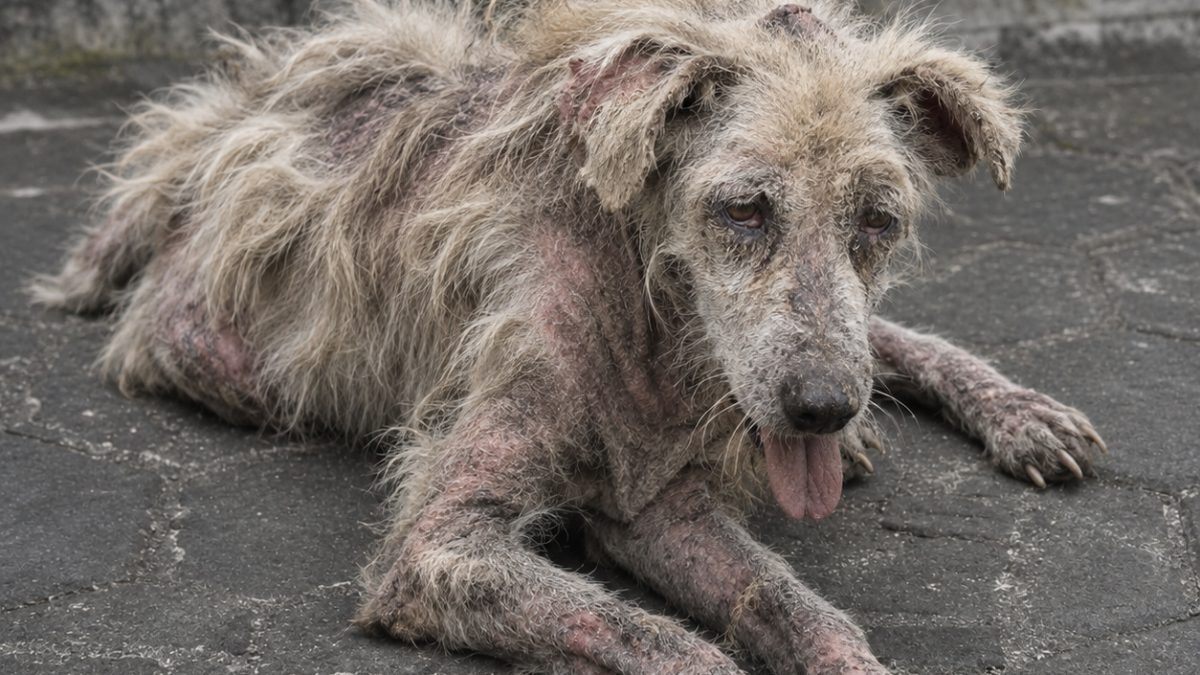
When I knelt beside the elderly dog collapsed at the edge of the road, his face swollen almost beyond recognition and his skin raw beneath filthy patches of fur, I assumed I was looking at another abandoned stray who had somehow survived long enough to reach the one stretch of pavement where someone might finally stop.
Then a man from a nearby house told us the dog had a name, a home, and an owner who had watched his condition worsen for nearly two months without getting him proper medical care, and suddenly the suffering in front of me felt less like bad luck and more like something no animal should ever have been forced to endure.
But the part that still wakes me up sometimes happened when we brought Ossi within sight of the man he had trusted for ten years, because the old dog found enough strength to wag his tail—and the reaction he received made me realize we were dealing with something far more painful than neglect alone.
My name is Rachel Carter, and at the time I volunteered with a small animal rescue outside Harrisburg, Pennsylvania.
That afternoon, I was riding with my coworker Megan after delivering dog food to a foster family when she suddenly grabbed my arm.
“Rachel. Slow down.”
I hit the brakes.
A dog stood near a drainage ditch beside a narrow county road.
At first I noticed his size. He had probably once been a sturdy mixed-breed dog, maybe seventy pounds when healthy.
Then I saw his face.
“Oh my God.”
The left side of his muzzle was grotesquely swollen. His gray-white coat hung in dirty clumps, exposing inflamed skin underneath. One ear was crusted from scratching, and his hips stood out sharply beneath his fur.
We pulled over.
I expected him to run.
He didn’t.
He watched us approach with the expression of an animal too exhausted to decide whether strangers were dangerous.
“Hey, buddy,” I whispered.
His eyes moved toward me.
No bark.
No growl.
Not even a whine.
I crouched several feet away.
“You hungry?”
Nothing.
I opened a pouch of food.
He sniffed once, then turned his head.
That worried me more than the swelling.
Megan whispered, “He doesn’t even want chicken.”
I moved closer.
The dog remained still.
When my hand finally touched his shoulder, I could feel every ridge of his spine.
“He’s burning up.”
Megan was already calling our veterinarian.
Then an older man came from a house farther up the road.
“You found Ossi.”
I looked over.
“You know him?”
“Everybody around here does.”
The dog reacted instantly to his name.
His head lifted.
“Ossi?” I repeated.
His tail touched the ground once.
I stood.
“Where does he live?”
The man’s face tightened.
He pointed toward a weathered house less than a hundred yards away.
“There.”
I stared at him.
“You mean he has an owner?”
The man gave a bitter little nod.
“He’s had one his whole life.”
For a moment, I couldn’t speak.
I looked back at Ossi.
The raw skin.
The swollen mouth.
The ribs.
“How long has he looked like this?”
“It’s been getting worse for weeks.”
“Has anyone called animal control?”
“People have complained.”
“And?”
The man lowered his voice.
“Owner says the dog’s old and sick.”
Megan was already walking toward the house.
I followed.
Ossi surprised us by struggling after us.
His legs shook, but he came.
Slowly.
Painfully.
As we reached the driveway, a man stepped onto the porch.
He was in his late forties, maybe early fifties.
He looked annoyed before we had even spoken.
“Is this your dog?” I asked.
He glanced toward Ossi.
“Yeah.”
That one word made something inside me tighten.
Ossi saw him.
The old dog’s entire expression changed.
His ears lifted as much as they could.
His tail moved again.
He took one painful step forward.
Then another.
The man didn’t bend down.
Didn’t say his name.
Didn’t even look directly at him.
Ossi stopped.
I watched hope leave that dog’s face in real time.
Megan’s voice became very quiet.
“What happened to his mouth?”
The man rubbed the back of his neck.
“He ate a pork bone.”
“When?”
“A while ago.”
“How long?”
He hesitated.
Then he said:
“Almost two months.”
I looked at Ossi’s swollen face.
Then back at the man.
“And you never took him to a veterinarian?”
The man’s jaw tightened.
For several seconds, nobody moved.
Then he looked straight at me and said something that made Megan slowly reach for her phone.
PART 2
“He’s ten years old,” the man said. “I’m not spending thousands of dollars on a dog that’s probably going to die anyway.”
For a second, I thought I had misunderstood him.
Cars moved along the road behind us. Somewhere nearby, a lawn mower started. Ossi stood between us with his head hanging low, breathing through a mouth that clearly hurt every time he opened it.
Megan’s fingers tightened around her phone.
I kept my voice level.
“What did you just say?”
The man shifted his weight.
“You heard me.”
“You’ve watched his face swell like this for nearly two months?”
“It wasn’t that bad at first.”
“And his skin?”
“He’s always had problems.”
I looked down at Ossi.
His skin wasn’t the kind of problem an animal had “always had.”
It was red, thickened, crusted, scratched bloody in places.
He had been suffering for a long time.
“What’s your name?” Megan asked.
The man glanced at her phone.
“Why?”
“Because we’re trying to determine whether you’re surrendering Ossi voluntarily or whether we need to call the humane officer.”
His expression changed.
“You can’t take my dog.”
That was the first sign of possessiveness I’d seen.
Not affection.
Ownership.
I felt Ossi press weakly against my leg.
“You just said you weren’t going to pay for treatment.”
“That doesn’t mean you can steal him.”
“No one is stealing anything,” I said. “But he needs emergency veterinary care.”
“He’ll be fine.”
I looked at the swollen side of Ossi’s mouth.
“No. He won’t.”
The neighbor who had spoken to us was standing near the road now.
The owner noticed him.
“You need to mind your own business, Carl.”
Carl didn’t move.
“I’ve been minding my own business for eight weeks, Ray.”
So the owner’s name was Ray.
Ray Keller.
I remembered it.
Ray pointed toward Ossi.
“He eats. He drinks.”
Carl shook his head.
“He hasn’t been eating right for days.”
“You don’t know what he does.”
“I’ve been bringing him water because his bowl’s been empty.”
Ray’s face hardened.
“That dog comes and goes.”
Carl looked at me.
“He doesn’t come and go. He sleeps under the porch.”
Ray stepped off the porch.
“Get off my property.”
Megan said, “We’re calling the humane officer.”
Ray laughed.
“For what? Having an old dog?”
“For failing to provide necessary medical care.”
“I told you, he got hurt.”
“And then?”
Ray didn’t answer.
Megan turned away and made the call.
I crouched beside Ossi.
The dog kept looking at Ray.
That was the part I couldn’t understand.
After everything.
After weeks of pain.
After hunger.
After being ignored while infection distorted his face.
He still wanted one thing from that man.
Recognition.
I touched Ossi’s neck.
“Come here.”
He resisted.
Not much.
Just enough.
He wanted to stay near Ray.
Ray never looked down.
Eventually, the county humane officer arrived.
Her name was Denise Hall.
She photographed Ossi before touching him.
She asked Ray questions.
When had the injury occurred?
Had Ossi been examined?
Did Ray have veterinary records?
Had medication been given?
Had the dog stopped eating?
Ray’s answers changed almost every time she rephrased a question.
First the bone injury happened three weeks earlier.
Then five.
Then “maybe longer.”
First Ossi was eating normally.
Then Ray admitted he had been giving him broth because chewing seemed painful.
First the skin condition was “seasonal allergies.”
Then he said he’d been using motor oil because someone told him it killed mites.
Denise stopped writing.
“You put motor oil on this dog’s skin?”
Ray frowned.
“Not a lot.”
Megan closed her eyes.
I felt physically sick.
Denise remained controlled.
“Do you have any veterinary documentation showing treatment in the last sixty days?”
“No.”
“Can you afford emergency care today?”
Ray hesitated.
“That depends what it costs.”
“Are you willing to authorize treatment?”
Another hesitation.
Then:
“No.”
Denise looked at him.
“Are you willing to surrender ownership?”
Ray stared at Ossi.
For one wild second, I hoped something in him would change.
Ossi’s tail moved.
Ray sighed.
“Fine.”
He said it like someone agreeing to throw away a broken appliance.
“Take him.”
Denise produced a surrender form.
Ray signed.
Ossi watched the pen move.
Then Ray turned around and walked back toward his house.
“Ossi,” I whispered.
The dog kept staring after him.
The screen door closed.
Ossi waited.
Nothing happened.
Eventually his tail stopped moving.
I don’t know how else to describe what I saw on his face.
People sometimes accuse rescuers of projecting human emotions onto animals.
Maybe we do.
But there are certain things you don’t need a degree to recognize.
Ossi understood that Ray had gone inside without him.
And he was devastated.
I wrapped my arms around his chest.
“I’m sorry, buddy.”
He didn’t fight when we lifted him into the rescue van.
He only turned his head toward the house until we pulled away.
—
Dr. Emily Foster met us at the veterinary hospital.
The moment she saw Ossi, her expression sharpened.
“Treatment room two.”
We lifted him onto the table.
Under the bright lights, he looked worse.
His mouth smelled infected. His gums were pale. The swelling extended along his cheek and under the jaw.
Emily touched the area gently.
Ossi flinched.
“I’m sorry, sweetheart.”
She looked at me.
“How long?”
“Owner says a pork bone nearly two months ago.”
Emily’s eyebrows rose.
“Two months?”
“Approximately.”
She shook her head.
“Let’s get bloodwork, fluids, pain medication, and imaging.”
Then she looked at his skin.
“And I want skin scrapings.”
We shaved parts of Ossi’s coat so Emily could examine him properly.
I wish I could forget what was underneath.
His skin was inflamed across his back, chest, belly, and legs. There were thick crusts where he had scratched repeatedly. Several spots had become infected.
Megan whispered, “How was he living like this?”
Emily didn’t answer immediately.
She took another sample.
“Mange.”
“Contagious?”
“Most likely sarcoptic. We’ll confirm, but treat as if it is.”
She continued examining him.
“He’s also severely underweight.”
“How severe?”
Emily looked at the scale.
“For his frame? I’d want him at least fifteen pounds heavier. Maybe more.”
I rubbed my forehead.
“Can he survive surgery?”
“Let’s see his bloodwork.”
We waited.
Ossi lay on a blanket with fluids running into his leg.
He watched every person who passed.
Whenever a door opened, he lifted his head.
Megan noticed.
“He thinks Ray’s coming.”
I wanted to deny it.
I couldn’t.
—
The bloodwork showed anemia, dehydration, elevated inflammatory markers, and evidence that his body had been under stress for a long time.
But his organ values were stable enough for anesthesia if we corrected the dehydration first.
The X-rays and oral examination gave us the worst immediate answer.
A fragment of bone had injured tissue inside the back of his mouth. Infection had spread deep into the surrounding area.
Emily showed us the images.
“This isn’t going to heal by itself.”
“What happens if we don’t operate?”
“The infection keeps spreading. He could develop systemic infection. He could stop eating completely.”
“He’s barely eating now.”
“I know.”
She looked at Ossi.
“We need to clean out the infected tissue, remove damaged material, explore for any remaining foreign body, and repair what we can.”
“When?”
“Tomorrow morning if he stabilizes overnight.”
I signed the rescue authorization.
Then I sat beside Ossi.
“You’re getting surgery.”
He blinked at me.
“I realize that means nothing to you.”
His head lowered.
I offered soft food.
He sniffed.
Turned away.
I tried again later.
Nothing.
That night, I stayed until almost midnight.
Before leaving, I crouched beside his kennel.
Ossi lifted his eyes.
“You’re not going back there.”
His expression made the words feel cruel.
I touched his paw.
“I know you don’t understand.”
He let me hold it.
“But one day, I hope you’re glad.”
—
Ossi went into surgery shortly after eight the next morning.
I told myself I wasn’t nervous.
Megan knew better.
“You’ve reorganized that supply cabinet three times.”
“It needed organizing.”
“It did not.”
“I work better when I’m busy.”
“You’re holding three rolls of gauze and staring at a wall.”
I looked down.
She was right.
We sat.
Every twenty minutes felt like an hour.
Finally, Emily appeared.
Her surgical cap was still on.
“He’s okay.”
My entire body loosened.
“What did you find?”
“More infection than I wanted.”
She sat across from us.
“There was necrotic tissue inside the cheek and a pocket of infection around the original injury. I removed what I could, flushed everything thoroughly, and repaired the area.”
“Any bone left?”
“A small fragment.”
My stomach turned.
“He’d had that inside him for two months?”
“Possibly.”
Emily’s expression hardened.
“The pain would have been significant.”
I thought of Ray saying, He’ll be fine.
“What happens now?”
“Now we watch him.”
—
Ossi’s first night after surgery was rough.
He was groggy and uncomfortable even with medication.
He refused food.
The next morning, he licked a little recovery diet from my fingers.
I nearly celebrated like he’d won a championship.
“That’s it.”
Another lick.
“Good boy.”
He swallowed.
Then another.
Megan walked in.
“Is he eating?”
“Three licks.”
“Call the newspaper.”
Ossi looked offended.
I laughed.
That was the first moment he became more than a case to me.
Not because he’d survived surgery.
Because his personality began slipping through the pain.
He was stubborn.
Suspicious.
Quietly dramatic.
If we gave medication he didn’t like, he turned his head and refused to acknowledge us afterward.
If someone scratched beneath his chin carefully, his back leg twitched.
He liked towels warmed in the dryer.
He hated the scale.
And every afternoon around four, he walked to the hospital entrance and stared outside.
At first, I thought he wanted fresh air.
Then I realized.
Four o’clock was about the time Ray usually came home from work, according to Carl.
Ossi was still waiting for him.
—
The humane investigation continued while Ossi recovered.
Denise called me four days after the rescue.
“I need copies of everything.”
“Medical records?”
“Photos. Bloodwork. Surgical findings. Body condition score. Anything documenting duration or severity.”
“I’ll send it.”
She paused.
“Ray says the rescue exaggerated his condition.”
I almost laughed.
“Emily pulled dead tissue out of his mouth.”
“I know.”
“He had mange over half his body.”
“I know.”
“He was fifteen pounds underweight.”
“I know, Rachel.”
I stopped.
Denise’s tone softened.
“I’ve seen the pictures.”
“Sorry.”
“No need.”
“What else is he saying?”
“That he intended to take Ossi to a vet but you pressured him into signing.”
“That’s not what happened.”
“Were there witnesses?”
“Carl. Megan. You were there.”
“Good.”
I understood.
This wasn’t just about what we knew.
It was about what could be proven.
—
Ossi left the hospital after five days.
Not because he was healthy.
Because he was stable enough for foster care.
No one wanted to take him.
That sounds terrible.
It wasn’t.
He had mange precautions.
Medication.
A healing mouth.
Frequent rechecks.
A special diet.
He needed someone who could manage a medically complicated senior dog.
I stared at the foster spreadsheet.
Megan stared at me.
“No.”
“I didn’t say anything.”
“You’re thinking it.”
“I have a spare room.”
“You have two cats.”
“They can stay separated.”
“You also said after Benny died you were never fostering another senior.”
I hated that she remembered.
Benny had been my dog.
Thirteen years old.
Heart failure.
I had lost him eight months earlier.
Afterward, I told everyone I couldn’t do old dogs anymore.
Puppies.
Young adults.
Temporary medical cases.
Anything except another animal with a visible clock.
I looked at Ossi.
He was sleeping with his head half off the bed.
“I can do two weeks.”
Megan smiled.
“Of course.”
“Two.”
“Absolutely.”
“Stop smiling.”
—
Ossi arrived at my house on a rainy Thursday.
He refused to enter.
I stood at the front door holding the leash.
“It’s warm inside.”
He looked back toward my car.
“No.”
He took one step toward the driveway.
“Come on.”
Another.
He wanted the car.
I understood.
Cars meant movement.
Movement might mean Ray.
My throat tightened.
“Ossi.”
He looked at me.
“He isn’t coming.”
The dog stared.
I immediately regretted saying it.
I sat on the front step.
For ten minutes, neither of us moved.
Then Ossi came closer.
He put his head against my shoulder.
Just for a second.
Then he walked inside.
—
The first week was exhausting.
Medication at seven.
Breakfast softened with warm water.
Skin treatment.
Bedding washed constantly.
Short bathroom trips.
No contact with my cats until we were sure the mange was no longer contagious.
Ossi slept most of the time.
But every evening around four, he went to the front window.
Same time.
Same place.
He watched cars.
If a pickup truck slowed, his ears lifted.
If a man walked past, Ossi stood.
Then he sat again.
I hated Ray a little more every day.
That scared me.
Anger can make rescuers stupid.
It can make you tell yourself a story where you’re the hero and the other person is only a monster.
I didn’t want that.
So I forced myself to remember what Denise had told me.
Evidence.
Facts.
Not rage.
—
Ten days after Ossi came home with me, Carl called.
“I got your number from Denise.”
“How is everything?”
“I thought you should know something.”
I sat down.
“What?”
“Ray’s been telling people you stole the dog.”
I closed my eyes.
“Of course.”
“He says he only signed because you threatened to have him arrested.”
“We told him a humane officer was coming.”
“I know.”
“What else?”
Carl hesitated.
“He says you’re using Ossi to raise money.”
That one landed differently.
The rescue had posted Ossi’s medical fundraiser.
His bills were already over four thousand dollars.
“What exactly did he say?”
“That if people are donating because of his dog, he should get something.”
I almost dropped the phone.
“He wants money?”
“That’s what he’s telling people.”
I laughed once.
Not because it was funny.
Because sometimes anger comes out wrong.
“Did he say that to you directly?”
“Yes.”
“Would you be willing to tell Denise?”
Carl didn’t hesitate.
“Yes.”
—
Ray called the rescue the following morning.
Megan answered.
I was standing beside her.
“Put him on speaker.”
She did.
“I want to know how much money you’ve raised.”
Megan looked at me.
“For Ossi’s veterinary care?”
“Yeah.”
“Why?”
“He’s my dog.”
“You surrendered ownership.”
“Because you people pressured me.”
“The humane officer witnessed the surrender.”
Ray went quiet.
Then:
“That doesn’t mean you can profit off him.”
“We’re a nonprofit rescue.”
“How much?”
Megan kept her voice professional.
“Donations designated for Ossi are being used for Ossi’s medical expenses.”
“What if there’s money left?”
“It remains with the rescue for animal care.”
“So you’re making money.”
“No.”
I stepped closer.
“Ray, Ossi’s treatment already costs more than the fundraiser has brought in.”
Silence.
Then:
“Is this Rachel?”
“Yes.”
“You think you’re better than me?”
I looked through the glass door toward the foster room.
Ossi was asleep.
“No.”
“Sure sounds like it.”
“I think Ossi needed medical care.”
“I didn’t have four thousand dollars.”
That was the first time he said something that sounded human.
Not excusable.
Human.
I lowered my voice.
“You could have asked for help.”
He didn’t answer.
“You could have called a rescue.”
“I didn’t know.”
“You could have surrendered him before the wound rotted.”
His voice sharpened.
“Watch how you talk to me.”
“No. You watch how you talk about him.”
Megan touched my arm.
A warning.
I took a breath.
Ray said:
“I loved that dog.”
I almost answered too quickly.
Instead, I asked:
“Then why didn’t you look at him when we took him?”
The line went quiet.
For five full seconds.
Then Ray hung up.
—
Ossi’s stitches healed.
His facial swelling slowly disappeared.
Without the infection, his head looked narrower.
Older.
Gentler.
His skin improved too.
The redness faded.
The crusts softened and fell away.
White fur began growing through patches that had been bare.
The first time I saw fuzz along his shoulder, I called Megan.
“He has hair.”
“Congratulations?”
“No, you don’t understand. New hair.”
“I understand hair, Rachel.”
“It’s white.”
“He’s old.”
“Come over.”
She did.
That was the kind of case Ossi became.
Every tiny improvement felt enormous.
—
Two weeks became three.
Then four.
I never moved him to another foster.
No one mentioned it.
At week five, Emily cleared him for longer walks.
I bought a padded harness.
The first time I clipped it on, Ossi looked offended.
“Trust me.”
He did not.
We made it half a block.
Then Ossi stopped.
“You tired?”
He turned around.
“Home is that way.”
He pulled gently toward my house.
I laughed.
“All right.”
We went back.
The next day, same thing.
A few houses.
Turn around.
Back inside.
At first, I thought he was weak.
Then one afternoon, we passed a man loading tools into a pickup.
Ossi froze.
His body leaned forward.
The man turned.
Not Ray.
Ossi’s tail dropped.
He pulled me home.
That night I sat on the kitchen floor beside him.
“You still miss him.”
Ossi rested his head on his paws.
“I wish you didn’t.”
His eyes closed.
“Actually…”
I rubbed his ear.
“No. That’s not true.”
I didn’t want Ray to have the power to change what Ossi was.
A dog who loved.
Even badly placed love was still love.
—
The hearing was scheduled for early May.
Ray had been cited for failing to provide necessary veterinary care.
He contested it.
That meant Denise needed testimony.
So did Emily.
So did I.
The night before, I couldn’t sleep.
Not because I was afraid of Ray.
Because I was afraid we wouldn’t be able to prove what seemed obvious.
Neglect cases are messy.
Animals don’t speak.
Owners explain away weight loss.
Injuries.
Skin disease.
Delays.
People say they were waiting.
Watching.
Trying home remedies.
Saving money.
Planning an appointment.
The gap between cruelty and terrible judgment isn’t always clean.
At two in the morning, I went downstairs.
Ossi was awake.
He had started sleeping in my living room once he was cleared around the cats.
My orange cat, Jasper, had spent a week hating him.
Now Jasper slept on the couch above Ossi every night.
I sat beside him.
“Tomorrow I have to talk about you.”
Ossi’s eyes opened.
“Don’t worry. I’ll make you sound handsome.”
His tail moved once.
“That’s generous of you.”
—
The hearing was held in a small county courtroom.
Ray wore a button-down shirt.
He looked different.
Cleaner.
Smaller somehow.
His attorney argued that Ossi’s condition had deteriorated gradually and that Ray had attempted home care because he lacked money.
Then Emily testified.
She was calm.
Precise.
“The oral infection was advanced.”
“How long would such an infection typically take to reach that severity?”
“I cannot give an exact date from appearance alone.”
Ray’s attorney relaxed slightly.
Emily continued.
“But it was not consistent with an injury that had occurred only a few days earlier.”
She explained the necrotic tissue.
The foreign material.
The inability to eat normally.
The weight loss.
The mange.
The secondary skin infection.
Then the attorney asked:
“Doctor, is it possible the owner simply did not understand how serious the condition was?”
Emily paused.
“It is possible not to understand the diagnosis.”
She looked at Ray.
“It is not possible to look at the dog I examined and reasonably believe he did not need veterinary attention.”
The courtroom became quiet.
—
Carl testified next.
He described bringing water.
Watching Ossi lose weight.
Seeing the swelling grow.
Then Ray’s attorney asked:
“Mr. Stevens, you don’t get along with my client, do you?”
Carl shifted.
“We’re not friends.”
“You’ve had disputes over property boundaries.”
“Yes.”
“So you may be biased.”
Carl nodded.
“Maybe.”
The attorney smiled slightly.
Then Carl added:
“But the dog was still starving whether I liked Ray or not.”
The smile disappeared.
—
Then came the thing Ray had forgotten.
Megan’s phone.
She had started recording video when we approached the house because she knew the surrender could become contentious.
She hadn’t hidden it.
The phone was visible in her hand.
The recording captured part of the conversation.
Not everything.
Enough.
Ray’s voice played through the courtroom speaker.
**He’s ten years old. I’m not spending thousands of dollars on a dog that’s probably going to die anyway.**
No one moved.
Ray stared at the table.
His attorney whispered something to him.
Then the recording continued.
Denise asking whether he was willing to authorize treatment.
Ray saying no.
Denise asking whether he would surrender.
Ray saying:
**Fine. Take him.**
I watched Ray’s face.
That was the moment the case changed.
Not because we had outsmarted him.
Because his own words finally had nowhere to hide.
—
The judge found that Ray had failed to provide necessary veterinary care.
The penalties were not dramatic.
People online later complained they weren’t enough.
A fine.
Probation.
Mandatory humane-education requirements.
A temporary prohibition on acquiring another dog without approval.
And reimbursement toward investigative costs.
No prison.
No cinematic punishment.
Real life rarely delivers those.
But something else happened.
The judge looked directly at Ray.
“You repeatedly describe this animal as old, as though age reduced your responsibility.”
Ray didn’t respond.
The judge continued.
“It increased it.”
That sentence stayed with me.
—
Outside the courthouse, Ray approached me.
I didn’t expect it.
Megan stepped closer.
Ray raised a hand.
“I just want to ask something.”
“What?”
“How’s he doing?”
I stared at him.
It was the first time since the rescue he had asked.
“Better.”
“His mouth?”
“Healed.”
“Skin?”
“Growing fur.”
Ray nodded.
He looked down at the courthouse steps.
Then:
“Does he ever…”
He stopped.
“Does he ever what?”
“Look for me?”
I could have lied.
I wanted to.
Instead I said:
“Yes.”
Ray’s face tightened.
“How often?”
“Less now.”
He nodded again.
For the first time, he looked ashamed.
Not enough to undo anything.
But real.
Then he said:
“I didn’t hate him.”
“I know.”
He looked at me.
That surprised him.
“You don’t have to hate an animal to neglect it.”
Ray flinched.
“I was broke.”
“You had a phone.”
He looked away.
“You had neighbors.”
Nothing.
“You had rescues.”
Nothing.
“You had two months.”
His jaw tightened.
I expected anger.
Instead he whispered:
“I kept thinking he’d get better.”
There it was.
The human failure underneath everything.
Not a monster tying a dog to a tree.
A man postponing responsibility one day at a time until suffering became normal.
“I believe you,” I said.
Ray looked up.
“But Ossi paid for every day you waited.”
He walked away without answering.
—
For a while, I thought that was the end of the legal part.
It wasn’t.
Three weeks later, Denise called.
“We have another issue.”
“What?”
“Ray filed a complaint against your rescue.”
I laughed.
“For what now?”
“Fundraising fraud.”
My laughter stopped.
“He says you falsely portrayed him as abusive to solicit donations.”
“You’re kidding.”
“No.”
“Can he do that?”
“He can file anything.”
“What happens?”
“Probably nothing.”
“Probably?”
“Rachel.”
Denise sighed.
“He’s embarrassed. His name is in the court record. People in town know what happened. Sometimes embarrassed people look for someone else to blame.”
I rubbed my forehead.
“What does he want?”
“Public correction.”
“Of what?”
“He claims Ossi was injured accidentally and that you omitted his financial hardship.”
I stared across my kitchen.
Ossi was asleep beneath the window.
His fur had filled in enough that he looked almost like a different dog.
Almost.
“He wants us to make him look better.”
“Yes.”
“No.”
“Talk to your lawyer before you say that officially.”
—
The rescue board met that Friday.
Some wanted to issue a neutral statement.
Others wanted to ignore him.
I wanted to release everything.
Every photograph.
Every medical note.
Every recorded word.
Our attorney, Melissa Grant, stopped me.
“You’re angry.”
“Yes.”
“That makes you expensive.”
“I don’t care.”
“The rescue does.”
I sat back.
“What do you suggest?”
“Nothing yet.”
“He’s accusing us publicly.”
“Let him.”
“That hurts donations.”
“Only if we react badly.”
I hated calm people.
Melissa opened a folder.
“Ray signed a surrender acknowledging Ossi’s condition.”
“I know.”
“He admitted under oath that the dog had not seen a veterinarian.”
“Yes.”
“He has now filed a complaint claiming you fabricated the severity.”
“Yes.”
She smiled.
“What?”
“He just created a reason for us to preserve and disclose the medical documentation if necessary.”
I understood.
Not revenge.
Defense.
Using his own accusation to open the door he should have left closed.
—
Ray posted online two days later.
He didn’t use Ossi’s name at first.
He wrote about “a local rescue” that had “taken advantage of a family in a difficult financial situation.”
Then someone asked whether he meant Ossi.
Ray replied:
**Yes. They made him look worse than he was to raise money.**
That was enough.
Melissa called me.
“Now.”
The rescue released one statement.
Short.
Factual.
Ossi’s intake weight.
Body condition.
Confirmed mange.
Surgical infection.
Length of reported untreated injury.
Surrender date.
Court finding.
Nothing emotional.
No insults.
No accusation beyond what had already been established.
Then Emily agreed to release a redacted medical summary.
The photographs remained private at first.
Ray kept posting.
He said the infection was minor.
So Melissa released one preoperative image.
Not graphic.
Clear.
The swelling was undeniable.
Ray deleted his post that night.
—
But the damage he had tried to do came back another way.
A local reporter requested the court records.
Then the surrender recording.
Then interviewed Carl.
The article was fair.
That almost made it worse for Ray.
It didn’t call him evil.
It simply placed his statements beside the facts.
He said he couldn’t afford treatment.
The article noted that he had never contacted low-cost clinics, charities, rescues, or humane services before Ossi was found.
He said he thought Ossi would recover.
The article quoted him admitting the injury had been present for almost two months.
He said the rescue exaggerated.
The veterinary report described surgery for deep infection and necrotic tissue.
No dramatic language was needed.
His own explanations collapsed under their weight.
That was the revenge people later celebrated.
But it never felt like revenge to me.
It felt like someone turning on a light.
—
Ossi didn’t care.
While adults argued about reputation, he discovered cheese.
That became a problem.
I had hidden one of his pills inside a small piece of cheddar.
Ossi ate it.
Then stared at me.
I gave him another piece.
The next morning, he refused his breakfast until I opened the refrigerator.
“You created this,” Megan said.
“I know.”
“Senior dogs are manipulative.”
“I know.”
“Especially recovering senior dogs.”
“I know.”
Ossi sat beside the refrigerator.
Megan pointed.
“Look at his face.”
“He had surgery.”
“Six weeks ago.”
“He remembers.”
“He is extorting you.”
Ossi sneezed.
I gave him cheese.
Megan walked away.
—
By the eighth week, Ossi’s transformation was hard to believe.
He had gained twelve pounds.
His coat was growing back.
His eyes were brighter.
The swelling was gone.
His scar remained, along with a slight asymmetry around the mouth.
But he could eat.
He could sleep comfortably.
He could walk around the block if he felt like it.
He usually didn’t.
Ossi preferred home.
That used to make me sad because I thought it meant he was still waiting for Ray.
Eventually I realized something.
He had stopped standing at the window at four.
I didn’t notice the first day.
Or the second.
Then one afternoon I looked at the clock.
4:17.
Ossi was asleep in the kitchen.
He hadn’t moved.
I sat on the floor beside him.
“Hey.”
His eyes opened.
“You missed your appointment.”
He stretched.
“With the window.”
He yawned.
I started crying.
He looked confused.
“I know. I’m ridiculous.”
His tail tapped the floor.
It was the first time I understood he might actually be letting go.
—
At nearly ten weeks, I emailed the rescue board.
**I want to adopt Ossi.**
Megan replied within thirty seconds.
**Shocking.**
Emily sent:
**We all assumed you had.**
Melissa, our attorney, somehow got copied and wrote:
**Please complete the actual paperwork before announcing ownership in court again.**
I laughed.
That evening, I printed the adoption form.
Ossi watched from his bed.
“Apparently you’ve been living here illegally.”
No reaction.
“I have to pay an adoption fee.”
He scratched his ear.
“You’re expensive.”
He went back to sleep.
I signed.
For the first time in ten years, Ossi legally belonged to someone new.
I thought that was the beginning of the easy part.
Three days later, he stopped eating.
—
At first, I blamed the weather.
Then medication.
Then his stomach.
By evening, he had refused cheese.
That scared me.
“Ossi.”
He turned away.
I offered water.
Nothing.
I called Emily.
“Bring him in.”
—
His temperature was slightly low.
He seemed weak.
Emily ran bloodwork.
Then repeated part of it because she thought there might be an error.
I watched her face.
“What?”
She didn’t answer immediately.
“Emily.”
“His kidney values are very high.”
My stomach dropped.
“How high?”
“High enough that I want him hospitalized.”
“But they were okay before surgery.”
“They were stressed but acceptable.”
“What happened?”
“I don’t know yet.”
She ordered an ultrasound.
Urinalysis.
More testing.
Ossi lay on the table with his head against my arm.
I could feel his breathing.
Slow.
Tired.
That old expression had returned to his eyes.
The one from the roadside.
No.
I refused to recognize it.
—
The ultrasound showed changes consistent with chronic kidney disease.
More advanced than we had realized.
The long period of dehydration, malnutrition, infection, age, and possibly previous untreated illness had left less reserve than his early labs suggested.
Emily was careful.
“We can’t say one thing caused this.”
“I know.”
“He may have had kidney disease for a long time.”
“Can we treat it?”
“We can try to stabilize him.”
“Can we fix it?”
She didn’t answer.
I looked at her.
“Emily.”
“No.”
The word was quiet.
“Kidney tissue doesn’t regenerate like that.”
“So what are you saying?”
“I’m saying we hospitalize him. Fluids. Anti-nausea medication. Gastroprotectants. Monitor urine output. See how he responds.”
“And if he responds?”
“Then we manage chronic disease.”
“And if he doesn’t?”
Emily looked at Ossi.
“We talk about what is kind.”
I hated that sentence.
Veterinary medicine has many beautiful words.
Kind is sometimes the cruelest one.
—
Ossi spent three nights in the hospital.
I spent most of them there too.
The first day, his numbers improved slightly.
I grabbed onto that.
“See?”
Emily didn’t celebrate.
“Let’s wait.”
The second day, Ossi licked food from my hand.
I sent Megan a picture.
**HE ATE.**
She replied with six exclamation marks.
The third morning, the improvement stopped.
By afternoon, his values worsened again.
Ossi wouldn’t eat.
He wouldn’t drink.
He stood once, walked to the door of his kennel, then lay down.
I opened it.
He leaned against my legs.
I sat on the floor.
“This isn’t fair.”
He closed his eyes.
I thought about the road.
The swollen face.
The surgery.
The new fur.
The cheese.
The adoption form sitting on my kitchen counter.
Ten weeks.
That’s what we had gotten.
Ten weeks of safety after ten years of belonging somewhere that had failed him at the end.
It wasn’t enough.
I wanted years.
Wanting didn’t matter.
—
That night, Ray called.
I almost didn’t answer.
“Rachel?”
“What?”
His voice changed.
“You okay?”
“No.”
He paused.
“Is it Ossi?”
I sat straighter.
“How do you know?”
“Carl told me.”
Of course.
Small towns.
“What happened?”
“Kidney failure.”
Silence.
Then:
“Is he going to make it?”
“I don’t know.”
Another silence.
“Can I see him?”
Every part of me rejected the idea.
“No.”
The answer came instantly.
Ray inhaled.
“Please.”
“No.”
“He was my dog for ten years.”
“And when he needed you—”
“I know.”
His voice cracked.
I stopped.
“I know what I did.”
I didn’t answer.
He continued.
“I’ve had ten weeks of everybody telling me.”
“That isn’t the same as understanding.”
“No.”
His voice lowered.
“But I’m starting to.”
I looked at Ossi through the kennel door.
He was asleep.
“What do you want from him, Ray?”
“Nothing.”
“Then why come?”
“Because the last time he saw me…”
He stopped.
I knew.
The porch.
Ray walking inside.
Ossi waiting.
Ray whispered:
“I didn’t even say goodbye.”
For the first time, I didn’t know what the right thing was.
—
I called Melissa.
Not because this was legal.
Because she was smarter than me when I was angry.
“What do you want to do?” she asked.
“I don’t know.”
“Do you think seeing Ray would hurt Ossi?”
“I don’t know.”
“Could it comfort him?”
“I don’t know.”
“Do you want to punish Ray by saying no?”
That question stung.
“Yes.”
“Okay.”
I waited.
Melissa continued.
“That doesn’t mean you should say yes.”
“I know.”
“But know which decision you’re making.”
I hated her too sometimes.
—
Emily sat with me after midnight.
“What would you do?”
She looked at Ossi.
“I’d ask what matters to him.”
“He can’t answer.”
“No.”
She touched his blanket.
“But we know some things.”
“He loved Ray.”
“Yes.”
“Even after everything.”
“Yes.”
“That makes me furious.”
“I know.”
“Doesn’t that matter?”
“To you.”
I looked at her.
Emily’s voice was gentle.
“Not necessarily to Ossi.”
I closed my eyes.
That was the truth.
Ossi’s love wasn’t mine to rewrite because I found it unfair.
—
Ray came the next morning.
No attorney.
No phone.
No defensive posture.
He stood in the hospital hallway holding nothing.
I met him outside Ossi’s room.
“One rule.”
“Anything.”
“This is for him.”
Ray nodded.
“Not for you.”
“I understand.”
“If he turns away, you leave.”
“Yes.”
I opened the door.
Ossi was lying on a thick blanket.
His head lifted.
He saw Ray.
For one second, time disappeared.
Ossi’s ears rose.
His eyes widened.
His tail moved.
Once.
Then again.
Ray covered his mouth.
“Oh, buddy.”
He crouched.
Ossi tried to stand.
He couldn’t.
Ray went to him.
Not quickly.
He stopped a foot away.
“Hey, Oss.”
Ossi leaned forward.
Ray put his hand under the dog’s chin.
Ossi closed his eyes.
Then he pressed his head into Ray’s chest.
I looked away.
I hated the tenderness of it.
I loved it too.
That’s the terrible thing about animals.
They can forgive people you aren’t ready to forgive.
—
Ray cried.
Not quietly.
Not attractively.
He buried his face against Ossi’s neck and sobbed.
“I’m sorry.”
Ossi rested there.
Ray whispered:
“I should’ve taken you.”
His hand moved over the new white fur.
“I should’ve called somebody.”
Ossi breathed against him.
“I kept thinking tomorrow.”
Ray’s voice cracked.
“I’m sorry, buddy.”
I stood by the wall with my arms crossed so tightly they hurt.
Then Ray looked at me.
“Thank you.”
I didn’t answer.
“For saving him.”
“He saved himself.”
Ray nodded.
“No.”
He stroked Ossi.
“He walked to the road because he couldn’t count on me.”
That was the first thing Ray ever said that made me believe he finally understood.
—
Ossi rallied again after seeing him.
For one afternoon.
He ate three bites of chicken.
We took him outside.
He stood in the grass.
Sunlight touched the white fur growing along his back.
Ray had gone.
He didn’t ask to take Ossi.
Didn’t ask for updates beyond what I offered.
He just left.
Ossi didn’t watch the door this time.
He looked at me.
I sat beside him.
“You know you live with me now, right?”
His tail moved.
“Good.”
—
The next morning, his kidney values were worse.
Emily sat beside me.
“Rachel.”
I shook my head.
“Not yet.”
“He’s nauseated.”
“We can change medication.”
“We have.”
“More fluids.”
“He’s not responding.”
“One more day.”
Emily didn’t argue.
That somehow made it worse.
She gave us one more day.
Ossi slept through most of it.
He didn’t eat.
Didn’t drink.
Didn’t lift his head when Megan came.
That evening, I carried him outside.
He was lighter again.
Not like the first day.
But too light.
I sat on a blanket beneath a maple tree behind the hospital.
Ossi rested with his head in my lap.
“I promised you things would get better.”
His ear moved.
“They did.”
I swallowed.
“They did get better.”
For ten weeks.
Maybe that had to be enough.
—
I made the decision the next morning.
I hated myself for it.
Then I hated myself for waiting that long.
Grief is unreasonable that way.
Emily prepared the room.
Megan came.
Carl drove almost an hour.
Even Denise stopped by before work.
Ray asked whether he could come.
I said yes.
Not for him.
For Ossi.
Ray arrived last.
He stood near the door until Ossi saw him.
Then he sat on the floor.
We surrounded the dog with people who had known different versions of him.
Carl knew the neglected dog beneath the porch.
Megan knew the dog who walked away from his owner.
Emily knew the surgical patient who refused to quit.
Denise knew the evidence.
Ray knew the first ten years.
I knew the last ten weeks.
Maybe between all of us, Ossi finally had his whole life in one room.
—
Emily gave him the sedative.
I held his head.
Ray had one hand on his back.
Ossi sighed.
His body relaxed.
I whispered:
“You’re home.”
I don’t know why I said it.
We weren’t at my house.
But it was true.
Home isn’t always a building.
Sometimes it’s simply the place where no one is asking you to endure one more thing.
Ossi’s breathing slowed.
Ray whispered his name.
Megan cried.
I pressed my face against his forehead.
“You don’t have to wait anymore.”
Emily gave the final medication.
Ossi’s heart stopped beneath our hands.
Ten weeks after we found him beside the road, he died surrounded by the people who finally chose not to look away.
—
I thought that would end the fight with Ray.
Instead, it changed it.
Three days after Ossi died, Ray called me.
“I want to do something.”
I was exhausted.
“What?”
“The fine.”
“What about it?”
“I want to pay the rescue instead.”
“You can’t redirect a court fine.”
“I know.”
“Then what do you mean?”
He took a breath.
“I want to match it.”
I didn’t say anything.
“The amount I was fined,” he continued. “I want to donate the same amount to Ossi’s medical fund.”
“We don’t have an Ossi fund anymore.”
“Then make one.”
My first instinct was suspicion.
Public relations.
Guilt management.
Image repair.
“What do you want in return?”
“Nothing.”
“No interview?”
“No.”
“No post saying you donated?”
“No.”
“No letter to the court?”
“No.”
“Why?”
Ray was quiet for several seconds.
“Because I spent months saying I didn’t have money for him.”
I waited.
“The truth is, I didn’t have four thousand dollars.”
His voice lowered.
“But I had enough to call somebody.”
That was it.
The real confession.
Not dramatic.
Not legally useful.
Just true.
“I should’ve asked for help before he had to walk out there looking for it himself.”
—
The rescue board created the Ossi Emergency Care Fund.
Ray’s donation became the first contribution.
We did not put his name on it.
He didn’t ask us to.
The fund helped owners who genuinely wanted treatment but couldn’t afford emergency care, with one condition: they had to ask before neglect became crisis.
The first dog helped by the fund was a six-year-old pit bull named Ruby with an infected uterus.
Her owner was a single father who had lost his job.
He called crying because he couldn’t afford surgery.
The fund covered the difference.
Ruby lived.
When I saw her leave the hospital, pulling her owner toward the parking lot, I sat in my car and cried for Ossi all over again.
—
Ray’s legal consequences remained.
His donation did not erase them.
The court didn’t withdraw the finding.
The fine stayed.
The probation stayed.
His ownership restriction stayed until the end of its term.
That mattered to me.
Forgiveness without consequence is often just permission.
But consequences don’t prevent people from changing either.
Both things can be true.
—
Months later, Ray asked to volunteer at the rescue.
Megan looked at me as if he’d requested access to nuclear launch codes.
“Absolutely not.”
I understood.
Our board debated it.
Some people said no forever.
Others said supervised work might mean something.
Melissa asked:
“What would Ossi gain?”
Nothing.
Ossi was gone.
“What would future dogs gain?”
That was harder.
Eventually, Ray was allowed to help with facility maintenance.
No animal handling.
No adoption decisions.
No access to medical records.
He cleaned kennels.
Fixed fencing.
Unloaded food.
For the first three weeks, nobody spoke to him unless necessary.
He kept coming.
One Saturday, I found him repairing a broken kennel latch.
“You know you don’t have to be here.”
“Yes.”
“Then why are you?”
He tightened a screw.
“Because going home doesn’t fix anything.”
I looked at him.
“No.”
“It doesn’t.”
He didn’t ask me to forgive him.
That made it easier not to hate him.
—
The most satisfying part of the story wasn’t Ray suffering.
I know that disappoints people who want clean villains.
He did suffer consequences.
He lost his legal fight.
His own recorded words disproved his accusations.
His attempt to portray the rescue as dishonest resulted in the full medical evidence becoming public.
Neighbors who had stayed quiet testified.
The court found against him.
And every time he tried to shift responsibility, another fact pushed it back where it belonged.
But humiliation wasn’t what mattered.
What mattered was that he could no longer pretend Ossi had simply gotten sick.
He had to live with the exact timeline.
The injury.
The waiting.
The pain.
The surrender.
The dog looking toward him one last time on that porch.
No punishment we could invent would have been sharper than memory.
—
A year after Ossi died, we placed a small plaque inside the rescue’s treatment room.
Nothing grand.
Just a photograph.
Ossi after his fur had grown back.
His face was still slightly uneven from surgery.
He was lying in my yard with his head lifted toward the camera.
He looked peaceful.
Underneath were five words:
**HE SHOULD HAVE BEEN HELPED SOONER.**
And below that:
**NOW OTHERS WILL BE.**
By then, the emergency fund had helped thirty-seven animals.
Not all survived.
But every one of them was seen.
Every owner who called was given options.
Payment plans.
Low-cost clinics.
Surrender resources.
Emergency grants.
We couldn’t save everything.
We could make “I didn’t know where to turn” less true.
—
I kept Ossi’s collar.
It still hangs near my kitchen door.
For months, I couldn’t touch it.
Then one afternoon, a new foster arrived.
A twelve-year-old Beagle named Chester.
Arthritis.
Bad teeth.
Terrible manners.
He walked into my house, stole Jasper’s food, climbed into Ossi’s old bed, and fell asleep.
I stood there staring at him.
Megan was behind me.
“Don’t.”
“What?”
“You’re doing the thing.”
“What thing?”
“The thing where you act like loving another old dog is betrayal.”
I looked at her.
“I am not.”
“You absolutely are.”
Chester began snoring.
I looked at Ossi’s collar hanging by the door.
Then at the dog sleeping in his bed.
Something loosened.
Not disappeared.
Grief doesn’t disappear.
It makes room.
—
I fostered Chester for six weeks.
A retired couple adopted him.
I cried when he left.
That was progress.
Later came a fourteen-year-old Chihuahua.
Then an elderly Lab.
I never again said I couldn’t handle senior dogs.
Ossi had ruined that excuse.
—
Two years after the rescue, Carl called me.
“I’m moving.”
“Where?”
“Closer to my daughter.”
We talked for a while.
Then he said:
“I found something.”
“What?”
“Come by if you can.”
I drove out the following weekend.
Ray’s old house was still there.
Different truck in the driveway.
Ray had moved the previous year.
Carl led me to his garage.
On a shelf sat a battered red rubber ball.
“Ossi’s?”
“He used to carry it everywhere when he was young.”
“How do you know?”
“Ray used to throw it from his porch.”
That image hurt.
Ray and Ossi before everything went wrong.
Not neglect.
Not infection.
A younger man throwing a ball.
A younger dog running after it.
Carl handed it to me.
“I thought you should have it.”
I turned it in my hands.
There were old tooth marks along one side.
“Thank you.”
On the drive home, I cried harder than I had expected.
Because cruelty would have been easier.
If Ray had never loved Ossi, the story would have been simpler.
But he had.
That was the lesson I never wanted.
Love is not enough when responsibility disappears.
You can love an animal and still fail him.
You can remember his puppy years and still ignore his pain.
You can believe you’re a good person while postponing the one decision that would prove it.
Ossi paid for that contradiction.
—
I eventually gave the ball to Ray.
People questioned that too.
He was volunteering at the rescue one afternoon when I walked over and placed it on the workbench.
He froze.
“Where did you get this?”
“Carl.”
Ray picked it up.
His thumb moved across the tooth marks.
For a long time, he didn’t speak.
Then he sat down.
“He loved this thing.”
“I know.”
“I’d throw it until my shoulder hurt.”
I leaned against the wall.
“What happened, Ray?”
He stared at the ball.
Not the last two months.
I meant all of it.
“How do you go from that to what we found?”
Ray swallowed.
“My wife left.”
I waited.
“Then my dad got sick. I lost work. Bills stacked up.”
He rubbed his face.
“And Ossi got old.”
“That doesn’t explain it.”
“No.”
At least he knew.
“I started seeing every problem as something I could put off.”
He looked down.
“The roof. The truck. My teeth.”
Then the ball.
“Him.”
His voice broke.
“I kept thinking I’d handle it when something else stopped being on fire.”
I said nothing.
“Then his mouth got worse.”
“Why didn’t you call?”
“Pride.”
That answer came quickly.
“People already thought I was failing.”
“So you hid it.”
He nodded.
“And every day I waited, calling someone got harder because then I’d have to explain why I’d waited the day before.”
That made terrible sense.
“By the time you showed up…”
He stopped.
“You hated us.”
“I hated that you saw him.”
Not that we took Ossi.
That we saw him.
Saw the evidence.
Saw Ray’s failure.
“I was ashamed,” he said.
“So I acted angry.”
“Yes.”
He stared at the red ball.
“I don’t expect you to understand.”
“I understand.”
He looked surprised.
“I just don’t think understanding excuses it.”
He nodded.
“It doesn’t.”
—
That conversation was the last time Ray and I ever discussed the roadside.
We didn’t become friends.
That would have been false.
But we stopped being enemies.
Sometimes accountability has a quieter ending than revenge stories promise.
The person who hurt you doesn’t always collapse.
Sometimes he has to keep living.
Keep remembering.
Keep showing up to clean kennels for animals whose suffering reminds him of the one he failed.
There are worse punishments.
There are also better forms of change.
—
The Ossi Fund grew.
A local veterinary practice began matching donations once a year.
Then another rescue joined.
We added a hotline page listing low-cost services, surrender options, transportation assistance, and emergency programs.
No owner could honestly say there was only one choice.
That mattered.
On the third anniversary of Ossi’s rescue, Denise sent me a message.
**Thought you’d want to know: 112 animals helped.**
I stared at the number.
One hundred twelve.
I walked to the kitchen.
Ossi’s collar still hung near the door.
I touched it.
“Not bad, old man.”
Jasper, now ancient himself, meowed because he thought I was speaking to him.
I gave him dinner.
—
There is one photograph of Ossi I never posted publicly.
It was taken about a week before he stopped eating.
We were in my backyard.
The grass was bright from spring rain.
Ossi was lying in the sun.
His fur had grown back enough to cover almost every raw patch.
His mouth had healed.
He had gained weight.
His eyes were half closed.
One front paw was stretched toward me.
Nothing dramatic.
No before-and-after collage.
No hospital tubes.
No swollen face.
Just an old dog resting.
For years, I thought the most important photograph was the first one.
The roadside.
The wounds.
The evidence.
Now I know it was the backyard picture.
Because suffering was never the most important thing about Ossi.
Comfort was.
For ten weeks, he knew what it felt like to sleep without itching until he bled.
To eat without a wound tearing open inside his mouth.
To hear someone say his name and expect kindness.
To walk outside and know the door behind him would still open when he returned.
To stop watching the road.
Ten weeks wasn’t enough.
But it was real.
—
People still ask whether I think Ossi forgave Ray.
I don’t know.
Dogs don’t explain forgiveness.
He recognized him.
He leaned into him.
He wagged his tail.
Maybe that’s forgiveness.
Maybe it’s memory.
Maybe dogs simply don’t divide love and hurt as neatly as we do.
I stopped trying to interpret it.
What mattered was that Ossi was given the choice to see him one last time.
And when the end came, the person who failed him was finally forced to stay present for something painful instead of postponing it.
Ray didn’t walk away.
Not that time.
—
On the fifth anniversary of Ossi’s death, I arrived early at the rescue.
The building was quiet.
A new emergency case had come in overnight.
An old Shepherd mix.
Twelve years old.
His owner had died.
The family couldn’t keep him.
He was frightened and refusing food.
I entered his kennel.
He backed into the corner.
“Okay.”
I sat on the floor.
“No pressure.”
He watched me.
I pulled out my phone.
The lock screen was still Ossi’s backyard photograph.
I had meant to change it years ago.
I never did.
The Shepherd sniffed.
Then moved an inch closer.
I waited.
Another inch.
Eventually he rested his chin against my knee.
I didn’t touch him.
Not yet.
I simply sat there.
Outside the room, I could hear the rescue waking up.
Doors opening.
Bowls clattering.
Someone laughing.
A dog barking for breakfast.
Life continuing.
The Shepherd finally sighed.
His body loosened.
I looked down at the gray fur around his muzzle.
For a moment, I remembered another old dog standing beside a county road, too tired to run from us and still hoping the person who had failed him might call his name.
Back then, I thought we had found Ossi because we happened to drive past at the right moment.
Maybe that was true.
But what happened afterward changed the way I understood rescue.
Saving an animal is not only about pulling him out of the worst day of his life.
Sometimes it means making sure the worst day creates something that protects the next animal.
Ossi’s suffering became evidence.
The evidence became accountability.
The accountability became a fund.
The fund became surgeries, medication, rides to clinics, surrendered animals taken before their pain became unbearable.
And somewhere along the way, the man who once said an old dog wasn’t worth thousands of dollars began spending Saturdays repairing kennel doors for dogs he would never own.
That didn’t erase anything.
It wasn’t supposed to.
Nothing erases what happened to Ossi.
The point was that something useful grew beside it.
I reached into my pocket and pulled out a treat.
The old Shepherd sniffed it.
Then took it gently.
“Good boy.”
His eyes stayed on mine.
Tired.
Cautious.
Still willing to trust one more time.
I knew that look.
I had seen it beside the road years earlier.
This time, I knew exactly what to do.
I stayed.
[END OF STORY]








