PART 2: We Found a 13-Year-Old Dog Waiting Outside Our Shelter With a Goodbye Letter—Then He Lifted His Head at One Name
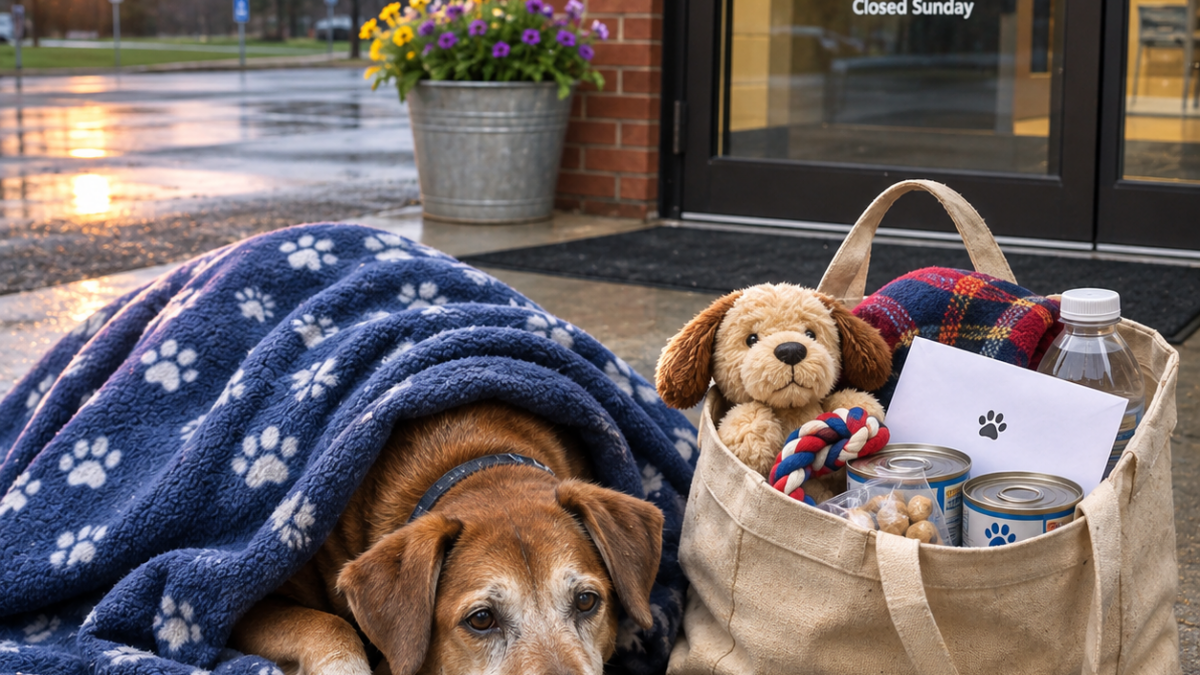
The first thing I saw outside our shelter that morning was an old dog curled beneath a faded green blanket, his silver muzzle resting beside a canvas bag and a sealed envelope that looked less like a surrender note and more like the final words of someone who had run out of choices.
He had apparently spent the entire night staring toward the parking lot, and when I knelt beside him at sunrise, he gave me one slow wag that didn’t feel like a greeting at all—it felt like a dog asking whether the car that had left him there was finally coming back.
But when I opened the envelope and quietly read one man’s name aloud, the old dog’s reaction made me realize this wasn’t an abandonment story in the way I had first feared, and what happened next would force an entire institution to reconsider a rule nobody had ever questioned before.
My name is Daniel Foster, and for nearly fifteen years I had been the admissions coordinator at Maple Ridge Animal Rescue in Asheville, North Carolina.
I had unlocked the same glass doors thousands of mornings before sunrise.
I had also found animals waiting outside more times than I wanted to remember.
Kittens in laundry baskets.
Puppies tied to fences.
Rabbits inside plastic carriers.
Once, somebody left a cockatiel in a cardboard box with air holes and a handwritten note that simply said, **Sorry.**
So when I saw the bundle near our entrance that morning, I thought I understood what I was looking at.
Then the blanket moved.
An elderly black-and-white Border Collie slowly raised his head.
His face was almost completely gray around the muzzle. One ear stood straight while the other folded halfway down, and his tired amber eyes remained fixed not on me, but on the road beyond the parking lot.
“Hey, buddy.”
His eyes shifted.
His tail tapped the concrete once.
I approached slowly.
He wasn’t filthy.
That was the first thing that felt wrong about my assumption.
His coat had been brushed recently.
His nails were trimmed.
His ears were clean.
A faded leather collar circled his neck, but there was no identification tag.
The green fleece wrapped around him smelled faintly of lavender detergent.
Someone had cared for this dog.
Recently.
Carefully.
And yet someone had still left him outside our shelter before dawn.
Beside him sat an old canvas tote.
Inside were cans of senior food, two bottles of arthritis medication, a brush with gray fur caught between the bristles, a handwritten feeding schedule, peanut butter treats, and a battered red tennis ball covered in tooth marks.
Everything was packed with almost painful attention.
On top was a sealed envelope protected inside a freezer bag.
Across the front, in shaky handwriting, were four words:
**For Whoever Finds Him.**
I unlocked the shelter door, then crouched beside the dog.
“Can I pick you up?”
Obviously, he couldn’t answer.
But when I slid my arms beneath him, he didn’t resist.
He was lighter than I expected.
His joints were stiff, and he adjusted himself carefully against my chest.
As I carried him inside, he looked over my shoulder one final time.
Back toward the empty parking lot.
That glance stayed with me.
I settled him onto a thick orthopedic bed in our intake room.
He ignored it.
Instead, he stepped onto the old green blanket, circled once and lay down with his nose buried deep in the fabric.
Home.
Whatever home had been, that blanket still smelled like it.
Only then did I open the envelope.
The first sentence stopped me.
**Please don’t think someone stopped loving him.**
I looked at the dog.
Then continued.
**His name is Charlie.**
At the sound of the name, one ear moved.
I read aloud without meaning to.
“Charlie.”
His head lifted.
That was when I knew.
The letter continued.
Charlie was thirteen.
He had arthritis in both hips, mild hearing loss and cataracts that made nighttime difficult.
He loved boiled chicken.
Peanut butter.
Slow walks.
Classical music during thunderstorms.
And every evening at exactly seven, he expected somebody to sit beside him while he ate because he had never liked eating alone.
Then I reached the paragraph that explained why he was on our doorstep.
**My name is Harold Bennett. I am eighty-seven years old. Yesterday I suffered another heart attack. My doctors have told me I cannot safely return home. My daughter has arranged assisted living, but they do not allow pets. Charlie has been my best friend since my wife died nine years ago. I promised him I would never leave him. Today I broke that promise.**
My vision blurred.
The final lines were worse.
**If you are reading this, please don’t let him think I left because I stopped loving him. I loved him every single day. Please sit with him when he eats. He will be waiting for me.**
I looked down.
Charlie was staring at me.
I whispered, “Harold.”
His entire expression changed.
His tail struck the blanket once.
Then again.
He pushed himself upright despite his stiff hips and looked toward the door.
He knew that name.
And he was still waiting.
I folded the letter carefully.
Then I reached for the phone.
Because at that moment, finding Charlie a new home stopped being my first priority.
Finding Harold became the only thing I could think about.
PART 2
The first call went nowhere.
The number Harold had written at the bottom of the letter was his home phone, and it rang until an automated message picked up.
I tried again.
Same result.
Charlie watched me from the blanket.
“I’m trying.”
His ears moved.
I called the hospital listed on one of the medication receipts in the tote bag.
Privacy rules prevented them from telling me much.
“I understand,” I said. “I’m not asking for medical information. I’m trying to find an eighty-seven-year-old man because his dog was left at our shelter with a letter saying he had a heart attack.”
The receptionist became quiet.
“What’s the patient’s name?”
“Harold Bennett.”
More silence.
“I can’t confirm whether he’s here.”
“I understand.”
“But if he were here, what would you want communicated?”
I looked at Charlie.
“Tell him Charlie is safe.”
The receptionist’s voice softened.
“I’ll see what I can do.”
I hung up.
Charlie was still watching me.
“You’re safe.”
No reaction.
“That’s not the same thing as happy, is it?”
His head lowered again.
## The Seven O’Clock Rule
I spent most of that day making calls while our veterinary team examined Charlie.
Physically, he was exactly what Harold’s letter had described.
Old.
Arthritic.
Mild cataracts.
Some hearing loss.
A heart murmur that deserved monitoring but wasn’t immediately alarming.
Nothing suggested neglect.
His body condition was appropriate.
His teeth had clearly received veterinary care.
His medications were correctly labeled.
Every detail supported the same painful conclusion.
Harold had not abandoned Charlie because he was tired of him.
He had prepared for separation because he believed he had no alternative.
That somehow hurt more.
At six fifty-five that evening, I remembered the note.
**Every evening at exactly seven, he expects someone to sit beside him while he eats.**
I warmed some of the senior food Harold had packed.
Added a little boiled chicken from our staff refrigerator.
Placed the bowl beside Charlie’s bed.
He smelled it.
Didn’t eat.
I sat down.
Nothing.
At exactly seven, I moved closer.
“Your friend says I’m supposed to stay.”
Charlie looked at me.
Then took one bite.
I swallowed.
Another.
He stopped.
Looked at me.
I remained seated.
He continued.
That was our first dinner together.
It lasted eighteen minutes.
I didn’t touch my phone.
Didn’t answer email.
Didn’t move.
Charlie ate slowly while I sat beside him.
When the bowl was empty, he rested his chin on my shoe.
I stayed another twenty minutes.
## The Call
At 8:13 that night, my phone rang.
Unknown number.
“Daniel Foster?”
“Yes.”
“This is Evelyn from St. Joseph’s Hospital.”
My heart jumped.
“I spoke with you earlier.”
“Yes.”
“I can’t provide medical details, but Mr. Bennett gave permission for us to connect you with his daughter.”
A second voice joined.
A woman.
“Hello?”
“Hi. I’m Daniel. I work at Maple Ridge Animal Rescue.”
Silence.
Then:
“Charlie?”
Her voice broke on the name.
“He’s safe.”
The woman began crying.
Not quietly.
Not the kind of crying people try to hide.
The kind that arrives after you’ve been holding everything together too long.
“I’m Linda. Harold is my father.”
“I have his letter.”
“Oh God.”
“He left Charlie with us early this morning.”
“I know.”
That surprised me.
“You know?”
Linda took a breath.
“I drove him.”
I became very still.
“You left Charlie outside?”
“It was four thirty. Dad insisted.”
My first instinct was anger.
She heard it in my silence.
“Please don’t judge him.”
“I’m trying not to.”
“He didn’t want to go inside.”
“Why?”
“He was ashamed.”
That word hit harder than I expected.
“He thought you’d tell him he was a bad owner.”
I looked at the letter.
“Nothing in that bag suggests a bad owner.”
“I know.”
Linda was crying again.
“He made me circle the parking lot twice because he couldn’t make himself open the door.”
I closed my eyes.
“What happened?”
“He sat in the car holding Charlie for almost an hour.”
I said nothing.
“Finally Dad said, ‘If I don’t do it now, I’ll ask you to drive me home, and the doctors say I can’t go home.’”
My throat tightened.
“He wrapped Charlie in the blanket. Put everything beside him. Left the letter.”
“Did Charlie watch you leave?”
Linda’s crying became quieter.
“Yes.”
I looked across the shelter office.
Charlie was asleep on Harold’s blanket.
“Where is Harold now?”
“Transferred today.”
“To assisted living?”
“Yes.”
“Can he have visitors?”
“People, yes.”
“Dogs?”
“No.”
The word came immediately.
No hesitation.
“How strict is that?”
“Very.”
“Have you asked?”
“Of course I asked.”
“And?”
“They said no animals except approved service or therapy animals.”
I looked at Charlie.
“That’s not the same as no animals.”
“What?”
“Therapy animals.”
Linda paused.
“Charlie isn’t a therapy dog.”
“No.”
Not yet, I thought.
I didn’t say it.
## Harold
The next morning, Linda arranged a phone call.
Harold’s voice sounded weaker than I expected.
“Mr. Bennett?”
“Yes.”
“This is Daniel Foster.”
Pause.
Then:
“Charlie?”
“He’s safe.”
A long exhale.
“Did he eat?”
That was Harold’s first question.
Not Did you read my letter?
Not Did you call the police?
Not Are you angry?
Did he eat?
“He did.”
“Alone?”
I smiled despite myself.
“No.”
Another pause.
“Thank you.”
“He finished everything.”
“Chicken?”
“Yes.”
“He’ll eat anything with chicken.”
“I noticed.”
Harold chuckled once.
It became a cough.
I waited.
Then he asked:
“Was he frightened?”
I looked at Charlie.
He was standing by the office door.
“Confused.”
Harold was quiet.
“I lied to him.”
“What?”
“I told him we were going for a drive.”
I didn’t know what to say.
“I told him we’d go home afterward.”
His voice cracked.
“I’ve never lied to that dog before.”
“Mr. Bennett—”
“Harold.”
“Harold, you were trying to keep him safe.”
“I left him outside.”
“You left him at a rescue with food, medication, instructions and a letter.”
“I still drove away.”
There are moments when reassurance becomes dishonest.
So I didn’t tell him he had done nothing wrong.
He had made a choice that hurt Charlie.
But it had also been a choice made inside a situation where every available option hurt.
I said:
“You loved him enough to leave everything we needed to care for him.”
Harold didn’t answer.
Then he whispered:
“That isn’t the same as staying.”
No.
It wasn’t.
## The Rule
Linda gave me the name of the assisted living facility.
Willow Creek Senior Residence.
Beautiful place.
Good reputation.
Large grounds.
Medical support.
Strict pet policy.
I called.
The receptionist transferred me.
The administrator was a woman named Margaret Ellis.
I explained everything.
She listened politely.
Then said:
“I sympathize completely, but we cannot house personal pets.”
“I’m not asking you to house Charlie.”
“What are you asking?”
“One visit.”
She hesitated.
“Our policy allows certified therapy animals through approved organizations.”
“So allow Charlie through one.”
“He isn’t certified.”
“We can evaluate him.”
“Mr. Foster—”
“Daniel.”
“Daniel, I understand this is emotional.”
That phrase irritated me instantly.
Whenever someone says, “I understand this is emotional,” what often follows is a reason why emotion must lose.
I kept my voice calm.
“Harold just lost his home, his independence and the dog he’s lived with for nine years in less than forty-eight hours.”
“I know.”
“He’s eighty-seven.”
“I understand.”
“His daughter says he’s barely speaking.”
Margaret sighed.
“We still have liability concerns.”
“What concerns?”
“Falls. Allergies. Infection control. Resident fear. Other residents wanting equal exceptions.”
There it was.
Not cruelty.
Administration.
The most difficult opponent in the world because every argument sounds reasonable in isolation.
“Can I come meet with you?”
“I’m not sure what that would change.”
“Neither am I.”
I looked at Charlie.
“But I’d like to find out.”
## The Meeting
Linda came.
Our shelter director, Susan, came.
I came.
Margaret had the facility’s nursing director, risk coordinator and social worker with her.
Six people around a conference table because one old man wanted to see one old dog.
That should have felt absurd.
Instead, it felt enormous.
Margaret began:
“We are not unsympathetic.”
Susan answered:
“We know.”
“But if we create an exception—”
“I don’t want an exception,” I said.
Margaret looked at me.
“I want a process.”
The risk coordinator frowned.
“What kind?”
“Charlie gets evaluated by a certified therapy organization.”
“He may fail.”
“Then we reassess.”
“He may pass.”
“Then he visits under supervision.”
The nursing director asked:
“What about vaccination records?”
“We have them.”
“Health exam?”
“Yesterday.”
“Parasites?”
“Negative testing can be provided.”
“Behavior?”
“Gentle.”
“History of biting?”
“None known.”
Margaret folded her hands.
“And if another resident asks why their dog cannot live here?”
“Charlie wouldn’t live here.”
Silence.
I continued.
“Harold isn’t asking you to become pet-friendly housing. He’s asking not to lose the last relationship from his previous life overnight.”
The social worker looked down.
That landed.
Then Margaret said something that changed the direction of the meeting.
“How long has Mr. Bennett had the dog?”
“Nine years since his wife’s death.”
Linda corrected softly.
“Charlie was actually my mother’s dog first.”
Everyone looked at her.
“She chose him from a rescue when he was about four.”
I turned.
“I didn’t know that.”
Linda smiled sadly.
“Mom died less than a year later. Dad kept Charlie.”
She took a breath.
“He said the house was too quiet otherwise.”
The room changed.
Charlie wasn’t simply a pet.
He was one of the last living links between Harold and his wife.
## The Compromise
They agreed to an evaluation.
Not a guarantee.
An evaluation.
I left feeling like we’d won the Super Bowl.
Susan looked at me in the parking lot.
“They said maybe.”
“I know.”
“You’re smiling.”
“They didn’t say no.”
“Your standards are collapsing.”
“Progress.”
## Charlie’s Evaluation
A local therapy-dog organization agreed to assess him.
Charlie was thirteen.
Arthritic.
Mildly hard of hearing.
Not exactly the classic energetic therapy candidate.
But therapy work is not performance.
It’s temperament.
Predictability.
Comfort around strangers.
Response to handling.
Ability to remain calm.
Charlie had spent years beside an elderly man.
He was made for stillness.
During the evaluation, a volunteer dropped a clipboard.
Charlie looked.
Didn’t panic.
A stranger touched his paws.
He tolerated it.
Someone using a walker approached.
Charlie moved slowly aside.
A wheelchair rolled past.
No reaction.
Then an evaluator sat down and called him.
Charlie walked over and rested his silver muzzle on her knee.
She looked at me.
“That part he already knows.”
I smiled.
“Harold trained him accidentally.”
Charlie passed the behavioral portion.
There were additional requirements.
Health clearance.
Documentation.
Supervision.
But one week after I found him outside our shelter, we had what we needed for a trial visit.
## Harold Doesn’t Know
Linda wanted it to be a surprise.
I hated the idea.
“What if he gets overwhelmed?”
“He’s been asking every day.”
“What if Charlie gets overwhelmed?”
“He’s been watching every car that enters your parking lot.”
Fair.
So we agreed.
One week after rescue, I put a brand-new blue harness on Charlie.
He hated it.
He stared at me as if I’d betrayed him.
“You’re going somewhere important.”
No reaction.
“Trust me.”
That phrase felt dangerous considering the week he’d had.
I added:
“Actually, don’t. Just get in the van.”
He did.
## The Hallway
Willow Creek smelled like coffee, disinfectant and old furniture.
Charlie walked slowly beside me.
His nails clicked against the polished floor.
Residents looked up.
A woman in a wheelchair smiled.
“Oh!”
A nurse whispered:
“That’s Harold’s dog.”
Word traveled faster than we did.
By the time we reached the common room, six people were watching.
Harold sat near the window.
He looked smaller than I had imagined.
Thin.
Gray.
A cardigan buttoned incorrectly.
His hands rested on a blanket over his knees.
Linda stood behind him.
I stopped at the doorway.
Charlie hadn’t seen him yet.
Then Harold turned.
His face changed.
“Charlie?”
The dog froze.
One ear lifted.
Then the other tried.
His tail moved.
Once.
Twice.
Then Charlie began walking.
Not running.
He couldn’t.
His hips wouldn’t allow it.
But he walked faster than I had seen him move all week.
Harold tried to stand.
The nurse stopped him.
“Stay seated.”
He ignored her.
“Charlie.”
The dog reached him.
Harold bent forward.
Charlie leaned his entire body against the man’s legs.
Then placed his gray muzzle in Harold’s lap.
Harold broke.
There is no elegant way to describe it.
He cried like a child.
Both hands buried in Charlie’s coat.
“I’m sorry.”
Charlie pressed closer.
“I lied to you.”
Tail wag.
“I said we’d go home.”
Charlie looked up.
Harold kissed his head.
“I didn’t stop loving you.”
Around them, the entire room had gone silent.
Margaret stood near the hallway.
The administrator who had explained liability and policy watched an eighty-seven-year-old man hold his dog as if somebody had returned oxygen to the room.
She wiped her eyes.
That mattered later.
## Seven O’Clock
The visit was supposed to last thirty minutes.
It lasted ninety.
At six fifty, Harold said:
“He’ll be hungry.”
I looked at the clock.
Of course.
We had brought food.
At seven, Charlie’s bowl was placed beside Harold’s chair.
Harold sat with one hand resting on Charlie’s back.
Charlie ate.
Slowly.
The exact ritual from home.
For the first time since arriving at Willow Creek, Harold finished his own dinner too.
The nurse noticed.
I noticed her noticing.
Everything was becoming evidence.
Not legal evidence.
Human evidence.
## The First Change
The next morning, Margaret called.
“I’d like to discuss a pilot.”
I almost dropped the phone.
“A pilot?”
“Supervised companion-animal visits.”
I sat down.
“For Harold?”
“For residents who meet certain criteria.”
There it was.
One reunion had become policy discussion.
She continued.
“We would need health documentation, scheduling, behavioral screening and designated visiting spaces.”
“Fine.”
“Insurance review.”
“Fine.”
“Volunteer supervision.”
“Fine.”
“You haven’t heard the details.”
“Whatever they are, fine.”
She laughed.
First time.
“Daniel.”
“Yes?”
“I think you were right.”
I looked at Charlie.
He was asleep under my desk.
“About what?”
“A process.”
## Weekly Visits
Charlie began going every Wednesday.
Then Saturdays too.
Harold transformed on visit days.
Staff told us.
He shaved.
Changed shirts.
Ate breakfast.
Asked what time it was.
Sat by the window.
Charlie also learned.
On Wednesday mornings, when I brought out the blue harness, his tail began moving before I touched him.
The first few times, he still watched the parking lot when we returned to the shelter.
Eventually, he stopped.
He had learned something important.
Harold could disappear from sight and still come back into his life.
Separation stopped meaning abandonment.
## Other Residents
Then something unexpected happened.
Charlie began visiting them too.
Not because we planned it.
Because Harold showed him off.
“This is Charlie.”
A woman named June asked if she could pet him.
Charlie leaned into her.
A man named Robert, who rarely spoke after a stroke, reached one hand toward Charlie’s ear.
Charlie stood still.
Another resident laughed when Charlie dropped the old red tennis ball at her feet.
Within a month, staff had started calling Wednesdays “Charlie day.”
The therapy organization formalized his role.
At thirteen years old, Charlie became a certified visiting dog.
Harold was absurdly proud.
“He got a job.”
I laughed.
“Unpaid.”
“Typical.”
## The Ball
Harold’s red tennis ball became part of every visit.
Charlie no longer chased far.
He was old.
But Harold would roll the ball a few feet.
Charlie would retrieve it.
Sometimes.
Other times, Charlie looked at him as if to say, You threw it. You get it.
Harold always laughed.
That laugh became one of the facility staff’s favorite sounds.
## Linda’s Guilt
One afternoon, Linda asked me to walk outside.
She had been carrying something heavy for months.
“I left him.”
“Who?”
“Charlie.”
“You drove your father.”
“I drove away.”
I recognized the guilt.
Different from Harold’s.
Same root.
“You followed your father’s decision.”
“I could’ve refused.”
“And done what?”
“Taken Charlie.”
“Could you?”
She looked away.
Linda lived in an apartment with a strict no-pet lease and traveled constantly for work.
She had tried friends.
Family.
Temporary boarding.
Nothing had worked on the timeline they had.
“That doesn’t make leaving him outside feel okay.”
“No.”
“I keep seeing him staring at the car.”
I understood.
“Then use it.”
She looked at me.
“What?”
“Guilt.”
“For what?”
“Help us build the program.”
That changed her.
Linda became one of the first volunteers coordinating family-pet visits.
Not because she needed punishment.
Because she needed her regret to do something useful.
## Charlie Stops Waiting at the Shelter Door
Three months passed.
One morning, I noticed something.
Charlie had stopped sleeping where he could see the entrance.
When first rescued, he positioned himself near doors.
Always.
Shelter office.
Foster room.
Lobby.
Any place where Harold might appear.
Now he slept beneath my desk.
Deeply.
Sometimes snoring.
The weekly routine had taught him that love could leave and return.
That was healing.
## The Foster Question
Charlie still lived at the shelter at night.
That wasn’t ideal.
Senior dogs need homes.
Quiet.
Consistency.
We began discussing foster care.
I resisted more than I should have.
Susan noticed.
“You’re attached.”
“I’m professional.”
“You let him sleep in your office.”
“Arthritis.”
“You bought him a second orthopedic bed.”
“Medical necessity.”
“You heat his chicken.”
“He has standards.”
She stared.
“Daniel.”
“Fine.”
But I wasn’t the right permanent home.
I had two large dogs and a house full of stairs.
Charlie needed fewer obstacles.
So we began looking carefully.
But there was one condition.
Whoever fostered or adopted Charlie had to commit to maintaining his visits with Harold.
No compromise.
## Nurse Emily
The answer appeared at Willow Creek.
Emily Carter.
Thirty-eight.
Registered nurse.
Worked mostly day shifts.
Small house with a fenced yard.
No current pets.
Her old Labrador had died the previous year.
Charlie already adored her.
She carried peanut butter treats in her pocket.
Unfair advantage.
One Wednesday, Charlie followed Emily into the nurses’ station.
She looked at me.
“Is he available?”
My heart stopped.
“For adoption?”
“Eventually.”
She looked toward Harold.
“I wouldn’t stop the visits.”
I studied her.
“You understand that part isn’t optional.”
“I know.”
“And he’s old.”
“I know.”
“Arthritis.”
“I give medications professionally.”
“Mild hearing loss.”
“So does half my family.”
“Cataracts.”
“My mother drives at night with worse.”
I laughed.
“Don’t tell anyone that.”
Emily smiled.
“Can I foster him?”
## Harold Decides
We asked Harold.
That mattered.
Charlie was legally under rescue care now, but morally, Harold’s voice mattered.
Emily sat beside him.
“I’d like Charlie to live with me.”
Harold’s face tightened.
For one second, I thought he’d refuse.
Then he asked:
“Will he sleep inside?”
Emily nodded.
“On furniture if he wants.”
“Food at seven?”
“Yes.”
“Don’t make him eat alone.”
“I won’t.”
“Classical music in storms.”
“I’ve been briefed.”
Harold smiled.
Then his eyes filled.
“You’ll bring him?”
“Every week.”
“Even if I’m difficult?”
Emily laughed.
“Especially then.”
Harold looked down at Charlie.
“You hear that?”
Tail wag.
Harold nodded.
“Okay.”
That “okay” carried surrender and trust at once.
## Charlie’s New Home
Emily’s house was almost perfect.
One-story.
Rugs.
Yard.
Large windows.
She had already bought a bed.
I hated her immediately.
Good adopters always make rescue staff emotionally unreasonable.
Charlie walked inside.
Explored.
Found the kitchen.
Correct priorities.
Emily showed him the living room.
He discovered the couch.
Within twenty minutes, he was asleep.
I stood near the door holding his tote bag.
Emily asked:
“You okay?”
“No.”
“Good.”
“Why good?”
“Means you care.”
I handed her Harold’s feeding schedule.
Original.
Folds worn soft.
“Keep this.”
She took it carefully.
“I will.”
## Harold’s Health
For almost a year, things settled into a rhythm.
Charlie lived with Emily.
Visited Harold twice a week.
Sometimes three times if schedules allowed.
Harold’s health fluctuated.
Good weeks.
Bad weeks.
One hospitalization.
Charlie could not visit the hospital during that admission.
Harold became withdrawn.
Charlie became restless.
When Harold returned to Willow Creek, their reunion was smaller than the first.
No crowd.
No surprise.
Charlie simply put his head on Harold’s knee.
Harold whispered:
“There you are.”
Sometimes repetition is more powerful than spectacle.
## The Program
Willow Creek’s pilot grew.
One resident had a daughter bring her elderly cat in a carrier.
Another received visits from a small terrier he’d lived with before moving.
A woman with dementia became calmer when her son’s Golden Retriever visited.
Rules remained.
Vaccinations.
Screening.
Scheduling.
Supervision.
No overnight pets.
But the absolute no had become a careful yes.
Other facilities heard about it.
Two asked Margaret for copies of the policy.
Then three.
Charlie had done something he didn’t understand.
He changed a system simply by loving one old man visibly enough that administrators could no longer pretend separation had no cost.
## The Newspaper
A local reporter heard about the program.
Harold hated the idea.
“I don’t want my picture in the paper.”
Charlie had no opinion.
Linda convinced him.
The story ran with a photograph of Harold sitting beside Charlie.
Headline:
**One Old Dog Inspires New Companion Program at Asheville Senior Home**
Harold complained his hair looked terrible.
Charlie looked excellent.
Naturally.
## Teresa, the Resident Who Refused Dogs
Not everyone loved the program.
One resident, Teresa Morgan, feared dogs after being bitten as a child.
She objected.
Strongly.
This became important.
Because good policies cannot replace one person’s pain with another’s.
So we adjusted routes.
Visiting rooms.
Schedules.
No dog passed Teresa’s hallway without notice.
She never had to interact.
Months later, she watched Charlie from across a courtyard.
Then eventually asked:
“Does he bite?”
Harold answered:
“Only bad people.”
I nearly choked.
Charlie had never bitten anyone.
Teresa rolled her eyes.
But she smiled.
A year later, she touched the top of his head once.
Then announced:
“That’s enough.”
Progress has many sizes.
## Harold Turns Eighty-Nine
We held a small birthday party.
Charlie wore a bow tie.
Hated it.
Harold wore one too.
Also hated it.
Linda brought cake.
Emily brought Charlie.
I brought the red tennis ball.
Harold turned eighty-nine.
He leaned toward me.
“Didn’t think I’d get here.”
“Neither did your doctors?”
He smiled.
“They’re pessimists.”
Charlie rested beneath his chair.
## The Night Storm
One summer evening, a thunderstorm hit during a visit.
Charlie had always hated storms.
Harold’s letter had warned us.
Classical music.
So a nurse played Mozart softly in Harold’s room.
Thunder rolled.
Charlie moved closer to Harold’s bed.
Harold placed one hand on him.
“Same as home.”
That sentence reduced the room to silence.
Same as home.
They had lost the house.
But not the ritual.
Maybe home is sometimes just the repetition of love in a new room.
## Charlie’s Aging
By fourteen, Charlie slowed.
Arthritis worsened.
He needed stronger medication.
The cataracts progressed.
His hearing faded more.
Emily adapted.
Night lights.
Ramps.
Shorter walks.
More rugs.
Harold worried constantly.
“He’s getting old.”
I laughed.
“So are you.”
“I’m allowed.”
“So is he.”
Harold looked down.
“I don’t want him to go first.”
That was the first time he said it.
I didn’t know what to say.
Because old love always carries arithmetic.
Who leaves first?
Who has to remain?
There is no good answer.
## Harold’s Decline
Near the end of Charlie’s second year visiting Willow Creek, Harold’s heart began failing more seriously.
He tired easily.
Needed oxygen occasionally.
Stopped attending communal meals.
Charlie visits moved to Harold’s room.
Emily carried the old dog farther because his hips couldn’t handle the hallway.
Some days Charlie simply slept beside Harold’s chair.
No playing.
No tennis ball.
Just presence.
That became enough.
## Linda’s Fear
“My dad is afraid Charlie will think he abandoned him again.”
Linda told me in the hallway.
I looked through the door.
Harold sleeping.
Charlie beneath the blanket near his chair.
“He hasn’t.”
“He keeps asking.”
“Then tell him.”
“I do.”
“Again.”
She nodded.
Grief begins before death.
Sometimes it begins when everyone realizes there are fewer tomorrows than routines left.
## Harold’s Last Request
One afternoon, Harold called my name.
I sat beside him.
“Daniel.”
“Yes?”
“If I go first…”
He paused for breath.
“Charlie stays with Emily?”
“Yes.”
“She promised?”
“Yes.”
“You promise?”
“Yes.”
He closed his eyes.
“Good.”
Then:
“Don’t take him back to the shelter.”
I swallowed.
“He won’t go back.”
“Promise.”
“I promise.”
He relaxed.
Charlie slept at his feet.
## The Final Week
Harold stopped getting out of bed.
Hospice care became involved.
Willow Creek made another exception.
Not really an exception anymore.
An evolution.
Charlie could stay longer during the day.
Emily brought him early.
Took him home late.
Sometimes nurses forgot he wasn’t part of the official staff.
He had a water bowl in Harold’s room.
A blanket.
His old red tennis ball near the dresser.
No one threw it anymore.
It had become an artifact.
## The Last Seven O’Clock Dinner
Three days before Harold died, Charlie ate dinner beside his bed.
Seven o’clock.
Exactly.
Harold was barely awake.
Linda sat on one side.
Emily on the other.
I stood near the door.
Charlie smelled the food.
Then looked at Harold.
For a moment, he didn’t eat.
Harold opened his eyes.
“Go on.”
Charlie lowered his head.
Ate.
Slowly.
Harold’s hand rested on the edge of the bed.
Charlie finished.
Then moved close enough that Harold’s fingers touched his fur.
Routine completed.
## The Last Morning
I was not there when Harold took his final breath.
Emily called me afterward.
Her voice was shaking.
“Daniel.”
I knew.
“When?”
“Six fifteen.”
“Was Linda there?”
“Yes.”
“Charlie?”
Pause.
“Yes.”
I sat down.
Emily continued.
“Harold woke around five.”
“He spoke?”
“A little.”
“What did he say?”
“He asked where Charlie was.”
Of course.
Emily had brought Charlie close.
The dog was too stiff to climb safely onto the bed, so they placed a chair beside Harold and helped Charlie onto a thick cushion.
Harold rested one hand on his back.
For almost an hour, neither moved much.
Then Harold whispered:
“Good boy.”
Those were among his last clear words.
At six fifteen, Harold died.
Charlie remained beside him.
## Charlie’s Reaction
People always want to know whether dogs understand death.
I don’t pretend to know.
Charlie smelled Harold’s hand.
Then his face.
He stood there for a long time.
No whining.
No dramatic behavior.
Eventually, he lay down beside the chair.
Emily stayed with him.
When it was time to leave, Charlie looked back once.
That detail mirrored the morning I carried him into the shelter.
Two years earlier, he had looked over my shoulder toward an empty parking lot searching for Harold.
Now he looked back into Harold’s room.
But this time, nobody had disappeared without explanation.
He had been there.
Until the end.
## The Funeral
Charlie did not attend the formal service.
Linda chose something quieter.
Before the funeral, she brought Harold’s cardigan to Emily’s house.
Charlie smelled it.
Then lay beside it.
Linda sat on the floor with him.
She cried.
Charlie rested his head on her leg.
For years, he had been Harold’s comfort.
Now he became hers.
## Emily Adopts Him Officially
Charlie had technically remained a foster because we had wanted flexibility around Harold’s visits and medical needs.
After Harold died, Emily signed the adoption papers.
She cried through the entire process.
I pretended not to.
Susan did not pretend.
The form asked:
**Reason for adoption**
Emily wrote:
**He already lives here. I’m just making the paperwork catch up.**
Perfect.
## The Green Blanket
Harold’s original green blanket remained with Charlie.
Emily washed it carefully.
Lavender detergent.
Same scent.
Years later, even after it became thin and frayed, Charlie chose it over newer blankets.
Some things become home because time decides they are.
## Willow Creek Renames the Program
Six months after Harold’s death, the facility expanded the companion-animal visiting policy permanently.
They named it:
**The Bennett Companion Program.**
Margaret invited Linda, Emily and me to a small ceremony.
Charlie attended wearing the blue harness.
A framed photograph of Harold and Charlie went on the wall.
Underneath:
**Love should not end at the door of care.**
I had to walk away for a minute after reading it.
## The Policy Goes Elsewhere
Other assisted-living facilities adopted similar policies.
Not all.
Some couldn’t.
Some had legitimate structural or medical limitations.
But several did.
Because Willow Creek now had data.
Fall incidents: none linked to visits.
Allergy complaints: manageable.
Resident engagement: improved.
Family satisfaction: higher.
What began as one emotional plea became evidence strong enough to survive administration.
I liked that.
Harold had spent his life with Charlie quietly.
Their love became policy almost by accident.
## Charlie After Harold
He grieved.
I believe that.
For several weeks, Emily said he waited by the door on Wednesdays.
Visit day.
The blue harness came out less often.
Charlie stared at it.
Then at her.
She began bringing him back to Willow Creek anyway.
Not to Harold’s room.
To everyone else.
The first time, Charlie stopped outside Harold’s old hallway.
He stood there.
Then continued.
No one rushed him.
## June
The resident named June became especially attached to Charlie.
She was ninety-two.
No family nearby.
She waited for him.
Charlie would rest his head on her lap.
June called him “the professor” because of his gray face.
“Professor Charlie is here.”
He didn’t care what she called him as long as treats followed.
## Robert
Robert, the stroke patient, eventually learned to say Charlie’s name clearly.
His speech therapist used the dog during sessions.
“Char-lie.”
Two syllables.
Robert struggled.
Charlie waited.
One afternoon:
“Charlie.”
Perfect.
Everyone clapped.
Charlie slept through it.
## The Story Changed
At first, Charlie had been “the abandoned dog.”
I hated that phrase.
Then he became “Harold’s dog.”
Better.
Then “the Willow Creek therapy dog.”
Better still.
Eventually, he was just Charlie.
That’s the goal.
Trauma should become biography, not identity.
## Charlie Turns Fifteen
Emily held a birthday party.
We didn’t know his exact date, so we used the date Harold had written in his veterinary folder.
Charlie wore no hat because he had earned dignity.
He received peanut butter treats.
A tiny piece of chicken.
Visitors.
June.
Linda.
Me.
Margaret.
Even Susan.
The red tennis ball sat beside him.
He had stopped carrying it long before.
But we kept it.
## His Health Begins to Fail
At fifteen, Charlie’s kidneys changed.
His heart murmur worsened.
Arthritis became more painful.
Emily managed everything.
Medication.
Diet.
Bloodwork.
Ramps.
Night lights.
Short walks.
I watched the bills grow.
One day I said:
“This is getting expensive.”
Emily looked at me.
“So?”
I laughed.
“Nothing.”
That one word was the entire difference between fear and commitment.
So?
Old dogs cost money.
Bodies fail.
Love stays.
## Linda’s Visit
Linda visited Charlie often after Harold’s death.
At first, I think she did it because she felt guilty.
Later, because she loved him.
One afternoon, she brought an old photograph.
Harold and his wife, Margaret, sitting on a porch.
A younger Charlie between them.
Black coat glossy.
No gray muzzle.
“That’s my mom.”
I studied it.
“She chose him?”
“Yes.”
Linda smiled.
“Dad said he didn’t want a dog.”
Of course.
“What changed?”
“Charlie followed him everywhere.”
“Smart dog.”
“Dad used to complain.”
She laughed.
“Then Mom died and Charlie slept outside Dad’s bedroom door for weeks.”
That explained everything.
Charlie had carried Harold through grief first.
Years later, Harold’s whole terror was that he had failed the animal who had once refused to leave him alone.
They had been taking turns saving each other for a decade.
## The Final Winter
Charlie became frailer.
Snow meant only the yard, not walks.
Emily bought him a coat.
Blue.
He tolerated it.
His hearing was almost gone.
Vision poor in dim light.
But he still recognized touch.
Scent.
Routine.
At seven every evening, Emily sat beside him while he ate.
Never missed it.
Not once.
## The Last Visit to Willow Creek
Charlie was nearly sixteen.
Emily asked if he should retire.
The veterinarian agreed long visits were becoming tiring.
So we planned one final short visit.
Not announced publicly.
No crowd.
June was there.
Robert.
Margaret.
Several nurses.
Charlie moved slowly down the hallway in the blue harness.
People touched him gently.
June cried.
“You’re older than me now.”
Not mathematically.
Emotionally, maybe.
Charlie rested beside her chair.
Then we walked past Harold’s old room.
Different resident now.
Charlie stopped.
Smelled the air.
Then continued.
That was enough.
## The Red Ball
Back at Emily’s house, Charlie still occasionally nosed the old tennis ball.
One day, he carried it to his bed.
First time in months.
Emily sent me a photo.
**Look what he found.**
I stared at it for a long time.
The ball had been packed outside the shelter years earlier because Harold knew it mattered.
Now Charlie carried it into old age.
The continuity felt unbearable.
## Charlie Stops Eating
One morning, Emily called.
“He didn’t finish breakfast.”
I was at work.
“How much?”
“Two bites.”
“Vet?”
“Appointment in an hour.”
His kidneys had worsened.
Heart weaker.
Nothing sudden.
Nothing fixable in the way we wanted.
The veterinarian adjusted treatment.
Charlie rallied.
A week.
Then another.
He ate chicken.
Peanut butter.
Senior food if Emily sat beside him.
Always the seven-o’clock ritual.
## The Decision
Eventually, Emily called again.
“I think I’m keeping him because I don’t want to lose him.”
That is the sentence good owners are brave enough to say.
Not:
He’s fine.
Not:
Maybe tomorrow.
But:
My fear may be asking more of him than his body can give.
I drove over.
Charlie lay on the green blanket.
His breathing slow.
His eyes cloudy.
He smelled my hand.
Tail moved.
Tiny.
“Hey, buddy.”
He rested his head again.
Emily sat beside me.
“What would Harold do?”
I thought about it.
“Harold spent his last years terrified of leaving Charlie.”
She nodded.
“But he also trusted you to care for him.”
Tears rolled down her face.
“So?”
“So I think Harold would want Charlie’s last day chosen for Charlie.”
That was all I could honestly say.
## One More Seven O’Clock
We decided the veterinarian would come the next afternoon.
That night, at seven, Emily made Charlie’s favorite meal.
Senior food.
Boiled chicken.
A tiny smear of peanut butter.
She sat beside him.
Linda came.
I came.
No one made it ceremonial.
Harold had never made dinner ceremonial.
It was routine.
That’s why it mattered.
Charlie ate slowly.
Stopped.
Looked at Emily.
She touched his back.
He took another bite.
Then another.
Eventually, he finished most of it.
Not all.
That was okay.
## His Final Morning
Sunlight came through Emily’s living-room window.
Charlie lay on Harold’s green blanket.
The red tennis ball beside him.
Linda brought Harold’s cardigan.
Not because Charlie needed it.
Because we did.
Emily played soft classical music.
Mozart.
Harold’s thunderstorm trick.
There was no storm.
Only quiet.
Charlie slept.
## Goodbye
The veterinarian arrived in the afternoon.
No clinic.
No metal table.
No fear.
Charlie remained at home.
Emily sat beside his head.
Linda held one paw.
I sat near his back.
Before the medication, I whispered:
“Harold’s not waiting for you at the shelter.”
I stopped.
That sounded strange.
I tried again.
“You don’t have to wait for anybody anymore.”
Charlie’s ear moved.
Maybe sound.
Maybe nothing.
I touched his shoulder.
“You did your job.”
He had.
Comforted Margaret.
Then Harold.
Then half a nursing home.
Then Linda.
Then Emily.
Then strangers.
A dog abandoned at a shelter doorstep had somehow spent the next years teaching humans how not to abandon one another.
The veterinarian administered the medication.
Charlie relaxed.
His breathing slowed.
Emily kissed his silver head.
Linda whispered:
“Dad loved you every day.”
My eyes closed.
Charlie breathed once.
Again.
Then stopped.
## The Green Blanket
We wrapped Charlie in it.
The same blanket he’d arrived beneath.
Lavender faded.
Edges worn.
But still his.
The first time I’d seen him under that blanket, he had been staring toward an empty road waiting for Harold.
The last time, he was surrounded by people who knew exactly who he was and why he mattered.
There are worse circles to complete.
## Harold’s Letter
I kept a copy.
The original went with Linda.
Years later, I still remembered the first sentence.
**Please don’t think someone stopped loving him.**
Harold had been afraid history would misread his worst morning.
It almost did.
If we’d found only Charlie and no letter, we might have told ourselves an old dog had been discarded.
We might have been angry.
We might have judged.
The letter forced us to understand something harder.
Not every separation is rejection.
Not every surrender comes from lack of love.
Sometimes people reach a point where love remains enormous and options become painfully small.
That doesn’t mean the separation doesn’t hurt.
It means compassion has to include more than the animal.
## The Program After Charlie
The Bennett Companion Program continued.
New animals.
New families.
New residents.
A cat named Lucy visited an eighty-four-year-old woman every Sunday.
A Chihuahua named Paco rode in a stroller to see a retired mechanic with Parkinson’s.
A Golden Retriever named Max became so popular staff had to schedule him.
Every visit traced back, indirectly, to Charlie lying outside our shelter under a green blanket.
## Margaret Retires
Years later, the administrator retired.
At her farewell gathering, she mentioned Charlie.
“I spent thirty years learning how to write policies.”
She smiled.
“Charlie taught me that good policies also need doors.”
I wrote that down.
## Linda Volunteers
Linda continued volunteering.
Her specialty became helping families plan for pets before a medical crisis.
Emergency contacts.
Temporary fosters.
Pet clauses.
Rescue partnerships.
She hated the idea of another daughter sitting in a car before dawn with an old father and an old dog because nobody had planned for what illness might do.
Her guilt became structure.
That is one of the healthiest forms of redemption I know.
## Emily Adopts Another Senior
Of course she did.
A twelve-year-old spaniel.
Deaf.
Half blind.
Terrible teeth.
Named Ruthie.
I asked:
“You enjoy suffering?”
Emily said:
“I enjoy old dogs.”
Same thing financially.
Different thing emotionally.
Ruthie inherited one of Charlie’s beds.
Not the green blanket.
That stayed folded in a cedar chest.
Some things were hers to keep.
## The Shelter Changes Too
We changed our surrender policy.
Not because Harold had done everything correctly.
Leaving an animal outside overnight is dangerous.
Weather changes.
Animals escape.
Medical crises happen.
But we realized shame was part of the problem.
People feared judgment.
So we rewrote our intake messaging.
**If you are in crisis, call us before you leave an animal. We will ask questions because we need information, not because we want to punish you.**
That sentence came from Harold.
Indirectly.
Because he had been afraid to walk through our doors.
I wished he’d known.
## The Bench
Willow Creek eventually placed a bench near the garden.
Small brass plaque.
**Harold & Charlie Bennett — Together, Even When Home Changed.**
Linda invited me when it was installed.
We sat there.
No Charlie.
No Harold.
Birds.
Wind.
People walking.
She asked:
“Do you think Dad would’ve liked this?”
“No.”
She laughed.
“Exactly.”
“He’d complain it was embarrassing.”
“He would.”
Then she cried.
I did too.
## The Old Canvas Tote
I still had it in shelter storage.
Harold’s original tote.
I nearly threw it out several times.
Never did.
One day a new employee asked:
“Whose bag?”
I told her.
Not the whole story.
Just enough.
“An old man packed everything his dog might need because he thought he’d never see him again.”
She stared at the bag.
“Did he?”
“See him again?”
“Yes.”
“For two years.”
Her eyes widened.
“Wow.”
Exactly.
## What Counts as Abandonment?
Charlie’s story changed the way I use that word.
Animals can absolutely be abandoned cruelly.
I’ve seen it.
But Charlie taught me not to decide a person’s heart from a single image before I know the context.
He was left outside.
That was true.
Harold loved him.
Also true.
The act caused pain.
Also true.
The man making the choice was in pain.
Also true.
Moral clarity is sometimes complicated without becoming meaningless.
We can say:
This should have been handled differently.
And also:
This man loved his dog desperately.
Both can stand.
## The Revenge the Story Never Needed
People online sometimes asked:
“Who should be punished for separating them?”
Nobody.
That wasn’t the story.
There was no villain to destroy.
The closest thing to an enemy was a rule designed for efficiency and safety that had never been asked to account for the emotional cost of separating an old person from an old animal.
The satisfying ending wasn’t revenge against Margaret.
She changed.
It wasn’t revenge against Linda.
She helped.
It wasn’t revenge against Harold.
He was already punishing himself.
The victory was that the rule changed.
A system looked at Charlie and Harold and admitted:
We can do better.
That is rarer than vengeance.
And more useful.
## The Photograph I Keep
Not Charlie outside.
Not Harold crying during reunion.
My favorite was taken a year later.
Harold asleep in his chair.
Charlie asleep beside him.
Both gray.
Both mouths slightly open.
Linda took it.
Nothing dramatic.
No tears.
No crisis.
No letter.
Two old friends sleeping.
That was what all the fighting had been for.
Ordinary time.
## The Sentence That Matters
Harold’s final line in the letter had been:
**I loved him every single day.**
At first, I thought the tragedy was that Charlie couldn’t understand those words.
Years later, I realized he didn’t need language.
Harold showed him again.
Every Wednesday.
Every Saturday.
Every seven-o’clock dinner.
Every hand on his back.
Every tennis ball rolled two feet across a nursing-home floor.
The letter wasn’t the proof.
The return was.
## If I Could Go Back to That Morning
I would still approach slowly.
Still carry Charlie inside.
Still open the letter.
But I would know something he didn’t.
I would kneel beside him on the concrete and say:
“Charlie, the car isn’t coming back today.”
He would look down the road.
“I know.”
“But Harold isn’t gone.”
Tail maybe.
“You’ll see him next week.”
“You’ll walk into a building where someone says dogs don’t belong, and you’re going to change their mind without barking once.”
“You’ll get a blue harness.”
“You’ll have a nurse named Emily who gives you too many peanut butter treats.”
“You’ll keep eating dinner at seven.”
“You’ll comfort people you haven’t met yet.”
“You’ll sit with Harold when he gets weaker.”
“And when his last day comes, he won’t have to wonder whether you think he stopped loving you.”
“You’ll be there.”
Then I’d tell him something else.
“After Harold is gone, you’re going to keep living.”
That is the part grief makes hard to imagine.
“But living won’t betray him.”
“You’ll love Emily.”
“You’ll still visit Willow Creek.”
“You’ll become old enough that the red tennis ball stops being interesting.”
“You’ll sleep on a green blanket that smells less and less like the old house and more and more like your new one.”
“And one day, when your own body is tired, you won’t be waiting outside any doors.”
“Everyone who matters will already be inside.”
## THE END
The morning I found Charlie, I thought I was looking at one more abandoned senior dog.
An old Border Collie.
A green blanket.
A tote bag.
A letter.
An empty parking lot.
What I was actually looking at was the beginning of a chain of choices that would change far more than one dog’s future.
Harold had believed he was breaking his final promise when he left Charlie at our shelter.
In one sense, he did.
He had promised never to leave.
Life made that promise impossible.
But love is not measured by whether we can control every goodbye.
Sometimes it is measured by what we do after control is gone.
Harold wrote the letter.
Linda drove back into Charlie’s life through every weekly visit.
Our shelter made calls.
Margaret reconsidered a rule.
Emily opened her home.
Willow Creek opened its doors.
And Charlie?
Charlie did almost nothing dramatic.
He leaned.
He waited.
He ate dinner at seven.
He put his head on lonely people’s knees.
He walked slowly down hallways.
He rested beside one old man long enough for everybody around them to see something the policy had missed.
A dog can be part of medical care without knowing medicine.
A reunion can lower a man’s loneliness without appearing on a prescription.
Home can change addresses and still remain home.
Harold died at ninety with Charlie close enough to touch.
Charlie did not spend that morning staring down an empty road wondering whether his person had forgotten him.
He was there.
He heard Harold’s voice.
Felt Harold’s hand.
Received the goodbye neither of them had been given outside our shelter two years earlier.
And when Charlie’s own final day came, the circle closed differently.
No cold steps.
No mist.
No sealed envelope explaining him to strangers.
No one driving away.
He lay on the same faded green blanket Harold had wrapped around him years before.
Emily held him.
Linda reminded him that Harold had loved him every day.
Classical music played softly.
The old red ball rested nearby.
And the dog who had once watched every passing car because he believed his entire world had disappeared finally had no reason to search any doorway at all.
His people were already there.
That was the ending.
Not Harold replacing Charlie.
Not Charlie replacing Harold.
Not anyone pretending loss hadn’t happened.
Just love finding another route when the original road closed.
The shelter steps were where Charlie thought his life with Harold ended.
They weren’t.
They were simply where the path changed.
And because one old dog kept waiting, enough people eventually understood that sometimes the most humane thing we can do is not force someone to stop loving what they can no longer live beside.
Sometimes we simply build a way back.
**THE END**








