PART 2: VETERINARIANS SAID HIS HEART COULD NEVER BE REPAIRED—SO WE GAVE HIM A LIFE WORTH EVERY BEAT
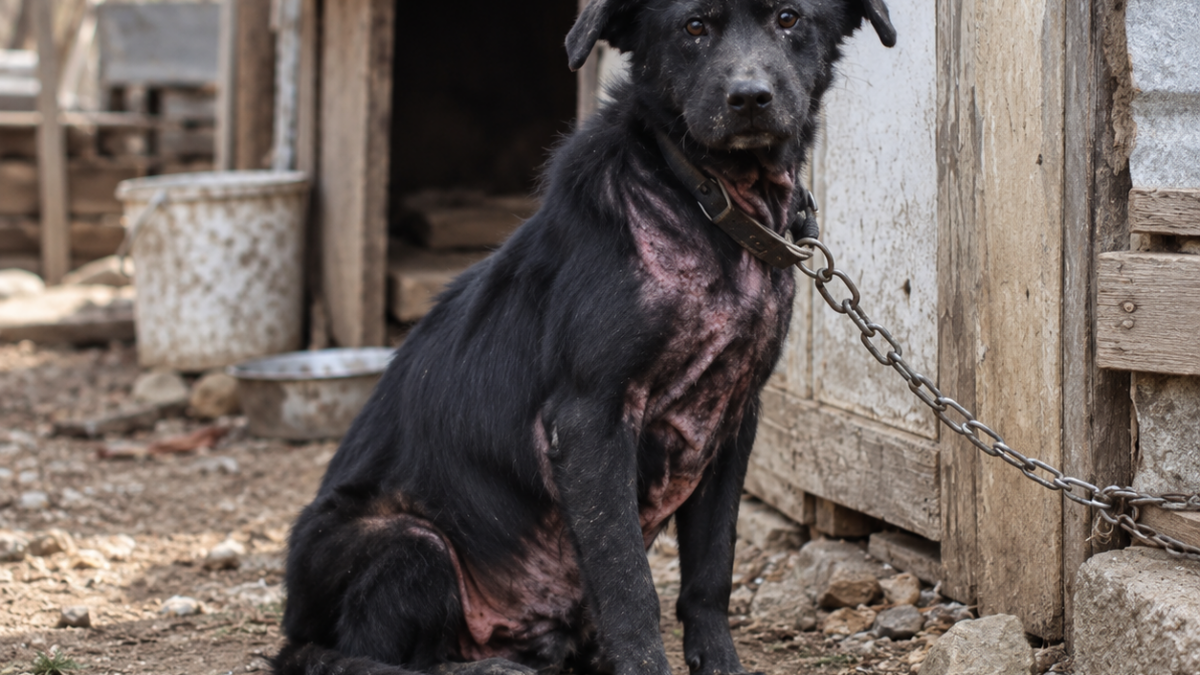
PART 2
That sentence sounded brave when I said it in the examination room.
It felt far less brave that night.
Lupinho was asleep in a padded bed near the rescue office while I sat alone at a desk reading everything the cardiologist had sent home with us, and the more I read, the more frightened I became.
Heartworm treatment alone could be difficult.
Heartworms live in the vessels of the lungs and, in severe cases, affect the heart itself. Treating them meant killing the parasites gradually and controlling Lupinho’s activity carefully because excessive exertion during certain stages could create dangerous complications.
That would have been enough.
But Lupinho’s congenital heart defect changed everything.
His heart had spent seven years working harder than a normal heart should have needed to work. The muscle had adapted as much as it could. Certain chambers were enlarged. Blood flow was abnormal. His body had compensated for years until neglect, exposure, and heartworm disease added more strain than it could easily carry.
The cardiologist had been careful not to make promises.
I hated him for that for perhaps ten minutes.
Then I realized honesty was the kindest thing he could give me.
Lupinho might respond well.
He might stabilize.
He might enjoy meaningful time.
But nobody could tell us whether that time would be measured in months or years.
I looked across the room.
He was sleeping on his side.
One front paw extended beyond the blanket.
His chest rose slowly.
Then fell.
Rose.
Fell.
I found myself counting.
One breath.
Two.
Three.
Then I stopped.
If I spent the rest of Lupinho’s life counting breaths, neither of us was going to live.
The next morning, he woke before I did.
I had fallen asleep in the chair beside him.
When I opened my eyes, Lupinho was sitting upright in his bed, staring at me.
“Good morning.”
His tail moved.
Slowly.
Once.
Then again.
I smiled.
“You don’t know you’re supposed to be fragile, do you?”
He stood.
His legs were stiff, but he walked toward me.
I opened my hand.
He pressed his face into it.
That became our agreement.
The doctors would worry about his heart.
I would worry about his life.
The first phase of treatment was quiet.
Extremely quiet.
Lupinho needed medication, carefully controlled exercise, and rest.
That last part became difficult almost immediately because as soon as he began feeling better, he wanted to move.
Not wildly.
Lupinho was never a wild dog.
He simply wanted to follow us.
If someone walked from the kennel room to the office, he followed.
If I carried laundry outside, he followed.
If another dog went toward the yard, Lupinho stood and looked at me as though asking whether he might go too.
“No.”
Tail wag.
“No.”
Another wag.
“You are medically required to be boring.”
Lupinho stared.
“You understand?”
He walked toward the door.
I blocked him.
He sighed.
It was the most dramatic thing he ever did.
We compromised with very short leash walks.
Five minutes.
Sometimes less.
Slow.
No running.
No rough play.
No chasing other dogs.
Lupinho accepted all of it with the same patience he seemed to accept everything.
That patience worried me sometimes.
I didn’t want him merely accepting another limited existence.
I wanted him to know he had arrived somewhere different.
Somewhere that his comfort mattered.
So we built routine.
Breakfast at seven.
Medication hidden inside a small piece of chicken.
A slow walk after breakfast.
Rest.
Midday check.
Another short walk in the late afternoon.
Then evenings in the office with whoever was finishing paperwork.
Lupinho learned all of it quickly.
By the second week, he knew when the refrigerator opened.
By the third, he knew medication meant chicken.
By the fourth, he had learned that pretending not to swallow a pill sometimes resulted in receiving a second piece.
“You’re not as innocent as you look,” I told him.
He blinked.
Rachel laughed.
“He has you trained.”
“No.”
“You just gave him chicken twice.”
“Medical necessity.”
“He spit the pill behind the chair.”
I looked.
There it was.
Lupinho’s tail moved.
“Traitor.”
That was the first time I realized his personality had started emerging.
The dog we rescued had been gentle from the beginning, but gentleness wasn’t the same thing as personality.
Survival can make animals quiet.
Once safety settles in, they begin showing you who they actually are.
Lupinho was stubborn in small ways.
He hated wet grass.
He loved chicken.
He preferred the largest dog bed in the building despite being nowhere near the largest dog.
He disliked having his paws wiped.
He would deliberately walk around puddles.
He enjoyed being brushed.
And he had an almost embarrassing weakness for women over sixty.
We discovered that when one of our older volunteers, Margaret, arrived.
Lupinho saw her from across the yard.
His entire expression changed.
He walked straight toward her.
Margaret crouched.
“Hello, handsome.”
Lupinho put his head directly against her chest.
I stared.
“You’ve known me a month.”
Margaret laughed.
“He has taste.”
Within ten minutes, Lupinho was lying at her feet.
That became one of his greatest pleasures.
Being near people.
Not demanding attention.
Simply included.
At night, he slept deeply.
No pacing.
No crying.
No standing at the door.
That surprised me because many neglected dogs struggle once everything becomes quiet.
Lupinho seemed to understand something we didn’t.
He was safe.
Maybe he had waited so long for safety that recognizing it came easily.
Or maybe exhaustion had simply taught him to take rest whenever it appeared.
Either way, every night I checked him before leaving.
“See you tomorrow.”
His eyes opened.
Tail tap.
“That’s right.”
Then I would leave.
And every morning, he was there.
Waiting.
The heartworm treatment became more difficult after the initial stage.
Rachel warned us ahead of time.
“After the injections, strict rest matters even more.”
“How strict?”
“Very.”
“That won’t be popular.”
“Popularity isn’t the goal.”
“Easy for you to say.”
She pointed at me.
“Clara, if he overexerts himself while the worms are dying, we can have complications.”
I looked at Lupinho.
He was sniffing the pocket where Rachel kept treats.
“Did you hear that?”
He ignored me.
The injection days were hard.
Lupinho rarely complained, so when he whimpered afterward, I felt every sound.
He was sore.
Tired.
Confused.
He looked at me as though asking why the people who had finally become kind were suddenly hurting him.
That was almost unbearable.
I sat beside him.
“This is medicine.”
He rested his head against my leg.
“I know that doesn’t help.”
His breathing remained steady.
“We’re doing this because I want you here.”
His eyes closed.
That night, I slept at the rescue.
Not because he was in immediate danger.
Because I couldn’t leave.
Around three in the morning, I woke to find him looking at me.
I reached down.
“You okay?”
He pushed his nose into my palm.
Then slept again.
There are moments in rescue when trust feels undeserved.
Lupinho had no way of understanding treatment.
He only knew that he hurt.
And he chose to remain close to the people who had caused that discomfort because somewhere inside him he had decided we were safe anyway.
That responsibility felt enormous.
The next several weeks became a lesson in patience.
Lupinho improved slowly.
His appetite remained good.
His breathing stayed stable.
His bloodwork showed gradual progress.
The skin irritation along his belly cleared.
His coat softened.
He gained weight.
But the heart defect remained.
Every follow-up examination brought us back to that reality.
The cardiologist listened.
Scanned.
Measured.
Compared.
Then gave some version of the same answer.
“He’s stable.”
At first, I hated that word almost as much as I hated “watch.”
Stable felt insufficient.
I wanted cured.
Normal.
Fixed.
Then I learned how beautiful stable can be when cure is impossible.
Stable meant breakfast tomorrow.
Stable meant another walk.
Stable meant another night sleeping in his bed.
Stable meant he was still here.
One morning, about four months after rescue, Lupinho surprised us.
I opened the gate to the small grass yard where he usually walked alone.
Another rescued dog named Milo was already inside.
Milo was young.
Energetic.
Usually too energetic for Lupinho.
I almost turned around.
Then Lupinho saw him.
His tail began wagging.
Milo bounced toward us.
“Easy.”
Milo stopped.
For once.
The two dogs sniffed.
Then Milo dropped into a play bow.
Lupinho stared.
I expected him to ignore it.
Instead, he lowered his front legs.
Just slightly.
Rachel, who was standing behind me, whispered:
“Is he playing?”
Lupinho moved sideways.
Milo copied him.
Then Lupinho gave one gentle hop.
I panicked.
“Okay, enough.”
Rachel laughed.
“That was three seconds.”
“Three dangerous seconds.”
Lupinho looked at me.
I clipped on his leash.
“You are a cardiac patient.”
He wagged.
“You are not a puppy.”
Another wag.
“You’re seven.”
Milo barked.
Lupinho barked back.
We all froze.
It was the first time any of us had heard him bark.
Not a frightened bark.
Not warning.
Play.
One sound.
Then another.
Margaret came running from the office.
“What happened?”
“Lupinho barked.”
She put both hands over her mouth.
The entire rescue celebrated two barks.
That sounds ridiculous unless you understand what they represented.
He had found enough joy to make noise.
After that, we allowed carefully supervised play.
Short.
Gentle.
Always monitored.
Lupinho never played hard.
He seemed to understand his own limits better than we did.
If he became tired, he stopped.
If another dog became too rough, he simply walked away.
He loved lying in the sun beside them more than chasing them.
He seemed happiest when surrounded.
I started thinking about adoption.
Then immediately felt guilty.
Who would adopt a dog like Lupinho?
Seven years old.
Heartworm recovery.
Congenital heart disease.
Lifetime medication.
Potential emergency care.
Unknown lifespan.
We had difficult-to-place dogs before.
Age alone can frighten adopters.
Medical needs make it harder.
Uncertainty makes it harder still.
I hated thinking of Lupinho as difficult to place.
He was the easiest dog in the world to love.
But love at an adoption event is one thing.
Signing up for cardiology appointments is another.
We prepared his profile carefully.
**Lupinho, approximately seven years old. Gentle, social, affectionate. Requires ongoing cardiac monitoring and lifelong medical management.**
I stared at those words.
Lifelong.
Nobody knew how long that life would be.
The first family who asked about him sounded promising.
A married couple in their forties.
Quiet household.
No young children.
They had owned senior dogs before.
They visited.
Lupinho liked them immediately.
The woman sat on the floor.
Lupinho rested his chin on her knee.
I felt hope rise.
Then we discussed his heart.
“How often does he need a cardiologist?”
“At least twice a year right now.”
“Medication?”
“Yes.”
“Forever?”
“Most likely.”
The husband became quiet.
“What happens if his heart gets worse?”
“We adjust treatment if possible.”
“And if it can’t be adjusted?”
I answered honestly.
“Then we focus on comfort.”
They left without applying.
I understood.
I still cried afterward.
A week later, another adopter called.
Then withdrew after seeing the estimated yearly medical costs.
Another family loved Lupinho but wanted a running companion.
Absolutely not.
Someone asked whether surgery could “just fix him.”
No.
Someone asked whether his medication could eventually stop.
Probably not.
Each conversation reminded me that his heart wasn’t merely a medical diagnosis.
It was standing between Lupinho and a permanent home.
That made me angry in a way disease itself hadn’t.
He had already spent years outdoors.
Already survived neglect.
Already survived heartworms attacking a compromised heart.
Now the very thing he had survived made people afraid to choose him.
One evening I sat beside his bed.
“You know this isn’t personal, right?”
Lupinho rolled onto his side.
“They’re scared.”
His eyes closed.
“I get it.”
I scratched his neck.
“But I hate it.”
He sighed.
“You don’t care.”
His tail tapped once.
“Probably healthier.”
Then Boa Nova received a message from a woman named Evelyn Carter.
She was sixty-eight.
Retired nurse.
Widowed.
One elderly dog had died the previous year.
Her message was short.
**I read Lupinho’s medical description twice. I understand he cannot be cured. I would still like to meet him.**
I read it three times.
Then called her.
I spent twenty minutes explaining every difficult detail.
Medication.
Cardiology.
Exercise restriction.
Possible emergencies.
Uncertain lifespan.
Evelyn listened.
Finally she said:
“Clara, are you trying to talk me out of meeting him?”
“Yes.”
She laughed.
“Why?”
“Because I don’t want someone taking him and bringing him back in six weeks because the reality is harder than the description.”
“Fair.”
“So?”
“So I’ve spent forty years as a nurse. I understand chronic disease.”
“Human chronic disease.”
“Hearts don’t become less fragile because they belong to dogs.”
I liked her already.
She visited the next morning.
Lupinho was sleeping beneath a tree.
Evelyn didn’t call him.
She sat on a bench.
Waited.
Eventually Lupinho woke.
He saw her.
Stood.
Walked over.
Evelyn put out one hand.
Lupinho sniffed.
Then he did the thing he reserved almost exclusively for older women.
He leaned his entire head against her.
Evelyn’s face changed.
“Oh.”
That was all.
Just one word.
But I knew.
She stroked his cheek.
Lupinho closed his eyes.
After several minutes, Evelyn looked at me.
“How long does he have?”
I hated the question.
“We don’t know.”
“Could be months?”
“Yes.”
“Could be years?”
“Yes.”
She looked down at him.
“Then I suppose he doesn’t know either.”
“No.”
“Good.”
I frowned.
She smiled.
“He doesn’t have to spend time worrying about time.”
That sentence changed something in me.
Evelyn completed the adoption application that afternoon.
I did a home visit two days later.
Her house was perfect for Lupinho.
One story.
Quiet.
Fenced yard.
No long stairs.
Several rugs across slippery floors.
She had already moved a bed near the living room window.
“You bought that?”
“Yes.”
“He isn’t approved yet.”
“I know.”
“What if we say no?”
Evelyn looked at me.
“You won’t.”
She was right.
Lupinho went home with her the following Friday.
I cried before they even left the rescue.
Evelyn hugged me.
“You can visit.”
“I’m going to.”
“I assumed.”
Lupinho climbed into her car.
Then turned around.
For one second, his expression looked uncertain.
I crouched near the open door.
“This is good.”
He looked at me.
“You’re going home.”
His tail moved.
Evelyn touched his shoulder.
“We are.”
The word hit me.
We.
Not “he.”
Not “the dog.”
We.
She drove away.
I stood in the parking lot until the car disappeared.
For the next week, Evelyn sent photographs every day.
Lupinho asleep on the couch.
Lupinho beside the refrigerator.
Lupinho lying beneath the dining table.
Lupinho standing in the yard.
Lupinho staring at the television.
One photograph showed him in the largest bed I had ever seen for a dog his size.
I called her.
“That bed is ridiculous.”
“He likes room.”
“He sleeps curled into a ball.”
“He deserves options.”
I laughed.
She spoiled him immediately.
Exactly as I hoped.
The medical routine continued.
Heart medication every morning.
Controlled walks.
Weight monitoring.
Cardiology appointments.
No overheating.
No hard exercise.
Evelyn tracked everything.
She kept a notebook.
Appetite.
Breathing.
Energy.
Medications.
Walk duration.
When the cardiologist saw it, he laughed.
“I wish every owner did this.”
Evelyn said, “I had patients who lied about taking their medication. Lupinho is more cooperative.”
I disagreed.
“He knows pills come with chicken.”
“That’s still cooperation.”
Six months passed.
Then one year.
Lupinho remained stable.
On the first anniversary of his rescue, Evelyn brought him back to Boa Nova.
I barely recognized him.
His coat shone.
His body had filled out.
He looked younger.
Not actually young.
But cared for.
That changes an animal’s face.
“Look at you.”
Lupinho walked toward me.
His tail wagged.
He leaned against my legs.
I knelt.
“You remember me?”
Evelyn smiled.
“He remembers everybody who has ever given him chicken.”
“That is not the same thing.”
Margaret came outside.
Lupinho immediately abandoned me.
“He definitely remembers her,” I said.
Margaret knelt.
“There is my handsome man.”
Lupinho pressed his face against her.
Some things never changed.
We celebrated quietly.
No cake.
His cardiologist would have objected.
A few approved treats.
Photos.
A short walk.
Then Lupinho returned home with Evelyn.
That became his life.
Home.
The word still felt miraculous.
Two years after adoption, his heart condition worsened slightly.
The scan showed progression.
Evelyn called me from the parking lot.
Her voice remained calm, but I could hear fear underneath it.
“They’re adjusting medication.”
“Is he okay?”
“He’s sitting beside me trying to steal my sandwich.”
“That sounds encouraging.”
“He already ate half.”
“Definitely encouraging.”
We adjusted expectations.
Shorter walks.
More rest.
Monitoring his breathing while asleep.
Fewer warm afternoons outside.
Lupinho accepted the changes.
Again.
He never seemed angry at what his body couldn’t do.
Humans noticed limits.
Lupinho noticed what remained.
A yard.
A bed.
Evelyn.
Food.
Visitors.
Sunlight.
Gentle walks.
Other dogs at Boa Nova when he visited.
He never stood beside a fence watching runners and thought about the miles he couldn’t cover.
At least, I don’t think he did.
He simply sniffed whatever was near him.
That became another lesson.
His heart had limits.
His life didn’t need to feel limited.
Evelyn found ways to expand it without exhausting him.
She took him on short car rides.
He loved riding with the window cracked.
They visited quiet parks where he could sit on a blanket.
She brought him to a pet-friendly bookstore because the owner knew his story.
Lupinho slept through most of it.
She arranged small gatherings instead of taking him into crowded environments.
At Christmas, she bought him a ridiculous green sweater.
He hated it.
The photographs were excellent.
At Easter, she refused to dress him as a rabbit.
I respected that.
At Thanksgiving, he stole a piece of turkey.
Evelyn pretended it was accidental.
I did not believe her.
Three years after his rescue, we held a fundraising event for dogs with chronic medical conditions.
Lupinho became the unofficial guest of honor.
We almost canceled his appearance because I worried the crowd would tire him.
Evelyn solved that by bringing his giant bed and placing it in a quiet corner.
People came over one at a time.
Lupinho accepted attention.
Then slept.
A young man named Aaron stood near him for a long time.
Aaron had come to the event looking for a younger dog.
He asked me:
“That’s the heart-disease dog?”
“Yes.”
“Why spend so much money if he can’t be cured?”
The question bothered me.
But I understood what he meant.
So I answered carefully.
“Because treatment isn’t always about cure.”
Aaron looked at Lupinho.
“Then what is it about?”
“Comfort. Time. Quality of life.”
“But he’s still going to die from it.”
“Eventually.”
Aaron looked uncomfortable.
I smiled.
“So are we.”
That caught him.
I continued.
“The question isn’t whether Lupinho can live forever. The question is whether he can have good days now.”
Aaron looked at Evelyn.
She was sitting beside Lupinho.
His head rested on her shoe.
“Does he?”
“Most of them.”
Aaron nodded.
Two months later, Aaron adopted a ten-year-old spaniel with kidney disease.
He emailed me a photograph.
**You were right about good days.**
I showed Evelyn.
She smiled.
“Lupinho is influencing people now.”
“He mostly slept.”
“Leadership comes in many forms.”
The years accumulated slowly.
Four years after rescue.
Then five.
Every anniversary felt like stealing something back from the diagnosis that once sounded like a sentence.
The cardiologist who first examined him eventually retired.
On his last appointment, he looked at Lupinho’s chart.
“I told you I couldn’t predict time.”
“You definitely didn’t predict this much.”
“No.”
He scratched Lupinho behind the ears.
“Good.”
That word meant everything.
Good.
Not miraculous.
Not cured.
Good.
Lupinho never received the miracle people expected from rescue stories.
His congenital defect didn’t disappear.
His heart never became normal.
The disease did not reverse itself because people loved him.
That isn’t how medicine works.
Instead, something more realistic happened.
Medication helped.
Monitoring helped.
Controlled exercise helped.
Treating heartworm helped.
Good nutrition helped.
A quiet home helped.
And love made all of those things worth doing.
Five and a half years after Evelyn adopted him, Lupinho began coughing more frequently.
At first, only after getting up.
Then sometimes at night.
The cardiologist adjusted medication.
For several months, the cough improved.
Then returned.
His stamina decreased.
Walks that once lasted fifteen minutes became ten.
Then five.
Evelyn bought a small wagon.
When she sent me the photograph, I laughed.
“Absolutely not.”
“He likes it.”
The picture showed Lupinho sitting inside the wagon with his head held high.
“He looks like royalty.”
“Exactly.”
Evelyn walked him to the park in the wagon, then let him stroll slowly through the grass.
When he became tired, he climbed back in.
Or rather, waited until Evelyn lifted him.
He had trained her well.
I visited one afternoon.
Lupinho was lying beneath a maple tree.
His muzzle had become almost completely gray.
I sat beside him.
“Remember the industrial lot?”
He looked at me.
“Of course you don’t.”
He rested his chin on my leg.
“I do.”
I remembered the dust.
The cold.
The question in his eyes.
Do I still matter?
At the time, I had wanted to answer with rescue.
Then with medicine.
Then adoption.
Years later, I understood the answer had been repeated every day.
Yes.
You matter when you’re young.
You matter when you’re old.
You matter when you’re healthy.
You matter when your medication is expensive.
You matter when you can run.
You matter when you need a wagon.
Worth isn’t something illness gets to vote on.
That became the heart of Lupinho’s story.
Not the defect.
Not the heartworms.
Not the fact that surgery was impossible.
Worth.
The world had spent years treating him as though nobody needed to stop.
Then one day, somebody did.
After that, everything changed.
Six years after rescue, Lupinho’s condition deteriorated more quickly.
The calls from Evelyn became more frequent.
“He didn’t finish breakfast.”
“He coughed during the night.”
“He seems tired today.”
We adjusted medication again.
For a while, it helped.
Then one Sunday, Evelyn called me before sunrise.
Her voice was different.
“Clara.”
I sat up.
“What happened?”
“He collapsed.”
“Is he conscious?”
“Yes.”
“Emergency clinic?”
“We’re here.”
I dressed and drove.
When I arrived, Lupinho was lying on a blanket inside an oxygen-supported treatment area.
Evelyn sat beside him.
Her hand rested against his shoulder.
The cardiologist on call spoke quietly.
His heart was failing.
Not suddenly.
Not because of one dramatic event.
It had simply reached a point where compensation was no longer enough.
“Can you stabilize him?” I asked.
“Temporarily, perhaps.”
“For how long?”
“I don’t know.”
That old answer.
The answer that had followed Lupinho from the beginning.
I looked at Evelyn.
“What do you want?”
She stared at him.
“I want what’s fair to him.”
The veterinarian explained options.
Aggressive hospitalization.
More medication.
Oxygen.
Possibly a little more time.
Or comfort-focused care.
We asked the only question that mattered.
“Will aggressive treatment give him good time?”
The veterinarian hesitated.
“Probably not much.”
Evelyn closed her eyes.
Lupinho lifted his head weakly.
She touched his face.
“All these years,” she whispered. “You never asked me for much.”
His tail moved once.
Barely.
That tiny movement destroyed me.
We chose comfort.
Not because we stopped fighting for him.
Because fighting had changed meaning.
Once, fighting meant injections.
Medication.
Restriction.
Testing.
Years of careful care.
Now fighting meant protecting him from unnecessary suffering.
We took Lupinho home.
The veterinarian gave us medication to keep him comfortable.
For the next two days, he stayed in the living room near the window.
People visited quietly.
Margaret came.
Lupinho recognized her immediately.
His tail moved.
She knelt beside him.
“Still handsome.”
His eyes closed beneath her hand.
Rachel came too.
So did Aaron with his now very old spaniel.
We didn’t turn Lupinho’s final days into an event.
No crowd.
No noise.
Just people who had been part of his life.
On the second evening, Evelyn cooked chicken.
Lupinho ate three small pieces.
Then refused the fourth.
“You’re sure?” she asked.
He looked away.
“That’s never happened before.”
We laughed.
Then cried.
That night, I stayed at Evelyn’s house.
Around two in the morning, I found her sitting beside Lupinho’s bed.
“You need sleep.”
“So does he.”
“He’s sleeping.”
She shook her head.
“I’m listening to him breathe.”
I sat beside her.
“I did that the first night.”
She looked at me.
“At Boa Nova?”
“Yes.”
“I counted.”
“So am I.”
I put my hand over hers.
“Stop.”
“I can’t.”
“Yes, you can.”
Her eyes filled.
“What if I miss it?”
“You won’t.”
Lupinho opened his eyes.
Looked at us.
Then sighed as if both of us were being ridiculous.
Evelyn laughed through tears.
“He’s probably tired of us.”
“Definitely.”
The following afternoon, Lupinho tried to stand and couldn’t.
Evelyn helped him.
His legs trembled.
He looked toward the back door.
“Outside?” she asked.
His ears moved.
We carried him.
Not far.
Just onto a blanket beneath the maple tree.
The same place where I had sat beside him months earlier.
The afternoon was mild.
Wind moved gently through the leaves.
Lupinho lifted his nose.
He smelled the air.
For almost twenty minutes, he simply rested.
Then something unexpected happened.
A young dog from next door barked behind the fence.
Lupinho’s ears lifted.
The dog barked again.
Lupinho raised his head.
He answered.
One quiet bark.
Weak.
But unmistakable.
Evelyn put a hand over her mouth.
I smiled.
“Still has opinions.”
Lupinho lowered his head again.
The neighbor dog barked once more.
This time Lupinho ignored him.
Apparently one response was sufficient.
The house-call veterinarian arrived before sunset.
We had already decided.
No emergency clinic.
No fluorescent room.
No frightening final drive.
Lupinho would remain beneath the tree for as long as he was comfortable.
Then we would move inside if necessary.
The veterinarian examined him gently.
She looked at Evelyn.
“He’s tired.”
Evelyn nodded.
“I know.”
Lupinho’s breathing had become shallow.
His body looked smaller somehow.
Not thin.
Just tired.
I sat on one side.
Evelyn on the other.
I touched the gray fur around his face.
“You remember what I told you years ago?”
Of course he didn’t.
But I continued.
“I said we’d give you a reason to use every heartbeat.”
His eyes opened halfway.
“You used a lot of them.”
Evelyn cried silently.
“More than anybody promised.”
I looked toward her.
“Six years.”
She nodded.
“Six beautiful years.”
Then she leaned close to Lupinho.
“You were never a burden.”
His eyes remained on her.
“Never.”
Her voice broke.
“You hear me?”
His tail moved against the blanket.
Once.
Evelyn smiled through tears.
“Okay.”
The veterinarian gave the first medication.
Lupinho relaxed.
The tension left his body.
His breathing became slower.
Evelyn rested her forehead against his.
“You were chosen.”
Another breath.
“You were wanted.”
His eyes closed.
“You were mine.”
I put my hand against his shoulder.
“And you mattered.”
That was the last thing I said.
His breathing slowed.
Then stopped.
No struggle.
No panic.
Just quiet.
The fragile heart that veterinarians had told us could never be repaired had finally finished its work.
For several minutes, none of us moved.
The wind continued.
Leaves shifted overhead.
Somewhere beyond the fence, the neighbor’s dog barked again.
Lupinho didn’t answer.
I cried harder then.
Not because his heart had failed.
We had known it would.
I cried because for six years, that imperfect heart had given us far more than anyone expected.
It carried him from rescue into home.
Through heartworm treatment.
Through adoption.
Through thousands of mornings.
Short walks.
Car rides.
Chicken bribes.
Sunlit naps.
Christmas sweaters.
Quiet parks.
Old age.
It had never been repairable.
But it had been enough.
More than enough.
After Lupinho died, Evelyn kept the wagon.
For months, it remained folded beside the garage.
“I should donate it,” she said.
“You don’t have to.”
“I know.”
A few weeks later, she called.
“I found someone who needs it.”
A rescue had taken in a senior dog with severe arthritis.
His foster family couldn’t afford a mobility wagon.
Evelyn donated Lupinho’s.
She included his large bed.
Several unopened cans of food.
And his remaining blankets.
When the foster family sent a photograph of the old dog sitting proudly in Lupinho’s wagon, Evelyn stared at it for a long time.
“He’d hate that somebody else has his bed.”
“Absolutely.”
She smiled.
“But he’d share the chicken.”
“Never.”
We laughed.
That was how grief slowly became memory.
Not less painful.
Just easier to carry.
Boa Nova placed Lupinho’s photograph in the hallway outside the medical room.
We chose one from his fourth year with Evelyn.
He was sitting in the grass.
Gray beginning around his muzzle.
Mouth slightly open.
Eyes calm.
Beneath it, we wrote only:
**LUPINHO — CHOSEN ANYWAY**
People asked what it meant.
Then we told them.
Not every animal can be cured.
Not every diagnosis has a procedure.
Not every rescue story ends with perfect health.
Sometimes medicine can only manage.
Sometimes time remains uncertain.
Sometimes choosing an animal means accepting that loving them may hurt sooner than you want.
That doesn’t make the choice foolish.
It makes the good days precious.
A year after Lupinho died, a family came to Boa Nova looking for a dog.
They wanted young.
Healthy.
Easy.
Then their teenage daughter stopped in front of Lupinho’s photograph.
“Who’s that?”
I told them.
The father said what many people say.
“I couldn’t adopt a dog knowing I’d lose him early.”
I didn’t argue.
Loss is personal.
People know their limits.
But the daughter asked:
“Was Evelyn sorry?”
“No.”
“Even after all the medicine?”
“No.”
“Even after he died?”
I thought about it.
“She was heartbroken.”
The girl waited.
“But heartbreak and regret aren’t the same thing.”
That family’s plans changed.
Not dramatically.
They didn’t adopt a terminally ill dog.
But they chose a nine-year-old mixed breed named Cooper instead of the young puppy they had originally asked about.
Cooper went home that afternoon.
As they left, the girl looked at Lupinho’s photograph.
I noticed.
Maybe his heart was still doing work after all.
Years later, Evelyn continued volunteering.
She never adopted another dog immediately.
Then one autumn morning, Boa Nova received a ten-year-old female spaniel with diabetes.
Sweet.
Overweight.
Medication twice daily.
Most adopters walked past.
Evelyn came to visit.
I watched from the doorway as the spaniel approached her.
Evelyn sat on a bench.
The dog rested her head against Evelyn’s knee.
I laughed.
“Here we go again.”
Evelyn looked at me.
“What?”
“You have a type.”
“I do not.”
“Old. Medically complicated. Expensive.”
“She has a nice face.”
“She needs insulin.”
“I was a nurse.”
I crossed my arms.
“You said that about Lupinho.”
“And I was right.”
The spaniel’s name was Rosie.
Evelyn adopted her two weeks later.
When I visited, Lupinho’s photograph stood on a table beside Rosie’s medication.
Not replaced.
Not hidden.
Part of the house.
Rosie slept in a new bed near the same window.
Evelyn noticed me looking.
“I thought it would feel like replacing him.”
“Does it?”
“No.”
She smiled.
“It feels like he taught me what I can handle.”
That might have been Lupinho’s greatest revenge against the years that ignored him.
Neglect had treated him as disposable.
Disease had made his future uncertain.
A damaged heart had frightened people away.
Yet because somebody chose him anyway, another medically complicated dog later got chosen too.
And another.
And another.
His life expanded beyond its own length.
That is the ending I prefer.
Not that Lupinho defeated heart disease.
He didn’t.
Not that his heart was magically repaired.
It wasn’t.
Not that love cured him.
Love is not medicine.
The truth was more meaningful.
Medicine controlled what it could.
People provided what medicine couldn’t.
And Lupinho used the time both gave him.
He lived six years after a diagnosis that made us afraid to imagine six months.
He grew old enough for his muzzle to become gray.
Old enough to need a wagon.
Old enough to become spoiled.
Old enough for new volunteers to assume he had always belonged to someone.
That last part meant everything to me.
Because when I first found him, his eyes seemed to ask only one question.
Do I still matter?
For the rest of his life, the answer followed him everywhere.
In every pill Evelyn hid inside chicken.
Every cardiology appointment.
Every slow walk.
Every ridiculous oversized bed.
Every photograph.
Every person who sat beside him.
Every adjustment made because his body needed something different.
Every time someone chose his comfort over convenience.
Yes.
You matter.
Not because you’re healthy.
Not because you’re young.
Not because you can be repaired.
You matter because you’re here.
And if there is any revenge in Lupinho’s story, it is this:
The years that neglected him taught him he was worth almost nothing.
The years that followed proved them wrong every single day.
His heart could never be repaired.
But it carried more love than most perfectly healthy hearts ever get the chance to hold.
And when it finally stopped beneath that maple tree, Lupinho wasn’t the forgotten seven-year-old dog standing alone in the cold anymore.
He was Evelyn’s dog.
Boa Nova’s old friend.
Margaret’s favorite.
The dog who taught Aaron to adopt a senior.
The reason people stopped fearing imperfect animals quite so quickly.
The old gentleman who preferred chicken to pills.
The dog who barked exactly once at a neighbor when he was almost too tired to lift his head.
The dog who had been chosen without anyone requiring him to become whole first.
We couldn’t repair his heart.
So we did something else.
We filled every beat it had left with a life worth staying for.
And in the end, that was enough.
For months after Lupinho died, I thought the hardest part would be remembering the final afternoon beneath the maple tree.
I was wrong.
The hardest moments were ordinary.
Opening the refrigerator and automatically reaching for the chicken container.
Walking past the patch of sunlight where he used to sleep.
Hearing the wheels of a wagon somewhere behind me and turning because, for half a second, I expected to see that gray face looking back.
Grief did not arrive as one enormous wave.
It came in hundreds of small interruptions.
A dog bed in a photograph.
A medication reminder still saved in my phone.
A leash hanging from the wrong hook.
An empty space beside Evelyn’s chair.
For nearly six years, Lupinho’s heart condition had forced us to measure his life carefully.
How many minutes could he walk?
How fast was he breathing?
Had he coughed overnight?
Was his appetite normal?
Did he need another cardiology appointment?
Was he retaining fluid?
Were his gums the right color?
Was today a normal tired day or the beginning of something worse?
After he died, all that monitoring disappeared at once.
There was nothing left to measure.
That silence was strange.
One afternoon, about three months after his death, I found Evelyn sitting alone in the Boa Nova courtyard.
She had come to volunteer, but instead of helping with laundry or medication, she was staring at the empty grass.
I sat beside her.
“You okay?”
“No.”
At least she didn’t pretend.
I waited.
Eventually she said, “I keep wondering if I waited too long.”
“With what?”
“You know.”
I did.
The decision.
Almost everyone who loves an old or seriously ill animal eventually asks the same question.
Too early?
Too late?
Did I hold on because I needed them?
Did I let go because I was afraid of seeing them decline?
Could there have been another morning?
Another meal?
Another week?
I had asked myself those questions about animals before.
There is rarely a perfect answer.
“Evelyn, he ate chicken that afternoon.”
“I know.”
“He wanted outside.”
“I know.”
“He recognized you.”
Her eyes filled.
“I know.”
“And when he couldn’t stand anymore, you listened.”
She stared toward the yard.
“What if the new medication would’ve helped?”
“For how long?”
She didn’t answer.
The emergency veterinarian had been honest.
More aggressive treatment might have bought some time.
But probably hospital time.
Oxygen cages.
Needles.
Stress.
Uncertain comfort.
Lupinho had already spent years letting us fight his disease.
Eventually the fight had to become about protecting his peace.
“You didn’t give up on him,” I said.
Evelyn rubbed her hands together.
“It felt like it.”
“No. Giving up would’ve been deciding his suffering didn’t matter because losing him hurt too much.”
She looked at me.
“You decided his comfort mattered more than keeping him.”
Her mouth trembled.
“That’s different.”
For several minutes, neither of us spoke.
Then Evelyn said quietly, “The house was too quiet.”
I knew.
Rosie had not entered her life yet.
There was still only Lupinho’s oversized bed near the window and the empty medication organizer in the kitchen.
“Do you regret adopting him?” I asked.
Evelyn looked genuinely offended.
“No.”
“Even knowing what losing him feels like?”
“No.”
“Then that’s your answer.”
She frowned.
“To what?”
“To whether it was worth it.”
That became something I repeated often in the years that followed.
Pain at the end does not cancel joy in the middle.
If anything, grief is evidence that the middle mattered.
When Rosie eventually entered Evelyn’s home, something inside her shifted.
Not healed.
Grief isn’t an injury that disappears when another dog arrives.
But it made room.
Rosie was nothing like Lupinho.
Lupinho had been quiet and dignified.
Rosie was a thief.
She stole socks.
She stole dish towels.
She once removed an entire loaf of bread from Evelyn’s grocery bag and dragged it beneath the dining table before anyone noticed.
Her diabetes required insulin twice a day.
The first morning, Evelyn prepared the syringe with the precision of the nurse she had been for forty years.
Rosie watched her suspiciously.
“It’s okay,” Evelyn said.
Rosie ran beneath the table.
Evelyn called me.
“This dog does not respect medical authority.”
I laughed.
“You wanted another complicated one.”
“I wanted diabetic. Nobody said criminal.”
Eventually Rosie learned that injections were followed by a tiny piece of chicken.
That solved most disagreements.
One evening I visited and saw Lupinho’s photograph above Rosie’s medication station.
“You left it there.”
Evelyn nodded.
“He started this.”
“What?”
She pointed toward Rosie.
“My willingness to say yes.”
That sentence stayed with me.
Lupinho had arrived in our lives carrying a diagnosis that made the future frightening.
We had spent months thinking about what his heart couldn’t do.
Couldn’t be repaired.
Couldn’t tolerate hard exercise.
Couldn’t promise normal longevity.
But perhaps the most important thing his heart ever did was teach people to say yes to animals they might otherwise fear loving.
Yes to old.
Yes to sick.
Yes to uncertain.
Yes even when the future comes with medication.
Boa Nova started seeing that effect more often.
People who heard Lupinho’s story would occasionally call and ask specifically about senior or medically complicated dogs.
Not many.
But enough to matter.
A couple named Martin and Beth came in one Saturday.
They had recently lost a thirteen-year-old Labrador.
They told me they wanted to adopt again.
“What age?” I asked.
Beth looked at Martin.
He said, “Who needs us?”
That question was unusual.
Most adopters understandably arrive with preferences.
Size.
Breed.
Age.
Energy.
House training.
Children.
Cats.
People have to choose an animal that fits their life.
But Martin and Beth wanted to know which dog had been waiting.
I took them to Kennel 14.
Inside was a nine-year-old hound mix named Jasper.
He had early kidney disease and a face almost entirely white with age.
Jasper did not rush to the kennel door.
He remained on his bed.
Martin crouched.
“That’s him?”
“That’s Jasper.”
“How long has he been here?”
“Four months.”
Beth’s face tightened.
“Why?”
“Mostly age. The kidney disease worries some people.”
She looked at me.
“What does treatment involve?”
We talked.
Prescription diet.
Bloodwork.
Medication.
Possible progression.
Uncertainty.
When I finished, Martin smiled sadly.
“Sounds familiar.”
“With Lupinho?”
“With our last dog.”
Their Labrador had needed kidney care for more than two years.
They understood.
The next afternoon, Jasper went home.
Six months later, Martin sent me a photograph of him asleep beneath a Christmas tree.
His message said:
He doesn’t know he was the dog nobody wanted. Please don’t tell him.
I forwarded the photograph to Evelyn.
She replied:
Lupinho would approve.
That became almost a joke between us.
Old dog adopted?
Lupinho would approve.
Expensive medication funded?
Lupinho would approve.
Someone bought a ridiculous orthopedic bed?
Definitely Lupinho.
But beneath the humor was something important.
His life had become a reference point.
Not because we turned him into a saint.
He was a dog.
A stubborn, chicken-loving, puddle-avoiding dog.
But the way we had loved him changed how we looked at animals with uncertain futures.
About two years after his death, Boa Nova received one of the most difficult cases I had seen since Lupinho.
A twelve-year-old terrier mix named Arthur arrived after his owner died.
Arthur had congestive heart failure.
Not the same condition as Lupinho, but serious.
He was already taking several medications.
His breathing needed monitoring.
The transferring shelter had warned us he might have only months.
I stood outside his kennel reading his file.
For a few seconds, I felt the old fear return.
Heart.
Medication.
Uncertainty.
Loss.
Part of me wanted someone else to handle the case.
Then Arthur looked up.
Gray muzzle.
Cloudy eyes.
Calm expression.
I laughed softly.
“You’re kidding.”
Rachel, still volunteering with us part-time, stood beside me.
“What?”
“He has the face.”
“What face?”
“The one that makes you ruin your own life.”
She smiled.
“Ah. That face.”
Arthur came out slowly.
He sniffed my shoes.
Then sat on my foot.
That was all.
I called Evelyn.
“No.”
She hadn’t even let me explain.
“I haven’t said anything.”
“You’re using your Arthur voice.”
“I do not have an Arthur voice.”
“You absolutely do.”
“He has heart failure.”
Silence.
Then:
“How old?”
“Twelve.”
“Temperament?”
“Sweet.”
“Exercise?”
“Limited.”
“Medication?”
“Several.”
She sighed.
“I have Rosie.”
“I know.”
“I am not adopting him.”
“I didn’t ask you to.”
“Good.”
“Would you foster him for one weekend?”
Another silence.
“You’re a terrible person.”
Arthur stayed with Evelyn for two years.
Not one weekend.
Two years.
Rosie hated him for approximately forty-eight hours.
Then discovered he generated additional snack opportunities.
Their alliance became permanent.
Arthur’s heart condition worsened eventually.
But those two years were filled with the same things Lupinho had known.
Medication hidden in chicken.
Slow walks.
Sunlight.
A ridiculously large bed.
Car rides.
And someone who knew exactly what it meant to love an animal without demanding a cure.
When Arthur died, Evelyn cried.
Of course she did.
Then she said:
“I thought Lupinho taught me how to survive this.”
“What did he teach you?”
She looked at Arthur’s empty bed.
“That surviving the goodbye isn’t the point.”
“What is?”
“Making sure they had a life worth missing.”
I wrote that down.
Years later, it became the unofficial philosophy of our senior-dog program.
A life worth missing.
It shifted the question.
People often asked:
“How long will I have?”
We could rarely answer.
So instead we asked:
“What can the time become?”
A week can contain comfort.
A month can contain belonging.
A year can become an entire world to a dog who has never had a home.
Lupinho had six years.
But if he had received only six months, choosing him still would have mattered.
That idea was tested when a dog named Wallace arrived.
Wallace was fourteen.
He had advanced cancer.
The veterinarian believed he might have six to eight weeks.
He was comfortable for now.
Still eating.
Still walking.
Still interested in people.
But adoption seemed impossible.
Who adopts a dog for six weeks?
A woman named Claire did.
She was fifty-six and had recently lost her father after a long illness.
When we explained Wallace’s prognosis, she nodded.
“I understand.”
I studied her face.
“Six weeks could be less.”
“I understand.”
“It could become emotionally difficult very quickly.”
“I understand.”
“Why do you want to do this?”
Claire looked into Wallace’s kennel.
“Because six weeks is a long time to spend without anybody.”
That silenced me.
She took Wallace home.
He lived seventy-three days.
Claire sent us photographs.
Wallace asleep in her garden.
Wallace eating hamburger on his final birthday.
Wallace wearing a raincoat.
Wallace resting beside Claire while she read.
When he died, she brought his empty collar back to Boa Nova.
“I thought I would regret it.”
“Do you?”
“Not one second.”
She looked toward Lupinho’s photograph in the hallway.
“That dog helped, you know.”
“Lupinho?”
“I read his story before I applied.”
I stared at the picture after Claire left.
Lupinho’s heart had stopped years earlier.
Yet somewhere, an old dog named Wallace had spent seventy-three days in a home partly because Lupinho once lived.
That was when I began thinking differently about what it means for a life to continue.
Not literally.
Not sentimentally.
Through consequences.
Choices leave echoes.
Neglect does too.
So does kindness.
One person stops for a dog.
Someone else hears what happened.
Then they stop for another.
A foster family says yes.
A veterinarian discounts a procedure.
A volunteer drives three hours.
A stranger donates twenty dollars.
A senior dog sleeps in a house instead of a kennel.
None of those acts looks enormous alone.
Together, they become a culture.
Lupinho changed ours.
Eventually, Boa Nova established a formal medical-support program for older animals.
We named it the Every Beat Fund.
I resisted naming it after Lupinho directly.
Evelyn agreed.
“He wouldn’t care.”
“He cared about chicken.”
“Exactly.”
The fund covered cardiology visits, chronic medication, diagnostic testing, mobility support, and hospice care.
A photograph of Lupinho appeared on the information card.
Not sick.
Not lying in an oxygen cage.
Not during treatment.
We used the photograph of him sitting beneath the maple tree years before his final day.
Gray muzzle.
Calm eyes.
The caption read:
Not every heart can be repaired. Every life can still be valued.
The fund changed decisions.
That mattered more than donations.
Before, when an older dog arrived with a chronic condition, the conversation sometimes started with cost.
Afterward, we tried to start somewhere else.
Is the dog comfortable?
Can the condition be managed?
Does the animal still enjoy life?
What support would an adopter need?
What resources can we provide?
Cost still mattered.
It always does.
Rescues have budgets.
Medicine isn’t free.
But Lupinho taught us that expensive and hopeless are not synonyms.
Neither are incurable and suffering.
Those distinctions matter.
One dog can have an incurable disease and still experience years of comfortable life.
Another may have a technically treatable condition but suffer terribly despite intervention.
Medicine needed to guide us.
Compassion needed to interpret what the numbers meant for the animal in front of us.
That balance became especially important with a dog named June.
June was eleven.
She had severe pulmonary hypertension.
The cardiologist explained that her prognosis was guarded.
Medication could help.
No guarantees.
Her first foster family panicked after hearing the diagnosis.
They returned her.
I understood.
Still, watching June walk back into the kennel hurt.
She stood at the gate after the family left.
Not barking.
Just looking toward the hallway.
It reminded me so much of Lupinho that I had to walk away for a moment.
Evelyn found me near the supply room.
“What happened?”
I told her.
She listened.
Then said, “You know what you’re about to do.”
“No.”
“Yes.”
“I have boundaries.”
She laughed.
“That is adorable.”
I didn’t adopt June.
I knew my limits too.
But I fostered her for four months.
During that time, we found a couple named Denise and Robert who had cared for a cardiac dog before.
They understood medications.
They understood uncertainty.
Most importantly, they did not need June’s prognosis to become optimistic before they could love her.
At the adoption meeting, Robert asked:
“What should we watch for?”
Not:
“How long does she have?”
That difference told me everything.
June went home.
She lived another three years.
Three Christmases.
Three summers.
Three years of medication and naps and slow walks.
Her final photograph showed her asleep between Denise and Robert on a couch.
I printed it and placed it in the Every Beat Fund binder.
Not every victory ends with cure.
Sometimes survival itself isn’t even the victory.
Sometimes the victory is belonging while time passes.
As I grew older, that lesson became personal.
I began noticing my own limits.
My knees hurt after long rescue days.
I needed reading glasses.
Long drives exhausted me.
Younger volunteers could lift dogs I once would have carried without thinking.
At first, I hated it.
Then one afternoon, Evelyn caught me trying to move a fifty-pound bag of food.
“Stop.”
“I’ve got it.”
“No.”
“I’ve carried heavier.”
“When?”
“Recently.”
“Define recently.”
I glared.
She called a twenty-three-year-old volunteer named Kayla.
“Carry this for Clara.”
I was offended.
Kayla lifted it effortlessly.
Evelyn smiled.
“How does it feel?”
“Terrible.”
“Good. Now you understand Lupinho when we bought the wagon.”
I laughed despite myself.
“You waited years to say that.”
“Absolutely.”
Aging became less frightening after working with so many senior animals.
They didn’t spend their days mourning youth.
A dog with arthritis didn’t lie awake thinking about the time he could jump higher.
He simply waited for someone to move the stool closer.
Maybe humans could learn from that.
Adaptation is not defeat.
Lupinho used a wagon.
Rosie needed insulin.
Arthur needed heart medication.
Wallace needed someone willing to love him briefly.
None of that made their lives smaller.
Care expanded around their limitations.
Years after Lupinho’s death, I visited the industrial lot where we had found him.
I hadn’t been back.
The storage building was gone.
A new warehouse stood nearby.
The cracked pavement had been resurfaced.
There was no obvious place to point and say:
There.
That is where everything changed.
I parked anyway.
For a while, I sat inside the car.
I tried to picture him.
Dusty coat.
Cold-stiffened body.
Seven years old.
Watching strangers.
No barking.
No begging.
Just waiting.
I wondered how many people had passed him before I stopped.
Ten?
A hundred?
Thousands over years?
Maybe somebody had fed him occasionally.
Maybe someone had once touched his head and walked on.
Maybe someone assumed he belonged to somebody else.
We never learned enough about his early life to know exactly how he ended up there.
That used to bother me.
People want origin stories.
Who failed him?
Who left him?
Who allowed heartworm infection to progress?
Who knew about the congenital defect?
Did anyone ever take him to a veterinarian?
Was he born outside?
Did he once have a home?
Questions.
So many questions.
Eventually, I realized they changed nothing about what came after.
Justice isn’t always identifying a villain.
Sometimes nobody can be found.
Sometimes years of neglect are anonymous.
The answer then cannot be revenge against a person.
It has to be reversal.
Everything Lupinho lacked became something we deliberately gave.
Cold nights became warm rooms.
Uncertainty became routine.
Untreated disease became careful medicine.
Being overlooked became being chosen.
Loneliness became Evelyn.
That was the revenge.
Not destruction.
Restoration.
I got out of the car and stood near the edge of the lot.
Workers moved pallets in the distance.
Nobody noticed me.
I smiled at the irony.
“Hey, old man,” I whispered.
Those had been almost the first words I ever said to him.
“You won.”
The sentence surprised me.
Did he?
His heart still failed.
He still died.
But winning was never immortality.
If that were the standard, every life loses.
Lupinho had been given a body with limits before he ever had a choice.
Then humans added more damage by allowing heartworm disease and neglect to go untreated.
Yet none of that decided the emotional shape of his life.
The final six years belonged to something else.
Choice.
Care.
Belonging.
Yes.
He had won.
Not against death.
Against being forgotten.
On what would have been his fourteenth rescue anniversary, Evelyn organized a small gathering beneath the maple tree.
No ceremony.
No speeches.
She hated speeches.
We brought coffee.
Margaret came.
Rachel came.
Aaron came with photographs of the senior spaniel he had adopted because of Lupinho.
Claire came with Wallace’s collar attached to her purse.
Denise and Robert sent a picture of June.
Several younger volunteers attended who had never met Lupinho.
That felt strange.
He had already become history to some of them.
Kayla asked Evelyn:
“What was he really like?”
Everyone immediately started talking.
“Manipulative.”
“Gentle.”
“Obsessed with chicken.”
“Hated puddles.”
“Loved older women.”
“Terrible at swallowing medication.”
“Excellent napper.”
Evelyn smiled.
“He was peaceful.”
The group quieted.
She looked toward the patch of grass where he had died.
“Even when he got sick, he didn’t spend his life acting sick.”
That was true.
We had spent far more time worrying about Lupinho’s heart than Lupinho had.
He had simply lived inside it.
Maybe that’s why his story stayed with people.
He did not teach us to deny illness.
He taught us not to confuse illness with identity.
The diagnosis told us what his heart could not do.
It did not tell us who Lupinho was.
Medicine said congenital defect.
We learned gentle.
The scan said enlargement.
We learned loyal.
The blood test said heartworm.
We learned stubborn.
The prognosis said uncertain.
We learned present.
Those were different truths.
Both mattered.
After everyone left, Evelyn and I stayed beneath the tree.
Rosie had died by then too.
So had Arthur.
Evelyn had another senior dog at home, a nearly blind thirteen-year-old mutt named Simon.
I asked:
“How many are you going to do this with?”
She thought.
“As many as I can.”
“You know they keep breaking your heart.”
“No.”
I looked at her.
“They keep using it.”
That silenced me.
A heart is supposed to be used.
Maybe that was the final thing Lupinho taught us.
We spend so much time protecting ourselves from grief that we sometimes forget hearts are not valuable because they remain unhurt.
They are valuable because of what they can hold.
Lupinho’s physical heart was imperfect from birth.
It eventually failed.
Evelyn’s heart broke when he died.
Then she used it again.
For Rosie.
Arthur.
Simon.
And every frightened medical dog she helped at Boa Nova.
The metaphor wasn’t subtle.
It didn’t need to be.
One afternoon many years later, a young volunteer named Anna asked me a question after giving medication to a senior dog.
“How do you keep doing this?”
“What?”
“Watching them get old.”
I knew what she meant.
She had become attached to a twelve-year-old Lab with cancer.
She could already see the ending.
“Do you want to know the trick?”
“Yes.”
“There isn’t one.”
She looked disappointed.
“You love them. It hurts.”
“That’s it?”
“Pretty much.”
“Then why keep doing it?”
I pointed toward the Lab.
He was sleeping on his back in the afternoon sun.
“Because he’s not thinking about the ending.”
Anna watched him.
“He’s thinking about right now.”
“Exactly.”
She sat quietly.
Then the Lab opened one eye.
Anna smiled.
That was enough.
I sometimes wonder what Lupinho would think about all the meaning humans placed on his life.
Probably nothing.
He would have wanted chicken.
Maybe the largest bed in the room.
He certainly wouldn’t have cared about fundraising cards or philosophical lessons.
That’s one reason I loved him.
Dogs don’t need their lives to symbolize anything.
We do that because we need stories to help us understand what happened.
For Lupinho, his life was simpler.
He was cold.
Then warm.
Hungry.
Then fed.
Alone.
Then included.
Sick.
Then treated.
Homeless.
Then Evelyn’s.
Maybe every rescue story can be reduced to those movements.
From one condition toward another.
From fear toward trust.
From survival toward life.
On the final day of my full-time work at Boa Nova, I cleaned out my desk.
Twenty-three years of papers had somehow accumulated inside drawers designed to hold almost nothing.
Old adoption forms.
Photographs.
Thank-you cards.
Medication notes.
A chewed pen.
At the bottom of the last drawer, I found Lupinho’s original intake sheet.
The paper had yellowed slightly.
I sat down.
Approximate age: 7.
Male.
Found outdoors.
Condition: underweight, dermatologic issues, cardiac murmur noted.
Then later, handwritten beneath:
Heartworm positive. Congenital cardiac abnormality. Cardiology referral.
Such clinical words.
Nothing on the form said:
Will teach an old nurse to adopt impossible dogs.
Will convince a young man to choose a senior spaniel.
Will inspire a medical fund.
Will make an entire rescue reconsider what “adoptable” means.
Will live six more years.
Will bark at a neighbor on his final afternoon.
Will be remembered.
Forms never know the future.
Neither do diagnoses.
I folded the intake sheet carefully and placed it inside a folder with his photograph.
Evelyn arrived before I left.
Of course she did.
She handed me a small box.
“What is this?”
“Retirement gift.”
“I am not retiring. I’m reducing hours.”
“You’ve said that for three years.”
Inside was a framed photograph.
Lupinho.
The first day at Boa Nova.
Not the polished later version.
Dust still visible in his coat.
Eyes tired.
Standing beside me.
I barely remembered the picture being taken.
On the back, Evelyn had written:
You stopped. He stayed. Everything after that was extra.
I looked at her.
“Trying to make me cry?”
“Yes.”
“Successful.”
She hugged me.
That photograph now hangs in my house.
Visitors often notice the dog before they notice me standing beside him.
They ask:
“Who was he?”
I never say:
A heartworm dog.
Or:
A dog with a congenital heart defect.
I say:
“That was Lupinho.”
Then, if they want to know more, I tell them.
About the cold morning.
The murmur.
The scans.
The sentence that sounded final.
His heart could never be repaired.
Technically, the veterinarians were right.
No surgeon repaired it.
No medication made it normal.
No miracle changed the anatomy he had been born with.
But perhaps we misunderstood what needed repairing.
Lupinho never seemed ashamed of his heart.
Never apologized for needing medicine.
Never believed his body made him less worthy of belonging.
We were the ones who had to repair our thinking.
We had to stop asking whether an imperfect dog could justify the cost of love.
We had to stop measuring worth against prognosis.
We had to learn that choosing someone does not require a guarantee.
That was the repair.
And it happened inside us.
Even now, when I visit Boa Nova, Lupinho’s photograph remains in the hallway.
The Every Beat Fund is still active.
New dogs arrive.
New diagnoses frighten new families.
The conversations continue.
“What if I lose him?”
“You will someday.”
“What if it’s sooner than I want?”
“It probably will be.”
“What if I get attached?”
“You should.”
“What if my heart breaks?”
“It might.”
Then comes the question beneath all the others.
“Is it still worth choosing him?”
I never answer for people.
Only they know what care they can provide.
But I show them Lupinho.
I explain the medication.
The restrictions.
The uncertainty.
The six years nobody guaranteed.
The giant bed.
The wagon.
The maple tree.
Evelyn’s decision.
Then I let them decide what that means.
Sometimes they walk away.
That is okay.
Sometimes responsible love means understanding your limits.
But sometimes a person kneels beside an old dog with a medical file thick enough to frighten anyone and says:
“Come here.”
And the dog comes.
Every time that happens, I think about the morning Lupinho followed me into a rescue van without knowing where he was going.
He trusted before we had earned it.
Maybe the least we could do was become worthy of that trust.
The final photograph I keep of Lupinho is not from his last day.
I rarely look at those.
It was taken about a year before he died.
Evelyn is sitting on a park bench.
Lupinho is beside her in his wagon.
His muzzle is white.
His ears are lifted.
Sunlight catches the fur around his face.
He looks completely content.
There is nothing dramatic in the image.
No medical equipment.
No rescue vehicle.
No tears.
If you didn’t know his story, you would simply see an old dog and the woman who loved him.
That’s exactly why it is my favorite.
Because the goal was never to make Lupinho’s illness dramatic.
The goal was to make his life ordinary.
Breakfast.
Walks.
Naps.
Chicken.
A home.
Someone saying his name.
Someone noticing when he was tired.
Someone rearranging plans because he needed a cardiology appointment.
Someone carrying him when his legs could no longer finish the walk.
Someone sitting beside him when the heart everyone had worried about for six years finally reached its limit.
That ordinary life was the miracle.
Not cure.
Not endless survival.
Belonging.
Sometimes I still hear the cardiologist’s voice from that first appointment.
“We can’t fix his heart.”
Back then, the sentence sounded like an ending.
Now I hear it differently.
It was simply information.
It told us what medicine could not do.
It said nothing about what love could still build around the problem.
We could not fix his heart.
We could treat the heartworms.
We could manage the defect.
We could control his exercise.
We could monitor his breathing.
We could give medication.
We could provide a home.
We could make sure he never slept outside again.
We could make sure his old body rested on something soft.
We could learn his favorite food.
We could find out he hated puddles.
We could laugh when he cheated for extra chicken.
We could let him grow gray.
We could stay.
And when the final day arrived, we could protect him from fear.
That turned out to be a lot.
More than I understood at the beginning.
So whenever someone tells me a dog is “too old,” “too sick,” or “not fixable,” I think of Lupinho.
Not because every animal should undergo endless treatment.
They shouldn’t.
Sometimes compassion means recognizing when treatment no longer serves the animal.
Lupinho taught us that too.
I remember him because he showed the difference between cure and care.
Cure changes disease.
Care changes experience.
We could not give him a normal heart.
We gave him years in which an abnormal heart beat inside a dog who knew exactly where home was.
That is not a consolation prize.
That is a life.
And if Lupinho’s story has one final ending, it is not underneath the maple tree.
It happens every time another difficult dog is chosen.
Every time Evelyn opens her door.
Every time the Every Beat Fund pays for another cardiology appointment.
Every time a family decides that uncertainty does not automatically mean no.
Every time an old dog with a thick medical file sleeps deeply because someone finally stopped asking whether he was worth the trouble.
Lupinho’s heart stopped years ago.
The answer he gave us never did.
Yes.
They matter.
Yes.
Even when they’re sick.
Yes.
Even when medicine cannot make them whole.
Yes.
Even when loving them guarantees grief someday.
Yes.
Because a heart does not have to be perfect to hold love.
It only has to keep beating long enough for someone to notice what has been inside it all along.
And Lupinho’s did.
Long enough to find us.
Long enough to find Evelyn.
Long enough to become somebody’s dog.
Long enough to turn an uncertain prognosis into six years of mornings.
Long enough to leave a rescue different from the one he entered.
His heart could never be repaired.
But his life did not need repairing at the end.
It was complete.








