PART 2: Two Pit Bull Puppies Were About to Be Adopted Separately—Then We Learned Why Each Stranger Had Chosen One
PART 2
The woman arrived the following afternoon.
She was around sixty, perhaps a little older, dressed plainly in a dark coat that had clearly been worn for years.
She carried an old leather handbag in both hands.
Unlike most visitors, she didn’t immediately walk toward the kennels.
She stood near the reception desk.
Nervous.
“Can I help you?” I asked.
She swallowed.
“I saw a photograph on your page.”
“Of one of the dogs?”
She nodded.
“The smaller pit bull puppy. The lighter one.”
“Rocky.”
Her lips moved slightly when I said his name.
“Could I see him?”
“Of course.”
We walked toward the enclosure.
Bruno noticed us first.
Naturally.
He trotted forward.
Rocky stayed behind.
Then the woman crouched.
She didn’t reach through the bars.
She didn’t call.
She simply waited.
Rocky stared at her.
One step.
Stop.
Another.
He sniffed her fingers.
The woman’s eyes immediately filled with tears.
Rocky took another step.
Then placed his tiny head in her palm.
She closed her eyes.
Nobody spoke.
Finally, she whispered:
“I want to take him home.”
My heart sank.
Not because she seemed unsuitable.
Because I knew what I had to tell her.
“His brother is Bruno.”
She looked toward the darker puppy.
“They came in together. Rocky depends on him quite heavily.”
The woman listened while I explained.
Sleeping together.
Eating together.
Panic during separation.
Our preference to adopt them as a pair.
She remained silent for a long time.
Then she looked down at her hands.
“I understand.”
Something in her voice made me sit beside her.
“But?”
She opened her handbag.
From inside, she removed an old photograph.
The picture showed a young man, perhaps in his late twenties, sitting on the ground with a small pit bull puppy in his arms.
The resemblance to Rocky was startling.
Not identical.
But enough.
Same light coat.
Same white feet.
Same soft expression.
“That’s my son,” she said.
I looked at her.
“His name was Adrian.”
Was.
The word told me everything before she continued.
“He died two years ago.”
“I’m sorry.”
She nodded.
“It was sudden.”
Her thumb moved across the photograph.
“He had a little pit bull that looked almost exactly like Rocky.”
“What happened to the dog?”
“His girlfriend kept him.”
She smiled sadly.
“She loved him too. It was the right thing.”
The woman looked toward Rocky.
“But after Adrian died, I stopped wanting things.”
I didn’t understand at first.
She continued.
“I got out of bed because people expected me to. I went to the grocery store. Paid bills. Answered the phone.”
Her voice trembled.
“But I stopped looking forward to mornings.”
Rocky sat against the gate.
The woman looked at him.
“Yesterday I saw his picture.”
She wiped her cheek.
“And for the first time in two years, I thought about waking up because someone might need me.”
I couldn’t answer.
Behind me, one of our volunteers quietly turned away.
The woman continued.
“I know he isn’t my son’s dog.”
She looked directly at me.
“I know that.”
That mattered.
Grief can make people search for replacements.
She wasn’t doing that.
“I just…”
She struggled.
“He reminded me that maybe I could love something again without betraying what I lost.”
Rocky pushed his nose between the bars.
She touched it.
“What’s your name?” I asked.
“Margaret.”
I told Margaret the truth.
“He may not be able to leave without Bruno.”
“I understand.”
“I’m sorry.”
“So am I.”
Her smile was gentle.
“But I understand.”
She stayed another twenty minutes.
Rocky spent most of it beside her.
Before she left, Margaret whispered:
“If you ever decide he can be adopted separately, please call me.”
I promised.
That evening, I sat inside Bruno and Rocky’s enclosure during feeding.
Bruno lay on the blanket.
Rocky had curled himself against his brother’s neck.
Rocky slept.
Bruno didn’t.
His eyes stayed fixed on the door.
That bothered me.
Then Bruno stood.
He walked to the bowl.
There were only a few pieces of kibble left.
Bruno picked one up.
He returned to Rocky.
Dropped it beside his brother’s nose.
Then sat down.
Rocky woke.
Ate it.
Bruno had nothing.
I felt something tighten in my throat.
“You ridiculous little thing.”
Bruno looked at me.
“You’re supposed to be a puppy.”
His tail moved.
“Someone is supposed to protect you.”
He looked toward Rocky.
I understood.
As far as Bruno was concerned, someone was.
Him.
The next morning, the man returned.
His name was Thomas.
He had filled out his application.
References checked.
Home approved.
Fenced yard.
No other pets.
Financially stable.
No red flags.
He arrived at almost the same moment as Margaret.
Neither knew the other would be there.
Thomas recognized her from the previous day’s visitor log only when I introduced them.
“You’re here for a puppy too?” he asked.
Margaret nodded.
“The lighter one.”
Thomas looked toward the enclosure.
“Rocky?”
“Yes.”
He gave a small smile.
“I’m here for Bruno.”
For a moment, the situation seemed strangely convenient.
Two puppies.
Two good people.
Each puppy clearly attracted to one of them.
Maybe we had been overthinking it.
Maybe separation would be difficult for a few days.
Maybe both puppies would adjust.
Shelters have to make imperfect decisions sometimes.
Animals cannot wait forever for perfect homes.
I took a breath.
“Come with me.”
We entered the meet-and-greet room.
Bruno and Rocky sat together.
I opened the gate.
Bruno immediately ran toward Thomas.
Thomas crouched.
“There you are.”
Bruno put both paws against his knee.
Margaret sat several feet away.
Rocky approached her slowly.
She offered her hand.
Rocky sniffed.
Then climbed halfway into her lap.
Margaret laughed through tears.
For several seconds, it looked perfect.
Almost designed.
Thomas looked at me.
“He chose me.”
Margaret stroked Rocky’s ear.
“And I think this one chose me.”
Maybe they had.
Then Thomas lifted Bruno.
Rocky’s head snapped around.
Thomas stood.
Rocky froze.
Bruno looked down at his brother.
I saw the change before anyone else.
Rocky jumped from Margaret’s lap.
He ran toward Thomas.
Whimpered.
Thomas shifted Bruno higher.
Rocky stood on his back legs, trying to reach him.
“Easy.”
Margaret picked Rocky up.
That made it worse.
Rocky screamed.
Not barked.
Not whimpered.
Screamed.
Bruno exploded in Thomas’s arms.
He twisted.
Scratched.
Fought to get down.
“Whoa!”
Thomas nearly dropped him.
I rushed forward.
“Put him down.”
The second Bruno’s paws touched the floor, he ran to Rocky.
Margaret lowered Rocky too.
The puppies collided.
Rocky pressed himself underneath Bruno’s neck.
Bruno stood over him.
Every person in the room went silent.
Thomas stared.
Margaret covered her mouth.
Rocky was shaking.
Bruno licked his face repeatedly.
“It’s okay,” Margaret whispered.
But she was crying now.
Thomas crouched.
“Is that normal?”
“For them?”
“Yes.”
He looked at Bruno.
Then at me.
“How bad?”
I could have softened it.
I didn’t.
“We don’t know exactly what happened before they were found.”
I sat on the floor.
“But they were abandoned together. They probably depended on each other for warmth. For safety.”
Thomas stared at the puppies.
“Bruno protects him.”
“Yes.”
“And Rocky?”
I watched Rocky press closer.
“Rocky gives Bruno someone to protect.”
Thomas’s expression changed.
That distinction mattered.
People often assumed only Rocky needed Bruno.
But relationships rarely work in one direction.
Bruno had built his identity around keeping his brother safe.
Separating them might wound both.
Margaret wiped her face.
“I can’t do it.”
Thomas looked at her.
“Do what?”
“Take Rocky.”
“But you wanted him.”
“I do.”
She stroked the puppy.
“That’s why I can’t.”
Her voice broke.
“I’ve already lost someone I loved.”
She looked at Bruno.
“I will not make him lose someone just because I’m lonely.”
Nobody spoke.
Thomas stood slowly.
“I need a minute.”
He walked toward the window.
His hands went into his pockets.
Margaret remained with the puppies.
Then Thomas said:
“Yesterday you asked why I wanted Bruno.”
I nodded.
“You said because he was brave.”
“That wasn’t the whole reason.”
He turned.
“My wife died eighteen months ago.”
Margaret looked up.
Thomas gave a short, embarrassed laugh.
“I didn’t plan to tell strangers that.”
“No one is making you,” I said.
“I know.”
He looked at Bruno.
“My wife, Ellen, was the brave one.”
His expression softened.
“Every difficult thing in our marriage, she went first.”
Doctor appointments.
Bad news.
Moving.
Losing her parents.
Cancer.
Thomas swallowed.
“When she got sick, I kept telling her I would take care of her.”
He shook his head.
“Mostly she took care of me.”
The room was silent.
“After she died, my daughter started telling me I needed a dog.”
He smiled faintly.
“I told her I didn’t need anything.”
“What changed?” Margaret asked.
Thomas looked toward Bruno.
“I saw the shelter video.”
One of our volunteers had posted a clip of Bruno stepping between Rocky and a barking dog in the adjacent enclosure.
“Bruno was scared.”
Thomas pointed at him.
“You could see it. His tail was low. His ears were back.”
He paused.
“But he stepped in front anyway.”
Thomas’s eyes filled.
“That’s what Ellen used to tell me courage was.”
Margaret whispered:
“Being afraid and doing it anyway.”
Thomas nodded.
“So when I said I needed a brave dog…”
He rubbed his face.
“What I meant was I don’t feel very brave anymore.”
That was when my receptionist left the room.
Later she admitted she had hidden in the supply closet and cried.
Margaret stood.
She walked to Thomas.
For a moment, neither knew what to say.
Then she touched his arm.
“I’m sorry about your wife.”
Thomas nodded.
“And I’m sorry about your son.”
Two strangers.
Two dead people.
Two puppies.
And somehow all of us had ended up in one room trying to decide what love required next.
Thomas looked at Bruno.
Margaret looked at Rocky.
Then Thomas asked me:
“What happens if neither of us takes them?”
“We continue looking for a home that can take both.”
“How long?”
“I don’t know.”
“Days?”
“Maybe.”
“Weeks?”
“Possibly.”
“Months?”
I didn’t answer.
Pit bulls already faced adoption barriers.
Two at once made things harder.
Thomas understood.
Margaret did too.
“What if nobody comes?” she asked.
“We keep trying.”
Thomas exhaled.
Then Bruno walked toward him.
Rocky followed.
Of course.
Always.
Bruno put his paws against Thomas’s shoe.
Rocky sat beside Margaret.
It was almost cruel.
Each puppy had found someone.
They had simply found them separately.
Thomas crouched.
“I can’t take both.”
Margaret nodded.
“Neither can I.”
He looked at her.
“So we walk away?”
Margaret began crying again.
“If that’s what keeps them together.”
Thomas closed his eyes.
Then nodded.
“Yes.”
We did not complete either adoption that morning.
Thomas left first.
He made it all the way to his truck before coming back.
“Can I visit?”
“Of course.”
Margaret asked the same question.
“Any time.”
That afternoon, Thomas returned with two large bags of puppy food.
Margaret came the following morning carrying two blankets.
Not one.
Two.
That should have told me something.
Over the next week, both became regular visitors.
Thomas arrived around four most afternoons.
He sat in the exercise yard.
Bruno climbed all over him.
Rocky usually remained close to his brother.
Thomas never ignored Rocky.
That mattered.
He began tossing a ball for both.
Margaret came in the mornings.
Rocky adored her.
But eventually Bruno began climbing into her lap too.
“That’s not fair,” she told him.
“You’re enormous.”
He wasn’t.
Not yet.
I watched something interesting happen.
Thomas had chosen Bruno.
Margaret had chosen Rocky.
The puppies did not respect those boundaries.
Rocky began greeting Thomas.
Bruno began waiting for Margaret.
On the tenth day, I entered the yard and found all four asleep in the sun.
Thomas sat against the fence.
Bruno stretched across his legs.
Margaret sat beside him.
Rocky slept between them.
“You two realize this is becoming strange,” I said.
Thomas opened one eye.
“Your fault.”
“How?”
“You won’t let us take the dogs.”
Margaret smiled.
“He’s been complaining for twenty minutes.”
“I have not.”
“You have.”
Thomas looked at me.
“Do you have any applications for both?”
I hesitated.
“One.”
They both sat upright.
“What?”
“A young couple.”
Margaret’s face changed.
“Good?”
“Potentially.”
Thomas asked:
“House?”
“Yes.”
“Yard?”
“Yes.”
“Experience?”
“With dogs, yes.”
“Pit bulls?”
“No.”
His disappointment showed.
I almost smiled.
“This isn’t your interview.”
He frowned.
“They’re my…”
He stopped.
Margaret looked at him.
“Your what?”
Thomas looked embarrassed.
“Nothing.”
But all of us heard the missing word.
Dogs.
They felt like his dogs already.
And Margaret’s.
The couple visited Saturday.
Their names were Kyle and Rebecca.
They were kind.
Enthusiastic.
Prepared.
They wanted two puppies because they believed siblings should stay together.
On paper, it was exactly what we wanted.
Thomas arrived during the visit.
He stopped outside the room when he saw them.
Margaret arrived ten minutes later.
She saw Thomas.
Then the couple.
“Oh.”
Neither interrupted.
They watched through the window.
Kyle sat on the floor.
Bruno played with his shoelaces.
Rebecca stroked Rocky.
The puppies looked comfortable.
Margaret whispered:
“They like them.”
Thomas nodded.
“That’s good.”
Neither sounded happy.
I turned toward them.
“You don’t have to stay.”
Thomas shook his head.
“I want to.”
Margaret nodded.
“So do I.”
The meeting lasted nearly an hour.
At the end, Kyle said they were very interested.
Rebecca looked excited.
“We’d like to come back tomorrow.”
I nodded.
“Absolutely.”
After they left, Thomas remained silent.
Margaret walked into the enclosure.
Rocky came immediately.
Bruno followed.
She sat.
Both climbed against her.
Thomas stayed at the door.
“You should go in,” I said.
He shook his head.
“Why?”
His jaw tightened.
“Because if they’re leaving tomorrow, I need to start getting used to it.”
That sentence hurt.
I looked at him.
“You don’t have to.”
“Yes.”
He gave a humorless smile.
“That’s what goodbye is.”
Margaret heard him.
“Thomas.”
He walked away.
I found him outside.
He was leaning against his truck.
“I’m sorry.”
“Don’t.”
He stared at the parking lot.
“They’re good people?”
“Yes.”
“Then that should be enough.”
“It should.”
He laughed quietly.
“But it isn’t.”
“No.”
Thomas looked at me.
“What kind of person hopes someone else fails an adoption?”
“A normal one.”
That surprised him.
“You think?”
“You love them.”
He looked away.
“Both?”
I asked.
Thomas didn’t answer.
That was an answer.
The next morning, Kyle called.
He sounded uncomfortable.
“I’m sorry.”
My heart dropped.
“What happened?”
“Rebecca’s landlord.”
I frowned.
“You said you owned your place.”
“We thought we had approval to move into my parents’ rental property next month.”
“And?”
“They checked the insurance restrictions.”
I already knew.
“Breed restrictions?”
“Yes.”
He sounded angry.
“They won’t allow pit bulls.”
I closed my eyes.
“I’m sorry.”
“So are we.”
They withdrew.
When I told Margaret, she looked relieved.
Then immediately guilty.
“That’s awful.”
“Yes.”
“I’m a terrible person.”
“No.”
“I’m happy.”
“So is Thomas.”
“How do you know?”
“He said, and I quote, ‘That’s unfortunate,’ then smiled for five straight minutes.”
Margaret laughed.
For another two weeks, no suitable joint adopter appeared.
Meanwhile, Thomas and Margaret kept coming.
One Monday, Thomas arrived early.
“Question.”
“That usually means trouble.”
“How far does Margaret live from me?”
I stared.
“I’m not giving you her address.”
“That isn’t what I asked.”
“Why?”
“We were talking yesterday.”
“That sounds dangerous.”
“She lives in Brookfield.”
“So?”
“I live in Brookfield.”
I knew that.
“What street?”
“I’m still not telling you.”
Thomas rolled his eyes.
“She told me.”
“Then why ask me?”
“She’s seven minutes away.”
I crossed my arms.
“And?”
“What if…”
He stopped.
I waited.
“What if I took both?”
That was not what I expected.
“You told me two were too much.”
“I know.”
“You live alone.”
“I know.”
“You were very clear.”
“I remember what I said.”
“So what changed?”
Thomas looked through the glass.
Bruno and Rocky were wrestling over a rope toy.
“Everything.”
He sat down.
“I was thinking about why I said two would be too much.”
“Okay.”
“It wasn’t really the money.”
He could afford them.
“Or space.”
His house had a fenced yard.
“It was…”
He rubbed his palms together.
“Two dogs felt like a life.”
I stayed quiet.
“One dog felt manageable.”
He laughed softly.
“Feed him. Walk him. Have company.”
“And two?”
“Two felt like admitting I was planning a future.”
That caught me.
Thomas stared at the puppies.
“After Ellen died, I stopped doing that.”
His voice was quiet.
“I didn’t buy anything I couldn’t use immediately. Didn’t plan vacations. Didn’t repaint the bedroom. Didn’t plant the apple trees she wanted because I thought, what’s the point?”
He looked at me.
“Two puppies could be here fifteen years.”
“Yes.”
“I’m fifty-two.”
“Yes.”
“They might be there when I’m sixty-seven.”
“Hopefully.”
He nodded.
“That scared me.”
I understood.
“Does it still?”
“Yes.”
“Then why are we talking?”
Thomas smiled.
“Because Margaret said something.”
“What?”
“She said being afraid isn’t a reason not to live.”
I almost laughed.
“That sounds like her.”
“So…”
He inhaled.
“I could adopt both.”
“And Margaret?”
“She would help.”
“As what?”
Thomas pulled out his phone.
He had a schedule.
An actual schedule.
Margaret would visit three mornings a week.
She was willing to help with midday walks when Thomas was away.
Thomas would handle primary financial responsibility.
Margaret wanted to contribute to Rocky’s routine and care.
Both had discussed emergency plans.
Backup contacts.
Training.
Veterinary costs.
Travel.
They had apparently been planning behind my back.
“You made a spreadsheet?”
“Margaret did.”
I stared.
“You two are becoming frightening.”
Thomas smiled.
“There’s more.”
“What?”
“If something happens to me, Margaret takes them.”
“She agreed?”
“Yes.”
“And if something happens to Margaret?”
“I already have them.”
I looked at him.
“You understand adopting two puppies together doesn’t mean letting them become completely dependent on each other forever.”
“We’ve read about it.”
“We’ll need separate training sometimes.”
“Yes.”
“Individual walks.”
“Yes.”
“Individual confidence-building.”
“Yes.”
“Separate beds.”
Thomas hesitated.
“They’ll ignore them.”
“They probably will.”
He smiled.
“So?”
I looked toward Bruno.
Rocky had fallen asleep.
Bruno was chewing the rope beside him.
“Bring Margaret tomorrow.”
“She’s in the parking lot.”
I stared at him.
“Of course she is.”
Margaret entered carrying another folder.
“You made a folder?”
She looked offended.
“I’m organized.”
“You brought me photographs.”
“Of Thomas’s house.”
Thomas whispered:
“She photographed every fence latch.”
Margaret ignored him.
We spent nearly two hours discussing the arrangement.
Legally, Thomas would become the primary adopter.
Margaret would be listed as an approved caretaker and emergency contact.
But socially?
Emotionally?
The puppies were becoming theirs together.
Not in the way either had originally imagined.
That week I completed another home visit.
Thomas’s house was quiet.
Almost too quiet.
Photographs of Ellen remained on the walls.
One showed her laughing beside a lake.
Another showed Thomas and Ellen at what looked like a wedding anniversary dinner.
In the living room sat two new dog beds.
I raised an eyebrow.
Thomas said:
“Don’t.”
“Two?”
“They were on sale.”
“Of course.”
In the yard, he had already installed a second gate.
Two bowls sat in the kitchen.
Four leashes hung by the door.
“Why four?”
“Margaret.”
She appeared from the hallway.
“Different lengths.”
I shook my head.
“You’re both insane.”
Margaret smiled.
“That’s not a rejection.”
“No.”
She looked at Thomas.
“No?”
I glanced around again.
“No.”
Margaret covered her mouth.
Thomas just stood there.
“You mean…”
“I’m approving the adoption.”
Neither moved.
Then Margaret hugged me.
Thomas waited.
I looked at him.
“Well?”
He hugged me too.
It was awkward.
“Okay,” I said. “Enough.”
But I was crying.
So was Margaret.
Thomas pretended he wasn’t.
The puppies came home Saturday.
We made no public event out of it.
No balloons.
No dramatic ceremony.
Just two tiny pit bulls.
Two people.
And far too much equipment.
Thomas opened the back door of his car.
Bruno climbed in first.
Obviously.
Rocky followed.
Margaret sat beside them.
Thomas looked at me.
“You sure?”
“No.”
His face fell.
I smiled.
“Nobody is ever completely sure.”
He understood.
Then I added:
“But I think this is right.”
He nodded.
Before he closed the door, Bruno jumped back out.
“Bruno!”
He ran toward me.
For one absurd second, I thought he had changed his mind.
Instead, he sniffed my shoes.
Licked my hand.
Then ran back to the car.
“Fine,” I said. “Don’t make this emotional.”
Margaret laughed.
Rocky pressed his face against the window.
They drove away together.
Both puppies.
No screaming.
No frantic scratching.
No brother left behind.
That should have been the ending.
It wasn’t.
Three weeks later, I received a call from an investigator.
The warehouse where Bruno and Rocky had been found had an old security system.
Nobody at the shelter knew.
The building owner had been overseas.
After returning, he heard about the puppies.
He checked archived footage.
There was video.
My stomach turned.
“What does it show?”
“A vehicle arriving at approximately 2:17 a.m.”
“And?”
“Someone places a cardboard box beside the loading area.”
I closed my eyes.
“Can you identify the person?”
“Possibly.”
A license plate was partially visible.
The investigation continued.
I did not tell Thomas or Margaret immediately.
I wanted facts.
Not speculation.
A week later, authorities identified the vehicle.
It belonged to a man who had been advertising puppies online.
Not Bruno and Rocky specifically.
Other dogs.
Multiple litters over time.
A backyard breeder.
His name was Raymond Keller.
When questioned, he initially denied knowing anything.
Then claimed someone else had borrowed the truck.
The security footage showed otherwise.
Additional searches revealed messages.
Someone had asked Raymond about “the last two pups.”
His reply:
Too much trouble. Got rid of them.
I remember reading that line twice.
Too much trouble.
Got rid of them.
Bruno had spent nights keeping Rocky warm inside a wet box because two living animals had become inconvenient.
My anger was immediate.
But this time there was evidence.
The investigation expanded.
The property connected to Raymond was inspected.
Several adult dogs were found living in unacceptable conditions.
More puppies.
Those dogs were removed.
Veterinary records were collected.
Neighbors gave statements.
Charges followed.
Animal abandonment.
Neglect.
Violations related to breeding and care.
The exact legal consequences took months.
But Raymond eventually lost the right to keep or breed dogs for a substantial period.
Fines followed.
Several seized animals were transferred to legitimate rescue organizations.
I told Thomas and Margaret only after the dogs were safe.
Margaret became pale.
“He put them in that box?”
“Yes.”
Thomas’s face hardened.
“Can I meet him?”
“No.”
“I’m serious.”
“So am I.”
“Good.”
He paced.
Bruno watched him.
Rocky lay beside Margaret.
Thomas clenched his jaw.
“He called them trouble?”
I nodded.
Margaret looked down.
Rocky had placed one paw on her shoe.
She stroked his head.
“He doesn’t get to decide what they were.”
That sentence ended the conversation.
She was right.
Raymond’s punishment mattered because it protected other animals.
But Bruno and Rocky’s future could not be built around him.
Their lives needed to become bigger than what somebody had done to them.
And they did.
Thomas sent photographs constantly.
At first, both puppies still tried to sleep in one bed.
Even though Thomas had bought two enormous orthopedic beds, they piled into one.
Margaret found this hysterical.
Thomas found it financially offensive.
“I paid two hundred dollars for those beds.”
I replied:
“You could have bought one.”
His answer:
I hate you.
Training began almost immediately.
We insisted on short individual sessions.
That was difficult at first.
When Thomas took Bruno into the backyard alone, Rocky whined by the door.
When Margaret walked Rocky down the street, Bruno paced.
But gradually they learned something important.
Separation did not mean abandonment.
Bruno went away.
Bruno came back.
Rocky went away.
Rocky came back.
Again.
Again.
Again.
Trust built through repetition.
By spring, Rocky could take a twenty-minute walk alone with Margaret without panicking.
Bruno attended a puppy training class without his brother.
Thomas sent me a video after the first session.
Bruno sat beside him.
Very serious.
Very proud.
Thomas said:
“Sit.”
Bruno sat.
“Stay.”
Bruno stood.
Thomas sighed.
“Needs work.”
I replayed it three times.
Rocky changed too.
The timid puppy began playing.
Really playing.
He chased balls.
Stole socks.
Discovered mud.
Margaret called one morning furious.
“Your dog destroyed my garden.”
“My dog?”
“He is at Thomas’s house.”
“Then technically Thomas’s dog.”
“I heard that,” Thomas yelled in the background.
Rocky had apparently dug up six newly planted flowers.
Thomas sent photographic evidence.
Rocky sat beside the destroyed bed with dirt on his nose.
Bruno stood behind him looking innocent.
Margaret insisted Bruno had helped.
Thomas defended Bruno.
The argument lasted two days.
I loved every second of it.
Those were the problems we wanted.
Chewed shoes.
Mud.
Training mistakes.
Stolen food.
Normal puppy problems.
Not cold cardboard.
Not abandonment.
Normal.
Six months after the adoption, Margaret came into the shelter alone.
At first, I worried.
“Everything okay?”
“Yes.”
“Dogs?”
“Fine.”
“Thomas?”
“Annoying.”
“So normal.”
She smiled.
Then her expression changed.
“I wanted to thank you.”
“For what?”
She looked around.
“For not giving Rocky to me that first day.”
I was surprised.
“You were devastated.”
“I was.”
She sat.
“I thought I needed him.”
“You did.”
“No.”
She shook her head.
“I needed what he woke up in me.”
I stayed quiet.
Margaret removed the old photograph of Adrian from her purse.
She still carried it.
“I thought bringing Rocky home alone would make mornings easier.”
She looked at the picture.
“Maybe it would have.”
Then she smiled.
“But this became something different.”
“What?”
“A life.”
She laughed softly.
“Thomas calls me every morning because one of those idiots has done something.”
I smiled.
“Yesterday Bruno stole a dish towel.”
“Last Tuesday Rocky somehow locked Thomas outside.”
“That was impressive.”
“It was.”
Her eyes filled.
“I have somewhere to go.”
She looked at me.
“I have people expecting me.”
People.
Not just dogs.
Thomas and Margaret had become friends.
Not romantic.
Nothing needed to turn into romance to be meaningful.
They ate dinner together twice a week.
Margaret walked the puppies.
Thomas fixed a broken cabinet in her apartment.
She brought him soup when he got sick.
On Adrian’s birthday, Thomas went with her to the cemetery.
On Ellen’s birthday, Margaret cooked dinner and listened while Thomas told stories about his wife.
Bruno and Rocky lay under the table.
Two dogs had created a family out of people who thought their families had become smaller forever.
The first Christmas after adoption, Thomas invited shelter staff to his house.
I expected five people.
Twenty-two arrived.
Thomas stood in the kitchen looking horrified.
“I said a few people.”
“You know rescue workers.”
“I regret everything.”
Bruno wore a green collar.
Rocky wore red.
Margaret had bought both.
Thomas objected.
Nobody listened.
At some point that evening, I stepped into the hallway.
On one wall was a photograph of Ellen.
On another, Adrian.
Between them was a framed picture of Bruno and Rocky asleep together on the day they were found.
I stared.
Margaret appeared beside me.
“Thomas did that.”
“He chose the placement?”
“Yes.”
“Why there?”
She smiled.
“He says those four are the reason this house stopped being quiet.”
I looked toward the living room.
Thomas sat on the floor.
Bruno had climbed halfway onto his lap despite now weighing more than forty pounds.
Rocky was beside Margaret’s chair.
People were laughing.
The house was anything but quiet.
The following year brought another test.
Rocky developed a problem with one knee.
Nothing related to what happened as a puppy.
Just bad luck.
Surgery was recommended.
Margaret panicked.
Thomas pretended not to.
When Rocky went into surgery, both sat in the clinic waiting room.
Bruno stayed with me at the shelter for the afternoon.
He knew something was wrong.
He paced.
Wouldn’t eat.
Then Thomas came to collect him.
“The surgery went well.”
Bruno jumped against him.
Thomas knelt.
“Your idiot brother is fine.”
Bruno licked his face.
Thomas cried.
Not subtly.
Not pretending.
Just cried.
Later, when I teased him, he said:
“I had allergies.”
“In February?”
“Severe.”
Rocky recovered.
The first night home, Thomas placed his bed in the living room.
Bruno walked over.
Rocky was wearing a recovery cone.
Bruno sniffed it.
Then tried to climb inside the cone with him.
Margaret sent me the photograph.
Two brown faces trapped in one plastic cone.
I laughed until my stomach hurt.
Years passed.
Bruno remained the bolder one.
Rocky remained gentler.
But neither stayed exactly the puppy we had first known.
Rocky gained confidence.
Bruno learned he didn’t always need to protect him.
That might have been the greatest sign of healing.
For years, Bruno slept between Rocky and every doorway.
Then, gradually, he stopped.
Sometimes Bruno slept across the room.
Sometimes Rocky slept alone.
They still loved each other.
But love no longer required constant fear of loss.
The separation training had worked.
So had time.
They learned a lesson many humans struggle to learn:
Someone can leave the room and still love you.
One evening, Thomas called me.
His voice was strange.
“Can you come over?”
“What happened?”
“Nothing bad.”
That usually meant something bad.
“Thomas.”
“Just come.”
When I arrived, Margaret was there.
Bruno and Rocky were outside.
Thomas placed an envelope in front of me.
“What is this?”
“Read.”
It was a letter from the city.
The abandoned warehouse was being demolished.
I looked up.
“So?”
Thomas looked toward the dogs.
“I want to take them there.”
Margaret frowned.
“I told him I wasn’t sure.”
“Why?” I asked Thomas.
He shrugged.
“I don’t know.”
“Then don’t.”
He sat.
“I keep thinking that’s where their story started.”
“No.”
Thomas looked at me.
“That’s where we found them.”
“That is not where their story started.”
He understood.
I continued.
“It’s where Raymond tried to end his responsibility.”
I pointed toward Bruno and Rocky.
“Their story started before that. And it kept going after.”
Thomas stared at the letter.
“Do you think they’d remember?”
“Maybe smells. Maybe nothing.”
Margaret asked:
“Would it help them?”
I shook my head.
“Probably not.”
“Would it help you?” she asked Thomas.
He was silent.
Then nodded.
“Yes.”
That changed things.
So we went.
Not because the dogs needed closure.
Humans did.
The warehouse looked smaller than I remembered.
The loading area was cracked.
Weeds grew everywhere.
The place where the cardboard box had been was now just broken pavement.
Thomas opened the car door.
Bruno jumped out.
Rocky followed.
They sniffed.
That was all.
No dramatic reaction.
No trembling.
No recognition we could see.
Bruno found a stick.
Rocky urinated on a weed.
Margaret burst out laughing.
Thomas stared at her.
“What?”
She pointed.
“That’s his review of the place.”
I laughed too.
Rocky finished.
Then trotted toward Margaret.
Bruno carried the stick to Thomas.
The four of them walked across the old loading yard.
I stayed behind for a moment.
Years earlier, someone had left two puppies there expecting the night to swallow the problem.
Instead, Bruno and Rocky were now healthy adult dogs.
Their former breeder was prohibited from breeding.
The other dogs found on his property had been removed.
Several had found homes.
And the two puppies he called “too much trouble” had become the center of two people’s lives.
There was the revenge the story deserved.
Not suffering.
Not violence.
A future he had tried to deny them.
Thomas turned.
“You coming?”
“Yes.”
I walked away from the warehouse.
I never went back.
By the time Bruno and Rocky were six, gray hairs had begun appearing beneath Bruno’s chin.
Margaret complained.
“They’re too young for that.”
Thomas laughed.
“You have gray hair.”
“So do you.”
“Exactly.”
“That isn’t comforting.”
Their routines had settled.
Margaret had a key to Thomas’s house.
Every morning around eight, she came over.
Rocky waited near the kitchen window for her.
Bruno pretended not to care.
Then met her at the door.
She took them walking.
Thomas made coffee.
Sometimes I joined them.
One morning, I asked Margaret:
“Do you still think about why you chose Rocky?”
She looked down at him.
“Adrian?”
“Yes.”
“Sometimes.”
She considered.
“But Rocky doesn’t remind me of Adrian anymore.”
That surprised me.
“No?”
“He reminds me of Rocky.”
She smiled.
“At first, I noticed the white paws. The eyes. The pit bull puppy in that photograph.”
She scratched behind Rocky’s ear.
“Now I notice that he hates carrots, loves dirty socks, and refuses to go outside when it’s raining.”
Thomas called from the kitchen:
“He also snores.”
Margaret shouted back:
“So do you.”
I laughed.
She looked at me.
“That’s important.”
“What is?”
“He stopped being a memory.”
Her voice softened.
“He became someone new to love.”
That stayed with me.
Thomas went through the same change.
Bruno stopped being a symbol of Ellen’s courage.
He became Bruno.
Stubborn.
Food obsessed.
Protective of delivery drivers for reasons nobody understood.
Terrified of a decorative inflatable snowman Thomas put outside one Christmas.
The dog barked at it for twenty straight minutes.
Thomas finally removed it.
Margaret called Bruno victorious.
Thomas called him ridiculous.
Both were probably true.
Around their seventh birthday, Thomas suffered a minor heart attack.
He survived.
But the event frightened all of us.
Especially Margaret.
Especially the dogs.
Thomas spent three nights in the hospital.
I offered to take Bruno and Rocky.
Margaret refused.
“They stay with me.”
Her apartment was small.
The exact reason she had originally said she couldn’t adopt two.
She brought in two beds.
Moved furniture.
Covered the couch.
The first night, Bruno paced.
Rocky sat by the door.
Margaret lay on the floor between them.
“They’re waiting for Thomas,” she told me on the phone.
“I know.”
“What do I do?”
“Stay.”
So she did.
By the second night, Rocky slept.
Bruno eventually did too.
When Thomas returned home, the dogs nearly knocked him over.
Margaret yelled.
“Be careful!”
Thomas laughed.
Bruno pressed against his legs.
Rocky cried.
Thomas sat on the floor because he wasn’t supposed to lift anything heavy.
“I missed you too.”
Margaret stood behind him.
Her arms folded.
“You scared ten years off my life.”
Thomas looked up.
“Sorry.”
“You should be.”
He held out one hand.
She took it.
Nothing dramatic.
No romance.
Just people who had become family without asking permission from biology.
That night Thomas changed his emergency paperwork.
If anything happened to him, Bruno and Rocky officially went to Margaret.
She signed.
“Seven years ago,” she said, “I told you I couldn’t handle two dogs.”
Thomas smiled.
“You were lying.”
“No.”
She looked at both.
“I just hadn’t met them yet.”
The dogs grew older.
Time does what it always does.
Slowly at first.
Then all at once.
Bruno developed arthritis.
Rocky’s repaired knee stiffened.
Walks shortened.
Beds became thicker.
The stairs became less appealing.
Thomas installed a ramp.
Margaret criticized the angle.
They argued for two hours.
Bruno used it regardless.
Rocky initially refused.
Thomas stood at the bottom holding chicken.
“Come on.”
Rocky stared.
Margaret said:
“He thinks it’s a trap.”
“He has walked onto stranger things.”
Rocky walked around the ramp and attempted the stairs.
“Traitor.”
Eventually he learned.
The two puppies who once fit inside a cardboard box became two gray-faced old dogs who occupied most of Thomas’s living room.
Whenever I visited, I remembered the first enclosure.
Bruno standing in front.
Rocky behind him.
But now Rocky sometimes walked first.
Bruno no longer cared.
He didn’t have to.
The world had proven safe enough.
Then, when they were almost eleven, Bruno became sick.
It started with appetite.
The dog who would have committed crimes for chicken left breakfast untouched.
Thomas called me immediately.
“Something’s wrong.”
We went to the veterinarian.
Bloodwork.
Imaging.
More tests.
Cancer.
The word changed the room.
Thomas sat beside Bruno.
Margaret held Rocky.
The veterinarian explained options.
Treatment might buy time.
How much was uncertain.
Thomas asked:
“Will he be comfortable?”
“That’s our priority.”
Margaret looked at Rocky.
He was staring at Bruno.
As if he already understood something.
We chose treatment.
Bruno responded well at first.
Three good months.
Then two harder ones.
Rocky became his shadow again.
All those years of independence seemed to disappear.
If Bruno moved, Rocky followed.
If Bruno slept, Rocky lay beside him.
Thomas worried.
“What happens when…”
He couldn’t finish.
I knew.
“What happens to Rocky when Bruno dies?”
There was no easy answer.
“We help him.”
“How?”
“The same way we taught him before.”
Thomas looked at me.
“By leaving and coming back?”
“By showing him he isn’t alone.”
Margaret wiped her eyes.
“I’m not ready.”
Neither was anyone.
Bruno lasted almost six months after the diagnosis.
His final week was quiet.
He stopped wanting walks.
Then food.
Thomas slept downstairs beside him.
Margaret came every morning.
Rocky rarely left Bruno’s bed.
The veterinarian came to the house when Thomas decided it was time.
That decision nearly destroyed him.
“How do I know?”
He asked me privately.
“You don’t know perfectly.”
“What if I’m early?”
“What if you wait too long?”
He closed his eyes.
“That’s cruel.”
“I know.”
Thomas sat beside Bruno.
The old dog looked up.
His brown face was almost white around the muzzle.
“He was supposed to make me brave.”
Thomas laughed through tears.
“Turns out he made me terrified of this.”
I sat beside him.
“Courage isn’t not being afraid.”
Thomas looked at me.
Then smiled sadly.
“Ellen.”
“Yes.”
Bruno’s last afternoon was warm.
We carried his bed near the open back door so he could smell the yard.
Rocky lay against him.
Margaret sat on the floor.
Thomas kept one hand on Bruno.
When the veterinarian prepared the medication, Rocky lifted his head.
Bruno looked at his brother.
I remembered the cardboard box.
I remembered Bruno placing food in front of Rocky.
I remembered him screaming when Thomas lifted him away.
Eleven years.
Together.
Bruno touched Rocky’s muzzle.
Maybe it meant nothing.
Maybe everything.
The first injection made Bruno sleepy.
Thomas whispered:
“You did your job.”
His voice broke.
“You protected everybody.”
Bruno breathed slowly.
“You can stop.”
Margaret cried openly.
Thomas pressed his forehead against Bruno’s.
“Ellen would’ve loved you.”
Bruno exhaled.
A few minutes later, he was gone.
Rocky did not understand immediately.
He nudged Bruno.
Again.
Then harder.
Margaret made a sound I will never forget.
Rocky sniffed his brother’s face.
He walked around him.
Returned.
Finally, he lay beside Bruno.
Nobody moved him.
He needed time.
That night, Rocky searched the house.
Thomas told me later.
Kitchen.
Hallway.
Bedroom.
Yard.
Then back to Bruno’s empty bed.
He stood there.
Whined once.
Thomas sat on the floor.
Margaret sat beside him.
Rocky lay between them.
Exactly as he had once lain between Bruno and the world.
For the first week, Rocky barely ate.
Thomas hand-fed him.
Margaret stayed overnight twice.
We kept his routine.
Walks.
Meals.
Visitors.
No dramatic changes.
Three days after Bruno died, Thomas took Rocky outside alone.
The dog stopped at the gate.
Looked back.
For eleven years, Bruno should have been behind him.
He wasn’t.
Thomas crouched.
“Come on, buddy.”
Rocky hesitated.
Then walked forward.
One step.
Then another.
Healing had begun again.
Slowly.
Painfully.
Not because Rocky forgot Bruno.
Because he had learned something Bruno spent a lifetime teaching him.
You can be scared and keep moving.
A month later, Rocky began eating normally.
Two months later, he carried one of Bruno’s old toys into the yard.
Three months later, he barked at the mail carrier.
Thomas called me excited.
“He barked!”
“You usually complain about that.”
“I know!”
Margaret laughed in the background.
Rocky never became the same dog he had been before Bruno died.
Why should he?
Grief changes us.
But he became okay.
More than okay.
And something unexpected happened.
Without Bruno, Rocky grew closer to Thomas.
Not instead of Margaret.
In addition to her.
Thomas had originally chosen Bruno.
Margaret had originally chosen Rocky.
After Bruno died, those old categories disappeared completely.
Thomas became Rocky’s person too.
One evening Margaret visited and found Rocky asleep with his head on Thomas’s chest.
She photographed them.
Thomas complained.
She framed the picture.
Two years after Bruno died, Thomas showed me his living room wall.
Ellen.
Adrian.
Bruno.
Rocky.
A family that never existed in one room at the same time.
Yet somehow all connected.
Rocky reached thirteen.
Very old for a pit bull of his size.
His hearing weakened.
His eyes clouded.
He moved slowly.
But every morning around eight, he still went to the window.
Margaret still came.
One morning she was twenty minutes late.
Rocky paced.
Thomas called her.
“Where are you?”
She laughed.
“I’m coming.”
“He’s filing a complaint.”
When Margaret finally entered, Rocky’s tail wagged so hard his back legs nearly gave out.
She knelt.
“You thought I abandoned you?”
The words came out jokingly.
Then she stopped.
Her face changed.
Because that had once been Rocky’s deepest fear.
Someone leaving.
Not returning.
Margaret kissed his forehead.
“Never.”
Rocky lived another seven months.
Then his body began failing.
There was no dramatic diagnosis.
Age.
Kidneys.
Heart.
Joints.
The accumulated weight of a long life.
A very long life for a puppy once left in a wet box.
The veterinarian told Thomas and Margaret the time was approaching.
Thomas called me.
“Can you come?”
I did.
Rocky lay in the same living room where he had spent almost thirteen years.
His old white paws were gray now.
His breathing slow.
Margaret sat beside him.
She looked much older than the woman who had walked into our shelter clutching Adrian’s photograph.
Thomas sat on the other side.
Rocky’s head rested across both their hands.
Margaret whispered:
“Do you remember the first day?”
Thomas smiled through tears.
“You said you couldn’t take two.”
“You said you didn’t need two.”
“I was an idiot.”
“You still are.”
They laughed.
Rocky’s tail moved weakly.
Margaret leaned closer.
“I wanted you because you reminded me of my son.”
Her voice shook.
“But you never replaced him.”
She stroked Rocky’s face.
“You gave me somewhere new to put the love that had nowhere to go.”
Thomas looked down.
“And Bruno was supposed to teach me courage.”
He breathed shakily.
“He did.”
Rocky’s ear moved at his brother’s name.
Thomas noticed.
“He’s waiting for you.”
Margaret began crying harder.
Maybe that was too human a thought.
We knew that.
But grief does not require scientific precision.
The veterinarian arrived.
Rocky remained calm.
No fear.
No shaking.
He was surrounded by people he had known most of his life.
Thomas.
Margaret.
Me.
Before the medication, I placed something beside him.
Bruno’s old collar.
Thomas had kept it.
Rocky sniffed it.
Then rested his head again.
Margaret whispered:
“You don’t have to be afraid this time.”
Thomas added:
“No one is separating you.”
The first injection made Rocky sleepy.
Margaret kissed him.
Thomas held his paw.
I remembered the morning Thomas once lifted Bruno and Rocky screamed because he thought his brother was being taken forever.
Now nobody was taking anyone.
Rocky was simply old.
Loved.
Tired.
His last breath came quietly.
Margaret sobbed.
Thomas lowered his head.
I cried too.
Not only because Rocky was gone.
Because I remembered the box.
Two eight-week-old puppies.
Cold.
Wet.
Abandoned.
Someone had looked at them and decided they were too much trouble.
And yet those two unwanted puppies had gone on to hold together the lives of people who were falling apart.
Bruno helped Thomas learn to live after Ellen.
Rocky helped Margaret survive the years after Adrian.
Thomas gave Margaret a family when she thought hers had ended.
Margaret gave Thomas a reason not to isolate himself.
Bruno gave Rocky courage.
Rocky gave Bruno purpose.
Nothing moved in one direction.
That was the beautiful part.
A few weeks after Rocky died, Thomas and Margaret came to the shelter.
They brought two boxes.
Inside were Bruno and Rocky’s beds, cleaned.
Leashes.
Bowls.
Unused medication to be disposed of properly.
Blankets.
And several hundred dollars collected from friends in the dogs’ memory.
“What’s this?” I asked.
Thomas shrugged.
“Use it for bonded dogs.”
Margaret nodded.
“Especially the ones nobody wants to take together.”
My throat tightened.
We established a small fund.
Not officially grand.
No huge ceremony.
We called it the Bruno & Rocky Fund.
It helped with adoption fees, medical expenses, and temporary foster costs when keeping bonded animals together made placement harder.
The first dogs it helped were two elderly beagles whose owner had died.
Everyone wanted the healthier one.
Nobody wanted the one with arthritis.
The fund covered part of their medical care.
A retired couple adopted both.
Margaret cried when I told her.
Thomas pretended not to.
Years later, the story of Bruno and Rocky still comes up at the shelter.
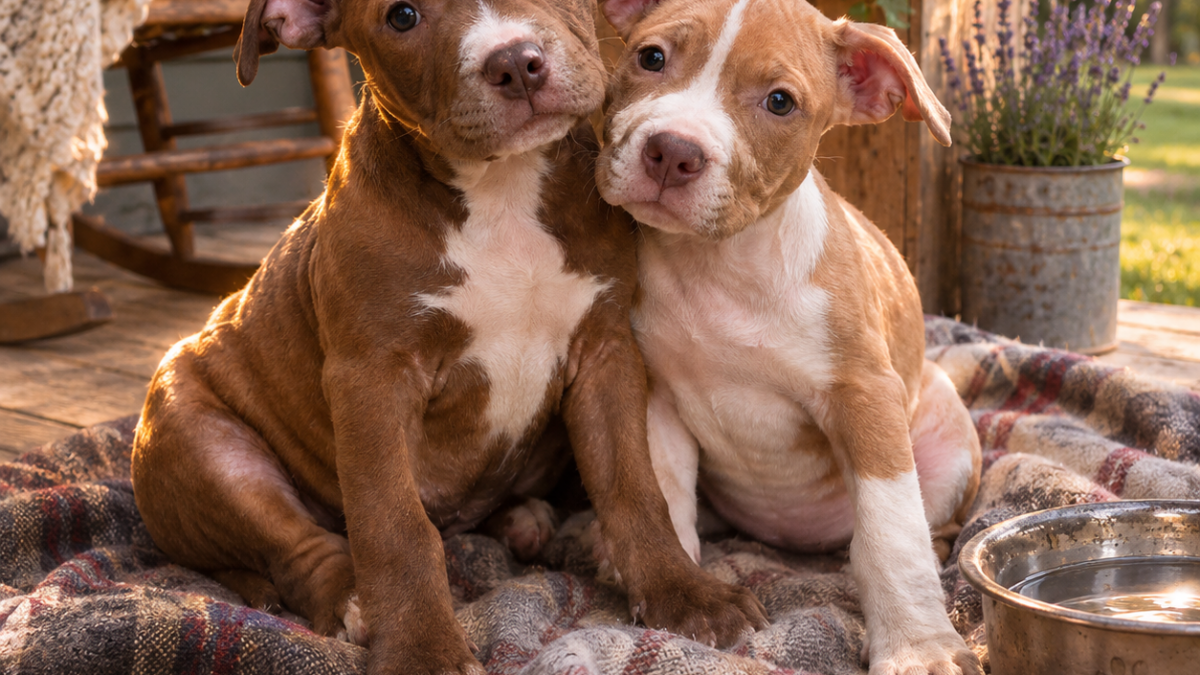
New volunteers see their photograph in the hallway.
Two puppies.
One dark.
One light.
Pressed together.
Below the photograph is a second image.
Thomas and Margaret sitting in the grass.
Bruno and Rocky between them.
Four lives that were never supposed to intersect.
Sometimes people ask:
“Were Thomas and Margaret married?”
No.
They never became a couple.
People seem disappointed by that.
I’m not.
Love does not have to become romance to become family.
Thomas and Margaret became something else.
Friends.
Emergency contacts.
Holiday companions.
The people who knew exactly which days would hurt because they remembered each other’s losses.
When Thomas eventually sold his large house and moved somewhere smaller, he chose an apartment in Margaret’s building.
Different floors.
Same elevator.
They still argue.
Mostly about who makes better coffee.
When I visit, Bruno and Rocky’s photographs are everywhere.
Not shrines.
Memories.
Living among newer things.
Exactly where they belong.
And the man who abandoned them?
He disappeared from their story long before the dogs died.
His legal penalties mattered.
The animals removed from his property mattered.
Preventing him from continuing to breed dogs irresponsibly mattered.
But I eventually stopped thinking of him when I thought of Bruno and Rocky.
That, perhaps, was the most satisfying revenge of all.
He became irrelevant.
The two lives he had discarded became larger than him.
They became Christmas mornings.
Veterinary bills.
Muddy paws.
Training classes.
Destroyed flower beds.
Hospital waiting rooms.
Gray muzzles.
Final goodbyes.
They became thirteen years of mornings somebody wanted to wake up for.
One afternoon, long after both dogs were gone, I asked Margaret something I had wondered about for years.
“If you could go back to that first morning, knowing everything that would happen, would you still come?”
She stared at me as though the answer were obvious.
“Yes.”
“Even knowing you wouldn’t take Rocky home that day?”
“Yes.”
“Even knowing how much losing him would hurt?”
Her eyes filled.
“Yes.”
“Why?”
Margaret reached into her handbag.
The bag was newer now.
But inside was the same old photograph of Adrian.
She placed it beside a photograph of Rocky.
“In the beginning, I thought grief meant love had nowhere to go.”
She touched Adrian’s photograph.
“Then Rocky taught me something.”
“What?”
She smiled.
“Love doesn’t run out because somebody dies.”
She touched Rocky’s picture.
“It changes direction.”
Thomas, sitting nearby, became quiet.
I looked at him.
“And Bruno?”
He smiled.
“I told you the first day.”
“What?”
“I needed a brave dog.”
He paused.
“Turns out I needed two.”
That made Margaret laugh.
Me too.
Thomas looked toward the framed photograph on the shelter wall.
Bruno standing slightly in front.
Rocky leaning against him.
“You know what’s funny?”
“What?”
“I thought Bruno was brave because he protected Rocky.”
He shook his head.
“But Rocky was brave too.”
“How?”
“He trusted Bruno enough to follow him.”
Thomas smiled.
“And eventually he trusted the rest of us.”
That was true.
Bravery had simply looked different in each puppy.
Bruno stepped forward.
Rocky learned not to hide.
Thomas chose a future when he had stopped planning one.
Margaret allowed herself to love again when love had become frightening.
And all four had done those things while afraid.
Perhaps that was the real reason they found each other.
People often say shelter animals are lucky when they get adopted.
Sometimes they are.
But that is only half the story.
I watched Thomas change after Bruno and Rocky arrived.
His shoulders loosened.
He laughed more.
He started planting the apple trees Ellen had once wanted.
The first apples appeared years later.
Margaret helped pick them.
I watched her change too.
She stopped speaking about mornings as something she simply endured.
She started planning.
Dog walks.
Birthdays.
Lunches.
Trips.
The anniversary of Adrian’s death never stopped hurting.
It simply stopped being the only important date on her calendar.
And it all began because two unwanted puppies were found inside a wet cardboard box beside an abandoned warehouse.
The person who put them there saw a burden.
Thomas saw courage.
Margaret saw hope.
Bruno saw a brother worth protecting.
Rocky saw the only safe thing in his tiny world.
And I?
At first, I saw two puppies who needed homes.
I was wrong.
They didn’t need two homes.
They needed one life big enough to hold both of them.
Somehow, Thomas and Margaret built it.
Not perfectly.
Not traditionally.
But completely.
That is why, whenever someone asks me what happened the morning Bruno and Rocky were supposed to be adopted separately, I never tell them simply that the adoption was canceled.
That would miss the point.
Yes, Thomas walked into the shelter intending to take Bruno.
Yes, Margaret came hoping to take Rocky.
And yes, when Thomas lifted Bruno, Rocky screamed and Bruno fought desperately to get back to him.
But the most important thing happened afterward.
Two people looked at animals they desperately wanted…
and chose not to hurt them simply to ease their own loneliness.
Thomas loved Bruno enough to leave without him.
Margaret loved Rocky enough to do the same.
That was the first real proof that both puppies had finally found the right people.
The paperwork came later.
The house came later.
The years came later.
Love came first.
And when Bruno and Rocky eventually left our shelter, neither puppy watched his brother disappear through a doorway.
They climbed into the same car.
They went to the same home.
They grew old under the same roof.
They spent nearly their entire lives surrounded by two people who had once believed their best years were behind them.
And when those years finally ended, Bruno and Rocky left something far larger behind than the two frightened puppies we had first carried out of that cardboard box.
They left a family.
They left a friendship.
They left a shelter fund that continued saving other bonded animals.
They left two grieving people who had learned how to look forward again.
And they left me with one lesson I have never forgotten:
Sometimes the animal you think you are rescuing is not there to replace the person you lost.
Sometimes he simply takes your hand—or puts one small paw on it—and shows you that your heart still has somewhere to go.
Bruno and Rocky were abandoned because someone decided two puppies were too much trouble.
Thomas and Margaret spent the next thirteen years proving that person wrong.
They were never too much.
They were exactly enough to bring four broken pieces of a family together.
And in the end, nobody had to choose between them.
Not Bruno.
Not Rocky.
Not Thomas.
Not Margaret.
Because the two puppies who once had nothing in the world except each other eventually had something they had never known inside that cold cardboard box.
They had people who came back.
Every morning.
Every night.
For the rest of their lives.








