PART 2: They Were About to Abandon Their 10-Year-Old Dog—Then the 3 A.M. Security Footage Revealed the Terrifying Truth
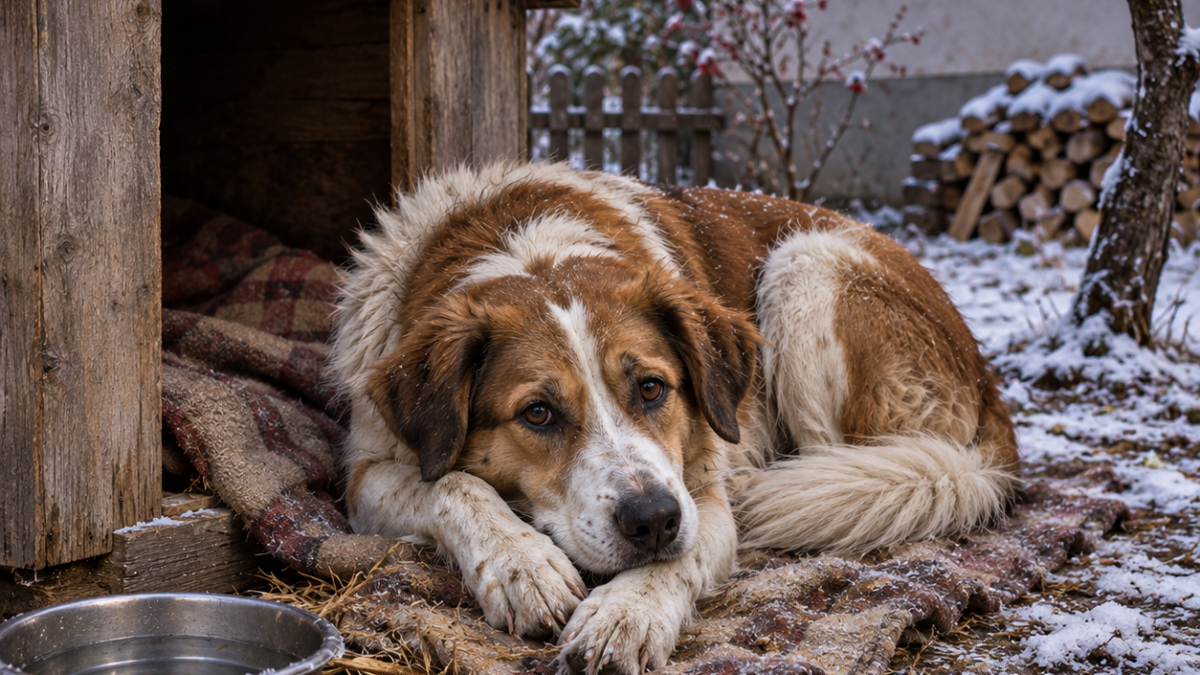
PART 2
Sarah nearly dropped the phone.
David grabbed it from her hand.
“Go back.”
She did.
The figure appeared again.
Tall.
A hood pulled low.
Gloves.
He moved slowly, carefully, almost as if he already knew where the security cameras were positioned.
Rex stood near his doghouse.
His tail lowered.
He didn’t charge.
He didn’t bark wildly.
Instead, he backed toward the house.
That surprised me.
A younger German Shepherd might have rushed the fence.
Rex didn’t.
He seemed to understand something far more important.
He needed to warn the people inside.
The stranger reached into his jacket.
Sarah gasped.
On the screen, the man tossed something toward Rex.
The object landed several feet away.
Rex approached cautiously.
Sniffed it.
Then backed away.
The stranger waited.
Rex didn’t eat it.
He turned toward the back door and began whining.
The man moved closer.
He tossed another object.
This time it landed near Rex’s blanket.
The old dog sniffed it.
Then looked toward the bedroom window.
Suddenly, the stranger stepped toward him.
Rex barked.
It was only one bark.
Deep.
Warning.
The man froze.
Rex barked again.
Then he ran toward the back door and scratched violently.
David stared at the screen.
“We never heard him.”
Sarah looked at him.
“You complained about him waking you up.”
“I thought he was just whining.”
The stranger remained in the yard for almost four minutes.
Then he approached the back of the house.
He tried the handle.
Locked.
He moved toward the window.
Rex followed him.
Slowly.
Painfully.
But he followed.
When the stranger reached the bedroom window, Rex positioned himself between the man and the glass.
The stranger raised one arm.
Rex growled.
Even through the phone speaker, the sound made the hair on my arms rise.
It wasn’t the growl of an animal looking for a fight.
It was the sound of a dog saying:
You will not get past me.
The man backed away.
Then he threw something else across the yard.
Rex turned his head.
That was apparently all the distraction the stranger needed.
He hurried back to the fence.
Climbed over.
And disappeared.
Sarah pressed both hands against her mouth.
David had gone completely still.
I watched Rex.
He was lying six feet away, head on his paws.
He had no idea we had finally discovered what he had been trying to tell them.
“Call the police,” I said.
David looked at me.
“Right now.”
He didn’t argue.
The officer who arrived about twenty minutes later was named Officer Miller.
He watched the recording twice.
Then a third time.
“Do you recognize him?”
David shook his head.
“No.”
“Any problems with neighbors?”
“No.”
“Enemies?”
David gave a humorless laugh.
“I don’t think I’m important enough to have enemies.”
Officer Miller didn’t laugh.
“Has anything gone missing?”
“No.”
“Any doors damaged?”
“No.”
“Cars?”
“No.”
“Mailboxes?”
“No.”
Miller looked toward Rex.
“Anything strange happening to the dog?”
I answered before David could.
“He’s stopped eating. He’s weak. He’s whining at night.”
The officer looked back at the screen.
“Whatever he threw might matter.”
That thought had occurred to me too.
I grabbed a flashlight.
We searched the yard.
Near Rex’s blanket, beneath a pile of leaves, I found a small piece of food.
I didn’t touch it.
“Miller.”
The officer came over.
He crouched.
Another piece was found near the fence.
Then a third beside the doghouse.
Officer Miller photographed everything and placed each item into evidence bags.
David looked sick.
“You think somebody has been feeding him something?”
“I don’t know,” Miller replied. “But until we know, don’t let him eat anything from this yard.”
I turned to David.
“And he needs a veterinarian tonight.”
David started to say something.
Sarah cut him off.
“We’re taking him.”
It was the first time that night I heard certainty in her voice.
We helped Rex into the back seat of their SUV.
When David tried to lift him, Rex whimpered.
David immediately pulled his hands away.
For one painful second, his face changed.
The irritation disappeared.
He looked afraid.
“Did I hurt him?”
“You didn’t mean to,” I said.
Together, we lifted Rex gently using a blanket.
Sarah climbed into the back seat beside him.
Rex rested his head against her leg.
She started crying again.
This time she didn’t hide it.
At the emergency veterinary clinic, we waited almost an hour before the doctor came out.
Her name was Dr. Collins.
She looked serious.
“Rex is dehydrated. His joints show significant age-related changes, but that’s not the biggest concern.”
David leaned forward.
“What is?”
“His bloodwork suggests he may have been exposed repeatedly to something harmful.”
Sarah made a sound I will never forget.
Not a scream.
More like the air had been knocked out of her body.
“Poison?”
“We don’t know exactly what yet,” Dr. Collins said carefully. “I’m sending samples for further testing. Right now, the good news is that his organs still appear to be functioning reasonably well.”
“Can he recover?”
“I believe he has a chance.”
David sank into the chair.
His face was gray.
I watched him stare at the floor.
Minutes passed.
Then he whispered, “I was going to leave him.”
Sarah looked at him.
David covered his face with both hands.
“I was going to put him in the truck tomorrow morning.”
No one spoke.
“He was sick because somebody was doing something to him,” David continued. “And I thought he was just old.”
Sarah’s eyes filled.
“We both did.”
I had been angry with them.
Part of me still was.
But guilt has a way of changing a person’s face.
David looked ten years older than he had when I first arrived.
Dr. Collins came back a few minutes later.
“We’re keeping Rex overnight.”
Sarah immediately asked, “Can I stay?”
“Not in the treatment area, but you can see him before you leave.”
When they brought Rex out, an IV line was taped to his front leg.
He looked exhausted.
But the moment he saw Sarah, his tail moved.
Once.
Twice.
David knelt.
Rex looked at him.
David tried to speak.
Nothing came out.
Then he placed one hand gently against Rex’s neck.
“I’m sorry.”
Rex leaned into him.
That nearly broke me.
Dogs are strange that way.
Humans can carry anger for years.
Dogs sometimes forgive before we even understand what we did wrong.
The next morning, Officer Miller called.
He had reviewed more footage.
The stranger had appeared on four separate nights.
And on one recording, the camera caught something important.
A vehicle.
Only part of it was visible beyond the fence, but it appeared to be a dark pickup truck with damage to the passenger-side taillight.
David frowned when Miller described it.
“I know a truck like that.”
Sarah turned toward him.
“Whose?”
David didn’t answer immediately.
Then he said one name.
“Evan.”
I asked, “Who’s Evan?”
David looked toward the hospital door.
“My former business partner.”
The story came out slowly.
For twelve years, David and a man named Evan Blake had owned a small construction company together.
At first the partnership worked.
Then money began disappearing.
Invoices were altered.
Materials were billed twice.
Clients complained about deposits that never reached company accounts.
David eventually discovered that Evan had been moving money into a private account.
When confronted, Evan denied everything.
Then he blamed David.
The partnership collapsed.
Lawsuits followed.
Six months earlier, a civil court ordered Evan to repay a substantial amount of money.
He hadn’t.
“You didn’t think to mention this last night?” I asked.
David looked embarrassed.
“I didn’t think he’d come to my house.”
Officer Miller did not look amused.
“Where does Evan live?”
David gave him the address.
“And does he know you have a dog?”
David looked toward the clinic doors.
“He knows Rex very well.”
“How?”
For the first time, David looked genuinely shaken.
“Rex used to come to work with us.”
That changed everything.
Evan didn’t just know there was a dog in the yard.
He knew Rex personally.
He knew his age.
He knew his routines.
He knew which side of the house contained the bedroom.
And perhaps most importantly, he knew Rex might recognize him.
Officer Miller left immediately.
David sat in silence.
Then Sarah said quietly, “Do you remember when Rex bit Evan’s sleeve?”
David nodded.
I looked at them.
“What happened?”
“Years ago,” Sarah explained. “Evan grabbed David during an argument at the workshop. Rex jumped between them.”
“He didn’t bite Evan,” David said. “He grabbed his jacket.”
“Evan hated him after that.”
David’s phone rang.
Dr. Collins.
Rex was awake.
His condition was stable.
When we saw him later that morning, he looked tired but alert.
Dr. Collins explained that whatever he had been exposed to appeared to cause sedation, weakness, nausea, and disorientation.
She couldn’t say yet exactly how much Rex had consumed or over how many nights.
But the pattern made sense.
The stranger had been throwing contaminated food into the yard.
Rex had probably eaten some.
Not enough to incapacitate him completely.
Enough to make him sick.
And even while sick, he had continued guarding the house.
Sarah sat beside him.
“You kept trying to tell us.”
Rex placed his chin against her knee.
She looked at me.
“We ignored him.”
I didn’t answer.
There was no useful way to soften that truth.
Later that afternoon, police located Evan’s truck.
The passenger-side taillight was damaged.
But Evan wasn’t home.
Officer Miller called David.
“Do not confront him.”
“I won’t.”
“Keep your doors locked.”
“I will.”
“And bring the dog inside when he comes home.”
David stared at the phone after the call ended.
Then he looked at me.
“He’s never sleeping outside again.”
It would have been easy to think the danger was over.
It wasn’t.
Rex stayed at the veterinary clinic for two nights.
During that time, police questioned neighbors and collected additional camera footage.
A house three streets away had captured Evan’s truck passing shortly before the times Rex began barking.
Another camera showed it leaving later.
But there was still no clear image of Evan’s face.
Then Officer Miller found something else.
On one of David’s cameras, the intruder could be seen wearing a distinctive ring when he reached toward the back door.
David recognized it immediately.
A heavy silver ring with a black stone.
Evan had worn it for years.
It still wasn’t enough for David.
He wanted certainty.
“I need to know why,” he said.
Sarah stared at him.
“Why?”
“Why was he coming here?”
“To hurt Rex.”
“No.” David shook his head. “That was part of it. But why keep coming back to the house?”
Officer Miller had the same question.
Nothing had been stolen.
No windows broken.
No attempt to force the door.
The man seemed to be testing something.
Waiting.
Watching.
Then Sarah remembered something.
“The basement.”
David turned.
“What about it?”
“The side window.”
Their house had a small basement window partly hidden behind shrubs.
One camera barely covered it.
We reviewed the footage.
At 3:19 a.m. on the second night, the intruder disappeared behind the shrubs.
He remained there for almost six minutes.
When he returned, he was carrying something small in his hand.
Officer Miller went directly to the basement window.
The latch had been damaged.
Inside, beneath the window, were faint marks on the floor.
Someone had entered.
Sarah stepped backward.
“You mean he was inside our house?”
“At least once,” Miller said.
David looked toward the hallway.
“What was he doing?”
We searched the basement.
Boxes.
Tools.
Old furniture.
Nothing obvious.
Then Rex came home.
He walked slowly through the front door, supported by a harness.
The moment he entered the house, his behavior changed.
His ears went forward.
He sniffed the air.
Then he pulled toward the basement door.
David froze.
“Rex?”
The dog whined.
He scratched the basement door.
We followed him down.
Halfway across the basement, Rex stopped near the furnace.
He growled.
Officer Miller moved closer.
Behind an old storage cabinet, he found a small electronic device.
It was not something that belonged there.
The officer did not touch it until another investigator arrived.
Later we learned it was a compact recording device.
Someone had been listening inside the house.
David stared at it in disbelief.
Sarah began shaking.
Evan hadn’t only been trying to weaken Rex.
He had been entering the property.
Monitoring them.
Listening.
Waiting.
Police obtained a warrant.
At Evan’s house, investigators found more recording equipment, photographs of David’s property, copies of business documents, and several items connected to the harassment.
There were also messages on a computer.
Evan had been furious about losing the lawsuit.
He believed David had destroyed his life.
According to investigators, he had been trying to find information he could use against David financially.
When he realized Rex still guarded the property, he began trying to make the dog sick enough that he could enter more easily.
He apparently assumed an old dog would not survive long.
That was the part David could not forgive.
Not what Evan had done to him.
What he had done to Rex.
Police arrested Evan two days later.
He denied everything.
Then the evidence began piling up.
Truck footage.
The ring.
The recording device.
Camera timestamps.
Electronic records.
Items recovered from his home.
And the results from the food found in the yard.
His lawyer advised him not to speak.
David wanted to attend every hearing.
Sarah didn’t.
“I don’t want him taking one more hour of our lives,” she said.
But David needed to see him.
The first time Evan entered the courtroom, he looked smaller than David remembered.
No expensive jacket.
No confidence.
Just a man trying not to look at the evidence photographs spread across a table.
One of those photographs showed Rex standing between him and the bedroom window.
David stared at it for a long time.
After the hearing, I found him outside the courthouse.
He was sitting on a bench.
“You okay?”
“No.”
He gave a weak smile.
“But I think I’m supposed to say yes.”
“You don’t have to.”
He looked across the street.
“I spent months being angry at Evan for stealing money.”
“That seems reasonable.”
“I thought money was the worst thing he could take from me.”
He paused.
“Then I almost threw away the one creature who was trying to protect me.”
I sat beside him.
“I keep thinking about that morning.”
“What morning?”
“The morning I planned to take Rex away.”
He swallowed.
“I had already put his old blanket in the truck.”
I didn’t say anything.
“I was going to drive thirty miles out of town. There’s an old farm road near the river.”
His voice cracked.
“I told myself someone would find him.”
He stared at his hands.
“But that wasn’t what I believed.”
The truth hurt him.
I could see it.
“I knew an old dog with bad legs wouldn’t make it long.”
For a moment I was angry all over again.
Then he said, “I don’t know how to live with that.”
I answered carefully.
“You don’t erase it.”
He looked at me.
“You do better because of it.”
That became the beginning of something I never expected.
Rex’s recovery was slow.
For the first week, Sarah slept downstairs beside him.
David built a ramp over the back steps.
He replaced the old doghouse with nothing because Rex no longer needed one.
His bed was moved into the living room.
Then, after Sarah complained that Rex kept trying to sleep outside their bedroom, they put another bed there too.
Dr. Collins prescribed treatment for his joints.
His appetite slowly returned.
The shaking decreased.
His coat began to look better.
He never became young again.
That wasn’t the miracle.
The miracle was watching his family remember that old did not mean useless.
One afternoon I stopped by with medication.
David was sitting in the yard brushing Rex.
“You’re getting spoiled,” I told the dog.
David laughed.
“He deserves it.”
Rex looked up.
His tail moved.
Then David became serious.
“I found something.”
He handed me an old photograph.
David was maybe thirty-five in it.
Sarah was younger too.
Between them sat a six-month-old German Shepherd with enormous ears.
Rex.
On the back, Sarah had written:
Our first house. Our first dog. Our little family.
“I forgot we had that,” David said.
“You forgot a lot of things.”
He nodded.
“I did.”
Over the following months, the case against Evan moved forward.
The legal consequences were significant.
He faced charges related to unlawful entry, harassment, tampering with property, and harming an animal.
I won’t pretend the courtroom gave David instant peace.
Real life rarely works like that.
There was no dramatic speech where everyone applauded.
No movie-style moment where Evan suddenly confessed and begged forgiveness.
He continued blaming everyone else.
But evidence has a stubborn way of speaking when people refuse to.
Eventually, Evan accepted a deal that included jail time, restitution, restrictions on contact, and other penalties.
When David heard the outcome, he did not celebrate.
He drove home.
He sat on the floor beside Rex.
And he cried.
Sarah later told me that was the first time she had seen him truly cry in twenty years.
Not because Evan was being punished.
Because Rex was still there to see it.
But the story could have ended there.
It didn’t.
Three months after the arrest, Sarah called me.
“Something’s wrong.”
My heart dropped.
“With Rex?”
“Yes.”
I arrived fifteen minutes later.
Rex was lying near the fireplace.
His breathing was heavier than usual.
David sat beside him.
Dr. Collins examined him that afternoon.
This time, the problem wasn’t anything Evan had done.
Rex was simply old.
His heart was weakening.
His hips were worsening.
There was no villain to arrest.
No camera footage to review.
No mystery to solve.
Just time.
And time is an enemy none of us defeats forever.
“How long?” Sarah asked.
Dr. Collins hesitated.
“Could be months.”
David looked down.
“Could be less?”
“Yes.”
That night, they made a decision.
Rex would have the best months of his life.
Not expensive things.
Dogs don’t care about expensive things.
They took him to the lake where he had learned to swim as a puppy.
They drove slowly because he had trouble balancing in the car.
David carried him from the parking area to the grass.
When Rex smelled the water, his ears lifted.
For five minutes, he looked young again.
He didn’t swim.
He simply stood ankle-deep near the shore while Sarah held his harness.
David took photographs.
They visited the construction yard where Rex had spent so many years following David from truck to truck.
Workers who remembered him came outside.
One man knelt and whispered, “Old man, you still here?”
Rex licked his hand.
They bought him a soft orthopedic bed.
Then another one because David said the first wasn’t thick enough.
Sarah laughed.
“You complained when I bought him a twenty-dollar toy.”
“That was before.”
“Before what?”
David looked at Rex.
“Before I understood.”
He never explained further.
He didn’t need to.
Christmas came early in their house that year.
Sarah decorated in November because she wasn’t sure Rex would see December.
She placed a small red bandanna around his neck.
David cooked turkey without seasoning and cut some into tiny pieces.
Rex ate every bite.
They took a family picture.
David.
Sarah.
Rex between them.
Later, Sarah showed it to me.
“What do you think?”
I looked at Rex.
Gray muzzle.
Cloudy eyes.
Still watching the camera with the same patient expression.
“Frame it.”
She did.
But something else was changing too.
David began volunteering at our rescue.
At first, he only repaired things.
A broken gate.
A damaged kennel.
A leaking roof.
Then he started walking dogs.
Mostly older ones.
“You don’t have to take the seniors every time,” I told him once.
“I know.”
“Then why do you?”
He clipped a leash onto a twelve-year-old mixed breed named Charlie.
“Because everybody wants the puppies.”
There it was.
The lesson Rex had forced him to learn.
One Saturday, a woman came to the shelter with an old Labrador.
She was crying.
“My father died,” she explained. “This was his dog. I can’t keep him.”
David listened.
The Labrador stood beside her, confused.
The woman kept apologizing.
David didn’t judge her.
He helped.
That mattered.
Because remorse can make people cruel if they use it only to punish themselves.
David was beginning to use his remorse differently.
He was turning it into something useful.
By January, Rex’s health had stabilized.
He moved slowly.
But he still followed David from room to room.
At night, he slept inside the bedroom.
Sometimes David woke at two in the morning and found Rex staring at him.
The first few times, fear shot through him.
He would sit up.
“What is it?”
Rex would simply sigh and lower his head.
Sarah teased him.
“Now you’re the paranoid one.”
David never laughed much at that joke.
One evening, I asked him if he still watched the old security footage.
He looked embarrassed.
“Sometimes.”
“Why?”
“To remind myself.”
“Of Evan?”
“No.”
He shook his head.
“Of Rex.”
He had saved one clip.
The moment Rex stood beneath the bedroom window.
Weak.
Drugged.
Barely able to walk.
Still guarding them.
David said he watched it whenever he became impatient with Rex’s slow steps.
Whenever another veterinary bill arrived.
Whenever he woke at night because Rex needed to go outside.
“I look at that video,” he told me, “and I remember that he never once decided I was too much trouble.”
I had no answer to that.
Spring came.
Rex surprised everyone.
He made it through winter.
Then March.
Then April.
His eleventh birthday arrived on a warm Saturday.
Sarah invited some neighbors.
Dr. Collins came.
Officer Miller came too.
He walked into the yard carrying a bag.
“What’s that?” David asked.
“A present.”
Inside was a new leather collar.
A small metal plate was attached.
Rex.
Protector.
David looked away quickly.
Officer Miller pretended not to notice.
We gathered around Rex.
Someone had made a dog-safe cake.
Sarah put a ridiculous paper crown on his head.
Rex endured it with the dignity of a king who had survived far worse.
Everyone laughed.
Then David knelt beside him.
He put one hand on Rex’s chest.
“Happy birthday, buddy.”
Rex licked his chin.
The photograph from that moment later became my favorite.
Not because either of them looked perfect.
David was crying.
Rex’s crown had fallen sideways.
Sarah was laughing in the background.
It looked real.
Life continued.
And with life came consequences David never expected.
The local newspaper learned about the case after court documents became public.
A reporter contacted him.
David initially refused.
Then Sarah convinced him.
“Tell the truth.”
“I’m not proud of the truth.”
“That’s why you should tell it.”
The article focused on Rex.
But David insisted that the reporter include everything.
Including the part where he had planned to abandon him.
The reporter asked, “Are you sure?”
David said yes.
When the story was published, strangers sent messages.
Some were angry.
David accepted that.
Others said they had made similar mistakes.
One man wrote that he had been considering surrendering his elderly dog because of accidents in the house.
After reading about Rex, he took the dog to a veterinarian instead.
The dog had a treatable infection.
Another family adopted a senior dog.
Then another.
The rescue received donations.
Not thousands of dollars.
Mostly small amounts.
Ten dollars.
Twenty.
Fifty.
One envelope contained five dollars and a note written by a child.
For old dogs.
David kept that note.
Months passed.
Rex slowed further.
He could no longer climb stairs.
Then he stopped trying.
His world became the living room, backyard, car rides, and the people who loved him.
I wish I could tell you every day was beautiful.
It wasn’t.
Some nights he hurt.
Some mornings he wouldn’t eat.
There were accidents.
There were expensive appointments.
There were arguments between David and Sarah about when enough would be enough.
Not because either wanted Rex gone.
Because loving an old animal means eventually asking one terrible question:
Are we keeping him here for him?
Or for us?
Dr. Collins helped them watch for signs.
Pain.
Appetite.
Breathing.
Interest in family.
Good days versus bad days.
For a while, the good days still won.
Then came a rainy morning in August.
Sarah called me at 6:14.
She didn’t say hello.
“It’s time.”
I knew.
I drove over.
Rex was lying on his bed beside the bedroom door.
The same door he had once scratched desperately from outside.
David sat on the floor.
Sarah was beside him.
Rex lifted his head when I entered.
His tail moved once.
“Hey, hero.”
I knelt.
His breathing was shallow.
David’s eyes were red.
“I promised him.”
“What?”
“That he would never be alone again.”
“He isn’t.”
Dr. Collins came to the house.
No clinic.
No cold table.
No fear.
Rex stayed on his favorite blanket.
Sarah sat in front of him.
David rested one hand over his heart.
I sat nearby.
Before Dr. Collins began, David leaned close to Rex.
His voice shook.
“I need you to know something.”
Rex watched him.
“I’m sorry I almost failed you.”
Sarah closed her eyes.
David continued.
“You spent your whole life protecting me.”
He pressed his forehead against Rex’s.
“And I almost left you when you needed me.”
Rex licked the side of his hand.
David broke.
Not quiet tears.
He sobbed.
“I don’t deserve you.”
I put a hand on his shoulder.
Rex’s eyes stayed on him.
Dogs do not understand apologies the way people do.
But they understand voices.
Hands.
Presence.
They understand when the person they love is finally there.
Dr. Collins gave the medication.
Rex relaxed.
Sarah whispered his name.
David kept talking.
“Good boy.”
Again.
“Good boy.”
And again.
“You’re such a good boy.”
Rex’s breathing slowed.
Then stopped.
No struggle.
No fear.
Just silence.
For several minutes, none of us moved.
Rain tapped softly against the bedroom window.
The same window Rex had once stood beneath in the dark.
David finally whispered, “He saved us.”
Sarah shook her head.
“No.”
She looked at Rex.
“He saved us twice.”
David looked at her.
“What do you mean?”
“First from Evan.”
She touched Rex’s gray face.
“Then from becoming people I never wanted us to be.”
That was the truest thing anyone said that day.
Rex was cremated.
David placed his ashes in a wooden box he built himself.
On the front, he carved:
REX
2015–2026
HE NEVER STOPPED WATCHING OVER US.
Beside the box, Sarah placed Officer Miller’s collar.
For weeks afterward, David avoided the backyard.
The empty spaces were too loud.
No dog beside the maple tree.
No slow footsteps.
No nails against the floor.
No breathing beside the bed.
One afternoon, I found him standing near the old spot where Rex’s doghouse used to be.
“You okay?”
He smiled sadly.
“I keep expecting him to come around that corner.”
“That takes time.”
“I know.”
Then he surprised me.
“I want to do something.”
“What?”
He pointed toward the back of his property.
“There’s space.”
“For what?”
“A place for old dogs.”
At first I thought he was speaking emotionally.
He wasn’t.
Three months later, construction began.
David used his own money and donations from people who had followed Rex’s story.
He built a small addition beside our rescue.
Not rows of cold kennels.
Rooms.
Soft beds.
Low ramps.
A fenced garden.
He called it Rex’s House.
Its purpose was simple.
Senior dogs.
Dogs surrendered because they were too old.
Too slow.
Too expensive.
Too inconvenient.
Some would be adopted.
Some wouldn’t.
Those that weren’t would still have a home.
At the entrance, David installed a wooden plaque.
It read:
THEY ARE NOT “JUST OLD.”
THEY ARE STILL WAITING FOR SOMEONE TO CHOOSE THEM.
The first dog to arrive was a thirteen-year-old Shepherd mix named Max.
His owner had entered assisted living.
Max had arthritis.
Cloudy eyes.
A gray muzzle.
When David saw him, he stopped breathing for a second.
Sarah touched his arm.
“You okay?”
He nodded.
Max walked slowly toward him.
David crouched.
The old dog sniffed his hand.
Then his tail moved once.
Exactly once.
David looked at me.
I knew what he was thinking.
So did Sarah.
She smiled through tears.
“No,” David said.
She laughed.
“You haven’t even asked what I was going to say.”
“Yes, I have.”
“What?”
“We’re not adopting him.”
Twenty minutes later, Max was in their car.
Sarah sent me a photograph that evening.
Max was asleep on Rex’s old bed.
David was sitting beside him.
The caption read:
Apparently we’re not adopting him.
I laughed harder than I had in months.
Max never replaced Rex.
That’s not how love works.
Nothing replaced Rex.
Instead, Rex had made room.
Room in David.
Room in Sarah.
Room in their home.
Room in our rescue.
And eventually, room for dozens of dogs who might otherwise have spent their final years wondering why the people they trusted had disappeared.
The following spring, Officer Miller visited Rex’s House.
He stood in front of the photograph hanging near the entrance.
It was the picture from Rex’s birthday.
Crooked crown.
Gray muzzle.
David crying.
Everyone laughing.
Miller stared at it.
“Hard to believe all this started because of one security camera.”
David shook his head.
“No.”
Miller looked at him.
“It started because Rex wouldn’t give up on us.”
There was one final part of the story that David rarely told people.
About a year after Rex died, he received an envelope.
No return address.
Inside was a letter.
It came from Evan.
I never read the whole thing.
David didn’t show me.
He only told me the important part.
Evan apologized.
Not convincingly, according to David.
There were excuses.
Anger.
Blame.
Claims that things had “gotten out of control.”
Then one sentence:
I never meant for the dog to suffer that much.
David stared at that sentence for a long time.
Sarah asked what he planned to do.
“Reply?”
“No.”
“Keep it?”
“No.”
He carried the letter outside.
For a moment he stood beside the maple tree.
Then he tore it into pieces.
Not dramatically.
Not angrily.
Just carefully.
He dropped the pieces into the recycling bin.
Sarah watched.
“That’s it?”
David nodded.
“That’s it.”
“You don’t want him to know what he did to us?”
“He already knows.”
“What about Rex?”
David looked toward the house.
Max was asleep near the window.
Then he looked toward the road leading to Rex’s House, where volunteers were arriving for the morning shift.
“He doesn’t get to be the ending.”
That sentence stayed with me.
Evan had wanted revenge.
He wanted to destroy David’s peace because he believed David had destroyed his life.
Instead, his cruelty exposed him.
It cost him his freedom.
His reputation.
His money.
His ability to come near David again.
But the most powerful revenge wasn’t what the court did to him.
It was what happened afterward.
Every dog sleeping safely at Rex’s House.
Every senior animal adopted because somebody heard Rex’s story.
Every person who chose a veterinary appointment instead of abandoning an aging pet.
Every year David spent becoming a better man.
Evan had tried to silence an old dog.
Instead, Rex’s story traveled farther than his bark ever could.
Several years have passed now.
I still volunteer at Rex’s House.
David still repairs anything that breaks.
Sarah handles adoption applications.
Max lived with them for another nineteen months before passing peacefully at home.
After him came Lucy.
Then Bear.
Then an elderly Shepherd named Duke who hated everyone except David.
Sarah said it was because Duke recognized another grumpy old man.
David pretended to be offended.
He wasn’t.
There is a framed photograph in the hallway of Rex’s House.
Visitors often stop in front of it.
Underneath is a short version of the story.
But it doesn’t include everything.
It doesn’t say that Rex’s owners once considered abandoning him.
David insisted the full story should be available elsewhere, but not on the wall.
I once asked why.
“Because that wall is about him,” David said. “Not my worst mistake.”
Fair enough.
Sometimes families bring children.
Sometimes those children ask me whether Rex knew he was a hero.
I never know exactly what to say.
Maybe dogs don’t think in words like hero.
Maybe Rex didn’t believe he was doing anything extraordinary.
Maybe to him, protecting David and Sarah wasn’t courage.
It was simply his job.
His family was inside.
Someone dangerous was outside.
So Rex stood between them.
Again.
And again.
And again.
Even when his legs hurt.
Even when he was weak.
Even when the people inside misunderstood him.
Even when the people he loved were planning to give him away.
That is the part I still struggle with.
Rex never knew he was unwanted.
Or maybe he did.
Sometimes I wonder whether dogs understand more than we imagine.
I remember the way he looked at David that first night.
No anger.
No accusation.
Only patience.
As though he were saying:
I’m still here.
The final security clip from that night still exists.
David keeps several copies.
I watched it once more about two years after Rex died.
The image was grainy.
The backyard looked silver beneath the night-vision camera.
At 3:07 a.m., the figure climbed over the fence.
Rex stood.
He was visibly weak.
His back legs shook.
The stranger moved toward the house.
Rex looked toward the bedroom.
For a moment he seemed uncertain.
Then he walked forward.
One painful step.
Another.
Another.
The man tossed food.
Rex ignored it.
He went to the door.
Scratched.
The man moved closer.
Rex ran to the window.
Barked.
The man hesitated.
Rex positioned himself between him and the house.
That was the exact frame David eventually printed.
Not Rex looking strong.
Not Rex attacking.
Not Rex young.
Rex standing on trembling legs.
Because courage isn’t always looking fearless.
Sometimes courage is being tired, hurting, weak, and still deciding that someone you love is worth protecting.
When the clip ended, David closed the laptop.
“I hated watching this at first.”
“Why?”
“Because all I could see was what I had done wrong.”
“And now?”
He looked at the photograph.
“Now I see what he did right.”
There was a long silence.
Then David smiled.
“You know what’s strange?”
“What?”
“If we hadn’t installed those cameras, I might never have known.”
That was true.
Without the footage, perhaps Rex would have been driven away the next morning.
Perhaps Evan would have returned.
Perhaps things would have ended differently.
But I don’t like thinking about that version.
The real ending is enough.
An old dog was nearly discarded because his family mistook pain for inconvenience.
His strange nighttime behavior was dismissed as confusion.
His weakness was blamed on age.
His cries were treated as noise.
But Rex wasn’t confused.
He wasn’t useless.
And he wasn’t whining for no reason.
He was trying to save the people who had stopped listening to him.
The security camera didn’t simply expose the man climbing over the fence.
It exposed something harder.
It showed David and Sarah exactly what their dog had been doing while they slept.
Protecting them.
Night after night.
And once they saw the truth, they could never unsee it.
Years later, David told me there were two moments in his life he wished he could change.
The first was the day he decided Rex had become a burden.
The second was every day before that when he forgot to appreciate him.
“But you did change what came afterward,” I reminded him.
David nodded.
“That’s all I had left.”
Maybe that is the lesson.
We don’t always get to undo our worst decisions.
Sometimes the door closes before we understand what was behind it.
But when we are lucky, we get one more chance.
One more night.
One more morning.
One more tail wag.
One more slow walk across the yard.
One more opportunity to kneel beside someone who has loved us far better than we deserved and say:
I see you now.
Rex gave David that chance.
And David spent the rest of Rex’s life making sure he never wasted it again.
One autumn afternoon, almost exactly five years after that first phone call, I was standing outside Rex’s House when David approached me.
He was carrying a small wooden sign.
“Need help?”
“No.”
He climbed a short ladder and attached it above the entrance.
I stepped back.
The sign read:
FOR THE ONES WHO NEVER STOPPED LOVING US, EVEN WHEN WE FORGOT HOW TO LOVE THEM BACK.
Sarah came outside.
She stared at it for several seconds.
Then she looked at David.
“You made that?”
“Yeah.”
She slipped her arm through his.
Inside, an old dog began barking.
Another joined.
Then another.
David laughed.
“Apparently the residents disapprove.”
“They’re probably hungry.”
“They’re always hungry.”
He opened the door.
Before going inside, he looked back at the photograph of Rex beside the entrance.
Only for a second.
Then he smiled.
“Come on,” he said. “We’ve got work to do.”
And that, more than the arrest, the courtroom, or the punishment Evan eventually received, was the ending I think Rex deserved.
The man who once planned to abandon him spent the rest of his life making sure other old dogs were not abandoned.
The woman who once thought his nighttime cries were a nuisance became the person who sat beside frightened senior dogs until they fell asleep.
A house that had once kept Rex outside now opened its doors to animals no one else wanted.
And an old German Shepherd who almost disappeared on a lonely road left behind a legacy that outlived every person who tried to hurt him.
People sometimes ask me whether I believe animals understand forgiveness.
I don’t know.
But I know what I saw.
The night David knelt in that veterinary clinic and whispered, “I’m sorry,” Rex leaned against him.
No hesitation.
No punishment.
No revenge.
Just love.
Maybe that was Rex’s final lesson too.
The world had already given David his punishment.
Guilt.
Shame.
The knowledge of what he had almost done.
Rex gave him something far harder to earn.
A second chance.
And David made sure it mattered.
So whenever someone tells me their dog is old, difficult, slow, restless, or suddenly behaving differently, I think of that cold October night.
I think of Rex scratching desperately at a door while the people he loved slept inside.
I think of the camera footage.
I think of trembling legs that still carried him between danger and his family.
And I always tell them the same thing.
Before you decide your old dog has become a problem, listen.
Before you call loyalty an inconvenience, look closer.
Before you assume age has made them useless, remember that sometimes the oldest dog in the yard is still the one watching over everyone.
Because Rex was ten years old.
His muzzle was gray.
His legs hurt.
His body was tired.
Someone was deliberately making him sick.
And the two people he loved most had nearly given up on him.
But Rex never gave up on them.
Not once.
Not even for a single night.
And in the end, the security camera didn’t reveal that Rex had lost his mind.
It revealed exactly how much heart he still had left.








