PART 2: They Wanted the Old Lame Cat Gone From Our Clinic—Then We Discovered What He’d Been Doing Every Night
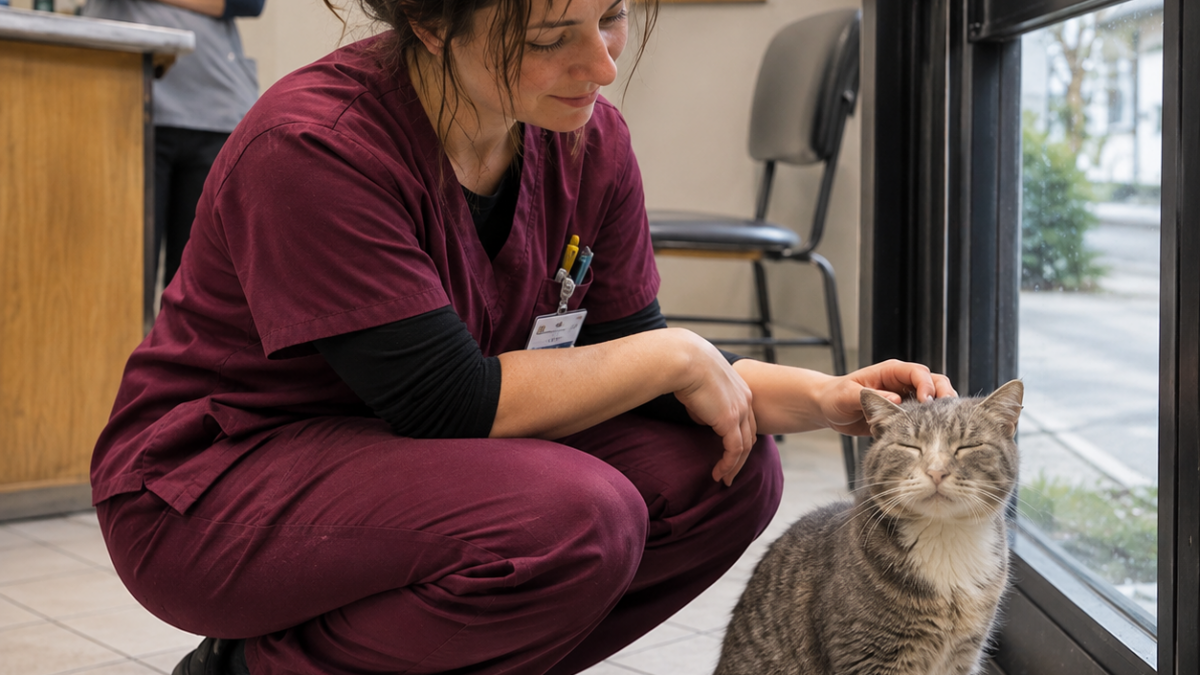
The old limping cat nobody wanted had been living quietly in the back of our veterinary clinic for months when someone finally decided he was bad for business, and by then most of us had grown so used to seeing his crooked ear, scarred face, and uneven walk that we failed to notice how many frightened animals stopped trembling whenever he entered the room.
We thought sending him away would simply mean one less food bowl to fill, one less bed to wash, and one less aging stray taking up space in a clinic already struggling to pay its bills, but within days dogs began crying through the night, recovering cats stopped eating, one of our youngest assistants broke down in the treatment room, and a little boy stood in our lobby asking why the only animal who had ever made him feel brave had disappeared.
What none of us understood until it was almost too late was that Rafistol had spent months moving through our clinic after closing, quietly finding the most frightened creature in the building and lying beside it—and the man who ordered him removed had made sure there would be no easy way for us to bring him back.
My name is Claire Martin, and I worked as a veterinary assistant in a small clinic on the outskirts of Angers.
The first time I saw Rafistol, I thought he was dying.
“Claire, hurry!”
My coworker Amélie shouted from the reception area.
“There’s a cat collapsing outside!”
I dropped the towel I was holding and ran.
Through the glass doors, I saw a gray shape lying on the wet entrance mat.
Rain had soaked him completely.
One ear was torn.
His ribs showed beneath clumps of dirty fur.
One front leg dragged at an unnatural angle when he tried to move.
He didn’t cry.
He didn’t hiss.
He simply looked through the glass.
There was something in his eyes that stopped me.
Not fear exactly.
Exhaustion.
The kind of exhaustion that comes after being afraid for too long.
I opened the door and knelt.
“Come on, sweetheart.”
He tried to stand.
His bad leg slipped.
He collapsed against my hand.
When I lifted him, I was shocked by how little he weighed.
He looked like a large cat.
In my arms, he felt like bones wrapped in wet fabric.
Mathilde, our veterinarian, had already changed out of her scrubs for the evening.
The moment she saw him, she pulled them back on.
“Treatment room. Now.”
For nearly two hours, we warmed him, cleaned wounds, started fluids, treated parasites, and examined the damaged leg.
He was dehydrated.
Malnourished.
Covered in old scars.
His leg showed evidence of a previous fracture that had healed badly, then been injured again recently.
At one point, Mathilde looked at me over the examination table.
I knew that expression.
Veterinary workers learn it early.
It means:
**I’ll try everything, but don’t make promises.**
That night, I stayed after everyone else left.
I checked his breathing.
Adjusted his blanket.
Whispered ridiculous things to him as if stubbornness could be prescribed like medicine.
“You made it all the way here,” I told him. “Don’t quit at the front door.”
He barely reacted.
The next morning, I entered the isolation room expecting the worst.
His eyes opened.
Slowly.
Then his head lifted.
I laughed and cried at the same time.
“Well,” I said, “you’re tougher than you look.”
We called him Rafistol.
In French, the word reminded us of something patched together over and over—something repaired so many times that every scar had become part of it.
It fit him.
His ear never stood properly again.
The leg healed, but he kept a limp.
A thin white scar crossed the bridge of his nose.
He would never look like the cats on food advertisements.
But over the following weeks, something else appeared beneath all those damaged pieces.
Rafistol was extraordinarily gentle.
He never scratched us.
Even when frightened, he curled inward rather than striking out.
He waited.
Watched.
Endured.
When he became healthy enough, I took photographs and wrote an adoption post.
I described him as calm, affectionate, clean, and happiest in quiet spaces.
People reacted warmly online.
“He’s beautiful!”
“Poor baby!”
“Someone please adopt him!”
But sympathy and adoption are very different things.
One woman called.
“How old is he?”
“Probably eight to ten.”
Silence.
“Oh.”
Then she said she had really been hoping for a kitten.
A couple came to meet him.
The woman stroked his head.
Her husband stared at his limp.
“Will he always walk like that?”
“Probably.”
They promised to think about it.
They never returned.
Another family worried about future medical expenses.
Someone else said his face looked “too sad.”
Week after week, Rafistol stayed.
Eventually, we stopped putting him in the adoption room.
Not intentionally.
He simply became part of the clinic.
His bed moved beside the nurses’ station.
His food bowl appeared near the laundry room.
He learned exactly which cupboard contained treats.
And whenever we opened his enclosure in the morning, he limped out and began making his slow rounds through the building.
At the time, we thought he was just wandering.
We had no idea he had given himself a job.
PART 2
The first strange thing happened with a German Shepherd named Vasco.
Vasco had been hit by a delivery van.
His surgery went well, but physically repairing a dog is sometimes easier than convincing him the world is safe again.
After waking from anesthesia, Vasco panicked.
He slammed his body against the kennel.
Chewed at the bars.
Refused food.
Whenever someone approached, he growled.
Not because he was vicious.
Because he was terrified.
Mathilde prescribed appropriate pain control and mild sedation.
We lowered the lights.
Covered part of the kennel.
Nothing helped much.
That evening, I was cleaning the recovery room when Rafistol appeared.
“Not in here,” I told him.
He ignored me.
Rafistol had developed a remarkable ability to ignore instructions without ever looking rebellious.
He limped toward Vasco’s kennel.
Vasco growled.
I reached down.
“Rafistol.”
The old cat stopped.
Vasco stared through the bars.
Rafistol stared back.
Then he did something incredibly unimpressive.
He lay down.
Three feet from the kennel.
That was it.
No magic.
No dramatic interaction.
He simply curled his paws under himself.
Vasco kept watching.
Five minutes passed.
Then ten.
The growling stopped.
I finished cleaning.
When I returned twenty minutes later, Vasco was asleep.
Rafistol was still there.
I smiled.
“Good job, nurse.”
I thought it was coincidence.
The next morning, Vasco ate.
—
Then came Bijou.
Bijou was a tiny white cat rescued after being trapped inside an abandoned apartment.
She was terrified of people.
For three days, she hid beneath the towel in her enclosure.
She ate only when the clinic was empty.
One afternoon, Rafistol climbed into the chair beside her kennel.
He sat there for nearly an hour.
Bijou eventually came out from beneath the towel.
She approached the bars.
Rafistol moved closer.
They touched noses.
That evening, Bijou ate while I stood in the room.
“Interesting,” Mathilde said when I told her.
“Maybe he speaks traumatized cat.”
Mathilde smiled.
“Then he’s more qualified than we are.”
We laughed.
We still didn’t understand.
—
Over the next several months, Rafistol developed routines.
Every morning, he waited outside the surgery prep room until the first patient arrived.
He was never allowed inside sterile areas, but he learned the boundaries.
During lunch, he slept near reception.
In the afternoon, he visited hospitalized animals.
After closing, he disappeared into the back hallway.
We assumed he went to sleep.
He didn’t.
We learned that much later.
At the time, Rafistol was simply ours.
Not officially.
Nobody had signed adoption papers.
Nobody took him home.
But everyone knew where he belonged.
Amélie bought him a ridiculous red bed shaped like a strawberry.
Mathilde complained about the cost.
Then she bought him an orthopedic cushion for his arthritis.
I once caught our receptionist, Léa, sharing tuna with him behind the desk.
“That is not clinic food,” I said.
She looked guilty.
Rafistol did not.
“He has a medical condition.”
“What condition?”
“Being elderly.”
I told her I would document it in his chart.
—
Then our clinic began having financial problems.
Nothing dramatic at first.
A broken dental unit.
Higher medication prices.
Two months where bills arrived faster than clients paid them.
Mathilde owned most of the clinic, but after fifteen years of running it, she was exhausted.
When a regional veterinary group offered to invest, she listened.
They promised updated equipment.
Marketing.
Better purchasing contracts.
Administrative support.
The group was called **Vétéria Santé**.
Mathilde remained lead veterinarian.
But management changed.
That was how Nicolas Delcourt entered our lives.
He arrived in a dark suit on a Monday morning.
The first thing he noticed was Rafistol.
The old cat was asleep on reception’s radiator.
Nicolas stopped.
“What is that?”
I thought he was joking.
“A cat.”
“I can see that.”
He looked at me.
“Why is there a cat loose in the clinic?”
“His name is Rafistol.”
“That was not my question.”
His tone made me dislike him immediately.
Mathilde came out of an exam room.
“He’s a rescue.”
“Client-owned?”
“No.”
“Adoptable?”
“Technically.”
Nicolas stared at Rafistol.
Rafistol opened one eye.
Then went back to sleep.
“Technically?”
“He’s been here for months.”
“Why?”
“Nobody adopted him.”
Nicolas looked around reception.
“We are not an animal sanctuary.”
Mathilde’s expression hardened.
“We know.”
“Good.”
He opened his folder.
“Because one of the priorities going forward is operational discipline.”
I looked at Amélie.
She rolled her eyes.
Nicolas noticed.
He noticed everything that could be placed into a spreadsheet.
Unfortunately, some things cannot.
—
For the first two weeks, Nicolas reorganized schedules.
Then inventory.
Then staffing.
He created new targets for appointments per veterinarian.
New sales goals for preventive products.
New rules for phone answering times.
Some changes were useful.
Others felt like someone measuring the heartbeat of a living thing with a calculator.
Then he returned to Rafistol.
I was at reception when Nicolas pointed toward him.
“This cannot continue.”
Rafistol was sitting beside a carrier containing a frightened rabbit.
The rabbit had stopped thumping since Rafistol arrived.
“What can’t?”
“The cat.”
“What about him?”
“He’s free-roaming.”
“Not in sterile areas.”
“He is still an unowned animal inside a medical business.”
“He has veterinary records.”
“That isn’t ownership.”
I crossed my arms.
“He lives here.”
“This is a clinic.”
“He helps.”
Nicolas actually smiled.
“With what?”
I opened my mouth.
Then stopped.
Because how could I explain it?
He sits beside frightened animals?
He knows when patients need company?
He makes the building feel calmer?
None of that fit Nicolas’s world.
“He belongs here,” I finally said.
“That is not a business reason.”
“No.”
I looked at Rafistol.
“It’s a human one.”
Nicolas’s smile disappeared.
—
Mathilde defended him.
At first.
“He’s not costing us much.”
“That is not the only issue,” Nicolas said.
We were in the staff room.
Everyone had been called in.
“Hygiene. Liability. Branding.”
Amélie stared at him.
“Branding?”
“Yes.”
“You think his face is bad branding?”
“I did not say that.”
“You thought it loudly.”
“Enough.”
Mathilde rubbed her forehead.
Nicolas continued.
“Clients entering a modern veterinary clinic should see professionalism.”
Léa said, “Clients love him.”
“Some do.”
“Most.”
“Do you have data?”
Léa looked at him as though considering murder.
“No, Nicolas. I have eyes.”
I almost laughed.
Mathilde intervened.
“We’ll keep him restricted to reception and non-clinical areas.”
Nicolas sighed.
“For now.”
I remembered those words later.
For now.
—
Rafistol adapted.
He always did.
We put a gate between reception and the treatment corridor.
He learned to wait until someone forgot to latch it.
Then he continued his rounds.
I pretended not to notice.
So did everyone else.
Everyone except Nicolas.
One afternoon, he caught Rafistol in recovery.
He picked him up.
Rafistol hated being lifted by strangers.
His body stiffened.
“Put him down,” I said.
Nicolas turned.
“He shouldn’t be here.”
“He isn’t hurting anything.”
“I said put him back in reception.”
“He walked here himself.”
“Claire.”
Something in his voice made me furious.
I stepped closer.
“Give him to me.”
Nicolas handed Rafistol over.
The cat immediately relaxed against my chest.
Nicolas saw it.
For one second, something like embarrassment crossed his face.
Then it vanished.
“You’re too emotionally involved.”
“He’s a living animal.”
“This is exactly the problem.”
“No.”
I looked at him.
“The problem is you think caring makes us less professional.”
—
Then came Noah.
Noah was nine years old.
His dog, Pepper, had cancer.
Pepper was a small mixed-breed dog with enormous brown eyes and more personality than body weight.
He had been Noah’s dog since Noah was three.
By the time they came to us, there was very little we could do.
Mathilde explained everything gently.
Noah’s mother cried.
His father stared at the floor.
Noah said nothing.
They took Pepper home for one final weekend.
On Monday, they returned.
Noah stood in reception holding Pepper’s blanket.
He looked terrified.
Rafistol was under the desk.
He came out.
Limped toward Noah.
And sat on the boy’s shoe.
Noah looked down.
“Why is that cat touching me?”
I almost smiled.
“He likes sad people.”
Noah frowned.
“That’s weird.”
“Yes.”
Rafistol rubbed his face against Noah’s leg.
Noah crouched.
“What happened to him?”
“He had a hard life.”
“Is he okay now?”
“I think so.”
Noah touched Rafistol’s torn ear.
“He looks broken.”
Before I could answer, Noah’s father whispered:
“So do we.”
Nobody spoke.
Rafistol stayed with Noah until Mathilde called the family into the room.
Pepper died peacefully twenty minutes later.
When they came out, Noah walked straight to Rafistol.
He sat on the floor.
Rafistol climbed into his lap.
The boy buried his face in the old cat’s fur.
That was the first time I understood that Rafistol wasn’t just helping animals.
—
Noah returned every Wednesday for almost two months.
His parents would stop by after school.
Sometimes for five minutes.
Sometimes twenty.
No appointments.
No treatment.
Just Rafistol.
Nicolas found out.
“This is not a counseling center.”
I stared at him.
“His dog died here.”
“That is tragic.”
“He finds comfort here.”
“That does not mean a medical business should become an emotional drop-in facility.”
I laughed.
“What exactly do you think veterinary medicine is?”
His face hardened.
“Medicine.”
“No.”
I shook my head.
“It’s medicine attached to people who love what we treat.”
Mathilde heard us.
She said nothing.
That worried me.
—
The clinic’s finances improved.
Our morale didn’t.
Nicolas pushed harder.
Shorter appointment windows.
More procedures per day.
Less time between patients.
One evening, Mathilde stayed after closing.
I found her alone in surgery.
“You okay?”
“No.”
That answer surprised me.
She sat.
“I made a mistake.”
“With the group?”
She nodded.
“I thought they would help with the things I’m bad at.”
“Money?”
“Administration.”
“Same disease.”
She smiled weakly.
“But now every conversation is about margins.”
I sat beside her.
“What happens if you leave?”
“I can’t.”
“Why?”
“The contract.”
“How long?”
“Three years.”
I looked toward the hallway.
Rafistol was approaching.
He climbed onto the chair beside Mathilde.
Then, with great effort, put one paw on her thigh.
She started crying.
Quietly.
I had never seen her cry at work.
Rafistol remained there.
No purring.
No theatrics.
Just contact.
Mathilde whispered:
“See?”
“What?”
“This.”
She wiped her face.
“How do I explain this to Nicolas?”
“You don’t.”
I looked down at Rafistol.
“Some people understand value only after they lose it.”
I wish I hadn’t been right.
—
The incident Nicolas used against Rafistol happened on a Friday.
A client named Monsieur Bréchet brought in a nervous terrier.
The dog barked at everything.
Rafistol was asleep beneath reception.
The terrier lunged toward him.
Rafistol jumped onto a chair.
The leash wrapped around Monsieur Bréchet’s ankle.
He stumbled.
Didn’t fall.
Wasn’t injured.
Nothing happened.
But he complained.
“This animal shouldn’t be loose.”
Nicolas appeared immediately.
“You’re absolutely right.”
I turned.
“Nicolas.”
He ignored me.
“I apologize.”
Monsieur Bréchet calmed down almost instantly.
Honestly, he didn’t seem particularly angry.
“It’s fine. Just surprised me.”
“No, this is unacceptable.”
“Nicolas.”
He looked at me.
“Take Rafistol to the back.”
The old cat was still sitting on the chair.
Confused.
I picked him up.
As I carried him away, I heard Nicolas say:
“We’ll address this permanently.”
—
Monday morning, there was an incident report on Mathilde’s desk.
It claimed Rafistol had caused a “dangerous client fall risk.”
It said the client had nearly been injured.
It said staff had been repeatedly warned.
It recommended immediate removal.
Mathilde confronted Nicolas.
“This is exaggerated.”
“It is documented.”
“By you.”
“And the client.”
“No. There’s no client statement attached.”
“He complained verbally.”
“That doesn’t mean this.”
She tapped the report.
Nicolas folded his arms.
“We’ve discussed the cat repeatedly.”
Mathilde looked tired.
“We can find him a foster home.”
“No.”
I stepped in.
“Why no?”
Nicolas looked at me.
“Because this has already gone too far.”
“What does that mean?”
“He leaves this week.”
“Where?”
“I’ve arranged transfer.”
My stomach tightened.
“To whom?”
“A shelter partner.”
“Which one?”
He didn’t answer immediately.
“Saint-Rémy Animal Services.”
I knew the name.
It was a municipal intake facility nearly an hour away.
Not our usual rescue partner.
“They’re overloaded.”
“They have capacity.”
“For a ten-year-old lame cat?”
“He is adoptable.”
“He has already been rejected for months here.”
Nicolas shrugged.
“Then perhaps they have different clients.”
I stared at him.
“You know exactly what happens to animals like him in overcrowded shelters.”
“That is an emotional statement.”
“No.”
My voice shook.
“It is a statistical one.”
Mathilde stood.
“He stays until we find a proper placement.”
Nicolas looked at her.
“The management agreement gives me authority over non-client animals on the premises.”
Silence.
Mathilde’s face changed.
He was right.
Technically.
Legally.
Operationally.
Every ugly word lined up on his side.
She whispered:
“Give us a week.”
Nicolas considered.
“Forty-eight hours.”
—
We posted Rafistol everywhere.
Again.
This time with urgency.
Older gentle cat.
Limp.
Needs quiet home.
Medical support available.
Dozens of shares.
Hundreds of comments.
No confirmed adopter.
One woman applied.
Her landlord refused pets.
Another had two aggressive cats.
A man wanted an outdoor mouser.
We said no.
Forty-eight hours disappeared.
On Wednesday morning, Nicolas said transport would come at four.
I spent lunch sitting beside Rafistol.
He was on his red strawberry bed.
“You don’t know, do you?”
He licked one paw.
“You’re going somewhere.”
He stared at me.
“I’m sorry.”
His head tilted.
I started crying.
Rafistol stood.
Moved closer.
Then pressed his forehead into my wrist.
Of course he comforted me.
That made it worse.
—
At three-thirty, I was called into an emergency appointment.
A dog had swallowed a sock.
By the time I came out, Rafistol was gone.
His bed remained.
His bowl remained.
The hallway felt wrong.
“Where is he?”
Amélie looked up from reception.
Her face was pale.
“They came early.”
“Who?”
“The transport.”
“You let them take him?”
“Nicolas signed everything.”
“Where’s Mathilde?”
“Surgery.”
I ran to Nicolas’s office.
“You sent him?”
“Yes.”
“You said four.”
“They had a schedule change.”
“Did you even let us say goodbye?”
His expression changed slightly.
“This is exactly why I arranged it efficiently.”
“Efficiently?”
“You were all becoming disruptive.”
I stared at him.
“You are unbelievable.”
“No.”
He stood.
“I am running a clinic.”
“And you just removed something this clinic needed.”
“A cat.”
His voice was flat.
“One cat.”
I pointed toward the treatment area.
“You have no idea what he does.”
“You keep saying that.”
“Because you never watch.”
He sighed.
“Go back to work, Claire.”
I hated him in that moment.
Not because he sent Rafistol away.
Because Rafistol had been reduced to an entry on a schedule.
Transport completed.
Problem solved.
—
That night, Vasco’s old kennel was occupied by a spaniel named Nino recovering from spinal surgery.
Nino cried continuously.
Not pain.
Fear.
We checked everything.
Medication.
Vitals.
Positioning.
He still cried.
At nine, Amélie said:
“Rafistol would be in here.”
Nobody answered.
At ten, Nino began scratching frantically at his bedding.
At eleven, Mathilde sat on the floor beside the kennel.
“He’s not in pain.”
“No.”
“He’s scared.”
“Yes.”
Mathilde looked toward the empty doorway.
“Damn it.”
—
The next morning, Bijou came back.
Not as a patient.
Her owner brought her for vaccines.
The moment Bijou entered the clinic, she began searching.
She sniffed reception.
Walked toward Rafistol’s old bed.
Stopped.
Then cried.
Her owner looked confused.
“What is she doing?”
I couldn’t answer.
Bijou pulled toward the hallway.
Toward recovery.
Toward the places Rafistol used to walk.
Finally, she sat beside his empty bowl.
The owner asked:
“Where’s the gray cat?”
I swallowed.
“He was transferred.”
“Why?”
“Management decision.”
Her expression darkened.
“She loved him.”
“I know.”
“I adopted Bijou because of him.”
That caught me.
“What?”
“When we first met her, she was terrified. We almost decided she wasn’t ready.”
The woman looked down at Bijou.
“Then that old cat came over.”
I remembered.
“He sat beside her.”
“Yes.”
“She came out.”
The woman stared at me.
“That’s why we took her.”
I didn’t know what to say.
—
By the third day, the clinic felt different.
Staff argued more.
Animals seemed louder.
Maybe that was subjective.
Maybe we were grieving.
Then something happened that wasn’t subjective.
A young cat named Pistache had undergone intestinal surgery.
He was recovering physically but refused to eat.
We tried everything appropriate.
Different food.
Warming it.
Hand feeding.
Appetite support.
Nothing.
Léa said quietly:
“Put Rafistol’s blanket near him.”
I looked at her.
“We haven’t washed it.”
“Exactly.”
We placed the blanket outside Pistache’s kennel.
He sniffed.
Then moved closer.
Half an hour later, he ate.
Every person in the room stopped.
Amélie whispered:
“No way.”
Mathilde stared at the cat.
Then at the blanket.
“Security cameras.”
“What?”
Mathilde turned to me.
“We installed hallway cameras last year after medication went missing.”
I understood.
“You think…”
“I want to know what Rafistol did at night.”
—
We stayed after closing.
Mathilde pulled up recordings.
Night after night.
Week after week.
The footage had no sound.
It didn’t need any.
At 9:47 p.m., Rafistol left reception.
At 9:53, he entered recovery.
He sat beside a dog after surgery.
Stayed seventeen minutes.
Moved on.
Another night, he sat outside a carrier containing two rescued kittens.
Then beside an old Labrador.
Then under the chair where a woman had been crying earlier.
The next night, he checked a frightened rabbit.
A cat recovering from amputation.
A puppy with parvovirus in a closed isolation area he could only view through glass.
He never tried to enter restricted rooms.
He simply sat outside.
Sometimes for five minutes.
Sometimes forty.
On one recording, a panicked dog paced inside the kennel.
Rafistol arrived.
The dog stopped.
Lay down.
Rafistol left only after the dog slept.
Amélie covered her mouth.
“Oh my God.”
We watched another.
Then another.
Then another.
Months.
Rafistol had been doing rounds.
Every night.
Not randomly.
He went where someone was distressed.
Mathilde leaned back.
Her eyes were wet.
“We thought he was wandering.”
“No.”
I whispered.
“He was working.”
—
Then Léa found the worst video.
Noah.
The day Pepper died.
After the family left, Rafistol stayed beside the door for almost twenty minutes.
Later that night, he returned to the room where Pepper had been euthanized.
He climbed onto the chair.
Curled up.
Stayed there.
Mathilde began crying again.
Amélie said:
“He knew.”
“Maybe not what happened,” I said.
“But he knew there had been grief.”
We sat in silence.
Finally Mathilde said:
“Bring him back.”
I looked at her.
“Nicolas won’t allow it.”
“I don’t care.”
For the first time in months, Mathilde sounded like the owner again.
“Bring him back.”
—
I called Saint-Rémy.
They had no Rafistol.
I thought I had the wrong facility.
I called again.
“No gray senior cat arrived Wednesday?”
The woman checked.
“No.”
“Can you search under clinic transfer?”
“What clinic?”
I gave the name.
Pause.
“We have no transfer from you.”
My blood went cold.
I called Nicolas.
He was in a meeting.
I walked into the meeting.
He looked up.
“Claire.”
“Where is Rafistol?”
“I told you.”
“No.”
I put my phone on his desk.
“Saint-Rémy never received him.”
For the first time, Nicolas looked surprised.
“What?”
“They have no record.”
“That isn’t possible.”
“Then call.”
He did.
We stood there.
His face changed as the conversation continued.
Finally he hung up.
“There was a transport subcontractor.”
“What subcontractor?”
“The group uses them occasionally.”
“Where did they take him?”
“I don’t know yet.”
I felt sick.
“You signed away an elderly disabled cat and you don’t know where he is?”
“Don’t do this.”
“Do what?”
“Become hysterical.”
I stared at him.
“Hysterical?”
Mathilde entered behind me.
“Careful, Nicolas.”
He turned.
She looked colder than I had ever seen her.
“Find the cat.”
—
The transport company answered an hour later.
Their driver claimed there had been a problem.
Rafistol’s carrier door had opened during a stop.
He escaped.
I nearly dropped the phone.
“Where?”
An industrial service area outside Saumur.
More than fifty miles away.
“When?”
Wednesday afternoon.
Three days earlier.
“And you didn’t notify us?”
“We notified the listed contact.”
“Who?”
Pause.
“Nicolas Delcourt.”
I turned toward him.
He went pale.
“You knew?”
“I received an email.”
“You knew?”
“I was told the driver was searching.”
“For how long?”
“They said—”
“How long?”
Nicolas looked away.
“Approximately forty minutes.”
I felt something break inside me.
“You left him there.”
“I did not leave him.”
“You knew he was missing.”
“We had no reason to believe—”
“He is old.”
My voice rose.
“He is lame. He takes medication. He doesn’t know that area.”
“Claire—”
“And you said nothing for three days.”
Mathilde stepped between us.
“Enough.”
She looked at Nicolas.
“Leave.”
“This is my office.”
“Not today.”
Her voice shook.
“Leave my clinic.”
He stared at her.
“The group owns forty percent.”
“I don’t care if they own the ceiling.”
She pointed at the door.
“Get out.”
—
We closed the clinic early.
For the first time in fifteen years.
Emergency cases were redirected.
Everyone searched.
We printed flyers.
Called shelters.
Contacted road services.
Posted online.
Noah’s mother saw the post.
Then something unexpected happened.
Noah recorded a short video.
His mother sent it to us first.
He was sitting in his bedroom holding a photograph of Rafistol.
His voice trembled.
“This cat helped me when Pepper died. He’s old and he walks funny, and somebody lost him near Saumur. Please look under cars and in sheds because he hides when he’s scared.”
The video spread.
Hundreds of shares.
Then thousands.
Truck drivers reposted it.
Local businesses.
Schools.
Rescue groups.
People we had never met.
Someone created the hashtag:
**#FindRafistol**
I hated hashtags.
That week, I loved one.
—
We searched through the night.
Rain began around midnight.
Of course it did.
I drove through warehouse roads calling his name.
“Rafistol!”
Nothing.
Mathilde checked abandoned lots.
Amélie searched drainage areas with volunteers.
At three in the morning, my phone rang.
Unknown number.
“Is this Claire?”
“Yes.”
“I think I saw your cat.”
“Where?”
“Behind the old furniture warehouse on Route de Doué.”
I drove there so fast I barely remember the road.
A security guard met me.
“He went under those pallets.”
We approached slowly.
Flashlight.
Rain.
Mud.
Nothing.
Then I heard it.
Not a meow.
A scrape.
I crouched.
“Rafistol?”
Two eyes reflected the light.
My knees nearly gave out.
He was beneath a stack of wooden pallets.
Wet.
Terrified.
His bad leg folded beneath him.
“Hey.”
My voice broke.
“It’s me.”
He didn’t move.
I crawled closer.
“Come on, old man.”
Still nothing.
Then I held out my hand.
Rafistol sniffed.
His eyes changed.
He dragged himself forward.
One inch.
Then another.
When his head touched my palm, I started sobbing.
“I’m sorry.”
He pushed harder into my hand.
“I’m so sorry.”
We pulled him out carefully.
He had lost weight.
His paw pads were torn.
He was dehydrated again.
But alive.
Still alive.
I wrapped him in my coat.
The old cat put his face against my chest.
And purred.
—
When we brought him back to the clinic at five in the morning, every light was on.
Everyone was waiting.
Léa cried.
Amélie kissed his head.
Mathilde examined him immediately.
No broken bones.
No severe internal injury.
Exhaustion.
Dehydration.
Minor wounds.
He would recover.
Then Noah arrived.
His mother had seen our update.
It was barely seven.
The boy walked into treatment carrying the same blanket he had once carried for Pepper.
“Can he use this?”
I looked at him.
“For what?”
“To sleep.”
He handed it to me.
“I don’t need it anymore.”
I nearly lost control again.
We placed it beside Rafistol.
The old cat sniffed the blanket.
Then slept for nine straight hours.
—
The story should have ended there.
It didn’t.
Because the security footage leaked.
Not from us.
One of the volunteers helping search had seen part of it when we were showing people what Rafistol looked like.
Someone recorded a clip.
The video showed Rafistol making his nighttime rounds.
It spread almost as quickly as Noah’s search video.
Local news called.
Then regional news.
The headline was ridiculous:
**THE LAME CLINIC CAT WHO COMFORTS SICK ANIMALS**
For once, the ridiculous headline was mostly accurate.
Clients started sharing their own stories.
Vasco’s family wrote that their dog began eating after Rafistol sat beside him.
Bijou’s owner posted photographs.
Pepper’s family spoke anonymously about Noah.
A woman wrote that Rafistol had sat beside her the night she lost her rabbit.
Another said he stayed near her carrier while her cat recovered from surgery.
We had never known.
Not all of it.
Rafistol had been repairing fear in silence.
Not curing disease.
Not performing miracles.
Just making frightened creatures feel less alone.
Sometimes that was enough to change everything.
—
Then Nicolas tried to take credit.
That was his second major mistake.
The first was losing Rafistol.
A press statement appeared from Vétéria Santé.
It described Rafistol as:
**“A beloved resident animal whose therapeutic presence reflects our group’s compassionate values.”**
I read it twice.
Then laughed.
Mathilde did not laugh.
“He removed him.”
“I know.”
“They’re using him in marketing.”
“I know.”
“He nearly died because of them.”
“I know.”
She picked up her phone.
“What are you doing?”
“Calling the journalist.”
—
The full story came out three days later.
The removal order.
The exaggerated incident report.
The subcontracted transport.
The escape.
The three-day failure to inform staff.
Nicolas knowing Rafistol was missing.
The footage showing what Rafistol actually did inside the clinic.
And then another thing surfaced.
Monsieur Bréchet—the client involved in the terrier incident—contacted us.
“I never asked for the cat to be removed.”
We recorded his statement.
He looked furious.
“I said the leash situation surprised me. That’s all.”
“Did you say you nearly fell?”
“No.”
“Did you say the cat was dangerous?”
“Absolutely not.”
“Did Nicolas ask you to sign anything?”
“He sent me an email later.”
He showed us.
Nicolas had written:
**For internal safety documentation, please confirm that the clinic cat created a hazardous incident during your visit.**
Monsieur Bréchet had never replied.
Yet the internal report said:
**Client confirmed safety concern.**
That changed things.
A management disagreement is one thing.
Falsifying documentation is another.
—
The group launched an internal investigation.
Nicolas was suspended.
He called Mathilde.
She put him on speaker.
“You’re destroying me.”
Mathilde looked stunned.
“I am?”
“You gave reporters private internal information.”
“I gave them information about my cat nearly dying.”
“He is not your cat.”
Rafistol was asleep behind her.
Mathilde looked at him.
Then said:
“Actually, we fixed that.”
She had officially adopted him under the clinic’s veterinary welfare program that morning.
Nicolas was silent.
“You people are insane.”
Mathilde smiled.
“Maybe.”
“You’re risking the entire business over a damaged stray.”
I saw her face change.
There are sentences people cannot take back.
This was one.
“A damaged stray.”
“That is not—”
“No.”
Mathilde’s voice became very quiet.
“Say nothing else.”
“Mathilde—”
“You never understood what you were managing.”
She ended the call.
—
The investigation found more than we expected.
Not crimes.
Not some dramatic conspiracy.
Something more ordinary.
Nicolas had repeatedly altered internal complaint summaries to support management decisions he had already made.
Minor client concerns became “formal dissatisfaction.”
Staff objections disappeared from meeting notes.
He had pushed clinics to remove long-term rescue animals and reduce time spent on non-billable welfare cases.
Everything was defensible individually.
Together, it revealed a pattern.
Numbers first.
Truth second.
Vétéria Santé terminated his contract.
The company issued a public apology.
They also offered to pay Rafistol’s veterinary costs.
Mathilde sent back the agreement.
“Why?” I asked.
“Read the last page.”
It contained a confidentiality clause.
I smiled.
“Good.”
“They can pay the local shelter instead.”
“Even better.”
—
Nicolas disappeared from our lives.
For a while.
Then he made the mistake of giving an interview.
He said he had become the victim of an online mob.
He described Rafistol as “an emotionally compelling but operationally inappropriate animal.”
He claimed staff had exaggerated events.
The journalist asked:
“Did you know Rafistol had escaped from transport?”
Nicolas paused.
“Yes.”
“For three days?”
“I believed the contractor was handling it.”
“Did you inform clinic staff?”
“No.”
“Why?”
“I did not want emotional interference with an active search.”
Even the journalist looked confused.
“What does that mean?”
Nicolas had no good answer.
Then the interviewer played Noah’s video.
A nine-year-old boy asking strangers to search under cars because the old cat who helped him grieve was missing.
Nicolas watched in silence.
That was the moment the story ended for him.
Not with punishment.
With exposure.
People finally saw exactly what he valued.
And what he didn’t.
—
The clinic changed after that.
Mathilde renegotiated the partnership agreement.
It took months.
Lawyers.
Meetings.
Threats.
Eventually, Vétéria Santé reduced its control in exchange for continued purchasing and administrative services.
Mathilde regained authority over daily operations.
Our clinic would never again be fully independent.
But it became ours enough.
One of the first policies Mathilde wrote was titled:
**Resident Animal Welfare and Therapeutic Presence Protocol.**
I laughed when I saw it.
“You made Rafistol into a policy?”
“Professionalism,” she said.
The protocol required veterinary evaluation, hygiene boundaries, supervised access, rest periods, and designated areas.
No wandering into sterile rooms.
No uncontrolled client contact.
No more arguments about whether he belonged.
He did.
Officially.
Professionally.
Legally.
Rafistol had become the clinic’s resident comfort cat.
He hated the small vest we bought him.
We used it once.
Then retired it.
—
Rafistol returned to work gradually.
For the first week, he slept almost constantly.
Then one afternoon, a young Border Collie came in after surgery.
She was shaking.
Rafistol lifted his head.
I watched him.
“Don’t.”
He stood.
“Rafistol.”
He limped toward recovery.
I followed.
The dog saw him.
Rafistol lay outside the kennel.
The shaking slowed.
I sat on the floor beside him.
“You are impossible.”
His tail moved once.
“You nearly died.”
He closed his eyes.
“You could retire.”
Nothing.
“You know that?”
Nothing.
I smiled.
“Fine.”
—
Noah kept visiting.
His parents eventually adopted another dog.
A rescue named Oscar.
The first time Noah brought Oscar to the clinic, Rafistol sniffed him.
Oscar licked Rafistol’s entire face.
Rafistol looked deeply offended.
Noah laughed.
“He likes you.”
“I’m not sure the feeling is mutual.”
Rafistol walked away.
Oscar followed.
Rafistol turned.
Oscar stopped.
Noah whispered:
“He still has authority.”
“Yes.”
“A lot?”
“Terrifying amounts.”
—
Months passed.
Then a year.
Rafistol became famous enough that tourists occasionally entered the clinic asking to see him.
We hated that.
He wasn’t an attraction.
So we created rules.
No drop-in visits just for photographs.
No waking him.
No picking him up.
No flash.
His welfare came first.
Ironically, the cat once considered bad branding became the reason people trusted us.
But Mathilde refused to use his face in advertising.
When the marketing department asked, she said:
“He is not a logo.”
I loved her for that.
—
The unexpected consequence was donations.
People sent blankets.
Food.
Money.
Too much for one cat.
So we created a fund for senior and disabled animals.
We called it the **Rafistol Second Chance Fund**.
The first animal it helped was a twelve-year-old Spaniel whose owner had died.
Then a blind kitten.
Then an elderly rabbit.
Then a three-legged cat named Maurice.
Maurice was adopted by a retired couple.
His new owner told me:
“We saw Rafistol’s story and realized we were asking shelters only for young animals.”
That sentence stayed with me.
Rafistol had been rejected because everyone wanted something easier.
Now, simply by existing publicly, he made people reconsider what “easy” was worth.
—
One winter morning, an envelope arrived.
No return address.
Inside was a check for the fund.
A large one.
There was also a note.
**I was wrong about the cat. Use this for another one nobody wants.**
No name.
I showed Mathilde.
“Nicolas?”
She shrugged.
“Maybe.”
“Do you think he changed?”
“I think people are complicated.”
I looked at Rafistol sleeping on reception.
“Do we cash it?”
Mathilde smiled.
“Absolutely.”
I laughed.
That was the only revenge Rafistol would have approved.
Turn the money into blankets.
—
As he aged, Rafistol slowed.
His limp worsened.
Kidney disease appeared.
Then hypertension.
Nothing unusual for an old cat with a difficult history.
We treated him.
He accepted medication with enormous betrayal in his eyes.
Amélie became an expert at hiding pills inside food.
Rafistol became an expert at eating the food and leaving the pill.
Their battle lasted years.
—
One evening, I stayed late with him.
The clinic was quiet.
Exactly like the first night.
I sat beside his bed.
“Do you remember coming here?”
Rafistol was asleep.
“You looked terrible.”
One eye opened.
“You did.”
He closed it.
“I thought you were going to die.”
His ear moved.
“Then you made everybody else your responsibility.”
I laughed softly.
“Typical.”
I thought about everything that happened because he had collapsed outside our door.
Vasco.
Bijou.
Noah.
Mathilde.
The fund.
The clinic itself.
Maybe even Nicolas.
All from one damaged old cat who had almost been dismissed as an inconvenience.
—
Rafistol’s final spring arrived quietly.
He stopped making nightly rounds.
At first, I thought he was tired.
Then I realized he trusted us to continue them.
That sounds sentimental.
Maybe it is.
But after years of watching him, we had changed our habits.
We checked not just vital signs.
We checked fear.
If an animal wouldn’t settle, someone sat nearby.
If a grieving owner needed another ten minutes, we gave it.
If an elderly rescue had nowhere to go immediately, we stopped asking only whether there was a billable reason to keep helping.
Rafistol had trained us.
Without ever meaning to.
That was what he had repaired most.
Us.
—
One Tuesday morning, he refused breakfast.
My stomach dropped.
We ran bloodwork.
The results were bad.
His kidneys were failing quickly.
Mathilde looked at me.
Neither of us needed to speak.
We adjusted treatment.
Fluids.
Medication.
Food support.
He rallied for three days.
Then stopped again.
Noah was twelve by then.
His mother asked if he could come.
I said yes.
He sat beside Rafistol.
The old cat lifted his head.
Noah smiled.
“Hey.”
Rafistol blinked.
Noah stroked his torn ear.
“You helped me when Pepper died.”
My throat tightened.
Noah continued:
“So I’m staying for a while.”
Rafistol put one paw on the boy’s leg.
Exactly the way he had done years earlier.
Noah cried.
So did I.
—
His last day was a Sunday.
The clinic was closed.
Only staff came.
No patients.
No phones.
No appointment schedule.
Just us.
We placed Rafistol’s red strawberry bed in the recovery room.
The same room where we had first discovered what he did.
Amélie brought tuna.
He ate one bite.
Léa sat beside him.
Mathilde stroked his head.
I held his paw.
At one point, we heard scratching.
Oscar was outside the back door.
Noah and his family had brought him.
We let him in.
Oscar walked carefully toward Rafistol.
No jumping.
No licking.
He lay down.
Vasco’s family sent a message.
Bijou’s owner sent a photograph.
People somehow knew.
The clinic filled with quiet memories of animals who had passed through Rafistol’s life.
Mathilde whispered:
“You realize this is completely unprofessional.”
I laughed through tears.
“Yes.”
“Good.”
—
When the time came, Rafistol was not afraid.
That mattered to me more than anything.
Mathilde gave the first injection.
His body relaxed.
I leaned closer.
“You came here because you trusted us once.”
My voice broke.
“I hope we deserved it.”
Rafistol purred.
Very softly.
Then he died with my hand beneath his head.
No struggle.
No rain.
No cold pavement.
No transport van.
No strange shelter.
Home.
—
For several weeks, the clinic felt unbearable.
I kept seeing him.
By the radiator.
Under reception.
Outside recovery.
Once, I opened a cupboard and automatically reached for his treats.
I stood there holding the bag.
Then cried.
Mathilde found me.
She didn’t say anything.
She took one treat.
Placed it on the counter.
“Ridiculous,” I said.
“Yes.”
We both stood there.
Grieving a cat who had once been described in a management report as a liability.
—
A month later, we mounted a small plaque near the recovery room.
I argued against it.
Too sentimental.
Too much.
Then I read the words Mathilde had chosen.
**RAFISTOL**
**He never cured anyone.**
**He simply made sure nobody was afraid alone.**
I had to sit down.
—
The fund continued.
Years later, it had paid for hundreds of examinations, treatments, temporary fosters, and adoption fees for older and disabled animals.
Not because Rafistol had been extraordinary in the way people usually mean.
He never performed tricks.
Never detected cancer.
Never rescued anyone from a burning building.
He was not magical.
That is what makes his story matter.
He did one ordinary thing again and again.
He stayed.
Beside frightened dogs.
Beside injured cats.
Beside grieving children.
Beside exhausted veterinarians.
Beside me.
And staying, when everyone else is afraid, is sometimes the most extraordinary thing a living creature can do.
—
I still think about Nicolas occasionally.
People ask whether I hate him.
I don’t.
For a while, I did.
I wanted him humiliated.
I wanted him to understand exactly how close Rafistol came to dying because of his decisions.
But revenge turned out to be less satisfying than consequence.
Nicolas believed value could be measured.
Space.
Cost.
Efficiency.
Appearance.
Risk.
Then the animal he considered unnecessary became the reason his own decisions were examined in public.
The report he exaggerated exposed his dishonesty.
The cat he removed brought an entire community together.
The transfer he treated as an administrative detail ended his position.
And the “damaged stray” he thought made our clinic look unprofessional became the reason people trusted it.
We never had to destroy Nicolas.
He simply had to stand beside the truth.
The comparison did the rest.
—
Years after Rafistol died, I was working reception when a woman came through the doors carrying an old cat.
He was orange.
Thin.
One eye clouded.
His back legs were stiff.
The woman looked embarrassed.
“I found him near my building.”
She placed the carrier on the counter.
“I know you probably can’t keep strays.”
I looked through the carrier door.
The orange cat stared back.
Tired.
Not hopeless.
Just tired.
For one second, I saw another rainy evening.
A gray body on the entrance mat.
A torn ear.
A dragging leg.
Eyes asking whether trust was still worth trying.
I smiled.
“We’ll scan him for a chip.”
The woman nodded.
“And if nobody owns him?”
“We’ll figure it out.”
Behind me, one of our young veterinary assistants whispered:
“Claire, we really don’t have space.”
I turned.
She was twenty-two.
Bright.
Kind.
Overwhelmed.
Exactly as I had once been.
“No,” I said.
“We don’t.”
She waited.
I looked at the old orange cat.
“Make some.”
—
That evening, after the clinic closed, I walked through recovery.
A frightened puppy was whining inside one kennel.
One of our interns sat on the floor nearby.
She was reading medical notes.
Not touching him.
Not forcing him.
Just staying.
The puppy slowly stopped crying.
I stood in the doorway.
The intern looked up.
“What?”
“Nothing.”
I smiled.
“Keep going.”
I walked back toward reception.
Rafistol’s plaque caught the light.
For years, I had believed we saved him the night he collapsed outside our clinic.
We warmed him.
Fed him.
Treated his wounds.
Gave him medicine.
Technically, that was true.
But it was only half the story.
We repaired his body.
Rafistol spent the rest of his life repairing the part of us that had forgotten medicine was not always about fixing what was broken.
Sometimes the body cannot be fixed.
Sometimes a dog will still die.
A cat will still grow old.
A child will still leave without the animal he came in carrying.
Sometimes there is no cure.
No procedure.
No clever diagnosis that makes the ending fair.
On those days, what remains is presence.
A warm body near the cage.
A hand on a shoulder.
Someone willing to sit on the floor.
Someone willing to stay until the fear passes.
Rafistol knew that before any of us.
Maybe because he had spent so many years alone.
Maybe because suffering had taught him something kindness had not.
Or maybe he was simply a cat who noticed when another creature was scared.
I will never know.
What I do know is this:
People rejected him because he limped.
Because he was old.
Because his ear was torn.
Because his face carried scars.
Someone decided he made our clinic look less professional.
And for a short time, we allowed that person to send him away.
Only after the building became louder, colder, and strangely empty did we understand what had been happening while nobody was paying attention.
Rafistol had never been wandering.
He had been checking on us.
Every night.
One frightened animal at a time.
And by the time we finally understood the work he had been doing in silence, the old cat nobody wanted had already become the heart of the entire place.








