PART 2: They Used Blind Graça for Litter After Litter—Then the Vet Said She Had Almost No Chance to Survive
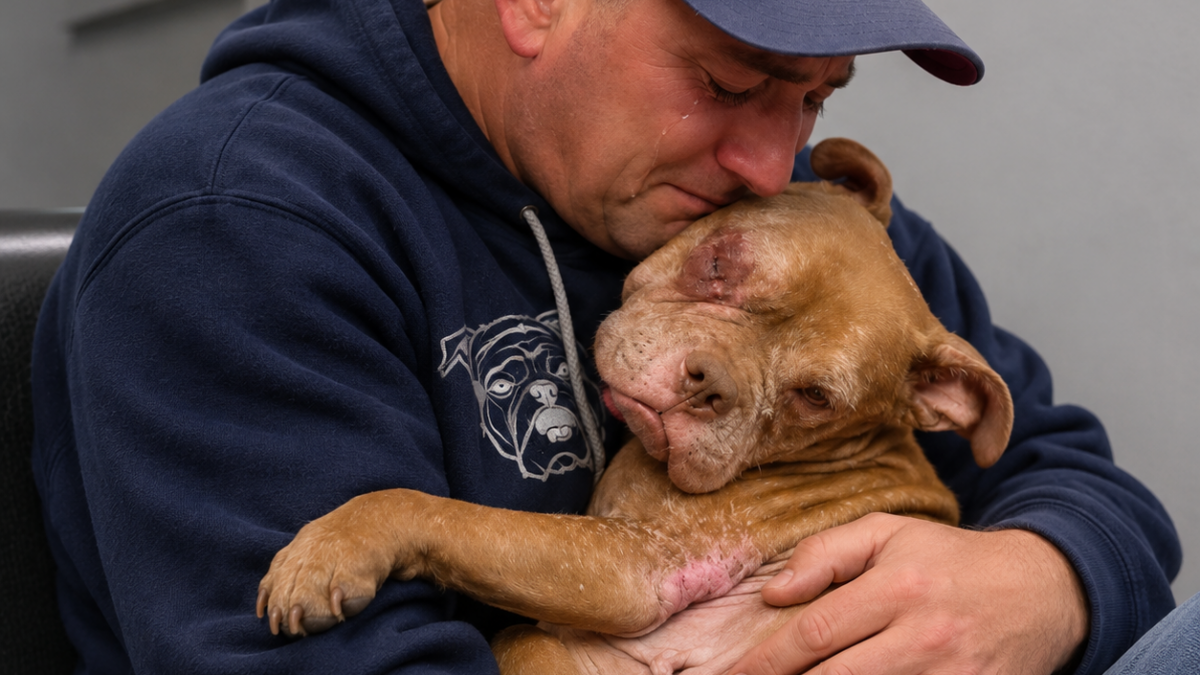
The first time I held Graça in my arms, she was completely blind, frighteningly weak, and so exhausted from years of being bred over and over that I could feel her whole body trembling against me, yet instead of fighting or trying to escape, she pressed her face into my chest as though she had decided that if this stranger was going to hurt her too, she simply didn’t have enough strength left to resist.
By the next morning, after X-rays, advanced imaging, an ECG, bloodwork, and examination after examination, the veterinary team told me her liver and spleen were dangerously enlarged, her kidneys were barely functioning, her pulse was weak, and the chance that she would survive what came next was so small that they quietly asked whether continuing treatment was truly the kindest thing.
What none of us knew was that Graça’s fight for life was about to expose the place that had spent years treating her body like a source of income—and the man who had profited from every litter was going to discover that the blind old dog he considered worthless still had enough life left to take everything he thought belonged to him.
My name is Elena, and I had worked with neglected and abandoned dogs for more than a decade by the time somebody first told me about Graça.
I thought I had learned how to control my anger.
Then I saw her.
She was lying in the back corner of a makeshift kennel behind a rural property, surrounded by rusted fencing, broken plastic bowls, old crates, and the sour smell of too many animals having been kept in too little space for too long.
At first, I thought she was sleeping.
Then I noticed her head moving.
Not toward me.
Toward sound.
Her eyes were cloudy.
Completely opaque.
She heard my shoes scrape against the concrete and turned toward them, but her gaze landed several feet to my left.
“She’s blind,” I whispered.
The volunteer beside me nodded.
“We think completely.”
I crouched.
“Hey, sweetheart.”
Graça’s ears moved.
Her body did not.
I held one hand several inches from her nose.
She smelled it.
Then lifted her head.
The movement took so much effort that her front leg began shaking.
“It’s okay.”
I moved closer.
The first thing I noticed was how thin she felt.
Not skeletal in the dramatic way starvation sometimes presents, but depleted.
Used.
Her body looked like something that had been repeatedly asked to produce more than it was ever allowed to recover.
Her mammary glands were stretched from litter after litter.
Her abdomen was weak.
Her coat had lost its shine.
Her paws were rough.
Her muscles had wasted away.
The rescue information we’d received suggested she’d been bred for years.
Not once.
Not twice.
Again and again.
Whenever one litter was sold, there was another pregnancy.
Whenever she recovered enough to carry puppies, she was used again.
At some point, her vision deteriorated.
Nobody stopped.
At some point, her organs began failing.
Nobody stopped.
At some point, simply standing became difficult.
Still nobody stopped.
I touched the side of her face.
Graça flinched.
Then, slowly, she leaned into my palm.
That small movement almost destroyed me.
“I’m taking her.”
Someone behind me said, “She’s in bad shape.”
“I know.”
“She may not make it through the night.”
“I know.”
“You need to be prepared.”
I looked at Graça.
“No.”
The volunteer frowned.
“No?”
“I’ll be prepared later.”
I slid one arm beneath Graça’s chest and another beneath her hips.
When I lifted her, she weighed almost nothing compared with what I expected.
Her head fell against my shoulder.
She didn’t struggle.
Didn’t bark.
Didn’t even whine.
She simply rested there.
On the drive out, I kept one hand against her chest.
Every few minutes, I checked whether she was breathing.
That night, I brought her home because the veterinary hospital could not take her until early morning unless she crashed completely.
I made a bed beside mine.
Graça refused it.
Instead, when I sat on the floor, she moved blindly toward my body until her head found my lap.
So I stayed there.
Hours.
Blanket around us.
My back against the wall.
Graça curled against my chest.
At some point after midnight, she finally slept.
For the first time in her life, maybe, she wasn’t being watched because somebody wanted puppies from her.
She was simply being held.
At dawn, we drove to the hospital.
By noon, Dr. Marcus Hale stood across from me holding Graça’s results.
His face told me before his mouth did.
“Elena.”
I hated the tone.
“What?”
“We need to talk about how far you want to go.”
I stared at him.
“How far?”
He looked toward the treatment room.
“As far as her body can realistically follow.”
And that was the moment I understood that rescuing Graça from the breeding yard might have been the easiest part.
PART 2
That frightened me more than anything he could have said in the hallway.
Doctors close doors when the conversation needs privacy.
Privacy rarely brings good news.
He placed Graça’s file on the table.
“Her liver is severely enlarged.”
I nodded.
“Her spleen too.”
Another nod.
“Kidney values are extremely concerning.”
“How concerning?”
“Enough that I don’t want to give you false confidence.”
I stared at him.
“What else?”
“Her pulse is weak. She’s anemic. Her blood pressure is low. She’s severely dehydrated. There are indications of chronic reproductive stress, nutritional deficiency, and likely prolonged infection or inflammatory disease.”
“Likely?”
“We still need some results.”
“You did the imaging?”
“Yes.”
“X-rays?”
“Yes.”
“ECG?”
“Yes.”
“MRI?”
“Yes.”
“And?”
He took a breath.
“She is in systemic decline.”
I looked at the wall.
Not at him.
If I looked at him, I knew I might start crying.
“So fix it.”
“Elena.”
“That’s your job.”
“That isn’t how this works.”
“Then tell me how it works.”
He remained quiet.
I hated him for being calm.
I knew that was unfair.
Still hated it.
Finally, he said:
“We stabilize what we can. Fluids. Medication. Kidney support. Liver support. Antibiotics where indicated. Pain management. Nutrition. Temperature. Monitoring.”
“And she gets better.”
“Maybe.”
I looked at him.
He didn’t look away.
“Maybe?”
“She may not survive even aggressive treatment.”
“What are you saying?”
He chose his words carefully.
“If she arrests tonight, resuscitation may be traumatic and unsuccessful.”
My throat tightened.
“Are you telling me to euthanize her?”
“No.”
“Sounds like it.”
“I’m telling you that sometimes rescue means understanding when treatment becomes something we’re doing for ourselves instead of for the animal.”
I stood.
“She spent her whole life being used by somebody else.”
“I know.”
“She gets twenty-four hours of kindness and now we decide that’s enough?”
“That isn’t what I’m saying.”
“Then what are you saying?”
He looked exhausted.
“I am asking you whether you want us to continue if her condition deteriorates despite treatment.”
“Yes.”
I answered before he finished.
“Yes.”
“Elena.”
“Yes.”
“Listen.”
“No.”
“You asked me to tell you the truth.”
“And you did.”
“Then hear all of it.”
I folded my arms.
He continued.
“There is a chance she doesn’t make it through today.”
My eyes filled.
“There is a chance she dies tonight.”
I said nothing.
“There is a chance we spend thousands trying to stabilize organs that have been deteriorating for years.”
“Okay.”
“There is a chance she survives the crisis and remains permanently medically fragile.”
“Okay.”
“You don’t have to prove you love her by demanding everything.”
That sentence struck me.
I lowered my voice.
“I’m not trying to prove anything.”
“Then tell me what you’re trying to do.”
I looked through the narrow window in the door.
Graça was on a padded treatment bed.
A technician had one hand resting gently on her shoulder.
Graça’s blind eyes were open.
Searching.
“I want her to get one real chance.”
Dr. Hale followed my gaze.
“She has one.”
“Then use it.”
The Choice
People love simple rescue stories.
Dog is suffering.
Rescuer arrives.
Dog is saved.
Dog becomes happy.
That’s the version that fits in a minute-long video.
Reality is uglier.
Sometimes rescue means spending hours asking whether love is enough reason to continue.
Sometimes every option feels cruel.
Stop treatment?
Maybe you gave up too early.
Continue?
Maybe you’re asking an exhausted body to endure pain because you can’t accept losing.
There was no heroic answer.
Only uncertainty.
I signed the treatment authorization.
Dr. Hale didn’t celebrate.
He nodded.
“We’ll do everything reasonable.”
I stared at the word.
“Reasonable.”
“Yes.”
“Not everything?”
“No good veterinarian promises everything.”
“Why?”
“Because sometimes everything becomes cruelty.”
That stayed with me.
First Night in the Hospital
Graça hated being alone.
We learned that quickly.
Whenever someone left her treatment area, she raised her head.
Her eyes couldn’t follow them.
Her ears did.
Footsteps.
Doors.
Voices.
She oriented herself toward sound.
When I entered, she recognized me by smell.
Her head lifted.
I sat beside her.
“I’m here.”
Her chin dropped onto my wrist.
One of the technicians smiled.
“She trusts you.”
I didn’t know whether that made me happy or furious.
She had known me less than twenty-four hours.
Somebody else had owned her for years.
What does that say about the kind of life she’d been given?
The Breeding Records
While Graça fought in the hospital, my rescue partner Nina returned to the property with local animal-control officers.
The man who had kept Graça was named Renato Alves.
He called himself a breeder.
The word is neutral when used correctly.
Responsible breeders exist.
People who health-test, limit litters, provide veterinary care, retire females appropriately, screen homes, and treat every animal as a living being.
Renato had used the word to cover something else.
Inventory.
That’s what his records looked like.
Names.
Dates.
Litters.
Prices.
Female dogs were marked with abbreviations.
Pregnant.
Bred.
Missed.
Delivered.
Ready.
Sell.
Graça had a line beside her name.
GRAÇA — F — BLIND — LOW OUTPUT
Low output.
Nina sent me a photograph of the ledger.
I stared at those words until they blurred.
Not sick.
Not elderly.
Not needs care.
Low output.
A life translated into profit.
Her Litters
The records were incomplete.
Some pages missing.
Others damaged.
But enough survived to show Graça had produced litter after litter over several years.
At least six were clearly documented.
Possibly more.
The first photos showed a younger dog.
Bright eyes.
Healthy body.
Standing beside puppies.
Later photographs changed.
Thinner.
Duller coat.
Cloudiness appearing in the eyes.
Still puppies.
Then more.
At one point, a handwritten note:
Vision getting worse. Still breeds fine.
I read it twice.
Then a third time because my mind rejected it.
Vision getting worse.
Still breeds fine.
That sentence became the center of my anger.
The First Investigation
Animal-control Officer Daniel Ruiz called me.
“We’re opening a formal neglect case.”
“Only neglect?”
“For now.”
“What about cruelty?”
“Evidence determines charges.”
“He knew she was blind.”
“I saw the records.”
“He knew she was sick.”
“We’re building that.”
“He used her anyway.”
“I know.”
“Do you?”
“Elena.”
I stopped.
He spoke carefully.
“I’ve worked these cases twenty years. I know exactly why you’re angry.”
“Then arrest him.”
“That’s not how strong cases are built.”
“I hate that sentence.”
“Everyone does.”
Graça’s Fever
That evening, her temperature climbed.
Dr. Hale changed antibiotics.
Adjusted fluids.
Ordered repeat bloodwork.
I sat beside her while he worked.
“Is this expected?”
“Nothing about this is predictable.”
“Good answer.”
“Accurate answer.”
Graça trembled.
I wrapped my hand around her paw.
She leaned toward the warmth.
“Stay.”
I don’t know whether I was talking to her.
Or death.
The Second Day
Her kidney values were still bad.
But not worse.
That became the first good news.
Not better.
Not worse.
I celebrated anyway.
Dr. Hale rolled his eyes.
“Stable does not mean recovered.”
“I know.”
“You’re smiling.”
“Stable is better than dying.”
He couldn’t argue.
Graça ate four bites of soft food.
Four.
I counted.
The fifth she refused.
I tried to hide disappointment.
Dr. Hale noticed.
“Four is enough.”
“Yesterday she ate none.”
“Exactly.”
I turned to Graça.
“Four bites.”
Her ear moved.
“You’re showing off.”
The First Touch She Asked For
Until then, Graça had accepted affection.
That day, she requested it.
I was sitting beside her reading messages when I felt her nose against my hand.
I moved.
She followed.
Pressed harder.
I touched her forehead.
She leaned.
Nina, standing in the doorway, whispered:
“That’s different.”
I nodded.
Graça wanted contact.
Choice.
It sounds tiny.
For an animal whose life had been built around people using her body without asking, choice was enormous.
Renato’s Story
When investigators interviewed Renato, he claimed Graça had been “retired.”
Retired.
I nearly laughed.
“Where was she retired to?”
Daniel said nothing.
“The filthy kennel?”
“Elena.”
“With no medical treatment?”
“He says he’d been arranging care.”
“Veterinary appointments?”
“None we can verify.”
“Medication?”
“Nothing current.”
“He says anything about her blindness?”
“He claims it happened suddenly.”
I stared at him.
“There’s a record from almost two years ago saying her vision was getting worse.”
“I know.”
“Then he lied.”
“Yes.”
Finally.
A word I liked.
The Third Day
Graça’s pulse was stronger.
Not normal.
Stronger.
Her kidney numbers changed slightly in the right direction.
Dr. Hale showed me.
I stared at the paper.
“Is this good?”
“It’s better.”
“That’s good.”
“It is cautiously encouraging.”
“You veterinarians ruin every happy sentence.”
“Professional skill.”
I laughed.
It was the first real laugh I’d had since finding her.
Graça lifted her head at the sound.
Then settled again.
The MRI
The imaging confirmed what we already feared.
Her blindness was permanent.
No simple surgery.
No cataract fix that would restore the world.
Damage was too advanced.
When Dr. Hale told me, I expected to feel devastated.
Instead, I looked at Graça.
She already knew how to live blind.
The world being dark wasn’t the emergency anymore.
The emergency had been that nobody cared enough to make darkness safe.
“Can she have a good life blind?”
He looked surprised by the question.
“Absolutely.”
“Then we’re done being sad about that.”
He smiled.
“Good.”
Learning Voice
I started speaking before touching her.
Always.
“It’s me.”
Then hand.
Soon Graça recognized my steps.
She also learned Nina.
Dr. Hale.
Maya, the night technician.
Different people became different sounds.
The blindness that first felt like another tragedy became simply part of her.
She navigated through scent.
Memory.
Sound.
Touch.
Dogs adapt without turning adaptation into philosophy.
Humans could learn from them.
Day Four
Graça stood.
Only for three seconds.
But she stood.
The technician supported her chest.
Her back legs shook.
She placed one paw forward.
Then collapsed gently into their arms.
Everybody cheered.
Graça looked confused.
Dr. Hale said:
“Do not turn the ICU into a stadium.”
Nina replied:
“She stood.”
“I have eyes.”
“Unlike Graça.”
Silence.
Then we all laughed because dark humor is sometimes the only way rescue workers stay functional.
The Court Order
Authorities obtained an emergency order preventing Renato from moving or selling several animals while the investigation continued.
He called the rescue furious.
I answered by mistake.
“Elena?”
His voice was sharp.
“Yes.”
“You people caused this.”
I recognized him from the property.
“Caused what?”
“The police.”
“You caused the police.”
“You had no right to take my dog.”
I went still.
“Your dog?”
“Yes.”
“Graça?”
“She belonged to me.”
I looked through the glass at her hospital bed.
“No.”
He laughed.
“What do you mean no?”
“She belonged to herself. You just had paperwork.”
“You rescue people think you’re saints.”
“No.”
“You steal dogs and beg for donations.”
“Graça was dying.”
“She was old.”
“She was forty-eight hours from organ failure.”
“You don’t know that.”
“The veterinarian does.”
Silence.
Then:
“She wasn’t worth what you’re spending.”
There it was.
Not even disguised.
I lowered my voice.
“Say that again.”
He realized too late.
“I mean, she’s old.”
“No. You said she wasn’t worth it.”
“Treatment costs thousands.”
“And?”
“She can’t see. Can’t breed. What kind of life is that?”
Something inside me became very calm.
“Thank you.”
“For what?”
“For saying exactly what I needed to hear.”
Then I hung up.
The call had been recorded through the rescue line.
Daniel loved it.
Low Output
Investigators discovered other notes.
Female dogs marked by productivity.
One bitch had:
Small litters — replace.
Another:
C-section cost too high. Sell after pups.
Another:
Temper bad. Breed once more.
The language told the whole story.
Bodies measured in return.
The more evidence emerged, the less Graça looked like one neglected animal.
She looked like a survivor of a system.
Other Dogs
Authorities removed several dogs whose conditions required intervention.
Not every animal was dying.
That mattered legally.
Abuse isn’t always visible as starvation.
Some dogs looked normal.
Good coats.
Healthy weight.
Then examinations revealed untreated infections.
Dental disease.
Old injuries.
Reproductive complications.
One female had a uterine infection.
Another was pregnant again only months after the previous litter.
One male had severe skin disease and lived permanently in a small breeding pen.
Renato kept saying:
“They’re valuable dogs.”
The phrase disgusted me.
Valuable.
Yet apparently not valuable enough to receive care that reduced profit.
Graça’s Fifth Day
She ate half a bowl.
Her blood pressure improved.
Her fever broke.
Her kidney values remained fragile but moved enough for Dr. Hale to say:
“I am officially less pessimistic.”
I stared.
“That’s your celebration?”
“Yes.”
“Can we write it down?”
“No.”
“I want documentation.”
“Elena.”
“Dr. Hale, five days ago you were discussing whether she would survive the night.”
“I remember.”
“And now?”
He looked toward Graça.
“Now I think she might surprise us.”
She already had.
The First Walk
A rehabilitation technician fitted Graça with a support harness.
We guided her into a quiet corridor.
Blind dogs need verbal consistency.
“Step.”
One paw.
“Good.”
Another.
Her back legs trembled.
She stopped.
I crouched several feet ahead.
“Graça.”
Her head turned.
“Come here.”
She walked toward my voice.
Slow.
Uncertain.
Five steps.
Then eight.
Then twelve.
When she reached me, she pressed her nose into my stomach.
I wrapped my arms around her.
“You did it.”
Her tail moved.
First time.
Small.
But real.
The Tail
That tail became our obsession.
It had been still the first days.
Then one wag.
A week later, two.
Eventually, when Nina entered, Graça’s entire back end moved.
“You’re replacing me,” I complained.
Nina fed more treats.
“Correct.”
The Night She Slept Alone
The first night at the hospital, Graça panicked when nobody touched her.
A week later, she slept on her own bed while a technician sat across the room.
That was another milestone.
Security isn’t constant contact.
Security is knowing contact will return.
Renato Comes to the Hospital
We had security by then.
Good decision.
Renato arrived one afternoon.
No appointment.
Demanded Graça.
The receptionist called me.
I stepped into the lobby.
He looked smaller than I remembered.
Anger often does from a distance.
“You recorded me.”
“You called a recorded line.”
“You set me up.”
“You spoke.”
“I want to see her.”
“No.”
“She knows me.”
“That’s exactly what I’m afraid of.”
He took a step forward.
Security moved.
“You can’t keep me from my property.”
There was that word again.
Property.
I crossed my arms.
“You’ve been ordered not to interfere with animals under investigation.”
“I fed that dog for years.”
“You bred that dog for years.”
“That’s what she was for.”
The lobby went silent.
Even he seemed to hear himself.
I said:
“Thank you again.”
He pointed at me.
“You think you’re better than me?”
“No.”
“You think spending money makes you moral?”
“No.”
“Then what?”
I looked directly at him.
“I think caring what happens after an animal stops making money is the minimum.”
Security escorted him out.
Graça Hears His Voice
She heard him.
From the treatment hallway.
Her body froze.
Her breathing changed.
She backed into the corner.
Blind.
But not unable to remember.
I went to her.
“It’s okay.”
She pressed against my legs.
Renato had claimed she knew him.
He was right.
She did.
That’s why she hid.
Evidence
The legal case strengthened.
Records.
Veterinary findings.
Witness statements.
The recorded call.
Photos.
Breeding logs.
Unlicensed sales.
Neglect allegations.
Possible regulatory violations.
The case became larger than Graça.
That mattered.
Because punishment aimed at one act might end.
Changing whether Renato could keep doing the same thing to new dogs mattered more.
Two Weeks
At two weeks, Graça left intensive care.
Not the hospital yet.
But ICU.
Dr. Hale called it “a major step.”
I called it a miracle.
He said:
“Don’t.”
I said:
“Too late.”
Graça wore a soft padded harness.
Not because she needed restraint.
Because guiding a blind dog safely works better with predictable contact.
She learned hallways.
Left.
Right.
Step.
Stop.
Her confidence grew.
Food
At first, Graça ate because her body needed survival.
Later she developed preferences.
Chicken.
Excellent.
Turkey.
Acceptable.
Prescription kidney food.
Suspicious.
Carrots.
Insulting.
Peanut butter.
Religious experience.
Seeing personality emerge from illness is one of rescue’s greatest gifts.
A dying dog has no bandwidth for preferences.
A recovering dog complains.
Complaint is life.
The Bed
We gave her a soft orthopedic bed.
Graça ignored it.
Preferred the blanket from my house.
I placed the blanket on the bed.
Problem solved.
Blindness doesn’t make a dog less stubborn.
Going Home
Three weeks after rescue, Dr. Hale called me into the office again.
This time, the door closing didn’t terrify me.
“What?”
“She can leave.”
I stared.
“The hospital?”
“Yes.”
“Today?”
“Yes.”
“She isn’t cured.”
“No.”
“Kidneys?”
“Still compromised.”
“Liver?”
“Needs monitoring.”
“Spleen?”
“Still enlarged but stable.”
“Medication?”
He handed me a list.
It was long.
“Follow-ups?”
“Many.”
“Can she die suddenly?”
“Elena.”
“I need the truth.”
“She remains medically fragile.”
I swallowed.
“But?”
“But she doesn’t need a hospital bed to continue living.”
That sentence changed everything.
Home
I took Graça home.
Not back to the property.
Never.
My home.
Temporary foster, I told myself.
Rescuers lie to themselves constantly.
I arranged rugs as texture markers.
One rug near water.
Another near the back door.
A soft runner through the hallway.
Baby gates near stairs.
Scent cues near key locations.
Blind dogs learn maps.
Graça was excellent.
The first night, she walked into a chair.
Stopped.
Backed up.
Learned.
Never hit it again.
The Yard
She approached the back door carefully.
I guided her onto grass.
Graça froze.
Wind moved across her face.
Birds.
Leaves.
Distant traffic.
She lifted her nose.
For several minutes, she simply stood.
Then took three steps.
Smelled soil.
Another step.
Tail wag.
I sat on the grass and cried.
Not because anything dramatic happened.
Because nothing did.
No kennel.
No male dog brought for breeding.
No puppies.
No shouting.
Just grass.
That was enough.
The Investigation Becomes Public
Local media learned about the case.
I hated that initially.
Graça became a symbol.
Photographs spread.
People were angry.
Calls came.
Donations.
Offers.
Threats toward Renato too.
I asked supporters not to harass him.
Some thought I was protecting him.
I wasn’t.
I was protecting the case.
Justice built on evidence is stronger than internet rage.
Renato’s Defense
His attorney said Graça had been “well cared for considering her age.”
Dr. Hale almost laughed when I told him.
“Considering her age?”
“Yes.”
“She wasn’t dying of age.”
I nodded.
“She was dying of neglect layered onto chronic disease.”
“Can you say that in court?”
“I intend to.”
The Hearing
Graça did not attend.
Good.
She had nothing to prove.
I sat behind the prosecutor.
Renato sat with his attorney.
The breeding ledger became evidence.
Photographs.
Medical results.
The recorded phone call.
Then Dr. Hale testified.
The defense asked:
“Doctor, isn’t it true older dogs commonly develop liver and kidney disease?”
“Yes.”
“So these conditions could have occurred naturally?”
“Yes.”
The attorney looked pleased.
Dr. Hale continued before he could celebrate.
“Natural disease does not eliminate the duty to provide treatment.”
The attorney paused.
“And can you say with certainty that treatment would have prevented her decline?”
“No.”
“Then the owner cannot be blamed for her illness.”
Dr. Hale remained calm.
“The issue is not whether he caused every organ change.”
Silence.
“The issue is whether obvious deterioration, blindness, weakness, reproductive exhaustion, and chronic medical needs were appropriately addressed.”
“And were they?”
“No.”
The answer landed hard.
The Breeding Question
The prosecutor showed the line:
Vision getting worse. Still breeds fine.
Then asked Renato:
“Did you write this?”
His attorney objected.
The judge overruled.
Renato looked at the paper.
“I don’t remember.”
“Is that your handwriting?”
“Looks like it.”
“You knew her vision was worsening?”
“I knew she had cloudy eyes.”
“And you bred her afterward?”
“She was healthy enough.”
“According to which veterinarian?”
Silence.
“Which veterinarian cleared her?”
None.
There was no answer.
The Recorded Call
Then came the line that destroyed whatever sympathy remained.
She can’t see. Can’t breed. What kind of life is that?
The room went still.
The prosecutor replayed it.
Renato’s own voice.
His attorney closed his eyes.
I looked down at my hands.
I didn’t feel victorious.
I felt sick.
Graça’s value had been measured so openly.
Blind.
Can’t breed.
Therefore what?
Disposable?
The Decision
The court imposed consequences under the charges and regulations authorities could prove.
Fines.
Animal ownership restrictions.
Breeding restrictions.
Surrender of certain animals.
Financial responsibility related to seized-animal care where legally available.
Some counts continued through additional proceedings.
The operation effectively ended in the form we had found it.
People wanted a more cinematic punishment.
Prison forever.
Business destroyed overnight.
Public humiliation.
Real legal systems are slower and less satisfying than revenge stories.
But Renato lost the thing he had valued most.
Control.
He could no longer decide what happened to Graça.
He could no longer breed her.
He could no longer use the other seized females as though their bodies belonged to his profit margin.
That mattered.
Graça Learns Play
One afternoon, I heard something strange in the living room.
A squeak.
Then silence.
Squeak.
I looked around the corner.
Graça had found a rubber toy.
She smelled it.
Bit.
Squeak.
Jumped backward.
I laughed.
She froze.
Then bit it again.
Squeak.
Tail wag.
Within ten minutes, she had discovered a new purpose in life.
Destroying squeaky toys.
After years of producing puppies for somebody else, Graça finally got to create one thing for herself.
Chaos.
Her First Zoomies
Blind.
Older.
Medically fragile.
Apparently still capable of zoomies.
Not fast.
Not graceful.
One evening after dinner, Graça suddenly ran in a small circle around the rug.
Stopped.
Turned.
Ran back.
I shouted:
“Careful!”
She ignored me.
Nina was visiting.
We both laughed.
Graça bumped gently into the couch.
Backed up.
Continued.
There are moments when joy looks ridiculous.
Those are often the best ones.
Her Eyes
People frequently asked:
“Will she ever see?”
No.
That answer disappointed them.
It stopped disappointing me.
Graça didn’t need sight to know where I was.
She found me by scent.
Footsteps.
Voice.
She knew sunlight by warmth.
Rain by sound.
Grass by smell.
She learned furniture.
Doors.
People.
Blindness wasn’t the saddest thing that happened to her.
Being unloved while sighted had been worse.
The Adoption Problem
Once Graça became medically stable, technically we should have listed her for adoption.
I delayed.
Everyone noticed.
Susan from the rescue called.
“Elena.”
“No.”
“I haven’t asked anything.”
“Still no.”
“You cannot foster her forever.”
“I can.”
“You said that about three dogs.”
“Different.”
“You live alone with five permanent rescues because everything is different.”
“Correct.”
She laughed.
“List her.”
I didn’t.
Applications Arrive Anyway
Graça’s story had spread.
People applied.
Some wanted her because she was famous.
Rejected.
Some wanted a “special-needs dog” because they liked the identity of being rescuers.
Rejected.
One person asked whether Graça could still have puppies if her health improved.
I closed the laptop.
Walked outside.
Came back an hour later.
Rejected.
Then a woman named Clara wrote.
Fifty-eight.
Widowed.
Worked from home.
Had previously cared for a blind senior dog.
No stairs.
Quiet house.
Fenced garden.
Her application contained one sentence I reread several times:
I don’t need Graça to overcome blindness or become inspirational. I just want to give her a predictable life.
Predictable.
That word mattered.
Animals who survive chaos often need boring more than inspiration.
Meeting Clara
Clara entered quietly.
Didn’t call Graça.
Didn’t reach.
Sat on the floor.
Graça heard her.
Approached slowly.
Smelled.
Clara held one hand near her nose.
No sudden touch.
Graça moved closer.
Then leaned.
I hated Clara immediately.
Good adopters are terrible because they make leaving possible.
Clara stroked Graça’s neck.
“Hi.”
Graça rested her chin on Clara’s knee.
Susan looked at me.
I whispered:
“Don’t.”
She smiled.
The Home Visit
Clara’s house was almost offensively perfect.
One story.
Wide rooms.
Rugs.
No clutter.
Garden.
She had scent markers for doorways because she’d used them with her previous blind dog.
Textured mats near food and water.
She had researched Graça’s medications.
Asked intelligent questions.
“Kidney diet?”
“Yes.”
“Bloodwork frequency?”
“Currently every six weeks.”
“Emergency symptoms?”
I listed them.
She took notes.
“How much is her treatment likely to cost annually?”
I gave a range.
She nodded.
No flinch.
“Okay.”
That scared me.
People who mean it don’t make dramatic promises.
They just prepare.
I Almost Keep Her
The night before adoption, I sat on the floor with Graça.
“You can stay.”
Tail wag.
“No one’s making you go.”
She leaned against me.
“I could cancel.”
More wagging.
Maybe she thought I had food.
I cried anyway.
Then I remembered what I’d said to Dr. Hale.
One real chance.
A real chance includes letting the dog have a future bigger than the rescuer’s need to keep her close.
Adoption Day
Clara arrived with a soft harness.
No fancy ceremony.
Good.
Graça recognized her voice.
Tail wagged.
Traitor.
I knelt.
“You know where you’re going?”
She licked my chin.
“Excellent answer.”
I gave Clara the medication bag.
Records.
Blanket.
Favorite squeaky toy.
Feeding schedule.
Emergency contacts.
Then the leash.
That part hurt.
Clara waited.
I whispered into Graça’s ear:
“Nobody is going to make you have puppies again.”
My voice broke.
“You’re done.”
Graça pressed into me.
“You’re allowed to just be a dog.”
Then she walked toward Clara.
The Car
Blind dogs can find cars frightening.
Graça approached slowly.
Clara opened the rear door.
Placed a ramp.
No pulling.
No lifting until necessary.
Graça smelled the ramp.
One paw.
Then another.
Climbed.
I watched her leave.
The first time she’d been transported after years of exploitation, she had been carried because she couldn’t stand.
Now she entered a car by choice.
Small difference.
Enormous meaning.
First Night With Clara
Photo at 9:12 p.m.
Graça asleep on a giant orthopedic bed.
Caption:
Dinner finished. Medication taken. She has already found the kitchen.
Second photo at 11:03.
Graça on Clara’s couch.
Caption:
Apparently the bed was temporary.
I laughed.
Then cried.
Then laughed again.
Routine
Graça loved routine.
Breakfast.
Garden.
Nap.
Medication.
Short walk.
Dinner.
Couch.
She learned Clara’s home faster than expected.
Within weeks, she moved room to room without hesitation.
Blindness no longer looked like vulnerability.
It looked like navigation.
The Garden
Clara grew lavender.
Graça loved lying beside it.
Maybe scent.
Maybe warmth.
Maybe coincidence.
One afternoon, Clara sent a video.
Graça walked through the garden.
Stopped.
Lifted her face toward sunlight.
Tail moving slowly.
Nothing happened.
That was why it was beautiful.
Nothing needed to happen.
The Other Seized Dogs
Several dogs from Renato’s property eventually entered rescue placements.
One pregnant female delivered safely under veterinary supervision.
Another needed surgery.
A male with skin disease recovered.
Not every story became public.
Good.
Animals don’t need fame to deserve rescue.
Some were adopted quietly.
That felt like the best ending.
The Woman Who Bought One of Graça’s Puppies
A woman contacted us after seeing the case.
She believed her dog, Luna, was one of Graça’s daughters.
Records matched.
She sent photographs.
Healthy adult dog.
Loved.
Sleeping on a child’s bed.
Running at the beach.
Birthday hat.
I showed Clara.
Then sat beside Graça.
“Your daughter has a good life.”
Graça slept.
I don’t know whether that information would have meant anything to her.
It meant something to me.
Graça’s puppies had been sold for profit.
At least some had landed in homes where they became family.
That mattered.
Not All Puppies
Others could not be traced.
Some records had only numbers.
Some buyers unknown.
I learned to accept the gap.
Rescue rarely gives complete history.
You save what stands in front of you.
You mourn what you cannot recover.
Renato Appeals
Months later, Renato challenged parts of the ownership restrictions.
His attorney argued he had corrected conditions.
That seizure had financially ruined him.
That he understood mistakes.
I wanted to attend.
Daniel advised me not to obsess.
“You already got Graça out.”
“That’s not enough.”
“What would be enough?”
I had no answer.
Nine years of exploitation?
Six or more litters?
Blindness ignored?
Organ failure?
What sentence equals that?
None.
The Best Revenge Begins
Clara called one afternoon.
“Graça gained three pounds.”
I smiled.
“Good?”
“Dr. Hale says perfect.”
“Excellent.”
“She also stole half a sandwich.”
“Better.”
“She has become morally corrupt.”
“Recovery confirmed.”
That was when I began understanding Daniel’s point.
Renato’s punishment mattered.
But Graça’s life mattered more.
Her First Birthday
We didn’t know Graça’s exact birthday.
So Clara chose rescue day.
One year.
We gathered quietly.
Dr. Hale.
Nina.
Susan.
Daniel.
Clara.
Me.
Graça wore a soft bandana.
Hated it.
Received chicken.
Approved.
Someone brought a sign:
ONE YEAR FREE.
That made me cry.
Free.
Not rescued.
Not saved.
Free.
The Court’s Final Decision
Renato’s appeal failed in the parts most important to animal welfare.
Restrictions remained.
The breeding operation did not reopen in the same form.
Some property was sold.
Remaining animals were legally rehomed or transferred where appropriate.
His name became associated with the case.
People called that revenge.
I didn’t.
Revenge was happening elsewhere.
In Clara’s living room.
The Couch
Graça became possessive about one corner.
Clara bought a second couch cushion because Graça flattened the first.
Eventually, guests learned not to sit there.
The blind former breeding dog had assigned seating.
I adored it.
Kidney Disease
Her kidneys never became normal.
We knew that.
Medication.
Special diet.
Bloodwork.
Hydration.
Clara handled everything.
No complaint.
One day I said:
“It’s a lot.”
She shrugged.
“So?”
That one word made my throat tighten.
Renato had said treatment wasn’t worth it.
Clara said:
So?
Same expenses.
Different values.
Blindness and Confidence
Graça learned verbal cues.
Step.
Left.
Right.
Stop.
Careful.
Door.
She trusted Clara enough to explore new places.
Short park walks.
Quiet sidewalks.
One familiar cafe patio.
People saw her cloudy eyes and became sad.
Clara would say:
“She’s fine. Tell her where your hand is.”
They did.
Graça loved strangers who respected instructions.
Thunderstorm
One storm frightened her.
Not because of blindness.
Because loud sound overwhelms when sound is how you map the world.
Clara sat on the floor.
Graça climbed halfway into her lap.
Too big.
Didn’t care.
Clara wrapped a blanket around both of them.
Sent me a photo.
I stared.
That first rescue night came back.
Graça in my arms.
Terrified.
Now in another woman’s arms.
Not because she had nowhere else.
Because she chose comfort.
Two Years
Graça reached two years post-rescue.
Dr. Hale shook his head during exam.
“What?”
“I didn’t think she’d get here.”
“Say that louder.”
“No.”
“I want witnesses.”
He listened to her heart.
Kidneys stable enough.
Liver better than initial crisis.
Spleen monitored.
Weight good.
“She is still medically complicated.”
“Boring?”
“Not boring.”
“Alive?”
“Very.”
Good enough.
The Breeding Scar
Graça had a scar from an old C-section.
We learned from records she’d been bred again afterward.
That detail hurt.
Her body had required surgery to deliver puppies.
Then somebody decided recovery meant ready to reproduce again.
Clara touched the scar gently during grooming.
“I hate him.”
She rarely said that.
I didn’t correct her.
Some anger is earned.
Forgiveness
People asked whether I forgave Renato.
No.
I also stopped needing to hate him actively.
There’s a difference.
Forgiveness isn’t required for healing.
Graça never asked for it.
She simply stopped being affected by whether he existed.
That seemed healthier.
Three Years
Graça grew older.
Silver around the face.
Slower.
Still blind.
Still loved squeaky toys.
Still hated carrots.
Still owned the couch.
Clara had begun calling her “the queen.”
Accurate.
A New Foster Dog
Clara fostered a terrified young female from another breeding case.
The dog hid.
Wouldn’t approach people.
Graça handled it in the simplest possible way.
She slept nearby.
No pressure.
The young dog eventually approached.
Smelled Graça.
Lay beside her.
Something about that image moved all of us.
Graça had once needed another dog to show her nothing.
Now simply existing safely helped another animal.
The Newspaper Anniversary
A local paper revisited the case.
They wanted dramatic before-and-after photos.
Clara refused to let Graça be paraded around.
Good.
We provided one old rescue image and one current photograph.
Current Graça asleep in sunlight.
Headline focused on survival.
I preferred the photo.
Renato’s Interview
Years later, someone told me Renato had given an interview claiming the case had been exaggerated.
I didn’t watch.
Nina did.
“He says he loved the dogs.”
I shrugged.
Maybe he believed that.
Love is an easy word.
Responsibility is measurable.
The Real Measure
How many veterinary appointments did you make when her vision failed?
How many litters did you allow before retirement?
Did you treat the kidney disease?
Did you notice weakness?
Did you stop when her body said enough?
Words are cheap.
Care leaves records.
Four Years
Graça began sleeping more.
Normal senior life.
Clara bought ramps.
Rugs.
Another orthopedic bed.
Graça still chose the couch.
Of course.
The Day She Bumped Into Nothing
One afternoon, Graça stopped abruptly in the hallway even though nothing was there.
Clara panicked.
Neurological issue?
Vision?
Cognitive decline?
Veterinarian checked.
Nothing alarming.
Maybe scent.
Maybe sound.
Maybe old dogs do strange things.
We laughed afterward.
Not every odd moment has to become tragedy.
That’s another gift stability gives.
The Vet Bills
Clara kept a folder.
Invoices.
Medication.
Tests.
It became thick.
One day I joked:
“Renato was right about one thing.”
She looked up.
“What?”
“She’s expensive.”
Clara smiled.
“So am I.”
Exactly.
Worth is not profit after expenses.
Five Years Free
We celebrated again.
Not a party.
Dinner.
Chicken.
Graça asleep by the table.
Nina brought the old photo from rescue day.
We compared.
Same dog.
Different posture.
In the old photo, every muscle braced.
In the new one, body loose.
Relaxed.
Trust changes posture before it changes anything else.
Her Former Daughter Visits
Luna, the dog believed to be Graça’s daughter, came for a carefully managed meeting.
No expectation of maternal recognition.
Dogs don’t reenact human family dramas for us.
They smelled.
Walked.
Ignored each other.
Then Luna lay near Graça in the sun.
That was enough.
No miracle required.
Two dogs.
Both safe.
Renato’s Business Is Gone
By then, whatever remained of his former breeding operation was effectively over.
No rows of litters.
No females cycling through pregnancies.
No Graça.
Some people called that justice.
Maybe.
I thought of the ledger.
LOW OUTPUT.
Graça had outlived the business that reduced her to those words.
That felt satisfying.
Six Years
Graça’s kidney disease progressed.
Slowly.
Medication increased.
Subcutaneous fluids later.
Clara learned to administer them.
The first time, she was terrified of the needle.
Graça stood patiently.
Clara cried.
“I’m sorry.”
Graça accepted a treat.
Problem solved.
The Difference
Renato saw medical expense and asked:
What is she worth?
Clara saw medical expense and asked:
What does she need?
That became the entire moral of Graça’s life.
Arthritis
Age reached her joints.
We added pain management.
Shorter walks.
More rest.
Still garden.
Still couch.
Still squeaky toys, though less enthusiastic destruction.
Her Hearing
Then hearing weakened.
Blind and partially deaf.
People became sad again.
Graça adapted again.
Touch cues.
Floor vibrations.
Scent.
Routine.
She knew Clara’s hand.
That was enough.
The Night Light
Blind dogs don’t need lights.
Humans do.
Clara kept one on anyway because she liked seeing Graça breathe.
I understood.
Rescuers and adopters become strange.
We watch chests rise.
Count breaths.
Touch sleeping animals just to confirm life.
Trauma trains vigilance.
Love eventually softens it.
Seven Years
No one had predicted seven.
Dr. Hale definitely hadn’t.
I reminded him.
Frequently.
“You said almost zero.”
“I said very poor prognosis.”
“Same thing.”
“No.”
“She has survived seven years out of spite.”
“Possibly.”
Graça wagged.
The Final Investigation File
Daniel retired.
Before leaving, he gave the rescue a copy of the closed case documentation allowed for our records.
I looked through it once.
Photos.
Ledgers.
Court orders.
Medical reports.
Then closed it.
I didn’t need to revisit the worst part of Graça’s life.
The proof had done its job.
The Ledger Page
We kept a copy of the page with Graça’s name for educational purposes.
Not publicly displayed with sensationalism.
Used in training about commercial neglect.
BLIND — LOW OUTPUT.
I hated it.
But it taught something.
Dehumanizing—or de-animalizing—language makes cruelty easier.
When a living being becomes output, everything that doesn’t produce becomes waste.
Eight Years
Graça was ancient.
We still didn’t know exact age.
Maybe fourteen.
Fifteen.
More.
Old enough.
Her world had narrowed.
Garden.
Couch.
Kitchen.
Clara.
Occasional visits.
She didn’t need adventure.
She had already survived too much.
The Squeaky Toy
One day she stopped playing with squeaky toys.
That hurt more than expected.
Clara saved her favorite.
Blue rubber pig.
Ridiculous.
Placed near her bed.
Graça occasionally smelled it.
That was enough.
Appetite
Food became the main metric.
Good day?
She ate.
Bad day?
Picked.
Kidney disease complicates appetite.
Clara became a chef.
Chicken.
Prescription foods.
Warm water.
Tiny adjustments.
Whatever the vet approved.
Graça had spent years eating whatever kept her productive.
Now every meal was designed around comfort.
The Call
One morning, Clara called.
Voice wrong.
“She didn’t eat.”
I sat up.
“Anything?”
“Nothing.”
“Water?”
“A little.”
“Vet?”
“Appointment at ten.”
I drove there.
Dr. Hale Again
Older.
Grayer.
Same calm voice I once hated.
He examined Graça.
Bloodwork.
Kidney values worse.
Anemia.
Weakness.
Age.
Clara asked:
“Can we fix it?”
Dr. Hale did not answer immediately.
I knew the pause.
Years earlier, same pause.
Different dog.
Not dying from neglect now.
Dying from having lived long enough to become old.
That’s an important difference.
More Time
We adjusted treatment.
Fluids.
Medication.
Appetite support.
Graça rallied.
A week.
Then two.
A month.
Good days returned.
Garden.
Chicken.
Sun.
We accepted them without pretending they’d last forever.
The Final Spring
Lavender bloomed.
Graça lay beside it.
Clara sat on the grass.
I visited.
We talked quietly.
Graça slept.
Sunlight warmed her blind eyes.
She had no idea flowers were purple.
Didn’t need to.
She knew their smell.
Clara’s Question
“Do you think she remembers the breeding place?”
I thought.
“Probably some things.”
“Do you think she remembers him?”
“Maybe.”
“Does that matter?”
I looked at Graça.
“No.”
That answer surprised me.
The past matters because it shaped her.
It doesn’t have to remain active to stay true.
The Final Week
Graça stopped wanting the garden.
Then stopped wanting the couch.
Preferred her bed.
Breathing comfortable.
Pain controlled.
But tired.
Deeply tired.
Clara called me.
“I think we’re close.”
I drove over.
The Choice Again
Years earlier, Dr. Hale had asked whether continuing treatment was kindness.
Now we faced the same question with a different answer.
Not because we loved Graça less.
Because we knew what love had already given her.
Years.
Safety.
Home.
No more pregnancies.
No more kennel.
No more using her body.
She had nothing left to prove.
One Last Meal
Chicken.
Small pieces.
She ate three.
Refused the fourth.
Clara laughed through tears.
“Still picky.”
Graça’s nose moved.
No more.
We accepted it.
The Final Night
I stayed.
Clara and I sat near Graça’s bed.
Like that first night.
Full circle.
Years earlier, Graça had slept against my chest because she had no idea what safety was.
Now she slept without needing to be held.
Because safety had become ordinary.
That was bigger.
Morning
Dr. Hale came to the house.
He had treated her from almost-zero odds to old age.
He knelt.
Touched her head.
“Still proving me wrong.”
Graça’s tail moved.
Barely.
He looked at me.
“That counts.”
I smiled.
“Yes.”
Goodbye
Clara held Graça’s face.
I rested one hand on her shoulder.
Dr. Hale administered medication.
No panic.
No hospital machines.
No rushed emergency.
Graça relaxed.
Her breathing slowed.
Clara whispered:
“You were never a machine.”
My throat closed.
“You were my girl.”
Graça breathed once.
Again.
Then rested.
Dr. Hale listened.
Waited.
Lowered the stethoscope.
“She’s gone.”
Silence
For several minutes, nobody moved.
Then Clara cried.
Not gently.
Years of love leaving the room.
I held her.
Graça lay peacefully on the bed.
Blind eyes closed.
Blue toy nearby.
No chains.
No cages.
No puppies demanding milk.
No man counting profit.
Just an old dog.
Done.
The Body That Had Been Used
I looked at her and thought about everything that body had survived.
Pregnancies.
Births.
Blindness.
Kidney failure.
Liver enlargement.
Spleen enlargement.
Weak pulse.
Hospitalization.
Medication.
Years.
Walks.
Couch naps.
Chicken.
Lavender.
Hands.
Her body had been treated as production equipment.
Then became simply hers.
That’s what rescue ultimately returned.
Not youth.
Not eyesight.
Ownership of her own life.
Cremation
Clara chose private cremation.
Ashes returned in a simple wooden box.
No dramatic inscription.
Just:
Graça
Enough.
The Blue Pig
Clara kept the squeaky toy.
She called me weeks later.
“I squeezed it by accident.”
“What happened?”
“It squeaked.”
Silence.
“I cried for an hour.”
I understood.
Grief turns ridiculous objects into weapons.
Renato
He heard Graça had died.
I don’t know how.
A message came through a mutual legal contact.
He said:
“I didn’t know she was still alive.”
That sentence made me stare at the screen.
Still alive.
Yes.
For years.
Years after he considered her worthless.
I didn’t answer.
What could I say?
She outlived your use for her?
True.
Too small.
The Revenge Everyone Wanted
People love the word revenge.
They wanted Graça’s story to end with Renato ruined.
Maybe some part did.
The operation ended.
Restrictions followed.
His control disappeared.
His reputation changed.
But none of that was the best part.
The Real Revenge
The real revenge was Graça living long enough to become expensive for no reason other than love.
She produced no puppies.
Earned no money.
Could not see.
Eventually could barely hear.
Needed medication.
Special food.
Bloodwork.
Fluids.
Ramps.
Time.
Patience.
She was economically useless.
And deeply valuable.
That contradiction destroyed everything Renato’s worldview had been built on.
Profit
He had asked:
What can she produce?
Clara asked:
Is she comfortable?
That’s the whole story.
Nine Years After Rescue
The rescue placed a small plaque in the medical recovery room.
Not outside.
Not dramatic.
It read:
Graça — Worth Saving Before She Ever Got Better.
That mattered.
Because transformation stories can accidentally teach the wrong lesson.
That an animal becomes worthy when healthy.
No.
Graça was worth saving when blind.
Weak.
Expensive.
Dying.
Before the tail wag.
Before the weight gain.
Before the adoption.
Worth is not a reward for recovery.
New Volunteers
We told Graça’s story during training.
Not all fifteen thousand emotional words.
Just the key points.
Breeding exploitation.
Blindness.
Organ failure.
Poor prognosis.
Choice.
Recovery.
Legal case.
Home.
Years.
Then I’d say:
“Never confuse poor prognosis with no value.”
That’s what she taught me.
The Other Dogs
Some of the other dogs from Renato’s property lived long lives too.
One female became a therapy dog.
Another lived with a retired couple.
The male with skin disease turned into a couch potato.
Quiet victories.
No headlines.
Good.
A Daughter’s Photo
Luna’s family sent one final photograph years later.
Luna old too.
Gray muzzle.
Sleeping beside a child who had grown into a teenager.
I wondered how many generations of love had come out of a system built on exploitation.
Complex.
Pain doesn’t erase good outcomes.
Good outcomes don’t excuse pain.
Both can exist.
The Lavender
After Graça died, Clara planted more lavender.
Not as a memorial garden exactly.
She simply liked it.
But one section became known as Graça’s corner.
A blind dog who never saw purple flowers had still chosen them by scent.
There is poetry in that whether we want it or not.
Clara Adopts Again
Two years later, she adopted another blind senior dog.
Of course.
I asked:
“Are you insane?”
“Yes.”
“Good.”
The new dog walked into the house.
Smelled the rugs.
Found the garden.
Life continued.
Dr. Hale Retires
At his retirement gathering, he mentioned Graça.
I was shocked.
He hated sentimental speeches.
He said:
“One of the dogs I was most certain I would lose taught me to be careful with certainty.”
Then looked at me.
I cried.
He pretended not to notice.
The First Night
I still remember it.
Graça in my arms.
Body trembling.
Blind face against my chest.
No idea whether she’d survive until morning.
If I could go back, I would tell her:
“You’re going to scare us.”
“You’re going to make a veterinarian say almost zero.”
“You’re going to eat four bites and make adults celebrate.”
“You’ll stand.”
“You’ll walk.”
“You’ll learn a house.”
“You’ll destroy squeaky toys.”
“You’ll own a couch.”
“You’ll refuse carrots.”
“You’ll lie beside lavender.”
“You’ll grow old.”
That last one would be hardest to believe.
Growing Old
People often think rescue means preventing death.
Sometimes the greatest rescue is allowing age to arrive naturally.
Graça had been dying young from exploitation.
We didn’t make her immortal.
We gave her enough safety to die old.
That is not a small difference.
The Ledger
The line still exists in the case file.
BLIND — LOW OUTPUT
Every time I remember it, I replace it in my head.
BLIND — LOVED
OLD — SAFE
EXPENSIVE — WORTH IT
NO OUTPUT REQUIRED
That’s the correction.
THE END
When Graça was first rescued, almost everyone who examined her prepared for the same ending.
Her organs were failing.
Her pulse was weak.
Her kidneys were barely functioning.
Her liver and spleen were enlarged.
Her body had been pushed through pregnancy after pregnancy until there was almost nothing left to give.
She was blind.
Fragile.
Exhausted.
The veterinarian offered us the choice every rescuer fears.
Continue.
Or let go.
There was no guarantee.
No promise.
No inspirational music playing in the treatment room.
Just a blind dog lying on a blanket and a decision.
We chose to try.
Not because every dog must be forced through endless treatment.
Not because letting go is failure.
And not because hope is always the correct answer.
We chose to try because Graça was still responding.
Still leaning toward hands.
Still eating a few bites.
Still asking, in the only way she could, for another day.
One day became three.
Three became a week.
A week became discharge.
Discharge became a foster home.
Then a real home.
Then years.
That is what nearly zero looked like.
Years.
Renato had spent Graça’s life calculating what her body could produce.
Litters.
Puppies.
Money.
When her eyes failed, he kept breeding her.
When her body weakened, he kept using her.
When she could no longer produce enough, she became “low output.”
Then rescue changed the question.
Not:
What can Graça give us?
But:
What can we give Graça?
Food.
Medicine.
Time.
Choice.
Soft bedding.
A garden.
A couch.
A woman named Clara who learned every pill and every bloodwork schedule without ever asking whether the return on investment made sense.
Graça never produced another litter.
Never made another dollar.
Never regained her sight.
Never became physically perfect.
And for the first time in her life, none of those things reduced her value.
That was the revenge.
Not a courtroom.
Not a fine.
Not Renato losing the breeding operation he had built around exhausted female bodies.
Those things mattered.
But the deeper revenge was that the dog he considered useless lived for years while being loved for absolutely no useful reason.
She became expensive.
Slow.
Old.
Medically complicated.
Sometimes stubborn.
Sometimes inconvenient.
And every inconvenience was accepted.
Because love that disappears when it becomes inconvenient was never the kind Graça needed.
On her final morning, there were no puppies beside her.
No kennel door.
No ledger.
No calculations.
No man deciding whether her body was productive enough to justify food.
There was Clara.
There was me.
There was Dr. Hale, the veterinarian who once warned that survival was almost impossible.
There was a blanket.
A ridiculous blue squeaky pig.
The smell of lavender drifting through an open window.
And an old blind dog who had lived long enough to become tired for the right reason.
Age.
Not exploitation.
Graça died without seeing the faces around her.
She didn’t need to.
She knew us by scent.
Voice.
Touch.
Presence.
She knew Clara’s hands.
Knew my footsteps.
Knew Dr. Hale’s voice.
Knew the house.
Knew the garden.
Knew where her food bowl belonged.
Knew exactly which couch cushion was hers.
The world had gone dark around Graça years before rescue.
For a long time, I thought that was the saddest part of her story.
I was wrong.
Darkness wasn’t what hurt her most.
Being treated as something rather than someone had been worse.
Once she was loved, blindness became only one fact among many.
Graça was blind.
Graça loved chicken.
Graça hated carrots.
Graça destroyed squeaky toys.
Graça liked lavender.
Graça owned the couch.
Graça survived.
Graça grew old.
That is how I remember her.
Not as a breeding machine.
Not as a medical miracle.
Not even as the dog with almost no chance.
Just Graça.
A dog who deserved love before anybody knew whether she would recover.
A dog who deserved treatment before anybody knew whether the money would “pay off.”
A dog who deserved a home even though she would never earn one cent for the people caring for her.
Years earlier, someone had written two cruel words beside her name:
Low output.
They thought that described her value.
They were wrong.
Graça never needed to produce anything again.
She only needed to live.
And finally, for the rest of her life, that was enough.
THE END








