PART 2: They Tied Their Dog to a Fence and Drove Away—Four Days Later, I Carried Him Home and Everything Changed
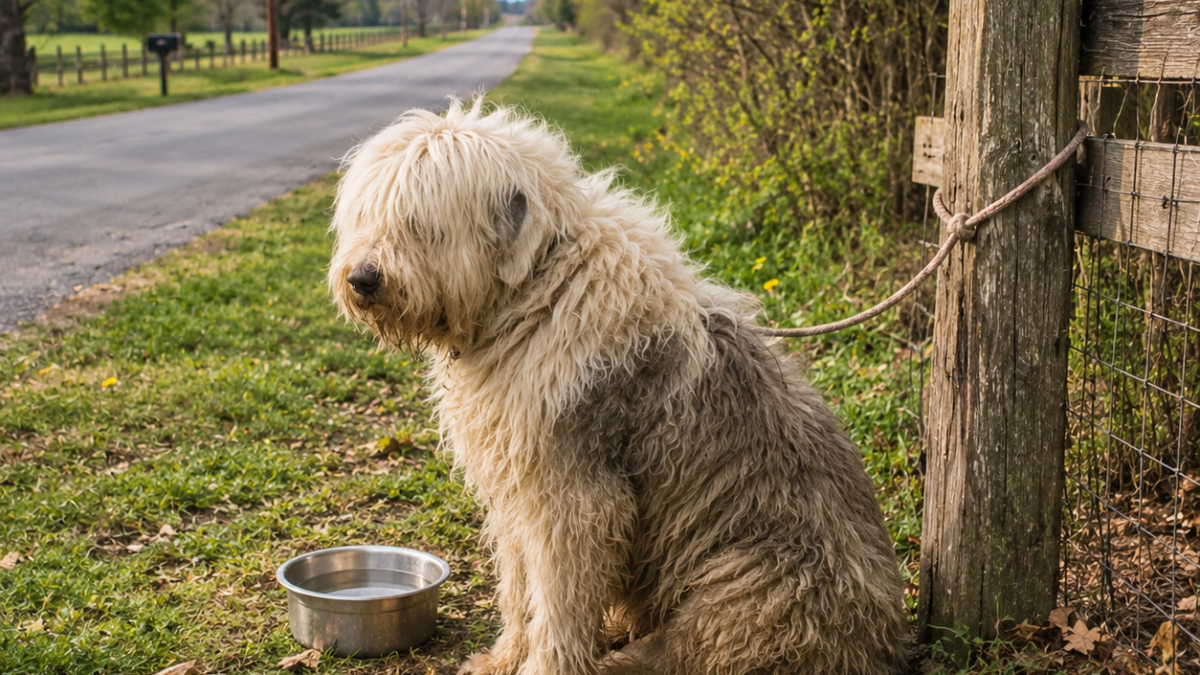
PART 2
Dr. Richards examined Max that afternoon.
Bloodwork.
Temperature.
Heart.
Lungs.
Teeth.
Joints.
He checked him twice because I kept insisting something had to be physically wrong.
“He hasn’t eaten properly in days,” I said.
“I know.”
“He barely moves.”
“I know.”
“He doesn’t react when I call him.”
Dr. Richards took off his glasses.
“Evelyn, physically, this dog is healthier than his behavior suggests.”
“Then what’s wrong with him?”
The veterinarian looked toward Max.
He was lying on the floor near the examination table.
Not sleeping.
Just staring.
“He’s grieving.”
I stared at him.
“He’s what?”
“Grieving.”
Dr. Richards crouched beside Max but didn’t touch him.
“He lost his people, his house, his routine, everything familiar. He doesn’t understand that they made a decision to leave him. He only knows that his world disappeared.”
I looked at Max.
“That can happen to dogs?”
“Absolutely.”
“But can grief make him stop eating?”
“Yes.”
“Can it make him act like this?”
“Yes.”
My throat tightened.
“What do I do?”
“Give him time.”
“That can’t be all.”
“No.”
Dr. Richards stood.
“Give him consistency. Food. Water. Quiet. Don’t force interaction. Don’t overwhelm him trying to make him happy.”
I almost laughed.
“How do you make a dog understand somebody isn’t coming back?”
He looked at me for a moment.
Then said quietly, “You don’t.”
That answer hit somewhere deep inside me.
Because I already knew it.
My husband, James, had been dead eight years.
Cancer took him eleven months after his diagnosis.
For months after his funeral, I still woke some mornings expecting to hear him downstairs.
I’d smell coffee and think he’d made it.
I’d hear a truck slowing near the house and look toward the driveway.
I’d reach across the bed before fully waking.
Then memory would arrive.
Again.
That was the cruelty of grief.
The person died once.
You remembered it a thousand times.
I looked at Max on the floor.
“You wake up and remember too, don’t you?”
He didn’t move.
Dr. Richards handed me instructions.
“If he goes another day without eating anything, call me.”
“I will.”
“And Evelyn?”
I turned.
“Don’t measure progress by whether he acts happy tomorrow.”
I nodded.
“He may need someone willing to sit beside him while he’s unhappy.”
That I understood.
The first night, Max lay on the rug in my living room.
I put a blanket beside him.
He didn’t use it.
I brought chicken.
He didn’t touch it.
Water.
Nothing.
I sat in the armchair.
At ten, I turned on the television.
Then immediately switched it off.
Noise felt wrong.
At eleven, Max had not moved.
At midnight, I finally went to bed.
Twenty minutes later, I came downstairs again.
He was still there.
I sat in the chair.
“I can’t sleep either.”
His eyes moved slightly.
So I stayed.
No touching.
No encouragement.
No cheerful voice.
Just another living thing in the room.
At some point, I fell asleep in the chair.
When I woke, pale morning light filled the windows.
Max hadn’t moved.
The second day, I tried something different.
I sat on the floor a few feet away with a book.
Dickens.
James had loved Dickens.
I began reading aloud.
I felt ridiculous.
“Marley was dead: to begin with.”
Max stared at the wall.
I kept reading.
Chapter one.
Then part of chapter two.
Twenty minutes later, one of Max’s ears moved.
I stopped.
His ear dropped.
I started reading again.
The ear moved.
I smiled.
“Okay.”
I kept going.
That became our routine.
I read.
Max listened.
Or didn’t.
But every afternoon, I sat on the floor so he knew exactly where I would be.
On the third day, I put classical music on the old record player.
Mozart.
James used to play it on Sunday mornings.
I had not touched those records in years.
The first notes filled the living room.
I waited for sadness to hit me.
It did.
But something else was there too.
Max.
I wasn’t alone with the memory anymore.
I looked at him.
“You would’ve liked James.”
One ear lifted.
“He wanted a dog.”
Nothing.
“I always said we were too busy.”
I laughed quietly.
“Funny thing about being busy. Eventually you realize half the things keeping you busy weren’t important.”
Max blinked.
“He would’ve loved you.”
I had not spoken about James aloud that much in years.
Not even to my children.
People become uncomfortable around old grief.
They don’t mean to.
They simply don’t know what to say when someone still misses a person eight years later.
Max didn’t care.
I could tell him anything.
He never said, “You need to move on.”
He never changed the subject.
He just listened.
On the fourth day, something happened.
I was sitting on the floor with my back against the couch.
Max had spent most of the day near the fireplace.
Suddenly, he lifted his head.
I stopped reading.
His eyes met mine.
Really met mine.
For the first time.
“Hey.”
Max moved one front paw.
Then another.
But he didn’t stand.
He dragged himself across the carpet.
A few inches.
Then more.
My heart started pounding.
“That’s okay.”
I didn’t reach toward him.
“Take your time.”
He kept coming until his nose touched my knee.
Then he stopped.
I forgot how to breathe.
For almost a minute, I didn’t move.
Then very slowly, I placed my hand on his head.
Max closed his eyes.
I cried.
Not because everything was fixed.
It wasn’t.
Because he had chosen contact.
He had crossed three feet of carpet.
Sometimes that’s what survival looks like.
Not miracles.
Three feet.
The next morning, Max ate.
One piece of chicken.
He sniffed it for several seconds.
Then took it from my palm.
I called Dr. Richards immediately.
“He ate.”
“Good.”
“One piece.”
“Still good.”
“Should I give him more?”
“Yes, Evelyn. He’s a dog.”
“I don’t know what I’m doing.”
Dr. Richards laughed.
“I know.”
“He drank some water too.”
“Very good.”
“He looked at me.”
“Even better.”
There was a pause.
Then Dr. Richards said something I have never forgotten.
“He’s deciding to stay.”
My eyes filled.
“What?”
“Grieving animals sometimes withdraw because nothing feels safe anymore. Eating, seeking touch, watching you—that means he’s reconnecting.”
I looked toward Max.
He was lying near my chair now instead of across the room.
“Why me?”
“Because you’re there.”
Simple.
That afternoon, I moved his blanket beside my chair.
He used it.
At the end of the first week, Max followed me into the kitchen.
I almost dropped my coffee.
He stopped near the doorway.
I pretended not to notice.
I walked to the counter.
He followed two steps.
Then stopped.
“Well,” I said without turning around, “if you’re going to supervise me, you might as well come all the way in.”
Max entered.
I gave him a tiny piece of chicken.
The next day, he followed me upstairs.
By the second week, I couldn’t go to the bathroom alone.
Apparently recovery had consequences.
I didn’t mind.
I talked to him constantly.
About groceries.
Weather.
James.
My children.
My grandchildren.
The roses I could never get to grow properly.
My neighbor three houses down who parked his truck too close to my mailbox.
Everything.
Max listened.
He began sleeping beside the couch.
Then beside my bed.
Not on it.
Never.
Max respected boundaries.
For about six weeks.
Then one morning I woke with seventy pounds of shaggy dog across my feet.
I looked at him.
He looked away.
“Absolutely not.”
His tail moved.
“You have your own bed.”
Nothing.
“This is not negotiable.”
Max put his head down.
He slept there every night afterward.
The first real sign that the old Max was still somewhere inside him came two weeks after I brought him home.
We were sitting on the porch.
A squirrel ran across the fence.
Max’s head snapped upward.
His ears lifted.
The squirrel stopped.
Max stood.
My heart leaped.
“Go ahead.”
The squirrel ran.
Max took two steps.
Stopped.
His tail moved.
Once.
Then again.
I laughed.
“There you are.”
Max looked at me.
His tail moved harder.
Something in my laugh excited him.
He bounced once on his front paws.
Then he did it again.
I started laughing harder.
Max spun in a circle.
I covered my mouth.
“Oh, James.”
The words escaped before I could stop them.
If James had been there, he would’ve been laughing too.
That realization should have hurt.
Instead, for once, memory felt warm.
Max had done that.
By the third week, he played with a tennis ball.
I rolled it across the living room.
Max watched.
Then looked at me.
Then the ball.
“It’s not complicated.”
Nothing.
“Dog. Ball. This relationship has existed for thousands of years.”
Max lunged.
He grabbed it.
Ran straight past me.
“Wrong direction!”
He returned thirty seconds later, dropped it near my feet and waited.
I threw it again.
That evening, I laughed more than I had in years.
That was when I started realizing Max wasn’t the only one recovering.
For eight years after James died, I had survived beautifully.
That’s what people told me.
“You’re so strong.”
“You’ve handled this so well.”
“You’ve built a good life.”
They were right.
My bills were paid.
My house was clean.
My garden survived.
I saw my children.
I attended birthdays.
I smiled when expected.
But somewhere along the way, I had confused functioning with living.
Max disrupted that.
He needed breakfast.
Walks.
Grooming.
Vet appointments.
Attention.
He forced me into mornings I had spent years sleeping through.
He pulled me into conversations with strangers at the park.
He made children stop and ask whether they could pet him.
He forced me to laugh when he stole toast from my plate.
He made me angry when he tracked mud across a clean floor.
Anger sounds like a strange gift.
It wasn’t.
Feeling annoyed about muddy paws meant I was participating in life again.
One month after his rescue, I decided we were ready to walk past his old house.
I almost turned around twice.
Max didn’t know where we were going.
We came around the corner.
He saw it.
Stopped.
The house stood empty.
The Harrisons had moved across the state.
A FOR SALE sign leaned in the yard.
Max stared.
I held the leash loosely.
“It’s okay.”
His ears moved.
He looked toward the fence post.
The same post where he had been tied.
My chest tightened.
I expected him to pull.
Whine.
Try to go through the gate.
Nothing.
He stood there for almost a minute.
Then Max looked up at me.
I said nothing.
He turned away from the house.
And continued walking.
I followed.
That was it.
No dramatic moment.
No final bark.
No looking back.
He simply chose forward.
Halfway home, I started crying.
Max stopped.
He turned toward me.
“I’m okay.”
He pushed his nose against my hand.
“You know what?”
I crouched.
“You’re better at this than I am.”
I had spent years thinking moving forward meant forgetting James.
Max showed me something different.
You don’t erase what came before.
You just stop waiting for it to return.
That night, I removed James’s slippers from beside the closet.
They had been there eight years.
I sat on the floor holding them.
I cried.
Then I packed them carefully into a memory box with his watch, several letters and photographs.
I didn’t throw them away.
I simply stopped leaving space in my everyday life for a man who could no longer come home.
Max sat beside me the entire time.
That was the night I understood what Dr. Richards meant.
Sometimes you don’t pull someone out of grief.
You sit beside them until they’re ready to stand.
Max had done that for me too.
The months that followed became the happiest period I had experienced in years.
Max became my shadow.
Breakfast together.
Morning walk.
Garden.
Afternoon nap.
Evening porch.
My grandchildren adored him.
My granddaughter Sophie taught him to shake paws.
My grandson Daniel taught him something he insisted was “playing dead,” although Max mostly rolled over because he expected cheese.
Then came Olivier.
Olivier was a six-week-old orange kitten found behind a grocery store.
I wasn’t planning to adopt a cat.
I went to the shelter to donate old blankets.
That’s all.
Then I saw the kitten.
“You need a foster,” the volunteer said.
“No.”
“Just temporarily.”
“No.”
“You have a big house.”
“No.”
“Max likes cats.”
I stared at her.
“How do you know?”
“You posted that picture of him with your neighbor’s cat.”
“That doesn’t mean I want one.”
Olivier sneezed.
Three hours later, he was in my kitchen.
Temporary.
That lasted two days.
At first Max stared at him as though I had brought home an unusually small orange rat.
Olivier had no fear.
He marched directly toward Max.
Max backed up.
The kitten followed.
Max backed up again.
I laughed.
“You survived abandonment but you’re scared of six ounces of cat?”
Olivier touched Max’s nose.
Max froze.
Then licked the kitten’s entire head in one movement.
Olivier fell over.
They became inseparable.
Olivier slept against Max’s stomach.
Max groomed him.
When Olivier climbed curtains, Max watched with disapproval.
If I couldn’t find the kitten, I looked for Max.
Olivier was usually somewhere beneath him.
My house became noisy.
Hairy.
Occasionally destructive.
It also became home again.
Then, nearly eight months after Max came to me, a black SUV stopped outside.
Max was lying on the porch.
I was trimming roses.
The moment the driver’s door opened, Max stood.
A man stepped out.
Mr. Harrison.
My hands stopped moving.
Max froze.
For one second, nobody breathed.
“Max?”
The dog stared.
His tail did not move.
Mr. Harrison smiled uncertainly.
“Hey, buddy.”
Max took one step backward.
That surprised him.
It surprised me too.
He walked toward the gate.
“Evelyn.”
“What are you doing here?”
“I came to see Max.”
“Why?”
He looked annoyed by the question.
“He’s my dog.”
My entire body went cold.
“No.”
“Excuse me?”
“You abandoned him.”
His jaw tightened.
“That isn’t exactly what happened.”
I put down the garden shears.
“I watched you tie him to that post.”
“It was complicated.”
“You drove away.”
“We were moving into temporary housing.”
“For four days?”
“We intended to arrange something.”
“You didn’t.”
He glanced toward Max.
The dog had moved behind me.
That mattered.
“I heard you took him.”
“I carried him because he stopped eating.”
“We appreciate that.”
The words were so absurd I nearly laughed.
“Appreciate?”
“Yes. But our housing situation is resolved now.”
I stared at him.
“So?”
“We can take Max back.”
There are moments when rage becomes strangely quiet.
That was one.
“You think you’re taking him?”
“He belongs to us.”
I stepped through the gate.
“Where were you during those four days?”
He looked uncomfortable.
“We were busy moving.”
“He stopped eating.”
“Evelyn—”
“He stopped drinking.”
“We didn’t know.”
“You didn’t call.”
“We assumed you’d feed him.”
That sentence stunned me.
“You assumed what?”
“We knew you liked him.”
I actually stepped backward.
“You knowingly left your dog tied outside because you assumed I would notice?”
He immediately realized the admission was bad.
“That isn’t what I meant.”
“It is exactly what you meant.”
He looked toward Max again.
“Look, I didn’t come here to argue.”
“Good.”
“I came to take my dog home.”
Max pressed against the back of my legs.
Mr. Harrison softened his voice.
“Come on, Max.”
Max didn’t move.
“Buddy.”
Nothing.
The man crouched.
“You remember me.”
Of course Max remembered him.
That was what made it cruel.
Mr. Harrison held out a hand.
“Come here.”
Max’s body lowered slightly.
Not aggressive.
Fearful.
I put my hand against his shoulder.
“You don’t have to.”
Mr. Harrison stood.
“You’re confusing him.”
“No.”
“He’s attached to you because you’ve had him for a few months.”
“That’s usually what happens when someone feeds a dog instead of leaving him tied to a fence.”
His face reddened.
“I don’t appreciate your tone.”
I laughed.
“You’re standing in my yard demanding the dog you abandoned.”
“Max was never legally transferred to you.”
That was when I realized this had been planned.
He wasn’t there because he suddenly missed Max.
He had thought about ownership.
Maybe someone had told him Max looked happy.
Maybe his children wanted the dog back.
Maybe guilt had become inconvenient.
Whatever the reason, I wasn’t letting Max become collateral damage in another Harrison decision.
“You’re not taking him today.”
“We’ll see about that.”
He walked back toward the SUV.
Before getting inside, he turned.
“This isn’t over.”
Max flinched when the car door slammed.
I crouched beside him.
“No.”
I watched the SUV disappear.
“This time, nobody gets to decide for you without a fight.”
The next morning, I called animal control.
Then Dr. Richards.
Then an attorney.
I documented everything.
Photographs of Max on the fourth day.
Veterinary records.
Messages I’d left.
Receipts.
Statements from another neighbor who had seen the Harrisons leave.
The Harrisons had never reported Max missing.
Never contacted animal services.
Never returned for him.
Within days, the story spread through the neighborhood.
I didn’t post online.
I didn’t need to.
People talk.
Then something happened I hadn’t expected.
The Harrisons’ teenage daughter contacted me.
Her name was Claire.
She was seventeen.
Her message said:
**Mrs. Bennett, please don’t give Max back to my dad.**
I stared at my phone.
Then she called.
Her voice shook.
“I’m sorry.”
“You don’t owe me an apology.”
“Yes, I do.”
“No. Your parents made the decision.”
There was silence.
“I thought Max was coming later.”
I closed my eyes.
“What?”
“Dad told me someone would bring him after we got settled.”
“Did you know he was tied outside?”
“Not until we were already leaving.”
“Why didn’t you say something?”
“I did.”
She began crying.
“He said Max would be fine.”
I sat down.
“What happened after that?”
“Every day I asked when Max was coming.”
“And?”
“Dad kept saying soon.”
My anger changed shape.
There were children involved.
Not little children, but still people without control over the decision.
“Why does he want Max now?”
Claire hesitated.
“My little brother found pictures online.”
“What pictures?”
“You walking Max in the park. Somebody from the old neighborhood posted them.”
I understood.
“They know he’s alive.”
“We always knew he was alive.”
My stomach tightened.
Claire corrected herself.
“I mean Dad did.”
That was worse.
“Why now?”
“Because my brother won’t stop asking.”
I exhaled.
“So your father wants Max because the family is uncomfortable with what happened.”
“I think so.”
“Do you want him back?”
Long silence.
Then Claire whispered:
“Yes.”
My heart sank.
“But I don’t think he should come.”
That answer surprised me.
“Why?”
“Because I saw a picture.”
“What picture?”
“Max on your porch.”
Her voice broke.
“He looked happy.”
I covered my mouth.
Claire continued.
“He never looked like that after Mom and Dad started fighting about moving.”
“What do you mean?”
She told me.
The move hadn’t happened because of temporary housing.
Mr. Harrison had accepted a new job.
Their new rental permitted dogs with a deposit.
He simply didn’t want to pay it.
Max was older.
His grooming was expensive.
He shed.
The new house had light carpeting.
That was it.
Not an impossible crisis.
Carpet.
Money.
Convenience.
I felt sick.
“Claire.”
“Yes?”
“Thank you for telling me.”
“Will they make you give him back?”
“I don’t know.”
“Please don’t.”
“I’ll do everything I can.”
She started crying again.
“I miss him.”
“I know.”
“Can I see him sometime?”
I looked at Max.
He was asleep beside Olivier.
“Yes.”
A legal hearing was scheduled.
It sounds dramatic.
Mostly it involved paperwork and uncomfortable chairs.
The Harrisons argued they had never intended to permanently abandon Max.
My attorney presented the unanswered calls.
The veterinary records.
The photos.
The neighbor’s statement.
Then the animal control officer asked Mr. Harrison one question.
“Who was responsible for feeding the animal after you left the property?”
Mr. Harrison answered:
“We assumed Mrs. Bennett would.”
The room went quiet.
The officer asked, “Did Mrs. Bennett agree to that?”
“No.”
“Did you notify her?”
“No.”
“Did you leave instructions?”
“No.”
“Food?”
“A little.”
“How much?”
No answer.
“Water?”
“There was a bowl.”
“Enough for four days?”
Mr. Harrison looked toward his attorney.
That was essentially the end.
Their ownership claim collapsed.
The formal decision took longer, but Max remained with me.
The Harrisons faced penalties for abandonment and neglect.
Nothing spectacular.
No prison.
No dramatic handcuffs.
Fines.
Veterinary reimbursement.
Restrictions regarding acquiring another animal for a period.
People wanted more.
Neighbors said they deserved humiliation.
Some wanted me to post the entire story online.
I didn’t.
Because revenge had already happened.
Max no longer waited for them.
That was enough.
Two weeks after the hearing, Claire came to visit.
She stood at my gate.
Max was in the yard.
The instant he heard her voice, his ears lifted.
“Max?”
He turned.
Then ran.
Claire fell to her knees.
Max hit her so hard they both nearly rolled into the grass.
She wrapped her arms around him.
“Oh, Max.”
His entire body moved.
Tail.
Hips.
Shoulders.
He licked her face.
Claire cried into his fur.
I turned away.
Not every Harrison had abandoned him.
Max knew that.
That day taught me something else.
Dogs remember love separately from betrayal.
Claire stayed for three hours.
She brushed him.
Played ball.
Fed him too many treats.
Before leaving, she sat with me on the porch.
“Thank you.”
“You don’t need to thank me.”
“I do.”
She looked toward Max.
“I couldn’t protect him.”
“You were seventeen.”
“I still should’ve done more.”
“No.”
I turned toward her.
“Don’t carry an adult’s decision like it belonged to you.”
She looked at me.
I realized I wasn’t only talking about Max.
I was talking about grief.
Guilt.
All the impossible ways we blame ourselves for what other people or life itself takes from us.
“You told the truth when it mattered.”
Claire nodded.
“Can I come again?”
“Of course.”
She did.
So did her younger brother later.
Their parents never came.
That was probably better.
A year passed.
Then two.
Max became fully mine.
Not because paperwork said so.
Because routine did.
Every morning, his face appeared beside my bed.
Every evening, he slept near my feet.
When I cried on James’s birthday, Max rested his head in my lap.
When I laughed, his tail moved.
When I became sick with the flu, he barely left my bedroom for three days.
Olivier slept on him like a blanket.
My grandchildren stopped asking whether Max was “the neighbor’s dog.”
He was Grandma’s dog.
Then came an unexpected letter.
It was from Mrs. Harrison.
Not her husband.
She apologized.
Not perfectly.
There were explanations.
Stress.
Marriage problems.
Money.
The move.
But buried beneath all of it was a sentence that felt real.
**I told myself leaving Max was temporary because admitting the truth would have meant admitting that we were abandoning a creature who trusted us.**
I read that line three times.
She asked if she could see him.
I didn’t answer immediately.
I talked to Dr. Richards.
My daughter.
My attorney.
Then I realized none of them mattered.
There was one decision-maker.
Max.
I agreed to let Mrs. Harrison visit in a public park.
No leash transfer.
No pressure.
Max would choose whether to approach.
She arrived alone.
The moment she saw him, she began crying.
“Max.”
His ears rose.
He stared.
She crouched.
“Hi, baby.”
Max didn’t move.
She covered her mouth.
For several seconds, I thought he might refuse entirely.
Then he walked forward.
Slowly.
He sniffed her hands.
She touched his face.
Max allowed it.
Then she wrapped her arms around him.
He stood still.
No enthusiastic jumping.
No panic.
No anger.
Just stillness.
After perhaps thirty seconds, Max stepped backward.
Mrs. Harrison released him.
He turned.
Walked straight toward me.
Then sat against my leg.
Mrs. Harrison stared.
I didn’t smile.
I didn’t feel victorious.
I felt sad.
“He remembers you,” I said.
She nodded through tears.
“I know.”
“He just doesn’t live there anymore.”
She looked toward him.
“I know that too.”
Before leaving, she whispered:
“I’m glad he found you.”
I almost corrected her.
Instead I said:
“So am I.”
The years moved faster after that.
They always do when you start wishing they’d slow down.
Max’s face grayed.
He became less interested in squirrels.
More interested in naps.
Olivier remained convinced Max’s back was a bed.
At ten, Max developed arthritis.
At eleven, he needed medication.
At twelve, I bought a ramp for the car.
At thirteen, his hearing began fading.
When people came through the door, he didn’t always notice.
But he could somehow still hear a cheese wrapper from three rooms away.
Dr. Richards called that selective aging.
I called it fraud.
Max turned fourteen on a spring morning.
I didn’t know his exact birthday, so we celebrated the anniversary of the day I carried him into my house.
My grandchildren came.
Claire came too.
She was twenty-six then.
Married.
Pregnant with her first child.
When she knelt beside Max, his old tail began moving.
“Hey, old man.”
Max licked her hand.
Claire looked at me.
“He remembers.”
“He always remembers.”
She rested her forehead against his.
Her father had died the previous year from a heart attack.
I hadn’t seen him since the hearing.
Claire told me they had repaired some of their relationship before he died.
Max remained a subject they rarely discussed.
“Dad regretted it,” she told me.
I wasn’t sure what to say.
“Good.”
That sounded cruel.
Claire understood.
“I know what you mean.”
Regret does not erase harm.
But perhaps it is better than never understanding it.
A few months after Max turned fourteen, he began eating less.
At first, I blamed the heat.
Then age.
Then his teeth.
Dr. Richards ran tests.
The results showed a tumor.
Advanced.
My hands went cold.
“How long?”
“We don’t know exactly.”
“Months?”
“Possibly.”
“Years?”
He didn’t answer.
I looked toward Max.
He was lying beneath the examination table.
Olivier wasn’t there, obviously, but Max kept looking toward the door as though he expected the cat to appear.
“Does he hurt?”
“Not badly yet.”
“Yet.”
Dr. Richards nodded.
We began medication.
For three months, Max did well.
Then four.
He still walked every morning, although we traveled only around the block.
I had once joked that Max forced me to wake early.
Now I woke before him just to make sure he was breathing.
That’s love too.
Not the pretty part.
The terrifying part.
The part where something becomes so precious that its absence starts haunting you before it’s gone.
One rainy October morning, Max couldn’t stand.
He tried.
His back legs failed.
I knelt beside him.
“It’s okay.”
He tried again.
“No.”
I put both arms around him.
“Stop.”
He looked frustrated.
Then tired.
I called Dr. Richards.
He came to the house.
The man who had first told me Max was grieving was older now too.
His hair had gone mostly gray.
He sat beside Max.
Examined him.
Then looked at me.
“Evelyn.”
“No.”
He hadn’t said anything yet.
“No.”
“We’ve reached the point we talked about.”
“I can carry him outside.”
“I know.”
“I can help him eat.”
“I know.”
“He still watches me.”
“I know.”
My voice broke.
“He’s still Max.”
Dr. Richards touched my hand.
“Yes.”
That was why it hurt.
Max wasn’t gone yet.
But his body was asking for permission.
I called my children.
Then Claire.
My grandchildren came.
Olivier lay beside Max all afternoon.
That cat was nearly fourteen himself.
He pressed his orange body against Max’s side.
When people entered the room, Olivier refused to move.
Claire arrived last.
She sat on the floor.
“Hey, buddy.”
Max’s tail moved.
Once.
Claire cried.
“I’m sorry.”
I knew what she meant.
Not for herself.
For everything.
Max pushed his nose against her wrist.
That was his answer.
By sunset, everyone left except me, Dr. Richards and Olivier.
I wanted quiet.
Max had entered my life in silence.
It seemed right that he leave it that way.
I sat on the same living-room floor where I had once read Dickens to a dog who refused to eat.
Max’s head rested in my lap.
I touched the back of his ears.
“You remember this room?”
His eyes moved toward mine.
“You wouldn’t look at me.”
His breathing was slow.
“I read you an entire chapter.”
His tail moved faintly.
“Terrible audience.”
I laughed.
Then cried.
“You know something?”
I looked toward James’s photograph.
“For years, I thought losing James was the end of the good part.”
Max breathed.
“Then they tied you to that fence.”
My hand trembled against his fur.
“I thought I was saving you.”
Dr. Richards remained silent.
“But you made me get out of bed.”
I stroked Max’s gray face.
“You made me walk.”
Another breath.
“You made me talk to people.”
Another.
“You brought laughter back into this house.”
Olivier crawled closer.
“You even made me bring home that ridiculous cat.”
Olivier looked offended.
I kissed Max’s head.
“So I guess we’re even.”
We weren’t.
Not even close.
Dr. Richards prepared the medication.
I looked at him.
“Will it hurt?”
“No.”
“Will he be afraid?”
“Not with you here.”
I swallowed.
That mattered more than anything.
Max had spent days waiting alone once.
He would never do it again.
I put both hands around his face.
“Listen to me.”
His amber eyes looked at mine.
“Nobody is leaving you.”
His breathing slowed.
“Not this time.”
The first medication relaxed him.
His head became heavier in my lap.
Olivier sniffed his ear.
I whispered:
“You don’t have to wait by the road.”
Another breath.
“You don’t have to watch the corner.”
Another.
“Nobody forgot you.”
Tears fell into his fur.
“You are home.”
Dr. Richards gave the final medication.
Max exhaled.
I kept stroking him.
Another breath came.
Smaller.
Then one more.
And then the dog who had once decided there was nothing worth staying alive for finally let go while surrounded by everything he had found afterward.
Love.
Warmth.
A home.
And someone who stayed.
For several minutes, I couldn’t move.
Olivier stood.
He sniffed Max’s nose.
Then pushed his forehead against Max’s cheek.
When Max did not respond, Olivier lay down beside him.
I broke completely.
Grief was back.
But it wasn’t the same grief I had known after James.
Back then, grief had felt like an empty room.
This grief felt like a room filled with memories.
Painful.
But full.
Max was buried beneath the maple tree in my backyard.
The same place he had spent years sleeping in the shade.
Claire came to the small memorial.
So did my children.
My grandchildren.
Dr. Richards.
Several neighbors.
Mrs. Harrison came too.
She stood far behind everyone.
I didn’t invite her.
Claire did.
At first, I was angry.
Then I saw her face.
Max had belonged to many people at different stages of his life.
Some had failed him.
Some had loved him.
Some had done both.
Life is uncomfortable that way.
After everyone left, Mrs. Harrison approached the tree.
She placed an old tennis ball beside the stone.
“He loved these.”
“Yes.”
“He used to bring them into the house covered in mud.”
I almost smiled.
“He still did.”
She looked at the marker.
The inscription was simple.
**MAX**
**HE WAITED ONCE.**
**THEN HE FOUND SOMEONE WHO STAYED.**
Mrs. Harrison cried.
“I wish we had been better.”
I looked toward the house.
Olivier was sitting in the window.
“So do I.”
She nodded.
No forgiveness speech.
No dramatic reconciliation.
Some actions deserve consequences even after remorse arrives.
But I didn’t hate her anymore.
Hate required energy.
Max had taught me better things to do with it.
Months after his death, I still woke expecting him.
I still dropped pieces of chicken while cooking.
I still moved my feet carefully getting out of bed.
Then remembered.
Olivier grieved too.
He slept on Max’s old blanket for weeks.
Eventually, he started sleeping on my bed.
Apparently the vacancy had been noted.
One afternoon, almost a year after Max died, Claire came with her daughter.
A little girl named Emma.
She was learning to walk.
We sat near the maple tree.
Claire touched Max’s marker.
“I want Emma to know about him.”
“Why?”
“Because I want her to understand that animals don’t become disposable when life gets inconvenient.”
I looked at her.
That sentence contained everything.
Her father’s mistake.
Her mother’s regret.
Max’s pain.
And maybe a different future.
Claire continued.
“I want her to know that if you take responsibility for something that trusts you, you don’t just stop because moving gets difficult.”
I nodded.
“Max would approve.”
“You think?”
“No.”
She laughed.
“He’d probably want cheese.”
That was true.
Eventually, the local shelter heard Max’s full story.
One of the volunteers asked whether they could create a small fund in his name to help elderly owners temporarily care for pets during hospital stays, moves and housing emergencies.
At first, I resisted.
I had learned from experience that people enjoy naming things after dogs without asking the woman who cries every time she sees the name.
But the idea mattered.
Temporary help.
The kind of help that might prevent someone from telling themselves there was “no choice.”
I agreed.
They called it:
**MAX’S SECOND DOOR FUND**
The name came from something I said during our meeting.
“A dog shouldn’t lose everything because one door closes.”
The fund helped pay temporary boarding.
Pet deposits.
Transportation.
Emergency food.
Short-term foster care.
It did not excuse abandonment.
It removed excuses for it.
In the first year, twenty-three animals stayed with their families or entered safe temporary care because of it.
Twenty-three Maxes who never had to be tied to a fence.
That became the revenge I could live with.
Not seeing the Harrisons punished.
Not watching people criticize them.
Not the fines.
Not the courtroom.
The best revenge was making the next excuse harder.
Someone says:
“I have to move.”
There is help.
“I can’t afford the pet deposit.”
There is help.
“I’m going into the hospital.”
There is help.
“My dog needs temporary care.”
There is help.
Max could not change what happened to him.
But his story could change what happened next.
Years passed.
Olivier died at seventeen.
That goodbye hurt too.
I buried him beside Max.
The stone reads:
**OLIVIER**
**THE CAT WHO THOUGHT MAX WAS FURNITURE.**
My grandchildren chose that line.
I allowed it.
I’m older now.
My knees hurt.
The roses are still unreliable.
James’s photograph remains on the wall.
Max’s collar hangs beneath it.
For years, I thought those two objects represented two separate lives.
Before and after.
James.
Then loneliness.
Then Max.
But age gives you a different perspective.
Love doesn’t replace love.
Max did not replace James.
James did not make Max less important.
They simply became different rooms inside the same life.
And Max taught me something I wish I had understood sooner.
Moving forward is not betrayal.
Laughing after loss is not betrayal.
Loving again is not betrayal.
Coming home to someone new doesn’t erase who used to be there.
Sometimes I walk to the fence post where Max was tied.
The old house next door has new owners now.
A young family.
They have a Labrador named Rosie.
Rosie runs along the fence when I garden.
Sometimes she sticks her nose through.
I scratch her ears.
Her owners always call her inside at night.
Every time.
I notice.
Maybe I always will.
On cold mornings, I sometimes still see Max in my memory.
Young.
Shaggy.
Sitting beside the post.
Watching the curve in the road.
Waiting.
That image used to make me angry.
Now another image comes afterward.
Max asleep on my couch.
Olivier on his back.
Morning sun through the window.
Safe.
Old.
Loved.
That’s the image I choose.
People sometimes say I rescued Max.
I used to say the same thing.
Now I don’t.
I carried him across one yard.
Max carried me across eight years of grief.
He taught me to wake up.
To walk.
To laugh.
To speak to strangers.
To open my home again.
To stop confusing an empty house with a peaceful one.
And on the hardest day, when I finally had to let him go, Max taught me the final lesson too.
Love isn’t proven by how tightly you can hold something.
Sometimes it’s proven by refusing to make someone you love suffer because you are afraid of being alone again.
I had been afraid.
Terrified.
But Max had already spent enough of his life waiting for humans to make the right choice.
So on his last day, I did.
Sometimes I wonder what would have happened if I hadn’t looked out my kitchen window that morning.
I don’t stay with that thought long.
Because I did look.
I did see him.
And four days later, I crossed the fence.
I unclipped the leash.
I carried him home.
For the first few weeks, I believed that was the moment Max’s life changed.
I was wrong.
Two lives changed.
A dog who thought he had been discarded learned that a closed door wasn’t the end of the world.
And a widow who thought the best part of her life had already happened learned there were still mornings worth waking up for.
There were still walks to take.
Animals to love.
People to meet.
Children to hold.
Gardens to ruin.
Cats to adopt.
Tennis balls to throw.
There was still life.
I had simply stopped looking for it.
Max found me anyway.
So when people ask how our story began, I don’t say:
“My neighbors abandoned their dog.”
That’s true.
But it isn’t the beginning I want to remember.
I say:
“One cold morning, I looked out my window and saw a dog who had lost everything.”
Then I smile.
“And neither of us knew yet that we were about to become family.”
Because that is the real ending.
The Harrisons left Max tied to a fence believing they were leaving behind a problem.
They had no idea what they were throwing away.
They lost the dog who would have waited forever for them.
I gained the dog who taught me not to wait forever for a life that was already gone.
And in the end, that was all the revenge Max ever needed.
They drove away from him.
Max eventually stopped watching the road.
He turned around.
He found another door.
And this time, when he stood in front of it, someone opened it.
I kept it open for the rest of his life.
For a long time after Max died, I thought the hardest part would be the silence.
I was wrong.
The hardest part was how often my body forgot he was gone.
Every morning, before I was fully awake, I would slide my feet carefully toward the edge of the bed because Max used to sleep beside me, and I was always afraid of stepping on one of his paws.
Then my feet would touch the empty floor.
That tiny moment happened every morning.
For just half a second, everything was normal.
Then I remembered.
There was no Max beside the bed.
No shaggy head waiting for breakfast.
No impatient breathing outside the bathroom door.
No heavy footsteps following me downstairs.
Grief had returned in the same cruel form I had known after James died.
The person—or in Max’s case, the dog—was gone once.
But memory made you lose them again every morning.
Olivier seemed to understand before I did.
For almost a month, he slept on Max’s blanket.
He had other places.
My bed.
The couch.
Three expensive cat beds he had mostly ignored since I bought them.
But every night, he walked to the blanket beside the fireplace, turned around several times, then curled himself into the place where Max’s chest used to be.
Sometimes I found him there staring toward the hallway.
Waiting.
I knew that look.
“Me too,” I would whisper.
For the first few weeks, I couldn’t bring myself to wash Max’s food bowl.
That sounds ridiculous.
I know.
It sat beside the kitchen wall with three pieces of dry food still inside.
Every time I walked past, I saw them.
My daughter eventually noticed.
“Mom.”
“I know.”
“You don’t have to do anything with it yet.”
“I know.”
But the bowl stayed.
One morning, almost six weeks after Max died, Olivier walked into the kitchen and began eating the pieces.
I stared at him.
“You thief.”
He looked at me.
Chewed.
Then ate the last one.
I started laughing.
The laugh turned into tears halfway through.
Olivier simply walked away.
That cat had always had terrible timing.
Or perhaps perfect timing.
That afternoon, I washed the bowl.
I didn’t throw it away.
I placed Max’s collar inside it and put it on the shelf beside James’s photograph.
Two lives.
Two great loves.
Two losses.
I stood there for a long time.
Then something strange happened.
I didn’t feel only sadness.
I felt lucky.
For years after James died, I had hated that word when people used it around me.
“You were lucky to have twenty-seven years together.”
Yes.
I knew.
But when somebody is freshly gone, “lucky” can sound almost insulting.
You don’t feel lucky.
You feel robbed.
Time changed that.
Max changed it too.
Eventually, I understood that grief exists because something precious came first.
And I had been given two extraordinary relationships in one lifetime.
That did not make the endings easier.
It made the middle more meaningful.
The first meeting for Max’s Second Door Fund happened three months after his death.
I almost didn’t attend.
The shelter director, a woman named Karen Mitchell, had asked me to sit on the advisory committee.
“I don’t know anything about running a fund.”
“You know why it needs to exist.”
“That doesn’t mean I know how to manage money.”
“We have accountants for that.”
“I don’t want to become some symbol.”
Karen smiled.
“You’re already the woman who carried a seventy-pound sheepdog across a yard.”
“He was closer to sixty-five.”
“Excellent. We’ll correct the press release.”
“There better not be a press release.”
There was.
I learned quickly that organizations have a terrible relationship with the word no.
The first meeting took place in a small conference room behind the shelter.
Eight people attended.
A veterinarian.
Two shelter staff members.
A local attorney.
A housing advocate.
A retired teacher who had fostered dogs for twenty years.
Karen.
And me.
On the table were printed proposals.
Temporary boarding assistance.
Emergency pet deposits.
Short-term food support.
Transportation to shelters and veterinary clinics.
Foster placement for owners entering hospitals, domestic violence shelters or rehabilitation programs.
I read every page.
Then read them again.
The housing advocate, a woman named Denise, watched me.
“You’re looking for something.”
“Yes.”
“What?”
“Loopholes.”
The attorney laughed.
“What kind?”
“The kind people use to leave a dog tied to a fence and then tell themselves they had no choice.”
The room became quiet.
I hadn’t meant to make it uncomfortable.
But I had stopped apologizing for that story.
Denise nodded.
“So we make people ask for help before abandonment.”
“Yes.”
“And if someone already abandoned the animal?”
“Then the animal comes first.”
Karen leaned forward.
“That is already the policy.”
“Good.”
I looked at the document.
“I don’t want this fund to become a way for people to avoid responsibility.”
“It won’t.”
“But I also don’t want pride to stop someone from asking.”
That was harder.
Because I had learned something from Max’s former family that I didn’t understand at first.
Cruelty and shame sometimes live close together.
Mrs. Harrison had not been proud of what happened.
She had known it was wrong before the car reached the corner.
But admitting that would have required stopping the car.
Turning around.
Arguing with her husband.
Paying the deposit.
Changing plans.
Making herself uncomfortable.
So she told herself Max would be fine.
People can build very large lies out of very small moments of cowardice.
The fund needed to interrupt that process.
Before the car left.
Before the leash was tied.
Before a family decided there was no alternative.
“We need a phone line,” I said.
Karen looked at me.
“We already have the shelter number.”
“No.”
I shook my head.
“A number specifically for people who think they’re out of options.”
Denise nodded slowly.
“Someone says, ‘I’m moving Friday and can’t take my dog.’”
“We find the next step before Friday.”
The veterinarian added, “Or an elderly owner going into surgery.”
“Exactly.”
The attorney tapped his pen.
“And if we can’t solve the problem?”
“Then at least the animal is surrendered properly.”
I thought of Max waiting beside the fence.
“No animal should spend four days wondering why the world disappeared.”
Nobody argued.
The hotline launched two months later.
On the first day, it received seven calls.
Five were routine.
One was a woman who needed temporary boarding while recovering from surgery.
The seventh came at 6:40 that evening.
I happened to be volunteering when Karen answered.
The caller was a man in his twenties.
His landlord had discovered his dog.
The lease prohibited pets.
He had forty-eight hours to remove the dog or risk eviction.
“What kind of dog?” Karen asked.
She listened.
“Six-year-old pit mix.”
Another pause.
“What’s his name?”
The answer was Bruno.
I was filing paperwork in the next room.
Something about the man’s voice made me stop.
“I don’t want to take him to the shelter,” he said through the speaker.
Karen had put the call on hands-free while searching our housing list.
“He’ll think I left him.”
I closed my eyes.
There it was.
The sentence.
“He’ll think I left him.”
Karen looked toward me.
I sat beside her.
“What’s your name?” I asked.
“Daniel.”
“Daniel, I’m Evelyn.”
“Okay.”
“How long have you had Bruno?”
“Five years.”
“Does he have somewhere temporary to go?”
“No.”
“Family?”
“No.”
“Friends?”
“Nobody who can take a dog his size.”
“Can you afford boarding?”
“Not for more than a few days.”
I looked at Karen.
She was already checking the fund.
“Daniel, don’t take Bruno anywhere tonight.”
Silence.
“What?”
“Stay where you are tonight. We’ll work on this tomorrow.”
“My landlord—”
“Forty-eight hours, right?”
“Yes.”
“Then we still have tonight.”
The relief in his breathing was audible.
The next morning, a foster family met Bruno.
Two weeks later, Denise found Daniel an apartment that allowed dogs.
The fund covered the pet deposit.
Bruno went home with him.
Three weeks after that, Daniel brought Bruno to the shelter office.
The dog was enormous.
Black.
Muscular.
Terrified of tile floors.
He crawled into Daniel’s lap despite being far too large.
Daniel looked at me.
“You’re the Max lady.”
I hated that nickname.
“Yes.”
He shook my hand.
“I almost left Bruno with a friend of a friend because I didn’t know what else to do.”
“But you called.”
“Because I saw the poster.”
The poster had Max’s photograph.
Not the sad photograph.
I had refused that.
The picture showed him old, gray and asleep beside Olivier.
Underneath were the words:
ONE CLOSED DOOR SHOULD NOT END A LIFETIME OF LOYALTY.
Daniel looked down at Bruno.
“I thought if there was even one other option, I owed him that.”
I smiled.
“Yes.”
That evening, I drove home and sat beneath Max’s maple tree.
“Twenty-four,” I said.
The fund had helped twenty-three animals before Bruno.
I touched the stone.
“Twenty-four now.”
The wind moved through the branches.
For the first time since Max died, grief felt like something that could move forward instead of only backward.
The numbers grew.
Thirty-one.
Forty.
Seventy-six.
A hundred.
Some cases were easy.
A bag of food.
A week of boarding.
A pet deposit.
Some were difficult.
A woman named Laura came to us one winter night with a bruised face and two dogs in the back seat of her car.
She was leaving an abusive husband.
The domestic violence shelter could take her.
Not the dogs.
She refused to go without them.
“I’ve already left them alone with him once,” she said. “I’m not doing it again.”
We found foster homes that night.
Six weeks later, Laura found pet-friendly housing.
When her dogs saw her again, one urinated all over the shelter floor from excitement.
Laura dropped to her knees and laughed while crying.
I stood in the hallway watching.
Denise whispered, “Max.”
I nodded.
“Max.”
Another call came from an eighty-two-year-old man named Walter whose wife had died two years earlier.
He needed heart surgery.
His only family lived across the country.
He had a thirteen-year-old beagle named Rusty.
“I’ll cancel the surgery before I give him away,” Walter said.
I understood the fear beneath the stubbornness.
“Don’t cancel anything.”
“Who’s taking care of him?”
“We will.”
“You personally?”
“If necessary.”
It became necessary.
Rusty stayed at my house for three weeks.
Olivier hated him.
Rusty ignored Olivier.
They reached an uneasy diplomatic agreement involving opposite sides of the living room.
Walter survived surgery.
When I returned Rusty, the old man sat on his porch and cried into the dog’s ears.
“You brought my boy back.”
I thought of Max.
“No.”
I smiled.
“I just kept the door open until you could.”
Those moments changed the meaning of Max’s story.
At first, I had thought his story was about abandonment.
Then I thought it was about healing.
Later, I believed it was about forgiveness.
Now I understood something larger.
It was about interruption.
Max’s former family made a terrible decision.
Nobody interrupted it.
I watched from my window and initially misunderstood what I was seeing.
The move happened.
The car disappeared.
Only afterward did someone act.
What if help could enter sooner?
Before the terrible decision hardened into action?
That became the goal.
Not perfection.
Interruption.
Sometimes one phone call between desperation and abandonment could change everything.
Three years after Max’s death, I received an envelope from Claire.
Inside was a photograph.
She was standing beside a dog.
A young black Labrador mix with one white paw.
Behind her stood her daughter Emma, now old enough to hold the leash.
On the back, Claire had written:
His name is Henry.
We adopted him yesterday.
I smiled.
Then I turned the photograph over again.
There was another sentence.
I made Mom come with us.
I laughed aloud.
A week later, Claire called.
“Did you get the picture?”
“Yes.”
“Mom cried at the shelter.”
“I can imagine.”
“She kept saying she didn’t think she deserved another dog.”
That caught me.
“What did you tell her?”
“That dogs aren’t rewards for perfect people.”
I became quiet.
Claire continued.
“I told her what matters is whether she knows better now.”
“And does she?”
“I think so.”
I looked toward Max’s collar.
“Good.”
Henry became Mrs. Harrison’s dog.
That surprised me.
Claire had originally intended to adopt him herself, but the dog attached to her mother during the shelter visit.
Mrs. Harrison resisted.
Then Henry followed her to the door.
Some stories repeat themselves.
But not always in the same way.
This time, the door opened.
Mrs. Harrison sent me a Christmas card that year.
The photograph showed Henry asleep on her couch.
Underneath, handwritten:
He sleeps inside. Always.
I sat with that card for a long time.
Years earlier, part of me had wanted the Harrisons to suffer forever.
I wanted what people often call justice when they are actually describing pain.
I wanted them publicly humiliated.
I wanted their neighbors to know.
I wanted Mr. Harrison to experience the same loneliness Max had experienced.
Then Max healed.
And watching him heal changed me.
Punishment has a place.
Consequences matter.
People should answer for cruelty.
But if punishment teaches nothing, the story remains trapped in the same wound.
Mrs. Harrison couldn’t undo what she did.
Neither could Claire.
Neither could I.
But Henry would never sleep outside.
Maybe that was one more small piece of Max’s revenge.
He had changed the woman who failed him.
Not enough to erase the past.
Enough to change another dog’s future.
Mr. Harrison never reached that point.
At least not publicly.
Claire told me that in the last year of his life, he sometimes asked about Max.
Not directly.
He would say things like:
“How old would he be now?”
Or:
“Did Evelyn still have him when he died?”
Once, he asked Claire whether Max had ever seemed afraid of him during their final meeting.
Claire told him the truth.
“He didn’t seem afraid.”
“What then?”
“He seemed done.”
Apparently Mr. Harrison said nothing for several minutes.
Then:
“That’s worse.”
I agreed.
Anger means something remains active.
Fear means the past still has power.
But indifference?
Indifference is an empty room.
Max didn’t need him anymore.
Years after Max’s death, I visited the old house next door.
The new family invited me over for coffee.
Their Labrador, Rosie, met me at the gate carrying a tennis ball.
The fence post was still there.
Same metal post.
Different paint.
I stood near it.
The new owner noticed.
“You okay?”
“Yes.”
I touched the post.
“This is where Max was tied.”
He knew the story.
Everyone in the neighborhood did.
He looked uncomfortable.
“I’ve thought about removing it.”
“No.”
He looked surprised.
“Leave it.”
“Why?”
“Because now Rosie uses it to scratch her back.”
He laughed.
So did I.
That felt right.
A place can hold more than one memory.
A fence post can be the place where one dog was abandoned.
Years later, it can be the place another dog rolls happily in the grass.
That’s not erasing history.
That’s refusing to let history own the ground forever.
I learned that lesson slowly.
When James died, I preserved parts of the house like a museum.
His chair remained untouched.
His coffee mug stayed in the cabinet.
His coat hung by the door through three summers.
I thought removing anything meant removing him.
Max changed that.
Not intentionally.
He knocked James’s mug from the counter with his tail.
It broke.
I stared at the pieces.
Then started laughing.
It was so completely Max.
James would have laughed too.
That was the beginning.
I stopped preserving grief.
I started preserving love.
Different thing.
I framed photographs.
Kept letters.
Told stories.
But I let the house change.
Max’s bed went where James’s chair once stood.
Olivier’s climbing tree eventually occupied the corner where James had kept magazines.
My grandchildren covered the refrigerator with drawings.
Life moved into the spaces loss had emptied.
That is what Max taught me.
An empty space doesn’t have to remain empty to prove someone mattered.
Years passed.
The fund became larger than I ever expected.
We stopped counting animals publicly after five hundred because Karen said numbers were beginning to make the work feel like a competition.
But I kept a private notebook.
Number 501 was a senior terrier.
Number 550 was a mother cat with six kittens.
Number 600 was a husky whose owner lost housing after a factory closure.
I wrote one line for each.
Never full names.
Just enough to remember.
Sometimes, late at night, I opened the notebook.
Max’s story had begun with one abandoned dog.
Now hundreds of animals had crossed a second door.
The shelter eventually built a small wing dedicated to temporary crisis housing.
At the entrance was Max’s photograph.
Again, I refused a sad photograph.
They used my favorite.
Max lying beneath the maple tree.
Old.
Gray.
One eye half closed.
Olivier sitting directly on his stomach.
The plaque read:
MAX’S SECOND DOOR
WHEN LIFE CLOSES ONE DOOR, COMPASSION SHOULD OPEN ANOTHER.
I cried when I saw it.
Then complained that Olivier wasn’t credited.
Karen added a tiny line beneath:
Featuring Olivier, who declined to move.
Perfect.
By the time I turned seventy, I had become the old woman people called when they wanted advice about grieving animals.
I found that ridiculous.
I wasn’t a veterinarian.
I wasn’t a trainer.
I had rescued exactly one dog personally.
But I understood sitting.
That’s what I told people.
“Sit.”
They thought I meant a command.
“No.”
I would explain.
“If an animal is afraid or grieving, sometimes stop trying to fix everything.”
Sit nearby.
Be predictable.
Feed them.
Speak quietly.
Let your presence become normal.
That’s what Max needed.
That’s what I had needed after James.
People want grief to behave like an injury.
Treatment.
Recovery.
Finished.
Grief isn’t like that.
It becomes part of the body’s weather.
Some days clear.
Some days rain.
Eventually you stop expecting the sky to remain permanently blue.
You simply learn that storms pass.
Max taught me because I watched him do it.
First he stopped staring at the road.
Then he ate.
Then he touched my knee.
Then he followed me.
Then a squirrel mattered.
Then a tennis ball mattered.
Then walks mattered.
Then home mattered again.
No single moment healed him.
Life accumulated.
That’s how it happened for me too.
One morning, almost ten years after Max’s death, I woke before dawn.
The house was quiet.
Olivier was gone by then.
My children had been trying to convince me to move closer to them.
The house was becoming too large.
The stairs too irritating.
The garden too much work.
I resisted.
Of course I did.
This was James’s house.
Max’s house.
Olivier’s house.
Then I realized what Max would have thought of that argument.
He had taught me that home wasn’t lumber.
It wasn’t a fence post.
It wasn’t even a yard.
Home was whoever stayed.
I sold the house.
That sentence still surprises me.
A young family bought it.
Two parents.
Three children.
And a rescued dog named Pepper.
On moving day, I stood beneath Max’s maple tree.
I touched the stone.
“I’m going.”
The words hurt.
For one second, I imagined Max sitting beside me.
Old.
Shaggy.
Calm.
Would leaving mean abandoning him?
No.
Of course not.
Because Max wasn’t there.
He had been gone for years.
The love wasn’t in the dirt.
It was in me.
I took his collar.
James’s photograph.
Olivier’s tiny name tag.
The rest remained.
The new family promised to care for the maple tree.
I didn’t ask them to keep Max’s stone.
They did anyway.
Six months later, the mother sent me a photograph.
Their dog Pepper was asleep beside it.
Her message said:
I think Max has company.
I cried.
Then laughed.
My new apartment was smaller.
No garden.
No maple.
But there was sunlight in the living room.
My grandchildren visited more often.
The shelter was only fifteen minutes away.
I continued working with the fund.
For several months, I insisted I would not adopt another animal.
I was too old.
Too busy.
Too practical.
Everyone respected my decision.
Except Karen.
One afternoon, she called.
“No.”
“I haven’t asked anything.”
“You’re about to.”
“A dog came in.”
“No.”
“Senior female.”
“No.”
“Owner died.”
I closed my eyes.
“Karen.”
“She stopped eating.”
That was unfair.
“You did that intentionally.”
“She reminds me of—”
“Do not say Max.”
“I was going to say you.”
“That’s worse.”
Twenty-four hours later, I met Lucy.
She was eleven.
A shaggy mixed breed.
Gray around the eyes.
Thin.
Her owner had died unexpectedly.
No family could take her.
Lucy lay in the corner of the kennel.
Didn’t bark.
Didn’t look at visitors.
I sat outside the kennel.
I did not call her.
Did not touch her.
Did not offer treats.
I opened a book.
Dickens.
Of course.
I began reading.
“Marley was dead: to begin with.”
Karen stood at the end of the hallway smiling.
I pointed at her without looking up.
“Go away.”
She did.
Twenty minutes passed.
Then Lucy’s ear moved.
I stopped reading.
The ear dropped.
I started again.
Her ear lifted.
I smiled.
“Oh, Max.”
I did not adopt Lucy that day.
I fostered her.
Temporarily.
We all know what that word means.
On the fourth day, Lucy crawled across my apartment floor and placed her nose against my knee.
I froze.
The world became very quiet.
Four days.
Again.
Three feet.
Again.
A grieving dog.
Again.
But this time I knew what to do.
I placed my hand gently on her head.
She closed her eyes.
“I know.”
My voice shook.
“I’ve been here before.”
Lucy stayed.
Years later, when people asked whether adopting another dog made me feel like I was replacing Max, the answer was simple.
No.
Nobody replaces anyone.
Love doesn’t work like a chair with only one seat.
Max taught me there was always another room.
Lucy had her own room.
Her own habits.
Her own history.
She hated tennis balls.
Loved carrots.
Snored loudly.
Refused to sleep on the bed.
Max would have considered that deeply suspicious.
She lived three more years.
When she died, I grieved.
But I wasn’t destroyed.
Not because I loved her less.
Because Max had taught me grief was survivable.
Love again.
Lose again.
Love again.
That sounds cruel when written plainly.
But the alternative is never loving because endings exist.
Max had already shown me the cost of that kind of fear.
So I kept opening doors.
That is what I think about now when someone asks why Max’s story still matters.
Not because his abandonment was unusually cruel.
Unfortunately, it wasn’t.
Not because I was heroic.
I wasn’t.
I waited four days before carrying him across the yard.
What matters is what happened after.
One abandoned dog changed one grieving woman.
That woman helped build one fund.
That fund opened hundreds of doors.
One teenager who watched her parents fail Max grew into a mother who taught her daughter differently.
One woman who once abandoned a dog later adopted another and kept him inside.
One old fence post became a place another dog happily scratched her back.
One empty house filled again.
That is how change usually works.
Not dramatically.
Not all at once.
One life touches another.
Then another.
Then another.
Somewhere right now, a dog is waiting beside a door.
Somewhere, a person believes they have no options.
Somewhere, somebody is saying:
“He’ll be fine.”
Maybe he will.
Maybe not.
I know what Max looked like on the fourth morning.
He was physically alive.
But something inside him had started shutting down.
Animals don’t understand our excuses.
They understand absence.
Hunger.
Cold.
The sound of a car disappearing.
And then, if they’re lucky, they understand something else.
A hand unclipping the leash.
A warm room.
A voice reading aloud.
A bowl that keeps getting refilled.
Someone who is still there tomorrow.
Max’s former owners gave him one terrible lesson:
People can leave.
I spent the rest of his life giving him another.
Some people stay.
The beautiful part is that Max eventually believed the second lesson more than the first.
That was the victory.
Not the hearing.
Not the fines.
Not the apologies.
Not Mr. Harrison’s regret.
Max stopped waiting.
He stopped measuring every passing car against one that had disappeared.
He stopped believing the closed house next door was home.
He chose my porch.
My kitchen.
My ridiculous cat.
My grandchildren.
My voice.
He chose forward.
And because he did, eventually I did too.
I am older now than I ever imagined being when James died.
Back then, fifty-four felt ancient.
Now I laugh at that woman.
She thought her story was nearly over.
She had no idea.
She hadn’t met Max yet.
Hadn’t met Olivier.
Hadn’t helped Laura escape with her dogs.
Hadn’t watched Walter reunite with Rusty.
Hadn’t met hundreds of animals whose lives touched Max’s story without ever knowing him.
Hadn’t fostered Lucy.
Hadn’t watched her granddaughter grow into a woman who now volunteers at the same shelter.
So much life remained.
All of it hidden behind grief.
That is perhaps Max’s greatest lesson.
Pain is convincing.
It tells you the future will look exactly like today.
Max believed that beside the fence.
I believed it after James.
We were both wrong.
The future contained tennis balls.
Squirrels.
Cats.
Children.
Morning walks.
Courtrooms.
Apologies.
Second chances.
Hundreds of open doors.
It contained more loss too.
Of course.
But also more love.
And if I could go back to that cold morning when I watched the Harrison car turn the corner, I would do one thing differently.
I wouldn’t wait four days.
I would cross the yard immediately.
Not because I could erase what they did.
Not because Max would instantly understand.
I would simply sit beside him.
Maybe he would keep staring at the road.
That’s okay.
I would sit.
And when darkness came, I would still be there.
Because sometimes saving someone doesn’t begin when you carry them away.
Sometimes it begins when they look beside them and realize they are no longer waiting alone.
That is what Max finally gave me too.
For eight years after James died, part of me remained seated beside a road only I could see.
Waiting for a life that had disappeared around a corner.
Then Max came.
He didn’t tell me to stop grieving.
He simply sat beside me.
Until one day I stood up.
And we walked forward together.
I still keep Max’s collar beside James’s photograph.
Lucy has a place there now too.
Olivier’s tag hangs from a small hook underneath.
Sometimes I look at that strange little collection and think:
There is my family.
Not all of it.
But part of it.
The part that taught me home is not made by people who promise they will never leave.
Everybody leaves eventually.
Death guarantees that.
Home is made by the people—and animals—who stay as long as they can.
Max stayed.
After everything people had done to convince him that love disappeared without warning, Max trusted again.
He stayed with me until his body could not stay any longer.
I did the same.
And when his final day came, there was no fence.
No cold yard.
No road.
No car disappearing.
Max was inside.
Warm.
His head in my lap.
Olivier beside him.
My hands on his face.
And the last thing he heard was the promise I had spent years proving:
“Nobody is leaving you.”
That is how I choose to remember him.
Not tied to a fence.
Not abandoned.
Not waiting.
Home.
And if somewhere beyond everything I understand there is another porch, another garden, another place where James and Max somehow exist, I like to imagine they have already met.
James is probably throwing a tennis ball badly.
Max is probably refusing to bring it back.
Olivier, if he’s there too, is probably sitting somewhere he has no business sitting.
And one day, when my own road finally ends, maybe I’ll walk through a door and hear familiar paws coming toward me.
Maybe that’s sentimental.
At my age, I’ve earned the right.
Until then, I keep doing what Max taught me.
I notice.
I stop.
I open doors.
Because once, on a cold morning, a dog was left behind by the people he trusted most.
Four days later, I carried him into my house believing I was saving his life.
I couldn’t have known that for the next decade and beyond, he would keep saving pieces of mine.
And even now, long after his paws stopped crossing my floors, Max is still opening doors.
One animal at a time.
One frightened family at a time.
One person willing to stay.
That is his revenge.
That is his legacy.
And that is the most beautiful friendship I have ever known.








