PART 2: They Starved Fern, Threw Her Into a Dumpster, and Left Her to Di3—Then She Did the One Thing Nobody Expected
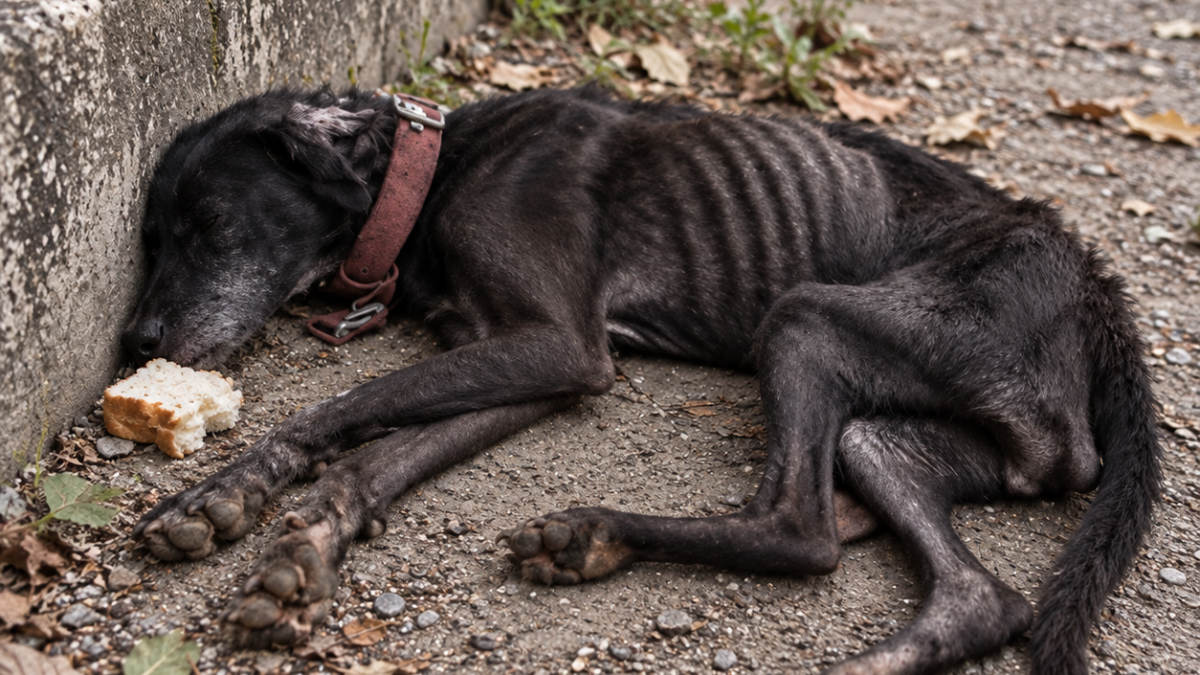
PART 2
I laughed before I realized I was crying.
The technician beside me did the same.
“Did you hear that?”
“I heard it.”
Fern’s mouth opened again.
Nothing came out this time.
She seemed exhausted by the effort.
I touched her paw.
“That was enough.”
Her eyes shifted toward me.
“You don’t have to perform for us.”
The veterinarian entered a few minutes later and listened while we excitedly described the bark as though Fern had just delivered a speech.
He smiled, but he remained careful.
“One small improvement doesn’t mean she’s out of danger.”
“I know.”
“We’re still dealing with severe malnutrition, dehydration, shock, and a body that has been deprived for a long time.”
“I know.”
“Her next several days are critical.”
I looked down at her.
Fern’s breathing was slow but steadier than the day before.
“Then we take the next several days one at a time.”
That became our rule.
No promises about next month.
No fantasies about running through a yard.
No adoption photographs.
No miraculous transformation montage.
One hour.
One day.
One swallow.
One movement.
That was enough.
Fern needed a plasma transfusion because her body was so depleted that supportive care alone was not enough.
The staff prepared everything while I stood beside her.
When they connected the line, Fern barely reacted.
That frightened me.
A healthy dog would have opinions.
Fern had almost none left.
I sat in a chair beside the ICU enclosure.
A technician named Melissa pulled another chair close.
“She’s lucky you found her.”
I looked at Fern.
“No.”
Melissa frowned.
“She is.”
“She should never have needed luck.”
Melissa did not answer.
Neither did I.
That was one of the hardest parts of rescue.
People tell you an animal is lucky because she survived.
But there is nothing lucky about being starved until your body begins shutting down.
Nothing lucky about being discarded.
Nothing lucky about needing strangers to decide whether there is enough life left to fight for.
The luck begins when someone stops.
When somebody looks twice.
When a veterinarian says, “We can try.”
When a technician sits beside the enclosure after her shift should have ended.
That was Fern’s luck.
People.
The transfusion took time.
We watched for reactions.
Fern slept through much of it.
I occasionally placed my hand near her so she could smell me without having to move.
At one point, her toes curled faintly against the blanket.
Melissa saw it.
“There.”
I smiled.
“Another miracle?”
“Maybe just a toe.”
“Today I’ll take a toe.”
Later that afternoon, the veterinarian came to check her.
He touched her gums.
Listened to her chest.
Checked her temperature.
Then he looked at the monitors.
“She’s warmer.”
I leaned toward him.
“How much?”
“Not normal yet.”
“But warmer?”
“Yes.”
That became our celebration for the day.
Warmer.
Most people will never understand what it feels like to celebrate a number moving a fraction in the right direction.
I hope they never have to.
Fern slept.
I stayed.
At some point one of the nurses brought me coffee.
“You should go home.”
“I will.”
“You said that three hours ago.”
“I’m not very reliable.”
She smiled.
“You’re not helping her by collapsing.”
I looked at Fern.
She was asleep under several blankets.
“I told her I’d be here.”
“She doesn’t know what time it is.”
“I do.”
The nurse sat beside me.
“You can keep promises without destroying yourself.”
That sentence stayed with me.
Rescue can make martyrdom feel like devotion.
It isn’t.
Fern would eventually need someone functioning.
So I went home.
I showered.
Changed clothes.
Slept four hours.
Then returned.
Fern had swallowed more food.
Not much.
A carefully measured amount designed for a body that had been deprived too long.
Feeding a severely starved animal is not as simple as filling a bowl.
The body has to relearn abundance without being overwhelmed by it.
So Fern received small amounts.
Carefully.
Slowly.
She did not understand why the people around her kept stopping.
Her eyes followed the food.
That was the first sign of appetite I saw.
I smiled.
“Good.”
The technician raised an eyebrow.
“You’re happy she’s annoyed?”
“Extremely.”
Fern licked the corner of her mouth.
The technician offered another tiny portion when it was safe.
Fern swallowed.
I wanted to give her everything.
A whole bowl.
A mountain of chicken.
Every meal she had ever missed.
But love sometimes means restraint.
Her body needed patience even if my heart did not.
On the third day, Fern lifted her head.
Only slightly.
Maybe two inches.
Then it dropped back onto the blanket.
The technician shouted for me from across the room.
“Ashley!”
I ran over.
“What?”
“She lifted.”
“What?”
“Her head.”
I stared at Fern.
“Show me.”
The technician laughed.
“She’s not a circus act.”
“I know. I’m sorry.”
Fern opened her eyes.
We waited.
Nothing.
Then, slowly, her neck tightened.
Her nose rose from the blanket.
One inch.
Two.
Her head trembled.
“Easy,” I whispered.
She held it there for perhaps three seconds.
Then lowered it.
I covered my mouth.
The seasoned veterinarian who had fought tears on her first day happened to be passing the room.
He stopped.
“You saw?”
I nodded.
He smiled.
“Good girl.”
Fern’s eyes closed again.
Those two words affected me more than they should have.
Good girl.
I wondered how often she had heard them before.
Maybe never.
Maybe years earlier.
We knew nothing about her history.
No collar.
No useful identification immediately connecting her to a safe home.
No person frantically looking for her.
Only the condition of her body.
That body told us neglect had lasted longer than a day.
Longer than a week.
Her muscles had wasted.
Her reserves were gone.
Her coat was dull.
Every bone seemed visible.
That did not happen overnight.
Somebody had watched her disappear in front of them.
That thought became the source of an anger I had trouble controlling.
I reported everything that could be reported.
The location.
The dumpster.
The time.
The condition in which Fern was found.
Photographs were preserved.
People nearby were asked questions.
We checked whether any cameras covered the area.
I wanted a license plate.
A face.
Anything.
I wanted to know who had decided Fern belonged with garbage.
But the early information was incomplete.
The dumpster stood behind a group of businesses.
Several vehicles came and went.
Some cameras pointed toward doors rather than the trash area.
Others had limited retention.
No perfect video suddenly appeared.
I hated that.
“You have to be prepared that we may never know,” an officer told me.
I looked at him.
“How do you not know who does this?”
He did not become defensive.
“We try. But wanting an answer doesn’t create evidence.”
I knew he was right.
I hated him for being right anyway.
“Someone did this.”
“Yes.”
“And they’re walking around.”
“For now, yes.”
I turned away.
“For now” became another phrase I held onto.
Back at the hospital, Fern did not care whether I knew who hurt her.
She was learning to sit.
That was harder than it sounds.
A technician supported her chest while I steadied her hips.
Fern’s legs folded beneath her.
We tried again.
“Don’t force it,” the veterinarian reminded us.
“We’re not.”
Fern pushed weakly with her front legs.
Her elbows shook.
For half a second, her chest rose.
Then she collapsed back onto the padding.
I felt disappointment.
Fern did not.
She simply breathed.
The technician looked at me.
“She doesn’t know she failed.”
That corrected something in me.
Fern was not failing.
We were assigning human meaning to attempts.
Her body was doing what it could.
So the next time she tried and fell, I smiled.
“Good.”
Again.
The following day, Fern sat upright with support.
Her head stayed up.
Her eyes moved around the room.
That was the first time she truly looked at the ICU.
Machines.
People.
Other animals.
Windows.
Life.
She seemed confused by all of it.
Melissa crouched in front of her.
“Hi.”
Fern stared.
Melissa smiled.
“There you are.”
Fern’s tail did not wag.
Not yet.
But her eyes were different.
More alert.
More present.
The hospital staff began carrying her outside for a few minutes when her condition allowed.
The first trip terrified me.
“What if she gets cold?”
“We’re watching her.”
“What if she’s overwhelmed?”
“We bring her back.”
“What if—”
The veterinarian looked at me.
“Ashley.”
I stopped.
“She needs more than fluorescent lights.”
So we wrapped her carefully and carried her into a quiet garden area beside the hospital.
The breeze moved across her face.
Fern blinked.
Her nose twitched.
Then again.
She smelled grass.
Soil.
Flowers.
Air that did not stink of garbage.
I sat beside her.
The sunlight was mild.
We kept the visit short.
Fern’s head rested against my leg.
A butterfly passed in front of us.
She watched it.
I started crying.
Melissa noticed.
“What?”
I wiped my face.
“Nothing.”
“You’re crying at a butterfly.”
“I’m having a difficult week.”
She laughed.
Fern’s nose continued moving.
That tiny nose told me something.
Curiosity was returning.
A dying body narrows everything to survival.
Curiosity requires enough energy to care about something beyond the next breath.
Fern was becoming curious.
About wind.
About voices.
About food.
About who entered the room.
Then came the morning she barked louder.
I walked into ICU.
Fern saw me.
Her head lifted.
A rough little sound came out.
“Was that for me?”
Another bark.
The nurse behind me smiled.
“She’s been practicing.”
I crouched.
“Are you complaining?”
Fern barked again.
“Good.”
That may have been the first time in my life I celebrated being yelled at.
By the end of that week, Fern could support herself upright for short periods with help.
Her legs remained frighteningly thin.
Her muscles had almost disappeared.
The rehabilitation team began gentle exercises.
Range of motion.
Weight shifting.
Supported standing.
Nothing aggressive.
Fern tired quickly.
After each session, she slept deeply.
I spent hours researching starvation recovery even though the veterinarians had already explained it to me.
That is what anxious people do.
We search for control where none exists.
I learned medical terms.
Possible complications.
Warning signs.
Percentages.
Then I closed the laptop because statistics were turning Fern into numbers.
She was not numbers.
She was the dog who barked when I entered.
The dog who had begun licking chicken from a spoon.
The dog who liked the hospital garden.
The dog who now lifted her head when somebody said her name.
Fern.
She knew it.
One afternoon, I stood outside her enclosure.
“Fern.”
Her ear moved.
“Fern.”
She looked toward me.
My throat tightened.
“You know that’s you.”
Melissa said, “Or she knows you have food.”
“I’m choosing the more emotional interpretation.”
Fern stared at my hand.
It contained chicken.
Melissa laughed.
“Definitely the food.”
I did not care.
She knew something good followed the sound.
That was enough.
The first real setback came after nearly a week of improvement.
Fern became quieter.
Her appetite dipped.
Her temperature changed.
The ICU team moved fast.
Bloodwork.
Examination.
Monitoring.
I stood outside the treatment area feeling as though the floor had disappeared beneath me.
Progress makes you greedy.
After a few good days, you start believing you deserve another.
Then reality reminds you recovery is not a straight line.
The veterinarian came out.
“She’s tired.”
“Is she dying?”
“I did not say that.”
“Then what are you saying?”
“We’re adjusting treatment. Her body is still extremely fragile. This is why we haven’t called her stable.”
I pressed both hands against my face.
“Yesterday she stood.”
“I know.”
“She barked.”
“I know.”
“You said her numbers were improving.”
“They are. But improvement doesn’t mean immunity from complications.”
I hated every calm sentence.
Not because he was wrong.
Because fear wanted certainty and he would not lie to me.
I went beside Fern.
Her eyes opened.
I sat.
“You scared me.”
No response.
I touched her paw.
“You don’t have to protect me from bad days.”
Fern closed her eyes.
“We’re allowed to have bad days.”
That sentence became important later.
The next morning she ate.
By evening she was brighter.
Within two days, she had returned to the level she had reached before the setback.
I learned.
Do not let one bad day erase ten good ones.
And do not let ten good days convince you there can never be another bad one.
Fern taught me balance through necessity.
About ten days after her rescue, the rehabilitation technician asked me to come earlier than usual.
“Why?”
“Just come.”
When I arrived, Fern was on a padded mat.
Two technicians were beside her.
A sling supported her abdomen.
The veterinarian stood near the doorway.
I stopped.
“What’s happening?”
“We think she’s ready to try.”
My heart began pounding.
“Try what?”
The technician smiled.
“Standing with less help.”
I moved closer.
Fern looked toward me.
“Hey.”
They positioned her paws.
Her front legs trembled immediately.
The sling took some of her weight.
“Come on, Fern,” the technician whispered.
Fern shifted.
One back leg slid.
They corrected it.
She pushed.
Her elbows straightened.
Then her hips.
For one second, Fern stood.
Nobody spoke.
Two seconds.
Her whole body shook.
Three.
I could see every muscle working.
Four.
The sling remained loose enough that she carried more of herself.
Five.
Then her back legs folded.
The technicians caught her gently.
I started crying.
The veterinarian looked away for a moment.
Melissa covered her mouth.
Fern lay on the mat breathing hard.
I knelt.
“You stood.”
She blinked.
“You stood.”
The rehabilitation technician wiped her eyes.
“She did.”
We thought that was the big moment.
It wasn’t.
The next attempt came later.
Fern stood again.
This time she shifted one front paw.
Then another.
Her back legs trembled behind her.
The technician supported her lightly.
Fern moved a rear paw forward.
Barely.
But forward.
I stopped breathing.
“Did she—”
“Yes.”
Fern moved the other.
The entire ICU seemed to become silent.
A few staff members had gathered near the doorway.
Nobody wanted to interrupt.
Fern took another step.
Her legs buckled.
She caught herself with her front paws.
The technician tightened the sling.
“Easy.”
Fern paused.
Then tried again.
One step.
Then another.
I was crying too hard to see clearly.
A nurse behind me whispered, “Come on, baby.”
Fern’s body shook.
Every step looked impossible.
And still she moved.
The dog who had been thrown into a dumpster because somebody believed she had no value was standing inside an ICU surrounded by people willing her forward.
She took six steps before her body was finished.
The technician lifted her gently.
Everybody started crying at once.
Not cheering.
Crying.
The veterinarian who had said he had never seen a dog in such terrible condition walked over and rested a hand against Fern’s shoulder.
“You stubborn little thing.”
Fern licked his wrist.
That broke him.
He turned away.
I laughed through my tears.
“You okay?”
“No.”
“Professional.”
“Absolutely.”
Fern slept for hours afterward.
I sat beside her.
Something had shifted inside me.
Not confidence exactly.
I still feared losing her.
But I had seen her choose effort when every part of her body had reason to stop.
That did not guarantee an ending.
It gave us another page.
I began preparing my house.
I had promised Fern she would come home with me if she became strong enough.
Promises become real when you start moving furniture.
I bought soft beds.
Non-slip rugs.
A low water bowl.
A pen for times she needed quiet.
Baby gates.
More blankets than any reasonable person requires.
I moved cleaning products.
Checked the yard.
Looked at stairs.
Asked the veterinary team too many questions.
“What if she falls?”
“Help her up.”
“What if she won’t eat?”
“Call us if she misses enough meals or shows other warning signs.”
“What if she gets diarrhea?”
“We’ll deal with it.”
“What if she—”
“Ashley.”
The veterinarian smiled.
“She is not being discharged today.”
“I know.”
“You’ve prepared enough to host a medical conference.”
“I like being ready.”
“You’re terrified.”
“Yes.”
“That’s the real answer.”
He was right.
At the hospital, there were monitors.
Nurses.
Doctors.
Immediate intervention.
At home there would be me.
What if she deteriorated at 2 a.m.?
What if I missed something?
What if love was not enough?
Then I reminded myself that nobody had asked love to replace medicine.
I had a veterinary team.
Emergency numbers.
Follow-up appointments.
A plan.
Home did not mean alone.
It meant the next stage.
Fern stayed hospitalized until the team believed she could safely continue recovery outside ICU.
The day they told me she might be discharged soon, I did not believe them.
“Soon meaning?”
“If she continues like this, a few days.”
I stared at him.
“You’re serious?”
“Yes.”
“Home?”
“Yes, Ashley. That place you have apparently converted into a rehabilitation ward.”
I laughed.
Fern was resting nearby.
I knelt beside her.
“You hear that?”
She licked my fingers.
“You’re almost stuck with me permanently.”
Her tail moved.
One small wag.
I froze.
The veterinarian noticed.
“Was that her tail?”
“It moved.”
“Could be reflexive.”
Fern wagged again.
He smiled.
“Or not.”
That tiny wag hurt more than the first bark.
Because a bark could be discomfort.
A movement could be reflex.
A wag felt like emotion.
Maybe I was projecting.
I did not care.
Two days later, the hospital staff gathered for Fern’s discharge.
She could not walk far.
Her body was still thin.
She needed continued nutrition management, medication, follow-up testing, and rehabilitation.
Nobody pretended she was fully recovered.
But she no longer required constant ICU-level support.
Melissa brought out a blanket.
“This is hers.”
Fern had slept on it almost every day.
“Take it,” she said. “It smells familiar.”
I folded it carefully.
The veterinarian handed me instructions.
“You call if she stops eating.”
“I will.”
“Vomiting.”
“I will.”
“Extreme lethargy.”
“I will.”
“Temperature concerns.”
“I will.”
“Anything feels wrong.”
“I’ll call.”
He looked at me.
“I know you will.”
Fern was carried toward the lobby.
People came from everywhere.
Receptionists.
Technicians.
Doctors.
Someone from pharmacy.
A janitorial worker who had apparently been visiting her after his shift.
I laughed.
“How many secret friends does she have?”
Melissa said, “All of us.”
Fern looked around.
Then barked.
The lobby erupted in laughter.
I lowered myself beside her.
“You ready?”
Her tail moved.
We went home.
I expected some cinematic scene when we entered.
Fern running into the house.
Exploring every room.
Claiming a bed.
Instead, she stood inside the doorway with support and froze.
Her eyes moved.
New smells.
New sounds.
New space.
I remembered what the rehabilitation technician had taught me.
Do not make every moment perform.
So I sat on the floor.
“You can take your time.”
Fern remained still.
After about a minute, she stepped forward.
One shaky step.
Then another.
She smelled the rug.
The wall.
My shoe.
A blanket.
Eventually she reached the bed I had prepared.
She sniffed it.
Then walked past and lay on the floor.
I laughed.
“Of course.”
I placed the hospital blanket beside her.
Fern lowered her head onto it.
Home.
The first night was terrible.
Not because Fern crashed.
Because I became insane.
Every sound woke me.
I checked her breathing constantly.
At 12:40 a.m., she shifted position.
I turned on the light.
At 1:15, she drank water.
I wrote it down.
At 2:03, she sighed.
I nearly called the emergency hospital until I realized dogs are allowed to sigh.
At 3:11, Fern opened her eyes and found me crouched beside her.
She looked annoyed.
“I know.”
She closed her eyes.
“I’m learning.”
By morning, I felt worse than she did.
Fern ate a small breakfast.
Good sign.
She went outside with assistance.
Another good sign.
She sniffed the yard.
Then found the sunniest patch of grass and lowered herself.
I sat beside her.
This was different from the hospital garden.
There, we had borrowed sunlight.
Here, it belonged to her.
A bird landed near the fence.
Fern watched.
Her nose moved.
The breeze passed across her face.
I remembered the dumpster.
Hot metal.
Garbage.
Darkness between bags.
I looked at the dog beside me.
“This is your yard now.”
Fern blinked.
She did not understand property law.
Still, I told her.
“All of it.”
The first weeks at home were not easy.
She needed frequent meals.
Careful meals.
She tired quickly.
Some mornings she walked several steps with confidence.
By afternoon she needed help standing.
Her muscles had to rebuild slowly.
We continued rehabilitation.
At first, the sessions exhausted her.
The therapist placed low obstacles on the floor.
Fern stepped over them.
Then around cones.
Then practiced controlled standing.
When she succeeded, I reacted like she had won an Olympic medal.
The therapist finally said, “You know normal encouragement is enough.”
“This is normal.”
“It is not.”
Fern wagged.
“See? She likes it.”
The therapist laughed.
Fern’s appetite grew.
That became both wonderful and complicated.
She had lived through starvation.
Food carried intensity.
She watched every bowl.
Every package.
Every hand that entered the kitchen.
The first time I dropped a piece of chicken, Fern moved faster than I had seen her move.
She swallowed it before I could react.
“Okay.”
Her eyes stayed on the floor.
“There is no second piece.”
She searched anyway.
I crouched.
“You do not have to panic about food here.”
Fern licked my fingers.
Of course she could not understand a speech about food security.
So I showed her.
Meal after meal.
Same times.
Same place.
Nobody taking the bowl.
Nothing disappearing because she ate too slowly.
Over time, her urgency changed.
At first, she swallowed as though food might vanish.
Weeks later, she chewed.
Months later, she occasionally left a little behind.
The first time that happened, I took a photograph of the bowl.
A friend asked, “Why are you sending me a picture of dog food?”
“She left some.”
“Is she sick?”
“No.”
“Then why are you excited?”
“Because she believes there will be more.”
My friend became quiet.
“Oh.”
Exactly.
Recovery is strange.
The things that matter look meaningless from outside.
Fern gained weight.
Slowly.
The first pound felt enormous.
Then another.
Her ribs became less sharp.
Her hips softened.
Her coat improved.
The hollows around her face filled.
Photographs began looking like they belonged to different dogs.
But I refused to describe the healthy Fern as the “real” Fern.
The dog in the dumpster had been real too.
Worth just as much.
She did not earn love by becoming beautiful.
She was worthy when she could not lift her head.
That distinction mattered to me.
One afternoon, about a month after discharge, I found Fern standing in the kitchen.
No sling.
No support.
Just standing.
I froze in the hallway.
She had not seen me.
A smell from the counter had motivated her.
Chicken.
Naturally.
Fern took one step.
Then another.
Her gait remained uneven.
Her muscles still weak.
But she crossed several feet.
I covered my mouth.
She reached the counter.
Looked up.
Then noticed me.
Tail wag.
I whispered, “You little liar.”
Fern wagged harder.
“You pretend rehab is exhausting and then walk across the kitchen for chicken?”
She barked.
I laughed.
I gave her a tiny piece.
She had earned it.
The investigation into her abandonment remained unresolved.
That ate at me.
Every few weeks I called.
“Anything?”
“Nothing definitive.”
“Cameras?”
“Inconclusive.”
“Witnesses?”
“No one who can identify a person placing her inside the dumpster.”
“Vehicle?”
“Several possibilities. Nothing we can responsibly turn into an accusation.”
I hated that phrase.
Responsibly.
Because part of me did not want responsible.
Part of me wanted rage.
I wanted to put Fern’s first photograph everywhere.
I wanted to stand beside the dumpster and shout until somebody admitted what they had done.
I wanted revenge.
Then one night Fern woke me.
She stood beside the bed.
Her legs were stronger now.
She made a small sound.
“What?”
She walked toward the hallway.
Bathroom.
I got up.
We went outside.
Fern did what she needed, then stood in the yard looking toward the stars.
I watched her.
She did not know the investigation had stalled.
She did not know I was angry.
She did not know there might never be an arrest.
She knew the grass was cool.
She knew I had followed her outside.
She knew breakfast would happen in several hours.
She knew how to get back to her bed.
Maybe justice mattered to me because somebody had treated her life as worthless.
But Fern did not need a courtroom to prove her life had value.
She proved it by having one.
That changed my idea of revenge.
I stopped imagining somebody suffering.
I started imagining Fern thriving.
If we ever found the person responsible, I wanted lawful consequences.
Absolutely.
But until then, I refused to let an unknown person control the emotional center of Fern’s story.
They had already taken enough.
Her recovery belonged to her.
Around six weeks after coming home, Fern began playing.
I almost missed the first attempt.
I had bought toys early, which in retrospect was ridiculous.
She had no energy for toys.
They sat untouched in a basket.
One afternoon I heard a squeak.
I looked into the living room.
Fern stood beside the basket.
A small stuffed toy lay on the floor.
She nudged it.
Squeak.
Fern jumped backward.
I laughed.
She stared at the toy.
Then approached again.
Nudge.
Squeak.
Her tail moved.
“Are you playing?”
Fern grabbed the toy.
For about three seconds she shook it.
Then she became tired and lay down.
I sat beside her.
“That counts.”
She rested her head on the toy.
The next day, she played longer.
Within two weeks, the toy had lost an ear.
I celebrated the destruction.
Fern became mischievous.
That was the best development of all.
She learned that kitchen counters contained forbidden treasures.
She learned that laundry baskets contained socks.
She learned that if she stared at me while I ate, I became emotionally unstable.
She learned that visitors were potential treat dispensers.
She learned the sound of the refrigerator door.
She learned that a certain cabinet contained her food.
Once she stood in front of it and barked at 4:15 in the afternoon.
“Dinner is at five.”
Bark.
“No.”
Bark.
“Forty-five minutes.”
Fern sat.
Bark.
“You survived starvation. You are not currently starving.”
Bark.
I gave her dinner at 4:32.
Fern won.
The veterinarian laughed when I told him.
“You created this.”
“I kept her alive.”
“And now she controls your schedule.”
“She has earned some authority.”
He examined her.
Her bloodwork had improved.
Her weight was up.
Her heart sounded good.
Muscle tone returning.
He stepped back.
“I remember the first day.”
“So do I.”
“I really didn’t think we’d be standing here having this conversation.”
I looked at Fern.
She was trying to open a treat container with her nose.
“What did you think?”
He hesitated.
“That she might not survive the night.”
I already knew.
Hearing it months later still hit me.
He continued.
“We had to think about euthanasia because we couldn’t let her suffer indefinitely if her body was shutting down.”
“I know.”
“But she kept giving us reasons to continue.”
I stroked her back.
“She still does.”
He smiled.
“Now the reason is mostly that she wants snacks.”
Fern barked.
We both laughed.
Eventually I took her back near the hospital garden.
Not inside ICU.
Just for a visit.
The staff had asked.
Fern entered the lobby walking on her own.
Melissa saw her first.
She screamed.
“Fern!”
Fern’s tail exploded.
Melissa dropped to her knees.
Fern walked straight toward her.
Not quickly.
But confidently.
Melissa hugged her carefully.
“Oh my God.”
Other people came out.
The janitorial worker.
Two technicians.
The veterinarian.
A receptionist.
Fern moved among them receiving affection like a retired celebrity.
Someone produced chicken.
I pointed.
“You’re all responsible for her entitlement.”
Nobody cared.
The veterinarian crouched.
Fern licked his chin.
He laughed.
Then his eyes filled again.
“I promised I wasn’t doing this today.”
“You cried the first day.”
“I did not.”
“You absolutely did.”
He looked at Fern.
“Different reason.”
We took her outside.
The same garden.
Same path.
Fern walked.
No one carried her.
She stopped near a flower bed.
Sniffed.
Then continued.
Melissa looked at me.
“Remember when we carried her here?”
“Yes.”
“She couldn’t even hold her head up.”
“I know.”
Fern moved toward a patch of sunlight.
She stood there.
Strong enough now that we were not counting seconds.
Strong enough that nobody watched her legs waiting for them to collapse.
Just standing.
Ordinary.
That was the miracle.
I took a photograph.
The contrast with the dumpster picture was painful.
But this time pain mixed with pride.
Fern had not forgotten everything.
Trauma remained in strange places.
She hated dark enclosed spaces.
The first time I tried to guide her past a large black trash bin near my garage, she froze.
Her body dropped.
Tail tucked.
Breathing changed.
I stopped immediately.
“Okay.”
I moved away.
Fern backed up.
We went around another route.
After that, I kept trash bins out of her path whenever possible.
Months later, with help from a trainer who understood fear, we worked slowly.
No forcing.
No dragging her toward bins.
Distance.
Treats.
Choice.
One day, Fern walked past a trash container from fifteen feet away.
Then ten.
Then five.
Eventually she could pass without freezing.
I never tried to make her sniff it.
She did not need to conquer every symbol of her trauma to prove recovery.
Avoidance is sometimes wisdom.
Healing is not an audition.
The hardest moment came when a neighbor accidentally dropped a large black garbage bag near the sidewalk.
Fern saw it.
She stopped.
I felt the leash tighten.
Her eyes fixed on the bag.
“Fern.”
Nothing.
I crouched.
“Look at me.”
She could not.
Her body began trembling.
I walked backward.
“Come on.”
Fern stayed.
I moved farther.
Finally she looked at me.
“Good.”
I offered a treat.
She took it.
Then we turned around and went home.
That night Fern slept beside my bed.
I looked at her.
Healthy body.
Strong enough to walk.
But somewhere inside, a black bag still meant terror.
I hated the person who did that.
For the first time in weeks, anger came back hard.
I imagined finding them.
Making them see her tremble.
Making them explain themselves.
Then Fern rolled onto her side.
Her paw touched my foot.
I breathed.
I would not make her recovery revolve around my anger.
The next morning, I called the trainer.
“We had a setback.”
“No,” she said.
“We did.”
“Did she recover after seeing the bag?”
“Yes.”
“Did she take food?”
“Yes.”
“Did she leave with you?”
“Yes.”
“That’s not a setback. That’s a fear response followed by recovery.”
I sat quietly.
She continued.
“Do not define healing as never being afraid again.”
That sentence stayed with me too.
Fern could be afraid and still be healed.
Humans could too.
A year after the dumpster, Fern looked almost unrecognizable.
Her coat was full.
Her weight healthy.
Her legs strong enough for walks.
She still tired faster than younger dogs, but nobody could look at her and imagine the motionless body under the trash unless they saw the photograph.
I rarely showed it.
Fern’s story did not need shock to matter.
On the anniversary, I made her breakfast.
Chicken.
Egg.
Her regular food.
A little something special.
Fern sat in the kitchen barking because preparation was taking too long.
“You waited a year for this meal.”
Bark.
“Technically you can wait another thirty seconds.”
Bark.
“Very moving anniversary.”
I put the bowl down.
Fern ate.
Then left several bites.
I stared.
She walked to the water bowl.
Drank.
Then went toward the door.
I looked back at the food.
She had left it.
By choice.
Because she was full.
My eyes filled.
Fern turned.
She barked impatiently.
“I’m coming.”
Outside, she trotted across the yard.
The sun warmed the grass.
She stopped near the flowers I had planted.
Sniffed.
I thought about the hospital carrying her outside so she could smell flowers instead of garbage.
Now flowers grew in her own yard.
I had planted them partly because of that memory.
Fern did not know.
She only knew they smelled interesting.
That was better.
The investigation had never produced enough evidence for a charge against a specific person.
I struggled with that for a long time.
There were leads.
Questions.
Possibilities.
Nothing sufficient.
Eventually the case became one of those files that waits for new information.
I hated the lack of resolution.
Then something unexpected happened.
One of the businesses near the dumpster installed additional surveillance.
Another improved lighting.
Employees began checking the trash area more often.
A rescue organization placed information with local businesses about reporting abandoned animals quickly.
The garbage company instructed drivers to check for movement or animals before compacting trash.
Nobody announced this as Fern’s revenge.
It happened because people had seen what almost happened to her.
Months later, a sanitation worker found a box beside another dumpster.
Inside were three puppies.
Alive.
Found quickly.
They went to rescue.
All survived.
When I heard, I sat in my kitchen staring at Fern.
She was chewing a toy.
“You did that.”
Fern kept chewing.
Not literally, of course.
Fern had not installed cameras.
She had not trained workers.
But what happened to her had made people pay attention.
The place where somebody thought a dying animal could disappear unseen became harder to use that way.
That mattered.
It was not the punishment I originally wanted.
It prevented suffering.
That was better.
The three puppies eventually found homes.
I met them once.
Healthy.
Wild.
Impossible.
They climbed all over me.
Fern watched from a safe distance with the expression of an older woman regretting society’s lack of discipline.
One puppy ran toward her.
Fern stepped aside.
He followed.
Fern gave one warning bark.
The puppy stopped.
I laughed.
“She just raised you.”
Fern walked away.
The puppy looked confused.
I scratched his ears.
“Listen to your elders.”
Years passed more quietly after that.
Fern’s dramatic rescue slowly became history instead of daily reality.
That is what you hope for.
A rescued animal should not have to spend the rest of life performing rescue.
Fern became a dog.
Not a symbol.
Not a case.
A dog.
She had favorite places.
Favorite foods.
Enemies.
One particular vacuum cleaner.
A mail carrier she adored because he carried treats.
A squirrel she believed was engaged in organized crime.
She slept upside down.
She snored.
She stole warm laundry.
She developed a hatred of rain.
She loved car rides as long as the destination was not the veterinarian.
She learned the word “chicken” with religious devotion.
Sometimes people visited specifically because they knew her story.
Fern did not care.
If they brought food, they were acceptable.
If not, she evaluated them cautiously.
One woman cried when she saw Fern.
“I followed her rescue from the beginning.”
Fern sniffed her.
The woman knelt.
“You don’t know me.”
Fern looked toward me.
I said, “She’s deciding whether you have snacks.”
The woman laughed through tears.
She did.
Fern accepted her immediately.
“That feels less spiritual than I imagined.”
“It usually is.”
The most important moments remained ordinary.
Fern sleeping while I worked.
Fern waiting by the door.
Fern finishing dinner.
Fern leaving dinner.
Fern barking because I was late.
Fern leaning into my leg.
Fern standing at the edge of the yard smelling the evening air.
One winter night, the power went out.
The house became cold.
I gathered blankets.
Fern hated being covered unless she chose it herself.
I arranged a bed near me.
She climbed in.
I tucked the hospital blanket around her—the same one Melissa had sent home.
I had kept it all those years.
Fern smelled it.
Then rested her head.
I wondered whether scent could carry memory that long.
Maybe.
Maybe not.
I remembered the first night she spent in ICU.
I had gone home and stared at my phone.
I had been terrified she would die without anyone who loved her beside her.
Now she slept in my living room while a storm knocked out the electricity.
Safe.
Warm enough.
Loved enough.
I lay on the couch.
Fern’s breathing filled the darkness.
At some point, her paw touched the edge of my blanket.
I slept.
By morning, the power returned.
Fern demanded breakfast.
Life resumed.
There is a temptation in rescue stories to create villains and heroes.
Someone bad.
Someone good.
A clean moral line.
Fern’s life was more complicated.
Someone had undeniably failed her in a way that almost killed her.
People at the hospital undeniably saved her.
But nobody who helped Fern thought of themselves as heroic.
The nurse adjusting fluids at 3 a.m. was doing her job.
The veterinarian fighting tears still had three other patients waiting.
The worker who cleaned her bedding did not get photographed.
The person who donated plasma never met Fern.
The receptionist who answered calls became part of the chain too.
So did every person who chose competence over spectacle.
Fern survived through accumulated care.
That taught me something about cruelty too.
Cruelty can happen through accumulated neglect.
A missed meal.
Then another.
Ignoring weight loss.
Ignoring weakness.
Failing to ask for help.
Waiting.
Excusing.
Then one final terrible decision.
Discarding.
I stopped imagining Fern going from healthy to a dumpster in one dramatic moment.
Her body told us there had been a long road toward that dumpster.
Which meant there had also been many earlier moments when somebody could have changed direction.
That made me angrier than the final act.
And more determined to teach people something practical.
Ask for help before crisis.
If you cannot feed an animal, ask.
If you cannot afford care, ask.
If you cannot keep a dog, contact shelters, rescues, veterinary clinics, community programs.
Being overwhelmed is human.
Leaving a living animal to die in trash is a choice.
Fern became part of those conversations.
Not as a horror image.
As proof that delay has consequences.
We eventually created a small emergency assistance fund with local partners.
Nothing huge.
Food.
Basic veterinary support.
Temporary foster help.
Sometimes transportation.
It did not solve everything.
No program can.
But it gave people an option before desperation became neglect.
The first family we helped had an older man with two dogs.
He had lost work after surgery.
He was rationing his own food and the dogs’.
He called before they became skeletal.
We delivered food.
Helped schedule care.
Connected him to resources.
Months later, he came by with a thank-you card.
Fern was in the room.
He asked, “Is that the dumpster dog?”
I looked at Fern.
“She has a name.”
He immediately nodded.
“Sorry. Fern.”
She approached him.
He crouched.
“She saved my dogs too, I guess.”
I smiled.
“Maybe her story helped.”
He stroked her.
Fern leaned into his hand.
That felt like revenge too.
The person who starved Fern had reduced food to a weapon of neglect.
Fern’s life eventually helped put food into other dogs’ bowls.
I could live with that ending.
As Fern aged, she slowed.
The irony never escaped me.
The dog who had once nearly died from being starved became a senior with a carefully measured diet because she would gladly eat everything in the house.
“Life is unfair,” I told her while measuring dinner.
Fern barked.
“No. You are not getting another scoop.”
Bark.
“You have become exactly what I hoped.”
Another bark.
“Demanding.”
She sat.
I added three pieces of chicken.
Compromise.
Her veterinary appointments changed too.
We stopped checking whether starvation had damaged every system permanently.
We started monitoring ordinary aging.
Joints.
Teeth.
Eyes.
Kidneys.
The veterinarian who had treated her first was still practicing.
Every time he saw Fern, he shook his head.
One year he listened to her heart and smiled.
“Do you remember when you said you didn’t know how she was alive?”
He nodded.
“You cried.”
“I continue to deny that.”
“You have no credibility.”
Fern barked.
He looked at her.
“Your mother is difficult.”
I laughed.
Fern licked his hand.
He became serious.
“You know, she changed this place.”
“How?”
“A lot of younger staff were here when she came in. Some had never seen starvation that severe.”
I looked at him.
“Good.”
He raised an eyebrow.
“You know what I mean.”
“I do.”
“They learned what aggressive supportive care can accomplish. They also learned when to have difficult conversations.”
“About euthanasia.”
“Yes.”
The word still hurt.
He continued.
“Trying is not always kind. Sometimes letting go is. Fern was unusual because she continued showing us enough response to justify continuing.”
I looked down.
“That first night, I was afraid I was being selfish.”
“You were right to ask that.”
“Were we close?”
“Yes.”
The answer hit me.
“How close?”
He paused.
“Close enough that if her condition had worsened, we would have recommended it.”
I touched Fern’s head.
She was busy trying to steal a biscuit from his pocket.
“She had other plans.”
He laughed.
“Apparently.”
That conversation clarified something I had carried for years.
Fern surviving did not mean euthanasia would have been a failure.
It meant we had been lucky enough to reach a point where continued treatment remained compassionate.
I stopped telling the story as though love always means fighting forever.
Love means listening to the animal in front of you.
Fern kept answering.
Not with words.
With warmth returning.
Swallowing.
Movement.
Barks.
Standing.
Steps.
Appetite.
Curiosity.
She gave us reasons.
So we continued.
Years later, when age eventually brought real medical problems, I remembered that lesson.
Fern developed arthritis.
Then kidney changes.
Nothing immediately catastrophic.
We adjusted.
Medication.
Diet.
Rugs.
Shorter walks.
More frequent checkups.
She hated the kidney-friendly food.
Of course she did.
I mixed in allowed extras.
Fern stared at me as though filing a complaint.
“This is medically approved.”
She walked away.
“Fern.”
Nothing.
I added a little chicken.
She returned.
“You are corrupt.”
Tail wag.
Old dogs become negotiators.
Fern became excellent.
She still loved the yard.
By then I had expanded the flower bed.
Every spring, she sniffed the first blooms.
I always thought about the hospital garden.
I never told visitors why flowers mattered so much to me.
Some things stay private between a person and a dog.
One afternoon, Fern lay among the grass while I worked nearby.
The sun hit her face.
Her eyes closed.
I stopped what I was doing.
The image was almost identical to those early moments when staff carried her outside.
Except nobody had carried her now.
She had walked.
Slowly.
But herself.
I sat beside her.
“You made it a long way.”
Fern opened one eye.
“You know that?”
She closed it.
I laughed.
“Fine.”
We stayed there until the light changed.
Then Fern stood.
Walked toward the house.
Looked back.
Dinner.
Of course.
The final chapter of Fern’s life did not begin with disaster.
It began with small changes.
Sleeping longer.
Walking slower.
Taking extra time to stand.
Sometimes staring at food before eating.
The first time she left an entire meal, I panicked.
We went to the veterinarian.
Bloodwork showed her kidneys were worsening.
Not failure yet.
A decline.
We adjusted medication and diet.
She improved.
For months.
Then another dip.
Recovery.
Another.
Senior care became waves.
Good week.
Hard day.
Good day.
Hard week.
I learned not to count only time.
Quality.
Interest.
Comfort.
Connection.
Fern still barked for chicken.
Still wanted the yard.
Still greeted me.
Still hated rain.
Still enjoyed the mail carrier.
So we continued.
One morning, years after the dumpster, Fern could not stand without help.
I supported her.
She tried.
Her legs shook.
Then held.
We went outside.
She sniffed the grass.
Urinated.
Then looked at me.
I knew that look.
Home.
I carried her inside.
She rested her head against my shoulder.
The first time I carried Fern, she had been almost dead.
Her body had hung limp.
This time she relaxed because she trusted me.
That difference nearly broke me.
I placed her on the bed.
She sighed.
I sat beside her.
“You don’t have to prove anything anymore.”
Fern slept.
The veterinarian came to the house two days later for an evaluation.
Fern had eaten some.
Not enough.
Her kidneys were declining further.
Pain could be managed.
Nausea somewhat controlled.
But the picture was changing.
The veterinarian sat with me.
“We’re not at an emergency decision this minute.”
I nodded.
“But?”
“You need to start thinking about what her good days look like.”
I hated him for saying it.
Then hated myself because this was the same man who had fought for her when fighting was right.
He had earned my trust enough to tell me when the question changed.
I made a list.
Fern’s good day:
Eat.
Go outside.
Bark at me.
Seek touch.
Rest comfortably.
Show interest in smell.
Enjoy chicken.
Annoy me at dinner.
The list sounded ridiculous.
It was perfect.
For another month, good days outnumbered bad.
Then equal.
Then not.
Fern stopped greeting me at the door.
She still raised her head.
Then eventually not every time.
The mail carrier brought a treat.
Fern sniffed it.
Did not eat.
He looked at me.
His eyes changed.
“That’s not like her.”
“No.”
He crouched.
Fern rested her head against his hand.
He stayed longer than usual.
After he left, I cried in the kitchen.
Fern heard me.
She tried to stand.
I stopped immediately.
“No.”
I went to her.
“You don’t take care of me.”
I lay beside her.
“That’s my job.”
Her eyes closed.
The next morning she ate chicken.
I celebrated.
Bad days do not erase good hours.
But one good meal also does not erase a pattern.
I knew.
Knowing hurt.
A week later, Fern walked outside with help and stopped beside the flowers.
She sniffed.
Then lay down.
The day was warm.
Not hot.
A soft breeze moved through the yard.
I sat beside her.
The same elements the hospital staff had once carried her outside to experience.
Sun.
Air.
Flowers.
No garbage.
Fern rested her head on my leg.
I put my hand against her chest.
Her heartbeat was still there.
Slower than years before.
Steady enough.
I thought about revenge again.
It felt absurd now.
The unknown person who had discarded Fern had become almost irrelevant.
Maybe they never knew she survived.
Maybe they saw a story somewhere.
Maybe not.
It did not matter.
They had given Fern an ending in their mind.
Dumpster.
Heat.
Silence.
Death.
They were wrong by years.
Years of meals.
Years of beds.
Years of sunlight.
Years of chicken negotiations.
Years of people learning her name.
Years of her existence changing other animals’ lives.
That was the revenge.
Not that somebody suffered.
That their decision failed.
They tried to erase Fern.
Fern became unforgettable.
Eventually, the day came when she refused every favorite food.
Chicken.
Egg.
Soft treats.
Everything.
She drank a little.
Went outside once.
Then slept.
When she woke, she looked tired in a way I recognized.
Not the dumpster look.
Different.
This was not starvation.
Not shock.
Not abuse.
This was an old body nearing the end.
I called the veterinarian.
He came that afternoon.
We talked.
Examined her.
Talked more.
There was no dramatic emergency.
That made the decision harder.
But I remembered the first hospital conversation.
If she tells us she’s done, we listen.
Years earlier, Fern had told us she was not done.
Every tiny movement had said continue.
Now the message was changing.
I sat beside her.
“Do I get to be selfish one more day?”
Fern’s eyes opened.
I cried.
“No.”
The veterinarian waited.
He did not rush me.
I called Melissa.
She still worked at the hospital.
When I told her, she went silent.
“Can I come?”
“Yes.”
She arrived with the old hospital blanket.
I stared.
“You kept another one?”
She smiled through tears.
“We had extras. Same kind.”
She placed it beside Fern.
The veterinarian who first treated her came too after his shift.
I had not asked him.
Melissa had.
He walked inside and saw Fern.
For a second, he became the man standing over the dying dog years earlier.
Then he smiled.
“Hey, stubborn girl.”
Fern’s tail moved.
Once.
He covered his mouth.
“You’re still doing that to me.”
I laughed through tears.
We carried Fern outside.
Not because she needed symbolism.
Because she loved the yard.
We placed her bed near the flowers.
The sun was low.
The air cool.
No garbage.
No metal walls.
No heat trapping around her.
She could smell grass.
Melissa sat on one side.
I sat on the other.
The veterinarian knelt near her.
I offered one final piece of chicken.
Fern sniffed.
Then, to everyone’s surprise, took it.
We laughed.
“Of course.”
Fern swallowed.
I kissed her forehead.
“You win.”
The veterinarian prepared the medication.
I hated every second.
But love is not measured by how long you postpone grief.
Sometimes it is measured by whether you accept it before comfort turns into suffering.
I placed Fern’s head in my lap.
Melissa held one paw.
The veterinarian who had once said he did not know how she was alive rubbed her shoulder.
I whispered into her ear.
“You were never trash.”
My voice broke.
“You hear me?”
Fern breathed.
“You were never garbage.”
Another breath.
“You were never too broken.”
Her body relaxed as the first medication made her sleepy.
“You were my girl.”
I pressed my forehead to hers.
“You kept your promise.”
Years earlier, I had promised to take her home if she got strong enough to leave the hospital.
I had forgotten that maybe she had made a promise too.
Not to me.
To herself.
One more breath.
One more swallow.
One more attempt.
One more step.
She had kept going until life became hers.
Now I had to keep my side of love.
“You can stop fighting.”
Fern’s body softened completely.
“You already won.”
She died with the breeze moving across her fur and flowers a few feet away.
The dog who had nearly died beneath garbage left this world beneath open sky.
Surrounded by the people who had once kept her alive.
Held.
Named.
Loved.
Afterward, nobody moved for a while.
Melissa cried openly.
The veterinarian sat back on the grass.
I stared at Fern.
The body looked peaceful.
Too still.
That was the hardest part.
Stillness had been terrifying the first time I saw her.
Now it was final.
Melissa whispered, “Do you remember her first bark?”
I laughed through tears.
“Yes.”
“It sounded terrible.”
“It was perfect.”
The veterinarian said, “I remember the first time she stood.”
“So do I.”
“I thought she was going to fall.”
“She did.”
“She got up again.”
I stroked Fern’s head.
“That was her whole life.”
Fall.
Get up.
Not forever.
Nobody gets forever.
But enough times to build a life.
The weeks after Fern died were brutal.
My house sounded wrong.
No bark from the kitchen.
No nails on the floor.
No body beside my bed.
I kept looking toward her bowl.
For several mornings I measured food before remembering.
Once I opened the refrigerator and automatically reached for chicken.
Then I closed it and cried.
Grief has no respect for dignity.
It ambushes you with ordinary objects.
A leash.
A bowl.
A hair on a blanket.
One scratched cabinet door.
The dent in the couch cushion where a body used to sleep.
I kept Fern’s hospital blanket.
I washed it once.
Then regretted washing it because the scent disappeared.
I placed it in a drawer.
For months, I could not open that drawer.
People sent messages.
Some called Fern inspirational.
Some called her a miracle.
Some said I had saved her.
That one always bothered me.
I had found her.
The veterinary team had stabilized her.
Plasma had helped.
Technicians had watched her day and night.
The rehabilitation team taught her body to work again.
Donors helped.
Workers noticed.
People changed procedures because of her.
Fern had saved herself too.
No single person owned the miracle.
That was important.
A few months after she died, the sanitation worker who had found the box of puppies contacted me.
He had another dog.
Not in a dumpster.
This one belonged to an elderly woman entering the hospital.
She had no family nearby.
The dog needed temporary care.
“Can your rescue help?”
I almost said no.
My heart still hurt.
Then I looked toward Fern’s empty bed.
“Yes.”
The dog arrived that evening.
His name was Charlie.
Nine years old.
Overweight.
Confused.
Spoiled.
The opposite of Fern in almost every physical way.
He refused my expensive food because apparently his owner had been giving him scrambled eggs.
I stared at him.
“You and Fern would have been terrible together.”
Charlie barked.
I laughed for the first time in days without feeling guilty.
He stayed three weeks.
Then his owner came home.
When she reunited with him, she cried.
Charlie almost knocked her over.
I stood back.
That was when I understood Fern’s final gift.
Her story had not made me afraid to rescue again.
It had made the work feel more necessary.
You cannot save one dog and close the door.
Not when you know what can happen on the other side.
Over time, Fern’s story helped fund more emergency cases.
We created a small program for animals found in severe neglect.
Not named after me.
Named after her.
The Fern Fund.
I hesitated at first.
I did not want her reduced to a tragedy.
So the logo did not show a skeletal dog.
It showed a simple fern leaf.
Growth.
That felt right.
The first case the fund helped was a starving hound found behind an abandoned building.
Not as critical as Fern.
Still bad.
He needed hospitalization.
The family who eventually adopted him sent a photograph months later.
He was fat.
Ridiculously fat.
I laughed.
“Fern would approve.”
Then came a senior dog with untreated dental disease.
Then puppies with parasites.
Then a mother dog needing surgery.
Different stories.
Same principle.
Do not wait for perfect rescue.
Do the next useful thing.
Fern had taught us that.
One drop.
One meal.
One transfusion.
One step.
One dog.
The business owners near the original dumpster eventually repainted the back area and added stronger lighting.
The dumpster itself was replaced.
I drove past once.
The old metal container was gone.
For some reason, that hit me harder than expected.
I parked.
Walked to the edge of the lot.
Everything looked ordinary.
Delivery doors.
Concrete.
New dumpster.
Security camera.
No sign that Fern had nearly disappeared there.
I stood for a long time.
At first I wanted a plaque.
Something saying a dog had almost died here.
Then I changed my mind.
Maybe the better memorial was that it had become harder to abandon another one.
The camera turned toward the trash area.
The lighting was bright.
Workers checked.
That was enough.
I whispered, “You changed this place.”
Then I left.
Not long afterward, a young employee from one of the businesses called the rescue.
He had found a cat near the bins.
Alive.
Injured.
He knew exactly what to do because of Fern.
That mattered more than any plaque.
Years later, people still occasionally sent me Fern’s original photograph.
They would ask, “Is this the dog?”
I always answered the same way.
“Yes. But that isn’t who she became.”
Then I would send another photograph.
Fern in the yard.
Fern with a toy.
Fern standing beside flowers.
Fern leaving food in her bowl.
Fern asleep on a warm bed.
Fern old.
Gray around the face.
Comfortable.
That was the picture I wanted people to remember.
Not because the dumpster did not matter.
It mattered enormously.
But cruelty should not get the most memorable image simply because it is shocking.
Love deserves evidence too.
Fern left plenty.
Scratches on the floor.
Destroyed toys.
Photographs.
Veterinary records.
A fund helping other animals.
Protocols changed.
People trained.
Dogs fed.
Puppies found sooner.
And one empty place beside my bed that never fully stopped feeling like hers.
Sometimes I still dream about the day I found her.
In the dream, I look into the dumpster.
Fern’s eyes move.
I reach down.
But before I can lift her, the dream changes.
She stands.
Healthy.
She jumps out herself.
Impossible, obviously.
Dreams do not care.
Then she walks toward the flowers.
I wake up crying.
Not always sad.
Sometimes grateful.
Fern got what the person who abandoned her tried to deny.
Time.
Not infinite time.
Real time.
Messy time.
Ordinary time.
Enough time to become demanding.
Enough to become loved.
Enough to age.
Enough to eventually die for reasons that had nothing to do with starvation or garbage.
That is the ending I treasure most.
Fern did not die because somebody threw her away.
She died years later because bodies eventually become tired.
There is dignity in that difference.
She had seasons.
Birthdays.
Veterinary appointments.
Christmas mornings.
Rainy afternoons.
Chicken arguments.
Walks.
Naps.
Sunlight.
Flowers.
She had people who expected her to wake up tomorrow.
Until one day, gently, she did not.
That is a life.
The person who discarded Fern may never have faced the courtroom ending I once wanted.
I will always wish we had found enough evidence to identify them conclusively.
Accountability matters.
But I eventually understood that an incomplete investigation did not mean an incomplete ending.
Fern’s ending was complete.
The cruel act did not get the final word.
The dumpster did not.
Starvation did not.
The unknown person did not.
Fern did.
Every day she lived afterward was an answer.
Every meal.
Every bark.
Every step.
Every wag.
Every person she taught to look twice at a dumpster.
Every animal helped because someone remembered her.
That is why I no longer say Fern was thrown away.
Someone tried.
There is a difference.
You can discard an object.
You cannot decide a living soul has no value simply because you stop seeing it.
Fern’s value existed while she lay motionless beneath garbage.
Before I touched her.
Before the veterinarian cried.
Before the plasma.
Before she stood.
Before she became beautiful.
Before anybody knew her name.
She did not become valuable because we saved her.
We saved her because she already was.
That is the lesson I carry.
And if there was revenge in Fern’s story, it was not violent.
It was far more complete.
Someone starved her.
Fern spent years knowing what it felt like to be full.
Someone placed her in darkness.
Fern spent years sleeping in sunlight.
Someone left her surrounded by garbage.
Fern became the reason other discarded animals were found.
Someone tried to make her final moments lonely.
Fern’s final moments were crowded with love.
Someone treated her as though she had no future.
Fern built one anyway.
That was her revenge.
That was her miracle.
And that was enough.








