PART 2: They Scheduled Ranger to Di3 Friday Morning—Then I Found One Line in His File That Changed Everything
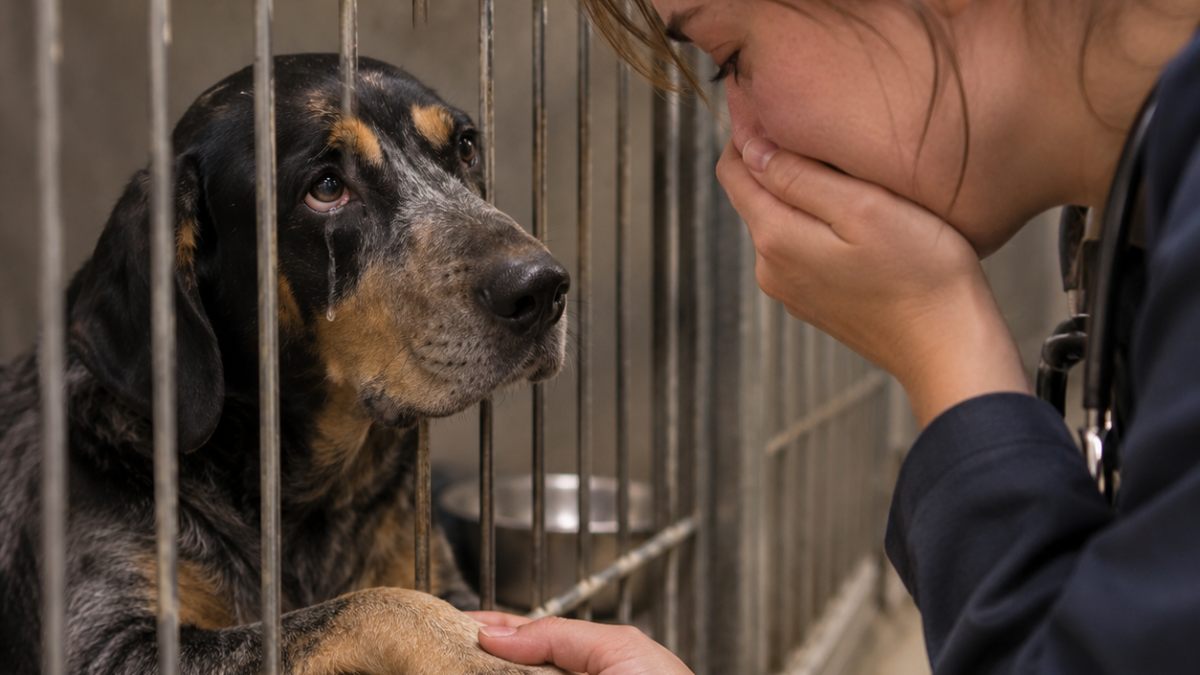
PART 2
I printed the page.
Then I read it again.
Walter Henderson.
Age seventy-eight.
Died at home.
Neighbor discovered him.
Two dogs on property.
Ranger secured.
Daisy missing.
Later found near county road.
Fatal injuries.
The words were clinical.
Efficient.
Exactly the way official reports have to be.
But behind those lines was an entire life.
Ranger and Daisy had lived together nearly six years.
They slept in the same shed during hunting season.
Shared a porch.
Shared food bowls.
Rode in the back of Walter’s old pickup.
Neighbors remembered seeing Walter walking both dogs every morning.
Then one afternoon Walter disappeared from Ranger’s world.
No explanation.
No goodbye.
No return.
The house went quiet.
The dogs waited.
Then Daisy left the property.
Maybe she went looking for him.
Maybe she panicked.
Maybe she followed a scent.
Whatever the reason, she never came back.
Ranger did.
Or rather, Ranger never left.
Animal control found him near Walter’s back door.
Lying there.
Waiting.
That was exactly what he was still doing in our kennel.
Waiting.
I walked into the kennel wing.
Ranger lifted his head.
“Hey.”
No tail wag.
No excitement.
I sat outside the bars.
For the first time, I didn’t see a dog refusing to adapt.
I saw a dog keeping a promise nobody had asked him to make.
Stay here.
They’ll come back.
Daisy will come back.
Walter will open the door.
Just wait.
I put the page beside me.
“I’m sorry.”
Ranger looked at me.
“I didn’t know.”
His ears shifted.
“We should’ve known.”
That part hurt most.
The information had always been there.
We had simply reduced it to intake history.
Owner deceased.
Companion deceased.
Those facts should have changed the way we evaluated him.
Instead, we’d looked at behavior without context.
A dog doesn’t read our labels.
Behavioral decline.
Poor adoption prospects.
He was just living through the worst month of his life.
And we had given him a deadline.
I stayed beside him until almost midnight.
Ranger howled twice.
The second time, I felt it differently.
Not noise.
A name.
Maybe two names.
Walter.
Daisy.
I don’t know.
But grief is repetitive.
It circles.
It asks the same question even after the answer has become obvious.
Where did you go?
Where did you go?
Where did you go?
At 7:03 the next morning, I was waiting outside the shelter manager’s office.
She arrived carrying coffee.
She looked at me.
“No.”
“You don’t even know what I’m asking.”
“You’re here forty-five minutes early holding Ranger’s file.”
“Then you know exactly what I’m asking.”
She unlocked the door.
“Come in.”
I laid the report on her desk.
“Read this.”
“I’ve read his intake.”
“No. Read this page.”
She did.
I watched her expression change.
Not dramatically.
But enough.
“How did we miss that?”
“It was buried.”
“Still.”
“Exactly.”
She sat.
I remained standing.
“Cancel the appointment.”
She looked at me.
“We need a plan.”
“Fine.”
“Not emotion. A plan.”
“Grief-informed behavior intervention. Foster outreach. One-on-one time. Environmental change. Reassessment.”
“For how long?”
“As long as we can get.”
“That’s not an answer.”
“Two weeks.”
She rubbed her forehead.
“We don’t have two weeks of space.”
“Then move him.”
“Where?”
“Office. Intake overflow. Training room. My house if I have to.”
She looked sharply at me.
“You already have two fosters.”
“I know.”
“One is medical.”
“I know.”
“You can’t solve every capacity crisis by taking dogs home.”
“I’m not asking to.”
“You just offered.”
“I am asking you not to euthanize a grieving dog because we misunderstood grief as poor behavior.”
Silence.
That sentence stayed between us.
Finally she said:
“One week.”
“Two.”
“Ten days.”
“Fourteen.”
“Ten.”
“Thirteen.”
She almost smiled.
“You’re bargaining like a hostage negotiator.”
“He has ten minutes before someone starts preparing drugs.”
That wiped away the smile.
She looked at the appointment schedule.
Then picked up the phone.
“Cancel Ranger.”
I exhaled.
Not relief.
Not yet.
A delay is not a rescue.
It is time.
Time only matters if you use it.
I went directly to Ranger’s kennel.
He was still lying down.
“Congratulations.”
Nothing.
“You just won ten days.”
Ranger stared.
“Don’t make me look stupid.”
One ear moved.
That was all.
I started that afternoon.
The first thing I changed was my goal.
Until then, staff had been trying to make Ranger behave like an adoptable dog.
Come outside.
Take treats.
Meet visitors.
Engage.
Show interest.
Tail wag.
Smile for photos.
All the visible things people interpret as “ready.”
I stopped asking for any of them.
If Ranger wanted to lie down, he could lie down.
If he didn’t want to play, no toy was going to be waved in his face.
If he didn’t want affection, nobody needed to hug him into healing.
I simply sat.
The first day, I read a baseball article aloud.
Ranger didn’t move.
The Cardinals had lost.
I blamed the bullpen.
Ranger remained unmoved.
The second day, I told him about traffic.
“Some idiot stopped in the middle of Route 32 because they missed a turn.”
Nothing.
“I nearly became a behavioral case myself.”
One ear twitched.
Progress.
Third day, I read part of a novel.
Fourth day, I brought coffee and sat silently.
Ranger stood.
Walked to the bars.
Not toward me.
Just closer.
Then lay down.
I didn’t touch him.
That was hard.
Humans love turning every tiny step into physical affection.
But sometimes closeness is the step.
You respect it.
Fifth day.
Treat on floor.
Ranger sniffed.
Didn’t eat.
I left it.
He ate after I moved away.
Sixth day.
Treat from my fingers.
He stared.
I waited.
Five minutes.
Ten.
Then one slow step.
Ranger’s nose touched my hand.
He took the treat.
I nearly ruined everything by crying.
“Okay.”
My voice broke.
“Very professional.”
Ranger chewed.
Went back to his blanket.
Still.
That treat felt bigger than an adoption.
The shelter manager saw the note.
**Accepted food directly from handler.**
She stood beside me later.
“Is that meaningful or are you desperate?”
“Both.”
Fair answer.
Day seven.
Tail wag.
One movement.
Not even a full wag.
I came into the kennel wing.
Ranger stood.
I said:
“Morning.”
His tail moved once.
Stopped.
I froze.
“Do that again.”
Nothing.
“Ranger.”
Nothing.
“Did anyone else see that?”
A technician from three kennels down called:
“I did!”
“Good.”
“Was pathetic.”
“I don’t care.”
The technician laughed.
Ranger sat.
I added another line to the behavior notes.
**Brief affiliative tail movement on familiar staff approach.**
Official language for:
He remembered me.
The original ten-day extension was almost over.
I requested another week.
This time, the manager agreed before I finished.
“He’s improving.”
“Yes.”
“Slowly.”
“Yes.”
“Space is still awful.”
“I know.”
“You realize we’re not out of danger.”
“I know.”
Hope in a shelter always competes with arithmetic.
Two dogs adopted.
Four entered.
One foster opened.
Three medical cases arrived.
Every kennel decision affected another animal.
There is no clean morality in overcrowding.
That is why preventing abandonment matters as much as rescuing after it happens.
But Ranger had time now.
And I was determined not to waste it.
I contacted everyone I could.
Hound rescues.
Senior dog networks.
Bereavement-themed adoption groups.
Foster homes.
No one had immediate space.
One rescue two states away said maybe in three weeks.
Three weeks might as well have been three years.
We improved Ranger’s profile.
Not:
**Sad dog needs home.**
Instead:
**Ranger is a gentle six-year-old Bluetick Coonhound grieving the sudden loss of both his owner and longtime canine companion. He needs patience, quiet, and someone willing to let trust arrive slowly.**
That was honest.
The responses changed.
People sympathized.
But sympathy does not always become adoption.
“He needs another dog?”
Maybe.
“Does he have separation anxiety?”
Unknown.
“Is he house-trained?”
Likely, but shelter regression complicated evaluation.
“Does he hunt?”
Probably once.
“Good with cats?”
No data.
“Good with children?”
Calm, but no complete home history.
Potential adopters want certainty.
Shelter animals often come with blank spaces.
Ranger’s blank spaces scared people.
Another week passed.
He improved with staff.
Not visitors.
A family came to meet him.
They had a ten-year-old son.
Nice people.
Patient.
Ranger walked into the meeting room.
Saw them.
Turned toward the exit.
The boy rolled a tennis ball.
Ranger ignored it.
The mother offered chicken.
He took one piece.
Then lay by the door.
They chose another dog.
I couldn’t blame them.
Still hurt.
Another applicant came.
A young couple.
They wanted a hiking companion.
Ranger walked slowly beside them for ten minutes.
No spark.
No excitement.
They wanted a younger dog.
Again, fair.
Each rejection added weight to the same question.
How much time?
The shelter manager never threatened me with a date.
She didn’t need to.
I knew capacity.
Then one afternoon I found Ranger standing in the exercise yard looking toward the parking lot.
He started howling.
Not the small kennel howl.
Louder.
Long.
He stopped.
Waited.
Howled again.
I walked beside him.
“What do you hear?”
Nothing obvious.
Then an old pickup drove past on the county road.
Ranger’s body changed.
Ears forward.
Tail stiff.
He ran toward the fence.
Howled.
The truck disappeared.
Ranger stood there for several minutes.
My throat tightened.
Walter’s pickup.
Maybe similar engine.
Similar smell.
Some sound stored deep inside him.
We don’t know how dogs categorize memory.
But Ranger knew something.
For the rest of the afternoon, he was worse.
Wouldn’t eat.
Wouldn’t come out.
Grief had reopened.
A volunteer said:
“I thought he was getting better.”
“He is.”
“This doesn’t look better.”
“Better isn’t forgetting.”
That became one of Ranger’s lessons.
Recovery from grief does not mean the wound disappears.
It means the wound stops controlling every moment.
Humans know that.
We somehow expect animals to recover more neatly.
That night, I sat beside Ranger.
“No one’s asking you to stop missing him.”
Ranger looked at me.
“Or Daisy.”
His head lowered.
“You can miss them and still eat dinner.”
Nothing.
“You can miss them and still like me.”
One ear moved.
“That sounded needy.”
Tail.
One tiny movement.
I laughed.
“Okay.”
Another week.
Ranger started walking beside me voluntarily.
Then leaning against my leg.
Never much.
Just shoulder contact.
He still howled at night.
Less often.
Staff noticed.
The building sounded different.
One technician said:
“I miss it.”
I looked at her.
“You complained about it for a month.”
“I know.”
“Humans are impossible.”
“True.”
The howl had become part of the shelter.
When it happened now, people understood.
“That’s Ranger.”
Not annoyance.
Recognition.
We began giving new employees more context about intake histories.
Something was already changing.
Not policy yet.
Attention.
Then Wednesday arrived.
Rainy.
Gray.
Almost six weeks after Ranger first came in.
I was updating vaccination records when reception called.
“There’s a man here asking about older hounds.”
“Send him through.”
“He doesn’t want puppies.”
“Miracle.”
“He’s very specific.”
I stood.
The man looked somewhere in his late sixties.
Tall once, probably.
Slight stoop now.
Gray hair.
Weathered hands.
Old boots with dried mud in the seams.
He didn’t look around excitedly the way most adopters do.
He looked tired.
Not physically.
Deeply.
“Can I help you?”
“I’m looking for a dog.”
“Any type?”
“Hound would be good.”
“We have several.”
“Older.”
That narrowed it.
I led him through the kennel wing.
A young Beagle barked.
He smiled but kept walking.
A two-year-old mix jumped against the gate.
He passed.
Another hound wagged wildly.
Still passed.
Then Ranger howled.
One long note.
The man stopped.
Didn’t move.
Ranger’s kennel was ten feet ahead.
The man looked at me.
“Which dog is that?”
“Ranger.”
He walked closer.
Ranger was lying down.
Then he saw the man.
Stood.
No howl.
No retreat.
Just stood.
The man stood too.
For several seconds, they looked at each other.
Something passed between them that I could not name.
Not recognition.
They had never met.
Something quieter.
The man asked:
“What’s his story?”
I could have given the short version.
Owner died.
Companion died.
Grieving.
Needs patient home.
Instead, I told him everything.
Walter.
The stroke.
Two days alone.
Daisy leaving.
The road.
Ranger waiting at the house.
The shelter.
The howling.
The euthanasia appointment.
The page in the file.
The extra time.
The tail wag.
The slow return.
The man listened without interrupting.
When I finished, he looked at Ranger.
Then at the floor.
“My wife died in December.”
His voice was rough.
“Forty-three years.”
I didn’t speak.
He continued.
“House sounds wrong now.”
That sentence hit me.
Not empty.
Wrong.
Anyone who has lived with someone for decades would understand.
He looked at Ranger.
“I still wake up thinking she’s in the kitchen.”
My throat tightened.
“What’s your name?”
“Frank.”
“Frank, I’m sorry.”
He nodded.
People who have heard that sentence a hundred times often don’t know what to do with it anymore.
Then he said:
“My daughter thinks I should get a dog.”
I waited.
“I told her I don’t want a cheerful puppy bouncing around my house like nothing happened.”
I almost smiled.
“Ranger is not currently cheerful.”
“Good.”
That surprised me.
Frank walked closer to the kennel.
Ranger stepped toward him.
Slow.
One step.
Pause.
Another.
Frank crouched as much as his knees allowed.
He didn’t call.
Didn’t reach immediately.
He waited.
Ranger reached the bars.
Pressed his nose through.
Frank offered his fingers.
Ranger sniffed.
Then pushed the side of his head against the metal.
Frank slid his hand through and scratched behind Ranger’s ear.
Ranger closed his eyes.
I stopped breathing.
Frank did too.
The entire kennel wing seemed quiet even though dogs were barking around us.
Then Frank whispered:
“I know, buddy.”
Ranger leaned harder into his hand.
“I know.”
My eyes filled.
Frank looked at me.
“I don’t think he needs fixing.”
That sentence almost ended me.
“What do you think he needs?”
“Somewhere to miss them.”
I had to look away.
“Maybe with somebody who won’t get impatient about it.”
Ranger’s tail moved.
Once.
Then again.
Frank laughed.
First time.
Small.
But real.
The meet-and-greet lasted almost an hour.
We took Ranger outside.
Rain had slowed.
Frank walked him.
Ranger didn’t pull.
They moved at the same pace.
Slow.
Steady.
Frank talked.
I stayed far enough back that I couldn’t hear everything.
Once, Ranger stopped and looked toward the shelter.
Frank stopped too.
No pulling.
No “come on.”
He waited.
Ranger eventually continued.
That told me more than any adoption questionnaire.
Inside, we went through history.
Medical care.
Hound behavior.
Fencing.
Diet.
Adjustment period.
Potential nighttime howling.
Frank nodded.
“I howl too.”
I laughed.
He didn’t.
He was serious.
Then I laughed less.
“Okay.”
He had owned dogs before.
His last one had died years earlier.
Veterinary references checked out.
Home ownership verified.
Fenced acreage.
Retired.
No other pets.
Adult daughter nearby.
Almost suspiciously ideal.
I asked:
“Are you sure you want Ranger?”
Frank looked offended.
“Do you think I’m here because I enjoy paperwork?”
Fair.
The adoption took twenty minutes.
Ranger watched from the office doorway.
No excitement.
No dramatic tail.
Just watching.
Frank signed.
I signed.
Manager approved.
Then we stood.
This was the moment that usually feels happy.
Dog leaving.
Family smiling.
Photos.
Everyone celebrates.
I felt afraid.
What if Ranger panicked?
What if Frank realized grief was harder to live with than it was to empathize with for an hour?
What if Ranger howled all night and Frank brought him back?
Returns happen.
Even good people misjudge what they can handle.
I walked Ranger outside.
Frank opened the passenger-side door of his pickup.
Old truck.
Not Walter’s.
But similar.
Ranger froze.
My stomach dropped.
He stared at the seat.
Frank didn’t pull him.
“Take your time.”
Ranger sniffed.
Put front paws up.
Stopped.
Looked back at me.
I knelt.
“This is okay.”
His ears shifted.
“You can go.”
No movement.
I touched his shoulder.
“You don’t have to wait here anymore.”
Ranger looked at Frank.
Frank patted the seat once.
“Come on, partner.”
Ranger climbed in.
Just like that.
Frank closed the door.
I stood beside the truck.
“Call me.”
“I will.”
“Any problem.”
“I know.”
“If he doesn’t eat—”
“I’ll call.”
“If he howls all night—”
“I won’t call for that.”
I looked at him.
Frank shrugged.
“House could use a voice.”
That was the line that finally let me breathe.
The truck drove away.
Ranger sat in the passenger seat.
Facing forward.
Not backward.
I cried before I made it inside.
The shelter manager found me washing a perfectly clean food bowl.
“You okay?”
“No.”
“Good adoption?”
“Yes.”
“Then why are you crying?”
“Because this job is stupid.”
She nodded.
“Correct.”
For the first night in six weeks, the shelter was quiet.
No Ranger howl.
I hated it.
At 10:14 p.m., my phone rang.
Frank.
My heart stopped.
“What’s wrong?”
“Nothing.”
I sat down.
“Do not call rescue workers after ten and start with silence.”
“Sorry.”
“Is Ranger okay?”
“He’s on the porch.”
“Eating?”
“Some.”
“Drinking?”
“Yes.”
“Bathroom?”
“Yes.”
“Howling?”
Pause.
“Once.”
My chest tightened.
“What happened?”
“Truck went by.”
“Then?”
“He howled.”
“Long?”
“Pretty long.”
“Is he distressed now?”
“No.”
Frank’s voice changed.
“Then I did something stupid.”
“What?”
“I sat beside him and howled.”
I stared at the wall.
“You did what?”
“I didn’t know what else to do.”
I started laughing so hard I cried again.
“How did Ranger react?”
“Looked at me like I’m an idiot.”
“Excellent sign.”
“Then he laid his head on my boot.”
I stopped laughing.
“That’s very good.”
“I thought you’d want to know.”
“I do.”
Frank called three days later.
Ranger had eaten a full breakfast.
One week.
Sleeping on porch.
Two weeks.
Following Frank into the workshop.
Three weeks.
Found an old tennis ball in the yard.
Had no idea what to do with it.
Four weeks.
Figured it out.
Six weeks later, a letter arrived.
Paper.
Actual mail.
The envelope had my name written in block letters.
Inside was a photograph.
Ranger asleep on a covered porch swing.
His head rested across Frank’s boots.
A half-chewed tennis ball lay nearby.
His body looked different.
Not physically transformed.
Relaxed.
That was the transformation.
No waiting by a kennel door.
No eyes fixed on an entrance.
Just sleep.
On the back, Frank had written:
**He still howls sometimes.**
**He misses them.**
**So do I.**
**But now neither of us has to do it alone.**
I put the photograph in my locker.
It’s still there.
But Ranger’s story didn’t end with adoption.
That would have been enough.
It wasn’t the end.
The first thing that changed was our shelter.
Not because someone issued a dramatic new policy overnight.
Because we had been embarrassed by how close we’d come.
The manager called a staff meeting.
She placed Ranger’s original file on the table.
Nobody spoke.
Then she said:
“We almost euthanized a dog for grieving.”
No excuses.
No defensive speech.
Just truth.
One employee said:
“We didn’t know.”
The manager answered:
“We had the information.”
That was worse.
“We didn’t connect it.”
Exactly.
We created a new intake review protocol for cases involving death of an owner, bonded animal separation, family breakup, long-term neglect removal, and sudden displacement.
Not because every sad dog could remain indefinitely.
Space did not magically increase.
But context became mandatory.
If an animal displayed withdrawal, vocalization, food refusal, or shutdown behavior, we asked:
What did this animal lose?
Not only:
What is this animal doing?
That difference mattered.
Behavior is communication.
Context is the translation.
We also started a grief foster network.
Small at first.
Five volunteers.
People willing to take dogs and cats who were medically stable but emotionally shutting down.
Quiet homes.
No expectations.
Temporary decompression.
Ranger became the reason.
One of the first dogs helped was a twelve-year-old Labrador named Benji.
His owner entered hospice.
Benji stopped eating at the shelter.
Before Ranger, we might have labeled him failing to adjust.
Instead, a grief foster took him.
Three days later, he ate chicken.
Two weeks later, he was adopted by a retired teacher.
Another was a cat named Pearl whose bonded companion died.
She spent twelve days hiding.
A foster let her hide.
Didn’t pull her out.
Didn’t force contact.
Eventually, Pearl slept beside the woman’s pillow.
Adopted.
Every one of those animals felt like part of Ranger’s revenge against the label that almost killed him.
Not revenge on a person.
On an assumption.
**Poor adoption prospects.**
Those three words had nearly become a death sentence.
Now they became a question.
Why?
What are we missing?
Months after Ranger left, Frank brought him back to visit.
I didn’t know they were coming.
I was walking through the lobby when I heard a hound bark.
Not howl.
Bark.
I turned.
Ranger.
I stopped.
He stopped.
Then his tail started moving.
Not once.
Not twice.
Full wag.
He crossed the lobby toward me.
I knelt.
“Ranger?”
He pushed his head into my chest so hard I nearly sat down.
I laughed.
“You remember me.”
Frank stood behind him.
“Unfortunately.”
Ranger licked my chin.
“This is disgusting.”
Tail wagging.
His body looked healthier.
He’d gained a few pounds.
Coat shinier.
But the biggest difference was his face.
People say dogs smile.
I try not to humanize every expression.
Still.
Ranger looked lighter.
Frank looked better too.
Not healed.
Grief doesn’t work like that.
But less hollow.
“How’s he doing?”
Frank smiled.
“Runs my schedule.”
“Good.”
“Gets up at six.”
“That’s your problem.”
“Demands breakfast.”
“Normal.”
“Howls when the church bells ring.”
I paused.
“Every time?”
“Most Sundays.”
“Any idea why?”
“No.”
Frank scratched Ranger’s neck.
“I let him.”
That answer mattered.
He didn’t need every behavior erased.
Ranger had a life before him.
That history wasn’t an inconvenience.
It was part of the dog.
Frank sat in our lobby for nearly an hour telling stories.
Ranger had started sleeping in the bedroom.
Not on the bed.
Beside it.
He rode in the pickup.
Went to the feed store.
Made friends with a cashier who gave him biscuits.
Still didn’t like young dogs jumping on him.
Loved old men.
Ignored cats.
Hated thunderstorms.
One night during a storm, Ranger howled from the hallway.
Frank sat on the floor with him until it stopped.
“Did you howl too?”
“No.”
“Growth.”
Frank laughed.
Before leaving, he asked if we needed anything.
I said:
“Fosters.”
He thought.
“What kind?”
“Quiet homes. Grieving dogs.”
He nodded.
Two months later, Frank became a foster volunteer.
Of course he did.
Not immediately.
He said Ranger needed time first.
Then he opened his home to an older hound whose owner had gone into long-term care.
Ranger tolerated him.
Frank sent me a picture.
Two dogs asleep on opposite sides of the porch.
Caption:
**Ranger says this is temporary.**
Three weeks later:
Both dogs touching.
Caption:
**Ranger’s standards are slipping.**
The foster was adopted.
Then another came.
Frank became one of our best decompression homes.
He didn’t rush.
Didn’t care whether a dog wagged on day one.
Didn’t measure progress by affection.
He knew what it meant to sit beside grief without trying to fix it.
That is a rare skill.
Most people get uncomfortable around sadness.
We want to solve it.
Distract it.
Cheer it up.
Make it go away because its presence reminds us of things we can’t control.
Frank didn’t.
Ranger taught him.
Or maybe his wife had.
Probably both.
A year after the adoption, Frank invited several shelter staff to his property for Ranger’s “gotcha day.”
I hate that phrase.
Frank loved it because his granddaughter taught it to him.
We went.
Ranger met us at the gate.
Barking.
Tail high.
Then he recognized us.
Chaos.
The dog once considered too shut down to adopt ran around the yard greeting people.
Not like a puppy.
He was still Ranger.
Measured.
But happy.
There was a tennis ball graveyard beside the porch.
At least twelve destroyed balls.
I pointed.
“He learned.”
Frank nodded.
“Expensive education.”
Ranger had also developed a strange friendship with a wild turkey that visited the property.
Not real friendship.
Ranger stared.
Turkey stared.
Neither acted.
Frank called it diplomacy.
At sunset, everyone sat near the porch.
Frank’s daughter asked about Ranger’s original shelter file.
She knew part of it.
Not all.
I told her.
She looked at Frank.
“You didn’t tell me he was scheduled.”
Frank looked at Ranger.
“Didn’t matter after I got him.”
“It matters.”
She turned to me.
“How close?”
“Hours.”
Frank’s granddaughter, maybe nine, overheard.
“They were going to kill Ranger?”
The adults went silent.
I chose my words.
“The shelter was very full, and people thought Ranger was suffering and might not find a home.”
“But Grandpa wanted him.”
“Your grandpa hadn’t met him yet.”
She hugged Ranger.
“That’s stupid.”
Frank said:
“Sometimes adults make decisions with incomplete information.”
She looked unimpressed.
“Still stupid.”
Fair.
Ranger leaned against her.
I watched him.
There was the revenge the user always wants in stories.
Not punishment.
Proof.
He had been hours from disappearing because we thought nobody wanted him.
Now a child held him like he belonged to the family history.
Ranger aged.
Seven.
Eight.
Nine.
His muzzle turned whiter.
His howl remained.
Less frequent.
Frank said it usually happened at dusk.
Some dogs vocalize naturally.
Bluetick Coonhounds are not famous for silence.
But Frank believed certain howls were different.
“I know his regular one.”
“Of course you do.”
“The sad one’s lower.”
I didn’t argue.
People who live with animals learn distinctions outsiders don’t hear.
Ranger still had bad days.
Anniversaries maybe.
Scents.
Sounds.
Who knows.
One October evening, Frank called.
“He’s been sitting by the truck for an hour.”
“Any pain?”
“No.”
“Eating?”
“Yes.”
“Weather change?”
“Maybe.”
“What happened before?”
Frank was quiet.
“Found Walter’s old hunting jacket.”
My skin prickled.
“How?”
“The neighbor had it.”
Walter’s neighbor had kept several belongings when the property was cleared.
Years later, he learned Ranger was alive.
He brought Frank an old canvas jacket.
Ranger smelled it.
Then stopped.
Sat down.
Refused to move for forty minutes.
Frank didn’t take the jacket away.
He placed it on the porch.
Ranger lay beside it.
That night, he slept with his head on it.
Frank asked:
“Was that cruel?”
“No.”
“Feels like I reopened something.”
“Maybe.”
“Should I remove it?”
“Does he seem distressed?”
“Not now.”
“Then let him choose.”
Ranger slept beside Walter’s jacket for weeks.
Eventually, it became just another blanket.
Scent faded.
Memory integrated.
I don’t know if dogs understand objects as relics.
But I know Ranger didn’t fall apart.
He remembered.
And kept living.
That is what grief asks of us.
Not forgetting.
Continuing.
At ten, Ranger developed arthritis.
Frank added ramps.
Joint medication.
Shorter walks.
No drama.
At eleven, hearing declined.
Frank joked that Ranger had finally found a way to ignore him legally.
At twelve, a benign mass was removed.
I visited during recovery.
Ranger recognized me after a sniff.
Tail wag.
Slower.
Still there.
Frank looked older too.
Grief had become part of him rather than all of him.
He had photos of his wife everywhere.
Ranger’s photo beside them.
Not replacement.
Addition.
That’s another thing people misunderstand.
You don’t replace love.
You expand around the absence.
Frank eventually told me more about his wife.
Her name was Margaret.
Cancer.
Fast decline.
Forty-three years of marriage compressed into six months of appointments, medications, and goodbyes.
After she died, people kept telling him to “stay busy.”
He hated it.
“Busy doesn’t make a chair less empty.”
Ranger had never told him to move on.
That’s why it worked.
They simply shared a house where two missing beings were allowed to exist.
Walter.
Daisy.
Margaret.
Names not erased.
Carried.
When Ranger was thirteen, Frank stopped fostering.
His own health had changed.
Knees.
Heart medication.
Less energy.
He called me apologizing.
“I can’t do it right anymore.”
“Then don’t.”
“Feels like quitting.”
“You gave dozens of dogs a quiet place.”
“Twenty-two.”
He knew the number.
Of course.
“Twenty-two dogs.”
“Still.”
“Frank.”
Silence.
“You taught us how to build the grief foster program.”
He grumbled.
“I sat on a porch.”
“Exactly.”
Sometimes people underestimate the power of a porch.
Our program had grown from five foster homes to thirty-one.
We trained volunteers.
Partnered with hospice organizations.
Created emergency placement options for pets whose owners entered hospitals unexpectedly.
We started asking families to create pet care plans for elderly relatives.
All because one dog cried in a kennel and one page got overlooked.
Ranger’s life had become structural change.
That’s the kind of revenge I believe in.
Not one person suffering.
A system learning.
At fourteen, Ranger began slowing significantly.
Frank called more often.
Not panic.
Updates.
“Didn’t finish breakfast.”
“Did he eat later?”
“Half.”
“Water?”
“Yes.”
“Bathroom?”
“Normal.”
“Pain?”
“Hard to tell.”
Vet visits increased.
Kidney values changed.
Heart murmur.
Arthritis.
Age.
The ordinary enemies of a dog lucky enough to reach old age.
Lucky enough.
I never thought I’d use that phrase about Ranger.
He had almost died at six because grief made him look hopeless.
Now at fourteen, old age was taking him slowly.
That is victory.
We want rescued animals to grow old.
Even though growing old eventually breaks our hearts.
Frank knew.
One afternoon, he asked:
“How do you know when you’re keeping them too long?”
That question never gets easier.
I wasn’t Ranger’s veterinarian.
I connected Frank with his clinic.
But emotionally, he wanted my answer.
“When the bad days become the life instead of interruptions.”
Frank looked at Ranger asleep beside his boots.
“Not yet.”
“No.”
Not yet.
Ranger still enjoyed food.
Porch.
Short drives.
Sun.
Frank’s granddaughter visiting.
Aged twelve now.
She read beside him.
Ranger slept.
One evening, the old howl returned.
Long.
Low.
Frank called me afterward.
“He hasn’t done that in months.”
“What happened?”
“Nothing.”
“Storm?”
“No.”
“Truck?”
“No.”
“Then maybe he felt like howling.”
Frank laughed softly.
“Maybe.”
Then:
“I howled too.”
“You’re backsliding.”
“He looked at me.”
“Judgmental?”
“Very.”
Good.
The last time I saw Ranger alive was in early spring.
He was almost fifteen.
Frank brought him to a shelter fundraiser.
We had a booth about grief behavior.
Ranger’s photograph was on the display.
Young Ranger.
Six years old.
Sad eyes.
Frank walked in with ancient Ranger.
White face.
Slow gait.
The contrast stopped people.
A volunteer asked:
“That’s him?”
I smiled.
“That’s him.”
Ranger lay near the table.
Children petted him.
He tolerated it like a retired professor.
One woman read the display and started crying.
Her dog had recently died.
She told Frank.
He listened.
No advice.
No “get another one.”
No clichés.
Just listened.
Then Ranger put his head on her shoe.
The woman laughed through tears.
There it was again.
Grief recognizing grief.
That was Ranger’s gift.
Not that he cured sadness.
He made sadness less lonely.
Two months later, Frank called.
His voice told me before the words.
“He won’t get up.”
I sat down.
“Did the vet come?”
“On the way.”
“Is he in pain?”
“Not badly. Just tired.”
I drove.
I didn’t ask permission.
Frank lived forty minutes away.
I made it in thirty-five.
Ranger was on the porch.
Same porch from the photograph.
Same boots nearby.
Frank sat on the swing.
Ranger’s head lay across one boot.
My locker photograph had come to life.
Only older.
Much older.
I knelt.
“Hey, Ranger.”
His eyes opened.
Took a second.
Then tail.
One slow thump.
I cried immediately.
“That’s rude.”
Frank laughed.
“You still doing that?”
“Apparently.”
The veterinarian arrived.
Examined him.
Ranger’s body was failing.
Kidneys.
Weak circulation.
Pain manageable but increasing.
No meaningful treatment that would restore quality.
Frank knew.
Still asked.
“Anything?”
The vet answered gently.
“We can hospitalize him.”
Frank looked at Ranger.
“What would that buy?”
“Possibly time. Hard to say how much good time.”
Frank shook his head.
“No cages.”
That sentence hit me.
Ranger had spent enough time in kennels.
He would not die in one.
The veterinarian prepared an at-home euthanasia.
Frank’s granddaughter arrived with her mother.
Teenager now.
She cried into Ranger’s neck.
“You were supposed to live forever.”
Frank said:
“That’s a bad contract.”
She laughed and sobbed.
Ranger breathed.
Slow.
Comfortable.
Frank placed Walter’s old jacket beneath him.
The canvas was faded.
Almost no scent left.
Symbol now more than memory.
I sat on the floor.
The same posture I’d taken outside his shelter kennel years before.
No forcing.
Just there.
Frank scratched behind Ranger’s ear.
The exact place he’d touched through the kennel bars the day they met.
“You ready, partner?”
Ranger’s eyes closed.
The sedative went in.
His body relaxed.
Frank whispered:
“I know.”
Those were the first words he’d said to Ranger.
Almost.
At least the first ones that mattered.
“I know.”
Now the last.
Ranger breathed out.
The veterinarian waited.
Then administered the final medication.
One breath.
Another.
Stillness.
No howl.
No waiting.
No door.
Frank kept his hand on Ranger’s head.
Nobody spoke.
Eventually, Frank said:
“Margaret’s going to be mad.”
I looked at him.
“Why?”
“He always stole her side of the bed.”
We laughed.
Grief is strange.
It lets humor enter at impossible times.
Then Frank cried.
Not dramatically.
Quietly.
The way Ranger had howled.
One long exhale.
Silence.
I stayed until dark.
Before leaving, Frank handed me something.
The old photograph.
Ranger on the porch swing.
Head on boots.
Tennis ball.
“You already have a copy.”
“I have the original.”
“No.”
“Take it.”
I did.
On the back, the note.
**He still howls sometimes.**
**He misses them.**
**So do I.**
**But now neither of us has to do it alone.**
Below it, Frank had added another line years later.
**He stopped waiting. So did I.**
That line broke me.
Ranger’s ashes stayed with Frank.
Walter’s jacket remained on the porch.
The shelter placed a small plaque near the grief-foster training room.
I argued against anything sentimental.
Lost.
It read:
**RANGER’S ROOM**
**Grief is not bad behavior.**
Simple.
Good.
New employees learned his story.
Not as mythology.
As a warning.
Context matters.
One missed line almost killed him.
We changed our forms permanently.
Intake staff now ask specifically about:
Owner death.
Bonded companion loss.
Previous home routines.
Recent separation.
Family hospitalization.
Housing displacement.
Known mourning behavior.
We don’t always get answers.
But we ask.
Ranger’s life created that question.
Years later, Frank’s health declined.
His daughter moved him closer to her.
Before leaving his old property, he visited the shelter one last time.
Walked slower.
Cane.
Same boots, though newer pair.
He stood in Ranger’s Room.
Read the plaque.
“You people made a whole room?”
“You made a whole foster program.”
He grunted.
“Didn’t mean to.”
“Neither did Ranger.”
He looked at the photograph on the wall.
Young Ranger.
Sad.
Waiting.
Frank said:
“Use the other picture.”
“What?”
“Porch.”
He pointed.
“That’s not him.”
I understood.
The intake photo showed the crisis.
Not the dog.
We replaced it.
Now Ranger’s Room shows the porch photograph.
Sleeping.
Safe.
Because rescue should not freeze animals inside their worst day.
A few months later, Frank died.
His daughter sent us a letter.
No dramatic revelation.
Just gratitude.
She wrote that after Margaret died, Frank had stopped answering friends.
Stopped going to church regularly.
Stopped fishing.
Ate alone.
Barely spoke.
Ranger changed that.
Not immediately.
Dog needed walks.
Food.
Vet care.
Truck rides.
Routine.
Frank began leaving the house.
Talking to people at the feed store.
Volunteering.
Fostering.
Eventually laughing again.
She wrote:
**You thought my father saved Ranger.**
**Ranger gave my father seven years we weren’t sure we would get.**
I framed that letter beside the original one.
The story had always been mutual.
That’s the part people misunderstand about rescue.
We like clean roles.
Rescuer.
Rescued.
Strong.
Broken.
But relationships don’t stay in those boxes.
I gave Ranger time.
Frank gave Ranger a home.
Ranger gave Frank routine.
Frank gave twenty-two other grieving dogs temporary safety.
Those dogs went into families.
Some of those families became fosters.
The circle widened.
One dog scheduled for Friday morning changed an entire network of homes.
That is the most satisfying revenge I can imagine against the phrase:
**Poor adoption prospects.**
Ranger’s prospects turned out to include almost nine more years.
A home.
A porch.
Twenty-two foster siblings.
A grieving widower.
A granddaughter.
Tennis balls.
Truck rides.
Sunday howls.
An old hunting jacket.
And a room at the shelter named after him.
Poor prospects?
We were spectacularly wrong.
That mistake humbled me.
It should.
Rescue workers are not heroes who always know what animals need.
We make judgments.
Sometimes bad ones.
We work under pressure.
We miss things.
The responsibility is not pretending we never fail.
The responsibility is learning fast enough that the next animal benefits.
Ranger did that for us.
He taught us grief can look like shutdown.
Loyalty can look like refusal to engage.
Waiting can look like hopelessness.
And sadness is not the same as suffering without possibility.
Sometimes the animal in front of you doesn’t need cheerfulness.
Sometimes they need permission to miss someone.
People still ask me about the hardest dogs I’ve worked with.
Ranger’s name rarely comes first.
He wasn’t hard.
That’s the irony.
He never bit.
Never fought.
Never destroyed anything.
He simply didn’t perform recovery on our timetable.
We considered that a problem.
Then Frank walked in and recognized something we had professionalized out of ourselves.
Loss.
He saw Ranger and thought:
I know that face.
That is all.
No training technique.
No complicated behavior protocol.
Recognition.
Sometimes the most powerful intervention is being understood.
I still work rescue.
I’ve seen hundreds more animals since Ranger.
Some stories end beautifully.
Some don’t.
We still face capacity problems.
Still make impossible decisions.
The Ranger protocol did not eliminate euthanasia.
Nothing that simple.
But it changed the quality of our questions.
Before we write:
**behavioral decline**
we ask:
**Compared with what?**
Before:
**poor adoption prospects**
we ask:
**Have we shown the right story to the right person?**
Before:
**not engaging**
we ask:
**Is this animal frightened, sick, grieving, exhausted, or simply overwhelmed?**
Those questions don’t guarantee a happy ending.
They create room for one.
Ranger needed room.
Ten days.
Then another week.
Then a Wednesday afternoon.
That’s all.
His life changed because a deadline moved.
Sometimes rescue is dramatic.
Surgery.
Fire.
Flood.
Blood.
Sometimes rescue is an administrator drawing a line through Friday 9:00 a.m.
And writing:
**CANCELLED.**
I kept a copy of Ranger’s euthanasia appointment.
I know that sounds strange.
It’s inside the back of his file.
Not displayed.
Not celebrated.
A reminder.
One line.
Date.
Time.
Reason.
Then red ink:
**CANCELLED — REASSESS GRIEF HISTORY.**
I look at it when shelter work becomes too automatic.
Animals become numbers quickly when volume is high.
Kennel 14.
Intake 6721.
Six-year-old neutered male.
Behavior category.
Medical status.
Outcome code.
Systems need categories.
Compassion requires remembering the animal inside them.
Ranger.
Not case number.
Ranger who waited at Walter’s back door.
Ranger who lost Daisy.
Ranger who howled.
Ranger who took a treat after six days.
Ranger who wagged once.
Ranger who rested his head against Frank’s boots.
Ranger who helped a widower leave the house again.
Ranger who fostered dogs by simply tolerating them on his porch.
Ranger who grew old enough to have white ears.
That’s a life.
You cannot see all of it from intake behavior.
One winter, years after Ranger died, a new dog arrived.
Ten-year-old female Shepherd mix.
Owner died.
Dog stopped eating.
Wouldn’t look at staff.
A young employee wrote:
**possible shutdown behavior**
Then underneath:
**Ranger protocol initiated.**
I stared at those words.
The dog went to a grief foster the next day.
Three weeks later, she was eating.
Two months later, adopted.
I sent the update to Frank’s daughter.
She replied:
**Dad would’ve liked that.**
Yes.
He would have.
Margaret too, I suspect.
Walter.
Daisy.
Names connected to outcomes they never got to see.
That’s another thing about kindness.
You rarely know how far it travels.
Walter loved two hounds.
That love shaped Ranger.
Ranger’s grief revealed how deeply dogs bond.
Frank recognized it because he loved Margaret.
Their shared grief created a home.
That home created fosters.
Those fosters influenced shelter policy.
Now animals years later receive different care.
Love travels even after the original people are gone.
So does grief.
Maybe they’re the same thing moving in different directions.
I don’t know.
I’m a shelter worker, not a philosopher.
But Ranger made me think about it.
The photograph remains in my locker.
Older now.
Edges bent.
Ranger sleeping.
Frank’s boots.
Tennis ball.
Sometimes new staff ask:
“Who’s that?”
I tell them.
Not the short version.
The whole story if I have time.
The Friday appointment.
The buried file note.
Walter.
Daisy.
The howl.
Frank.
Margaret.
The porch.
Because the lesson isn’t:
**Never euthanize a sad dog.**
Shelter medicine and behavior are too complicated for slogans.
The lesson is:
**Know what you’re looking at before you name it.**
Grief isn’t aggression.
Fear isn’t stubbornness.
Shutdown isn’t necessarily hopelessness.
And an animal’s first response to catastrophe is not always a prediction of their future.
Ranger was not broken.
He was bereaved.
There is a difference.
Broken means something has lost function.
Grief means something mattered.
Ranger cried because he had loved.
Walter.
Daisy.
Later Frank.
That capacity was not the reason he should have died.
It was exactly the reason he deserved time.
Sometimes I imagine that first Friday if I hadn’t opened the file.
I hate doing that.
Nine in the morning.
Ranger led into a quiet room.
Gentle hands.
Sedation.
Nobody cruel.
Nobody angry.
People believing they were ending suffering.
Then gone.
Frank arrives the following Wednesday.
Walks through kennels.
No Ranger.
Maybe adopts no one.
Goes home.
House stays wrong.
No grief foster program.
Twenty-two dogs never stay on that porch.
Maybe most still find homes elsewhere.
Maybe some don’t.
We can never know.
That’s why small decisions haunt rescue work.
A file opened.
A page read.
A meeting delayed.
A deadline moved.
The difference between one life and an entire chain of lives.
I don’t think that makes me a hero.
It makes me lucky.
Lucky I noticed.
Lucky the manager listened.
Lucky we had enough flexibility.
Lucky Frank walked in.
Lucky Ranger still had enough trust left to press his head against the bars.
Luck matters.
So does preparation.
That’s why we changed the system.
The best way to honor one lucky rescue is making the next outcome depend less on luck.
That became Ranger’s real legacy.
Not sentiment.
Procedure.
Training.
Questions.
Foster capacity.
Documentation.
Concrete things.
Love made operational.
I think Frank would have appreciated that.
He wasn’t sentimental in the obvious way.
The first Christmas card he sent featured Ranger wearing antlers.
The note:
**He hates these. Granddaughter insisted.**
Ranger looked furious.
I laughed for ten minutes.
Another year:
Ranger beside a Christmas tree.
**Still howls. Tree doesn’t care.**
Frank’s humor came back through those cards.
That’s how I knew he was healing too.
Not healed.
Healing.
The same word we use too casually.
Healing doesn’t return you to who you were.
It teaches you how to carry what happened without letting it control every room.
Ranger never stopped missing Walter and Daisy.
Frank never stopped missing Margaret.
They built another life around those absences.
That is not replacement.
It is continuation.
There is a photograph from Ranger’s thirteenth year that I love almost as much as the porch picture.
Frank sits in a lawn chair.
Ranger beside him.
Both looking away from the camera.
Sunset.
Nothing dramatic.
Frank’s hand rests on Ranger’s neck.
You cannot tell either one has survived anything.
That’s why it’s beautiful.
Trauma stories often overvalue the moment of rescue.
The dramatic before.
The shocking pain.
But the goal is always the boring photograph.
Two old souls sitting outside.
Nobody crying.
Nobody waiting.
No deadline.
Nothing happening.
Safety is often uneventful.
That’s what we were trying to give Ranger.
An ordinary life long enough that the shelter became one small chapter instead of his identity.
He got it.
If I could talk to Ranger now, I’d apologize.
Not for the shelter being crowded.
Not for every difficult decision.
For misunderstanding him.
I’d say:
We thought you were giving up.
You weren’t.
You were waiting.
We thought your sadness meant there was nothing left to work with.
Actually, your sadness proved how deeply you could attach.
We thought nobody would want a dog who cried at night.
Then a man walked in who needed someone willing to cry with him.
We thought you needed to stop grieving before you could be adopted.
Frank understood you needed a home where grief was allowed.
That difference saved you.
Then you returned the favor.
And I’d probably tell him:
You were scheduled for Friday.
He wouldn’t understand.
Good.
Dogs don’t need to know how close humans came to making the wrong decision.
They just need the life afterward.
Ranger got almost nine years afterward.
That is enough revenge for me.
Against the schedule.
Against the label.
Against the assumption.
Against the idea that a grieving animal has no future.
Friday morning came.
Ranger lived.
Wednesday afternoon came.
Frank walked in.
And years later, when Ranger took his last breath on a covered porch with his head near the boots of the man who understood him, he was no longer waiting for anyone to come back.
He was already home.
That is how I remember him.
Not howling behind kennel bars.
Not listed as poor adoption prospects.
Not scheduled.
Home.
And if there is one thing Ranger taught me that I will carry through every shelter door for the rest of my career, it is this:
Grief is not proof that love is gone.
Grief is proof that love was there.
Sometimes the most broken-looking animal in the building isn’t broken at all.
Sometimes he is simply waiting for someone who understands what it feels like to miss a voice that will never call his name again.
Ranger found that person.
And Frank found him.
Neither stopped missing the ones they lost.
They simply stopped missing them alone.








