PART 2: They Said This Street Cat Was Too Far Gone to Save—Then Sam Did the Impossible
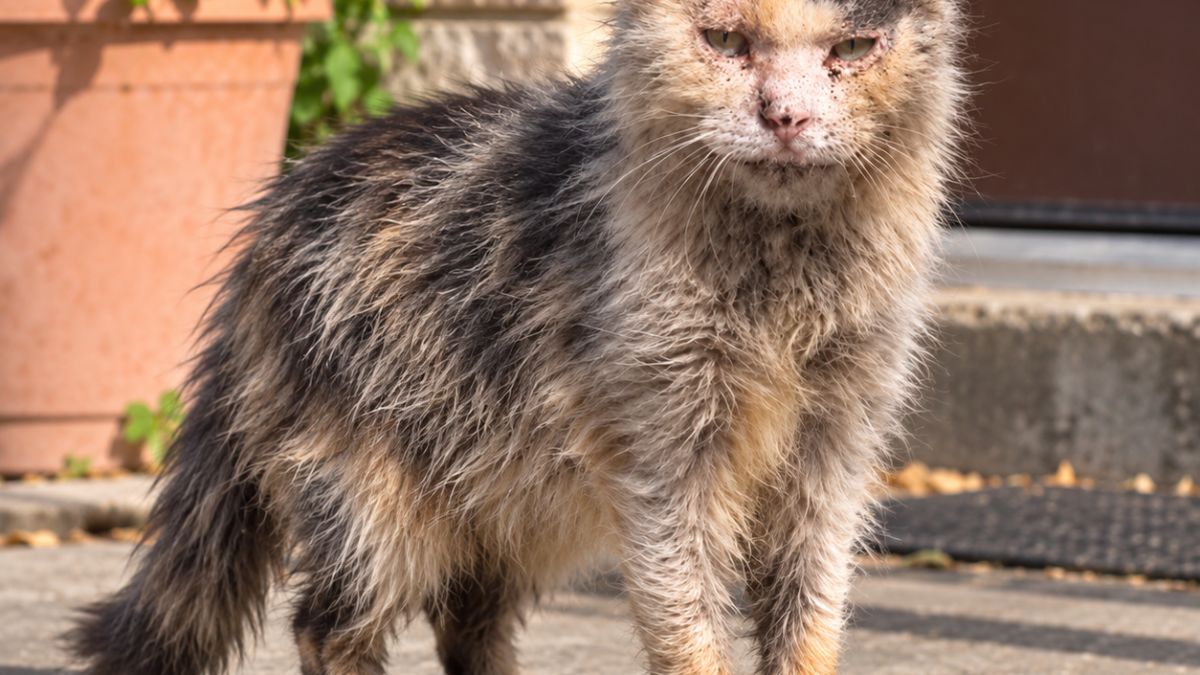
PART 2
I stopped breathing.
The surgeon pointed toward the images.
“The mass is extensive,” he said. “But based on what we can see here, it has not spread into the places we were most afraid of.”
I stared at him.
For weeks, every conversation had ended with another reason Sam could not be helped.
Too weak.
Too old.
Too dangerous.
Too complicated.
And now, for the first time, someone was not closing a door.
I almost didn’t trust what I had heard.
“So you’re saying you can operate?”
He did not answer immediately.
He pulled out a chair and sat across from me.
“I am saying surgery may be possible. I am not saying it will be easy.”
He explained that the diseased section of Sam’s lower jaw would have to be removed. It was a major procedure for any cat, and Sam was not starting from a healthy place.
His body had spent years surviving instead of healing.
He was underweight.
His mouth was chronically painful.
Eating had become a daily battle.
There was also the risk of bleeding, infection, anesthesia complications and problems learning how to eat after the operation.
The surgeon folded his hands.
“If we do nothing,” he said, “the mass will continue making his life more difficult.”
I looked down at Sam.
He was sitting inside his carrier with his front paws tucked beneath him, apparently uninterested in the conversation deciding his future.
“The goal isn’t to make his face perfect, is it?” I asked.
“No.”
“To make him look normal?”
“No.”
“Then what is the goal?”
The surgeon glanced at Sam.
“To give him comfort. To reduce the bleeding. To remove as much diseased tissue as we safely can. To give him a chance to eat without experiencing what he experiences now.”
A chance.
It was such a small word.
For Sam, it felt enormous.
I asked the question I had been afraid to ask.
“If he were your cat, what would you do?”
The surgeon was silent for several seconds.
Then he said, “If his blood work improves enough and he remains stable, I would give him the chance.”
I reached through the carrier door.
Sam pressed his forehead against my hand.
“All right,” I whispered.
The surgeon raised an eyebrow.
“All right?”
“We give him the chance.”
Getting permission for surgery was only the beginning.
Sam had to become strong enough to survive it.
For the next several days, my entire life revolved around teaspoons of food.
I blended soft meals until they were nearly liquid and warmed them slightly so the smell would encourage him.
Some meals went well.
Others did not.
Sam would approach the dish eagerly, lower his mouth toward it, then freeze when pain shot through his jaw.
I learned his routine.
Approach.
Sniff.
Try.
Pull back.
Wait.
Try again.
Sometimes he managed only a few mouthfuls before retreating.
“That’s enough,” I would tell him.
He would stare at me.
Then go back for another bite.
“You are impossible.”
Another bite.
“Fine. One more.”
Sam had apparently decided that my definition of “enough” was irrelevant.
His stubbornness became the rhythm of our days.
The same cat whom strangers might have mistaken for a creature at the end of his life followed me from room to room.
He investigated shopping bags.
He sat beside the bathtub and watched water disappear down the drain.
He discovered that if he stared at me long enough while I prepared his food, I would become nervous and work faster.
At night, he still insisted on sleeping against me.
Sometimes I woke around three in the morning unable to move because an underweight Bulgarian street cat had somehow managed to occupy the exact center of the bed.
“Sam.”
One eye opened.
“Move.”
The eye closed.
That was when I first laughed because of him.
Not smiled.
Laughed.
He looked terrible.
He felt terrible.
We were preparing for a surgery that might kill him.
And somehow, Sam had already started turning my home into his.
The morning before his final blood test, I barely slept.
At five, I found him sitting beside the kitchen cabinet where his food was stored.
“You know it’s too early.”
Sam meowed.
His voice sounded strange because of his jaw, more like a rough little complaint than a proper meow.
“You aren’t supposed to be this demanding.”
Another meow.
I crouched beside him.
The humor disappeared as quickly as it had come.
I ran one hand down his narrow back.
“You don’t know what’s coming tomorrow.”
He leaned against my knee.
Maybe that was better.
Animals do not sit in dark rooms imagining every terrible possibility.
They know pain when pain comes.
They know comfort when comfort comes.
They know hunger.
Warmth.
Fear.
Safety.
Sam did not know words like prognosis or surgical mortality.
He only knew that yesterday I had fed him, and today I was standing beside him, and therefore there was a reasonable possibility breakfast would happen soon.
I envied him.
The final tests were encouraging.
Not perfect.
But encouraging.
His body was responding to care.
He had gained a little weight.
The surgeon agreed to proceed.
We scheduled the operation.
And suddenly the decision I had fought so hard to reach became something I feared more than all the rejections before it.
Because now I could lose him because I had said yes.
The night before surgery, Sam was unusually affectionate.
Or perhaps I was simply paying attention differently.
He climbed onto my chest as usual.
His paws pressed into my shirt.
Then he settled his head beneath my chin.
I could feel his purr vibrating through my ribs.
“You know what everyone keeps telling me?” I whispered.
His ear twitched.
“They keep telling me how risky tomorrow is.”
He continued purring.
“They keep telling me what might happen.”
Nothing.
“And I keep pretending I’m brave because you’re watching me.”
Sam shifted closer.
I shut my eyes.
“You don’t owe me anything, you know.”
That was the part I needed him to understand, even though I knew he couldn’t understand the words.
I had promised to fight for him.
I did not want that promise to become selfish.
“If you’re tired,” I whispered, “you don’t have to stay because of me.”
My throat tightened.
“But if you want to stay…”
I pressed my face carefully against the top of his head.
“…then fight like hell tomorrow.”
His purr became louder.
I took that as his answer.
We reached the clinic before sunrise.
The streets of Sofia were still dark.
Sam sat quietly in his carrier beside me.
Every traffic light seemed too long.
Every kilometer seemed too short.
When we arrived, a technician took him for preparation.
I followed until a door marked the point where I was no longer allowed.
“Wait,” I said.
She stopped.
I opened the carrier one last time.
Sam looked up.
I placed two fingers against his forehead.
“I’ll be here when you wake up.”
Then they carried him away.
I stood in the hallway staring at the closed door.
It was the first time since rescuing him that I had willingly handed him to someone and walked away.
I hated every second of it.
Waiting during a surgery is a strange kind of helplessness.
There is nothing useful to do.
You cannot bargain with time.
You cannot perform the operation through sheer concentration.
You cannot make the anesthetic safer by staring at your phone.
I drank coffee I could not taste.
Walked the corridor.
Sat down.
Stood again.
Checked the clock.
Tried not to check the clock.
Every person wearing scrubs became someone I feared.
A nurse appeared once and told me the procedure was still underway.
“Is he stable?”
“Yes.”
One word.
It carried me for another hour.
Then another.
I thought about the first time I had seen Sam beside the trash containers.
If I had arrived ten minutes later, would he have been gone?
If he had been hiding under a car, would I have noticed him?
If he had run when I reached toward him, would I have kept trying?
Entire lives can turn on moments nobody recognizes as important while they are happening.
A hand extended.
A cat leaning forward instead of backward.
A car door closing.
A veterinarian agreeing to one more scan.
A surgeon saying, “Maybe.”
And now Sam’s life rested on another moment happening behind a closed door.
The surgeon finally appeared.
I stood so quickly my chair scraped backward.
He looked tired.
His surgical cap was still on.
I searched his face before he spoke, trying to steal the answer from his expression.
“He’s alive,” the surgeon said.
My legs nearly gave out.
I covered my mouth.
“He’s stable.”
I started crying before he finished the sentence.
The surgeon waited.
I tried to apologize.
He shook his head.
“No apology needed.”
“How did it go?”
“We removed the diseased portion we planned to remove. The procedure was difficult, but he tolerated it better than we feared.”
“Can I see him?”
“Not yet. He’s waking.”
Those words—he’s waking—felt impossible.
That morning, I had handed them a skeletal old stray with a face distorted by a tumor and years of untreated suffering.
And somewhere behind those doors, Sam was still here.
When I was finally allowed into the recovery area, he looked impossibly small.
The swelling was significant.
His face was different.
There were tubes, blankets and monitors around him.
But his chest rose.
Fell.
Rose again.
I stood beside him without touching him at first.
“Sam?”
One ear moved.
I laughed and cried at the same time.
“You stubborn old man.”
His eyelids fluttered.
Then one paw shifted beneath the blanket.
The nurse smiled.
“He knows your voice.”
I wanted to believe her.
So I kept talking.
I told him he was safe.
I told him the surgery was finished.
I told him he had done exactly what I had asked.
“You fought like hell.”
His eyes opened briefly.
They were unfocused.
Then they closed again.
But I had seen them.
Sam was still in there.
The next twenty-four hours were not the triumphant miracle people like to imagine after a successful surgery.
They were frightening.
Recovery came in inches.
His temperature was watched closely.
His breathing was monitored.
Pain had to be controlled.
There was concern about whether he would tolerate nutrition.
Every few hours brought another small question.
Was he more alert?
Was he comfortable?
Was the surgical site stable?
Could he swallow properly?
Was there bleeding?
I learned quickly that “he survived surgery” and “he is going to recover” were not the same sentence.
At one point during the first night, Sam seemed deeply exhausted.
I stood beside his cage while a nurse adjusted his medication.
“Is this normal?”
“He’s been through major surgery.”
“That isn’t what I asked.”
She looked at me.
There are expressions medical professionals develop when they are trying to tell the truth without taking away hope.
“I want to see him brighter,” she said.
The fear returned immediately.
I sat beside him.
“Sam.”
No response.
“Hey.”
His ear moved slightly.
“You’re not allowed to scare me like this after all that.”
Nothing.
I put my hand through the opening and touched his paw.
“You know that food cabinet at home?”
His toes moved.
“That’s right. Your cabinet.”
Another tiny movement.
“I swear, if you get through this, I’ll let you complain about breakfast every morning for the rest of your life.”
His eyes cracked open.
I smiled through tears.
“There you are.”
The next morning, Sam was stronger.
Not strong.
Stronger.
There is a world of difference between those two words.
He lifted his head.
He responded when touched.
And when the technician brought a small amount of soft food near him, Sam did something that made the entire room stop.
He sniffed it.
I held my breath.
For years, food had meant pain.
Every bite had required him to push against an obstacle growing from his own face.
Now his mouth was unfamiliar.
Part of his lower jaw was gone.
His muscles had to adapt.
His tongue had to learn a different way of moving food.
He lowered his face toward the dish.
Tried.
Stopped.
My stomach dropped.
Then Sam adjusted his head.
He tried again.
A small amount disappeared.
The technician looked at me.
I looked at her.
“Did he—”
“Yes.”
Sam swallowed.
Then he went back for more.
I cried so hard I had to turn away.
It was not graceful.
Some food fell.
He had to reposition himself.
His face would never look like other cats’ faces.
But he was eating.
And for the first time since I had met him, the thing causing his worst pain was no longer controlling every mouthful.
Sam did not know he was demonstrating anything extraordinary.
He simply knew there was food in front of him.
So he kept eating.
His recovery became a collection of small victories.
The first time he stood without wobbling.
The first time he cleaned one paw.
The first annoyed sound he made when someone examined him for too long.
“That,” I told the technician, “is his real personality returning.”
She laughed.
A few days later, the surgeon examined Sam again.
The healing was progressing.
There were still risks.
There would still be follow-up visits.
We still had to wait for additional medical information.
But the immediate crisis was passing.
“When can he come home?”
The surgeon smiled slightly.
“You have been asking that since the morning after surgery.”
“I like consistency.”
“If he continues like this, soon.”
Soon became the best word in the language.
The day Sam left the clinic, I placed his carrier on the passenger seat and secured it carefully.
He immediately complained.
I looked at him.
“You survived surgery and now you’re angry about the carrier?”
Meow.
“Remarkable.”
Another meow.
“All right. File your complaint.”
We drove home.
When I opened the carrier inside the apartment, Sam stepped out slowly.
He paused.
Sniffed.
Then walked directly toward the kitchen.
I stared at him.
“You cannot be serious.”
He continued toward his food cabinet.
I laughed.
Of all the things he could have done after returning from major surgery, Sam chose to confirm that my promise about breakfast had become legally binding.
Recovery at home required patience.
There were medications.
Special food.
Careful monitoring.
Moments when I woke during the night because I thought his breathing sounded different.
Moments when he refused food and I immediately imagined disaster.
Then ten minutes later, he would eat.
I became the sort of person who could discuss the texture of cat food with an intensity usually reserved for international diplomacy.
Too thick.
Too cold.
Wrong bowl.
Wrong angle.
Sam had opinions about everything.
At first, eating remained messy.
Because of the portion of jaw that had been removed, he had to find a new technique.
Some food dropped from his mouth.
I placed washable mats around his dishes.
He would eat, step backward, notice a piece he had dropped, and carefully chase it across the mat.
“You’re supposed to make this easier for yourself.”
Sam did not care.
His determination had never been elegant.
It had simply been relentless.
As the days passed, another change appeared.
He stopped sleeping as if someone might take safety away.
Before surgery, Sam’s sleep had been light.
A sudden movement could wake him.
A noise in the hallway would raise his head.
His body seemed to remember the streets even when his mind wanted to rest.
After several weeks at home, I found him stretched across the sofa one afternoon.
Not curled protectively.
Stretched.
Belly exposed.
Front legs extended.
Completely unconscious.
I stood in the doorway watching him.
Something about that position destroyed me.
People think rescue is the moment you pick an animal up from the street.
Sometimes it is.
But real safety arrives later.
It arrives when an animal stops preparing for the next bad thing.
Sam was no longer guarding himself from the world.
For the first time, he trusted that nothing terrible was coming through the door.
He began gaining weight.
Slowly at first.
Then steadily.
His coat changed too.
The dull, dirty fur that had covered him on the street was replaced by softer, healthier hair.
He groomed himself more.
His eyes became brighter.
He developed an obsession with a patch of afternoon sunlight beside the window.
Every day, sometime after lunch, Sam walked to the same spot and collapsed into the warmth.
If clouds covered the sun, he sat there looking personally betrayed.
“You survived the streets for years,” I told him once. “Surely you can survive one cloudy afternoon.”
He stared at me.
“No?”
His expression suggested my argument lacked merit.
The first photographs from after surgery were difficult for me to compare with the ones from the day I found him.
Not because Sam looked perfect.
He didn’t.
His lower face had been permanently changed.
Anyone seeing him for the first time could tell he had survived something serious.
But the cat in the new photographs was no longer disappearing beneath his illness.
That was the difference.
Before surgery, I saw the tumor first and Sam second.
Afterward, I saw Sam.
His eyes.
His ridiculous demands.
His stubborn walk toward the kitchen.
The way he tilted his head when I spoke.
The way he climbed onto my chest and settled himself as if my ribs had been designed specifically as cat furniture.
His face was different.
His life was different.
And those were not the same thing.
People sometimes asked me whether I wished Sam had been found earlier.
Of course I did.
I wished someone had helped him before he became so thin.
Before the mass grew so large.
Before eating became torture.
Before years of neglect were written into his body.
For a while, that thought made me furious.
I would look at old photographs and imagine all the people who might have seen him.
Surely somebody had.
A cat does not reach that condition overnight.
Someone must have noticed.
Maybe many people had.
I wanted to ask them why they kept walking.
But anger is strange when there is no single person to give it to.
Sam’s enemy had not been one cruel owner whose name I could confront.
It had been something quieter.
Indifference.
The assumption that somebody else would help.
The instinct to look away from a problem because looking directly at it might create responsibility.
That realization bothered me more.
One evening, I sat beside Sam as he slept.
“You deserved better,” I whispered.
He opened one eye.
“And I wish I could go back and make everyone see you.”
He stretched one paw onto my leg.
Then he went back to sleep.
Sam did not live backward.
That became another thing he taught me.
Several weeks after surgery, we returned to Sofia for another examination.
I was nervous.
Sam was furious about the carrier.
“You remember these people saved your life.”
Meow.
“That is extremely ungrateful.”
Meow.
“Your official position is noted.”
At the clinic, the staff gathered around him.
Some had seen him immediately after surgery.
Now they stared.
“He’s gained weight.”
“Yes.”
“His coat looks completely different.”
“I know.”
The technician who had first helped him eat crouched near the carrier.
“Hello, handsome.”
I laughed.
“Don’t say that too loudly. His ego is already becoming a problem.”
The surgeon examined him carefully.
Sam tolerated the process for approximately thirty seconds before attempting to walk off the table.
The surgeon smiled.
“I remember when he barely had enough energy to protest.”
“That problem has been solved.”
When the examination was finished, I asked the question I had been carrying into the room.
“Is he comfortable?”
The surgeon nodded.
“From what we can see, yes. And his progress is very good.”
I looked at Sam.
“Did you hear that?”
Sam was investigating a box of medical gloves.
“He has other priorities,” the surgeon said.
One afternoon, months after the operation, I gave Sam a soft meal and realized I had not watched him take every bite.
That might sound insignificant.
It was enormous.
For months, eating had been an event.
Before surgery, I watched because I feared the pain.
After surgery, I watched because I feared complications.
Then one day I set down his bowl, walked to the sink and began washing dishes.
A few minutes later, I heard him leave the kitchen.
I looked down.
The bowl was nearly empty.
I froze with my hands in the water.
We had reached ordinary.
No emergency.
No fear.
No silent counting of mouthfuls.
Just an old cat eating breakfast.
I turned off the water and sat on the floor.
Sam returned because he apparently thought sitting on the floor meant I had something interesting.
I scratched behind his ears.
“You did it.”
He purred.
“You turned breakfast into something boring.”
Sam pushed his head beneath my hand.
I had never been so grateful for boring in my life.
That spring, he discovered the open window.
It had a secure screen, and I placed a padded platform beneath it so he could sit comfortably.
Outside were trees, rooftops and birds who had no idea how seriously Sam took their existence.
He watched them for hours.
Sometimes his tail twitched.
Sometimes he made tiny sounds.
The first time he attempted the strange chattering noise cats make when watching birds, his altered mouth produced such an unusual sound that I burst out laughing.
Sam turned around.
“I’m sorry.”
He stared.
“I am.”
More staring.
“Please continue.”
He turned back toward the birds with the offended dignity of a retired professor.
I laughed again.
He left the window.
Apparently I had violated professional bird-watching etiquette.
As his strength returned, Sam also became mischievous.
This was not a personality trait anyone had warned me about.
The fragile old stray began stealing my chair.
If I stood up for thirty seconds, he took it.
He learned that tapping objects from the bedside table made me wake up.
The first time he knocked my keys onto the floor at six in the morning, I assumed it was accidental.
The second morning, he pushed a pen.
The third morning, he stared directly at me while moving a small box toward the edge with one paw.
“Don’t.”
Push.
“Sam.”
Push.
“I mean it.”
The box fell.
He looked toward the kitchen.
“You are blackmailing me for breakfast.”
Meow.
I had spent months begging this cat to eat.
Now he was weaponizing household objects to accelerate meal service.
I considered that a victory.
There were difficult days too.
Healing does not erase history.
Sam had dental and medical adjustments.
Some days his appetite was lower.
Sometimes I panicked over things that turned out to be minor.
He remained an older cat whose body had endured years of deprivation.
I knew loving him would never give me control over time.
That frightened me.
The more alive he became, the more I understood how much losing him would hurt.
One night, after a routine appointment had left me unusually anxious, I sat on the edge of the bed.
Sam climbed beside me.
“You know the unfair part?”
He kneaded the blanket.
“I thought rescuing you meant I was supposed to make you feel safe.”
He circled once.
“But somehow you made me terrified.”
Sam settled against my leg.
“Because now I know exactly what I have to lose.”
He began purring.
I smiled.
“Terrible arrangement.”
He pushed closer.
I lay down beside him.
“Fine. We’ll keep it.”
People who saw Sam’s transformation sometimes called it a miracle.
I understood why.
The photographs were dramatic.
The difference between the skeletal cat with the enormous jaw mass and the comfortable animal sleeping in my home seemed impossible.
But I became careful with that word.
A miracle sounds effortless.
As though one morning everything changed because the universe decided to be kind.
Sam’s recovery had not been effortless.
It had been made of dozens of people choosing not to look away.
The person who first helped get him off the street.
The veterinarians who examined him even when they feared the options were limited.
The technicians who handled him gently.
The people who helped us travel for another opinion.
The surgeon willing to look at the scans one more time.
The nurses who watched him through recovery.
And Sam himself, returning to the food bowl again and again even after years of pain had taught him that eating hurt.
No lightning bolt saved him.
Persistence did.
One evening, I found the first blanket I had wrapped around him on the day of his rescue.
It had been washed many times and stored in a closet.
I brought it into the living room.
Sam sniffed it.
For a moment I wondered whether he recognized the smell, the texture, anything from that afternoon.
Then he stepped onto it.
Turned twice.
Lay down.
That was all.
I looked at him and remembered carrying him to the car.
How little he weighed.
How carefully I had held his damaged face away from the fabric.
How terrified I had been that he might die before anyone could even determine what was wrong.
Now the same cat was annoyed because I had not arranged the blanket smoothly enough.
I straightened one corner.
“Better?”
Sam closed his eyes.
Apparently.
I sometimes thought about the doctors who had advised comfort care.
I was never angry with them.
That surprised people.
But they had not been cruel.
They had looked at an extremely complicated case and made judgments based on the risks they saw.
Some truly believed surgery might cause more suffering than it prevented.
They were trying to protect him in the way they understood.
The surgeon in Sofia did not prove that everyone else was foolish.
He simply had another piece of information.
Better imaging.
A different assessment.
A willingness to attempt a difficult operation under specific conditions.
Medicine is rarely the simple story we want it to be.
There had never been one evil doctor standing between Sam and life.
There had been uncertainty.
And uncertainty can feel almost as cruel when the animal you love is running out of time.
Still, I will never forget the sentence that changed everything.
It hasn’t spread.
I heard it sometimes while watching Sam sleep.
Those words had divided his life into before and after.
By summer, visitors who met Sam had difficulty believing the stories I told.
“This is the same cat?”
“The same one.”
“The street cat?”
“Yes.”
“The one who couldn’t eat?”
“The very same.”
Sam usually sat somewhere nearby pretending the conversation had nothing to do with him.
One friend brought him a plush bed.
Sam slept in the cardboard box it arrived in.
Another brought an expensive toy.
Sam preferred the receipt.
Someone gave him a soft blanket.
He ignored it and climbed onto my chest.
At least one thing had never changed.
No matter how comfortable the house became, Sam still wanted a human heartbeat beneath him.
Maybe it reminded him he was not alone.
Or maybe my chest was simply warm.
I liked the first explanation better.
On the anniversary of the day I found him, I returned to the street where we had met.
I did not bring Sam.
That chapter belonged behind him.
I stood near the row of containers and watched people walking past.
Nothing about the place looked important.
Cars moved.
People carried groceries.
Someone spoke on a phone.
A dog barked behind a fence.
And I thought about how easily the most important moment of my life with Sam could have disappeared into an ordinary afternoon.
I had not woken that morning planning to rescue an old cat.
I had not prepared money for specialists.
I had not planned trips to Sofia.
I had not imagined surgical consultations, sleepless nights or learning how to prepare meals for a cat missing part of his lower jaw.
I had simply seen someone suffering and stopped.
That was it.
Stopping had changed everything.
When I returned home, Sam was waiting near the door.
He had food.
Water.
A bed.
A window.
An entire apartment.
Yet he greeted me as if I had returned from an expedition across the world.
“There you are.”
He rubbed against my legs.
“I went back to where I found you.”
He meowed.
“No, you can’t go.”
Another meow.
“You have terrible memories there.”
Sam walked toward the kitchen.
I laughed.
“Of course. Emotional conversation over.”
I fed him.
He ate.
Afterward, he cleaned his paws in the sunlight.
I sat nearby and watched.
There was something almost defiant about his ordinary happiness.
The world had treated him as disposable.
Now he had preferences.
The world had allowed him to starve.
Now he complained if breakfast was late.
Pain had controlled every meal.
Now he could walk away from a dish simply because he was full.
People had looked at his face and seen something frightening.
Now I looked at that same face and saw home.
That was Sam’s revenge.
Not anger.
Not punishment.
Not making anyone suffer because he had suffered.
His revenge was living long enough to become inconveniently happy.
Months continued passing.
Sam became a neighborhood celebrity among the people who knew his story.
But at home, he was simply Sam.
He was not “the tumor cat.”
He was not “the miracle rescue.”
He was the creature stealing my chair.
The cat waking me for breakfast.
The stubborn old man refusing the expensive bed.
The companion who believed every closed bathroom door represented a personal betrayal.
That normality mattered to me more than any dramatic photograph.
Because illness had taken so much of his identity for so long.
Now he was allowed to be ridiculous.
One rainy afternoon, thunder rolled across the city.
Sam was sleeping near the window.
A particularly loud crack shook the glass.
He woke suddenly.
For one second, his body changed.
He crouched.
Eyes wide.
Ready to run.
I recognized the old reflex.
Street Sam.
The cat who had survived by expecting danger.
I sat on the floor several feet away.
“It’s okay.”
He watched me.
Another rumble.
“Just thunder.”
I did not reach for him.
I waited.
Sam stood.
Walked across the room.
Then climbed into my lap.
I put one arm loosely around him.
“There you go.”
Within minutes, he was purring.
Outside, rain struck the glass.
Inside, the old stray slept through the storm.
I do not know why that moment affected me so deeply.
Maybe because surgery had repaired what medicine could repair.
But trust was something else.
Trust was Sam’s own work.
Every day he had chosen to believe the safe place would still be safe tomorrow.
That might have been the bravest thing he ever did.
There is one photograph of Sam I keep returning to.
It was not taken at the clinic.
Not before surgery.
Not after surgery.
There are no dramatic medical details in it.
He is simply lying on a blanket near the window.
Sunlight falls across his back.
His eyes are half closed.
One paw hangs over the edge.
He looks comfortable.
Almost bored.
Nobody seeing that photograph without context would understand why it matters.
But I do.
For years, comfort had been a luxury Sam probably never knew.
He had searched streets for food while every bite hurt.
He had carried a growing mass from day to day because survival leaves little room for medical planning.
He had slept wherever he could.
Then one day, he reached the stage of life where his biggest problem was deciding whether to nap on a blanket or steal my chair.
I considered that photograph the most beautiful image of his transformation.
Not because he looked perfect.
Because he looked peaceful.
There were people who asked whether I regretted putting Sam through surgery.
My answer was always based on Sam.
Not on what I wanted his story to mean.
After recovery, he ate with less difficulty.
He sought affection.
He explored.
He groomed.
He watched birds.
He demanded meals.
He relaxed.
He lived.
Had the surgery left him suffering without those things, I would have had to face a different truth.
Love sometimes means fighting.
Sometimes it means stopping.
Our responsibility is knowing which moment we are in.
With Sam, every sign after recovery told me he had wanted more life.
And he used it enthusiastically.
One morning I woke before him.
That almost never happened.
The room was quiet.
Sam was stretched beside me, his head resting near my shoulder.
I studied his face.
The shape would always be unusual.
The surgery had saved function and comfort, not appearance.
But I had stopped noticing the difference months earlier.
I remembered the first afternoon when his face had shocked me.
I felt ashamed of that now.
Not because the reaction had been cruel.
It had been human.
But because it reminded me how easily appearance can become the entire story when suffering is visible.
Sam’s face had been the least important thing about him.
He was patient.
Stubborn.
Affectionate.
Manipulative about breakfast.
Unreasonably judgmental about cloudy weather.
Suspicious of expensive cat beds.
Passionate about cardboard.
And somehow capable of trusting people after people had failed him.
That was Sam.
The tumor had only been something happening to him.
It was never who he was.
A year after his rescue, we had another follow-up.
I still felt nervous walking into veterinary clinics with him.
Certain memories live in the body.
The smell of disinfectant.
The sound of a metal table.
The carrier in my hands.
For a moment I could always feel that first fear again.
But this visit was different.
Sam weighed more.
His blood work reflected the stability we had worked for.
His surgical area had healed.
The veterinarian examined him, then stepped backward.
“He’s doing very well.”
I exhaled.
“Very well?”
She smiled.
“You can stop interrogating me. Yes. Very well.”
I looked at Sam.
He was trying to escape toward a shelf.
“Apparently he has an appointment elsewhere.”
The veterinarian picked him up gently.
“Do you know how lucky you are?”
I answered before thinking.
“So am I.”
She looked at me.
I meant it.
I used to believe rescue stories had heroes.
One person arrived.
One animal was saved.
The hero carried the animal into a brighter life.
Sam ruined that idea for me.
Because there were days when I rescued him.
And there were days when I am certain he rescued something in me.
Before Sam, I moved through the world quickly.
Like most people.
I noticed things without always seeing them.
A stray animal.
An elderly person sitting alone.
Someone struggling with bags.
A person whose problem looked too complicated for me to solve.
Sam taught me that noticing is not the same as stopping.
Stopping costs something.
Time.
Money.
Comfort.
Plans.
Sometimes heartbreak.
That is precisely why it matters.
One evening, a friend who had followed Sam’s recovery from the beginning visited us.
Sam climbed onto the sofa beside her.
She scratched his neck.
“I still can’t believe someone left him out there like that.”
“I know.”
“What would you say to those people if you could find them?”
I thought about it.
Months earlier, I would have had a long answer.
An angry one.
Now I looked at Sam.
He was leaning against her hand with his eyes closed.
“I don’t think I’d say anything.”
“Nothing?”
“No.”
“Why?”
“Because this says enough.”
I gestured toward Sam.
“He survived them.”
That was the closest thing to revenge I ever wanted for him.
He had no interest in punishing the world.
He had simply outlived its indifference.
Later that night, after my friend left, Sam followed me into the bedroom.
He paused beside the bed.
His body was stronger now, but age was still age.
So I lifted him.
“You used to climb up here yourself.”
He purred.
“I know. You’re spoiled.”
I placed him beside the pillow.
He immediately walked onto my chest.
Some traditions apparently survived all medical progress.
I rested one hand on his back.
His body felt solid now.
Not heavy, exactly.
But no longer frighteningly fragile.
I could not trace every rib with my fingertips.
His coat was soft.
Warm.
Alive.
“You remember the first night?”
Purr.
“You scared me.”
Purr.
“I thought I’d have you for days.”
His paws kneaded my shirt.
“Maybe weeks.”
He lowered his head.
“Everybody kept talking about how little time you might have.”
Sam closed his eyes.
I smiled.
“You were never very good at listening.”
If Sam’s story had ended the day I found him, people might have called it tragic.
If it had ended after the first consultation, they might have called it realistic.
If it had ended when doctors said surgery was too dangerous, people might have said we had done everything reasonable.
And maybe we had.
But somewhere between reasonable and impossible, there had been one more scan.
One more opinion.
One surgeon.
One chance.
I often wondered how many lives disappear in that gap.
Not because anyone is evil.
Because everyone becomes tired.
Because hope can become expensive.
Because another rejection hurts.
Because eventually someone says, “This is probably the answer.”
Sometimes it is.
Sometimes it isn’t.
Sam taught me to make sure.
Years of street life had left marks surgery could not remove.
One ear had an old scar.
His coat grew unevenly in places.
He moved more slowly as he aged.
But he carried those marks differently once he was safe.
They stopped looking like evidence that he had been defeated.
They became evidence that he had arrived.
That difference existed mostly in my mind.
Sam never cared what his scars meant.
Animals are wonderfully free from our obsession with turning every wound into a metaphor.
He simply wanted dinner.
But I am human.
I make meanings.
And when I looked at Sam, I saw a creature the world had nearly erased who had somehow written himself back into it.
One winter evening, snow began falling outside.
Sam sat at the window watching.
I remembered wondering how many winters he had spent outdoors.
How many nights he had hidden beneath cars or inside abandoned structures.
How often he had slept hungry.
I placed a blanket beside him.
He stepped onto it.
The radiator warmed the room.
Snow gathered on the rooftops.
“Better from this side of the window, isn’t it?”
Sam watched the flakes.
I sat beside him.
For a long time, neither of us moved.
There are moments when happiness does not feel exciting.
It feels quiet.
A heated room.
A full stomach.
A safe animal beside you.
Snow that cannot touch him unless he chooses to watch it.
That was enough.
Sam never became beautiful in the conventional sense.
I think that mattered.
If his recovery had somehow transformed him into a perfectly symmetrical cat, people might have taken the wrong lesson.
They might have believed rescue was worthwhile because the damaged animal eventually became visually pleasing.
Sam remained visibly different.
And he remained completely worthy.
His value had never depended on whether his face could be repaired.
Surgery improved his comfort.
Love did not require cosmetic success.
I wanted everyone who met him to understand that.
Most did.
Some people stared.
Sam didn’t care.
If they had food, he investigated them.
If they had a lap, he considered using it.
If they offered affection, he accepted it without asking whether they deserved forgiveness for staring.
He was far more generous than people.
Eventually, I stopped introducing him with his history.
This happened naturally.
At first, anyone entering my home heard the entire story.
“This is Sam. He was a street cat. He had this enormous tumor. We traveled to Sofia. He had part of his lower jaw removed…”
Months later, I noticed myself simply saying:
“This is Sam.”
That was progress too.
He no longer needed tragedy as an introduction.
One afternoon, a delivery driver saw him sitting behind me when I opened the door.
“Oh,” he said, surprised.
I knew what he had noticed.
Sam’s face.
Before I could say anything, Sam stepped forward and rubbed against the man’s shoe.
The driver looked down.
“Friendly guy.”
“Very.”
He crouched.
Sam pushed his head into the man’s hand.
“What happened to him?”
“He had major surgery.”
The man scratched Sam gently.
“Tough little thing.”
“You have no idea.”
Sam attempted to inspect the delivery bag.
The driver laughed.
“He thinks that’s his.”
“He thinks everything is his.”
The door closed a minute later.
That interaction stayed with me.
The man had noticed the difference.
Then Sam had given him something more important to notice.
His personality.
That was how Sam changed people.
Not by demanding they ignore his scars.
By giving them something larger than the scars to see.
There came a morning when I realized I could no longer remember exactly how frightened I had been before his operation without consciously returning to the memory.
Fear had stopped being the center of our life.
We had routines now.
Breakfast.
Window.
Nap.
Follow me unnecessarily into another room.
Second nap.
Dinner.
Bed.
Occasional destruction of small objects if service standards declined.
Ordinary life had covered the emergency the way grass slowly covers disturbed ground.
The history remained underneath.
But something living grew over it.
I never found out exactly how old Sam was.
Seven?
Ten?
Twelve?
The veterinarians could only estimate.
For a while, that bothered me.
I wanted a birthday.
A number.
A clean timeline.
Eventually, I chose to stop caring.
His life with me began on the afternoon he leaned into my hand.
That was the date I celebrated.
Every year, I prepared his favorite food.
He received a new blanket he might or might not use.
I took a photograph beside the window.
And I thanked him.
Not for surviving for me.
For trusting me long enough to try.
On one of those anniversaries, I opened the folder containing his earliest photographs.
I had avoided some of them.
The first image showed the cat I had found beside the street.
Thin.
Dirty.
The mass dominating his lower face.
His eyes tired.
I moved to the next.
Sam wrapped in the blanket.
Then the clinic.
Then the days before Sofia.
The surgery.
Recovery.
The first meals.
The first sunlight photograph.
The first time his coat looked healthy.
The first time he slept sprawled across the sofa.
The images became a flipbook of a life returning.
At the final photograph, Sam was sitting on my lap glaring at the camera.
I laughed.
“You really became difficult.”
From the bed came a meow.
“Yes, I’m talking about you.”
He appeared in the doorway.
Healthy enough to be offended from another room.
That might have been my favorite miracle of all.
The revenge people sometimes expect in a story like Sam’s never came.
I never tracked down every person who had ignored him.
No cruel stranger received punishment.
No dramatic confrontation took place on the street.
The doctors who doubted surgery were not humiliatedated.
They were professionals making difficult judgments.
Life rarely organizes justice as neatly as stories do.
But Sam still got his ending.
The world had once reduced him to a sick stray beside the road.
He answered by becoming somebody’s family.
Pain told him eating would always hurt.
He answered by emptying his bowl.
Cold streets taught him sleep was dangerous.
He answered by sleeping so deeply that thunder could barely wake him.
Indifference told him he was invisible.
He answered by becoming impossible to forget.
That was enough revenge for me.
More than enough.
Near the end of one long day, I stretched out on the sofa.
Sam walked across the room.
His steps were slower than they had been a year before.
Time was still moving.
Nothing we had done could stop that.
He jumped onto the sofa with a small effort, climbed onto my chest and settled there.
Exactly where he had slept during his first nights.
I rested one hand against his back.
The purr began.
Strong.
Steady.
Familiar.
I thought of every door that had closed.
Every doctor who had hesitated.
Every night I had wondered whether searching for another option was hope or selfishness.
Every mile to Sofia.
Every hour outside the operating room.
Every spoonful of food.
Every frightened morning.
Every ridiculous argument about breakfast.
I looked down at him.
“You know something?”
Sam opened his eyes.
“When I found you, I thought I was picking up a cat nobody wanted.”
His paw rested on my shirt.
“But that wasn’t true.”
I scratched gently behind his ear.
“You were just waiting for somebody to stop.”
He closed his eyes again.
People often want to know what Sam looked like after everything healed.
The physical transformation was remarkable.
But that is not the image I want to leave with.
I want you to picture an evening.
Nothing dramatic.
No surgical room.
No heartbreaking street.
No medical equipment.
Just an old cat inside a warm home.
His food bowl is empty because he has eaten enough.
There is a soft blanket on the sofa.
A secure window looking onto the city.
The face that once made strangers turn away is resting against the person who loves him.
He is purring.
Not because he knows he survived something extraordinary.
Not because he understands how many people thought his case was hopeless.
Not because he is grateful in the sentimental human way we like to imagine.
He is purring because he is warm.
Because he is comfortable.
Because someone is beside him.
Because this is home.
For most of his life, Sam had fought merely to reach the next day.
In the end, the victory was that he no longer had to fight every minute.
He could simply live.
And after everything the world had taken from him, that ordinary, peaceful life became the most beautiful revenge of all.
Sam had once looked like a cat the world had already given up on.
But the world never got the final word.
Sam did.
The revenge people sometimes expect in a story like Sam’s never came.
I never found every person who had passed him on the street and asked why they had looked away.
I never confronted some cruel stranger and demanded an explanation.
There was no dramatic courtroom.
No shouting match.
No moment where the people who doubted him were forced to stand in a room and admit they had been wrong.
Even the veterinarians who had warned me against surgery were not villains.
They had looked at an old, severely underweight cat with a massive tumor wrapped around his lower jaw and seen risk.
Bleeding.
Anesthesia.
Infection.
Pain.
The possibility that trying to save him might cause more suffering than simply keeping him comfortable.
They had not wanted Sam to die.
They had simply been afraid that hope might hurt him.
I understood that better after everything was over.
But Sam still got his revenge.
It was quieter than anger.
And much more beautiful.
The world had once reduced him to a sick animal beside the road.
Sam answered by becoming somebody’s family.
Pain had taught him that every meal would hurt.
Sam answered by emptying his bowl.
The streets had taught him to wake at every sudden sound.
Sam answered by learning how to sleep with his belly exposed in the middle of a warm room.
Strangers had looked at his damaged face and seen something frightening.
I eventually looked at that same face and saw home.
That was enough for me.
More than enough.
One evening, months after his surgery, I came home later than usual.
The apartment was dark except for the soft orange light from the kitchen.
“Sam?”
No answer.
I set my bag down and listened.
Nothing.
For one terrible second, the old fear rushed back.
Fear has a way of remembering your address.
Even after months of good days, one quiet room could bring me instantly back to hospital corridors, white walls, surgical doors and the sound of doctors speaking carefully.
“Sam?”
Then I heard it.
A soft thump from the bedroom.
I hurried in.
Sam was standing on the bed, glaring at me.
Apparently, I had disturbed him.
“You scared me.”
He blinked.
“That is not an apology.”
Sam walked toward the edge of the mattress.
I reached out, expecting him to hesitate before jumping.
Instead, he climbed directly onto my chest the moment I sat down.
Exactly as he had on those first nights.
I rested one hand against his back.
His body felt different now.
Not young.
Not strong in the way a healthy kitten is strong.
But solid.
Warm.
No longer frighteningly light.
I could not trace each rib through his skin.
His fur had become soft.
The dull, uneven coat I remembered from the street had slowly been replaced by something healthier.
He smelled like blankets and home instead of rain, dust and pavement.
Sam began to purr.
It was still one of my favorite sounds in the world.
Not because it was loud.
Because I remembered when I was afraid I might only hear it for a few days.
“You know what everybody kept telling me?” I whispered.
His eyes closed.
“They kept telling me how little time you might have.”
The purring continued.
“I thought I was rescuing you for a week.”
One paw moved against my shirt.
“Maybe a month.”
I smiled.
“You really hate following instructions.”
Sam opened one eye.
There was something wonderfully ordinary about that moment.
That mattered to me more than people understood.
Most rescue stories are remembered for the dramatic part.
The starving animal.
The emergency.
The surgery.
The photograph that makes people gasp.
But nobody tells you that sometimes the happiest ending is when the drama finally becomes boring.
When you stop counting every bite.
When you stop checking whether the animal is breathing during every nap.
When a missed breakfast means he is being picky instead of dying.
When a strange sound makes you annoyed before it makes you terrified.
Sam had given me that gift.
Ordinary life.
For a long time, I had believed happiness needed to look enormous.
Sam taught me it could look like a half-empty food bowl.
A patch of sunlight.
A blanket pushed off the sofa.
A cat asleep so deeply that he did not hear me enter the room.
I began noticing those moments more carefully.
One afternoon, I found him at the window watching birds.
The sun had warmed the glass.
Sam sat on his padded platform, completely focused on two sparrows moving along a rooftop.
His tail twitched.
Then he made that strange chattering sound cats sometimes make.
Because of the surgery, Sam’s version sounded ridiculous.
I laughed.
He immediately turned and stared at me.
“I’m sorry.”
He kept staring.
“I’m not laughing at you.”
His expression suggested otherwise.
“I’m laughing with you.”
Sam turned away.
Apparently, he did not accept the apology.
That became another victory.
The cat I had once begged to eat now had enough confidence to be offended.
The animal who had leaned weakly into my hand on the street now had preferences.
Rules.
Opinions.
He disliked certain blankets.
He preferred one bowl over another.
He wanted breakfast at a time that seemed to move earlier every month.
And he believed every chair belonged to him.
If I stood up for thirty seconds, I lost my seat.
“Sam.”
He would stare.
“That’s my chair.”
Nothing.
“You have three beds.”
He would close his eyes.
Apparently, negotiations were over.
The more personality he showed, the more I understood how much illness had stolen from him before I found him.
Pain narrows a life.
It makes everything about surviving the next hour.
Food.
Warmth.
Shelter.
Safety.
There had been no room for Sam to be stubborn or funny or demanding.
When he finally became difficult, I celebrated it.
His mischief meant he had energy to waste.
His impatience meant he expected tomorrow.
That was something I never took for granted.
A year after his rescue, I opened the folder containing the photographs from the beginning.
I had not looked at some of them in months.
The first image stopped me.
Sam beside the road.
Thin.
Dirty.
His face pulled out of shape by the mass.
His eyes exhausted.
I remembered how shocking the tumor had seemed.
At the time, it had been impossible to look anywhere else.
Now, staring at that old photograph, I noticed something different.
His eyes.
They were the same eyes.
The same softness.
The same strange willingness to trust.
I moved to the next photograph.
Sam wrapped in the blanket.
Another at the first clinic.
Another during one of the medical consultations.
Then Sofia.
The recovery cage.
The first meal after surgery.
The first afternoon he slept peacefully beside the window.
His coat growing back healthier.
His body filling out.
His eyes becoming brighter.
It looked like a life being returned one photograph at a time.
Then I reached the newest picture.
Sam was sitting in my chair.
My chair.
Looking irritated because I had pointed a camera at him.
I laughed.
From the hallway came a rough meow.
“Yes,” I called. “I’m talking about you.”
He appeared in the doorway.
For several seconds, I looked from the old photograph on the screen to the living cat in front of me.
I had seen transformations before.
But this felt different.
The greatest transformation was not his face.
Not his weight.
Not even the fact that he could eat more comfortably.
It was the way he carried himself.
The street cat in the old photograph looked like he was asking permission to exist.
The cat standing in my doorway expected the entire apartment to rearrange itself around him.
And honestly, it usually did.
I closed the laptop.
Sam walked toward the kitchen.
“Of course.”
He meowed again.
“You’ve eaten.”
Another meow.
“You absolutely have.”
He looked toward the cabinet.
I followed him anyway.
That was the arrangement.
He complained.
I surrendered.
Somewhere along the way, rescue had become friendship.
Then friendship had become family.
People occasionally asked whether I regretted choosing surgery.
That question deserved an honest answer.
There had been moments when I was terrified I had made the wrong decision.
The night before the operation.
The hours while he was under anesthesia.
The first frightening part of recovery when he seemed exhausted and I wondered whether I had asked too much of his body.
Love does not always make decisions clearer.
Sometimes it makes them harder.
Because when you love an animal, you can become desperate to keep them with you.
And desperation can disguise itself as hope.
I had promised myself I would never ask Sam to suffer simply because I could not let go.
That was why what happened after surgery mattered.
He ate.
He explored.
He groomed.
He sought affection.
He watched birds.
He demanded food.
He slept deeply.
He became irritated by closed doors.
He stole my chair.
He lived.
That was the answer.
Sam was not merely alive.
He was participating in his life.
One winter evening, snow began falling over the city.
Sam sat near the window.
I placed a blanket beside him.
He stepped onto it, turned twice and settled down.
The room was warm.
Outside, rooftops slowly turned white.
I wondered how many winters he had spent exposed to weather like that.
How many nights he had hidden beneath cars.
How many times he had tried to eat while his jaw hurt.
How many people had walked past him because helping looked too complicated.
“Better from this side, huh?”
Sam watched the snow.
I sat beside him.
For a long time, I said nothing.
There was nothing to say.
A full stomach.
A warm apartment.
Snow safely trapped behind glass.
The sound of a cat breathing beside me.
That was happiness.
Not dramatic.
Not perfect.
Just safe.
Sometimes I thought about the afternoon when I first reached toward him.
What if Sam had run?
What if I had been in a hurry?
What if I had decided the tumor looked too frightening?
What if I had told myself someone else would help?
The thought still made my chest tighten.
Lives sometimes change because of enormous decisions.
Other times they change because one person stops walking.
That was all I had done.
I stopped.
Sam did the rest.
He trusted.
He endured.
He kept eating.
He kept waking up.
He kept giving us reasons to try again.
And eventually the cat everyone thought might be too fragile to save became the cat I had to negotiate with over ownership of my pillow.
One night, much later, I lay on the sofa after a long day.
Sam crossed the room.
He moved more slowly now.
Age was still moving forward.
No surgery could stop that.
No amount of love could bargain with time forever.
But there was something peaceful about knowing that.
We had already won what we could win.
Sam climbed onto the sofa.
Then onto my chest.
He lowered himself carefully and began to purr.
I placed my hand against his back.
“Remember the first night?”
His ear moved.
“You did exactly this.”
Purr.
“I thought you were thanking me.”
His eyes closed.
“I know better now.”
I smiled.
“You were just claiming me.”
His paw pressed against my shirt.
I laughed quietly.
“Fair enough.”
I thought about the cat beside the garbage containers.
The doctors.
The scans.
The fear.
The surgeon’s words.
It hasn’t spread.
The hours outside the operating room.
The first bite of food afterward.
The first deep sleep.
The first morning I realized I was no longer afraid every second.
All of it had led here.
No applause.
No dramatic music.
Just Sam sleeping against me.
People sometimes say rescued animals should be grateful.
I never liked that idea.
Sam owed me nothing.
Food, shelter and medical care were not favors he had to repay.
If anything, I was the one who had received something unexpected.
He had changed the way I looked at suffering.
Before Sam, I thought helping meant knowing how to solve the whole problem.
He taught me that sometimes you only need to solve the next part.
Get the animal off the street.
Then find a doctor.
Then get another opinion.
Then survive tonight.
Then try breakfast.
Then make it to tomorrow.
One step.
Then another.
That was how Sam lived.
And perhaps that was how all of us live, even when we pretend otherwise.
I looked down.
He was completely asleep now.
The face that once made people turn away rested peacefully against me.
I no longer saw the missing portion of his jaw.
I saw the cat who stole my chair.
The cat who hated cloudy afternoons.
The cat who believed breakfast was a constitutional right.
The cat who had walked through years of pain and still leaned into the first gentle hand offered to him.
That was Sam.
The tumor had never been his identity.
It had only been something terrible that happened to him.
And in the end, that terrible thing did not get to write the final sentence.
The world had once treated Sam like a life already finished.
He answered by living long enough to become loved.
Pain told him every meal would hurt.
He answered by eating until he was full.
The streets taught him never to relax.
He answered by sleeping through storms.
Indifference made him invisible.
He answered by becoming unforgettable.
That was his revenge.
Not cruelty.
Not punishment.
Not making the world suffer because he had suffered.
His revenge was the warm room.
The full bowl.
The sunlight by the window.
The hands that touched him gently.
The heartbeat beneath his head.
And the knowledge, even if only in the simple way animals know these things, that when he closed his eyes at night, he would wake up in the same safe place.
Sam had once looked like a cat the world had already given up on.
But the world never got the final word.
Sam did.
And his final answer was not anger.
It was a purr.








