PART 2: They Said Sarita Would Never Walk Again—Then the “Hopeless” Dog Did the Impossible
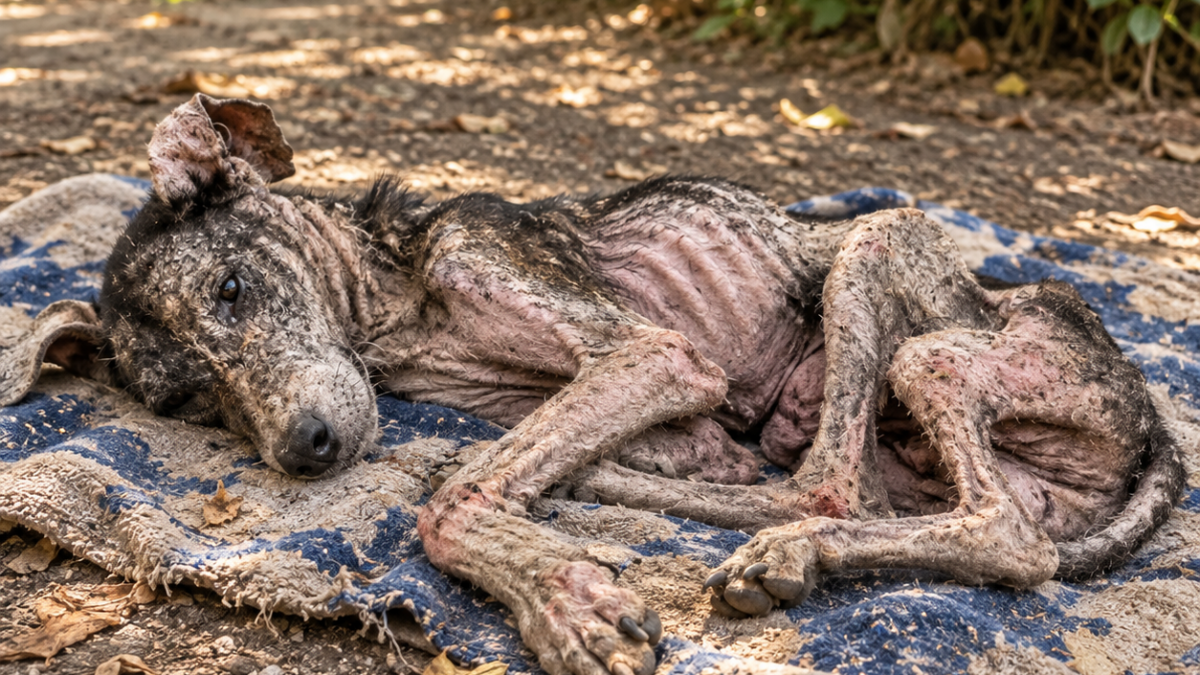
PART 2
I slept in a plastic chair beside Sarita’s kennel that first night.
Or at least I tried to.
Every twenty minutes, I opened my eyes and checked whether her chest was still rising.
The clinic was different after midnight.
During the day, there were phones ringing, kennel doors opening, carts rolling down hallways, veterinarians calling out medication doses, and worried families asking questions.
At night, everything shrank to small sounds.
The hum of the ventilation system.
The soft beep of a monitor.
The rustle of a blanket when a dog shifted.
And Sarita’s breathing.
That was the sound I listened for.
At 2:14 in the morning, one of the overnight technicians came in carrying fresh fluids.
Her name was Hannah.
She had been working emergency veterinary medicine for almost twelve years and had the calm hands of someone who had seen every version of fear.
She looked at me curled awkwardly in the chair.
“You’re still here?”
“I told her I’d stay.”
Hannah glanced at Sarita.
“She can’t understand promises.”
“Maybe not.”
I leaned forward.
“But I can.”
Hannah smiled faintly.
Then she knelt beside Sarita.
The little dog’s temperature had stabilized slightly, but her blood pressure remained concerning.
She was dehydrated.
Her red blood cell count was dangerously low.
Her immune system was under attack from multiple infections at once.
And somewhere beneath all of that was the problem none of us understood yet.
Her bones.
The X-rays looked as though they belonged to a much older, much larger animal suffering from a catastrophic metabolic disorder.
But Sarita wasn’t old.
Dr. Celeste estimated she was only about three years old.
Maybe four.
Her teeth were worn in strange places but not enough to suggest advanced age.
Her nails were overgrown.
Several had curled sideways.
Her paws were scarred.
There were calluses along her hips and elbows consistent with spending long periods on hard surfaces.
When the veterinary team shaved small areas for treatment, more evidence appeared.
Old pressure sores.
Healed abrasions.
Patches where fur had fallen away.
None of those things proved exactly what had happened to her.
But together, they told us one thing clearly.
Sarita had not become this sick overnight.
Someone had watched her deteriorate.
Someone had seen her stop walking.
Someone had seen her lose weight.
Someone had seen her skin worsen.
And that person had done nothing.
That realization sat inside me like a stone.
The next morning, Dr. Celeste brought me coffee and handed me three pages of preliminary results.
“We’re treating the infections immediately,” she said.
“What about the fractures?”
“Immobilization where possible. Very careful handling everywhere else. Pain control. Nutritional support. And absolutely no attempt to force her upright.”
I looked at Sarita.
“So no physical therapy?”
“Not yet.”
“When?”
“When her body tells us it’s safe.”
I hated that answer.
Not because it was wrong.
Because it meant there was no schedule.
No promise.
No date on the calendar when we could say, “This is when she’ll walk.”
Recovery wasn’t going to be a staircase.
It was going to be a mountain hidden in fog.
We could only see the next few feet.
For the first week, survival itself was the goal.
Sarita received medication for the infections, supplements for her anemia, carefully balanced nutrition, fluids, pain management, and constant monitoring.
We fed her slowly.
Too much food too quickly could cause additional problems in a severely malnourished animal.
So every meal was measured.
Every response was documented.
Every bowel movement mattered.
Every change in temperature mattered.
Every time she showed interest in food, someone celebrated quietly.
On the third day, I held a small dish near her muzzle.
She sniffed it.
Then looked away.
My heart sank.
“Come on, baby.”
Dr. Celeste stood behind me.
“Don’t pressure her.”
“I’m not.”
“You’re making the face.”
“What face?”
“The rescue face.”
I glanced over my shoulder.
She raised an eyebrow.
“The one that says you think wanting something badly enough is a medical treatment.”
I looked back at Sarita.
“Sometimes it helps.”
“Not in any study I’ve read.”
Then Sarita licked the edge of the dish.
Both of us froze.
She licked it again.
Dr. Celeste whispered, “Okay. Maybe your face gets partial credit.”
I laughed for the first time since the phone call.
It was a tiny moment.
But that was how hope came with Sarita.
Not in miracles.
Not yet.
In teaspoons.
In breaths.
In inches.
On day five, she lifted her head without assistance for nearly four seconds.
Hannah timed it.
“Three…”
Sarita trembled.
“Four…”
Her chin lowered back to the blanket.
I covered my mouth.
Hannah stared at me.
“Are you crying?”
“No.”
“You’re absolutely crying.”
“She lifted her head.”
“I noticed.”
“She lifted her head.”
Hannah smiled.
“I know.”
We wrote the time on the whiteboard beside Sarita’s kennel.
Four seconds.
The next day, she made it to six.
Then eight.
Then eleven.
The progress gave us something to hold onto.
The test results gave us reasons to remain cautious.
Her blood values improved, then stalled.
Her inflammatory markers dropped, then rose again.
A follow-up X-ray showed early healing in one fracture but revealed another tiny area of concern.
The specialists began exchanging images and notes with colleagues.
One veterinary internist asked permission to document Sarita’s case anonymously for academic discussion because the combination of infectious disease, extreme malnutrition, anemia, and unusual bone fragility was so uncommon.
I agreed.
“If something we learn from her helps another dog one day, do it.”
But privately, I had a different thought.
Let her live long enough for her story to matter.
Please.
Just let her live.
Two weeks after her rescue, we finally learned where she had come from.
It began with a faded mark behind her ear.
One of the technicians noticed it while cleaning her skin.
At first, we thought it was a scar.
Then Hannah called me over.
“Look.”
There were four tiny blue-green digits tattooed inside the ear.
Old.
Partially blurred.
But readable under bright light.
“That looks like an identification code,” I said.
“It might be.”
We photographed it.
Our rescue director, Monica, started making calls.
It took two days.
The code matched records from a private breeder who had operated outside the city several years earlier.
His license had expired.
The property associated with the number had changed hands.
But the old registration records included something else.
A dog.
Female.
Small mixed breed.
Born roughly four years earlier.
Identification number matching Sarita’s tattoo.
Registered name: Starita.
One letter different.
The name stopped me.
Sarita.
Starita.
The woman who had found her had unknowingly chosen almost the same name she’d once had.
Monica leaned back from her computer.
“We have an owner name.”
I felt my stomach tighten.
“Current?”
“Former, at least.”
“Call animal control.”
She looked at me.
“I already did.”
His name was Rafael Mendez.
The records showed he had bred small dogs for sale from his property.
Nothing automatically illegal about that.
But complaints had been filed.
Noise.
Sanitation.
Animals housed outdoors.
None had resulted in major charges.
Then his breeding license expired.
After that, the paper trail disappeared.
Until Sarita.
Animal control visited the old address and found that Rafael had moved almost a year earlier.
The new owner remembered seeing several makeshift kennels behind a storage shed when he bought the property.
Most had been empty.
One still contained an old water bowl, a rusted chain, and piles of degraded bedding.
He had thrown everything away.
We still didn’t know whether Sarita had lived there.
But I began looking at the calluses on her body differently.
The story was no longer abstract.
Someone had owned her.
Someone had registered her.
Someone had once considered her valuable enough to keep records.
Then she had become useless enough to disappear.
I was angry.
Anger is complicated in rescue.
It can get you out of bed.
It can also destroy you.
If you spend every day thinking about what people have done to animals, eventually you start believing cruelty is everywhere.
Monica had warned me about that years earlier.
“Don’t make anger your fuel,” she used to say. “It burns too hot.”
But looking at Sarita, I wanted answers.
I wanted someone to sit across from me and explain how a dog becomes so weak she cannot lift her own head while the person responsible continues living normally.
I wanted consequences.
But first, Sarita needed to survive.
Around the beginning of the third week, Dr. Celeste decided we could start the gentlest possible rehabilitation.
Not standing.
Not walking.
Movement.
A veterinary rehabilitation specialist named Dr. Marcus Lee came twice a week.
The first session lasted less than fifteen minutes.
He placed Sarita on a thick padded surface and supported her joints with both hands.
“Everything is slow,” he told me.
“How slow?”
“Slower than you want.”
“That seems to be the theme around here.”
He smiled.
“She survived because people stopped rushing her.”
He began with passive range-of-motion exercises.
Tiny movements.
Careful flexion.
Gentle extension.
No pressure.
No forcing.
Sarita watched him suspiciously.
When he touched one paw, she pulled it back slightly.
Dr. Lee looked at me.
“Did you see that?”
“Yes.”
“She initiated it.”
“Is that good?”
“It’s very good.”
The next week, special supportive wraps were fitted around her weakest joints.
Her bones were still fragile, so the goal wasn’t to make her bear weight.
It was to give her body better alignment while her muscles slowly woke up.
We also changed her bedding repeatedly to protect her skin.
Every few hours, we repositioned her.
At first, she hated it.
She would tense.
Her eyes would widen.
Then she learned the routine.
I would slide one hand beneath her chest.
Hannah would support her hips.
“One, two, three.”
We would roll her gently.
Sarita would sigh.
Sometimes she looked offended.
“You’re going to complain now?” I whispered one afternoon.
Her ears twitched.
“You couldn’t move two weeks ago.”
She stared at me.
Hannah laughed.
“That look says gratitude is not included in the treatment package.”
The personality emerging from inside that broken body surprised all of us.
Sarita was not timid.
Once she felt better, she was stubborn.
If she disliked a medication, she would clamp her mouth shut.
If she wanted a different blanket, she pawed weakly until someone noticed.
If I walked past her kennel without stopping, she made a soft sound deep in her throat.
Not a bark.
More like an accusation.
On day twenty-six, she barked for the first time.
I was halfway down the hallway carrying towels.
“Yap!”
I stopped.
Hannah looked out from the treatment room.
“Was that her?”
“Yap!”
I dropped the towels.
Sarita was staring at me from her kennel.
“You barked.”
“Yap!”
“You have opinions now?”
Her tail moved.
Only once.
But it moved.
That night I went home and cried in my kitchen.
Not from sadness.
From the strange exhaustion of hope.
People imagine rescue as a series of dramatic moments.
A dog is found.
A dog is saved.
A dog runs happily into the sunset.
Real rescue is often much less cinematic.
It is medication alarms at 4:00 a.m.
It is spreadsheets.
Laundry.
Cleaning diarrhea from bedding.
Finding enough money for another test.
Calling donors without sounding desperate.
Driving across town because one pharmacy has the drug another doesn’t.
Sitting beside an animal who has made progress all week and suddenly develops a fever at midnight.
That happened to Sarita in week four.
I arrived at the clinic early and knew something was wrong before anyone spoke.
Dr. Celeste was standing beside her kennel.
“What happened?”
“Her temperature climbed overnight.”
“How high?”
She told me.
My stomach dropped.
Sarita was lethargic again.
The bright curiosity we had begun seeing was gone.
Her breathing was faster.
Bloodwork showed her anemia had worsened.
One infection that had appeared to be responding to treatment was not resolving as expected.
Dr. Celeste changed medications.
We ran more tests.
Another specialist joined the case.
For the first time since that first night, the conversation became frightening again.
“What if her body can’t keep doing this?” I asked.
Dr. Celeste didn’t give me false reassurance.
“That’s possible.”
I stared at the floor.
“Then what have we been doing for a month?”
“Giving her a month she would not have had.”
“That’s not enough.”
“No.”
Her voice softened.
“But enough isn’t always ours to decide.”
I hated hearing that.
I went into Sarita’s room and sat beside her.
She didn’t lift her head.
For three hours, I watched the IV line drip.
At some point, I began talking.
I told her about the first dog I had ever rescued.
A Shepherd mix named Molly.
I told her about the time I accidentally locked myself inside the supply room and had to call the fire department.
I told her about Hannah’s terrible coffee.
From the doorway, Hannah said, “She doesn’t need lies while she’s sick.”
I kept talking.
Anything to fill the silence.
Finally, near sunset, Sarita opened her eyes.
I placed my fingers beside her nose.
She moved toward them.
That same tiny movement.
The one she had made on the first day.
Less than an inch.
But this time I understood it.
That was Sarita’s language.
I’m here.
By morning, her fever had begun to fall.
The setback cost us nearly ten days of progress.
But she survived.
Meanwhile, the investigation into her past continued.
Animal control found Rafael Mendez in a neighboring county.
He denied owning Sarita.
Then investigators showed him the registration records.
He changed his answer.
He said he had sold her years earlier.
“To whom?”
He couldn’t remember.
“Do you have records?”
No.
“Receipt?”
No.
“Phone number?”
No.
“Name?”
No.
Investigators asked when he had last seen her.
He claimed he had no idea.
Then a former employee came forward.
Her name was Elena.
She had seen a local news report about the unidentified dog rescued in critical condition.
When she saw Sarita’s ear tattoo, she recognized the numbering system.
Elena told investigators that Sarita had been used for breeding.
She had been small, quiet, and easy to handle.
After her second litter, she began developing skin problems.
Then weakness.
Then difficulty walking.
Elena said she urged Rafael to take her to a veterinarian.
According to her statement, he refused.
“She doesn’t make enough money to spend that much on,” he allegedly told her.
When Sarita stopped being able to stand reliably, Elena said she was moved to a small enclosure behind the property.
Elena quit not long afterward.
Months later, she returned to collect paperwork and asked about the dog.
Rafael told her Sarita was “gone.”
She assumed he had surrendered or euthanized her.
Now she realized something else might have happened.
When Monica told me, I had to leave the room.
I walked outside behind the clinic and stood beside the dumpster with my fists clenched.
“She doesn’t make enough money.”
That sentence echoed in my head.
As though Sarita’s life had a price tag.
As though the right to medical care depended on profitability.
As though a creature who had been used to produce puppies somehow owed a return on investment before she deserved relief from suffering.
I wanted to drive to Rafael’s house.
I wanted to hold up Sarita’s X-rays and force him to look.
I wanted him to see every fracture.
Every damaged joint.
Every blood test.
Every photograph of her lying helpless.
But Monica stopped me.
“Don’t.”
“I didn’t say anything.”
“You don’t have to.”
“He should see her.”
“He may.”
“When?”
“If charges move forward.”
I looked at her.
“Charges?”
“Animal control is building the file.”
That should have satisfied me.
It didn’t.
Not yet.
The strongest evidence came from somewhere nobody expected.
A veterinary clinic thirty miles away.
Investigators searched Sarita’s old identification number and found two visits under her original registered name.
The first had been routine.
The second had happened nearly a year before we found her.
The notes documented weight loss, skin disease, anemia, and early mobility problems.
The veterinarian had recommended diagnostic testing and follow-up.
The owner declined several tests.
The clinic had recorded the refusal.
There was also a note stating the veterinarian had advised immediate reevaluation if Sarita’s weakness worsened.
No follow-up ever occurred.
That record changed everything.
The defense could no longer argue that nobody knew she was sick.
Someone had known.
Someone had been told.
Someone had chosen not to act.
I found out about the record on a Tuesday.
That same Tuesday, Sarita tried to stand.
It happened during rehabilitation.
Dr. Lee had placed a support sling beneath her abdomen while her paws touched a padded mat.
Until then, the sling carried almost all her weight.
Usually her legs trembled and folded.
But that morning, her front paws pressed downward.
Dr. Lee immediately became still.
“Don’t move.”
“I’m not moving.”
Sarita’s shoulders shook.
Her back remained supported.
Then one hind paw pushed against the mat.
For perhaps half a second, her body rose.
Not fully.
Not independently.
But she tried.
I gasped.
Dr. Lee whispered, “Again, girl.”
Sarita collapsed into the sling.
She panted.
I crouched in front of her.
“That was enough.”
She looked frustrated.
“No, seriously. That was amazing.”
Her ears flattened.
Dr. Lee smiled.
“She disagrees.”
The following session, she did it again.
Then for longer.
Three seconds.
Five.
Eight.
Her bones were healing.
Her muscles were rebuilding.
Her blood values were stabilizing.
The infections were finally responding more consistently.
We allowed ourselves to say a word we had avoided.
Walking.
Not certainty.
Possibility.
Walking became possible.
The first time Sarita stood independently happened six and a half weeks after she arrived.
It was so ordinary that nobody had a camera ready.
Dr. Lee had finished an exercise and removed one hand from beneath her chest.
Sarita was still supported at the hips.
Then he slowly lowered the sling.
Her paws remained planted.
He looked at me.
I looked at him.
“Is she—”
“Yes.”
Sarita was standing.
Her legs shook so violently that her entire body trembled.
But she was standing.
Dr. Celeste happened to be walking past the doorway.
Hannah called her.
“Get in here!”
Dr. Celeste rushed inside.
“What happened?”
Nobody answered.
We were all staring at Sarita.
Three seconds.
Four.
Five.
Her front legs began to buckle.
Dr. Lee caught her gently.
The whole room erupted.
I laughed and cried at the same time.
Hannah pressed both hands to her face.
Dr. Celeste turned away and wiped her eyes with the back of her wrist.
Dr. Lee, who usually treated every improvement like a scientist, whispered, “Good girl.”
Sarita looked exhausted.
She had no idea she had just changed the atmosphere of an entire clinic.
I kissed the top of her head.
“You stood.”
Her tail moved.
“You stood, Sarita.”
That evening, we wrote another number on the whiteboard.
Five seconds.
Below it, Hannah wrote:
ON HER OWN.
Two weeks later, Sarita took her first step.
I wish I could say it was graceful.
It was not.
She stood, leaned too far forward, moved one front paw, panicked, and nearly tipped sideways.
Dr. Lee caught her.
I screamed.
He frowned at me.
“You scared her.”
“She walked!”
“She relocated one foot.”
“That is walking.”
“Technically—”
“Do not ruin this.”
At the next session, she took two.
Then four.
Then seven.
We stopped counting after twenty.
By then, Sarita had developed another problem.
Confidence.
She believed she could do more than her body was ready for.
We placed soft barriers around the rehabilitation space.
She tried to climb them.
We gave her a controlled walking lane.
She attempted to turn around mid-session because she smelled treats.
Dr. Celeste shook her head.
“Three weeks ago you begged her to move.”
“I remember.”
“Be careful what you wish for.”
By the third month, Sarita could cross a small room.
Slowly.
Unevenly.
But without someone carrying her.
The day she left the inpatient clinic, every staff member who could step away gathered near the front entrance.
Her discharge wasn’t the end of treatment.
Not even close.
She still needed medication.
Follow-up testing.
Rehabilitation twice a week.
Careful nutrition.
Monitoring for complications.
But she no longer required twenty-four-hour hospitalization.
I had agreed to foster her.
When I clipped the lightweight leash to her harness, she stared through the glass doors.
Outside.
Sunlight.
Cars.
Grass.
The world.
“You ready?”
She took one step.
Then another.
At the threshold, she froze.
The automatic door opened.
A breeze moved across her face.
Sarita lifted her nose.
For perhaps ten seconds, she simply stood there smelling the outside air.
Then she walked through.
People applauded.
Sarita startled and looked around.
I crouched beside her.
“They’re being dramatic.”
Hannah called from behind us.
“You cried because she moved one paw.”
“That was medically significant.”
Dr. Celeste laughed.
I opened the passenger door and lifted Sarita onto a padded bed.
Before closing it, I looked back at the clinic.
Seven weeks earlier, I had carried her inside wrapped in a blanket because I was afraid she would die before we reached the treatment room.
Now she was leaving on her own feet.
At my house, I had prepared everything.
Non-slip mats covered the floors.
Baby gates blocked the stairs.
Her bed was orthopedic foam.
Food and water bowls were raised slightly.
The backyard had been inspected for holes, sharp objects, uneven stones, anything that might threaten fragile bones.
I thought I was prepared.
I was not prepared for Sarita herself.
Within two hours, she discovered the kitchen.
Within four, she learned where treats were stored.
Within six, she barked at my washing machine.
That evening, she stood in the living room staring at the couch.
“No.”
She looked at me.
“No couch.”
She shifted her weight.
“You are not jumping.”
She stared at the cushion.
“Sarita.”
One paw lifted.
I stepped forward.
“Absolutely not.”
She barked.
I laughed.
“You spent two months learning to stand and immediately chose crime.”
I lifted her carefully onto the couch.
She curled beside me and fell asleep.
For the first time since I had met her, she slept somewhere that did not smell like disinfectant.
I sat beside her for nearly an hour without moving.
A few days later, animal control called.
Charges had been filed against Rafael.
Neglect.
Failure to provide necessary veterinary care.
Additional violations related to his former breeding operation.
The legal process would take time.
I knew that.
But hearing that someone had finally said, officially, that what happened to Sarita mattered gave me a kind of relief I hadn’t expected.
The hearing was scheduled for six weeks later.
By then, Sarita was walking farther every day.
Her favorite part of rehabilitation became the outdoor section.
Dr. Lee set small poles on the ground for her to step over.
At first, she touched nearly every one.
Then fewer.
Then none.
Her coordination improved.
The bandages came off one joint.
Then another.
Her coat began returning where the skin had healed.
She gained weight.
Not too quickly.
Steadily.
Her eyes changed most.
When I first saw Sarita, her eyes had seemed distant.
Not empty.
Tired.
As though the world happened around her and she had learned she had no control over any of it.
Now she watched everything.
Birds.
Cars.
My neighbor mowing his lawn.
Leaves moving.
The refrigerator door.
Especially the refrigerator door.
One Saturday morning, I opened the back door and let her into the yard on a long training line.
She walked onto the grass.
Then stopped.
A smell caught her attention.
She lowered her nose.
Her tail rose.
“Sarita?”
She took three quick steps.
Then five.
Then suddenly broke into something between a trot and a run.
My heart stopped.
“Sarita!”
She crossed the yard with her ears bouncing.
Not fast.
Not perfectly.
But running.
Actually running.
I followed, terrified she would fall.
She reached a patch of soft dirt near the fence and began digging.
I stood behind her.
“You have got to be kidding me.”
Dirt flew between her back legs.
Her front paws worked furiously.
“Sarita, your bones cost more than my car.”
She kept digging.
“You cannot excavate the yard.”
She shoved her nose into the hole.
When she turned around, dirt covered her muzzle.
I started laughing so hard I had to sit down.
There she stood.
The dog who once couldn’t reach a water bowl.
The dog who couldn’t lift her head.
The dog whose legs had rested uselessly beneath her.
Now she had personally destroyed part of my garden.
I took a picture.
I sent it to Dr. Celeste.
Her response came thirty seconds later.
Best orthopedic outcome imaginable.
The hole became the first of many.
I stopped trying to protect the garden.
Some things are more beautiful ruined.
Four months after the original rescue call, Sarita looked almost unrecognizable.
She had filled out.
Her skin had healed dramatically.
Her coat had returned in soft patches.
Her legs remained slightly unusual in shape because of everything her bones had endured, and we knew she would always require careful monitoring.
But she moved.
She played.
She ran short distances.
She dug holes.
She barked when I took too long preparing dinner.
She slept upside down on my couch with all four legs in the air as though she owned the house.
Then another problem appeared.
During a routine follow-up, Dr. Celeste noticed abdominal tenderness.
Further testing revealed a reproductive condition that required surgery.
After everything she had survived, hearing the word surgery made my chest tighten.
“Is it dangerous?”
“All surgery carries risk.”
“That was not the answer I wanted.”
“It’s the truthful answer.”
Sarita sat between us licking her paw.
Dr. Celeste continued.
“But she is stronger now. Much stronger.”
The procedure was scheduled.
On the morning of surgery, I felt as terrified as I had during our first drive to the clinic.
Sarita, meanwhile, was furious that breakfast had been withheld.
She stared at me from the passenger seat.
“I know.”
She stared harder.
“It’s doctor’s orders.”
She grumbled.
“You can file a complaint with management.”
At the clinic, Hannah took her leash.
Sarita immediately tried to follow the smell of food down another hallway.
“That’s encouraging,” Hannah said.
“I’m glad one of us feels good.”
The surgery went well.
Recovery took several weeks.
There were days when Sarita seemed tired again, and every time she moved slowly, fear returned to me with embarrassing speed.
Trauma leaves habits.
Sarita wasn’t the only one healing.
I had spent months watching her breathing.
Months checking the color of her gums.
Months measuring progress in inches.
Part of me had forgotten how to simply let her be a dog.
One evening after surgery, I carried her into the yard.
She sat in the grass.
Sunlight touched the side of her face.
A butterfly passed near her nose.
She watched it.
Then she looked at me.
I realized I was holding my breath.
“Okay.”
I unclipped her short leash inside the fenced yard.
“Go.”
She remained beside me.
“Go be a dog.”
She sniffed the grass.
Walked toward her favorite hole.
Looked back once.
Then continued.
That was when I understood something I had been too close to see.
Saving Sarita did not mean keeping her safe from every possible risk forever.
It meant giving her enough life to have choices again.
The legal hearing happened two weeks later.
I did not bring Sarita into the courtroom.
I refused to turn her into evidence on display.
But I attended.
So did Monica.
Elena, the former employee, testified.
The veterinarian whose clinic had documented Rafael’s refusal of recommended testing provided records and testimony.
Animal control presented photographs.
I had submitted a written statement describing Sarita’s condition when we found her.
The defense argued that nobody could prove exactly what caused every fracture.
That was true.
The medical team had never claimed otherwise.
They argued that some of her disease processes were complicated and could have progressed despite care.
Also true.
But the case was not about proving that Rafael personally caused every illness.
It was about whether he knew Sarita needed veterinary care and failed to provide it.
The record from the old clinic mattered.
The employee testimony mattered.
The identification tattoo mattered.
The timeline mattered.
And the photographs mattered.
At one point, a large image of Sarita from the day she arrived at our clinic appeared on the courtroom monitor.
I looked away.
I had seen it dozens of times.
Still, I hated it.
Her body looked impossibly small.
Her head rested on the blanket.
Her eyes were open.
Across the room, Rafael looked at the photograph.
For the first time, his expression changed.
I don’t know what he felt.
I won’t pretend I do.
Regret?
Embarrassment?
Fear of consequences?
Nothing?
It wasn’t my job to decide what was inside him.
The judge only had to decide what the evidence showed.
During a break, Rafael passed me in the hallway.
He stopped.
“You’re the woman with the dog?”
I looked at him.
“Sarita.”
“What?”
“Her name is Sarita.”
He exhaled.
“Starita.”
“No.”
I held his gaze.
“Sarita.”
He glanced toward the courtroom door.
“I didn’t do all that to her.”
I felt anger rise.
I wanted to give him every sentence I had rehearsed in my head.
Instead, I asked one question.
“When she stopped walking, why didn’t you take her back to the veterinarian?”
His face tightened.
“You don’t know what things cost.”
I almost laughed.
Not because it was funny.
Because after four months of treatments, medications, specialists, rehabilitation, imaging, hospitalization, and surgery, I knew exactly what things cost.
“You’re right,” I said. “Care is expensive.”
He looked almost relieved.
Then I continued.
“But leaving her to suffer was a choice.”
He turned away.
That was the only conversation we ever had.
There was no dramatic confession.
No shouting.
No courtroom collapse.
Real accountability rarely looks like movies.
It looks like paperwork.
Testimony.
Receipts.
Medical records.
Dates.
Photographs.
People willing to show up.
The final ruling prohibited Rafael from owning or breeding animals for a specified period under the terms imposed in the case. He was ordered to pay fines and restitution toward a portion of Sarita’s documented care, and the court recognized the neglect established by the evidence.
It did not erase what happened.
Nothing could.
But when I walked out of the courthouse, I did not feel triumphant.
I felt finished.
Monica touched my shoulder.
“You wanted revenge.”
I looked at her.
“I thought I did.”
“And now?”
I pulled out my phone.
The lock screen showed Sarita in my backyard with dirt on her nose.
“Now I want to go home.”
When I opened my front door, Sarita came running.
Not walking.
Running.
Her paws tapped across the non-slip hallway mats.
Her ears bounced.
She skidded slightly at the last turn and launched herself into my legs.
I knelt.
“Hey, criminal.”
She licked my chin.
“You won.”
Of course, she had no idea what I meant.
Maybe that was better.
She did not need to know Rafael had faced consequences.
She did not need to know people had once discussed ending her life because survival seemed impossible.
She did not need to carry any of our anger.
Dogs are lucky that way.
Humans keep records of pain.
Dogs keep moving.
Weeks passed.
Sarita’s medications gradually decreased.
Her bloodwork improved.
Her anemia resolved.
The infectious diseases remained under veterinary management, with careful follow-up.
Her bone density improved.
The frightening fractures healed.
Dr. Lee reduced rehabilitation from twice weekly to once weekly.
Then every other week.
On her final scheduled session, he set up the same padded lane where she had taken her first step.
Sarita stood at one end.
I crouched at the other.
“Come on.”
She looked at me.
Dr. Lee released the support lead.
Sarita walked toward me.
Perfectly?
No.
Her gait would always tell part of the story.
One rear leg angled slightly differently.
Her stride shortened when she became tired.
But she crossed the entire lane without assistance.
When she reached me, I scratched behind her ears.
Dr. Lee looked at his notes.
“Remember the first session?”
“I remember everything.”
“I told you slow.”
“You did.”
“You hated me.”
“Temporarily.”
He crouched beside Sarita.
“She taught you patience.”
“No.”
He looked up.
“She taught me she was right.”
“About what?”
I smiled.
“That first inch.”
The first time she moved her nose toward my hand, I thought it was simply movement.
Now I understood.
Sarita had never promised us she would run.
She had never promised she would walk.
She had only given us the next inch.
That was enough.
Recovery continued beyond the dramatic milestones.
That is the part people often miss.
The first step is beautiful.
The hundredth can be exhausting.
There were still blood tests.
Still medication adjustments.
Still mornings when Sarita woke stiff and needed extra time.
Still days when we canceled a walk because she seemed tired.
Still expenses.
Still worry.
Still uncertainty.
But there was also ordinary life.
And ordinary life became my favorite miracle.
Sarita discovered sprinklers.
She hated them.
She discovered peanut butter.
She loved it.
She discovered squirrels.
Her opinion bordered on obsession.
She learned that if she sat beside the kitchen counter while I chopped vegetables, eventually something might fall.
She learned which neighbors carried treats.
She learned that the mail carrier was not an enemy despite announcing his arrival every afternoon.
She learned how to open the bathroom door if it wasn’t fully latched.
I learned to lock it.
She learned that freshly washed blankets were better than dirty ones.
She learned my alarm clock meant breakfast.
Then she began waking me five minutes before the alarm.
“Absolutely not.”
Tail wag.
“It’s 5:55.”
Tail wag harder.
“Breakfast is at six.”
One paw landed on the mattress.
“You have become unbelievably entitled.”
She barked.
I got up.
In rescue, entitlement is sometimes the happiest ending.
A dog who once accepted anything because she expected nothing suddenly develops standards.
A softer bed.
A better treat.
The sunny spot on the couch.
The right to complain when dinner is late.
I encouraged every bit of it.
Several months later, Elena asked if she could meet Sarita.
I hesitated.
Not because I blamed her.
She had been the person who tried to get Sarita care.
She had also left the job.
I imagined she had carried guilt ever since.
We met at a quiet park.
Elena arrived early.
She stood near a bench gripping a leash she had brought as a gift.
When she saw Sarita walking toward her, she covered her mouth.
“Oh my God.”
Sarita stopped.
Elena knelt slowly.
“Starita?”
Sarita tilted her head.
Elena began crying.
“I’m sorry.”
I stayed several feet away.
She didn’t reach for Sarita.
She waited.
That mattered.
After a few seconds, Sarita stepped forward.
Sniffed her hand.
Then walked closer.
Elena touched the side of her face.
“I thought you were dead.”
Her voice broke.
“I thought he had taken you somewhere. I should have checked. I should have—”
“Elena.”
She looked at me.
“You reported what you knew when you learned she was alive.”
“But I left her there.”
“You told him she needed help.”
“I could’ve done more.”
Maybe she could have.
Maybe all of us can say that about something.
There is a point where guilt stops being accountability and becomes self-punishment.
Sarita didn’t need Elena punished.
She needed people to act differently next time.
I sat beside her on the bench.
“If you ever see it again, don’t wait.”
She nodded.
“I won’t.”
That was enough.
Before leaving, Elena gave me an old photograph.
It showed Sarita years earlier.
Healthy.
Standing beside a plastic kiddie pool.
Her coat was full.
Her ears were raised.
A faded blue collar circled her neck.
On the back, someone had written:
Starita — 9 months.
I stared at the picture for a long time.
This was proof that before Sarita became the sick dog everyone knew, she had once been young.
Whole.
Standing.
She had not been born helpless.
Something had happened to her.
Disease.
Neglect.
Malnutrition.
Time.
Maybe factors we would never fully understand.
But that photograph also gave me something else.
A bridge.
There was a life before suffering.
And now there was a life after.
I framed the photograph.
Beside it, I placed another picture.
Sarita in my backyard.
Nose covered in dirt.
Mouth open.
Eyes bright.
Between those two images lived everything.
The court eventually finalized the restitution order.
The amount covered only a fraction of the actual cost of treatment.
Some people were disappointed.
I wasn’t.
Money was never going to equal suffering.
There is no invoice for fear.
No dollar amount for months spent unable to stand.
No fine that can restore a body to what it might have been.
The real consequence was that Sarita had a record now.
Not just a medical record.
A legal record of what happened.
Her suffering had not disappeared into silence.
Someone had documented it.
Someone had listened.
And future animals would be safer because the person responsible faced restrictions.
That mattered.
But the closest thing to revenge came on a warm Sunday morning.
I opened the back door.
Sarita ran into the yard.
She headed straight for the flower bed.
“No.”
She dug.
“Sarita.”
Dirt flew.
“I just planted those.”
More dirt.
I walked toward her.
She darted away.
For approximately six glorious seconds, she outran me.
I stopped.
Not because I couldn’t catch her.
Because I suddenly remembered the blanket.
The shallow water bowl.
The conversation about euthanasia.
The first X-ray.
The fractures.
The nights I counted breaths.
The first four-second head lift.
The first bark.
The fever.
The relapse.
The sling.
The first trembling stand.
The first ugly, beautiful step.
And now I was standing in my backyard complaining because the dog who was once unable to move was running away from me after destroying my flowers.
I started laughing.
Sarita stopped across the yard.
She looked at me.
Then she lowered her front legs and raised her backside.
A play bow.
I pointed at her.
“Oh, now you want trouble?”
She sprinted in a crooked circle.
I chased her.
She ran around the tree.
I went the other direction.
She changed course.
For ten minutes, we behaved like idiots.
Finally, I dropped onto the grass.
Sarita came over panting.
She pressed herself against my side.
I put one arm around her.
“You know what?”
She licked dirt from her nose.
“This is better than revenge.”
She rested her chin on my leg.
“Look at you.”
That afternoon, Dr. Celeste visited.
She hadn’t seen Sarita outside the clinic in several weeks.
When Sarita ran toward her, Celeste actually stepped backward.
“No.”
I grinned.
“Yes.”
“That’s the same dog?”
“You signed the paperwork.”
Celeste crouched.
Sarita covered her face with kisses.
“She looks incredible.”
“She’s a menace.”
“I told you recovery had risks.”
“She dug up my flowers.”
“Excellent prognosis.”
We sat on the porch drinking iced tea while Sarita wandered around the yard.
Celeste watched her.
“You know there was a point when I thought we might lose her.”
“I know.”
“I never told you how close.”
“Thank you.”
She looked surprised.
“For not telling me?”
“Yes.”
“Why?”
“Because I was already scared enough.”
We watched Sarita sniff the fence.
After a moment, I asked, “Did you think she would walk?”
Celeste considered the question.
“At first?”
“Yes.”
“No.”
The answer still hurt.
Even after everything.
“You didn’t?”
“I hoped.”
“That’s different.”
“Very.”
Sarita began digging again.
Celeste smiled.
“And I’m very happy to have been wrong.”
By the end of the year, Sarita no longer needed formal rehabilitation.
Dr. Lee discharged her with instructions for continued home exercises, controlled activity, weight monitoring, and periodic veterinary evaluations.
He handed me a folder.
I looked at its thickness.
“Is this her entire record?”
“That is the short version.”
I opened it.
The first page contained her intake photograph.
I closed it immediately.
“Still hard?”
“Yes.”
“You know you don’t have to keep looking at the beginning.”
“I don’t want to forget.”
He nodded.
“Fair.”
But over time, I learned something important.
Remembering suffering does not require living inside it.
Sarita certainly didn’t.
She had no interest in becoming a symbol.
No interest in inspiring strangers.
No interest in being called brave.
She wanted breakfast.
Warm blankets.
Sunshine.
A hole large enough to hide half her face.
And eventually, something else.
A permanent home.
Technically, I had been fostering her.
That detail became increasingly ridiculous.
Her bed was in my bedroom.
Her medication chart was on my refrigerator.
Her toys were under every piece of furniture.
My neighbors knew her name.
The delivery driver carried treats specifically for her.
She had destroyed two flower beds and claimed one corner of the couch.
Still, our rescue followed procedure.
When Sarita was medically stable enough, Monica called.
“We need to talk about adoption.”
“No.”
Silence.
Then, “No?”
“No.”
“She needs a permanent home.”
“She has one.”
Monica laughed.
“I wondered how long you were going to pretend.”
“I’m not pretending.”
“You have twenty-seven photos of her sleeping on your couch.”
“How do you know?”
“You send them to me.”
“Evidence obtained illegally.”
“I’ll prepare the adoption paperwork.”
The official adoption happened on a Friday.
No ceremony.
No crowd.
Just forms.
I signed my name.
Then Sarita’s.
Well, technically I pressed her paw onto an ink pad and made a print.
She hated that.
Afterward, Monica handed me the folder.
“Congratulations.”
“That’s it?”
“What did you expect?”
“Confetti.”
“You hate confetti.”
“Correct.”
Sarita stood beside me wagging her tail.
I knelt.
“Apparently you live with me.”
She sneezed.
“Try to control your excitement.”
At home, I placed the adoption certificate beside her old photograph.
Starita at nine months.
Sarita at adoption.
The name change felt important.
Not because her old name was bad.
Because Sarita belonged to the life she had now.
One year after the morning I found her, I woke before my alarm.
The room was quiet.
Sarita was asleep beside the bed.
Sunlight had just begun reaching through the curtains.
I watched her breathing.
Old habits.
Her chest rose.
Fell.
Rose.
Then one eye opened.
“Good morning.”
Her tail thumped.
I got dressed and took her outside.
The grass was wet with dew.
Sarita walked toward the back fence.
Her gait was still slightly uneven.
It probably always would be.
But she moved without fear.
She stopped beside the oldest hole in the yard.
The first one.
Rain and time had softened its edges, but I never filled it in.
I had tried once.
Sarita dug it open again.
Eventually, I surrendered.
She sniffed inside.
Then looked at me.
“Don’t.”
She scratched once.
“Sarita.”
Another scratch.
“Today is sentimental. Please respect that.”
She dug faster.
I laughed.
Somewhere along the way, that ridiculous hole had become sacred.
Not because it was beautiful.
Because she had made it.
With legs people thought would never work.
With paws that once couldn’t support her.
That hole was proof.
People sometimes ask me when Sarita’s miracle happened.
They expect me to say the first time she stood.
Or the first step.
Or the day she ran.
But I don’t think miracles work like that anymore.
Sarita’s recovery was not one miracle.
It was hundreds of small decisions.
The woman who made the phone call.
The volunteer who drove.
The technician who stayed after her shift.
The veterinarian who ordered one more test.
The specialist who answered an email.
The donor who paid for medication.
The person who washed another blanket.
The rehabilitation therapist who moved her leg half an inch.
The former employee who finally spoke.
The investigator who followed the tattoo number.
The judge who read the records.
The people who refused to confuse “unlikely” with “impossible.”
And Sarita.
Always Sarita.
Moving her nose toward my hand.
Lifting her head for four seconds.
Barking.
Eating.
Pushing one paw into a mat.
Standing for five seconds.
Taking one step.
Then another.
Then another.
The world had once reduced her value to what she could produce.
When she became sick, she was treated as though she had become worthless.
Sarita answered that cruelty in the simplest possible way.
She lived.
Not beautifully every day.
Not easily.
Not without scars.
She just kept living.
That was enough.
Sometimes I think about the people standing around her on that first morning.
The ones who said there was no hope.
I do not blame them.
They were looking at the same body I was.
The same motionless legs.
The same damaged skin.
The same shallow breathing.
They were trying to protect her from suffering.
And there are animals for whom letting go is the loving choice.
Sarita’s story does not mean every dying animal can be saved.
It does not mean hope should replace medical judgment.
It means something smaller.
When there is still a reasonable path forward, sometimes a life deserves the chance to show you what it can do.
Sarita got that chance.
She used every inch of it.
A few months after her adoption, we returned to Dr. Celeste’s clinic for a routine examination.
A family was sitting in the waiting room with a frightened dog wrapped in a blanket.
The dog trembled.
The woman holding him looked exhausted.
When Sarita walked in, the woman glanced at her.
“She’s cute.”
“Thank you.”
“Was she always that small?”
“Yes.”
Sarita approached cautiously.
The woman asked if her dog could say hello.
We let them sniff.
Her dog relaxed slightly.
The woman smiled.
“She seems so confident.”
I looked down at Sarita.
There are moments when an entire history becomes invisible.
No one looking at her that afternoon would have guessed she once couldn’t lift her head.
No one would know about the fractures.
The infections.
The anemia.
The nights she nearly died.
The court records.
The rehabilitation sling.
The first step.
They only saw a small dog with bright eyes and an impatient tail.
I liked that.
Trauma should not be the first thing people see forever.
Inside the exam room, Dr. Celeste listened to Sarita’s heart.
“Good.”
Checked her joints.
“Good.”
Looked at her blood results.
“Very good.”
I smiled.
“That sounded suspiciously optimistic.”
“I occasionally practice optimism.”
Sarita hopped down from the low platform before either of us could stop her.
We both shouted.
“Sarita!”
She landed safely.
Then looked back at us as though we were embarrassing.
Celeste pointed.
“That.”
“What?”
“That confidence is going to shorten my life.”
“Welcome to my house.”
When we returned home, I opened the back door.
Sarita ran to the yard.
Not because she was proving anything.
Not because anyone was watching.
Not because a camera was recording.
She ran because the afternoon was warm.
Because there was grass.
Because a bird had landed near the fence.
Because she could.
That distinction mattered to me more than anything.
Her life was no longer a recovery story.
It was simply her life.
A year earlier, every breath had felt borrowed.
Now she wasted time.
Beautifully.
She slept late on rainy mornings.
She stared out windows.
She chased leaves.
She ignored toys I spent too much money on.
She stole socks.
She dug holes she had no reason to dig.
She barked at empty cardboard boxes.
She spent fifteen minutes deciding where to lie down.
She changed her mind.
That was the ending I had wanted without knowing how to name it.
Not survival.
Normalcy.
One evening, I found the original blanket in a storage bin.
The one we had carried Sarita on during the first drive to the clinic.
I had washed it months earlier and put it away.
It still had a small tear near one corner.
I sat on the floor holding it.
Sarita wandered into the room.
She sniffed the blanket.
I wondered whether she remembered.
Maybe the smell.
Maybe the texture.
Maybe nothing.
She stepped onto it.
Turned around twice.
Then lay down.
My throat tightened.
“You know what that is?”
She rested her chin on her paws.
“That carried you when you couldn’t walk.”
Her eyes began closing.
“Now you don’t need it.”
I expected the moment to feel heartbreaking.
Instead, it felt peaceful.
I folded the edge of the blanket around her.
She fell asleep.
The past had become something soft enough to rest on.
Months later, the rescue received a call about another dog.
Different breed.
Different circumstances.
Different illness.
The volunteer who answered was new.
She found me in the hallway.
“They said the dog can barely move.”
I stopped.
Her face told me she was scared.
“What does the veterinarian say?”
“They’re evaluating now.”
“Good.”
“What if it’s too late?”
I looked through the window toward the yard, where Sarita was sniffing beneath a bench.
“We listen to the doctors.”
The volunteer nodded.
“And?”
“We don’t decide the ending before we know the facts.”
She followed my gaze.
“That’s Sarita?”
“Yes.”
“The one who couldn’t walk?”
Sarita suddenly spotted us.
She ran toward the door.
The volunteer stared.
“That dog?”
I smiled.
“That dog.”
Sarita reached me and jumped her front paws against my legs.
I bent down.
“You’re supposed to be a professional example.”
She licked my face.
The volunteer laughed.
That became Sarita’s legacy at the rescue.
Not that every impossible case would recover.
Not that we should chase miracles without considering suffering.
But that assumptions are not diagnoses.
Hopeless is a dangerous word when used too early.
We learned to ask better questions.
What is causing the pain?
Can it be treated?
Can quality of life improve?
What does the animal show us?
What are the realistic options?
What are we missing?
Sarita changed our process.
She changed me.
Before her, I thought strength looked dramatic.
I imagined it as fighting.
Refusing to fall.
Standing against impossible odds.
Sarita taught me that strength can look like lying completely still and choosing to move your nose one inch toward a stranger’s hand.
Strength can be swallowing medicine.
Eating one spoonful.
Allowing someone to reposition your body.
Trying again after a fever steals ten days of progress.
Putting one paw down.
Falling.
Putting it down again.
Strength does not always roar.
Sometimes it barely breathes.
The last time I saw Rafael was accidental.
Almost eighteen months after the hearing, I stopped at a farm supply store outside town.
Sarita was with me.
She wore a harness and walked beside the cart.
I turned into an aisle.
Rafael stood at the other end.
He recognized me.
Then he saw Sarita.
Everything stopped for a moment.
He stared.
Sarita stared back.
I felt my hand tighten around the leash.
He looked older than I remembered.
He didn’t approach.
Neither did I.
Finally, he said, “That’s her?”
“Yes.”
“She walks.”
The statement was so inadequate I almost smiled.
“She runs.”
His eyes lowered.
Sarita pulled toward a shelf of dog treats.
I let her.
Rafael said quietly, “I didn’t think she’d make it.”
I looked at him.
“That was the problem.”
He frowned.
“What?”
“You decided what her life was worth before she had finished living it.”
He said nothing.
I did not yell.
I did not humiliate him.
There was nothing I could do in that aisle that would improve Sarita’s life by even one second.
So I walked away.
Sarita trotted beside me.
At the checkout, I bought the treats she had chosen.
They were overpriced.
I didn’t care.
Outside, I opened the bag.
“One.”
She sat.
I gave her a treat.
She swallowed it almost whole.
“Apparently chewing is optional.”
She wagged her tail.
I looked back through the store window.
Rafael was no longer visible.
For months, I had once imagined revenge as making him understand.
Making him hurt.
Making him regret.
Standing there with Sarita, I understood how little that mattered.
He could regret it forever or never regret it once.
Sarita’s life no longer depended on anything inside him.
That was freedom.
She had outgrown the worst thing that happened to her.
That night, Sarita slept beside me on the couch.
Her legs twitched in a dream.
Probably running.
I rubbed her shoulder.
The fur there had grown back thick enough that the old damaged skin was difficult to see.
Some scars remained.
Others had vanished beneath hair.
I knew where they were anyway.
Maybe that is what loving a survivor means.
You know the places that hurt even after the world can no longer see them.
You respect them.
But you don’t reduce the survivor to those places.
Years from now, Sarita may slow down.
Her joints may become stiff.
Her history may complicate aging.
We know that.
Every healthy year feels precious without needing to feel fragile.
I no longer wake every morning afraid she will disappear.
Now I wake because she paws my mattress demanding breakfast.
Much healthier problem.
On the second anniversary of her rescue, I took her back to the place where we first found her.
I had avoided it until then.
The area looked different.
The dust had become grass after seasonal rain.
Someone had removed old debris.
A new fence stood nearby.
I parked and opened the door.
Sarita jumped down using the small ramp I kept for her joints.
She sniffed.
Walked.
Paused.
I watched carefully.
Did she remember?
There is no way to know.
She showed no fear.
No hesitation.
She found a patch of dirt.
Of course she did.
Within thirty seconds, she started digging.
I laughed.
“You have incredible thematic consistency.”
She looked up.
Dirt on her nose.
I sat beside her.
Two years earlier, I had knelt almost in that exact place believing I might watch her die.
Now she was rearranging the landscape.
I placed my hand against the ground.
The same way I had that first morning.
“Sarita.”
She came closer.
Her nose touched my palm.
Not less than an inch this time.
All the way.
Then she pushed her head beneath my hand demanding scratches.
I obliged.
“Look how far you came.”
She didn’t understand.
Or maybe she understood everything that mattered.
Warm hand.
Safe place.
Full stomach.
Home waiting.
We stayed until sunset.
As I drove back, Sarita slept in the passenger seat.
Her head rested against the edge of her bed.
I kept glancing over.
There are some images that never leave you.
Sarita lying helpless.
Sarita standing.
Sarita running.
Sarita digging.
They all belonged to the same dog.
That is why I stopped calling her recovery a miracle.
Miracle sounded too passive.
As though something simply happened to her.
Sarita worked for her life.
Doctors worked.
Technicians worked.
Volunteers worked.
People donated.
Investigators worked.
Witnesses spoke.
And her body, battered as it was, kept doing the hardest work of all.
Healing.
Four months after everyone thought she would die, she ran.
One year later, she was adopted permanently.
Two years later, she returned to the place where her story nearly ended and dug another ridiculous hole.
And today, when she wakes me before sunrise, when she scratches at the back door, when she sprints across the yard with dirt flying behind her, I still sometimes see that first tiny movement.
A nose traveling less than an inch toward my hand.
I think that was the moment Sarita told me everything.
Not that she would survive.
Not that she would walk.
Not that there would be justice.
Only this:
I’m still here.
So I stayed too.
And little by little, everyone else stayed.
Until the dog who couldn’t lift her head learned to hold it high.
Until the dog who couldn’t stand planted four paws on the ground.
Until the dog whose bones had failed her took one shaking step.
Then another.
Until the woman who once carried her everywhere had to chase her across a backyard.
Until the person who neglected her had to see that she had survived without him.
Until her name stopped being associated with suffering.
Sarita.
Not the dying dog.
Not the hopeless case.
Not evidence.
Not a medical mystery.
Not a victim.
Just Sarita.
A small, stubborn dog who loves warm blankets, expensive treats, sunny afternoons, and destroying gardens.
Sometimes people still ask whether I think we made the right decision that first day.
I look out at the yard.
Usually, Sarita is digging somewhere she shouldn’t.
And I smile.
Because some questions answer themselves.
The people who believed there was no hope had looked at what Sarita could not do.
She could not lift her head.
Could not stand.
Could not walk.
Could not escape the body that had failed beneath her.
But hope was never hiding in the things she couldn’t do.
It was hiding in the one thing she still could.
Choose the next inch.
That was how she survived.
One inch.
One breath.
One meal.
One treatment.
One stand.
One step.
One ridiculous hole in my backyard at a time.
And in the end, the most satisfying revenge was not what happened inside a courtroom.
It was not the fines.
Not the restrictions.
Not the restitution.
Those things mattered because accountability matters.
But Sarita’s real victory happened far away from judges and paperwork.
It happened on an ordinary afternoon when the back door opened and she ran into the sunlight without anyone helping her.
She did not look behind her.
She did not know who had once decided she was not worth the cost of treatment.
She did not know that strangers once thought death was the only merciful option.
She did not know people had argued about whether saving her was realistic.
She knew only that the door was open.
The grass was warm.
Her legs worked.
And somewhere near the fence, there was fresh dirt waiting to be dug.
So she ran.
And I let her.
Because after everything Sarita had survived, she had earned the right to spend the rest of her life going exactly where her own four feet wanted to take her.








