PART 2: They Put 7-Year-Old Millie on the Euthanasia List—Then One Tiny Tail Wag Changed Everything**
PART 2
I kept my hands in my lap.
That was harder than it sounds.
Every instinct in me wanted to reach for her.
I wanted to touch her face, scratch behind her ears, wrap my arms around her and tell her that she had done it—that she had crossed some invisible line between fear and safety.
But Millie had spent too much of her life having choices made for her.
Someone had decided where she would live.
Someone had decided when she would leave.
Someone had signed papers surrendering her.
Someone at the shelter had eventually put her name on a list that could have ended her life.
I wasn’t going to turn this moment into another decision made by somebody else.
So I sat still.
Millie stood halfway between her kennel and me.
Her legs trembled.
The arthritis made her stance slightly uneven, and her nails clicked nervously against the floor as she shifted her weight.
She looked at my hands.
Then my face.
Then the open kennel behind her.
I could almost see the argument happening inside her.
Safety was behind her.
The unknown was in front of her.
She took another step.
“That’s it,” I whispered. “You don’t have to come any farther.”
Her tail gave another uncertain sweep.
She sniffed the floor.
Then my shoe.
My throat tightened.
For a dog who had refused to approach me voluntarily, touching my shoe with her nose felt like being handed a medal.
I didn’t move.
Millie sniffed my jeans.
She pulled back.
Waited.
Nothing bad happened.
She leaned forward again.
This time, her nose touched my knee.
I felt warm breath through the fabric.
I wanted to cry.
Instead I stared at the wall and spoke softly.
“Hi, Millie.”
Her head tilted.
It was tiny.
Almost nothing.
But it was the first expression I had seen from her that wasn’t fear.
Then she did something that changed the entire room.
She leaned her shoulder against my leg.
Not hard.
Not confidently.
Just enough that I felt her weight.
I slowly lowered one hand to the floor beside me.
I did not reach toward her.
Millie stared at it.
She sniffed my fingers.
Then she stepped away.
And that was okay.
A minute later, she went back into her kennel and curled into the blanket.
I closed the door gently and walked into the kitchen.
That was where I cried.
Not because Millie had suddenly become a happy dog.
She hadn’t.
Not because everything was fixed.
It wasn’t.
I cried because for the first time since I had met her, Millie had chosen contact instead of escape.
She had chosen curiosity over fear.
For five seconds, she had believed I might be safe.
That night I wrote the date on a calendar.
Not because I thought anyone else would care.
Because I did.
I wrote:
MILLIE CAME OUT ON HER OWN.
Underneath it, I added:
Tail wagged.
I had no idea how many more small victories I would write on that calendar before Millie’s real personality began to surface.
The next morning she refused to come out at all.
That was my first lesson in the cruelty of expecting recovery to move in a straight line.
I opened the kennel.
Millie stayed pressed against the back.
I sat down.
Nothing.
I put a treat several feet from the entrance.
Nothing.
After twenty minutes I closed the door and left her alone.
A year earlier, I might have felt defeated.
Now I understood.
Yesterday’s courage did not erase seven years of whatever Millie had survived.
One good afternoon wasn’t a cure.
Trust wasn’t a staircase.
It was more like a tide.
It advanced.
It retreated.
Sometimes it seemed to disappear completely.
But underneath, something was still moving.
Our veterinarian, Dr. Karen Lewis, became one of the few people Millie gradually tolerated.
The first time Karen examined her, we did almost nothing.
She sat sideways on the floor.
Millie remained in the corner.
Karen tossed a piece of chicken near her.
Millie stared at it suspiciously.
Karen tossed another piece, slightly closer.
“I’ve seen this kind of fear,” she told me quietly.
“From abuse?”
Karen shook her head.
“Could be. Could also be neglect. Could be pain. Could be a dog who wasn’t socialized much. Could be a combination. We shouldn’t invent a past we can’t prove.”
I appreciated that.
People wanted dramatic explanations.
They wanted to know that Millie had been beaten, locked away, yelled at, starved, or deliberately mistreated.
Maybe she had.
Maybe she hadn’t.
The honest truth was simpler and somehow sadder.
We didn’t know.
What we knew was the dog in front of us.
We knew she expected hands to frighten her.
We knew sudden movements made her shrink.
We knew she had heartworms.
We knew her joints hurt.
And we knew she was still trying.
Karen reviewed the treatment plan with me.
Heartworm treatment would not be quick.
Millie needed medication and strict activity restriction during parts of the process because dying worms could create dangerous complications in the lungs.
Her arthritis also required careful management.
“She’s going to need time,” Karen said.
“I have time.”
Karen looked at me.
“That’s good, because she may need more than you think.”
She was right.
The first month was built out of inches.
Millie learned that breakfast arrived every morning.
She learned nobody touched her food bowl while she ate.
She learned I would not pull her out of the kennel.
She learned that when I said, “Outside,” I opened the door to a small fenced section of the yard and waited rather than dragging her through it.
At first, going outside required a leash because I couldn’t risk losing her.
The leash terrified her.
The slightest pressure made her flatten herself to the floor.
So I started over.
I laid the leash beside her food.
Not touching her.
Just present.
The next day, closer.
Then I clipped it on and immediately unclipped it.
Another day I let it hang for three seconds.
Then ten.
Then thirty.
Every part of life had to be broken into pieces small enough that Millie could survive them emotionally.
One afternoon I sat on the porch with the kennel door open behind me.
Millie came out.
She walked three steps.
Stopped.
Looked toward the yard.
A cardinal landed on the fence.
Its red body flashed against the winter-gray trees.
Millie’s ears lifted.
For the first time, I saw her attention leave me completely.
She watched the bird.
Not the exits.
Not my hands.
Not the door behind her.
The bird.
Her nose twitched.
The cardinal hopped along the fence.
Millie followed it with her eyes.
And then her tail wagged.
Not for me.
Not for food.
For a bird.
I smiled so hard my cheeks hurt.
“There you are,” I whispered.
That became something I said often.
There you are.
Every time Millie’s fear loosened enough for another part of her to appear, I felt as though I were meeting her for the first time.
There you are when she sniffed flowers beside the porch.
There you are when she discovered cheese.
There you are when she rolled onto one hip instead of sleeping upright in a defensive curl.
There you are when she let me walk past her without flinching.
There you are when she finally sighed while I sat beside her.
The sound was so ordinary I almost missed it.
But terrified dogs don’t always sleep deeply.
They monitor.
They brace.
They stay ready.
That sigh meant Millie had relaxed enough to let part of the world go.
Weeks into her treatment, another surprise arrived.
I woke at 2:14 one morning to the sound of nails tapping across the hallway.
I sat up.
The sound stopped.
“Millie?”
Silence.
I turned on the lamp.
She stood in the doorway of my bedroom.
For a second, neither of us moved.
Until then, Millie had never entered my bedroom.
Her kennel was down the hall in the den.
She had begun coming out more often, but nighttime still belonged to her safe space.
“What are you doing?” I whispered.
Millie stared at me.
Her tail hung low.
I patted the rug beside the bed.
She immediately stepped backward.
“Okay. Bad idea.”
I lowered my hand.
Millie stayed.
I lay back down.
The lamp remained on.
For almost ten minutes I watched her through half-closed eyes.
She moved one paw forward.
Then another.
Eventually she reached the rug.
She circled once.
Then lay down.
Not beside me.
About six feet away.
But it was the first night Millie chose to sleep outside the kennel.
At 5:30 the next morning, I woke and found her gone.
She had returned to her sanctuary before sunrise.
Still, I added another line to the calendar.
SLEPT IN MY ROOM.
I drew a tiny star beside it.
The emotional progress made the medical setbacks harder.
Heartworm treatment is not dramatic in the cinematic way people imagine rescue.
There is no single injection followed by instant healing.
There are tests.
Medication.
Waiting.
Restrictions.
Watching for coughing.
Watching breathing.
Worrying about exercise.
Trying to keep an increasingly curious dog calm while her body is going through something serious.
Millie hated the clinic.
The smell alone made her shake.
The first major treatment day, she froze beside the entrance.
I knelt beside her.
“We have to do this part,” I said.
Her eyes lowered.
“I know. I’m sorry.”
A technician opened the door but didn’t approach.
We waited.
Eventually Millie stepped inside.
After treatment, she came home sore and exhausted.
That night she refused dinner.
I sat beside her kennel for hours.
Every few minutes I checked her breathing without making it obvious.
At eleven, she lifted her head.
“Hey.”
She looked at me.
I held out a small piece of chicken.
Millie sniffed.
Turned away.
My stomach dropped.
I tried again twenty minutes later.
This time she took it.
Then another.
At midnight she drank water.
I slept on the floor outside her kennel.
Sometime before dawn, I woke to something warm pressing against my fingers.
Millie’s nose.
My hand had fallen through the bars.
She was resting her muzzle beside it.
I didn’t move until my shoulder went numb.
The next few months changed us both.
I had originally thought of Millie as a foster.
That was the plan.
Save her from euthanasia.
Treat her heartworms.
Help her gain confidence.
Find the right permanent home.
There were practical reasons.
Every foster dog I kept meant one less open space for another dog needing rescue.
I had given that speech many times.
Then people started asking about Millie.
“Is she available?”
“Eventually.”
“Good with kids?”
“We don’t know yet.”
“Other dogs?”
“We’re assessing.”
“House-trained?”
“Mostly.”
“Can we meet her?”
That question made my chest tighten.
At first, I blamed it on protectiveness.
Millie wasn’t ready.
That was true.
She barely trusted me.
Introducing strangers too quickly could set her back.
So I said no.
A month later, someone asked again.
A retired couple.
Quiet home.
No children.
Fenced yard.
Experience with shy dogs.
On paper, they sounded perfect.
I read their application three times.
Then I closed my laptop.
Millie was asleep beside my desk.
Not in the kennel.
Beside me.
I looked down at her.
She opened one eye.
“Don’t look at me like that.”
Her tail tapped once.
I laughed.
The following week the retired couple came for a carefully managed meeting.
Millie immediately retreated to her kennel.
We sat across the room and talked.
They didn’t pressure her.
They didn’t stare.
They did everything right.
After forty-five minutes, Millie stepped out.
She took one look at them.
Then walked directly to me and pressed against my leg.
The woman smiled.
“Oh,” she said softly.
I swallowed.
“What?”
“I think she already picked.”
I tried to laugh.
“She’s just used to me.”
The woman looked toward Millie.
“Maybe.”
Her husband smiled too.
“We’ve had enough dogs to recognize that look.”
I looked down.
Millie’s head rested against my knee.
Something inside me shifted.
The couple left without disappointment.
Before leaving, the woman hugged me.
“Don’t feel guilty if she’s yours.”
I stood in the doorway long after their car disappeared.
That night I opened my laptop and changed Millie’s status.
Not available.
I stared at the screen.
Millie was lying behind my chair.
“Well,” I said, “I guess we should talk about this.”
Her ears lifted.
“You are extremely expensive.”
Tail thump.
“You hate car rides.”
Another thump.
“You shed.”
Thump.
“You snore.”
She stared at me.
“And apparently you manipulate people emotionally.”
Her tail began wagging.
I laughed.
“Fine.”
I slid out of the chair and sat on the floor.
Millie walked toward me.
She stopped between my knees.
For the first time, I gently placed both hands against the sides of her neck.
She stiffened for one second.
I almost pulled away.
Then she leaned forward.
Her forehead touched my chest.
That was the night Millie stopped being my foster dog.
I didn’t announce it dramatically.
I didn’t throw a party.
I simply filled out the adoption paperwork.
Under adopter name, I wrote mine.
I expected the story to become easier after that.
Instead, two weeks later, I received a phone call that made me furious.
The shelter where Millie had been placed on the euthanasia list was reviewing several cases from the same week.
A volunteer I knew asked whether I still had Millie’s original paperwork.
“Why?”
“There are questions about how some dogs were being classified.”
My stomach tightened.
“What kind of questions?”
“Behavior assessments.”
Millie had been described as extremely fearful.
That wasn’t inaccurate.
But according to the volunteer, some animals had been moved toward euthanasia faster than rescue partners believed necessary, particularly dogs with medical needs or dogs who shut down in kennels.
“Are you saying someone marked Millie as unadoptable?”
“I’m saying I think you need to request her records.”
I did.
It took time.
Forms.
Emails.
Phone calls.
A polite version of persistence that became less polite each time someone tried to send me in circles.
Eventually, I obtained a fuller copy of Millie’s shelter notes.
I sat at my kitchen table reading them while Millie slept nearby.
The intake notes were straightforward.
Owner surrender.
Seven years old.
Heartworm positive.
Fearful.
Limited social response.
Then came the behavior entries.
Would not approach evaluator.
Retreated when handled.
Minimal engagement.
Difficulty leashing.
High stress.
None of that surprised me.
Then I found the line that made my hands shake.
Poor adoption candidate due to medical burden and severe fear.
Below it was a recommendation that her case be prioritized for outcome review because kennel space was limited.
Outcome.
A clean bureaucratic word for a decision that could have killed her.
I stared at Millie.
She was asleep on her side.
Her paws twitched gently.
Her mouth was relaxed.
This “poor adoption candidate” now followed me from room to room.
This dog with “minimal engagement” greeted me each morning with a wagging tail.
This supposedly hopeless animal had learned to sit at the kitchen doorway while I cooked because she knew pieces of chicken occasionally fell from heaven.
I felt angry.
But anger can make people careless.
I didn’t want revenge against a shelter full of people who spent their days trying to save animals with too little money, too few kennels, and too many incoming dogs.
The woman who had called me about Millie’s deadline had helped save her life.
The technicians had cared for her.
Volunteers had slipped treats through the bars.
The problem wasn’t that everybody there was cruel.
The problem was that fear and illness had nearly been interpreted as a verdict.
So I started asking questions.
How much time did frightened owner-surrendered dogs receive before behavioral decisions?
Were medical conditions being weighed against available resources?
Were rescue groups contacted before euthanasia decisions were finalized?
How many dogs classified as severely fearful had been evaluated outside the kennel environment?
At first, my emails received cautious answers.
Policies.
Capacity limitations.
Standard operating procedures.
I kept asking.
Then something unexpected happened.
Other rescuers contacted me.
One had pulled an elderly hound hours before his deadline.
Another had taken a shaking shepherd mix described as “nonresponsive” who became affectionate within three days of leaving the shelter.
A foster volunteer told me, “Kennels lie about dogs.”
I knew exactly what she meant.
Shelters are unnatural places.
Metal doors slam.
Dogs bark.
Strangers walk past.
Smells change constantly.
For some animals, personality disappears under stress.
A confident dog may become frantic.
A social dog may shut down.
A frightened dog can look unreachable.
That doesn’t mean the dog has nothing left to give.
It may mean the environment is showing you fear instead of character.
We documented everything.
Not rumors.
Not accusations.
Records.
Dates.
Outcome notes.
Rescue pulls.
Follow-up videos.
Veterinary reports.
I gathered photographs of Millie over time.
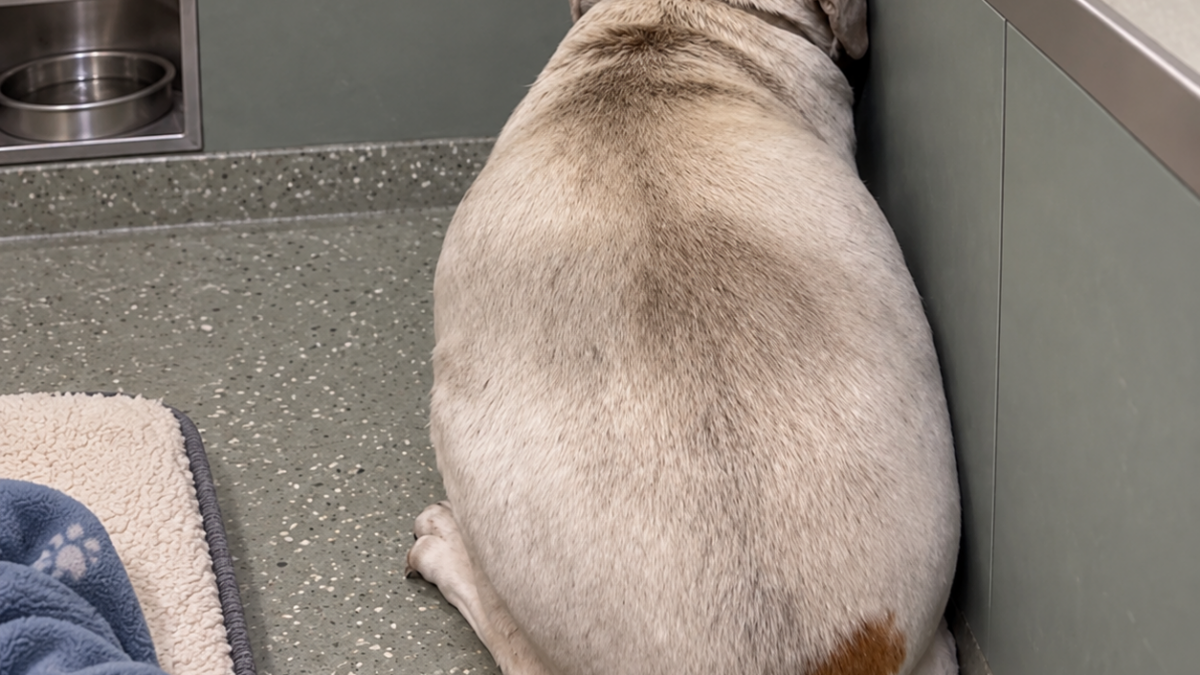
The first showed her pressed into the corner of her kennel.
The second showed one paw outside.
The third showed her standing in my yard.
The fourth showed her asleep upside down on the couch with her front legs folded awkwardly over her chest.
The fifth was my favorite.
Millie was running.
Not fast.
Her knees would never make her an athlete.
But she was moving across the grass toward me with her ears bouncing and her mouth open in something that looked unmistakably like joy.
I placed that photograph beside the shelter note describing her as a poor adoption candidate.
That image became my answer.
Not revenge through cruelty.
Revenge through evidence.
Millie was alive.
Happy.
Loved.
And impossible to dismiss.
A meeting was scheduled with shelter leadership, county animal services representatives, rescue partners, and several volunteers.
I almost left Millie home.
Crowds frightened her.
Then a friend suggested something.
“Bring her, but don’t make her enter the meeting. Let people see her outside if she’s comfortable.”
So I did.
Millie rode in the back seat wearing a blue harness.
Car rides were no longer terrifying, though she still drooled when nervous.
When we arrived, I walked her around a quiet grassy area behind the building.
Her tail stayed low.
Too many smells.
Too many voices.
I decided not to take her inside.
My friend sat with her beneath a tree while I entered the meeting carrying a binder thick enough to annoy everyone before I even opened it.
The room was not hostile.
That surprised me.
Shelter staff looked tired more than defensive.
A county administrator sat at one end of the table.
The shelter director, Marissa, sat opposite me.
I knew her slightly.
She had been there the day I pulled Millie.
She had signed the release.
“Thank you for coming,” Marissa said.
I nodded.
“I’m not here to attack your staff.”
The county administrator leaned back.
“Then what exactly are you asking for?”
I opened the binder.
“I’m asking that fear stop being treated as proof a dog has no future.”
Nobody spoke.
I slid Millie’s intake photo across the table.
“This is Millie on the day I first saw her.”
Then I placed the current photograph beside it.
“And this is Millie now.”
Marissa stared at the picture.
The county administrator picked it up.
I continued.
“She had heartworms. Arthritis. She couldn’t tolerate handling. She wouldn’t approach evaluators. All of that is true.”
I tapped the paperwork.
“But those were conditions. They were not her identity.”
One staff member spoke carefully.
“You understand we don’t have unlimited space.”
“I do.”
“And some dogs become medically or behaviorally unsafe.”
“I understand that too.”
“Then you understand why these decisions happen.”
“Understanding why they happen doesn’t mean we shouldn’t improve how they happen.”
The room went quiet.
That became the most important sentence of the meeting.
Because I wasn’t asking them to promise that no shelter animal would ever be euthanized.
That would have been dishonest.
There are heartbreaking realities in animal welfare.
Severe untreatable suffering exists.
Dangerous behavior exists.
Overcrowding exists.
Resources are limited.
But Millie’s case wasn’t about denying reality.
It was about creating more room for uncertainty before fear became a death sentence.
I proposed several changes based on systems other rescue groups were already using.
A short decompression window for profoundly fearful dogs when medically possible.
Mandatory rescue-partner notification before certain euthanasia decisions.
Behavior reassessment away from kennel fronts when feasible.
Clearer distinction between “fearful” and “aggressive.”
A foster evaluation option for selected cases.
Documentation showing which rescue organizations had been contacted.
The county administrator flipped through the pages.
“Who’s going to pay for this?”
I had expected that question.
“We already have rescues willing to participate.”
I handed him another page.
Six local groups had signed on.
Temporary foster placements.
Transport support.
Behavior consultations.
Fundraising assistance for heartworm-positive dogs.
He studied the sheet.
Marissa looked at me.
“You organized all this?”
“No.”
I glanced around the room.
“We did.”
That mattered.
One angry rescuer could be dismissed as emotional.
Six organizations with data, foster homes, and written commitments were harder to ignore.
The meeting lasted two hours.
There were disagreements.
Shelter staff worried about liability.
Rescue groups worried about rushed decisions.
County officials worried about budgets.
Everyone worried about space.
Nobody walked away with everything they wanted.
But when I stepped outside, Marissa followed me.
Millie was lying under the tree beside my friend.
The moment she saw me, she stood.
Her tail began wagging.
Marissa stopped walking.
“That’s her?”
I smiled.
“That’s Millie.”
For several seconds, Marissa just watched.
Millie hesitated when she noticed the stranger.
Then she looked back at me.
“It’s okay,” I said.
Marissa didn’t approach.
She crouched about ten feet away.
Exactly the way I had the first day.
Millie sniffed the grass.
Marissa’s eyes filled with tears.
“I remember her.”
“I know.”
“We really thought she was shutting down completely.”
“She was.”
Marissa nodded.
“That place can do that to them.”
There was no defensiveness in her voice now.
Only exhaustion.
“I don’t want another Millie to be missed,” I said.
Marissa looked toward the building.
“Neither do I.”
The policy didn’t change overnight.
Real change rarely does.
It came through meetings.
Drafts.
Arguments about language.
Trial periods.
Calls with legal staff.
Insurance questions.
Kennel-capacity spreadsheets.
Volunteer-training sessions.
It was boring compared with the moment someone races into a shelter and saves a dog minutes before euthanasia.
But boring work saves lives too.
Three months later, a pilot program began.
Dogs displaying severe fear without documented dangerous aggression could be flagged for rescue outreach and decompression review before final behavioral disposition when circumstances allowed.
It wasn’t perfect.
Nothing in animal welfare ever is.
But it created one more door before the last door.
Millie had helped open it without knowing.
Her own recovery continued.
After her heartworm treatment, we returned for testing.
I tried not to hope too loudly.
Karen drew blood while Millie leaned against my leg.
She still disliked needles.
Frankly, so did I.
“We’ll call you,” Karen said.
I hated those words.
Two days later my phone rang while I was grocery shopping.
I almost dropped a bag of apples trying to answer.
“Hello?”
Karen laughed.
“You sound terrified.”
“I am.”
“Millie’s heartworm test is negative.”
I closed my eyes.
People moved around me with shopping carts.
Someone’s child was crying near the cereal aisle.
A store employee announced a price check over the intercom.
And I stood beside a display of canned soup trying not to sob.
“Negative?”
“Negative.”
“You’re sure?”
“I’m a veterinarian. We generally try to be sure before calling people.”
I laughed through tears.
That evening, Millie got steak.
Not much.
She had arthritis and didn’t need to become overweight.
But enough to celebrate.
I put a small piece in her bowl.
She inhaled it.
“Seven months ago, you wouldn’t eat chicken if I was in the room.”
Millie stared at me hopefully.
“You have become very demanding.”
Tail wag.
I gave her another piece.
Life became ordinary.
That may have been the greatest victory of all.
Rescue stories often focus on the extreme moments.
The deadline.
The hospital.
The first step.
The dramatic transformation.
But Millie’s real life was built in ordinary things.
She learned where the afternoon sun landed on the living-room rug.
She discovered that the sound of a cheese wrapper deserved immediate investigation.
She learned that squirrels were enemies of civilization.
She developed a strange hatred of cardboard boxes.
She loved one specific yellow blanket and ignored every expensive dog bed I bought afterward.
She followed me into the bathroom.
Every time.
“Privacy,” I would tell her.
Millie did not respect the concept.
She became obsessed with an old tennis ball even though she rarely chased it.
She preferred carrying it from room to room.
Sometimes I found it in my shoe.
Once it appeared in the laundry basket.
I began calling it her emotional-support tennis ball.
Her arthritis improved with medication, controlled exercise, and weight management.
She never moved like a young dog.
Cold mornings made her stiff.
Long walks weren’t possible.
But we found a rhythm.
Ten minutes in the morning.
A slow loop around the block.
Plenty of time to sniff.
Millie didn’t walk for exercise.
Millie walked to conduct investigations.
Every mailbox required inspection.
Every shrub contained breaking news.
Every fire hydrant apparently held decades of community records.
One morning we passed a man walking a large black Labrador.
Months earlier, Millie would have tried to hide behind me.
This time she paused.
The Labrador wagged.
Millie looked at me.
“Your decision,” I said.
She approached.
Noses touched.
Millie jumped backward.
The Labrador remained relaxed.
Millie approached again.
Thirty seconds later, they were sniffing the same patch of grass as though they had scheduled a business meeting.
The man’s name was Daniel.
His dog was Winston.
After that, we began walking together once or twice a week.
Winston became Millie’s first dog friend.
He was everything she wasn’t.
Confident.
Goofy.
Completely convinced every human being existed to admire him.
Winston taught Millie things I couldn’t.
How to approach a stranger for treats.
How to lie in the grass without constantly scanning the environment.
How to sniff another dog’s face without immediately retreating.
How to steal my glove and pretend not to understand the accusation.
One Saturday, Daniel and I sat on a park bench while Winston sprawled nearby.
Millie lay beside him.
Daniel looked down.
“Hard to believe she used to hide all day.”
“You should have seen her.”
“I’ve seen the pictures.”
“It’s different in person.”
Millie rolled onto her side.
Winston rested his chin across her back.
Daniel smiled.
“She looks pretty comfortable now.”
I watched her eyes close.
“Yeah.”
Comfortable.
There had been a time when I didn’t know if Millie would ever understand that word.
The shelter’s pilot program began producing its own stories.
The first dog transferred under the new review process was a five-year-old shepherd named Cooper.
He had been labeled nonresponsive.
A foster family took him.
Within forty-eight hours, he was following their teenage son around the house.
Then came Hazel, an elderly beagle with mammary tumors and terrible teeth.
A senior-dog rescue accepted her.
Then a young cattle dog named June who spun in frantic circles inside her kennel but settled in a foster home with acreage.
Not every story ended perfectly.
Some dogs had severe medical problems.
Some had behavior issues requiring specialized placement.
Some fosters failed.
Some adoptions fell through.
I learned quickly not to romanticize rescue.
Saving a dog from one deadline doesn’t guarantee a fairy-tale life.
But it creates possibility.
And possibility was what Millie had almost lost.
About a year after I brought her home, the shelter held an adoption event.
Marissa asked if I would bring Millie as an ambassador for frightened dogs.
I laughed when I read the email.
Millie.
An ambassador.
The dog who once considered eye contact a threat.
I almost said no.
Then I looked at her sleeping beside me.
Maybe.
We went early before the crowd arrived.
Millie wore a blue bandanna.
No words.
No costume.
I didn’t want her turned into a symbol so aggressively that we forgot she was still a dog.
At first she stayed close to me.
Then Winston arrived with Daniel.
That changed everything.
Millie’s tail rose.
She trotted toward him.
People began arriving.
Some recognized her from shelter updates.
I kept interactions controlled.
No crowding.
No grabbing.
Children were asked to let Millie approach them rather than the other way around.
A little girl named Sophie sat cross-legged on the grass holding a treat.
She couldn’t have been more than eight.
Her mother whispered something to her.
Sophie nodded.
She didn’t call Millie’s name.
Didn’t reach.
Didn’t wave the food.
She simply waited.
Millie noticed.
She looked at me.
Then at Sophie.
Then back at me.
“You decide,” I said.
Millie took one step.
Then another.
Sophie remained perfectly still.
Millie reached her.
Sniffed her shoe.
Then her hand.
The treat disappeared.
Sophie smiled but didn’t touch her.
Millie stayed.
After several seconds, Sophie gently turned her palm upward.
Millie sniffed again.
Then lowered her head beneath the girl’s hand.
Sophie looked at me in surprise.
“Can I?”
I nodded.
“Slowly.”
She stroked Millie’s forehead once.
Millie’s tail wagged.
Sophie looked at her mother.
“She likes me.”
Her mother smiled.
“I think she does.”
I had to look away.
Because suddenly I was back in the shelter.
Millie against the wall.
Eyes lowered.
Body trembling.
And now a child she had never met was touching her forehead in the middle of an adoption event.
There you are.
Later that afternoon, a man approached me.
He looked to be in his sixties.
“Are you Millie’s owner?”
“I am.”
He hesitated.
“I remember her.”
My stomach tightened.
“From where?”
“The shelter.”
He explained that he had volunteered there briefly around the time Millie arrived.
“I cleaned kennels in that row.”
I waited.
He looked toward Millie.
“She used to turn her face toward the wall when I brought food.”
I nodded.
“That sounds like her.”
“I always wondered what happened.”
“She came home with me.”
He smiled.
“I can see that.”
Then his expression changed.
“I wish we’d known.”
“Known what?”
“That she was still in there.”
I looked at Millie.
“We didn’t know either.”
That was the truth.
I hadn’t rescued Millie because I knew she would become affectionate.
I hadn’t known she would eventually sleep beside my bed, befriend Winston, greet certain strangers, or lean into a child’s hand.
I had rescued her because she deserved the chance to show us.
There is a difference.
Sometimes people talk about rescue as if love is a guarantee.
Give a frightened dog a home and love will fix everything.
It isn’t always true.
Some trauma remains.
Some dogs never become social.
Some never enjoy being touched.
Some require lifelong management.
Their worth cannot depend on becoming the version of a pet humans find easiest to love.
If Millie had remained shy forever, she still would have deserved compassion.
Her transformation was beautiful.
But her value didn’t begin when she wagged her tail.
It was there when she was shaking in the corner.
That idea stayed with me.
Months later, it became important again.
I received a forwarded email from someone connected to Millie’s original surrender.
I stared at the subject line for a long time.
Information about Millie.
My pulse quickened.
For more than a year, I had wondered.
Who had left her?
Why?
Did they ever think about her?
Did they know she had nearly died?
I opened the message.
The sender didn’t claim to be Millie’s former owner.
She said she knew the family.
According to her, Millie had lived mostly as an outdoor dog in a quiet rural household.
When an older relative who cared for her became seriously ill, responsibility for Millie shifted to other family members.
They weren’t prepared for veterinary costs.
Heartworm disease was discovered.
The family had financial problems.
Someone made the decision to surrender her.
The writer said Millie had never been beaten as far as she knew.
She had always been timid.
She had spent years with limited exposure to strangers.
After the person she was most attached to disappeared into long-term medical care, Millie became increasingly withdrawn.
I read the email twice.
Then three times.
It didn’t answer everything.
It couldn’t.
It was secondhand information.
I had no way to verify every detail.
But it complicated the story.
People online would have preferred villains.
Cruel owners.
A dramatic abandonment.
Someone to hate.
The truth might have been messier.
Illness.
Money.
Poor planning.
Limited socialization.
A family overwhelmed.
A dog who lost the one person she trusted and then lost her home.
Did that excuse leaving her unprotected from heartworms?
No.
Did it erase the danger she faced afterward?
No.
But I had promised myself I wouldn’t invent cruelty where I had no proof.
So I didn’t.
I didn’t contact the family.
I didn’t expose names.
I didn’t post accusations.
Millie’s life wasn’t a weapon.
Her happiness belonged to her.
The closest thing to revenge she needed was waking up each morning safe.
Still, there was one part of that email I couldn’t forget.
The writer believed the older relative who had cared for Millie was still alive.
A woman named Evelyn.
She was living in assisted care after a stroke.
The writer said Evelyn had repeatedly asked what happened to her dog.
According to the family, she had been told Millie “went to another home.”
Technically, perhaps, that was eventually true.
But Evelyn apparently didn’t know about the shelter.
Or the euthanasia list.
Or me.
I struggled with what to do.
I didn’t want to intrude on a sick woman’s life based on secondhand information.
So I responded cautiously.
If Evelyn truly wanted to know about Millie, and if her legal caregiver agreed, I would be willing to share photographs.
Nothing more.
A week passed.
Then I received a reply.
Yes.
Evelyn wanted photographs.
I printed twelve.
Millie in the yard.
Millie asleep on the couch.
Millie with Winston.
Millie wearing her blue harness.
Millie sitting beside me on the porch.
I deliberately included one from early in her rescue.
Not the worst shelter photo.
I didn’t want to hurt Evelyn.
But I wanted her to understand that Millie had gone through something difficult and survived.
I placed the photographs in an envelope.
Then I added a short note.
Millie is safe.
She is loved.
Her heartworm treatment was successful.
She has arthritis, but we manage it.
She enjoys slow walks, chicken, sleeping in sunny places, and carrying a tennis ball around the house.
She is still shy sometimes.
But she is happy.
I signed my first name.
Three weeks later, an envelope arrived.
The handwriting on the front was shaky.
Inside was a single sheet of paper.
The letter was short.
Thank you for saving my girl.
I read that sentence again and again.
Evelyn wrote that Millie had come to her when she was a young dog.
She had always been timid.
Thunderstorms frightened her.
Strangers frightened her.
But at home with Evelyn, she had been affectionate.
When Evelyn became sick, she believed relatives would care for Millie.
She didn’t know Millie had been surrendered until much later.
She apologized.
Not because I demanded one.
Because she carried guilt.
The last line destroyed me.
Please tell her I did not leave because I stopped loving her.
I sat at the kitchen table holding the letter.
Millie walked over.
She nudged my leg.
I lowered myself to the floor.
“Someone asked me to tell you something.”
Millie looked into my face.
I touched her chest gently.
“She didn’t stop loving you.”
Of course Millie didn’t understand the words.
But she pressed her forehead against me.
I cried into the fur between her ears.
The story I had imagined when I first saw her had changed.
Millie had been abandoned in the practical sense.
She had lost her home.
But somewhere, an elderly woman had apparently spent months believing her beloved dog was safe.
Nobody had told her how close Millie came to dying.
That knowledge softened one part of my anger.
Not all of it.
Someone still made the surrender decision without securing a safe placement.
Millie’s heartworms still reflected preventable neglect.
Her social world had still been too small.
But now I understood something important.
Rescue stories are rarely as clean as heroes and villains.
Sometimes the person who loved the dog loses control of what happens next.
Sometimes people fail animals through irresponsibility rather than hatred.
Sometimes systems fail frightened dogs because resources are scarce.
And sometimes fixing one small part of that system matters more than finding someone to punish.
Several months later, Evelyn’s caregiver asked whether I would consider bringing Millie to visit.
I stared at the message.
I didn’t know what Millie would remember.
Dogs recognize scent.
Voice.
Patterns.
But years had passed through enormous changes.
The visit could mean nothing to her.
It could confuse her.
It could frighten her.
I talked with Karen.
I talked with a behavior consultant.
We decided that if the assisted-care facility approved and if we could keep the visit quiet and brief, we could try.
No expectations.
No forced contact.
Millie would choose.
That rule had guided everything.
It would guide this too.
The facility was forty minutes away.
Millie rode in the back seat.
I brought Winston along in Daniel’s car as emotional backup, though Winston remained outside initially.
The room was small.
Sunlight came through a window overlooking a courtyard.
Evelyn sat in a wheelchair near the bed.
She was in her late seventies.
Her left hand rested motionless in her lap.
Her right hand trembled slightly.
When I entered without Millie first, she looked past me.
“Is she here?”
Her voice was faint.
“She’s outside.”
Evelyn’s eyes filled.
“I didn’t know.”
“I know.”
“They told me she had a home.”
“She does now.”
Evelyn closed her eyes.
“Was she scared?”
I could have softened the truth.
I didn’t lie.
“Very.”
A tear moved down her cheek.
“I should have—”
“You were sick.”
“My daughter said they would take care of her.”
I sat beside her.
“I’m not here to blame you.”
She looked at me.
“Did she suffer?”
The honest answer was complicated.
“She was frightened. She was sick. But she got out. Her heartworms are gone. She sleeps on my couch. She has a Labrador friend who is a terrible influence.”
Evelyn laughed through tears.
“She always liked big dogs.”
That gave me hope.
“Would you like me to bring her in?”
Evelyn nodded.
I went outside.
Millie stood beside Daniel.
I crouched.
“Okay, girl.”
I clipped her leash.
“We’re going to meet someone.”
We entered slowly.
Millie stopped in the hallway.
Her ears moved.
She sniffed.
One step.
Another.
When we reached the doorway, Evelyn was sitting where I had left her.
She did not call out.
She didn’t reach.
I had explained the rules.
Millie entered.
She looked around.
Then she looked at Evelyn.
Her entire body froze.
My heart stopped.
Evelyn whispered one word.
“Millie.”
Millie’s ears lifted.
The leash went loose in my hand.
She stared.
Evelyn began crying silently.
“Hi, baby.”
Millie took one step.
Then another.
Her nose moved rapidly.
She walked toward the wheelchair.
I let the leash slide through my fingers.
Millie reached Evelyn’s knees.
She sniffed the blanket across her lap.
Then the woman’s hand.
Evelyn didn’t move.
Millie’s tail lifted.
One wag.
Then another.
Evelyn made a sound halfway between a sob and a laugh.
Millie rose carefully onto her hind legs and placed her front paws against the side of the wheelchair.
I moved instinctively to protect her arthritic knees, then stopped when she settled.
Evelyn lowered her right hand.
Millie pushed her head beneath it.
That was when everyone in the room started crying.
Evelyn bent as far as her body allowed.
“Oh, Millie.”
Millie’s tail was moving so hard her entire back end swayed.
There was no hesitation anymore.
No lowered eyes.
No retreat.
She licked Evelyn’s wrist.
Again.
Again.
The years between them seemed to collapse.
I turned away because the moment didn’t belong to me.
For fifteen minutes, Millie remained beside Evelyn.
She rested her head in the woman’s lap.
Evelyn stroked the same spot behind her ear over and over.
“I thought you were gone,” she whispered.
Millie closed her eyes.
Eventually I had to end the visit.
Too much emotion could exhaust both of them.
Evelyn kissed her fingers and touched Millie’s forehead.
“You have a good home now.”
Millie looked at me.
Evelyn did too.
“Thank you.”
I swallowed.
“She saved herself more than people realize.”
Evelyn smiled.
“She always was stronger than she looked.”
Before we left, I promised to send updates.
We visited four more times that year.
Each time, Millie recognized the room faster.
Each time, Evelyn seemed brighter when she arrived.
On our final visit before winter, Evelyn gave me something.
A faded red collar.
“She wore this when she was young.”
I held it in my hands.
The metal ring was scratched.
The fabric was worn nearly white in places.
“I kept it in a box.”
I looked at Millie.
“Do you want me to take it?”
Evelyn nodded.
“Keep it with her things.”
I did.
I never put it on Millie.
The collar belonged to a past version of her.
It sits in a drawer beside her adoption papers and veterinary records.
The following spring, Evelyn died.
Her caregiver called me.
I sat on the porch afterward with Millie beside me.
She rested her chin on my shoe.
I didn’t know how to explain absence to a dog.
Maybe dogs understand it better than we do.
They live surrounded by departures.
Doors close.
People leave.
Cars drive away.
Seasons change.
Their lives are shorter than ours, yet they love with no guarantee anyone stays.
I stroked Millie’s head.
“I’m glad you found each other again.”
She leaned against my leg.
The shelter program continued.
By the second year, rescue-network communication had become faster.
A shared notification list was created.
Foster coordinators received alerts about medically treatable fearful dogs.
Volunteers began recording short behavior videos away from kennel fronts when safe.
A quiet evaluation room was used more often.
Again, none of this eliminated euthanasia.
That wasn’t a promise anyone could make.
But more dogs got a second look.
I attended a county review meeting where the administrator who had once asked who would pay for everything presented the program’s results.
He cleared his throat.
“Rescue transfer rates have increased.”
I smiled slightly.
He noticed.
“Don’t look so pleased.”
“I didn’t say anything.”
“You didn’t have to.”
Marissa laughed from across the table.
He continued.
“Average length of stay hasn’t increased as much as projected because rescue transfers are occurring earlier.”
That mattered.
One fear had been that giving certain dogs more review time would clog kennels.
Better rescue coordination partly solved the problem by moving suitable dogs out faster.
Then he showed a slide with several success stories.
Cooper.
Hazel.
June.
And Millie.
Her photograph filled the screen.
She was standing in my yard wearing her blue harness.
I hadn’t known they were going to use it.
For a second I couldn’t speak.
Marissa leaned toward me.
“Poor adoption candidate,” she whispered.
I looked at her.
She smiled.
There was no cruelty in it.
She was quoting the old note because we both understood how wrong a snapshot could be.
“Terrible candidate,” I whispered back.
“Obviously.”
We laughed quietly.
That was the revenge people sometimes ask for in stories.
They expect shouting.
Someone fired.
Someone humiliated.
A villain exposed.
Millie’s revenge was quieter.
Every morning she woke up alive.
Every record saying she was too fearful became less powerful than the life she built afterward.
Every time another frightened dog received a foster call instead of an immediate deadline, Millie’s story pushed back against what almost happened to her.
That was enough for me.
Almost.
There was one more moment.
Three years after I brought Millie home, I walked into the den and found her kennel empty.
That shouldn’t have surprised me.
The door was always open now.
Millie still used it occasionally during thunderstorms or when strangers visited.
It remained her sanctuary.
But increasingly she slept elsewhere.
On the couch.
Beside my bed.
In the kitchen when I cooked.
That afternoon I decided to wash the kennel bedding.
I pulled out the yellow blanket.
Vacuumed the floor.
Wiped down the tray.
Then I stood looking at it.
The black wire kennel occupied a large corner of the room.
For years I had refused to remove it.
People suggested I could.
“She doesn’t need it anymore.”
I always answered the same way.
“It’s hers.”
But now I wondered.
That evening, Millie walked into the den.
She sniffed the empty kennel.
Then looked at me.
I sat on the floor.
“You know you don’t have to hide anymore.”
She walked inside.
Turned around.
Walked back out.
Then crossed the room and lay beside me.
I laughed.
“Subtle.”
The next day I folded the kennel.
Not because safety no longer mattered.
Because Millie had carried safety outside its walls.
I replaced it with a large orthopedic bed.
I placed her yellow blanket on top.
For ten minutes, Millie ignored it.
Then she stepped onto the bed.
Circled.
Lay down.
She sighed.
I wrote one final sentence on the old calendar I had kept from her first year.
KENNEL CAME DOWN.
Under it I wrote:
SHE STAYED.
I still have that calendar.
The early pages are filled with tiny achievements that would sound ridiculous to someone who has never loved a terrified dog.
Looked at me.
Ate with door open.
Stepped outside.
Tail wagged twice.
Slept outside kennel.
Approached stranger.
Played with Winston.
Let Sophie pet her.
Heartworm negative.
Adopted.
Visited Evelyn.
Each line marks a piece of Millie returning to the world.
Today, Millie is older.
Gray has spread across her muzzle.
Her arthritis requires more medication.
She takes longer to stand after naps.
Winston is gray too.
Their walks are shorter.
They spend more time lying in the grass than exploring it.
Millie still startles at unexpected sounds.
Certain men make her cautious.
Thunder sends her searching for a quiet room.
Healing didn’t erase everything.
It gave her tools to live alongside what remained.
Every morning she walks into my bedroom shortly before the alarm.
I don’t know how she keeps time.
She stands beside the mattress and stares at me.
If I ignore her, she makes one quiet sound.
Not quite a bark.
More like a complaint.
“Five minutes,” I tell her.
Millie doesn’t negotiate.
Eventually I get up.
She trots toward the kitchen.
Breakfast.
Medication hidden in something delicious.
Water.
Then the backyard.
She steps into the morning sunlight and stands still for a moment.
Sometimes I watch from the doorway.
The dog who once flattened herself against a shelter wall now lifts her nose toward the wind.
She listens to birds.
Sniffs the grass.
Watches squirrels with deep personal suspicion.
Her tail moves slowly behind her.
Nothing dramatic.
Nothing viral.
Just a dog standing in a yard that belongs to her.
And maybe that is why it still gets me.
Millie’s life almost ended because people saw her at the worst moment of her life and believed that moment represented everything she could ever become.
They saw fear.
They didn’t see the dog who would one day sleep beside my bed.
They saw withdrawal.
They didn’t see the dog who would remember an elderly woman after years apart.
They saw medical expense.
They didn’t see the dog who would survive heartworm treatment and spend afternoons carrying a tennis ball around like treasure.
They saw a difficult adoption candidate.
They didn’t see my family.
I don’t know exactly what Millie remembers about the shelter.
I don’t know if dogs hold those places in memory the way humans hold traumatic rooms.
But sometimes, when we visit the clinic and a metal door closes loudly, she presses against my leg.
I put my hand on her shoulder.
“I’m here.”
She looks up.
That is all.
No speech.
No promise about forever.
Dogs don’t understand forever the way we do.
They understand now.
And right now, I am here.
Right now, she is safe.
Right now, nobody is reaching into her space without permission.
Right now, her bowl will be full.
Her medicine will be given.
Her joints will be cared for.
Her yellow blanket will be washed and returned.
Her tennis ball will somehow end up inside one of my shoes.
Right now is enough.
One evening not long ago, I sat on the porch while Millie slept beside my chair.
The sunset turned the yard gold.
Her paws moved in a dream.
For a second I remembered the first day I saw her.
That cramped body.
Those lowered eyes.
The way she tried to become invisible.
I thought about the phone call.
You need to come today.
I thought about how close the timing had been.
A different decision.
A delayed drive.
One missed phone call.
And none of this exists.
No heartworm-negative test.
No Winston.
No Sophie.
No Evelyn reunion.
No shelter policy meeting.
No yellow blanket beside my bed.
No elderly dog snoring under my chair.
Millie woke.
She looked at me.
I smiled.
“You almost missed all this.”
Her tail tapped against the porch.
Once.
Twice.
Then she stood slowly and walked toward me.
Age has made her movements careful.
Her knees are stiff.
Her back isn’t what it used to be.
But she crossed the small distance between us.
The same way she crossed that distance years ago when she first stepped out of her kennel.
She rested her head against my leg.
I ran my fingers gently behind her ears.
This time she didn’t flinch.
She closed her eyes.
And there, in the quiet yard, I understood the ending I had spent years hoping Millie would receive.
It wasn’t revenge against the family who surrendered her.
It wasn’t revenge against a shelter struggling with impossible numbers.
It wasn’t even revenge against the paperwork that once reduced her future to a few cold lines.
It was something better.
Millie got to outlive every terrible assumption anyone had ever made about her.
The dog considered too frightened to adopt learned to trust.
The dog with heartworms survived treatment.
The dog who hid from every reaching hand eventually pushed her head beneath mine and demanded affection.
The dog who once had no control over where she lived learned that doors in my house opened for her instead of closing behind her.
And the dog whose name once appeared on a euthanasia list became part of the reason other frightened dogs were given more time.
That is Millie’s victory.
Not that she forgot fear.
Not that love magically erased everything.
But that fear stopped making all her decisions.
Years ago, when Millie put one paw outside her kennel, I thought I was watching a frightened dog attempt one small step.
I know better now.
I was watching her take her life back.
And she never gave it up again.








