PART 2: They Mocked Robbie While He Lay Broken and Freezing—Then the Dog Everyone Left to Di3 Did the Unthinkable
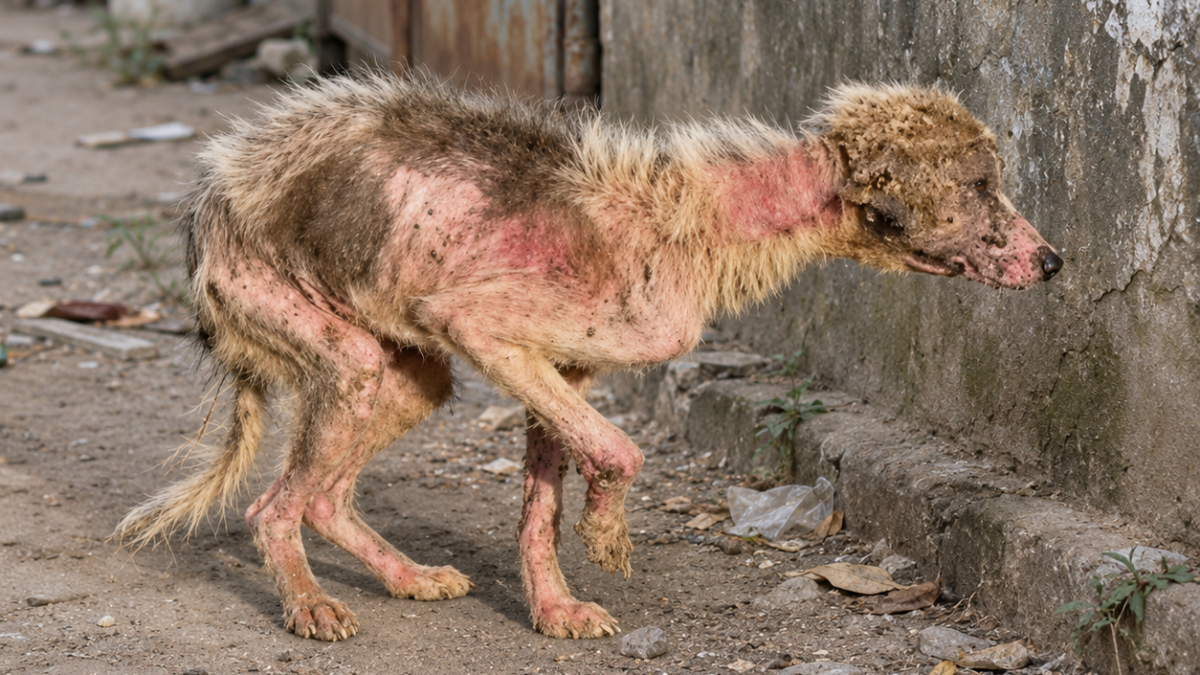
PART 2
I stayed.
There was nowhere else I could imagine being.
Robbie lay beneath layers of warmed blankets while fluids entered his body drop by drop.
The clinic became quieter as the night deepened.
The harsh activity of the first hour settled into something slower and more frightening.
Waiting.
His temperature needed to rise.
His circulation needed to improve.
His organs needed to respond to hydration.
His body needed calories.
But Robbie could not simply be handed a bowl of food.
When an animal has been severely starved, feeding must be handled carefully. A damaged body does not always tolerate sudden abundance.
And Robbie was too weak to eat on his own anyway.
A nurse prepared a small syringe.
The food inside had been made soft enough for him to swallow.
She touched a tiny amount to his mouth.
“Come on, sweetheart.”
No reaction.
She tried again.
Robbie’s tongue moved slightly.
“That’s it.”
A little food went in.
We waited for him to swallow.
He did.
One swallow.
I had never seen anything so small feel so important.
The nurse gave him another tiny amount.
Then water.
Slowly.
Carefully.
There was no celebration.
Not yet.
Robbie was alive.
That was all we could say.
For the next several hours, somebody checked him constantly.
Temperature.
Heart rate.
Respiration.
Hydration.
The IV line.
His wounds.
His leg.
Every time a machine made a different noise, I looked up.
Around midnight, I asked the veterinarian again.
“Any better?”
“Not worse.”
At that moment, “not worse” felt like mercy.
I pulled a chair closer to Robbie.
His face looked so young.
That was the part that made everything harder.
Under the sores, under the dirt, under the starvation, he was not an old dog whose body had gradually declined.
He was young.
He should have been running.
He should have been stealing shoes.
He should have been jumping on people.
He should have been annoying someone for dinner.
Instead he had learned how to lie still and conserve whatever energy remained.
I touched one finger gently between his ears.
“What happened to you?”
Robbie didn’t move.
I imagined all the moments before we found him.
Hunger building day after day.
Skin itching until it became painful.
Sores opening.
The weakness.
Then the vehicle.
The impact.
The leg breaking.
The world spinning.
And after all that, people passing.
People looking.
People deciding they had somewhere more important to be.
That thought filled me with an anger I did not know what to do with.
I wanted someone to answer for it.
I wanted someone to explain how a dog could reach that condition where other human beings could see him.
I wanted to know who hit him and drove away.
I wanted to know who laughed.
Who taunted him.
Who saw his ribs.
Who saw the wounds.
Who watched him collapse.
But Robbie did not need my anger that night.
He needed warmth.
He needed medicine.
He needed the syringe in the nurse’s hand.
He needed people who would stay.
So I stayed.
At 2:00 in the morning, his temperature increased slightly.
At 3:10, he swallowed another feeding more easily.
At 4:00, he lifted his head.
Only for two seconds.
But he lifted it.
The nurse smiled.
“Did you see that?”
“I saw.”
Robbie lowered his head again.
I leaned toward him.
“That counts.”
His eyes opened.
I don’t know whether he understood.
But for the first time since we found him, I felt something stronger than fear.
Hope.
—
## MORNING
The sun came up without asking whether we were ready for another day.
Robbie had survived the night.
Not recovered.
Not safe.
Survived.
There is a huge distance between those words.
His bloodwork showed how badly starvation and dehydration had affected him.
His body had almost no reserve left.
His skin was inflamed and infected.
The sores required treatment.
His leg required monitoring.
The veterinarians needed to determine how much trauma it had sustained and what kind of intervention his weakened body could tolerate.
But the immediate goal was still basic.
Keep him stable.
Get fluids into him.
Control infection.
Manage pain.
Get nutrition into him slowly.
Keep him warm.
A technician changed the bedding under him.
Robbie opened his eyes.
She whispered, “Good morning.”
His eyes followed her hand.
She reached toward a syringe of food.
And Robbie’s nose moved.
We all saw it.
He smelled the food.
The technician grinned.
“You interested?”
Robbie did not lift his head.
But his tongue appeared briefly.
She touched the food to his mouth.
He swallowed.
Then she waited.
Robbie licked again.
“Okay,” she whispered. “I’ll take that.”
It was the smallest thing.
But his body had asked for something.
Food.
Life.
One more day.
—
## I COULDN’T STOP THINKING ABOUT THE PEOPLE WHO WALKED PAST HIM
Later that morning I went outside for air.
My clothes still smelled like antiseptic and dog.
I sat on a low wall outside the clinic and stared at the traffic.
Cars passed.
Normal people going to normal places.
Somewhere, someone was going to work.
Someone was taking a child to school.
Someone was buying breakfast.
It struck me how easily suffering can exist beside ordinary life.
Robbie had been lying near a road while other people continued their day.
Maybe some truly had not seen him.
But others had.
We knew that much.
I thought about the person who hit him.
Maybe it had been an accident.
Animals run into roads.
Drivers cannot always stop.
But leaving an injured animal behind was a choice.
I thought about those who had mocked or chased him.
Also choices.
There was no single dramatic villain standing in front of me.
There was something worse in a way.
Indifference.
Nobody needs to be spectacularly cruel for an animal to die.
Sometimes all it takes is enough people doing nothing.
That realization stayed with me throughout Robbie’s recovery.
People like dramatic stories because dramatic villains are easy to understand.
But Robbie’s enemy had often been quieter.
A turned head.
A closed door.
A person thinking, “Someone else will handle it.”
That was how he became skin and bones.
Not in one day.
One ignored day after another.
—
## DAY TWO
By his second day, Robbie was still weak enough that standing was impossible.
But when the food syringe appeared, he noticed.
I was beside him when the nurse began feeding.
After several small mouthfuls, Robbie moved his head toward the syringe.
The nurse froze.
“Did he just—”
“Yes.”
She pulled it slightly away.
Robbie moved his nose after it.
She laughed.
“You want this?”
His tongue came out.
That was the first moment Robbie made us smile.
Not because anything was funny.
Because wanting food meant something inside him had changed.
The dog who had arrived too exhausted to care whether he lived was beginning to participate.
He wanted the next mouthful.
Then the next.
We still kept the quantities controlled.
But emotionally, everyone in the room wanted to give him the entire kitchen.
“You keep eating,” I told him. “We’ll handle the rest.”
Robbie looked at me.
His eyes were still tired.
But they were more present.
He was looking at people now rather than through them.
—
## THE FIRST BATH
Treating Robbie’s skin was difficult.
His body was covered in areas that needed different kinds of attention.
Some skin was crusted.
Some raw.
Some ulcerated.
Some infected.
His remaining fur had become dirty and sparse.
Medicated bathing would help, but everything had to be gentle.
Robbie’s skin was too fragile for rough handling.
When the veterinary team decided he was stable enough for the first careful bath, two people supported him.
Warm water.
No sudden movements.
No scrubbing.
Just soaking and gentle cleaning.
The water darkened as dirt left his body.
I stood nearby with towels.
At one point, a technician whispered, “How long was he living like this?”
Nobody answered.
Robbie stood only with support.
His injured leg could not carry normal weight.
The rest of his body shook from weakness.
We worked around the open areas.
Medication followed.
Ointment.
Clean dressings where necessary.
Then fresh blankets.
When we were finished, Robbie looked exhausted.
But clean.
I wrapped a towel around him.
For several seconds, he stared at me.
Then he leaned his head against my arm.
It was the first time he chose contact.
I stopped moving.
The technician saw it and smiled.
“Congratulations.”
“For what?”
“You’ve been selected as a pillow.”
I looked down at Robbie.
“That job I can do.”
He fell asleep against me.
—
## THE LEG
Robbie’s broken leg frightened me because his entire body was already fighting so many battles.
A healthy dog with a fracture has resources for healing.
Robbie barely had resources for breathing.
The veterinary team monitored the injury carefully and made decisions based on his stability.
The priority was not to put him through more than his body could tolerate.
Pain management mattered.
Nutrition mattered.
Infection control mattered.
Rest mattered.
As Robbie gained strength, his leg would have a better chance to heal.
For several days, he barely tried to use it.
When he shifted position, he protected that side.
If we touched near the injury, his muscles tightened.
But he never snapped.
That bothered me.
“Why doesn’t he complain?”
A veterinarian looked at him.
“Some dogs learn that complaining changes nothing.”
I felt those words in my chest.
Some dogs learn that complaining changes nothing.
I thought about Robbie before rescue.
How many times had he hurt and nobody responded?
How many times had he approached someone while hungry?
How many times had he been pushed away?
Maybe he had learned silence.
So we began teaching him something else.
Here, discomfort mattered.
If he pulled away, we stopped.
If he was tired, we let him rest.
If he was hungry, food came.
If he was cold, blankets came.
If he cried, someone listened.
—
## DAY FOUR
On the fourth morning, Robbie lifted his head when I entered.
I stopped in the doorway.
“Good morning.”
His ears moved.
I walked closer.
“You know me?”
His tail did not wag.
Not yet.
But his eyes followed me.
I held up the syringe.
“Breakfast?”
His nose immediately pointed toward it.
I laughed.
“Okay. So you know breakfast.”
That day he ate better than any day before.
Still assisted.
Still slowly.
But with enthusiasm.
By evening, the veterinarian told me his hydration was improving.
His temperature had stabilized.
The immediate crisis was easing.
I should have felt relieved.
Instead I asked, “So he’s safe?”
She gave me the look medical professionals give when they know you want certainty they cannot provide.
“He’s safer.”
I nodded.
Safer.
We would take it.
—
## HIS FIRST TAIL MOVEMENT
It happened on day five.
I entered carrying a clean blanket.
Robbie saw me.
His tail moved once.
I stopped.
“Wait.”
The tail moved again.
Tiny.
Barely an inch.
I stared at him.
“You’re wagging.”
He looked confused by my excitement.
I put down the blanket.
“Do it again.”
Nothing.
“Robbie.”
A tiny movement.
I laughed so loudly a nurse looked around the corner.
“What happened?”
“He wagged.”
She smiled.
“That’s huge.”
To anyone outside rescue work, celebrating a tail moving two inches might sound ridiculous.
But we had met Robbie when his entire body seemed to have surrendered.
A wag meant emotion.
Recognition.
Anticipation.
Maybe even pleasure.
His body was remembering there were reasons to respond to the world.
That was huge.
—
## THE DOG UNDERNEATH THE WOUNDS
As the days passed, I started noticing Robbie rather than his injuries.
He had gentle brown eyes.
One ear sat slightly higher than the other.
When he became suspicious of something, his forehead wrinkled.
He liked soft food more than anything.
He hated the smell of one particular medicated ointment and would turn his head dramatically whenever we opened it.
He liked having the side of his face scratched.
He did not enjoy people touching his paws.
And he had begun watching the door when I left.
Not with panic.
Just attention.
One afternoon I returned after being gone for several hours.
Robbie saw me.
Tail wag.
Then another.
“You missed me?”
The tail moved harder.
“That’s dangerous,” I told him.
He tilted his head.
“If you keep doing that, I’m going to get attached.”
One of the caregivers laughed.
“Too late.”
She was right.
—
## HIS FIRST BOWL
Several days into recovery, Robbie became strong enough to attempt eating from a bowl rather than relying entirely on syringe feeding.
We placed a small amount of soft food in front of him.
His nose went immediately toward it.
Then he hesitated.
Maybe the position was difficult.
Maybe he was tired.
Maybe eating independently simply felt unfamiliar after days of assistance.
I touched a little food to my finger.
He licked it.
Then I lowered my hand toward the bowl.
Robbie followed.
His tongue touched the food.
Again.
Again.
Then he began eating.
Slowly at first.
Then faster.
“Easy,” I whispered. “Nobody’s taking it.”
Those words hit me unexpectedly.
Nobody’s taking it.
I wondered whether Robbie knew that yet.
When a dog has starved, food is not simply food.
It is uncertainty.
Will there be more?
Will someone remove it?
Do I need to eat quickly?
Should I protect it?
Robbie ate everything.
Then continued licking the empty bowl.
I added only the amount his medical plan allowed.
He stared at me afterward.
“I know.”
He kept staring.
“You’re very convincing.”
Tail movement.
“You’re also still not getting extra.”
For the first time, Robbie looked offended.
I loved it.
An offended dog was a living dog.
—
## WEEK TWO
By the second week, Robbie no longer looked like he might disappear overnight.
He was still severely underweight.
His skin was still damaged.
The broken leg still limited him.
But something had shifted.
His head stayed up longer.
His eyes were brighter.
His appetite was strong.
His temperature was normal.
Bloodwork showed improvement.
The veterinarian pointed at the results.
“These numbers are moving the right way.”
I looked at Robbie.
“So you’re saying he’s stubborn?”
She smiled.
“I’m saying he wants to live.”
That sentence became the emotional turning point for me.
At first we had wanted life for Robbie.
Now Robbie wanted it too.
—
## THE DAILY ROUTINE
Recovery became repetitive.
That was good.
Emergency medicine is dramatic.
Healing is often boring.
Breakfast.
Medication.
Skin cleaning.
Rest.
Short assisted movement.
More food.
More medication.
Another cleaning.
Bloodwork on scheduled days.
Monitoring the leg.
Checking his weight.
Changing bedding.
Washing bowls.
Washing towels.
Watching.
Waiting.
Repeating.
The routine gave Robbie something he had probably never had.
Predictability.
He began anticipating what came next.
When breakfast arrived, he knew.
When we prepared the bath supplies, he tried to look invisible.
When I sat beside him in the afternoon, he moved closer.
When lights dimmed at night, he curled beneath his blanket.
His world was becoming understandable.
Safety is not always dramatic.
Sometimes safety is simply knowing what happens next.
—
## THE SORES
The ulcers were some of the hardest things to treat emotionally because they were visible evidence of how long Robbie had been deteriorating.
Each time we cleaned them, I thought about the time required for skin to become that damaged.
This had not happened overnight.
Neither had the starvation.
Neither had the fur loss.
Robbie had been suffering long enough for his body to document the neglect.
The medicated baths slowly helped.
Ointments helped.
Antibiotics helped.
Nutrition helped more than people realize.
Skin cannot heal properly when a body is starving.
As Robbie began receiving adequate protein and calories, his body finally had material to rebuild itself.
New tissue appeared.
Redness reduced.
Crusts softened.
Some sores closed.
Others became smaller.
And then, one afternoon, I saw something that nearly made me cry.
Tiny hairs.
Soft, almost invisible.
Growing through an area that had been completely bare.
I leaned closer.
“Is that fur?”
A technician looked.
“Yep.”
I touched the edge carefully.
Robbie glanced at me.
“Look at you.”
He had no idea why I was emotional.
But I knew what those tiny hairs meant.
His body had enough resources to do more than simply survive.
It was beginning to rebuild.
—
## SOMEONE ASKED ME IF I HATED THE PEOPLE WHO LEFT HIM
The question came from a volunteer.
We were folding laundry.
She asked quietly, “Do you hate them?”
“Who?”
“The people who ignored him.”
I continued folding for a moment.
“Yes.”
Then I stopped.
“No.”
She looked at me.
“I don’t know.”
That was the more truthful answer.
I hated what had happened.
I hated the choices.
I hated knowing that Robbie’s suffering had been visible.
But hatred was expensive.
And every bit of energy we spent imagining punishment was energy not spent helping him recover.
“I wanted revenge when we brought him in,” I admitted.
“What changed?”
I looked across the room.
Robbie was asleep.
His belly looked slightly fuller than the week before.
A clean blanket covered his injured leg.
“Maybe nothing changed.”
She waited.
“I just think the best answer is going to be getting him out of here alive.”
—
## STANDING
The first attempt was ugly.
Beautifully ugly.
A rehabilitation technician supported Robbie beneath his body.
His paws touched the floor.
Three legs tried to organize themselves.
The injured one remained protected.
Robbie trembled.
“Easy.”
His front legs straightened.
His back end wobbled.
He collapsed gently into the support.
Nobody looked disappointed.
“Again tomorrow.”
Robbie panted.
I scratched behind his ear.
“You heard her. Homework.”
The next day, we tried again.
He stood one second longer.
Then another.
On the fourth session, Robbie remained upright long enough to look around.
His tail moved.
The technician grinned.
“There you go.”
Robbie tried one step.
His body shifted.
He lost balance.
We caught him.
But he had tried.
That mattered.
—
## THE ROAD WAS STILL IN HIS BODY
Even as his physical strength returned, certain sounds changed Robbie immediately.
Engines.
Tires.
Sudden horns.
The first time a car door slammed outside the clinic, he flinched so violently that his entire body tightened.
I looked toward the window.
Then back at him.
The road had left more than a broken leg.
We began helping him slowly.
No forcing.
No dramatic “face your fear” approach.
Just distance.
A quiet courtyard.
Traffic sounds far away.
Food.
Praise.
Retreat when he became overwhelmed.
Some days he made progress.
Other days a loud engine erased half of it.
Trauma does not follow schedules.
Neither did Robbie.
So we followed him.
—
## THREE WEEKS
Three weeks after Robbie arrived, I placed the first photograph beside a current one.
I nearly didn’t recognize him.
In the first:
Eyes dull.
Body skeletal.
Skin exposed.
Open sores.
Head low.
In the second:
Still thin, but filling out.
Skin calmer.
Wounds closing.
New fur appearing.
Eyes alert.
Head raised.
Someone looked at the pictures and said, “It’s like two different dogs.”
I shook my head.
“No.”
Same dog.
That was important.
We had not created a better Robbie.
We had finally given the original Robbie enough care to appear.
His weight had increased.
His bloodwork was better.
The skin was healing.
And his leg was making progress.
The veterinarian examined him.
“He can start doing a little more.”
“How much?”
“Let him tell us.”
That became our rule.
Robbie would tell us.
—
## HIS FIRST REAL STEPS
We chose a quiet room.
Non-slip flooring.
No noise.
No crowd.
I was in front of Robbie.
A rehabilitation worker supported him.
“Come here.”
Robbie looked at me.
I held a tiny piece of food.
That changed everything.
He leaned forward.
One paw.
Then another.
His injured leg touched down carefully.
He shifted weight away from it.
Then stepped again.
His body wobbled.
“Come on.”
Another step.
I moved backward.
Robbie followed.
Three steps.
Four.
Five.
Then he stopped.
We celebrated like lunatics.
“You did it!”
Robbie immediately focused on the treat.
Of course.
I gave it to him.
The technician laughed.
“He doesn’t care about our emotional breakthrough.”
“He worked for payment.”
Robbie chewed.
Tail wagging.
I looked down at his legs.
Three weeks earlier, one had been broken and his body had been too weak to lift itself.
Now those same legs had carried him across the room.
Five steps.
Five enormous steps.
—
## SOMEONE FROM THE AREA SAW A RECOVERY PHOTO
Word traveled back to the place where Robbie had been found.
A person who had seen him before rescue came across one of his recovery photographs.
They sent a message.
“I can’t believe that’s the same dog.”
I stared at the words.
At first, they irritated me.
Of course you can’t believe it, I thought.
You only knew him dying.
Then I realized something.
That contrast mattered.
People who had reduced Robbie to a pathetic animal on the roadside needed to see what they had failed to recognize.
He had always contained this dog.
The brighter eyes.
The soft expression.
The ability to walk.
The capacity to trust.
None of that appeared from nowhere.
It had been buried beneath suffering.
Robbie had never been worthless.
He had simply been untreated.
Unfed.
Unprotected.
Ignored.
That distinction became the heart of his story.
—
## THE FIRST TIME HE RAN
“Ran” might be generous.
It was more like an excited crooked trot.
But to us, it was running.
Robbie had progressed from supported standing to short walks.
His leg continued healing.
His muscles were rebuilding.
One afternoon, I walked several feet ahead of him.
Then I crouched.
“Robbie!”
His ears came up.
“Come on!”
He started walking.
Then his pace increased.
A strange, uneven little bounce.
His tail lifted.
He came directly toward me.
I opened my arms.
Robbie crashed into my knees.
I laughed.
“That was fast.”
He licked my hand.
I looked at the rehabilitation worker.
“Did that count as running?”
“Absolutely.”
Robbie turned in a tiny circle.
He wanted another treat.
I gave it to him.
He had earned everything.
—
## TRUST WAS HARDER THAN WALKING
Physically, Robbie improved faster than emotionally.
His body learned that food arrived every day.
His mind took longer to believe people would stay kind.
If someone approached too quickly, he flinched.
If a hand came from above, he sometimes lowered his head.
If voices became loud, he retreated.
At first he did not understand toys.
A squeaky toy frightened him.
A ball meant nothing.
A soft stuffed dog made him suspicious.
But blankets?
Robbie understood blankets.
He loved them.
If we placed two clean blankets in his area, he arranged them with his paws until they became a nest.
Then he curled in the middle.
I started bringing extra.
A nurse teased me.
“You know we have blankets here.”
“Not these.”
“What’s special about those?”
“They’re his favorite.”
“Robbie does not know the difference.”
Robbie immediately walked to the blanket I had brought and lay on it.
I pointed.
“He has spoken.”
—
## THE FIRST TOY
It was a simple rope toy.
Nothing expensive.
I left it beside his bed.
Robbie ignored it for hours.
Then I saw him sniff it.
He touched it with his nose.
Walked away.
Came back.
Touched it again.
Later that afternoon, I found one end in his mouth.
I froze.
Robbie looked at me.
I moved the other end gently.
The rope shifted.
He held tighter.
I pulled lightly.
Robbie pulled back.
My heart nearly exploded.
“You know tug?”
He pulled again.
I laughed.
For perhaps ten seconds, Robbie played.
Then he dropped it and rested.
Ten seconds.
That was all.
But play is a luxury.
A starving animal does not waste energy playing.
A terrified animal does not expose itself through play.
Robbie had enough food.
Enough safety.
Enough trust.
For ten seconds, he could be silly.
That was recovery too.
—
## PEOPLE WANTED A VILLAIN
As Robbie’s story spread, people asked the obvious questions.
Who hit him?
Who left him?
Who taunted him?
Were they punished?
I understood the anger.
I felt it.
But we did not have verified answers for every question.
I refused to invent them.
Robbie had already been failed by people.
I wasn’t going to use his suffering as an excuse to accuse someone without proof.
What we knew was painful enough.
He had been hit.
He had been left.
He had been ignored.
He had been mistreated before help arrived.
That was reality.
And sometimes reality does not deliver a perfect courtroom ending.
Sometimes the person responsible is never identified.
Sometimes nobody stands before a judge.
Sometimes there is no dramatic apology.
I struggled with that.
I wanted a neat ending where cruelty received exactly the punishment it deserved.
Life rarely works that way.
Then Robbie taught me a different ending.
—
## THE BEST REVENGE
One afternoon, Robbie walked outside under his own power.
His coat had begun filling in.
His tail was moving.
The sun hit his face.
He stopped and smelled the air.
Then he continued toward the grass.
I suddenly remembered the place where we found him.
Cold.
Broken.
People having already decided he was not worth helping.
I looked at him now.
Walking.
Eating.
Healing.
Trusting.
And I thought:
This is the revenge.
Not violence.
Not hatred.
Not humiliation.
This.
Every step.
Every pound he gained.
Every hair that grew back.
Every meal.
Every person he chose to trust.
Every morning he woke warm instead of freezing.
The people who treated him as though his suffering did not matter had been wrong.
Robbie’s entire life from that point forward became proof.
—
## HIS FUR
At week four, Robbie’s fur growth became impossible to miss.
The bare patches looked softer.
His skin was no longer angry red everywhere.
Tiny hairs became visible.
Then thicker.
We took photographs every few days.
The changes looked small in real time.
Side by side, they were astonishing.
Someone ran a hand gently along his back.
“Soft.”
I smiled.
That word mattered.
Robbie had arrived rough with scabs, sores and exposed skin.
Now someone could describe him as soft.
I bent down.
“You hear that? You’re fancy.”
Robbie wagged.
“You’ve got hair now.”
Another wag.
“Don’t become arrogant.”
His tail moved harder.
Too late.
—
## WEIGHT
The scale became another source of celebration.
At first, every number frightened us.
Too low.
Far too low.
Then it began climbing.
Slowly.
Safely.
Each gain meant muscle returning.
Fat returning.
Reserves returning.
A body no longer consuming itself simply to remain alive.
When Robbie crossed one of his target milestones, I held up the paper.
“You gained again.”
He looked at the treat in my other hand.
“I know what you care about.”
He sat.
Not gracefully.
But he sat.
“Who taught you that?”
He stared at the treat.
“Fine.”
I gave it to him.
Robbie was discovering that good behavior could manipulate humans.
A healthy development.
—
## THE FIRST REAL WALK OUTSIDE
Not across a room.
Not rehabilitation steps.
A walk.
Short.
Slow.
Controlled.
But outside.
We chose a quiet time.
Robbie wore a secure harness.
I held the leash loosely.
The rehabilitation worker stayed beside us.
At the door, Robbie stopped.
His body tightened.
Outside meant roads.
Engines.
Uncertainty.
I crouched.
“We don’t have to.”
Robbie sniffed.
One paw crossed the threshold.
Then another.
He stopped again.
A distant car passed.
He looked toward the sound.
I waited.
The leash remained loose.
Robbie looked at me.
Then took another step.
We walked five yards.
Ten.
He sniffed grass.
That seemed to change everything.
His nose took over.
The grass contained information more important than fear.
He moved toward a plant.
Sniffed.
Then another.
The rehabilitation worker whispered, “He’s being a dog.”
Exactly.
For ten minutes, Robbie was not a patient.
Not a victim.
Not the dog who had been run over.
He was a dog investigating grass.
When we turned back toward the clinic, his tail was up.
—
## HIS PERSONALITY ARRIVED ALL AT ONCE
Once Robbie felt better, we discovered he was trouble.
Gentle trouble.
But trouble.
He learned where treats were kept.
He learned which staff members were easiest to manipulate.
He learned that if he stared long enough, humans weakened.
One veterinarian was particularly vulnerable.
Robbie would sit near her.
Look up.
Tilt his head.
She would say, “No.”
He would continue staring.
“No.”
Stare.
“You already ate.”
Stare.
“This is emotional blackmail.”
Tail wag.
She would give him a tiny approved treat.
I laughed every time.
The dog who once could not feed himself from a syringe had become a professional negotiator.
That felt like victory.
—
## THE LEG KEPT IMPROVING
Robbie’s gait was not perfect immediately.
Healing takes time.
The muscles around the injury had weakened.
He compensated with other legs.
Rehabilitation focused on rebuilding strength without causing damage.
Short sessions.
Controlled movement.
Rest.
Gradually, he placed more weight on the injured leg.
One day I noticed he was standing evenly.
“Wait.”
Robbie looked at me.
I crouched.
“Do that again.”
Of course he had no idea what I meant.
But he took several steps.
The limp was smaller.
I sent the video to the veterinary team even though they had literally seen him that morning.
The response was immediate.
“YES!”
That was how invested everyone had become.
Robbie’s victories belonged to the whole room.
—
## A NEW PROBLEM
Healing creates new challenges.
As Robbie became stronger, he had more energy.
More energy meant more movement.
More movement meant we needed to make sure he did not overdo it.
Try explaining restricted activity to a dog who has just discovered he enjoys being alive.
Robbie wanted to follow people.
He wanted to investigate hallways.
He wanted to go outside.
He wanted food constantly.
He wanted to explore every sound.
We had spent weeks begging him to stand.
Now we sometimes had to tell him to lie down.
“Robbie, rest.”
Tail wag.
“Rest.”
He took two steps toward me.
“No.”
Another step.
“You are terrible at medical instructions.”
He leaned against my leg.
I sighed.
“Fine. Five minutes.”
He had trained me well.
—
## THE OPEN SORES CLOSED
One by one.
Not overnight.
Not dramatically.
But they closed.
The worst ulcers became smaller.
Healthy skin replaced damaged tissue.
New hair covered scars.
Some marks would remain.
That was okay.
Healing does not require pretending nothing happened.
Robbie’s body would always carry evidence of the road he had survived.
But scars are different from open wounds.
A scar says:
This hurt.
And then it stopped.
I liked that.
Robbie deserved a body full of things that had stopped hurting.
—
## ADOPTION
The word came up carefully.
Robbie was improving.
Eventually, he would need a permanent home.
The thought made me unexpectedly nervous.
I wanted him safe.
Forever.
Not just until someone got bored.
Not until veterinary care became expensive.
Not until he made a mess.
Not until he became inconvenient.
Robbie had already experienced what happens when a vulnerable animal depends on people who do not show up.
The next home needed to understand him.
People began asking about him.
His photographs had attracted attention.
The transformation made him impossible not to love.
But we were cautious.
“You don’t adopt the before-and-after picture,” I told one interested person.
They looked confused.
“What do you mean?”
“You adopt the dog. Including everything he may carry from what happened.”
That meant fear.
Medical follow-ups.
Possible sensitivity around roads.
Skin monitoring.
Patience.
Trust-building.
Robbie did not need someone fascinated by his story.
He needed someone committed to his future.
—
## THE WOMAN WHO SAT ON THE FLOOR
Her name was Emma.
She did one thing right immediately.
She ignored Robbie.
Not cruelly.
Respectfully.
When she came to meet him, she sat on the floor several feet away.
No reaching.
No calling.
No baby voice.
She talked to me instead.
“How does he do with cars?”
“Better, but he still gets nervous around loud traffic.”
“Food?”
“Excellent. Too excellent.”
She smiled.
“Skin care?”
“We’ll show you everything.”
“Leg?”
“Improving. He may always need monitoring.”
Robbie watched her.
Emma did not look directly at him.
After several minutes, he stood.
Walked toward her.
Stopped.
Sniffed.
She kept her hands in her lap.
Robbie moved closer.
His nose touched her sleeve.
She whispered, “Hi.”
That was all.
Robbie stayed.
I noticed his tail moving.
Tiny.
Emma looked at me.
I nodded.
“You can touch his chest.”
She did.
Robbie leaned forward.
I felt something inside me loosen.
—
## THE SECOND MEETING
Robbie remembered her.
That mattered.
When Emma returned several days later, Robbie saw her at the door.
His tail began wagging before she reached him.
Emma smiled.
“Well, hello.”
Robbie walked over.
No hesitation.
She sat.
He stood beside her.
Then, after a few minutes, he lowered himself and placed his head on her leg.
Emma looked at me.
Her eyes filled.
“I’m not moving.”
“Good.”
“My leg is going numb.”
“Still not moving.”
She laughed quietly.
Robbie closed his eyes.
That was probably the moment I knew.
Not because Emma loved him.
Lots of people loved Robbie.
Because Robbie had begun choosing her.
—
## I WASN’T READY
When the adoption became serious, I became difficult.
I checked everything.
Then checked again.
I asked Emma questions she had already answered.
I reviewed care instructions repeatedly.
At some point she smiled.
“You know I’m not offended, right?”
“About what?”
“You interrogating me.”
I sighed.
“Sorry.”
“Don’t be.”
She looked at Robbie.
“If he had been through what he’s been through and you handed him to the first person who smiled at him, I’d be worried.”
That answer helped.
I sat beside her.
“He almost died.”
“I know.”
“He needs someone who understands that.”
“I do.”
“He might have setbacks.”
“I know.”
“His skin could flare.”
“I know.”
“He may be afraid of traffic for a long time.”
“I know.”
“He’s greedy.”
She laughed.
“I definitely know.”
Robbie looked at us.
Tail wagging.
—
## THE NIGHT BEFORE HE LEFT
I stayed later than necessary.
Robbie had a clean blanket.
His favorite.
The rope toy was beside him.
His coat was soft enough now that I could run my fingers along his back without feeling raw skin.
His ribs were no longer painfully obvious.
His eyes looked bright.
I sat on the floor.
“You know you’re leaving tomorrow?”
Robbie placed his head against my knee.
“Of course you don’t.”
I scratched behind his ear.
“I’m supposed to be happy.”
Tail wag.
“I am happy.”
Another wag.
“But you scared me.”
Robbie looked up.
“You really scared me.”
I remembered the first night.
Cold body.
Shallow breathing.
The veterinarian saying, “I don’t know.”
The syringe.
The IV.
The blanket.
I swallowed.
“You were supposed to die.”
Robbie shifted closer.
“But you didn’t.”
I smiled.
“That was rude of you.”
Tail wag.
“You made all of us emotional.”
He licked my hand.
“I forgive you.”
—
## ADOPTION DAY
Emma arrived early.
She had everything.
Harness.
Seat cover.
Water.
Blanket.
Treats approved by the clinic.
Medical paperwork organized in a folder.
I laughed when I saw it.
“You’re more prepared than we are.”
“I’ve been preparing for a week.”
Robbie heard her voice.
His ears lifted.
Then his tail started.
Emma crouched.
“Ready?”
Robbie walked toward her.
No fear.
No hesitation.
That almost hurt.
Not because I wanted him afraid.
Because I realized he already knew.
She was safe.
We reviewed medications.
Skin care.
Feeding.
Exercise.
Follow-up appointments.
Warning signs.
Then came the leash.
Emma clipped it to his harness.
Robbie stood beside her.
I held his face gently in my hands.
“Be good.”
He licked my chin.
“Actually, don’t. Give her trouble.”
Emma laughed.
“I can handle it.”
We walked outside.
A vehicle passed in the distance.
Robbie noticed.
His body stiffened slightly.
Emma stopped.
She did not pull.
She waited.
Robbie looked at her.
She said, “It’s okay.”
After a few seconds, he moved again.
That tiny interaction reassured me more than anything she had promised.
She understood.
—
## THE CAR
Robbie was afraid of getting into the car.
Of course he was.
Road.
Vehicle.
Impact.
Pain.
We had practiced short car sessions, but adoption day was different.
Emma opened the back door.
Robbie stopped.
She did not lift him.
She did not drag him.
She placed a treat near the entrance.
Robbie took it.
Another slightly farther in.
He stretched.
Took it.
Then another.
One paw entered.
Then two.
He backed out.
Emma waited.
“Take your time.”
Second attempt.
Two paws.
Three.
Then suddenly Robbie climbed inside.
Everyone around us cheered softly.
Not loud enough to frighten him.
Emma sat beside him for a moment before closing the door.
Robbie settled onto the blanket.
I looked through the window.
The dog we had carried into the clinic because he could not stand was now sitting upright in a car headed toward home.
—
## THE FIRST NIGHT HOME
Emma sent me a picture before I had even stopped missing him.
Robbie stood in her living room.
He looked suspicious of a dog bed that appeared large enough for three Robbies.
Message:
“He refuses to lie in the expensive bed.”
I laughed.
Ten minutes later, another photo.
Robbie was asleep on a folded blanket beside the expensive bed.
I replied:
“Accurate.”
Later:
“He ate.”
Then:
“Went outside.”
Then:
“Skin care done.”
Then:
“He is following me everywhere.”
I stared at that last sentence.
Following me everywhere.
Once Robbie had been left alone on a roadside.
Now he had someone worth following.
—
## HIS FIRST WEEK
Robbie adjusted slowly.
He followed Emma from room to room.
If she disappeared behind a door, he waited outside.
If she sat, he lay nearby.
Food excited him.
Blankets delighted him.
The television confused him.
The vacuum cleaner was his mortal enemy.
Traffic remained difficult.
Emma chose quiet walking routes.
Short distances.
Lots of sniffing.
No pressure.
One afternoon, she sent me a video.
Robbie was walking through grass.
No limp visible from the camera angle.
Tail up.
He stopped at a tree and sniffed for almost a full minute.
Emma said behind the camera, “Very important investigation.”
Robbie ignored her.
I watched the video three times.
Ordinary dog behavior became extraordinary when you knew where he started.
—
## HE LEARNED THE COUCH
The couch was not initially allowed.
That lasted four days.
Emma sent me a photograph of Robbie lying across two cushions.
Caption:
“I have lost control.”
I replied:
“You never had it.”
Robbie had discovered comfort.
He stretched his entire body across the couch as if making up for every night spent cold.
His new fur looked soft.
His belly was full.
His eyes were closed.
One paw hung over the edge.
That image became one of my favorites.
Not dramatic.
No rescue equipment.
No wounds.
Just a dog asleep on furniture.
That was the life we had fought for.
—
## HIS COAT CAME BACK
Over the next several months, Robbie changed again.
The patchy growth filled in.
Soft fur covered areas that had once been ulcerated.
The texture improved.
His body looked proportionate.
Healthy weight replaced sharp bones.
Emma brushed him gently.
At first, Robbie tolerated grooming.
Later, he began leaning into it.
One video showed him nearly falling over because he was pushing his side against the brush so hard.
I laughed.
“Look at this spoiled animal.”
The veterinarian watching with me said, “Good.”
That single word summarized everything.
Spoiled was good.
Wanted was good.
Comfortable was good.
Robbie had spent enough time without enough.
—
## THE ROAD
Months into adoption, Emma began working more deliberately on Robbie’s fear of roads.
Not because she needed him walking beside highways.
Because she wanted ordinary sounds to stop controlling him.
They started far from traffic.
Treat.
Car passes.
Treat.
Distance.
Safety.
Repeat.
Robbie learned.
A moving car did not always mean pain.
An engine could pass without touching him.
A horn could sound and the world would remain safe.
Progress came slowly.
Then one day Emma sent me a video from a sidewalk on a quiet street.
A car moved past.
Robbie watched.
Did not crouch.
Did not pull away.
Then continued sniffing.
I felt tears immediately.
Other people would see nothing.
I saw a dog rewriting memory.
—
## THE PEOPLE WHO HAD ONCE MOCKED HIM
I never needed Robbie brought back to that roadside for some dramatic confrontation.
I never needed him paraded in front of people who had failed him.
But his recovery photographs spread.
People in the area saw them.
Some who remembered the skeletal dog lying there saw the new Robbie.
Soft coat.
Healthy body.
Bright eyes.
Standing.
Walking.
Running.
That was enough.
They had seen him as something to laugh at.
Something inconvenient.
Something broken.
Now the same dog was proof that the problem had never been his worth.
It was the lack of compassion around him.
Every healthy photograph quietly accused the indifference that had almost killed him.
No shouting required.
—
## ONE PERSON APOLOGIZED
A message came through months later.
Someone from the area said they had seen Robbie before the rescue.
They admitted they had done nothing.
They had assumed another person would eventually help.
They wrote:
“I should have called someone.”
I read the sentence several times.
Part of me wanted to be angry.
Then I thought about what good anger would do now.
I replied simply:
“Next time, call.”
That was all.
Because there will always be a next Robbie somewhere.
Another road.
Another hungry dog.
Another person deciding whether to stop.
Regret matters only if it changes what happens next.
—
## ROBBIE RAN
The first video of Robbie running properly came months after adoption.
Emma had him in a secure open area.
He started with a trot.
Then something caught his attention.
He accelerated.
His legs extended.
All four paws briefly left the ground.
I paused the video.
There.
Airborne.
I remembered carrying him.
His body limp in a blanket.
Broken leg protected.
Cold skin.
Now the same dog was flying for half a second.
I watched the clip again.
Robbie turned and ran back toward Emma.
His mouth open.
Tail high.
She laughed.
Robbie ran faster.
That sound—human laughter—had once been part of his suffering.
Now laughter meant joy.
That may have been the most beautiful revenge of all.
The same sound had changed meaning.
—
## HIS TAIL
People focused on Robbie’s fur transformation.
I understood why.
Before and after photographs were dramatic.
But I watched his tail.
That told the deeper story.
At first:
Still.
Then:
One tiny movement.
Then:
Slow wag.
Then:
Excited wag when food appeared.
Then:
Wag when I entered.
Then:
Wag when Emma arrived.
Later:
Whole-body movement.
A tail that had once seemed to have no reason to move became impossible to stop.
That is the part I wish everyone could understand.
Recovery is not only wounds closing.
It is joy returning to places where fear used to live.
—
## ONE YEAR LATER
On the anniversary of Robbie’s rescue, Emma brought him to visit.
I knew he was coming.
I still wasn’t prepared.
He came through the door with a full coat.
Healthy weight.
Bright eyes.
Strong legs.
I stared.
“Who is this?”
Robbie recognized my voice.
Tail explosion.
He pulled toward me.
I crouched.
He ran the last few feet and nearly knocked me backward.
I wrapped my arms around him.
His body felt warm.
Warm.
That was the first thing I noticed.
Because the first time I touched Robbie, he had been ice cold.
Now heat radiated through his fur.
“You’re warm,” I whispered.
Emma probably thought it was a strange thing to say.
But she knew the story.
She understood.
Robbie licked my face.
I laughed.
“You smell better too.”
He wagged.
—
## THE VETERINARY TEAM CAME OUT TO SEE HIM
Someone told the back staff Robbie was there.
Within minutes, people appeared.
Nurses.
Technicians.
The veterinarian who had treated him that first night.
She stopped when she saw him.
“Oh my God.”
Emma smiled.
“Recognize him?”
The veterinarian crouched.
Robbie approached.
She ran her hands carefully over his body.
“Look at you.”
Then she looked at me.
“Remember that first night?”
“I try not to.”
She scratched Robbie’s chest.
“I genuinely didn’t think he’d make it.”
Emma looked down at him.
Robbie was trying to locate treats.
Completely unconcerned with the discussion of his mortality.
The veterinarian laughed.
“He certainly doesn’t care.”
“No.”
“That’s probably healthy.”
—
## HIS LEG
The leg had healed remarkably well.
There were occasional signs that it had been injured.
After heavy activity, Emma monitored him carefully.
Regular veterinary checks continued.
But Robbie could walk.
Run.
Play.
Climb onto furniture he was supposedly not allowed on.
The broken leg that had once seemed like one disaster among many became just one chapter.
I watched him cross the clinic floor.
No assistance.
No sling.
No trembling.
He stopped near the scale.
Then immediately tried to leave because apparently he remembered that nothing good happened on scales.
Everyone laughed.
Robbie looked offended.
Healthy dogs get to be offended by ordinary things.
I loved it.
—
## THE MOMENT THAT BROKE ME
Before Robbie left that visit, Emma opened the car door.
Robbie jumped inside without hesitation.
I froze.
Months earlier, it had taken treats, patience and multiple attempts.
Now he jumped in because cars no longer meant only danger.
They meant parks.
Walks.
Visits.
Going home.
Emma closed the door.
Robbie looked through the window.
I waved.
He wagged.
Then they drove away.
I stood there thinking about how completely a life can change when suffering is interrupted.
Not erased.
Interrupted.
Someone stops.
Someone picks up the animal.
Someone pays attention.
Someone treats the wound.
Someone feeds.
Someone stays.
Then the future branches in a different direction.
—
## REVENGE
People still used that word.
“What happened to the people who mocked him?”
“Did you confront them?”
“Did anyone pay?”
I understand why people want that ending.
Cruelty creates a hunger for balance.
But I stopped imagining Robbie’s revenge as something happening to those people.
His revenge was happening to him.
He had everything their indifference said he did not deserve.
A warm body.
A full stomach.
Medical care.
Soft fur.
A healed leg.
A home.
A person who worried if he sneezed twice.
A couch.
Toys.
Walks.
A name spoken with affection.
He had become important.
That was the answer.
—
## WHAT IF WE HAD ARRIVED ONE DAY LATER?
I hate that question.
But I ask it.
Another cold night.
More dehydration.
More infection.
No calories.
A broken body.
Would Robbie have survived?
Maybe not.
That possibility is why I cannot romanticize rescue.
Robbie’s transformation is beautiful.
But it should never have been necessary.
A dog should not need to almost die before receiving basic kindness.
We celebrate the after photo because it gives us hope.
We should also let the before photo make us uncomfortable.
Somebody saw him before us.
Someone could have helped sooner.
That is part of the story too.
—
## ROBBIE AND CHILDREN
One surprising part of his new life was how gentle Robbie became around children.
Emma’s relatives visited with kids.
At first, everyone was cautious.
Robbie had history.
Nobody wanted to overwhelm him.
The children were taught to sit quietly and let him approach.
Robbie sniffed.
Then chose the smallest child.
He lay down nearby.
The child gently touched his back.
Robbie closed his eyes.
Emma sent me the photo.
I stared at it.
A dog who had experienced human cruelty still found room to trust tiny human hands.
Animals constantly embarrass us with their capacity for forgiveness.
—
## HE BECAME PROTECTIVE OF HIS FOOD—THEN LEARNED HE DIDN’T NEED TO BE
There was one issue that made perfect sense.
Robbie sometimes became anxious around food.
Not aggressive in a dangerous way.
Tense.
Fast.
Worried.
He had starved.
His brain remembered scarcity.
Emma worked with him carefully.
Meals came consistently.
Nobody reached into his bowl.
Nobody teased him with food.
Nobody took it away for entertainment.
Over time, Robbie slowed.
He would occasionally leave food unfinished and return later.
The first time Emma told me that, I nearly cried.
“You know what that means?”
She said, “That he’s spoiled?”
“No.”
“What?”
“He believes it’ll still be there.”
That is security.
Leaving food because you trust tomorrow.
—
## WINTER
Robbie’s first winter in his new home mattered to me because of how cold he had been when we found him.
Emma sent a photograph during a cold evening.
Robbie was wearing a ridiculous sweater.
He was lying beneath a blanket.
Only his face was visible.
Caption:
“He refuses to go outside.”
I laughed.
Then I zoomed in.
His eyes looked sleepy.
Warm.
Safe.
I remembered my hand touching his freezing body beside the road.
The contrast made my throat tighten.
Robbie would never be ice cold and alone again.
Not if Emma had anything to say about it.
—
## THE ROAD WHERE WE FOUND HIM
I eventually drove past it again.
I had avoided the area for a long time.
Then one afternoon, I found myself there.
Traffic moved normally.
The roadside looked ordinary.
That was the strangest part.
Places where terrible things happen rarely look permanently terrible.
Grass grows.
Cars pass.
People forget.
I pulled over safely farther down.
For a moment, I sat in silence.
I could see in my memory exactly where Robbie had been.
I imagined him there.
Then I imagined him at Emma’s house.
Warm.
Fed.
Probably occupying the couch illegally.
I smiled.
The road no longer owned the ending.
—
## ROBBIE’S SECOND YEAR
By the second year, people meeting Robbie for the first time often had no idea what he had survived.
They saw a healthy dog.
That itself felt like a miracle.
His scars were less obvious beneath the fur.
His gait was strong.
He had normal dog concerns.
Food.
Walks.
Squirrels.
Visitors.
Where Emma was.
Whether somebody might accidentally drop cheese.
That was exactly what I wanted.
I did not want trauma to remain his entire identity.
He was not “the abused dog” forever.
He was Robbie.
He liked blankets.
He liked chicken.
He disliked rain.
He believed squirrels were suspicious.
He enjoyed sleeping upside down.
He could steal an entire pillow if given three seconds.
That was a life.
—
## ONE PARTICULAR MORNING
Emma told me about a morning when Robbie woke before her.
She opened her eyes and found him sitting beside the bed, staring.
She checked the clock.
6:02.
Breakfast was normally 6:00.
Robbie stared harder.
She said, “Seriously?”
Tail wag.
“You almost died once and now you’re going to report me for being two minutes late?”
Tail wag.
She got up.
When she told me the story, I laughed until I cried.
That is the kind of ending rescue workers dream about.
Not grand.
A dog annoying someone for breakfast.
Normal life can be the most emotional thing in the world.
—
## DID ROBBIE FORGIVE?
People ask questions like that because we think in human terms.
Did he forgive the people who hurt him?
Did he remember?
Did he hate?
I don’t know.
I would never pretend to know exactly what existed inside his mind.
What I can say is this:
Robbie did not allow the worst people he encountered to decide how he felt about every person afterward.
That may be better than forgiveness.
He learned again.
He trusted again.
He attached again.
He loved again.
He played again.
He slept deeply.
He ran.
He lived.
—
## THE FINAL ANSWER TO THE PEOPLE WHO TAUNTED HIM
If I could place Robbie in front of every person who saw him suffering and decided to mock him instead of help him, I would not say much.
I wouldn’t need to.
I would let them look.
Look at the coat.
Look at the muscles.
Look at the healed skin.
Look at the leg.
Look at the eyes.
Look at the tail.
Then I would say:
“This is who you were laughing at.”
Not trash.
Not a hopeless stray.
Not a worthless dying animal.
Robbie.
A dog who only needed someone to care whether he survived.
Then I would walk away with him.
Because he has already spent enough of his life around people who did not deserve his time.
—
## THE DOG WHO WAS ICE COLD
Whenever someone asks me what I remember most about that day, my answer is not the broken leg.
It is not the sores.
It is not the missing fur.
It is the temperature of his body.
Ice cold.
I can still remember the shock when my hand touched him.
Living bodies are supposed to be warm.
Robbie felt like he was already halfway gone.
That is why every later photograph of him sleeping under sunlight affects me.
Warmth became symbolic.
Sun.
Blankets.
Hands.
Home.
Robbie went from freezing beside a road to choosing which blanket he preferred on a couch.
If that isn’t victory, I don’t know what is.
—
## THE LAST VIDEO EMMA SENT ME
Robbie was in a field.
Not enormous.
Just enough open space.
The grass was green.
His coat moved in the breeze.
Emma called:
“Robbie!”
He turned.
Bright eyes.
Ears up.
Then he ran.
He came toward the camera so quickly that the image shook when he reached her.
Emma laughed.
Robbie jumped.
The video ended.
I replayed it.
Then again.
Because once, Robbie could not stand.
Once, his body was so weak that we put food into his mouth with a syringe.
Once, we did not know whether morning would come with him still breathing.
Now somebody called his name and he had enough strength to run toward love.
That is the whole story.
—
## EPILOGUE
Robbie was run over and left behind with a broken leg.
But the accident was only one part of what nearly killed him.
He was already starving.
Already severely dehydrated.
Already losing fur.
Already covered in painful ulcers and open sores.
Already weak.
Already living in a world where too many people had looked at him and chosen not to help.
When we reached him, his little body was ice cold.
He barely reacted when I touched him.
We carried him to the emergency clinic wrapped in a blanket because he could not save himself.
The veterinary team started warm IV fluids.
Antibiotics.
Vitamins.
Pain management.
Nutrition.
He could not eat alone.
We fed him with a syringe.
One small swallow at a time.
That first night, nobody promised me he would survive.
The veterinarian simply said:
“I don’t know.”
So we waited.
And Robbie answered.
Not with some dramatic miracle.
With tiny things.
A swallow.
A warmer temperature.
Eyes opening.
A head lifting.
Interest in food.
A tail moving.
One small response after another.
His body chose life in pieces.
The next days became weeks.
Medicated baths.
Wound cleaning.
Ointment.
Blood tests.
Food.
Rest.
Rehabilitation.
More food.
More rest.
The open sores slowly closed.
The infection eased.
His weight increased.
Tiny hairs appeared where skin had been bare.
His broken leg strengthened.
Then one day Robbie stood.
Then he stepped.
Then he walked.
And eventually, he ran.
The dog who once needed a syringe to eat became a dog who demanded breakfast on time.
The dog whose body had been ice cold discovered heated rooms and blankets.
The dog whose skin had been covered in wounds grew a soft coat.
The dog who had been ignored learned that when he cried, somebody would listen.
The dog who had been laughed at learned what human laughter sounded like when it came from joy instead of cruelty.
And somewhere along the way, Robbie trusted us.
Then he trusted Emma.
Then he went home.
There was no perfect courtroom scene at the end.
No villain stood beneath bright lights and confessed everything.
We never pretended to know who struck Robbie or exactly who was responsible for every part of his suffering.
Real life does not always give us that kind of ending.
But Robbie got something better.
He got an ending that belonged to him.
The people who had treated him as though his life did not matter were wrong.
Every morning Robbie woke up proved it.
Every meal proved it.
Every veterinary check proved it.
Every new hair proved it.
Every step proved it.
Every wag proved it.
Every time Emma opened her front door and Robbie knew he belonged inside proved it.
Maybe that was the revenge I had wanted on the first night without understanding it.
I had wanted the world to pay for what happened to him.
Instead, Robbie made the world give something back.
Care.
Warmth.
Food.
Time.
Safety.
Love.
And when people who remembered the dying dog saw the healthy one, they were forced to understand what their indifference had almost destroyed.
Robbie had always been worth saving.
He simply needed someone to stop.
Someone to look at him and decide:
Not today.
You are not dying here.
I remember saying those words to him in my head while the IV line dripped beside us.
Not today.
Maybe tomorrow would be difficult.
Maybe the next blood test would scare us.
Maybe the leg would take weeks.
Maybe the skin would take months.
But not today.
Today we would fight.
Robbie fought too.
Now when I picture him, I no longer see the roadside first.
I see grass.
I see his fur moving as he runs.
I see Emma crouching at the other end of the field.
I hear her call his name.
I see Robbie turn.
And then I see the little dog who once could not lift himself from the ground run as fast as his healed legs will carry him toward the person waiting for him.
No car stops him.
No broken bone stops him.
No hunger stops him.
No cruel voice stops him.
No memory stops him.
He just runs.
And his tail is wagging the entire way.
That is Robbie’s revenge.
He lived.
He healed.
He trusted again.
And after everything people had done to convince him that his life meant nothing, Robbie finally found people who treated him like it meant everything.








