PART 2: They Looked Like Trash Beneath Black Plastic—Then I Saw Two Tiny Puppies Move
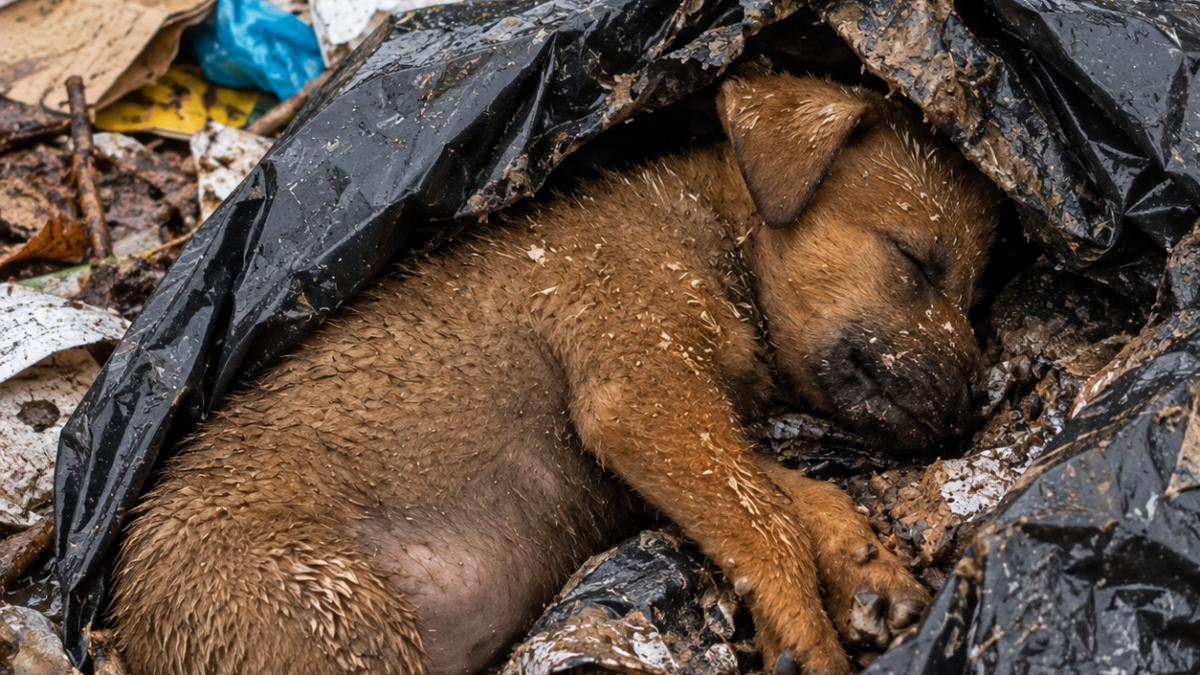
PART 2
I stared at that broken tag longer than I should have.
The last seven digits were readable.
The area code had been damaged, but there were only a handful commonly used around our part of Tennessee.
Emily stood beside me.
“You’re thinking about calling it.”
“Of course I’m thinking about calling it.”
“You don’t know what you’re calling.”
“Then I’ll find out.”
“Hannah.”
I looked at her.
“Those puppies didn’t crawl into contractor bags by themselves.”
“I know.”
“They didn’t bring an old blanket and storage bin out there.”
“I know.”
“And somebody put this collar on one of them.”
Emily sighed.
“You need animal control.”
She was right.
I hated when she was right.
I called Officer Marcus Hill.
Marcus had handled cruelty cases with our rescue for years.
He answered immediately.
“What happened?”
I explained everything.
The puppies.
The trash.
The collar.
The tag.
He was silent for a moment.
“Don’t call the number.”
“Why?”
“Because if someone deliberately dumped them, I don’t want them knowing we found evidence before I document the site.”
I looked through the clinic window.
The brown puppy was lying beside his brother now.
Even under warming blankets, he was trying to keep contact with him.
“All right.”
“Send me the exact location.”
Twenty minutes later, Marcus was on Old Mill Road.
I stayed at the clinic.
Leaving the puppies felt impossible.
The smaller black puppy’s blood sugar dropped shortly after nine.
Emily started a glucose infusion.
His breathing was shallow.
The brown puppy lifted his head whenever a technician touched his brother.
“He’s watching everything,” technician Amy said.
“He’s worried.”
“About his brother?”
I nodded.
“At least that’s what I’m choosing to believe.”
Amy smiled.
“Works for me.”
We began calling the brown puppy Scout.
He had been the first to react when I approached the garbage pile.
Even weak, he had tried to move between me and the smaller puppy.
The black puppy became Milo.
Scout and Milo.
Maybe temporary names.
Rescuers tell themselves that.
Names have a way of becoming permanent.
Milo remained critical through most of the morning.
His bloodwork showed anemia, dehydration, parasites, and severe nutritional deficiency.
Scout’s results were slightly better.
Both had intestinal worms.
Both were covered in fleas beneath the mud.
Both had sores around their paws and stomachs from lying in wet filth.
But no broken bones.
No major internal injuries.
That felt like the first good news.
At eleven, Marcus called.
“The dumping site is definitely deliberate.”
My stomach tightened.
“How do you know?”
“Most of the trash is household stuff. Food containers. Mail. A torn bag of dog food. Some veterinary packaging.”
“Veterinary?”
“Empty dewormer box.”
I stood.
“Brand?”
“Common over-the-counter product.”
“Anything with a name?”
“We found mail.”
I went quiet.
“Address?”
“Yes.”
“Whose?”
“I’m not giving you that yet.”
“Marcus.”
“Hannah.”
He had learned how to use my own tone against me.
“Fine.”
“There’s more.”
“What?”
“Security cameras.”
I remembered the recycling yard about a quarter mile away.
“They cover the road?”
“One does.”
My heart started pounding.
“How soon?”
“Manager’s pulling footage now.”
Before I could answer, someone called from the treatment room.
“Hannah!”
I dropped the phone.
Milo had stopped breathing properly.
Emily was already working.
I stood behind the glass while the team moved around his tiny body.
Oxygen.
Medication.
Hands.
Machines.
Scout began crying from the neighboring enclosure.
I went to him.
“I know.”
He clawed weakly at the door.
“I know.”
I put my fingers inside.
Scout grabbed one with both paws.
I watched Emily through the glass.
“Come on, Milo.”
Scout squeezed my finger.
“Your brother needs you.”
Minutes passed.
Then Milo’s chest began moving more evenly.
Emily looked toward me.
She gave one small nod.
Not safe.
Better.
For that moment, better was enough.
By noon, Scout had eaten a small amount of recovery food.
He wanted more immediately.
Emily refused.
“He’s starved. We have to feed carefully.”
Scout loudly disagreed.
I laughed despite everything.
“There you are.”
He barked.
Or attempted to.
It sounded like a squeaky hinge.
I looked at Milo.
“Your brother is obnoxious.”
Milo remained asleep.
Scout curled beside the wall closest to him.
When Milo was stable enough, Emily placed them together under supervision.
Scout immediately crawled across the blanket.
He pressed against Milo’s side.
Milo’s nose moved.
Then his head shifted until it rested against Scout.
Amy whispered, “Look.”
The monitor showed Milo’s heart rate settling.
I swallowed.
“Keep them together.”
“As much as medically possible.”
“No.”
I looked at her.
“Keep them together.”
Amy nodded.
“We will.”
That evening Marcus arrived at the clinic.
His expression told me he had something.
“You saw the video.”
“Yes.”
I stood.
“What happened?”
“At 3:08 this morning, a white pickup stopped at the dumping site.”
“Can you see who?”
“Not clearly enough yet.”
“What happens?”
He looked through the glass at the puppies.
“A person gets out.”
My stomach tightened.
“Carries something from the bed of the truck.”
“The puppies?”
“Looks like a plastic storage bin.”
I remembered the cracked bin.
“The person leaves it beside the trash. Moves several bags over it. Gets back into the truck and leaves.”
I felt cold.
“They covered them?”
“That’s what the footage appears to show.”
I looked at Scout.
His small body was wrapped around Milo.
“If that’s them, they weren’t just abandoned.”
“No.”
“They were hidden.”
Marcus nodded.
That distinction mattered.
Leaving puppies near a shelter was abandonment.
Leaving them at a veterinarian was abandonment.
Even tying them where someone would find them was wrong.
But covering them beneath trash on a near-empty industrial road in freezing rain?
That was something else.
“That person expected them to die.”
Marcus didn’t answer.
He didn’t need to.
“Plate?”
“Camera caught part.”
“How much?”
“Enough that we may get somewhere.”
“And the mail?”
“Same general area as several possible vehicle registrations.”
My anger sharpened.
“So we know where to look.”
“We know where I look.”
“Fine.”
“You focus on the puppies.”
“I am.”
Marcus gave me the expression of a man who did not believe that for one second.
Milo spent the night hospitalized.
So did Scout because separating them caused too much distress.
I went home at midnight.
At 4:30, I woke without the alarm.
At 5:15, I was back.
Scout was awake.
Milo was standing.
Barely.
But standing.
I covered my mouth.
Emily emerged from behind me holding coffee.
“Don’t make me regret letting you in before visiting hours.”
“He’s standing.”
“He is.”
“You didn’t call.”
“It happened about two minutes ago.”
Milo’s legs shook.
Scout leaned against him.
Milo took one step.
Then sat.
I was crying.
Emily handed me a tissue.
“You rescuers are exhausting.”
“You’re crying too.”
“Allergies.”
“In November?”
“Seasonal.”
I laughed.
That morning Milo ate from a spoon.
Scout tried stealing his food.
A technician gently blocked him.
Scout acted personally betrayed.
Within three days, both puppies were stable enough to leave intensive care.
Scout recovered faster.
His personality exploded the moment his strength returned.
He climbed.
Chewed.
Barked.
Stole towels.
Attacked shoelaces.
Tried to eat a paper medical chart.
Milo was quieter.
He watched.
He followed Scout.
If Scout entered a new room, Milo waited until he saw nothing terrible happen.
Then followed.
Scout became his confidence.
Milo became Scout’s anchor.
They balanced each other in a way I had seen before with bonded animals.
I volunteered to foster them.
Temporary.
Again, rescuer lies.
My house already had one dog.
Ruby.
A nine-year-old golden retriever who had spent most of her life serving as unofficial foster mother to every creature I brought home.
Ruby met them through a baby gate.
Scout rushed forward.
Milo hid behind him.
Ruby lay down.
Scout barked.
Ruby yawned.
Milo peeked out.
Ruby remained where she was.
After fifteen minutes, Milo came closer.
Ruby touched noses with him.
Scout immediately climbed over Milo and attempted to lick Ruby’s entire face.
She tolerated it with the expression of a retired kindergarten teacher being asked to return for one final semester.
That first night, Scout and Milo slept in a playpen in my bedroom.
I had two beds.
They used one.
Scout curled around Milo.
Milo’s chin rested across Scout’s paw.
I sat on the floor watching them.
Less than forty-eight hours earlier, they had been underneath roadside garbage.
Now there was heat.
Water.
Food.
Blankets.
Ruby snoring nearby.
I should have felt relieved.
Instead, I was furious.
Somewhere, the person who had left them was probably sleeping normally.
I wanted that to change.
Marcus called the next morning.
“We identified the truck.”
I sat upright.
“Who?”
“Registered to a man named Raymond Pike.”
“Address?”
“Hannah.”
“Right.”
I didn’t need the address.
“What did he say?”
“Nothing yet.”
“You haven’t spoken to him?”
“We did surveillance first.”
“Why?”
“Because mail at the dumping site suggests there may be animals at his property.”
My chest tightened.
“How many?”
“We don’t know.”
“Marcus.”
“I know.”
An officer drove past the Pike property.
Rural lot.
Old trailer.
Fenced backyard.
Several makeshift kennels.
They could hear dogs barking.
The mail recovered near Scout and Milo had Raymond Pike’s name on it.
One piece carried his full address.
The partial license plate matched his pickup.
The collar phone number led to a prepaid phone registered using the same address on an old veterinary account.
It was coming together.
But Marcus still needed legal grounds to enter.
The next step came from someone unexpected.
A veterinary receptionist named Claire Dawson.
Marcus sent photographs of Scout and Milo to clinics in the county.
Claire recognized Scout immediately.
She remembered the unusual white marking on his left front paw.
Raymond Pike had brought both puppies to the clinic two weeks earlier.
Not for treatment.
To ask how much treatment would cost.
“What was wrong with them then?” I asked.
“Parasites. Fleas. Underweight. Respiratory infection starting.”
“And what did the vet recommend?”
“Medication, deworming, nutrition, follow-up.”
“Did he do it?”
“Clinic records show he declined most treatment.”
“Why?”
Marcus looked at me.
“He reportedly said they weren’t worth spending that much on.”
My stomach turned.
Scout was currently chewing the corner of my rug.
Milo was asleep against Ruby.
Not worth it.
I looked down at them.
“What else did the clinic record?”
“Raymond told them he had more puppies at home.”
That was enough to raise concern.
Animal control and law enforcement obtained a warrant to inspect the property based on the dumping evidence, medical records, and suspected neglect.
They went that afternoon.
I wanted to go.
Marcus refused.
Probably wisely.
Instead, I waited at the rescue clinic.
Two hours later, my phone rang.
“Hannah.”
I stood.
“How many?”
Silence.
Then:
“Eleven dogs.”
I closed my eyes.
“Puppies?”
“Four.”
“Alive?”
“Yes.”
“Condition?”
“Varies.”
Raymond Pike had been operating what amounted to a backyard breeding setup.
Three adult female dogs.
Two intact males.
Four puppies.
Two older dogs.
Cramped kennels.
Dirty water.
Minimal shelter.
One female had infected mammary tissue.
Another dog had untreated ear disease.
Two puppies were badly underweight.
None were in immediate condition as severe as Scout and Milo.
Because authorities arrived sooner.
“Is Pike there?”
“Yes.”
“What did he say?”
“Claims Scout and Milo died at his property.”
I laughed once.
Cold.
“He says they died?”
“He says someone must have taken their bodies.”
“Bodies that then became alive under garbage eleven miles away.”
Marcus was quiet.
“He doesn’t know we have the video yet.”
Good.
I wanted him to keep talking.
He did.
Raymond insisted the two puppies had become sick.
He claimed he could not afford treatment.
Then he claimed they stopped eating and died.
Then he said he placed them in a storage tub because he planned to bury them.
Investigators showed him a still image from the surveillance footage.
His story changed again.
Yes, that was his truck.
But he was “disposing of trash.”
Then they showed him the collar record.
Veterinary photographs.
Mail.
The storage bin.
His attorney eventually ended the interview.
Raymond was cited initially while prosecutors reviewed felony-level cruelty and abandonment charges.
The remaining animals were removed pending proceedings.
When Marcus told me, I expected satisfaction.
Instead, I looked at Scout and Milo.
Scout had his teeth embedded in Ruby’s tail fur.
Ruby turned her head slowly.
Scout stopped.
Milo moved farther away as if denying involvement.
I laughed.
That sound did more for me than Raymond’s arrest ever could.
The removed dogs needed places.
Our rescue took three.
Other organizations split the rest.
One adult female, later named Daisy, came to our group.
She was probably Scout and Milo’s mother.
We couldn’t prove it immediately.
But the resemblance was striking.
Same brown-and-white markings.
Same eyes as Scout.
When I brought the puppies to the rescue facility after Daisy was medically stable, something happened that none of us expected.
Scout froze.
He stared through the gate.
Daisy stood.
Her entire body changed.
She began whining.
Low.
Urgent.
Scout answered.
Milo came from behind me.
Daisy pushed her nose through the bars.
Scout raced toward her.
Milo followed.
We opened the gate carefully.
Daisy immediately began licking both puppies.
Scout climbed under her chest.
Milo pressed into her side.
I turned away because I could not see clearly through the tears.
Emily stood beside me.
“You think she’s their mother?”
“I don’t think. Look at them.”
Daisy cleaned Milo’s face.
Then Scout’s.
Scout behaved like he had never been separated from her.
Maybe scent survives things memory cannot explain.
Testing later showed a strong likelihood that Daisy was indeed their mother.
That discovery changed the case emotionally, even if not legally.
Raymond had not only discarded two sick puppies.
He had taken them away from a mother who still recognized them.
When Daisy came into foster care with another volunteer, she struggled.
She searched doors.
Paced.
Whined at night.
When Scout and Milo visited, she settled.
We began arranging regular contact while the legal case remained unresolved.
But we could not keep all three together permanently without considering what was best for everyone.
Daisy needed her own healing.
The puppies needed socialization beyond each other.
And I needed a new rug because Scout had destroyed mine.
“You owe me eighty dollars,” I told him.
Scout wagged.
Milo brought me a stolen sock.
“Both criminals.”
Ruby sighed from the couch.
Weeks passed.
The puppies gained weight.
Their ribs disappeared.
Their coats became soft.
Milo’s confidence grew.
At first he followed Scout everywhere.
Then one morning, Scout refused to walk across a little wooden footbridge at the park.
Milo went first.
I stopped.
Scout stared.
Milo reached the other side.
Turned.
Tail wagging.
Scout followed.
I laughed.
“Look at that.”
Roles could change.
Healing did that.
The first time Milo climbed into my lap without Scout, I nearly cried.
He turned twice.
Settled.
Placed his head against my stomach.
No trembling.
No watching the room.
Just sleep.
I stayed there almost an hour.
My phone was across the room.
Dinner burned slightly.
I didn’t care.
The puppy who had barely moved beneath trash could now fall asleep while separated from his brother.
That was progress no medical chart could measure.
Scout’s breakthrough looked different.
Scout had always appeared brave.
But bravery can hide fear.
Whenever a black garbage bag appeared, he panicked.
I discovered it accidentally.
I was changing the kitchen trash.
I snapped open a black contractor bag.
Scout dropped flat.
Then ran.
He hid behind the sofa.
My stomach sank.
Of course.
Black plastic.
The thing covering them.
I sat on the floor twenty feet away.
“Scout.”
Nothing.
I put the bag outside.
Then returned.
He stayed hidden.
Ruby walked over to the sofa.
Lay down.
Milo approached.
Crawled partly underneath.
Twenty minutes later, Scout came out.
He pressed himself against Ruby.
I didn’t touch him.
The next day, I started working on the fear slowly.
Black bag folded on the far side of the room.
Treats elsewhere.
No movement.
Next day closer.
Then open but not shaken.
Then hanging from a chair.
Weeks.
I never forced him.
Eventually Scout could walk past one.
Months later, the sound no longer made him flee.
That mattered more to me than almost anything.
Recovery wasn’t only weight gained.
It was a harmless object becoming harmless again.
The criminal case moved slowly.
Raymond’s attorney challenged evidence.
Argued the puppies might have been taken by someone else.
Argued the video quality was insufficient.
Argued the animals on his property were not legally neglected.
The prosecutor built the case carefully.
Veterinary records.
Surveillance footage.
Phone records.
The collar.
Mail.
Expert testimony.
Then came the evidence that broke Raymond’s story.
His neighbor.
A seventy-year-old man named Earl Thompson had seen Raymond loading the plastic storage tub into his truck around three in the morning.
Earl had been awake because his wife was ill.
He watched through his kitchen window.
He didn’t know what was inside.
But he remembered Raymond carrying the tub from the kennel area.
“What time?”
“About quarter to three.”
The truck reached the warehouse at 3:08.
Raymond could no longer plausibly claim somebody else used his truck.
The district attorney filed multiple animal-cruelty and abandonment charges.
Some related to Scout and Milo.
Others to the conditions of the animals removed from his property.
I was asked to testify.
So was Emily.
So was Claire from the veterinary clinic.
The trial began almost seven months after I found the puppies.
By then, Scout and Milo looked nothing like the animals in the first photographs.
Scout was nearly forty pounds.
Milo slightly smaller.
Both healthy.
Both energetic.
Both deeply capable of destroying anything made of paper.
I sat in court looking at the intake pictures.
For a moment, I barely recognized them.
Raymond Pike sat ten feet away.
He looked ordinary.
That always unsettled me.
We want cruelty to look monstrous.
Often it wears work boots.
Checks its phone.
Drinks coffee.
Goes grocery shopping.
The prosecutor questioned Emily first.
She explained hypothermia.
Malnutrition.
Parasite load.
Milo’s near respiratory collapse.
The defense attorney asked whether puppies can deteriorate quickly.
“Yes.”
“Can parasites occur even with responsible owners?”
“Yes.”
“Can puppies become underweight because of illness despite being fed?”
“Yes.”
The attorney nodded as if those answers saved everything.
Then Emily continued.
“But puppies in that condition require medical intervention.”
The prosecutor asked:
“Would placing them beneath plastic garbage bags on a cold roadside constitute medical intervention?”
Raymond’s attorney objected.
The judge sustained the objection.
But the point had already landed.
Claire testified next.
She produced the clinic notes from two weeks before abandonment.
Raymond had been told both puppies needed treatment.
The estimate had been explained.
The clinic offered lower-cost options.
They offered payment resources.
They offered information for local rescues.
He declined.
“What did Mr. Pike say?” the prosecutor asked.
Claire looked down at the chart.
“He said he had other puppies and wasn’t putting that kind of money into two sick ones.”
The courtroom went silent.
I looked at Raymond.
He stared forward.
Then it was my turn.
The prosecutor asked me to describe the morning I found them.
I told the truth.
Black bags.
Mud.
Cold.
Scout standing.
Milo nearly motionless.
“How did they react to you?”
“Scout tried to move.”
“Toward you?”
“Yes.”
“And Milo?”
“He couldn’t.”
“What did you think when you first saw him?”
The courtroom disappeared for a second.
I was back on Old Mill Road.
Cold rain.
Trash.
Tiny black puppy.
“I thought I was too late.”
My voice cracked.
I swallowed.
“But his eyes opened.”
The prosecutor waited.
“So I picked them both up.”
The defense attorney asked about my emotional connection to the dogs.
“Yes, I’m attached.”
“You fostered them?”
“Yes.”
“So you have strong feelings toward Mr. Pike.”
“I have strong feelings about what happened to the puppies.”
“Which may affect your objectivity.”
“Their body temperatures didn’t depend on my feelings.”
The attorney paused.
“The bloodwork didn’t either.”
The judge looked toward me.
“Ms. Brooks, answer only the questions.”
“Yes, Your Honor.”
The defense changed direction.
“Did you personally see my client place those puppies at the roadside?”
“No.”
“So you cannot testify that he did.”
“I can testify to how I found them.”
“Nothing further.”
Earl testified.
The security manager testified.
Marcus testified about the investigation.
Then prosecutors played the warehouse footage.
Low-quality.
Dark.
But clear enough.
White pickup.
Storage bin.
Person moving bags.
Truck leaving.
Three minutes of video.
That was all.
Three minutes nearly ended two lives.
Raymond eventually testified in his own defense.
His story had changed again.
He now claimed the puppies were already dead when he took them from his property.
The prosecutor stared at him.
“You believed they were dead?”
“Yes.”
“Did you check for a heartbeat?”
“I’m not a veterinarian.”
“Did you call one?”
“No.”
“Did you contact animal control?”
“No.”
“A shelter?”
“No.”
“No rescue?”
“No.”
“You had previously been given contact information for rescues, correct?”
Raymond shifted.
“I don’t remember.”
Claire’s record showed otherwise.
The prosecutor continued.
“You placed what you believed were two dead puppies into a storage container.”
“Yes.”
“Then drove eleven miles.”
“Yes.”
“Past an animal shelter?”
Raymond hesitated.
“Yes.”
“Past a twenty-four-hour veterinary hospital?”
“I guess.”
“And placed them beneath garbage bags beside an industrial road?”
“Yes.”
“Why?”
Raymond’s face tightened.
“I didn’t know what else to do.”
The prosecutor looked at him for several seconds.
Then asked:
“If you truly believed they were dead, why did you cover the container?”
Raymond had no answer.
The jury deliberated several hours.
Guilty on the main abandonment charges.
Guilty on multiple neglect-related counts.
Other counts resulted in lesser findings.
At sentencing, Raymond received incarceration with part suspended under probation terms, substantial fines and restitution, and a lengthy prohibition on owning, breeding, or selling animals.
His remaining animals were permanently forfeited.
Some people wanted more.
I understood.
There is no sentence that equals placing two puppies under garbage and driving away.
But that day, my anger felt unexpectedly quiet.
Outside court, Marcus joined me.
“You okay?”
“Yes.”
“You don’t look satisfied.”
I thought about it.
“I am.”
“But?”
I pulled out my phone.
There was a new message from the family currently meeting Scout and Milo as potential adopters.
A photograph showed both puppies asleep on either side of a ten-year-old boy.
Scout’s head on his leg.
Milo’s paw across Scout.
I showed Marcus.
“This feels bigger.”
He smiled.
“Usually does.”
Finding the right home had taken months.
I insisted Scout and Milo stay together.
Some people thought that unnecessary because Milo had become more independent.
Maybe technically they could have separated.
I refused.
They had survived the cold together.
They had comforted each other in the hospital.
They had grown up together.
I wasn’t making them lose family simply because separate puppies were easier to place.
Then the Walker family applied.
Jason and Beth Walker.
One son, Ethan.
A fenced acreage outside Maryville.
They had lost their senior dog the previous year.
They wanted two dogs.
Their application said:
**If these puppies already see each other as family, we would like to become part of that family instead of breaking it apart.**
I hated how quickly that sentence got me.
The first meeting happened in my backyard.
Ethan sat on the grass.
He was ten.
Quiet.
Scout approached first.
Of course.
Milo stayed near Ruby.
Ethan did not call him.
He tossed Scout a toy.
Scout brought it back.
Again.
Again.
After fifteen minutes, Milo moved closer.
Ethan continued playing with Scout.
Milo sat five feet away.
Then three.
Then beside Ethan.
Ethan looked at me.
“Can I touch him?”
“Let him decide.”
Milo sniffed his hand.
Then pushed his nose beneath it.
Ethan smiled.
“I think he decided.”
Jason asked about medical history.
Beth asked about Scout’s garbage-bag fear.
That impressed me.
Most people asked whether the puppies were house-trained.
Beth asked what still scared them.
“Scout reacts to black plastic sometimes.”
“What do we do?”
“Don’t force exposure. Don’t drag him toward it. Let him create distance. Reward calm.”
She nodded.
“What about Milo?”
“Sudden separation from Scout makes him uneasy.”
“Then we won’t separate them unnecessarily.”
Simple.
No hero speech.
Just practical kindness.
The Walkers visited three more times.
The third time, Milo ran to Ethan.
That decided it.
Adoption day came three weeks after Raymond’s sentencing.
I packed two bags.
Medical records.
Food.
Toys.
Blankets.
Scout’s favorite rope.
Milo’s ridiculous stuffed turtle.
And one thing I almost didn’t include.
A photograph.
The two puppies on rescue morning.
I stared at it.
Then put it back in my desk.
Beth saw.
“You’re not sending that?”
“I don’t know.”
“Why not?”
“I don’t want that morning to define them.”
She thought for a moment.
“Then keep it.”
So I did.
Their new family did not need proof of suffering in order to value them.
Scout and Milo were enough.
When Jason opened the SUV, Scout jumped in immediately.
Then jumped out.
Then back in.
Milo stood beside me.
I knelt.
He pressed into my chest.
“Oh, don’t.”
His tail moved.
“You’re going to make me embarrass myself.”
Too late.
I cried.
Milo licked my chin.
Scout returned and jumped against my back.
“Both of you are terrible.”
Ethan was crying too.
I pointed at him.
“You promised to take care of them.”
“I will.”
“Scout will eat things that are not food.”
“I know.”
“Milo pretends he doesn’t understand commands when Scout is distracted.”
“I know.”
“They sleep together.”
“I know.”
“And if either one gets sick—”
Beth touched my shoulder.
“Hannah.”
I stopped.
“We know.”
I looked at her.
She smiled.
“They’re coming home together.”
Home.
That word did it.
I stood.
Helped Milo into the car.
Scout immediately pressed against him.
The SUV drove away.
Ruby sat beside me in the driveway.
I cried into her fur.
She accepted this indignity with patience.
Thirty-eight minutes later, Ethan sent me the first photograph.
Scout and Milo were in their new backyard.
Running.
Not cautiously.
Running.
Scout ahead.
Milo chasing.
Grass beneath their feet.
Sunlight.
No black plastic.
No roadside debris.
No freezing mud.
I watched the video again and again.
That was our revenge.
Not Raymond behind bars.
Not fines.
Not losing his breeding operation.
Those consequences mattered because accountability matters.
But they were not the ending.
The ending was two puppies running so fast their legs barely seemed to touch the ground.
Someone had hidden them beneath garbage like things nobody would miss.
Now a boy was standing in a yard shouting their names because he could not imagine his home without them.
That difference mattered more.
Daisy found her home too.
A retired nurse named Margaret Collins adopted her.
Margaret had a quiet property and one old spaniel.
Daisy spent her first weeks sleeping near the back door.
Then gradually moved closer to Margaret’s bedroom.
By the third month, she slept on the bed.
Margaret sent me photographs.
One showed Daisy sprawled across three pillows.
Caption:
**I believe the previous sleeping arrangements are no longer acceptable to her.**
Good.
I wanted every discarded animal from Raymond’s property to become demanding.
I wanted them to expect comfort.
Expect food.
Expect medical care.
Expect humans to come back.
Expect enough that neglect became unfamiliar.
The two older dogs went to separate homes.
The other puppies were adopted after rehabilitation.
The female with the infection recovered fully.
Within a year, every animal removed from Raymond Pike’s property had somewhere safe.
That was a better accounting of justice than any court file.
Eleven animals removed.
Eleven animals alive.
Eleven futures no longer dependent on one man’s willingness to care.
Scout and Milo grew.
The Walkers sent updates constantly.
At six months, Scout weighed forty-eight pounds.
Milo forty-two.
At one year, Scout had learned to open a sliding screen door.
At fourteen months, Milo discovered sprinklers and became obsessed.
Scout still disliked contractor bags.
But Beth worked patiently.
Eventually he could walk past trash cans on collection day without freezing.
Milo became the braver one around thunderstorms.
When thunder started, Scout climbed onto Milo.
Ethan sent me a photograph once.
Scout sitting practically on top of his brother.
Caption:
**Milo says personal space has been canceled.**
I laughed.
Their personalities diverged.
Scout remained impulsive.
Milo became thoughtful.
Scout chased squirrels.
Milo studied squirrels.
Scout jumped into ponds.
Milo inspected water before entering.
Scout adored every stranger.
Milo chose people.
But every night they slept touching.
Sometimes just their paws.
Sometimes Scout’s head over Milo’s back.
The first cold November after their adoption, I thought about them constantly.
One year since Old Mill Road.
At 7:03 that morning, my phone buzzed.
Ethan.
A photograph.
Scout and Milo under a blanket on his bed.
The message said:
**Mom told me today is the day you found them. They’re warm.**
I sat at my kitchen table and cried.
Warm.
That was enough.
We began calling November 18 their Second Birthday.
The Walkers celebrated every year.
Not with anything elaborate.
A hike.
Dog-safe treats.
Usually new toys Scout destroyed within hours.
I visited on the third anniversary.
Ethan was thirteen.
The puppies were no longer puppies.
Scout ran into me so hard I nearly fell.
Milo followed more politely, then shoved his entire head into my stomach.
“You remember me.”
Jason laughed.
“They remember anybody associated with snacks.”
“I choose a more emotional interpretation.”
We walked through their property.
There was a creek behind the field.
Scout jumped in.
Milo followed.
They came out covered in mud.
Beth shook her head.
“Every bath is followed by this.”
I laughed.
“Justice.”
“What?”
“They spent their first night covered in mud because they had nowhere safe.”
I watched Scout shake water over Ethan.
“Now they get muddy because they’re having fun.”
Beth looked at them.
“I like that.”
So did I.
The criminal case eventually faded from daily thought.
Raymond served his sentence.
Completed probation requirements.
His animal ownership prohibition continued for years.
I occasionally heard rumors about him.
I stopped asking.
That surprised me.
There had been a time when I wanted every detail.
Was he sorry?
Did he understand?
Had he suffered?
Eventually, none of those questions mattered.
Scout did not wake wondering whether Raymond regretted anything.
Milo did not need an apology to run through a field.
Animals are often more practical about freedom than humans.
They move toward what is safe when safety finally becomes available.
I tried to learn from them.
Years passed.
Ruby died at fourteen.
Scout and Milo attended one last visit before she was gone.
Ruby lay on her bed.
Scout, who had once climbed all over her, approached slowly.
He sniffed her face.
Then lay beside her.
Milo took the other side.
I sat on the floor.
The three dogs who had shared my house during those first months rested together.
Ruby died peacefully two days later.
The Walkers brought Scout and Milo to see me afterward.
My house felt empty.
Scout ran through every room.
Searching.
Milo went directly to Ruby’s old bed.
He smelled it.
Then looked at me.
Dogs notice absence.
Maybe not death in the way we do.
But absence.
Scout eventually returned.
He lay with his front paws across my feet.
Milo curled beside him.
For an hour, neither moved.
Years earlier, I had comforted them.
That day, they comforted me.
Life has a way of returning things.
Ethan eventually left for college.
The question everyone worried about was how Scout and Milo would handle it.
Ethan had been their boy for almost a decade.
The first night he was gone, Scout slept outside Ethan’s bedroom.
Milo lay beside him.
Beth called.
“They’re waiting.”
“He’ll come back.”
“I know.”
“Make sure they know too.”
Ethan video-called.
Scout lost his mind when he heard his voice.
Milo stared behind the phone as though Ethan might be concealed there.
Three weeks later, Ethan came home for a weekend.
The reunion video made me laugh and cry simultaneously.
Scout knocked him over.
Milo climbed onto his chest.
Ethan lay in the grass with both dogs on top of him.
“I can’t breathe!”
Beth kept filming.
Excellent parenting.
By then, Scout and Milo were nine.
Gray hairs had begun appearing around their muzzles.
That bothered me more than it should have.
In my mind they were still puppies.
The ones I pulled from black plastic.
Then Scout developed a lump near his shoulder.
Beth called immediately.
“Probably nothing,” she said.
But her voice told me she didn’t believe it.
Biopsy.
Cancer.
Soft-tissue sarcoma.
Treatable.
Surgery recommended.
I drove to the Walkers’ house the night before the operation.
Scout greeted me normally.
Milo stayed close to him.
Ethan had driven home from college.
He sat on the floor.
“Is he going to die?”
He was twenty now, but in that moment I saw the ten-year-old who promised to protect them.
“Not tomorrow if the doctors have anything to say about it.”
“That isn’t an answer.”
“No.”
He looked down.
“I hate this.”
“So do I.”
Scout pushed a tennis ball into Ethan’s hand.
Ethan laughed through tears.
“You don’t even know.”
Maybe Scout didn’t.
Maybe that was mercy.
Surgery went well.
Margins were clean.
No detectable spread.
Scout came home wearing a cone he despised.
Milo reacted as though Scout had returned wearing an alien satellite dish.
He barked.
Scout barked back.
Then attempted to ram the cone into him.
Within twenty minutes, normal chaos resumed.
Scout recovered.
Two more years.
Then three.
At twelve, both dogs slowed.
Milo developed arthritis.
Scout lost some hearing.
Their walks became shorter.
They still slept together.
Always.
At thirteen, Milo became sick first.
Kidney disease.
Manageable initially.
Then progressive.
The Walkers did everything.
Fluids.
Diet.
Medication.
Regular bloodwork.
Milo remained happy for nearly a year.
Then one winter, he stopped eating.
Ethan came home immediately.
So did I.
Milo lay in the living room.
Scout beside him.
Milo’s face had become white around the muzzle.
I knelt.
“Hey, little guy.”
His tail tapped once.
Little guy.
Forty-five pounds.
Thirteen years old.
But in my mind, still the puppy who barely opened his eyes beneath garbage.
The veterinarian came to the house.
The family wanted Milo’s last moments at home.
Scout was allowed to stay.
No one would separate them now.
Ethan sat with Milo’s head in his lap.
Beth held one paw.
Jason sat behind them.
Scout pressed against Milo’s side.
I touched the white stripe down Milo’s nose.
“You know what?”
His eyes found mine.
“You scared me worse than almost any animal I ever rescued.”
His tail moved weakly.
“You nearly died before I even knew your name.”
Ethan cried.
I continued softly.
“Then you gave us thirteen years just to prove you were stubborn.”
The veterinarian administered a sedative.
Milo relaxed.
Scout sniffed his face.
Then rested his head over Milo’s shoulder.
Just like he had in the clinic.
Just like beneath the blankets.
Beth whispered:
“You stayed together.”
Milo breathed slowly.
Then slower.
Then stopped.
Scout remained beside him.
For almost half an hour.
Nobody moved him.
Eventually, he stood.
Sniffed Milo once more.
Then walked to Ethan.
He pressed his head against Ethan’s chest.
That broke all of us.
The next weeks were difficult.
Scout searched for Milo.
He wandered into rooms.
Checked Milo’s bed.
Paused at the back door.
At night, he sometimes gave one low whine.
The Walkers moved Milo’s blanket onto Scout’s bed.
He slept on it.
Ethan delayed returning to school.
“He shouldn’t be alone.”
“He isn’t,” Beth said.
But everyone understood what he meant.
Scout had never known a life without Milo.
Not one day.
Grief changed him.
He became quieter.
More attached to Ethan.
Less interested in chasing squirrels.
But he adapted.
Not by forgetting.
By continuing.
The Walkers adopted no second dog immediately.
They gave Scout time.
At fourteen, he became the only dog for the first time in his life.
He surprised everyone.
He learned to enjoy being spoiled exclusively.
He occupied Milo’s old spot on the couch.
Stole two beds instead of one.
Developed a new enthusiasm for scrambled eggs.
Gray covered most of his muzzle.
I visited often.
Every time, Scout greeted me more slowly but with the same expression.
One afternoon, I sat beside him in the yard.
The November air was cool.
Leaves moved across the grass.
Scout placed his head on my knee.
“You know where I found you?”
His ear moved.
“Course you don’t.”
I stroked his head.
“You were under black plastic.”
Scout sighed.
“Terrible neighborhood.”
His tail tapped.
“Your brother couldn’t move.”
I looked toward the maple where Milo’s ashes were buried.
“And you tried to stand.”
Scout closed his eyes.
I smiled.
“You always did go first.”
Scout lived another year.
Nearly fifteen.
Then cancer returned.
This time in his spleen.
Surgery might have bought a little time, but his heart and kidneys were also failing.
The family chose comfort.
Nobody wanted his final weeks spent chasing procedures simply because humans were afraid of goodbye.
Ethan had graduated by then.
He came home.
Scout spent his last week surrounded by everyone.
He ate cheeseburgers.
Walked to the creek once.
Slept in Ethan’s bed.
On his final morning, Jason carried him outside.
We sat beneath the tree where Milo rested.
Scout sniffed the ground.
Then lay down.
Ethan put Milo’s old blanket beneath him.
Scout rested his head on it.
The veterinarian arrived around sunset.
I knelt beside Scout.
Fifteen years had passed since Old Mill Road.
I could still remember his body in my hands.
Cold.
Thin.
Desperate.
Now he was old.
Heavy with years.
Loved.
“You know,” I whispered, “you weren’t supposed to get this far.”
Scout looked at me.
“But you did.”
I stroked the white fur around his eyes.
“You got a boy.”
Ethan cried.
“You got a family.”
Beth held Scout’s paw.
“You got Milo almost your whole life.”
Jason looked toward the tree.
I swallowed.
“And if there’s anything after this…”
I hesitated.
“I hope your brother is being patient.”
Ethan laughed through tears.
“He won’t be.”
“No.”
Scout’s tail moved once.
“Milo’s probably wondering what took you so long.”
The sedative relaxed him.
His breathing softened.
No garbage.
No mud.
No cold.
No fear.
Only grass.
Family.
Hands.
His brother’s blanket.
I pressed my forehead against his.
“The first time I saw you, you were trying to stand.”
My voice broke.
“You can rest now.”
Scout took one final breath.
Then he was gone.
We buried part of his ashes beside Milo’s beneath the maple.
The marker Ethan chose read:
**SCOUT & MILO**
**NO LONGER HIDDEN.
NEVER AGAIN ALONE.**
Several months later, Ethan asked me to meet him at Old Mill Road.
I almost refused.
I had not visited the dumping site in years.
The recycling yard had expanded.
The abandoned buildings were renovated.
A new county sign warned against illegal dumping.
The exact shoulder where I stopped that morning looked smaller than I remembered.
Ethan stood beside me.
“You okay?”
“Yes.”
He carried something.
A black plastic contractor bag.
I stared at it.
“What are you doing?”
He smiled.
“Not what you think.”
Inside were two small metal plaques.
One for Scout.
One for Milo.
He had received permission from the property owner to mount a small marker on the fence near where they were found.
Nothing dramatic.
No graphic story.
Just:
**TWO PUPPIES WERE FOUND ALIVE HERE ONE COLD MORNING.
THEY WENT ON TO LIVE LONG, LOVED LIVES.
LOOK CLOSER. SOMETIMES A LIFE IS WAITING TO BE SEEN.**
I read it twice.
“You did this?”
“I wanted something here that wasn’t about the person who dumped them.”
I looked at him.
“What is it about?”
“The person who stops.”
My eyes filled.
“That’s better.”
We attached the marker.
Then stood beside the road.
Cars passed.
Most drivers never looked.
Why would they?
It was only a road.
Only a fence.
Only a place where something terrible had once happened.
But terrible places do not own every story that begins there.
That was what Scout and Milo taught me.
Raymond Pike gave them one night beneath garbage.
The Walkers gave them almost fifteen years.
How do you compare those?
You don’t.
One act of cruelty nearly ended their lives.
Thousands of ordinary acts of care became their lives.
Meals.
Walks.
Vet visits.
Mud.
Christmas mornings.
College goodbyes.
Cancer surgery.
Scrambled eggs.
Sleeping beside each other.
Growing gray.
Being missed.
Being mourned.
That was the revenge.
Someone decided these puppies were worth less than the cost of treating them.
Then an entire family spent fifteen years treating them as priceless.
Someone covered them so nobody would see them.
Then photographs of them filled a home.
Someone left them without food or water.
Then people learned exactly which snacks each preferred.
Someone drove away expecting silence.
Then a boy spent years shouting their names across a backyard.
Cruelty got three minutes of security-camera footage.
Love got fifteen years.
There was never any contest.
I’m older now.
I don’t do as many roadside rescues.
My knees object.
My back negotiates.
Young volunteers take most emergency calls.
But every November, someone at the rescue inevitably asks about Scout and Milo.
The story has become part of training.
Not because it was our most dramatic case.
Because it teaches something simple.
Look twice.
A garbage pile can move.
A silent animal may still be alive.
A frightened puppy may be too weak to cry.
And what appears hopeless at seven in the morning may be sleeping on someone’s bed a year later.
We show new volunteers the first photograph.
Black plastic.
Mud.
Two tiny bodies.
Then the last photograph of both brothers together.
They were twelve.
Gray muzzles.
Lying beneath the Walker family’s Christmas tree.
Milo’s head across Scout’s paws.
Scout sleeping.
Safe.
I always ask the volunteers:
“What changed between these pictures?”
They answer:
“Food.”
“Veterinary care.”
“Adoption.”
“Time.”
All correct.
But one answer comes first.
“Somebody stopped.”
That morning, it happened to be me.
Another day it will be somebody else.
A sanitation worker.
A delivery driver.
A teenager.
A neighbor.
A person who hears one sound they could easily ignore.
Rescue does not always begin with expertise.
Sometimes it begins with inconvenience.
You are late.
It is raining.
The animal is filthy.
The clinic will cost money.
You have somewhere else to be.
And you choose to stop anyway.
Years after Scout died, Ethan became a father.
His daughter’s name was Emma.
When she was four, he brought her to the rescue.
I was there visiting.
She saw Scout and Milo’s photograph on the wall.
“Those Daddy’s dogs?”
“Yes.”
“Where are they?”
Ethan knelt.
“They died when they were very old.”
Emma thought about that.
“Were they sad?”
“At the end?”
“Yes.”
“Maybe a little.”
“Were you there?”
“I was.”
She nodded as if that solved something.
Then she pointed at the rescue photograph.
“Why are they dirty?”
Ethan looked at me.
I let him answer.
“Somebody didn’t take care of them.”
Emma frowned.
“Why?”
“I don’t know.”
“Then Grandpa found them?”
She meant me.
Somehow I had acquired an honorary title I never agreed to.
“Yes,” Ethan said.
Emma studied the picture.
Then the adult photograph beside it.
“They got big.”
“Very.”
“And clean.”
I laughed.
“Sometimes.”
She pointed toward Scout.
“Which one was funny?”
“Both.”
“Which one was naughty?”
I looked at Ethan.
“Scout.”
Ethan objected immediately.
“Milo stole food too.”
“Scout ate part of my wall.”
“He was a puppy.”
“He was ten months old.”
Emma laughed.
And just like that, their story became what I had always wanted it to become.
Not primarily tragedy.
Family history.
Stories about dogs who destroyed furniture.
Stories about Milo hating rain.
Stories about Scout knocking Ethan over when he came home from college.
The roadside became one page.
Not the whole book.
That is what a satisfying ending actually looks like.
The worst day stops being the most interesting thing about you.
Years later, our rescue started a small emergency program funded partly by the Walkers.
They called it the Scout & Milo Fund.
The goal was simple.
Help owners facing veterinary costs before desperation becomes neglect.
Help shelters treat sick litters.
Support emergency transport.
Provide surrender assistance when somebody genuinely cannot continue caring for an animal.
Ethan explained why at the launch.
“If the man who had Scout and Milo had asked for help, maybe their story would have started differently.”
He paused.
“That doesn’t excuse what he did.”
Then he looked at the photograph behind him.
“But if we can give the next person another option, maybe another puppy never ends up beneath trash.”
That mattered to me.
Justice does not have to stop at punishment.
Sometimes the best response to cruelty is making it harder for the same circumstances to produce another victim.
The fund helped a sick litter of shepherd puppies its first month.
Then a senior dog whose elderly owner was hospitalized.
Then a mother cat with an infected wound.
One case after another.
Scout and Milo had died.
But their survival kept creating survival elsewhere.
Years later, I returned to the roadside marker alone.
It was late afternoon.
The metal had weathered.
Someone had left two small dog toys beneath it.
I didn’t know who.
I sat in my truck and looked at the words.
**LOOK CLOSER.**
That was the entire story.
I almost drove past.
That truth still unsettles me.
Another two seconds.
Another distraction.
A phone call.
A vehicle behind me.
Anything could have made me continue.
What would have happened?
I know the answer.
And I don’t like thinking about it.
So I stopped asking what would have happened.
Instead, I think about what did.
I pulled over.
The plastic moved.
Scout looked at me.
Milo opened his eyes.
I picked them up.
Everything after that came from those few seconds.
The clinic.
The investigation.
Daisy.
The Walkers.
Ethan.
Fifteen years.
A maple tree.
A little girl hearing funny stories about her father’s dogs.
A rescue fund.
Lives still being helped.
People often imagine life-changing moments as enormous.
They aren’t always.
Sometimes they are small enough to miss from a moving car.
A tiny movement beneath black plastic.
That was all.
And somewhere inside that trash were two entire lifetimes waiting for somebody to notice.
One cautious.
One reckless.
One black with white down his nose.
One brown and white with a paw that always seemed ready to move first.
Brothers.
Survivors.
Family.
The last time I saw Scout alive, his coat was gray around the face.
His body was tired.
His brother was already gone.
But he was lying beneath a tree surrounded by people who knew every strange habit he had developed over fifteen years.
That was the answer to the morning I found him.
Not the conviction.
Not the fine.
Not the sentence.
That old dog.
That family.
That tree.
Someone had once hidden Scout and Milo because they believed sick puppies could be discarded without consequence.
They were wrong.
The consequence was that the puppies survived.
They were loved.
They became unforgettable.
And the person who discarded them eventually became the least important character in their story.
I think that is the best revenge life ever gave us.
Because in the end, I barely remember Raymond Pike’s face.
But I remember Scout running across the Walkers’ yard.
I remember Milo sleeping against Ruby.
I remember Ethan promising me he would care for them.
I remember two gray muzzles beneath a Christmas tree.
I remember Scout’s last breath beneath the maple.
I remember the marker.
And I remember that first morning.
I can still feel their freezing bodies against my chest.
I can still hear myself speaking while I ran toward the truck.
“You’re okay.”
At the time, that wasn’t true.
They were not okay.
They were starving.
Cold.
Sick.
Terrified.
But perhaps what I really meant was something else.
You’ve been seen.
Someone knows you’re here.
You don’t have to disappear beneath this garbage.
And from that moment forward, they never did.
They were seen.
Every single day.
For the rest of their lives.
Years after Scout and Milo were gone, I learned that being seen can become a kind of inheritance.
Not the kind anyone writes into a will.
Something quieter.
One person notices suffering.
Then someone who watched that person learns to notice too.
Ethan was proof of that.
So was his daughter.
Emma was seven the first time she came with her father to volunteer at our rescue.
She wore purple sneakers, carried a notebook covered in dog stickers, and asked approximately forty questions before breakfast.
“Do scared dogs know we’re helping them?”
“Not always.”
“Do they remember bad people?”
“Sometimes.”
“Do they remember good people?”
“I think so.”
She considered that.
Then asked, “Did Scout remember you?”
I smiled.
“I like to think he did.”
She nodded seriously.
“He did.”
Apparently the discussion was over.
That morning, we had a newly rescued terrier named Benny.
He had been found behind a gas station.
Not injured badly.
Just terrified.
Every time somebody approached his kennel, he retreated to the far wall.
Emma watched him for several minutes.
Then she pulled a little folding chair into the hallway.
“What are you doing?”
“Nothing.”
She sat.
Opened her notebook.
Started drawing.
Benny watched.
Ten minutes passed.
Then twenty.
Eventually, he moved closer.
Emma never looked directly at him.
Another five minutes.
His nose reached the kennel door.
Emma slowly placed one treat on the floor.
Then moved her hand away.
Benny ate it.
Ethan looked at me.
I didn’t say anything.
I didn’t need to.
I had seen this before.
Different child.
Different dog.
Same patience.
Later, while we cleaned bowls, Emma asked:
“Why didn’t I pet him?”
“Because he wasn’t ready.”
“But I wanted to.”
“I know.”
“So wanting to doesn’t mean I should?”
I stopped what I was doing.
“No.”
She looked toward Benny.
“He gets to decide?”
“Yes.”
Emma smiled.
“Good.”
That word stayed with me.
Good.
So many animals come into rescue because someone decided their own wants mattered more.
Their convenience.
Their money.
Their impatience.
Their frustration.
Their anger.
Their schedule.
Their animal became secondary.
Healing often begins when somebody reverses that equation.
You get to decide.
You get to move away.
You get to come closer.
You get time.
Scout and Milo had taught all of us that.
Years later, the Scout & Milo Fund became larger than we had ever expected.
At first, it covered small things.
Vaccinations.
Emergency food.
Basic medications.
Then local businesses started contributing.
A veterinary clinic offered discounted services.
A retired couple donated part of their estate.
Ethan organized an annual walk in Scout and Milo’s memory.
The first year, forty-three people came.
The fifth year, more than four hundred.
There were dogs everywhere.
Old dogs.
Tripods.
Blind dogs.
Former breeding dogs.
Dogs who had once lived on chains.
Dogs whose families had nearly surrendered them during financial crises but had received help instead.
Every year, Ethan stood on a small platform near the starting line and told the same story.
Not dramatically.
He never liked dramatizing it.
“My dogs were found under trash.”
Then he would pause.
“They almost died because someone decided asking for help was harder than abandoning them.”
He would point toward the crowd.
“This fund exists so the next person has somewhere to call before an animal pays for that decision.”
That was the part I loved.
We had taken something ugly and built an exit ramp beside it.
Not an excuse.
An option.
Because accountability matters.
But prevention matters too.
One winter afternoon, the fund received an emergency request from a young mother named Jessica.
Her dog, Cooper, had swallowed part of a child’s toy and needed surgery.
Jessica had recently lost her job.
She had $312 in her bank account.
The surgery estimate was more than $3,000.
She called crying.
“I don’t want to surrender him.”
“You may not have to.”
“I’ve called everywhere.”
“We’ll try.”
The fund covered part.
The veterinary hospital reduced part.
Jessica borrowed the rest from family.
Cooper survived.
Two months later, Jessica came into our rescue office carrying an envelope.
Inside was twenty dollars.
“I know it’s nothing.”
“It isn’t nothing.”
“It’s all I can do right now.”
I tried giving it back.
She refused.
“Use it for somebody else.”
I put the twenty-dollar bill into the fund.
Years later, I still remembered it.
Not because of the amount.
Because compassion multiplies when people are given the chance to participate in it.
Someone helped Jessica.
Jessica helped someone else.
That was how Scout and Milo kept moving through the world after death.
Not as ghosts.
As decisions.
One person choosing differently because their story existed.
I visited their maple less often as I got older.
My knees finally won the argument we had been having for decades.
Ethan usually drove me.
One afternoon, Emma came too.
She was seventeen then.
Tall.
Confident.
Thinking about veterinary school.
We stood beneath the tree.
Scout and Milo’s marker had softened at the edges from weather.
Emma crouched.
“Dad says Scout was crazy.”
“That is accurate.”
“And Milo was shy.”
“At first.”
“Which one was your favorite?”
Ethan immediately said, “Dangerous question.”
I laughed.
“Neither.”
Emma looked skeptical.
“You loved them the same?”
“Not the same.”
That answer surprised her.
I continued.
“You don’t love two animals in exactly the same way because they aren’t the same animal.”
I touched Scout’s name.
“Scout made me laugh.”
Then Milo’s.
“Milo made me slow down.”
Emma looked at the marker.
“So different doesn’t mean more or less?”
“Exactly.”
She smiled.
“I like that.”
We stayed until sunset.
Before leaving, Emma placed something beside the marker.
A small black plastic toy dog.
I stared.
“Why black?”
She shrugged.
“Because black plastic used to mean something bad to Scout.”
I nodded.
“And now?”
“Now it’s just plastic.”
That hit me harder than she realized.
Fear losing its meaning.
An object becoming ordinary again.
Maybe that was another definition of recovery.
Years earlier, Scout couldn’t hear a trash bag snap open without running.
By the end of his life, garbage day was simply garbage day.
He walked past black bags because they no longer predicted pain.
People talk about healing as gaining something.
Confidence.
Trust.
Joy.
Sometimes healing is losing something too.
A sound loses its power.
A place loses its terror.
A memory loses its ability to control the next hour.
The warehouse had lost its power.
The black plastic had lost its power.
Eventually, even Raymond Pike lost his power.
That mattered.
Because for a long time, I thought justice meant making sure the person responsible remained central.
Remember his name.
Remember what he did.
Remember the anger.
But Scout and Milo taught me another kind of justice.
Let him shrink.
Let the lives he tried to erase become larger than his role in them.
Let the person who caused the suffering become a footnote.
That happened.
When Emma talked about Scout and Milo, she almost never mentioned Raymond.
She talked about Scout stealing sandwiches.
Milo refusing to walk in rain.
Their birthdays.
Their maple tree.
Ethan coming home from college and being knocked into the grass.
That was who they were to her.
Family stories.
Not cruelty-case numbers.
Eventually I realized that was exactly what I wanted.
A few years later, Emma entered veterinary school.
On her first day of clinical rotations, she sent me a photograph.
She was crouched beside a frightened puppy in an examination room.
The puppy hid under a chair.
Emma sat several feet away.
No restraint.
No reaching.
Beneath the picture she wrote:
LOOK CLOSER.
I stared at those two words until my vision blurred.
That roadside marker had become family language.
Ethan used it.
Emma used it.
Our volunteers used it.
Look closer.
Not only at animals.
At people too.
The exhausted owner asking for help.
The volunteer pretending they aren’t burned out.
The old dog hiding at the back of the kennel.
The kitten not eating.
The quiet child sitting beside a frightened animal because they understand fear more than adults realize.
Look closer.
Most important things don’t shout first.
Sometimes they barely move beneath black plastic.
I’m an old woman now.
Older than I ever imagined becoming when I pulled Scout and Milo from the roadside.
I don’t drive emergency routes anymore.
I don’t crawl beneath abandoned buildings.
I no longer carry fifty-pound dogs into trucks, though I still occasionally believe I can until somebody stops me.
But I keep one photograph on the table beside my chair.
Scout and Milo at about twelve years old.
Gray faces.
Sleeping together.
Scout’s paw across Milo.
Nothing dramatic.
No visible scars.
No evidence of what happened that first morning.
And that is exactly why I love it.
Their suffering became invisible because their lives grew around it.
One terrible morning became surrounded by thousands of safe ones.
That is the arithmetic I trust now.
Not pain canceled by punishment.
Pain overwhelmed by care.
One night beneath trash.
Then years beneath blankets.
One person driving away.
Then an entire family staying.
One roadside where nobody was supposed to notice.
Then generations of people trained to look closer.
Sometimes people still ask me:
“What would you have done if the plastic hadn’t moved?”
I don’t answer that question anymore.
There is no useful place inside it.
The plastic did move.
I did stop.
Scout did stand.
Milo did open his eyes.
That is the timeline we were given.
And what mattered afterward was what we did with it.
If there is one image I carry most clearly now, it is no longer Scout collapsing in the mud.
It is not Milo barely breathing.
It is not even the final afternoon beneath the maple.
It is the first adoption video Ethan sent me.
Two young dogs running through green grass.
Scout ahead.
Milo behind.
Then Milo catching him.
Then both turning toward Ethan’s voice.
He called:
“Scout! Milo!”
Both came running.
Straight toward him.
No hesitation.
No reason to wonder whether the person calling them would hurt them.
No reason to hide.
That moment contained everything we had been working toward.
Someone once buried them beneath garbage because they wanted those puppies to disappear.
Instead, those puppies learned their names.
They learned that when someone called, it could mean dinner.
A walk.
A boy waiting with open arms.
They learned that footsteps coming toward them could mean home.
And after enough years, that became more familiar than fear.
That was the final victory.
Not simply that Scout and Milo survived.
They lived long enough for survival to stop feeling unusual.
They became ordinary beloved dogs.
Old dogs.
Dogs with bad habits.
Dogs with medical records thick from years, not emergency photographs from one morning.
Dogs whose family could tell funny stories about them without always beginning with tragedy.
That is what I wanted for them, even before I knew how to name it.
Not just rescue.
A life so full that rescue became only the first chapter.
And that is exactly what they got.
Someone had hidden them beneath trash.
But for the next fifteen years, there was always someone looking for them.
At dinner.
At bedtime.
Across the yard.
At the creek.
When Ethan came home.
When one brother was sick.
When one brother died.
Someone always knew where Scout and Milo were.
Someone always noticed when they were missing from the room.
Someone always called their names.
For two puppies once discarded because someone believed nobody would look closely enough, I can think of no better ending than that.
They were seen.
They were known.
They were waited for.
And for the rest of their lives, they were never invisible again.