PART 2: They Left Cher Starving Beneath a Roadside Tree—But the One Thing They Forgot Led Us Straight Back to Them
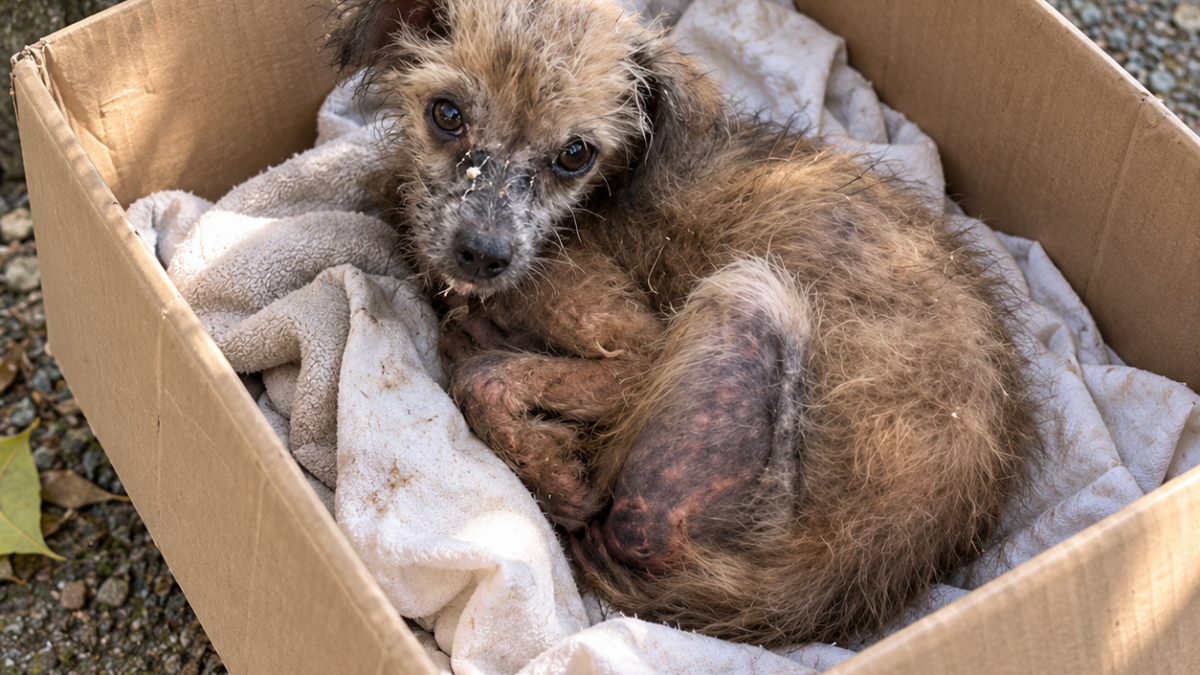
PART 2
I stood beside my car with the door open, staring at that collar.
The engraving had not simply worn away.
Someone had taken something sharp to it.
The original name was buried beneath a web of deliberate scratches.
Only a few fragments remained.
A curved letter.
Maybe a C.
Then what looked like an H.
The phone number on the back was damaged too, but not completely.
Three digits were clear.
Two others might have been readable under better light.
I photographed both sides.
Then I looked at the dog lying in my back seat.
She had already closed her eyes.
For a moment, I considered removing the collar.
But if we were going to find out who she belonged to, I wanted everything preserved exactly as I had found it.
So I left it.
“Hang on,” I whispered.
Her chest rose slowly.
“We’re going.”
The veterinary hospital was fourteen minutes away.
It felt like forty.
Every red light made me look into the rearview mirror.
She barely moved.
Once, her head lifted when an ambulance passed with its siren on.
Then she curled tighter.
I talked to her the whole way.
I told her my name.
I told her where we were going.
I told her there would be food.
Warm blankets.
People who would help her.
She understood none of those words.
But I needed her to hear a calm voice.
When I pulled into the clinic, Rachel was already waiting outside with one of the veterinary technicians.
They opened the back door.
Rachel inhaled sharply.
“Oh, honey.”
The dog’s eyes opened.
Rachel reached toward her slowly.
“She’s tiny.”
“She’s not supposed to be.”
“No.”
We transferred her onto a stretcher.
The dog did not fight.
That was the second thing that frightened me.
The first had been the way she stayed beneath the tree when I approached.
The second was how completely she surrendered to whatever happened next.
No growl.
No attempt to escape.
No protest.
Nothing.
Dr. Bennett met us in an examination room.
He had worked with our rescue for years and had seen some terrible cases, but his expression changed when he looked at her.
“How long was she out there?”
“I don’t know.”
“Any witnesses?”
“Not yet.”
“Vehicle trauma?”
“None that I saw.”
He placed his stethoscope against her chest.
She flinched.
Then froze.
Rachel stood near her head.
“It’s okay, sweetheart.”
Dr. Bennett looked at me.
“Name?”
“None yet.”
Rachel said, “Cher.”
I looked at her.
“Cher?”
“She needs something.”
“Why Cher?”
Rachel shrugged.
“Because she looks like she survived a war and still has dignity.”
Dr. Bennett gave her a look.
“That is the strangest naming logic I’ve heard this week.”
“But you like it.”
He returned his attention to the dog.
“Cher it is.”
The examination took nearly an hour.
Every new finding made me angrier.
Severe malnutrition.
Dehydration.
A skin infection.
Mites.
Open sores from scratching.
Overgrown nails.
Evidence that she had gone without routine care for a long time.
Her teeth suggested she was somewhere between four and six years old.
Not a puppy.
Not elderly.
Old enough to have known a home.
Young enough that she should never have looked this exhausted.
Dr. Bennett drew blood.
Cher didn’t even pull her paw away.
“Come on, girl,” he murmured. “You’re allowed to complain a little.”
She looked at him.
Nothing.
He glanced at me.
“That shutdown concerns me as much as her weight.”
“What does it mean?”
“It means she may have learned that resisting doesn’t change anything.”
I hated that sentence.
Rachel did too.
I could see it in her face.
Dr. Bennett continued.
“We’ll start slowly with food. Small meals. Fluids. Skin treatment. We need to be careful about refeeding because she’s severely underweight.”
“Is she going to make it?”
He looked down at Cher.
“I think she has a chance.”
“A good chance?”
“I said a chance.”
That was Dr. Bennett.
He never gave comfort he couldn’t support.
I appreciated it most days.
That day I wanted him to lie to me.
I wanted him to say she would be running around in two weeks.
Instead, he said, “The next forty-eight hours matter.”
Rachel touched my arm.
“She’s here now.”
I nodded.
But my attention went to the collar.
“Can we check for a microchip?”
Dr. Bennett reached for the scanner.
He passed it over Cher’s shoulders.
Nothing.
Down her back.
Nothing.
Then again, slower.
The scanner beeped.
All three of us froze.
“Again,” Rachel said.
He repeated it.
Beep.
A number appeared.
I felt hope and anger at the same time.
“She’s chipped.”
“Yes.”
“Can we trace it?”
“If the registration is current.”
Rachel was already taking a picture of the number.
Dr. Bennett removed the collar carefully and placed it in a plastic evidence bag.
“You’re thinking cruelty case?”
“I’m thinking someone removed identifying information from a dog and left her beside a road.”
“That’s not proof.”
“No.”
“But it’s enough to call animal control.”
Exactly.
I stepped into the hallway while Rachel contacted the microchip company.
I called County Animal Services.
An officer named Mark Delgado answered.
I knew him slightly from previous neglect cases.
“Emily?”
“Yeah.”
“You sound angry.”
“I am.”
“What happened?”
I gave him the location.
Condition.
Collar.
Tag.
Microchip.
He stopped me.
“Don’t clean the collar.”
“We haven’t.”
“Keep everything.”
“We are.”
“Any photos at the scene?”
“I took several.”
“Good.”
“I didn’t photograph her before I moved her as much as I should have. I was worried she was crashing.”
“You did the right thing.”
“When can you come?”
“Give me thirty minutes.”
I returned to the exam room.
Cher had been moved onto thick blankets.
A fluid line ran into one leg.
Rachel sat beside her.
“Anything?”
“The microchip company is contacting the registered owner.”
My stomach tightened.
“Name?”
“They won’t release it to us yet.”
“Of course.”
“They said they’ll call the owner and give them the hospital number.”
I looked at Cher.
“If somebody lost her, they’re about to be very happy.”
Rachel did not answer.
Neither of us truly believed that anymore.
Twenty-three minutes later, the clinic phone rang.
The receptionist called Rachel into the hallway.
I followed.
She listened.
Her face became still.
“What?”
She covered the receiver.
“It’s the chip company.”
“And?”
“The number registered to the chip has been disconnected.”
My disappointment lasted about two seconds.
“What address?”
“They can release it to animal control.”
“Then we wait for Mark.”
Cher stayed overnight.
I didn’t.
I left the clinic sometime after ten, drove home, showered, and realized I could still smell the road dust on my hands even after scrubbing them.
I barely slept.
At six the next morning, I checked my phone.
A photograph from the night technician waited for me.
Cher was sleeping.
Really sleeping.
Her head rested on a folded blanket.
Her body was not curled into the tight defensive circle she had formed beneath the tree.
She was stretched on one side.
Eyes closed.
Jaw relaxed.
I stared at that image longer than I care to admit.
Most people would have seen a sick dog sleeping.
I saw something else.
For maybe the first time in days—or weeks—she was no longer forcing herself to stay alert.
I arrived at the clinic before seven-thirty.
Cher lifted her head when I entered.
Not much.
But enough.
“Hi.”
Her ears twitched.
I sat on the floor.
“You remember me?”
Her nose moved.
I stayed several feet away.
No touching.
No pressure.
Just presence.
After a few minutes, she lowered her head again.
That became our routine.
Sit.
Wait.
Let her decide.
At nine, Officer Delgado arrived.
Mark was one of those animal-control officers people rarely imagine when they picture the job.
No dramatic uniform.
No harsh voice.
He carried a tablet and a camera and treated every frightened animal as if sudden movements were a personal insult.
He photographed Cher.
Then the collar.
Then the tag.
He asked me to describe exactly where I found her.
“Could she have wandered there?”
“Anything is possible.”
“How far from the nearest house?”
“Maybe half a mile.”
“Condition of paw pads?”
Dr. Bennett answered.
“Worn, but not enough to prove a long-distance walk.”
Mark looked at the collar.
“Name scratched out.”
“Yes.”
“Could be ordinary damage.”
“With straight lines across the lettering?”
He gave me a look.
“I’m not disagreeing with you. I’m telling you what I can prove.”
That became a sentence I heard often during the next several weeks.
What we felt was one thing.
What we could prove was another.
The microchip registration gave him a name.
He did not tell me immediately.
He made a phone call first.
Then another.
After twenty minutes, he came back into the room.
“The chip was registered six years ago.”
“To who?”
“A woman named Denise Harper.”
“Local?”
“Last known address is nine miles from where you found Cher.”
My stomach turned.
“Phone disconnected?”
“Yes.”
“Are you going there?”
“Yes.”
“I’m coming.”
“No.”
“Mark.”
“No.”
“I found her.”
“And now this is an investigation.”
“I can sit in the truck.”
“No.”
“Why?”
“Because if this woman is the legal owner, I’d prefer the first conversation not happen with an angry rescuer standing behind me.”
“I’m not angry.”
He raised an eyebrow.
I crossed my arms.
“Fine.”
“Keep doing what you’re doing.”
“That’s very easy for you to say.”
“No, it isn’t.”
His voice softened.
“Emily, if somebody did this intentionally, the dog is safe right now. That matters more than getting your confrontation today.”
He was right.
I still hated it.
Before leaving, he asked, “If ownership gets surrendered or seized, will your rescue take responsibility?”
Rachel answered immediately.
“Yes.”
“And medical costs?”
“Yes.”
“Good.”
He glanced at Cher.
“She’s lucky.”
I looked at her.
“No. Lucky dogs don’t end up beneath trees looking like this.”
Mark nodded.
“Fair.”
He left.
The first real sign of improvement came that afternoon.
Food.
We had offered Cher tiny portions throughout the day.
At first, she only sniffed.
Then she licked a little broth.
Around three o’clock, I held a small plate near her bed.
Chicken and prescription food mashed into something that smelled terrible and apparently tasted wonderful if you were a dog.
She sniffed.
Licked.
Paused.
Then ate.
Four bites.
I nearly cried.
“That’s it,” the technician warned.
“I know.”
Cher looked at the empty plate.
For the first time, I saw something other than exhaustion in her face.
She wanted more.
Wanting something was progress.
That night she ate again.
The next morning, she lifted her head before I spoke.
By day three, she followed me with her eyes when I crossed the room.
Tiny things.
But when a dog has been reduced to survival, tiny things are milestones.
Meanwhile, Mark called.
“I found Denise Harper.”
I stepped outside the clinic.
“And?”
“She lives at the address associated with the chip.”
“So?”
“She says Cher isn’t her dog anymore.”
My fingers tightened around the phone.
“What does that mean?”
“She says she gave the dog away.”
“To whom?”
“Her brother.”
“When?”
“About eighteen months ago.”
“Name?”
“Ray Harper.”
“Where does he live?”
“I’m locating him.”
“Did she call the dog Cher?”
“No.”
I stopped.
“What?”
“The chip is registered under the name Chloe.”
I looked through the clinic window.
Cher—Chloe—was sleeping.
“Chloe.”
“Yes.”
“That must be what was scratched off the tag.”
“Probably.”
“Why would somebody scratch out her name?”
“We don’t know yet.”
“Did Denise know what condition she was in?”
“She says no.”
“Did she ask to see her?”
A pause.
“No.”
Something about that hurt more than I expected.
I tried not to judge too quickly.
Maybe shock did strange things to people.
Maybe Denise hadn’t processed it.
“What did she say when you told her?”
“She said she gave Chloe to her brother and hadn’t seen her in more than a year.”
“Did she have proof?”
“Text messages.”
“Mark.”
“What?”
“Please tell me you’re not going to let everybody pass her down the chain until nobody is responsible.”
“I’m not.”
Three days later, he located Ray.
The story changed again.
Ray admitted taking Chloe.
He said his sister had been moving into an apartment that didn’t allow dogs.
He said Chloe lived with him for around a year.
Then his girlfriend moved in with two large dogs.
According to Ray, Chloe “didn’t adjust.”
So he gave her away too.
“To whom?” I demanded when Mark updated me.
“A man named Travis Cole.”
“Do people pass dogs around like lawn equipment?”
“Emily.”
“I’m serious.”
“I know.”
“Did Ray get anything in writing?”
“No.”
“Of course not.”
“But he has messages.”
“What messages?”
“Between him and Travis.”
“What do they say?”
“Enough to confirm the transfer.”
“When?”
“About six months ago.”
Six months.
I thought about Cher’s condition.
Could six months have done this?
Absolutely.
Less could have.
“Have you found Travis?”
“Yes.”
My heart began pounding.
“And?”
“He says Chloe ran away.”
“When?”
“Three weeks ago.”
I closed my eyes.
Three weeks.
“How far does he live from the tree?”
“Four miles.”
“Did he report her missing?”
“No.”
“Post online?”
“Not that we found.”
“Contact shelters?”
“No.”
“Animal control?”
“No.”
“Why?”
“He says he assumed she’d come back.”
I laughed once.
It sounded ugly.
“Cher could barely stand when I found her.”
“I know.”
“She didn’t become that thin in three weeks.”
“Probably not.”
“Probably?”
“Medical opinion matters. Dr. Bennett is documenting it.”
“Did Travis ask where she is?”
“Yes.”
“And?”
“I told him she was receiving treatment.”
“Does he want her back?”
Another pause.
“Yes.”
My entire body went cold.
“No.”
“Emily.”
“No.”
“He claims legal ownership.”
“Then let him claim it in front of a judge.”
“That may happen.”
I looked through the window again.
Cher had started watching for me.
When I entered the room, she usually raised her head now.
Sometimes her tail moved a fraction.
She had started learning that I meant food.
Warm hands.
Nothing painful.
And somewhere four miles from the tree was a man claiming she belonged to him.
“Mark, if he gets her back—”
“He’s not taking her today.”
“That wasn’t my question.”
“I’ve issued a hold while we investigate.”
“How long?”
“Long enough to establish whether neglect occurred.”
I leaned against the wall.
“Did he explain her skin?”
“He said she had allergies.”
“Her weight?”
“She was always thin.”
“She’s twenty pounds underweight.”
“I know.”
“Her nails?”
“No explanation.”
“Collar?”
“He says he didn’t scratch it.”
“Then who did?”
“I don’t know.”
I hated those words.
I don’t know.
But the answers started arriving anyway.
Not through Travis.
Through his neighbor.
Her name was Mrs. Ellen Parker.
Sixty-eight.
Retired school secretary.
She had lived next door to Travis for eleven years.
And she had photographs.
The first picture had been taken in early spring.
Cher stood behind a chain-link fence.
Still thin.
But not emaciated.
Her coat was patchy.
A plastic bowl sat near an outdoor shed.
The second was two months later.
Cher looked worse.
More hair gone.
Ribs showing.
The third made me stop breathing.
Cher was curled in dirt beside the same shed.
Almost exactly the way I had found her under the tree.
“When were these taken?” I asked.
Mark pointed to the dates.
“The last one was eleven days before you found her.”
“So she didn’t run away three weeks earlier.”
“No.”
“Then Travis lied.”
“According to this evidence, yes.”
“Where did Mrs. Parker get the photos?”
“She was documenting what she believed was neglect.”
“Did she report it?”
“Yes.”
The room went quiet.
“To who?”
“An anonymous complaint came in two months ago.”
“And?”
Mark’s jaw tightened.
“Our officer went out.”
“What happened?”
“Nobody answered.”
“That’s it?”
“A notice was left requesting contact.”
“And nobody followed up?”
“There was a second visit.”
“Then what?”
“Travis said the dog had a veterinary appointment scheduled.”
“Did anyone verify it?”
A pause.
“No.”
I stared at him.
“So Cher was already starving, a neighbor called for help, and everybody walked away?”
His face hardened.
“That’s not how I’d characterize it.”
“How would you characterize it?”
“As a failure.”
That stopped me.
Not defensiveness.
Not excuses.
A failure.
Mark looked down at the photographs.
“I’m not proud of it.”
I exhaled.
“What happens now?”
“Now the case is different.”
Animal Services obtained a warrant to inspect Travis’s property.
By then, he had already removed almost everything that could have shown how Cher had lived.
The plastic bowl was gone.
The rope near the shed was gone.
Blankets gone.
But he had forgotten the shed itself.
And inside, officers found a rusted chain clipped to a wall.
Fur remained caught around one link.
Cher’s color.
They also found empty bags of low-quality dog food, but their dates and condition couldn’t prove how often she had been fed.
More importantly, Mrs. Parker had video.
One clip showed Travis dragging a garbage bin toward the road.
Cher could be seen behind the fence.
The timestamp was thirteen days before I found her.
Another showed Cher outside in heavy rain with no visible shelter except the underside of the shed awning.
The strongest clip came from a doorbell camera.
It was recorded the morning before I found Cher.
A pickup backed into Travis’s driveway.
A man stepped out.
Travis appeared carrying a dog.
Cher.
Even from a distance, her thin body was unmistakable.
He placed her into the bed of the pickup.
The truck left.
That vehicle did not belong to Travis.
It belonged to his cousin.
The cousin lived two streets from the road where I had found her.
Suddenly the phrase “she ran away” became very difficult to maintain.
Mark interviewed the cousin.
At first, the man denied everything.
Then he was shown the video.
His story changed.
He said Travis asked him to “take the dog somewhere.”
“What does somewhere mean?” I asked Mark later.
“According to the cousin, Travis said he didn’t care.”
My throat tightened.
“And he left her under the tree?”
“He admits dropping her near that road.”
“With food?”
“No.”
“Water?”
“No.”
“Why scratch the tag?”
“He says he didn’t.”
“Travis?”
“Denies it.”
One of them was lying.
Maybe both.
But by then, the collar mattered less.
We knew how Cher reached the tree.
She had not wandered away.
She had been transported.
Left.
And then her owner had told animal control she ran away.
Dr. Bennett completed his medical report.
Cher’s malnutrition had developed over a period far longer than one day.
The skin disease was treatable.
Her condition was consistent with prolonged inadequate nutrition and lack of medical care.
Not a dog who simply became sick after escaping.
A dog who had been deteriorating before she was discarded.
Travis was cited.
Then the county prosecutor reviewed the evidence.
Charges followed.
I had imagined that moment many times.
I thought I would cheer.
Instead, I was standing in Cher’s recovery room when Mark called.
She had just managed to climb onto a low dog bed by herself.
“Charges were filed,” he said.
I stared at Cher.
“What kind?”
“Animal cruelty and abandonment. The final classification will depend on the prosecutor.”
“Is he arrested?”
“He was served and processed.”
My anger should have felt satisfied.
It didn’t.
Cher still weighed too little.
Her skin still hurt.
She still startled when men raised their voices in the hallway.
A court filing could not give her back the months she had spent becoming invisible.
“Emily?”
“I’m here.”
“I thought you’d be happier.”
“I thought I would too.”
“You wanted accountability.”
“I do.”
“But?”
I watched Cher settle onto her blanket.
“But I think I wanted him to feel what she felt.”
Mark was quiet.
Then he said, “That isn’t what court does.”
“No.”
“It’s supposed to stop it happening again.”
I knew that.
It just didn’t feel like enough yet.
Then Cher wagged her tail.
Once.
It was so small I almost missed it.
I crouched.
“Did you just do that?”
Her eyes stayed on me.
I moved closer.
Her tail remained still.
“Come on.”
Nothing.
I laughed.
“You’re going to make me doubt myself?”
Then Rachel entered carrying food.
Cher’s tail moved again.
Twice this time.
Rachel froze.
“Was that—”
“Yes.”
We both dropped to the floor like fools.
“Do it again!”
Cher stared at us as if deciding whether the humans had become medically unstable.
Then her tail gave one slow thump.
Rachel started crying.
I did too.
That was the beginning of Cher returning to us.
Not dramatically.
She did not wake up one morning transformed.
Recovery came in fragments.
A tail wag.
One extra bite.
Standing without trembling.
Walking six steps.
Then ten.
Then reaching the end of the hallway.
Her skin treatment took weeks.
Medicated baths terrified her at first.
The sound of running water made her flatten her body against the tub.
So we slowed down.
Warm towels.
Quiet voices.
No sudden movements.
The first bath took almost an hour.
By the fourth, she rested her chin against my wrist while I washed her back.
Fur began returning in soft patches.
Dark gold beneath the damaged coat.
“Look at you,” I whispered one afternoon.
She looked nothing like the dog beneath the tree.
Not yet healthy.
But present.
The difference was enormous.
Food became Cher’s favorite event.
We had to use slow feeders once she became strong enough to eat enthusiastically because she seemed convinced every meal might be the last.
That behavior broke my heart.
I started saying the same thing before setting down every bowl.
“There will be another one.”
Breakfast.
“There will be another one.”
Dinner.
“There will be another one.”
She couldn’t understand.
But months later, when she finally began leaving a few bites behind because she was full, I knew her body had understood.
Food was no longer disappearing forever.
Neither were we.
The legal case moved slowly.
Travis hired an attorney.
His defense was predictable.
He had taken in a dog he never really wanted.
The dog developed medical problems.
He struggled financially.
He arranged for someone else to take her.
He denied intending for Cher to be abandoned.
The cousin, suddenly facing his own legal exposure, said otherwise.
He testified Travis told him to “dump her somewhere she won’t come back.”
That sentence traveled through our rescue faster than any rumor.
I hated it.
I hated imagining Cher being carried from the yard where she had spent months deteriorating.
Placed in a truck.
Driven down the road.
Removed.
Set beneath a tree.
And watching the truck disappear.
Did she chase it?
At her weight, probably not far.
Did she wait because she expected them to return?
We would never know.
That uncertainty became more painful than certainty.
So I stopped imagining.
I focused on the dog in front of me.
Cher went into foster care six weeks after I found her.
With me.
Technically, that had not been the plan.
I already had two rescue dogs.
Milo, a seven-year-old mutt who considered himself assistant director of everything, and June, an elderly beagle whose hobbies included sleeping and stealing laundry.
I told Rachel I would keep Cher for “a few days.”
Rachel laughed.
“You said that about Milo.”
“Milo was different.”
“You said that about June.”
“June was an emergency.”
“Everything is an emergency to you.”
“Cher needs a quiet house.”
“And you happen to have one.”
“I have two dogs.”
“Both gentle.”
“I work long hours.”
“You literally bring dogs to work.”
“I hate you.”
Rachel smiled.
“What time are you taking her home?”
Cher arrived that evening.
I expected the house to overwhelm her.
Instead, she stood in the doorway and sniffed.
Milo approached first.
Slowly.
He stopped several feet away and turned his head sideways.
Cher froze.
I held my breath.
Milo sat.
June came around the corner, saw the newcomer, sniffed once, and walked directly toward Cher’s food bowl.
“June.”
She ignored me.
Cher watched this elderly criminal attempt to steal dinner.
Then something remarkable happened.
Cher stepped forward.
Not backward.
Forward.
She put herself between June and the bowl.
June looked offended.
I laughed.
“Well. Apparently we found a boundary.”
That first night, I placed Cher’s bed beside the couch.
At eleven, I woke to the sound of nails on the floor.
Cher was standing in the hallway.
“Need outside?”
She stared at me.
I opened the back door.
She stepped onto the porch.
The night was cool.
Crickets.
Distant traffic.
Cher stopped at the edge of the yard.
Then looked toward the road.
Her body became rigid.
I immediately understood.
A pickup passed beyond the houses.
Cher crouched.
Her tail tucked.
“Cher.”
She did not move.
I sat on the porch instead of approaching her.
“It’s okay.”
The truck disappeared.
She remained frozen.
I waited.
Eventually, she looked back.
I patted the porch beside me.
“You decide.”
Ten seconds.
Twenty.
Then she walked toward me.
She did not come all the way.
She stopped three feet away.
That was enough.
The next night, another truck passed.
She startled.
But she didn’t crouch.
A week later, she barely lifted her head.
Trauma sometimes disappears so quietly you only recognize progress by remembering what used to happen.
Two months after her rescue, Cher discovered the couch.
Technically, Milo discovered the couch years earlier.
Cher discovered she was allowed on it.
The first time her front paws touched the cushion, she looked at me as if expecting correction.
I pretended not to notice.
She climbed another inch.
Paused.
Then hauled herself onto the cushion.
She stood there.
Stunned.
I continued reading.
Five minutes later, she was asleep beside me.
An hour after that, she rolled onto her back.
Belly exposed.
Legs loose.
A dog who sleeps with her stomach exposed believes danger is not immediate.
I took a picture.
Then cried quietly so I wouldn’t wake her.
The cruelty case went to court in early winter.
I was called as a witness.
I did not want to go.
That surprised people.
“You’ve been waiting for this,” Rachel said.
“No. I’ve been waiting for Cher to get better.”
“But you want him held responsible.”
“Yes.”
“Then go.”
So I did.
The courthouse smelled like old paper and coffee.
Mark met me near security.
“You okay?”
“I’ve testified before.”
“Not about your foster dog.”
“My foster dog?”
He smiled.
“Right.”
Cher had been with me nearly four months.
Her foster paperwork remained technically active because the legal ownership proceedings had not fully concluded.
But nobody at the rescue believed I was giving her up.
I just hadn’t admitted it yet.
Inside the courtroom, Travis looked different from how I had imagined.
That bothered me.
I had pictured cruelty wearing a face you could recognize instantly.
Cold.
Hard.
Obvious.
Instead, Travis looked ordinary.
Jeans.
Button-down shirt.
Hands folded.
If I passed him at a grocery store, I would have noticed nothing.
That was perhaps the most unsettling thing.
His attorney presented photographs of Cher from when she first came to his home.
Healthier.
Coat intact.
He argued that Travis had tried to care for her.
Then financial problems worsened.
Cher’s skin condition developed.
Medication cost money.
He said Travis became overwhelmed.
The prosecutor asked one question.
“Did being overwhelmed prevent him from surrendering the dog to a shelter?”
No answer could fix that.
There were shelters.
Rescues.
Animal control.
Veterinary offices.
Denise.
Ray.
Even the neighbor who had already tried to intervene.
There had been exits.
He chose a roadside tree.
Then he lied and said Cher ran away.
Mrs. Parker testified.
So did the cousin.
Then I did.
The prosecutor asked me to describe how I found Cher.
“Under a tree.”
“Condition?”
“Severely underweight. Significant hair loss. Weak. Dehydrated.”
“Did she attempt to run from you?”
“No.”
“Why not?”
“I can’t testify to why.”
I saw Mark glance toward me.
Facts.
Stay with facts.
“What did she do?”
“She lifted her head and watched me.”
“How much did she weigh?”
“Thirty-one pounds.”
“And her healthy weight?”
“Approximately fifty.”
A murmur moved through the room.
The judge looked up.
The prosecutor handed me a photograph.
Cher beneath the tree.
I had almost forgotten taking it.
Seeing it after months of recovery was worse than seeing it that first day.
Because now I knew what Cher was supposed to look like.
My throat closed.
“Is that the dog you found?”
“Yes.”
“And this?”
Another photograph.
Cher three months later.
Fuller body.
New fur.
Eyes bright.
Standing in my backyard beside Milo.
“That is Cher.”
Travis looked at the second picture.
His face changed.
Not much.
But I noticed.
Maybe surprise.
Maybe guilt.
Maybe nothing I had the right to name.
His attorney stood.
“Ms. Carter—”
I almost smiled at the coincidence that the name I had used in Bruno’s story was not here— wait cannot refer to prior. Need no meta. We need correct narrator surname perhaps Emily. Let’s call Emily Turner? We haven’t surname. Need continue seamlessly. We can call Ms. Miller maybe. We can set now. Better “Ms. Davis”. But since not introduced before, okay. Let’s continue.
“Ms. Davis, you are emotionally attached to this dog, correct?”
“Yes.”
“You’ve publicly supported prosecution?”
“I’ve supported accountability.”
“You run an animal rescue.”
“I work with one.”
“And therefore you regularly see neglect cases.”
“Yes.”
“Would you agree that sometimes people become overwhelmed and make poor decisions without intending cruelty?”
“Yes.”
The attorney seemed pleased.
Then he asked, “So it is possible my client simply made a poor decision.”
The prosecutor started to rise.
I answered first.
“Which one?”
The attorney frowned.
“I’m sorry?”
“Not treating her skin?”
“Ms. Davis—”
“Not feeding her enough? Not surrendering her when he couldn’t care for her? Telling animal control she ran away? Asking his cousin to take her somewhere? Leaving her without food or water?”
The judge raised a hand.
“Ms. Davis.”
I stopped.
“Answer only the question asked.”
“Yes, Your Honor.”
The defense attorney adjusted his papers.
“Could this have begun as poor judgment rather than cruelty?”
I looked at Travis.
Then at the photograph.
“I don’t know how it began.”
That was true.
“But I know how it ended.”
The attorney sat down.
The ruling came two weeks later.
Travis entered a plea rather than continue to trial.
The exact legal consequences were less dramatic than many people expected.
Probation.
A fine.
Restitution for a portion of Cher’s veterinary care.
Mandatory animal-welfare education.
And, most importantly to me, a court order prohibiting him from owning or possessing animals during the probation period, with local authorities retaining enforcement authority.
The cousin faced a separate abandonment citation and community-service requirements.
Some people thought it was too little.
I understood why.
I also knew something else.
Cher was alive.
Her records now documented what had happened.
The lie that she simply ran away had collapsed.
The person responsible did not get to take her back.
And the system that had missed the first warning changed too.
Mark called me after sentencing.
“We’re implementing mandatory follow-up on high-risk welfare complaints.”
“What does that mean?”
“If an officer sees a severely underweight animal or a complainant provides photographic evidence, a promise of a future vet appointment isn’t enough. The appointment gets verified.”
I sat quietly.
“Because of Cher?”
“Because we should have done it already.”
That mattered.
Not as revenge.
As prevention.
One dog’s suffering could not be undone.
But perhaps the next dog would be seen sooner.
That was justice I could understand.
Then came the final ownership hearing.
Technically, Travis had already signed a surrender as part of the plea negotiations.
Denise had also formally waived any residual claim tied to the original microchip registration.
Ray did the same.
For the first time in years, Cher belonged to nobody from her past.
The rescue became her legal owner.
Rachel walked into my office holding the paperwork.
“Congratulations.”
“What?”
“You’re cleared to adopt her out.”
I stared at her.
Cher was sleeping beneath my desk.
“So start looking.”
Rachel sat down.
“For what?”
“A home.”
She looked under the desk.
Then at me.
“You want me to list Cher?”
“That’s what rescues do.”
“Okay.”
“Okay.”
She remained seated.
“What?”
“What kind of home?”
I started answering automatically.
“Quiet. Fenced yard would be good. No toddlers because sudden grabbing still scares her. Another calm dog would probably help. Somebody home often. Patient. Experienced with—”
“With dogs who wake up at two every morning and walk into your bedroom?”
“That’s temporary.”
“She’s done it for eight weeks.”
“She likes checking on me.”
“Someone who knows she won’t eat unless her bowl is in that exact corner?”
“That’s because June steals food.”
“Someone who carries her into the car because she still freezes near pickup trucks?”
“She’s improving.”
Rachel smiled.
I stopped.
“No.”
“I didn’t say anything.”
“I know what you’re doing.”
“What am I doing?”
“You’re making this personal.”
“It became personal the day you brought her home.”
“She’s a foster.”
“Of course.”
“I mean it.”
Rachel stood.
“Then I’ll post her tonight.”
“Good.”
“Use the new pictures?”
“Yes.”
“The one asleep on your pillow?”
“No.”
“Why?”
“Because that’s embarrassing.”
“For you or Cher?”
“Both.”
Rachel laughed and walked out.
I looked beneath the desk.
Cher opened one eye.
“You’re leaving soon.”
Her tail tapped once.
“You need a family.”
Another tap.
“A real family.”
Her eyes closed again.
That night I opened the rescue page.
Cher’s profile was already live.
**CHER — approximately five years old. Gentle, sensitive, affectionate once she trusts. Looking for a patient home where she can continue learning that she is safe.**
The photographs were beautiful.
Her coat had almost completely returned.
Her ribs no longer showed.
Her eyes were warm.
She looked like a different dog.
Within hours, applications arrived.
I should have been thrilled.
Instead, I hated every one.
One family worked too much.
Another had three young children.
Another lived in an apartment beside a busy road.
One had no other dogs, and I suddenly decided Cher needed Milo.
Another had a calm dog, and I decided Cher might prefer to be the only female.
Rachel called.
“You are sabotaging this.”
“I am screening.”
“You rejected a veterinary technician.”
“She has a pickup truck.”
Silence.
Then Rachel started laughing so hard she had to hang up.
I knew.
Of course I knew.
But admitting you love an animal and admitting you are responsible for the rest of that animal’s life can feel strangely different.
I was afraid.
Not of Cher.
Of the promise.
If I adopted her, I was saying this was permanent.
No transfer.
No next foster.
No backup.
And after spending months furious at people who had failed that promise, I understood its weight.
One Friday afternoon, a family came to meet her.
They were almost perfect.
A married couple in their fifties.
No young children.
Large fenced backyard.
One calm twelve-year-old Labrador.
Excellent veterinarian reference.
They sat on the floor.
They let Cher approach.
They never reached over her head.
They understood trauma.
Cher sniffed the woman’s hand.
Then leaned against her leg.
My stomach hurt.
“This is going well,” Rachel whispered.
“Too early.”
“Emily.”
“I said too early.”
The man asked, “What happens if she hides at first?”
“Let her.”
“And if she doesn’t eat?”
“Call me.”
“And if she wakes up afraid?”
“Sit nearby. Don’t force contact.”
The woman smiled.
“You really love her.”
I looked at Cher.
“Yes.”
“Why aren’t you keeping her?”
The room went silent.
Rachel suddenly became fascinated by paperwork.
I opened my mouth.
No answer came.
The woman looked down at Cher.
Then back at me.
“I think we should go.”
My heart jumped.
“You don’t like her?”
“Oh, we love her.”
“Then—”
She smiled.
“But I don’t think she’s our dog.”
I frowned.
“You just met her.”
“I’m not talking about us.”
Her husband understood before I did.
He smiled too.
“She already has somebody.”
I looked at Cher.
She had walked away from the woman.
Across the room.
Straight to me.
Then she sat on my foot.
Rachel covered her mouth.
I hated all three of them.
The woman stood.
“Keep her.”
“I’m supposed to be objective.”
“No one who cried when we touched her leash has been objective for months.”
“I did not cry.”
Rachel said, “You absolutely cried.”
I looked down.
Cher leaned her shoulder against my leg.
That evening, I signed the adoption papers.
Legal name:
Cher Davis.
Rachel handed me the contract.
“You understand adoption is permanent?”
I glared.
“Read me that sentence again and I’ll throw you out.”
She smiled.
“Congratulations.”
I took Cher home.
Nothing changed.
That was the beautiful part.
Same house.
Same bed.
Same Milo stealing her toys.
Same June trying to steal everyone’s dinner.
But that night, when Cher climbed onto the couch, I looked at her differently.
There would be no next home.
No stranger coming to meet her.
No more temporary.
“You’re stuck with me.”
She put her head on my knee.
“Terrible decision.”
Her eyes closed.
“Really terrible.”
Her tail tapped the cushion.
The next morning, I updated her microchip registration.
The form asked for her previous name.
Chloe.
I stared at it.
Then I looked at her.
She was Cher now.
Not because her old name was bad.
Not because we needed to erase her past.
But because Cher was the name she heard when people brought food.
The name she heard before gentle hands touched her.
The name called when she discovered beds.
Couches.
Grass.
Toys.
Safety.
I entered both names into the record.
**Cher — formerly Chloe.**
History remembered.
Future protected.
I replaced the damaged collar with a soft red one.
The tag read:
**CHER**
Underneath:
**I AM HOME.**
I knew she couldn’t read it.
That message wasn’t for her.
It was for me.
And maybe for the world.
Cher’s transformation continued for another year.
The fur that had looked beyond repair became thick and golden.
Her body filled out.
She developed an obsession with squeaky toys.
She learned to bark at squirrels with Milo.
June taught her how to position herself beneath the kitchen table during dinner.
An unfortunate education.
She started sleeping upside down.
She discovered sunbeams.
Most importantly, she developed opinions.
Strong ones.
Breakfast after seven was unacceptable.
Wet grass was suspicious.
Mail carriers required supervision.
Baths remained a violation of international law.
And pickup trucks?
Those took longer.
For almost a year, the sound of a truck slowing near the house made her uneasy.
Then one day, Mark came by in his county vehicle.
Cher knew him by then.
He stepped out carrying treats.
She saw the truck.
Paused.
Then saw him.
Her tail wagged.
She walked down the driveway.
All the way.
She took the treat from his hand beside the vehicle.
Mark looked at me.
I looked at him.
Neither said anything for a moment.
Then he whispered, “Look at her.”
“I know.”
“Remember the tree?”
“I remember.”
He crouched.
Cher leaned into him.
“I’m sorry we didn’t get there sooner,” he told her.
She licked his chin.
He laughed.
“I’m choosing to interpret that as forgiveness.”
“You’re projecting.”
“Let me have it.”
We sat on the porch.
He told me the animal-welfare follow-up procedure inspired by Cher’s case had already resulted in two earlier interventions.
One dog with an untreated leg injury received care before the condition became irreversible.
Another family surrendered three underfed dogs voluntarily after officers returned for a mandatory follow-up.
Cher was asleep between us.
“That’s her revenge,” Mark said.
“What?”
“Not the court.”
He nodded toward her.
“This.”
I understood.
People sometimes use revenge to mean making someone suffer.
But Cher had no interest in Travis suffering.
She did not know about court.
Fines.
Probation.
She didn’t care that people knew what he had done.
Her victory was much simpler.
He had tried to make her disappear.
Instead, she became the reason other animals were noticed.
He had treated her as if she had no value.
Instead, veterinarians, rescuers, neighbors, officers, prosecutors, and strangers spent months proving otherwise through action.
He had left her without a home.
She ended with one so secure that she eventually complained when I moved her favorite blanket three feet to the left.
That was enough.
Almost.
There was one final encounter I never expected.
Two years after I found Cher, I stopped at a gas station on the other side of town.
Cher was with me.
She loved car rides by then.
I parked beneath the shade, cracked the windows while paying at the pump, and stood beside the car.
A man walked out of the convenience store.
I recognized him before he recognized me.
Travis.
My entire body tightened.
He saw Cher through the window.
Stopped.
Cher saw him.
For a second, the world seemed to stop with her.
My first instinct was to get between them.
Travis did not approach.
He remained perhaps thirty feet away.
Cher stared.
No bark.
No growl.
I couldn’t tell whether she remembered him.
Then Travis looked at me.
“That’s her?”
I almost laughed.
As though there could be another dog with those eyes.
“Yes.”
“She looks different.”
“She’s healthy.”
He nodded.
There were a thousand things I had imagined saying if I ever saw him.
Cruel things.
Sharp things.
I had rehearsed speeches in the shower.
Driving.
At night.
I imagined telling him every detail.
How she shook.
How slowly she ate.
How the skin infection hurt.
How she froze at trucks.
How she watched doors.
I wanted to take all the pain he had caused and put it into sentences he couldn’t escape.
Instead, I asked one question.
“Why?”
He looked down.
For a long time, he said nothing.
Then, “I didn’t want her.”
The simplicity shocked me.
“Then why didn’t you surrender her?”
“I thought shelters were full.”
“You didn’t call one.”
“No.”
“Why didn’t you give her back to Ray?”
“We weren’t speaking.”
“Denise?”
He shrugged.
“Why starve her?”
“I fed her.”
“Not enough.”
“I know.”
“Why lie when animal control came?”
He rubbed his face.
“I thought I could fix it.”
“Then why have your cousin abandon her?”
His eyes stayed on the pavement.
“Because I panicked.”
I stared.
Cher had nearly died because an adult man panicked about facing consequences for neglecting her.
“That tree was four miles from your house.”
“I know.”
“She waited there.”
He said nothing.
“She could barely stand.”
“I know.”
“You only know because somebody else stopped.”
He finally looked at me.
“I know.”
There was no argument left.
No excuse.
No courtroom lawyer.
Just a man and the dog he failed.
He looked toward Cher.
“Does she…?”
He stopped.
“Does she what?”
“Does she hate me?”
The question almost made me angry again.
Then I realized how useless it was.
“I don’t think dogs live that way.”
He nodded.
“Can I see her?”
“No.”
Immediate.
His face tightened, but he accepted it.
“Okay.”
“She doesn’t owe you that.”
“I know.”
For once, he did not argue.
He stepped backward.
“I’m sorry.”
I had waited two years to hear those words.
They gave me almost nothing.
Because apologies are not time machines.
They do not refill an empty bowl from two summers ago.
They do not turn around the pickup truck.
They do not erase the roadside tree.
Still, I said, “I hope you mean it.”
“I do.”
“Then never own another animal until you understand that wanting one and being responsible for one are different things.”
He nodded.
“I won’t.”
I opened the car door.
Cher immediately climbed across the seat and placed her front paws against my chest.
She had done that hundreds of times.
She wanted out because she knew the gas station sold dog biscuits at the counter.
I laughed.
“Okay, greedy girl.”
I helped her down.
Travis watched from a distance.
Cher glanced at him.
Then turned away.
That was all.
No dramatic confrontation.
No barking.
No fear.
No running toward him.
She simply turned away and walked with me.
I bought her a biscuit.
We drove home.
I realized halfway there that my hands were shaking.
Not from fear.
From release.
For two years, some part of me had carried the need for him to understand.
Now I knew something better.
He didn’t need to understand for Cher to heal.
Her life was no longer dependent on his remorse.
Neither was mine.
The tree still existed.
I passed it occasionally.
For a long time, I avoided that road.
Then, on the third anniversary of Cher’s rescue, I drove there intentionally.
Cher rode beside me.
Healthy.
Shiny coat.
Red collar.
I parked safely off the shoulder.
We walked toward the tree.
She sniffed the grass.
Nothing about her body changed.
No trembling.
No hesitation.
Maybe she did not recognize it.
Maybe dogs remember through scent and the years had erased whatever remained.
Maybe she remembered and it no longer mattered.
I sat beneath the tree.
Cher wandered around, investigating weeds.
Then she came back and leaned against me.
Three years earlier, I had crouched in that exact place asking a dying-looking dog if she would let me help.
Now she pushed her nose under my hand because I had temporarily stopped petting her.
“You’re demanding.”
Tail wag.
“Very entitled.”
Another wag.
“You used to be grateful.”
She sneezed.
I laughed.
A car passed.
Cher did not look up.
Another.
Nothing.
The world kept moving.
But she was no longer disappearing beside it.
I took one photograph.
Not of the sick dog I found.
Of the dog she had become.
Standing beneath the same tree.
Full body.
Strong legs.
Golden coat.
Bright eyes.
Head lifted.
Then we left.
Years later, people still ask me what moment saved Cher.
Was it finding her?
The hospital?
The investigation?
The court order?
The adoption?
I don’t think any single moment did.
Cher was saved hundreds of times.
She was saved when I noticed something beneath a tree.
When Dr. Bennett stayed late to stabilize her.
When Rachel named her before we knew whether she would survive.
When Mark admitted the system had failed and decided not to look away again.
When Mrs. Parker took photographs because she knew something was wrong.
When the veterinarian documented every wound.
When a prosecutor decided abandonment mattered.
When our rescue paid bills without knowing how long treatment would take.
When Milo sat instead of rushing toward her.
When June taught her the deeply unethical practice of stealing dinner.
When I sat on the porch rather than dragging her away from the sound of a truck.
When she wagged her tail.
When she climbed onto the couch.
When she learned there would always be another meal.
When I stopped pretending she belonged somewhere else.
That is how trust returns.
Not through one miracle.
Through repetition.
Food appears.
Nobody hits you.
Morning comes.
The same person is there.
Night comes.
The same person is still there.
You fall asleep.
You wake up.
Nobody has abandoned you.
Again.
Again.
Again.
Until one day, your body believes what your heart was too frightened to trust.
Home.
Cher is older now.
White has begun appearing around her muzzle.
She naps more.
She has become less tolerant of Milo stealing her toys.
June passed away peacefully at fifteen, and Cher spent three nights sleeping beside June’s empty bed.
Even healed hearts can grieve.
We adopted another senior beagle six months later.
I swore it was temporary.
Rachel didn’t even bother responding.
Cher taught him where the water bowl was.
Milo taught him where the treats were.
I learned nothing.
And I am fine with that.
Sometimes, late in the afternoon, sunlight falls across our living-room floor and Cher stretches out inside it.
She sleeps deeply now.
Really deeply.
Feet twitching.
Quiet little noises.
No head snapping up at every vehicle.
No body curled tight.
No eyes watching every door.
I sit nearby and think about the first time she slept at the hospital.
How Rachel and I stood there afraid to move.
How enormous that tiny act seemed.
She finally felt safe enough to close her eyes.
That was the moment I began to understand what abandonment steals from an animal.
Not only food.
Not only shelter.
It steals rest.
Because sleeping requires trust.
To sleep deeply, you must believe the world will remain safe while you are unaware of it.
Cher had lost that.
Then she got it back.
A few months ago, I found her old collar in a storage box.
The evidence hold had been released years earlier.
I kept it without knowing why.
The leather was stiff.
The tag still scratched.
I could make out more letters now under different light.
C-H-L-O-E.
Chloe.
Her first name.
Or perhaps not even her first.
There may have been a whole life before Denise registered that microchip.
A puppyhood.
Another family.
Another story.
Dogs carry histories we may never know.
I turned the collar over.
That damaged number was still there.
I thought about throwing it away.
Instead, I placed it beside Cher’s new red collar for a moment.
The contrast was almost absurd.
One faded.
Damaged.
Identity scratched away.
The other bright.
Clean.
Address current.
Phone number current.
Microchip current.
Then I noticed the wording on Cher’s tag again.
**I AM HOME.**
I smiled.
I put the old collar back in the box.
Not because I wanted to preserve pain.
Because it reminded me of the distance between being owned and belonging.
Cher had been legally owned by several people.
Passed from Denise to Ray.
Ray to Travis.
Names changed.
Homes changed.
Responsibility weakened each time.
But belonging was different.
Belonging meant Dr. Bennett remembering which treats she liked.
Rachel bringing her a ridiculous birthday hat.
Mark stopping by every few months.
Mrs. Parker receiving Christmas photographs because she helped save the dog she once watched through a fence.
Milo sleeping nose-to-nose with her during thunderstorms.
Me rearranging my entire bed because Cher had somehow claimed the center despite weighing fifty pounds and contributing nothing toward the mortgage.
That was belonging.
One night, a storm came through.
Thunder rolled hard enough to shake the windows.
Cher used to fear storms.
That night, she climbed into bed.
I woke around two.
Her head was on my shoulder.
One paw across my arm.
Rain hit the roof.
Thunder cracked.
She did not move.
I looked at her face in the darkness.
The dog under the tree had expected every person to disappear.
The dog beside me now slept through storms.
I whispered, “You won.”
Her ear twitched.
Not the court case.
Not against Travis.
Not against anyone.
She won against the ending that had been chosen for her.
Someone decided she was disposable.
She lived.
Someone let her starve.
She became healthy.
Someone removed her name.
She got another one.
Someone drove her away.
She found her way into a family that would never leave her beside a road.
Someone tried to make her disappear.
Instead, Cher became unforgettable.
And if there was revenge in any of that, it was the kind I could finally accept.
Not pain returned for pain.
Life returned where someone had nearly erased it.
The roadside tree was never the end of Cher’s story.
It was only the place where one terrible chapter stopped.
The rest began when she lifted her exhausted head, looked at a stranger, and decided—without any reason left to trust people—to let me carry her away.
I used to think I saved Cher that afternoon.
After all these years, I know better.
I only stopped the car.
Cher did the harder part.
She survived long enough to be seen.
She endured treatment.
She learned to eat without fear.
She allowed hands near her again.
She climbed the couch.
She wagged her tail.
She faced the sound of trucks.
She walked past the man who had failed her.
She returned to the tree without becoming the dog she had been beneath it.
And every night she closes her eyes beside me without wondering whether she will wake up alone.
That is Cher’s ending.
Not beneath a tree.
Not starving.
Not forgotten.
Not waiting for people who were never coming back.
Her story ends where every abandoned animal deserves to end theirs.
In a home where the food bowl gets filled again.
Where the door opening does not mean someone is leaving forever.
Where old scars do not reduce their worth.
Where nobody scratches away their name.
And where, after a lifetime of being passed from person to person, one simple promise finally becomes permanent.
I am here.
You are safe.
And this time, nobody is taking you anywhere.








